 1
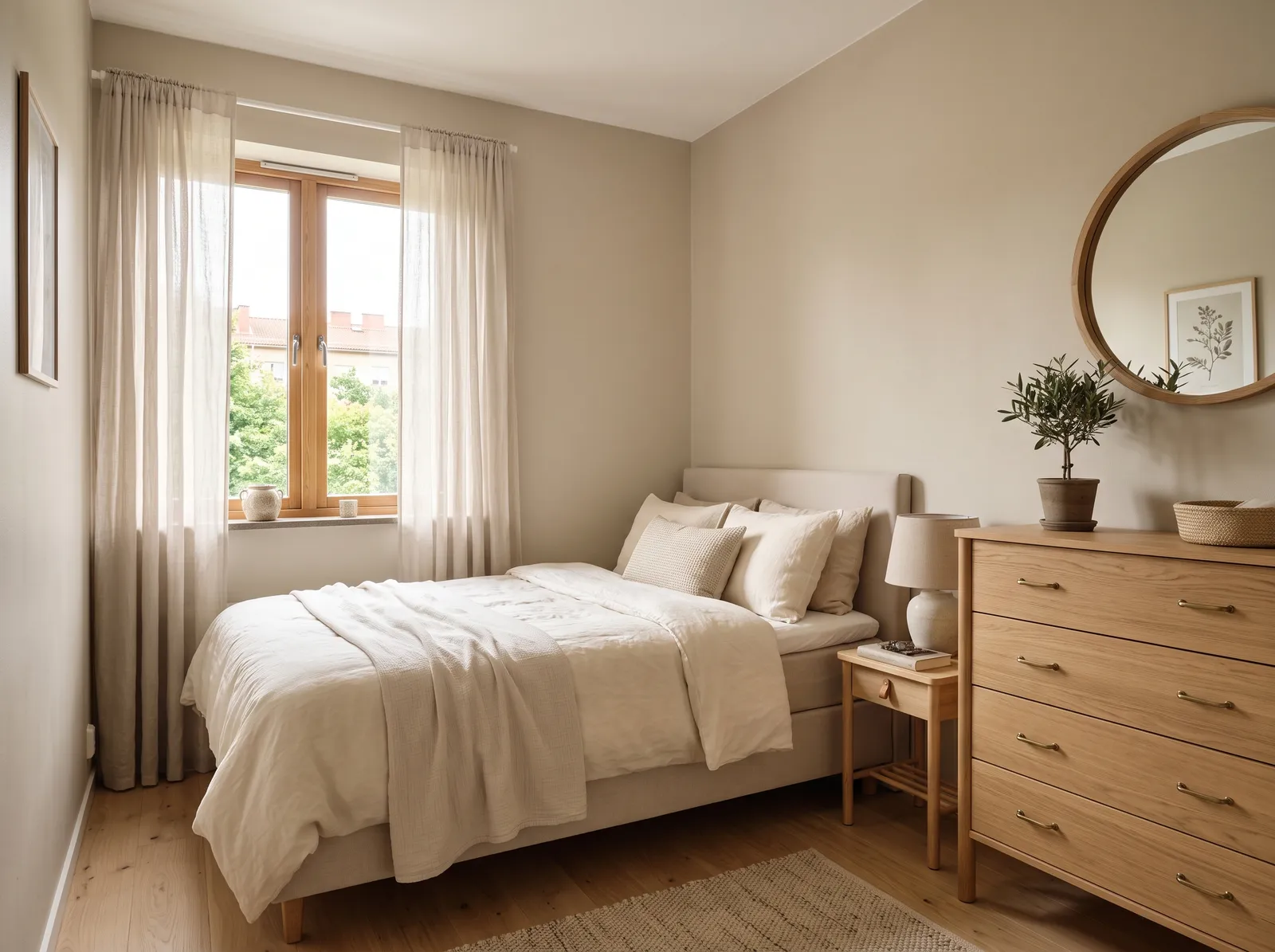
1Pale OakOC-20 · LRV 69
A perennial BM warm-neutral winner in HB and BHG round-ups.
10 curated neutrals with undertones, LRV, and the honest reasons why, plus the full 720-color neutral deck below.
Don't want to compare 720 neutrals? These four cover most real projects.
A warm off-white with soft cream depth (LRV 72) that glows in most rooms but can turn faintly green in north-facing light.
A perennial BM warm-neutral winner in HB and BHG round-ups
Balboa Mist is the light greige people pick when beige feels dated and gray feels cold.
Pashmina is the greige people choose when Revere Pewter feels too pale to do anything.
Numbered and curated. Tap any color for its full review, or see it on your own walls in the visualizer.
1A perennial BM warm-neutral winner in HB and BHG round-ups.
 2
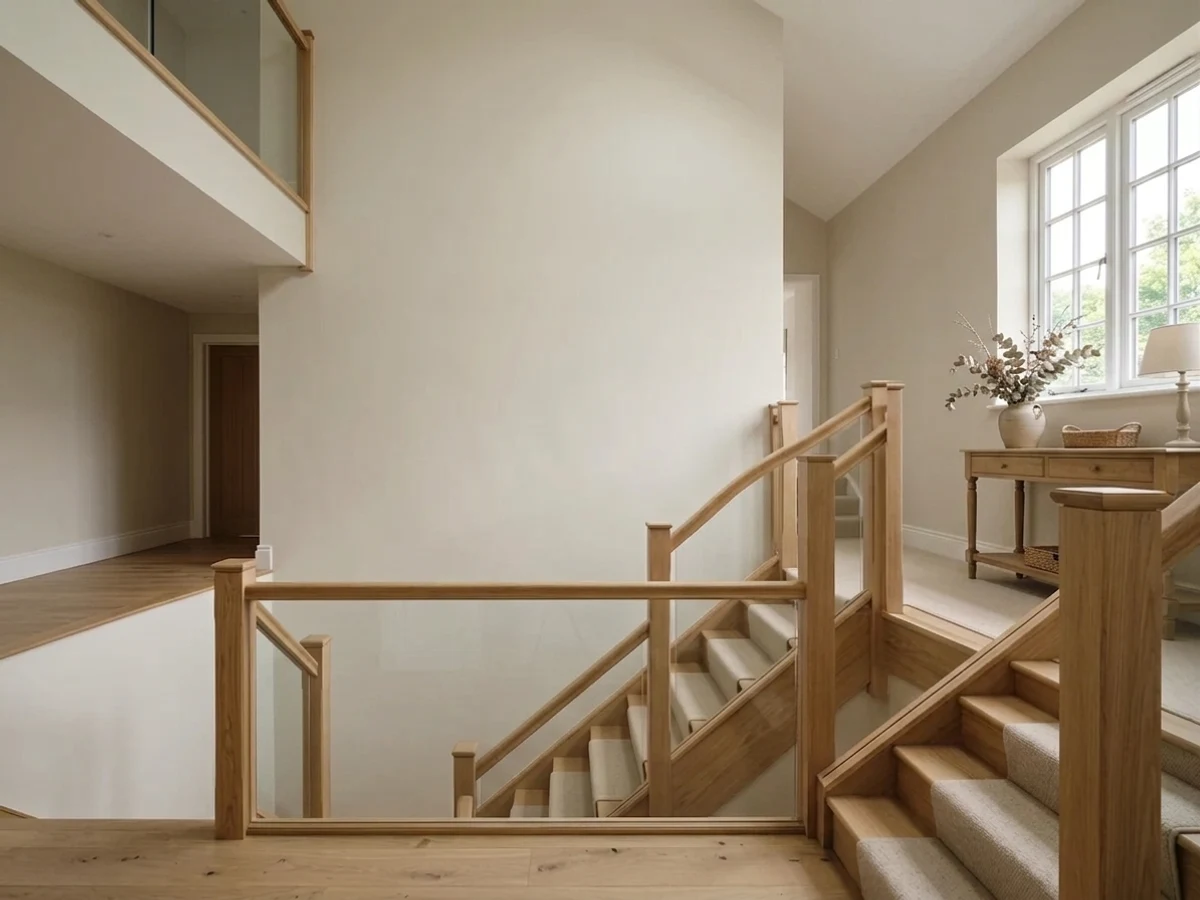
2Balboa Mist is the light greige people pick when beige feels dated and gray feels cold.
 3
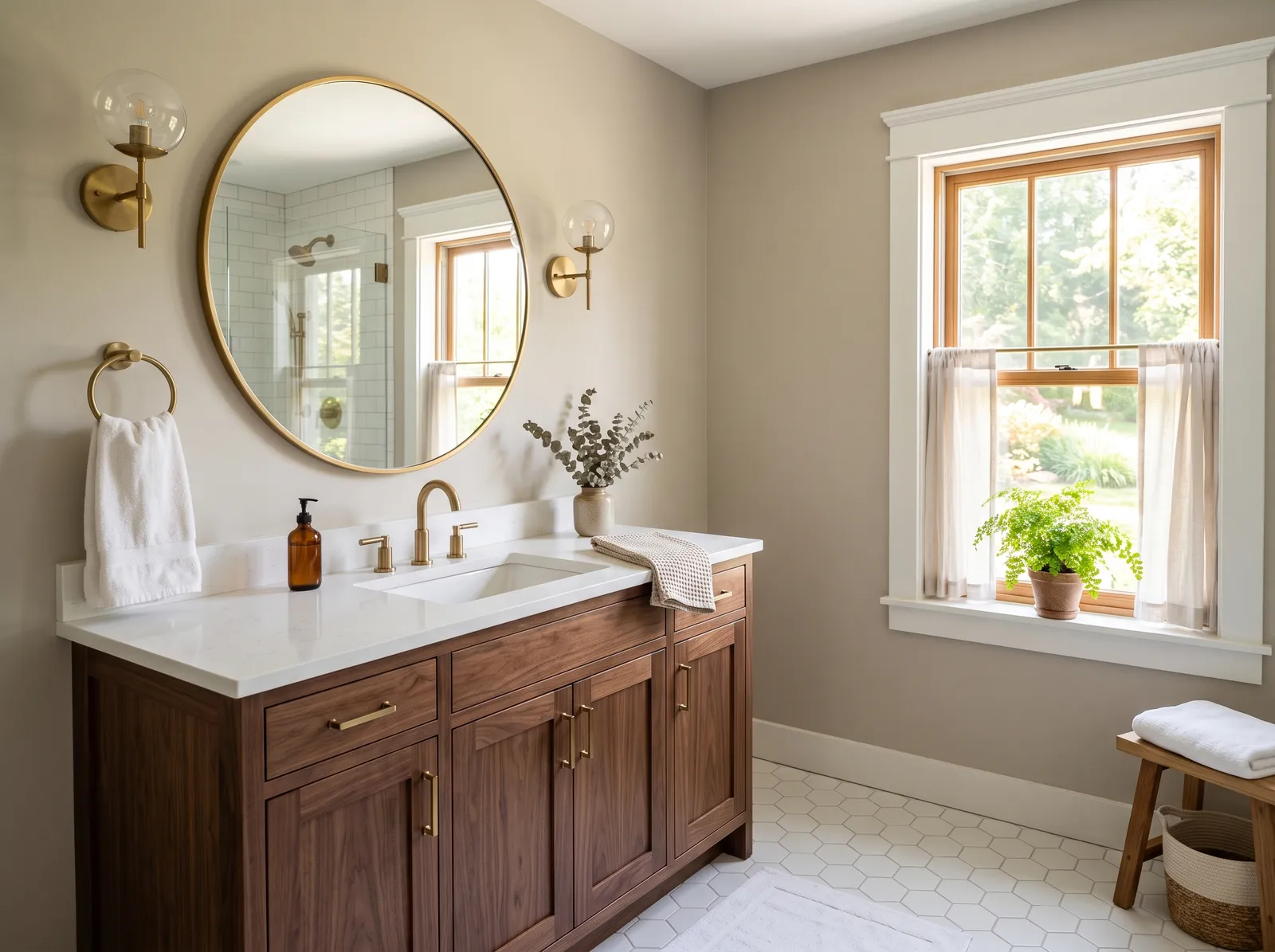
3The most famous greige in America; BM's all-time bestseller and a House Beautiful classic.
 4
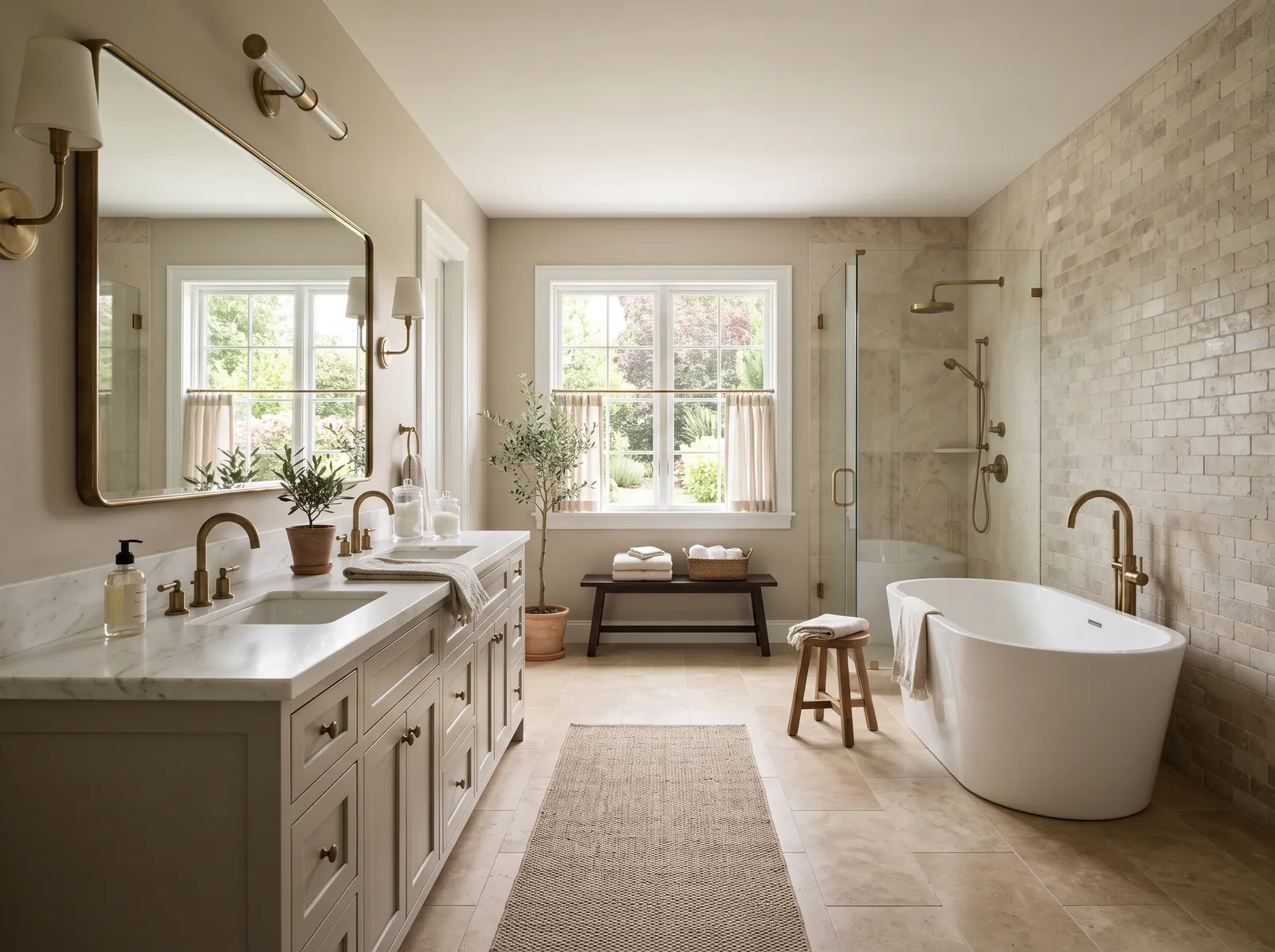
4The lighter sister to Revere Pewter; consistent BM top-5 seller.
 5
5Natural Cream is for people who tried gray and found it depressing.
 6
6A warm off-white with soft cream depth (LRV 72) that glows in most rooms but can turn faintly green in north-facing light.
 7
7Baby Fawn is the color you pick when white feels bare and beige feels yellow.
 8
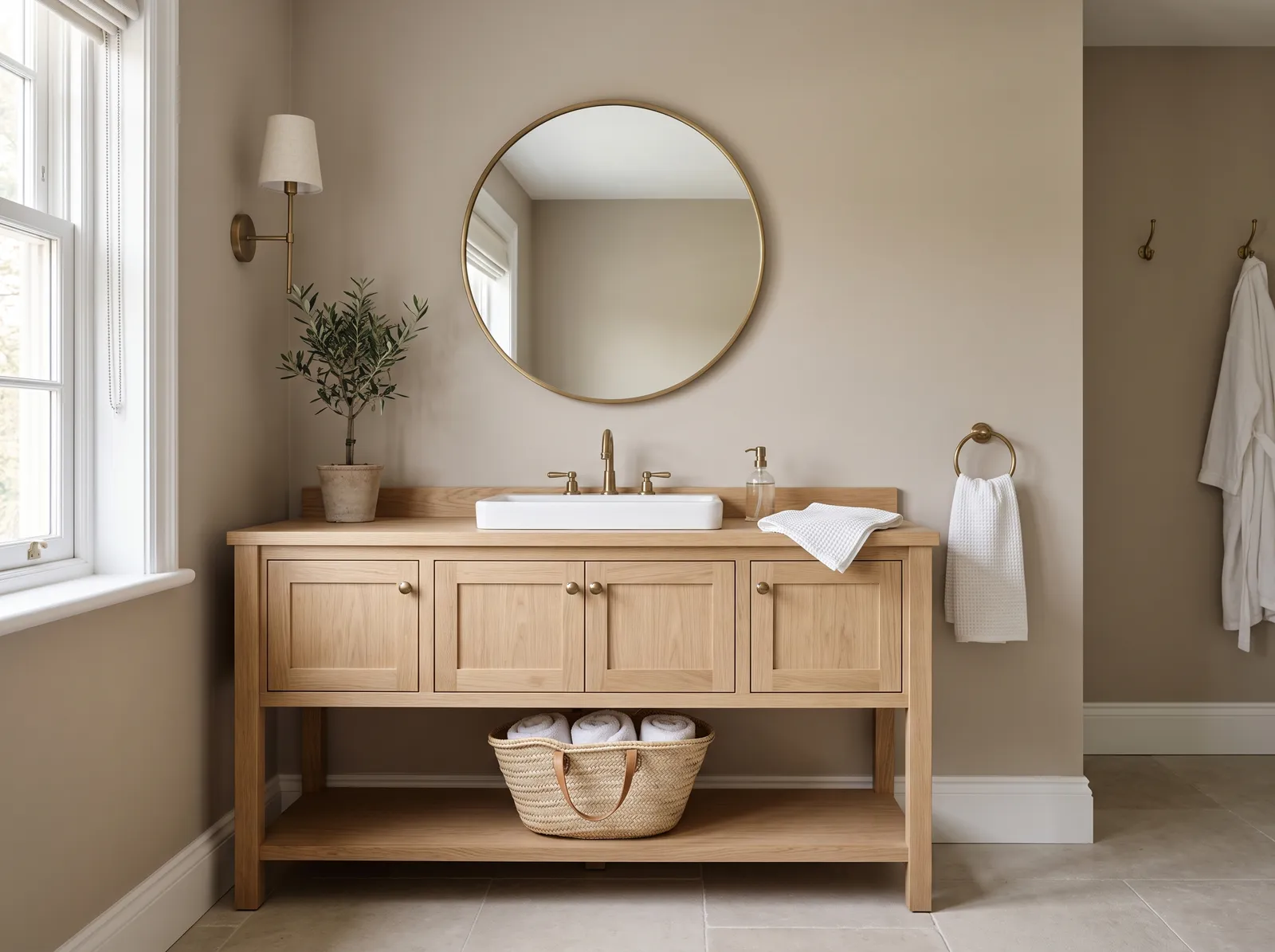
8Start with the thing that trips up most people: Benjamin Moore Sea Salt is a soft warm greige, not the pale green-blue that the name suggests.
 9
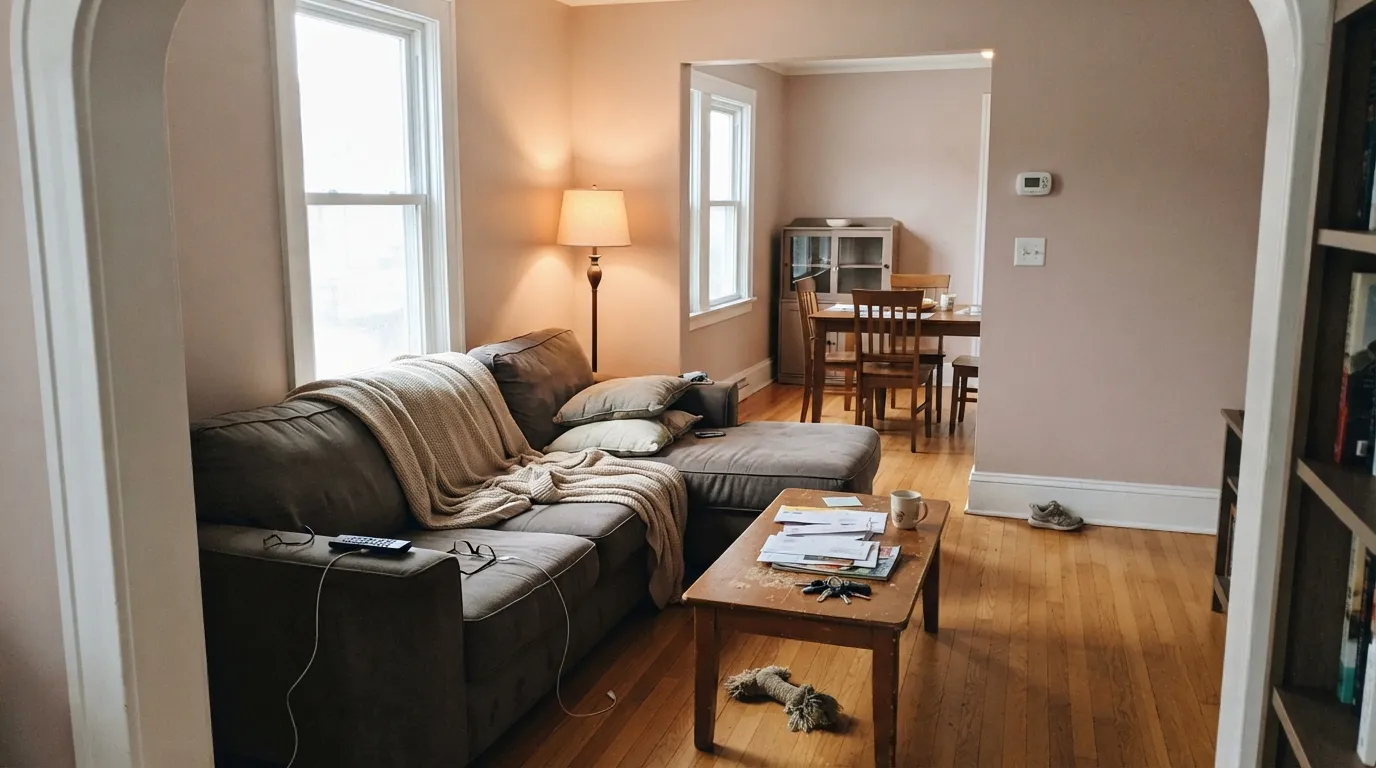
9Pashmina is the greige people choose when Revere Pewter feels too pale to do anything.
 10
10Smokey Taupe is the warm taupe that makes a room feel settled instead of decorated — soft, grounded, and easy to live with on long open-plan walls.
The whole Benjamin Moore neutral range by depth. LRV is the number to trust: the same neutral looks two steps darker on a wall than on a chip.
LRV stands for Light Reflectance Value. It runs from 0 (black, absorbs all light) to 100 (pure white, reflects all of it). It is the single most useful number for predicting how light or heavy a color will feel once it covers a whole room.
For bright, airy walls, stay high. Fondant (AF-255) at 86.1 and Plaster of Paris (CSP-185) at 73 keep a space open and reflect daylight. Mid-range picks like Limestone (513) at 67.8, Wisp of Mauve (2098-60) at 60, and Blanched Almond (1060) at 51 give you color you can actually see without losing brightness. Drop into the 40s and lower for cozier, grounded rooms. Sand Pebble (2105-50) at 42.5 reads as a true mid-tone, Thicket (AF-405) at 34 goes deeper and warmer, and Alligator Green (2143-20) at 23 is genuinely dark. A good rule for small or low-light rooms is to lean toward higher LRV so the space does not feel like it is closing in.
Stuck between two? These head-to-heads settle the ones people actually can't pick between.
Each room page shows neutral picks from every US brand side by side, so you can compare in context.
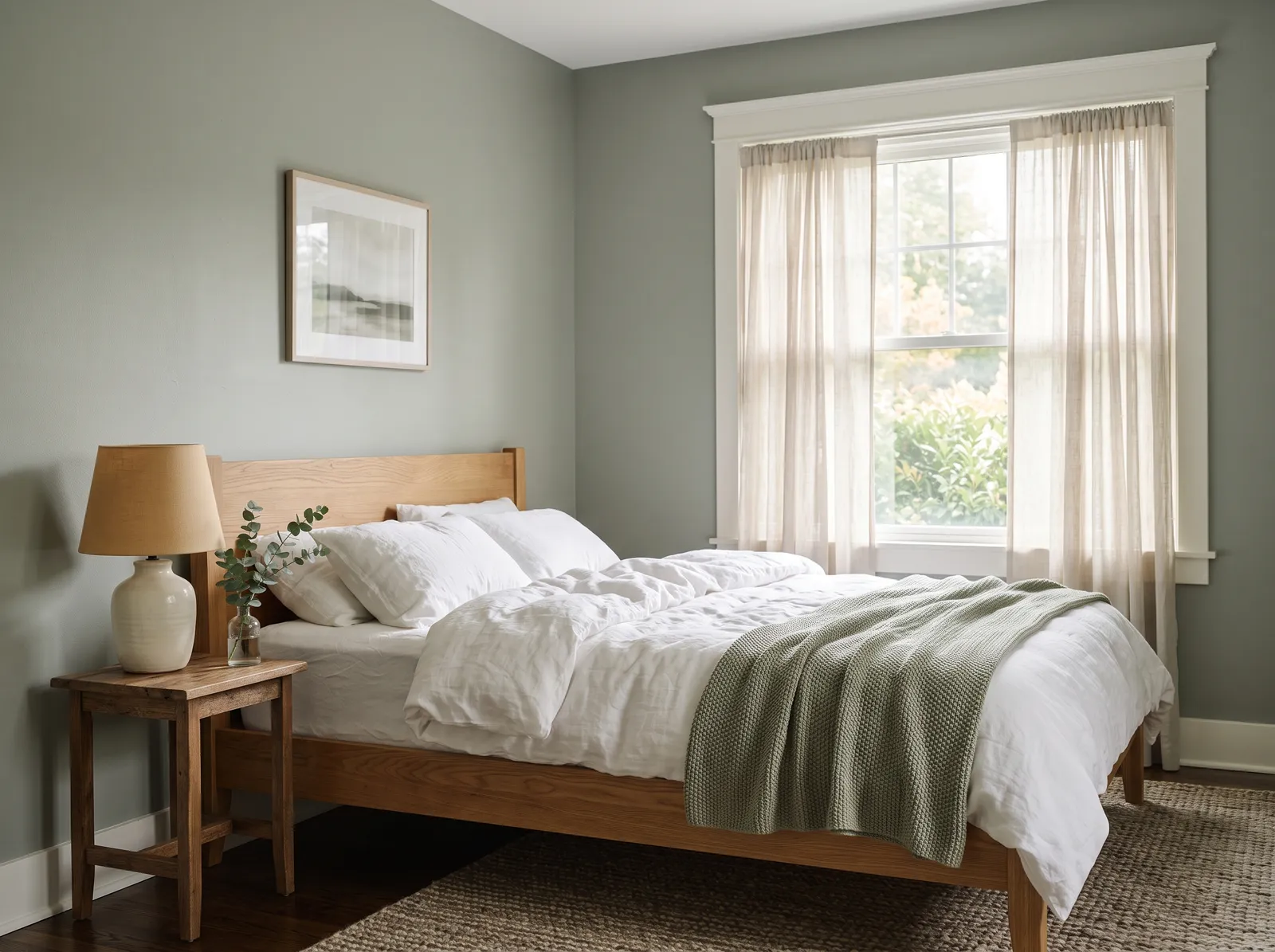
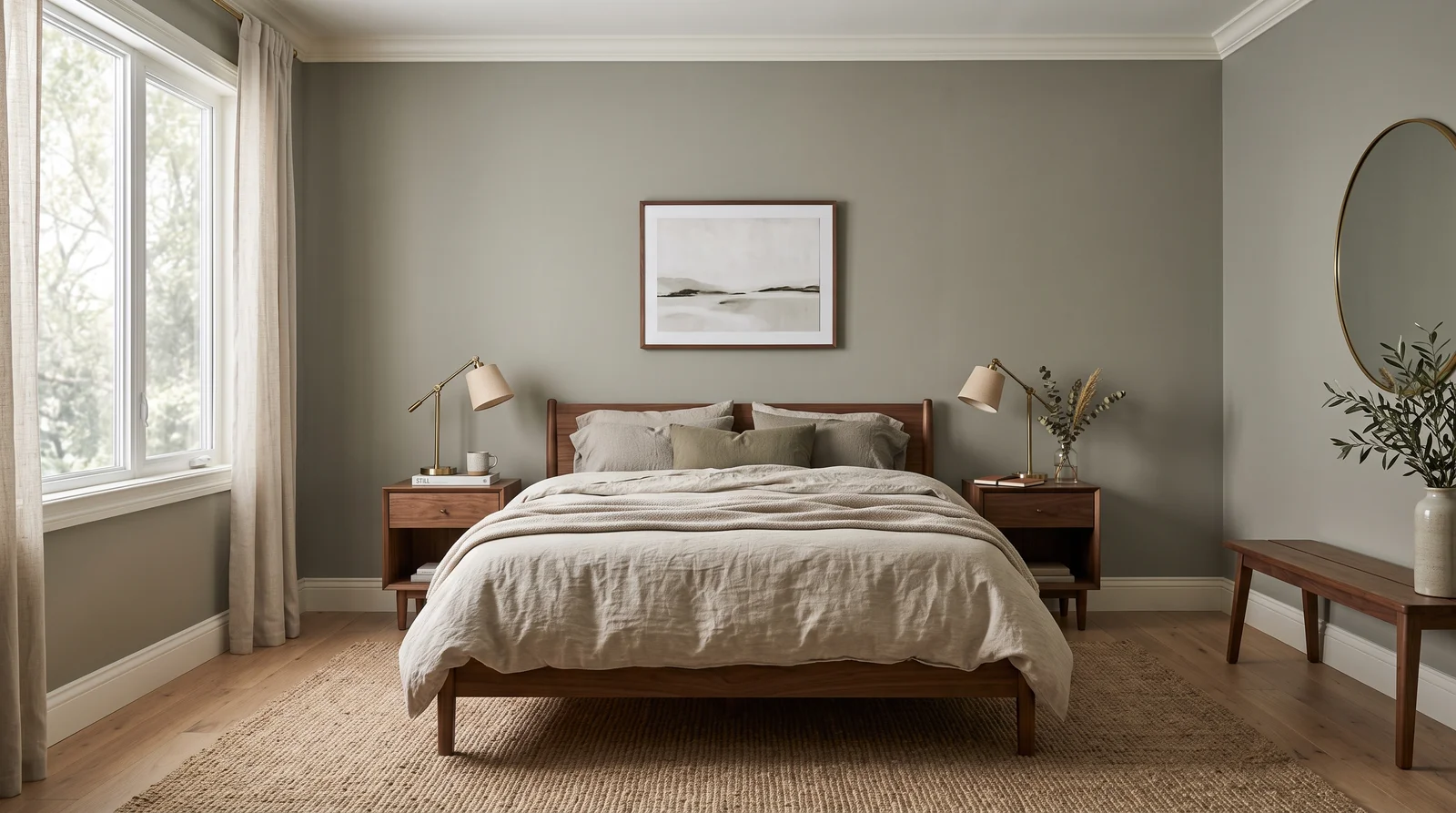
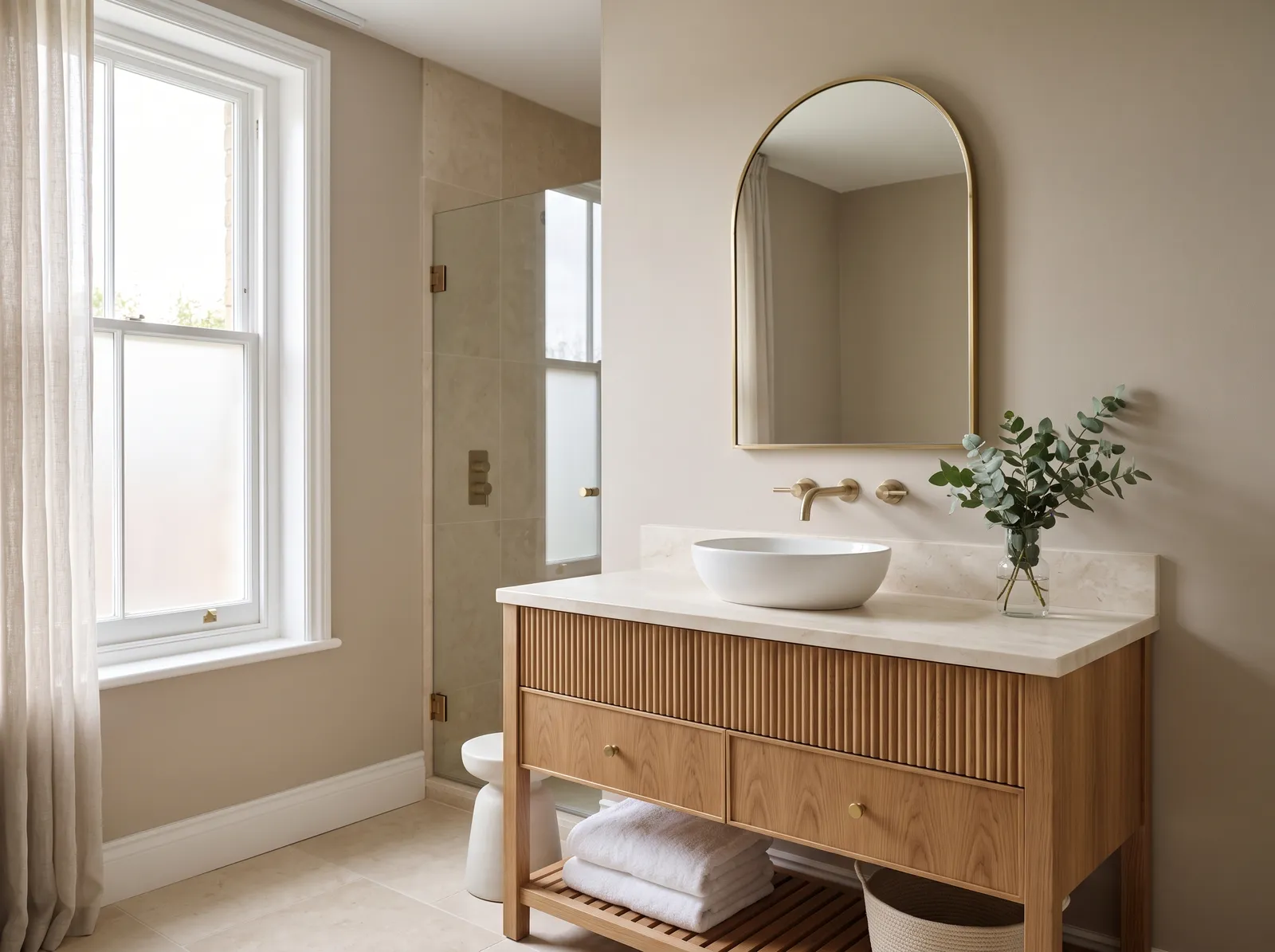
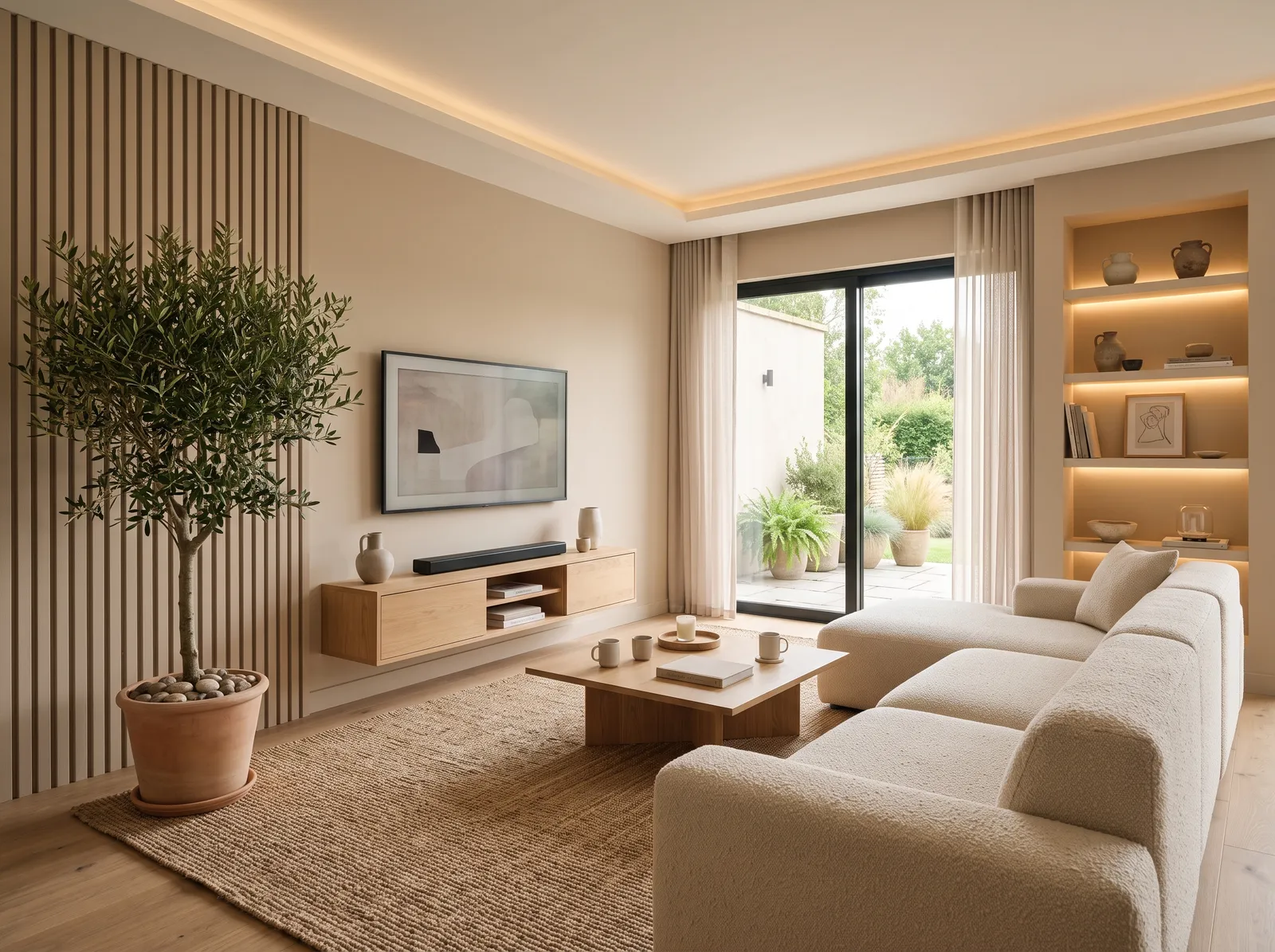
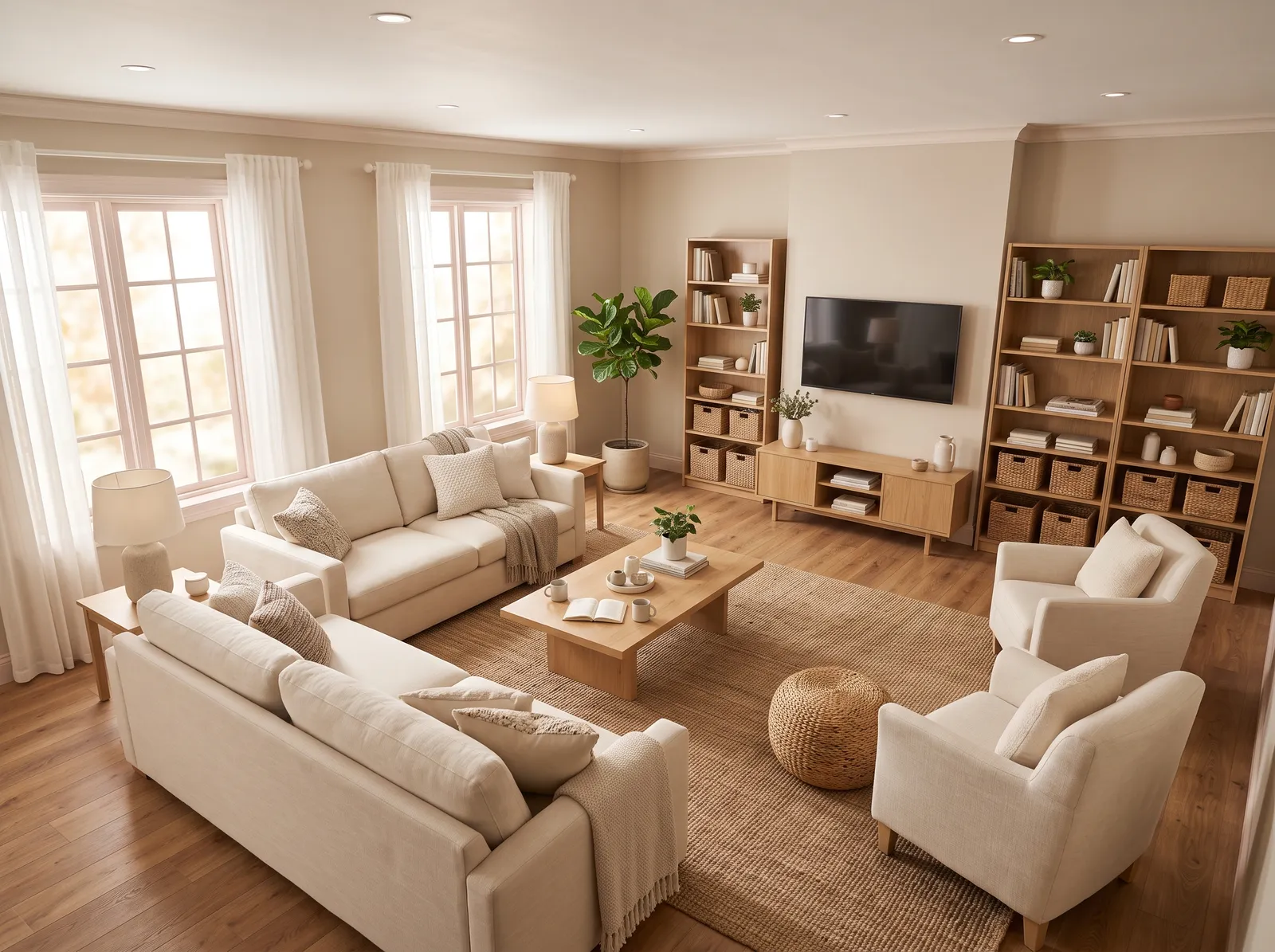
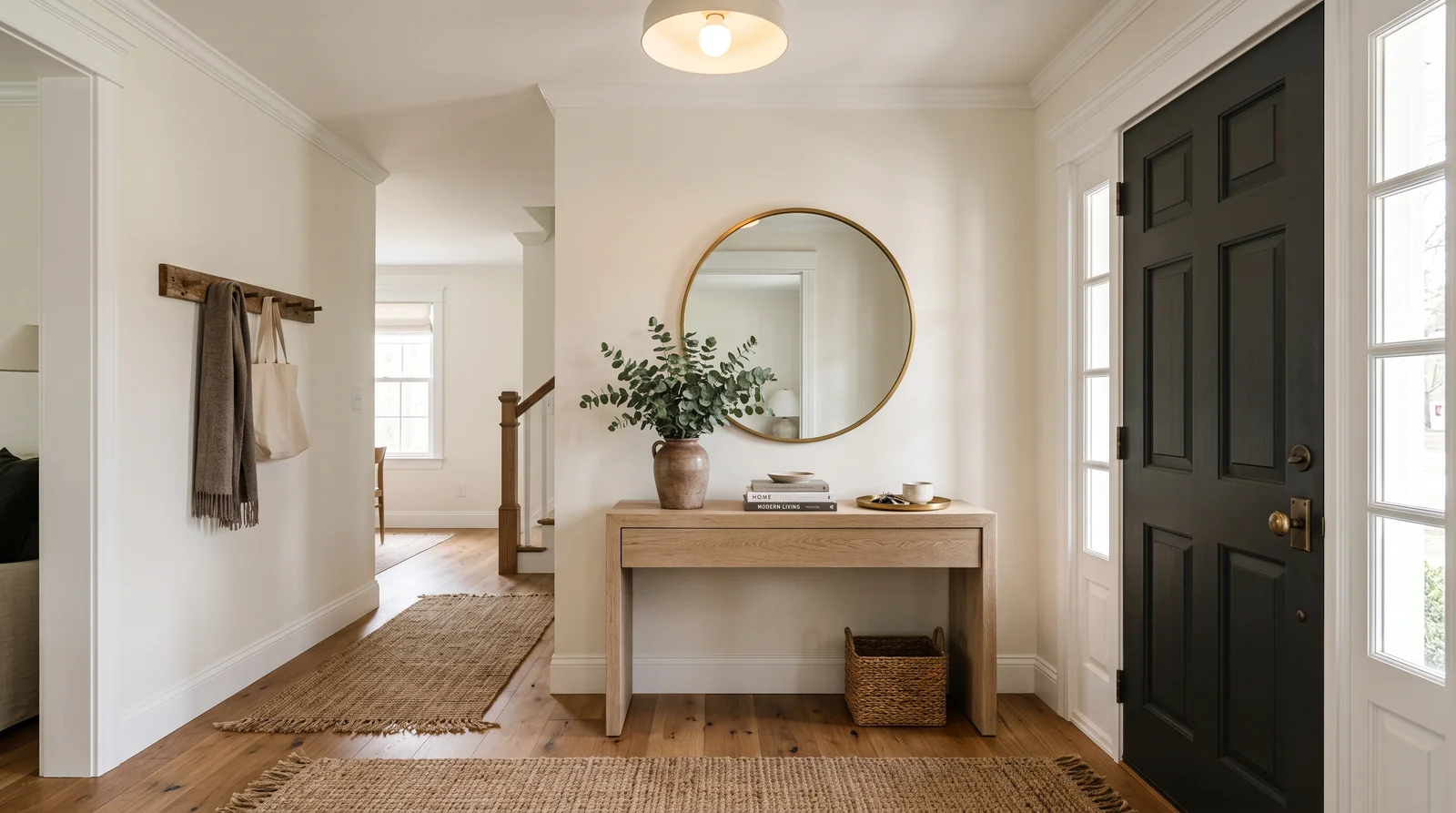
Lighter neutrals do the most work in spaces you want to feel calm and open. The high-LRV picks like Fondant and Plaster of Paris suit bedrooms, living rooms, hallways, and any north-facing room that needs a lift. Mid-tones such as Limestone, Blanched Almond, and Sand Pebble are comfortable in kitchens, dining rooms, and offices where you want warmth without a strong color statement.
Save the deeper neutrals for rooms that can carry drama. Thicket and Alligator Green look rich in a den, a powder room, or an accent wall with good lighting. For sheen, kitchens and baths do best in a scrubbable Regal Select or Aura finish, while bedrooms and living rooms can run flatter. Aura is the flagship line and the one to choose when you want the best chance at full coverage in a single coat.
Every Benjamin Moore neutral, grouped by undertone, warm to cool. Filter by depth or change the order.
Hex values are display approximations from Benjamin Moore's published swatch tools, not a physical sample under controlled lighting. Order a brand-direct sample before specifying.
Upload a photo of the room. We paint it in the neutral you chose with your light and your floor, and you can swap colors until one holds.
Benjamin Moore is sold only through independent dealers, not the big-box stores. There is no pre-filled can of any of these colors on a shelf. Every color is mixed to order at the store: the dealer tints a base in the line you choose, so the same Limestone (513) can come in ben (around $56 a gallon), Regal Select (around $75), or Aura (around $95). You pick the color, then pick the finish and the line.
Because these are mix-to-order, you are not locked to one brand. A dealer or color tool can cross-match a Benjamin Moore neutral to a near-equivalent in another US deck, and the same works in reverse if you fall in love with a color elsewhere. The featured Kompozit deck can be matched the same way, since any tinting machine builds the formula to hit the target color. When you cross-match, compare the LRV first: matching that number gets you a far closer result than matching a name or a chip under store lighting.
How many neutral colors each brand carries, drawn with that deck's own neutrals from light to dark. Pick your store first, then the color. Every brand equal, no favorites.
Benjamin Moore is the brand designers reach for first, and the neutral family is where that reputation was earned. These 673 colors are not flat or gray-by-default. They carry quiet, predictable undertones that read true on the wall instead of turning pink or green on you after the paint dries.
The slice runs from soft whites down to near-black. Fondant (AF-255) sits at the bright end with an LRV of 86.1, while the darkest neutrals in the deck reach all the way down to 0. In between you get warm sands, cool grays, greige, and muted earth tones like Thicket (AF-405) and Alligator Green (2143-20). That range means a Benjamin Moore neutral can be the backdrop in a sunroom or the moody anchor in a study.
The easiest path is to pair a Benjamin Moore neutral wall with a Benjamin Moore off-white trim. White Dove (OC-17) is the most forgiving, slightly soft white and works under almost any neutral. Chantilly Lace (OC-65) is cleaner and crisper if you want more contrast, and Simply White (OC-117) sits between them. Ceilings usually look best one of these whites in a flat finish so the eye goes to the walls, not up.
For coordinating colors, contrast by LRV. A mid-tone wall like Sand Pebble pairs naturally with a much lighter trim and a deeper accent, such as Hale Navy (HC-154) or a dark neutral like Alligator Green. If you want a tone-on-tone look instead, stack neutrals that are 15 to 20 LRV points apart so each surface stays distinct without clashing. Revere Pewter (HC-172) is a classic greige that bridges warm and cool rooms when you are unsure which way a space leans.
Pale Oak (OC-20) — A perennial BM warm-neutral winner in HB and BHG round-ups. Ballet White and Balboa Mist and Pashmina round out the short list most people choose from.
They mark which collection a color belongs to. OC is Off-White, the curated set of whites and near-whites. HC is the Historical Collection, a group of traditional, time-tested shades. AF is Affinity, a collection built so the colors blend easily with one another. The numbers, like OC-17 or HC-154, just identify the specific color within that group.
Lean toward the higher LRV colors so the room feels open. Fondant (AF-255) at 86.1 and Plaster of Paris (CSP-185) at 73 reflect the most light. If you want a little more color, Limestone (513) at 67.8 still keeps a space bright. Save the darker picks like Thicket or Alligator Green for rooms with plenty of natural light.
Benjamin Moore only sells through its independent dealers, not the big chains. That is by design and is part of why the brand keeps tight control over color accuracy. You go to a local dealer, choose your color and finish, and they mix it for you on the spot.
Start with the LRV number rather than the name. Two colors with the same LRV and a similar undertone will look almost identical on the wall. A dealer or a color-matching tool can build the formula in another brand's base, including the Kompozit deck, since every tinting machine mixes to hit a target color. Always confirm the match on a sample before committing to a full room.
An off-white usually works best. White Dove (OC-17) is the softest and most forgiving, Chantilly Lace (OC-65) is the crispest for more contrast, and Simply White (OC-117) sits in between. Use the same white on the ceiling in a flat finish to keep the focus on your walls.
It depends on the room and your budget. ben (around $56 a gallon) is the value option for low-traffic spaces. Regal Select (around $75) adds durability and is easy to clean for kitchens and busy areas. Aura (around $95) is the flagship and gives you the best shot at covering in a single coat. The color is identical across all three, so you are really choosing finish quality and coverage.
Ask a Question