Room Colors · Mudroom
6 Best Mudroom Paint Colors for 2026
ideas, combinations, and real rooms
6 curated picks from real mudrooms — with the exact colors, honest reasons why, and the combinations that hold the room together.

Former interior stylist who can spot a green undertone from across a room. Jessica writes the color and mood pieces — what to choose, what pairs, and why your "white" looks pink.

Top Picks for the Mudroom
Pick a color family, tap a shade to see the mudroom in it, then try it on your own room.
Mudroom Color Trends 2026 — What's In, What's Out


- All-White Mudrooms — Stark white in the hardest-working room of the house shows every scuff within a month — designers and homeowners have both moved on.
- Cool Gray Everything — Flat cool gray walls, gray floor, gray bench reads cold and dated as 2026 palettes shift warm and earthy.
- Accent Wall Only — One painted stripe behind the hooks looks half-finished next to today's color-drenched and two-tone rooms.
- Flat Finishes — Flat and matte paint can't take scrubbing in a high-traffic entry — satin or semi-gloss on anything below shoulder height is the standard now.
The 6 Best Mudroom Paint Colors
Every pick below is a real rendered mudroom, not a chip. The lead color first; the swatches are the full scheme in the photo — walls, furniture, textiles, accent.

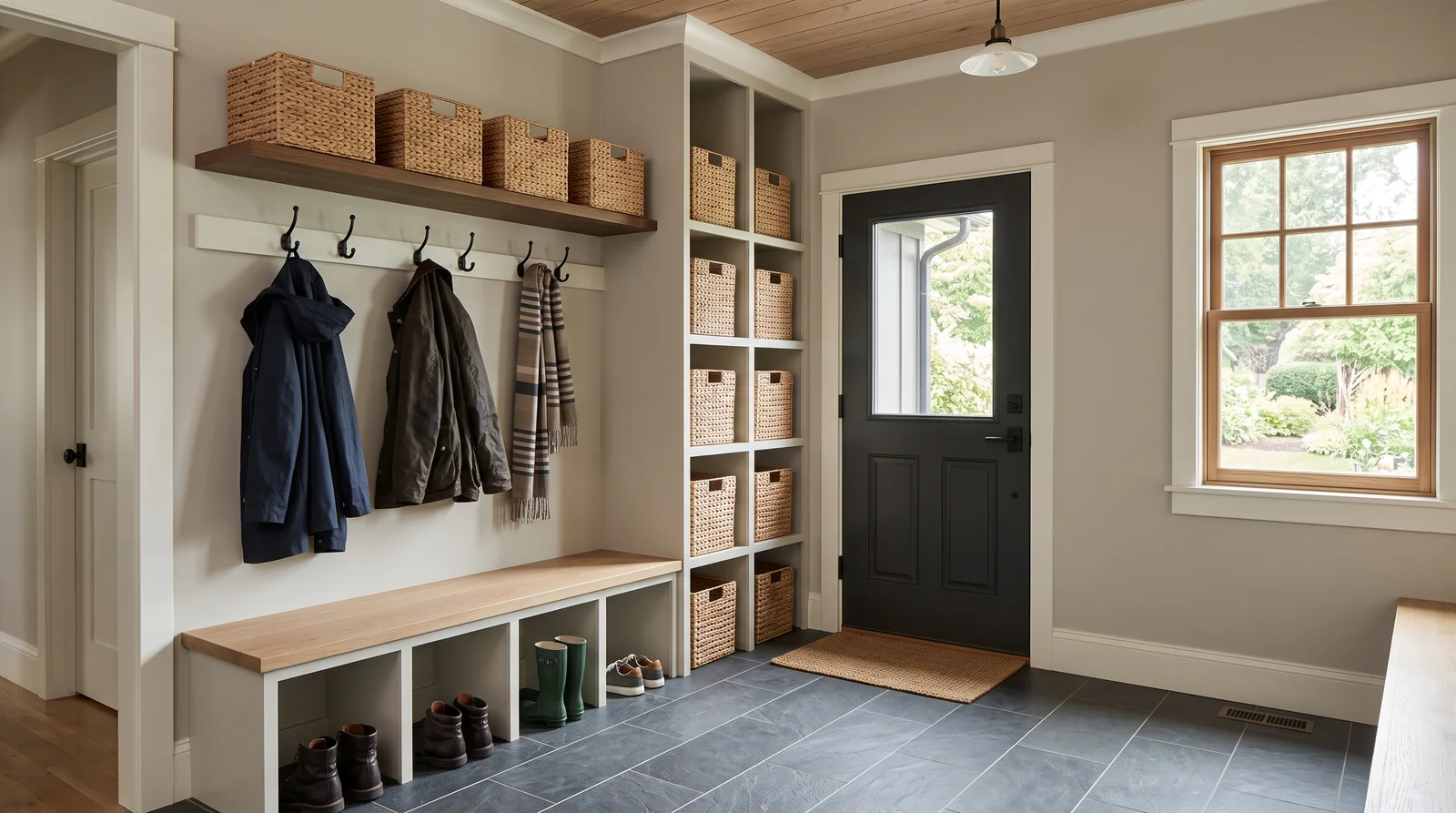
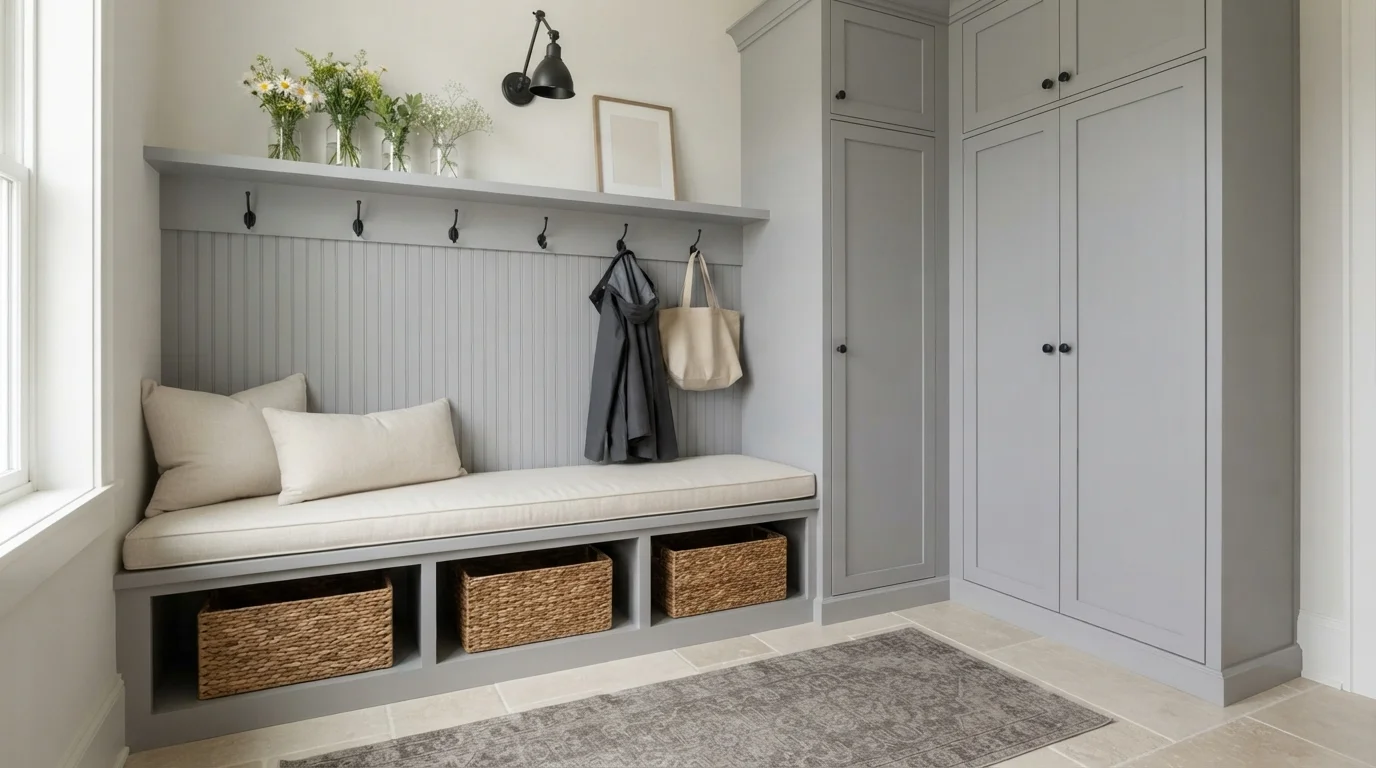
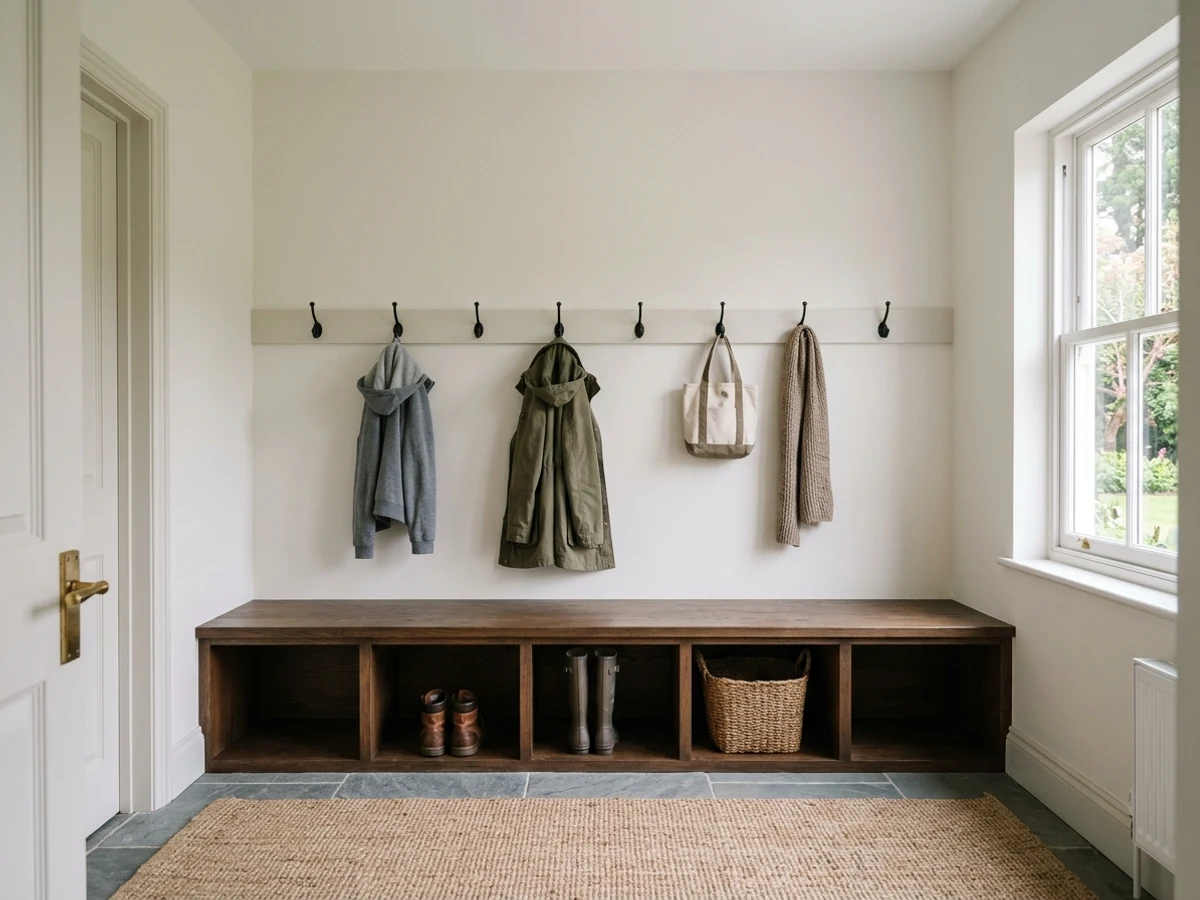
A soft, even greige that keeps a hardworking entry bright and shrugs off scuffs, best where daylight comes and goes all day.
Agreeable Gray is the safe call for a mudroom that doubles as the family's real front door — at LRV 60 it stays light enough for a windowless drop zone, but it has enough gray in it that dried mud and hand smudges don't announce themselves the way they do on white. Pairing the cubbies and door in Iron Ore gives the messiest surfaces the darkest color, which is exactly where the abuse lands. It sits happily next to oak benches, slate tile, and almost any floor you already have. If your mudroom light runs cool and the greige starts reading flat gray, step to Accessible Beige instead.
SEE AGREEABLE GRAY ON YOUR WALLS →
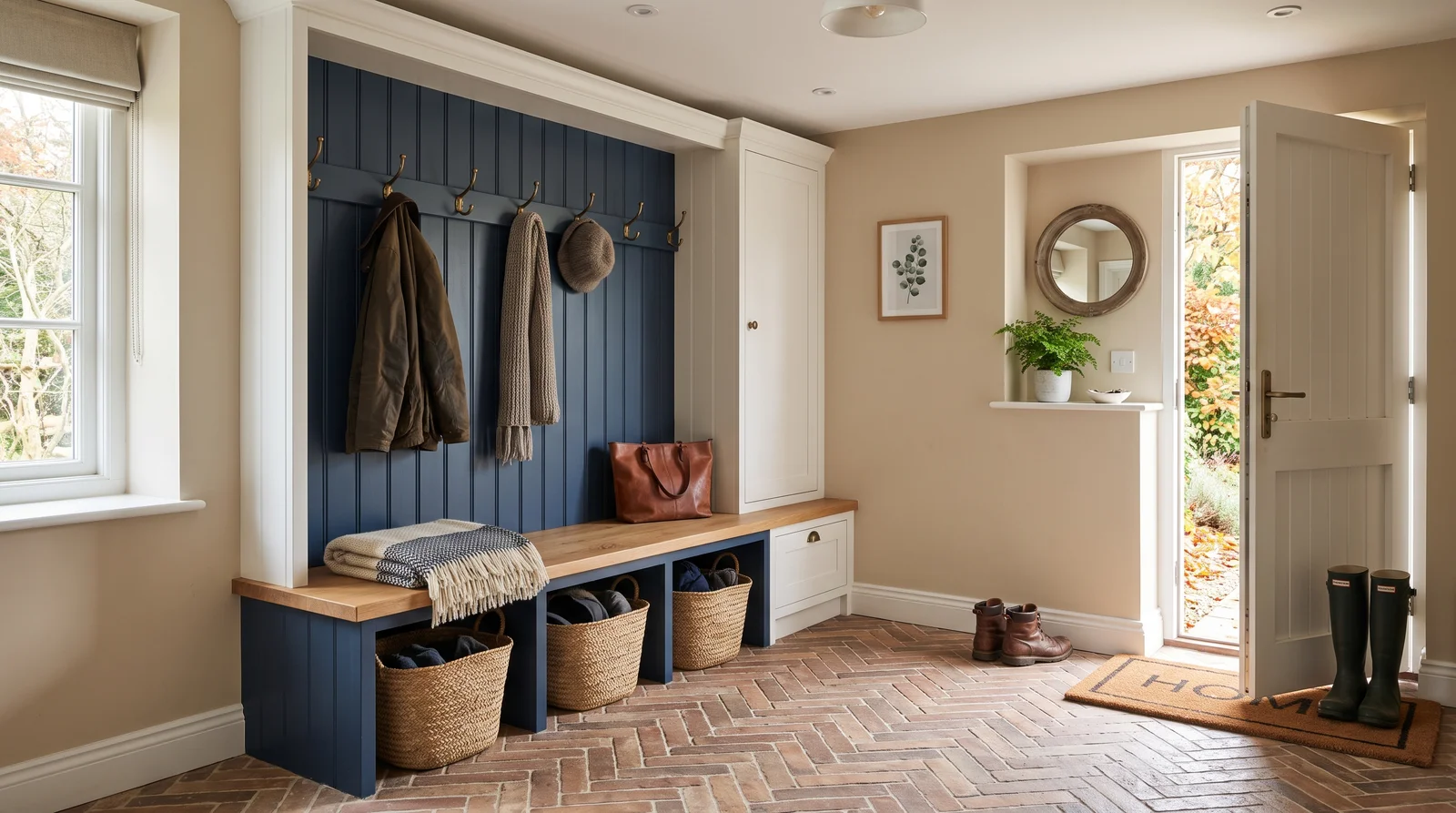
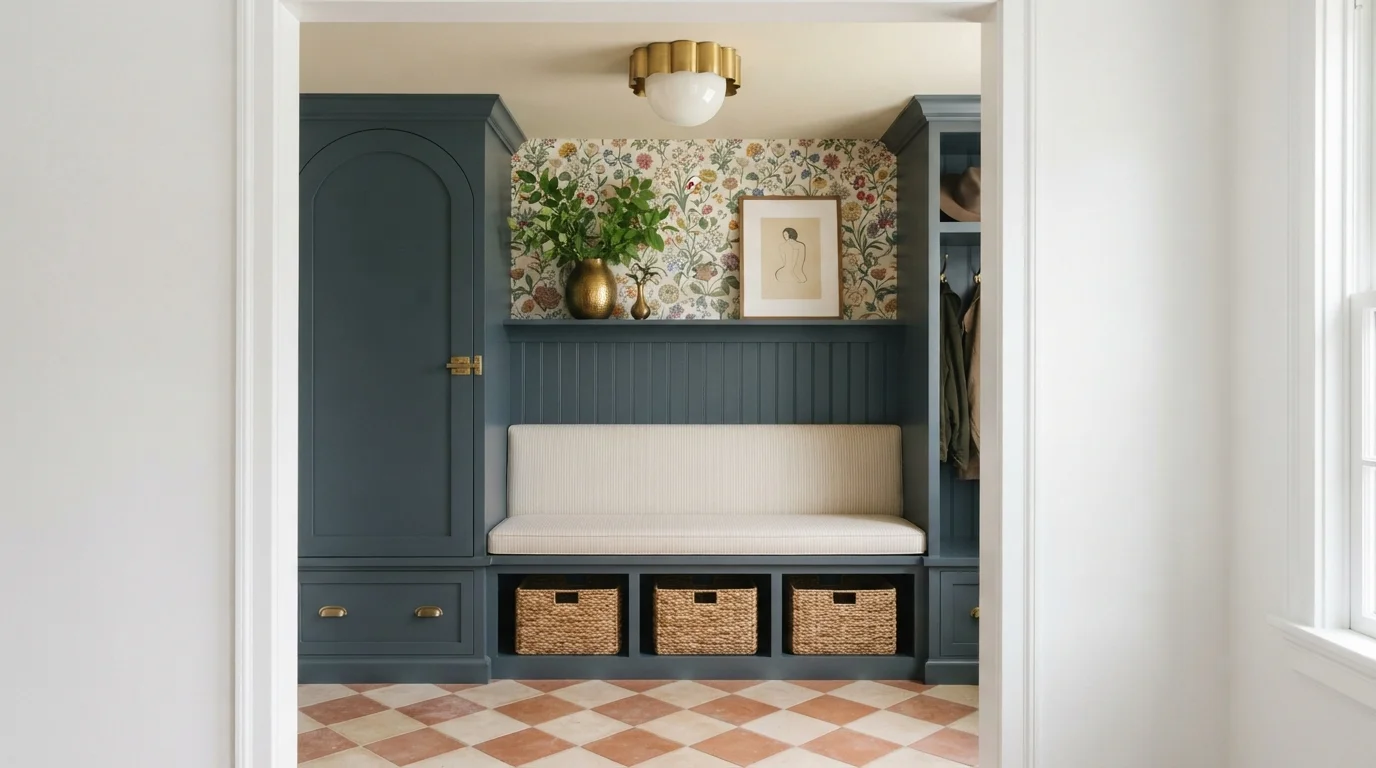
Warm, forgiving beige walls around a deep navy built-in — cozy in morning light, classic by lamplight.
Accessible Beige at LRV 58 keeps the room warm instead of clinical, and it hides the dust and dried splash marks a beige-gray family entry collects daily. Hale Navy on the bench and built-in is the classic mudroom move for a reason: navy semi-gloss wipes clean, hides denim rub and boot scuffs, and looks intentional next to brass or black hooks. This scheme loves tan tile, brick-look floors, and leather. If your fixtures run chrome-cool rather than brass-warm, Boothbay Gray on the walls will sit more comfortably than beige.
SEE IT ON YOUR WALLS →
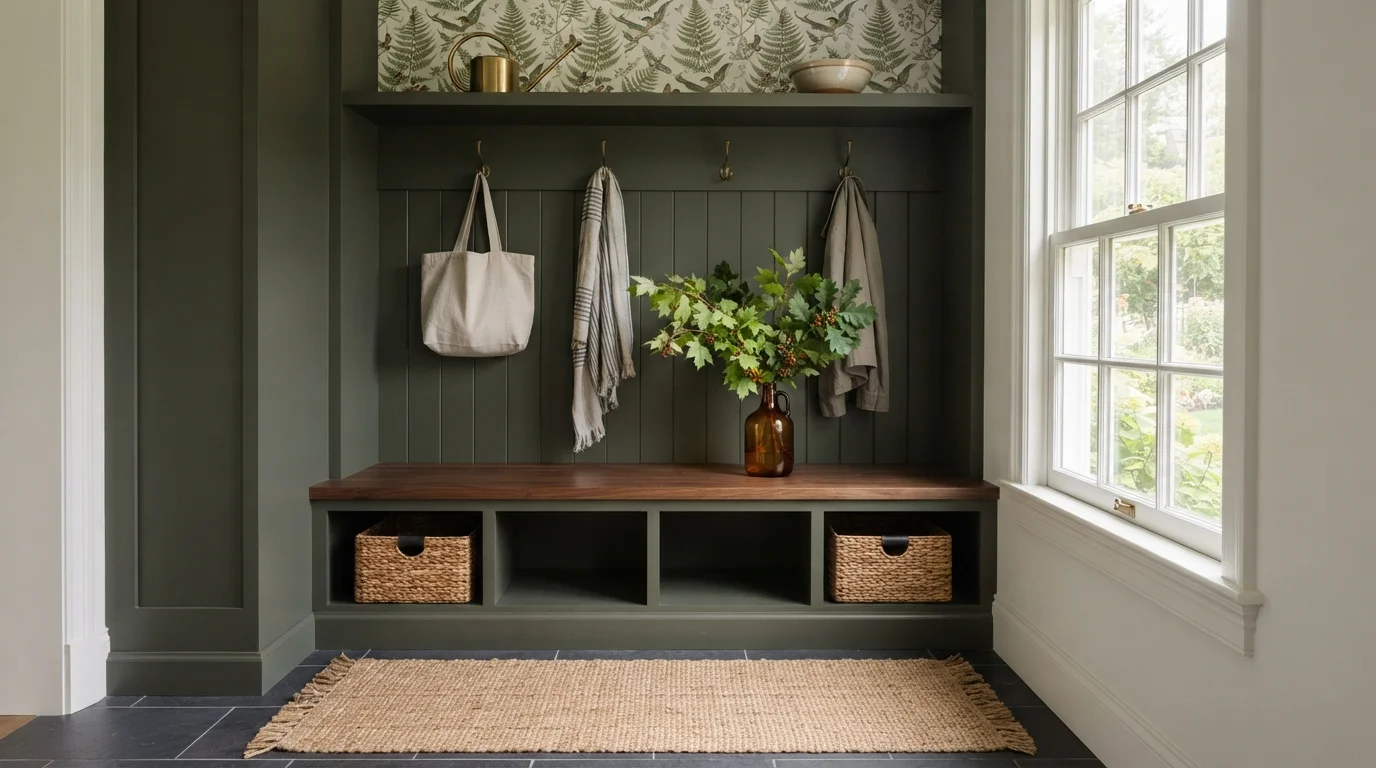
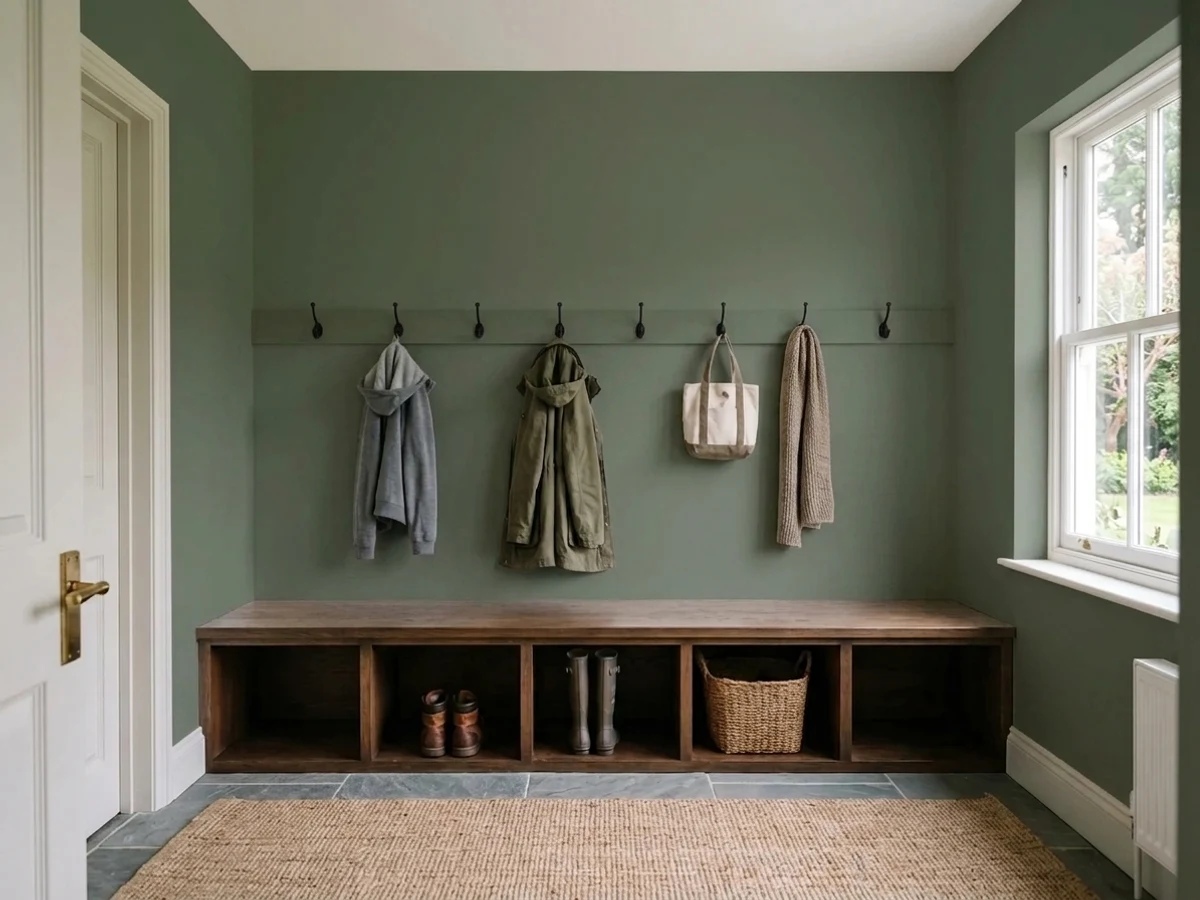
A muted gray-green that reads clean even when the floor isn't, calm and organic in any light.
Evergreen Fog is the mid-tone sweet spot for a mudroom: at LRV 30 it is dark enough to hide the daily scuff line at shoulder-bag height, but soft enough that a small entry doesn't close in. Green-gray also flatters what actually lives in a mudroom — muddy boots, natural baskets, wood benches — instead of fighting it. Run it on walls and built-ins together for the color-drenched look, or keep trim in Alabaster to stay traditional. In a truly windowless hall the gray can go somber; test a big swatch under your actual bulbs before committing, and step up to Agreeable Gray if it dies.
SEE EVERGREEN FOG ON YOUR WALLS →
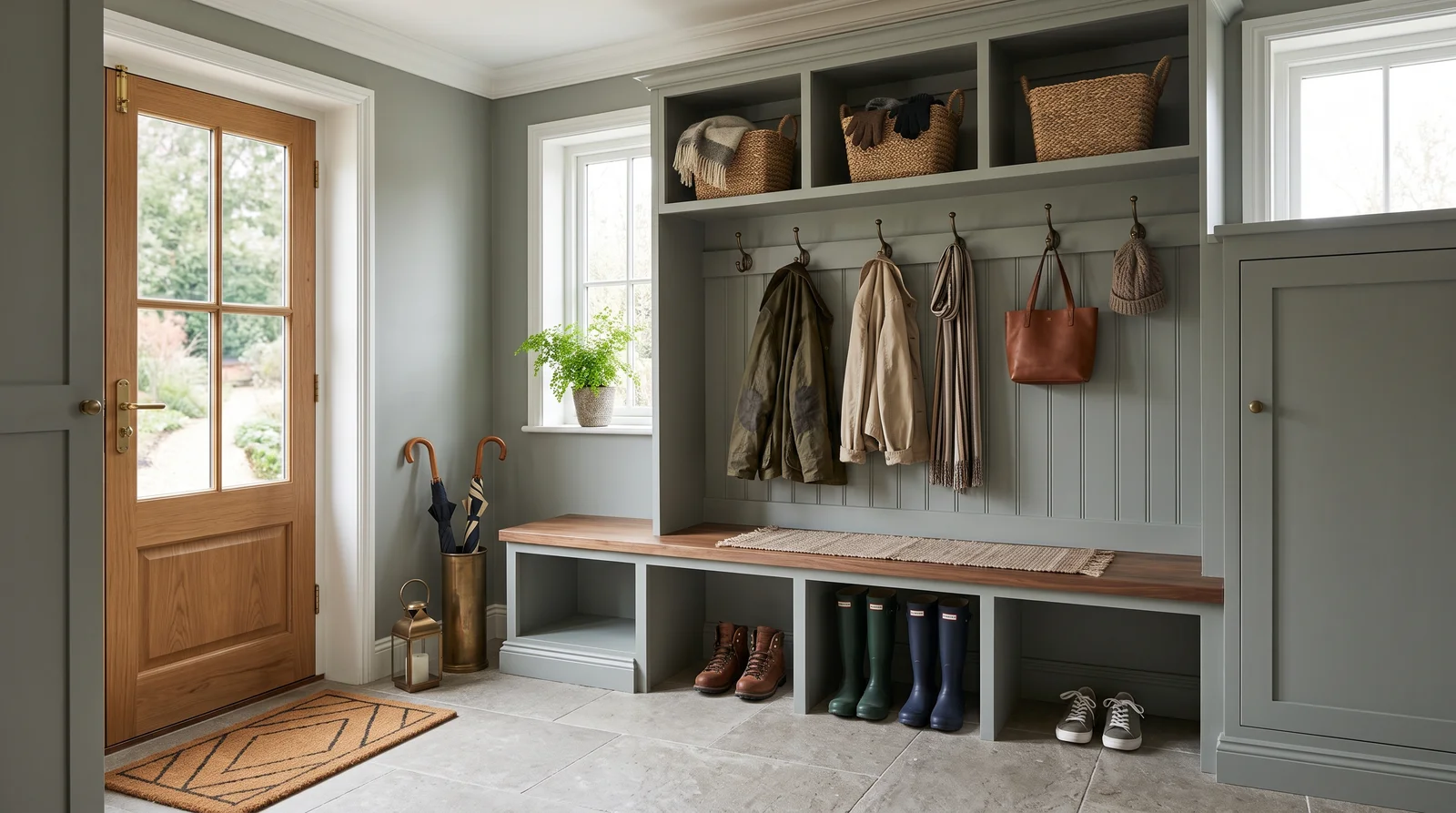
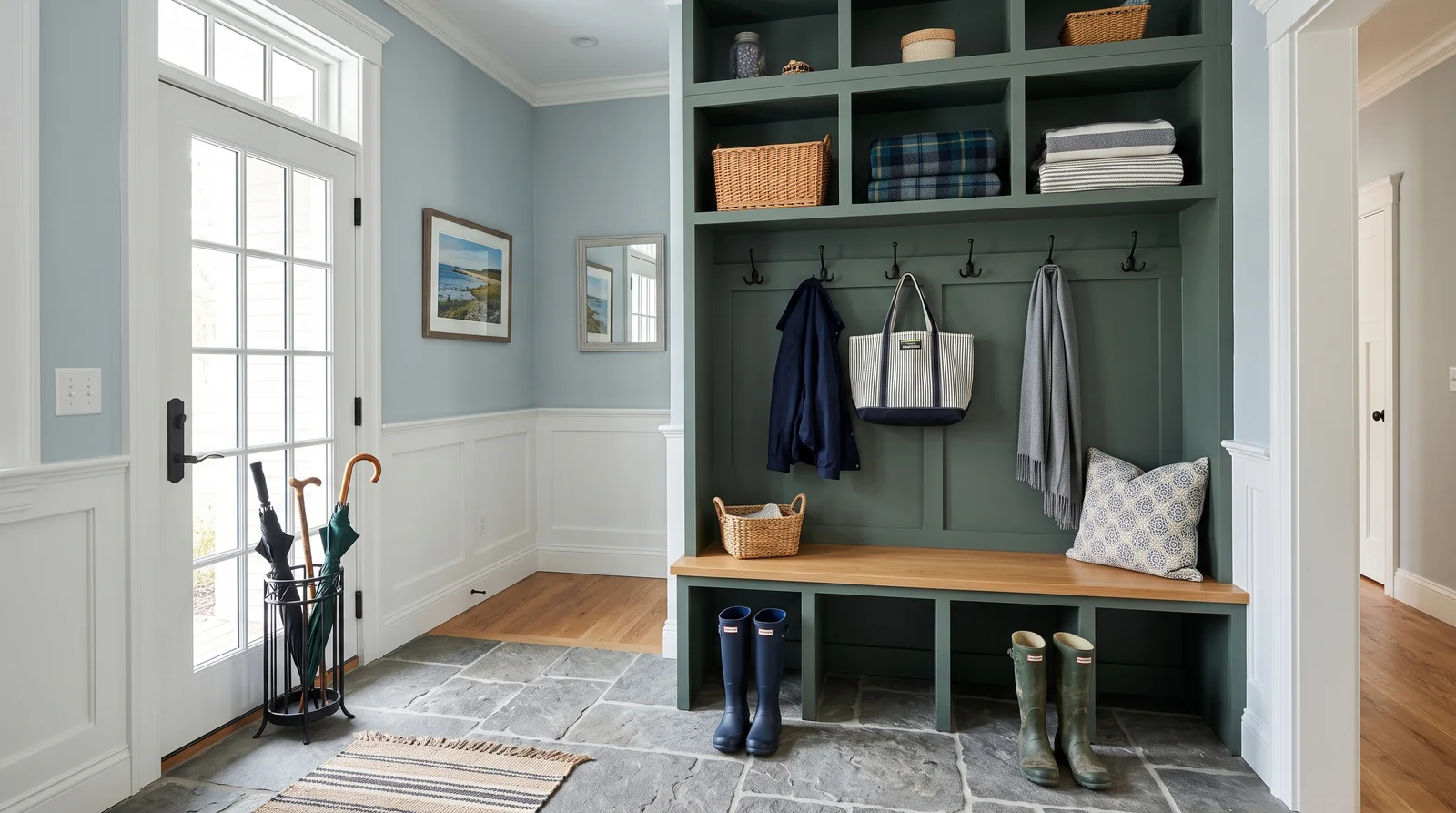
Breezy blue-gray walls over a deep green bench — coastal calm up top, mud-proof color where the boots land.
Boothbay Gray at LRV 43 gives the walls a fresh coastal blue-gray that stays light without being white, and Pewter Green (LRV 12) on the bench and lockers puts the darkest, most scrubbable color exactly where kids kick and bags drag. Blue-gray and deep green is one of the easiest cross-family pairs to live with — it works over gray tile, natural stone, and painted concrete alike. Keep the trim in Chantilly Lace so the two colors read deliberate. If the room gets strong warm evening light and Boothbay turns minty, Agreeable Gray is the quieter wall partner for the same green.
SEE BOOTHBAY GRAY ON YOUR WALLS →
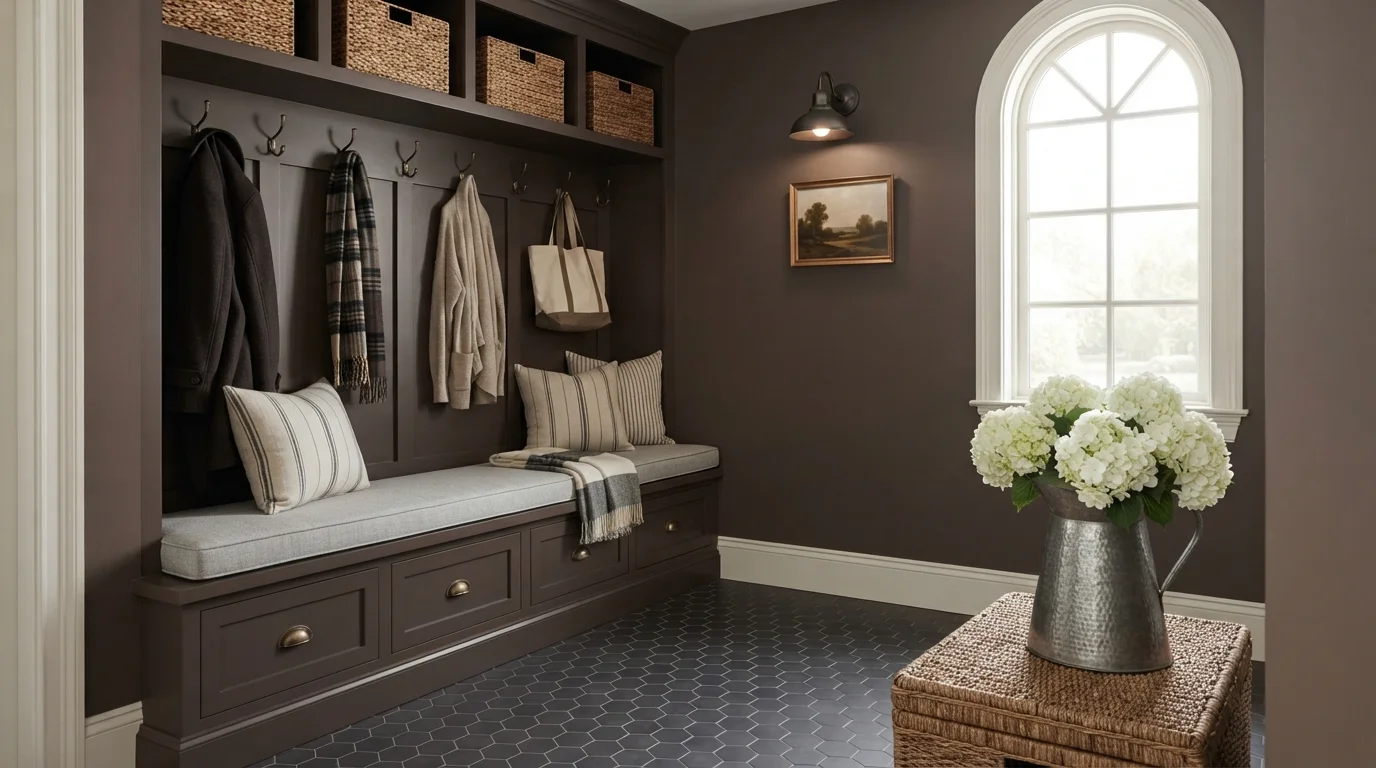
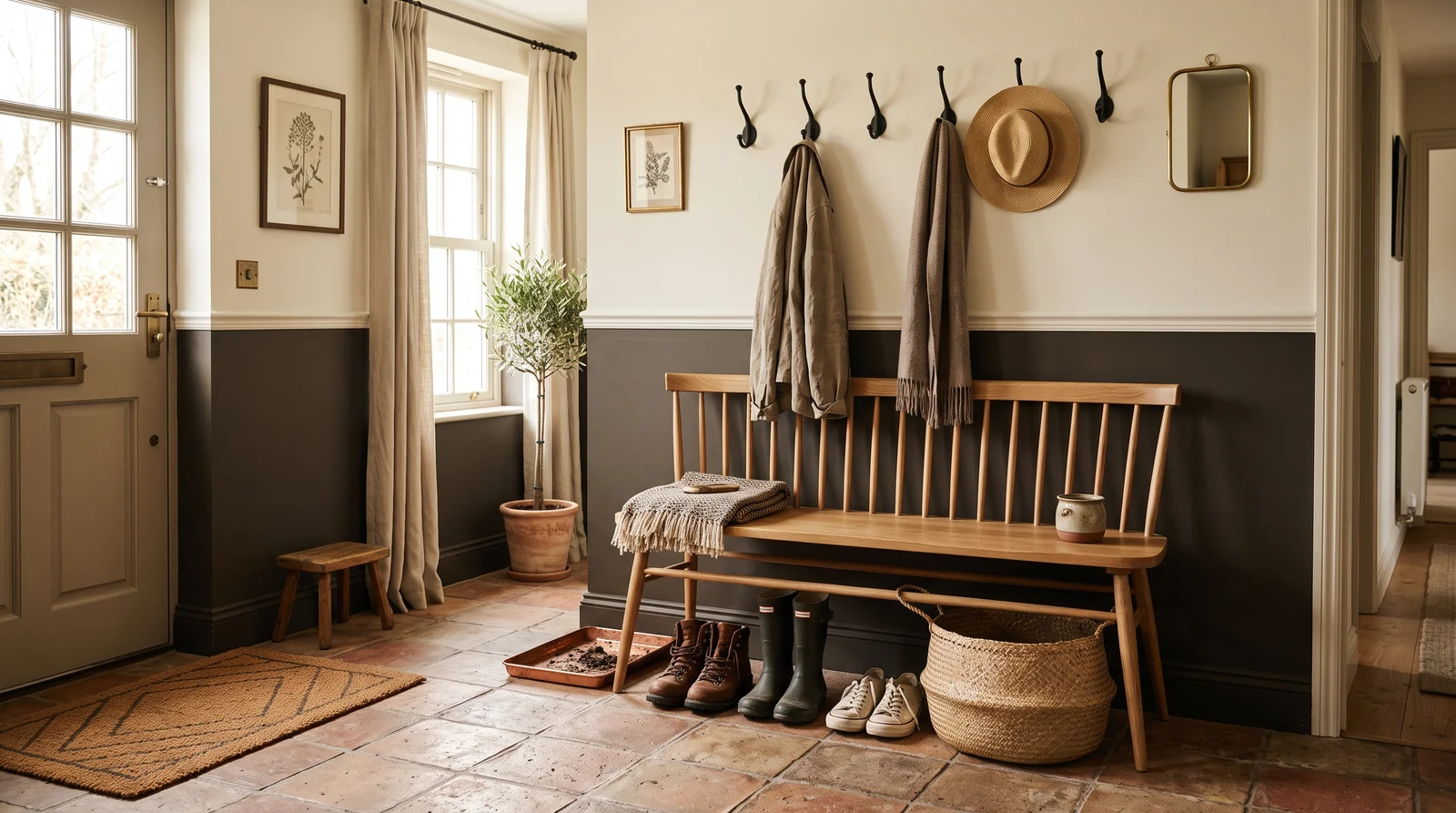
Deep earthy bronze on the lower walls with a creamy top half — grounded, warm, and built to hide a winter of boot spray.
The two-tone split is the most practical paint decision a mudroom can make: Urbane Bronze (LRV 8) on the lower third takes the boot spray, dog shake, and bag scuffs, while Alabaster above keeps the room from feeling like a cave. Urbane Bronze is a warm, earthy dark — friendlier than black next to wood benches and terracotta or brown-toned tile. Run the dark up to a simple chair rail or the bench-back height, in satin or semi-gloss so it wipes. If your floor runs cool gray instead of warm, Iron Ore makes the sharper lower-wall partner.
SEE URBANE BRONZE ON YOUR WALLS →
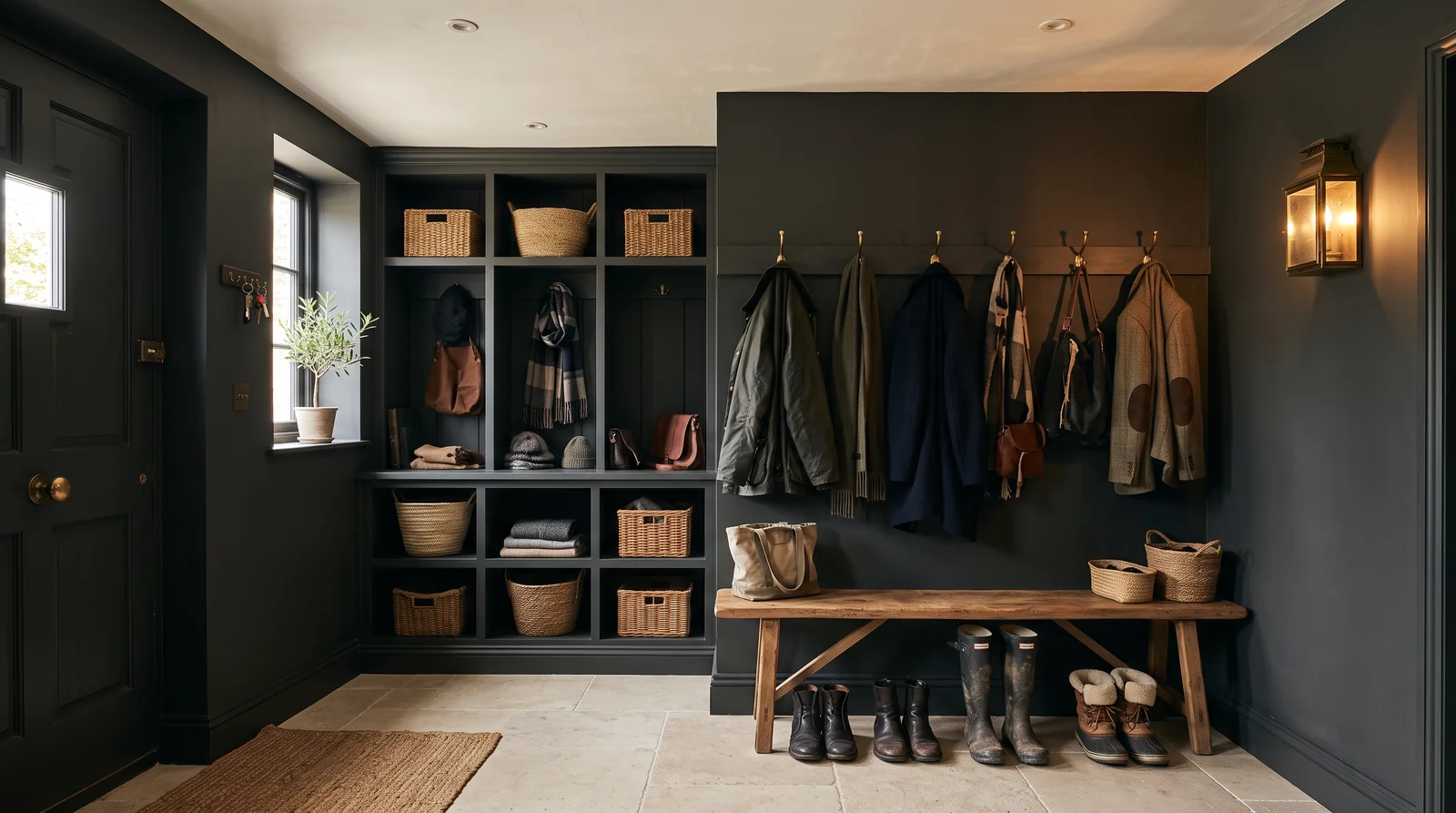
Walls and built-ins drenched in soft near-black — dramatic, tailored, and the single best scuff-hider in the deck.
Color-drenching a mudroom in Iron Ore sounds risky and lives easy: at LRV 6 it swallows black rubber scuffs, brake dust, and pet hair — the exact marks that ruin light walls in a garage-adjacent entry. Painting walls, cubbies, and door all one color also makes a small, choppy room read bigger because the edges disappear. It needs some light to breathe — a glass door, a light floor, or good overhead fixtures — and it looks best against brass hooks and warm wood. If full drench feels like too much, keep the ceiling and trim in White Dove, or use Urbane Bronze for the same idea a notch warmer.
SEE IRON ORE ON YOUR WALLS →Mudroom Wall Color Combinations
A wall color never works alone. These are the full schemes from the rooms above — the lead color first, then the supporting colors that make the photo work.
A soft, even greige that keeps a hardworking entry bright and shrugs off scuffs, best where daylight comes and goes all day.
TRY THIS PALETTE →Warm, forgiving beige walls around a deep navy built-in — cozy in morning light, classic by lamplight.
TRY THIS PALETTE →A muted gray-green that reads clean even when the floor isn't, calm and organic in any light.
TRY THIS PALETTE →Breezy blue-gray walls over a deep green bench — coastal calm up top, mud-proof color where the boots land.
TRY THIS PALETTE →Crisp white trim and a white ceiling are the easy, foolproof pairing for almost any mudroom color, and the contrast makes deep shades like Hale Navy and Hunter Green look sharp and built-in. If you want a softer, more enveloping look, paint the trim the same color as the walls so the room reads as one calm block instead of a grid of edges. Brass or black hooks and fixtures both look great against green and navy; black also pairs cleanly with Charcoal.
Floors in a mudroom are usually tile, vinyl plank, or sealed concrete in gray or wood tones, and they take a lot of the dirt. Warm browns like Espresso sit naturally over wood-look floors, while Charcoal and Hale Navy pull together gray tile. For built-in benches and cubbies, painting them in your wall color or a semi-gloss version of it makes them feel like real cabinetry rather than an afterthought.
Mudroom Color Ideas by Color
Set on a color family already? Each page has its own real rooms and picks.
Light or Dark Mudroom Colors?
Go Light (LRV 60+) If…
The room is small, faces north, or has to work at every hour. Light warm colors make it feel bigger and stay calm in evening light — the light you actually live in.
Go Dark (LRV Under 20) If…
You want the cocoon effect and the room has real daylight. Dark works best on one feature wall — or fully color-drenched in a large room with good windows.
Most mudrooms are short on natural light. They often sit off a garage or a side entry with one small window or none at all, and a lot of the time you see them under a single overhead fixture at night. That matters, because a dark color that looks rich in a bright showroom can turn flat and gloomy in a windowless space.
If your mudroom has little daylight, test your color under the actual bulbs you use after dark, not just by the door in the afternoon. North-facing windows throw cool light that can make navy and gray feel even cooler, so a warm green or a brown often holds up better there. A south- or west-facing mudroom gets warmer light that lets deep colors like Hunter Green and Hale Navy stay full and saturated all day.
LRV, or Light Reflectance Value, tells you how much light a color bounces back, on a scale from 0 (black) to 100 (white). A low-LRV color like Charcoal, Hunter Green, Hale Navy, or Espresso absorbs light and makes a mudroom feel cozy, tucked-in, and dramatic, which works beautifully if the room is small and you treat it like a moment rather than a place to linger.
If your mudroom is already dim and you need it to feel open, a higher-LRV neutral like Stonish Beige keeps things bright and airy. A common middle path is to use a deep color like navy or green on the lower half or on the cubbies, and a lighter neutral above, so you get the richness without darkening the whole room.
See It. Love It.
Paint It.
Upload one photo of your mudroom and try every color on this page on your own walls — in your own light, before you buy a drop of paint.

Polished PineBeforeBest Color Directions For A Mudroom
Mudrooms are one of the few rooms where deep, saturated color is the safe choice rather than the risky one. Greens like Hunter Green and Fern bring the outdoors in and hide scuffs better than pale shades, which is exactly what you want on a wall that gets brushed by jackets and backpacks all day. A blue like Hale Navy reads crisp and tailored, pairing naturally with white trim and brass hooks for a look that feels intentional rather than utilitarian.
If you want the room to disappear quietly into the rest of the house, lean neutral or brown. Charcoal grounds a space and makes built-in cubbies feel like furniture, while warm browns like Espresso and soft tans like Stonish Beige forgive dirt and read cozy. The mood follows the direction: green feels fresh and calm, navy feels sharp and clean, charcoal feels modern and solid, and the browns feel warm and lived-in.
The Right Finish For Wet Boots And Muddy Walls
Skip flat paint in a mudroom. This room needs a finish you can wipe down, so reach for satin or semi-gloss on the walls and semi-gloss on the trim, doors, and any built-in benches or cubbies. The harder the finish, the easier it is to scrub off a mud splatter or a scuff from a boot heel without leaving a dull mark behind.
Moisture is the other reason to go higher in sheen. Wet coats and dripping umbrellas raise the humidity in a small entry, and a washable satin or semi-gloss stands up to that far better than a porous flat. On lower walls, wainscot, or a bench seat where the abuse is worst, semi-gloss is worth the slight extra glare for the durability you get back.
Common Mudroom Paint Mistakes To Avoid
The biggest mistake is using a flat, builder-grade paint because it was already on the wall. In a room that gets this dirty, flat paint stains and can't be scrubbed clean, so you end up repainting far sooner than you should. Start with a washable satin or semi-gloss and you will save yourself the redo.
The second mistake is choosing a color from a chip in good daylight and never testing it where it will actually live. Mudroom light is usually dim and artificial, and a deep green or navy can shift dramatically under those conditions. Paint a large sample, look at it at night under your real bulbs, and only then commit. It also helps to remember that any color here is mixed to order, so if you fall in love with a green from one brand you can have it cross-matched at almost any paint counter.
About Mudroom Paint Colors
A mudroom is the room that takes the most abuse in the house. Wet boots, dripping coats, muddy paws, dropped bags, and the constant in-and-out of daily life all land here first. So when you pick a paint color for a mudroom, you are really making two decisions at once: how you want the space to feel, and how hard you need the paint to work.
The good news is that mudrooms reward bold, grounded color in a way few other rooms do. Because the space is small and you pass through it quickly, you can go darker and richer than you would in a living room without the color ever feeling heavy. Greens like Hunter Green and Fern, deep blues like Hale Navy, warm browns like Espresso, and grounded neutrals like Charcoal and Stonish Beige all earn their place here.
This page walks through the color directions that fit a mudroom, how the room's light should steer your pick, which finish actually survives the wear, and how to pair your color with trim, flooring, and built-in cubbies. Every color shown is mixed to order at the paint counter, so you can carry the same look across brands and match it to a sample you already love.
The Questions Everyone Asks
What color should I paint my mudroom?
If you want one answer, start with the safe picks above — Hale Navy, Cocoa, Stonish Beige, Olive Grove. They read well in any light and survive furniture changes. Then check the light: strong afternoon sun wants a step cooler, a north-facing room wants a step warmer.
What is the best paint color for a mudroom?
There is no single best color, but mudrooms reward deep, grounded shades that hide dirt and scuffs. Greens like Hunter Green and Fern, deep blues like Hale Navy, warm browns like Espresso, and solid neutrals like Charcoal and Stonish Beige all work well. Pick the direction that matches the mood you want and the light you have.
What sheen should I use in a mudroom?
Use satin or semi-gloss, not flat. A mudroom gets wet, muddy, and scuffed, and only a higher sheen wipes clean and stands up to moisture. Semi-gloss is the best choice for trim, doors, benches, and lower walls where the wear is worst.
Can a dark color work in a small or windowless mudroom?
Yes, and it often looks great. Because you pass through a mudroom quickly and it is usually small, a dark color like Charcoal or Hale Navy reads cozy and dramatic rather than gloomy. Just test it under your actual lighting at night, since these rooms tend to rely on artificial light.
What is LRV and why does it matter for a mudroom?
LRV is Light Reflectance Value, a 0-to-100 scale of how much light a color bounces back. Low-LRV colors like Hunter Green and Espresso absorb light and feel cozy, while higher-LRV neutrals like Stonish Beige keep a dim room brighter. If your mudroom has little daylight, LRV helps you decide how dark you can safely go.
What color trim goes with a dark mudroom?
Crisp white trim is the easy, high-contrast choice and makes deep colors like Hale Navy and Hunter Green look sharp and built-in. For a softer, more enveloping look, paint the trim the same color as the walls. Black or brass hooks and fixtures pair well with both green and navy.
How does window direction change my color choice?
North-facing windows give cool light that makes grays and blues feel even cooler, so warm greens and browns often hold up better there. South- and west-facing mudrooms get warmer light that lets deep colors like Hunter Green and Hale Navy stay rich all day. Always test on the wall before committing.
Can I get the same mudroom color across different paint brands?
Yes. Every color shown here is mixed to order at the paint counter, so you are not locked into one brand. If you find a green or navy you love, you can have it cross-matched and tinted at almost any paint store, which makes it easy to match a sample you already have.
What two-color combination works best in a mudroom?
The reliable pattern is a quiet main color plus one deep accent on a single wall. Keep trim and ceiling in one warm white so the two colors are the only event in the room — the combination cards above show complete schemes from real rooms.
What colors make a mudroom look bigger?
High-LRV, slightly warm colors — LRV 60–75 is the sweet spot. Paint the walls and trim close to the same light color so the corners blur, and keep the ceiling white. Stark cool white actually works against you; it creates hard shadows that show the room's edges.

Ask a Question