Room Colors · Entryway
6 Best Entryway Paint Colors for 2026
ideas, combinations, and real rooms
6 curated picks from real entryways — with the exact colors, honest reasons why, and the combinations that hold the room together.

Former interior stylist who can spot a green undertone from across a room. Jessica writes the color and mood pieces — what to choose, what pairs, and why your "white" looks pink.
The Fast Answer
Don't want to read 6 picks? These four are the safe answers.

Top Picks for the Entryway
Pick a color family, tap a shade to see the entryway in it, then try it on your own room.
Entryway Color Trends 2026 — What's In, What's Out


- Gray Everything — Wall-to-wall cool gray is the most complained-about scheme on design Reddit, and entries wear its coldness worst.
- Stark Builder White — Flat bright white reads unfinished in a room with little natural light; softer warm whites have taken its place.
- Dark Gray in Dim Entries — Deep cool grays absorb what little light a windowless entry has and turn it cave-like fast — designers now steer those spaces warmer.
- The Lone Accent Wall — One loud wall in an otherwise plain entry reads dated; current entries either commit to the whole room or stay calmly neutral.
The 6 Best Entryway Paint Colors
Every pick below is a real rendered entryway, not a chip. The lead color first; the swatches are the full scheme in the photo — walls, furniture, textiles, accent.

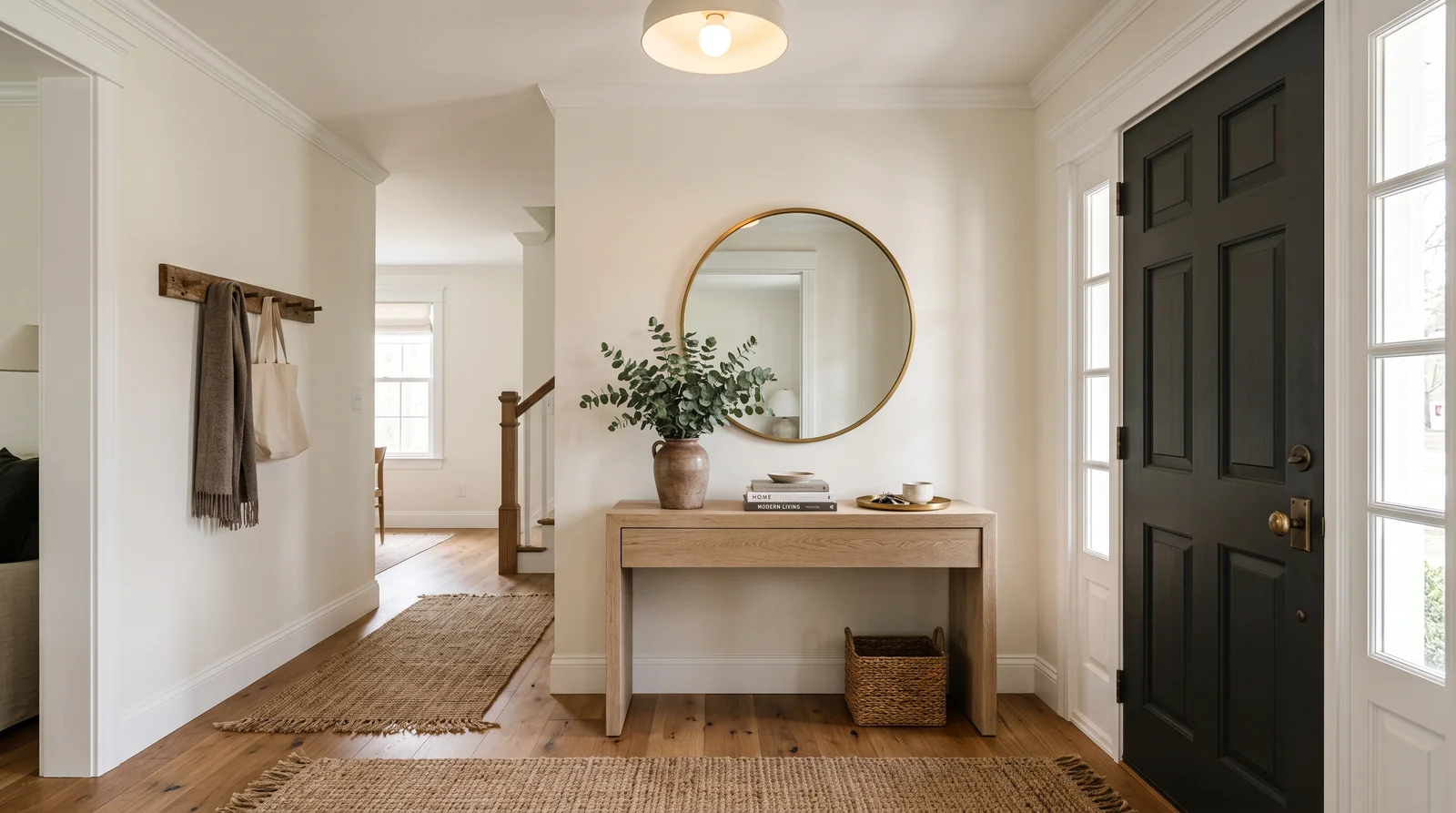
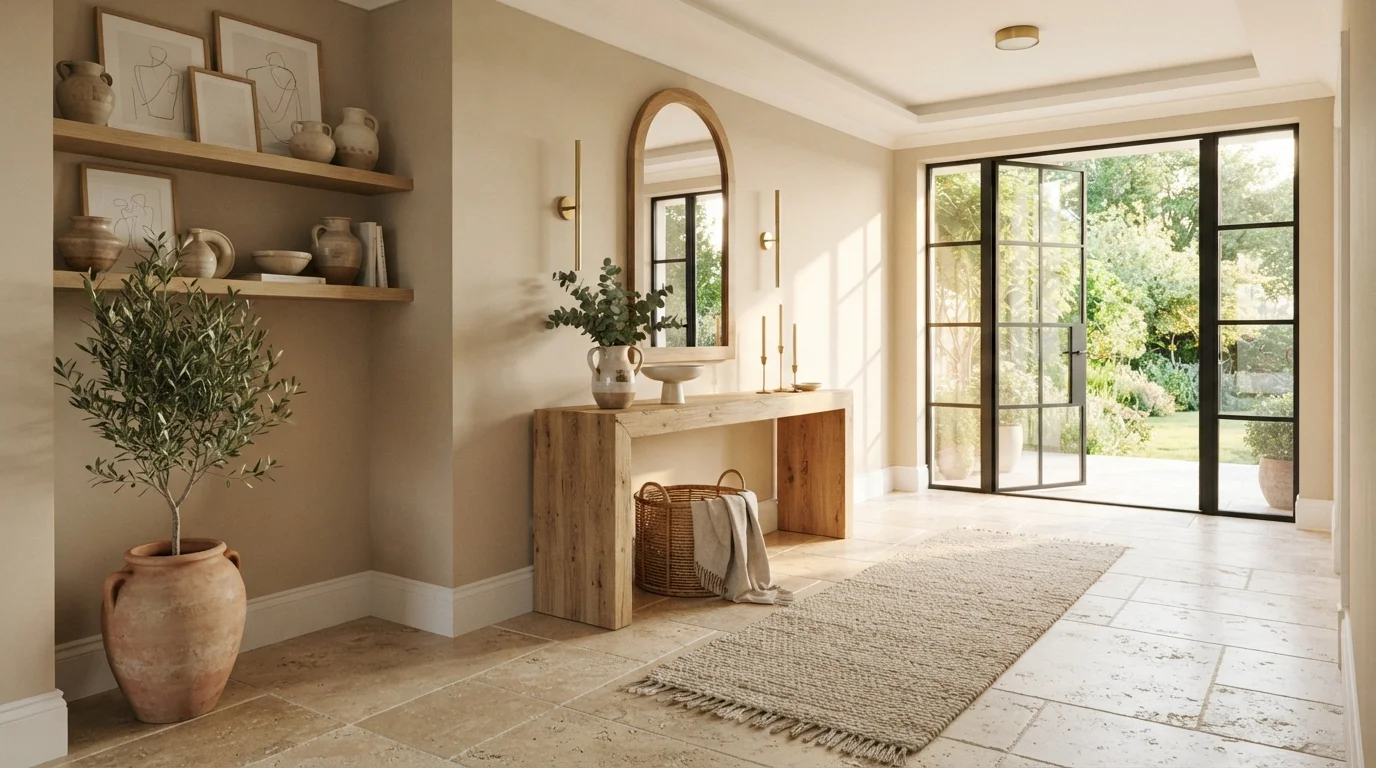
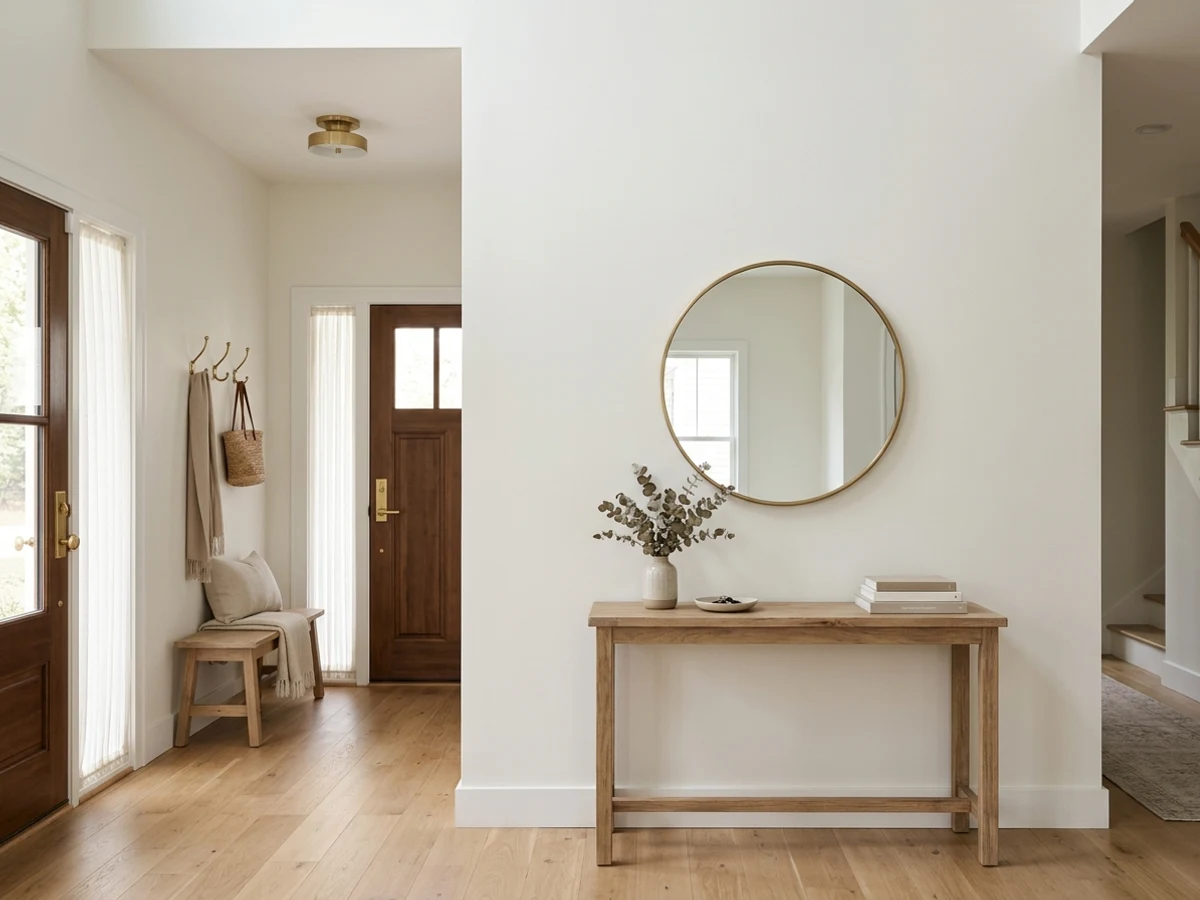
A soft warm white that bounces every bit of borrowed light, so even a hallway-dark entry feels open and fresh.
Most entryways get almost no natural light, and at LRV 82 Alabaster (Sherwin-Williams SW 7008) reflects nearly everything the fixture gives it without turning cold or clinical. It flatters oak floors, a woven runner, and black or brass hardware equally — which matters in the one room every finish in the house passes through. Painting the interior face of the front door in Iron Ore gives the white walls a focal point so the entry reads styled, not empty. If the entry borrows cool light from a north-facing room, sample White Dove by Benjamin Moore as the slightly softer neighbor first.
SEE ALABASTER ON YOUR WALLS →
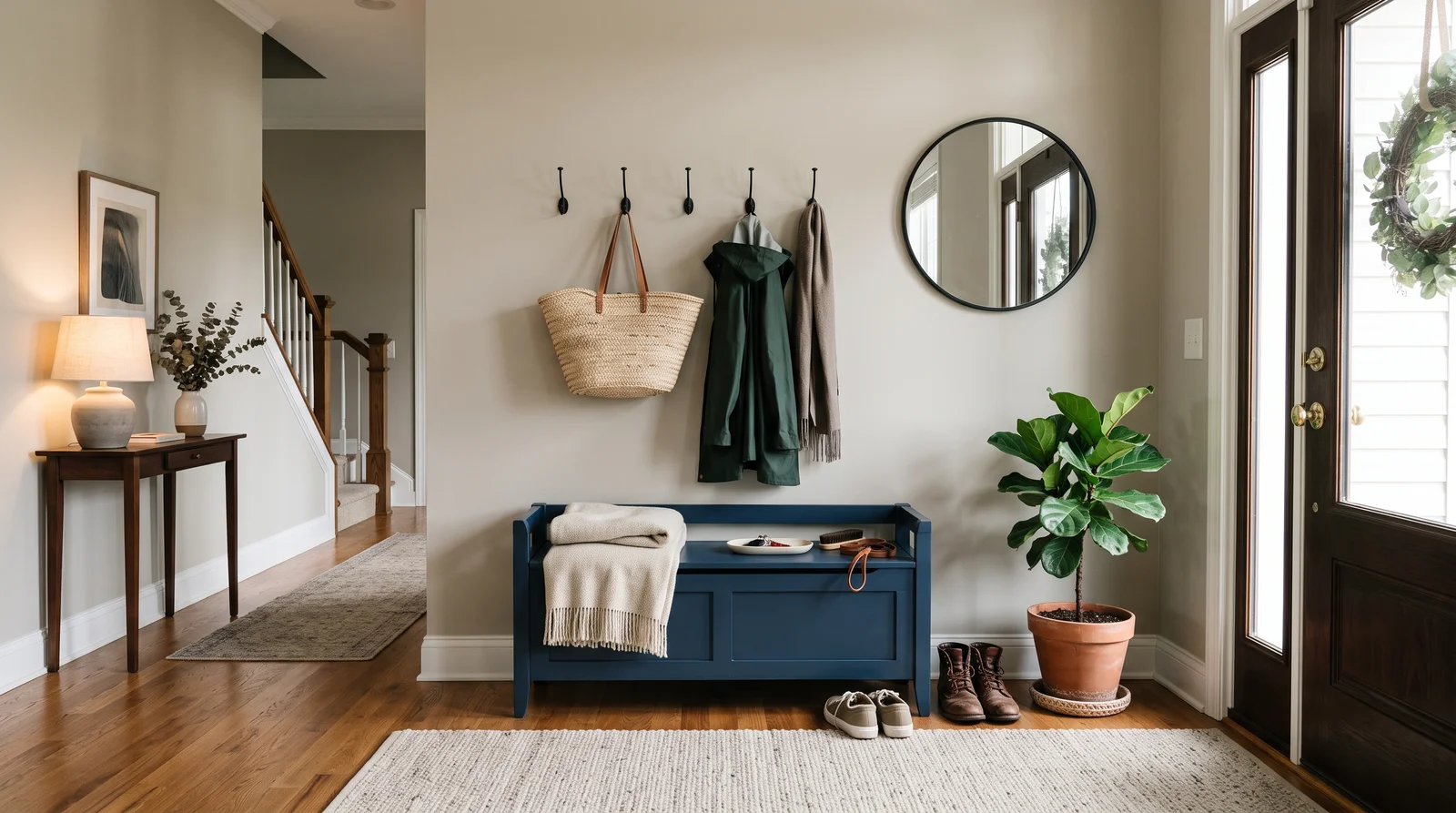
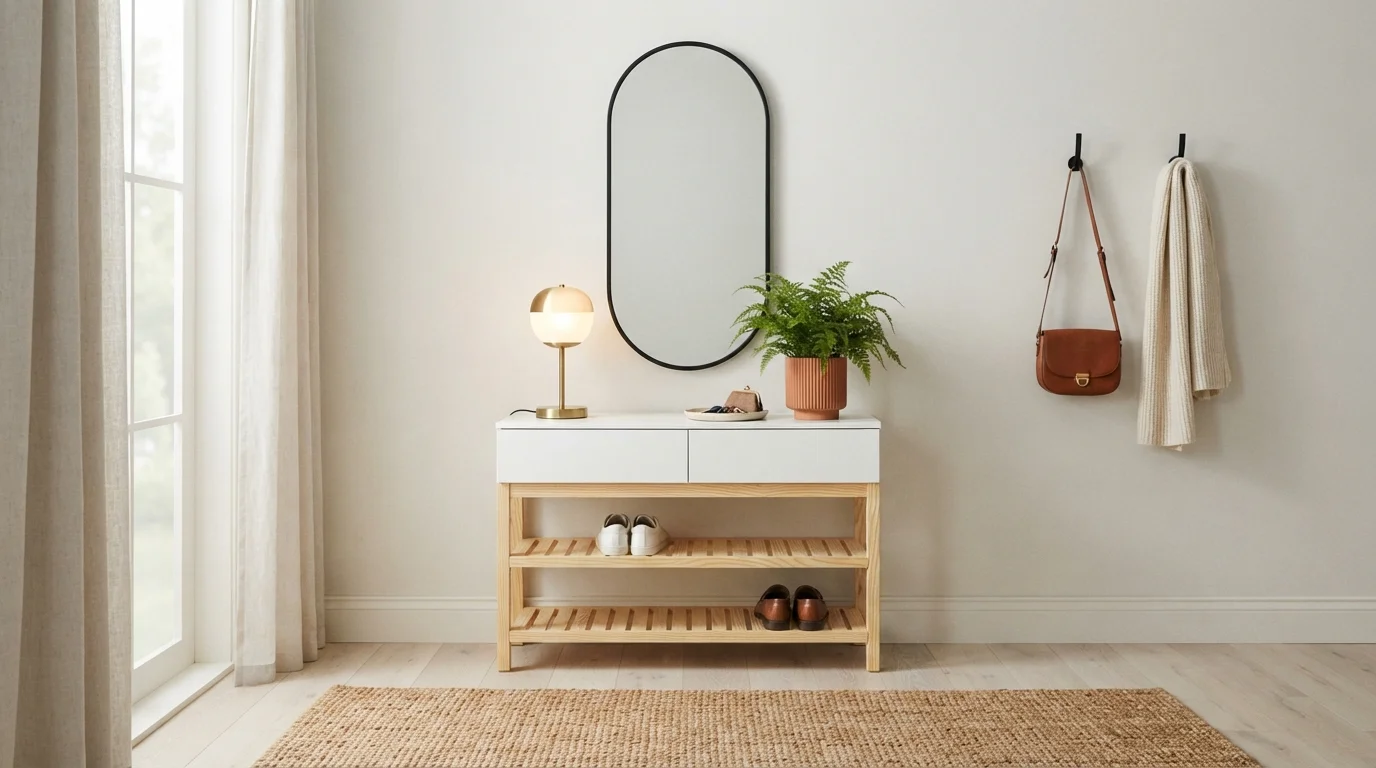
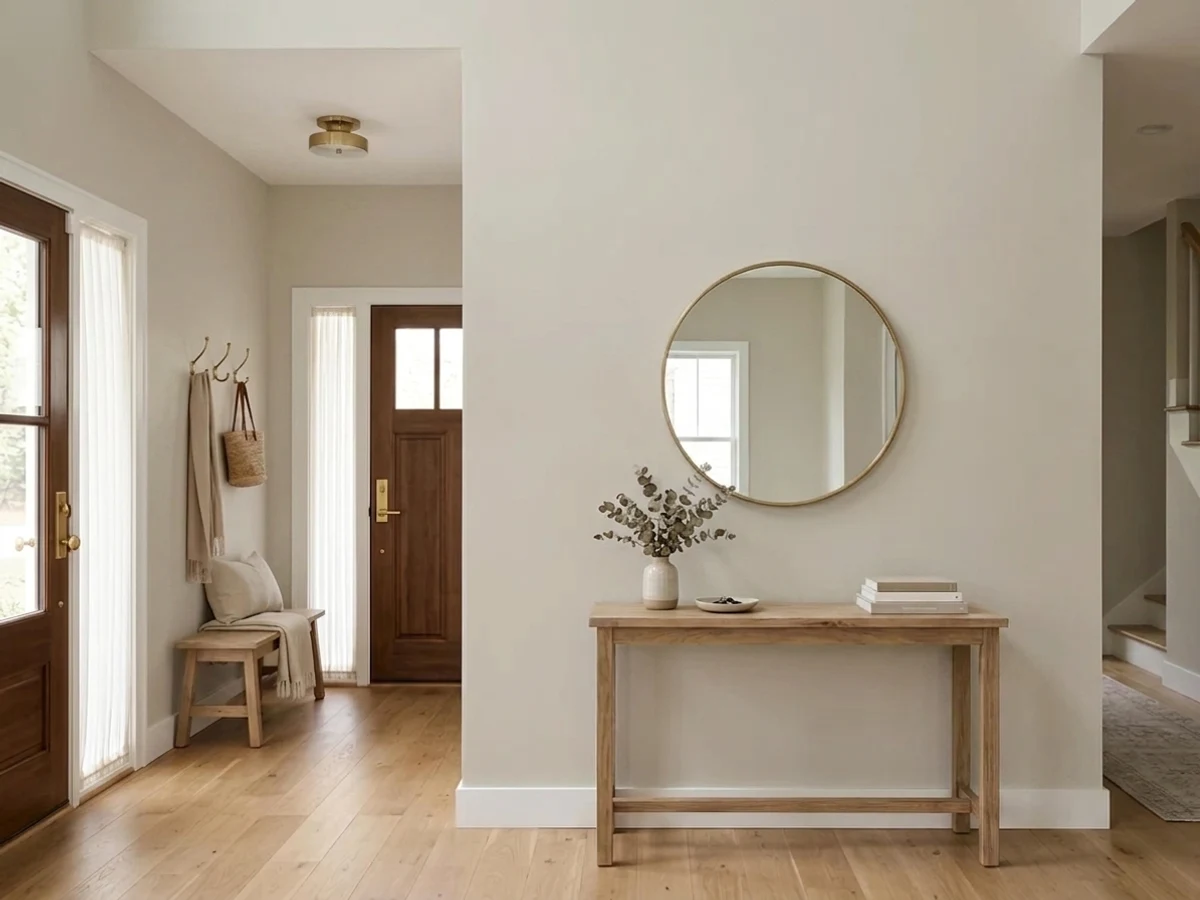
The warm gray that shakes hands with every room it opens into — calm, current, and nearly impossible to clash.
An entryway is a hub, and Agreeable Gray (Sherwin-Williams SW 7029, LRV 60) is famous for flowing into whatever color the next rooms wear, warm or cool. It reads gently gray beside crisp white trim and softly beige next to wood, so a walnut console and an oak floor both look at home against it. A navy-painted bench gives the neutral scheme one grounded piece of color without asking for a commitment on the walls. If your entry light skews cool and the walls look silver, Accessible Beige is the warmer cousin with the same easygoing manners.
SEE AGREEABLE GRAY ON YOUR WALLS →
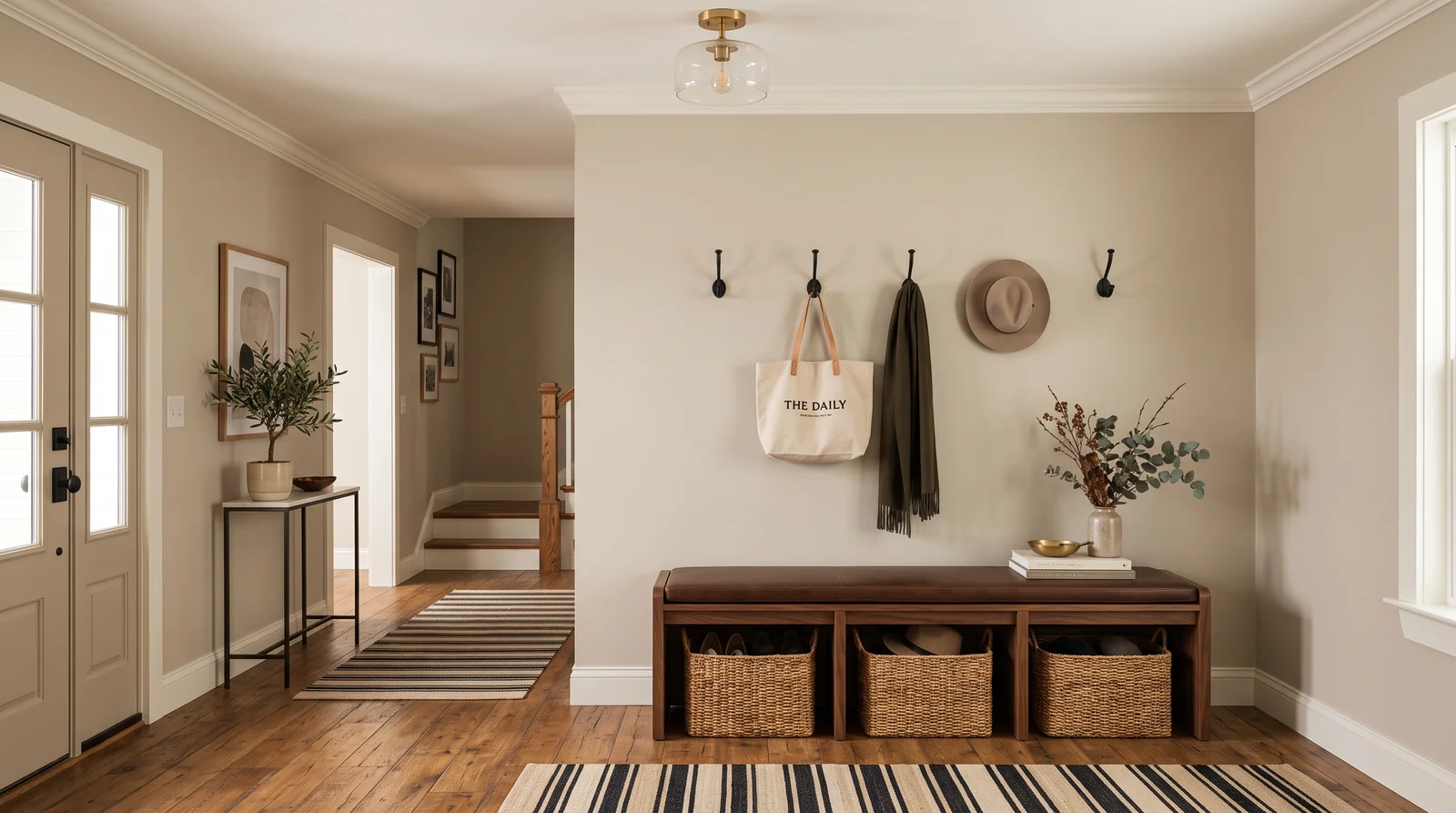
A cozy beige-greige that makes the front hall feel like the house is already glad you're home.
Accessible Beige (Sherwin-Williams SW 7036, LRV 58) leans warm without going yellow, which is exactly what a lamp-lit entry needs — cool grays can turn flat and shadowy under a single overhead fixture. It pairs naturally with rattan baskets, a leather bench cushion, walnut wood, and matte-black hooks, so the everyday clutter of an entry starts to look intentional. In a very dim entry, step up to Alabaster to keep the same warmth with far more bounce; if the adjoining rooms are gray-leaning, Agreeable Gray bridges better.
SEE IT ON YOUR WALLS →
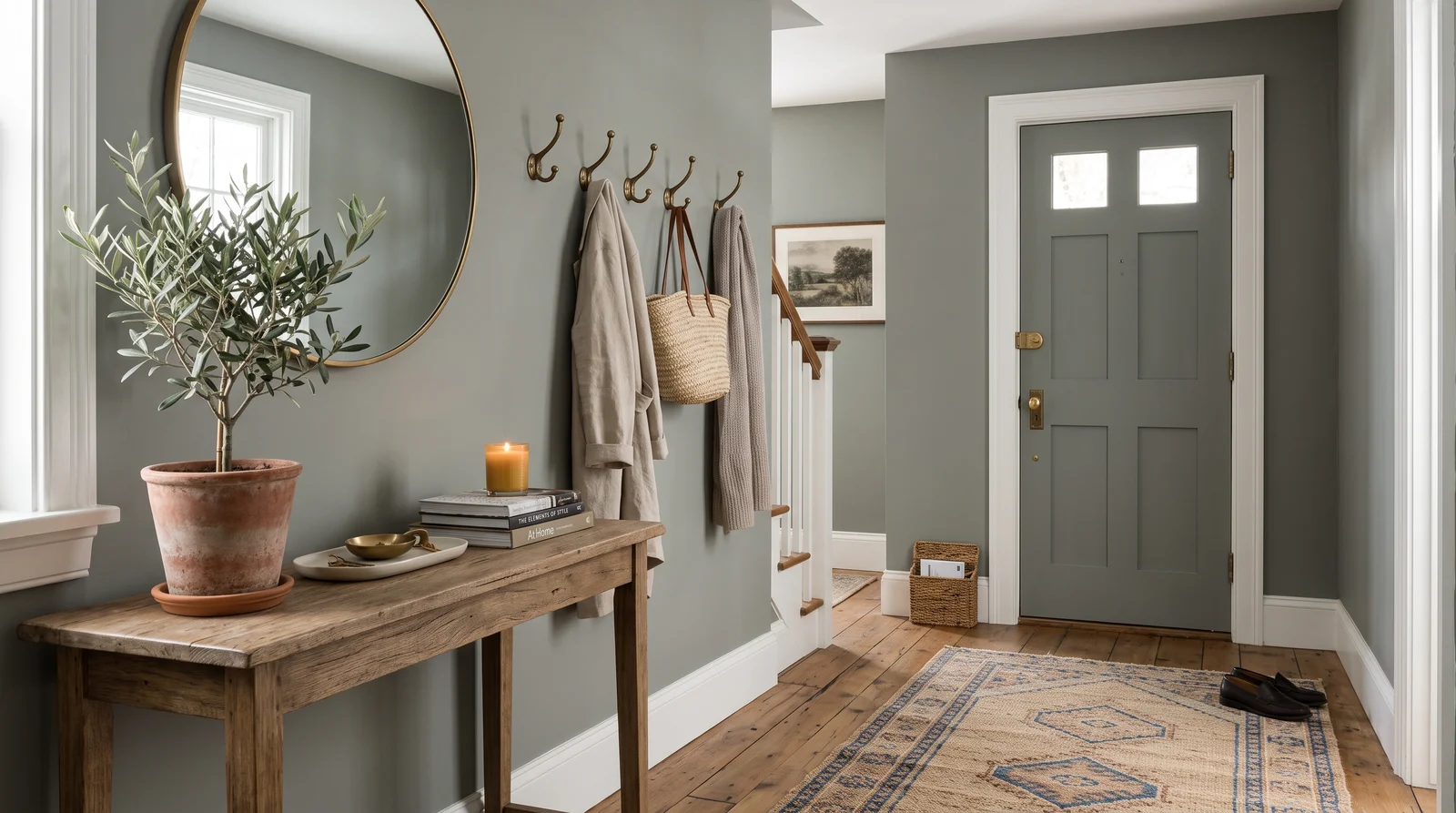
A muted gray-green that greets you like a walk in morning fog — grounded, calm, and quietly confident.
At LRV 30, Evergreen Fog (Sherwin-Williams SW 9130) is dark enough to feel intentional in a small entry but soft enough not to swallow the light. It loves brass hooks, aged-wood benches, and terracotta pots, and it forgives the scuffs from bags and boots far better than any pale neutral will. Keep the trim a white shared with the next room — Pure White works — so the transition into brighter spaces feels planned rather than abrupt. If the entry has genuinely good light and you want more depth, Hale Navy delivers the same confidence in blue.
SEE EVERGREEN FOG ON YOUR WALLS →
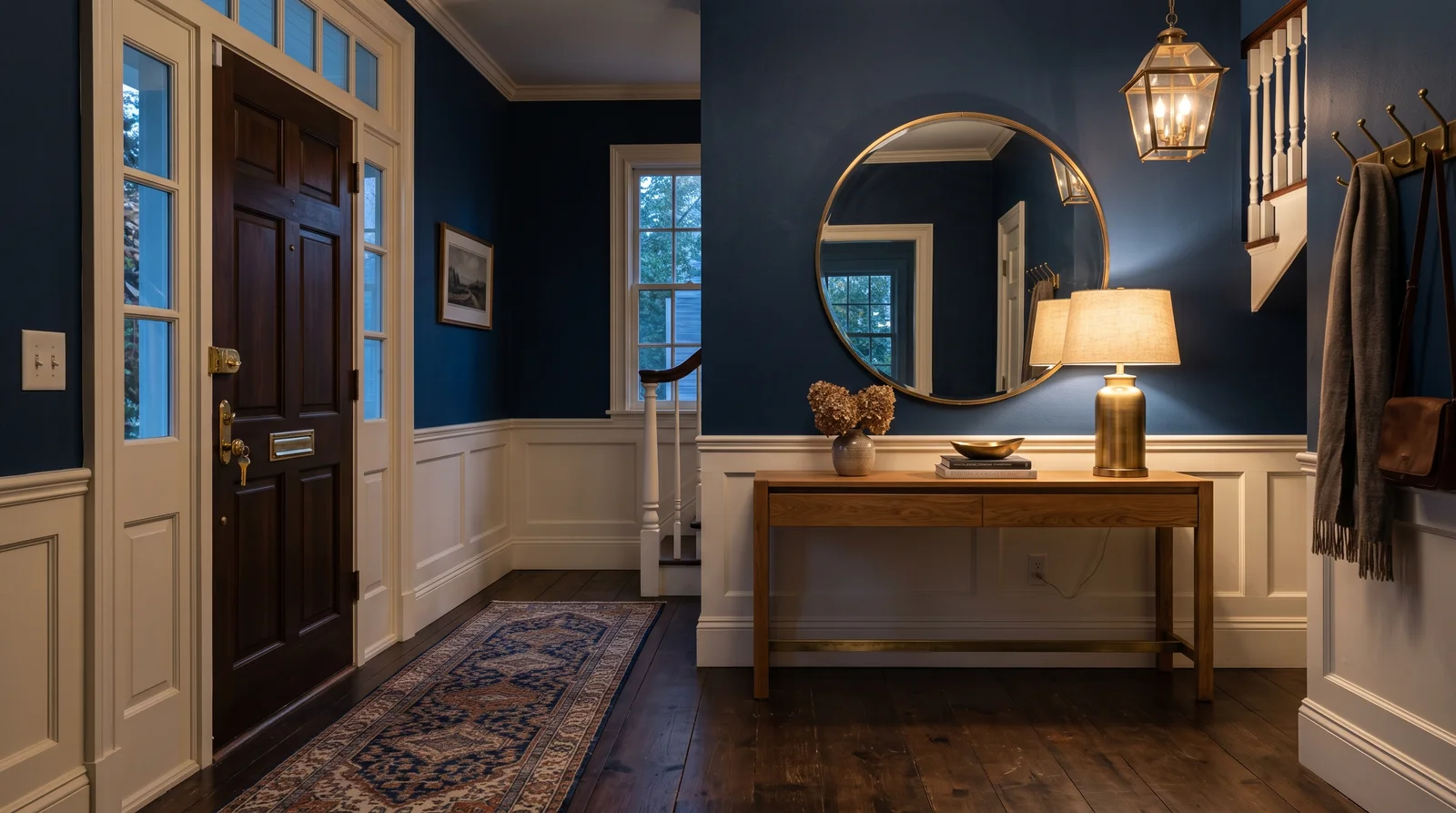
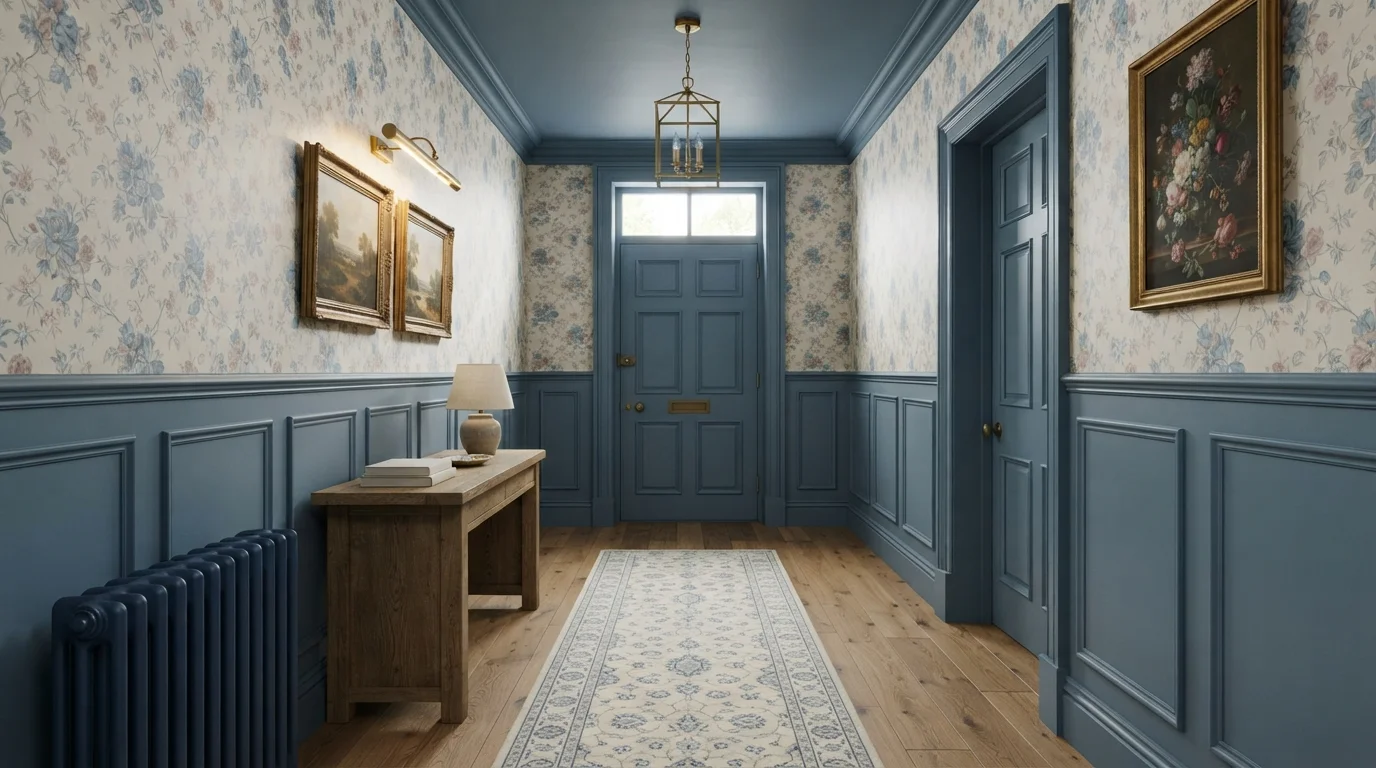
A classic deep navy that turns four plain walls into the best-dressed moment in the house, made for evening lamp light.
Hale Navy (Benjamin Moore HC-154) has an LRV of 8, so treat it as a night color: it needs a mirror, a lamp, and pale trim to stay welcoming instead of cavernous. It is the safest bold there is — navy reads classic rather than trendy, and it flatters brass, black, and chrome hardware alike, so nothing at the door has to change. Against White Dove trim the contrast looks tailored, and a warm oak console keeps the scheme from going cold. If the entry has zero natural light and one weak fixture, paint only the console wall in Hale Navy and keep the rest in White Dove.
SEE HALE NAVY ON YOUR WALLS →
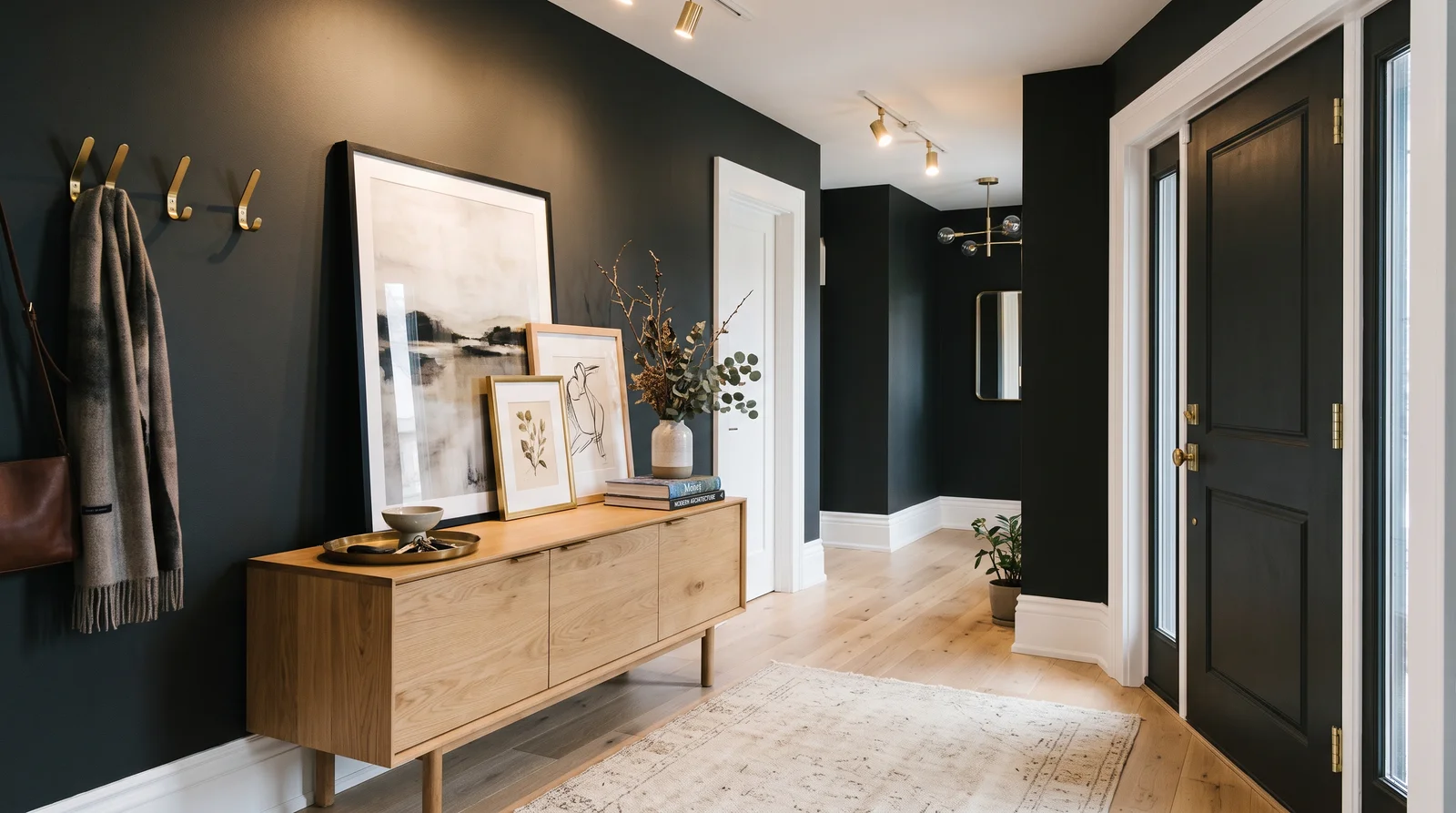
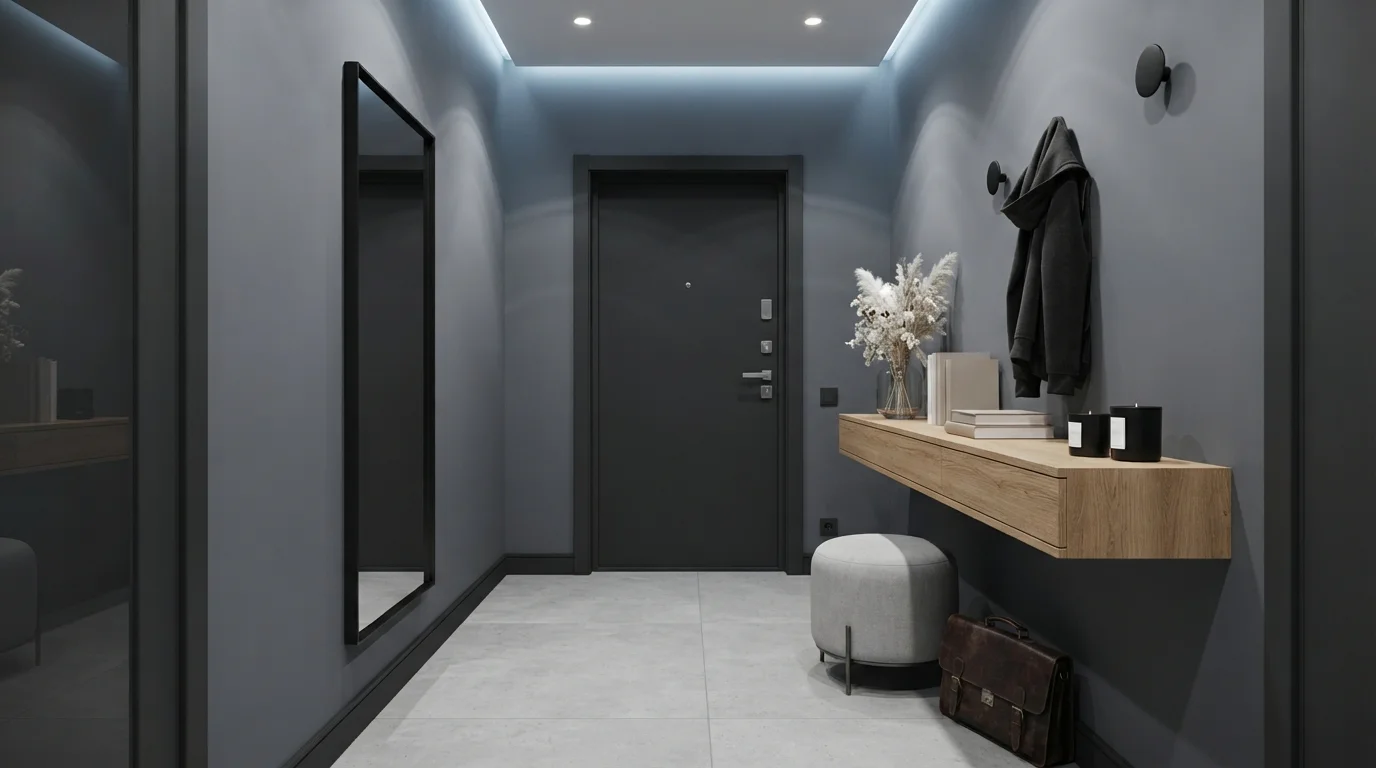
A soft charcoal-black that wraps the entry in gallery drama and makes brass, wood, and white pop like exhibits.
Iron Ore (Sherwin-Williams SW 7069, LRV 6) is the moody move for an entry that opens into brighter rooms — the contrast makes the rest of the house feel lit from within. Its softened black also hides fingerprints and scuff marks better than any pale wall, a real gift in the hardest-working few square feet of the house. Crisp Chantilly Lace trim keeps the edges sharp, and light oak plus brass stop the room from reading heavy. Skip it in a long windowless hall with a single weak fixture; there, Evergreen Fog gives you the drama while returning several times the light.
SEE IRON ORE ON YOUR WALLS →Entryway Wall Color Combinations
A wall color never works alone. These are the full schemes from the rooms above — the lead color first, then the supporting colors that make the photo work.
A soft warm white that bounces every bit of borrowed light, so even a hallway-dark entry feels open and fresh.
TRY THIS PALETTE →The warm gray that shakes hands with every room it opens into — calm, current, and nearly impossible to clash.
TRY THIS PALETTE →A cozy beige-greige that makes the front hall feel like the house is already glad you're home.
TRY THIS PALETTE →A muted gray-green that greets you like a walk in morning fog — grounded, calm, and quietly confident.
TRY THIS PALETTE →The classic entry pairing is a warm or gray neutral wall with crisp white trim — White Dove is a go-to trim white because it's soft enough not to clash with warm walls like Accessible Beige or Revere Pewter. Keep the ceiling white or a lighter shade of the wall color to keep the space feeling tall.
Let your floor and metals guide the undertone. Warm wood floors love Mocha Mousse, Accessible Beige, and Revere Pewter; cooler tile or gray floors pair cleanly with Hale Navy and Aegean Teal. Match your hardware and light fixtures to the mood — brass and bronze warm up a navy or teal entry, while black or nickel keeps a neutral entry crisp and modern.
Entryway Color Ideas by Color
Set on a color family already? Each page has its own real rooms and picks.
Light or Dark Entryway Colors?
Go Light (LRV 60+) If…
The room is small, faces north, or has to work at every hour. Light warm colors make it feel bigger and stay calm in evening light — the light you actually live in.
Entryways are often the least predictable rooms for light. Many have no windows at all, or just a sidelight by the door, so they lean heavily on artificial light morning and night. Under warm bulbs, a color like Revere Pewter or Accessible Beige glows; under cooler daylight bulbs, the same color can look flatter and grayer.
If your entry gets real daylight from a north-facing door or sidelight, cool colors like Hale Navy and Aegean Teal can drift a little cold — lean toward the warmer side or balance them with warm wood and lighting. South- or west-facing light is forgiving and makes warm neutrals like Mocha Mousse feel especially rich. Always tape a sample to the wall and look at it at the two times you actually use the space: rushing out in the morning and coming home at night.
LRV (Light Reflectance Value) tells you how much light a color bounces back, from near 0 (black) to near 100 (pure white). In an entry with little natural light, a higher-LRV color like White Dove or Accessible Beige keeps the space feeling open and stops it from turning into a dark tunnel between rooms.
If your entry is generous and well-lit, you have room to go cozy and dramatic. Deeper colors like Hale Navy and Mocha Mousse have low LRVs, which is exactly what makes them feel enveloping and special — just pair them with bright trim and good lighting so the space still reads as a welcome, not a cave. Revere Pewter sits in a comfortable mid-range that flexes either way.
See It. Love It.
Paint It.
Upload one photo of your entryway and try every color on this page on your own walls — in your own light, before you buy a drop of paint.

Revere PewterBeforeThe Best Color Directions for an Entryway
Warm neutrals are the easiest win. Accessible Beige and Revere Pewter feel instantly welcoming because they have a soft, slightly grayed warmth — they read clean without feeling cold, and they make wood floors and trim look richer. These are the colors that say "come in" the moment someone steps through the door.
If you want more personality, go deeper. Hale Navy on the walls or a built-in bench makes a small entry feel intentional and finished, and Mocha Mousse brings a soft, earthy warmth that's cozy without being dark. Aegean Teal sits in between — a muted blue-green that feels fresh but still grounded. And when the entry is tight or short on light, a true white like White Dove keeps everything open and bright.
Choosing the Right Finish
Entryways take abuse — bags, shoes, wet coats, and hands on the wall near the door. That's why a flat finish usually isn't the right call here, even though it hides wall flaws. You want something you can wipe down.
Eggshell is the safe middle ground for entry walls: it cleans up well and doesn't throw much glare. If your entry is high-traffic or you have kids and pets, satin gives you even more washability. Save semi-gloss for the trim, door, and any wainscoting or beadboard, where the extra durability and slight shine actually look right and survive scuffs.
Common Entryway Mistakes to Avoid
The biggest mistake is treating the entry as an afterthought and grabbing leftover flat paint from another room. It won't hold up to the traffic, and it'll show every scuff within months. The second mistake is going too pale and cold in a dark entry, which makes the space feel like a gray hallway instead of a welcome.
People also forget how the entry connects to the rooms you can see from it. Whatever you pick should get along with the adjacent living room or stairwell color, not fight it. Finally, don't judge a color from the chip alone — entry light is unusual, so always sample on the actual wall before you buy gallons.
About Entryway Paint Colors
Your entryway is the first thing people see and the last thing they pass on the way out. It sets the tone for the whole house, but it's also a small, hardworking space that takes scuffs, fingerprints, and weather. That mix of "make a good impression" and "survive daily life" is exactly what should guide your color choice.
The best entryway colors usually come from four families: warm neutrals, clean whites, soft grays, and deep blues. Each one does something different — a warm neutral feels welcoming, a crisp white feels open, a quiet gray feels calm, and a navy feels confident and grounded. The colors featured here — White Dove, Revere Pewter, Aegean Teal, Accessible Beige, Mocha Mousse, and Hale Navy — cover that full range so you can match the mood you want.
One thing worth knowing up front: every color shown on this page is mixed to order at a paint counter, not pulled off a shelf. That means you can take any name you like here and have it matched across brands, so you're never locked into one company to get the shade you want.
The Questions Everyone Asks
What color should I paint my entryway?
If you want one answer, start with the safe picks above — White Dove, Revere Pewter, Accessible Beige, Hale Navy. They read well in any light and survive furniture changes. Then check the light: strong afternoon sun wants a step cooler, a north-facing room wants a step warmer.
What is the best paint color for a small, dark entryway?
Go lighter and a little warm. A bright white like White Dove or a soft neutral like Accessible Beige reflects more light and keeps the space open. If you want some color, a warm mid-tone like Revere Pewter still feels welcoming without closing the room in.
Can I use a dark color like Hale Navy in an entryway?
Yes, especially if the entry gets some natural light or you can add good lighting. Deep colors like Hale Navy or Mocha Mousse make a small entry feel intentional and cozy rather than cramped. Pair them with bright white trim and a light ceiling so the space still feels welcoming.
What sheen should I use on entryway walls?
Eggshell is the best all-around choice because it wipes clean and doesn't glare. If your entry is high-traffic, use satin for extra washability. Reserve semi-gloss for the trim, door, and any paneling, where durability and a bit of shine look right.
Should the trim match the rest of my house?
It usually should, since the entry connects to other rooms you can see into. A consistent trim white like White Dove ties the spaces together. Just make sure your trim white doesn't clash with the wall undertone — warm walls want a softer white, not a stark blue-white.
What does LRV mean and why does it matter here?
LRV is Light Reflectance Value — how much light a color bounces back, from near 0 to near 100. In a dim entry, a higher-LRV color like White Dove keeps things bright, while a low-LRV color like Hale Navy creates a cozy, enclosed feel. It's the quickest way to predict whether a color will open up or darken your space.
Can I match one of these colors at a different paint store?
Yes. Every color shown here is mixed to order at the paint counter, not tied to one shelf product. You can take a name like Aegean Teal or Revere Pewter and have it cross-matched between brands, so you can stick with the paint line you prefer.
How do I test an entryway color before painting?
Sample it on the actual wall, not just from a chip, because entry light is unusual and often artificial. Look at the sample both in the morning and at night, since that's when you really use the space. Check it next to your floor and the adjoining room's color too.
What two-color combination works best in a entryway?
The reliable pattern is a quiet main color plus one deep accent on a single wall. Keep trim and ceiling in one warm white so the two colors are the only event in the room — the combination cards above show complete schemes from real rooms.
What colors make a entryway look bigger?
High-LRV, slightly warm colors — LRV 60–75 is the sweet spot. Paint the walls and trim close to the same light color so the corners blur, and keep the ceiling white. Stark cool white actually works against you; it creates hard shadows that show the room's edges.

Ask a Question