Room Colors · White Entryway
8 Best White Entryway Paint Colors for 2026
ideas, combinations, and real rooms
8 curated picks from real white entryways — with the exact colors, honest reasons why, and the combinations that hold the room together.

Former interior stylist who can spot a green undertone from across a room. Jessica writes the color and mood pieces — what to choose, what pairs, and why your "white" looks pink.
The Fast Answer
Don't want to read 8 picks? These four are the safe answers.

Top Picks for the White Entryway
Tap a shade to see the white entryway in it, then try it on your own room.
White Entryway Color Trends 2026 — What's In, What's Out


- Stark Blue-White Walls — Cool, blue-based white that can look flat under entryway lighting is fading as warmer, creamier whites take over.
- High-Gloss White Trim With Flat White Walls — The old high-contrast glossy-trim-flat-wall combo feels dated next to 2026's softer, more tonal white schemes.
- All-White With No Texture Or Warmth — A single shade of white with no warm layering feels sterile compared to today's more nuanced, warmer white entryways.
The 8 Best White Entryway Paint Colors
Every pick below is a real rendered white entryway, not a chip. The lead color first; the swatches are the full scheme in the photo — walls, furniture, textiles, accent.

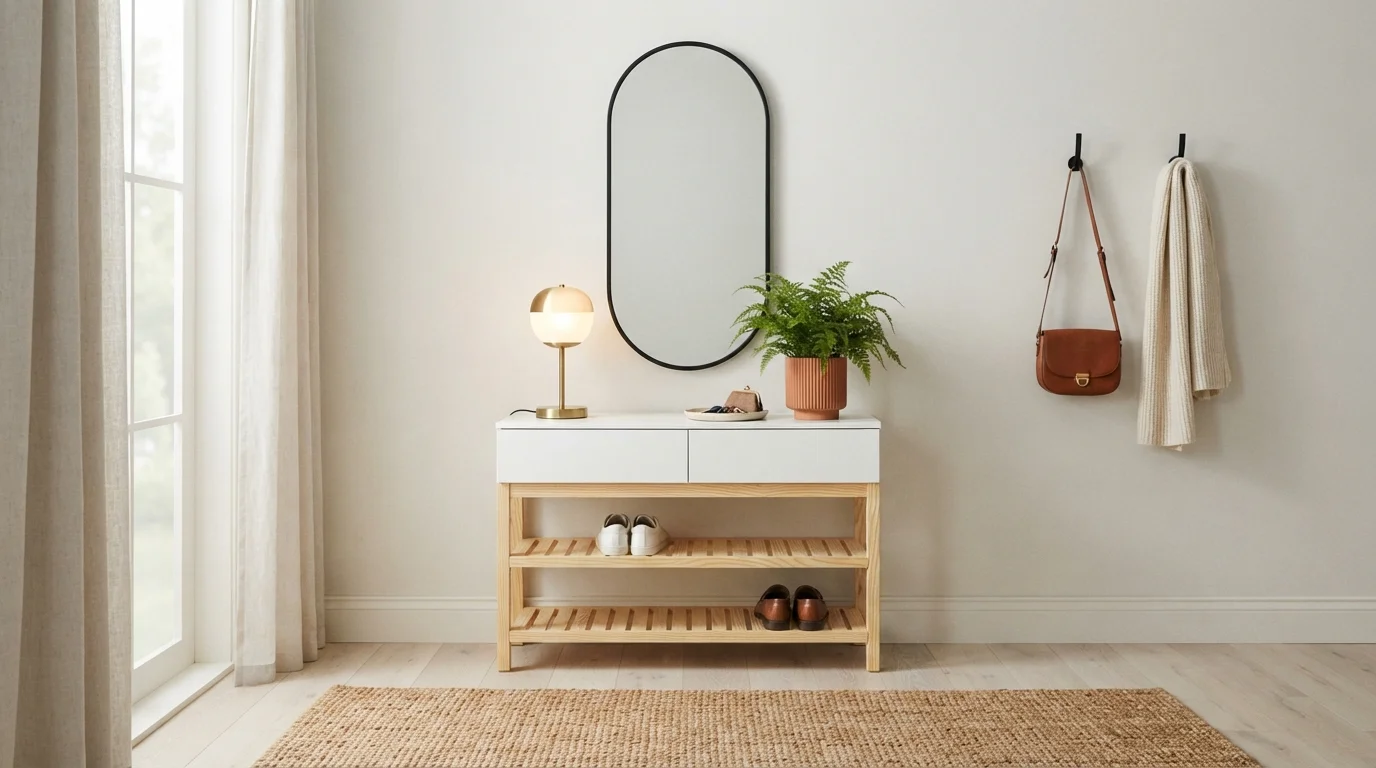
Soft warm whites and gentle daylight pair with honey wood tones to create an effortlessly calm and organized entry.
Creamy off-white is a soft, inviting neutral that feels much gentler than crisp stark white. Here, the warm white walls wrap the entire entryway, framing a clean white shoe console with natural pine accents and a textured jute rug. The space feels instantly calm, organized, and effortlessly welcoming the moment you step through the door. Keeping the walls soft and light makes the compact foyer feel bright, while earthy wood tones and green plants keep it grounded. It is perfect for minimalists who crave cozy warmth.
SEE CAMEO WHITE ON YOUR WALLS →
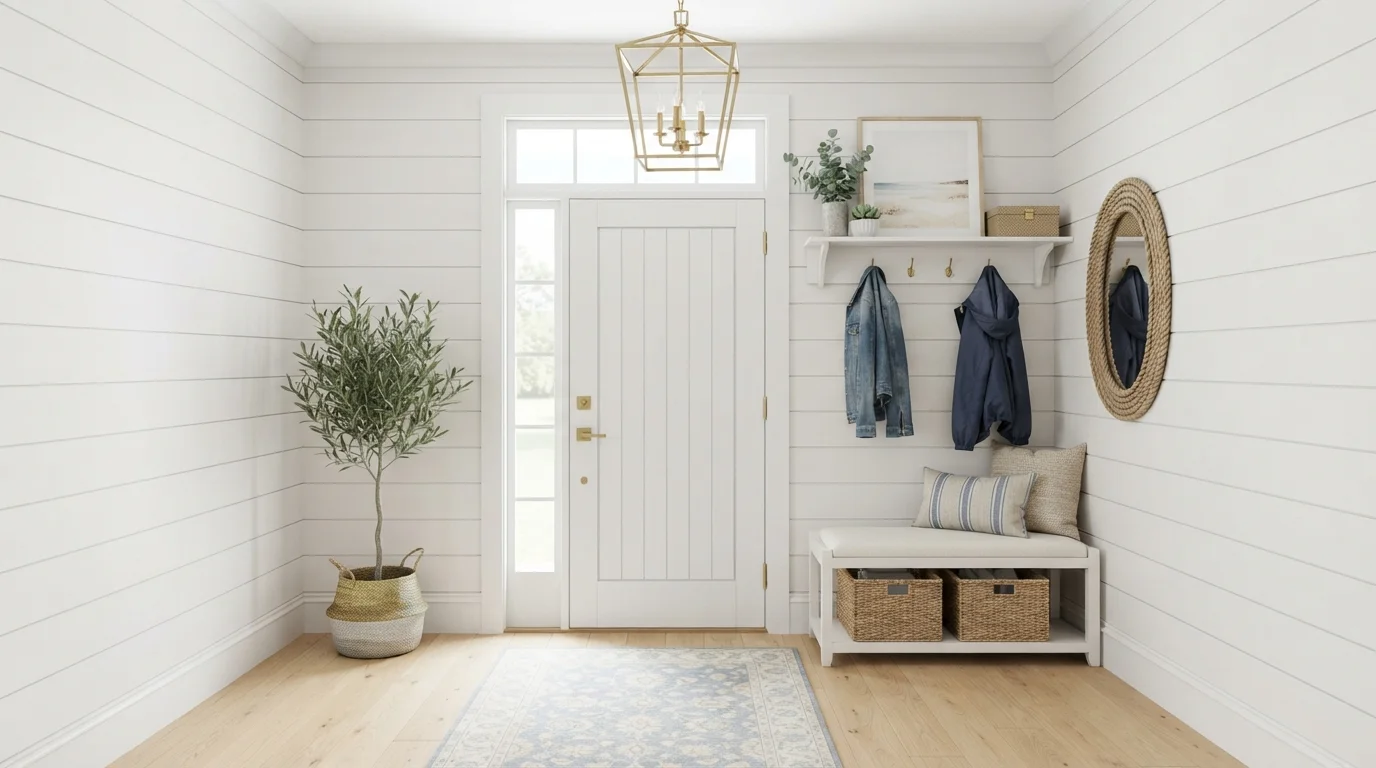
Sun-washed white shiplap and breezy coastal blues create an instantly welcoming, relaxed first impression the moment you step through the door.
Soft white is a bright, clean neutral that reflects natural light effortlessly. In this entryway, crisp white coats the horizontal shiplap walls and front door, balancing a matching white cushioned bench and a soft blue patterned rug. The room feels wonderfully airy, serene, and full of casual beach house charm. This combination works because the clean white backdrop allows organic woven textures and soft ocean blues to pop without visual clutter. It is ideal for anyone who loves an inviting, fresh, and clutter-free coastal aesthetic.
SEE DU JOUR ON YOUR WALLS →
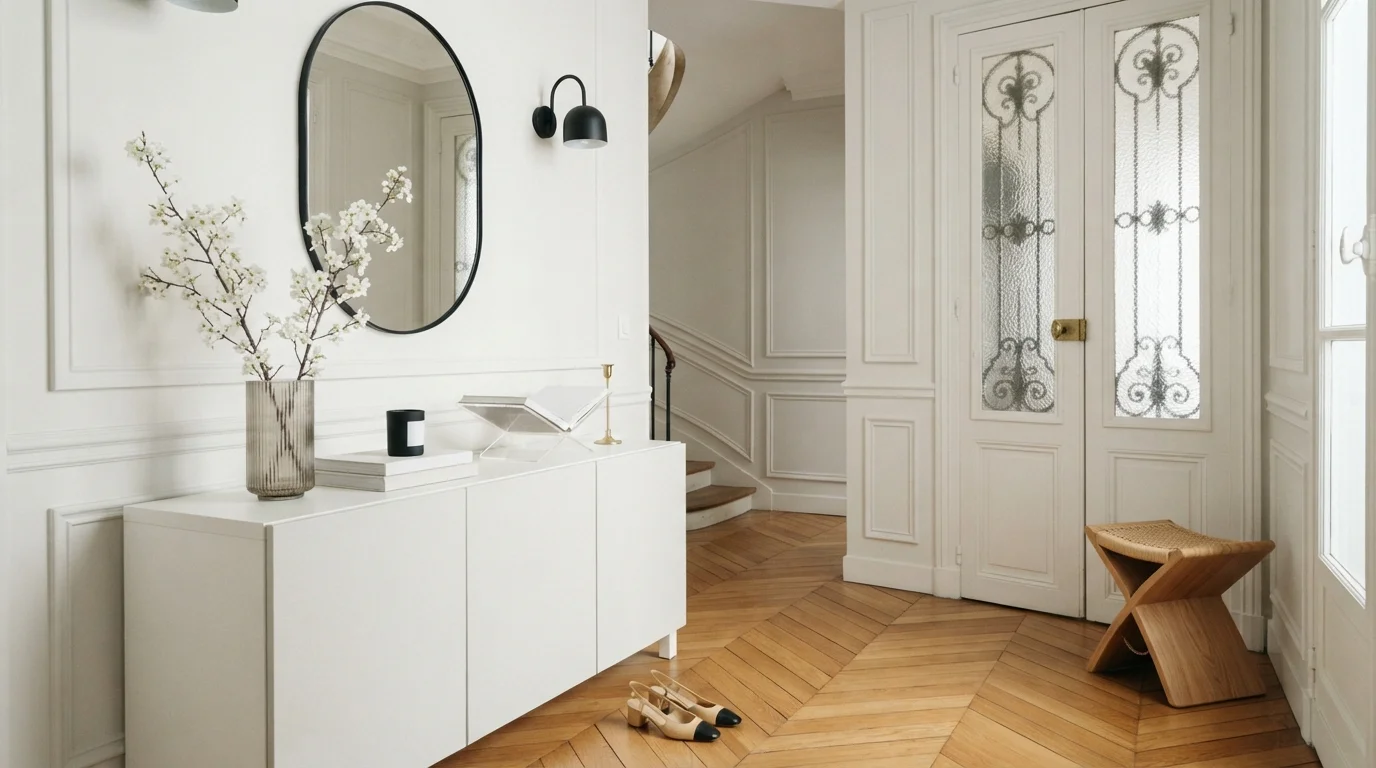
Crisp white walls and honey herringbone floors create a breezy, elegant welcome filled with classic Parisian charm.
Soft white is a gentle, clean neutral that feels both timeless and fresh. In this entryway, warm white coats the moulded walls and vintage glass doors, paired with a sleek minimalist sideboard. The space feels bright, peaceful, and effortlessly put together. Light walls reflect daylight across the warm amber chevron floors and make the slim black accents pop. It is the perfect look for lovers of historic character mixed with sleek modern simplicity.
SEE WEDDING WHITE ON YOUR WALLS →
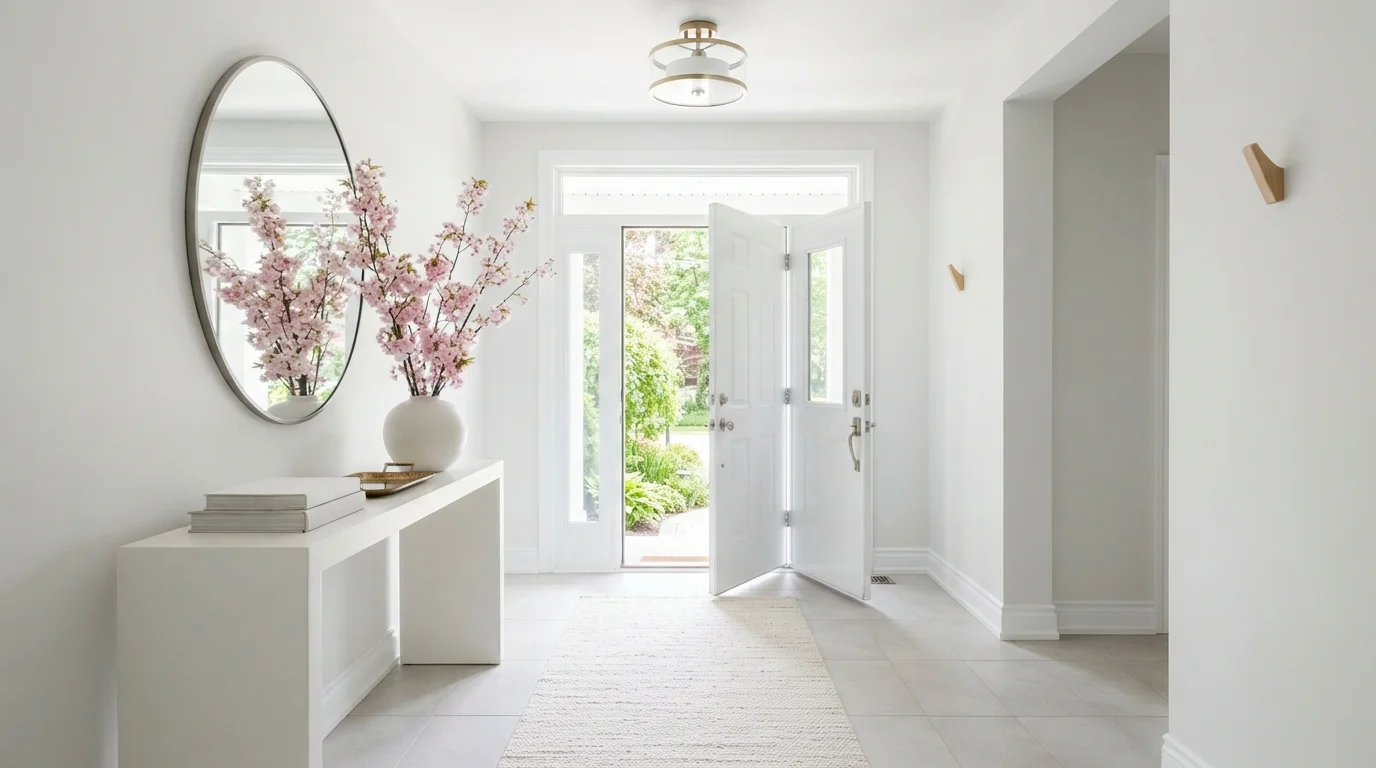
Warm daylight pours through an open front door, making fresh pink florals shine against clean, bright white walls.
Crisp white is a clean, luminous neutral that makes spaces feel instantly larger. In this entryway, bright white covers the walls, tall baseboards, front door, and sleek console table, paired with a textured cream floor runner. The entire space feels fresh, calm, and uplifting as soon as you step inside. This look works because the all-white surfaces reflect sunlight and let the soft pink cherry blossoms stand out effortlessly. It is an ideal style for anyone who wants an open, clutter-free first impression in their home.
SEE IT ON YOUR WALLS →
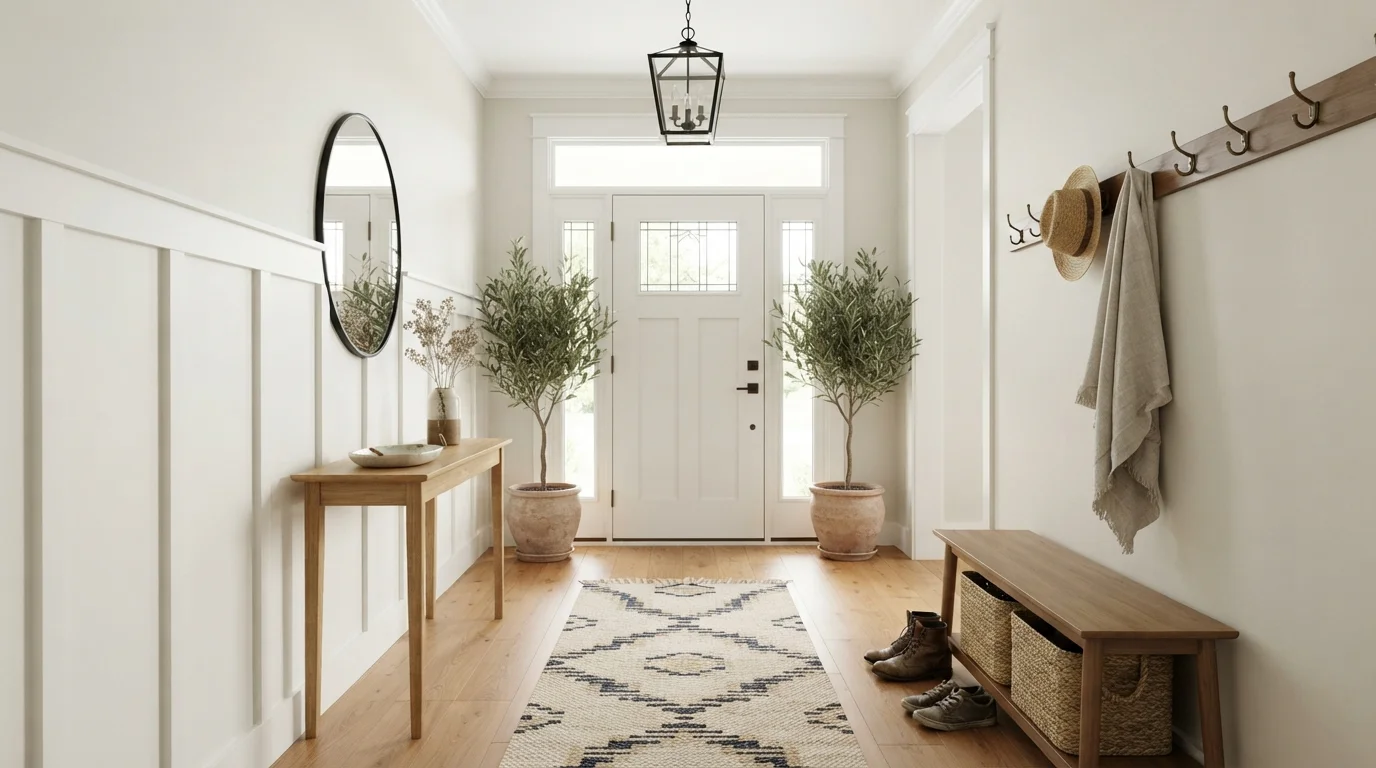
Sunlit creamy walls and natural wood accents create an inviting, peaceful welcome right at the front door.
Creamy off-white is a soft, warm neutral with gentle beige notes. In this entryway, delicate cream coats the upper walls and paneled wainscoting, paired with a natural runner, a solid wood bench, and slender olive trees. The space feels bright, calm, and effortlessly welcoming. Natural wood tones and woven textures ground the pale walls so the room never feels sterile. It’s perfect for anyone who loves an airy, timeless entry that makes coming home feel relaxing.
SEE COLD FOAM ON YOUR WALLS →
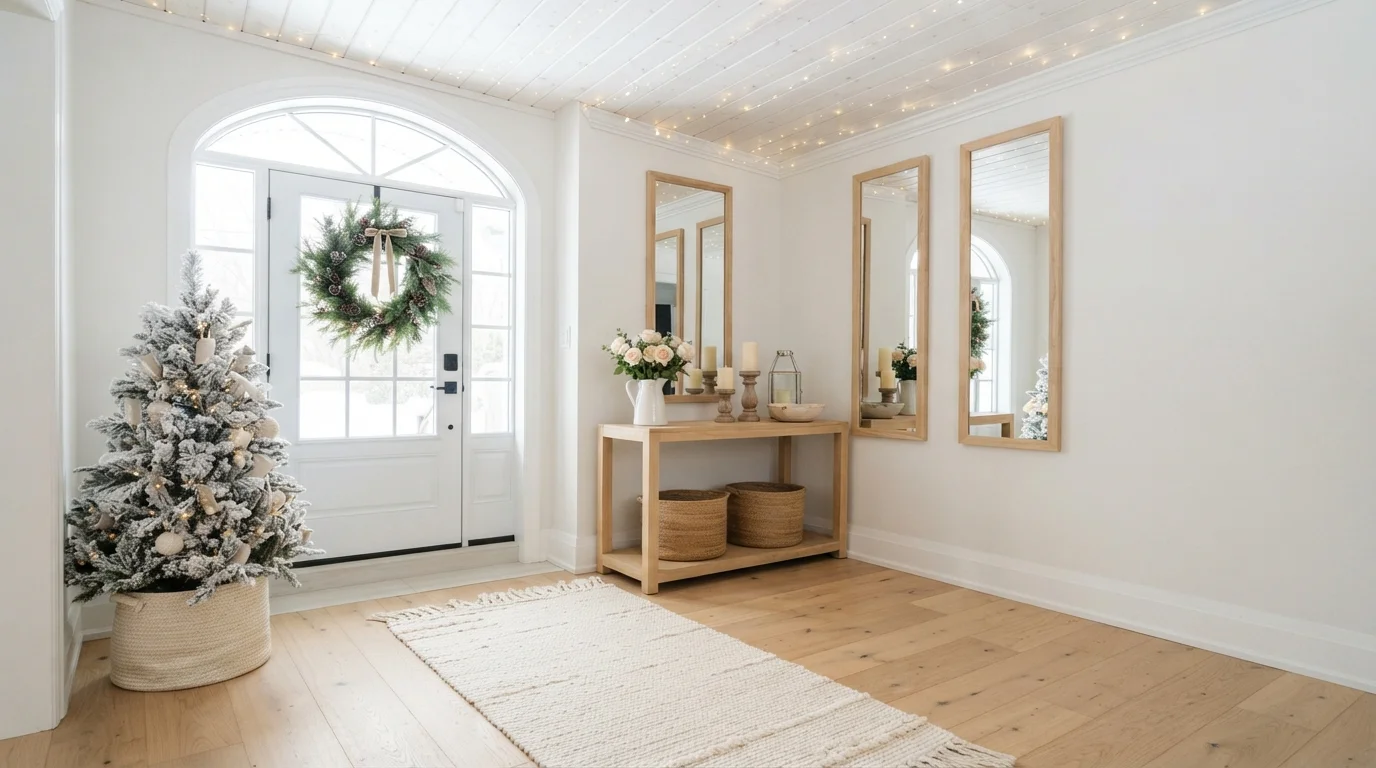
Soft whites meet frosted greens and pale woven textures for a bright, serene welcome inside from the cold.
Crisp white is a clean, luminous neutral that makes spaces feel open and fresh. In this entryway, bright white covers the walls, ceiling, and arched door, balanced by a pale blonde wood console table, woven straw baskets, and a thick cream runner rug. The room feels incredibly peaceful, cozy, and full of light. The combo works because warm wood tones and textured baskets instantly soften the bright white surfaces. It is perfect for anyone who loves a calm, minimalist approach to holiday decorating.
SEE LUSTER WHITE ON YOUR WALLS →
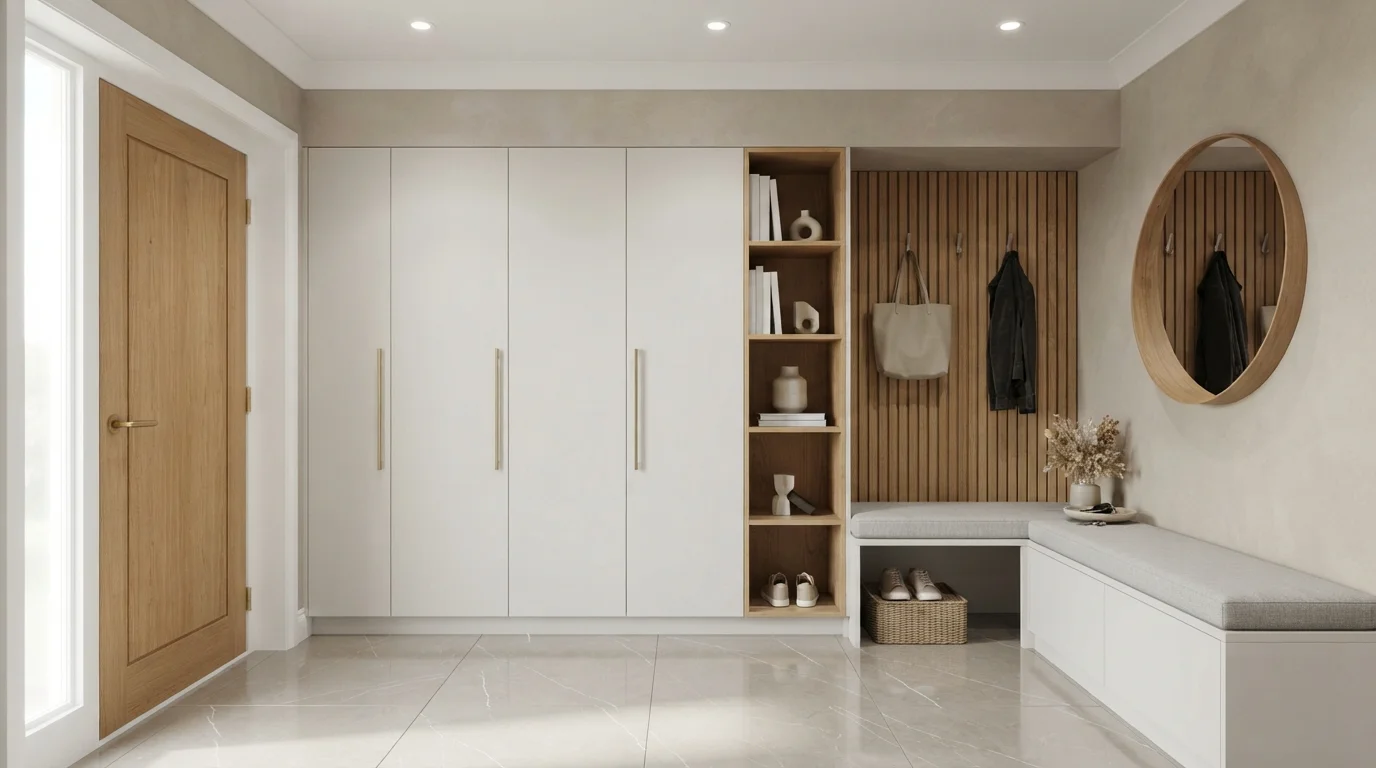
Crisp soft white cabinets paired with textured taupe walls and blonde oak slats create an organized, inviting entryway.
Soft off-white is a clean, gentle neutral that keeps tight spaces feeling open and bright. In this entryway, sleek built-in wardrobe cabinets wear this creamy shade, paired with textured taupe-beige on the walls and crisp white trim. The entire entrance feels tidy, tranquil, and instantly welcoming as soon as you step inside. This combination works beautifully because light cabinet doors prevent the storage from feeling heavy while vertical oak accents introduce natural warmth. It is ideal for modern apartments needing smart storage.
SEE STONE HEARTH ON YOUR WALLS →
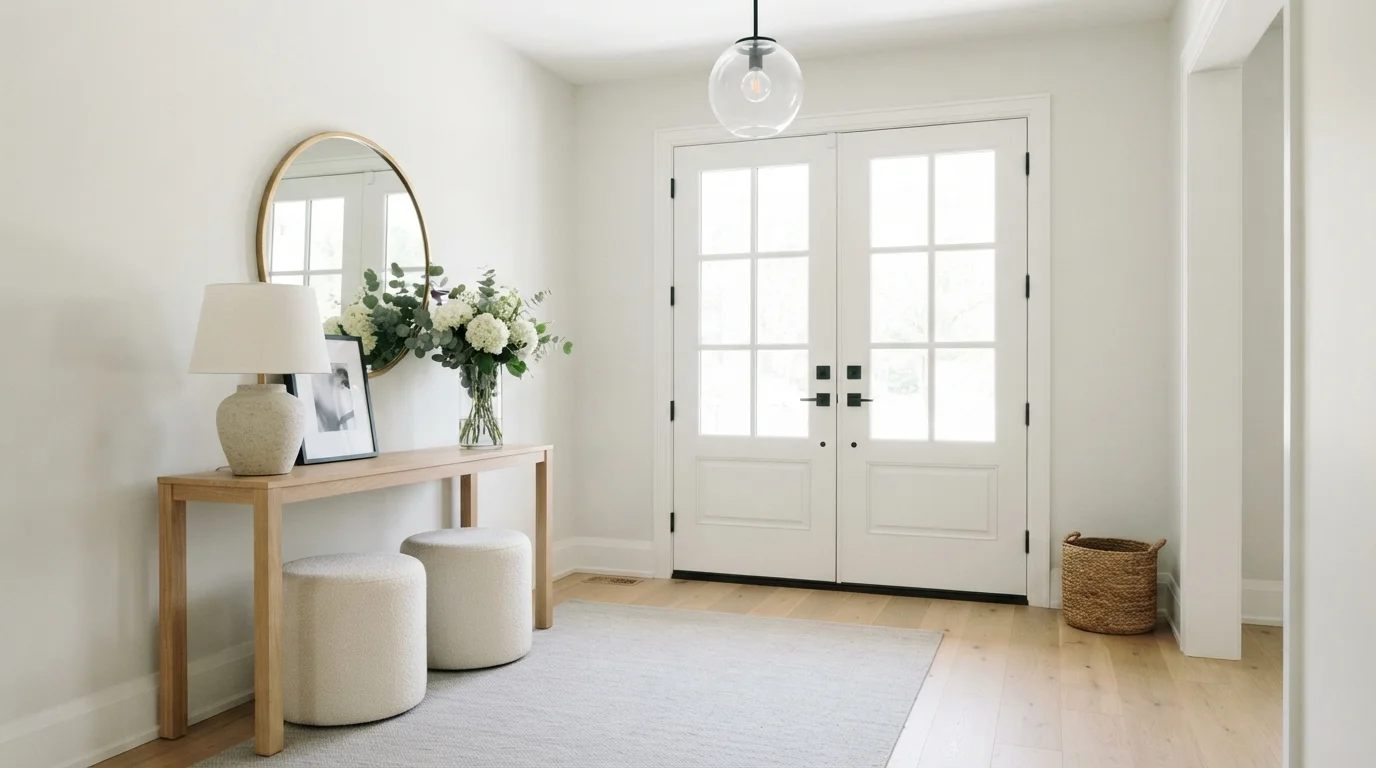
Soft white walls catch bright morning sunlight, creating an inviting and peaceful first impression right at the front door.
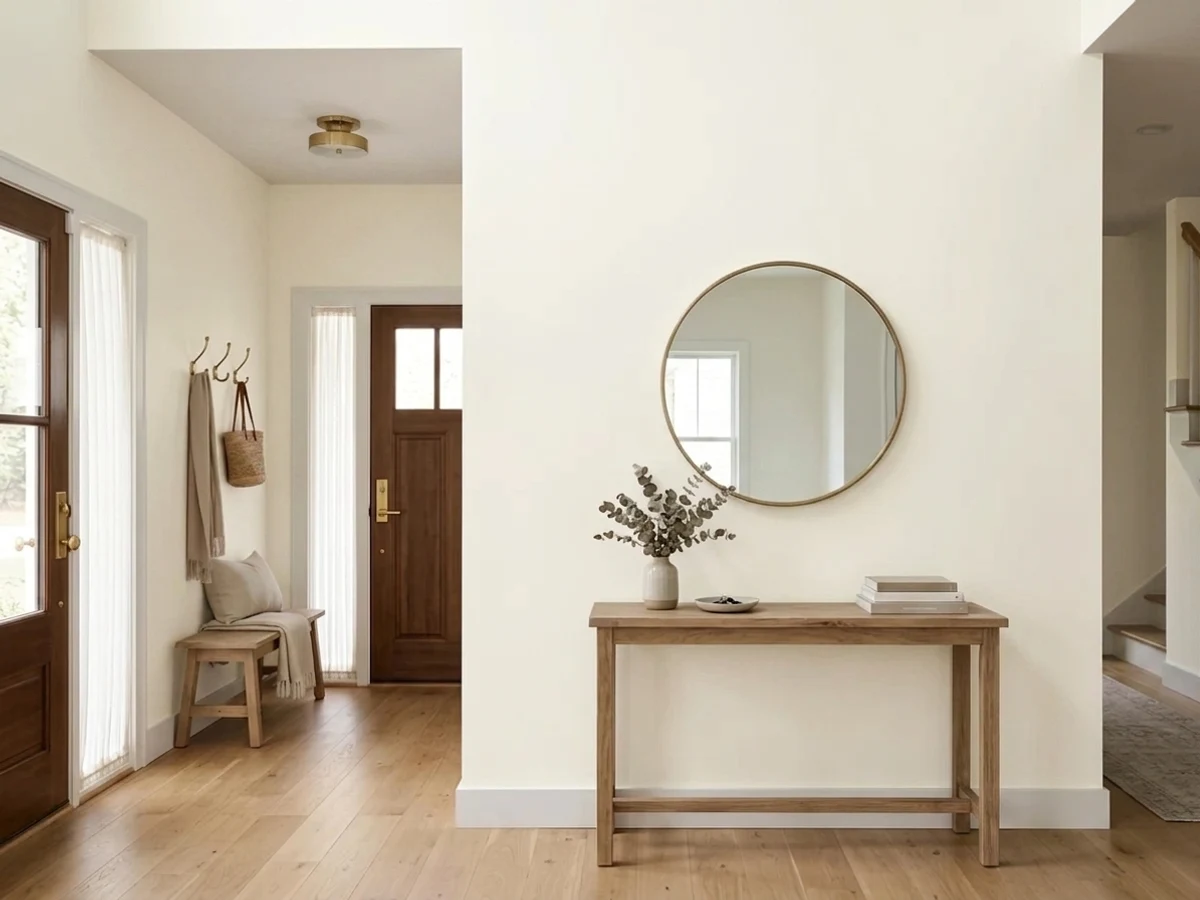
Soft off-white is a clean, gentle neutral that feels effortlessly bright without turning stark. In this entryway, warm white wraps the walls and matching double doors, paired with a light oak console, creamy round ottomans, and a soft gray rug. The space feels open, fresh, and instantly welcoming as soon as you step inside. This pairing works because the pale wooden accents and soft textiles keep the all-white room from feeling cold. It is perfect for anyone who loves an uncluttered, cheerful front hall.
SEE TINTED OR NOT? ON YOUR WALLS →White Entryway Wall Color Combinations
A wall color never works alone. These are the full schemes from the rooms above — the lead color first, then the supporting colors that make the photo work.
Soft warm whites and gentle daylight pair with honey wood tones to create an effortlessly calm and organized entry.
TRY THIS PALETTE →Sun-washed white shiplap and breezy coastal blues create an instantly welcoming, relaxed first impression the moment you step through the door.
TRY THIS PALETTE →Crisp white walls and honey herringbone floors create a breezy, elegant welcome filled with classic Parisian charm.
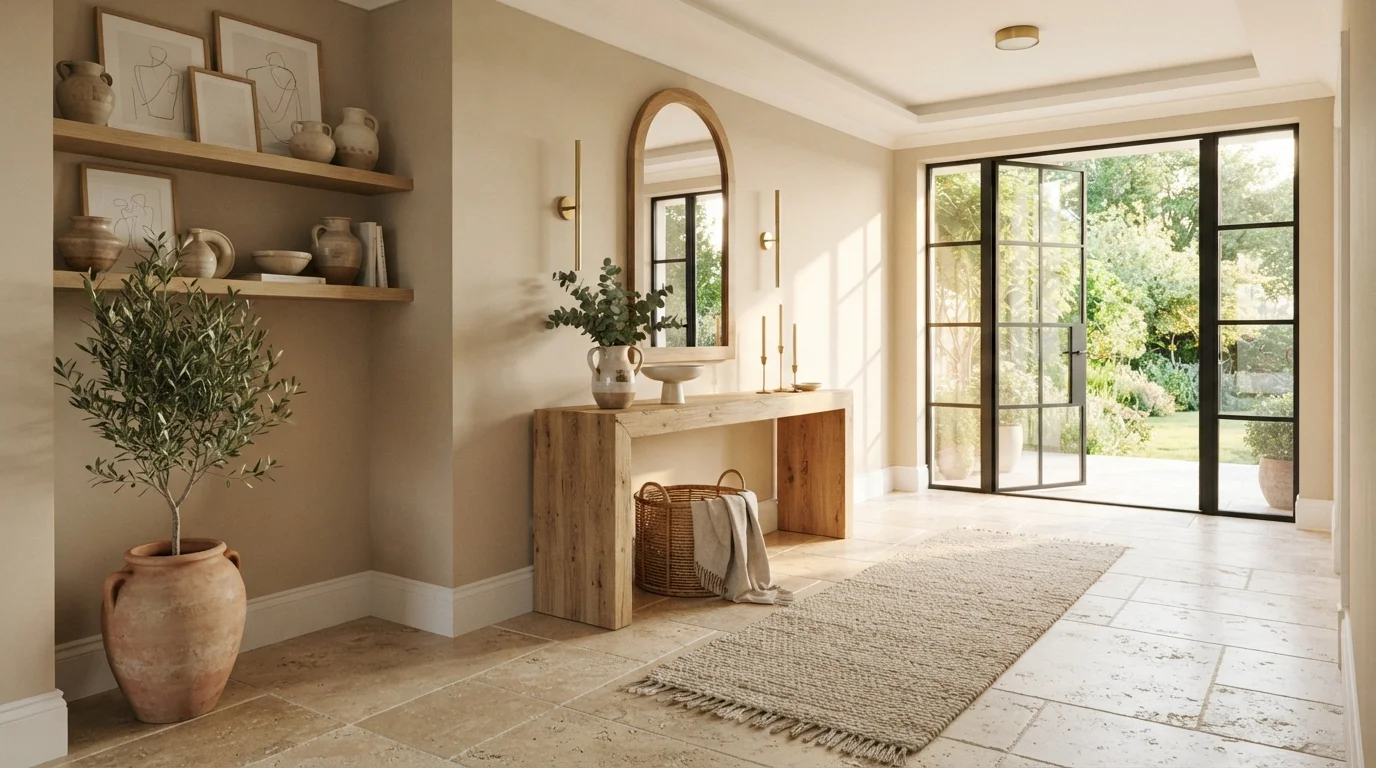
TRY THIS PALETTE →Warm alabaster walls reflect soft golden sconce light alongside lush white blooms and gleaming brass accents.
TRY THIS PALETTE →For a seamless, larger-feeling foyer, pair Mountain Peak White or Superwhite on the walls with the same white (or a close match) on the trim and door casing — the lack of contrast keeps the eye from stopping on any one surface, which is the trick behind most of the "foyer feels bigger" advice you'll find. If you want definition instead, run a black or deep navy front door and black hardware against those same crisp whites; the high LRV makes the dark accent pop rather than compete.
Where there's a wood staircase, wood floor, or stained banister — common in two-story foyers — the warmer picks earn their place. Atrium White or White Dove on the walls lets natural wood tones read as intentional warmth instead of clashing with a cooler white, and both pair comfortably with brass or oil-rubbed bronze hardware. Ibis White and Hush White are the safest middle ground when you're not sure what's coming next — they hold their own next to wood, painted trim, or a colorful front door without forcing a redo of the rest of the entry.
More Entryway Color Ideas
Set on a color family already? Each page has its own real rooms and picks.
Light or Dark White Entryway Colors?
Go Light (LRV 60+) If…
The room is small, faces north, or has to work at every hour. Light warm colors make it feel bigger and stay calm in evening light — the light you actually live in.
Go Dark (LRV Under 20) If…
You want the cocoon effect and the room has real daylight. Dark works best on one feature wall — or fully color-drenched in a large room with good windows.
Entryways are one of the few rooms in the house where "light vs. dark" mostly plays out within the white family itself, because the room's light supply is usually fixed and small: a front door sidelight, maybe a small window, otherwise borrowed light from the living room or hallway it opens into. In that low-light setup, reach for the highest-LRV options — Mountain Peak White (91) or Superwhite — since they reflect the most of whatever light does arrive and won't read muddy by early evening.
If the entryway already gets decent daylight, or it's a two-story foyer with light falling from a upstairs window, you can afford the warmer, lower-LRV creams like Atrium White (86) or White Dove without the room feeling dim. White Dove in particular reads well at both ends — compact single-story entries and tall two-story foyers — because its warmth keeps a small space cozy while its lightness keeps a tall one from feeling cavernous. Skip anything darker than these seven in an entryway with minimal windows; a low-LRV color in a room that already gets the least light in the house just reads as a dark hallway, not a considered design choice.
See It. Love It.
Paint It.
Upload one photo of your white entryway and try every color on this page on your own walls — in your own light, before you buy a drop of paint.

White DoveBeforeSheen And Finish For A High-Traffic Entry
An entryway takes more physical abuse than almost any other room — shoes, umbrellas, coats, bags, and hands all brush against these walls multiple times a day. Flat and matte finishes show that traffic fastest and are the hardest to wipe clean, which matters more here than in a bedroom or living room.
Eggshell or satin is the practical choice for any of these seven whites on entryway walls; it resists smudges and wipes down without burnishing the way flat paint does. If the entry doubles as a mudroom drop zone, satin on the lower few feet (or the whole wall) is worth the slightly higher sheen even on a color like Mountain Peak White that's meant to read soft and matte-adjacent.
Walls, Trim, And A Tall Foyer Ceiling
In a standard single-story entry, keep it simple: one of these whites on the walls, a matching or slightly brighter white on the trim, ceiling in flat white or the same color bumped up in LRV. That's the combination that reads clean without extra decisions.
Two-story foyers change the math because the ceiling is doing visual work most rooms don't ask of it. A warmer pick like Atrium White or White Dove carried up the full stairwell keeps a tall space from feeling institutional, while a crisp option like Mountain Peak White pushes the height further and can make a two-story foyer feel more like an atrium than a stairwell.
Mistakes To Avoid With A White Entryway
The most common one: picking a stark, cool white like a straight Superwhite for an entryway that gets almost no direct daylight. Without warm light hitting it, a cool white can read flat gray by late afternoon — swap toward Atrium White or White Dove if the entry's main light source is borrowed from another room rather than its own window.
The second mistake is skipping the sample stage. Entryway lighting is unusually inconsistent — daylight from the door, a hallway fixture, maybe a skylight above the stairs — and a white that looks right at noon can shift by evening. Paint a real sample next to the front door and check it morning, midday, and after dark before buying gallons. The third: choosing flat paint because it's what's already in the living room, then repainting within a year once scuff marks from shoes and bags won't wipe off.
About White Entryway Paint Colors
An entryway usually gets less light than the rest of the house — no big window wall, just whatever spills in from the front door glass or bounces off an adjacent room — so white earns its keep here by grabbing that limited light and throwing it back instead of absorbing it. Benjamin Moore Mountain Peak White (2148-70, LRV 91) is the highest-reflectance pick for exactly that reason: in a dim or windowless foyer it stays bright all day instead of going gray by mid-afternoon. Sherwin-Williams Superwhite does the same job with a slightly cooler, cleaner cast.
Not every entryway wants that much brightness. Benjamin Moore Atrium White (OC-145, LRV 86) and Benjamin Moore White Dove pull warmth into the mix — they're the picks for a foyer that gets some daylight already and just needs to feel welcoming rather than clinical the second the door opens. Sherwin-Williams Ibis White (SW 7000, LRV 84) and Hush White sit in between: soft enough to read as neutral against almost any door color, floor, or stair railing, without tipping stark.
All seven of these mix on demand at any Benjamin Moore or Sherwin-Williams counter — there's no reason to compromise on the exact shade because a store happens to carry one brand over the other. Bring the SKU, buy a sample pot, and paint a two-foot square by the door before committing to gallons, since entryway lighting shifts more across the day than almost any other room.
The Questions Everyone Asks
What color should I paint my white entryway?
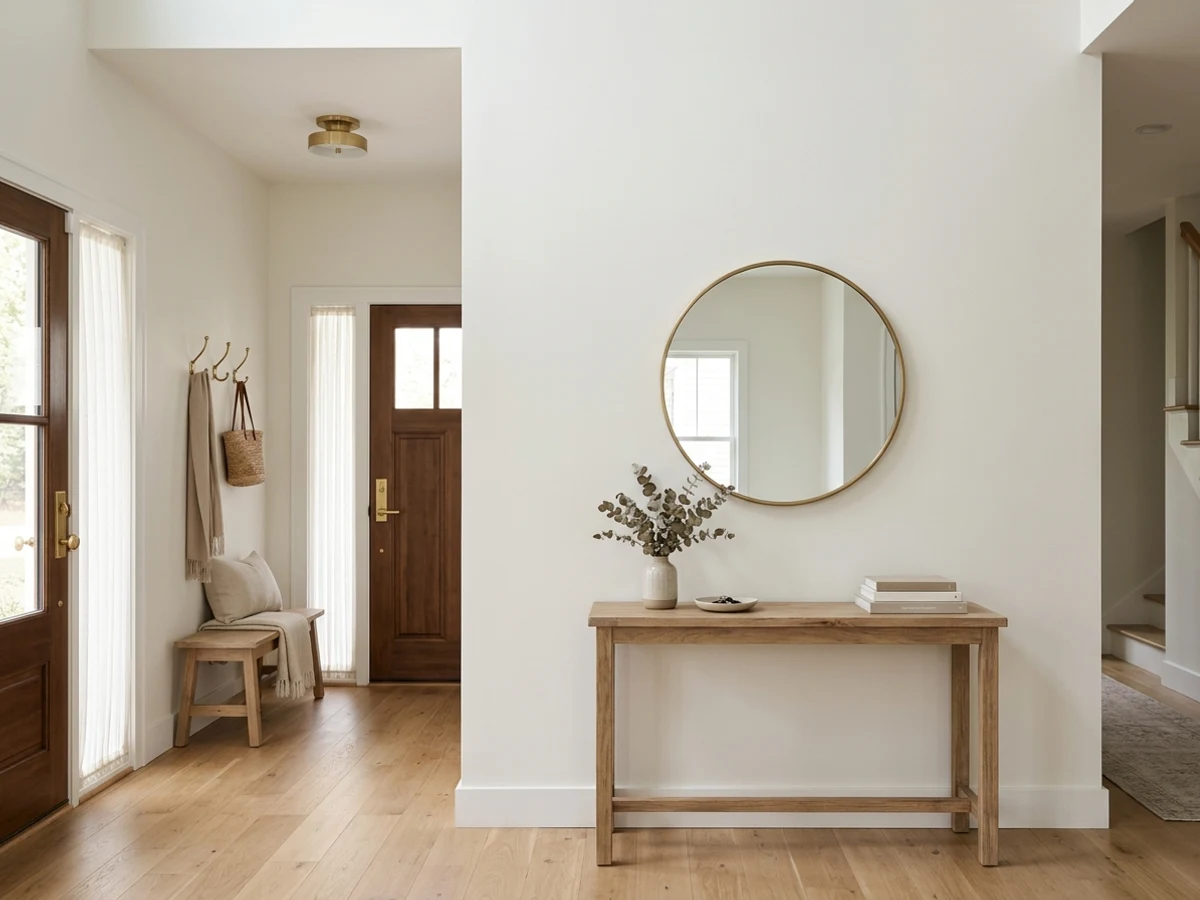
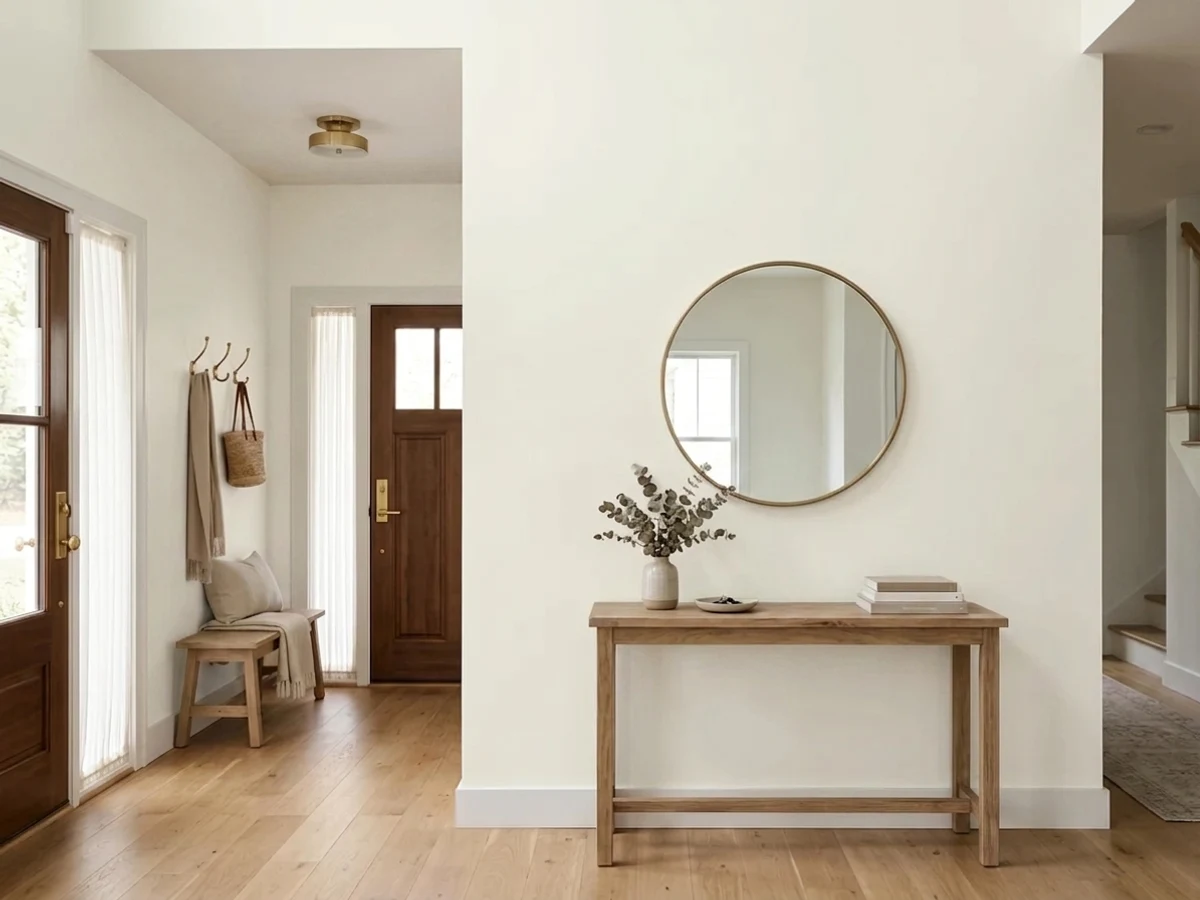
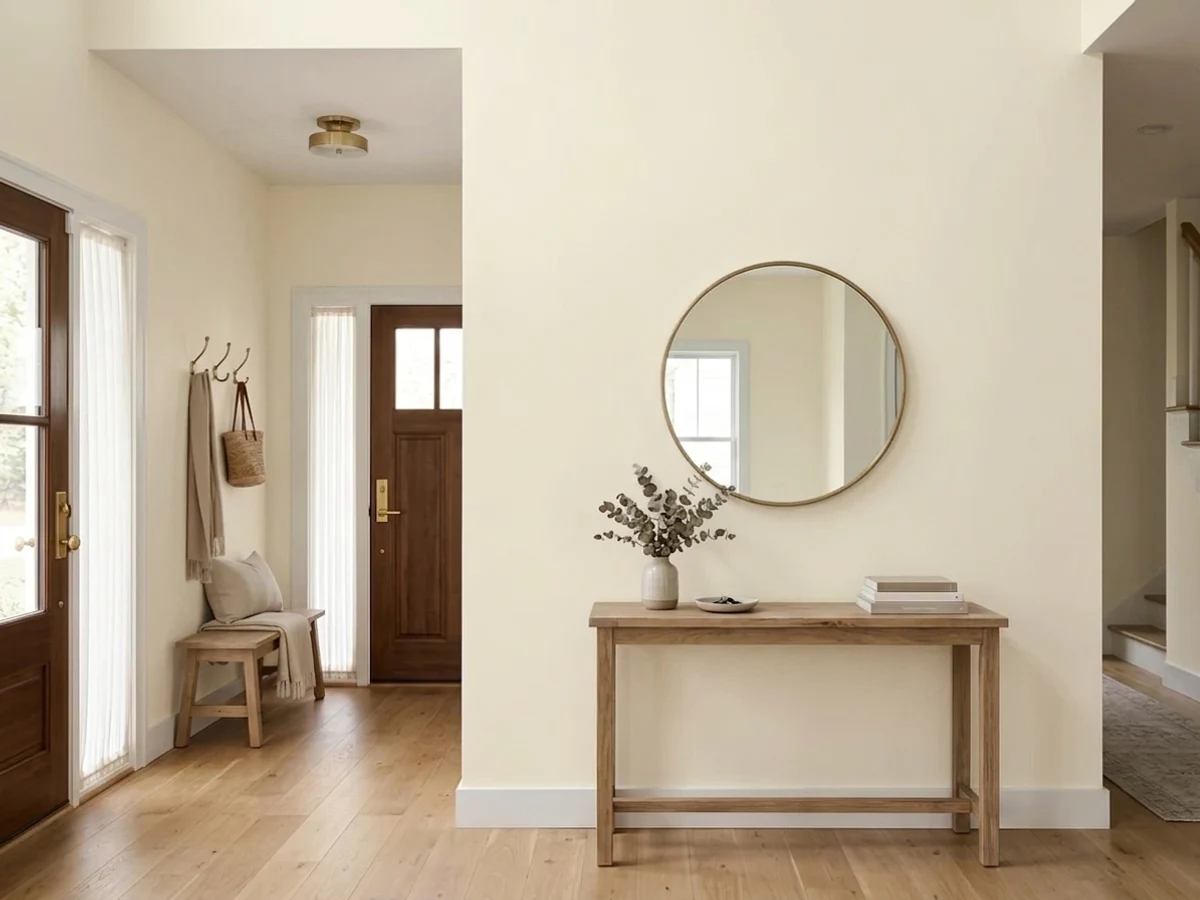
If you want one answer, start with the safe picks above — Stone Hearth, Cameo White, Du Jour, Wedding White. They read well in any light and survive furniture changes. Then check the light: strong afternoon sun wants a step cooler, a north-facing room wants a step warmer.
what color should i paint my entryway
A white with an LRV in the mid-80s to low-90s is the safest, most-searched answer, because entryways usually get the least natural light in the house and need a color that reflects what little arrives. Benjamin Moore Mountain Peak White (LRV 91) is the brightest option for a dim entry; Atrium White or White Dove add warmth if the entry already gets some daylight. All mix on demand at any paint store.
does white make a small entryway look bigger
Yes, and it's one of the few design claims that actually holds up: light colors reflect more light, which softens the corners where walls meet and makes the ceiling feel higher. Sherwin-Williams Ibis White or Benjamin Moore Iceberg, both light and slightly cool, work well for this in a tight, boxy entry. Painting trim the same white as the walls amplifies the effect by removing visual stopping points.
is white a bad paint color for an entryway
White itself isn't the problem — the finish is. Flat white shows scuffs, shoe marks, and hand smudges fast, since an entryway takes more physical contact than most rooms. The fix isn't avoiding white; it's using eggshell or satin instead of flat on any of these picks, plus a stark cool white can look cold without warm light, so a cream like Atrium White is safer in a dim entry.
should the entryway be the same color as the hallway
It's optional, not required — the entryway usually gets more attention from guests and more light-condition swings, so it can carry a slightly warmer or brighter white than the hallway without looking disconnected, as long as both stay in the same white family. Carrying White Dove or Atrium White from the entry into an adjoining hallway keeps the transition smooth if you'd rather not pick two separate whites.
what sheen should i use for entryway walls
Eggshell or satin, not flat or matte. Entryways get more hand contact, shoe scuffs, and bag brushes than almost any other room, and flat finishes show that wear the fastest while being the hardest to wipe clean. Satin holds up best if the entry doubles as a mudroom drop zone; eggshell is the better middle ground for a purely decorative front hall.
What two-color combination works best in a white entryway?
The reliable pattern is a quiet main color plus one deep accent on a single wall. Keep trim and ceiling in one warm white so the two colors are the only event in the room — the combination cards above show complete schemes from real rooms.
What colors make a white entryway look bigger?
High-LRV, slightly warm colors — LRV 60–75 is the sweet spot. Paint the walls and trim close to the same light color so the corners blur, and keep the ceiling white. Stark cool white actually works against you; it creates hard shadows that show the room's edges.

Ask a Question