CP

Room Colors · Sunroom

6 Best Sunroom Paint Colors for 2026
ideas, combinations, and real rooms

6 curated picks from real sunrooms — with the exact colors, honest reasons why, and the combinations that hold the room together.

Jessica Williams
Jessica Williams· Color Stylist & Interior Editor

Former interior stylist who can spot a green undertone from across a room. Jessica writes the color and mood pieces — what to choose, what pairs, and why your "white" looks pink.

The Fast Answer

Don't want to read 6 picks? These four are the safe answers.

SW 7008 · LRV 82 · LRV 82
Warm white workhorse — handles full daylight without yellowing.
SW SW 6204 · LRV 64
Pale blue that handles direct sunlight; reads spa-fresh.
Behr S340-4 · LRV 41
Calm sage that handles abundant natural light without going washed out.
BM 2136-40 · LRV 22
Deeper teal accent for sunrooms that want a moodier counterpoint to the bright light.
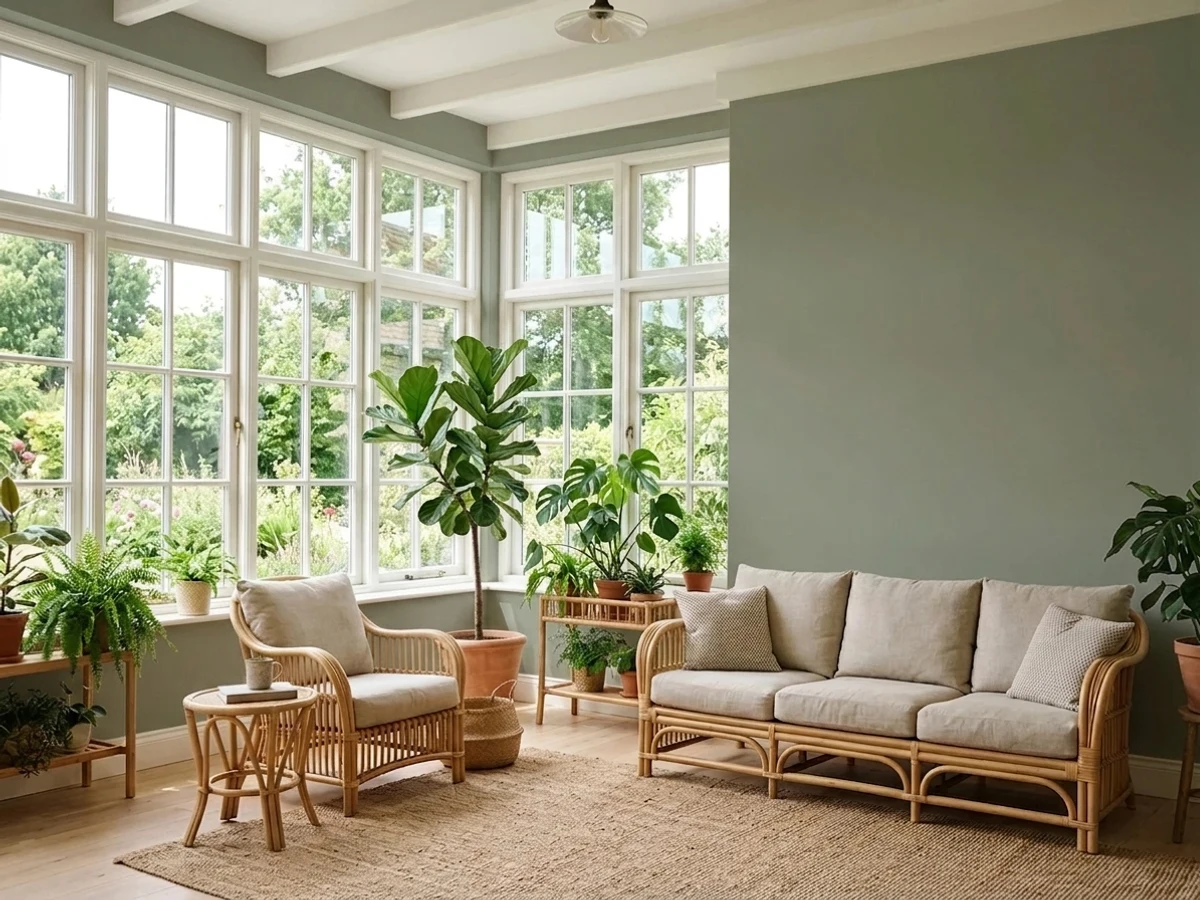
Room painted in Olive Branch
Olive Branch
Try it in your room →
Top picks · see them in a room

Top Picks for the Sunroom

Pick a color family, tap a shade to see the sunroom in it, then try it on your own room.

Olive Branch
#7C826B

Garden-adjacent grey-green; complements outdoor view through sunroom windows.

SEE IT IN YOUR ROOM →

Sunroom Color Trends 2026 — What's In, What's Out

On the Way Out
  • Icy Blue-GraysCool gray is the dated color of 2026, and a wall of glass makes its flat, chilly cast twice as obvious.
  • Flat Builder GreigeThe one-note greige that covered the 2010s is being called overdone and stale — warm taupes with real undertones took its place.
  • Stark Bright White EverythingCold, blue-white walls in a full-sun room read clinical and show every bit of glare; the whites that stayed in style all lean warm.
  • Lemon-Yellow SunroomsThe old instinct to paint the sunny room yellow just doubles the brightness — designers now save strong yellow for rooms that lack light, not the one room that has plenty.

The 6 Best Sunroom Paint Colors

Every pick below is a real rendered sunroom, not a chip. The lead color first; the swatches are the full scheme in the photo — walls, furniture, textiles, accent.

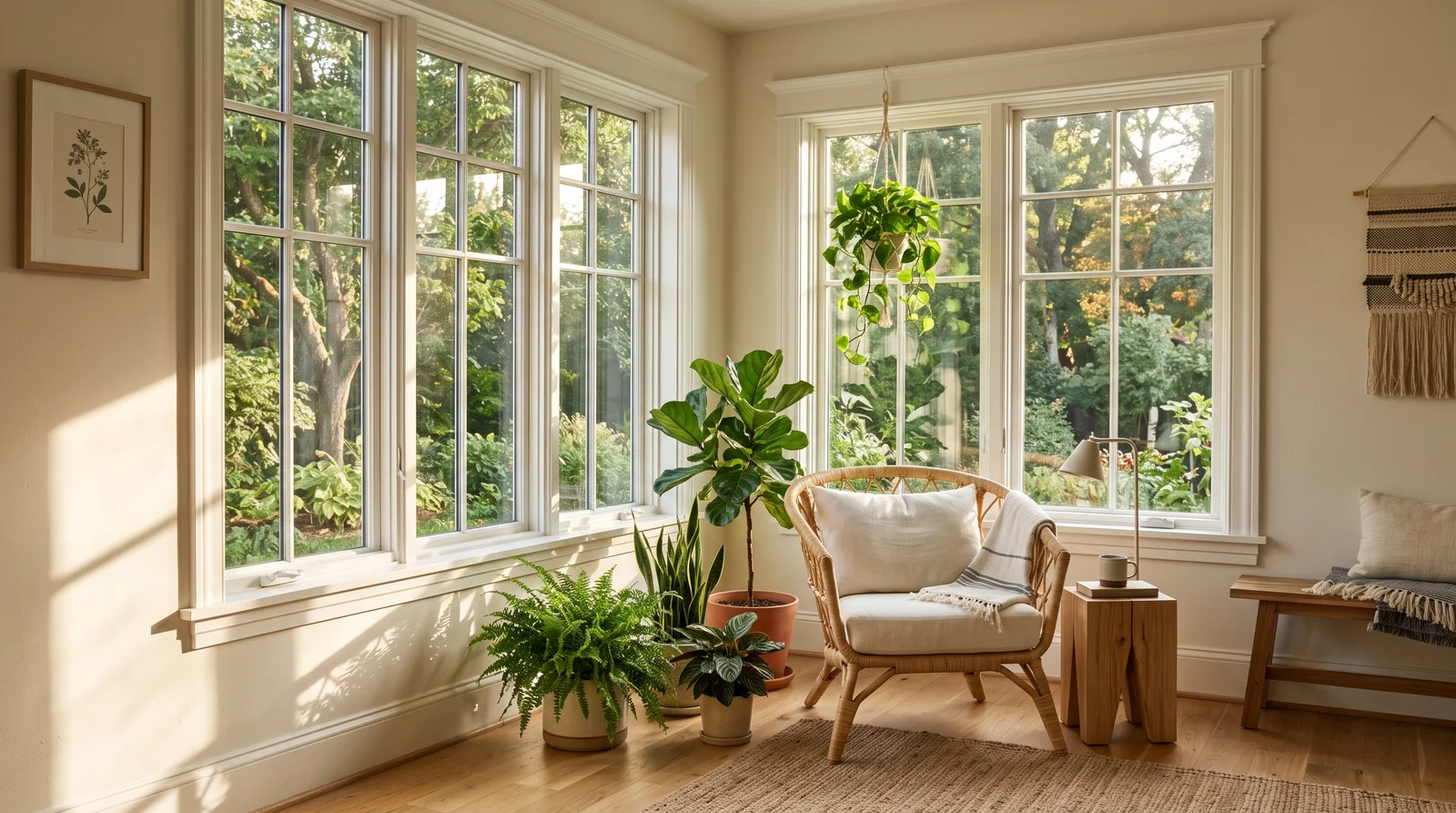
Golden Hour White — sunroom painted in Alabaster
1AlabasterSherwin-Williams · Golden Hour White

A warm white that catches late-afternoon sun and glows like the inside of a shell — made for rooms that live in daylight.

Alabaster from Sherwin-Williams is the safest wall color a sunroom can wear because it warms up instead of glaring — at LRV 82 it bounces plenty of light without the blue edge a cooler white would throw back at you all day. It flatters rattan, jute, and every green plant you own, and it lets the view out the windows stay the star. Keep the trim in Pure White so the woodwork reads crisp against the slightly creamier walls. If your sunroom faces north and the walls look flat by evening, step to Greek Villa instead — its extra cream holds warmth in cooler light.

Walls · Sherwin-Williams
Trim · Sherwin-Williams
Natural Rattan
Furniture
SEE ALABASTER ON YOUR WALLS →
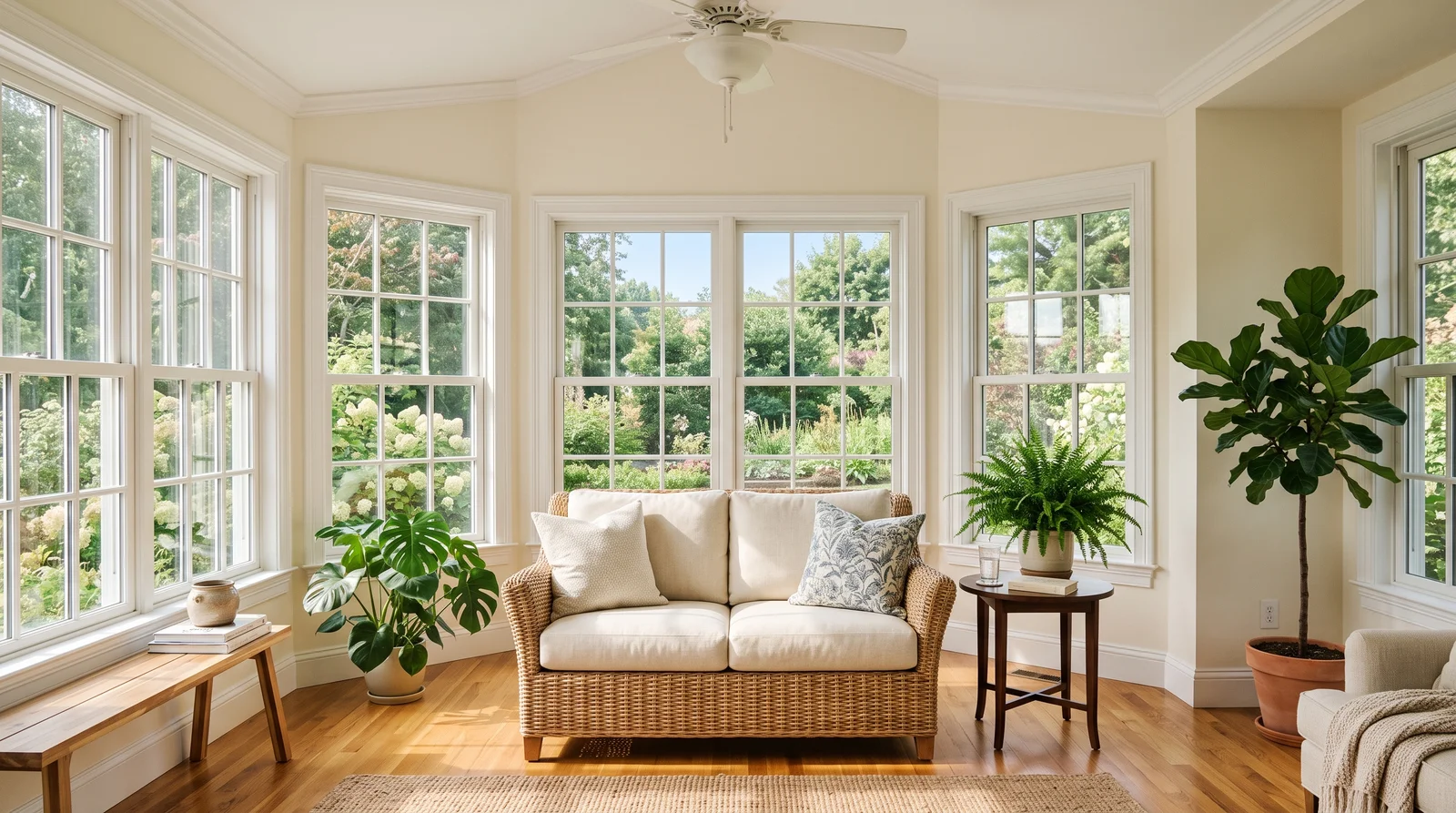
Creamy Morning — sunroom painted in Creamy
2CreamySherwin-Williams · Creamy Morning

The warmest white in the deck — soft, buttery, and kind to strong morning sun instead of fighting it.

Creamy from Sherwin-Williams (LRV 81) is what you pick when full-sun rooms make ordinary whites feel sterile: it takes the hard edge off bright light and gives the whole room a lived-in warmth. It pairs beautifully with honey-toned wood floors, wicker, and unbleached linen — the classic sunroom kit. White Dove on the trim keeps things from going too yellow, adding a slightly cooler counterpoint that reads clean, not cold. If your glass faces due south and the cream starts leaning butter-yellow at midday, Greek Villa is the neighbor shade with the same warmth and less yellow in it.

Walls · Sherwin-Williams
Trim · Benjamin Moore
Honey Oak
Floors
SEE CREAMY ON YOUR WALLS →
Pale Oak Haze — sunroom painted in Pale Oak
3Pale OakBenjamin Moore · Pale Oak Haze

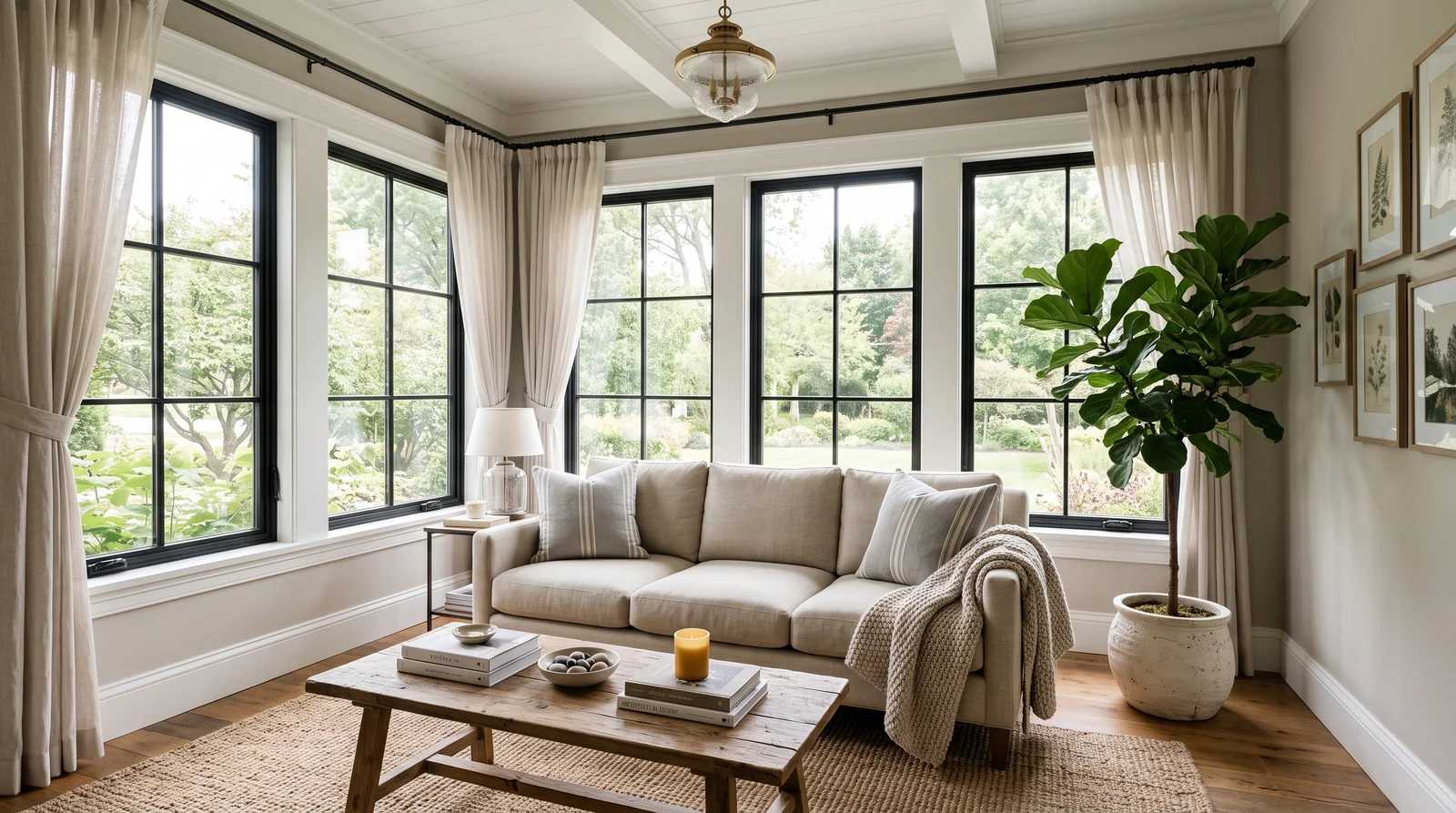
A soft mushroom-greige that gives a glass-walled room some substance without ever stealing its light.

Pale Oak from Benjamin Moore sits at LRV 69 — light enough to keep a sunroom airy, but with enough gray-taupe body that the walls actually read as a color once the sun is pouring in. That matters here more than anywhere: full daylight washes out pale colors, so a shade you'd call greige in a hallway looks like a warm, quiet neutral behind all that glass. It's the pick when your sunroom furniture is upholstered rather than wicker — taupe flatters linen sofas, stone floors, and iron-framed windows. If it reads too beige against very cool northern light, Beach Glass gives you the same softness with a green-gray cast instead.

Walls · Benjamin Moore
Trim · Benjamin Moore
Accent · Benjamin Moore
SEE PALE OAK ON YOUR WALLS →
Garden Sea Salt — sunroom painted in Sea Salt
4Sea SaltSherwin-Williams · Garden Sea Salt

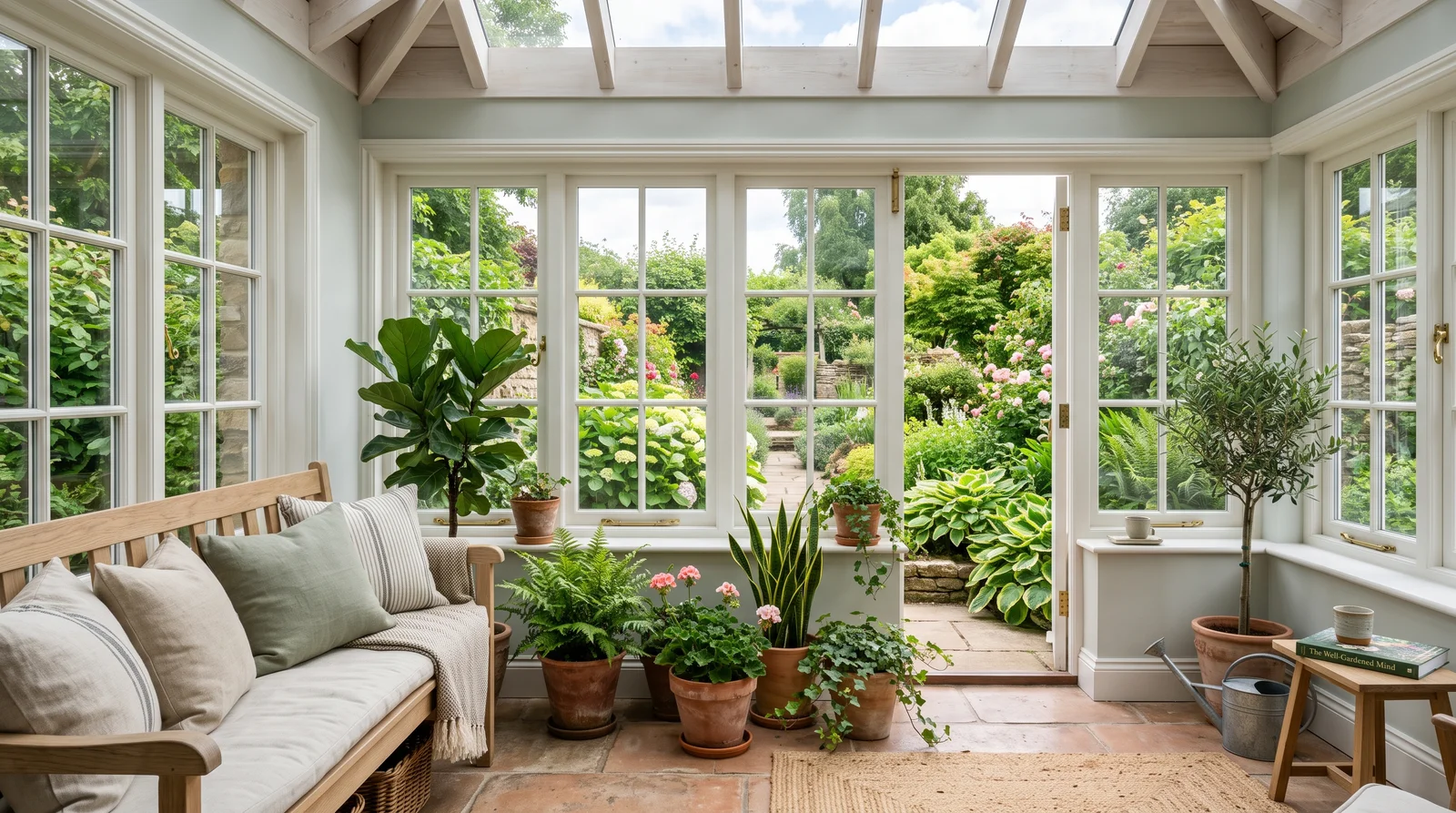
A misty gray-green that dissolves the line between the room and the garden outside the glass.

Sea Salt from Sherwin-Williams is the sunroom classic for a reason: at LRV 63 it holds real color in full daylight while still feeling weightless, and its gray-green shifts with the sky — greener on bright days, softer gray under clouds. That chameleon act is a feature here, not a flaw; the room feels connected to whatever is happening outside. Frame it with Alabaster trim and let plants, terracotta, and light woods do the rest. If your glass looks out on heavy greenery and the walls start reading too green, Beach Glass pulls the same mood a step toward blue-gray.

Walls · Sherwin-Williams
Trim · Sherwin-Williams
Terracotta
Planters
SEE SEA SALT ON YOUR WALLS →
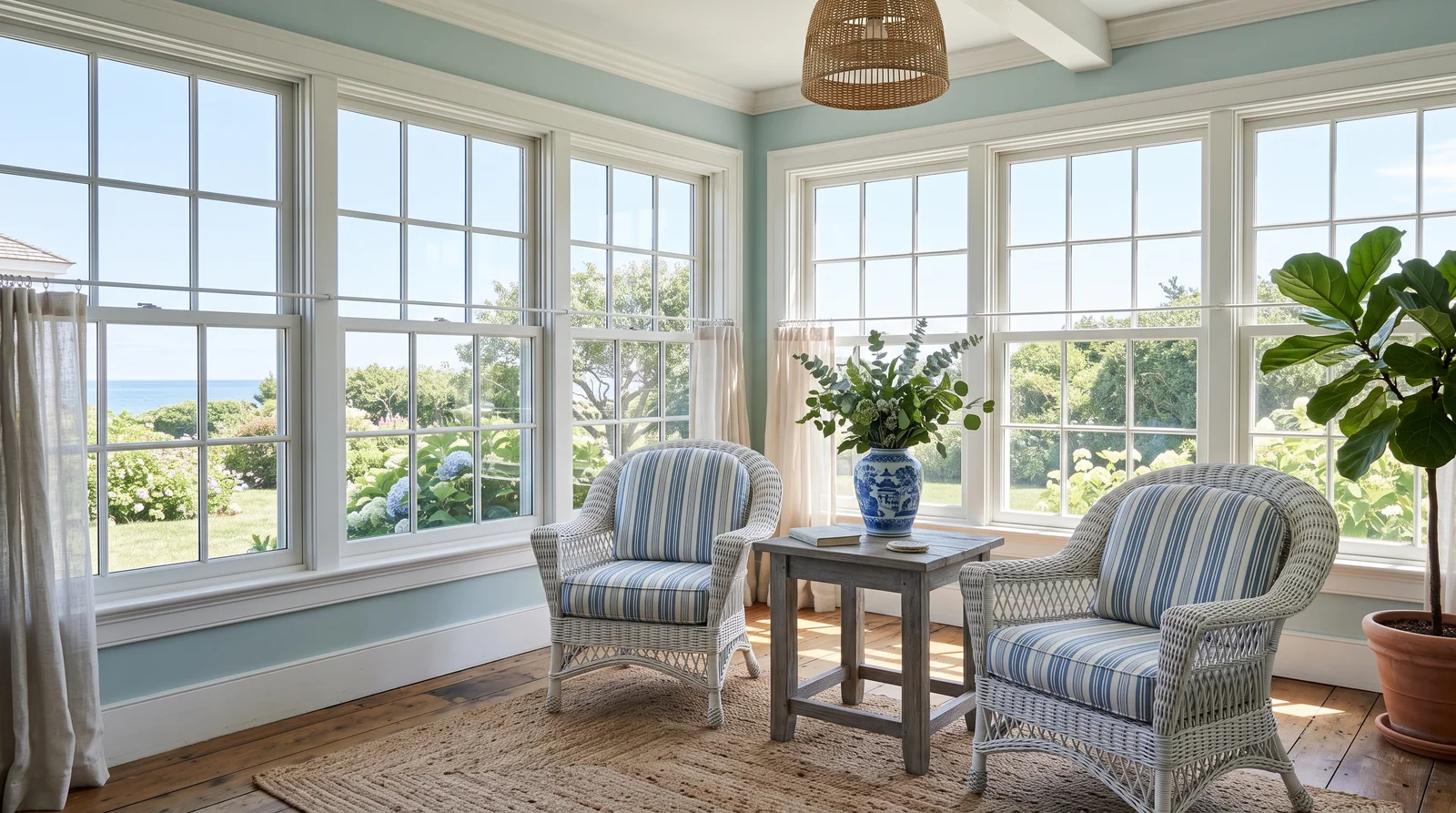
Palladian Sky — sunroom painted in Palladian Blue
5Palladian BlueBenjamin Moore · Palladian Sky

A historic blue-green that mirrors the sky through the windows and keeps the room cool on the brightest days.

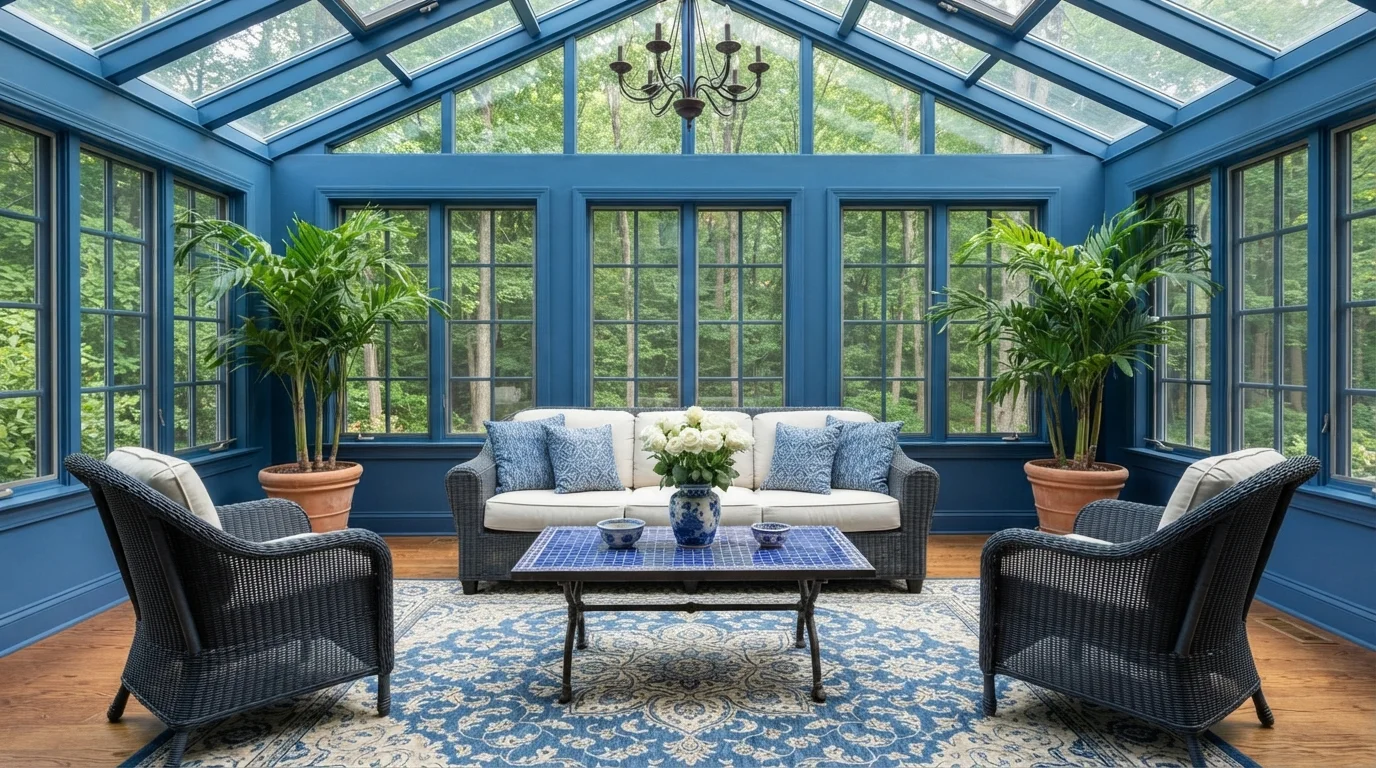
Palladian Blue from Benjamin Moore (LRV 60) is the pick for sunrooms that overheat visually — south- or west-facing glass that turns warm colors up too loud by afternoon. Its blue-green reads genuinely cool and calm under strong sun, and it has enough gray in it to avoid the candy-blue trap. It pairs naturally with white wicker, weathered woods, and blue-and-white ceramics; White Dove trim keeps the whole scheme soft rather than nautical. In a sunroom with limited direct sun, it can go icy — that's the room where Sea Salt's warmer green base is the better call.

Walls · Benjamin Moore
Trim · Benjamin Moore
Weathered Gray Wood
Furniture
SEE PALLADIAN BLUE ON YOUR WALLS →
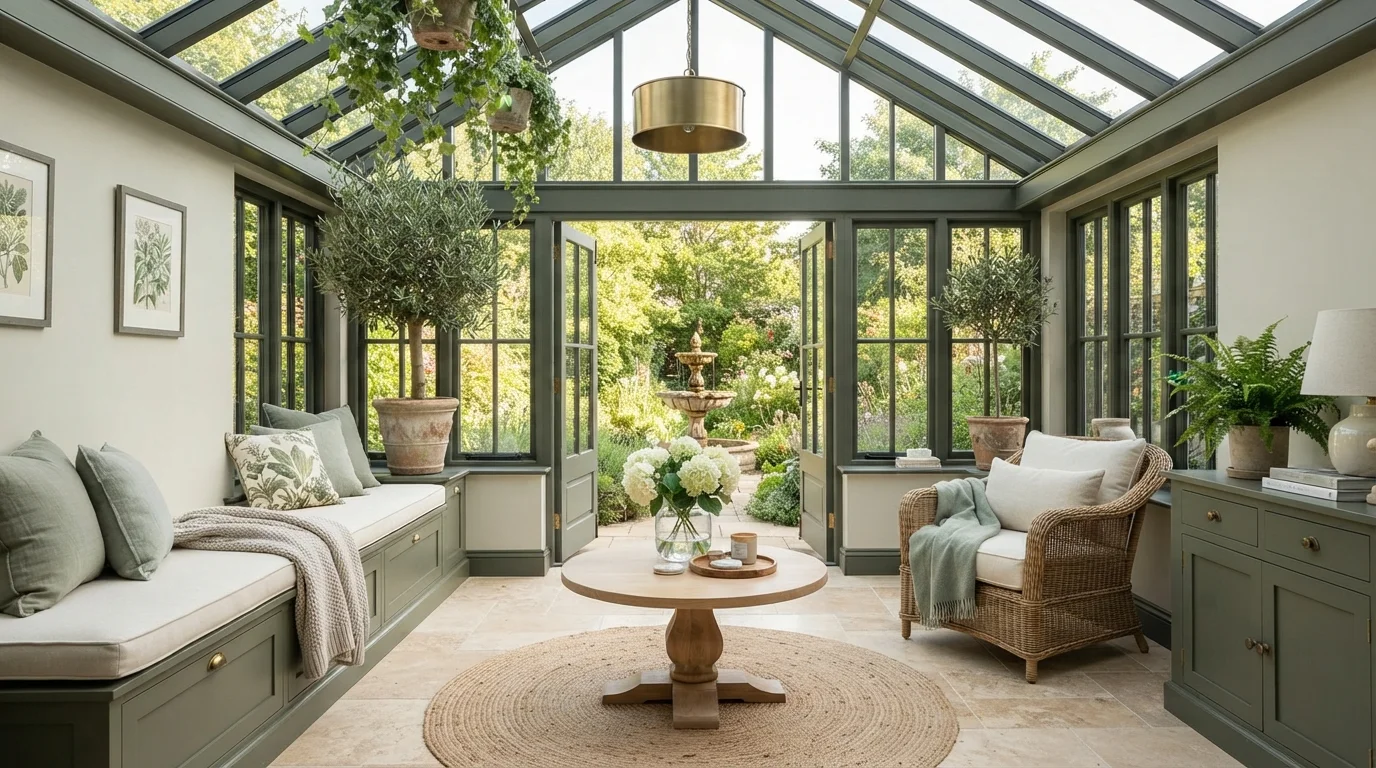
October Mist Arbor — sunroom painted in October Mist
6October MistBenjamin Moore · October Mist Arbor

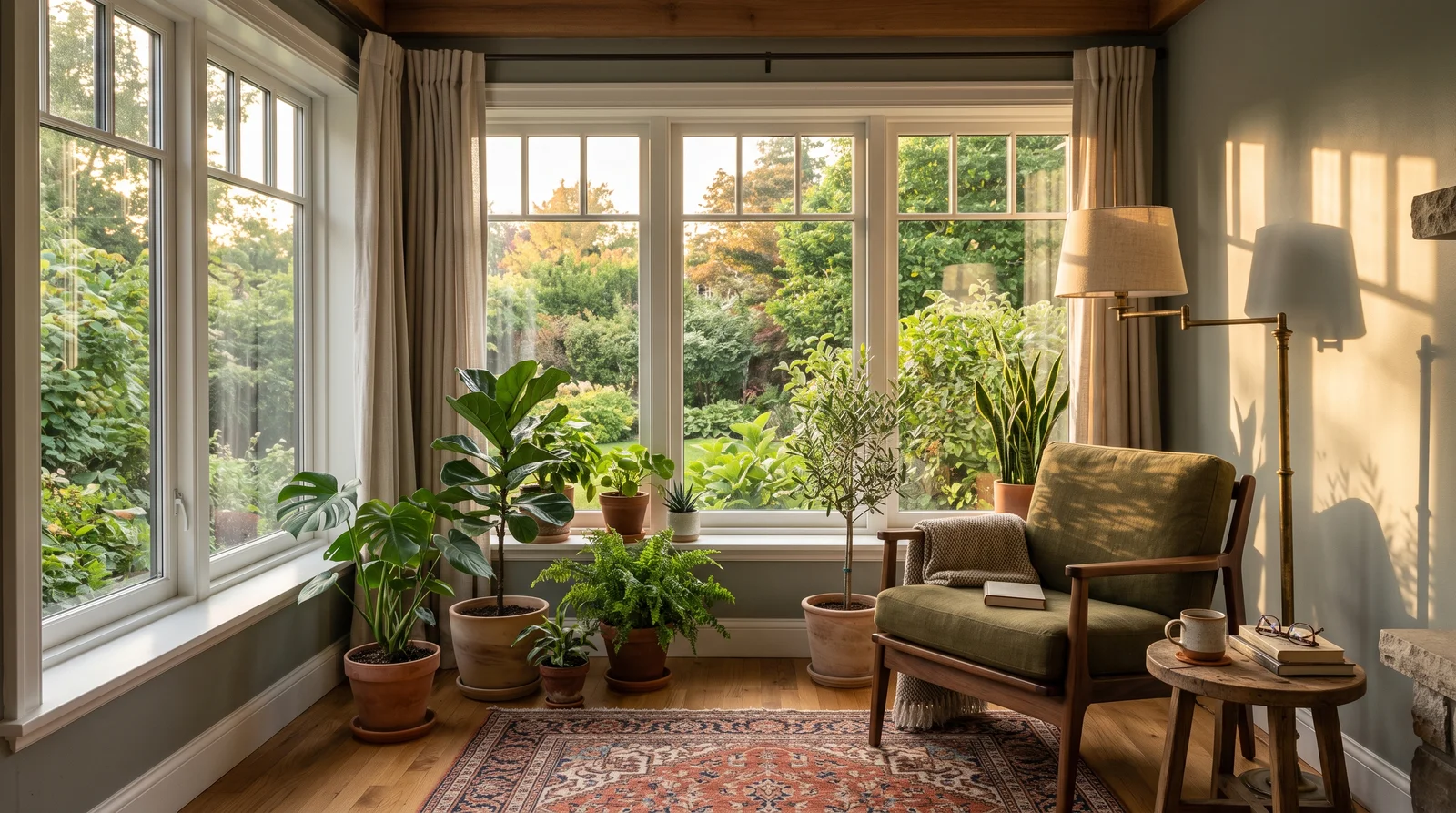
The deepest look here — a leafy, gray-edged sage that turns all that glass into a garden pavilion after dark.

October Mist from Benjamin Moore is as deep as a sunroom should comfortably go: at LRV 47 it reads as a true color morning to night, but the flood of daylight keeps it from ever feeling heavy the way it might in an interior room. This is the choice when your sunroom doubles as an evening space — the sage warms up beautifully under lamplight and makes the black night windows feel intentional instead of empty. Ground it with warm woods and brass or aged-bronze fixtures, and keep the trim in White Dove so the depth stays crisp. If your sunroom is small or the ceiling is low, Sea Salt delivers the same garden mood two steps lighter.

Walls · Benjamin Moore
Trim · Benjamin Moore
Walnut Wood
Furniture
Aged Brass
Fixtures
SEE OCTOBER MIST ON YOUR WALLS →

Sunroom Wall Color Combinations

A wall color never works alone. These are the full schemes from the rooms above — the lead color first, then the supporting colors that make the photo work.

Golden Hour White
WallsAlabasterTrimPure WhiteFurnitureNatural Rattan
Walls
Alabaster · Sherwin-Williams · LRV 82
Trim
Pure White · Sherwin-Williams · LRV 84
Furniture
Natural Rattan · · LRV 42

A warm white that catches late-afternoon sun and glows like the inside of a shell — made for rooms that live in daylight.

TRY THIS PALETTE →
Creamy Morning
WallsCreamyTrimWhite DoveFloorsHoney Oak
Walls
Creamy · Sherwin-Williams · LRV 81
Trim
White Dove · Benjamin Moore · LRV 85
Floors
Honey Oak · · LRV 29

The warmest white in the deck — soft, buttery, and kind to strong morning sun instead of fighting it.

TRY THIS PALETTE →
Pale Oak Haze
WallsPale OakTrimChantilly LaceAccentBeach Glass
Walls
Pale Oak · Benjamin Moore · LRV 69
Trim
Chantilly Lace · Benjamin Moore · LRV 90
Accent
Beach Glass · Benjamin Moore · LRV 50

A soft mushroom-greige that gives a glass-walled room some substance without ever stealing its light.

TRY THIS PALETTE →
Garden Sea Salt
WallsSea SaltTrimAlabasterPlantersTerracotta
Walls
Sea Salt · Sherwin-Williams · LRV 63
Trim
Alabaster · Sherwin-Williams · LRV 82
Planters
Terracotta · · LRV 22

A misty gray-green that dissolves the line between the room and the garden outside the glass.

TRY THIS PALETTE →

Most sunrooms have a lot of trim because of all the windows, so trim color is doing real work. A crisp white like Alabaster on frames and mullions sharpens the view and pairs cleanly with green or blue walls; matching the ceiling to the trim or keeping it a soft white makes the room feel taller and brighter.

Floors and furniture usually lean natural here — tile, wood, wicker, and rattan. Greens like Sage and Eucalyptus sit beautifully against warm wood and woven textures, while Seafoam, Mint, and Ice Blue look at home with white wicker, light tile, and metal fixtures for a breezier, coastal feel.

Sunroom Color Ideas by Color

Set on a color family already? Each page has its own real rooms and picks.

Light or Dark Sunroom Colors?

Go Light (LRV 60+) If…

The room is small, faces north, or has to work at every hour. Light warm colors make it feel bigger and stay calm in evening light — the light you actually live in.

Go Dark (LRV Under 20) If…

You want the cocoon effect and the room has real daylight. Dark works best on one feature wall — or fully color-drenched in a large room with good windows.

Greens are the natural fit because a sunroom is already full of plants and sky. A soft, dusty green like Sage feels grounded and restful, while a brighter Eucalyptus brings in a fresh, leafy lift that plays well with real greenery just outside the glass.

Teal and blue push the room toward calm and water. Seafoam and Mint sit between green and blue for a breezy, coastal mood, and Ice Blue keeps things airy and cool without feeling cold. If you want the walls to disappear and the view to win, a clean white like Alabaster is the safe, timeless move.

Window direction changes everything in a room this glassy. South- and west-facing sunrooms get warm, strong light, so cool greens, teals, and blues stay balanced instead of going yellow; north- and east-facing rooms get softer, bluer light, where a warmer green like Sage or a creamy white like Alabaster keeps the space from feeling chilly.

Daylight and night light pull in opposite directions. A color that glows fresh at noon can turn gray and flat under evening lamps, so always test your top pick in the same spot at morning, midday, and after dark before you buy gallons.

LRV (light reflectance value) tells you how much light a color bounces back, from near 0 for black to near 100 for the brightest white. In a sunroom you usually want to lean bright — whites and pale greens or blues like Alabaster, Mint, and Ice Blue have high LRVs that keep an already sunny room open and glowing.

If your sunroom faces a lot of direct sun and feels harsh, you can dial it down. A mid-range green like Sage or Eucalyptus absorbs more light, cuts glare, and makes the room feel calmer and more like a retreat rather than a greenhouse.

The biggest one is picking a color in a paint store and skipping a real test on the wall. Sunroom light is intense and constantly changing, so a sample that looked perfect under fluorescent lights can turn too bright, too gray, or too yellow once it is up in all that sun.

Two more to avoid: using flat paint that can't handle moisture and dust, and going too dark or too saturated, which fights the whole point of a light-filled room. When in doubt, stay lighter and cooler, and remember any color you love can be mixed to order and cross-matched between brands, so you are never locked into one paint line to get the exact shade.

VISUALIZE YOUR SPACE

See It. Love It.
Paint It.

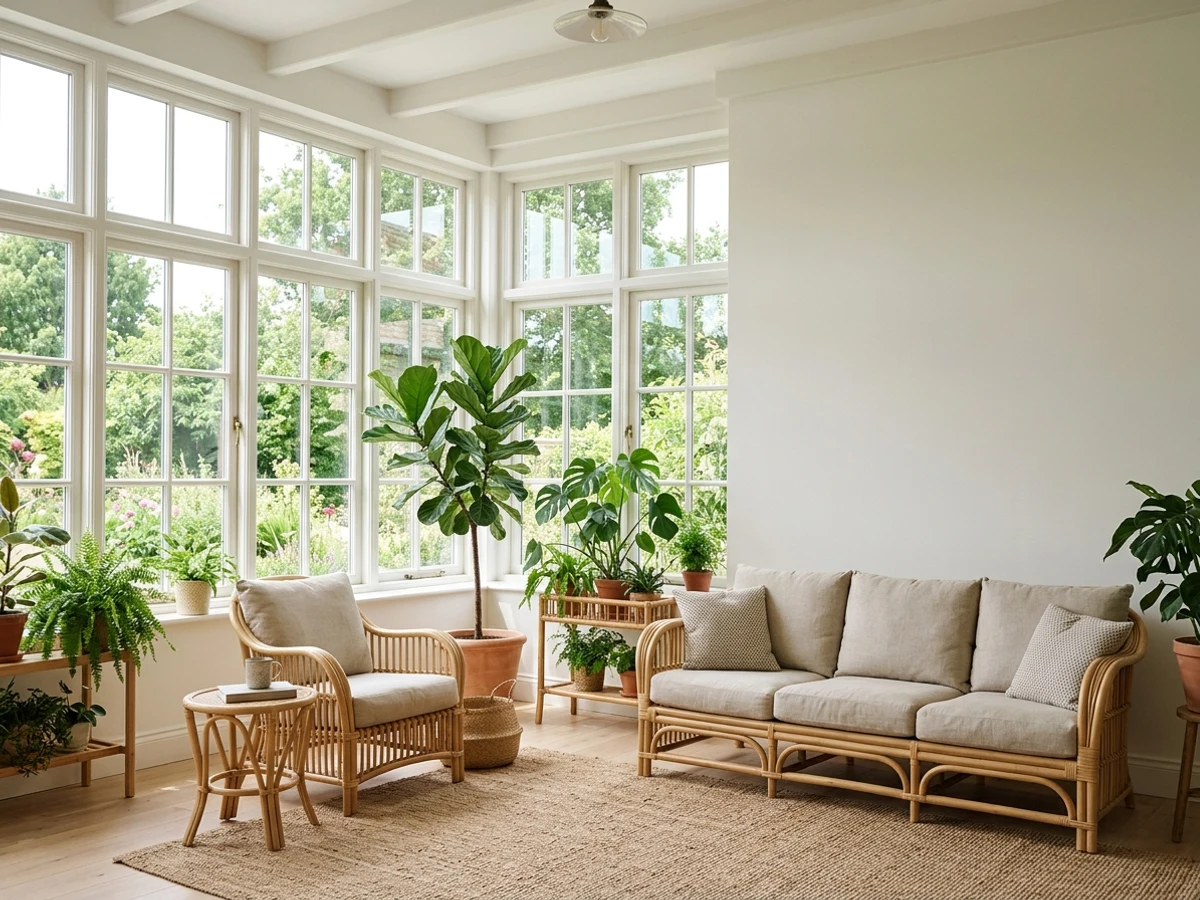
Upload one photo of your sunroom and try every color on this page on your own walls — in your own light, before you buy a drop of paint.

Drag the slider to compare
sunroom before paintingsunroom painted in Olive BranchOlive BranchBefore

The Right Finish for Heat and Moisture

Sunrooms swing through heat, humidity, and sometimes splashes from plants or open windows, so the finish matters as much as the color. An eggshell or satin sheen is the sweet spot: it wipes clean, shrugs off moisture, and holds up far better than flat paint when condensation or dust builds up on the walls.

Go easy on high-gloss on big wall areas. All that glass means strong light, and a shiny wall throws glare and shows every roller mark; save semi-gloss or satin for trim and window frames where the durability helps and the shine looks intentional.

About Sunroom Paint Colors

A sunroom is the one room built around light, so color works differently here than anywhere else in the house. Walls get washed with daylight all day, then go quiet and cool after dark, so the shade you fall for at noon can read completely different by evening. The colors that hold up best lean into that — soft greens, calm teals, easy blues, and clean whites that let the outdoors do the talking.

This page walks through the directions that actually fit a sunroom, how your windows steer the choice, and which finish survives heat, humidity, and glare. The example colors here — Eucalyptus, Sage, Seafoam, Alabaster, Mint, and Ice Blue — are reference points for those moods, not the only options.

One practical note before you commit to a brand: every color shown here is mixed to order at the paint counter. If you find the exact green you want under one brand's name, a store can cross-match it into another brand's paint, so you are choosing a color first and a brand second.

The Questions Everyone Asks

What color should I paint my sunroom?

If you want one answer, start with the safe picks above — Alabaster, Sea Salt, Back to Nature, Aegean Teal. They read well in any light and survive furniture changes. Then check the light: strong afternoon sun wants a step cooler, a north-facing room wants a step warmer.

what are the best paint colors for a sunroom?

Soft greens, teals, blues, and clean whites work best because they echo the outdoors and keep the room feeling light. Greens like Sage and Eucalyptus feel restful and natural, Seafoam, Mint, and Ice Blue bring a breezy coastal calm, and a white like Alabaster lets the view take over.

should a sunroom be a light or dark color?

Usually light. A sunroom is built around natural light, so high-LRV whites and pale greens or blues keep it open and bright. You only want to go darker or more saturated if the room gets harsh, glaring sun and you are trying to calm it down into a cozier retreat.

what paint finish is best for a sunroom?

Eggshell or satin is the sweet spot. It wipes clean, handles humidity and condensation, and resists the dust and moisture that build up in a glassy room. Skip high-gloss on big walls because all that light makes shiny surfaces glare and show flaws; save satin or semi-gloss for trim and window frames.

how does window direction affect my color choice?

South- and west-facing sunrooms get warm, strong light, so cool greens, teals, and blues stay balanced there. North- and east-facing rooms get cooler, softer light, so a warmer green like Sage or a creamy white like Alabaster keeps the space from feeling chilly. Always test your color in the actual room at different times of day.

what color trim and ceiling go with a sunroom?

A crisp white like Alabaster on trim and window frames sharpens the view and pairs with almost any green or blue wall. Keeping the ceiling the same soft white or matching the trim makes the room feel taller and brighter, which suits a light-filled space.

can I get the same sunroom color in any paint brand?

Yes. Every color shown here is mixed to order at the paint counter, and a store can cross-match a shade from one brand into another brand's paint. So pick the color and finish you love first, then choose whichever paint line you prefer — you are not locked into one brand to get the exact green or blue.

what is the most common sunroom paint mistake?

Choosing the color without testing it on the actual wall. Sunroom light is bright and changes all day, so a swatch that looked great in the store can read too yellow, too gray, or too intense once it is up. Paint a sample, then look at it morning, midday, and after dark before you commit.

What two-color combination works best in a sunroom?

The reliable pattern is a quiet main color plus one deep accent on a single wall. Keep trim and ceiling in one warm white so the two colors are the only event in the room — the combination cards above show complete schemes from real rooms.

What colors make a sunroom look bigger?

High-LRV, slightly warm colors — LRV 60–75 is the sweet spot. Paint the walls and trim close to the same light color so the corners blur, and keep the ceiling white. Stark cool white actually works against you; it creates hard shadows that show the room's edges.

Ask a Question

Jessica Williams

Not sure what's right for your sunroom?

Ask Jessica below — every question gets a real reply, usually within a day.