October Mist
The sage that made green rooms mainstream, reviewed honestly: the rooms where it glows, the light that drains it gray, and what to paint instead.

Jessica has spec'd whites and neutrals for more than 300 rooms and keeps a sample wall of painted drawdowns in her studio. Every color review is checked against real reader rooms in the comments and re-tested when a formula changes. About the testing process →
- 1Sage Green22
- 2Evergreen Fog30
- 3October Mist47
- 4Sage Brush52
- 5Soft Fern57
The Fast Verdict
October Mist is the quiet sage almost everyone means when they say "I want a green room, but nothing loud." It is green with the volume turned down by gray, so it behaves like a neutral you can live with for years instead of a trend you get sick of.
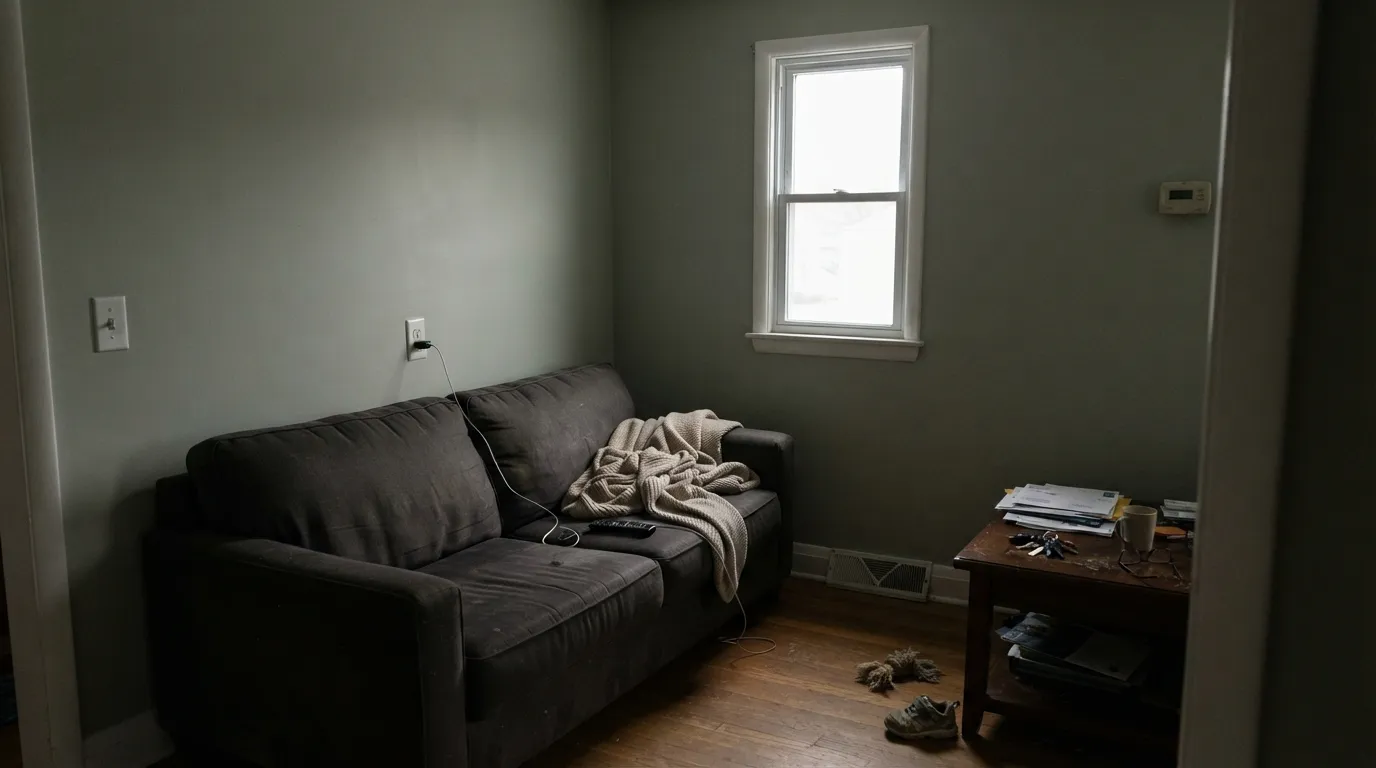
The catch is honest and predictable: it needs daylight to stay green. In a dim room, a windowless hall, or under cool bulbs, the green drains out and you are left with a flat gray-green that people describe as sad rather than calm.
Bedrooms and offices with a real window · kitchen islands and lower cabinets · rooms with warm white trim and brass · anyone who wants color without commitment
The room is north-facing and dim · your floors are orange-toned oak or cherry · you have green-flecked granite or green tile · you want a clear, obvious green
- Green enough to feel like color, muted enough to live with for years
- Reads as a near-neutral, so it does not fight wood, brass or black hardware
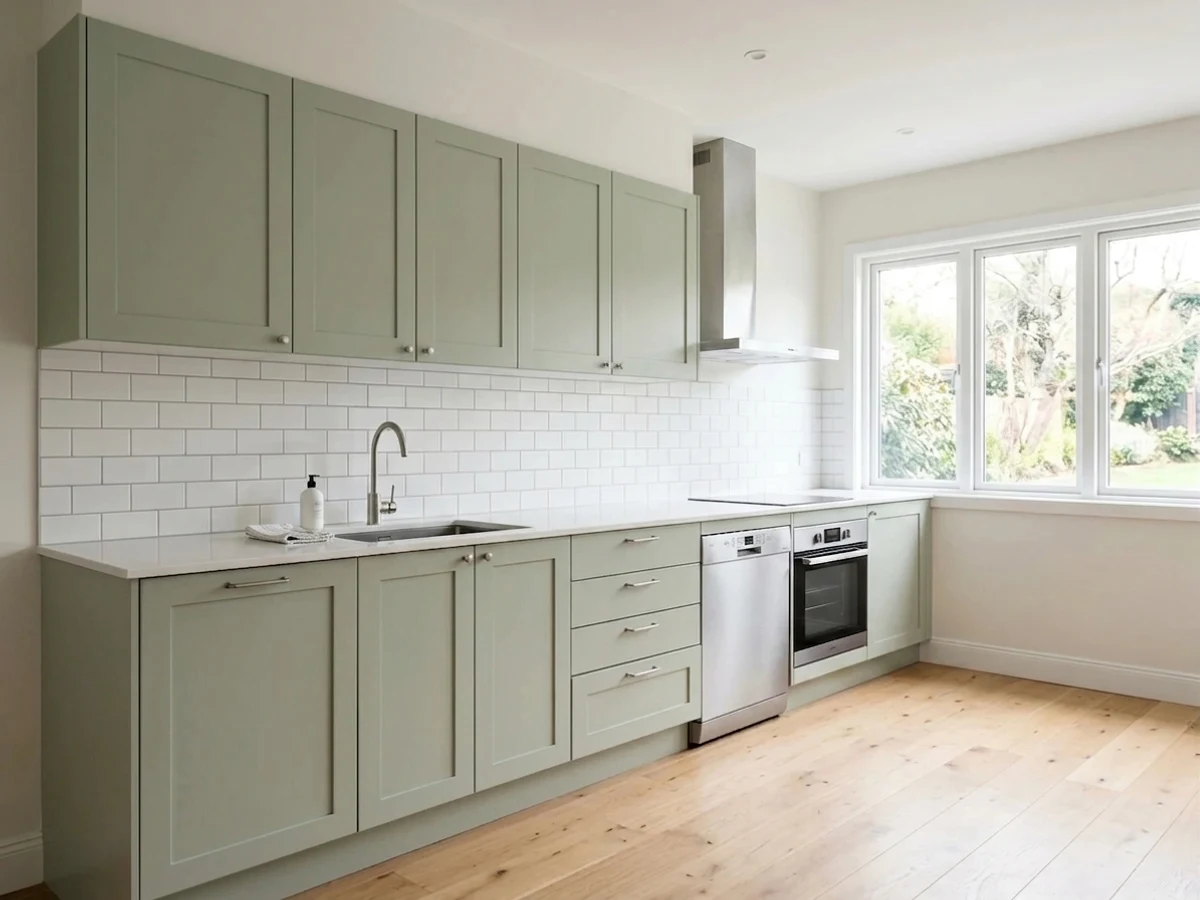
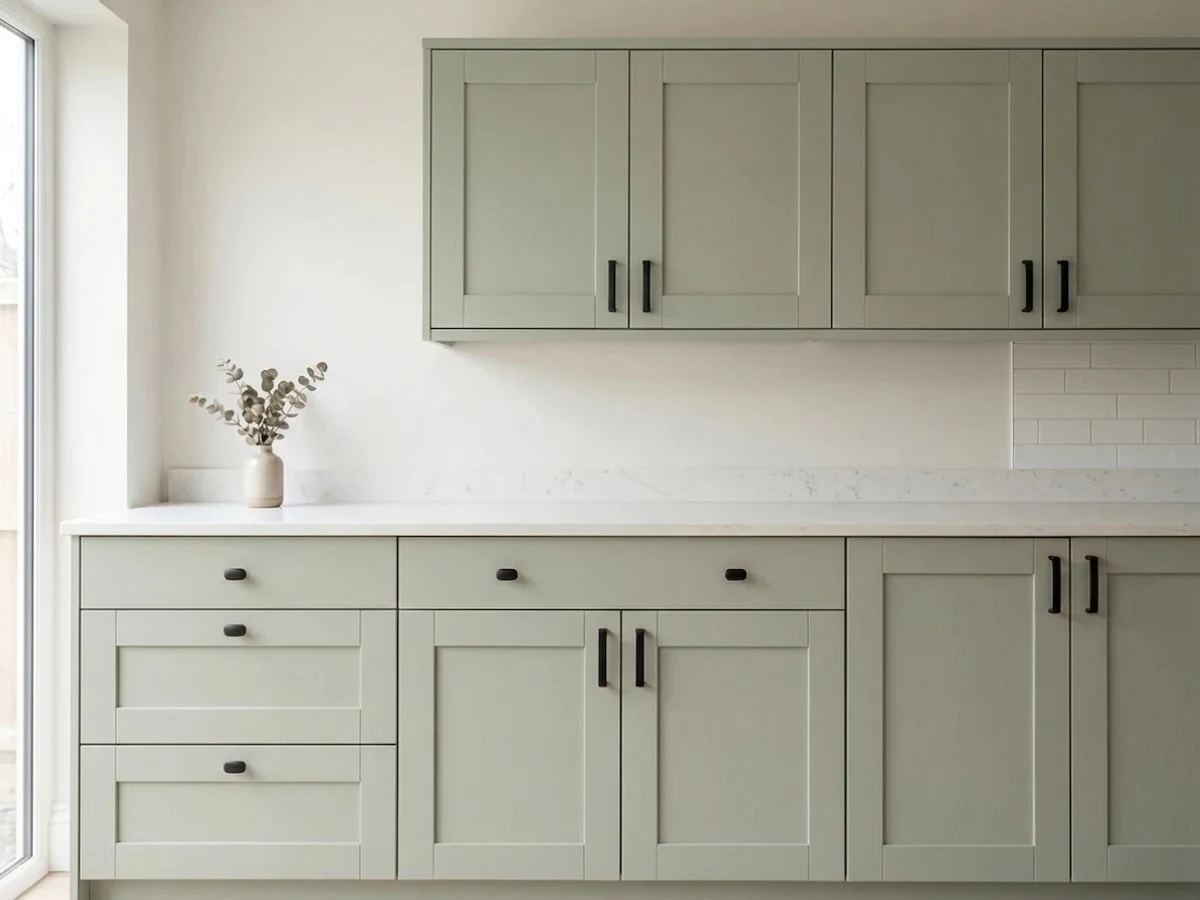
- Excellent on cabinets and islands — sage without a loud green
- Mid LRV of 47 holds its color on a wall without darkening the room
- Works on interiors and exteriors, from bedrooms to front doors
- Goes flat and gray in dim or north-facing rooms
- Turns olive next to orange-toned oak, pine or cherry
- Clashes with green-flecked granite and older green tile
- Carries a 2022 Color of the Year association some people want to avoid
What Color Is October Mist, Really?
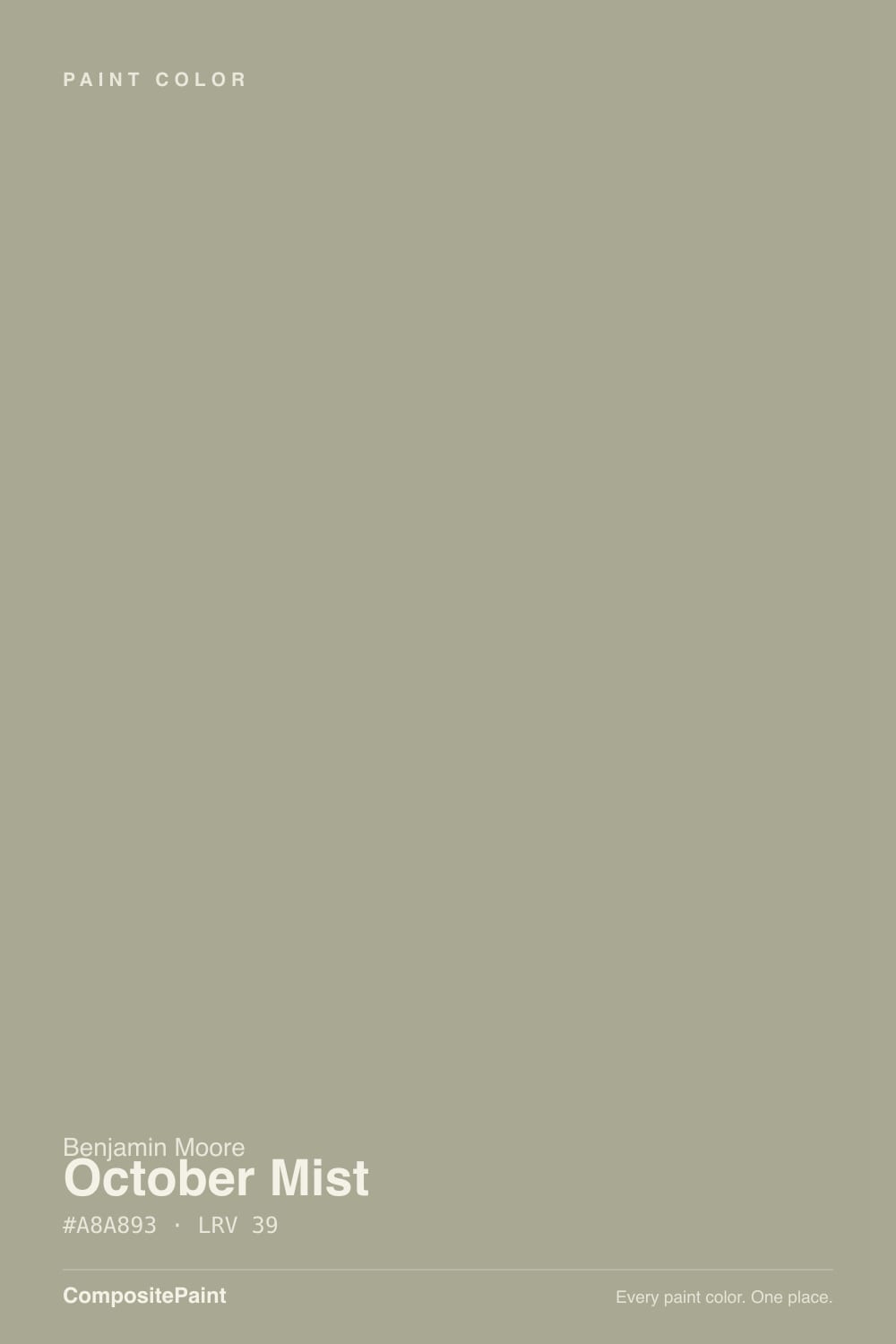
A green that has been muted almost to the edge of neutral. The hue sits in the yellow-green range, so the base is warm and a little earthy, more dried herb than mint — but the saturation is so low that the color spends half its day acting like a warm gray. That double life is the whole story of October Mist. It is why Benjamin Moore could name it Color of the Year in 2022 and why it ended up on so many walls: it delivers the idea of a green room without the risk of one.
At LRV 47 it is a true mid-tone, and it reads deeper on a wall than the little chip suggests. Put it beside Evergreen Fog SW 9130 (LRV 30) and October Mist is clearly the lighter, calmer one — Evergreen Fog is the moody cabinet color, October Mist is the everyday wall color. Put it beside Vale Mist 1494 (LRV 56), the lighter step on its own strip, and October Mist suddenly looks like a real color rather than a tint. That middle position is exactly why it works on full walls and on cabinets, and exactly why it can go heavy in a room with one small window.
Undertone in one line: warm yellow-green, grayed down hard — never minty, never blue. If your sample looks olive, that is warm wood or warm bulbs pushing the yellow forward; if it looks like plain gray, the room is not giving it enough light.
Where It Shines
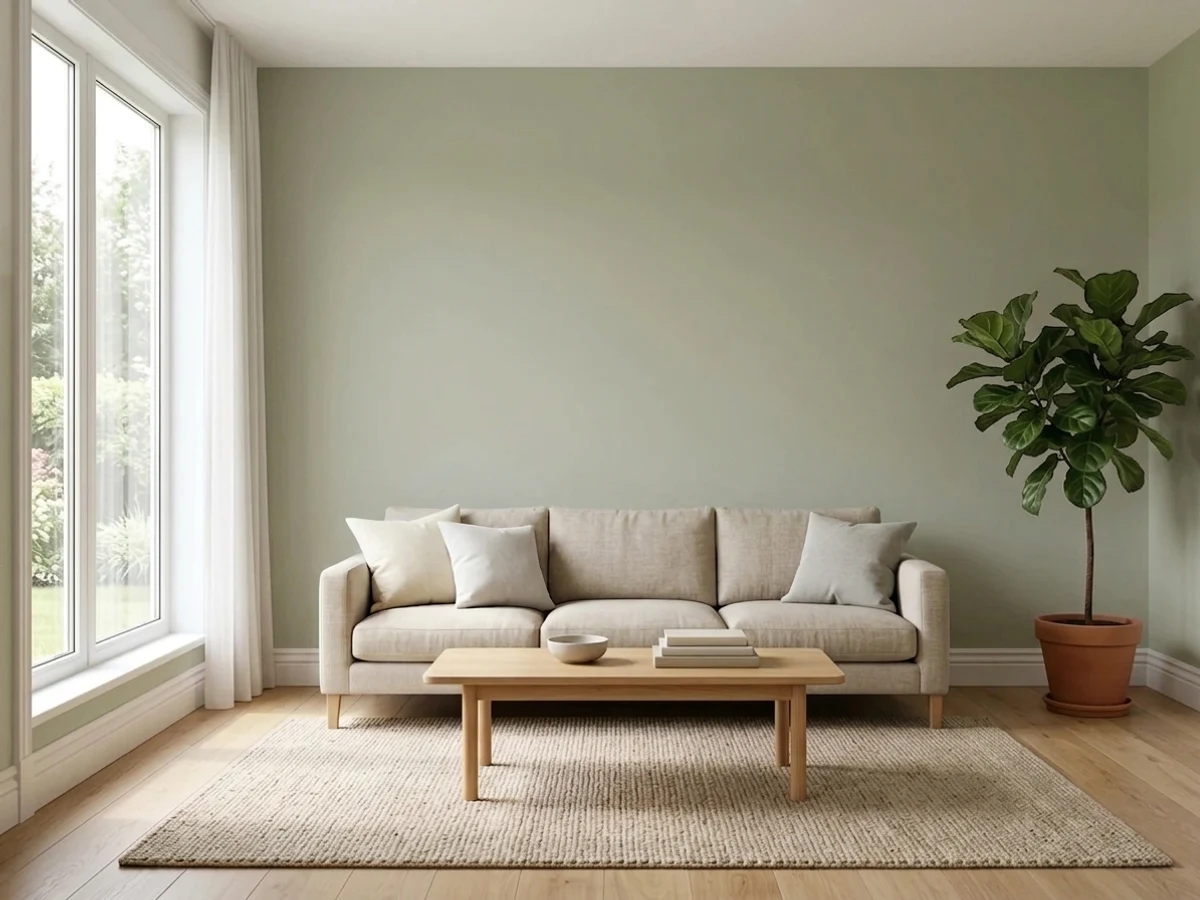
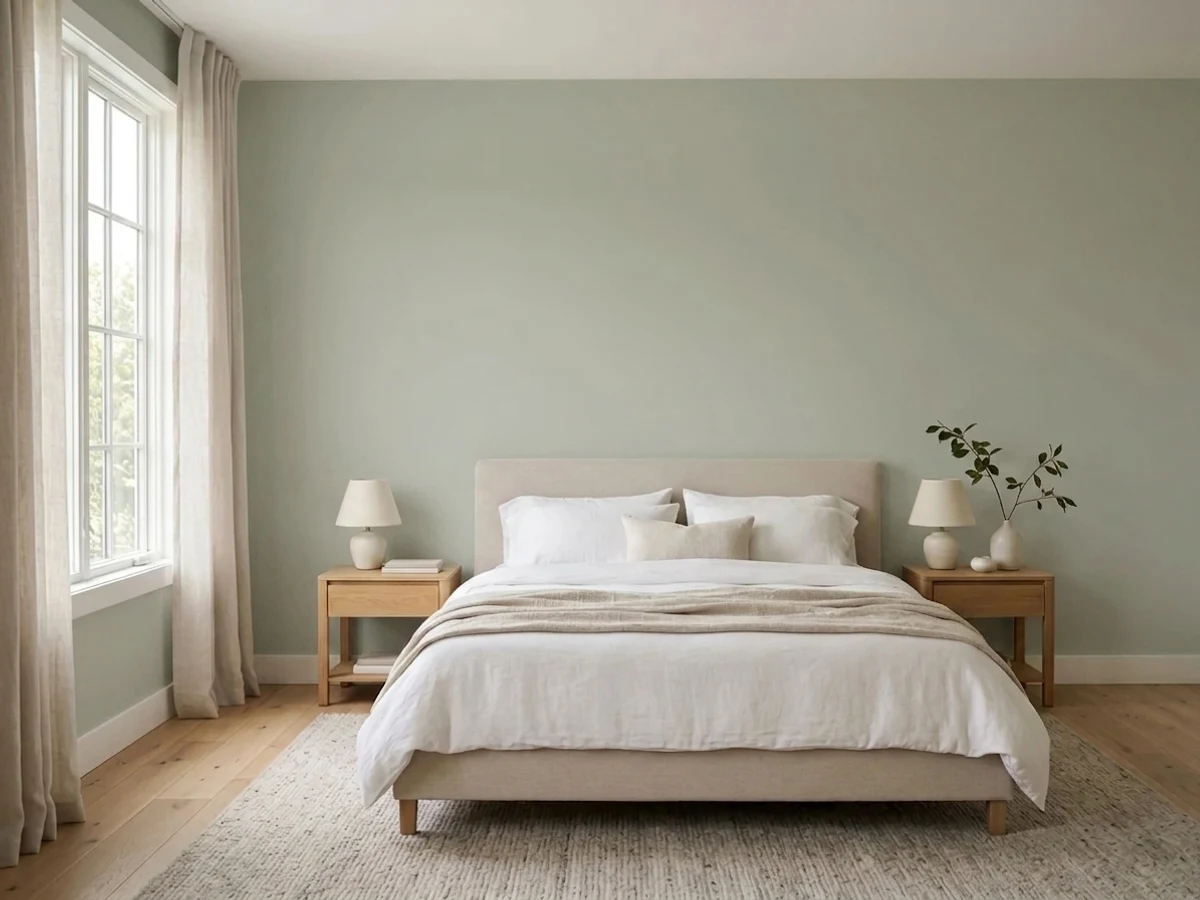
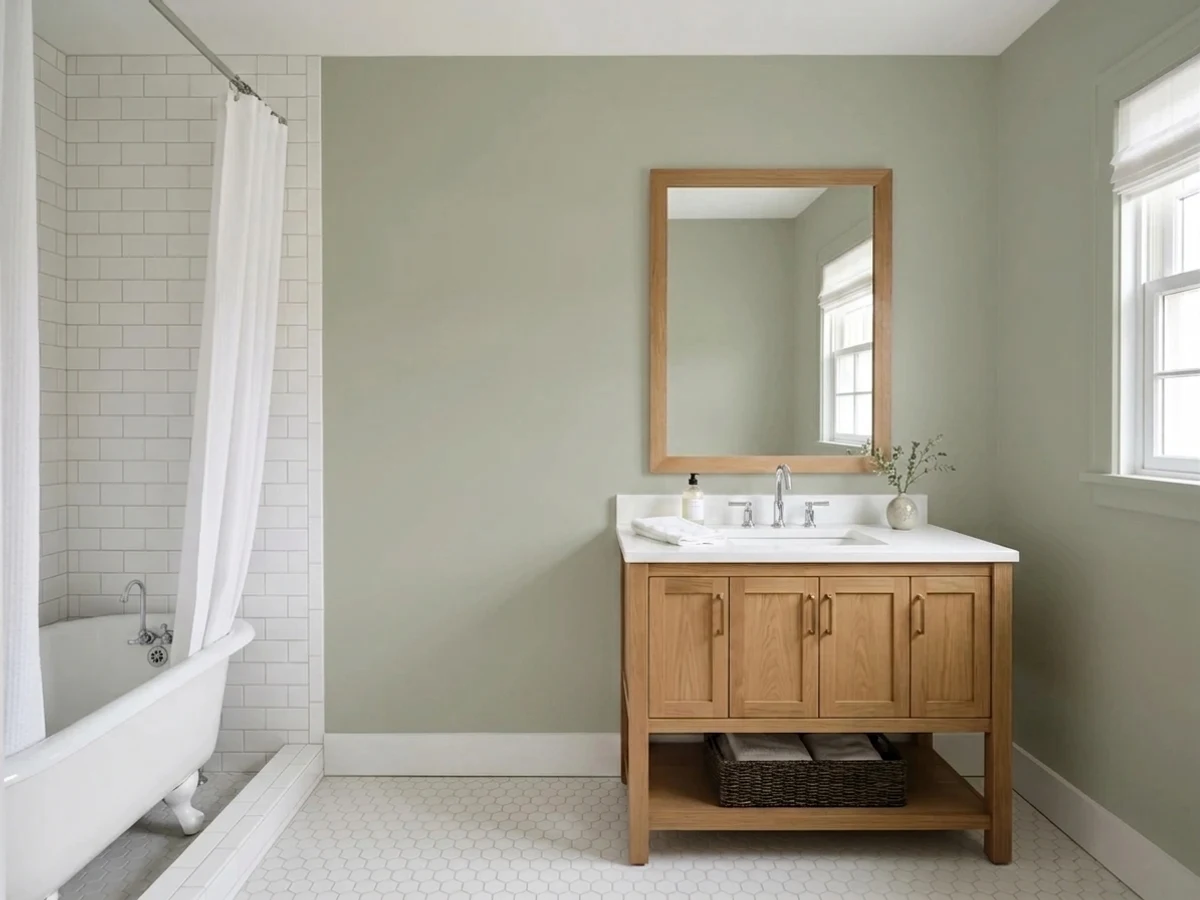
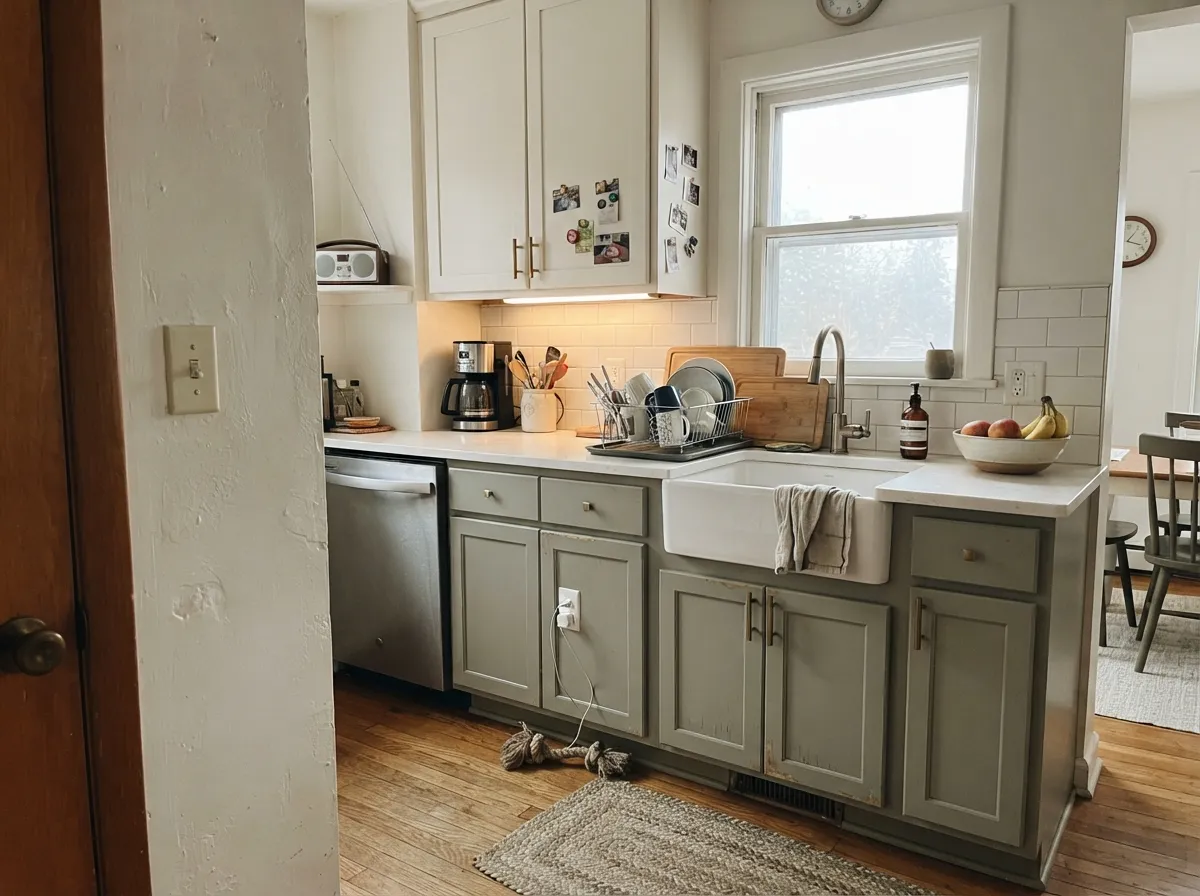
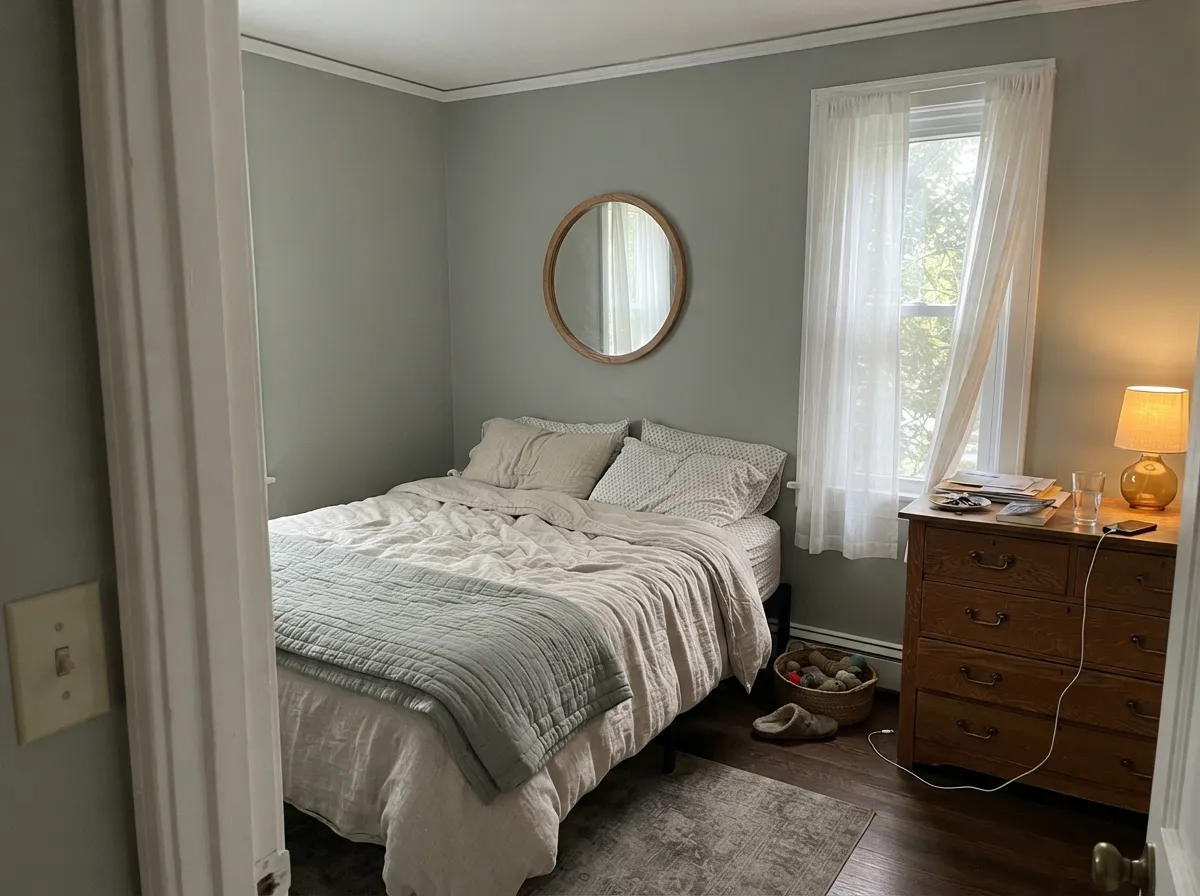
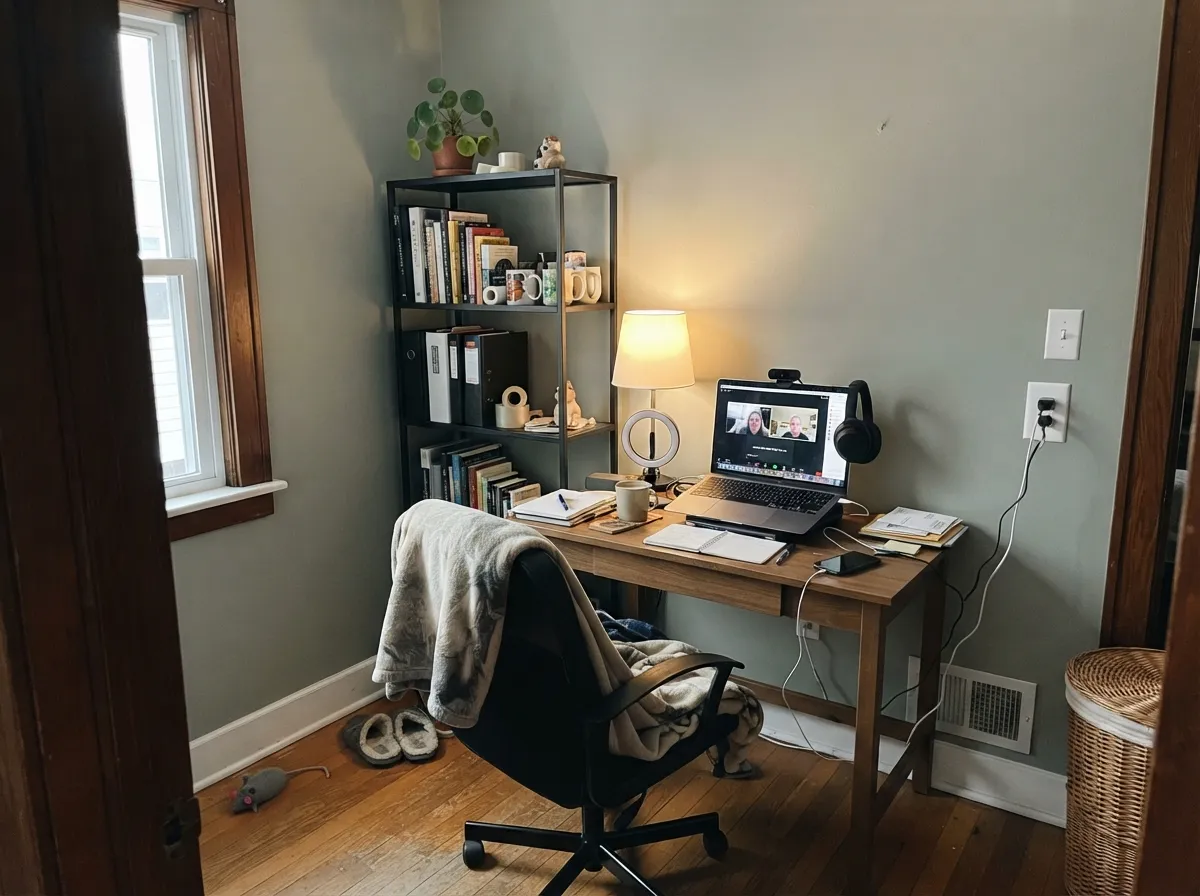
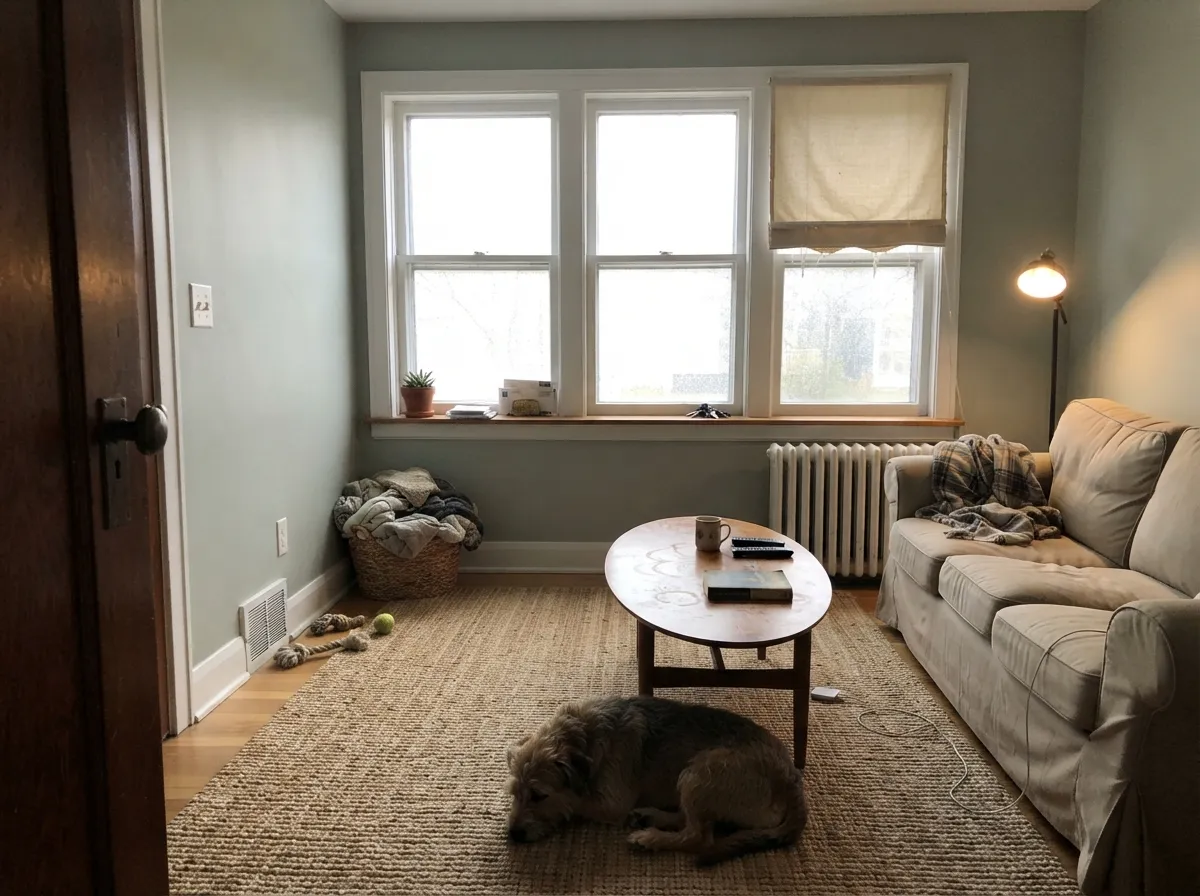
Give it daylight and warm white trim and October Mist does exactly what people hoped it would: the room feels calm and a little bit outdoors, without anyone walking in and saying "oh, you painted it green." Bedrooms, offices, and kitchen cabinets are where it earns its reputation.
Where It Fails
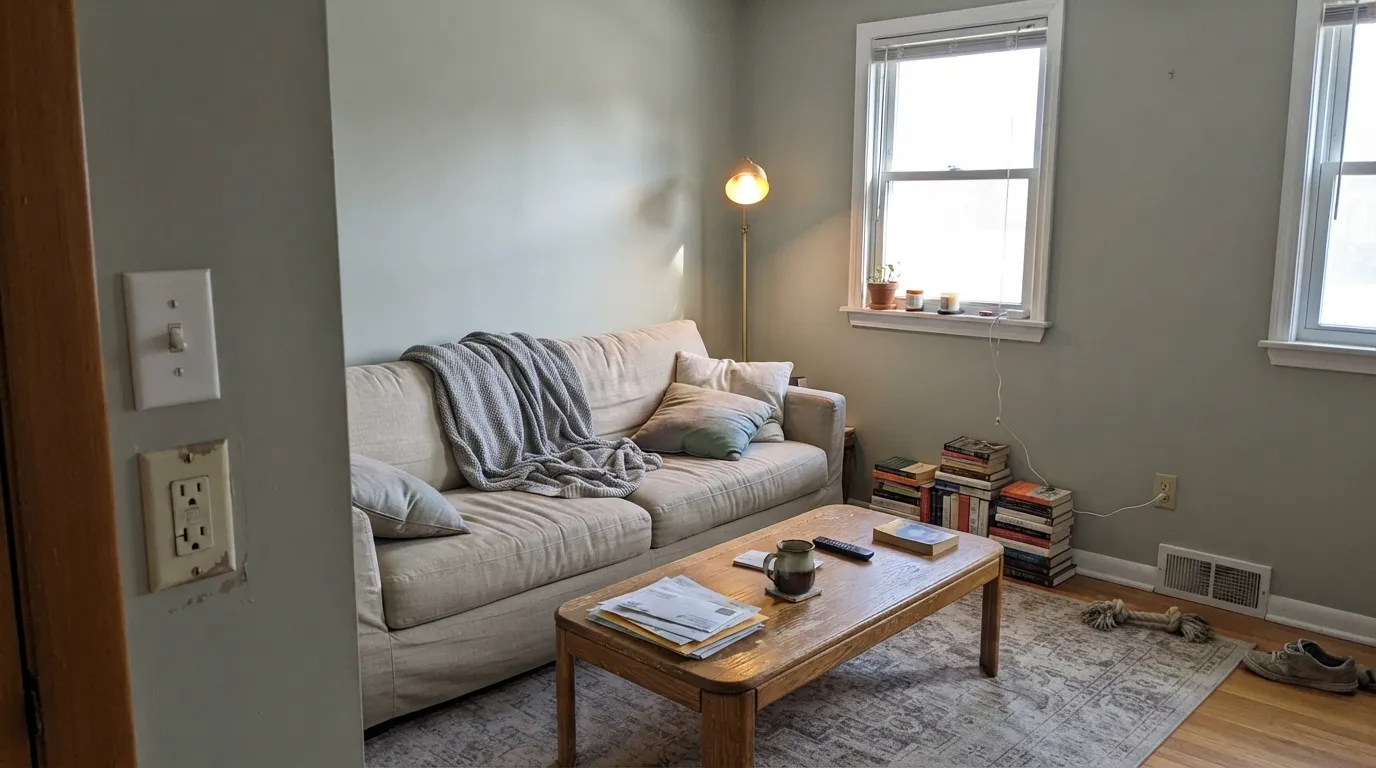
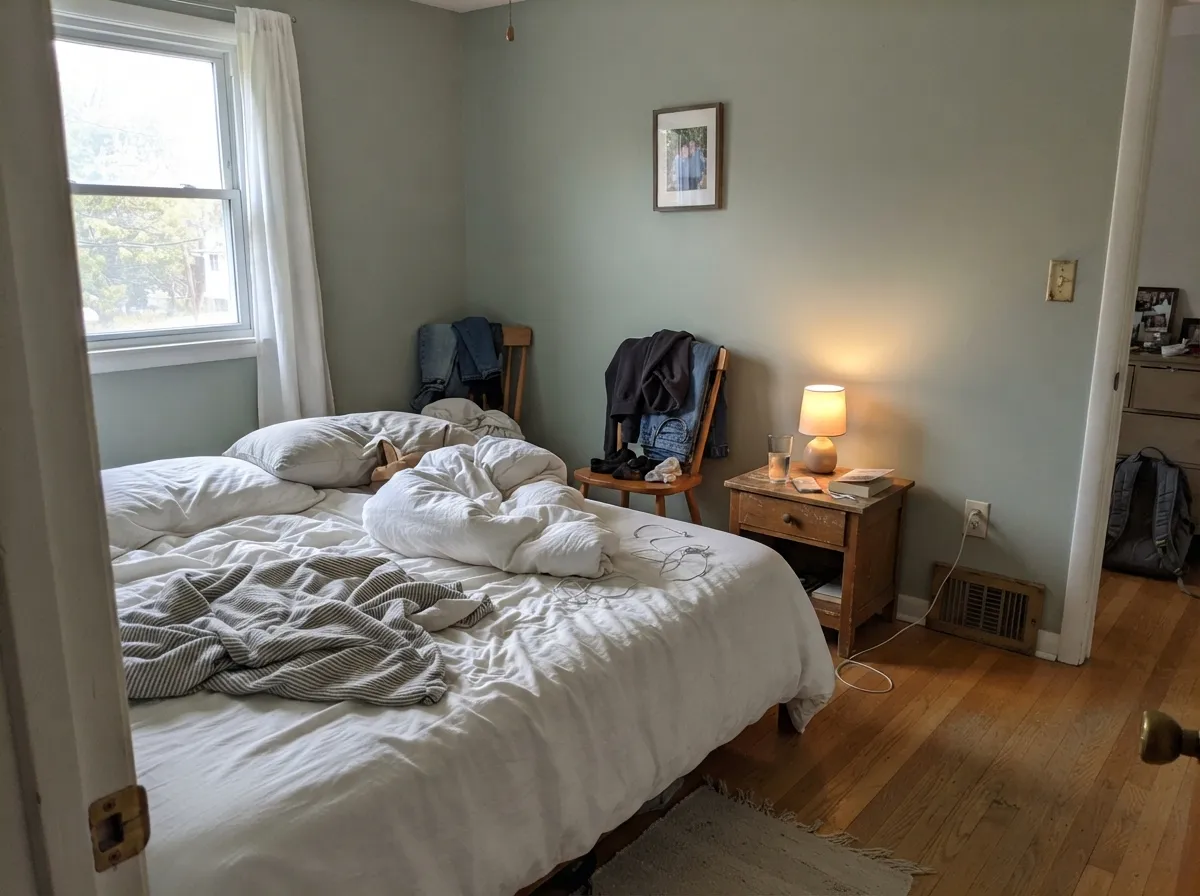
The complaints about October Mist are remarkably consistent, and they are all about context rather than quality. Three situations account for nearly every "I sampled it and it was not what I pictured" story.
Cool north light plus low light levels strips the yellow out and the green goes with it. What is left reads as a flat, drab gray-green — people paint a hallway or an interior room and dislike it within two days. If the room is dim but you still want sage, use a greener, less grayed color like Saybrook Sage HC-114, or step lighter to Vale Mist 1494 so the wall stays airy.
October Mist's warm yellow base is friendly to most woods, but honey oak, red oak and cherry push it straight into olive. The floor and the wall end up sharing the same yellow-orange note and the room looks muddy. With orange-leaning floors, pick a cooler, grayer sage like Evergreen Fog SW 9130 or Acacia Haze SW 9132, which sit against the wood instead of joining it.
Two greens in one room almost never agree. Speckled granite, green-veined stone and older green tile all carry a clearer, cooler green that makes October Mist look dirty by comparison — a common regret on kitchen and bath cabinets. When the stone already has green in it, go neutral on the walls with Revere Pewter HC-172 or Pale Oak OC-20 and let the stone be the color.
Room by Room

Your Light Is the Risk
Warm daylight lifts the yellow base and the sage looks alive all day. This is the exposure it was made for.
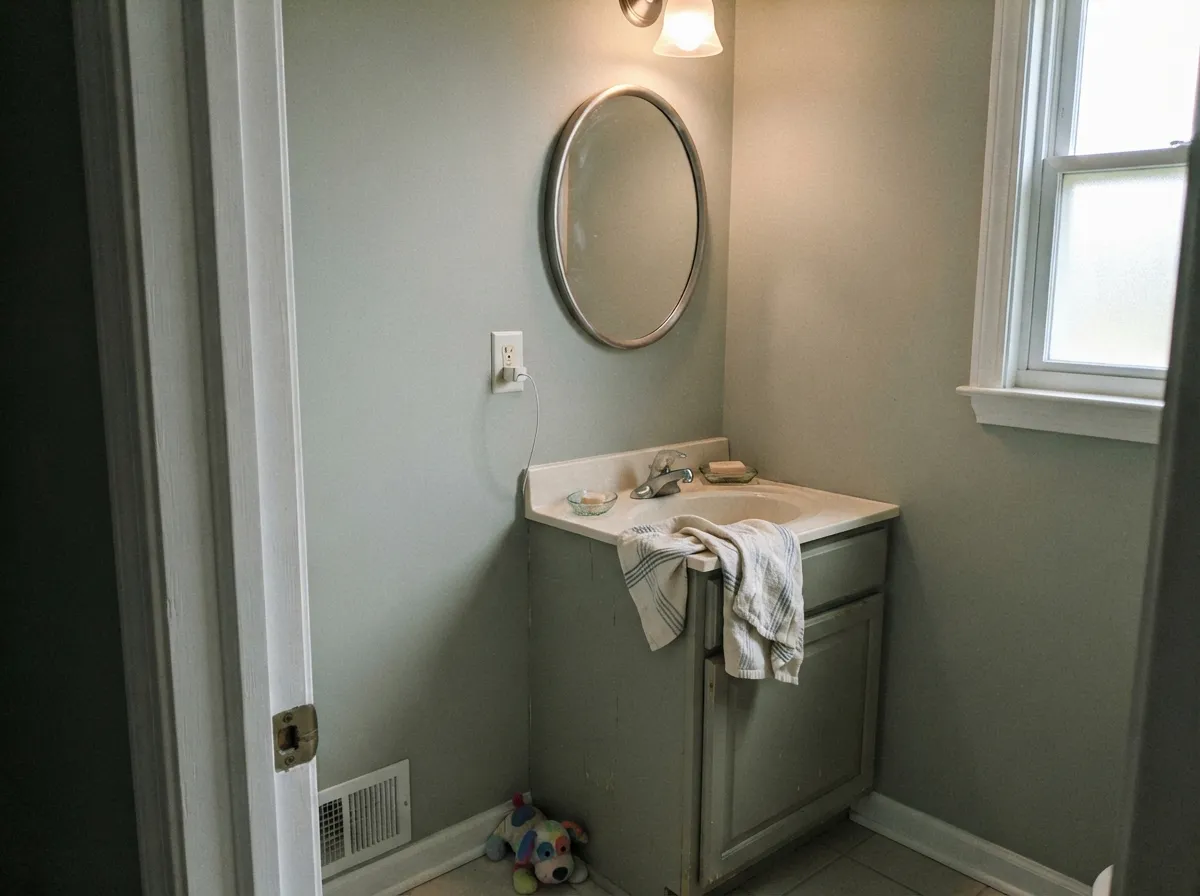
Cool light mutes the warmth and the green thins out to gray-sage. Livable in a bright north room, drab in a dim one.
Fresh and clearly green in morning east light; noticeably warmer and softer in late-afternoon west sun.
2700K bulbs make it cozy and slightly olive; 3500K–4000K sharpen the green. Fix the bulbs before you repaint.
Most complaints about October Mist are a light mismatch. Upload a photo of your actual room and see it on your walls — then ask for the same wall in north light or evening lamps before you buy a single sample.
Need It From Another Brand?
Any paint counter can custom-tint Benjamin Moore 1495 directly. If you would rather stay in one brand's own deck, these are the closest stock matches, measured as ΔE2000. Under 2 is a difference you will not see on the wall.
| Brand | Closest color | ΔE | LRV | |
|---|---|---|---|---|
| Sherwin-Williams | Softened GreenSW 6177 · Sherwin-Williams | 1.4 | 49 | Color page → |
| Behr | Court GreenQE-34 · Behr | 1.9 | 46 | Color page → |
| Valspar | Green MotifT677 · Valspar | 0.6 | 47.1 | Color page → |
| PPG / Glidden | Pine CrushPPG1028-3 · PPG / Glidden | 0.0 | 47 | Color page → |
| Glidden | Pine CrushPPG1028-3 · Glidden | 0.5 | 47 | Color page → |
| Dutch Boy | Cliff Face422-3DB · Dutch Boy | 2.8 | 49 | Color page → |
Similar Benjamin Moore Colors
The nearest shades to October Mist within Benjamin Moore's own range, ranked by perceptual color distance — useful when you want the same look a touch lighter, darker, or warmer.
WCAG 2.1: AA is 4.5 : 1 for normal text, 3 : 1 for large text, AAA is 7 : 1.
October Mist vs the Colors You're Also Considering
Every October Mist sample board has the same rivals on it. The numbers show the real lightness gap — then it comes down to which risk you would rather live with.
Pick this for the softer, grayer sage that behaves like a neutral.
Benjamin Moore HC-114 · LRV 56Saybrook SagePick this when you want the green to actually read green, especially in weaker light.
Pick this for everyday walls — it stays light and calm across a whole floor.
Sherwin-Williams SW 9130 · LRV 30Evergreen FogPick this for moody depth on cabinets, a feature wall, or against orange oak floors.
Side-by-side comparison →Weekend Getaway 473 shares October Mist's LRV of 39 but its hex (#A5AA92) is a touch greener and cooler, so it reads slightly more like a clear sage and a little less warm. If your room already has plenty of warm wood and you want the green to stay honest, Weekend Getaway holds it; if you want more softness, October Mist wins.
Dried Basil 1510, also at LRV 39 (#AEA98F), pushes further toward warm beige, so it looks more like a green-tinted greige than a sage. Choose it in low or cool light where October Mist can go flat, since the extra warmth keeps it lively.
Evergreen Fog SW 9130 sits much darker at LRV 30. It is the moodier, more saturated cousin. Pick Evergreen Fog for a dramatic cabinet or feature wall, and October Mist when you want the same family but lighter and more everyday.
October Mist Coordinating Colors
October Mist coordinates on the warm side of the fence. Warm whites, warm greiges, terracotta and deep navy all sit comfortably beside it; cool blue-grays and stark builder whites make it look dull. These are the partners that come up again and again in real projects:
October Mist on Cabinets and Islands
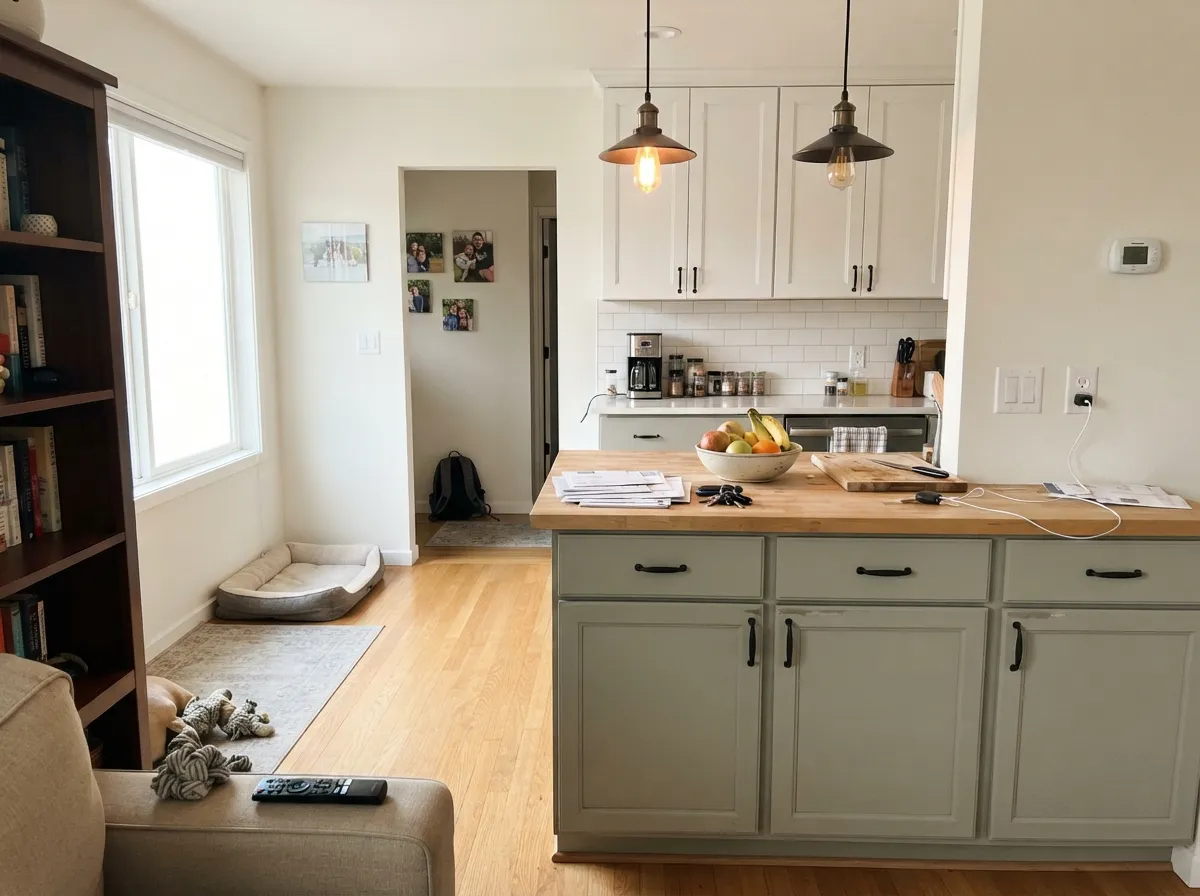
Cabinets are where October Mist is at its most reliable, because cabinet doors catch light from several angles at once and that keeps the green readable even in a room where the walls would go flat. The standard build is sage on the lowers or the island, warm white on the uppers, brass or matte black hardware. Use a satin urethane-fortified cabinet paint — flat sheens on sage show every fingerprint around the pulls.
Two checks before you order paint. First, your countertop: green-flecked granite, green-veined marble and older green tile all read as a clearer, cooler green and will make the cabinets look muddy next to them. White quartz, warm-toned quartzite and butcher block are the easy partners. Second, your floor — the same orange-oak problem that hits walls hits cabinet bases even harder, because the two surfaces meet at the toe kick with nothing in between.
Lighter and Darker Than October Mist
October Mist sits in the middle of its own color strip, which makes the ladder easy to use. One step lighter is Vale Mist 1494 — the same muted sage with more light in it, and the right call for dim rooms, small bathrooms, and anyone who found October Mist heavier than expected on the wall. Guilford Green HC-116 is another lighter option with a bit more clear green in it.
Going the other way, Raintree Green 1496 is the darker step that still behaves, good for a study, a built-in wall or a moody bedroom. Rolling Hills 1497 and Forest Floor 1498 are proper deep greens for cabinets, doors and exteriors — beautiful, but they are color decisions, not neutral ones. A common whole-house move is October Mist on the main walls with Raintree Green on one set of built-ins, since they come from the same strip and cannot clash.
Three Ready Palettes Built on October Mist
A color is never alone on the wall. These are complete combinations in the 60-30-10 pattern, with the reason each one holds together. Every one opens in the visualizer.
October Mist takes the 60 percent, White Dove's soft warmth frames it without the hard edge a bright white would cut, and the charcoal doors supply the single dark note that keeps the room from going sleepy. All three share a warm base, so nothing turns cold when the lamps come on.
Try this palette in your roomSage on the bottom half grounds the kitchen while the warm white uppers keep it light, which is the two-tone formula that made this color popular in the first place. Potters Clay is the terracotta note that answers October Mist's yellow base and makes brass hardware look intentional.
Try this palette in your roomPale Oak is a warm greige that shares October Mist's warmth, so the color room and the neutral rooms hand off without a visible seam — and it keeps the sage out of dim hallways where it flattens. Hale Navy on the door gives the scheme one deep anchor that reads classic rather than trendy.
Try this palette in your roomOctober Mist FAQ
Is October Mist green or gray?
Both, depending on the light in your room. In daylight it is clearly a soft sage green. In a dim room, in north light, or under cool LEDs, the green thins out and it reads as a warm gray. That flip is the single most common surprise people report, so sample it on the darkest wall in the room, not the brightest.
Is October Mist still in style in 2026?
Yes, and it is now past the peak-trend phase where everyone recognizes it. Muted sage has settled in as a neutral rather than a fad, so it is not dating the way a saturated trend color would. If you dislike the Color of the Year association, Saybrook Sage HC-114 gives you nearly the same room with none of the baggage.
October Mist or Saybrook Sage?
They sit at practically the same depth, and side by side on a wall most people cannot separate them. Saybrook Sage HC-114 carries more actual green, so it holds up better in weak light; October Mist is grayer and quieter, so it behaves more like a neutral. In a dim room, choose Saybrook Sage. In a bright room where you want restraint, choose October Mist.
Is October Mist good for kitchen cabinets?
It is one of the best uses for it. On lowers or an island under warm white uppers it adds color without shouting, and it flatters brass, matte black and butcher block. The one thing to check first is your countertop: green-flecked granite or green-veined stone will fight it and make the cabinets look dull.
What trim white goes with October Mist?
White Dove OC-17 is the standard answer — a soft warm white that frames the sage without the hard line a stark white draws. If you want a crisper, brighter edge, Chantilly Lace OC-65 works and keeps the green looking fresh. Avoid builder-grade bright whites with a blue cast; they make October Mist look dirty.
Will October Mist look olive with my oak floors?
With white oak or gray-washed oak, no — it looks natural. With honey oak, red oak, pine or cherry, yes, it can slide olive, because the wood's orange and the paint's yellow reinforce each other. Tape a large sample directly above the floor and look at it at 4 p.m., which is when the warmth peaks.
Is October Mist too dark for a small room?
At LRV 47 it is a true mid-tone, so it will make a small room feel enclosed and cozy rather than airy — which is great in a powder room or a small office, and less great in a small dim bedroom. If you want the same family with more light bouncing around, use Vale Mist 1494 instead.
Have you painted with October Mist?
Rate it — one tap helps the next reader decide.
Ask a Question