Sage Brush
Behr's fresh yellow-green sage, reviewed honestly: the light where it reads truly green, the light where it turns mustard, and what to pick if you actually wanted the grayer kind of sage.

Jessica has spec'd whites and neutrals for more than 300 rooms and keeps a sample wall of painted drawdowns in her studio. Every color review is checked against real reader rooms in the comments and re-tested when a formula changes. About the testing process →
- 1Sage Green22
- 2Evergreen Fog30
- 3Sage Brush52
- 4Soft Fern57
- 5Alabaster82
The Fast Verdict
Sage Brush is what happens when a paint brand needs a sage that actually reads green. Everywhere else on this site, "sage" means grayed-down and quiet — Evergreen Fog, Clary Sage, October Mist. Sage Brush skips the gray: it is a genuine light yellow-green, closer to new plant growth than to a designer neutral. Behr backs that up by selling it in wall paint, cabinet-and-trim enamel, and an exterior formula all at once — a workhorse color, not a headline one, and it has never chased a Color of the Year moment.
Farmhouse or cottage exteriors · kitchen or bath cabinets that want a real green, not a greige · sunrooms and craft rooms with strong daylight · anyone who tried a "sage" from another brand and found it too gray to notice
You actually wanted a muted, grayed-out sage · your main light source at night is a warm 2700K lamp with no daylight backup · your floors are honey oak or golden pine · you want a color nobody will ask you to name
- A real yellow-green, not another grayed-out sage pretending to be a neutral
- Sold in wall paint, cabinet-and-trim enamel, and an exterior formula — genuinely built for more than one surface
- LRV 52 keeps rooms and facades bright rather than moody
- Reads clean and current on farmhouse and cottage exteriors against white trim
- Easy roller coverage — one coat gets close, two coats finish clean
- Warm 2700K lamp light with no daylight backup pulls it toward mustard-olive
- Buyers expecting a grayed-out "cabinet sage" often find it reads greener than they wanted
- Golden honey oak and gold-toned wood dull next to it rather than complementing it
- Brush application needs a genuine two coats; only rollers get close to one-coat coverage
What Color Is Sage Brush, Really?
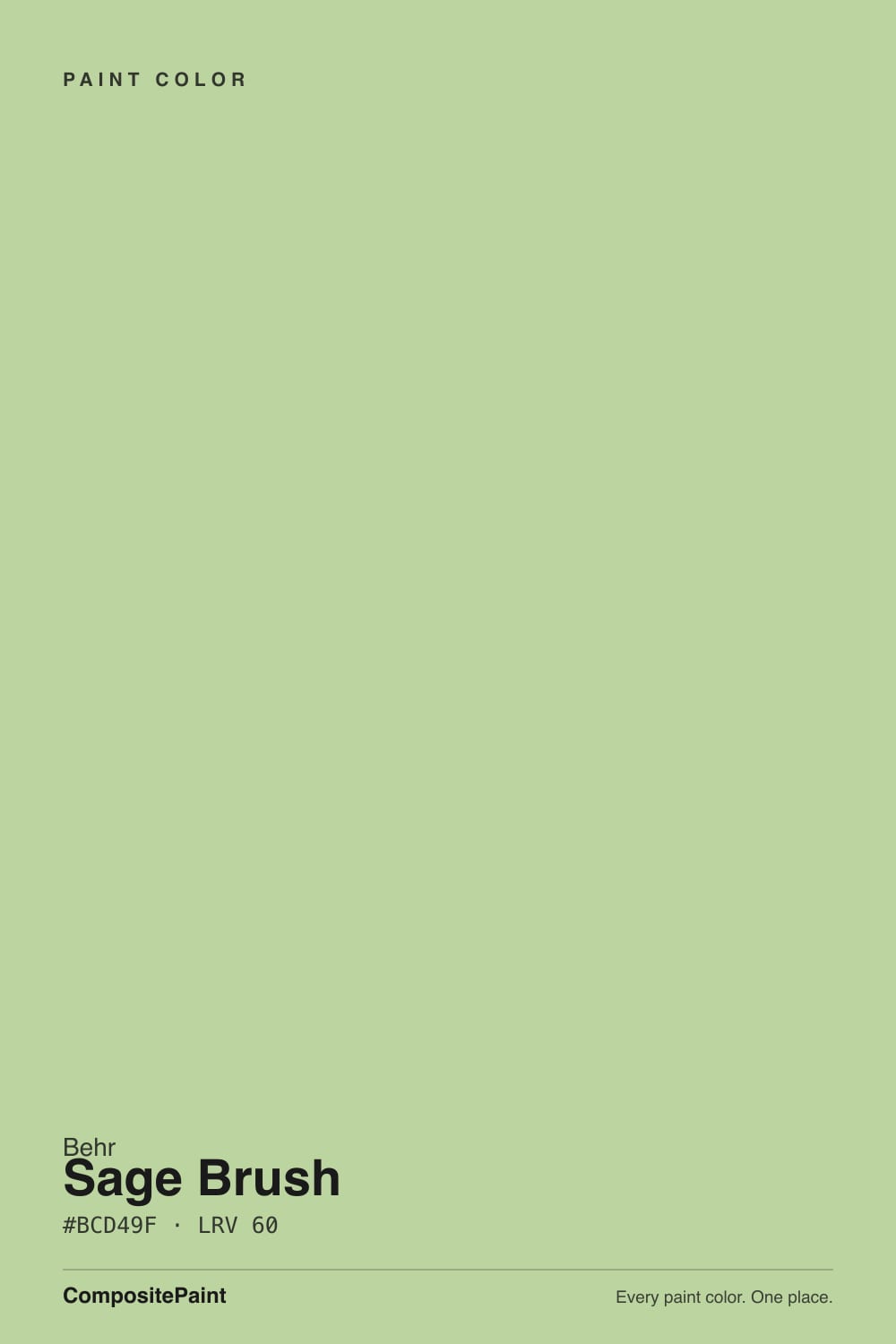
A light, clearly yellow-green with just enough gray mixed in to keep it out of lime territory — but not enough to mute it into the soft, dusty sage this site's other reviewed greens sit in. Put its hex next to Evergreen Fog, Clary Sage, October Mist or Soft Sage and the difference is obvious: those four are desaturated, almost-neutral grays with a green whisper. Sage Brush is a real color first and a neutral second. At LRV 52 it is also noticeably lighter than any of them, which is why it reads fresh and garden-like instead of moody.
Behr treats it as a working color rather than a marketing one. It ships not just as a flat or eggshell wall paint but as a semi-gloss and satin cabinet-and-trim enamel and as an Ultra exterior formula — the kind of three-surface availability Behr reserves for colors people actually specify for siding, shutters, and built-ins, not just accent walls. That is the honest angle on Sage Brush: it has no famous-room story, no viral moment, no Color of the Year credit. It is a dependable light green that shows up on real houses and real cabinets without ever being the color anyone argues about online.
Undertone in one line: yellow-green first, a little gray underneath to keep it soft — never blue, never true olive-brown. Outside sources disagree slightly on how warm that undertone reads (some call it warm-yellow, others call it gray-forward), which is normal for a color this light: the balance tips with the light in the room, not with the can.
Where It Shines
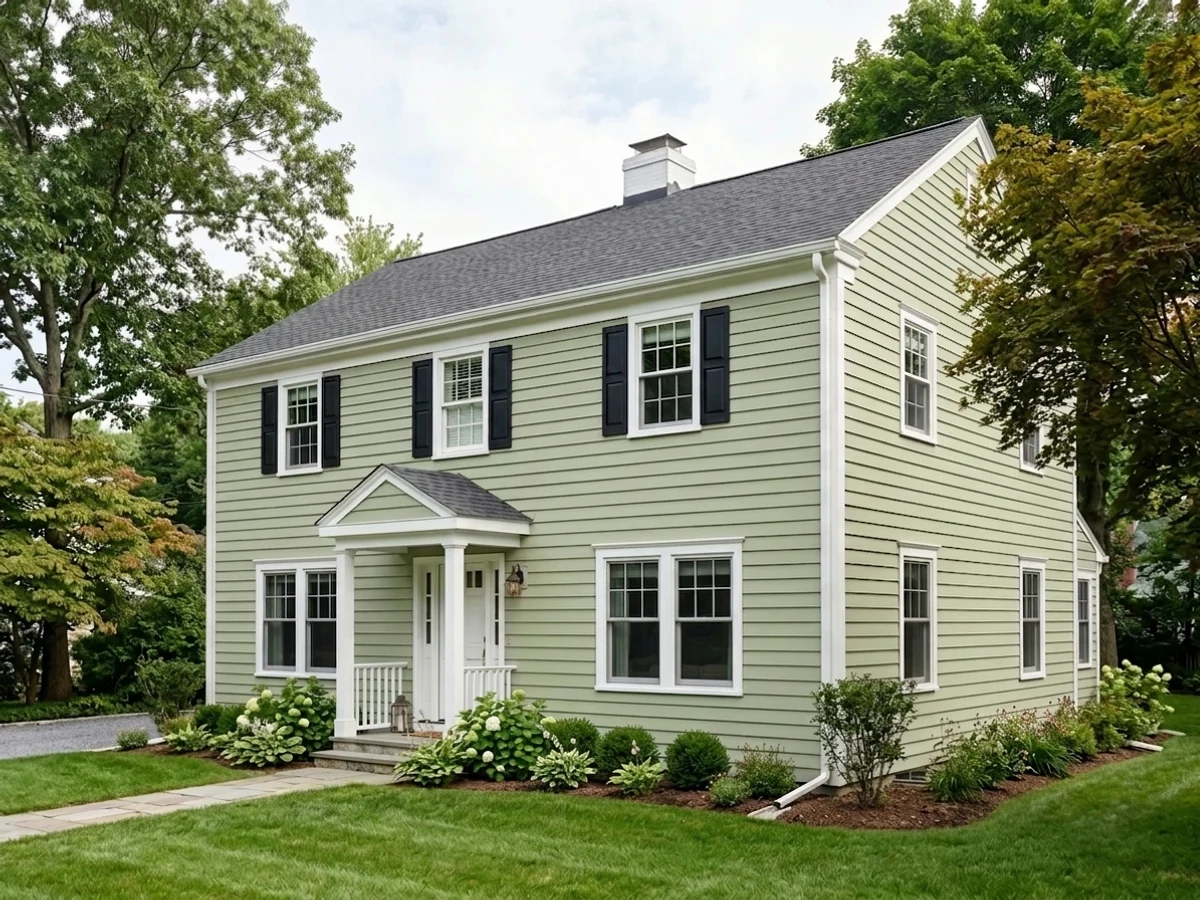
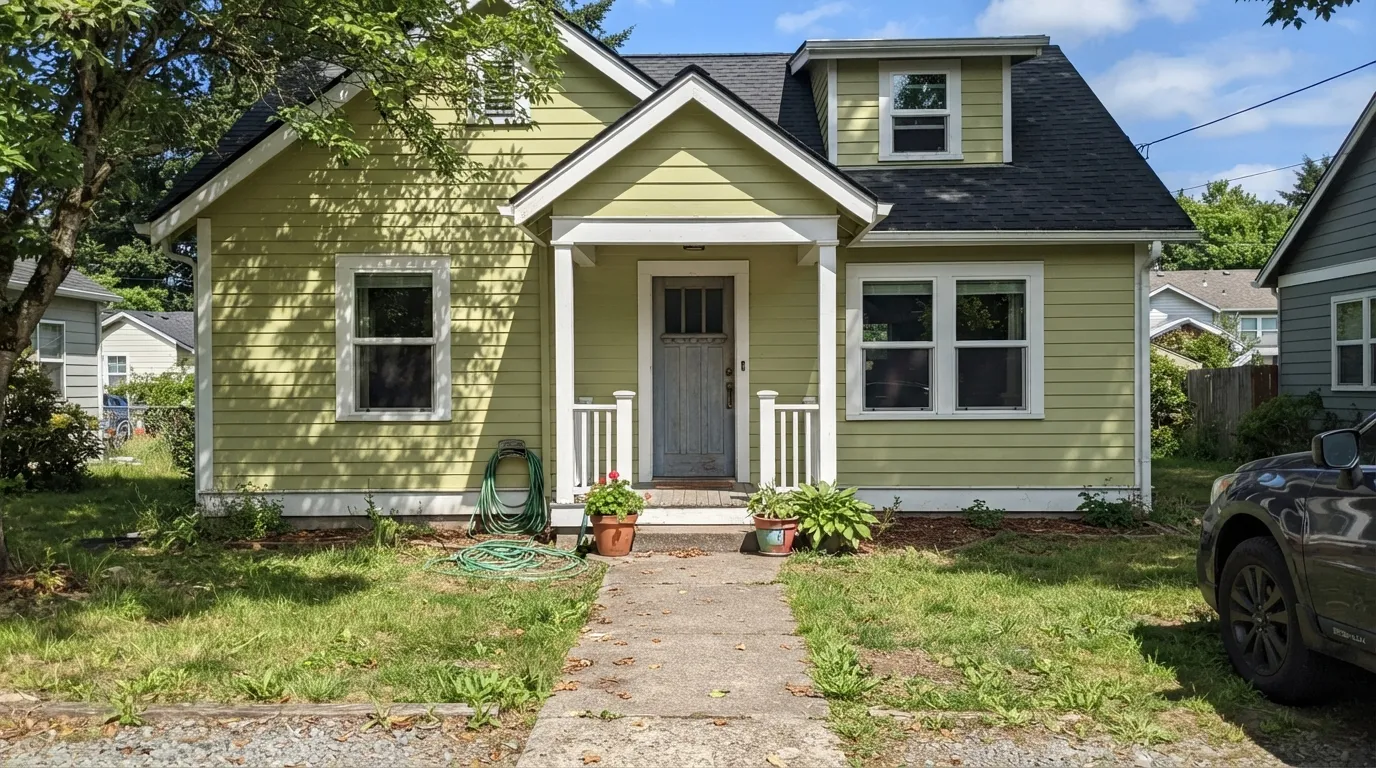
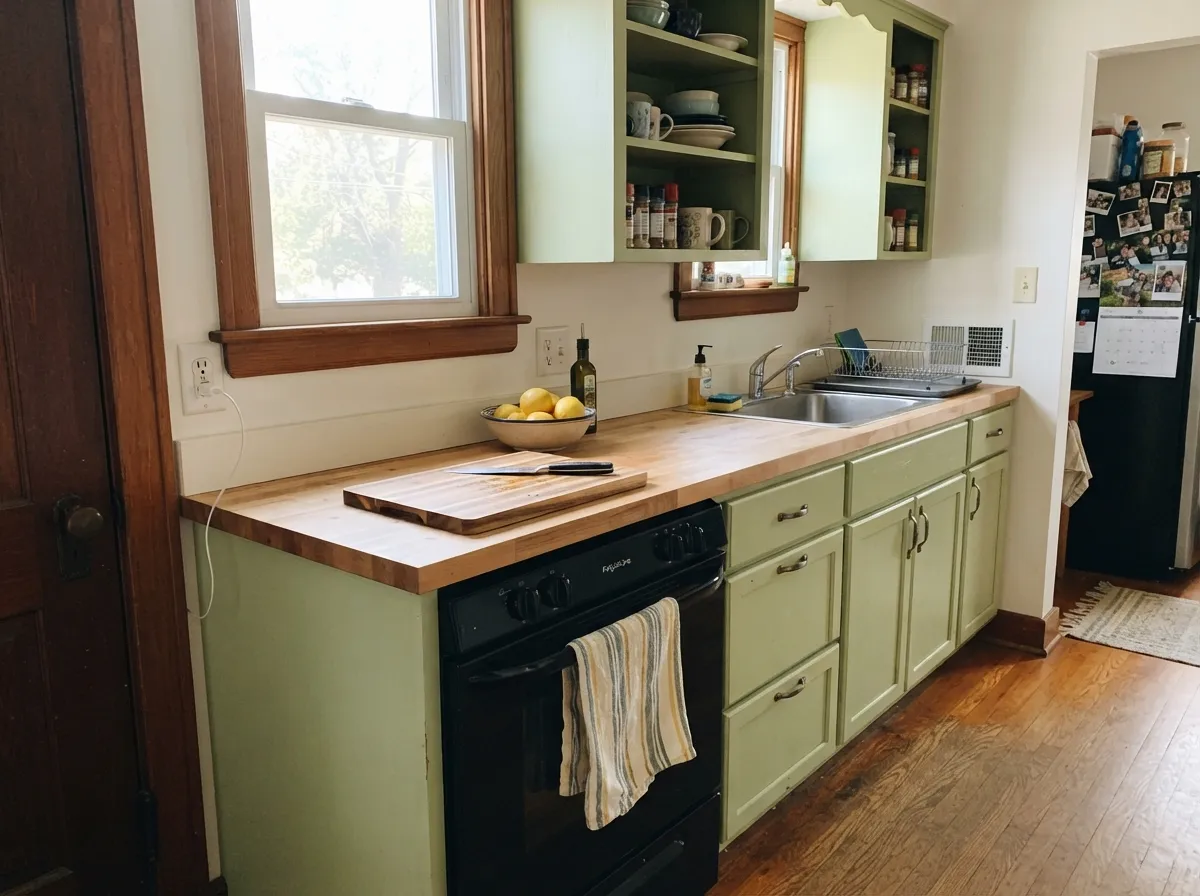
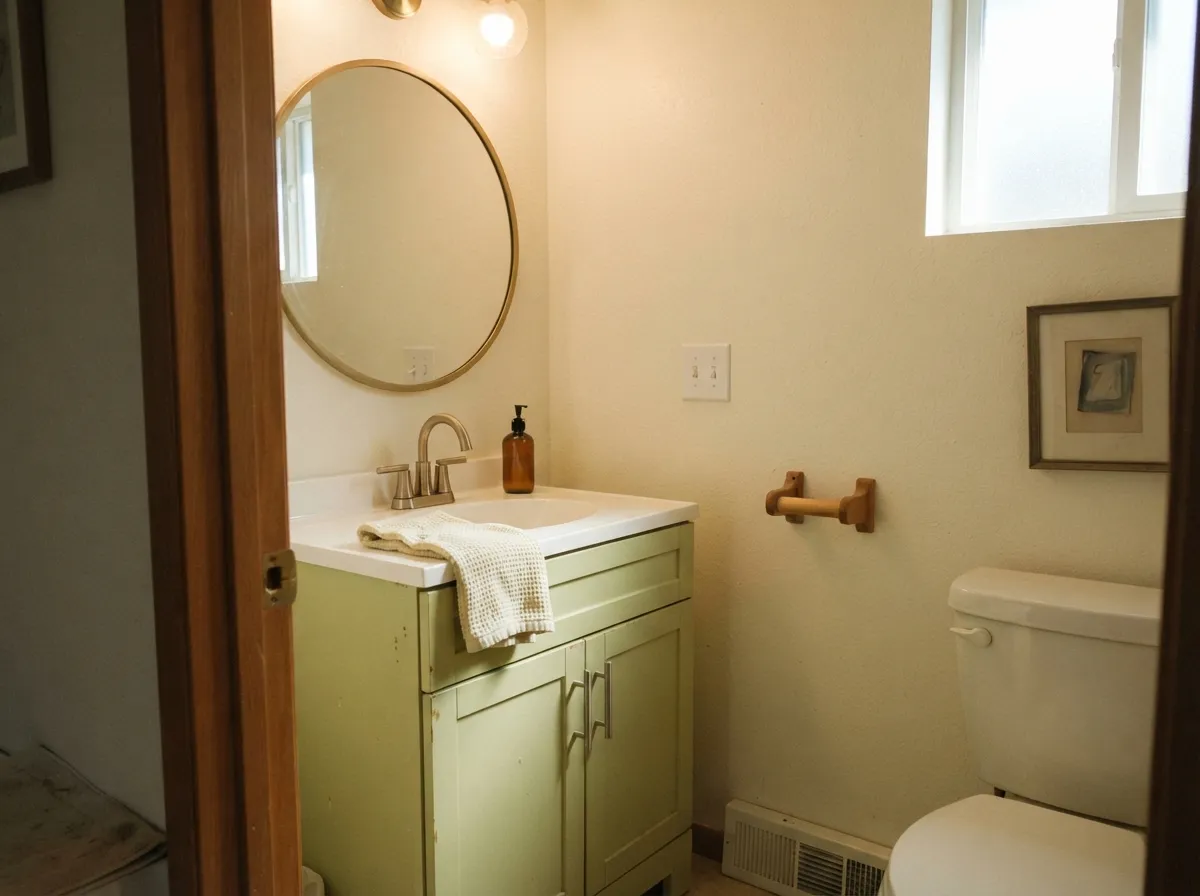
Give it real daylight and it looks exactly like its name — a soft brushstroke of garden sage, not a paint-chip green. It is at its best outdoors: full sun on a exterior wall pulls out the yellow-green cleanly, and against white trim it reads as an easy, current farmhouse or cottage color without leaning precious. Indoors, its second home is cabinets — sold in a real enamel finish, it holds up on doors and drawer fronts the way a wall-paint-only color can't, and it looks genuinely green next to warm wood rather than gray or beige.
Where It Fails
Sage Brush doesn't generate much online complaint — it is too quiet a color for that — but the real failure modes are predictable from the hex and the finish options themselves. All three are avoidable if you know them before you buy the gallon.
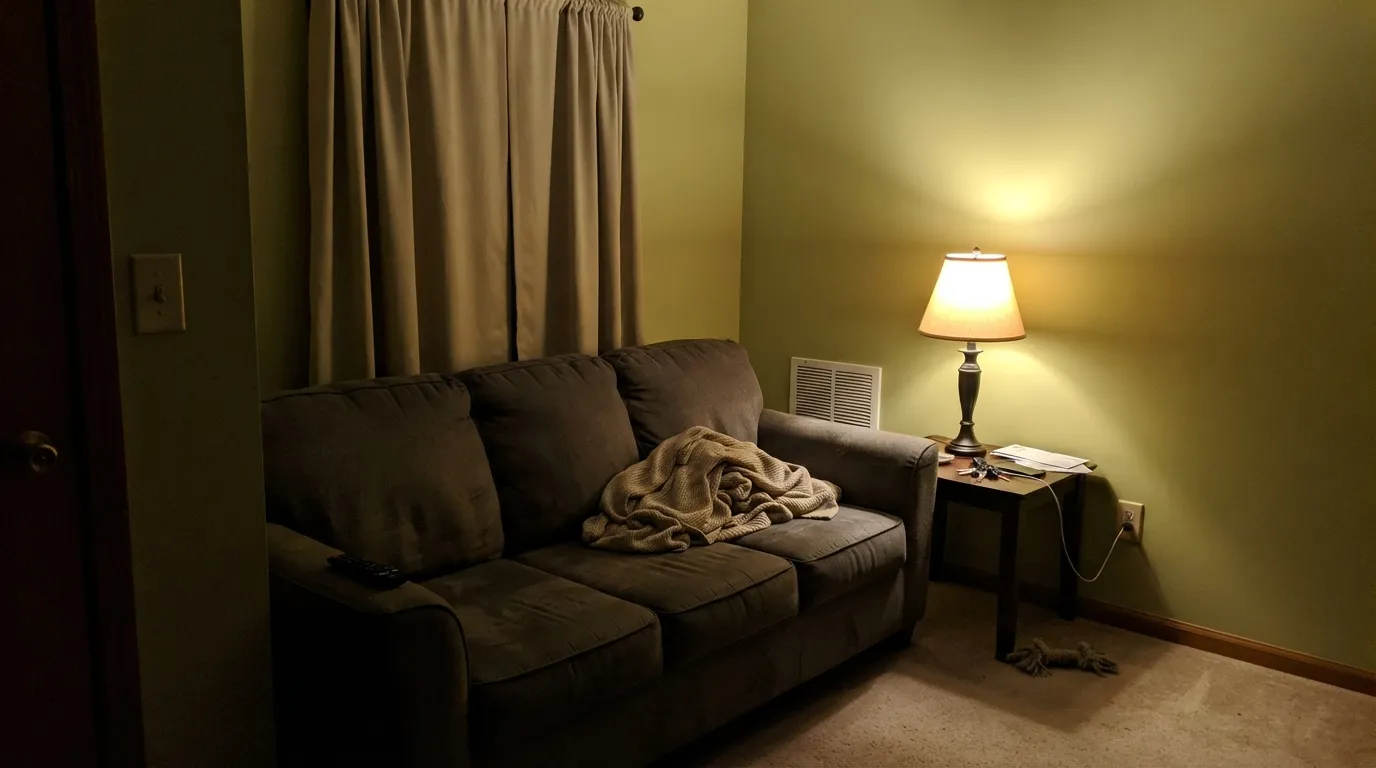
At night, under 2700K bulbs alone, the yellow in Sage Brush comes forward and the green recedes — the wall can drift toward a soft mustard-olive instead of the fresh sage you saw on the chip in daylight. It's not a defect, it's physics: a light, warm-leaning green loses its cool balance the moment the light source turns warm too. Rooms that are lived in mostly after dark should sample under the actual bulbs before committing.
If your reference point is Evergreen Fog, Clary Sage, or the general "cabinet sage" look that's been everywhere for years, Sage Brush will surprise you — it's a genuinely greener, less filtered color. Buyers who grabbed it expecting that softer, grayer family sometimes find it reads more like a garden color than a neutral. If gray-first is the goal, Clary Sage or Soft Sage is the closer match.
Golden, orange-leaning oak pushes a yellow-green like this further toward yellow, and the wood can start to look dull next to it. It's not a hard clash, but it's not the color's best pairing either — white oak, painted cabinetry, or cooler-toned wood let the green stay green instead of both sides fighting for the same warmth.
Room by Room
Sold in an Ultra exterior formula for a reason: full sun reads it as a clean, current cottage or farmhouse green, and it pairs easily with white trim and a black or near-black door. This is the application Behr clearly built the color for.
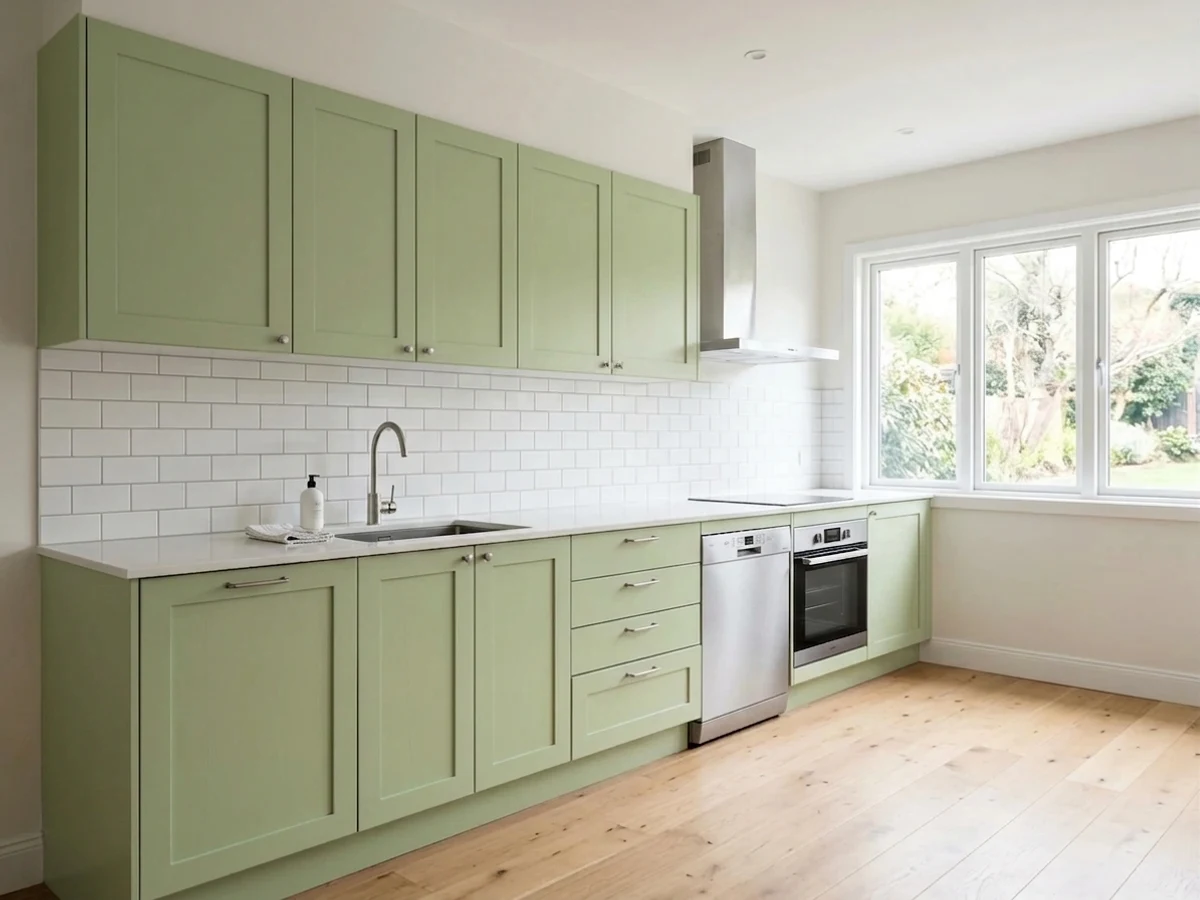
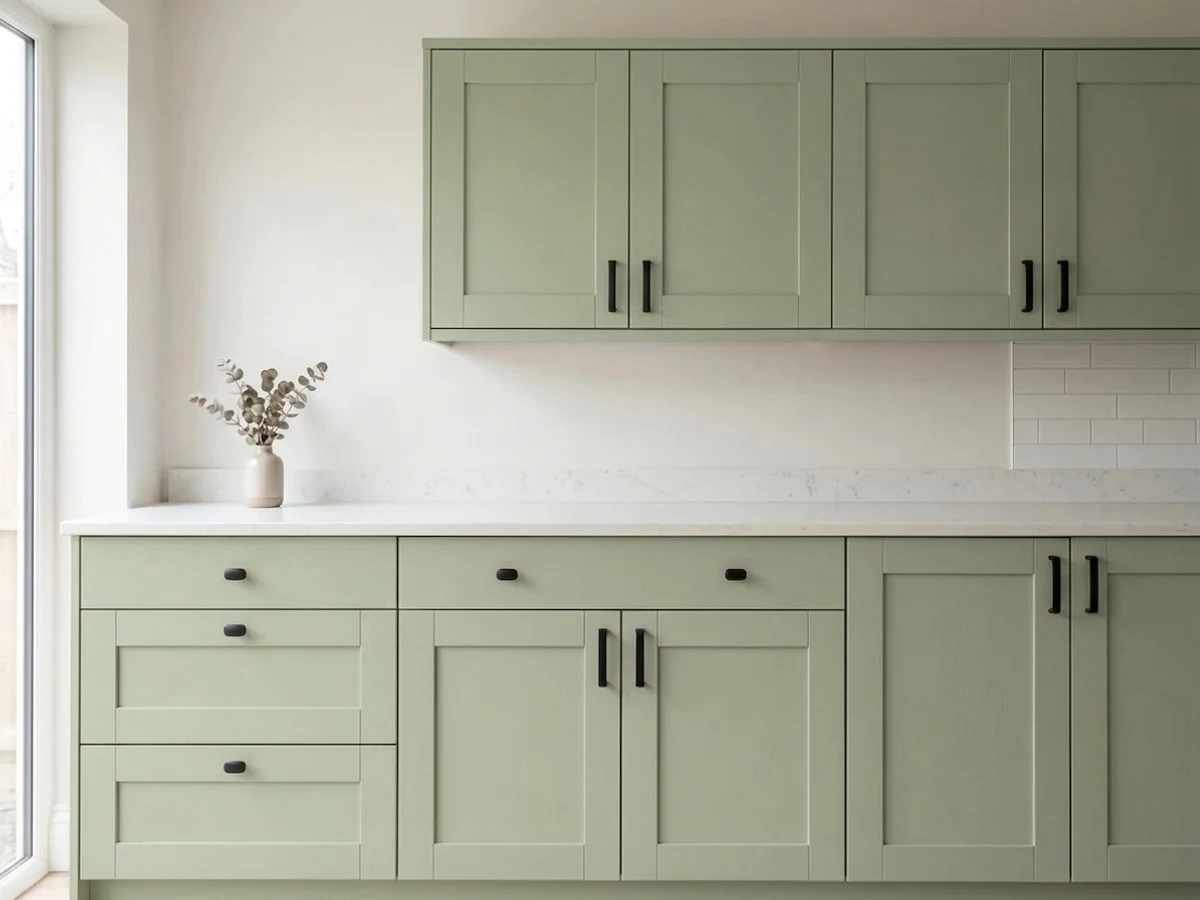
The semi-gloss and satin cabinet-and-trim enamel are the real story here — not every color gets that treatment. On an island or full run of cabinets against a warm white wall, it reads as a genuine green, not a greige pretending to be one.
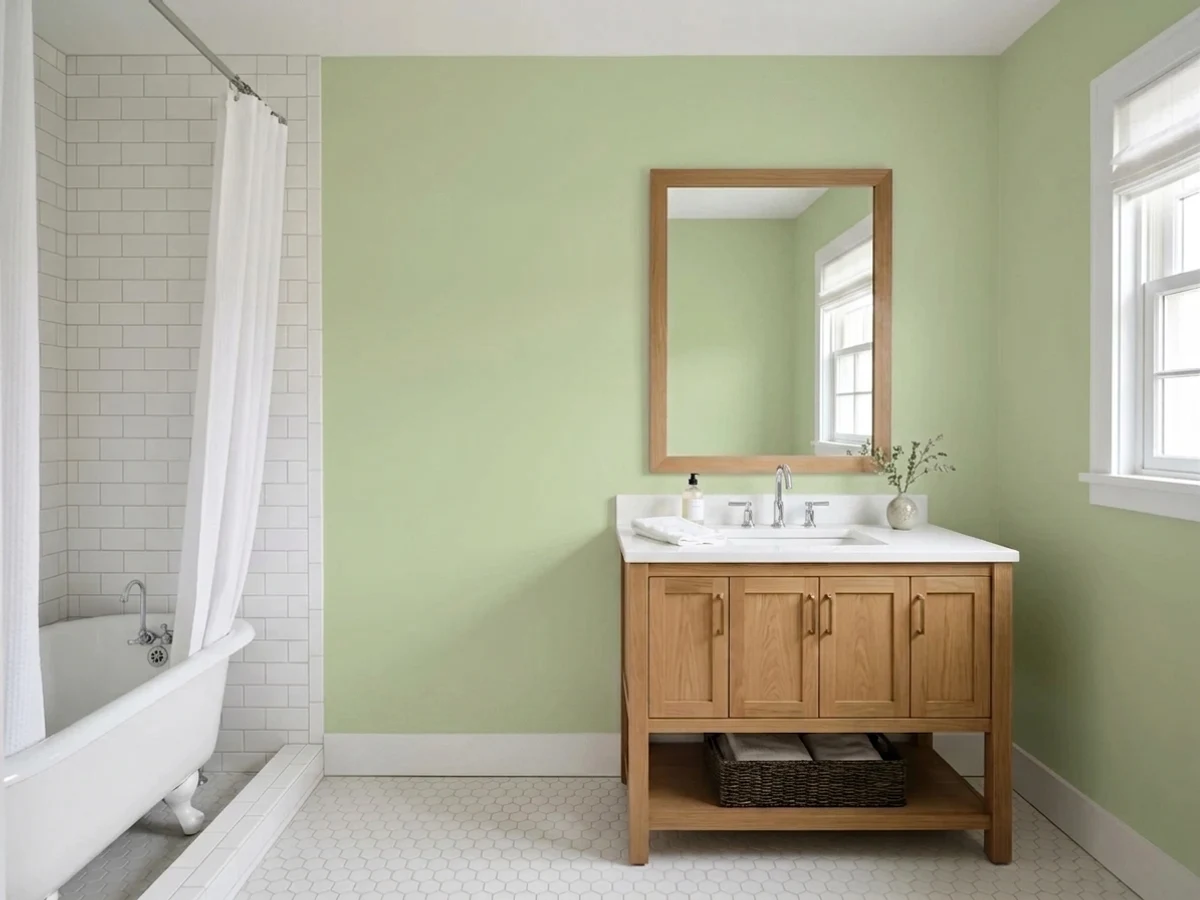
A single vanity in the enamel finish, with brass or unlacquered hardware, is an easy way to try the color without repainting a whole room. Works best with a window or a strong daylight bulb nearby.
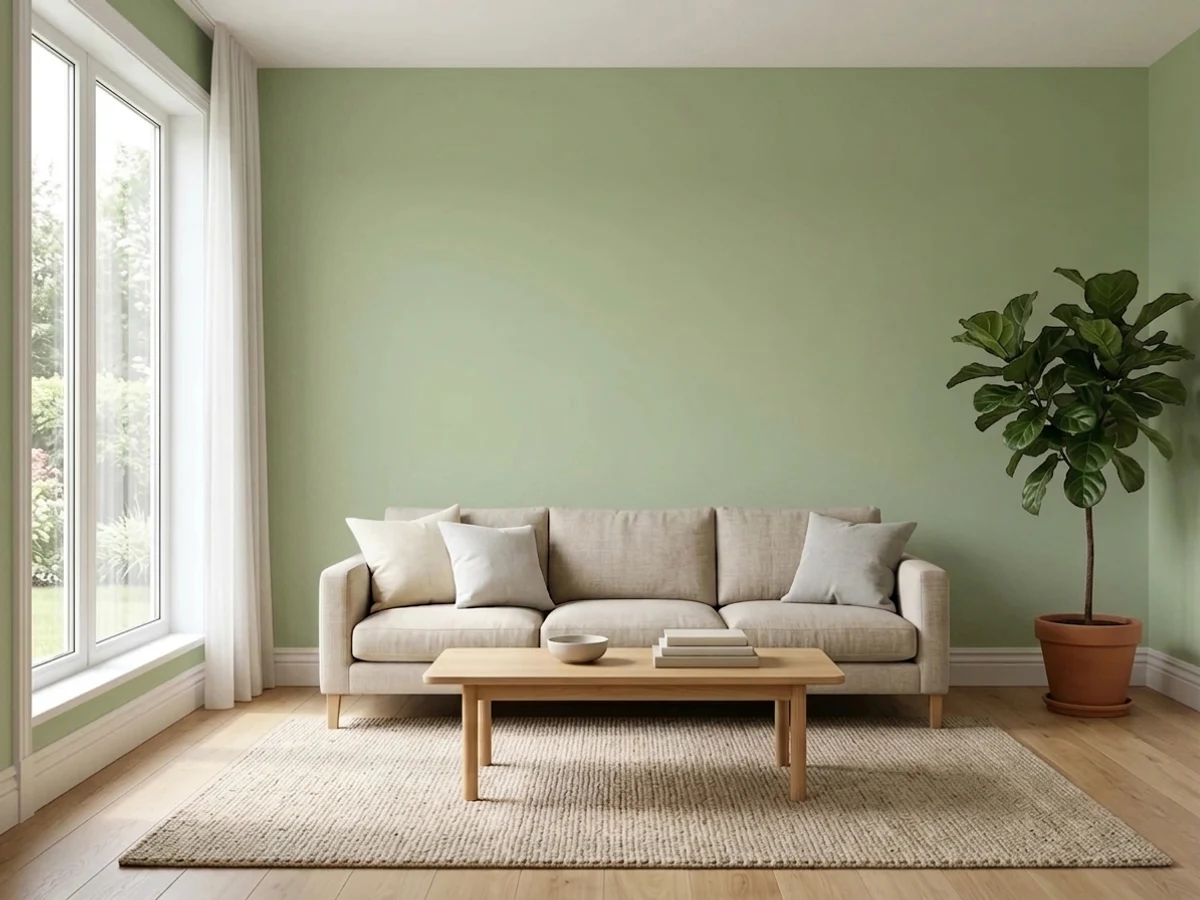
Rooms that run on daylight most of the day are where this color performs closest to the chip. Plants, wicker, and light wood all sit comfortably with it.
In a bright, south- or east-facing room it's a genuinely pleasant, current green. In a room that relies on lamps after dark, budget for the mustard-olive shift described above — warm bulbs plus this color is a real combination to test first.
It's a wide-awake, garden-fresh color, not a calming one — better suited to rooms you use in daylight than ones built around evening lamplight and rest.
Your Light Is the Risk
This is the color's home light. The yellow and the green balance out and it reads exactly like a fresh sage brushstroke, indoors or out.
2700K bulbs alone push the yellow forward and the green fades toward mustard-olive. Fine for an accent lit only at night; test first for a main living space.
Cooler and truer green in the morning or overcast hours, warmer and more yellow-leaning at golden hour. The shift is gentle, not a different color.
Cool white LEDs keep the green crisp and hold the color closest to the chip. Warm 2700K bulbs are cozier but are the source of the mustard-olive complaint — mix in one cool bulb if you want both.
Most complaints about Sage Brush are a light mismatch. Upload a photo of your actual room and see it on your walls — then ask for the same wall in north light or evening lamps before you buy a single sample.
Need It From Another Brand?
Any paint counter can custom-tint Behr S370-3 directly. If you would rather stay in one brand's own deck, these are the closest stock matches, measured as ΔE2000. Under 2 is a difference you will not see on the wall.
| Brand | Closest color | ΔE | LRV | |
|---|---|---|---|---|
| Sherwin-Williams | Recycled GlassSW 7747 · Sherwin-Williams | 0.6 | 51 | Color page → |
| Benjamin Moore | Lichen StoneCSP-820 · Benjamin Moore | 2.6 | 51 | Color page → |
| Valspar | Bayou Shade6006-3C · Valspar | 4.2 | 52 | Color page → |
| PPG / Glidden | Northern LandscapePPG1113-3 · PPG / Glidden | 2.6 | 53 | Color page → |
| Glidden | Northern LandscapePPG1113-3 · Glidden | 2.6 | 53 | Color page → |
| Dutch Boy | Soft Sage325-2DB · Dutch Boy | 1.8 | 51 | Color page → |
Similar Behr Colors
The nearest shades to Sage Brush within Behr's own range, ranked by perceptual color distance — useful when you want the same look a touch lighter, darker, or warmer.
WCAG 2.1: AA is 4.5 : 1 for normal text, 3 : 1 for large text, AAA is 7 : 1.
Sage Brush vs the Colors You're Also Considering
Every Sage Brush sample board has the same rivals on it. The numbers show the real lightness gap — then it comes down to which risk you would rather live with.
Pick this if you want the lighter, more clearly green option that doesn't need as much coaxing.
Benjamin Moore HC-114 · LRV 56Saybrook SagePick this for a slightly deeper, more muted green that needs warm wood and light around it to work.
Pick this when you want the green itself to be the point, not a background note.
Sherwin-Williams SW 6178 · LRV 41Clary SagePick this if the grayed-out, easy-neutral sage is actually what you pictured — this is that color.
Inside the Behr deck, Balance Green (S360-3) at #C1D6A6 and LRV 62 is the near twin, just slightly lighter and a little softer. Rejuvenate (410E-3) at #BEDA9E and LRV 64 is brighter and reflects more light, so it feels fresher and more open. Washed Olive (S350-3) at #C3CEA2 and LRV 58 pulls toward yellow-olive and reads more traditional.
Across brands, Valspar Fava Bean (V060-3) at #BCD2A0 and LRV 59.6 has a deltaE of 0.84, which is a true match rather than a near one. Diamond Vogel Green Sheen (0764) at LRV 61 comes in at 1.94, visually identical in normal room light.
Benjamin Moore Corn Stalk (542) is 2.49, very close in hue but at LRV 55 noticeably deeper on a wall, so sample it first. Sherwin-Williams Witty Green (SW 6929) at LRV 62 sits at 3.49 and HGTV Home Green Savvy (HGSW 1266) at 4.15 is close but visibly different side by side.
Sage Brush Coordinating Colors
The rule for coordinating with Sage Brush: keep whites warm, keep darks near-black rather than true black, and treat other sages as siblings rather than twins — they're grayer than this one, so use them for depth, not for matching. These are the partners that show up in real listings for the color:
The Honest Story: A Working Color, Not a Headline
Sage Brush has no Color of the Year credit, no viral design-blog moment, and no famous room attached to its name. What it has is availability: Behr sells it as a standard wall color, as a real semi-gloss and satin cabinet-and-trim enamel, and as an Ultra exterior formula — the kind of three-surface treatment a brand gives a color people actually specify for siding and built-ins, not one they're hoping goes viral.
That makes it an honest, unglamorous pick. If you're hunting for the sage everyone's talking about, that's Evergreen Fog or Clary Sage — both grayer, both more discussed. Sage Brush is the quieter, greener cousin that shows up on real houses without anyone arguing about it online, which is either exactly what you want or a sign to keep looking.
Sage Brush With Wood Tones and Floors
White oak, ash, and other pale, cool-leaning woods are the easiest partners — they let the green stay green instead of pulling it toward yellow. Painted cabinetry and matte black hardware are simple, safe choices too.
Golden honey oak and orange-leaning pine are the pairing to test before committing. Because Sage Brush already carries yellow in its own undertone, a warm gold floor pushes it further that direction, and the two can end up competing rather than complementing — the floor looking duller, the wall looking more yellow than green. A rug or a larger physical gap between the two surfaces softens the effect if the floor isn't changing.
Three Ready Palettes Built on Sage Brush
A color is never alone on the wall. These are complete combinations in the 60-30-10 pattern, with the reason each one holds together. Every one opens in the visualizer.
Swiss Coffee's warmth keeps the cabinets from feeling like an accident, and one near-black note stops the palette from reading too soft. All three are Behr, so a painter matching swatches has one deck to work from.
Try this palette in your roomThis is the exact combination Behr's exterior formula for Sage Brush is built for: a crisp trim white keeps the green from feeling washed out in full sun, and a near-black door supplies the one dark note the eye needs.
Try this palette in your roomA small room is the low-risk way to try a real green: cream walls carry the light, the vanity gets the color, and one dark frame keeps the whole thing from feeling like a garden shed.
Try this palette in your roomSage Brush FAQ
Is Sage Brush a warm or cool green?
Warm-leaning yellow-green with a little gray underneath to soften it. It's not a blue-based or cool sage — under warm lamp light at night the yellow comes forward even more, which is the one thing to test before committing a whole room to it.
Is Sage Brush the same kind of sage as Clary Sage or October Mist?
No, and that's the most useful thing to know before buying it. Those colors are grayed-down, almost-neutral greens. Sage Brush is lighter and noticeably more saturated — it reads as a real green first. If you tried one of those and wanted less gray, Sage Brush is the answer; if you wanted less green, it's the wrong direction.
Does it work on cabinets?
Yes — Behr sells it as a proper semi-gloss and satin cabinet-and-trim enamel, not just a wall paint, which is a genuine signal it's built to hold up on doors and drawer fronts. Pair it with a warm white wall and it reads as intentional green, not accidental gray.
Is Sage Brush good for a house exterior?
It's arguably the color's best use — Behr sells an Ultra exterior formula for it, and full sun brings out the yellow-green cleanly. White trim and a dark door or shutters is the classic, easiest pairing.
Will it look yellow or olive at night?
It can, if the room runs on warm 2700K bulbs with no daylight to balance it — the color drifts toward a soft mustard-olive under warm light alone. A cool white LED nearby, or simply testing the sample under your actual evening bulbs, will tell you before you paint the whole wall.
Does Sage Brush work with honey oak floors?
Not its best pairing. Golden, orange-leaning oak pushes the color further toward yellow and can look dull beside it rather than complementary. White oak, painted trim, or cooler-toned wood let the green read as green instead of both surfaces competing for the same warmth.
Have you painted with Sage Brush?
Rate it — one tap helps the next reader decide.
Ask a Question