Sage Green
Behr's cool, deep-toned answer to the biggest color search in paint, reviewed honestly: the cabinets it was built for, the light that flattens it, and what to pick instead.

Jessica has spec'd whites and neutrals for more than 300 rooms and keeps a sample wall of painted drawdowns in her studio. Every color review is checked against real reader rooms in the comments and re-tested when a formula changes. About the testing process →
- 1Essex Green6
- 2Vintage Vogue12
- 3Sage Green22
- 4Evergreen Fog30
- 5Clary Sage41
The Fast Verdict
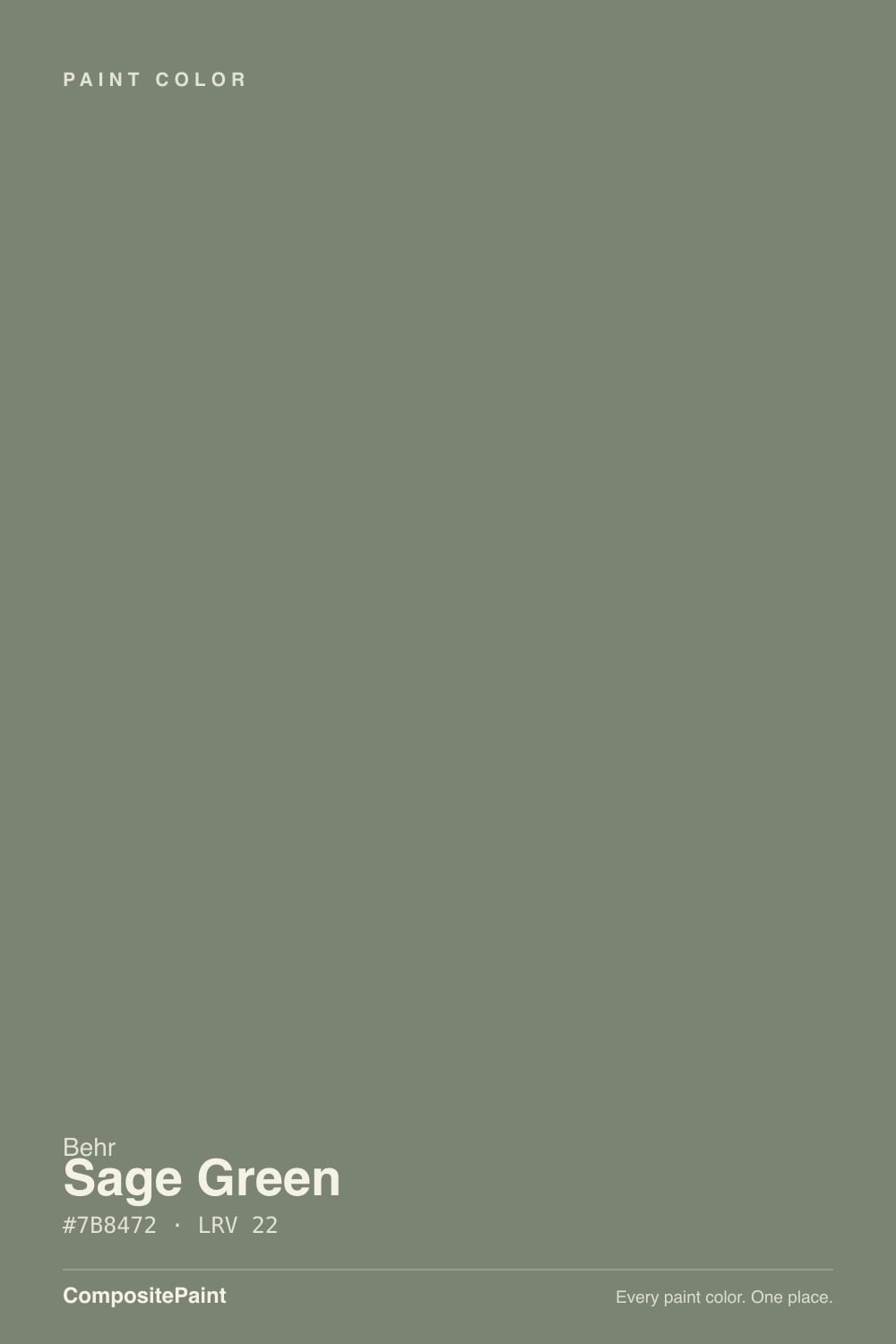
Sage Green is Behr's no-nonsense answer to the single biggest color search of the last few years — and it is not the pale, whisper-soft sage of Pinterest boards. At LRV 22 it is a proper mid-depth, gray-olive green with a cool lean, sold across nearly every Behr product line from cabinet enamel to exterior stain. It reads grounded and a little serious rather than trendy-pastel, which is exactly why it survives on cabinets and doors long after the pale sage moment fades.
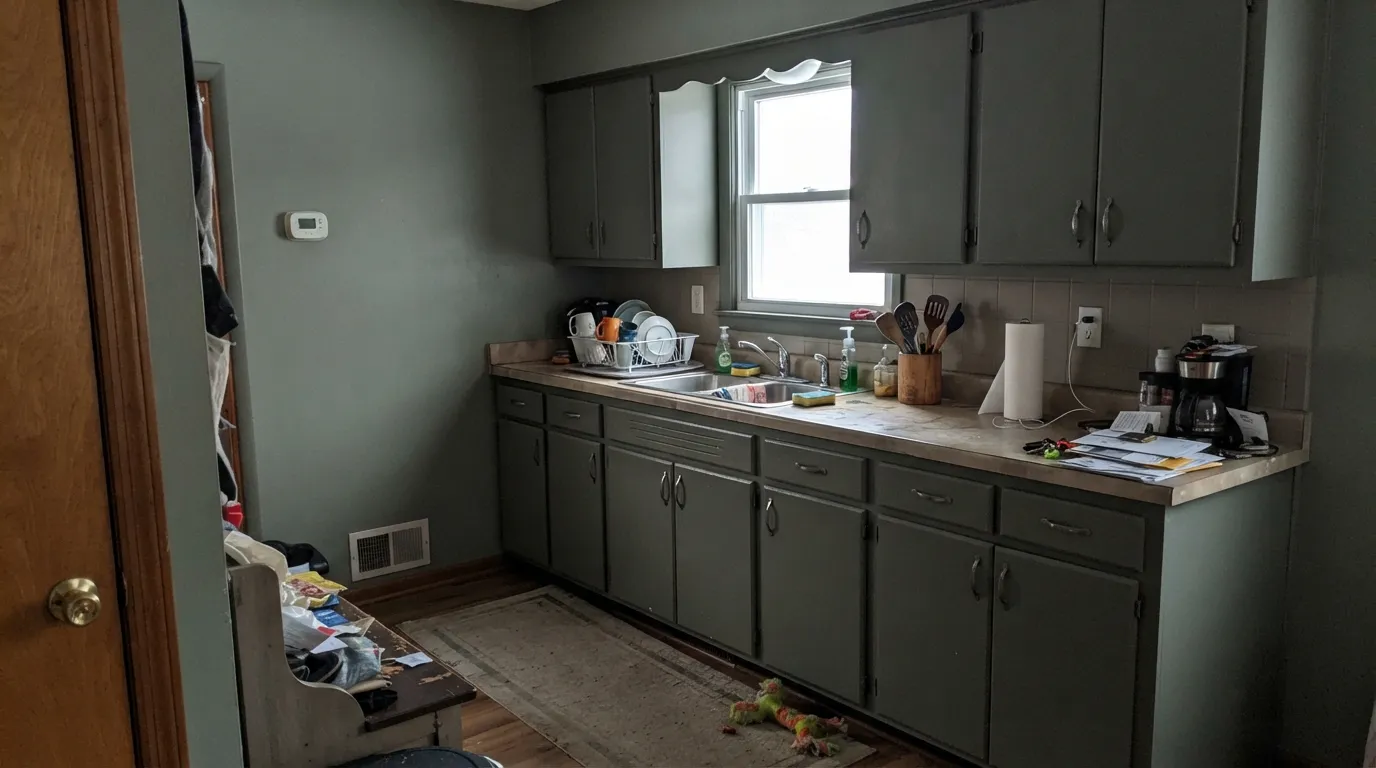
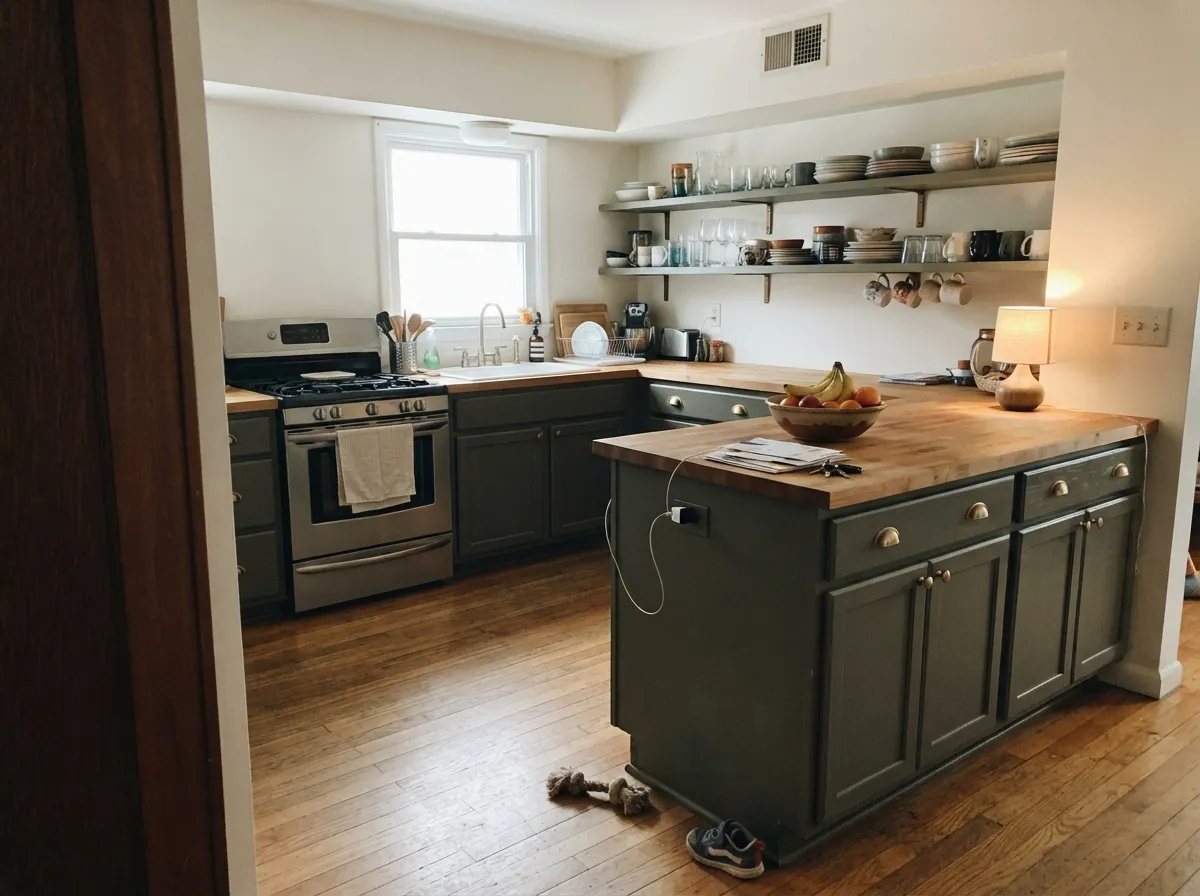
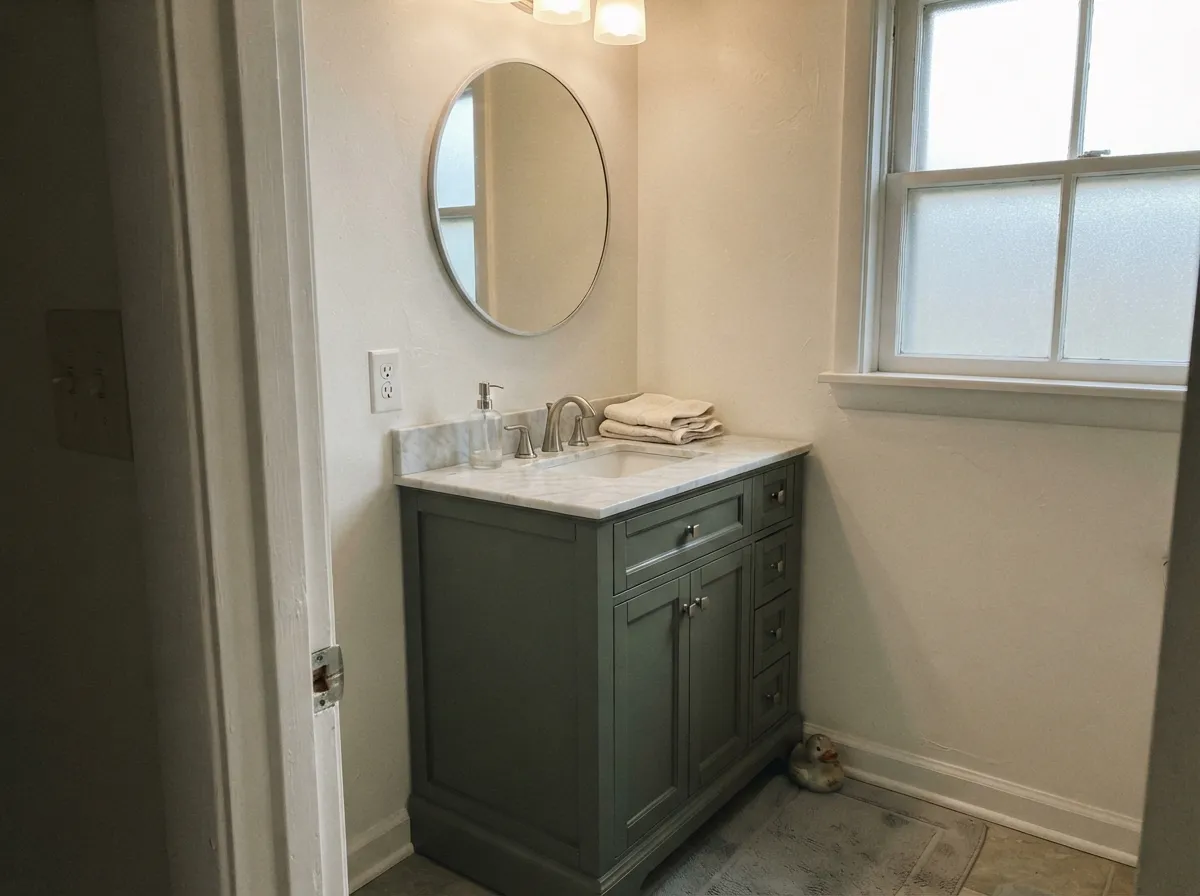
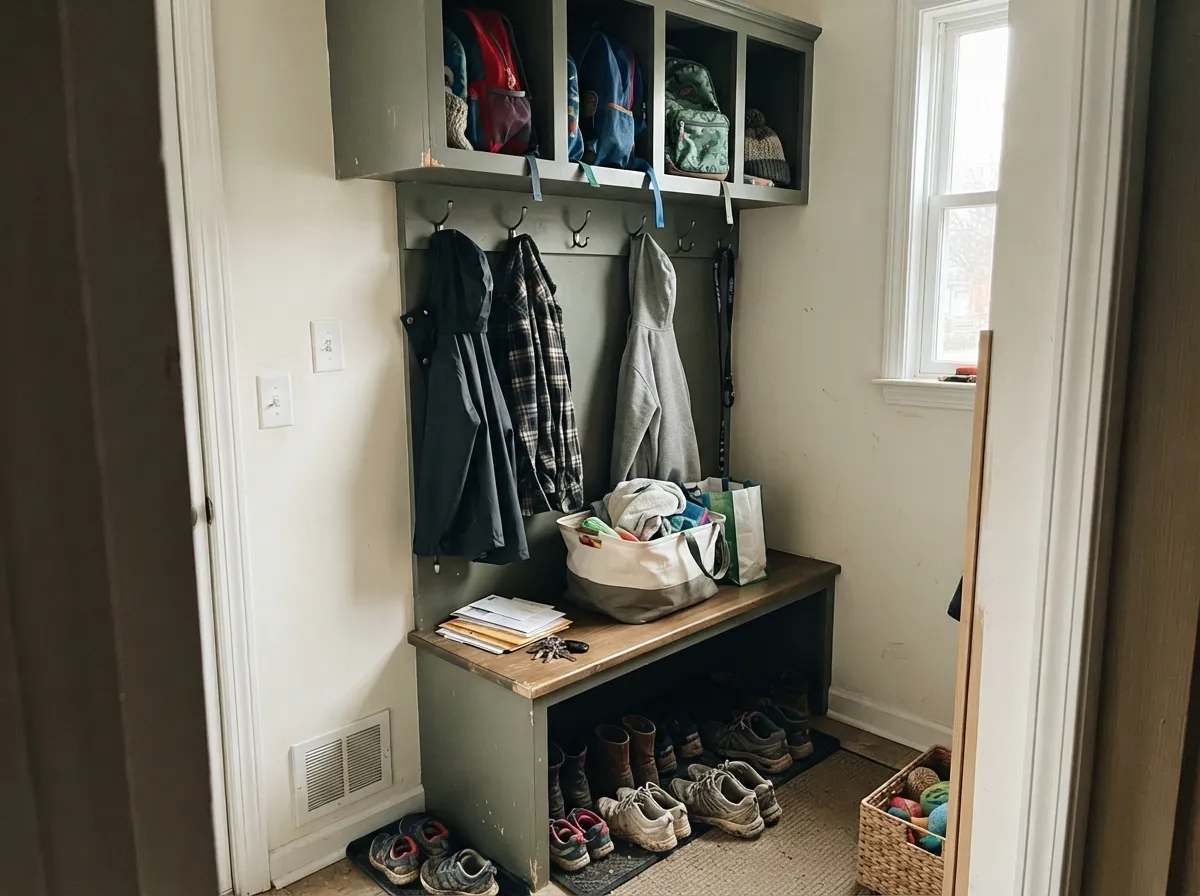
Kitchen cabinets and islands · bathroom vanities · front doors and shutters · mudroom benches and built-ins · a committed accent wall in a bright room
You want the pale, airy sage everyone is pinning · your kitchen is dim and north-facing without lamps · your wood tones are strongly golden-yellow · you want a warm, olive-gold sage instead of a cool one
- A true, present green — not another pale trend-sage
- Sold across nearly every Behr line, so cabinets, trim, and exterior all match exactly
- Cool gray-olive undertone reads grounded and current, not saccharine
- Deep enough (LRV 22) to hold its color in bright rooms
- Pairs cleanly with brass and warm wood without turning yellow
- Too deep and cool for anyone picturing the pale, airy sage look
- Goes flat and muddy in a dim, north-facing room with no lamps
- Fights strongly golden-oak wood tones
- The generic "Sage Green" name gets confused online with lighter sages from other brands
What Color Is Sage Green, Really?
A muted, gray-olive sage with a cool lean — the undertone is the whole story here. Most of the sage greens that went viral over the last few years (the pale, barely-there ones) sit closer to LRV 50-plus and lean warm or neutral. Sage Green does neither: at LRV 22 it is a genuine mid-depth color, and its gray-olive base pulls it toward the cooler, more serious end of the sage family, closer to a muted forest than a spa tint. Behr sells it across an unusually wide spread of product lines — Premium Plus, Marquee, Ultra, Behr Pro semi-gloss, the Premium cabinet-door-and-trim enamel, even DeckPlus solid-color exterior stain — which tells you what it is really built for: a workhorse color meant to move seamlessly from cabinets to trim to a front door to a fence, not a single feature-wall statement.
LRV 22 means the paint absorbs roughly four-fifths of the light that hits it. Set it next to Sherwin-Williams Evergreen Fog (LRV 30) and Sage Green reads noticeably darker and cooler — Evergreen Fog has a warm golden undertone underneath its gray-green surface, Sage Green does not. Set it next to Sherwin-Williams Dried Thyme (LRV 21), a near-identical depth, and the two are close cousins: both hold real color in bright rooms and both need daylight to avoid going flat. On four walls or a full run of cabinets, expect Sage Green to read as a true, confident color, not a soft wash.
Undertone in one line: cool gray-olive, never golden. If your sample looks warm and yellow-green, that is reflected light off honey-toned wood or a warm bulb doing the work, not the paint's real character — Sage Green's default state is cooler and quieter than that.
Where It Shines
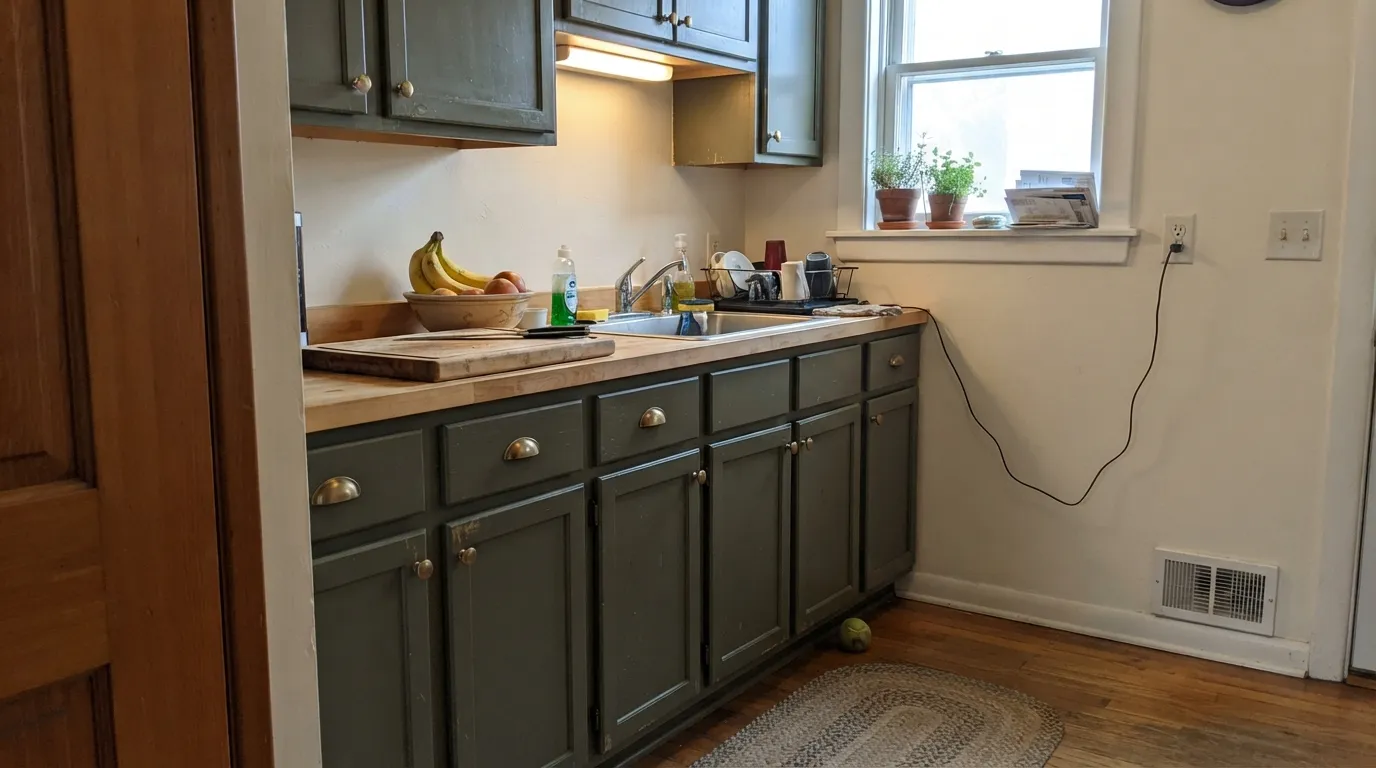
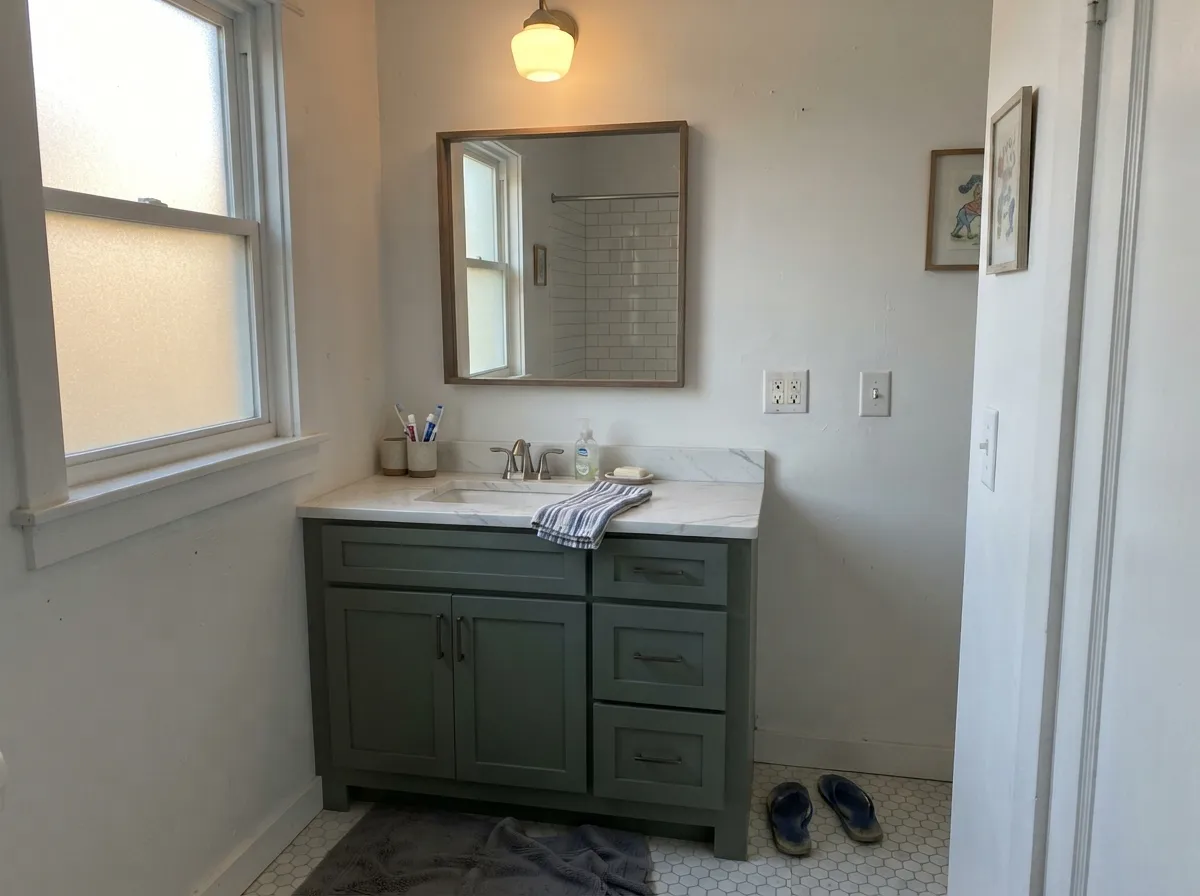
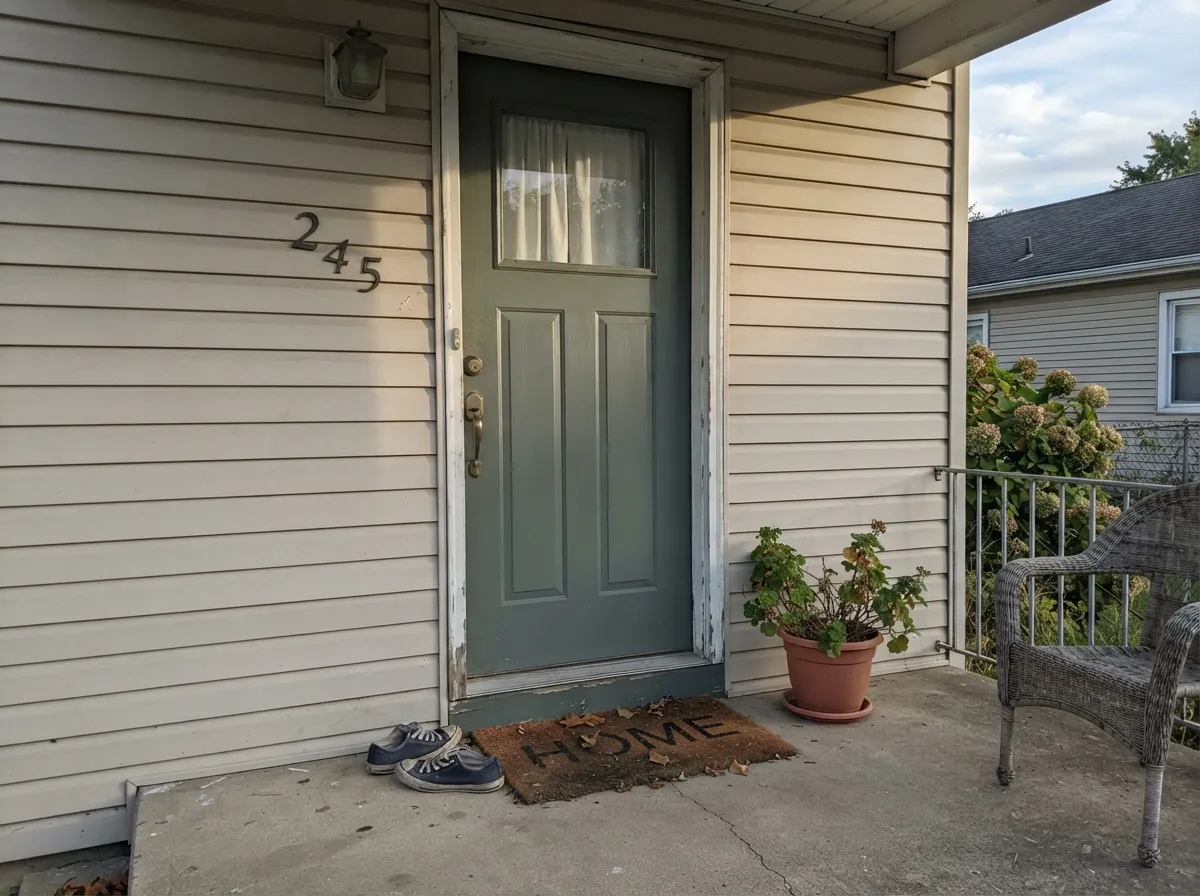
This is a cabinet-and-trim color first. Give it brass hardware, a butcher-block or quartz counter, and real daylight, and it reads like a considered, slightly moody choice rather than a trend purchase. It shows up across Behr's exterior and stain lines for a reason too — on a front door, shutters, or a mudroom bench it holds its cool, grounded color in full sun the way pale sages simply cannot.
Where It Fails
Almost every disappointed review of Sage Green traces back to one of three mismatches, and all three are avoidable before the first coat. The color is not the problem — the expectation usually is.
If the mood board is a whisper of sage on a bright white kitchen, this is not that color. At LRV 22, Sage Green is a real, present color on four walls or a full cabinet run — closer to a muted forest than a tint. For the pale version, look at a lighter deck sage; Sage Green is for people who want the deeper, more grounded read.
Cool gray-olive greens are the first to go flat in cool daylight, and Sage Green's LRV 22 gives it little reserve to fall back on — in overcast north light it can slide toward a muddy, almost charcoal-green gray. Add warm under-cabinet lighting or accept the moodier read; this is not a color for a dim room that never sees direct light.
Because the undertone is cool, Sage Green sits in mild tension with strongly yellow-orange wood tones — golden oak cabinets or trim can look slightly off next to it, and the green can read muddier than it does against neutral or dark wood. Pair it with white oak, walnut, or painted trim instead, or keep the golden wood to the floor only.
Room by Room
Your Light Is the Risk
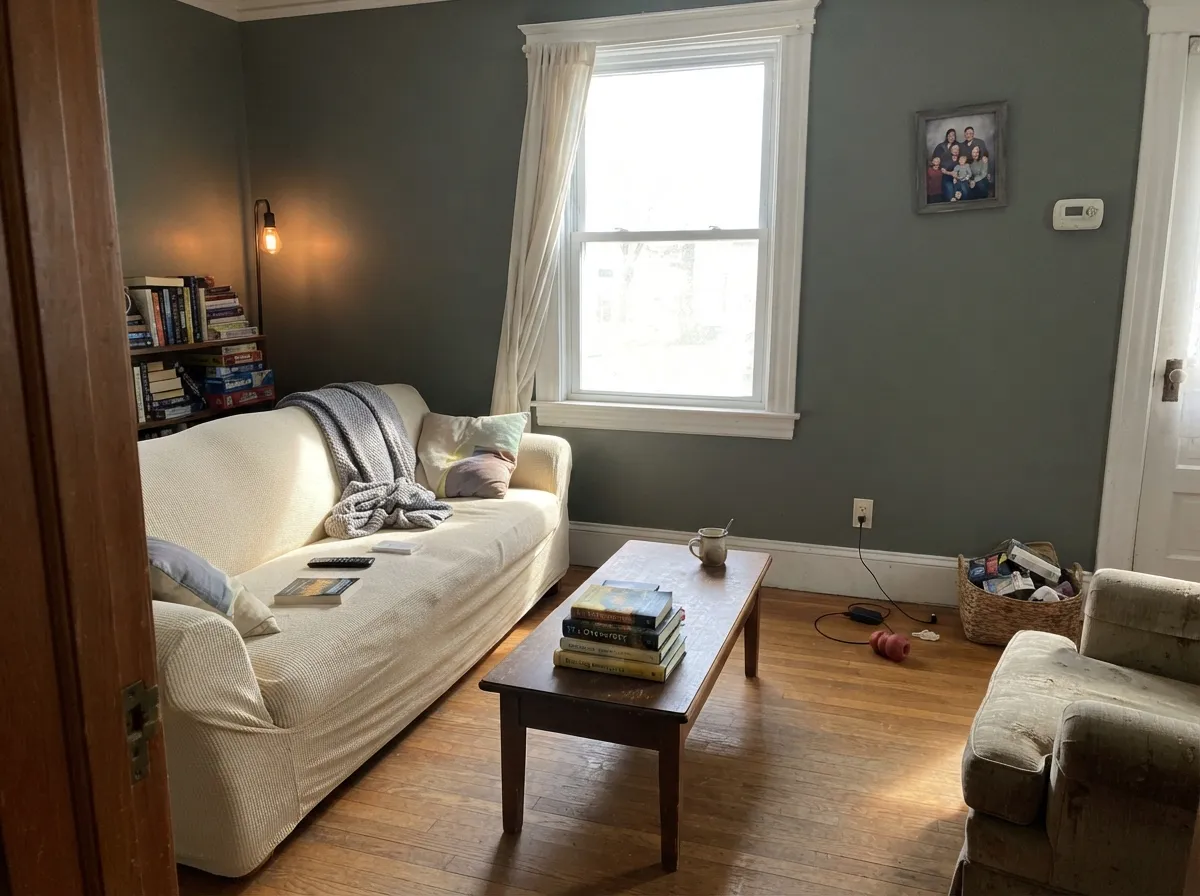
Direct sun keeps the green visible and the gray-olive base from flattening out. This is the light that shows what the color is actually built to do.
Cool, flat daylight strips the last of the green out and can leave cabinets or walls reading closer to charcoal-gray. Test a real sample here before committing a full kitchen.
Warmer and more clearly green at the sun hours, quieter and grayer the rest of the day. The shift is real but not dramatic — expect a color that has moods, not one that changes identity.
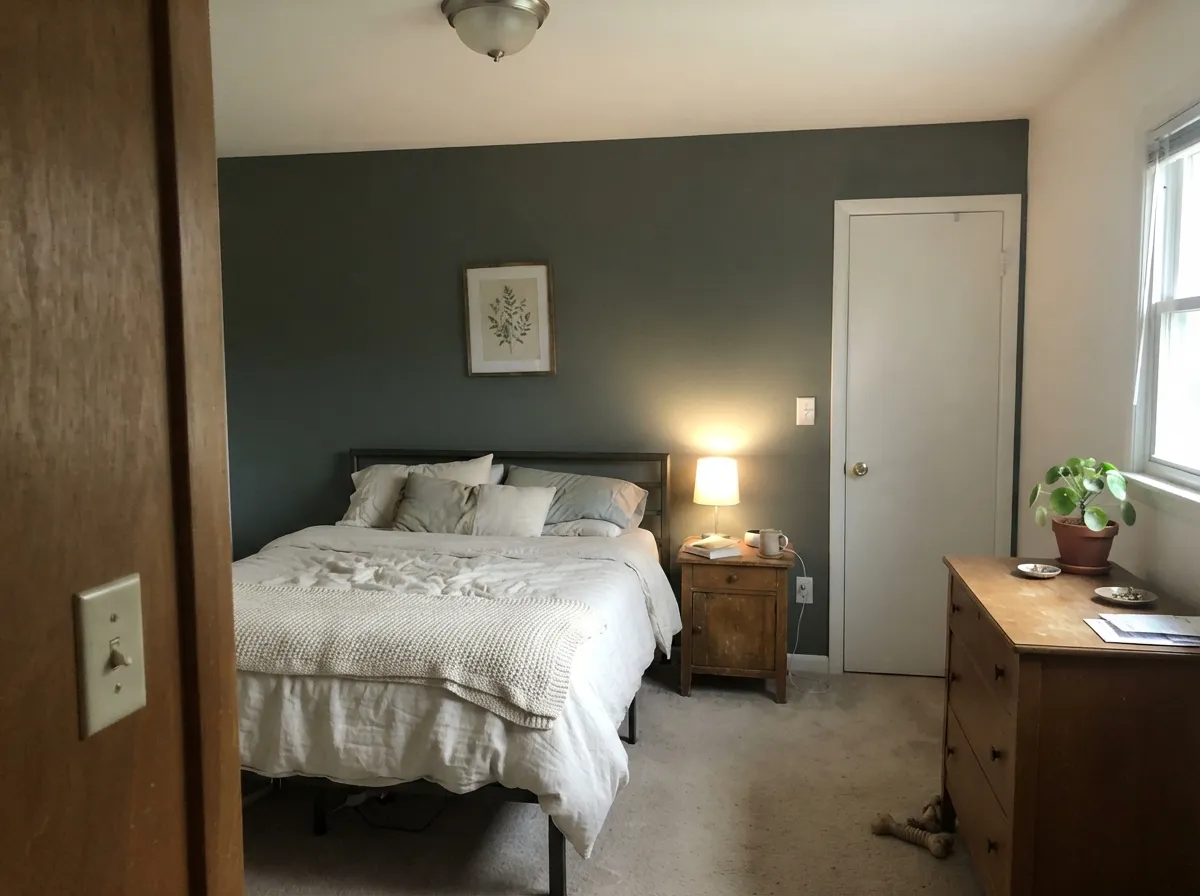
2700K warm bulbs pull it toward a softer, more olive green at night. Cool white LEDs push it colder and flatter — worth swapping bulbs before repainting if the evening read feels off.
Most complaints about Sage Green are a light mismatch. Upload a photo of your actual room and see it on your walls — then ask for the same wall in north light or evening lamps before you buy a single sample.
Need It From Another Brand?
Any paint counter can custom-tint Behr ICC-77 directly. If you would rather stay in one brand's own deck, these are the closest stock matches, measured as ΔE2000. Under 2 is a difference you will not see on the wall.
| Brand | Closest color | ΔE | LRV | |
|---|---|---|---|---|
| Sherwin-Williams | Privilege GreenSW 6193 · Sherwin-Williams | 1.8 | 23 | Color page → |
| Benjamin Moore | Cedar Path454 · Benjamin Moore | 3.8 | 23 | Color page → |
| Valspar | Ginkgo Tree5006-4B · Valspar | 1.8 | 22 | Color page → |
| PPG / Glidden | Lottery WinningsPPG1129-6 · PPG / Glidden | 1.7 | 22 | Color page → |
| Glidden | Lottery WinningsPPG1129-6 · Glidden | 1.8 | 21 | Color page → |
| Dutch Boy | Sweetbrier425-5DB · Dutch Boy | 2.3 | 21 | Color page → |
Similar Behr Colors
The nearest shades to Sage Green within Behr's own range, ranked by perceptual color distance — useful when you want the same look a touch lighter, darker, or warmer.
WCAG 2.1: AA is 4.5 : 1 for normal text, 3 : 1 for large text, AAA is 7 : 1.
Sage Green vs the Colors You're Also Considering
Every Sage Green sample board has the same rivals on it. The numbers show the real lightness gap — then it comes down to which risk you would rather live with.
Pick this for the cooler, deeper, more grounded read — Evergreen Fog is warmer and a full LRV step lighter.
Sherwin-Williams SW 9130 · LRV 30Evergreen FogPick this if you want the best-known cabinet sage in paint right now, with a warmer, golden undertone underneath and more room to stay light.
Pick this for the cooler gray-olive lean at essentially the same LRV — pick by undertone, not by depth.
Sherwin-Williams SW 6186 · LRV 21Dried ThymePick this if you like this depth but want a slightly warmer, earthier green for the same cabinet-and-trim job.
Within Behr the neighbors separate by direction rather than depth. Cactus Garden PPU11-18 and Gazebo Green MQ6-16 both sit at LRV 22 and are functionally the same wall color. Lizard Green PPU10-18, also LRV 22, leans further yellow, and Mocha Accent 720D-5 at LRV 21 reads browner, which is the choice if you want less green in the room.
Across brands, Magnolia Home Olive Grove JG-09 at deltaE 1.04, PPG Lottery Winnings PPG1129-6 at deltaE 1.72, Valspar Ginkgo Tree 5006-4B at deltaE 1.75, and Sherwin-Williams Privilege Green SW 6193 at deltaE 1.81 are all visually identical in normal room light. Privilege Green sits one point brighter at LRV 23.
Dutch Boy Sweetbrier 425-5DB at deltaE 2.29 is very close but worth sampling first. Benjamin Moore Cedar Path 454 at deltaE 3.8 and Farrow and Ball Calke Green No. 34 at deltaE 4.22 are close but visibly different side by side, both reading as more clearly green.
Sage Green Coordinating Colors
Sage Green's cool gray-olive base is easiest to pair with warm creams and neutral-to-dark woods, and hardest to pair with strong gold. These are the partners that keep it looking deliberate rather than accidental:
Sage Green on Exteriors
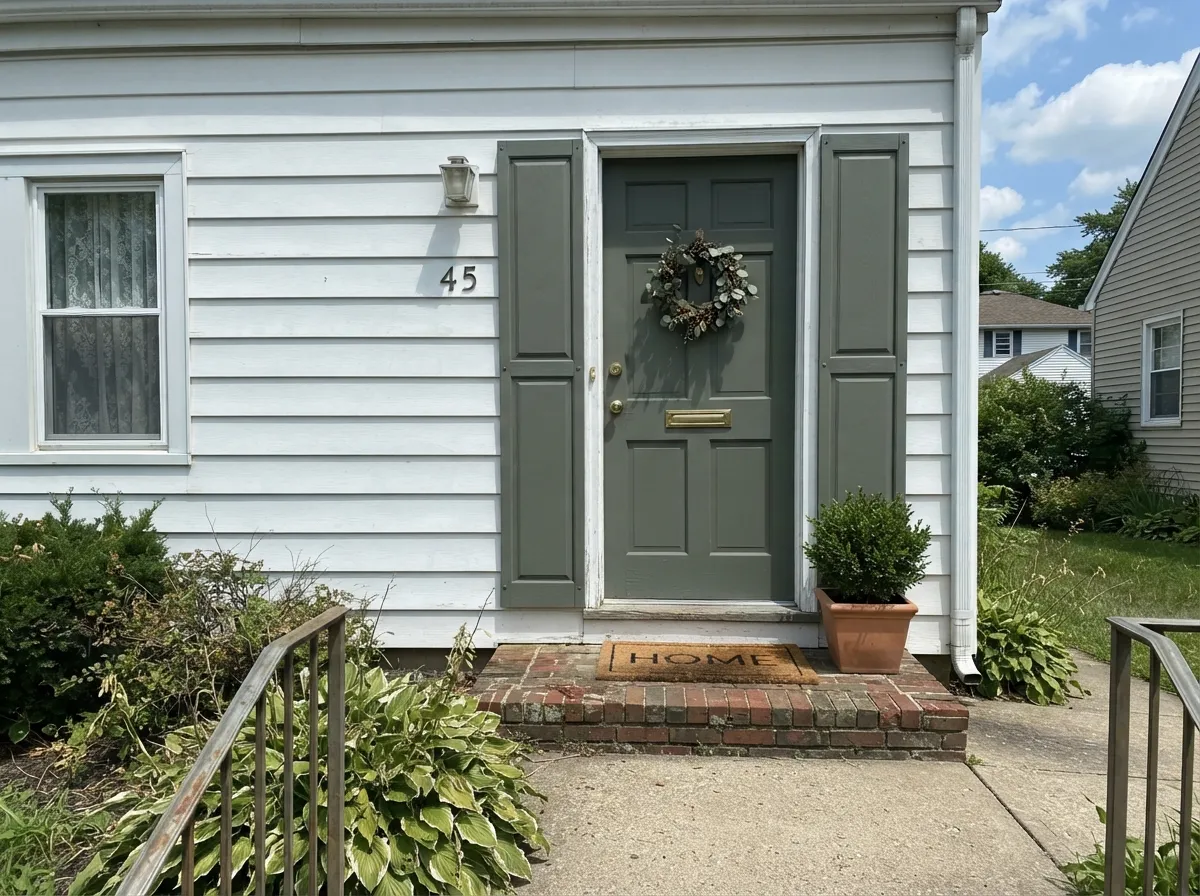
Unlike many interior-only sage picks, Sage Green is sold in Behr's Marquee and Ultra exterior lines and in DeckPlus solid-color exterior stain — a real signal that Behr built it to move outdoors, not just onto a feature wall. On a front door or shutters against a light or white body, it reads as a grounded, deliberate choice rather than a trend color, and its cool undertone means it does not warm up and go golden the way a warmer sage can in strong afternoon sun.
The pairing to watch is the roofline and any stone or brick on the house: warm terracotta brick can push against the cool green the same way golden oak does indoors. With gray, white, or neutral-toned masonry, the combination is straightforward.
Why Sage Green Is Everywhere Right Now
Sage as a color family has been one of the most-searched paint colors for several years running, and by 2026 that popularity has started to draw its own backlash — some designers now call the palest, most washed-out sages the "new millennial gray": safe, expected, and starting to feel dated on a whole-house scale. Behr's Sage Green sidesteps most of that fatigue simply by being a different kind of color: it was never the pale, whisper-soft trend shade in the first place. Its deeper, cooler, gray-olive read has more in common with a traditional cabinet or door green than with a pastel accent wall.
That is worth knowing before you buy: if you want the specific pale, airy sage that is having its trend moment (and its trend backlash), this is not that paint. If you want a green that has quietly done the job on cabinets, trim, and doors regardless of what the mood boards are doing, Sage Green is built for exactly that.
Three Ready Palettes Built on Sage Green
A color is never alone on the wall. These are complete combinations in the 60-30-10 pattern, with the reason each one holds together. Every one opens in the visualizer.
Warm cream walls let the cabinets carry the color instead of competing with it, and one near-black accent — a hood, pendant lights, or hardware — keeps the kitchen from feeling like a single-color box.
Try this palette in your roomA light, neutral siding and a slightly warmer trim white let the cool sage door read as an intentional accent instead of arguing with the house's other colors.
Try this palette in your roomCream walls keep a small utility room from feeling closed in, and a warm taupe accent stops the cool green built-ins from reading cold or clinical.
Try this palette in your roomSage Green FAQ
Is Behr Sage Green warm or cool?
Cool. The undertone is a gray-olive, not the golden-warm sage some other brands sell under similar names. If your sample looks warm and yellow-green, that's usually reflected light from wood or a warm bulb, not the paint's true character.
What sheen should I use on kitchen cabinets?
Satin, using Behr's cabinet-door-and-trim enamel line (it's sold specifically for this). Satin wipes clean without the glare of semi-gloss showing every imperfection on a large cabinet surface.
Does Sage Green work on a front door or exterior?
Yes — Behr sells it in exterior semi-gloss, Marquee exterior, and DeckPlus solid-color stain lines specifically for doors, shutters, and trim. It holds its cool, grounded tone in full sun better than a paler sage would.
What trim white pairs best with Sage Green?
A soft warm white like Behr Swiss Coffee reads calmer next to it than a stark bright white, which can make the green look colder and harder by contrast. If you want crisp contrast on purpose, a bright white or near-black trim both work — just pick deliberately.
How is it different from Sherwin-Williams Evergreen Fog?
Evergreen Fog is a full LRV step lighter (30 vs 22) and leans warmer underneath its gray-green surface. Sage Green is the darker, cooler, more grounded option of the two — pick Evergreen Fog if you want more daylight-holding room, pick Sage Green for more depth and less warmth.
Will it look good with golden oak floors?
It's the one real risk. Sage Green's cool undertone sits in mild tension with strongly yellow-orange wood, and both sides can look slightly off together. It pairs much better with white oak, walnut, or painted trim — if the golden oak is staying, sample a large board before committing cabinets or walls.
Have you painted with Sage Green?
Rate it — one tap helps the next reader decide.
Ask a Question