Benjamin Moore
Benjamin Moore sells the deepest color deck in the US market through about 4,500 independent dealers and almost never discounts it. Here is the whole line ladder with real dealer pricing, what the contractor account actually saves you, and the complaints that follow Aura, Regal Select, and Advance around the painting forums.

Maya spent five years running comparative product testing at a consumer testing nonprofit before joining CompositePaint. She has priced the same Benjamin Moore gallon at three dealers in one metro to see how far the number moves, and she has rolled Aura, Regal Select, and Advance on real walls to check what the spec sheets leave out. About the testing process →
The Fast Verdict
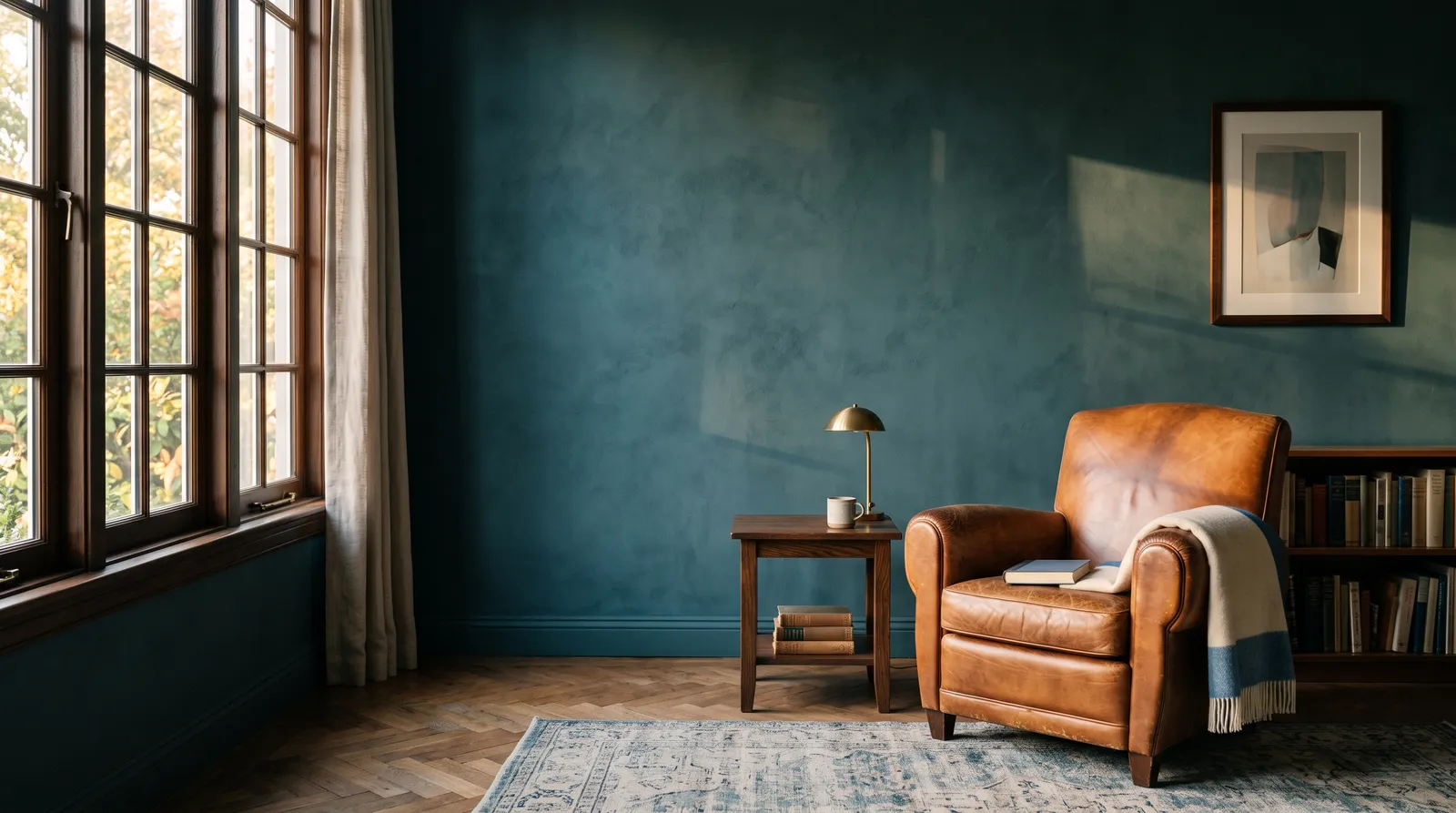
Benjamin Moore is very good paint with an inconvenient store model. The color deck runs about 3,500 standard colors against Sherwin-Williams' 1,700, and Aura holds a deep navy or oxblood better than anything else you can brush on. What it costs you is money and errands: no Home Depot, no Lowe's, no real Amazon path, sales of only 15 to 20 percent, and prices that swing 10 to 15 percent between dealers in the same town. Buy it when the color is the point.
- Aura's color-lock resin holds deep navies, reds, and greens on a south wall at year five where commodity acrylic has already gone chalky
- About 3,500 standard colors against Sherwin-Williams' roughly 1,700, and the warm whites and complex neutrals are where the depth shows
- Gennex zero-VOC colorant means a saturated tint does not quietly add VOCs back, so ben, Ultra Spec 500, and Eco Spec stay at 0 g/L after tinting
- Advance is the best brush-and-roll cabinet enamel a homeowner can buy, and brush marks flow out as it dries
- Scuff-X is the only major-brand wall paint engineered for scuff resistance first, and a rubber shoe mark wipes off dry
- Prices are stable month to month, so a $300 paint budget stays a $300 paint budget instead of swinging with a sale calendar
- Dealer counters are staffed by people who tint paint all day, and 52 percent of pros in a Professional Painters Magazine survey picked BM for interiors
- No Home Depot, no Lowe's, no authentic Amazon gallon: about 4,500 independent dealers and benjaminmoore.com, full stop
- Sales run 15 to 20 percent on holiday weekends against Sherwin-Williams' 30 to 40 percent every four to six weeks
- The same gallon can cost 10 to 15 percent more at one dealer than another a few miles away, and neither store will tell you
- Aura and Regal Select matte set fast, so a slow roller gets lap marks and splotchy sheen that no second coat hides
- Advance needs 16 hours between coats and 30 days to cure hard, which is a two-weekend cabinet job minimum
- There is no 5-gallon Aura, so a whole-house repaint means buying gallons one at a time and boxing them yourself
Which Benjamin Moore Paint to Buy
This is the block most people came for: which Benjamin Moore line to actually buy. Prices are per gallon at US dealers in 2026, with the realistic street or 15 to 20 percent sale number beside them. Expect a 10 to 15 percent swing between dealers, so call two before you drive.
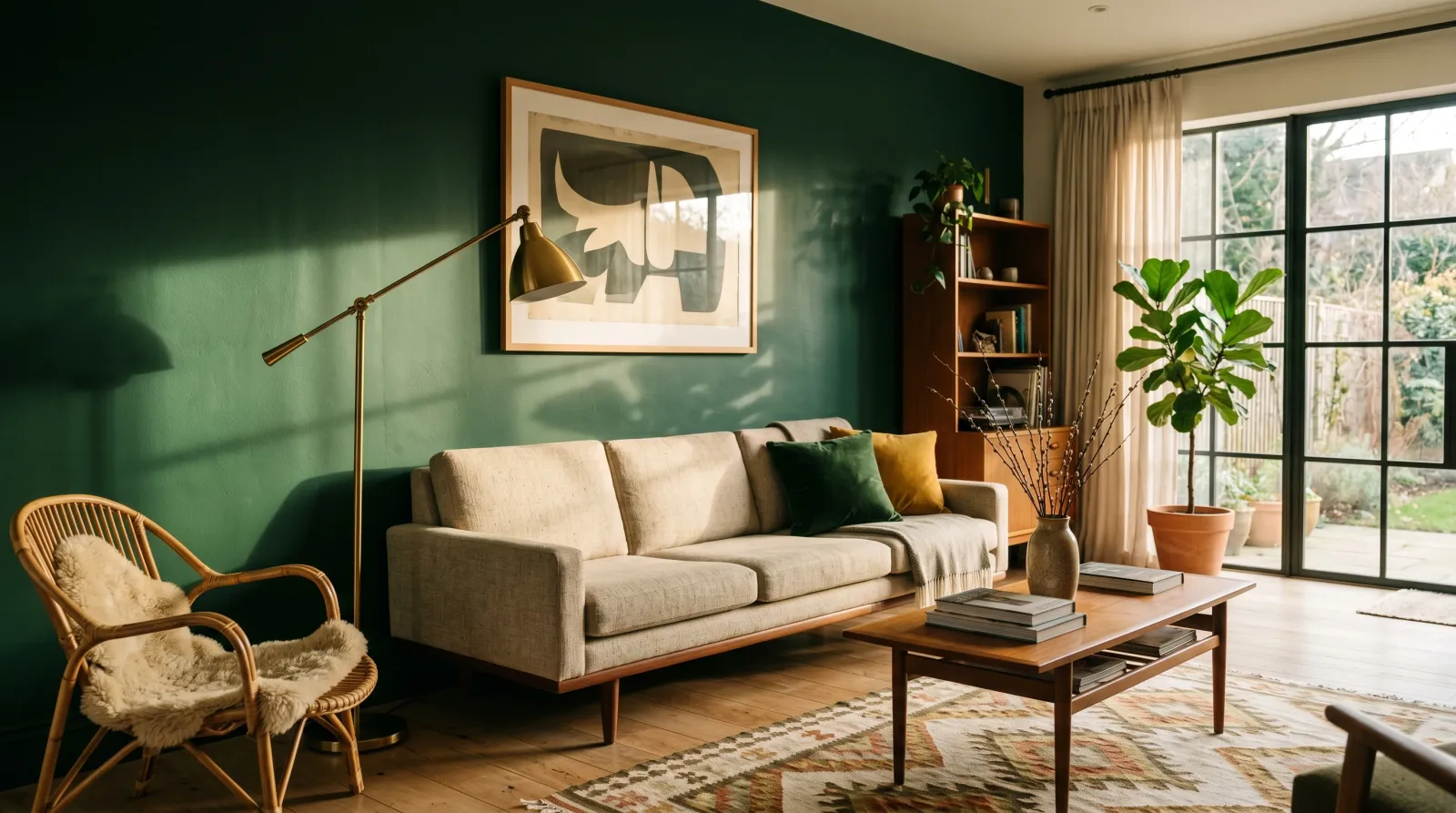 Flagship interior
Best for Deep saturated walls you keep
Buy it for the color, not the durability. In a soft white it is the same wall as Regal Select for $30 more, and it sets too fast to forgive a slow roller.
Full review →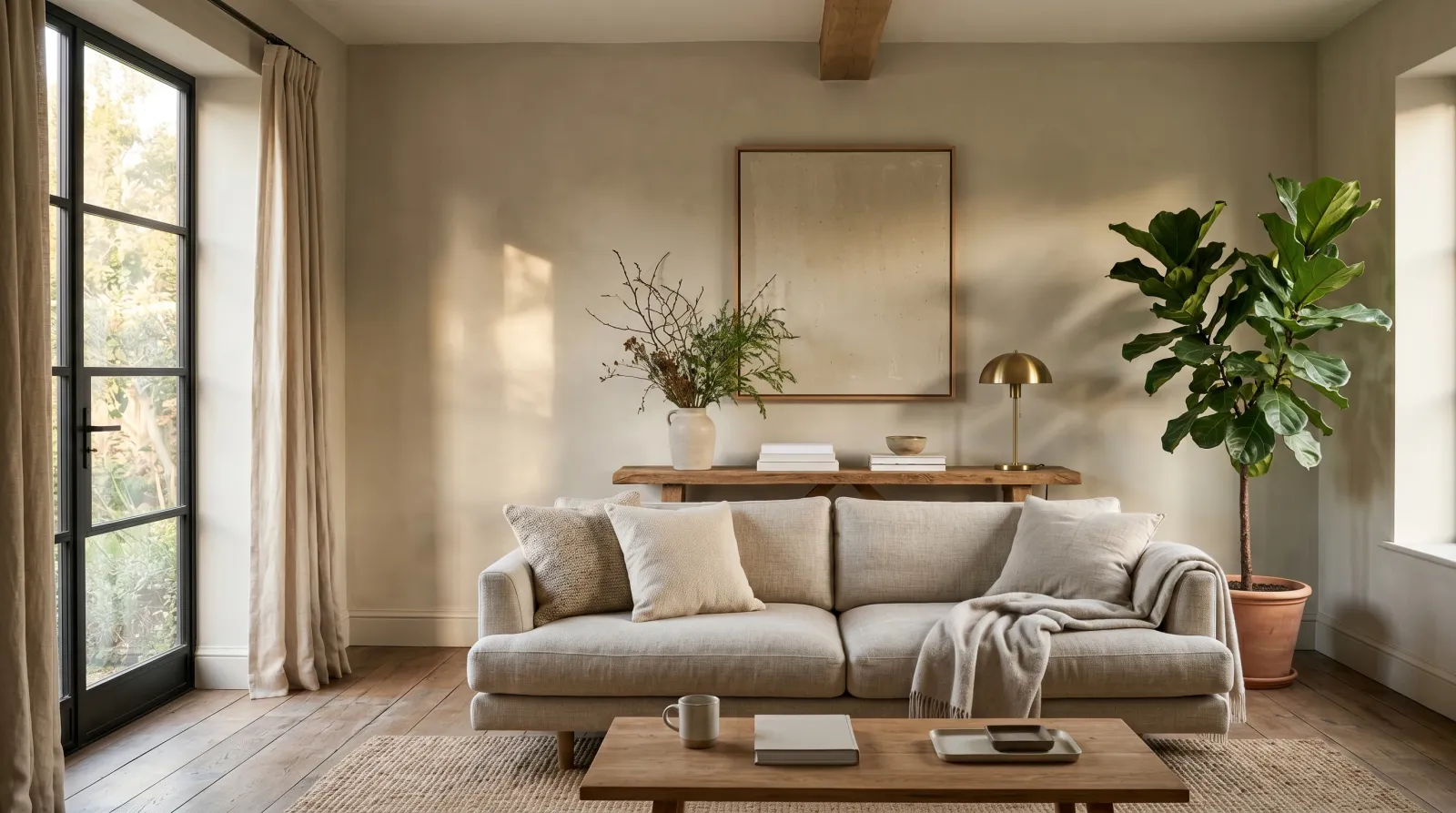 Mainstream premium interior
Best for Most interior walls in most homes
The rung most homeowners should buy, and the most forgiving to apply. Ask what your dealer actually charges, because published list is well above the $50 to $60 it gets quoted at.
Full review →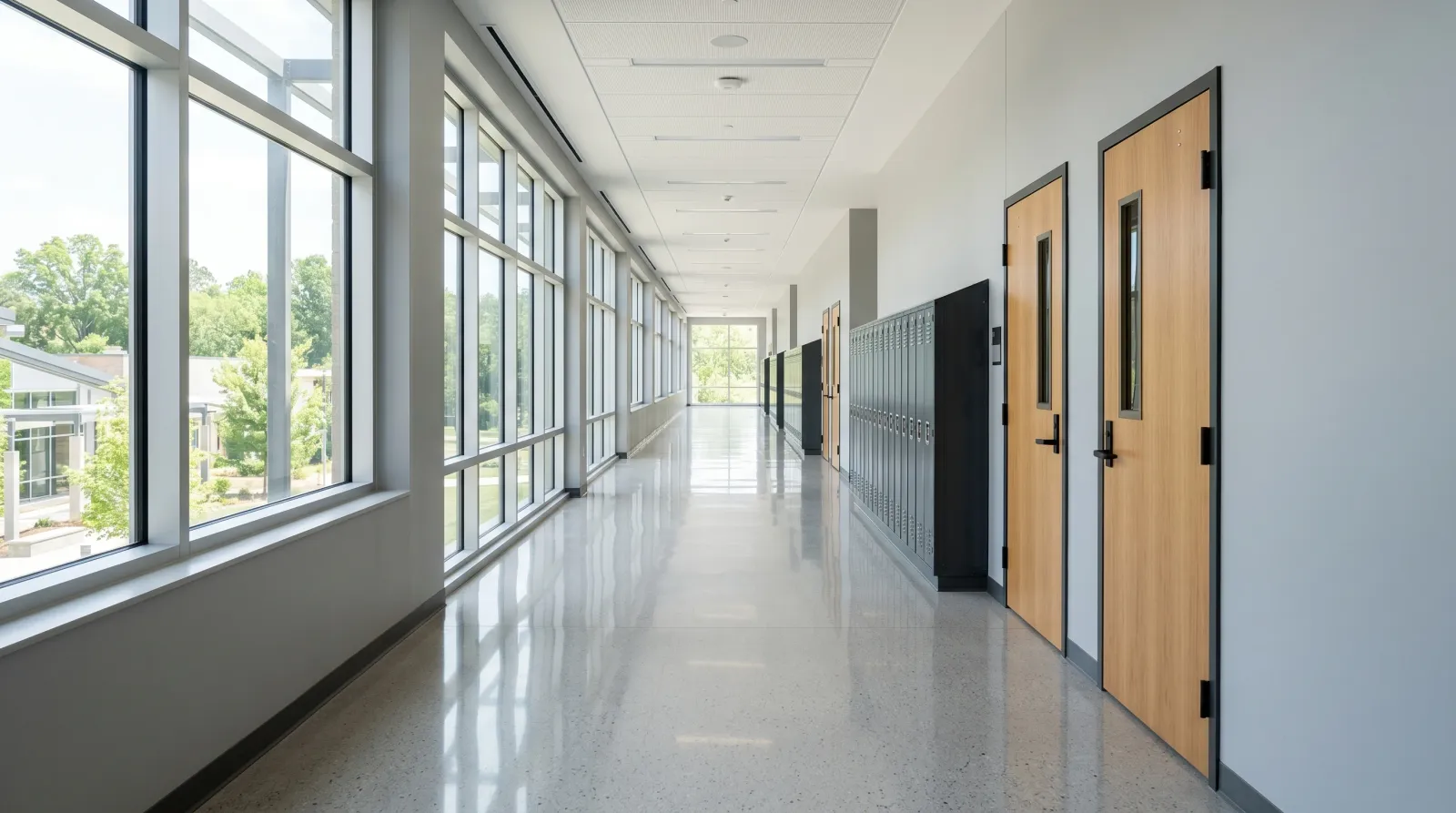 Specialist durable interior
Best for Hallways, stairwells, rentals
Buy it only for walls that lose fights, and for trim that has to recoat the same day. On a quiet living room wall it is a premium you never cash in.
Full review →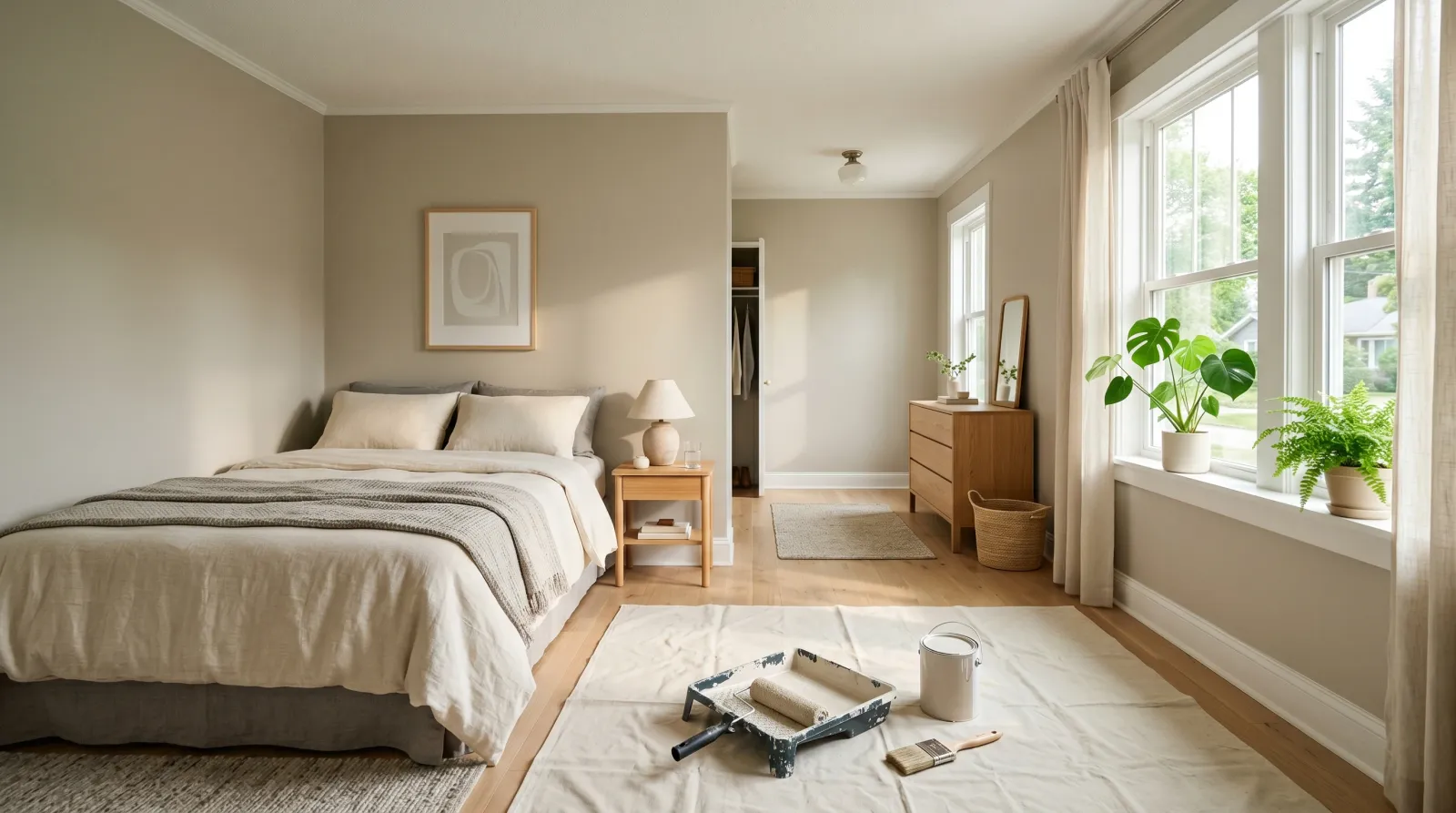 Entry interior
Best for Bedrooms, rentals, low-touch walls
The cheapest door into the BM deck and it still holds GREENGUARD Gold. Washability is the trade-off: scrub it hard and you polish a shiny spot into the wall.
Full review → Contractor interior
Best for Ceilings, rentals, volume repaints
The smartest cheap gallon BM sells, and the touch-up is the best in its tier. Keep it out of kitchens and hallways, where it burnishes under a scrub sponge.
Full review → Certified low-emission interior
Best for Classrooms, clinics, nurseries
Buy it for the Green Seal and asthma and allergy friendly certifications, which are tested, not a leaf sticker. If you only want low odor, ben and Ultra Spec are 0 g/L too.
Full review → Moisture-resistant interior
Best for Bathrooms and splash zones
The sensible wet-room buy under Aura Bath & Spa. One sheen only, and BM's own finish guide warns it can show lap marks, so keep a wet edge.
Full review → Premium bath interior
Best for Baths that steam every morning
Worth it above a daily hot shower, where the ceiling line stays clean past year one. In a powder room with a working fan it is double the money for nothing.
Full review →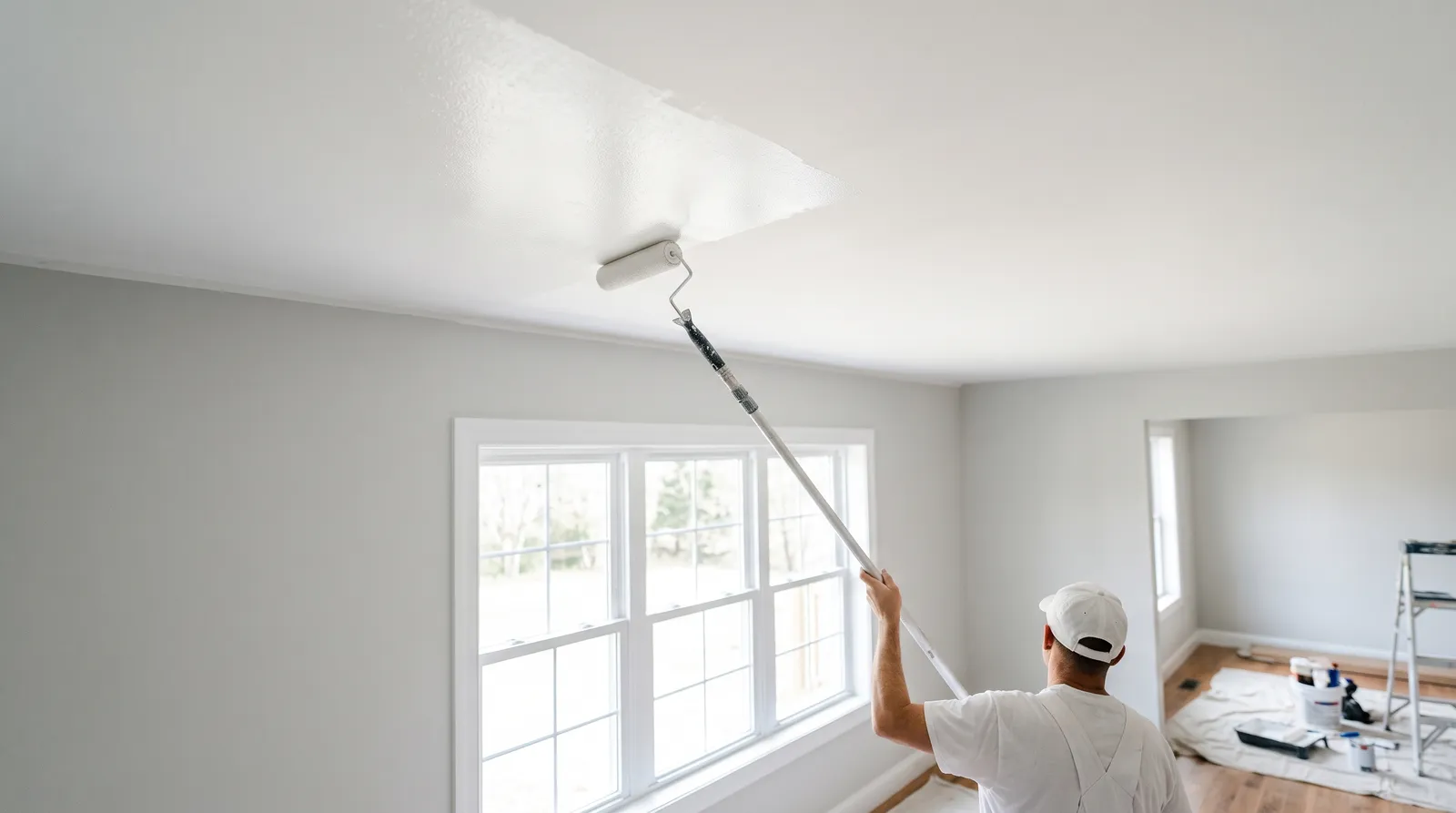 Premium ceiling flat
Best for Ceilings you look at daily
Dead flat, low spatter, and it goes on pink so you can see your wet edge. Zero scrubbability and it blocks no stains, so spot-prime rings first.
Full review →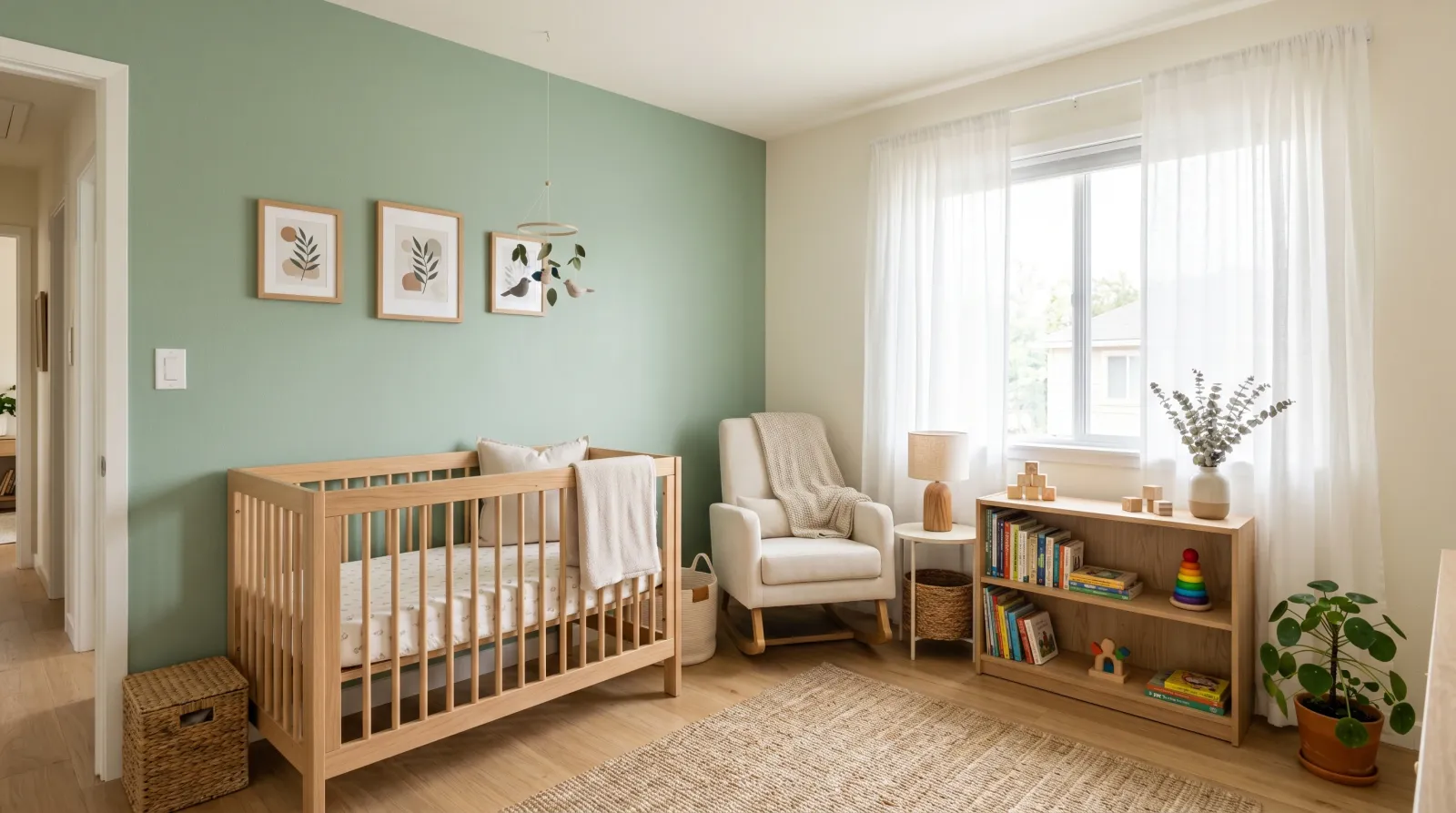 Discontinued interior
Best for Nothing new, buy Eco Spec instead
Discontinued March 1, 2021, and leftover gallons now list above what it cost when it was current. Eco Spec is the replacement and it is cheaper.
Full review →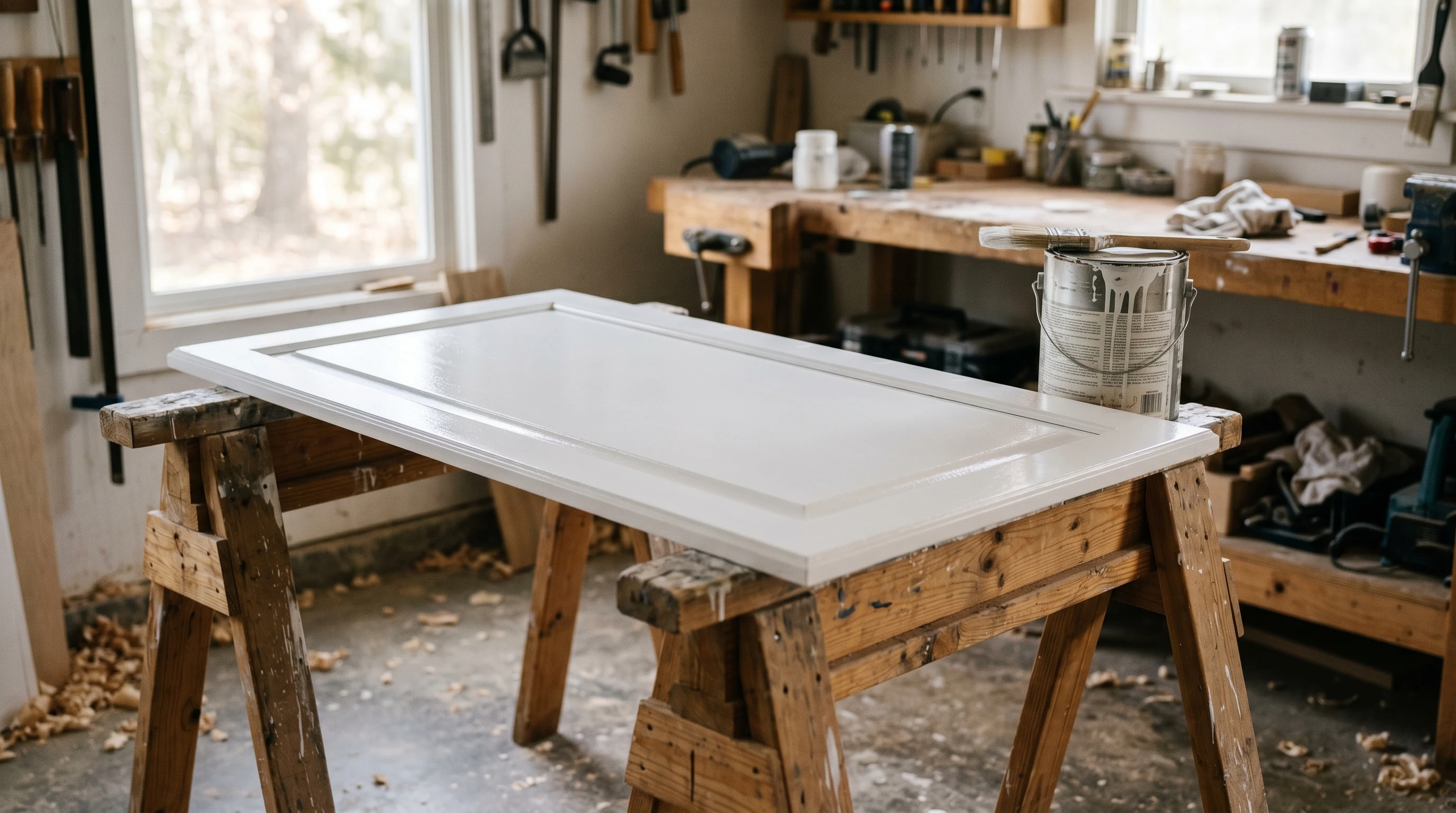 Flagship trim and cabinet enamel
Best for Cabinets, vanities, interior trim
Nothing else brushes this close to a sprayed factory finish. It costs you 16 hours between coats and a 30-day cure, so plan two weekends.
Full review → Value cabinet enamel
Best for White and light cabinets
Most of Advance's finish for about half the money, and hard in roughly two weeks instead of a month. No deep base, and it does not level as flat.
Full review →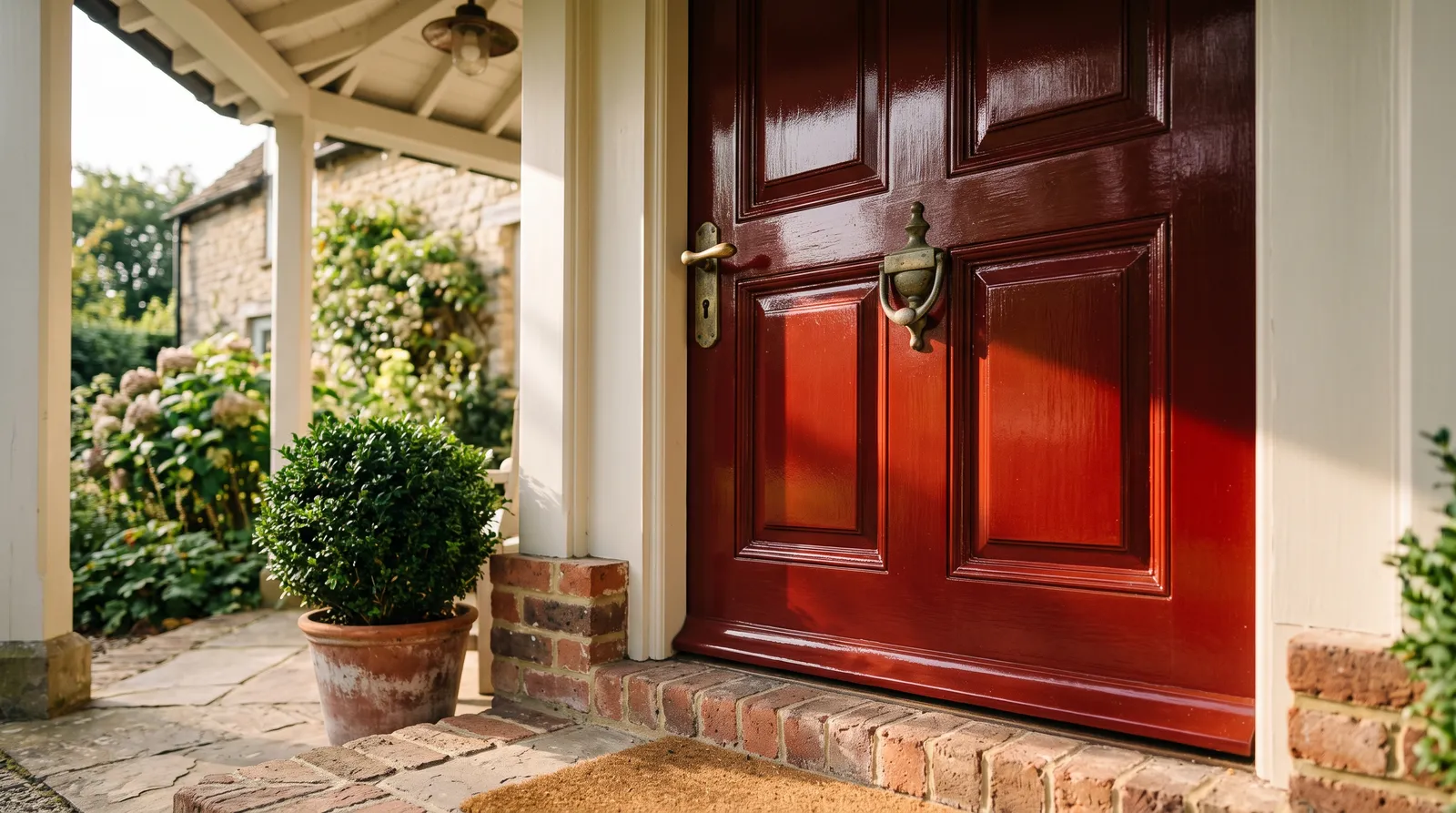 Door and trim specialty
Best for Front doors in full sun
Discontinued in the US since August 2022 (still sold in Canada and Europe). The high-build door-and-shutter alkyd survives as leftover dealer quarts — the review covers what to use instead.
Full review →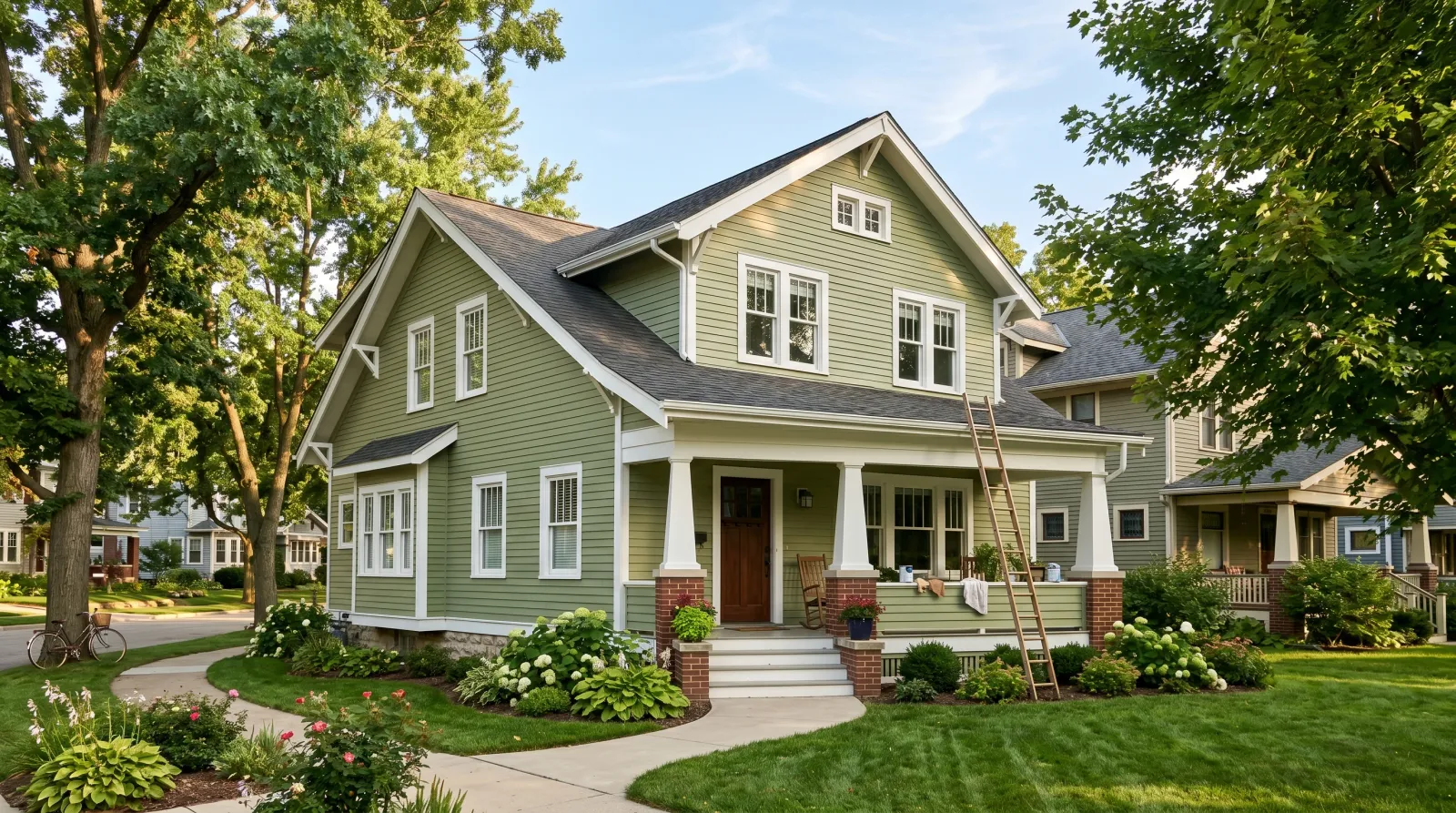 Flagship exterior
Best for Deep colors on sun-hit walls
The best brush-and-roll exterior in the line, and 12 to 16 gallons on a normal house is a $1,200 to $1,600 paint bill. Still needs two coats whatever self-priming implies.
Full review →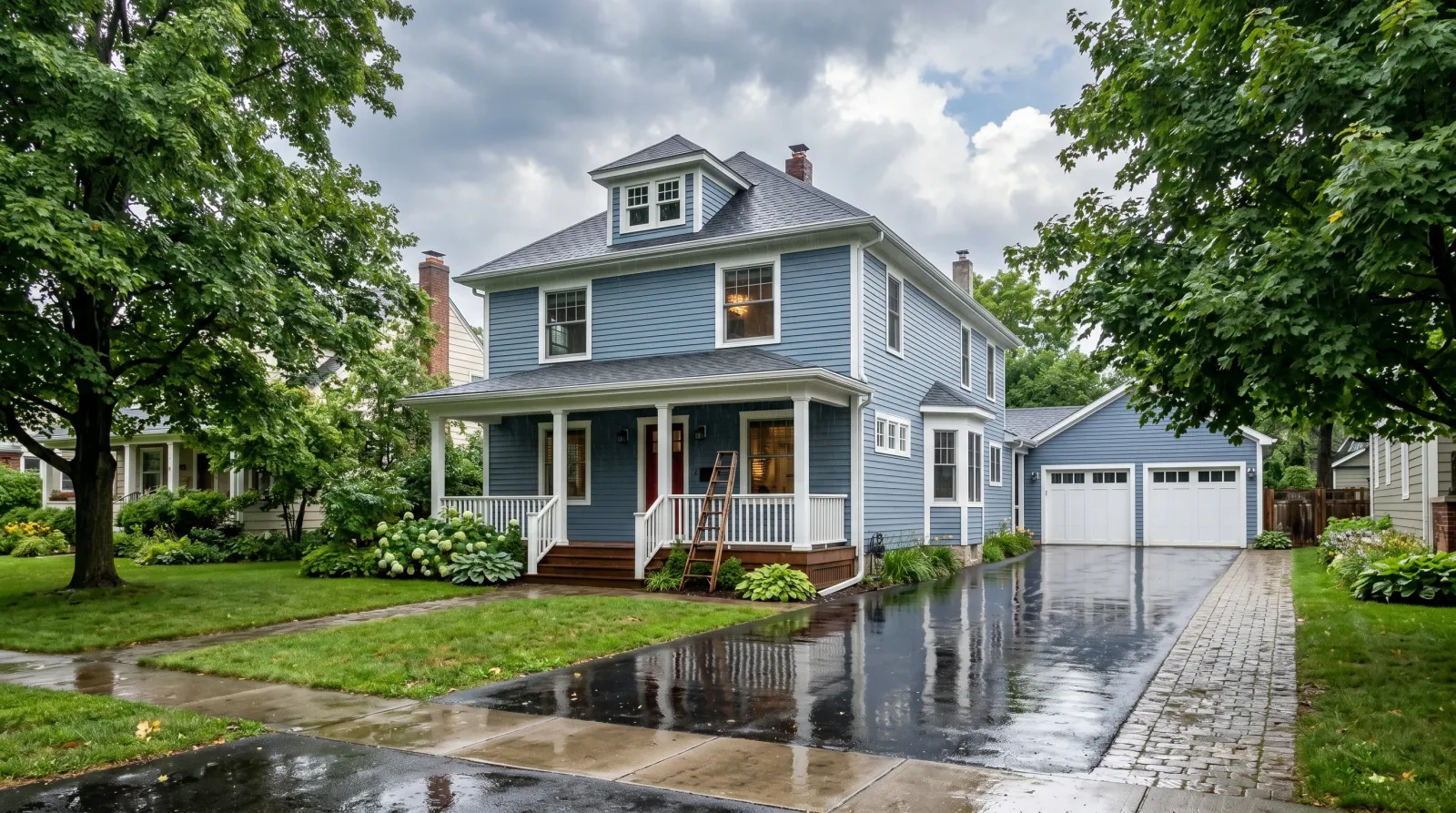 Wet-climate exterior
Best for Rain-risk and humid-climate jobs
It can take rain or dew about an hour after it goes on and applies down to 35 degrees. In a dry climate you are paying for a spec you will never use.
Full review →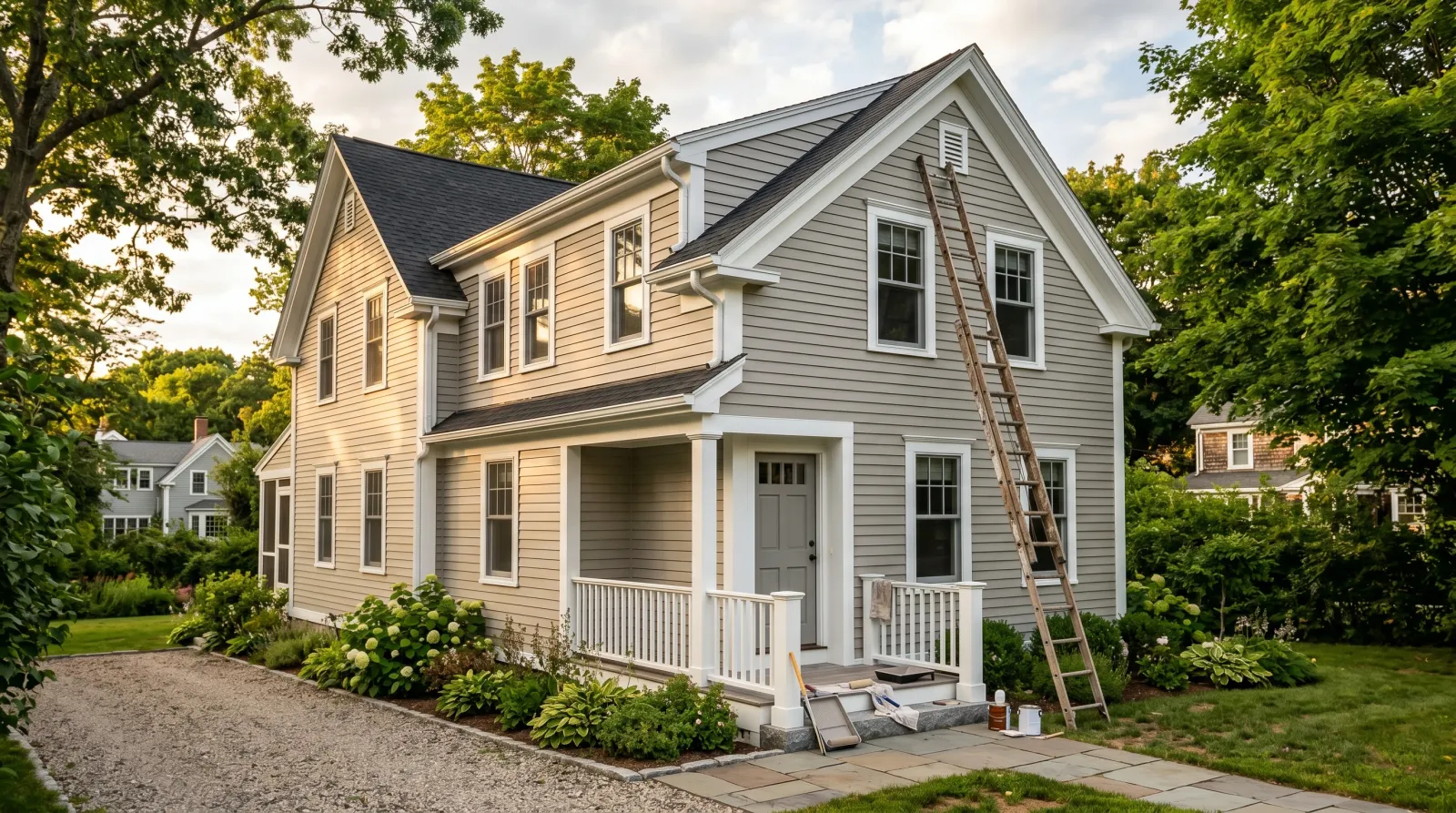 Mainstream exterior
Best for Light and mid-tone siding repaints
The most exterior paint per dollar BM sells, and it grabs chalky old siding well. Put a deep navy on a west wall and it fades years before Aura.
Full review →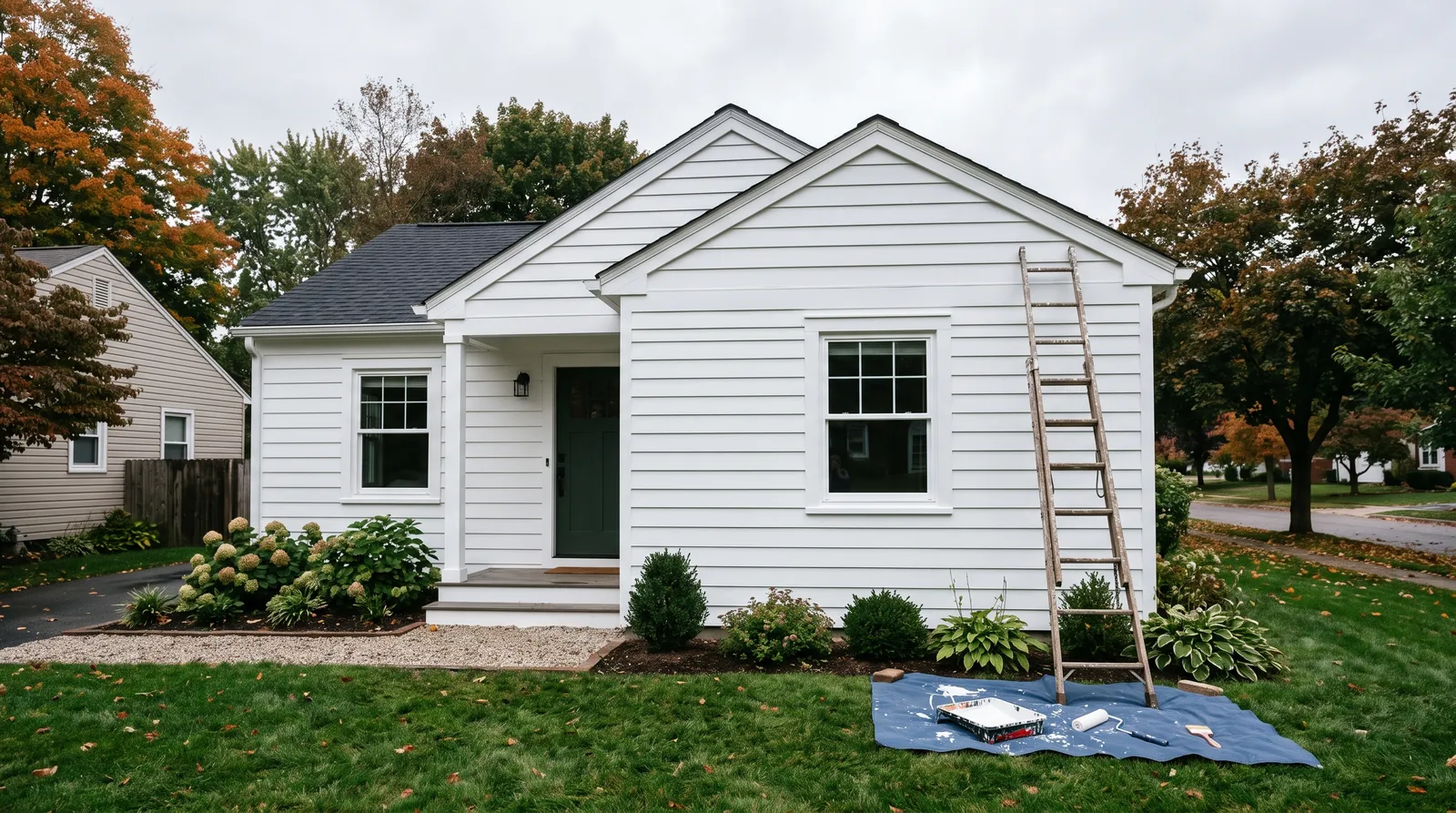 Contractor exterior
Best for Rentals and multi-building repaints
Good by the pail on light colors, wrong on your own house in a deep one. Dry film lands at 1.3 to 1.6 mils, so it is a volume coat, not a forever coat.
Full review →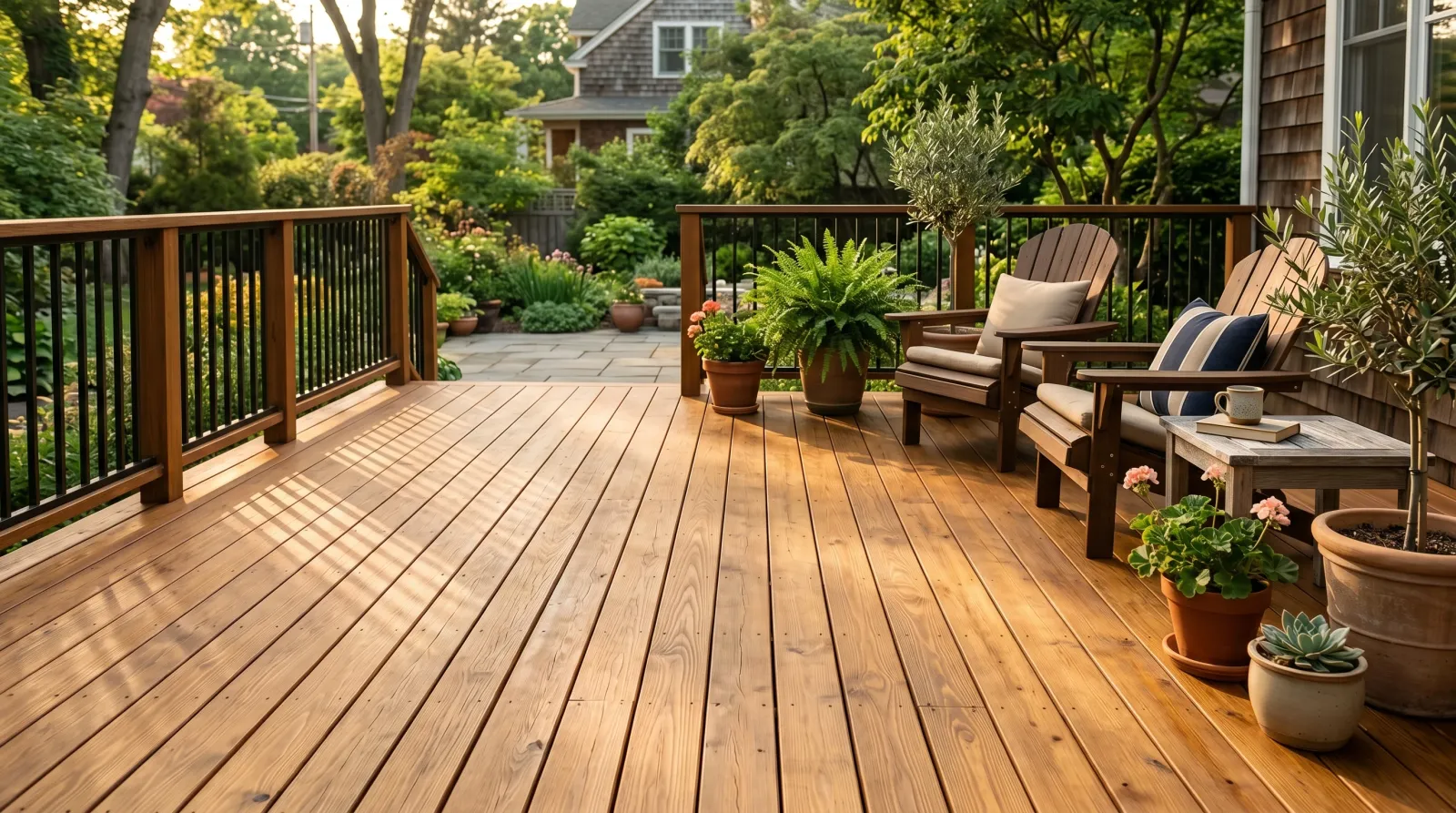
 Bonding primer
Best for Laminate, thermofoil, glossy trim
The category benchmark when the real question is whether paint will stick at all. On plain drywall or raw lumber it is the wrong can.
Full review →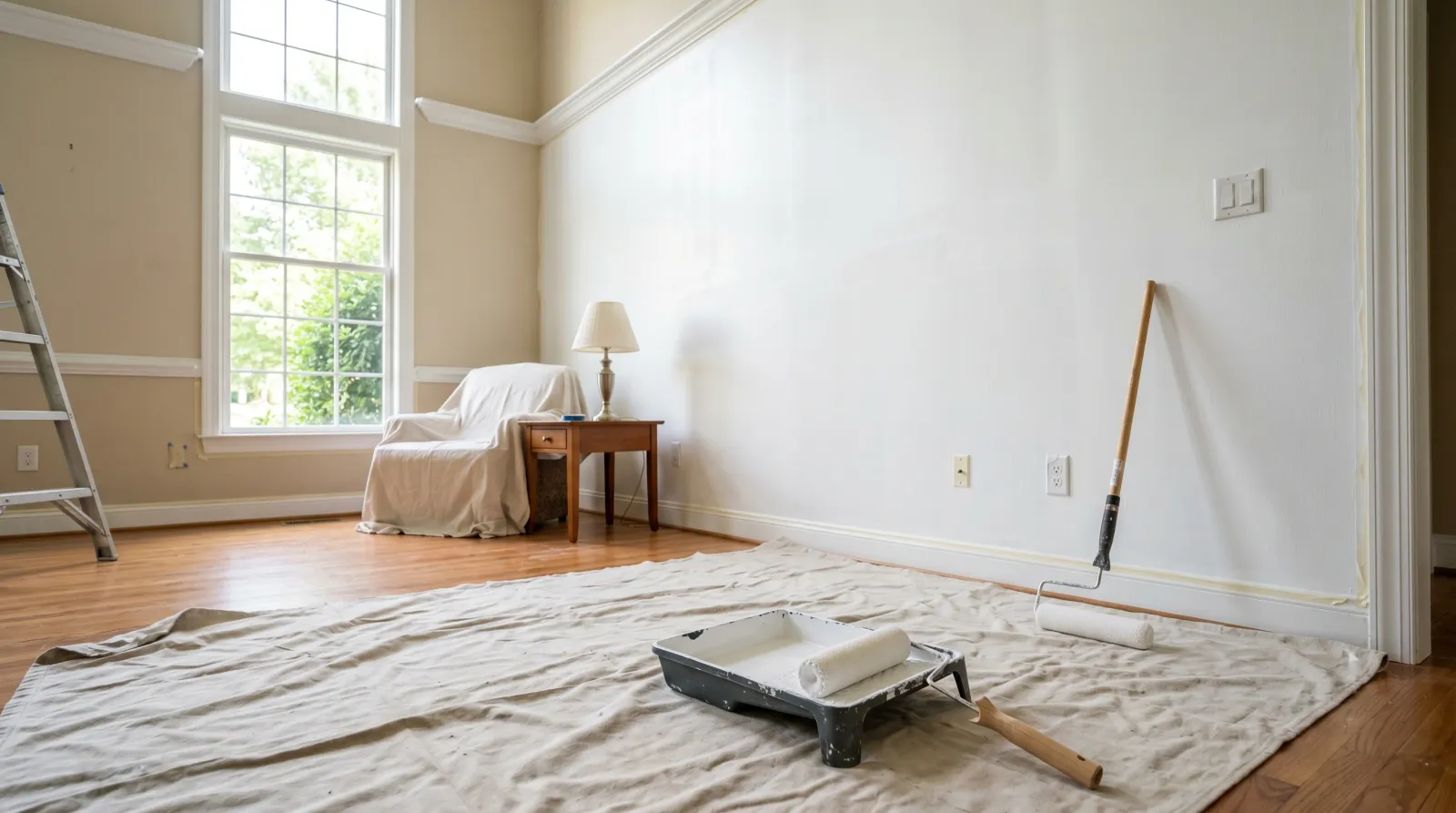 General-purpose primer family
Best for Patched walls, big color changes
The 046 high-hiding acrylic kills flashing over repairs and tints toward your topcoat. It will not stop cedar tannin, which needs shellac.
Full review →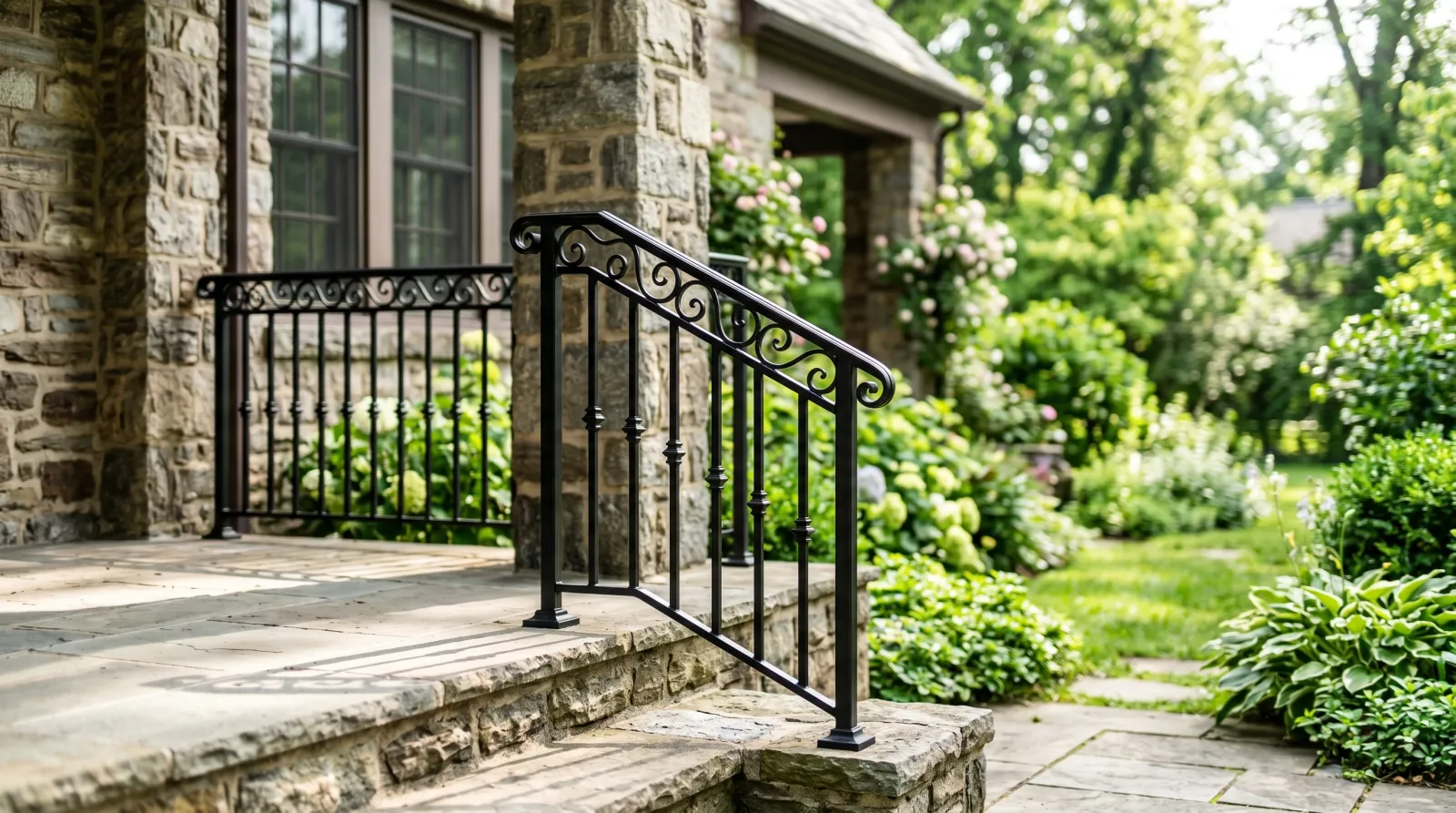 Metal primer
Best for Railings, gates, galvanized metal
The flash-rust inhibitor and two-hour recoat replace an oil primer on ordinary steel. Structural or salt-exposed steel still wants epoxy.
Full review →Best for Schools, hospitals, multifamily
Not a homeowner SKU. If you manage property and repaint by the building, ask a dealer to quote it against Ultra Spec.
There Is No Sale Calendar, So Work the Dealer
Benjamin Moore does not run the promotional model Sherwin-Williams does. There is no 30 to 40 percent event every four to six weeks. Dealers run their own sales, usually 15 to 20 percent, usually clustered around Memorial Day, July 4th, Labor Day, and Black Friday, and some never run one at all. Waiting for a deep discount is not a strategy here. The number on the shelf is close to the number you will pay.
The lever that does exist is the dealer itself. Because these are independent stores setting their own retail, the same gallon can differ by 10 to 15 percent between two dealers in one metro. Call two before you drive to the closer one. Then ask about an account: contractor pricing commonly starts near 25 to 30 percent off and climbs with volume, and plenty of stores will open an account for a homeowner with a real multi-gallon repaint in front of them. Contractor Rewards is free to join and stacks points on top. The worst answer is no.
The other honest lever is buying down the ladder instead of waiting for a discount that is not coming. Regal Select does most of Aura's job for $20 to $25 less a gallon on anything that is not a deep color. Ultra Spec 500 does a ceiling for a third of Aura's price. INSL-X Cabinet Coat gets you most of Advance's finish at $55 to $65. Save the flagship money for the one wall or the one kitchen where you will actually see it.
The Benjamin Moore Color Deck
The color system is the reason most people pay BM prices. The standard deck runs about 3,500 colors, roughly double Sherwin-Williams', and our browse pages list 3,919 including the collection fans. The depth on warm whites and complex neutrals is where the tinting work shows.
The Whole Benjamin Moore Fan Deck, One Shelf
Every Benjamin Moore color sorted into the families painters actually use. Pick a chip to browse light to dark.
Upload a photo of the room. We paint it in the Benjamin Moore color you pick, with your light and your floor, before you buy a sample.
The Cons Only Forums Talk About
Aura Sets Too Fast to Forgive a Slow Roller
The same fast-setting film that pulls one coat on a mid-tone gives you almost no room to fix a bad overlap. Nearly every repeat complaint about Aura traces back to it: lap marks on a long wall, splotchy sheen in the matte, and touch-ups drying a shade lighter than the field. It is not a defect, it is the trade for the hide. Buy Extender 518 with the paint, cut and roll a whole wall corner to corner without a break, and do not sample this line if you are a first-time painter working slowly.
Regal Select Keeps Getting Reformulated
This is the loudest complaint on the pro forums. BM reformulated the Regal Select matte at the end of 2021 after application complaints and relaunched the whole line in March 2023, and painters on PaintTalk describe the matte as having an insanely fast dry time with no wet edge to hold, plus sagging on walls and an extra coat needed over white base. One thread reports four to five coats of Chantilly Lace matte over medium brown. A 45-year veteran's summary was blunt: they keep changing the product. Buy the eggshell, not the matte, and prime any big color change.
Advance Buys a Great Finish With Your Calendar
Sixteen hours between coats and 30 days to full cure is the real cost of the best brush-and-roll cabinet finish you can buy. Painters on PaintTalk report chipping Advance down to the primer with a fingernail even after what felt like adequate cure time, and note that it goes brittle like an alkyd, so hairline cracks show up where stiles and rails move. The prep decides the outcome. Bond-prime with Stix, do not overwork the wet film, and keep hands off the doors for a month.
The Dealer Is Half the Product
Buying BM means buying whatever your local independent store is like, and they vary. Retail on the same gallon swings 10 to 15 percent between dealers in one region, so the closer store can quietly cost you $12 a gallon. Service varies the same way, from a counter that knows every base to one that is understaffed on a Saturday. And a shortfall on Sunday afternoon is a drive, not a five-minute errand, because there is no big-box backup. Pick one dealer, learn their hours, and buy the whole job at once.
Reordering the Same Color Months Later Can Miss
Complaints on ConsumerAffairs and PissedConsumer keep landing on the same thing: paint bought later does not quite match paint bought earlier, and the store explains that BM periodically adjusts the formula for a given color. Add normal batch variation and you have a visible seam on a wall rolled across two orders. The fix is old and boring. Buy every gallon of a color in one trip from one store, box them in a five-gallon pail and stir before you cut in, and if you must reorder mid-job, start the new batch at a corner or a break line.
The Questions Between Two Cans
Regal Select is the right answer on anything that is not a deep color, and it is more forgiving under a roller. Step up to Aura when the wall is a saturated navy, charcoal, or oxblood, where Regal reads flatter at the edges and can want a third coat. On a soft white the two are the same wall, and the Aura premium is money you will not see.
All comparisons →Aura wins on saturated color retention, Emerald wins on scrub durability and on the store you can reach. The bigger difference is the buying model: SW is corporate stores with one national promo calendar at 30 to 40 percent off, BM is independent dealers at 15 to 20 percent whose prices vary block to block. Buy on the store you can actually get to on a Sunday.
Full comparison →Advance levels flattest and ends up the hardest film, but it costs 16 hours per coat and 30 days of careful living. Cabinet Coat is most of that finish at $55 to $65 and hard in about two weeks, which wins the schedule. Scuff-X recoats in two to three hours and is great on trim and doors, but it is a wall resin, so stipple and brush marks stay in the film on cabinet doors.
All comparisons →Ultra Spec 500 is the better buy of the two cheap BM gallons if your dealer will sell it to you. It costs $30 to $42 against ben's $47, touches up better than anything else in its tier, and holds the same zero-VOC Gennex tint story. ben is easier to find on the retail shelf and rolls a little nicer. Neither one belongs on a wall you will scrub.
All comparisons →Pick by climate and color, not by tier. Regal Select Exterior at $55 to $70 is the default for a light or mid-tone siding repaint. Element Guard is the pick where weather ruins coats, since it takes rain about an hour after application and goes on down to 35 degrees. Aura Exterior only earns its $85 to $100 when the color is deep and the wall faces south or west.
All comparisons →Benjamin Moore Questions, Answered
Is Benjamin Moore paint good?
Yes, and it is the brand to buy when color is what you are paying for. Aura holds saturated blues, reds, and greens against UV better than anything else you can brush on, and the deck behind it runs about 3,500 standard colors against Sherwin-Williams' 1,700. The costs are money and errands: sales of only 15 to 20 percent, and no Home Depot, Lowe's, or Amazon path.
How much does a gallon of Benjamin Moore cost?
It spans a wide range. Ultra Spec 500 runs $30 to $42, ben about $47, Regal Select lists at $74.99 and street-prices around $50 to $60, Scuff-X $68 to $80, Advance $80 to $95, Aura $85 to $95, and Aura Bath & Spa $95 to $110. Expect a 10 to 15 percent swing between dealers in the same region, so call two stores before you drive.
Does Benjamin Moore ever go on sale?
Rarely and shallowly. Individual dealers set their own promotions, typically 15 to 20 percent around Memorial Day, July 4th, Labor Day, and Black Friday, and some dealers skip them entirely. There is no national 30 to 40 percent calendar like Sherwin-Williams runs. The better lever is a store account: contractor pricing commonly starts near 25 to 30 percent and rises with volume.
Why is Benjamin Moore only sold at independent dealers?
The dealer relationship is the moat. Independent stores earn a better margin on BM than on brands fighting for big-box shelf space, and BM keeps retail stable so that margin holds. The trade-off is convenience: about 4,500 dealers nationally, no Home Depot, no Lowe's, no legitimate Amazon gallon. In a metro that is a fifteen-minute drive. In a rural county it can be an hour.
Which Benjamin Moore paint should most people buy?
Regal Select, in eggshell. It is the most forgiving line to roll, it hides mid-tones in one coat over a similar base, it wipes fingerprints without polishing up, and it carries the same 3,500-color deck as the flagship. Move up to Aura only where the color is deep and the room matters. Move down to ben or Ultra Spec 500 for rentals and low-touch rooms.
What is the difference between Aura and Regal Select?
Aura uses BM's color-lock resin, which holds saturated colors and resists burnishing on touch-up. Regal Select is the step down at roughly $20 to $25 less a gallon, still 100 percent acrylic, still the same color deck. On deep navy or charcoal, Regal reads flatter at the edges and can want a third coat. On whites and soft neutrals the two look identical on the wall.
Is Benjamin Moore better than Sherwin-Williams?
Not decisively, and the pros split. In a Professional Painters Magazine survey, 52 percent preferred BM for interiors while 55 percent preferred Sherwin-Williams for exteriors. BM wins on color depth and price stability. SW wins on store density and on a 30 to 40 percent sale you can actually plan around. Buy on the store you can reach and the color you actually want.
Will Sherwin-Williams color match Benjamin Moore colors?
Yes, free, in any SW base. The match is close on neutrals and pastels and drifts on saturated colors with heavy pigment load. Hale Navy matched into Emerald is fine. A deep, complex blue matched into a mid-tier base can lose depth. If the exact chip is the point, buy BM. If close enough is fine and the SW store is nearer, take the match.
Why does my Benjamin Moore touch-up show?
Two causes. On Aura, the fast-setting film means a dabbed repair dries a shade lighter and a different sheen than the rolled field. On any line, paint bought months later can differ, because BM periodically adjusts color formulas and batches vary. Keep leftover paint from the same gallon, roll the repair with a small sleeve rather than brushing it, and feather toward a corner.
What is the best Benjamin Moore paint for kitchen cabinets?
Advance, at $80 to $95, if you can give it the time. It levels closest to a sprayed factory finish and survives a working kitchen for years, but it wants 16 hours between coats and 30 days to cure hard. On a budget or a deadline, INSL-X Cabinet Coat at $55 to $65 gets most of the finish and hardens in about two weeks. Bond-prime with Stix either way.
Can I buy Benjamin Moore paint on Amazon?
Not in any way worth doing. The listings are mostly third-party resellers moving marked-up old stock, with no tinting and no guarantee of how long the can has sat. Buy at a dealer or order from benjaminmoore.com for pickup or local delivery. Most colors are mixed and ready in a few hours; unusual bases and designer-collection colors take longer.
Is Regal Select still good after the reformulation?
The eggshell is, and it is still the rung most homeowners should buy. The matte is the sheen that drew the complaints: painters report a very fast dry with no workable wet edge, sagging, and extra coats over white base, which is why BM reworked it in late 2021 and relaunched the line in 2023. Pick eggshell for walls, and prime under any big color change.
Ask a Question