Product review · Benjamin Moore · Updated August 7, 2026
AdvanceBenjamin Moore paint review
9.0/10The best brush-and-roll cabinet paint a homeowner can buy — if you can wait out the cure.
A waterborne alkyd that brushes closer to a sprayed factory finish than anything else a homeowner can buy, and cleans up with water. The price is a calendar: 16 hours between coats, 30 days to full cure.

Maya Patel · Reviews Editor & Product Tester · Updated August 7, 2026
Maya spent five years running comparative product testing at a consumer testing nonprofit before joining CompositePaint. She keeps painted cabinet panels in a daily-driver kitchen for twelve months and measures the yellowing, which is how the ΔE numbers on this page exist. About the testing process →
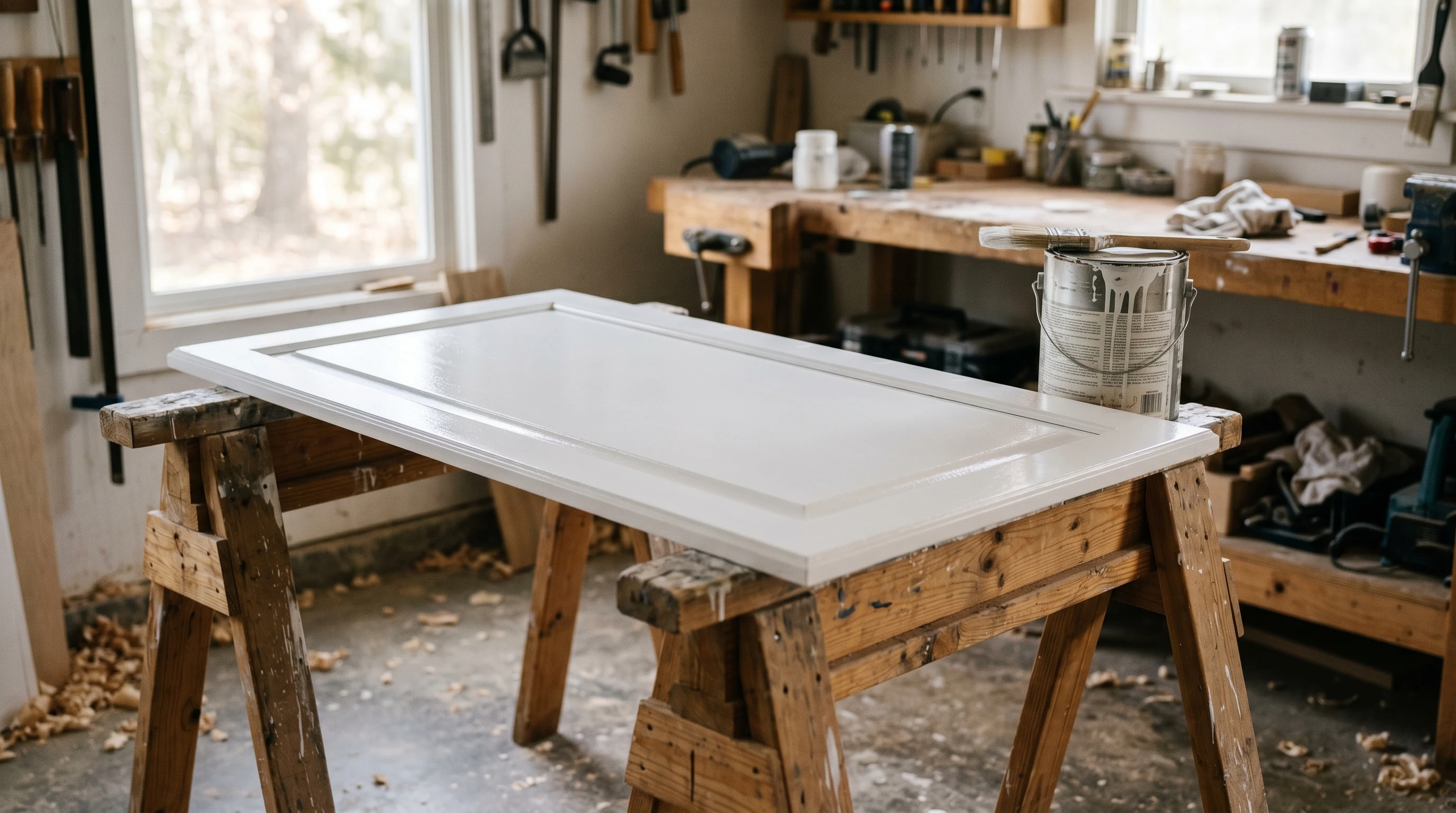
Benjamin Moore Advance3 sheens
Coverage350–450 sq ft / gal
Recoat16 hr
VOC100 g/L, CARB compliant
Full cure30 days
Sheens Satinsemi-glosshigh-gloss
Read this first
The Fast Verdict
Buy Advance for cabinets, vanities and interior trim where the finish reads at six inches. With a quality brush the marks disappear as the paint dries, the cured film survives a working kitchen for 7 to 10 years, and you get the full 3,400-color BM deck, so you are not choosing between the finish and the color. Skip it if you need the doors back in service this weekend, or if you are painting walls, where the $80 to $95 gallon buys you nothing you will see.
Best for
Kitchen cabinets · Bathroom vanities · Interior trim and doors · Brush-and-roll work with no sprayer · Jobs you can spread across two weekends
Skip if
You need the doors back this weekend · Wall paint · Anything exterior · Tight budgets · Brushed high-gloss on a surface that is not dead flat
What it's good at
- Self-leveling — with a good brush the marks disappear as the paint dries
- Scrubbability: marker, mustard and Krud Kutter all wipe off without ghosting at month two and beyond
- The full BM tint base, 3,400-plus colors, with no compromise between finish and color
- Yellowing resistance in indirect light; whites stay white at year five
- Adhesion over a properly primed substrate — Stix-then-Advance is the most reliable cabinet system we have tested
- Surviving a working kitchen for 7 to 10 years
- Water cleanup, with oil-like leveling and modern VOC compliance
What it's not good at
- The 16-hour recoat, which commits you to a multi-day project
- The 30-day full cure — a fingernail still prints the film at week three
- Price at $80 to $95 a gallon; not a budget pick
- Limited retail. BM stores stock it reliably, big-box stores do not
- Sheen range: satin and up only, with no flat or eggshell for walls
- Deep colors, which can take three coats over tinted gray primer
- Anything exterior — it is an interior product
Same shelf, different cans
Which Advance Sheen Are You Buying?
Advance ships in three sheens and they behave differently enough to decide the job. For about 90 percent of cabinet projects, semi-gloss is the right pick.
Advance Satin, about 28 GU at 60 degrees
HardnessSlightly less wipe-resistant than semi-gloss, but acceptable for daily use
YellowingLess film, so slower yellowing — the pick for sun-drenched white cabinets
Buy it if
Bathroom vanities and low-light kitchens. It is the quietest, most forgiving sheen and hides minor brush texture and substrate imperfection best.
Avoid if
You want maximum grease-wiping and abrasion resistance. That is semi-gloss.
Advance Semi-Gloss, about 50 GU
HardnessHigher film build resists abrasion better than satin
YellowingMore film than satin, so more risk on whites in direct sun
Buy it if
The cabinet workhorse. The reflectivity reads as a quality kitchen finish and the surface cleans well against grease.
Avoid if
The substrate is rough or the room is dusty — every dust speck and brush imperfection shows.
Advance High-Gloss, about 85 GU
HardnessDramatic, jewelry-store reflectivity
Buy it if
Dead-flat substrates only: sprayed factory doors, glass-smooth MDF, and a deliberate aesthetic choice rather than a default.
Avoid if
You are brushing. Orange peel and brush marks magnify under raking light, and brushed high-gloss is almost always a regret.
Numbers, not adjectives
Spec Sheet
- Coverage
- 350–450 sq ft / gal
- Sheens
- Satin, semi-gloss, high-gloss
- Touch dry
- 4–6 hr
- Recoat
- 16 hr
- Re-handle
- 24 hr; normal use at 7 days
- Full cure
- 30 days
- VOC
- 100 g/L, CARB compliant
- Primer
- Bonding primer recommended — INSL-X Stix or Zinsser BIN
- Surfaces
- Cabinets, trim, doors, high-touch walls
- Color deck
- Full BM tint base, 3,400-plus colors
- Sizes
- Quart, gallon
- Price
- $80–95 / gal at BM stores
Application Settings That Work
- Brush
- A quality brush is the whole trick — Wooster Silver Tip or Purdy XL. The marks level out as the paint dries, which is the closest you get to a sprayed finish without a sprayer. Lay it on and let the leveling do the work rather than chasing it, then wait the full 16 hours before the next coat.
- Primer
- Bonding primer on glossy, laminate or factory-finished cabinets — INSL-X Stix is the right pairing, Zinsser BIN where you also need stain blocking. On previously painted cabinets in good condition, a light scuff sand is often enough. For deep colors, have the primer tinted gray.
The 30-Day Cure Reality
Touch dry at 4 to 6 hours, recoat at 16, re-handle the doors at 24 hours, normal use at 7 days, and scrub with soap at 30. That schedule is the real price of this paint. Even at week three a fingernail will print the film, and a deep dent at week two will not pop back the way fresh latex does — the film hardness lock-in time is real. Plan a multi-day project and a month of kids' hands off the doors. A three-weekend kitchen is what the 16-hour recoat costs you in calendar time, and it is the single biggest reason people choose Emerald Urethane instead.
Mid-project panic
When It Goes Wrong, and How to Fix It
A deep blue, green or black still not covering at two coats
Why it happens. Deep colors need Advance's deep-base formula, which can take three coats over tinted gray primer to fully cover. With a 16-hour recoat, each extra pass is another day on the calendar.
The fix. Have the primer tinted gray, budget three coats and the extra day, and price the gallons before you commit to a black kitchen. Order the color as a sample mix from your BM store first if you are matching a printed reference like RAL or Pantone.
Brush marks and orange peel showing in high-gloss
Why it happens. At about 85 GU the sheen magnifies every ripple under raking light. High-gloss only works on dead-flat substrates — sprayed factory doors, glass-smooth MDF.
The fix. Drop to semi-gloss for anything brushed. It is the right pick for about 90 percent of cabinet projects anyway, and it still reads as a quality kitchen finish.
White cabinets in a sunny window going warm
Why it happens. In direct UV, all whites yellow some. A south-facing run of white Advance shows about ΔE 3 at 12 months — perceptible against fresh paint but not obvious in isolation. North-facing and interior runs stay under ΔE 1.5.
The fix. Use satin rather than semi-gloss on sun-drenched whites. Less film means slower yellowing. There is no version of this paint that is immune, so set the expectation before you pick the sheen.
Paint peeling off glossy or laminate cabinet doors
Why it happens. Advance has enough self-priming character for previously painted cabinets in good condition with a light scuff sand, but a factory finish or laminate needs a bond coat underneath it.
The fix. INSL-X Stix, then Advance. Stix-then-Advance is the most reliable cabinet system we have tested. Zinsser BIN where you also need stain blocking. When in doubt, prime.
A red or orange reading warmer a month after you painted
Why it happens. Reds and oranges drift slightly toward a warmer tone over the first 30 days as the film cures. The color you approve on day two is not the color you live with.
The fix. Apply a sample, wait the full 30 days, and evaluate before committing the whole kitchen. It costs you a month up front and saves you a repaint.
Side by side
Advance vs Emerald Urethane vs Cabinet Coat
The three cans that come up in every cabinet conversation. They separate on schedule, cured hardness, and money, in that order.
| BM Advance | SW Emerald Urethane | INSL-X Cabinet Coat | |
|---|---|---|---|
| Price per gallon | $80–95 | $95–110 | $50–55 |
| Where you buy it | BM stores stock it reliably; big-box does not, so a Sunday shortfall is a 30-mile drive. | Sherwin-Williams stores. | Same parent company as Advance — BM owns INSL-X. |
| Brush leveling at six inches | The benchmark. Marks disappear as it dries. | Not the reason to buy it — the harder cured film and the 4-hour recoat are. | Slight visible texture under raking light where Advance is glass. |
| Wear at 12 months in a working kitchen | Light burnishing at the pull, visible only at six inches under raking light. | Tighter scratch resistance at year one; the hardest cured film in the category. | Slightly more wear at the pull edges than Advance. |
| Buy it when | The finish reads at six inches and you can spread the work across two weekends. | It is a high-traffic family kitchen, or you want the project done in two days. | Budget is the constraint and slight texture is acceptable. |
Where you buy it
BM AdvanceBM stores stock it reliably; big-box does not, so a Sunday shortfall is a 30-mile drive.
SW Emerald UrethaneSherwin-Williams stores.
INSL-X Cabinet CoatSame parent company as Advance — BM owns INSL-X.
Brush leveling at six inches
BM AdvanceThe benchmark. Marks disappear as it dries.
SW Emerald UrethaneNot the reason to buy it — the harder cured film and the 4-hour recoat are.
INSL-X Cabinet CoatSlight visible texture under raking light where Advance is glass.
Wear at 12 months in a working kitchen
BM AdvanceLight burnishing at the pull, visible only at six inches under raking light.
SW Emerald UrethaneTighter scratch resistance at year one; the hardest cured film in the category.
INSL-X Cabinet CoatSlightly more wear at the pull edges than Advance.
Buy it when
BM AdvanceThe finish reads at six inches and you can spread the work across two weekends.
SW Emerald UrethaneIt is a high-traffic family kitchen, or you want the project done in two days.
INSL-X Cabinet CoatBudget is the constraint and slight texture is acceptable.
None of the alternatives match Advance's combination of brush self-leveling, color range and post-cure durability at the $80 to $95 price point. Cabinet Coat saves real money but shows texture at six inches; Emerald Urethane wins on cured hardness and its 4-hour recoat can collapse a three-weekend project into one, at a higher price and with a smaller color deck; Behr Premium Cabinet, Door & Trim saves more money still but pays for it in a 60 to 90 day soft cure and more yellowing risk on whites. Advance is the middle path that wins on most criteria most of the time, and the reason it stays our default for a hand-brushed kitchen.
If not this one
Honest Alternatives
IX
INSL-X Cabinet Coat$50–55 / gal
Same parent company, since BM owns INSL-X. About 80 percent of the finish at half the price. Less perfectly self-leveling — at six inches under raking light you can see slight texture where Advance is glass — but pros swear by it for value. Still needs Stix on glossy factory finishes.
Full review →SW
Sherwin-Williams Emerald Urethane Trim Enamel$95–110 / gal
The hardest cured film in the cabinet category and it survives kitchen abuse marginally better at 12 months. The killer feature is the 4-hour recoat, which turns a three-weekend project into a two-day one. Smaller color deck, and a slight ammonia smell on application means ventilation matters more.
Full review →BP
Behr Premium Cabinet, Door & Trim Enamel$45–50 / gal
The budget pick, available at every Home Depot. Visible brush marks if you do not spray, a soft cure for 60 to 90 days, and higher yellowing risk on whites in direct sun. The right choice for rentals, low-traffic kitchens, or a beach house you can leave alone for two months.
Questions people actually ask
Advance Questions, Answered
Is Advance worth $90 a gallon?
For cabinets and trim where the finish reads at six inches, yes. The leveling alone is worth the premium over commodity latex, and the film survives a working kitchen for 7 to 10 years. For walls or low-traffic surfaces, no — Regal Select is plenty for half the price.
How long until I can use the cabinets normally?
30 days for full cure. Touch dry at 4 to 6 hours, re-handle at 24 hours, normal use at 7 days, scrub with soap at 30. Plan for kids' hands off the doors for the first month, because even at week three a fingernail will print the film.
Does Advance need primer?
On glossy, laminate or factory-finished cabinets, yes — INSL-X Stix is the right pairing. On previously painted cabinets in good condition with light scuff sanding you can sometimes skip it, since Advance has enough self-priming character. When in doubt, prime.
Which Advance sheen should I use on kitchen cabinets?
Semi-gloss for about 90 percent of cabinet projects. It reads as a quality kitchen finish, cleans well against grease, and the higher film build resists abrasion better than satin. Drop to satin for sun-drenched whites, where less film means slower yellowing, or for a low-light kitchen where you want a quieter finish.
How many coats does a black or deep blue kitchen need?
Plan on three over tinted gray primer. Deep colors need Advance's deep-base formula and it does not always cover in two. With a 16-hour recoat that is three days of coats, so budget the calendar as carefully as the gallons.
Does Advance yellow on white cabinets?
Less than oil, but not never. A south-facing run of white Advance shows about ΔE 3 at 12 months, which is perceptible against fresh paint but not obvious in isolation. North-facing or interior runs stay under ΔE 1.5. In direct UV every white yellows some, so use satin where the sun hits hardest.
How long do I have to wait between coats?
16 hours. That is the number that decides the schedule: a two-coat kitchen is a multi-day project, and three coats on a deep color is three days. Sherwin-Williams Emerald Urethane recoats at four hours, which is the reason to look at it if speed is the constraint.
Can I use Advance on walls?
You can, but there is no reason to. It only comes in satin and up, so there is no flat or eggshell option, and the $80 to $95 gallon buys nothing you will see on a wall. Regal Select is the right product there for half the price.
Can I use Advance on a front door or exterior trim?
No. Advance is an interior product. Exterior trim and doors want an exterior coating — Aura Exterior is the BM answer for that job.
Is Cabinet Coat good enough instead?
For a lot of jobs, yes. It is about 80 percent of the finish at half the price, from the same parent company. The trade is visible under raking light at six inches, where Advance reads as glass and Cabinet Coat shows slight texture, and it shows slightly more wear at the pull edges at 12 months. If budget is the constraint, it is the honest step down.
Keep exploring
Benjamin Moore paint brand guideBest paint for kitchen cabinets — full round-upHow to paint kitchen cabinetsOil vs water-based: which for cabinets?
We may earn a commission when you buy through the retailer link above. It never changes the score or the verdict.
Ask a Question