CP

Room Colors · Ceiling

5 Best Ceiling Paint Colors for 2026
ideas, combinations, and real rooms

5 curated picks from real ceilings — with the exact colors, honest reasons why, and the combinations that hold the room together.

Jessica Williams
Jessica Williams· Color Stylist & Interior Editor

Former interior stylist who can spot a green undertone from across a room. Jessica writes the color and mood pieces — what to choose, what pairs, and why your "white" looks pink.

The Fast Answer

Don't want to read 5 picks? These four are the safe answers.

BM OC-17 · LRV 86
The canonical ceiling white — bounces light without yellowing.
SW 7008 · LRV 82 · LRV 82
Slightly warmer ceiling white — pairs with cream walls and trim.
Behr 75 · LRV 84
Cool-leaning ceiling white for rooms with cool walls or LED lighting.
F&B No. 235 · LRV 66
Pale blue ceiling that extends daylight across the room.
Room painted in White Dove
White Dove
Try it in your room →
Top picks · see them in a room

Top Picks for the Ceiling

Pick a color family, tap a shade to see the ceiling in it, then try it on your own room.

White Dove
#F0EFE2

The canonical ceiling white — bounces light without yellowing.

SEE IT IN YOUR ROOM →

Ceiling Color Trends 2026 — What's In, What's Out

On the Way Out
  • Popcorn and Heavy TextureSprayed texture dates a room instantly and catches dust and shadows; smooth flat ceilings are the standard buyers now expect.
  • Untinted Builder White EverywhereBright white from the can reads cold and faintly blue next to warm walls and trim — the one-white-fits-all era is over.
  • Stark White Over Dark WallsA bright white ceiling chopped over deep-colored walls breaks the wrap and makes the ceiling feel lower, which is exactly what drenching and capping fix.
  • Shiny Ceiling PaintAnything above matte rakes light across the ceiling and telegraphs every seam and roller mark; sheen belongs on trim, not overhead.

The 5 Best Ceiling Paint Colors

Every pick below is a real rendered ceiling, not a chip. The lead color first; the swatches are the full scheme in the photo — walls, furniture, textiles, accent.

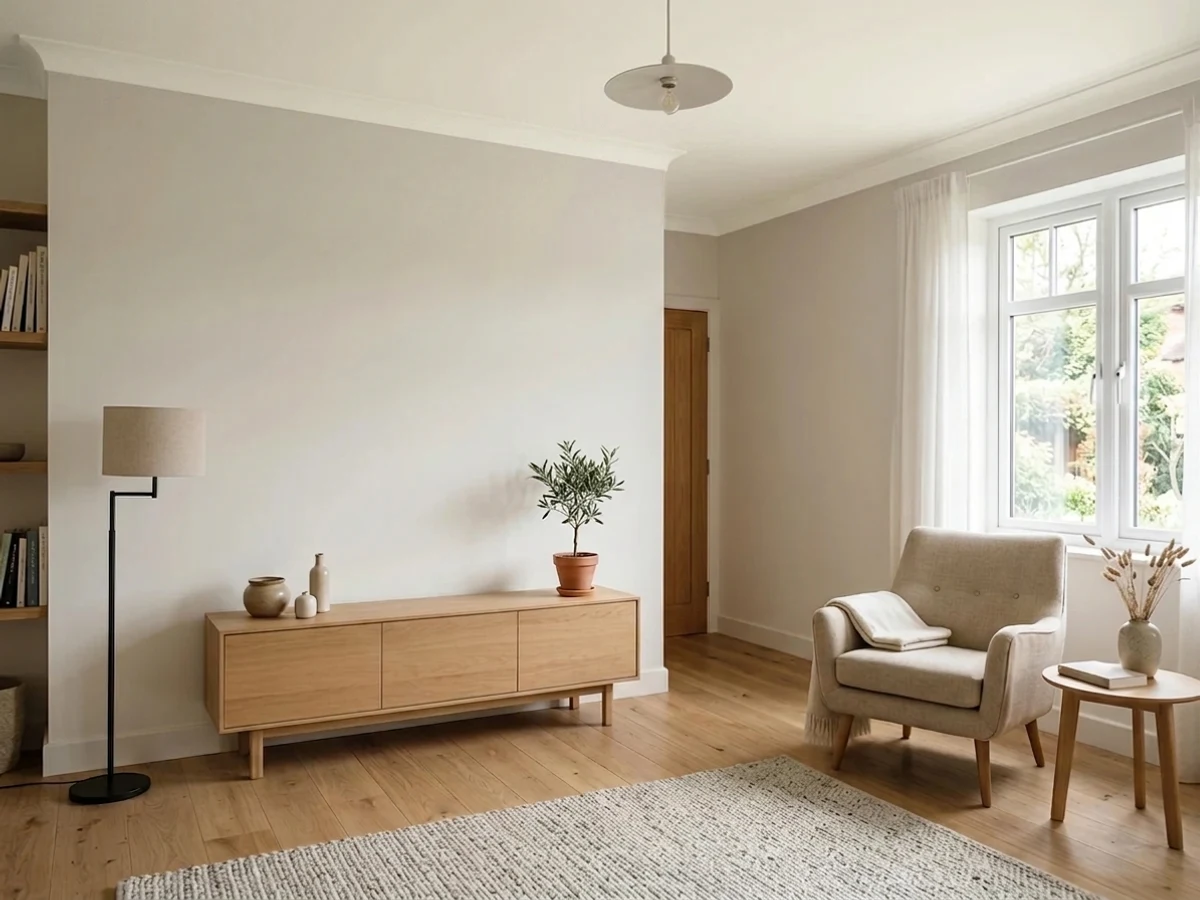
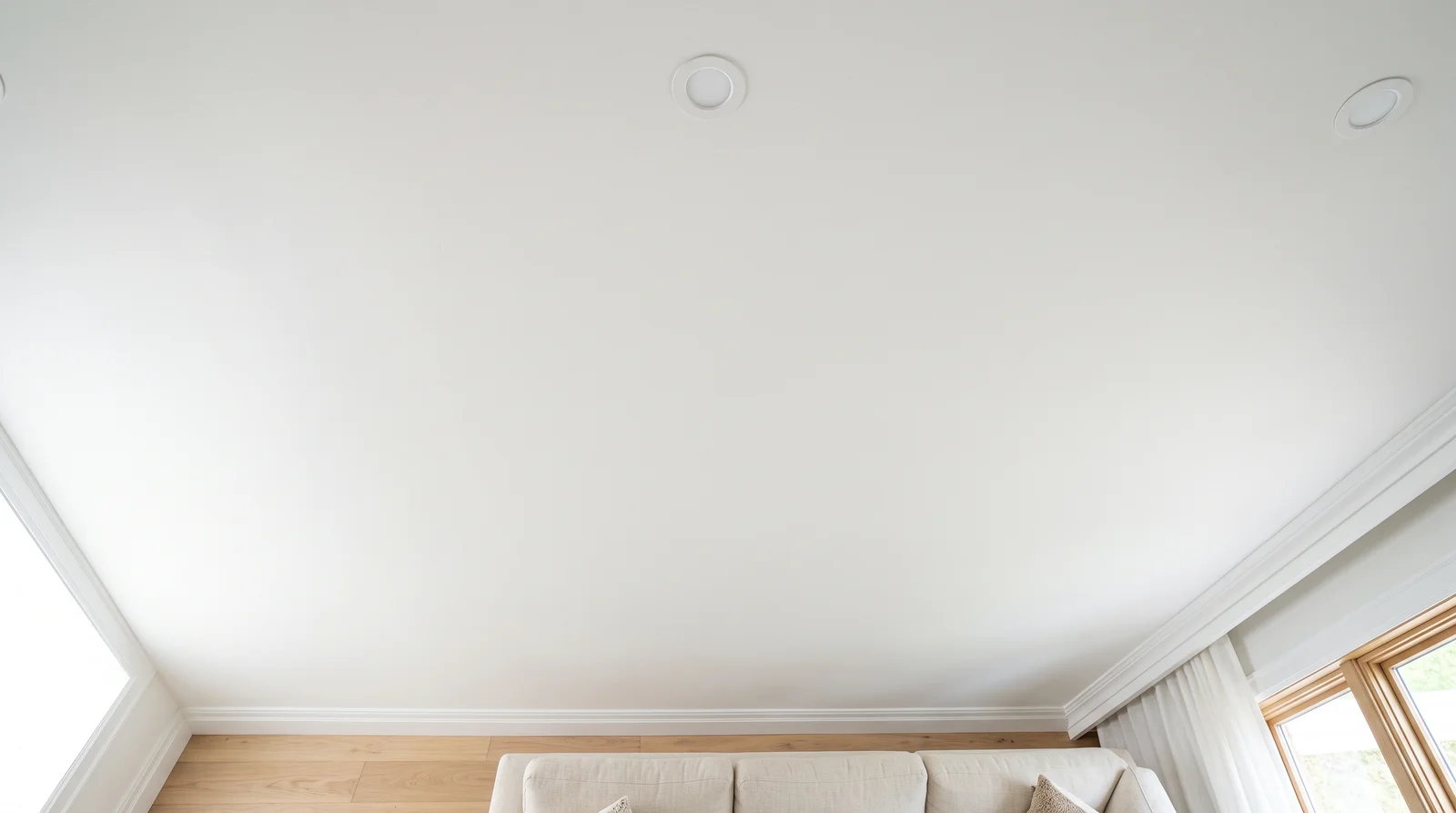
The Crisp Default — ceiling painted in Chantilly Lace
1Chantilly LaceBenjamin Moore · The Crisp Default

A clean, true white overhead that bounces every bit of daylight back down — the ceiling you stop noticing, in the best way.

Chantilly Lace from Benjamin Moore is the closest thing to a universal ceiling answer: at LRV 91 it reflects more light than almost any tinted white, so rooms feel taller and brighter without the ceiling pulling attention. It works over nearly any wall color because it has almost no undertone to clash — cool grays, warm beiges, and saturated colors all read cleaner beneath it. Pair it with Pure White walls for a bright, gallery-calm room, or use it strictly overhead in flat finish so drywall seams disappear. If your trim and walls run warm and creamy, skip it for White Dove instead — a stark ceiling over warm walls can look faintly blue.
Ceiling · Benjamin Moore
Walls · Sherwin-Williams
Trim · Benjamin Moore
Light Oak
Floor
SEE CHANTILLY LACE ON YOUR WALLS →
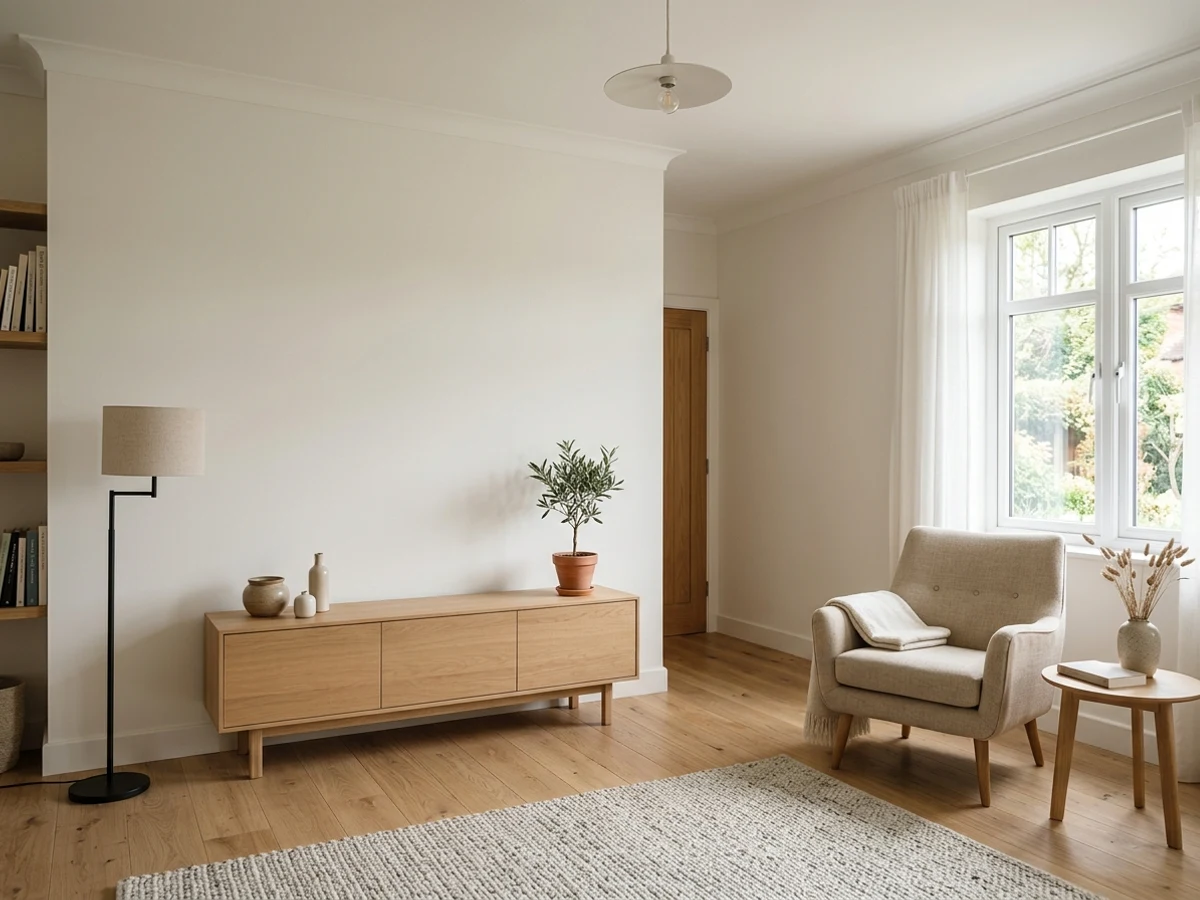
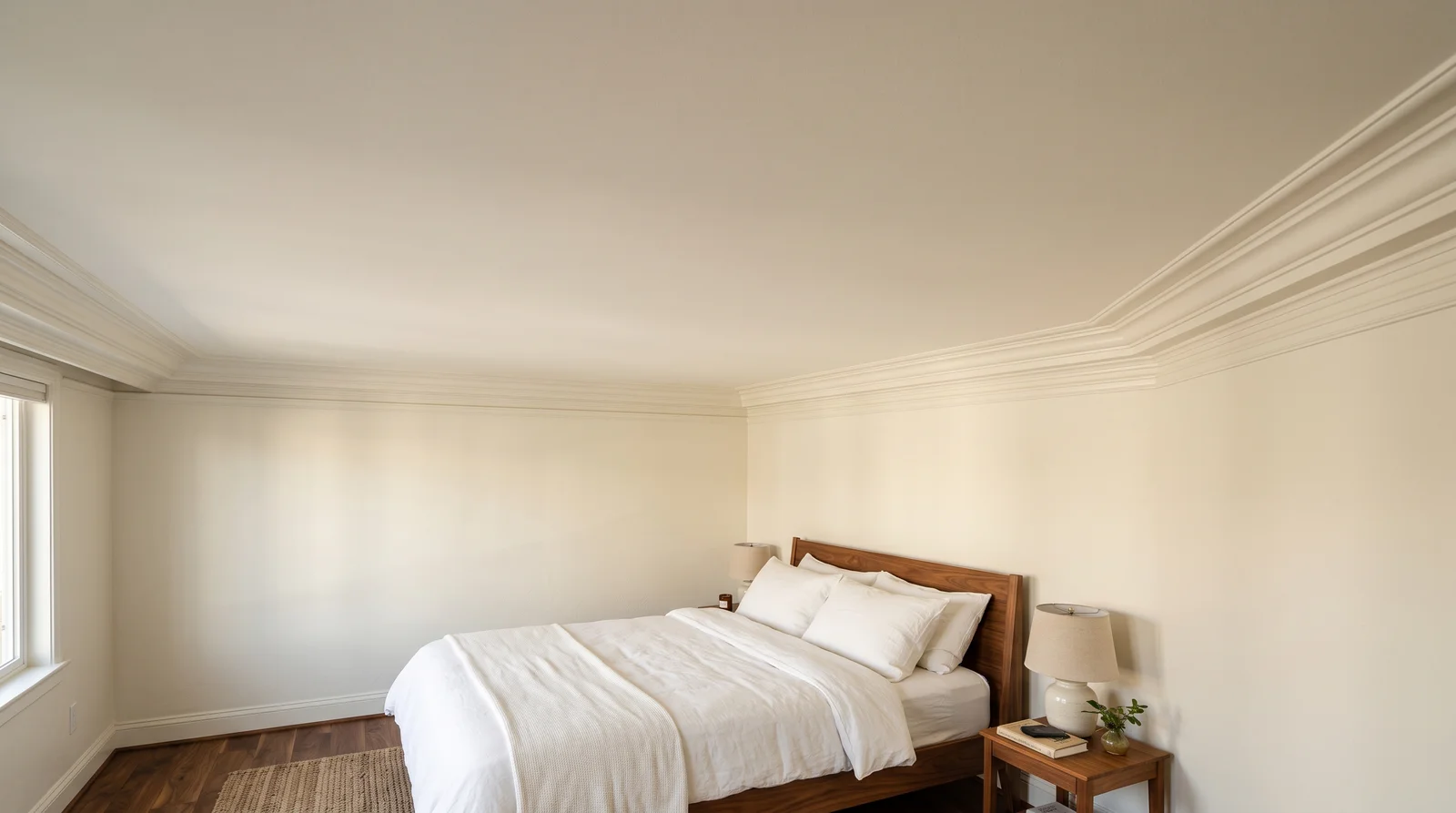
Warm White Wrap — ceiling painted in White Dove
2White DoveBenjamin Moore · Warm White Wrap

A soft, slightly creamy white flowing from trim to ceiling, so the whole upper room feels wrapped in one gentle warm light.

If your trim is already White Dove — and in a lot of American houses it is — painting the ceiling the same color is the quietest upgrade there is. The corner where trim meets ceiling stops being a line and becomes one continuous warm surface, which reads custom rather than builder-basic. At LRV 83 it's still plenty reflective, just softer than a stark white, so evening lamplight turns golden instead of gray. Keep walls in Alabaster or another warm neutral to hold the cocoon; under cool gray walls this pairing can look slightly yellow, and Chantilly Lace is the safer ceiling there.

Ceiling · Benjamin Moore
Walls · Sherwin-Williams
Trim · Benjamin Moore
Warm Walnut
Floor
SEE WHITE DOVE ON YOUR WALLS →
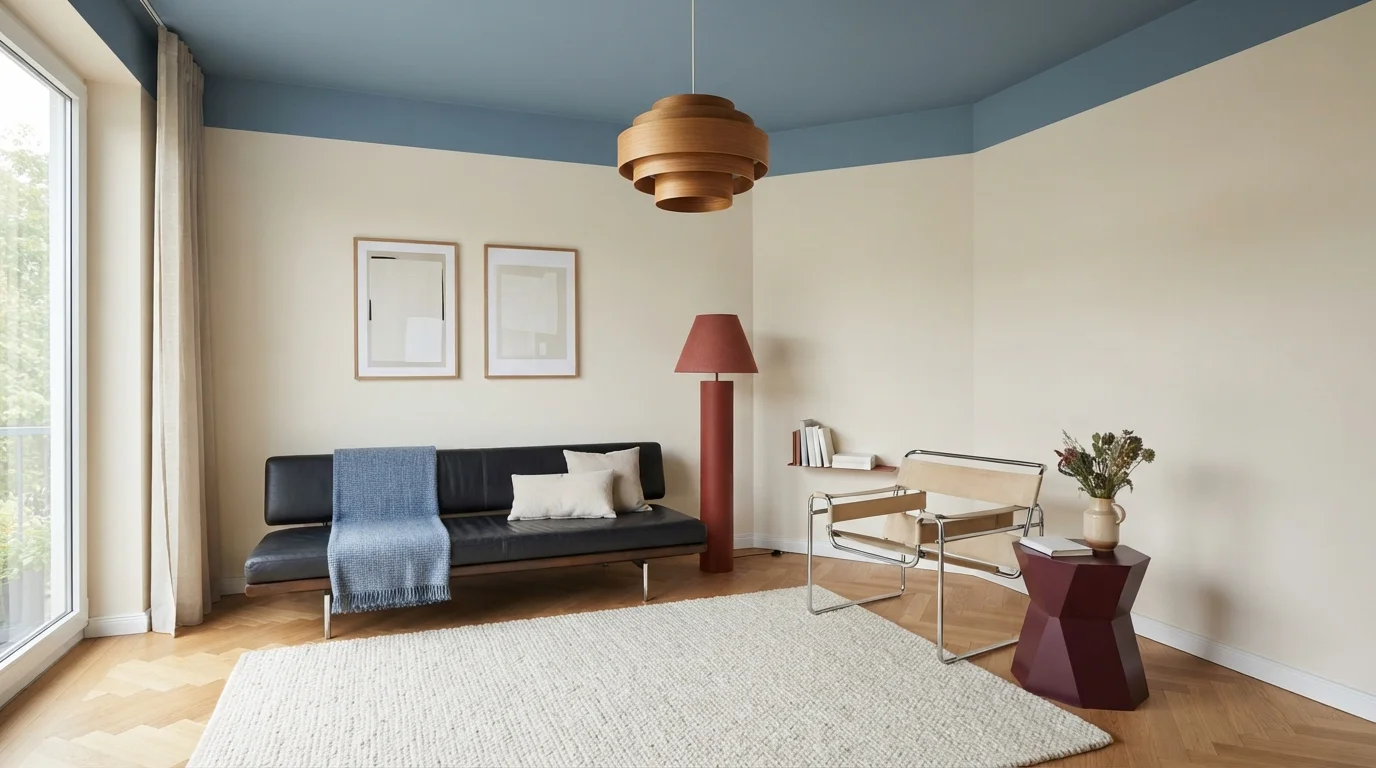
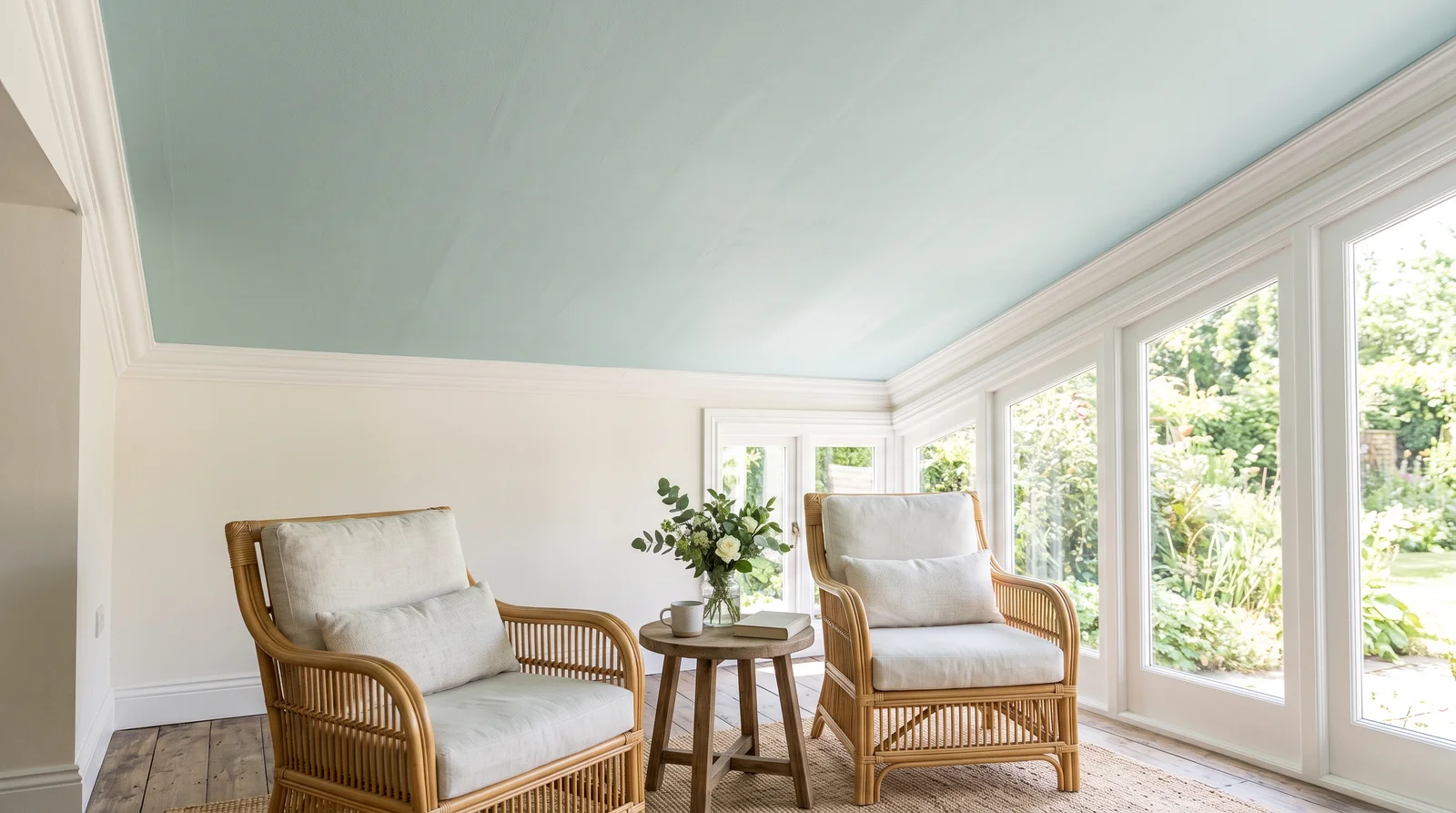
Painted Sky — ceiling painted in Palladian Blue
3Palladian BlueBenjamin Moore · Painted Sky

A pale blue-green overhead that reads like open sky — cool, airy, and quietly surprising every time you look up.

Palladian Blue from Benjamin Moore brings the old porch-ceiling tradition indoors, and it's the gentlest way to try a fifth-wall color. At LRV 60 it's light enough to keep a bedroom or sunroom feeling open — the ceiling doesn't drop visually the way a dark color would — but it clearly changes the mood of the room to calm and fresh. It's happiest over white or soft-neutral walls with warm wood furniture; the green undertone in the blue keeps it from feeling cold. In a room with very little natural light it can flatten toward gray, so sample a big patch overhead before committing.

Ceiling · Benjamin Moore
Walls · Benjamin Moore
Trim · Benjamin Moore
Honey Rattan
Furniture
SEE PALLADIAN BLUE ON YOUR WALLS →
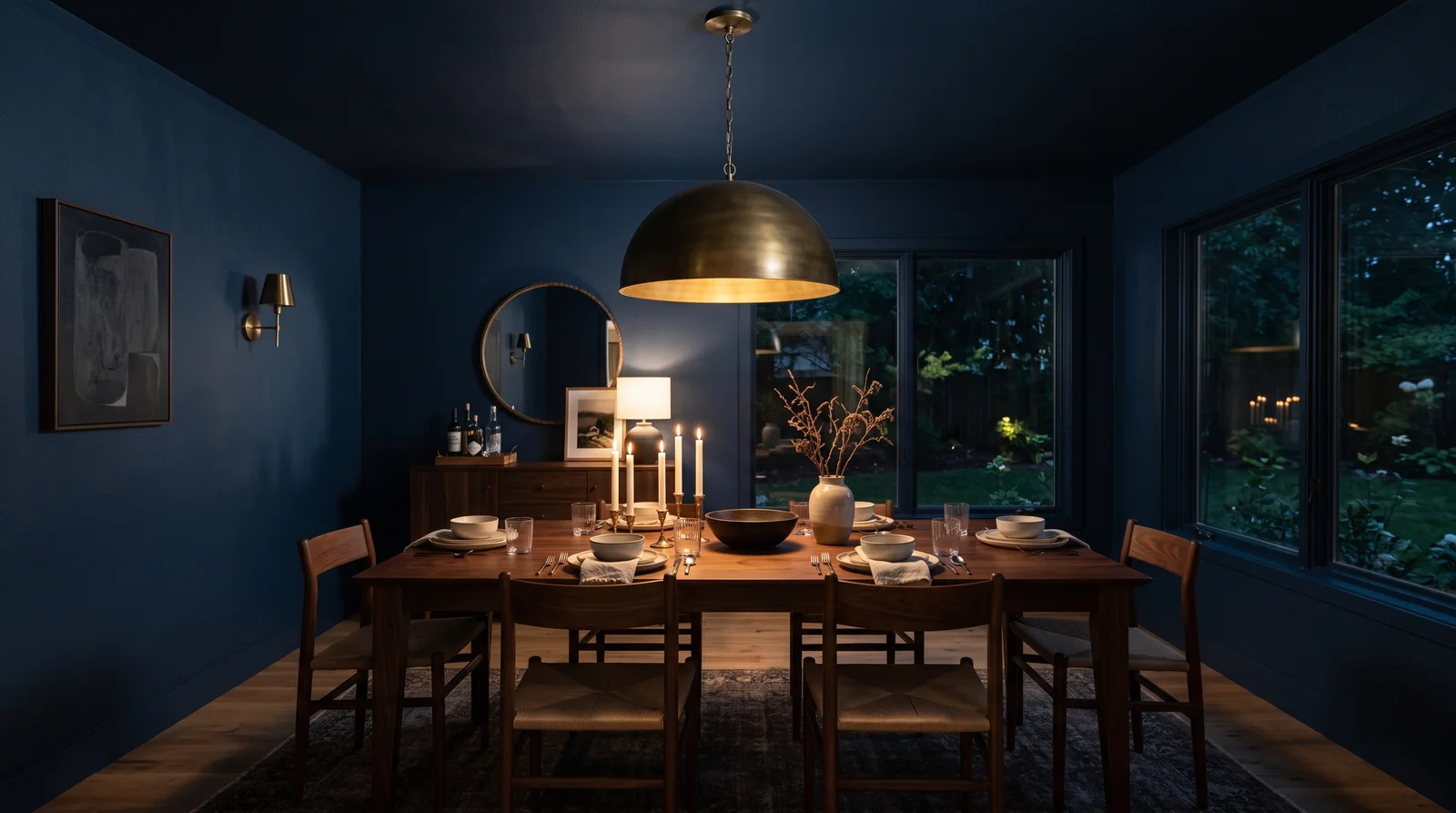
Navy Drench — ceiling painted in Hale Navy
4Hale NavyBenjamin Moore · Navy Drench

Deep navy poured across walls and ceiling alike, turning a dining room into a candlelit jewel box after dark.

This is the full color-drench: Hale Navy on the walls, the ceiling, even the trim, so the room reads as one continuous deep-blue volume with no white line breaking the spell. At LRV 8 it absorbs light rather than bouncing it, which is exactly the point — a dining room used mostly at night doesn't need a bright ceiling, it needs intimacy, and drenching makes even an eight-foot ceiling feel intentional instead of low. Brass fixtures and warm wood glow against it. Save this for rooms you pass through or gather in by evening; in a work-by-day space, keep the navy on the walls and take the ceiling back to White Dove.

Ceiling · Benjamin Moore
Walls · Benjamin Moore
Aged Brass
Fixtures
Dark Walnut
Table
SEE HALE NAVY ON YOUR WALLS →
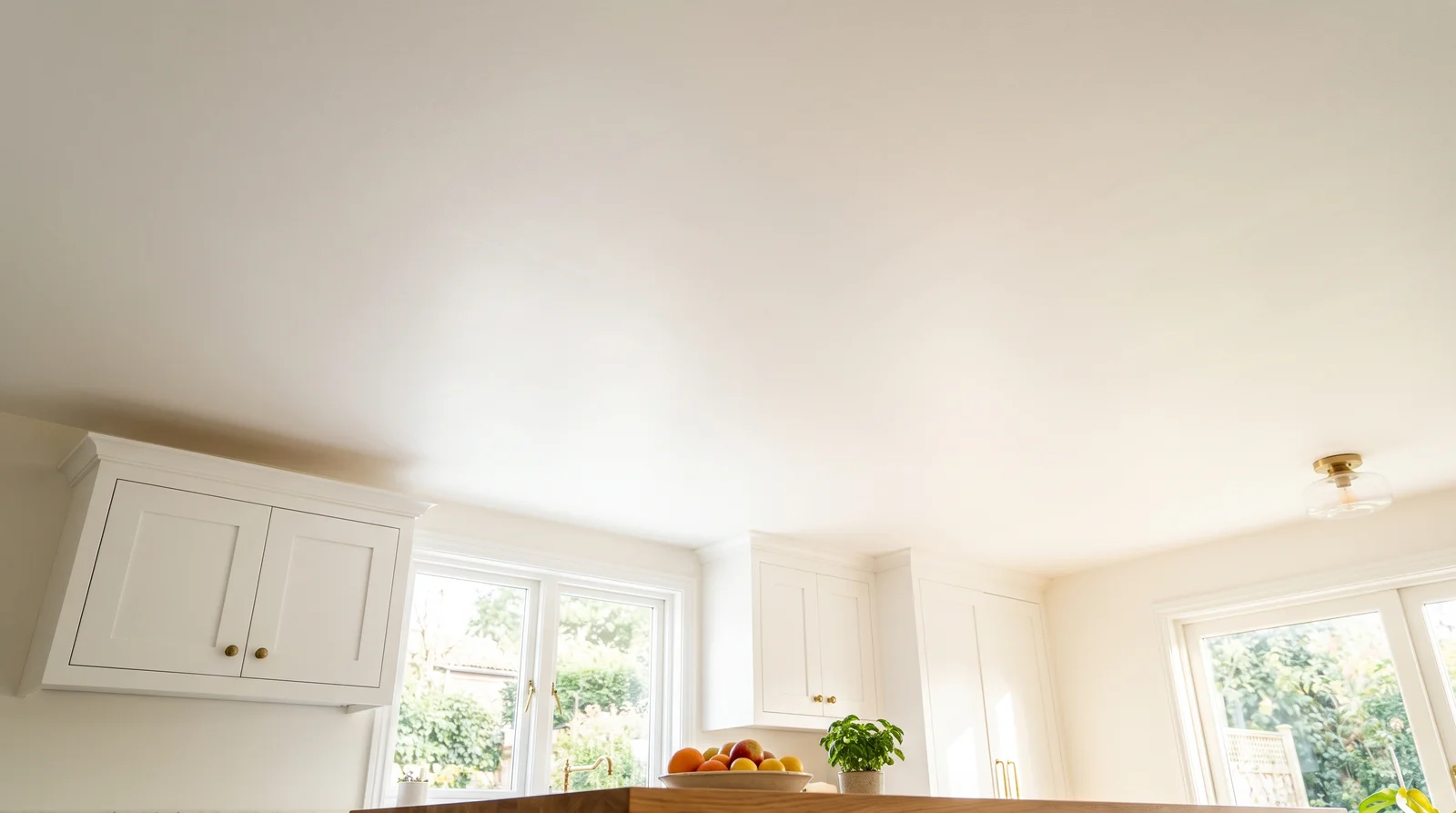
Sunwashed Kitchen — ceiling painted in Simply White
5Simply WhiteBenjamin Moore · Sunwashed Kitchen

A bright warm white overhead that keeps a hard-working kitchen feeling sunny even under task lighting.

Kitchens punish ceilings — steam, grease film, harsh downlights — so the ceiling color has to stay bright and clean-looking between repaints. Simply White from Benjamin Moore, at LRV 90, reflects nearly as much light as Chantilly Lace but carries a touch of warmth that flatters wood cabinets and keeps white cabinetry from looking clinical. It's the pick when your kitchen leans warm: brass hardware, butcher block, cream tile. Use a washable flat or matte made for ceilings so it wipes clean without flashing sheen. If your kitchen is all cool grays and stainless, Pure White overhead will match the temperature better.

Ceiling · Benjamin Moore
Walls · Sherwin-Williams
Cabinets · Sherwin-Williams
Butcher Block
Counter
SEE SIMPLY WHITE ON YOUR WALLS →

Ceiling Wall Color Combinations

A wall color never works alone. These are the full schemes from the rooms above — the lead color first, then the supporting colors that make the photo work.

The Crisp Default
CeilingChantilly LaceWallsPure WhiteTrimChantilly Lace
Ceiling
Chantilly Lace · Benjamin Moore · LRV 91
Walls
Pure White · Sherwin-Williams · LRV 84
Trim
Chantilly Lace · Benjamin Moore · LRV 91

A clean, true white overhead that bounces every bit of daylight back down — the ceiling you stop noticing, in the best way.

TRY THIS PALETTE →
Warm White Wrap
CeilingWhite DoveWallsAlabasterTrimWhite Dove
Ceiling
White Dove · Benjamin Moore · LRV 85
Walls
Alabaster · Sherwin-Williams · LRV 82
Trim
White Dove · Benjamin Moore · LRV 85

A soft, slightly creamy white flowing from trim to ceiling, so the whole upper room feels wrapped in one gentle warm light.

TRY THIS PALETTE →
Painted Sky
CeilingPalladian BlueWallsWhite DoveTrimChantilly Lace
Ceiling
Palladian Blue · Benjamin Moore · LRV 61
Walls
White Dove · Benjamin Moore · LRV 85
Trim
Chantilly Lace · Benjamin Moore · LRV 91

A pale blue-green overhead that reads like open sky — cool, airy, and quietly surprising every time you look up.

TRY THIS PALETTE →
Navy Drench
CeilingHale NavyWallsHale NavyFixturesAged Brass
Ceiling
Hale Navy · Benjamin Moore · LRV 7
Walls
Hale Navy · Benjamin Moore · LRV 7
Fixtures
Aged Brass · · LRV 29

Deep navy poured across walls and ceiling alike, turning a dining room into a candlelit jewel box after dark.

TRY THIS PALETTE →

The safest pairing is a ceiling that is lighter than the walls and trim that ties them together. A crisp white like Snow over soft gray or greige walls feels clean and current, with the trim picking up the same white so the eye flows from floor to ceiling. Warm whites like Alabaster pair beautifully with wood floors and cream cabinetry.

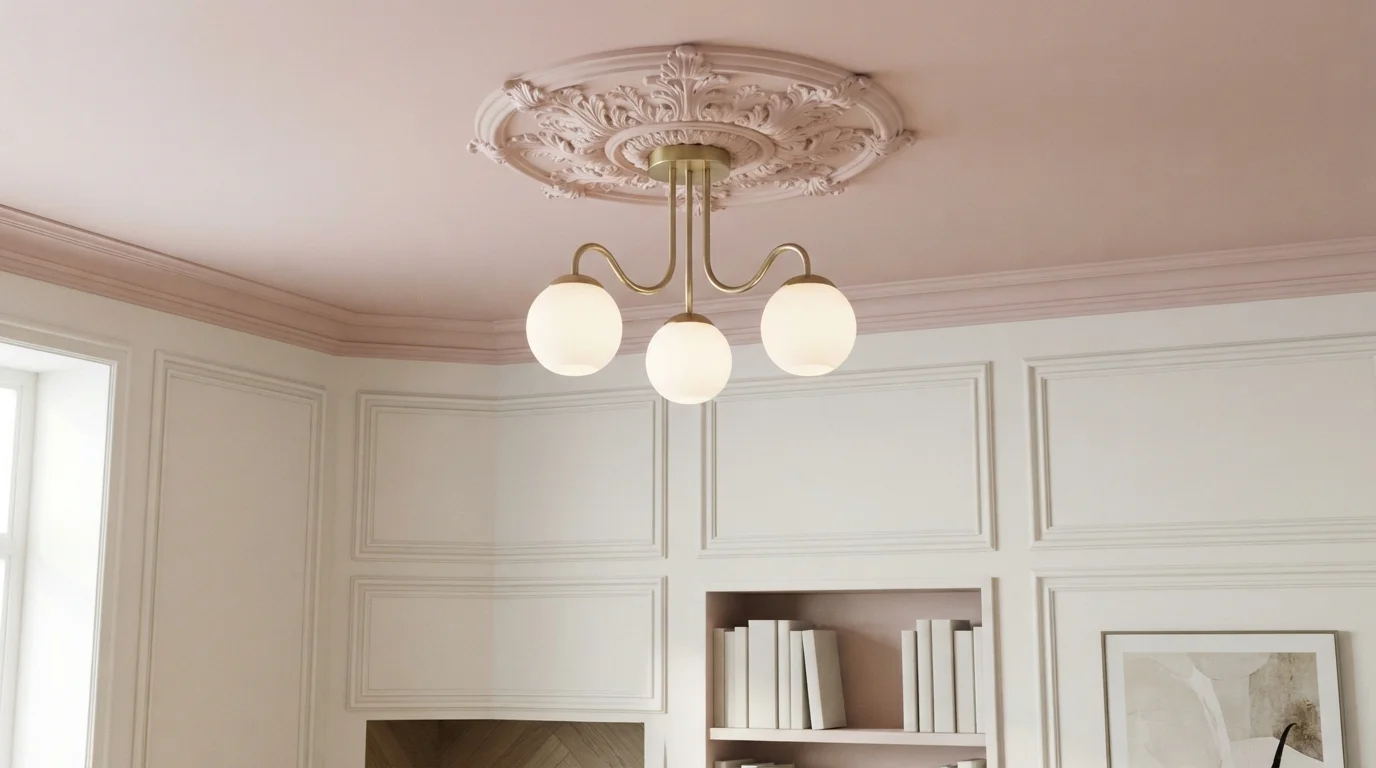
Colored ceilings want restraint elsewhere. A Robin Egg or Ice Blue ceiling sings over white or pale neutral walls and white trim, letting the blue be the one soft surprise. A Millennial Pink ceiling works the same way, sitting over quiet walls with brass or matte black fixtures to keep it from feeling too sweet. Let the ceiling be the accent and keep the rest calm.

Ceiling Color Ideas by Color

Set on a color family already? Each page has its own real rooms and picks.

Light or Dark Ceiling Colors?

Go Light (LRV 60+) If…

The room is small, faces north, or has to work at every hour. Light warm colors make it feel bigger and stay calm in evening light — the light you actually live in.

Go Dark (LRV Under 20) If…

You want the cocoon effect and the room has real daylight. Dark works best on one feature wall — or fully color-drenched in a large room with good windows.

Ceilings catch light differently than walls because they sit above your line of sight and bounce light back down. A room with big south-facing windows takes cool colors well, so Ice Blue or Robin Egg stays fresh all day. A north-facing or shaded room can feel gray, so a warm white like Alabaster or a touch of yellow or pink keeps it from going flat.

Think about night, too. Under warm bulbs, a cool white can look dingy and a pale blue can turn gray. If you live in the room mostly after dark, lean a half-step warmer than feels right at noon. Always tape a sample to the ceiling and check it morning, midday, and night before you commit.

LRV, or light reflectance value, is a number from 0 to 100 that tells you how much light a color bounces back. High numbers reflect more light and keep a room bright. For a ceiling that opens up the space, stay in the high range, which is where whites like Snow, Alabaster, and Porcelain live.

If you want cozy instead of airy, drop the LRV. A pale blue or pink ceiling with a mid-range LRV pulls the room in a little and feels intimate, which works well in a bedroom or a small den. Just remember that on a ceiling, color reads darker than the chip suggests, so a shade that looks barely tinted on paper can land with real presence overhead.

VISUALIZE YOUR SPACE

See It. Love It.
Paint It.

Upload one photo of your ceiling and try every color on this page on your own walls — in your own light, before you buy a drop of paint.

Drag the slider to compare
ceiling before paintingceiling painted in White DoveWhite DoveBefore

The Best Color Directions for a Ceiling

White is the classic ceiling choice for a reason. A clean shade like Snow keeps the room feeling tall and open, while a warmer white like Alabaster softens the light so the space feels calm instead of clinical. Porcelain sits in between, with just enough body to read as a real color rather than blank drywall.

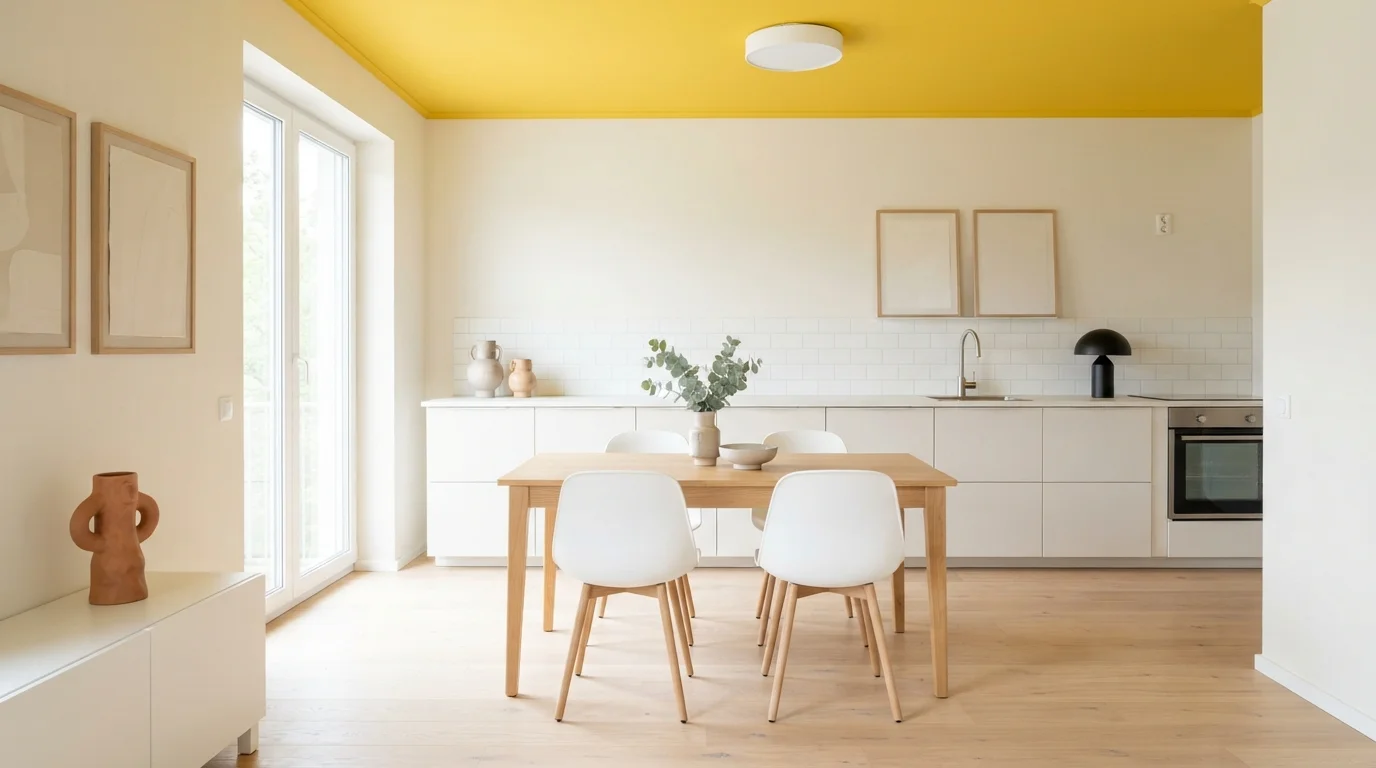
If you want the ceiling to do something, go pale and quiet. A soft blue like Robin Egg or Ice Blue mimics the sky and makes a room feel airy and open. A faint pink like Millennial Pink throws a gentle warm glow downward that flatters skin and makes bedrooms feel cozy. A pale yellow does the same with sunshine, lifting a dim room. The rule for all of these is to keep it light. The higher up it goes, the stronger a color reads.

The Right Finish for a Ceiling

Flat or matte is the standard ceiling finish, and it is the right call for most rooms. A flat sheen hides bumps, roller marks, and old patch lines that a shinier paint would put on display. It also kills glare, so light spreads evenly instead of creating hot spots near fixtures.

The exception is moisture. In a bathroom, kitchen, or laundry ceiling, step up to an eggshell or a paint made to resist mildew, because flat paint there can stain and grow spots. Those rooms see steam and need a surface you can wipe. Everywhere else, flat keeps the ceiling quiet and forgiving.

Common Ceiling Mistakes to Avoid

The biggest mistake is using a shiny finish. Gloss and even satin throw light across every roller streak and drywall flaw, and a ceiling is hard to fix once it is up. The second mistake is going too bold. Color reads much stronger overhead, so the chip that looked like a whisper can take over the room.

People also forget to prime stains and patches, which then bleed through and show as halos. And many skip testing in real light, so a white that looked perfect in the store turns blue or yellow at home. Sample on the actual ceiling, prime any repairs, and stay light, and you will avoid the problems that send people back up the ladder.

About Ceiling Paint Colors

Most people pick a wall color first and treat the ceiling as an afterthought. That is a mistake, because the ceiling is the largest unbroken surface in any room and the color you put up there changes how big, bright, and calm the whole space feels.

The good news is that ceilings give you room to play. A soft white keeps things crisp and tall. A pale blue or a quiet pink can wash the room in light and warmth without ever feeling loud. The trick is matching the color to the room's light, its height, and the mood you want when you walk in.

Every color shown here, from Snow and Alabaster to Robin Egg and Millennial Pink, is mixed to order at the paint counter. That means you are never locked to one brand. If you love a shade from one company, the counter can cross-match it into another brand's paint, so you can chase the exact color you want without giving up the finish or formula you trust.

The Questions Everyone Asks

What color should I paint my ceiling?

If you want one answer, start with the safe picks above — White Dove, Alabaster, Polar Bear, Borrowed Light. They read well in any light and survive furniture changes. Then check the light: strong afternoon sun wants a step cooler, a north-facing room wants a step warmer.

Should a ceiling be lighter than the walls?

Usually yes. A ceiling that is lighter than the walls makes a room feel taller and more open, which is why white shades like Snow and Alabaster are so popular up top. If you want a cozier, lower feel, you can match the ceiling to the wall color or go slightly darker on purpose.

What finish is best for a ceiling?

Flat or matte is best for most ceilings because it hides flaws and kills glare. The exception is moisture-prone rooms like bathrooms and kitchens, where an eggshell or mildew-resistant paint holds up better against steam and lets you wipe the surface clean.

Can I paint a ceiling a color instead of white?

Absolutely. A pale blue like Robin Egg or Ice Blue makes a room feel like open sky, and a soft pink like Millennial Pink casts a warm, flattering glow. Just keep the color light, because anything you put on a ceiling reads stronger than it does on a chip.

Why does my ceiling color look darker than the sample?

Ceilings sit in their own shade and catch less direct light than walls, so colors read deeper overhead. That is normal. Choose a shade that looks a touch lighter than your target on the chip, and always test it on the actual ceiling before painting the whole thing.

How does room light change which ceiling color works?

South-facing rooms get cool, bright light, so cool shades like Ice Blue stay fresh. North-facing or dim rooms can look gray, so a warm white like Alabaster or a faint pink or yellow keeps things from going flat. Check any color in morning, midday, and night light.

Can I match a ceiling color across different paint brands?

Yes. Every color here is mixed to order at the paint counter, and the counter can cross-match a shade from one brand into another brand's paint. So if you love a color but prefer a different brand's flat ceiling formula, you can have both.

Do I really need to prime a ceiling before painting?

If the ceiling has water stains, patched repairs, or you are covering a darker color, yes. Unprimed stains bleed through and show as halos, and fresh patches soak up paint unevenly. A quick coat of primer on those spots saves you from doing the whole ceiling twice.

What two-color combination works best in a ceiling?

The reliable pattern is a quiet main color plus one deep accent on a single wall. Keep trim and ceiling in one warm white so the two colors are the only event in the room — the combination cards above show complete schemes from real rooms.

What colors make a ceiling look bigger?

High-LRV, slightly warm colors — LRV 60–75 is the sweet spot. Paint the walls and trim close to the same light color so the corners blur, and keep the ceiling white. Stark cool white actually works against you; it creates hard shadows that show the room's edges.

Ask a Question

Jessica Williams

Not sure what's right for your ceiling?

Ask Jessica below — every question gets a real reply, usually within a day.