Room Colors · White Ceiling
8 Best White Ceiling Paint Colors for 2026
ideas, combinations, and real rooms
8 curated picks from real white ceilings — with the exact colors, honest reasons why, and the combinations that hold the room together.

Former interior stylist who can spot a green undertone from across a room. Jessica writes the color and mood pieces — what to choose, what pairs, and why your "white" looks pink.
The Fast Answer
Don't want to read 8 picks? These four are the safe answers.

Top Picks for the White Ceiling
Tap a shade to see the white ceiling in it, then try it on your own room.
White Ceiling Color Trends 2026 — What's In, What's Out


- Icy Blue-White Ceiling Paint — The cool, slightly blue-tinted 'ceiling white' sold as a default is looking dated next to today's warmer, true-white or wall-matched ceilings.
- Bright White Ceiling No Matter The Wall Color — Reflexively painting every ceiling stark white regardless of the wall color is fading as more rooms carry color up and across the ceiling.
- High-Gloss White Ceiling Finish — Glossy white ceilings are giving way to flat and matte finishes that hide texture and don't bounce harsh light.
The 8 Best White Ceiling Paint Colors
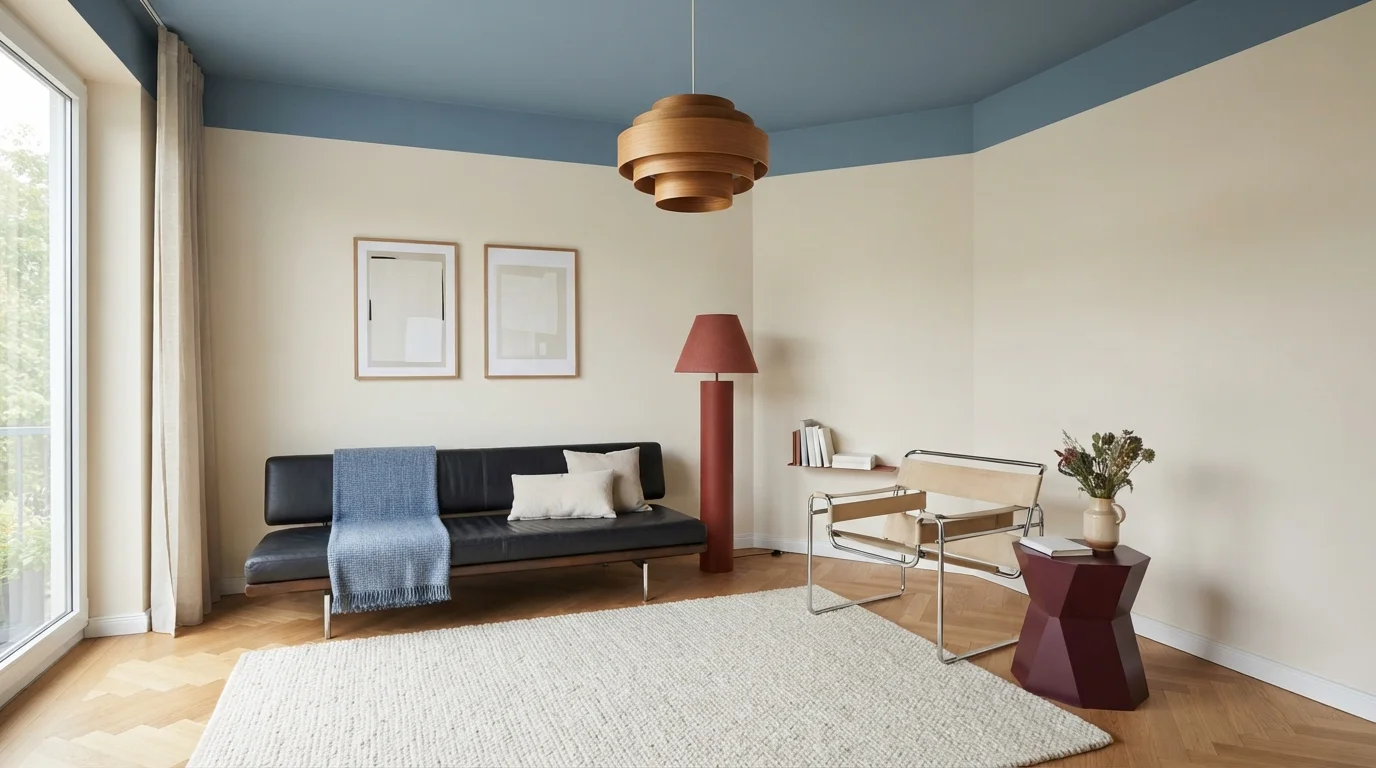
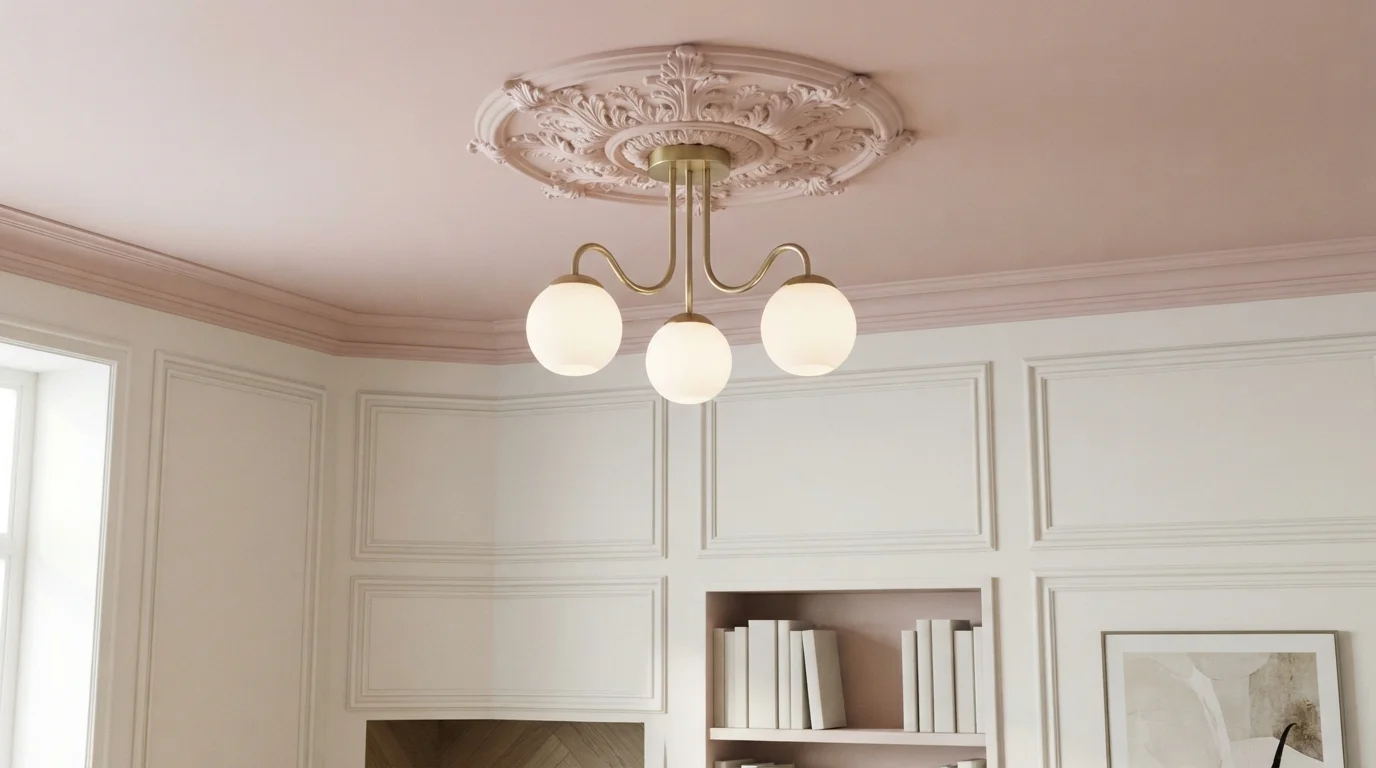
Every pick below is a real rendered white ceiling, not a chip. The lead color first; the swatches are the full scheme in the photo — walls, furniture, textiles, accent.

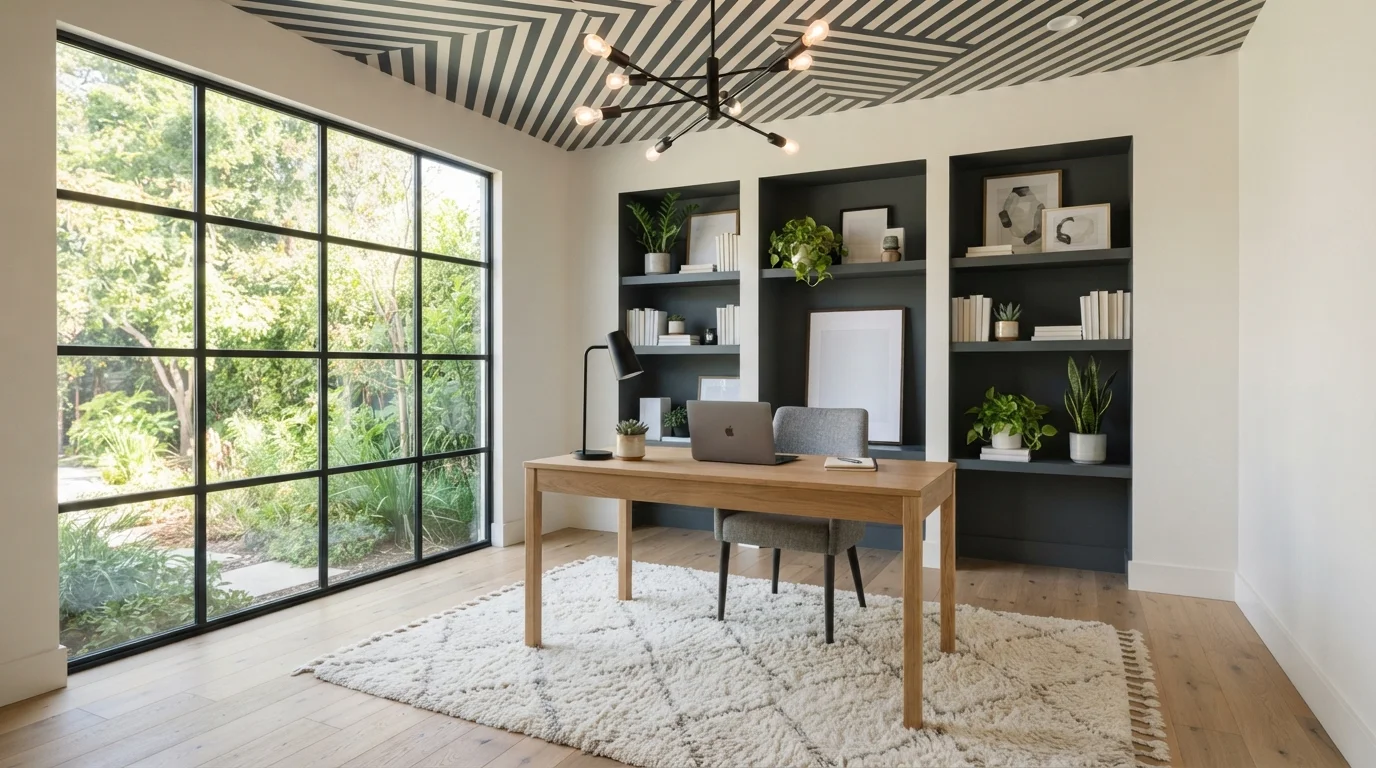
Crisp cream walls and playful ceiling stripes frame a sunny, garden-facing desk bathed in calm natural light.
Warm cream is a soft, welcoming off-white that keeps any room bright without feeling sterile. Here, creamy walls wrap around a natural oak desk, a tailored grey chair, and a cozy high-pile rug, topped by bold dark charcoal stripes across the ceiling. The room feels playful, fresh, and remarkably calm. The quiet wall shade works because it lets the graphic ceiling pattern and lush outdoor views stand out effortlessly. It is ideal for anyone who wants an inspiring, clutter-free workspace that fosters everyday focus.
SEE FOSSIL ON YOUR WALLS →
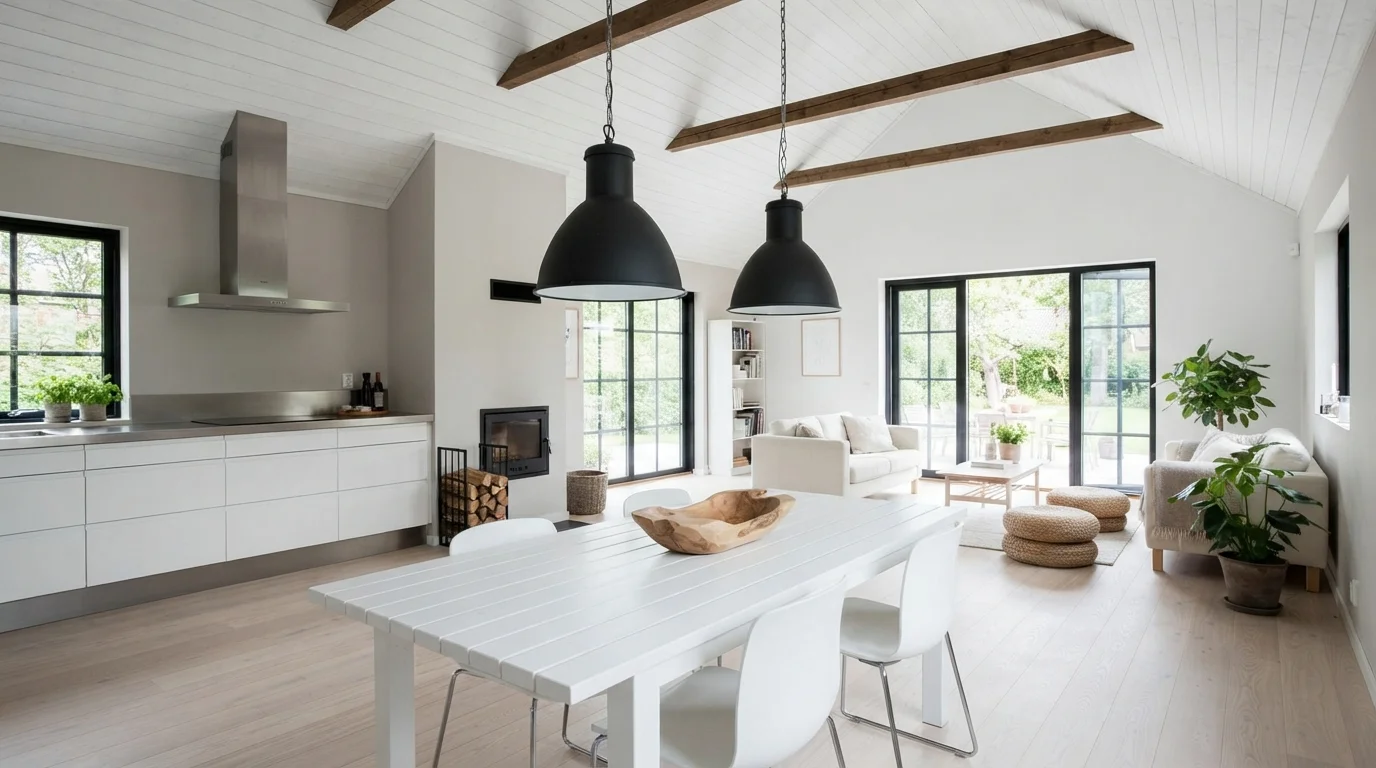
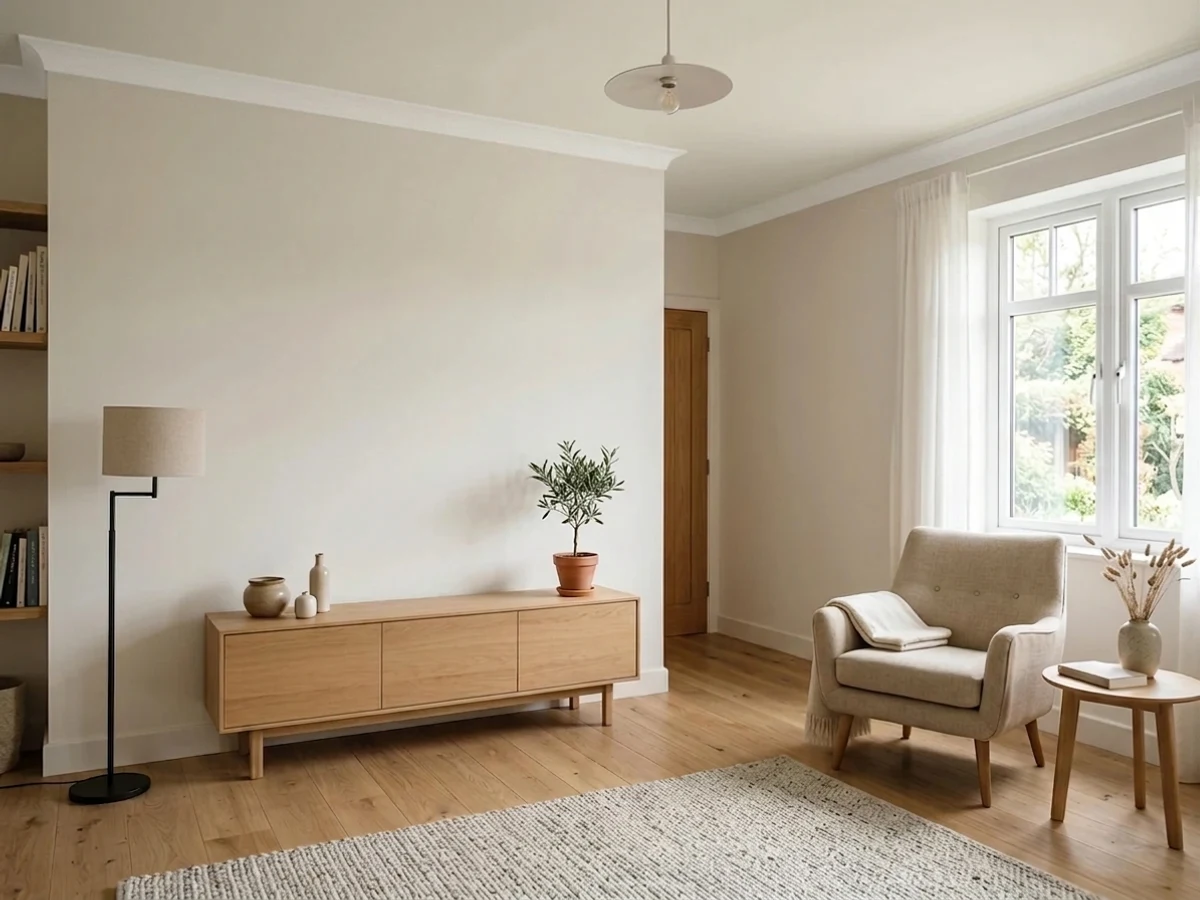
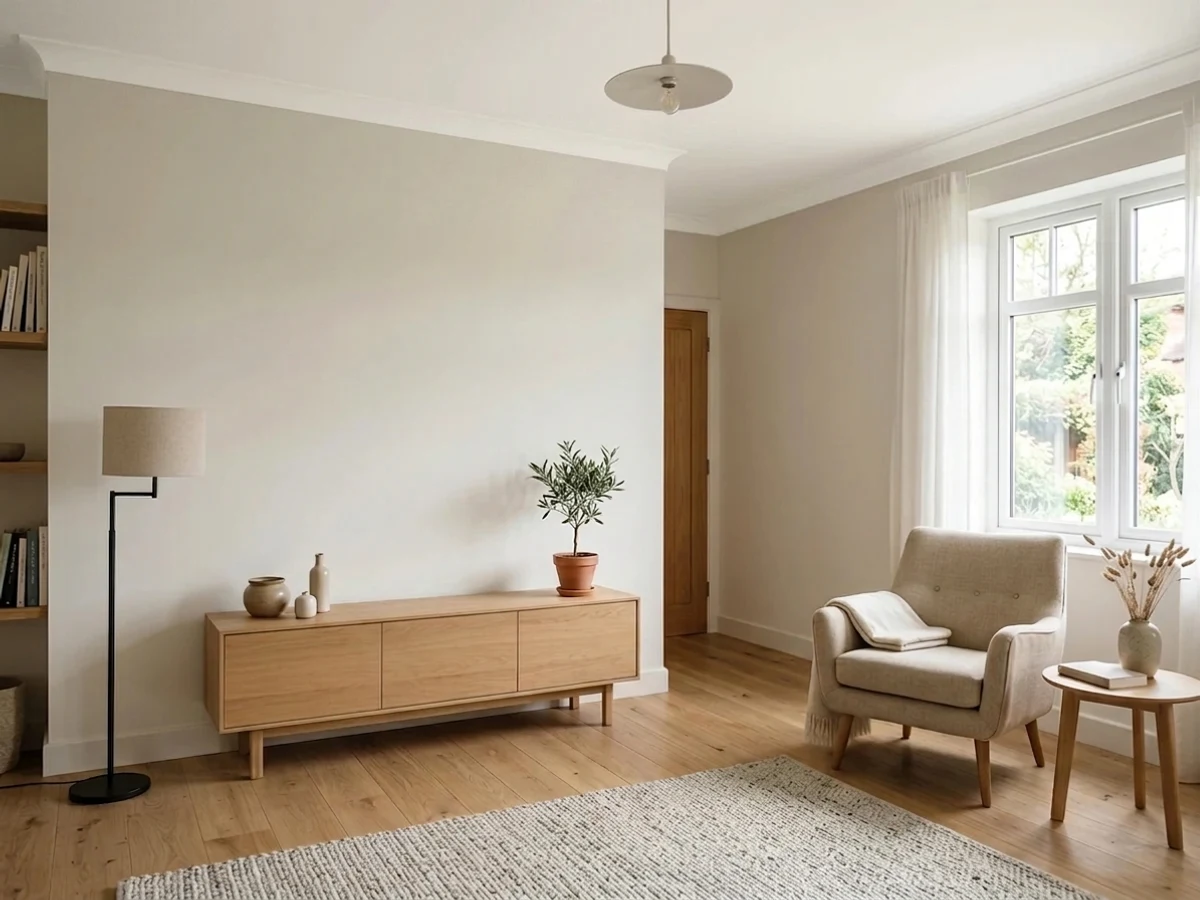
Bright daylight sweeps across crisp white vaulted ceilings and pale wood floors for a calm, breezy Scandinavian feel.
Crisp white is a pure, clean shade that makes any space feel wide open. Here, bright white coats the soaring cathedral ceilings, paneled rafters, and smooth walls to maximize every drop of daylight. The room feels incredibly peaceful, refreshing, and uncluttered. Crisp white pairs effortlessly with pale natural wood flooring and stark black pendant lights that ground the high-volume space. It is the ultimate look for lovers of minimalist Scandinavian design who want their home to feel endlessly open and bright.
SEE WHITE GLOVE ON YOUR WALLS →
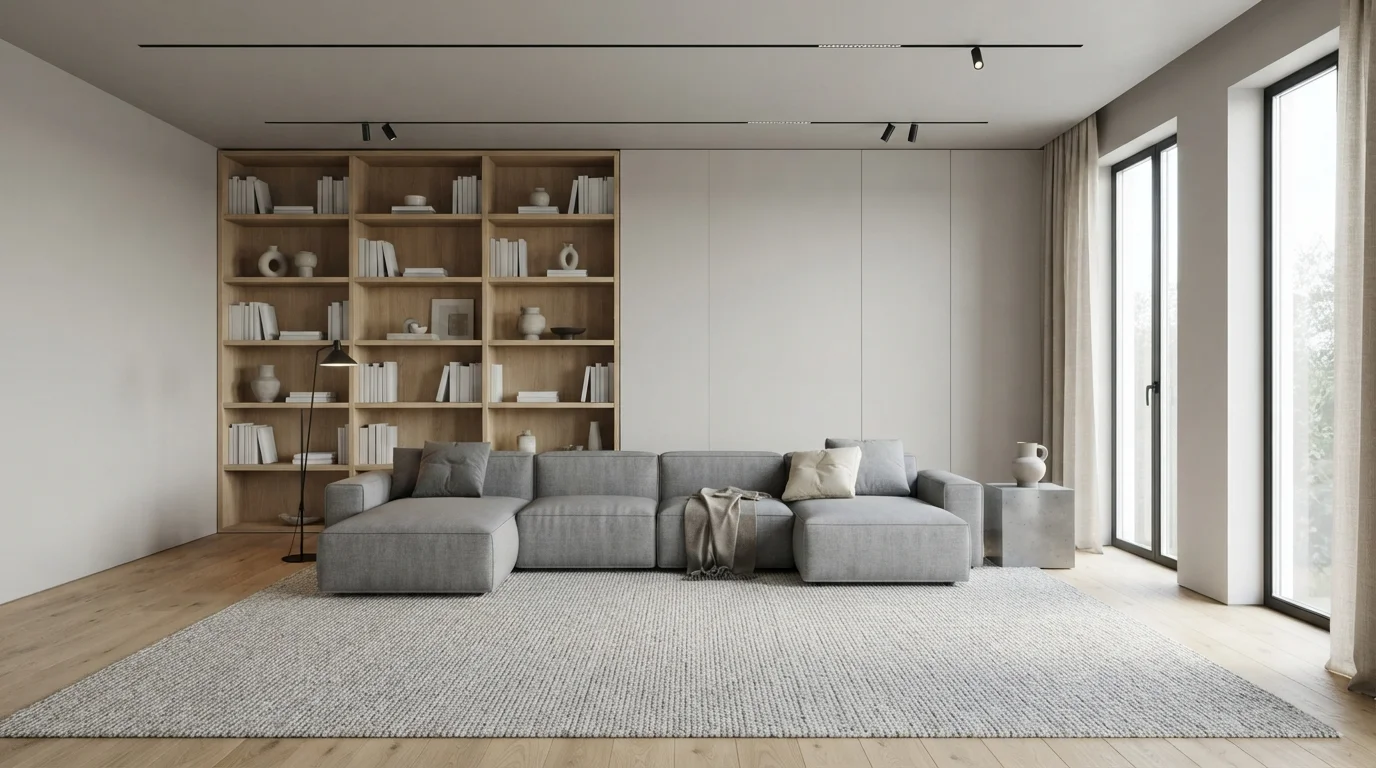
Soft greige walls blend effortlessly with pale oak shelving and expansive windows for a calm, airy atmosphere.
Greige is a soft, balanced mix of gray and beige. In this living room, pale greige wraps the walls while a low-slung grey sofa rests on a massive textured rug. Built-in light oak shelving adds just enough organic texture to keep the open floor plan feeling grounded and cozy. This setup works because clean neutral walls let natural daylight reflect smoothly across the entire space. It is perfect for anyone who loves an uncluttered, modern look with an organic feel.
SEE GRAYCLOTH ON YOUR WALLS →

It gives you a clean, classic look that pairs effortlessly with any wall color.
SEE PURE WHITE ON YOUR WALLS →
Choose this ultra-clean white to make your ceilings feel higher and instantly brighter.
SEE CHANTILLY LACE ON YOUR WALLS →
Adds a subtle touch of warmth to keep your room feeling happy and inviting.
SEE SIMPLY WHITE ON YOUR WALLS →White Ceiling Wall Color Combinations
A wall color never works alone. These are the full schemes from the rooms above — the lead color first, then the supporting colors that make the photo work.
Crisp cream walls and playful ceiling stripes frame a sunny, garden-facing desk bathed in calm natural light.
TRY THIS PALETTE →Bright daylight sweeps across crisp white vaulted ceilings and pale wood floors for a calm, breezy Scandinavian feel.
TRY THIS PALETTE →Soft greige walls blend effortlessly with pale oak shelving and expansive windows for a calm, airy atmosphere.
TRY THIS PALETTE →A fresh, breezy mix of bright aqua, crisp white, and warm sand that feels clean and coastal without trying too hard. Every shade is matched to real paint you can buy.
TRY THIS PALETTE →Match the ceiling's undertone to the walls, not just its LRV. Chantilly Lace or Ultra Pure White work cleanly over cool grays, blues, or true-white trim, keeping the whole room looking crisp and cohesive. Over warm walls — creams, tans, warm wood paneling — Simply White or Alabaster hold the same brightness without picking a fight with the undertone below, and Snowbound sits in between, working with both cool grays and soft warm neutrals because its base leans neutral rather than blue.
For trim, keep it simple: pair Pure White or Decorator's White ceilings with white or off-white trim in the same family so the transition from wall to trim to ceiling doesn't read as three separate whites. If the room has stained wood trim or an exposed wood beam, Simply White's warmth sits better against the wood tone than the cooler LRV-92 whites, which can make warm wood look orange by comparison.
More Ceiling Color Ideas
Set on a color family already? Each page has its own real rooms and picks.
Light or Dark White Ceiling Colors?
Go Light (LRV 60+) If…
The room is small, faces north, or has to work at every hour. Light warm colors make it feel bigger and stay calm in evening light — the light you actually live in.
Go Dark (LRV Under 20) If…
You want the cocoon effect and the room has real daylight. Dark works best on one feature wall — or fully color-drenched in a large room with good windows.
On a ceiling, "light vs dark" really means "how bright a white." The three LRV-92 options — Ultra Pure White, Ultra White, and Chantilly Lace — are as close to maximum reflectance as ceiling paint gets, and they're the right call in rooms with low ceilings, small or north-facing windows, or any room that already feels tight. Drop a few points of LRV — Pure White or Decorator's White at 84, Snowbound at 83, Alabaster at 82 — and the ceiling still reads as white, but softer, with less of the glare a very bright white can throw back under overhead light at night.
The mistake is picking the brightest white for a room with warm wood trim or creamy walls. Simply White's LRV 91 keeps the brightness but adds enough warmth to avoid the blue-versus-yellow clash that shows up when a cool, high-LRV white ceiling sits over warm walls — that mismatch is one of the most common ceiling complaints in home-design forums, where owners describe a "too blue" or "too stark" ceiling against buttery or cream walls.
See It. Love It.
Paint It.
Upload one photo of your white ceiling and try every color on this page on your own walls — in your own light, before you buy a drop of paint.

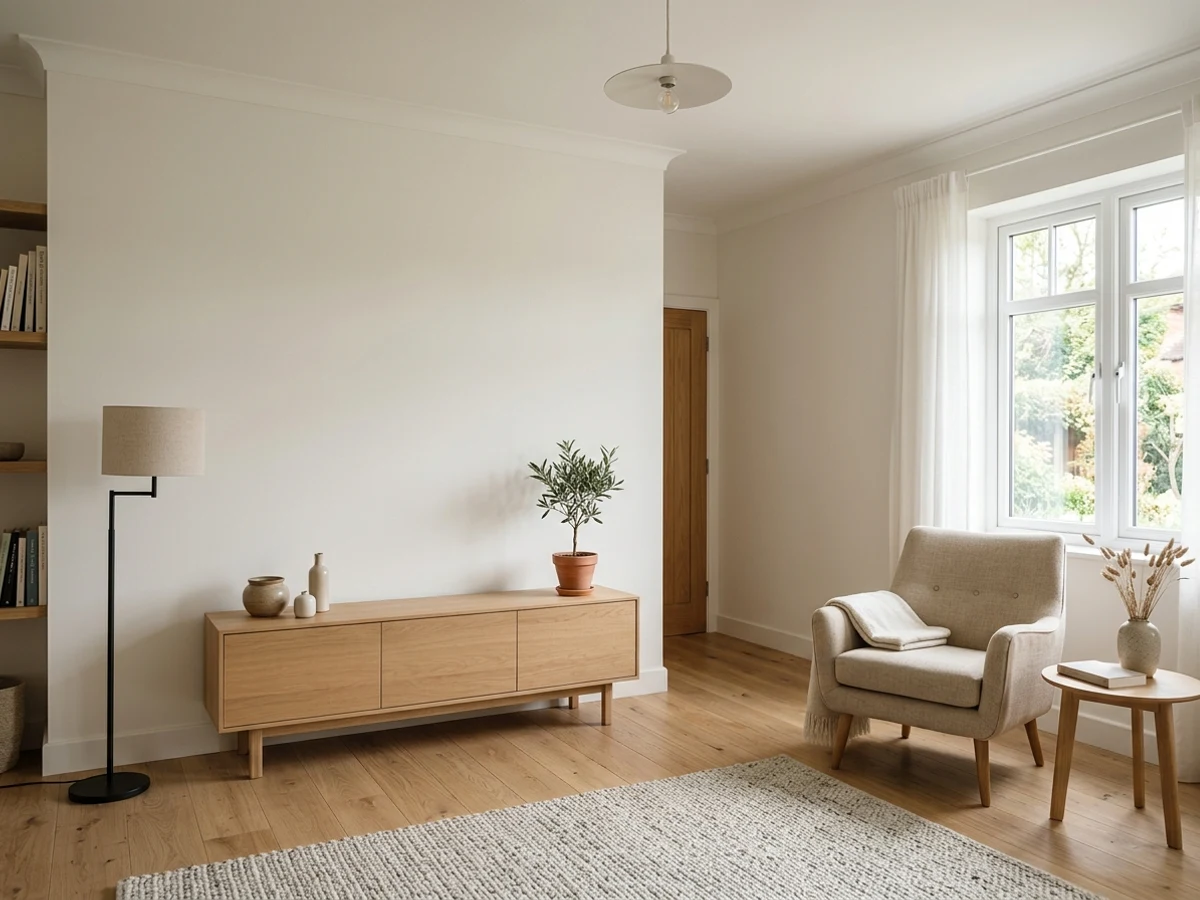
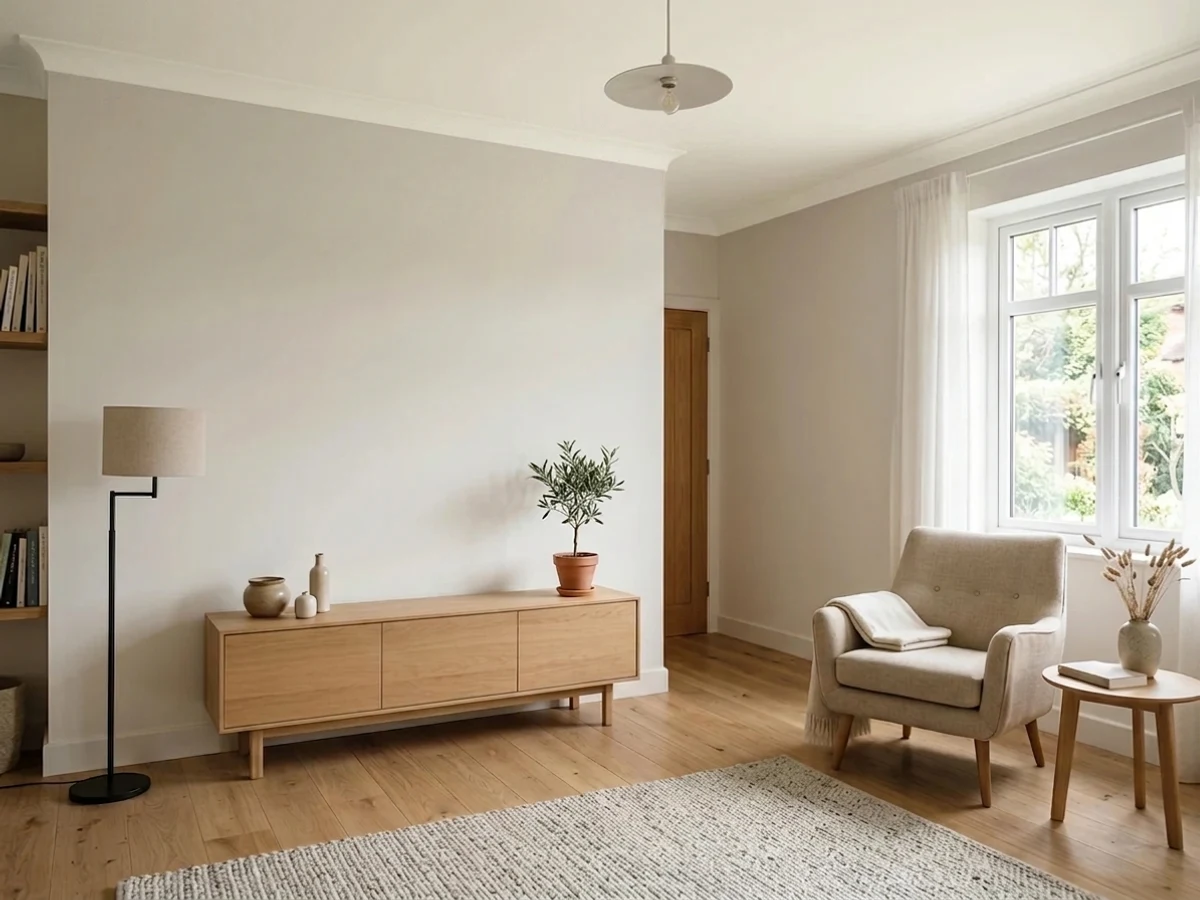
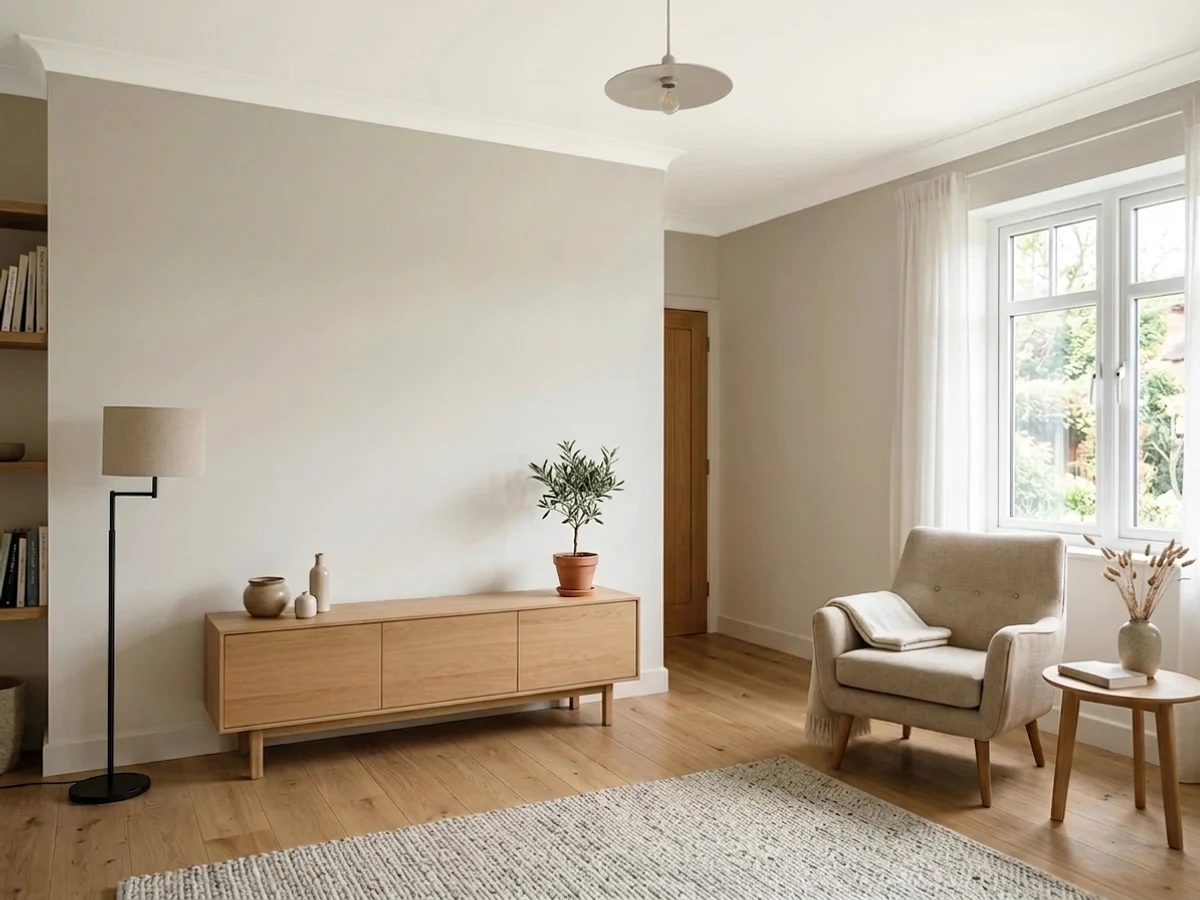
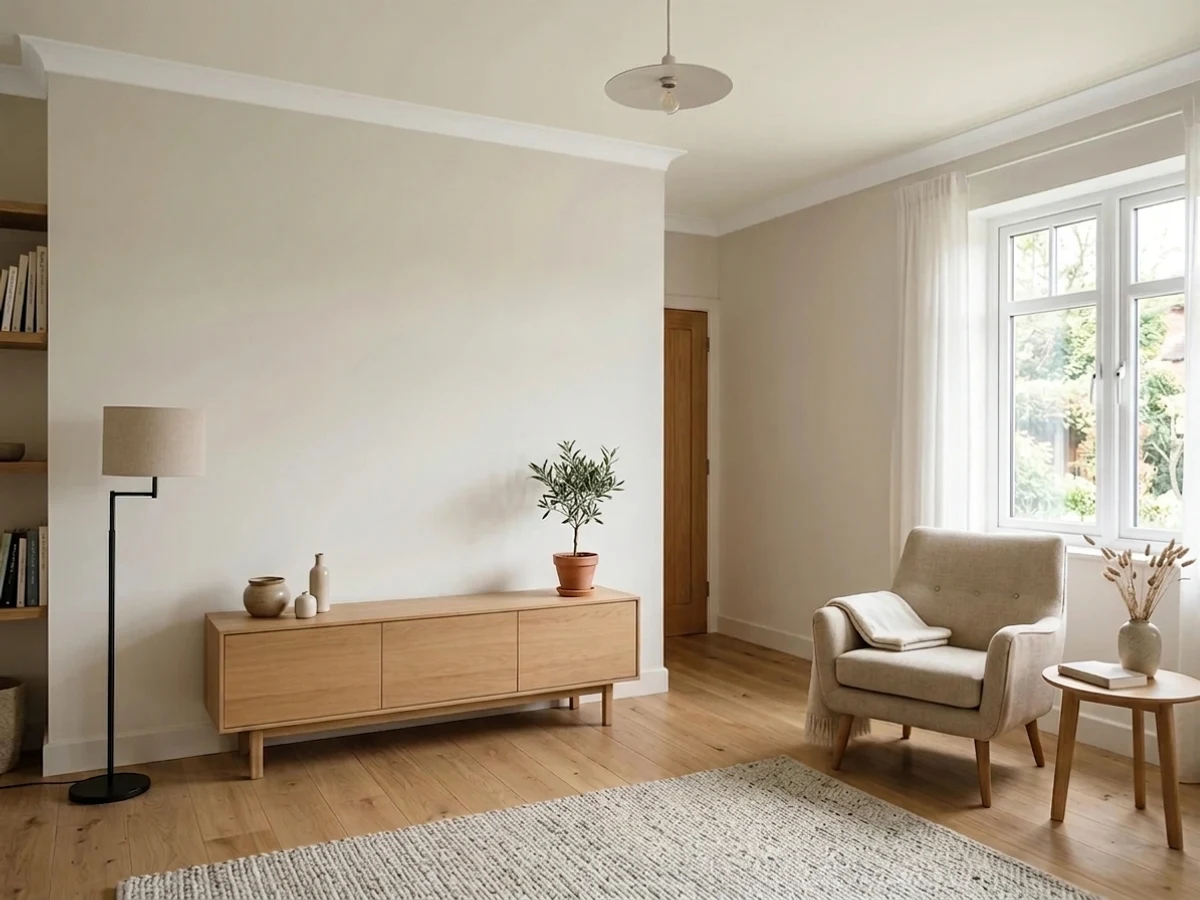
White DoveBeforeSheen And Finish For A White Ceiling
Flat (matte) is the standard finish for ceilings, and it's the right call for all eight of these picks. A flat sheen scatters light instead of bouncing it in one direction, which hides texture, seam lines, and minor drywall imperfections that a higher sheen would put on display overhead. Eggshell or satin ceiling paint exists for bathrooms and kitchens where steam and grease need a wipeable surface, but for a bedroom, living room, or hallway ceiling, flat is worth the trade-off.
You can use a regular wall paint in flat sheen on a ceiling in a pinch, but dedicated ceiling paint is formulated thicker so it drips less when you're rolling overhead, and it usually goes on tinted before fading to white as it dries — useful for spotting missed patches on a plain white ceiling where it's otherwise hard to see where you've already rolled.
Matching Undertones Between Ceiling And Walls
The most common complaint about white ceilings isn't the white itself — it's the clash between a cool ceiling white and warm walls, or the reverse. A blue-leaning white like Ultra Pure White or Chantilly Lace can look almost gray next to a warm cream or tan wall, while a warm white like Simply White can look faintly dingy against a crisp cool-gray wall.
The fix is to pick the ceiling white from the same temperature family as the wall color. If the walls carry any yellow, beige, or warm-gray undertone, Simply White or Alabaster keep the ceiling from reading as a mismatched slab of blue-white overhead. If the walls are cool — gray, blue, or true white — Pure White, Decorator's White, or Chantilly Lace stay in that same family without warming things up.
Mistakes That Make A White Ceiling Look Wrong
The biggest mistake is choosing the ceiling white by name alone without holding a sample against the actual wall color and testing it under the room's real light — the same white can look crisp in one room and clinical or dingy in another depending on window direction and bulb temperature. The second is skipping a sheen check: satin or semi-gloss ceiling paint reflects overhead light unevenly and makes every roller mark and seam visible, which a flat sheen avoids.
The third is assuming brighter is always better. A high-LRV white like Ultra White or Ultra Pure White is the right fix for a low or dim ceiling, but in a room that's already bright with tall windows, that same white can feel sterile — Snowbound or Pure White deliver the same clean look with less glare.
About White Ceiling Paint Colors
A white ceiling is still the safest, best-selling ceiling color because it reflects the most light and hides the small imperfections — tape lines, texture, hairline cracks — that a darker ceiling would show off instead of hide. Among the eight picks here, the highest-reflectance options — Ultra Pure White (Behr 1850, LRV 92), Ultra White (Valspar 7006-24, LRV 92), and Chantilly Lace (Benjamin Moore OC-65, LRV 92) — bounce back almost all the light that hits them, which is exactly why they show up so often in rooms with low ceilings or a single small window.
Not every white ceiling needs to be that bright. Pure White (Sherwin-Williams SW 7005, LRV 84) and Decorator's White (Benjamin Moore OC-149, LRV 84) read as clean and classic without the slight blue cast the very highest-LRV whites can pick up under cool bulbs, and Snowbound (Sherwin-Williams SW 7004, LRV 83) softens things further so the ceiling feels calm rather than clinical. Simply White (Benjamin Moore OC-117, LRV 91) sits near the bright end but carries a touch of warmth, so it works over creams and warm wood trim without the contrast fight a cooler white would start.
Alabaster (Sherwin-Williams SW 7008, LRV 82) is the outlier on this list — it's better known as a wall and trim color than a dedicated ceiling white, but its warm, slightly greige undertone makes it a deliberate choice when the walls below are already warm-toned and a stark blue-white ceiling would look like it belongs to a different room.

The Questions Everyone Asks
What color should I paint my white ceiling?
If you want one answer, start with the safe picks above — Alabaster, Pure White, Chantilly Lace, Greek Villa. They read well in any light and survive furniture changes. Then check the light: strong afternoon sun wants a step cooler, a north-facing room wants a step warmer.
should the ceiling be the same white as the walls?
Not usually, and it doesn't need to be. Most rooms use a brighter, slightly different white on the ceiling than on the walls — Chantilly Lace (Benjamin Moore OC-65) or Ultra Pure White (Behr 1850) are common ceiling choices even when the walls are a different color entirely, because the ceiling's job is to reflect light, not match the walls exactly. The one rule that matters is undertone: keep the ceiling white in the same warm-or-cool family as the walls so they don't visually clash.
can I use regular wall paint on my ceiling instead of ceiling paint?
Yes, as long as you choose a flat sheen — Pure White (Sherwin-Williams SW 7005) or Decorator's White (Benjamin Moore OC-149) in flat work fine overhead. Dedicated ceiling paint is thicker and drips less when rolling upward, and many brands tint it so you can see your coverage as you go, but a flat wall paint in the same white looks identical once it's dry.
what sheen is best for a white ceiling?
Flat, almost always. A flat finish scatters light in every direction instead of bouncing it back in one spot, which hides drywall seams, texture, and small imperfections that overhead lighting would otherwise expose. Satin or eggshell shows up mainly in bathroom or kitchen ceilings where steam and grease need a wipeable surface — for the rest of the house, stick with flat white ceiling paint like Snowbound (SW 7004) or Alabaster (SW 7008).
why does my white ceiling look blue or yellow next to my walls?
It's an undertone mismatch, not a lighting problem. A cool, blue-leaning white like Ultra White (Valspar 7006-24) can look gray against warm cream walls, and a warm white like Simply White (Benjamin Moore OC-117) can look slightly dingy against a cool gray wall. Pick the ceiling white from the same temperature family as the wall color, and the contrast disappears.
does painting the ceiling white actually make a room look bigger?
Yes, especially with a high-reflectance white. Ultra Pure White and Chantilly Lace both sit at LRV 92, meaning they bounce back roughly 92 percent of the light that hits them, which visually pushes the ceiling plane up and makes the room feel taller and more open than a darker or more saturated ceiling would. The effect is strongest in rooms with low ceilings or limited natural light.
What two-color combination works best in a white ceiling?
The reliable pattern is a quiet main color plus one deep accent on a single wall. Keep trim and ceiling in one warm white so the two colors are the only event in the room — the combination cards above show complete schemes from real rooms.
What colors make a white ceiling look bigger?
High-LRV, slightly warm colors — LRV 60–75 is the sweet spot. Paint the walls and trim close to the same light color so the corners blur, and keep the ceiling white. Stark cool white actually works against you; it creates hard shadows that show the room's edges.


Ask a Question