Chantilly Lace
The magazine world's default bright white, reviewed honestly: the rooms where it sings, the three ways it goes wrong, and what it does to every other white in the house.

Jessica has spec'd whites and neutrals for more than 300 rooms and keeps a sample wall of painted drawdowns in her studio. Every color review is checked against real reader rooms in the comments and re-tested when a formula changes. About the testing process →
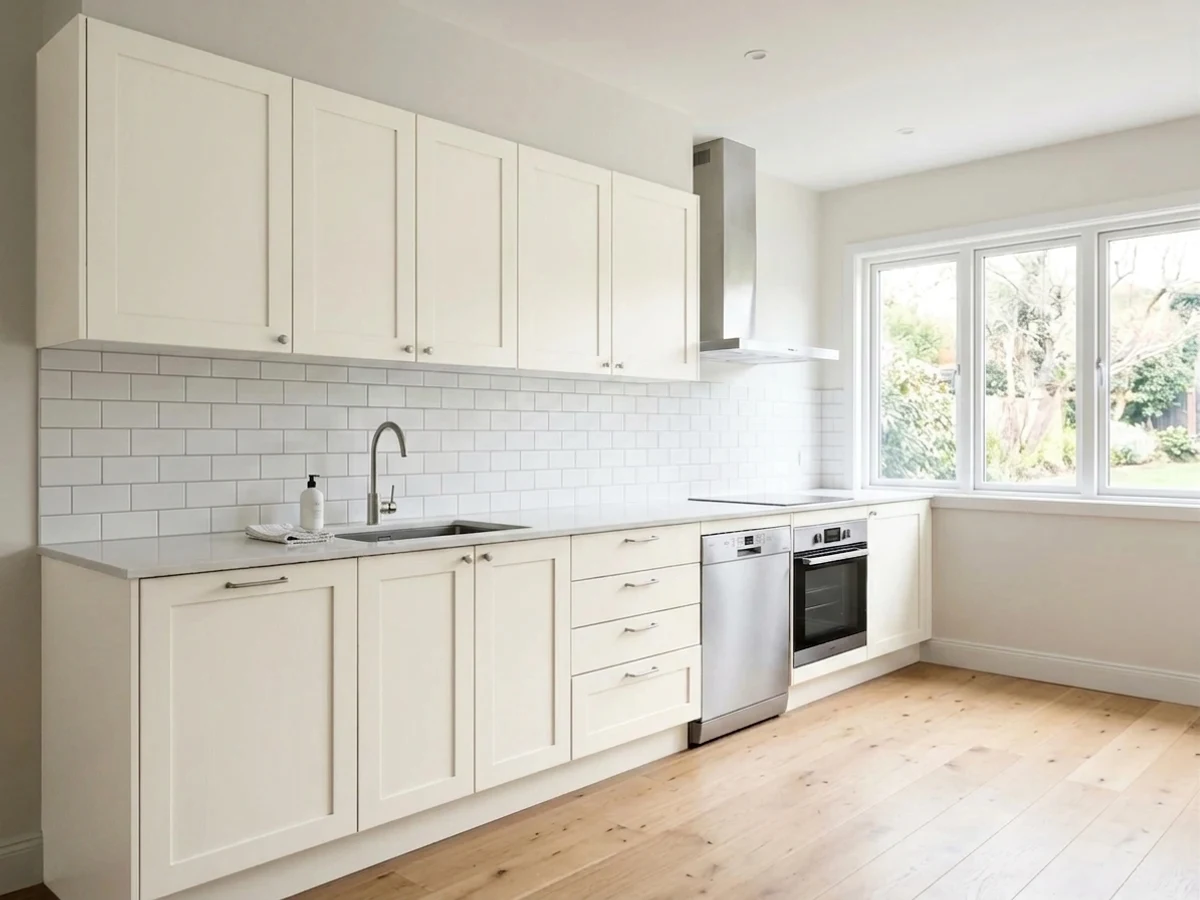
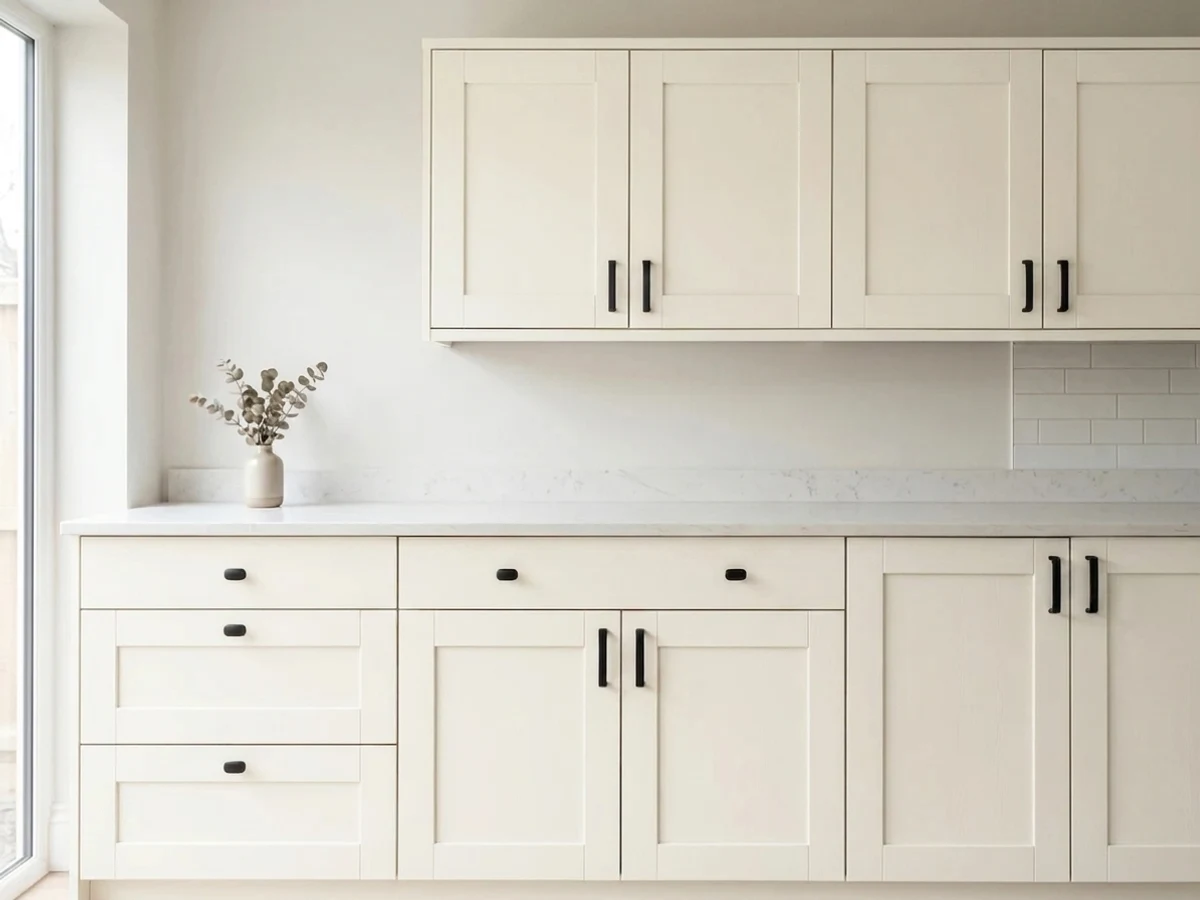
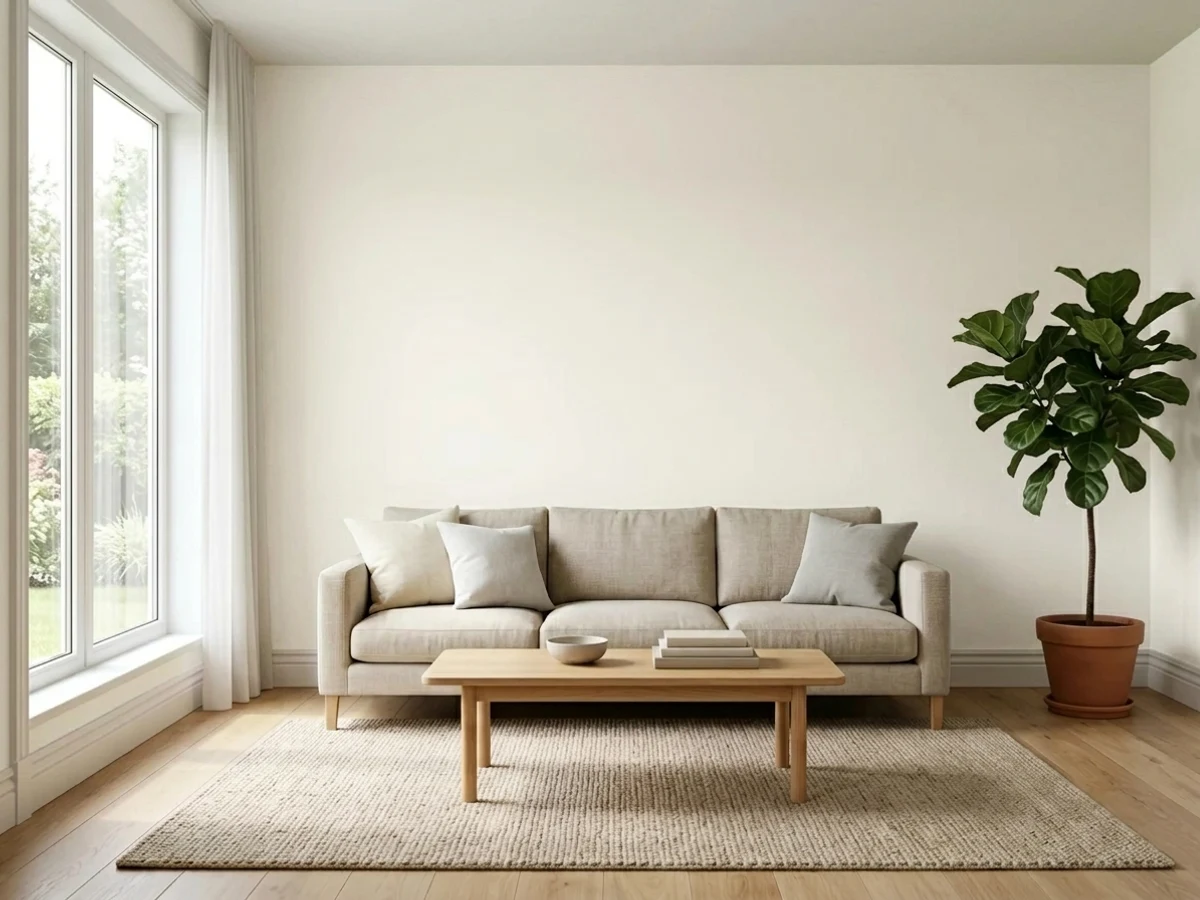
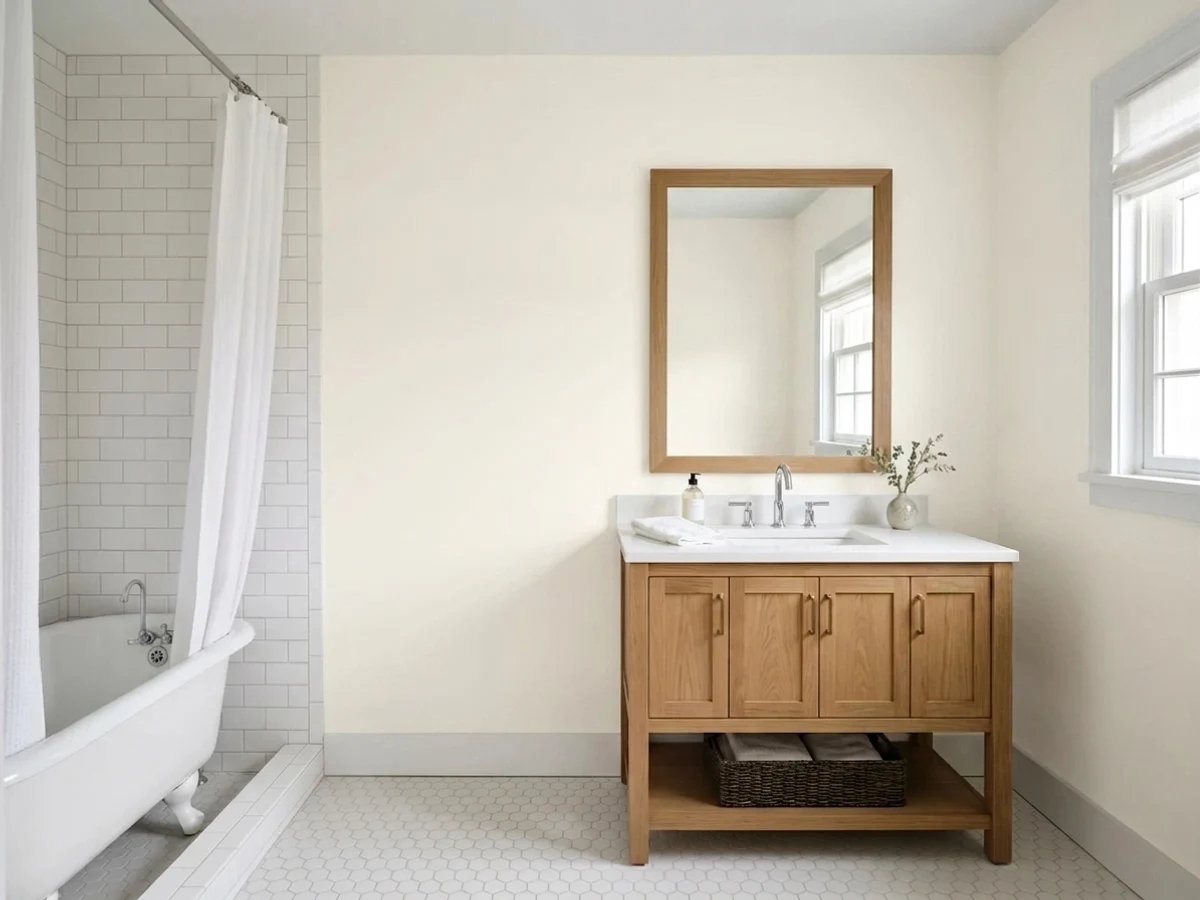
- 1Classic Gray74
- 2Alabaster82
- 3Chantilly Lace91
- 4Ultra Pure White97
The Fast Verdict
Chantilly Lace is a real white. Not cream, not greige, not a soft "almost white" — at LRV 90 it is the crisp, gallery-clean backdrop people picture when they say "just paint it white." That purity is the whole product and also the whole problem: with almost no pigment in the can it covers badly, it mirrors your light instead of correcting it, and it makes every older white in the room look dirty. Get those three things right and it is close to perfect.
Trim, doors, and ceilings in almost any house · modern and high-contrast rooms · white kitchen cabinets next to white quartz · small or windowless rooms that need maximum bounce
Your room is north-facing and dim · you are keeping the old builder-white ceiling · you want cozy, not clean · you are painting over beige and only have time for two coats
- A genuinely clean white — no cream, no gray, no surprise undertone
- LRV 90 makes small, dark, and windowless rooms feel bigger
- The safest trim, door, and ceiling white in the Benjamin Moore deck
- Stays white next to white quartz, marble-look counters, and white tile
- Goes with anything — warm wood, black hardware, brass, any wall color
- Poor coverage — expect three coats, four over beige
- Reads gray-blue and flat in dim north light
- Makes every other white in the room look dirty
- Can feel cold and sterile in a room full of warm wood and cream
What Color Is Chantilly Lace, Really?
This is as close as Benjamin Moore gets to a white with nothing in it. Most whites are built on a drop of something — yellow oxide for the creams, black or blue for the cool ones — and that drop is what you eventually see on the wall. Chantilly Lace has almost nothing to see. There is a whisper of gray in the mix, just enough to keep it from glaring, and that is the entire recipe. Put it next to Decorator's White OC-149 and you notice Decorator's White is faintly gray-violet; next to Super White OC-152 you notice Super White is faintly blue. Chantilly Lace is the one that just reads white.
At LRV 90 it sits at the top of the Benjamin Moore deck. Simply White OC-117 is a point behind at 91, and in most rooms you would need the two chips touching to tell them apart — the real difference there is direction, not brightness. White Dove OC-17 is the useful comparison: at 85 it is seven points softer, and seven points is the gap between "a painted wall" and "a white wall." That is why White Dove flatters a room and Chantilly Lace reports on it. High LRV also means high honesty — every seam, every roller lap, every patch of bad drywall shows up, so sand and skim more than you think you need to.
Undertone in one line: essentially none — a hair cool, never blue, never cream. If your sample looks yellow, that is your 2700K bulbs; if it looks gray, that is shadow, not paint.
Where It Shines
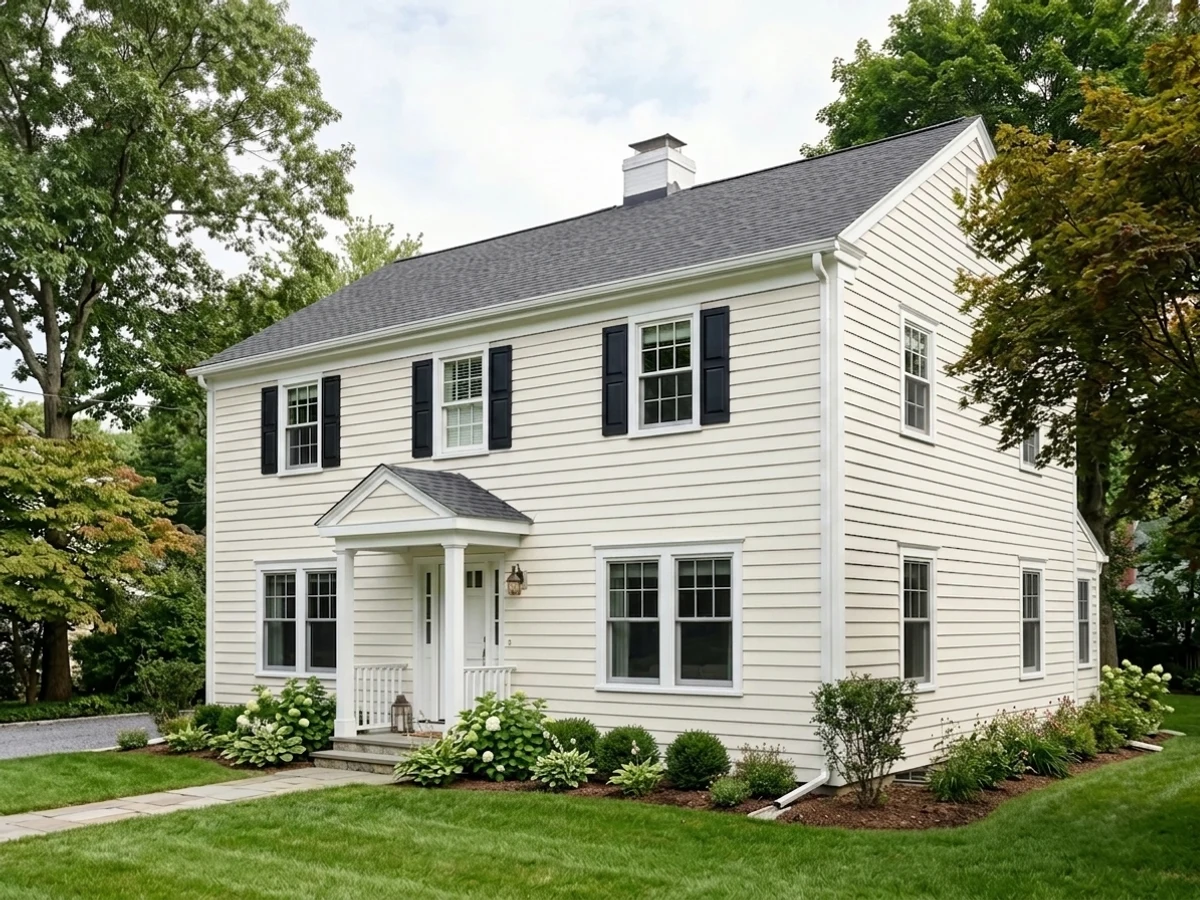
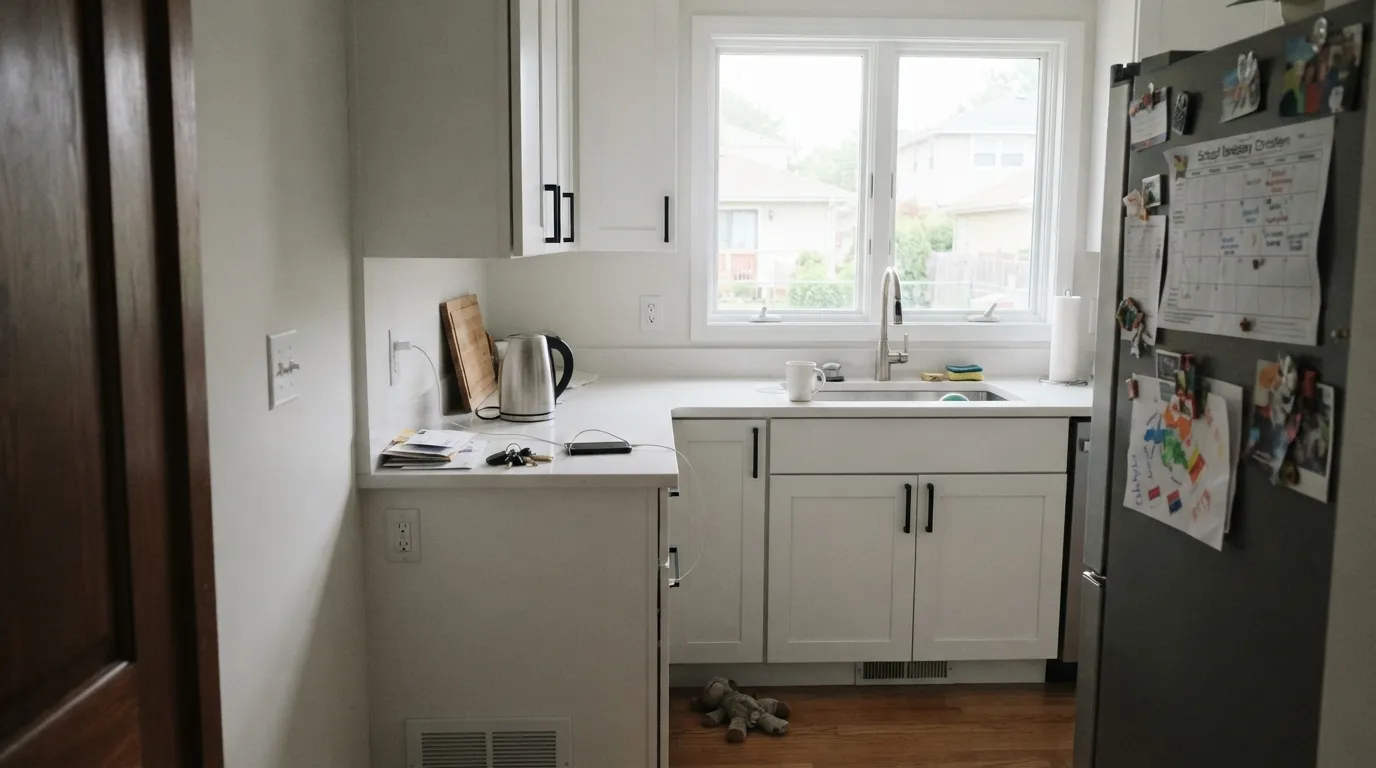
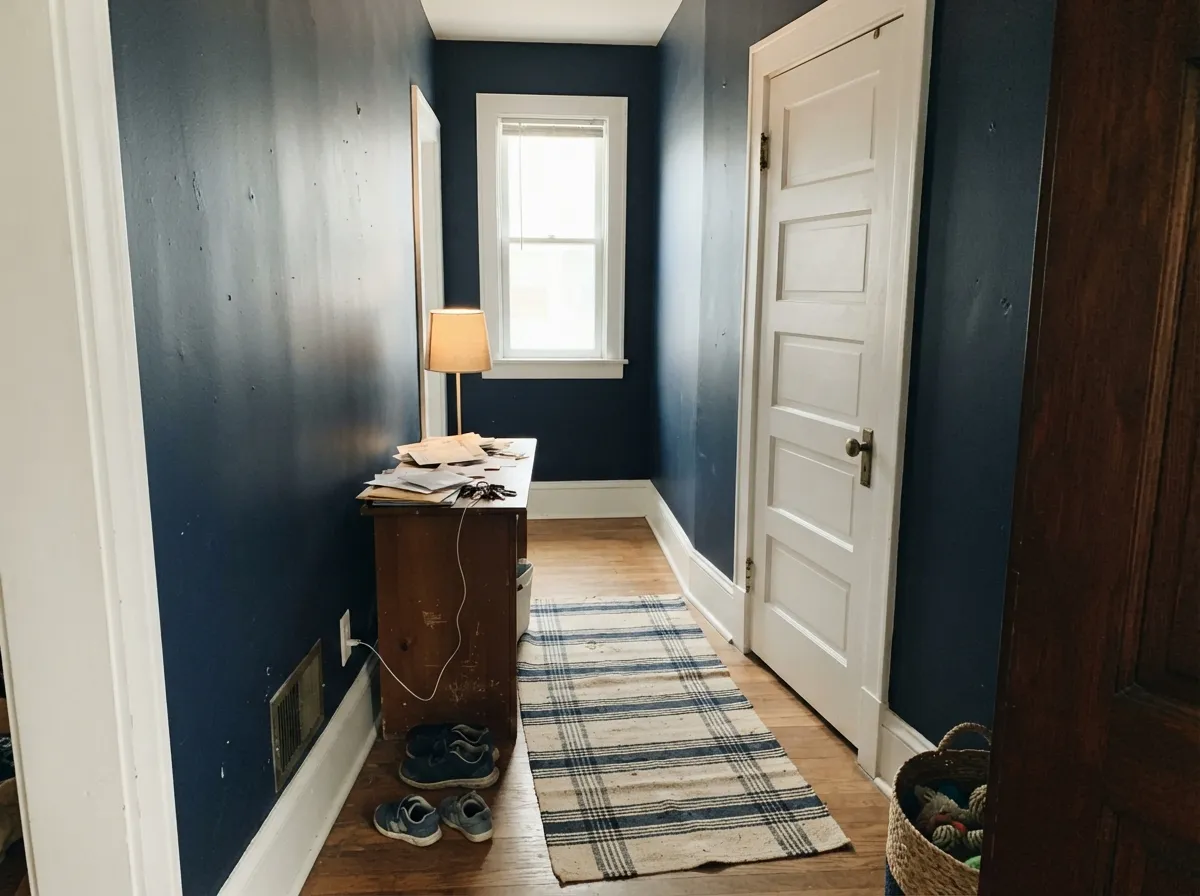
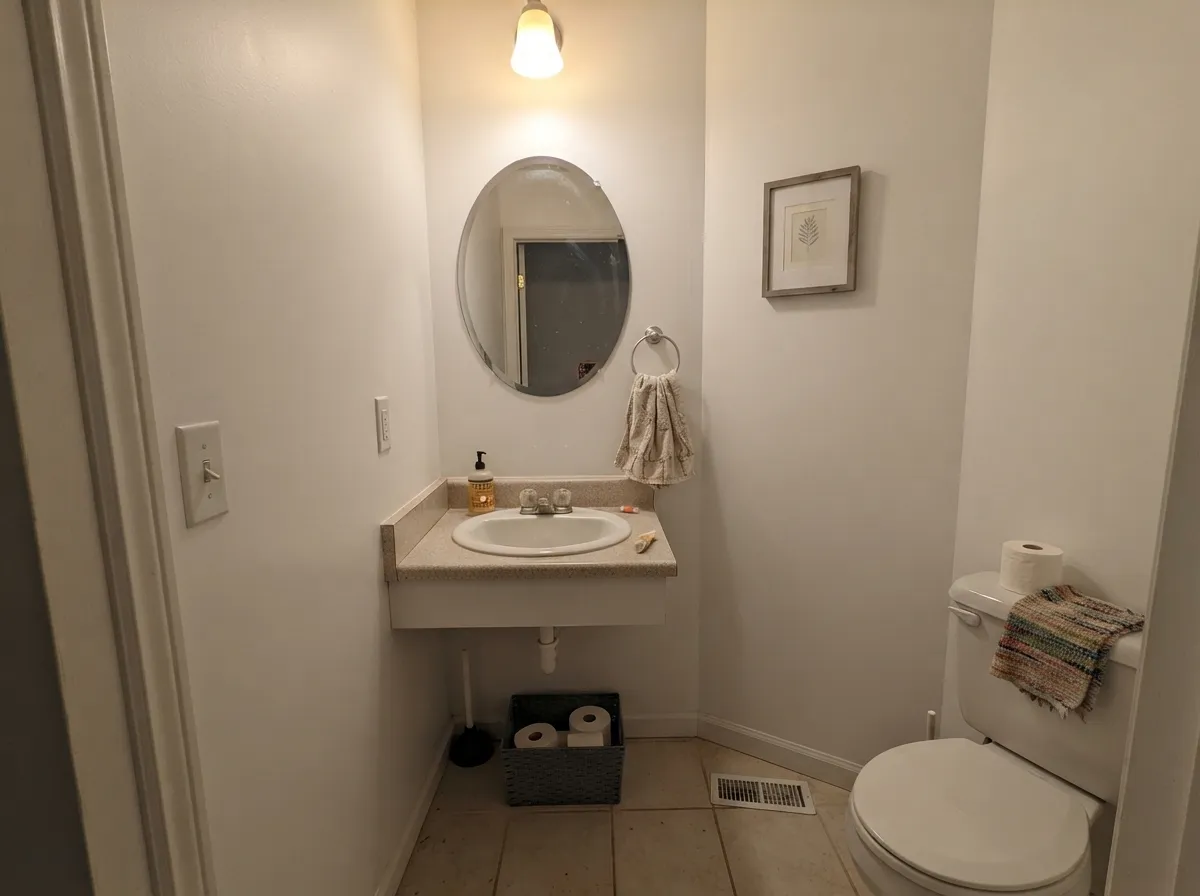
Chantilly Lace looks best where you want the architecture to do the talking: trim, doors and ceilings in almost any house, modern rooms with real contrast, and white cabinets sitting next to white quartz. At LRV 90 it also rescues the rooms nobody photographs — hallways, powder rooms, basements — by throwing back nearly every bit of light they get.
Where It Fails
Chantilly Lace has very few bad reviews about the color itself. Almost every complaint online is one of three practical problems, and all three are things you can see coming before you open the can.
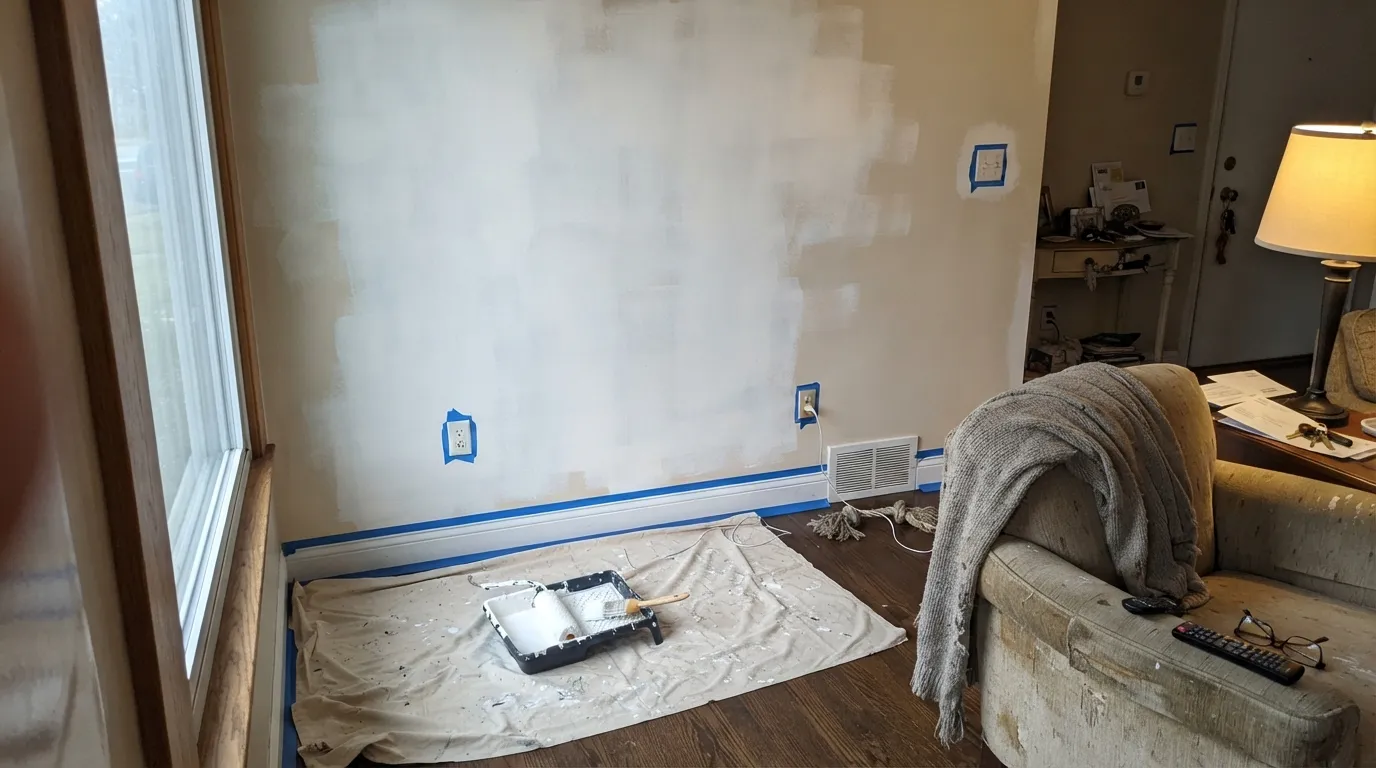
This is the number one real complaint, and it comes from professional painters, not homeowners. There is almost no tint in the can, so there is almost nothing to hide what is underneath. Painters on the trade forums report three coats on smooth new drywall and four coats over an old beige or tan wall. It is not a bad batch and it is not your roller. Fix it before you start: prime with a solid white primer, or accept the extra coat in your budget. If you cannot, White Dove OC-17 has enough pigment to cover in two.
With so little pigment, Chantilly Lace has nothing of its own to push back with — it just shows you your light. North light is cool and gray, and readers describe the result as gray-blue, flat, and cold, worst of all in January. The color did not fail, it reported. If the room is north-facing and you want it to feel warm, go to White Dove OC-17, or Simply White OC-117 if you still want bright.
Chantilly Lace sits at the top of the scale, so it wins every comparison in the room. Put it on the walls and leave a standard builder ceiling white above it and the ceiling suddenly reads dingy, yellow, or faintly pink — a very common Houzz complaint from people who thought they only had to paint the walls. Same story with cream trim you were planning to keep. Either carry Chantilly Lace onto the ceiling and trim too, or pick a softer wall white like Cloud White OC-130 that lets your existing whites survive.
Room by Room
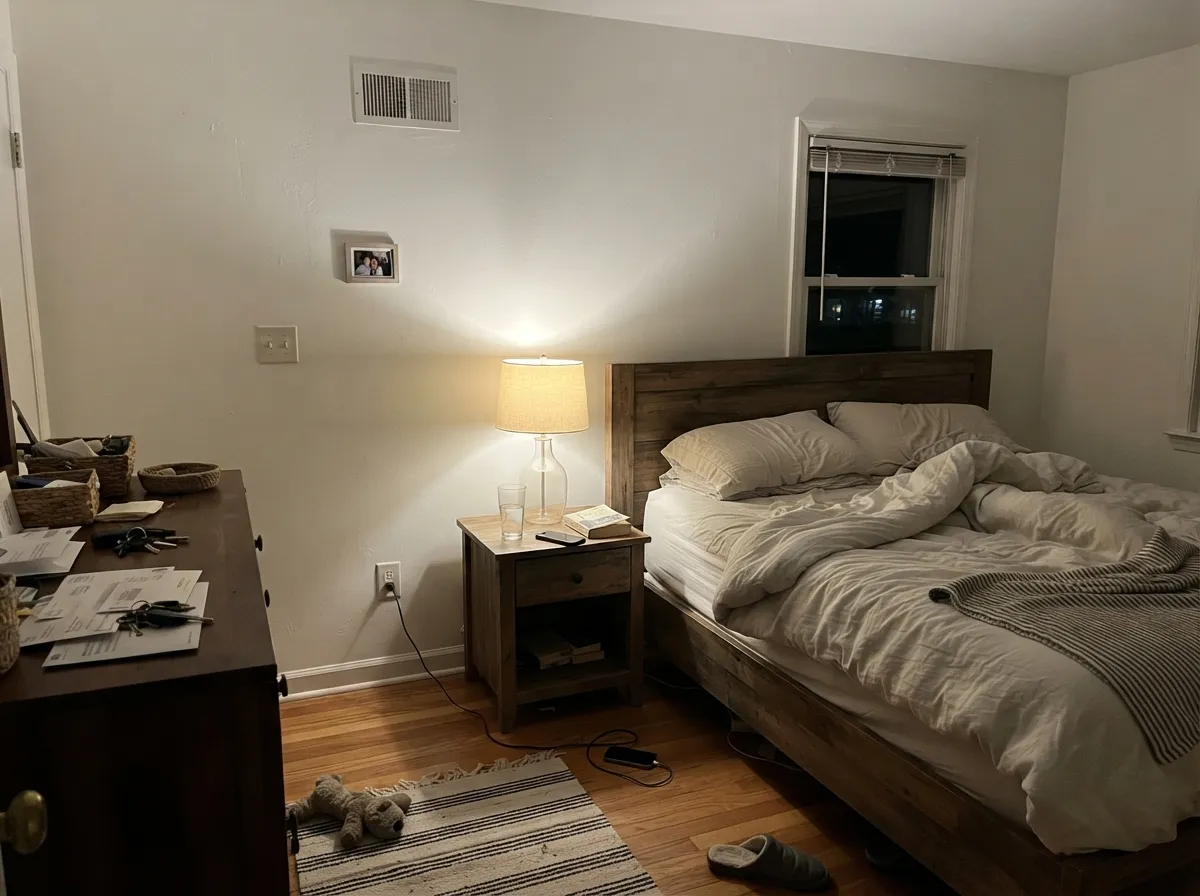
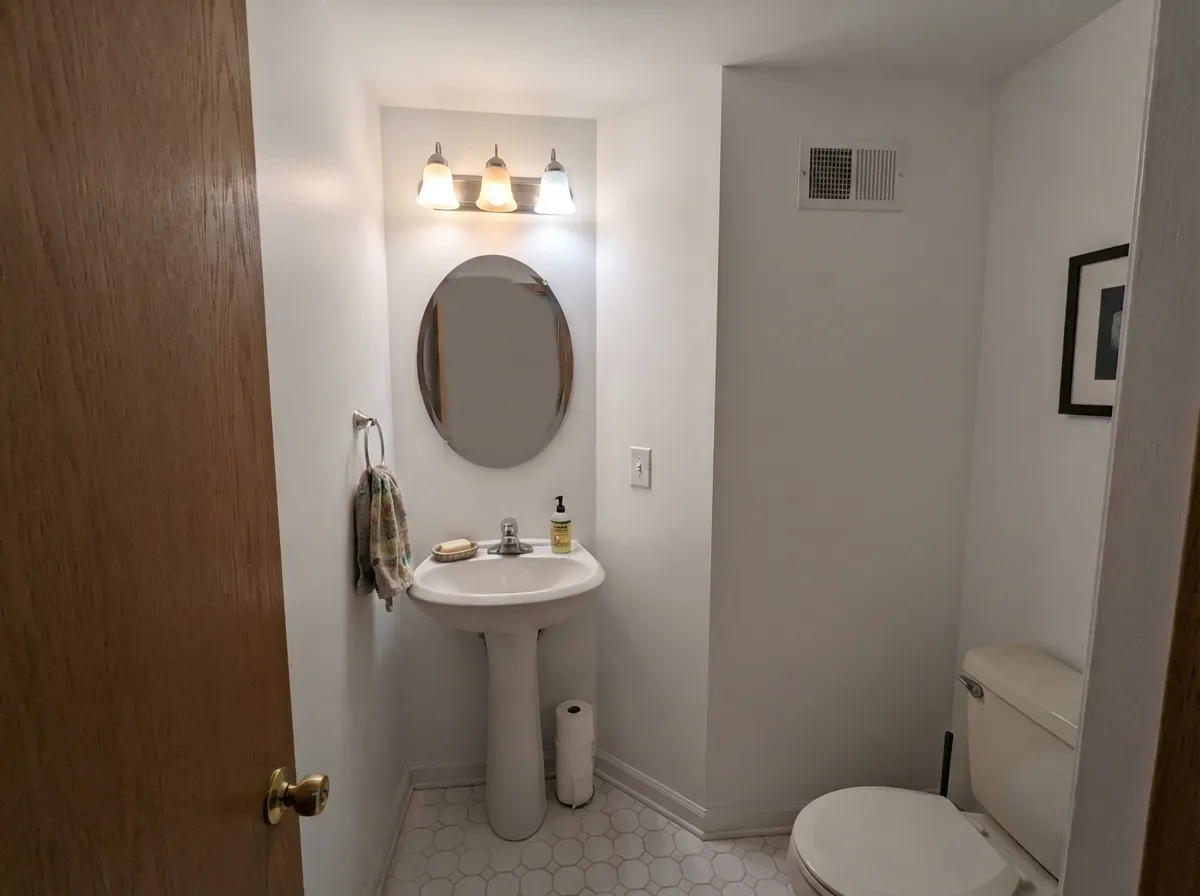
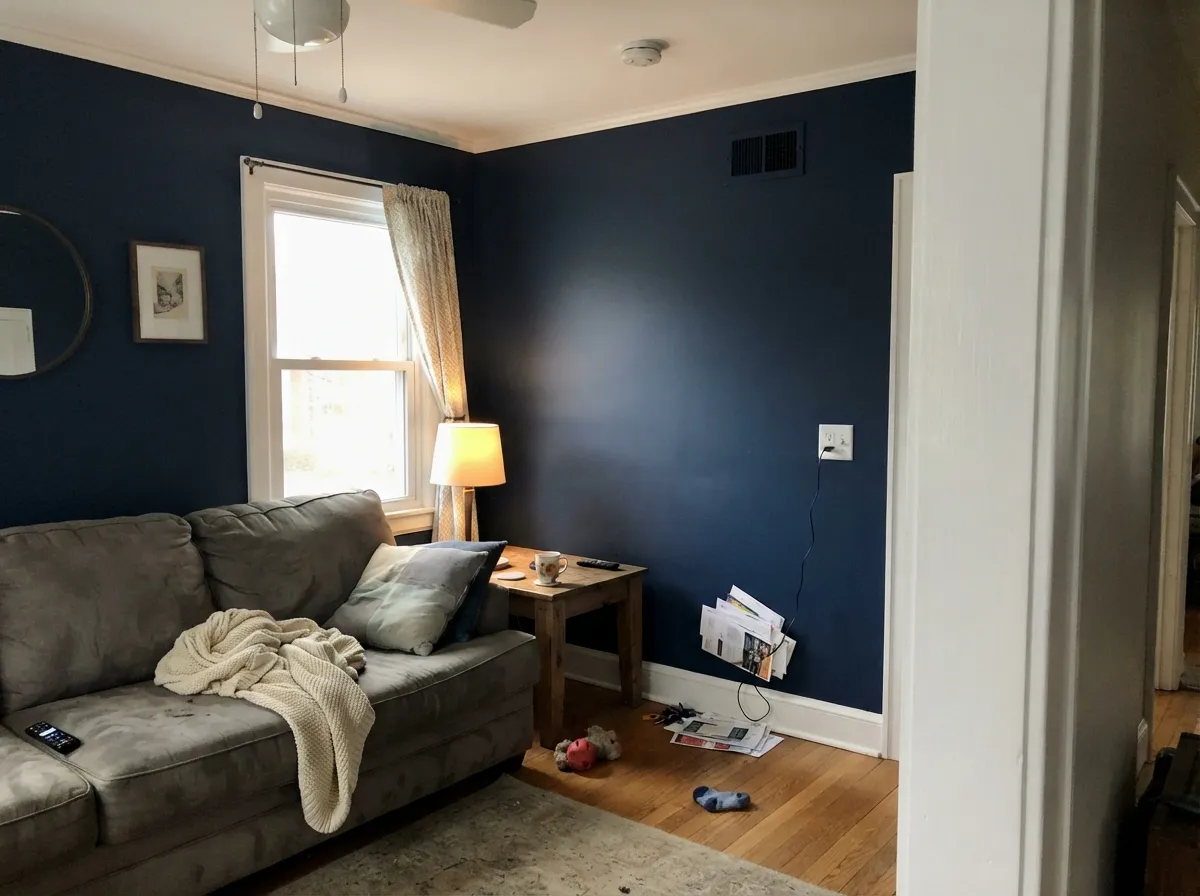
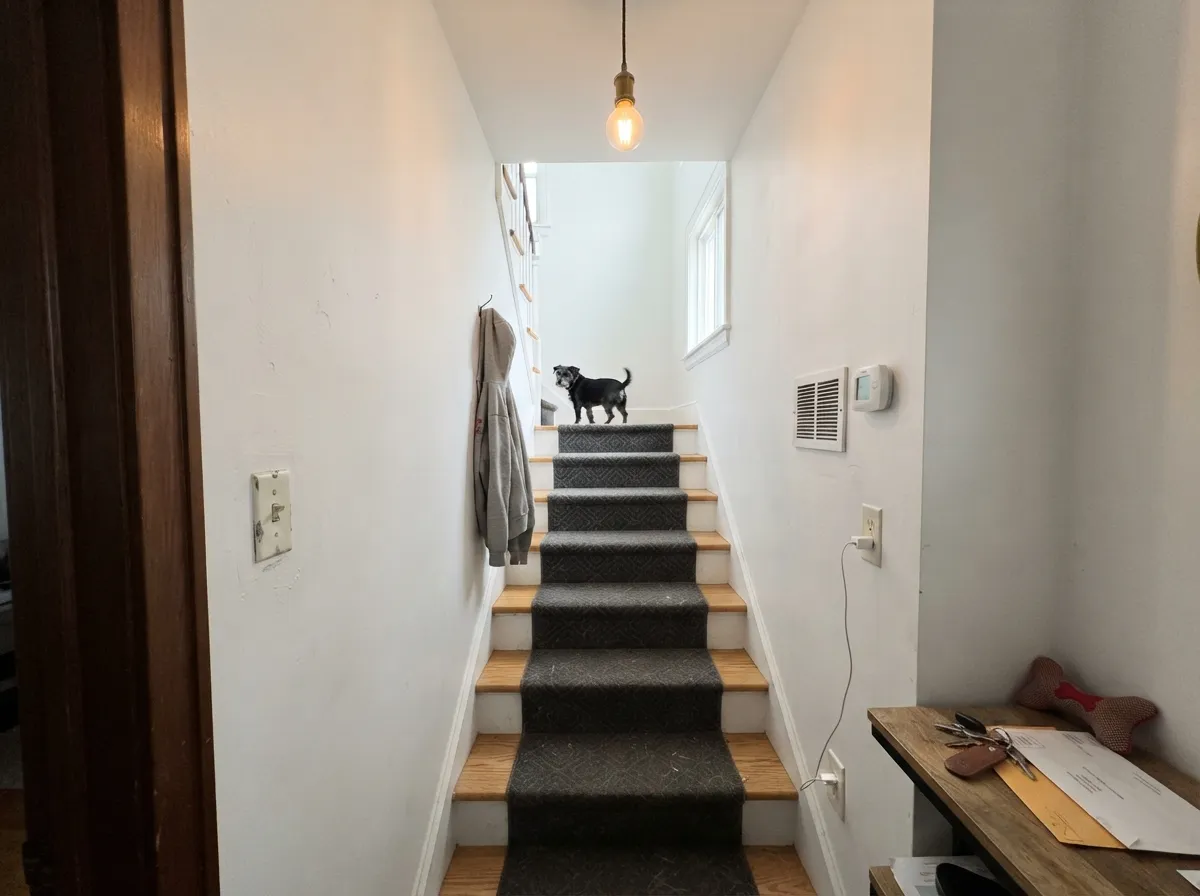
Your Light Is the Risk
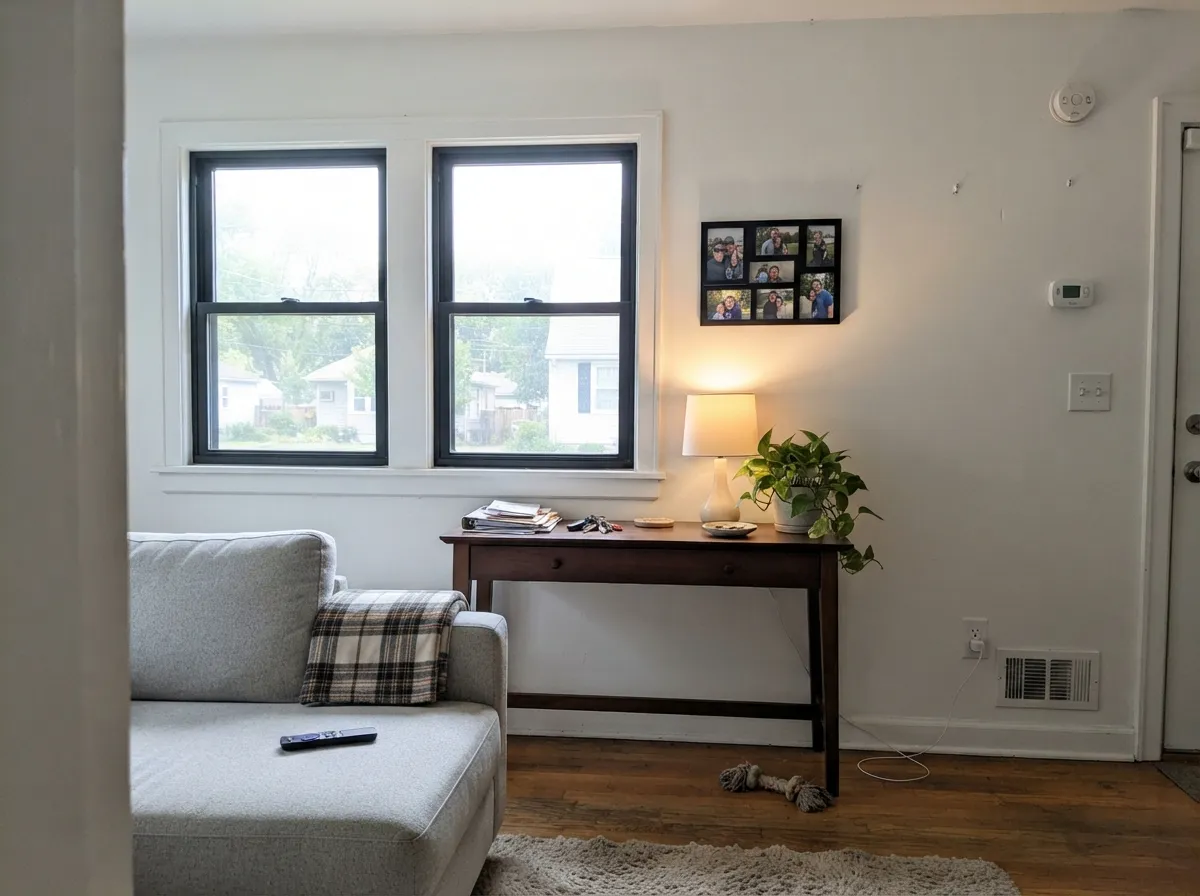
Cool gray daylight has nothing to fight, so it wins. Reads gray-blue and flat, worst in winter.
Bright and clean all day. The faint warmth in the mix keeps it from glaring back at you.
2700K bulbs soften it toward ivory at night. 3500–4000K keeps the crisp white you bought.
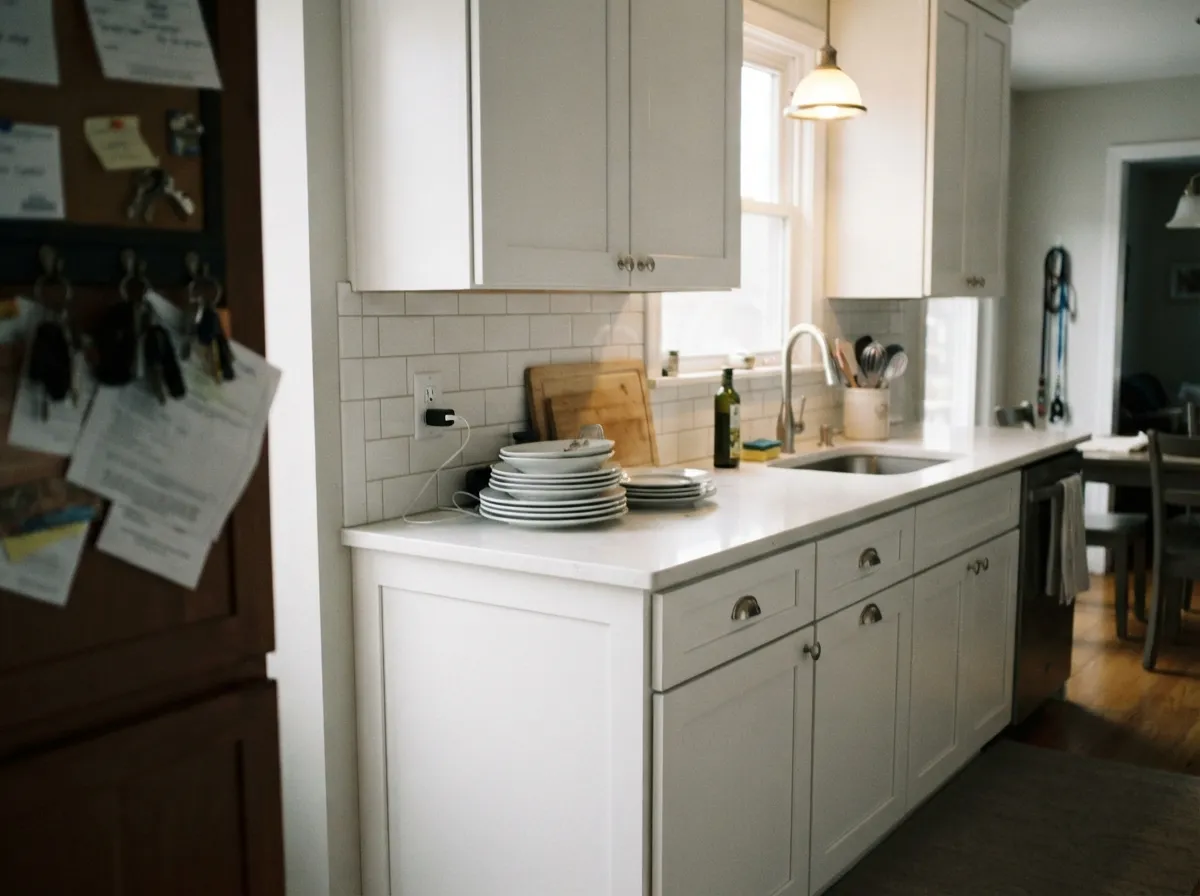
Its best job. Bounces almost all the light a hallway, powder room, or basement can give it.
Most complaints about Chantilly Lace are a light mismatch. Upload a photo of your actual room and see it on your walls — then ask for the same wall in north light or evening lamps before you buy a single sample.
Need It From Another Brand?
Any paint counter can custom-tint Benjamin Moore 2121-70 directly. If you would rather stay in one brand's own deck, these are the closest stock matches, measured as ΔE2000. Under 2 is a difference you will not see on the wall.
| Brand | Closest color | ΔE | LRV | |
|---|---|---|---|---|
| Sherwin-Williams | UltraWhiteSW 9500 · Sherwin-Williams | 0.5 | 94 | Color page → |
| Behr | Whipped CreamDC-001 · Behr | 1.4 | 91 | Color page → |
| Valspar | New ReamV148 · Valspar | 1.0 | 91.6 | Color page → |
| PPG / Glidden | Delicate WhitePPG1001-1 · PPG / Glidden | 1.2 | 88 | Color page → |
| Glidden | Delicate WhitePPG1001-1 · Glidden | 1.1 | 88 | Color page → |
| Dutch Boy | Ultra White002W · Dutch Boy | 1.0 | 91 | Color page → |
Similar Benjamin Moore Colors
The nearest shades to Chantilly Lace within Benjamin Moore's own range, ranked by perceptual color distance — useful when you want the same look a touch lighter, darker, or warmer.
WCAG 2.1: AA is 4.5 : 1 for normal text, 3 : 1 for large text, AAA is 7 : 1.
Chantilly Lace vs the Colors You're Also Considering
Every Chantilly Lace sample board has the same rivals on it. The numbers show the real lightness gap — then it comes down to which risk you would rather live with.
Pick this for a clean, modern white and for trim above any wall color.
Benjamin Moore OC-17 · LRV 85White DovePick this for warmth, for dim north rooms, and if you need it to cover in two coats.
Side-by-side comparison →Pick this if you want the whitest possible result with no yellow flash.
Benjamin Moore OC-117 · LRV 91Simply WhitePick this for nearly the same brightness with a friendlier, slightly creamy edge.
Side-by-side comparison →The most common matchup is against White Dove OC-17, LRV 85. White Dove carries noticeably more softness and warmth; side by side it looks gently creamy while Chantilly Lace looks clean and bright. Choose White Dove for cozy, traditional rooms and Chantilly Lace for modern, high-contrast, or gallery-style spaces.
Simply White OC-117, LRV 91, sits much closer in brightness but has a touch more yellow in it. In a sunny room the two are hard to tell apart; under warm evening light Simply White goes slightly creamier. If you want the whitest possible result, Chantilly Lace still wins.
Cloud White OC-130, LRV 85, is the softest of the three, a relaxed off-white that flatters older homes and warm palettes. The practical rule: the more warmth and forgiveness you want, the further you move from Chantilly Lace toward Cloud White; the more crispness you want, the more Chantilly Lace is the answer.
Chantilly Lace Coordinating Colors
Because it carries no undertone of its own, Chantilly Lace does not correct its partners — it exposes them. A warm greige looks warmer beside it, a cool gray looks cooler, and a muddy color looks muddier. That makes it easy to pair and easy to get wrong: pick a partner you actually like at full strength, because this white will not soften it.
The partners that come up again and again are the cleaner grays and greiges rather than the creamy ones, plus a dark note somewhere in the room. Chantilly Lace at LRV 90 needs something in the single digits to sit against, or the scheme reads unfinished rather than minimal.
Chantilly Lace on Cabinets and Millwork
This is the job people spend the most money on, so the details matter. Use a real cabinet coating in satin — Advance or Scuff-X — over a bonding primer, and tint the primer white rather than leaving it gray. Thin coats, fully cured between them, and plan on three: the low pigment that makes this color so clean is exactly what makes it hide so poorly, and doors sprayed heavy to compensate will sag before they cover.
On millwork the same brightness becomes an advantage. Chantilly Lace makes a plain builder baseboard look like it was specified, because there is no cream in it to read as "old paint" and no gray to read as dirty. It is the reliable answer for wainscoting, coffered ceilings, and shaker paneling under any wall color, and the one white that stays white where a bank of windows floods it all afternoon.
Hardware is where you set the mood. Black and oil-rubbed bronze push it modern and graphic; unlacquered brass and warm nickel pull it back toward traditional and take some of the chill off. Avoid chrome if the room is already cool — chrome plus Chantilly Lace plus north light is how a kitchen ends up feeling like a lab.
Chantilly Lace and the Whites You Can't Repaint
Every room has whites that come from a factory: vinyl window frames, appliance panels, tile and grout, quartz counters, a porcelain tub, roller shades, an air vent. Chantilly Lace sits above nearly all of them on the brightness scale, which means it does not blend with those whites — it grades them. Most factory whites are warm, and next to this one they turn faintly ivory or pink.
Sometimes that is exactly what you want. Against white quartz, marble-look porcelain, and modern white tile, Chantilly Lace is the white that holds its own where creamier paints suddenly look yellow. The trouble comes with older builder-grade materials — almond outlet covers, a cream tub surround, oak-trimmed windows with cream sashes — where a bright white wall makes them the loudest thing in the room.
The check takes five minutes. Hold a large sample card against the window frames, the tile, the counter, and the appliance you are keeping, in daylight, before you buy the gallons. If the fixed whites look dingy next to the card, either they need to change or your paint does — and if they do need to change, White Dove OC-17 or Cloud White OC-130 will meet them halfway.
Three Ready Palettes Built on Chantilly Lace
A color is never alone on the wall. These are complete combinations in the 60-30-10 pattern, with the reason each one holds together. Every one opens in the visualizer.
Chantilly Lace beats every other white in the room, so the fix is to stop competing with it — one color at three sheens gives depth with no dingy ceiling and no mismatched trim. The near-black door supplies the single dark note the scheme needs to look designed rather than unfinished.
Try this palette in your roomEdgecomb Gray is soft enough that the jump to a true white cabinet reads crisp instead of harsh, and it keeps the room from going clinical. The navy island grounds all that brightness and gives brass or black hardware something to sit against.
Try this palette in your roomChantilly Lace has no warmth of its own to give, so the warmth comes from the room next to it — Pale Oak is a barely-there greige that reads soft beside it without ever looking dirty. Charcoal doors carry the 10 percent dark accent through both spaces so the open plan holds together.
Try this palette in your roomChantilly Lace FAQ
Is Chantilly Lace a true white or an off-white?
Benjamin Moore files it under Off-White, and on the chip you can just barely see why — there is a trace of gray keeping it from being paint-store base white. On a wall, in a real room, it reads as white with no qualifier. If someone tells you it is "warm" or "cool," they are describing their own light, not the color.
Can you tell Chantilly Lace and Simply White apart once they're on the wall?
In one room, alone, most people cannot. Side by side on the same wall, Simply White shows a soft yellow cast and Chantilly Lace looks cleaner and slightly grayer. The difference stops being subtle in two places: against white quartz or marble, where Simply White suddenly looks warm, and in a north-facing room, where Simply White stays friendly and Chantilly Lace goes flat.
Can I use it on the walls and the trim at the same time?
Yes, and it is one of the best ways to use it — this color has no undertone to clash with itself, so a one-color room never looks mismatched. Change the sheen instead of the color: matte or eggshell on walls, semi-gloss on trim and doors, flat on the ceiling. The sheen break gives you the edge definition that a color break normally provides, and it makes low ceilings read taller because your eye never stops at the crown.
Why does my Chantilly Lace look blue or gray?
Almost always the light, not the paint. North windows deliver cool gray daylight and this color has no warmth of its own to push back with, so it hands the gray straight back to you. Shadowed corners go a step further and read dingy. Check your bulbs too — 5000K daylight LEDs will push it noticeably blue, while 3000K keeps it clean and neutral.
What sheen should I use on cabinets, and will it yellow?
Satin in a real cabinet coating — Advance or Scuff-X — not wall paint. The yellowing worry is real but specific: waterborne alkyds like Advance can amber slightly in spaces that get no daylight at all, so the inside of a closed pantry or a basement bar is the risk, not a kitchen with windows. Use a straight acrylic cabinet enamel in those dark spots and the problem disappears.
Does it work on exteriors?
It works, but it is unforgiving in strong sun. In the South or at altitude, a whole house in Chantilly Lace can glare in the middle of the day — you want either a dark trim and roof to absorb some of that or a softer white. What it should not be outdoors is trim on a mid-tone or dark body color, where the contrast gets so hard the trim looks like a cutout. Save it for the whole-house-white approach with black or charcoal windows.
What's the closest Sherwin-Williams color?
There is no exact twin, so pick by job. High Reflective White SW 7757 matches the brightness but is cooler and more clinical; Pure White SW 7005 is friendlier but visibly softer and slightly warm. Extra White SW 7006 is the usual working substitute. If the whole house is going white and you want this specific result, it is worth buying the Benjamin Moore rather than approximating it.
Have you painted with Chantilly Lace?
Rate it — one tap helps the next reader decide.
Ask a Question