CP

Room Colors · Deck

5 Best Deck Paint Colors for 2026
ideas, combinations, and real rooms

5 curated picks from real decks — with the exact colors, honest reasons why, and the combinations that hold the room together.

Jessica Williams
Jessica Williams· Color Stylist & Interior Editor

Former interior stylist who can spot a green undertone from across a room. Jessica writes the color and mood pieces — what to choose, what pairs, and why your "white" looks pink.

The Fast Answer

Don't want to read 5 picks? These four are the safe answers.

BM 1563 · LRV 52
Soft warm gray deck — pairs with cottage and farmhouse exteriors.
Pratt & Lambert 23-11 · LRV 7
Cool-toned dark brown for decks paired with cool-siding houses.
Dunn-Edwards · designer warm taupe · LRV 34
Warm light deck paint — easier to walk on barefoot in summer than dark colors.
SW SW 9142 · LRV 3
Modern charcoal deck — pairs with charcoal or black exterior trim.
Room painted in Cocoa
Cocoa
Try it in your room →
Top picks · see them in a room

Top Picks for the Deck

Pick a color family, tap a shade to see the deck in it, then try it on your own room.

Cocoa
#5C4435

Cool-toned dark brown for decks paired with cool-siding houses.

SEE IT IN YOUR ROOM →

Deck Color Trends 2026 — What's In, What's Out

On the Way Out
  • Icy blue-grayThe cool, blue-cast grays of the 2010s now read cold against today's warmer siding palettes, and the 2026 guides have quietly dropped them.
  • Orange-toned redwood and cedar solidsOpaque orange-red stain is the fastest way to date a deck — the warm-brown trend is muted walnut and bronze, not traffic-cone cedar.
  • Glossy paint-look deck coatingsHigh-sheen finishes show every scratch and peel in sheets on horizontal boards; flat and low-sheen solid stains have won this argument.
  • Bright white deck floorsWhite boards glare in full sun and show every footprint and leaf stain — keep the white for railings and trim.

The 5 Best Deck Paint Colors

Every pick below is a real rendered deck, not a chip. The lead color first; the swatches are the full scheme in the photo — walls, furniture, textiles, accent.

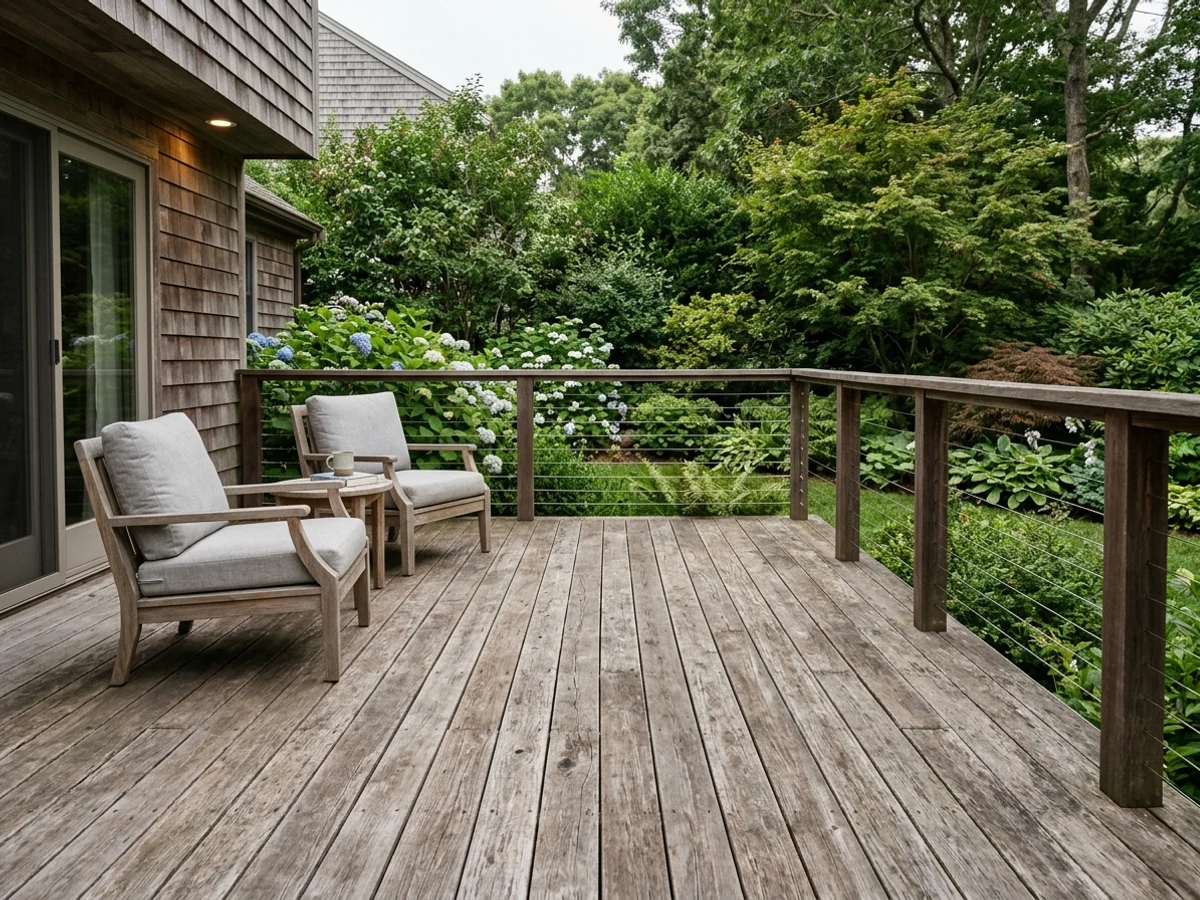
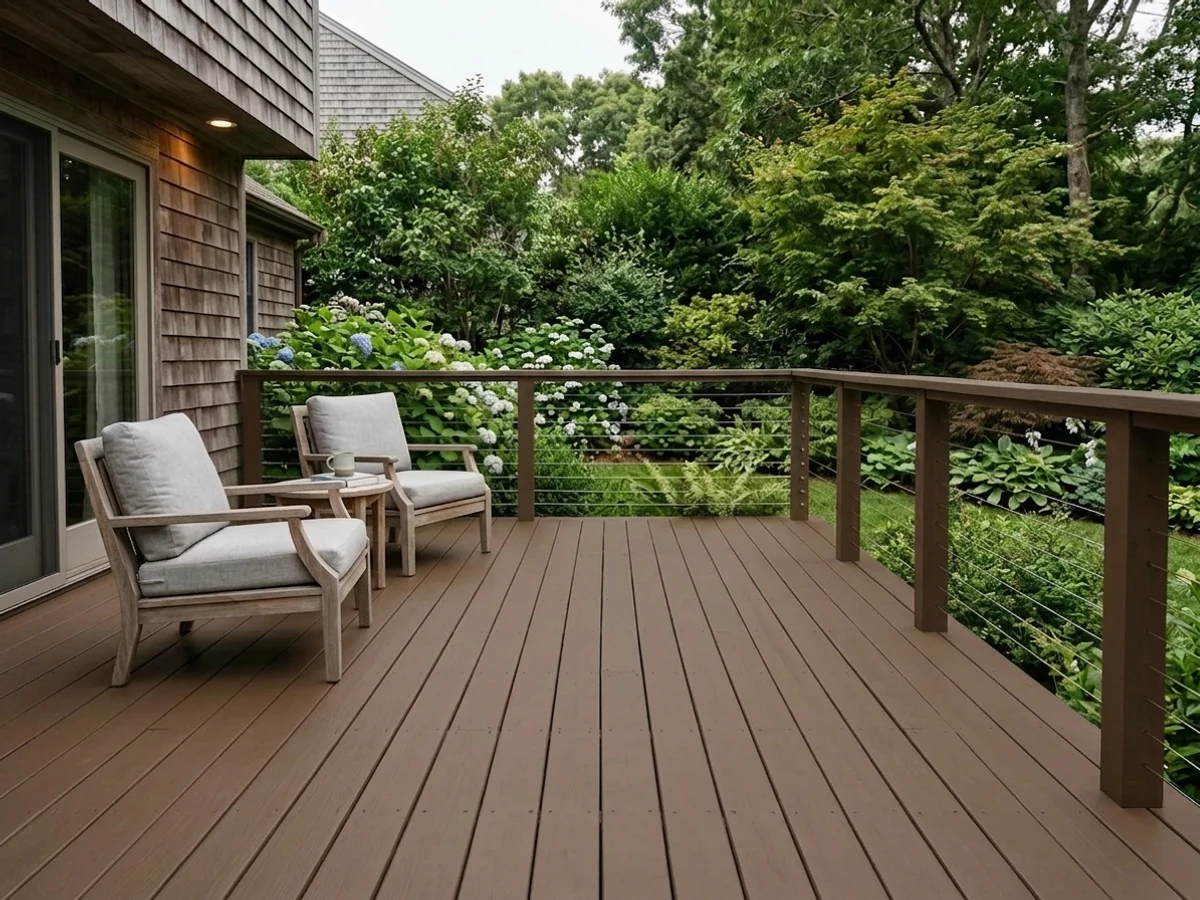
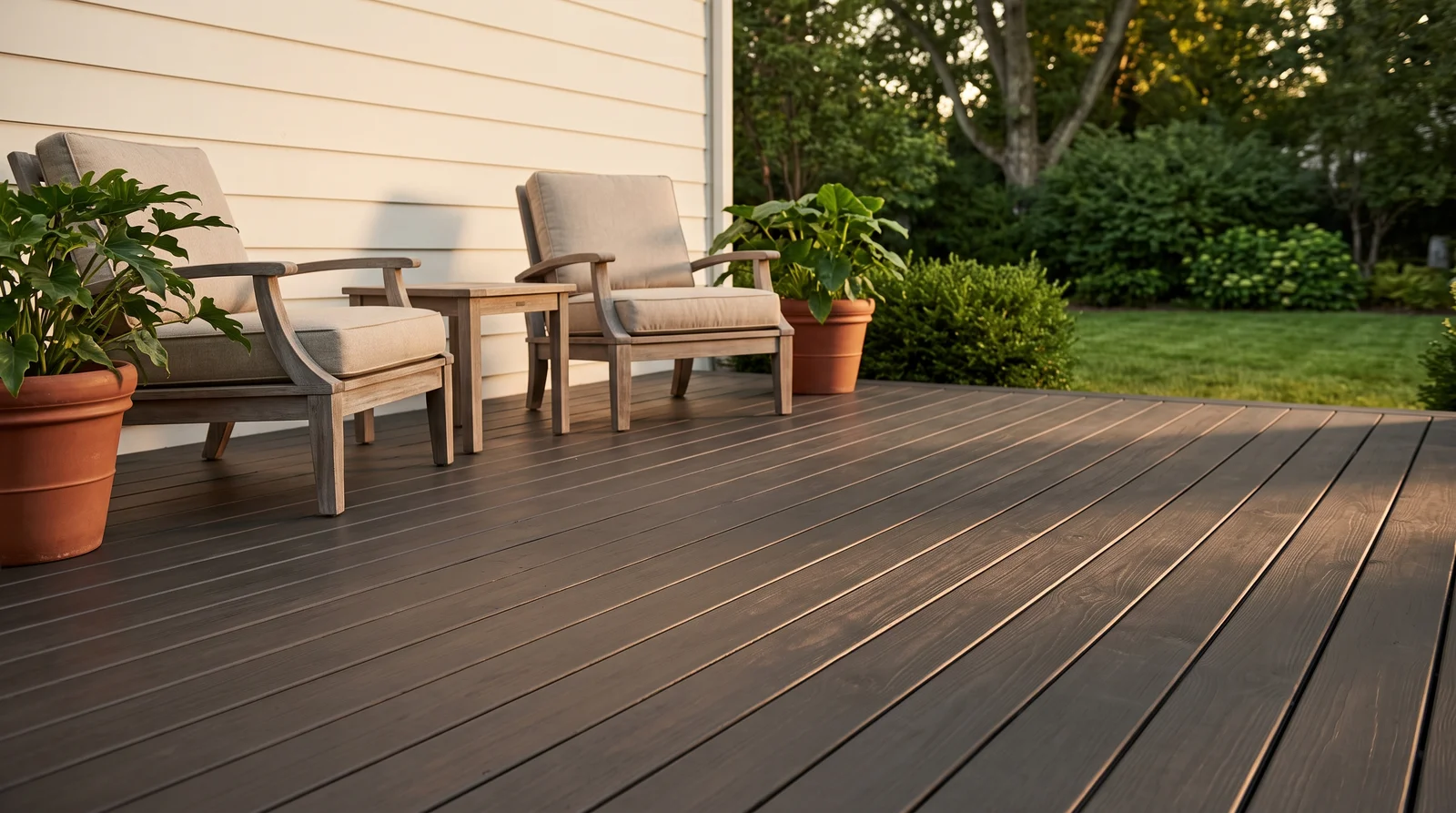
Bronze Earth Evening — deck painted in Urbane Bronze
1Urbane BronzeSherwin-Williams · Bronze Earth Evening

A warm brown-gray floor that soaks up late-day sun and makes the whole backyard feel settled and grown-in.

Urbane Bronze by Sherwin-Williams (SW 7048) is the deck color for houses surrounded by trees and mulch beds — its brown undertone belongs to the dirt and bark around it, so the deck reads as part of the yard instead of a painted platform. At LRV 8 it hides dropped soil, grill splatter, and the gray weathering that comes back every season. It pairs naturally with teak or acacia furniture and cream siding; against cool blue-gray siding it can look muddy, and there Peppercorn is the safer dark. In full-sun southern exposures the boards will get hot underfoot — that is the real cost of any color this deep.
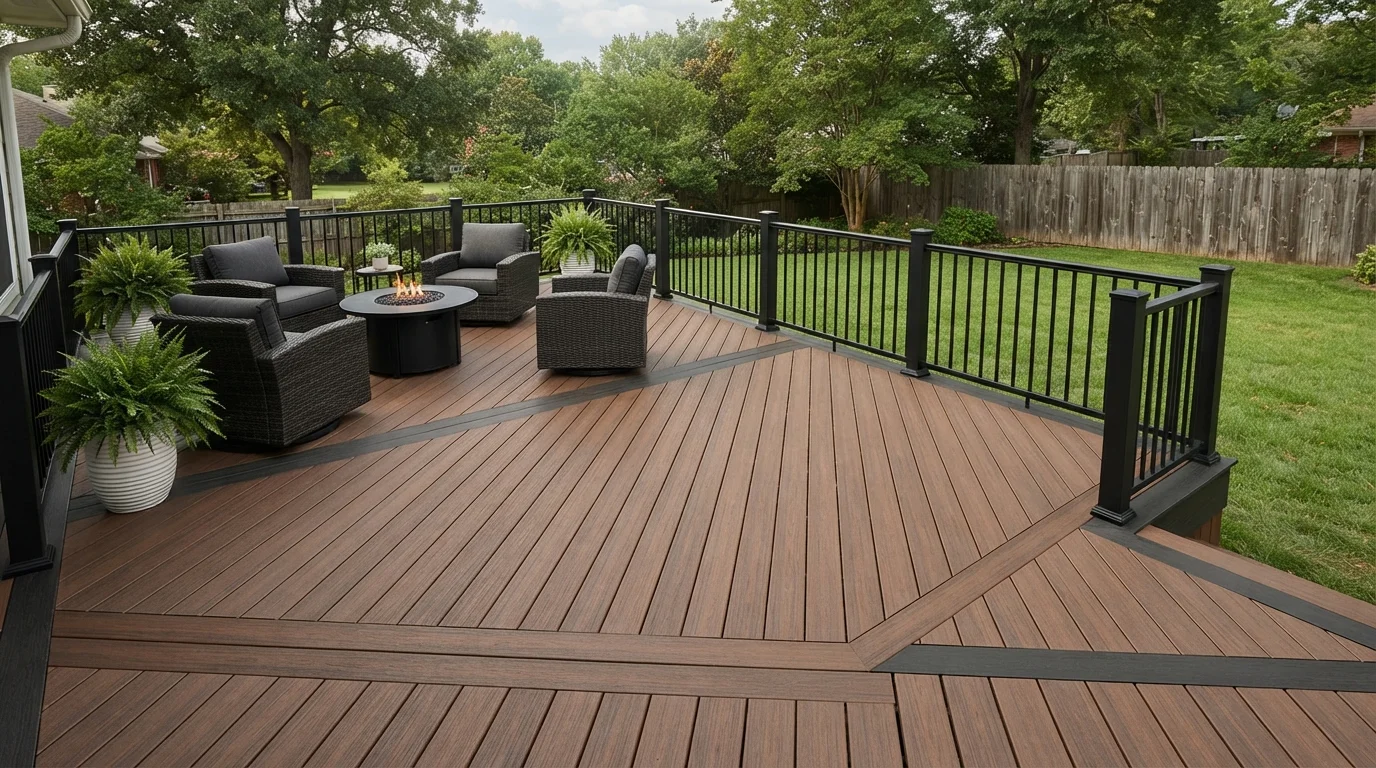
Deck · Sherwin-Williams
Siding · Benjamin Moore
Weathered Teak
Furniture
SEE URBANE BRONZE ON YOUR WALLS →
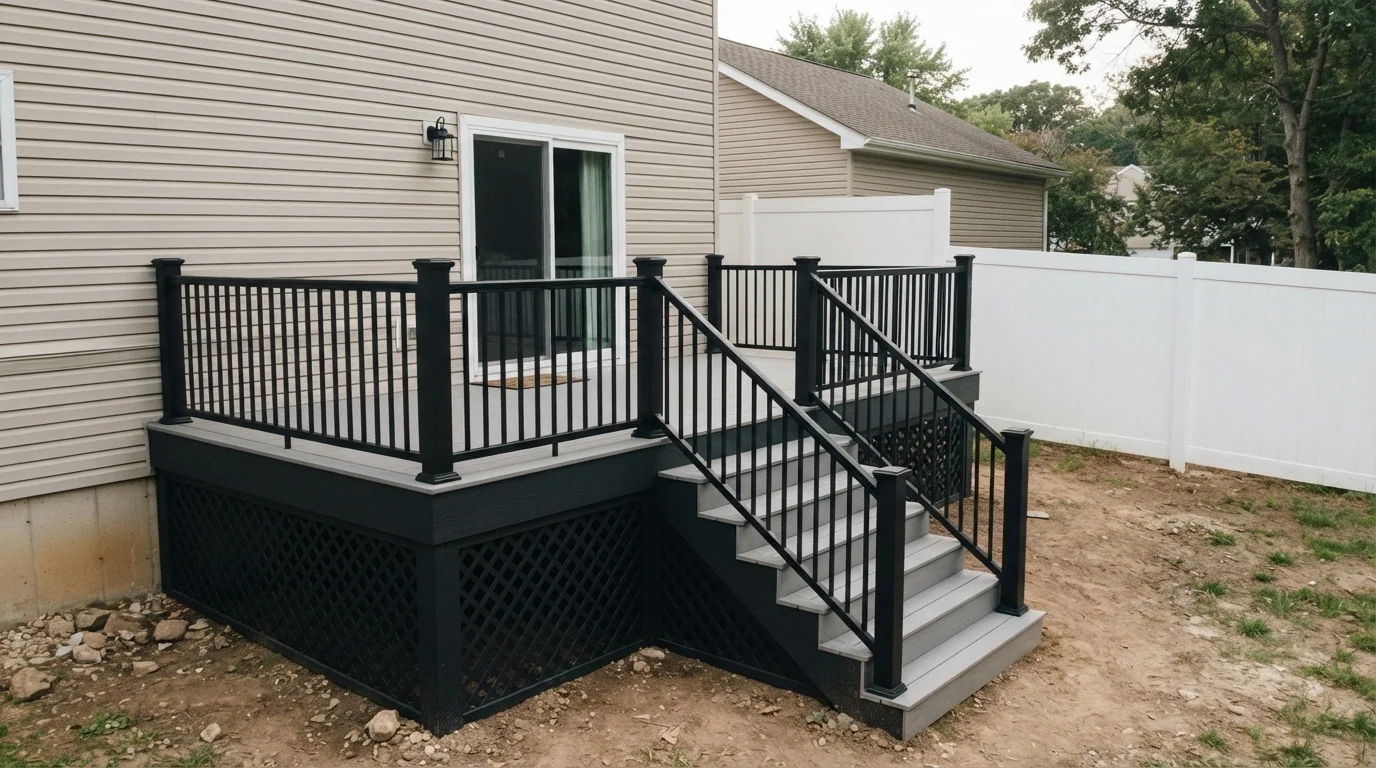
Charcoal That Forgives — deck painted in Kendall Charcoal
2Kendall CharcoalBenjamin Moore · Charcoal That Forgives

A soft mid-charcoal that looks intentional from day one and still looks intentional three summers of foot traffic later.

Kendall Charcoal by Benjamin Moore (HC-166) is the practical pick for an older deck getting a solid-stain rescue: at LRV 15 it is dark enough to swallow patched boards, filled cracks, and uneven weathering, but light enough that you can still read the surface at dusk. Its slightly warm gray sits comfortably next to almost any siding color, which matters when the deck has to serve the house you already have. Pair it with crisp Alabaster trim and simple black-frame furniture. If your siding runs cool and blue, Peppercorn's truer gray will match better; if the deck bakes in all-day sun, step up to Accessible Beige instead.

Deck · Benjamin Moore
Trim · Sherwin-Williams
Black Metal Frame
Furniture
SEE IT ON YOUR WALLS →
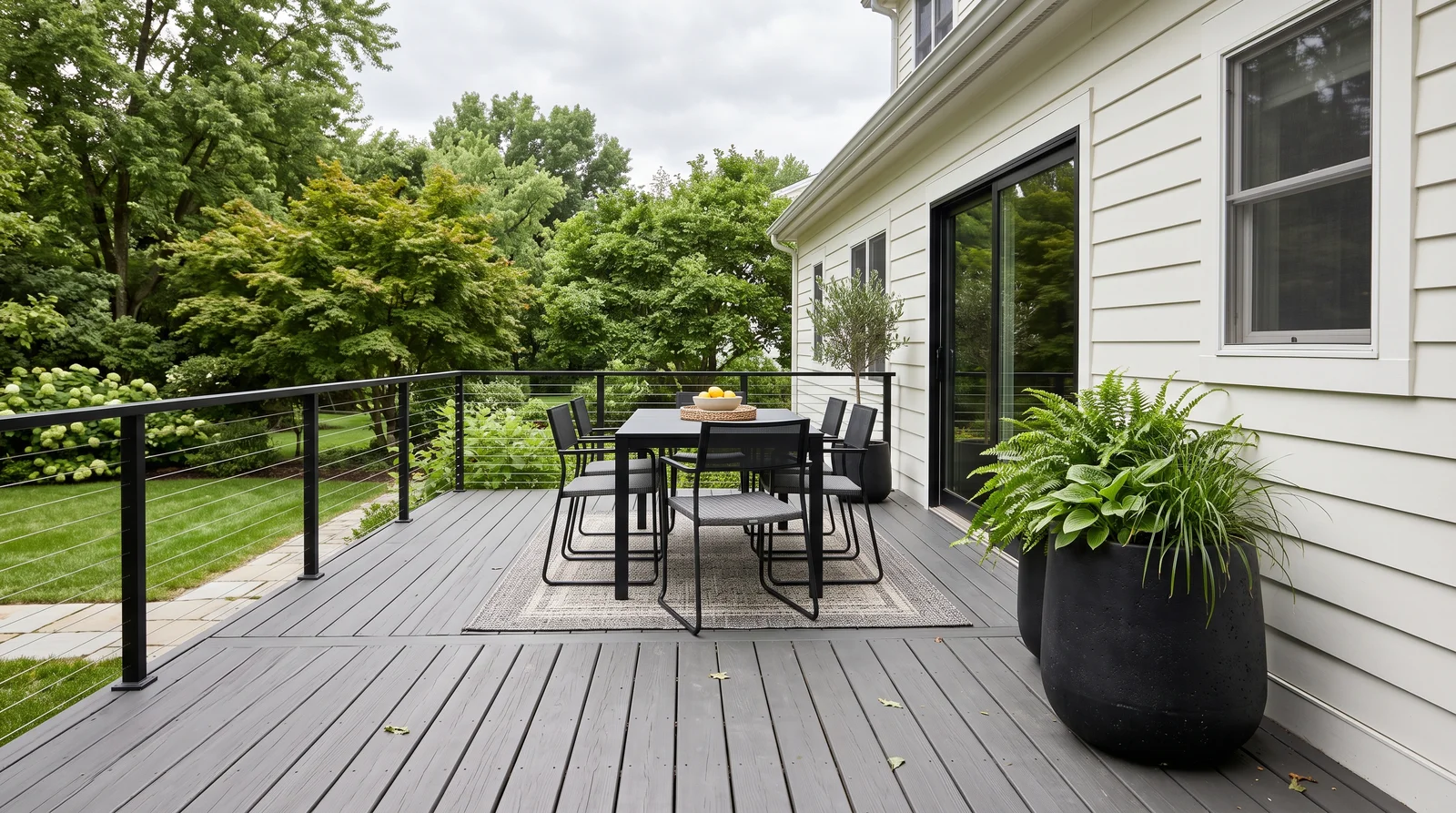
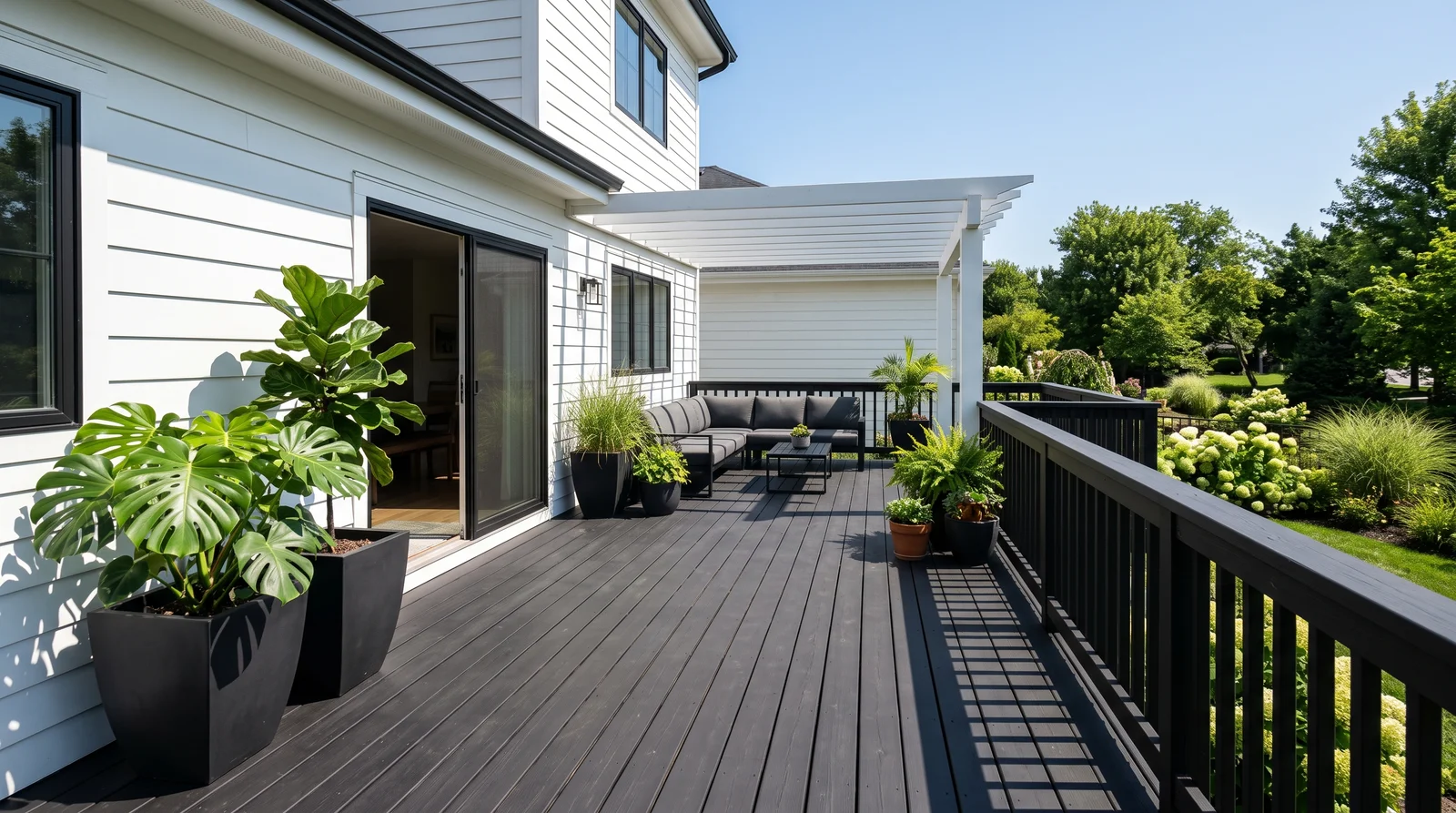
Iron Ore Modern Line — deck painted in Iron Ore
3Iron OreSherwin-Williams · Iron Ore Modern Line

A near-black floor that turns the deck into one clean graphic plane — sharp, modern, and unbothered by shadows.

Iron Ore by Sherwin-Williams (SW 7069) is the contemporary deck move: at LRV 6 the boards merge into a single dark surface, so the eye reads the shape of the deck instead of every seam and knot. It is strongest against bright white siding — the contrast does the design work for you — and it makes greenery in planters look electric. Matching the railing to the floor in the same Iron Ore keeps the whole frame quiet. Two honest warnings: near-black shows pollen and dried water spots more than a mid-tone, and it gets genuinely hot in full sun, so save it for shaded or morning-sun decks.

Deck · Sherwin-Williams
Railing · Sherwin-Williams
Siding · Sherwin-Williams
SEE IRON ORE ON YOUR WALLS →
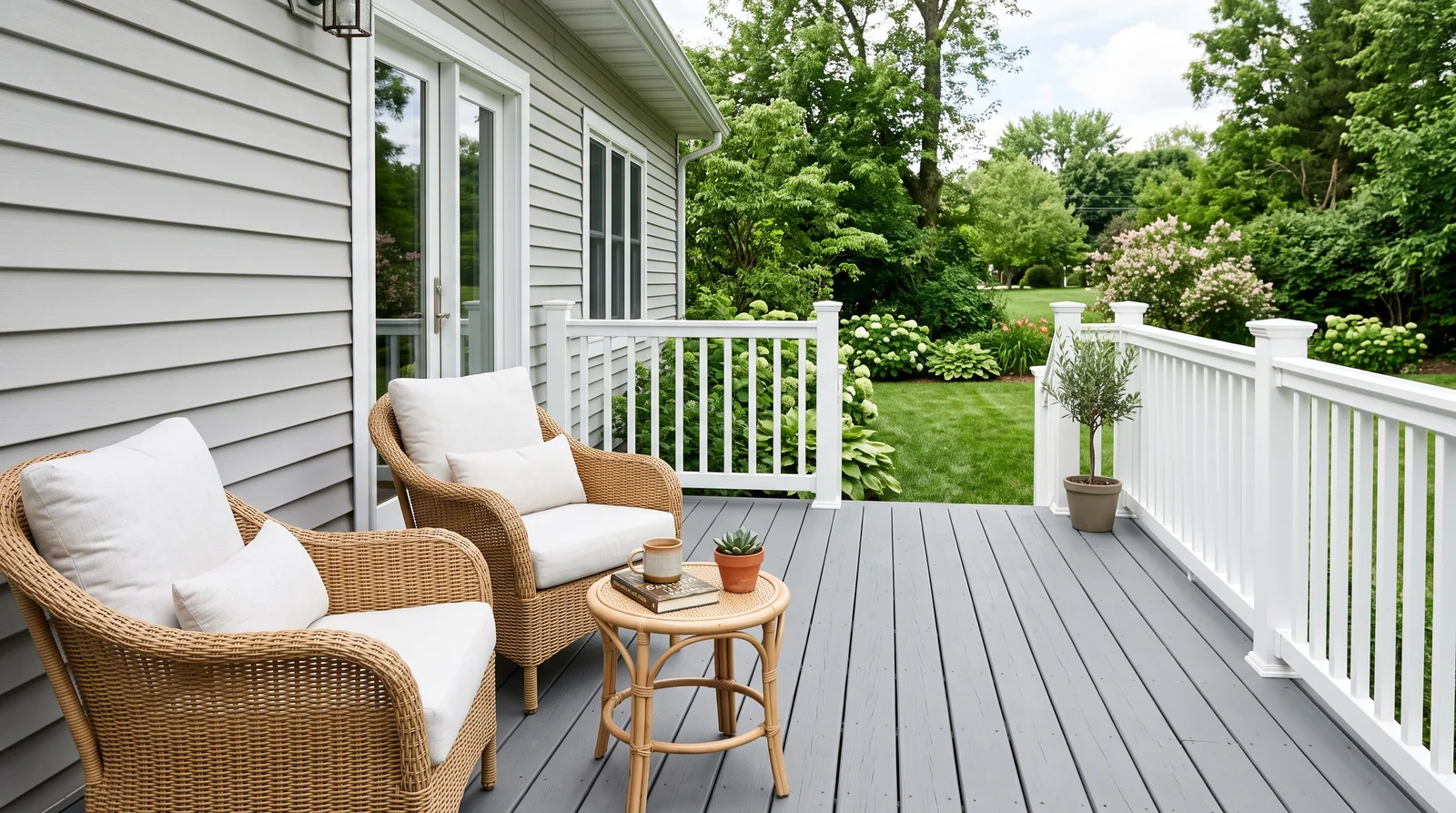
Peppercorn Middle Ground — deck painted in Peppercorn
4PeppercornSherwin-Williams · Peppercorn Middle Ground

A true mid-gray that reads calm and current without committing to the heat or the drama of a near-black floor.

Peppercorn by Sherwin-Williams (SW 7674) is the neutral-gray answer for decks attached to cooler-toned houses — blue-grays, white farmhouses, gray board-and-batten — where a bronze or brown floor would fight the palette. At LRV 10 it still hides wear and mismatched replacement boards, but it stays a step friendlier underfoot than Iron Ore in sun. It flatters white railings hard: the classic gray-floor-white-rail combination is popular because it works from every angle. If your siding and landscape lean warm, choose Urbane Bronze instead; Peppercorn next to lots of warm brick can feel slightly cold.

Deck · Sherwin-Williams
Railing · Benjamin Moore
Natural Wicker
Furniture
SEE PEPPERCORN ON YOUR WALLS →
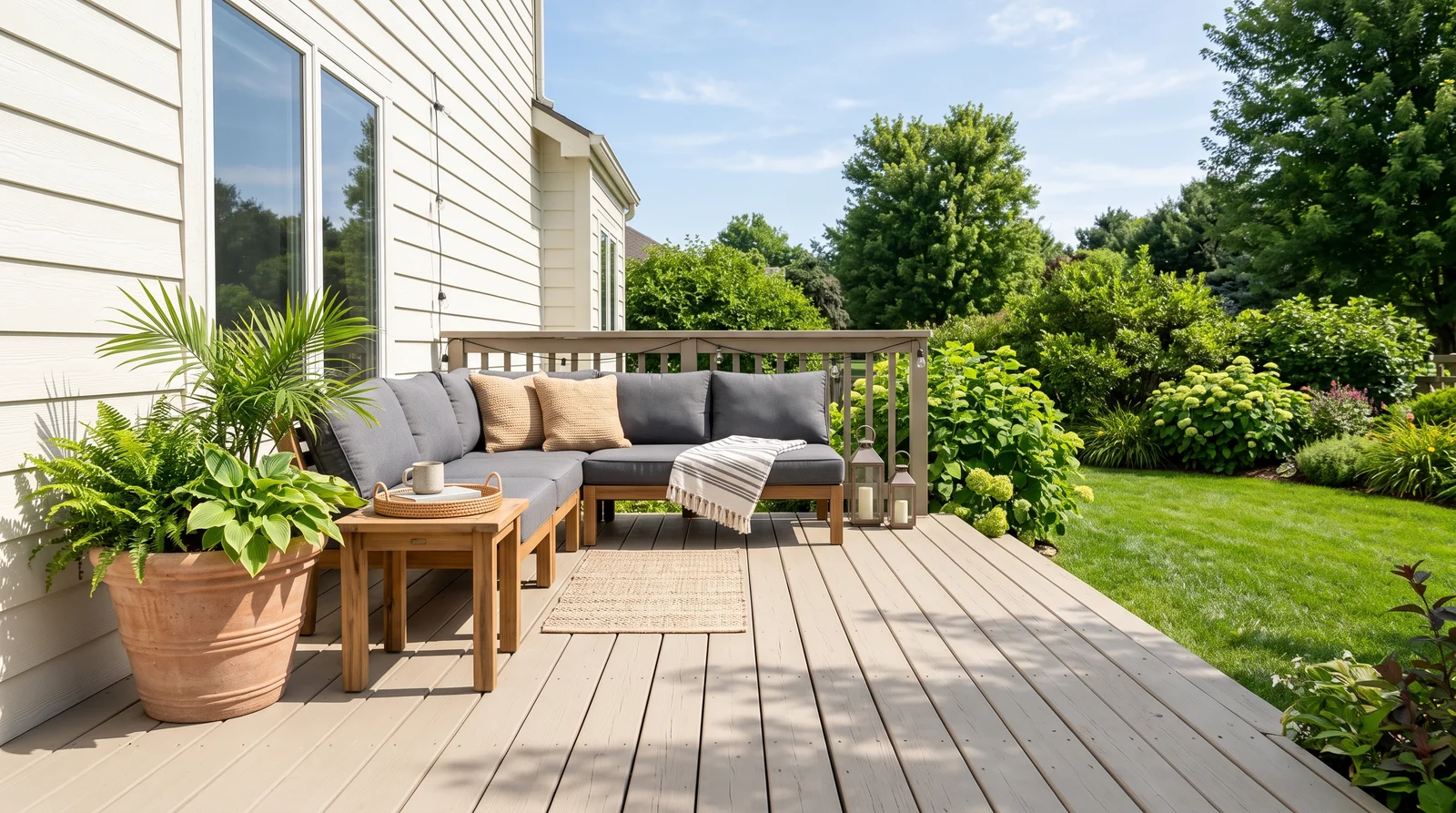
Light Sand, Cool Underfoot — deck painted in Accessible Beige
5Accessible BeigeSherwin-Williams · Light Sand, Cool Underfoot

A warm sandy neutral that bounces light, stays walkable barefoot in July, and makes a small deck feel twice as open.

Accessible Beige by Sherwin-Williams (SW 7036) is the pick when the deck faces south and the real question is heat: at LRV 58 it reflects most of the sun a charcoal floor would absorb, which you feel immediately in bare feet. Its greige balance — warm but not yellow — keeps it looking like sand rather than 1990s tan, and it sits easily against white, beige, or warm gray siding. The trade is honesty about dirt: a light floor shows leaf stains and grill drips sooner, so plan on an occasional rinse. If your house runs cool-toned and the beige looks too warm on the sample board, Peppercorn is the cooler fallback.

Deck · Sherwin-Williams
Siding · Benjamin Moore
Charcoal Cushions
Furniture
SEE IT ON YOUR WALLS →

Deck Wall Color Combinations

A wall color never works alone. These are the full schemes from the rooms above — the lead color first, then the supporting colors that make the photo work.

Bronze Earth Evening
DeckUrbane BronzeSidingWhite DoveFurnitureWeathered Teak
Deck
Urbane Bronze · Sherwin-Williams · LRV 8
Siding
White Dove · Benjamin Moore · LRV 85
Furniture
Weathered Teak · · LRV 22

A warm brown-gray floor that soaks up late-day sun and makes the whole backyard feel settled and grown-in.

TRY THIS PALETTE →
Charcoal That Forgives
DeckKendall CharcoalTrimAlabasterFurnitureBlack Metal Frame
Deck
Kendall Charcoal · Benjamin Moore · LRV 13
Trim
Alabaster · Sherwin-Williams · LRV 82
Furniture
Black Metal Frame · · LRV 2

A soft mid-charcoal that looks intentional from day one and still looks intentional three summers of foot traffic later.

TRY THIS PALETTE →
Iron Ore Modern Line
DeckIron OreRailingIron OreSidingPure White
Deck
Iron Ore · Sherwin-Williams · LRV 6
Railing
Iron Ore · Sherwin-Williams · LRV 6
Siding
Pure White · Sherwin-Williams · LRV 84

A near-black floor that turns the deck into one clean graphic plane — sharp, modern, and unbothered by shadows.

TRY THIS PALETTE →
Peppercorn Middle Ground
DeckPeppercornRailingChantilly LaceFurnitureNatural Wicker
Deck
Peppercorn · Sherwin-Williams · LRV 10
Railing
Chantilly Lace · Benjamin Moore · LRV 90
Furniture
Natural Wicker · · LRV 38

A true mid-gray that reads calm and current without committing to the heat or the drama of a near-black floor.

TRY THIS PALETTE →

The deck floor is your base, so build the rest around it. White or off-white railings and trim pop against a brown floor like Walnut or Saddle Brown and keep the look crisp. Against a gray floor like Gauntlet Gray, both white and natural wood railings look clean and current.

Think about the house siding and your outdoor furniture too. A warm neutral like Stonish Beige bridges a brick or tan house with green plants and wood furniture. Cool grays like Dove Gray sit best with white trim, black fixtures, and gray or navy cushions. A simple rule: keep the floor the quietest surface and let railings, planters, and cushions add the color.

Deck Color Ideas by Color

Set on a color family already? Each page has its own real rooms and picks.

Light or Dark Deck Colors?

Go Light (LRV 60+) If…

The room is small, faces north, or has to work at every hour. Light warm colors make it feel bigger and stay calm in evening light — the light you actually live in.

Go Dark (LRV Under 20) If…

You want the cocoon effect and the room has real daylight. Dark works best on one feature wall — or fully color-drenched in a large room with good windows.

A deck lives in changing light all day, so test your color outdoors, not under a store light. A north-facing or shaded deck stays cooler and grayer, so warm tones like Saddle Brown or Stonish Beige keep it from feeling dull. A south- or west-facing deck bakes in direct sun, which washes light colors out and makes dark colors fade faster and run hot underfoot.

Look at your sample at three times: bright midday, late afternoon, and after dark with your porch lights on. Warm browns glow under evening lights, while cool grays can look flat at night. Dark colors like Espresso soak up heat and can get uncomfortable for bare feet on a sunny deck, so save the darkest shades for shaded or covered areas.

LRV is light reflectance value, a number from 0 to 100 that tells you how much light a color bounces back. High-LRV colors like Dove Gray and Stonish Beige reflect more light, so they stay cooler underfoot, brighten a shady deck, and feel open and airy. Lower-LRV colors like Gauntlet Gray, Walnut, and Espresso absorb more light, look cozy and grounded, but get hotter in direct sun.

For a sunny, exposed deck, lean toward middle or higher LRV so the surface does not turn into a hot plate in July. For a covered porch or a shaded deck under trees, a darker, lower-LRV color adds warmth and richness without the heat penalty. Matching your deck a step or two darker than your siding usually grounds the space and hides dirt better than a pale floor.

VISUALIZE YOUR SPACE

See It. Love It.
Paint It.

Upload one photo of your deck and try every color on this page on your own walls — in your own light, before you buy a drop of paint.

Drag the slider to compare
deck before paintingdeck painted in CocoaCocoaBefore

Best Color Directions for a Deck

Warm browns are the safe, classic choice. Saddle Brown and Walnut keep a natural wood feeling without the upkeep of stain, and they hide dirt, pollen, and foot traffic well. Espresso goes darker and richer, which looks great on a modern deck but shows dust and shows more heat in full sun.

Grays have taken over a lot of new builds for good reason. Gauntlet Gray is a deep, grounded gray that pairs with almost any house color, while Dove Gray is lighter and airier for a relaxed, coastal feel. If you want something in between brown and gray, Stonish Beige is a warm neutral that flatters both wood railings and white trim.

Pick the Right Finish for a Deck

A deck floor needs a finish that grips, sheds water, and survives scrubbing. Go with a flat or low-sheen deck and porch paint, not a glossy one. Flat and satin hide surface flaws, cut glare from the sun, and give a little texture so the boards are not slippery when wet.

Gloss looks sharp on a railing but is a mistake on the floor, because it shows every scratch and turns slick in rain. Many deck paints also let you add a fine anti-slip grit, which is worth it on stairs and around a pool or hot tub. Whatever you choose, use a product made for floors and decks so it can flex with the wood as it swells and shrinks through the seasons.

Common Deck Painting Mistakes to Avoid

The biggest mistake is skipping prep. A deck must be clean, dry, and stripped of any old peeling finish, or fresh paint will lift within a season. Painting damp wood or painting right before rain traps moisture and causes peeling and bubbling.

The second common mistake is choosing color from a tiny chip indoors. Decks read lighter and shinier outside, and full sun changes everything. Other traps: picking too-dark a color on a sunny deck so it overheats, using interior or wall paint instead of a real deck and porch product, and forgetting that a glossy finish gets slippery when wet. Always brush a sample on a hidden board and live with it for a couple of days before you commit.

About Deck Paint Colors

A deck color sets the whole mood of your outdoor space, and it has a harder job than any color inside your home. It sits in full sun, takes rain and snow, and gets walked on every day. So picking a deck color is part looks and part durability, and the best choices balance both.

For most decks, three color directions do the heavy lifting: warm browns, cool grays, and soft neutrals. Browns like Saddle Brown, Walnut, and Espresso feel natural and tie into wood tones. Grays like Gauntlet Gray and Dove Gray read clean and modern. Neutrals like Stonish Beige sit quietly between the two and go with almost anything.

Every color shown here is mixed to order at the paint counter, so you are not locked into one brand. If you find the exact shade you want under one brand's name, a good store can cross-match it into another brand's deck or porch paint. That means you can chase the color you love and still buy the formula that holds up best on a horizontal, weather-beaten surface.

The Questions Everyone Asks

What color should I paint my deck?

If you want one answer, start with the safe picks above — Quiet Moments, Cocoa, Stonish Beige, Moscow Midnight. They read well in any light and survive furniture changes. Then check the light: strong afternoon sun wants a step cooler, a north-facing room wants a step warmer.

What is the best color for a deck?

There is no single best color, but warm browns, cool grays, and soft neutrals are the most reliable. Browns like Saddle Brown and Walnut feel natural and hide dirt, grays like Gauntlet Gray and Dove Gray look modern and clean, and a neutral like Stonish Beige goes with almost any house. Match the floor a shade darker than your siding for a grounded, easy-to-maintain look.

What sheen should I use on a deck floor?

Use a flat or low-sheen deck and porch paint, not a glossy one. Flat and satin finishes hide flaws, cut sun glare, and stay less slippery when wet. Gloss shows every scratch and gets dangerously slick in the rain, so keep any gloss for railings, never the floor.

Do dark deck colors get too hot in the sun?

Yes, darker colors like Espresso and Walnut absorb more heat and can get uncomfortable for bare feet on a sunny deck. They also tend to fade faster in direct sun. Save the darkest shades for shaded or covered decks, and pick a middle or higher LRV color for an exposed, south- or west-facing deck.

What color should I paint my deck railings?

Build the railing color off your floor. White or off-white railings pop against a brown floor and keep the look crisp, while both white and natural wood look clean against a gray floor. Keep the floor the quietest surface and let the railings, planters, and cushions carry the brighter color.

What is the most common mistake people make painting a deck?

Skipping prep. The deck must be clean, fully dry, and free of any peeling old finish, or fresh paint will lift within a season. Never paint damp wood or paint right before rain, since trapped moisture causes peeling and bubbles.

Can I match a deck color from one brand using a different brand's paint?

Yes. Every color shown here is mixed to order at the paint counter, so a good store can cross-match a shade you like into another brand's deck or porch formula. That lets you choose the exact color you want while buying the product that holds up best outdoors.

How do I test a deck color before committing?

Brush a real sample onto a hidden board outdoors and live with it for a couple of days. Check it in bright midday sun, late afternoon, and after dark with your lights on, since deck colors look lighter and shinier outside than they do on a chip indoors.

What two-color combination works best in a deck?

The reliable pattern is a quiet main color plus one deep accent on a single wall. Keep trim and ceiling in one warm white so the two colors are the only event in the room — the combination cards above show complete schemes from real rooms.

What colors make a deck look bigger?

High-LRV, slightly warm colors — LRV 60–75 is the sweet spot. Paint the walls and trim close to the same light color so the corners blur, and keep the ceiling white. Stark cool white actually works against you; it creates hard shadows that show the room's edges.

Ask a Question

Jessica Williams

Not sure what's right for your deck?

Ask Jessica below — every question gets a real reply, usually within a day.