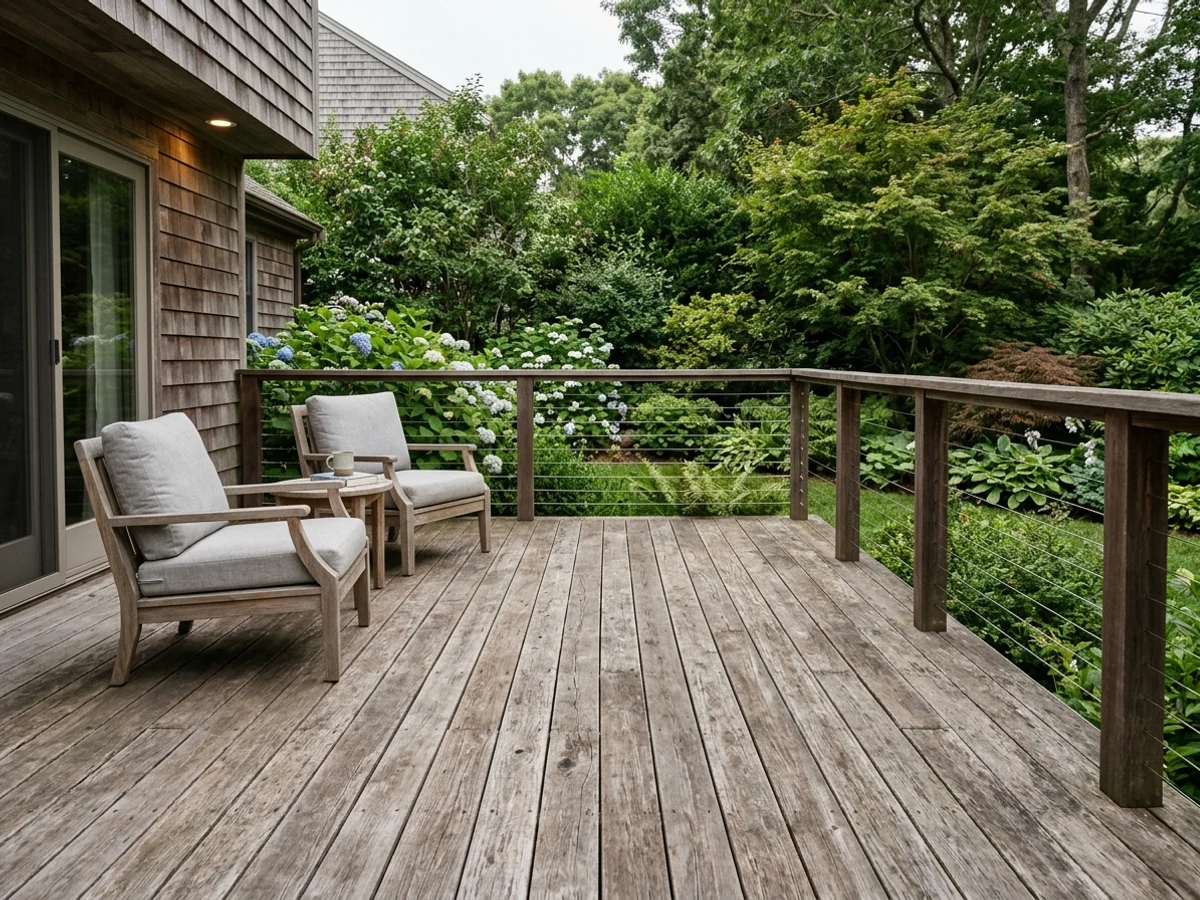
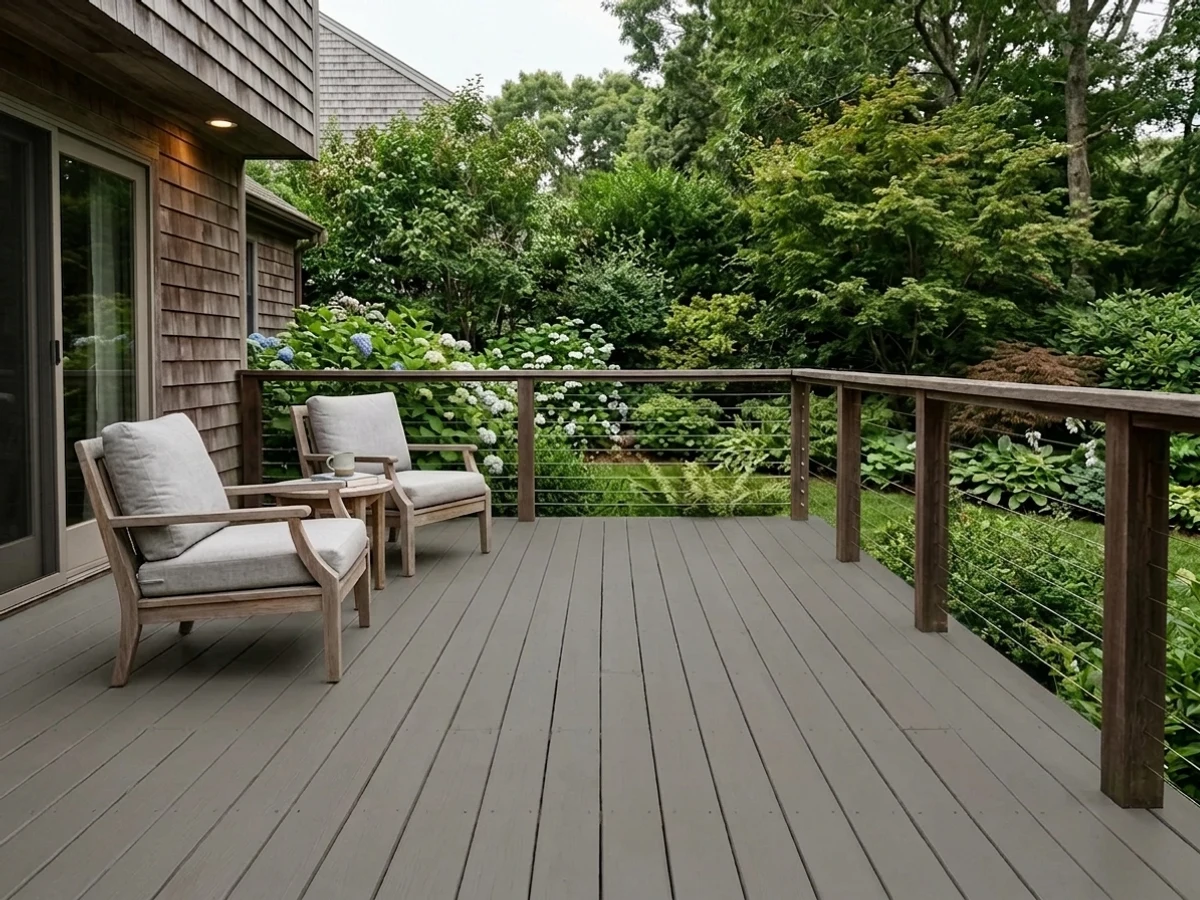
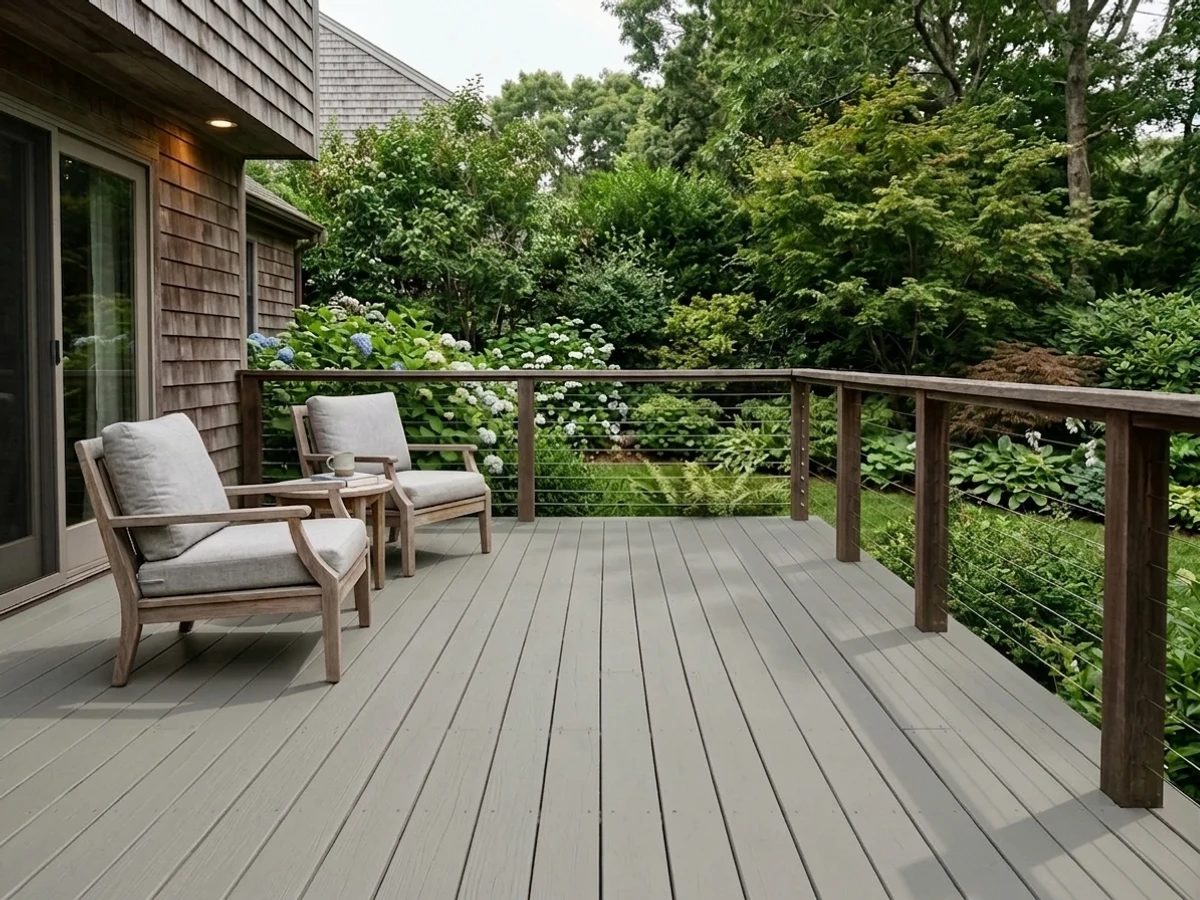
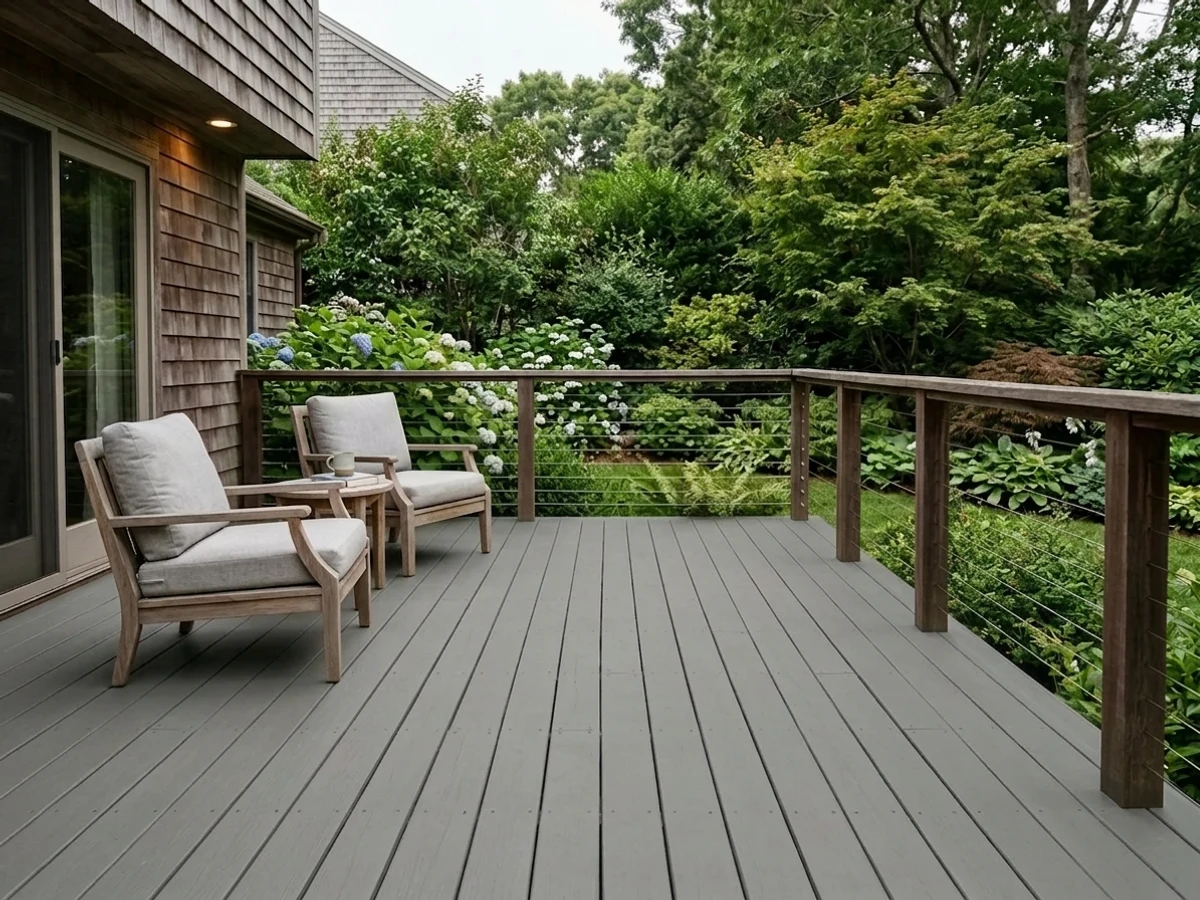
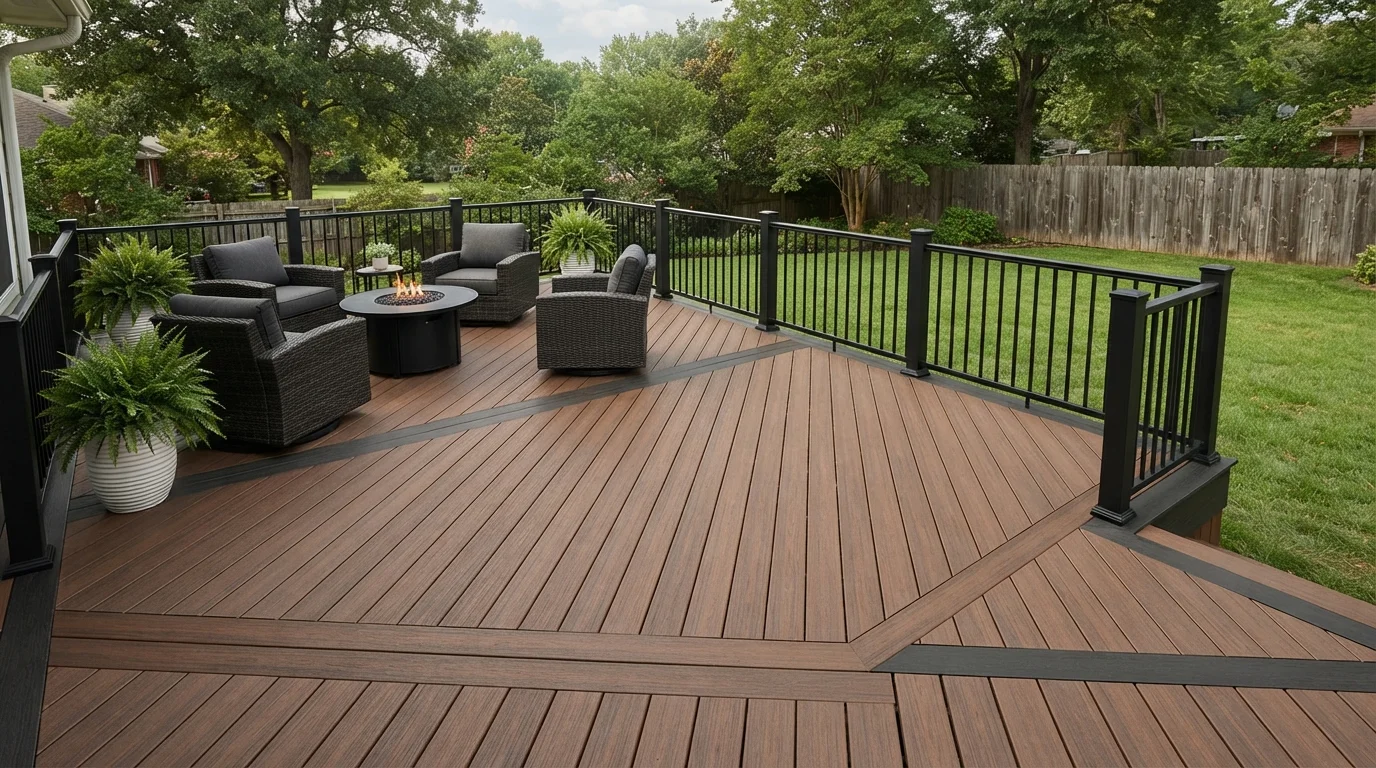
Room Colors · Gray Deck
8 Best Gray Deck Paint Colors for 2026
ideas, combinations, and real rooms
8 curated picks from real gray decks — with the exact colors, honest reasons why, and the combinations that hold the room together.

Former interior stylist who can spot a green undertone from across a room. Jessica writes the color and mood pieces — what to choose, what pairs, and why your "white" looks pink.
The Fast Answer
Don't want to read 8 picks? These four are the safe answers.

Top Picks for the Gray Deck
Tap a shade to see the gray deck in it, then try it on your own room.
Gray Deck Color Trends 2026 — What's In, What's Out


- Flat Battleship Gray — The single-note, blue-cool battleship gray that covered decks in the 2010s now feels sterile next to 2026's warmer, more nuanced gray tones.
- Gray Deck With Gray Everything Else — Matching gray decking to gray railing, gray furniture, and gray planters is losing favor as homeowners look for more contrast and warmth outdoors.
- Pale Silvery Gray Wash — The thin, pale silvery gray wash popular a decade ago now looks washed-out and dated next to 2026's richer, more saturated gray finishes.
The 8 Best Gray Deck Paint Colors
Every pick below is a real rendered gray deck, not a chip. The lead color first; the swatches are the full scheme in the photo — walls, furniture, textiles, accent.

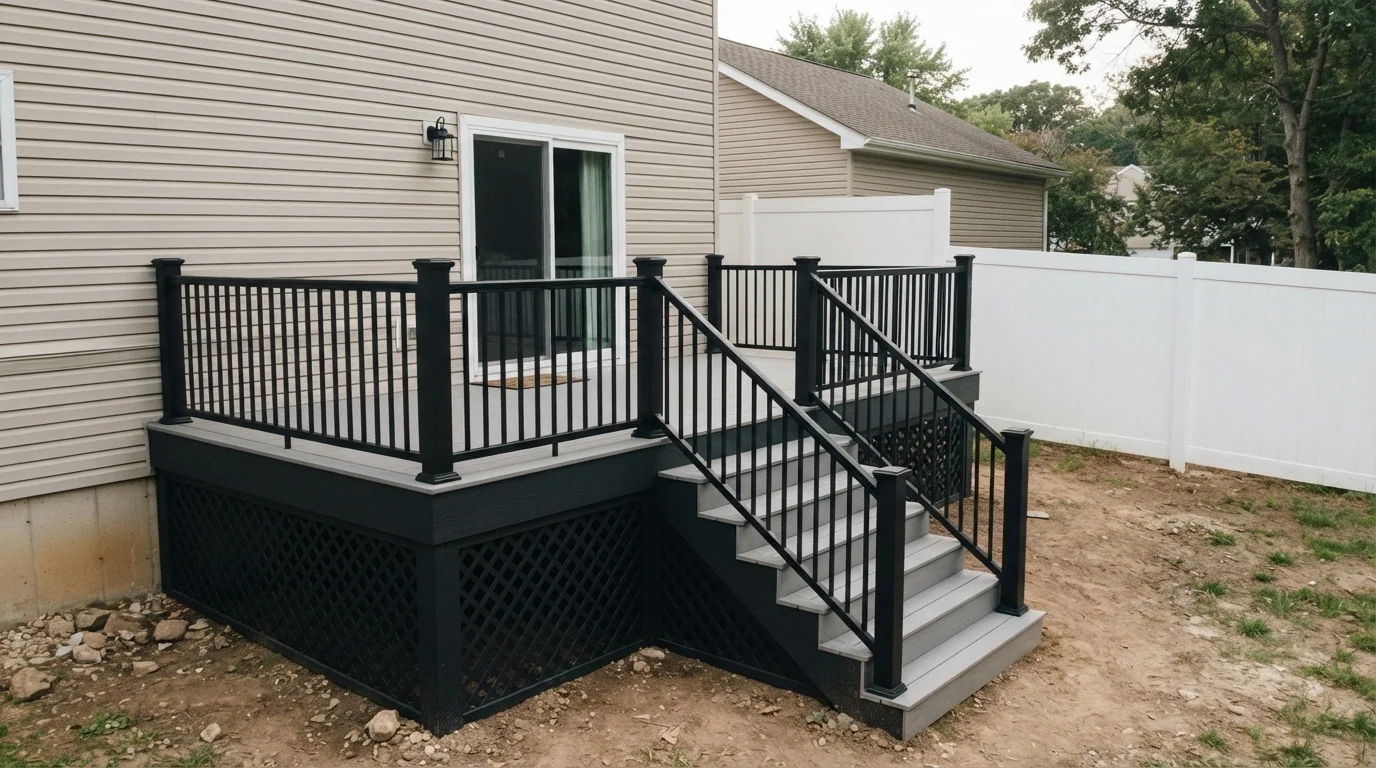
Cool grey decking paired with crisp black railings brings a polished, contemporary feel to backyard living.
Cool grey is a clean, modern stone tone. In this photo, light grey covers the deck boards, steps, and lower trim, while solid black covers the posts and railing balusters. The space feels fresh, tidy, and sharp. The high contrast between the pale grey base and jet-black rails provides crisp architectural lines that stand out neatly against the house siding. It is a fantastic choice for anyone looking to give their backyard an effortless, contemporary makeover.
SEE DIGITAL NOMAD ON YOUR WALLS →
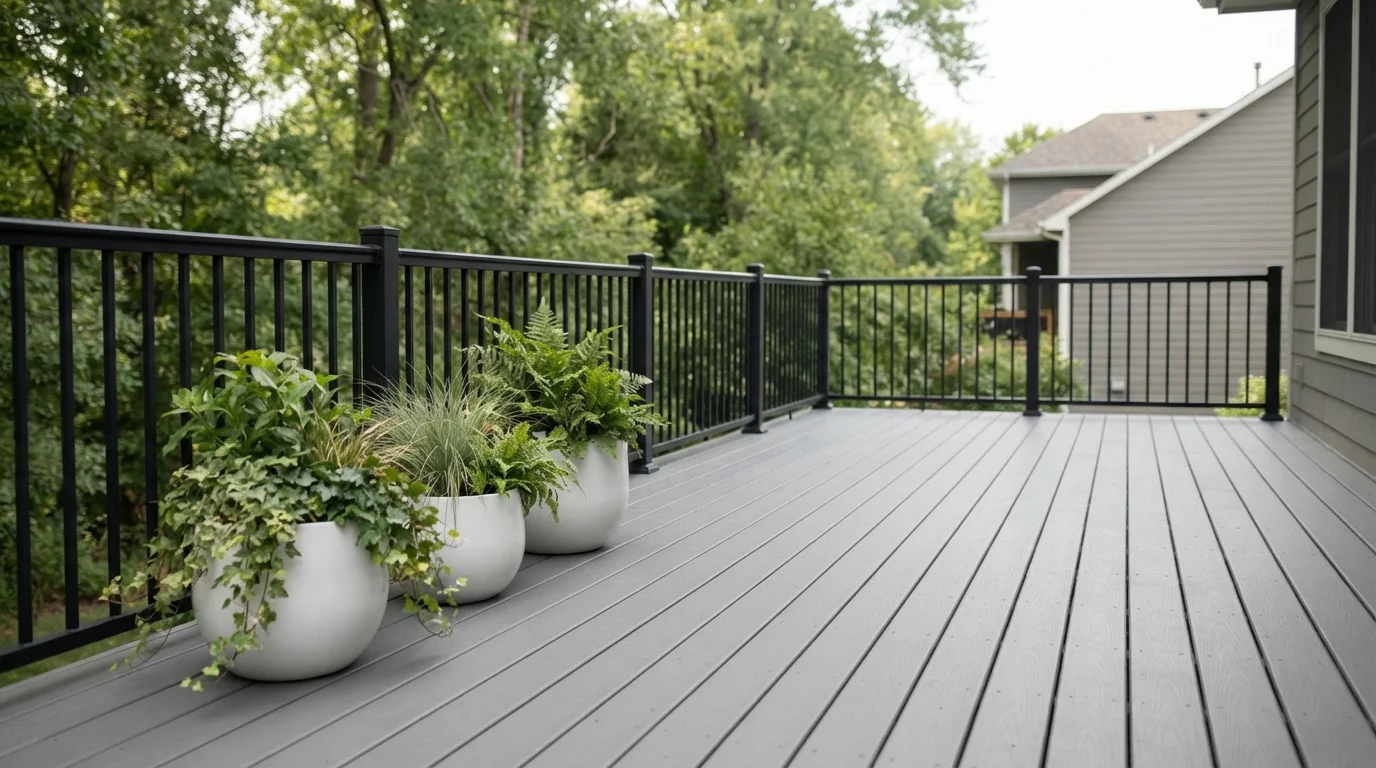
Crisp slate gray floorboards meet sleek black railings and fresh green potted plants under soft outdoor light.
Neutral gray is a smooth, balanced slate tone. In this space, the wide deck boards are coated in a solid medium gray, paired with crisp matte black railings along the perimeter. The space feels clean, airy, and grounded. The deep black railings provide sharp contrast against the light floor, letting the vibrant green potted plants stand out naturally. This look is perfect for anyone seeking an easy, modern outdoor retreat that feels instantly polished and orderly.
SEE STONEHEDGE ON YOUR WALLS →
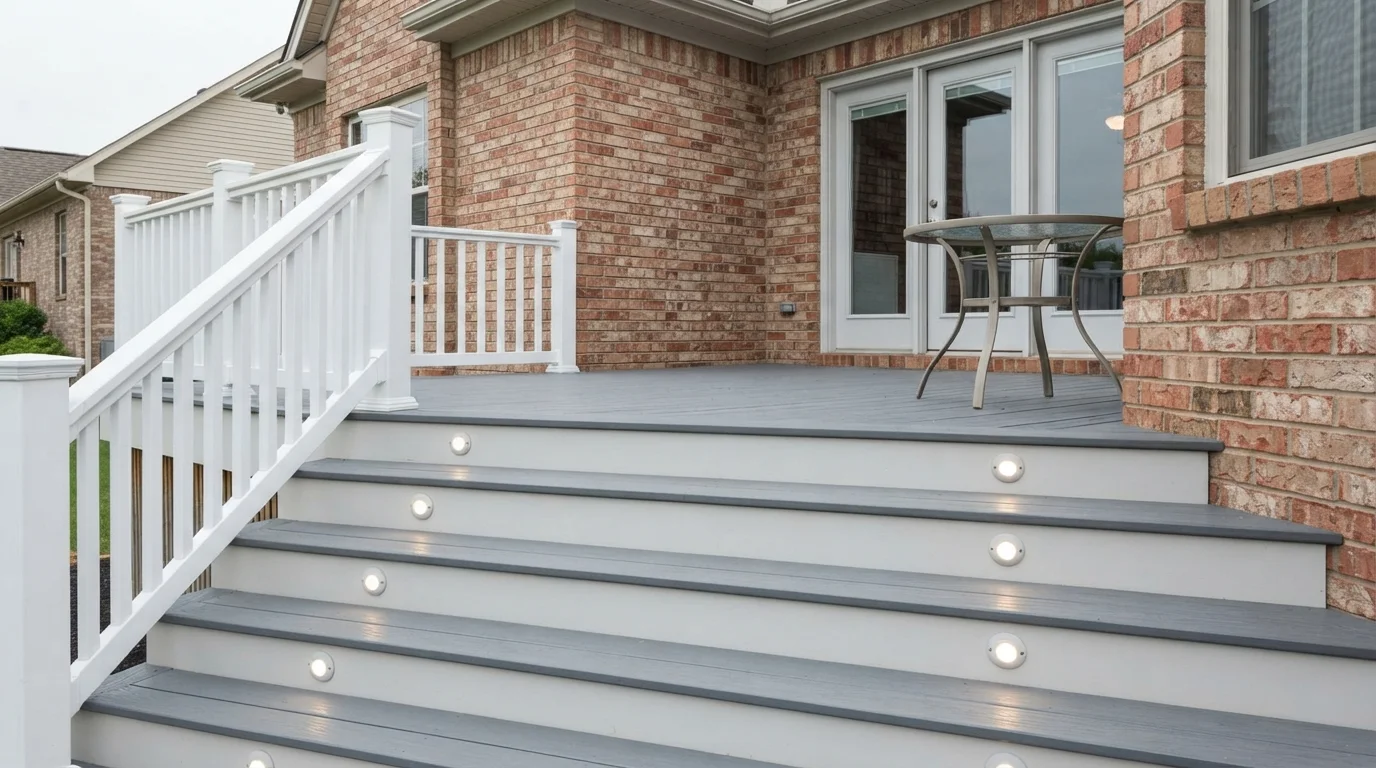
Cool slate gray deck boards paired with crisp white railings bring a modern, polished vibe to outdoor living.
Slate gray is a cool, calming blue-toned neutral. Here, it covers the deck planks and stair treads, contrasting sharply with the bright white risers and clean railing. The combination feels neat, fresh, and remarkably grounded next to classic red brick. Neutral cool tones balance out the warmth of the exterior walls, keeping the whole backyard looking updated. It is a fantastic choice for anyone wanting a durable, contemporary look that stays stylish in every season.
SEE DUENDE ON YOUR WALLS →
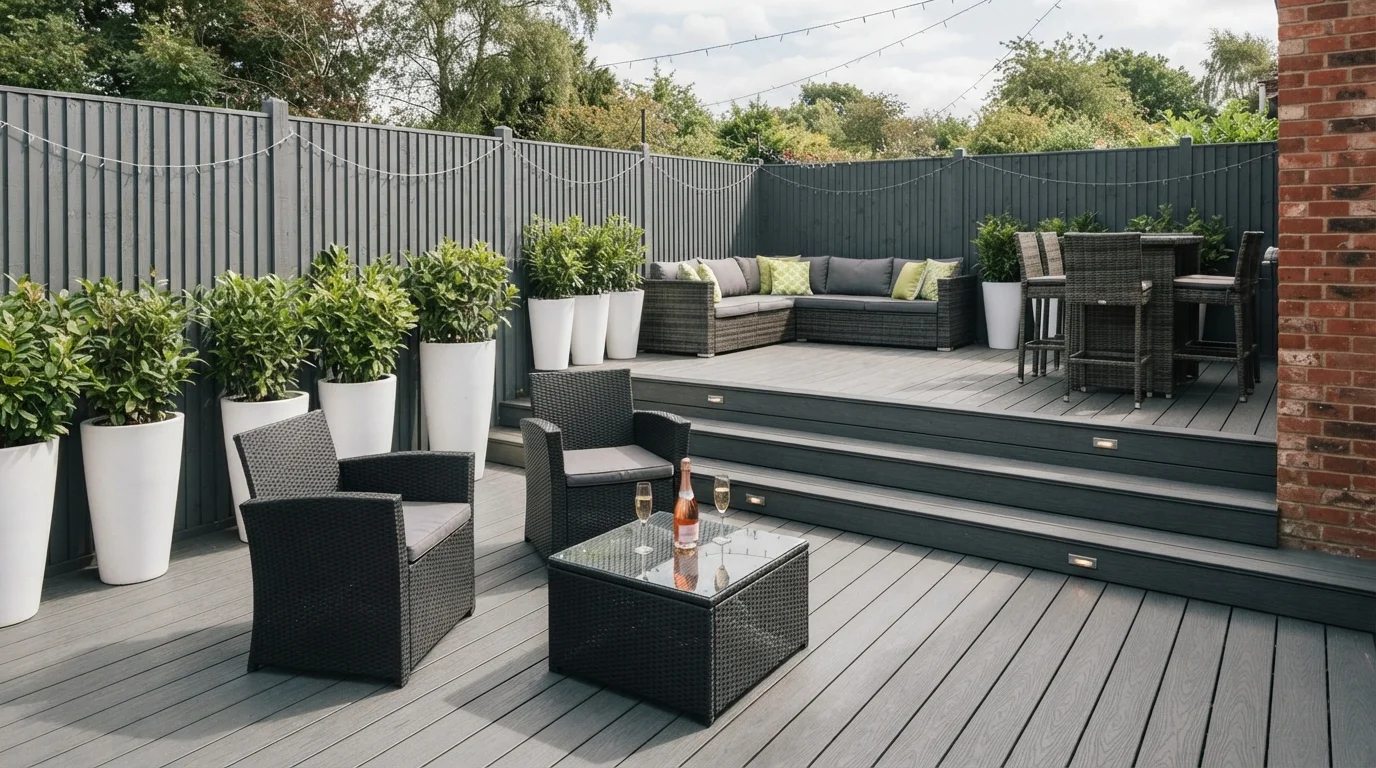
Deep charcoal woodwork and layered gray textures combine with fresh greenery and crisp white planters for a chic outdoor lounge.
Slate gray is a deep, moody neutral with a clean modern edge. In this backyard space, rich dark gray coats the tall privacy fence, creating a dramatic backdrop for matching wicker seating, cozy gray cushions, and punchy lime-green pillows. The whole setup feels calm, polished, and ready for summer evening drinks. This style works because crisp white planters and vibrant foliage stand out sharply against the dark gray background. It is a fantastic choice for anyone who loves an upscale, low-maintenance entertaining patio.
SEE SEARED GRAY ON YOUR WALLS →
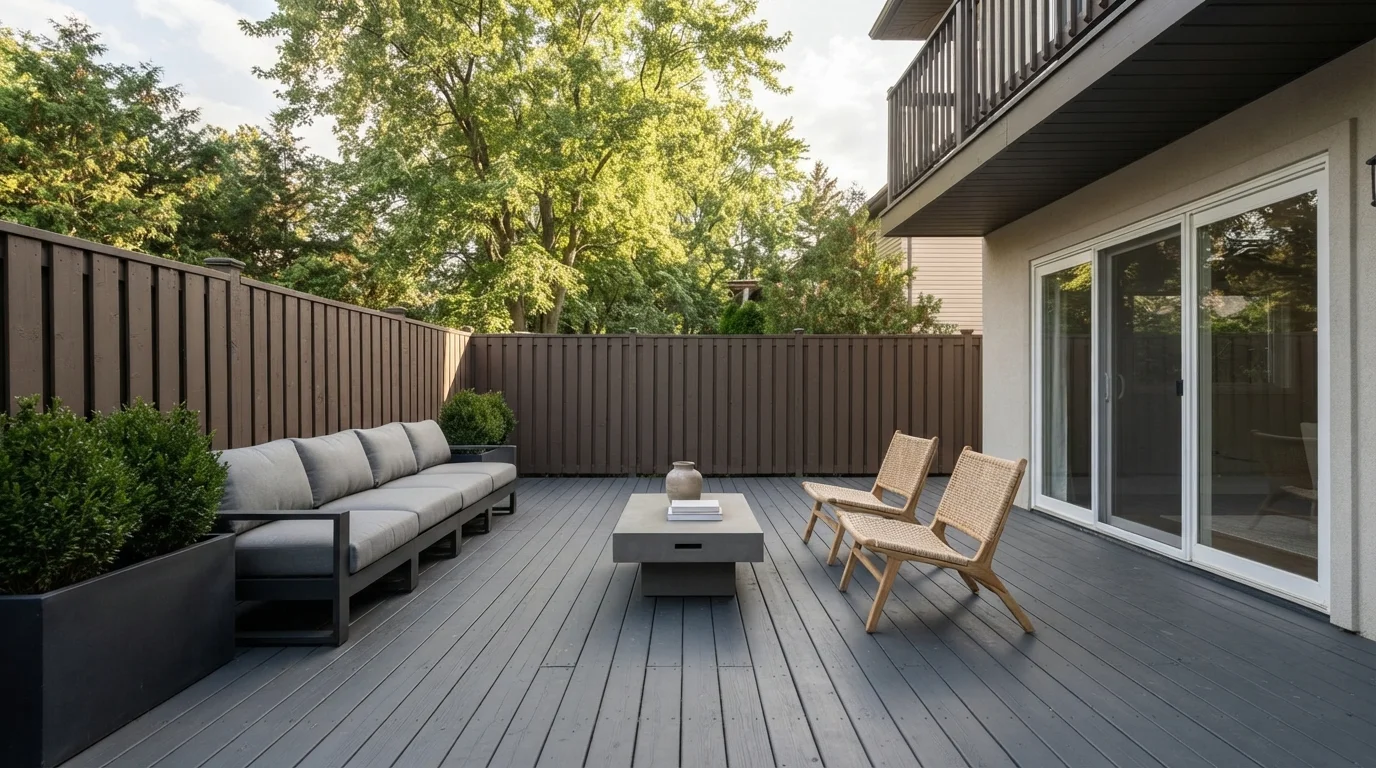
A serene outdoor patio pairs cool slate gray decking with rich wood fencing under a lush canopy of sunlit trees.
Slate gray is a deep, cool neutral with modern character. In this patio setup, cool charcoal gray blankets the deck floorboards, framed cleanly by a warm chestnut brown privacy fence and soft light gray cushions on the sofa. The space feels tranquil, grounded, and deeply relaxing. Pairing cool gray with rich wood works because contrasting warm and cool neutrals creates an effortless balance with outdoor greenery. It is a fantastic look for anyone looking to build an easy, stylish backyard escape.
SEE THUNDERSTORM ON YOUR WALLS →
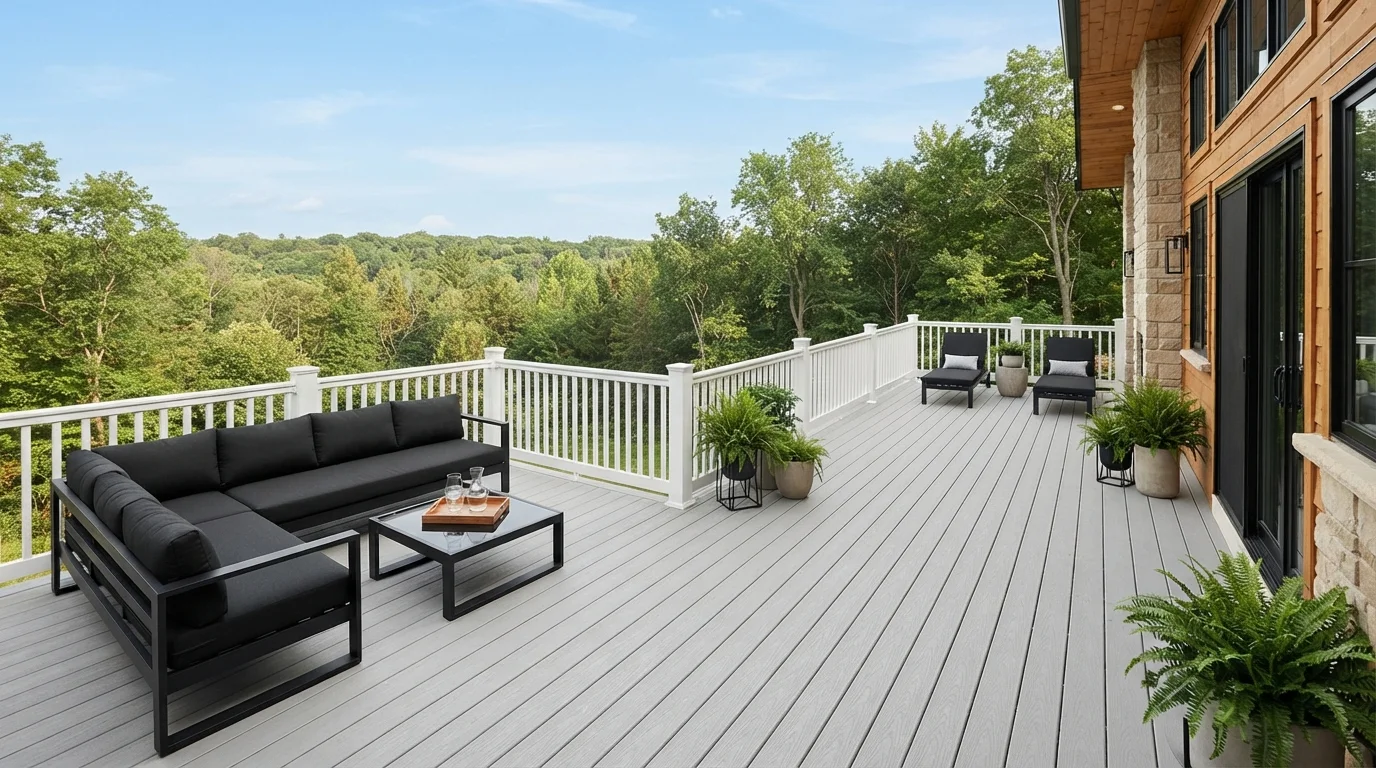
Cool silver-gray decking pairs with bold black lounge seating overlooking a lush, sun-drenched treetop view.
Cool silver gray is a crisp, modern neutral with an airy touch. In this outdoor space, the light gray deck boards stretch out beneath deep black sectional seating, slim metal accent tables, and clean white railings. The space feels open, fresh, and wonderfully calm. The combination works because bold charcoal furniture sharply contrasts with the pale deck floor, letting the surrounding greenery steal the show. It is the perfect setup for anyone who loves low-key luxury and effortless open-air entertaining.
SEE LET IT RAIN ON YOUR WALLS →
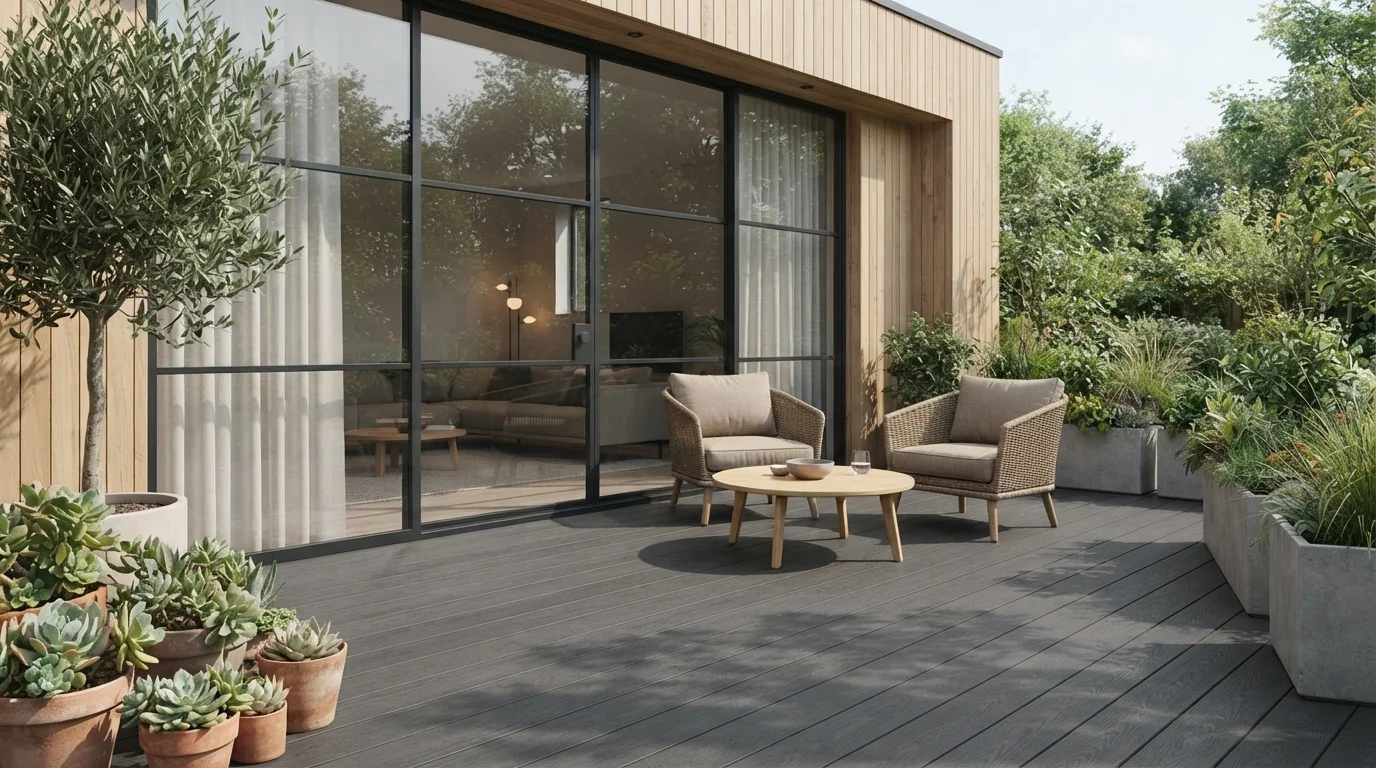
Sleek charcoal decking pairs with warm woven seating and leafy greens to craft a calming outdoor retreat.
Charcoal is a deep, grounding slate grey. In this outdoor space, the dark grey boards stretch across the entire deck, balanced by light woven armchairs, a blonde wood coffee table, and potted greenery. It feels wonderfully calm and breezy. The combination works because the cool dark floor lets the warm natural wood and green plants stand out. It is the perfect setup for anyone who loves clean lines and easy outdoor lounging.
SEE TEMPTATION ON YOUR WALLS →
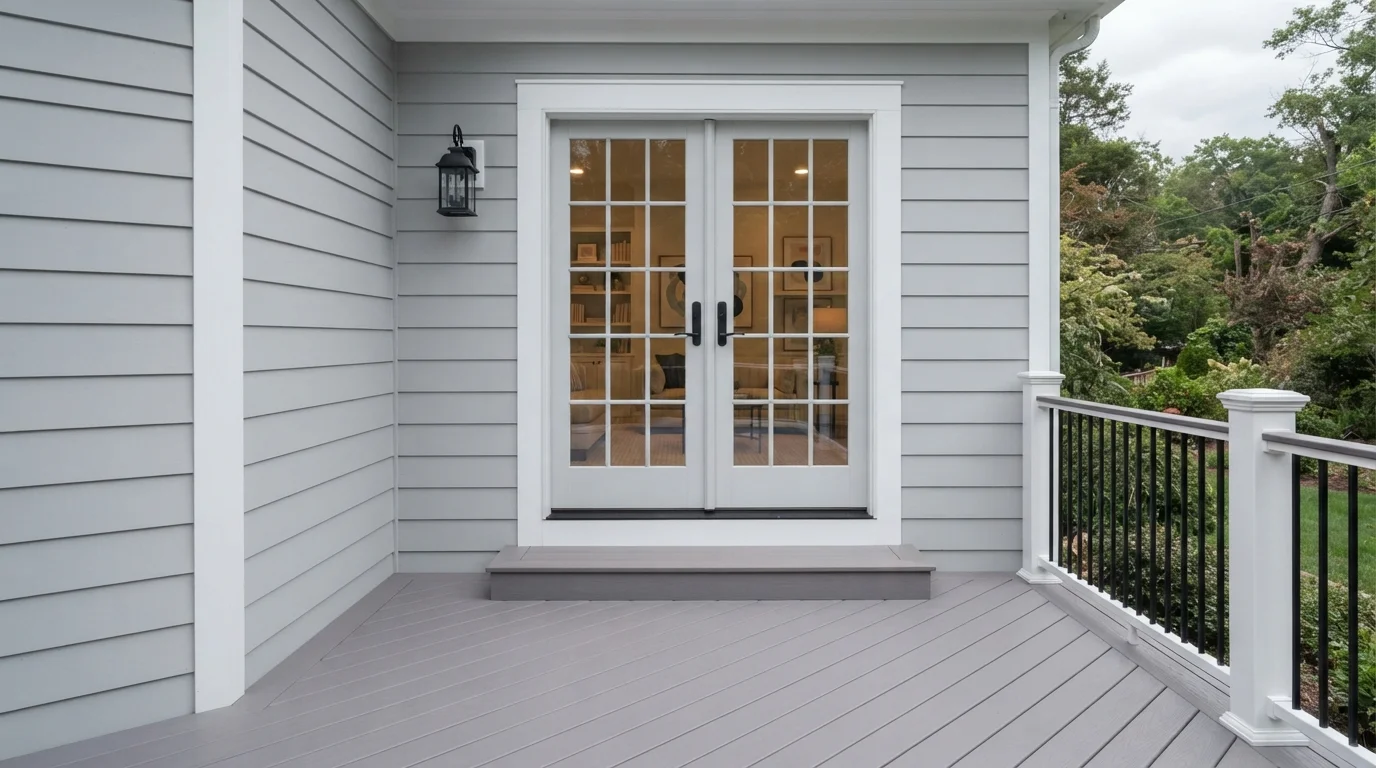
Smooth slate gray decking pairs with crisp white trim to create an airy, effortlessly modern outdoor retreat.
Slate gray is a balanced, cool neutral with a crisp modern finish. In this patio space, cool slate gray coats the deck boards and French doors, surrounded by soft silver siding and clean white trim. The entire outdoor area feels tidy, calm, and fresh. Sticking to a monochrome scheme works because the bright white borders give the cool grays sharp definition and structure. It is a fantastic choice for anyone who loves an orderly, low-maintenance outdoor lounge.
SEE LILAC FIELDS ON YOUR WALLS →Gray Deck Wall Color Combinations
A wall color never works alone. These are the full schemes from the rooms above — the lead color first, then the supporting colors that make the photo work.
Cool grey decking paired with crisp black railings brings a polished, contemporary feel to backyard living.
TRY THIS PALETTE →Crisp slate gray floorboards meet sleek black railings and fresh green potted plants under soft outdoor light.
TRY THIS PALETTE →Cool slate gray deck boards paired with crisp white railings bring a modern, polished vibe to outdoor living.
TRY THIS PALETTE →Deep charcoal woodwork and layered gray textures combine with fresh greenery and crisp white planters for a chic outdoor lounge.
TRY THIS PALETTE →Platinum Gray pairs cleanly with white or black railings and trim — it's light enough that it won't disappear against white siding, and cool enough that it holds its own next to black hardware or a black metal railing. Slate Gray works well against warmer house colors: it's the pick to use when the siding or brick leans tan or brown, since the cooler gray of the deck creates contrast instead of competing with the wood tones of furniture and planters.
Fired Bronze and Cracked Pepper both read best with natural wood accents — a cedar pergola, teak furniture, or unpainted wood steps — because the warmth of real wood keeps a dark charcoal deck from feeling flat or cave-like. Quiet Moments is the pick for a deck attached to a cottage or farmhouse-style house with white or cream trim; its warmth keeps the gray from feeling cold next to those softer exterior colors. Gauntlet Gray is the one to use for a fully modern look — pair it with black railings, steel accents, or gray-toned composite furniture rather than warm wood, since mixing it with orange-toned cedar tends to fight the deliberately weathered, low-warmth look it's going for.
More Deck Color Ideas
Set on a color family already? Each page has its own real rooms and picks.
Light or Dark Gray Deck Colors?
Go Light (LRV 60+) If…
The room is small, faces north, or has to work at every hour. Light warm colors make it feel bigger and stay calm in evening light — the light you actually live in.
Go Dark (LRV Under 20) If…
You want the cocoon effect and the room has real daylight. Dark works best on one feature wall — or fully color-drenched in a large room with good windows.
On a deck, light versus dark isn't just a mood decision — it changes how the boards feel to walk on and how often you'll need to sweep. Platinum Gray at LRV 40 reflects more sunlight than the darker options here, so the boards stay noticeably cooler on a July afternoon, which matters if anyone walks the deck barefoot. The tradeoff is that a lighter gray shows tracked-in mud, wet leaf stains, and algae more readily, so it needs a rinse or sweep more often to look its best.
Slate Gray (LRV 24), Fired Bronze, and Cracked Pepper go the other direction: darker colors absorb more heat and can get uncomfortably hot underfoot in direct sun, but they hide dirt, mildew spots, and everyday scuffs far better, which is why they're the better choice for a high-traffic deck near a grill or a pool. Gauntlet Gray sits in between visually — dark enough to hide grime, but a true neutral gray rather than a heat-absorbing near-black, so it's a reasonable middle ground if full sun exposure and dirt-hiding both matter.
See It. Love It.
Paint It.
Upload one photo of your gray deck and try every color on this page on your own walls — in your own light, before you buy a drop of paint.

Gauntlet GrayBeforeSheen And Slip Resistance For A Gray Deck
Deck paint sheen matters more than it does on an interior wall, because a deck gets wet and walked on. Matte and flat finishes give the best grip underfoot and are the standard recommendation for any deck paint, gray or otherwise — a glossier finish looks cleaner when dry but gets noticeably slicker when wet, which is a real fall risk on steps or a pool deck.
If the deck sees rain, a sprinkler, or foot traffic straight out of a pool, look for a solid-color deck paint labeled with anti-skid or textured additive rather than a standard flat exterior paint, and apply it in the color you've chosen — Slate Gray, Fired Bronze, and Cracked Pepper all come in solid deck-and-floor formulations built for this, not just wall paint tinted to the same color.
One more difference from interior gray: a solid-color deck paint fully hides the wood grain, while a semi-transparent or solid stain in a similar gray lets some grain show through. Decide which look you want before buying, since paint and stain in the "same" gray name can read very differently once it's down.
Common Mistakes With Gray Deck Colors
The biggest mistake is picking a light gray like Platinum Gray for a deck that gets heavy daily traffic without a regular cleaning routine — it looks great on day one and shows every bit of dirt, pollen, and grass clipping within a few weeks. Light grays work best on decks that get swept or hosed off regularly, not decks that mostly get walked past.
The second mistake runs the other way: choosing a very dark gray like Cracked Pepper for a deck in full, all-day sun without checking how hot the boards get. Dark colors can become uncomfortable to walk on barefoot in summer heat, so if bare feet are common on the deck, test a sample board in direct sun for a few hours before committing to the darkest options here.
The third is skipping an outdoor test swatch. Gray shifts more outdoors than almost any other color family — the same gray can read blue-toned in shade and warmer in direct afternoon sun. Paint a small board or a poster-board sample of Gauntlet Gray, Quiet Moments, or whichever pick you're considering, and check it at different times of day before painting the whole deck.
About Gray Deck Paint Colors
Gray is the deck color that solves a real problem: dirt, leaves, pollen, and shoe scuff show up fast on a horizontal surface that gets walked on every day. A gray deck hides that traffic between cleanings in a way white or tan never does, and it reads as modern against almost any siding color instead of fighting it the way a warm cedar-brown stain can. Benjamin Moore Platinum Gray (HC-179, LRV 40) is the safest starting point — light enough to stay noticeably cooler underfoot in full sun, but gray enough that it doesn't show every leaf and grass clipping the way a true white would.
If the deck gets heavy use — kids, a grill, a dog, furniture dragged around — Behr Slate Gray (6695, LRV 24) or Dunn-Edwards Fired Bronze do more of the hiding work. Both sit in the medium-to-dark range where footprints, dirt, and mildew spots blend into the color instead of standing out against it. Fired Bronze in particular reads sleek rather than heavy, because it's a true neutral gray, not a muddy brown-gray that looks dirty even when it's clean.
For a specific look rather than a maintenance decision, Gauntlet Gray gives a deep, modern charcoal-gray that reads as an intentional weathered-wood finish, Quiet Moments is the soft, warm gray that works with cottage and farmhouse trim instead of against it, and Behr Cracked Pepper is the boldest charcoal of the group — closer to black than gray, and best on a deck that's meant to look like a design statement rather than blend into the yard.

The Questions Everyone Asks
What color should I paint my gray deck?
If you want one answer, start with the safe picks above — Digital Nomad, Stonehedge, Duende, Seared Gray. They read well in any light and survive furniture changes. Then check the light: strong afternoon sun wants a step cooler, a north-facing room wants a step warmer.
what is the best gray for a deck that hides dirt?
Medium-to-dark, true neutral grays hide dirt best — very light cool grays show tracked-in mud and algae, and very dark charcoal shows dust and pollen. Behr Slate Gray (LRV 24) and Dunn-Edwards Fired Bronze both sit in that medium-dark, true-gray range, which is why they read as clean between cleanings better than a lighter pick like Platinum Gray does.
should a deck be lighter or darker than the house?
Either works, but contrast reads more intentional than a near-match. If the siding is warm (tan, brown, brick), a cooler gray like Slate Gray or Platinum Gray creates a clean contrast. If the siding is already white or light gray, a deeper gray like Fired Bronze or Cracked Pepper grounds the deck instead of letting it blend into the wall behind it.
does a dark gray deck get hot in the sun?
Yes — dark colors absorb more heat than light ones, so a deck painted Cracked Pepper or Fired Bronze will run noticeably hotter underfoot in direct sun than one painted Platinum Gray (LRV 40), which reflects more light and stays cooler. If bare feet are common on the deck and it gets full afternoon sun, the lighter end of this list is the safer pick.
what sheen is best for a gray deck?
Matte or flat. Glossier finishes look sharper when dry but get slippery when wet, which is a real hazard on deck boards or steps. For decks that see rain or pool splash-out, look for a solid-color deck paint with an anti-skid or textured additive rather than a standard flat wall paint tinted the same gray.
does gray deck paint fade over time?
All exterior deck paint fades some with UV exposure, but 100% acrylic exterior deck formulas hold color longer than cheaper alkyd paints. Darker, richer grays like Fired Bronze and Cracked Pepper tend to show fading as a visible color shift over a few seasons, while a mid-tone like Slate Gray fades less noticeably because the color has less contrast to lose.
What two-color combination works best in a gray deck?
The reliable pattern is a quiet main color plus one deep accent on a single wall. Keep trim and ceiling in one warm white so the two colors are the only event in the room — the combination cards above show complete schemes from real rooms.
What colors make a gray deck look bigger?
High-LRV, slightly warm colors — LRV 60–75 is the sweet spot. Paint the walls and trim close to the same light color so the corners blur, and keep the ceiling white. Stark cool white actually works against you; it creates hard shadows that show the room's edges.

Ask a Question