Slate Gray
Behr's default deck-and-porch gray, reviewed honestly: why it dries lighter than the can, why it is not the blue slate the name promises, and which Behr product to put it in.

Jessica has spec'd whites and neutrals for more than 300 rooms and keeps a sample wall of painted drawdowns in her studio. Every color review is checked against real reader rooms in the comments and re-tested when a formula changes. About the testing process →
- 1Black Fox7
- 2Pewter Green12
- 3Slate Gray24
- 4Stardew43
- 5Quietude48
The Fast Verdict
Slate Gray is the gray Behr stocks in almost every floor coating it makes, and that is the honest reason to buy it: whatever you are painting — deck boards, a porch floor, a patio slab, basement concrete — this color is on the shelf in the right product. It is a plain, near-neutral mid gray with the faintest green lean, not a blue slate, and it dries a step lighter than the can under open sun. Get those two expectations right and it is one of the most dependable exterior floor colors sold.
Wood decks, porch floors and patio slabs · concrete steps, stoops and basement floors · gray fences and exterior woodwork · anyone who wants a deck color that hides pollen, dust and foot traffic
You want a blue-slate deck · your deck bakes in unshaded midday sun and you need it to read dark · the boards are cupped, damp or already peeling · you are shopping for an interior wall color
- Available in nearly every Behr floor coating — deck, patio, concrete, epoxy
- Hides pollen, dirt, paw prints and foot traffic better than any tan
- Near-neutral, so it goes with brick, stone, cedar, white rails and lawn
- LRV 24 is dark enough to look intentional, light enough not to bake underfoot
- Matches a wood deck to concrete steps and a basement floor with no custom tinting
- Reads a full step lighter and more silver in unshaded sun
- Not blue — the name promises a slate the paint does not deliver
- The thick DeckOver versions carry a real peeling and moisture-trapping record
- Any painted floor gets slick when wet unless you use the anti-slip version
What Color Is Slate Gray, Really?
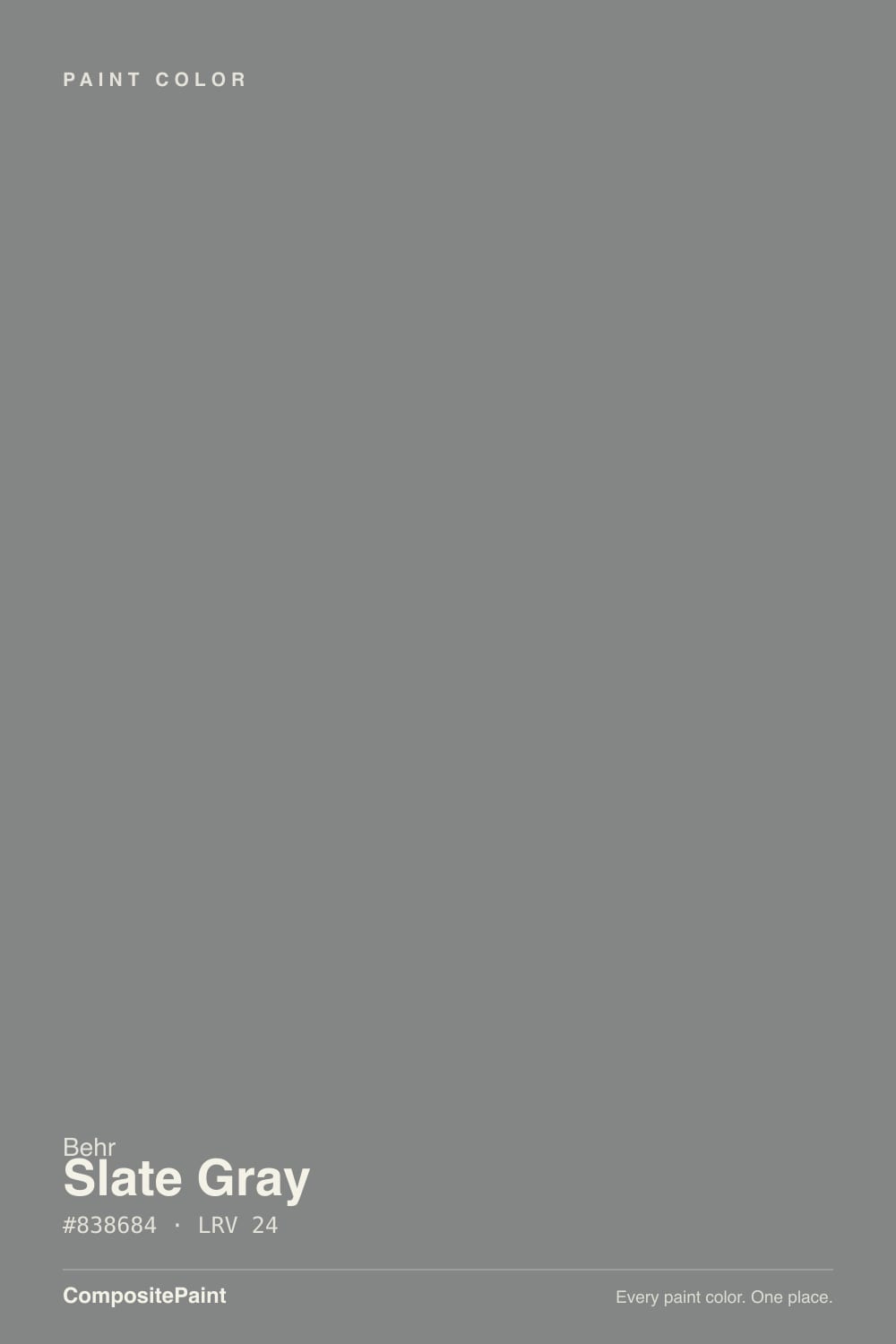
A mid-depth gray built to sit flat on the ground and disappear. Read the numbers instead of the name and the color is almost perfectly balanced — red, green and blue land within three points of each other, with green a hair ahead. That makes it a near-neutral gray with the faintest green-gray cast, the kind of gray that goes with brick, stone, cedar, white rails and a green lawn without picking a fight with any of them. What it is not is blue. Slate the rock is blue-gray; Slate Gray the paint is not, and that gap is behind most of the disappointed reviews.
At LRV 24 it is a genuine mid-dark tone — dark enough to swallow pollen, boot dirt and the faint orange cast that pressure-treated lumber picks up as it ages, light enough that it does not turn a south-facing deck into a griddle the way a near-black does. That middle position is the whole appeal on a floor. You notice a deck painted this color exactly once, when it is new, and then it just reads as "the deck."
Undertone in one line: neutral gray with a whisper of green — never blue, never warm taupe. If your boards look silvery, that is unshaded sun, not the paint. If they look slightly greenish, that is either the lawn bouncing light up or new pressure-treated wood bleeding through a thin first coat.
Where It Shines
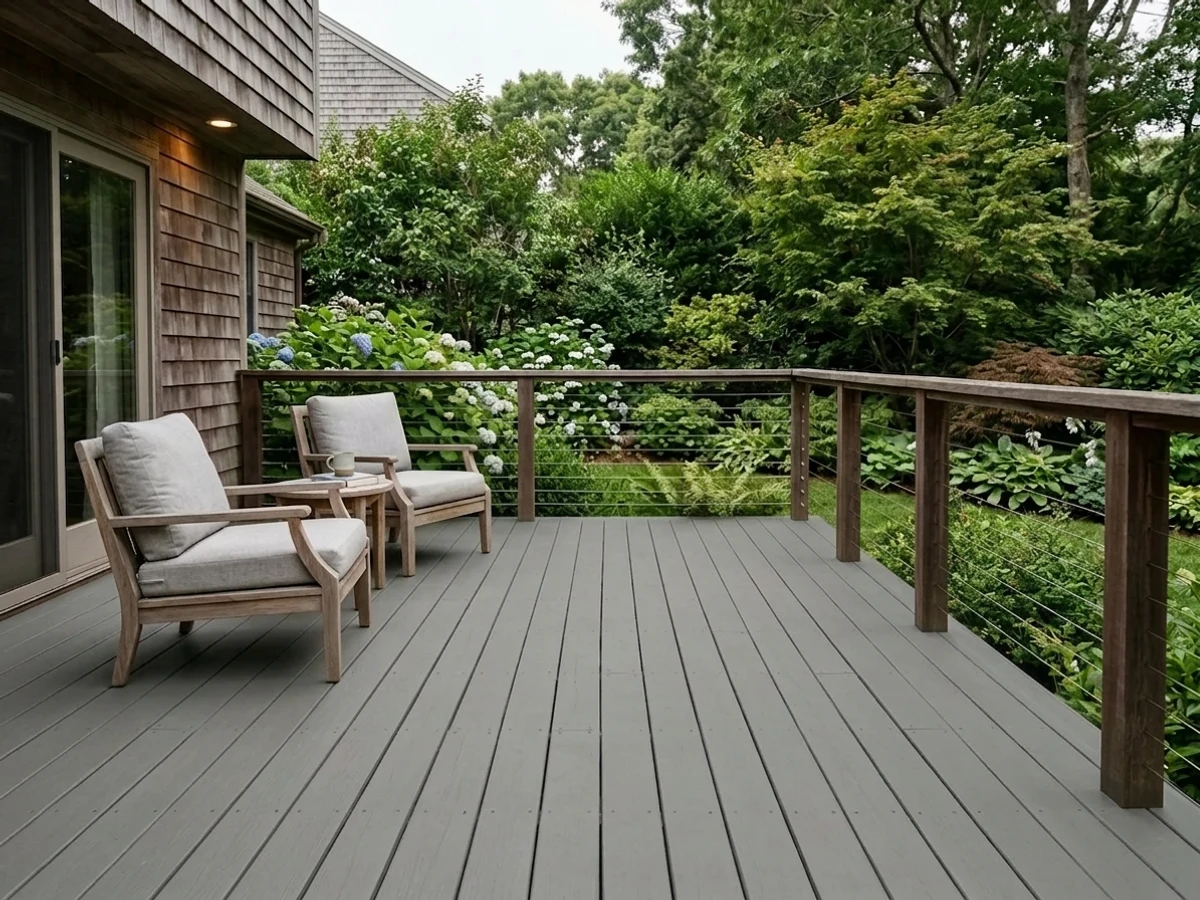
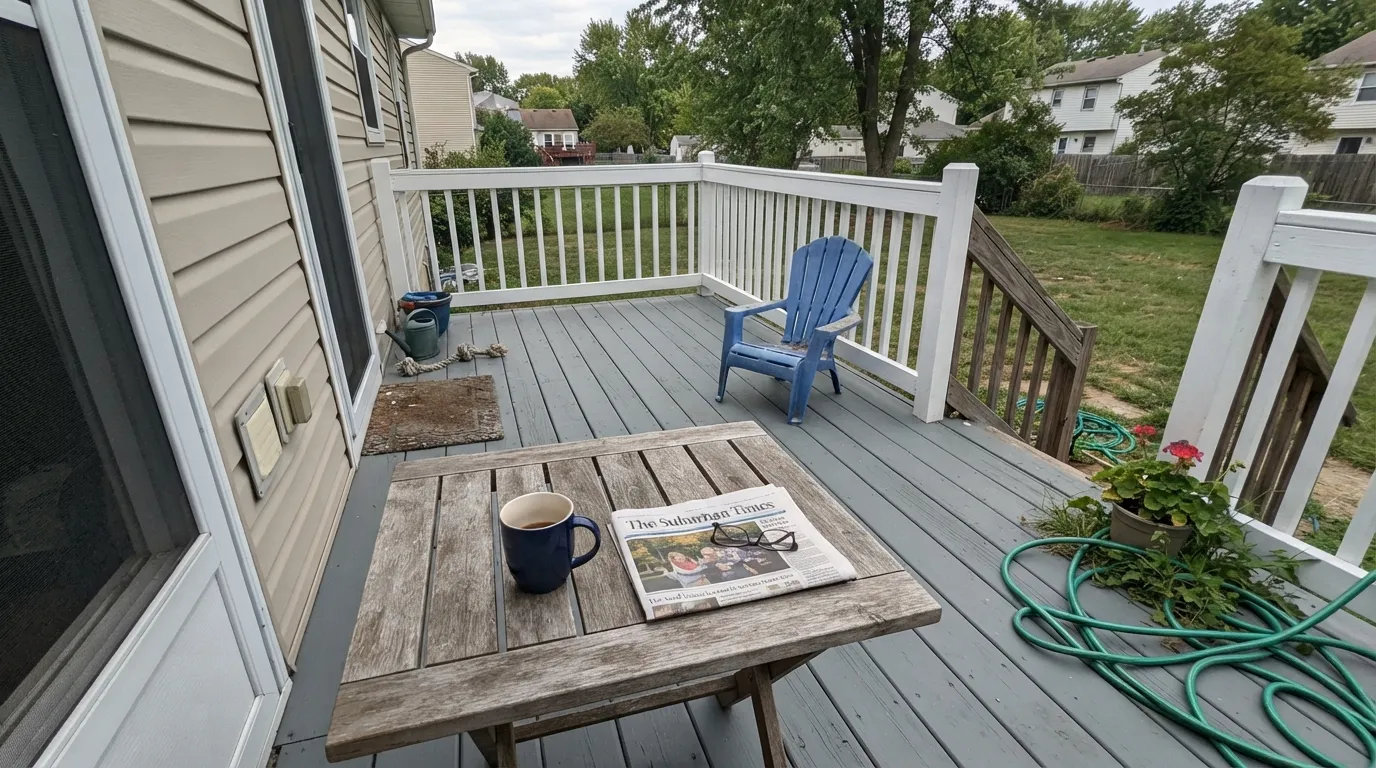
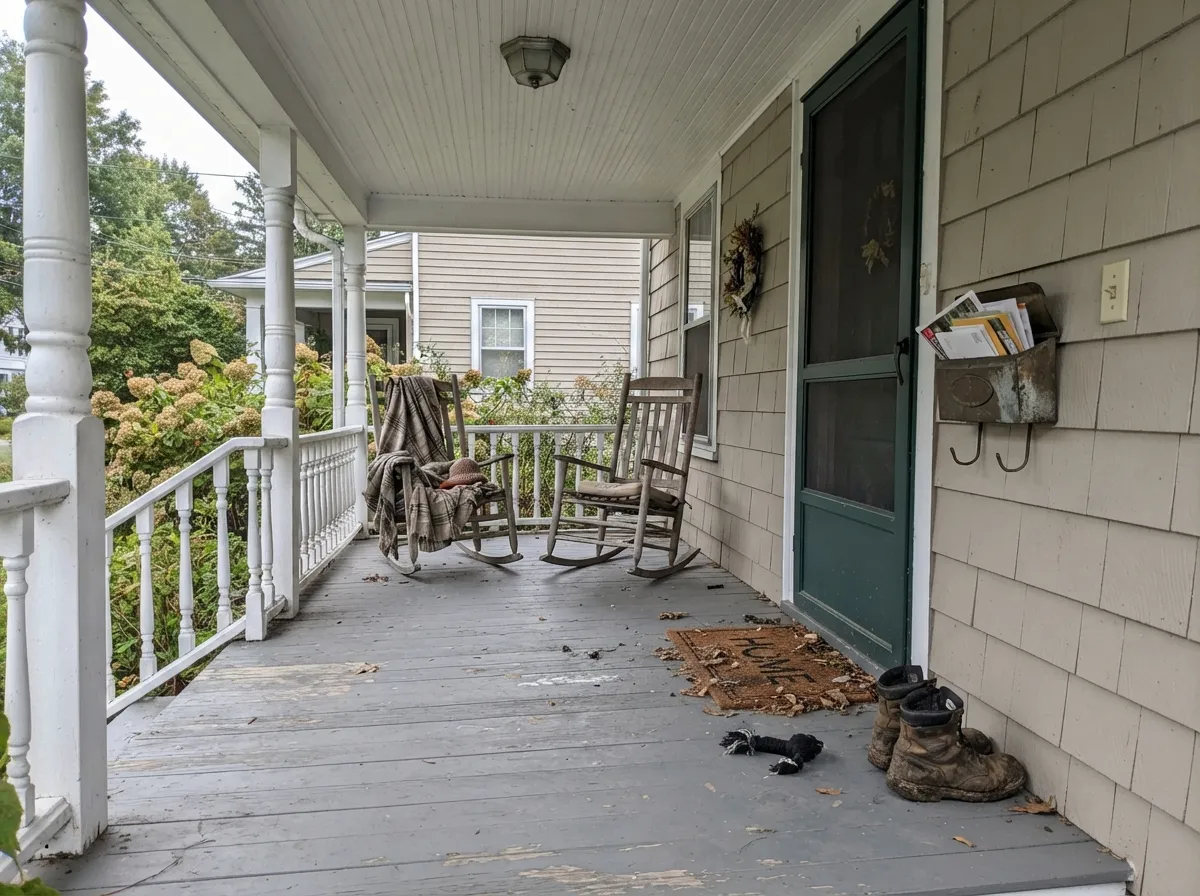
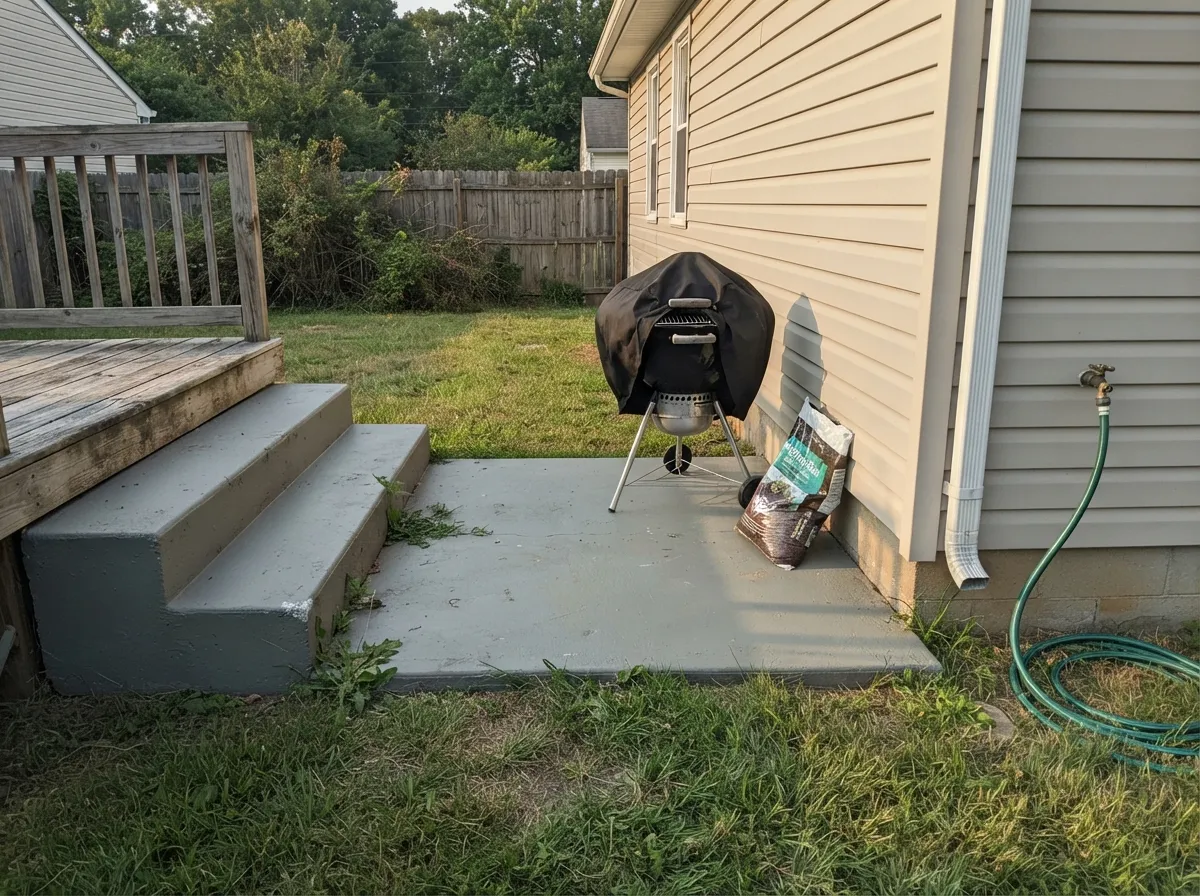
Its real advantage is not the color, it is the shelf. Behr puts this exact gray in the low-lustre and gloss porch and patio enamels, the textured anti-slip version, both DeckOver resurfacers, the solid concrete stain and the one-part epoxy garage and concrete floor paint. So a house where the wood deck, the concrete steps down to it and the basement floor all match is a normal Saturday, not a custom-tint project. On the deck itself it does the job people actually want from a painted floor: it hides everything. Pollen season, muddy paws, patio-chair scuffs and the gray-brown streaks that run off a cedar rail all vanish into it.
Where It Fails
The one-star stories about this color are remarkably consistent, and only one of the three is really about the color. All three are predictable before you open the can — and two of them are decided by the product you put the color in, not by the color itself.
This is the single most-repeated complaint: buyers expecting a solid slate get something they describe as light silver. The chip is right, but an unshaded floor is the most brutally lit surface on a house — full overhead sun plus reflection off everything around it washes a mid gray out by what looks like a whole step. Under a covered porch it reads correct. In open sun, plan on lighter, or go a step deeper.
The name sells a blue-gray and the paint is a neutral gray with a faint green lean. On a small chip you can talk yourself into blue; across 300 square feet of deck nobody will. If a blue-slate floor is the actual goal, Behr Ocean Swell (LRV 19) is the color you meant, and it is a step deeper too, which helps in open sun.
The bad durability reviews cluster hard around the thick DeckOver resurfacers rather than the thin porch and patio enamel. Owners report a good first season, then flaking that starts at board cracks and lifts in sheets — and in humid regions, moisture trapped under the film. A resurfacer is a coating that bridges gaps, so any damp, cupped or already-failing board underneath takes the coating with it. If the deck has real problems, fix the boards, use the thin enamel, and accept that it will show the wood instead of hiding it.
Room by Room
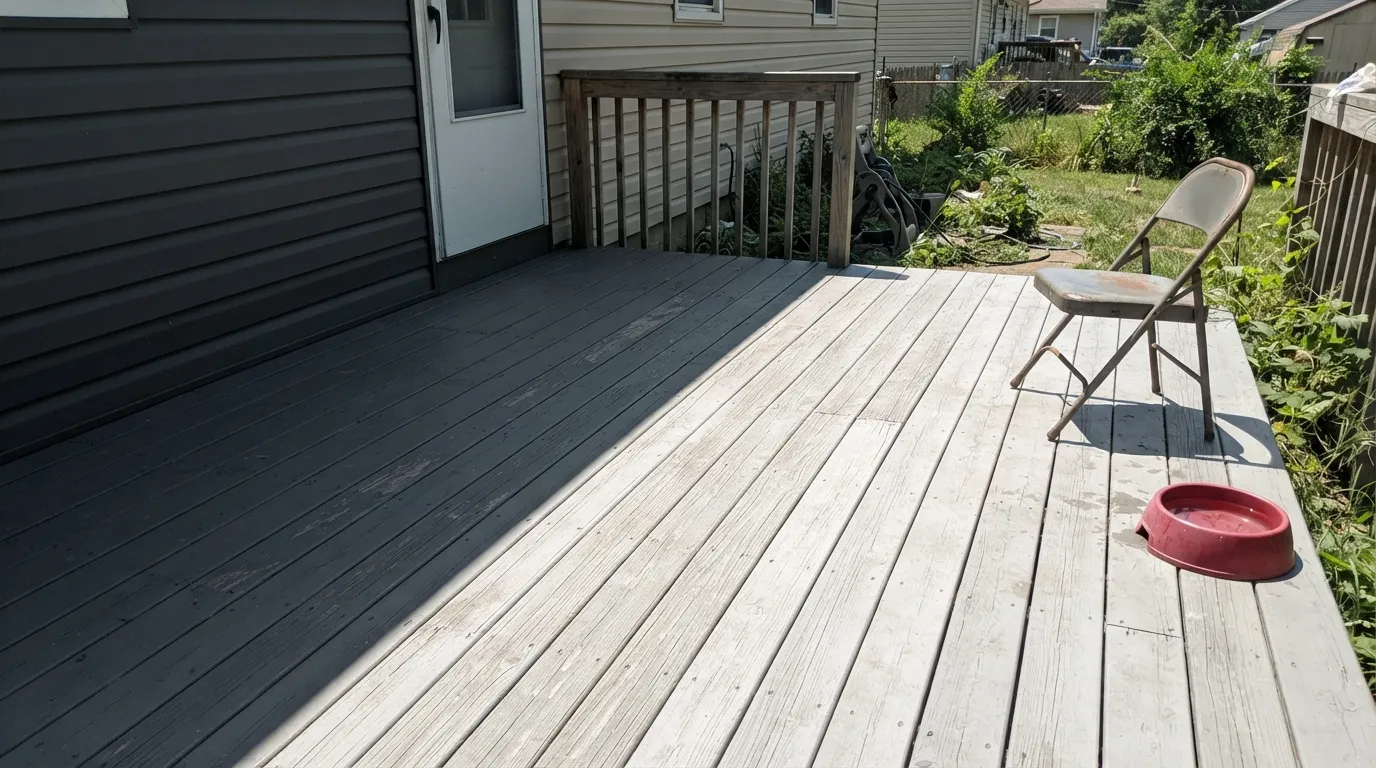
The color's home turf. Low-lustre enamel on wood boards, two coats, on dry lumber that has weathered at least a season if it is new pressure-treated. It hides dirt better than any tan or cedar tone and photographs like a floor rather than a project.
On concrete it looks even better than on wood, because there is no grain fighting the flat color. Gloss enamel or the solid concrete stain on steps and stoops; if the slab holds water or sits under a downspout, use the textured anti-slip version rather than gloss.
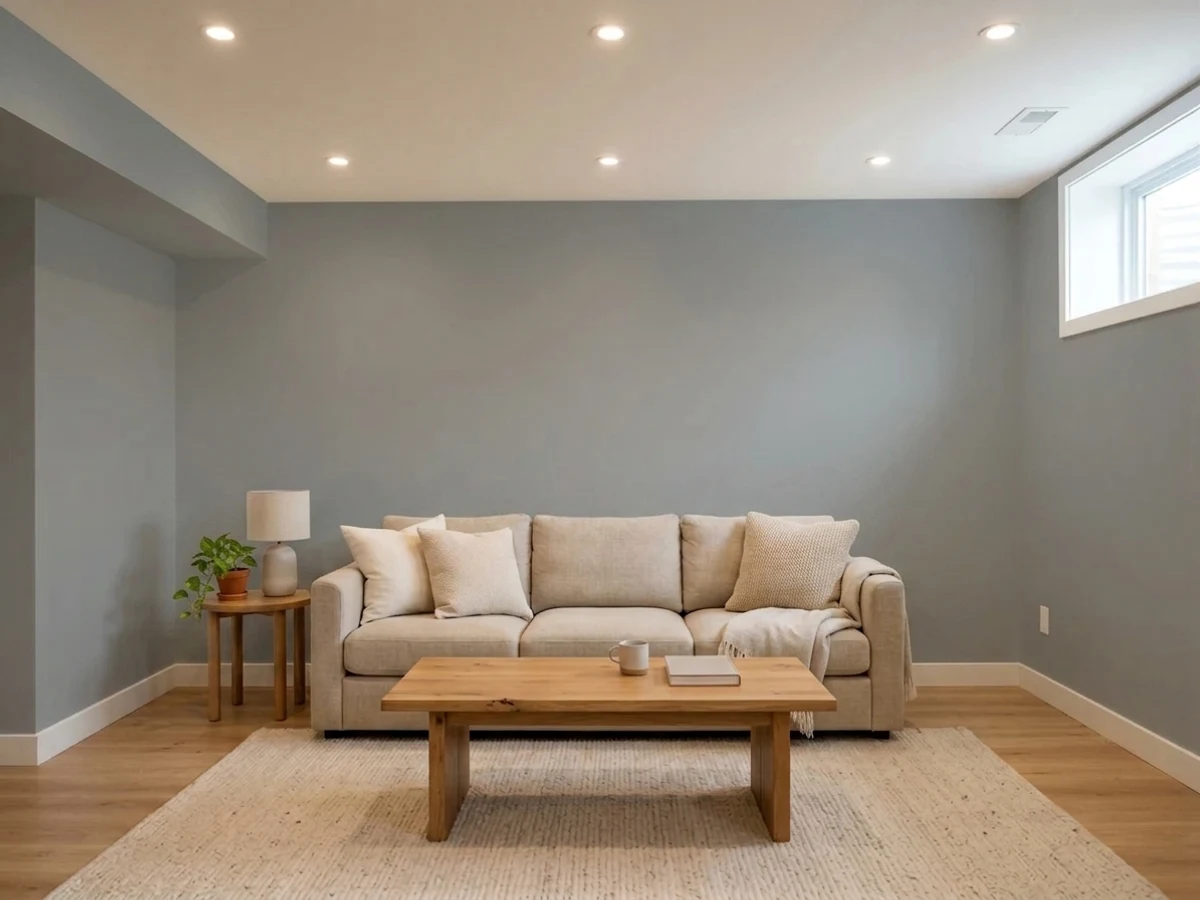
Bare basement concrete is the lowest-risk surface this color touches: no sun to wash it out, no freeze-thaw, no rain. Use the one-part epoxy floor paint over a clean, etched, moisture-tested slab and it reads as a genuine mid slate gray down there — closer to the chip than it will ever look outdoors.
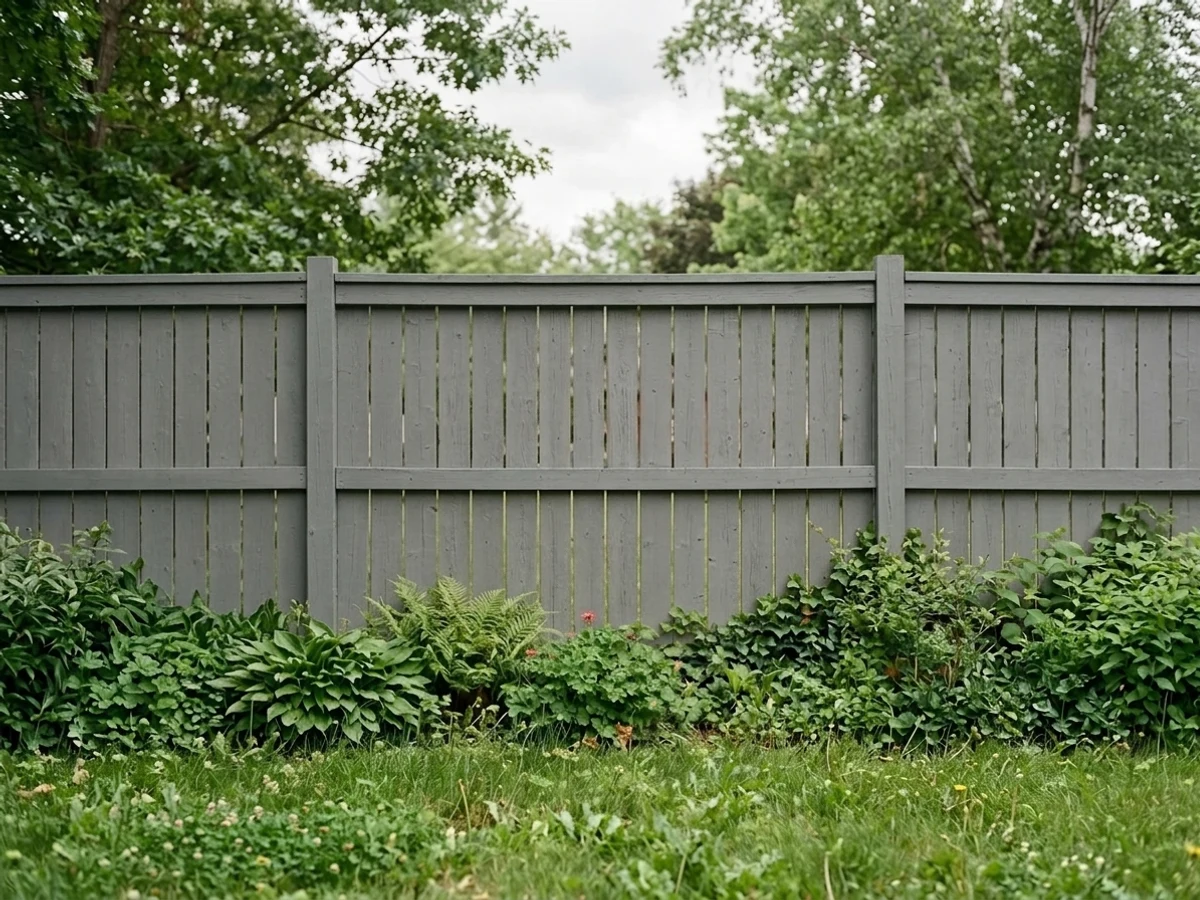
Vertical surfaces shed water instead of holding it, which removes the failure mode that kills painted decks. A gray fence, gate or set of porch skirting boards in this color goes quiet against grass and reads far more expensive than the orange-tan a fence turns on its own. Expect the sunny side to read a step lighter than the shaded side.
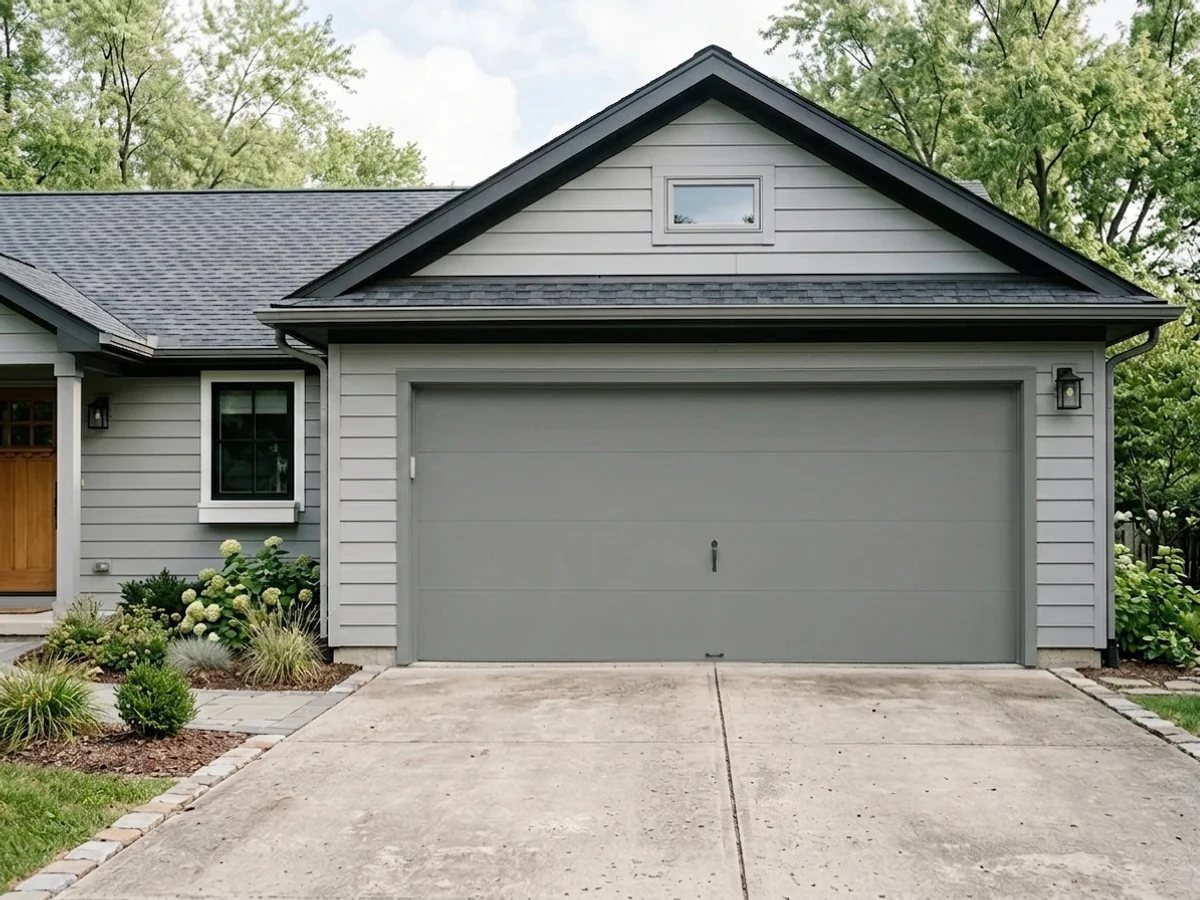
The color is tintable outside the floor line, and at LRV 24 it is a sane mid-gray accent: dark enough to register against a white or cream house, light enough not to look like a black hole. On a garage door it hides road spray. Keep it away from siding that already has a warm brown or greige cast — the faint green lean will read as a mismatch rather than a contrast.
This is a floor color and it behaves like one indoors: flat, heavy and unflattering on a wall, with none of the undertone interest a mid gray needs at eye level. If you want this depth of gray on interior walls, look at Benjamin Moore Chelsea Gray (LRV 22) instead. The one interior exception is the basement floor above.
Your Light Is the Risk
Under a roof or on an overcast day it reads exactly like the chip: a solid, calm mid gray. This is the light the color was drawn in.
Overhead sun plus ground reflection washes it toward pale silver. The number-one surprise in owner photos — sample in the open, not on the porch.
Low warm sun pulls it a half-step warmer and rail shadows stripe the boards. It looks best at the two ends of the day.
Warm 2700K string lights sink it to a soft charcoal that disappears underfoot. Cool white floodlights flatten it and bring the faint green forward.
Most complaints about Slate Gray are a light mismatch. Upload a photo of your actual room and see it on your walls — then ask for the same wall in north light or evening lamps before you buy a single sample.
Need It From Another Brand?
Any paint counter can custom-tint Behr 6695 directly. If you would rather stay in one brand's own deck, these are the closest stock matches, measured as ΔE2000. Under 2 is a difference you will not see on the wall.
| Brand | Closest color | ΔE | LRV | |
|---|---|---|---|---|
| Sherwin-Williams | Classic French GraySW 77 · Sherwin-Williams | 2.5 | 24 | Color page → |
| Benjamin Moore | CinderAF-705 · Benjamin Moore | 2.2 | 23 | Color page → |
| Valspar | City Storm4008-2A · Valspar | 1.4 | 23 | Color page → |
| PPG / Glidden | Dover GrayPPG1001-5 · PPG / Glidden | 1.4 | 24 | Color page → |
| Glidden | Dover GrayPPG1001-5 · Glidden | 1.8 | 23 | Color page → |
| Dutch Boy | Relaxed Gray437-4DB · Dutch Boy | 2.3 | 25 | Color page → |
Similar Behr Colors
The nearest shades to Slate Gray within Behr's own range, ranked by perceptual color distance — useful when you want the same look a touch lighter, darker, or warmer.
WCAG 2.1: AA is 4.5 : 1 for normal text, 3 : 1 for large text, AAA is 7 : 1.
Slate Gray vs the Colors You're Also Considering
Every Slate Gray sample board has the same rivals on it. The numbers show the real lightness gap — then it comes down to which risk you would rather live with.
Pick this when you want the floor to stay neutral and not add a color to the house.
Behr PPU25-19 · LRV 19Ocean SwellPick this if you actually wanted a blue-slate floor — this is the Behr blue-gray the Slate Gray name makes people expect, and its extra depth survives open sun better.
Pick this when the house already has warm tones and the floor should stay cool and out of the conversation.
Benjamin Moore HC-168 · LRV 22Chelsea GrayPick this for a warmer charcoal-greige that plays better with brown brick, cedar siding and tan stone.
Pick this for the floor coatings: Behr puts this gray in porch enamel, anti-slip, resurfacer, concrete stain and epoxy, which Intrigue cannot match.
Benjamin Moore 1580 · LRV 24IntriguePick this if your painter works in Benjamin Moore — it is the same depth and the same quiet green-gray idea.
Pick this for a floor you can walk on barefoot in July and that hides dust instead of showing every speck.
Behr PPU18-01 · LRV 5Cracked PepperPick this for a near-black deck that reads modern and never washes out — accepting that it runs hot underfoot and flashes a faint violet in strong sun.
The closest Behr neighbor is Euro Gray PPU25-17 at #858885 and LRV 24, which is essentially the same weight with the same neutrality. Pewter Ring UL260-4 at #898686 and LRV 24 is a touch lighter and warmer. Barnwood Gray PPU24-07 and Pier PPU8-22 share the hex #87857E at LRV 23, both warmer and slightly greener than Slate Gray, which shows on a full wall next to white trim. Legendary Gray PPU26-03 at #7F8384 and LRV 22 is the deeper, cooler option.
Across brands, Benjamin Moore Cinder AF-705 at LRV 23 has a deltaE of 2.2 and Sherwin-Williams Classic French Gray SW 77 at LRV 24 is 2.47, both very close but worth sampling first, and each reads a shade warmer than Slate Gray. Farrow and Ball Mole's Breath No. 276 at LRV 23 is a deltaE of 3.32, close but visibly different side by side, carrying a browner cast that Slate Gray does not have. Valspar City Storm 4008-2A at LRV 23 comes in at 1.44, visually identical in normal room light.
Slate Gray Coordinating Colors
Because the floor color is close to neutral, it coordinates by depth rather than by temperature — the job is to keep the rails and siding far enough away in LRV that the scheme reads deliberate. Whites and pale grays go above it, one dark note lands on the door, and the porch ceiling is the only place a real color belongs. These are the Behr partners that keep showing up on porches that work:
Which Behr Product to Put This Gray In
This is the decision that determines whether you like your deck in three years, and the color has nothing to do with it. Behr stocks Slate Gray across an unusually wide set of floor coatings, and they behave very differently. The low-lustre porch and patio enamel is the everyday choice for sound wood and covered porches — thin, 100 percent acrylic, follows the grain, roughly 200 to 400 square feet per gallon. The gloss version of the same enamel is easier to hose off and belongs on concrete steps, stoops and garage aprons; it is also the most slippery of the family when wet. The textured anti-slip version trades some of that easy cleaning for grip and is the right pick for pool surrounds, shaded north-side steps and anywhere that stays damp.
The two DeckOver products are a different animal: thick resurfacers meant to bridge splinters and small cracks on a deck that is past its best. They cover only about 75 square feet per gallon because that thickness is the point. They are also where the durability complaints live — owners describe a good first season, then flaking that starts at board cracks and lifts in sheets, fading inside a year or two, and in humid climates moisture held under the film. None of that is unique to this color, but if you are choosing between products, know that the thin enamel over sound boards has by far the better record. If the deck genuinely needs a resurfacer to be walkable, the money is usually better spent on boards.
For hard surfaces there are two more options in the same gray: the solid-color concrete stain, which soaks in and looks less like paint on a patio slab, and the one-part epoxy concrete and garage floor paint for basements and garages. Whichever you pick, two coats, dry substrate, and — on any exposed floor — either the textured version or Behr's anti-slip floor additive stirred in.
Slate Gray Over Wood, Composite and Concrete
New pressure-treated lumber is the one surface that will make this color look wrong, and it is a timing problem rather than a paint problem. Fresh PT is still wet with treatment chemicals and carries a green cast of its own; paint it too early and the boards reject the film, or the green bleeds up through a thin first coat and makes the gray look mossy. Let new lumber weather and dry through a season, then prime the raw wood before the two finish coats. Old, gray-weathered decking is the easy case — it is already the same temperature as the paint, so coverage is even and two coats look like two coats.
Cedar and redwood need a stain-blocking primer, or the tannins will push a brownish stain up through a neutral gray within weeks; you will see it worst around knots and end grain. Concrete is the friendliest surface of all: etched, clean and dry, it takes this gray beautifully and holds the chip color better than wood does, because there is no grain pattern breaking up the flat tone.
Composite decking is the honest no. Most manufacturers do not want their boards painted, painting voids a lot of composite warranties, and the plastic-rich surface gives an acrylic floor paint very little to hold onto. If a gray composite deck is the goal, buy gray boards — and use this color on the steps, skirting and railings around them instead.
Three Ready Palettes Built on Slate Gray
A color is never alone on the wall. These are complete combinations in the 60-30-10 pattern, with the reason each one holds together. Every one opens in the visualizer.
The oldest porch formula there is, and it still wins: dark floor, white rail, one black note at the door. Polar Bear at LRV 86 is soft enough that the rails do not glare in the same sun that washes the floor lighter, and Limousine Leather is a neutral graphite rather than a blue or violet black, so it stays honest in full outdoor light.
Try this palette in your roomThe porch-ceiling blue only works if the floor stays neutral — put a blue-gray on the boards too and the whole porch turns into one soft blue smudge. Slate Gray's lack of blue is the reason this scheme holds together. Weathered White keeps the rails softer than a bright white, which suits an older house.
Try this palette in your roomTwo grays a long way apart in depth — LRV 59 on the siding, LRV 24 underfoot — read as one deliberate scheme instead of a mismatch, and the gap is wide enough that the sun-washed floor still stays clearly darker than the walls. Rumors is the warm note the all-gray version is missing, and full outdoor light is exactly where that oxblood stops reading brown.
Try this palette in your roomSlate Gray FAQ
Is Behr Slate Gray blue or green?
Neither, really — it is a near-neutral gray with the faintest green lean. Its red, green and blue values sit within three points of one another, which is about as neutral as a gray gets. Despite the name there is no blue in it. If you want a blue-slate floor, Behr Ocean Swell (LRV 19) is the color you are picturing.
Why does my deck look lighter than the color chip?
Because a floor in the open is the harshest lighting a color ever gets: direct overhead sun plus light bouncing off the siding, the lawn and the sky. Mid grays lose roughly a step of depth out there, and this one gets described as silver more than any other complaint. Test on the actual boards in open sun before you buy five gallons, and go a step deeper if you need it to look dark.
How many coats, and how much do I need?
Two coats, always — one coat over bare or previously painted wood is where the blotchy reviews come from. The thin porch and patio enamel covers roughly 200 to 400 square feet per gallon depending on how thirsty the surface is; the DeckOver resurfacers cover about 75 square feet per gallon because they are meant to be laid on thick. Budget accordingly, they are very different numbers.
Is a painted gray deck slippery when it rains?
Any painted floor is, and Behr says so on the label. Two fixes: use the textured anti-slip version of the porch and patio paint, or stir Behr's anti-slip floor finish additive into the regular enamel. Gloss is the most slippery of the three sheens, so save it for steps under a roof and use low-lustre or textured on anything exposed.
Should I use the porch paint or DeckOver in this color?
Same gray, very different products. The porch and patio enamel is a thin acrylic floor paint that follows the wood grain; DeckOver is a thick resurfacer designed to bridge splinters and cracks on a tired deck. The durability complaints — peeling in sheets, flaking at cracks, moisture trapped under the film — cluster on the resurfacers. If your boards are sound, use the thin enamel. If they are bad enough to need a resurfacer, the honest answer is usually to replace the boards.
What railing and siding colors go with a Slate Gray deck?
White rails are the safe default — Behr Polar Bear (LRV 86) or the softer Weathered White (LRV 77). For siding, keep a wide gap in depth: a light gray like Fast As The Wind (LRV 59) or a warm khaki-greige both work, because the floor is neutral enough to sit under either. Skip blue-gray siding, which makes the floor look like a failed attempt to match it.
Have you painted with Slate Gray?
Rate it — one tap helps the next reader decide.
Ask a Question