Room Colors · Fence
5 Best Fence Paint Colors for 2026
ideas, combinations, and real rooms
5 curated picks from real fences — with the exact colors, honest reasons why, and the combinations that hold the room together.

Former interior stylist who can spot a green undertone from across a room. Jessica writes the color and mood pieces — what to choose, what pairs, and why your "white" looks pink.

Top Picks for the Fence
Pick a color family, tap a shade to see the fence in it, then try it on your own room.
Fence Color Trends 2026 — What's In, What's Out


- Orange Cedar-Tone Stain — The golden-orange builder stain dates a yard instantly; even the stain brands have moved their palettes toward browner, quieter woods.
- Glossy Fence Finishes — Shine highlights every warped board and rough sawcut — flat and matte finishes are what make budget fencing look expensive.
- Red-Brown Ranch Stain — The reddish all-over ranch look fights with green planting instead of framing it, which is the whole job of a fence color now.
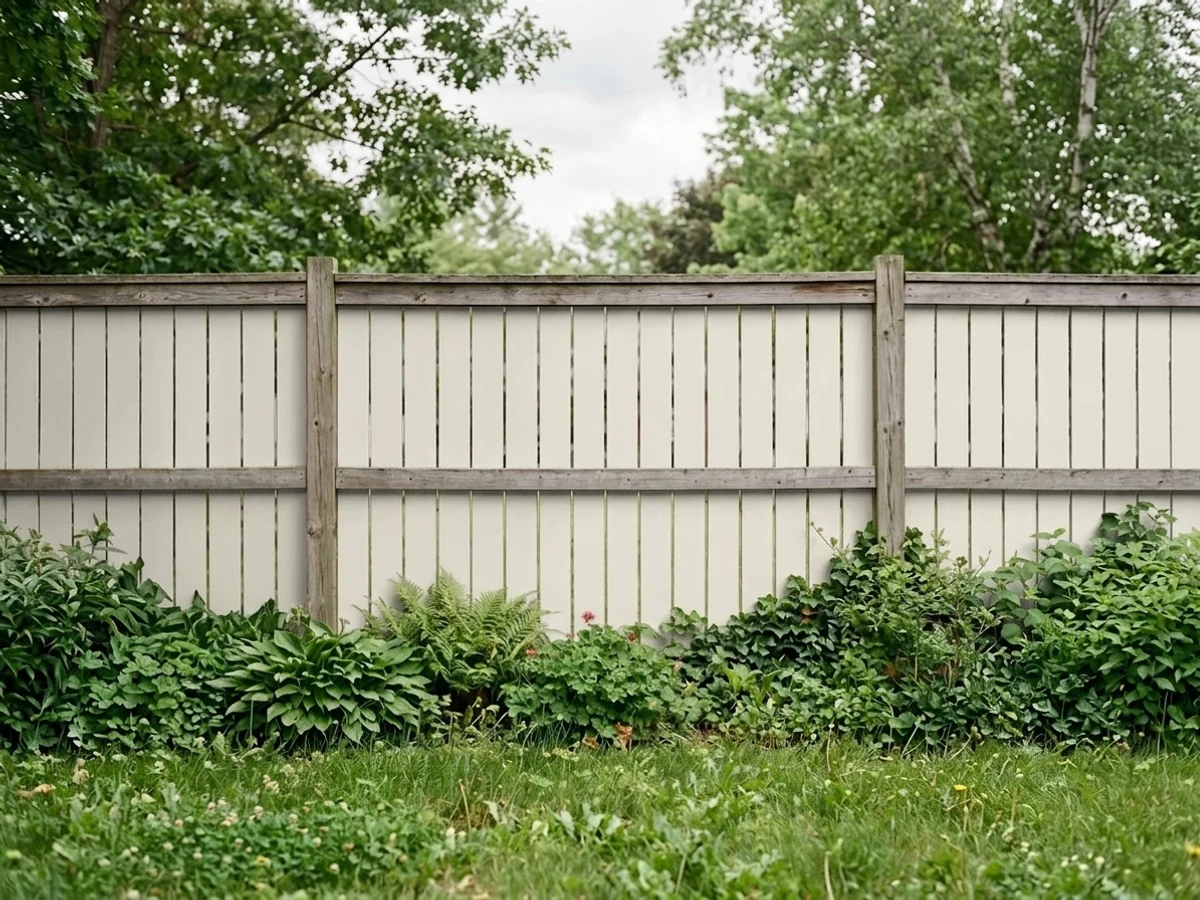
- Raw Pressure-Treated Green — Leaving the greenish treated-lumber tint unpainted reads unfinished; a coat of any considered color is the cheapest upgrade a yard gets.
The 5 Best Fence Paint Colors
Every pick below is a real rendered fence, not a chip. The lead color first; the swatches are the full scheme in the photo — walls, furniture, textiles, accent.

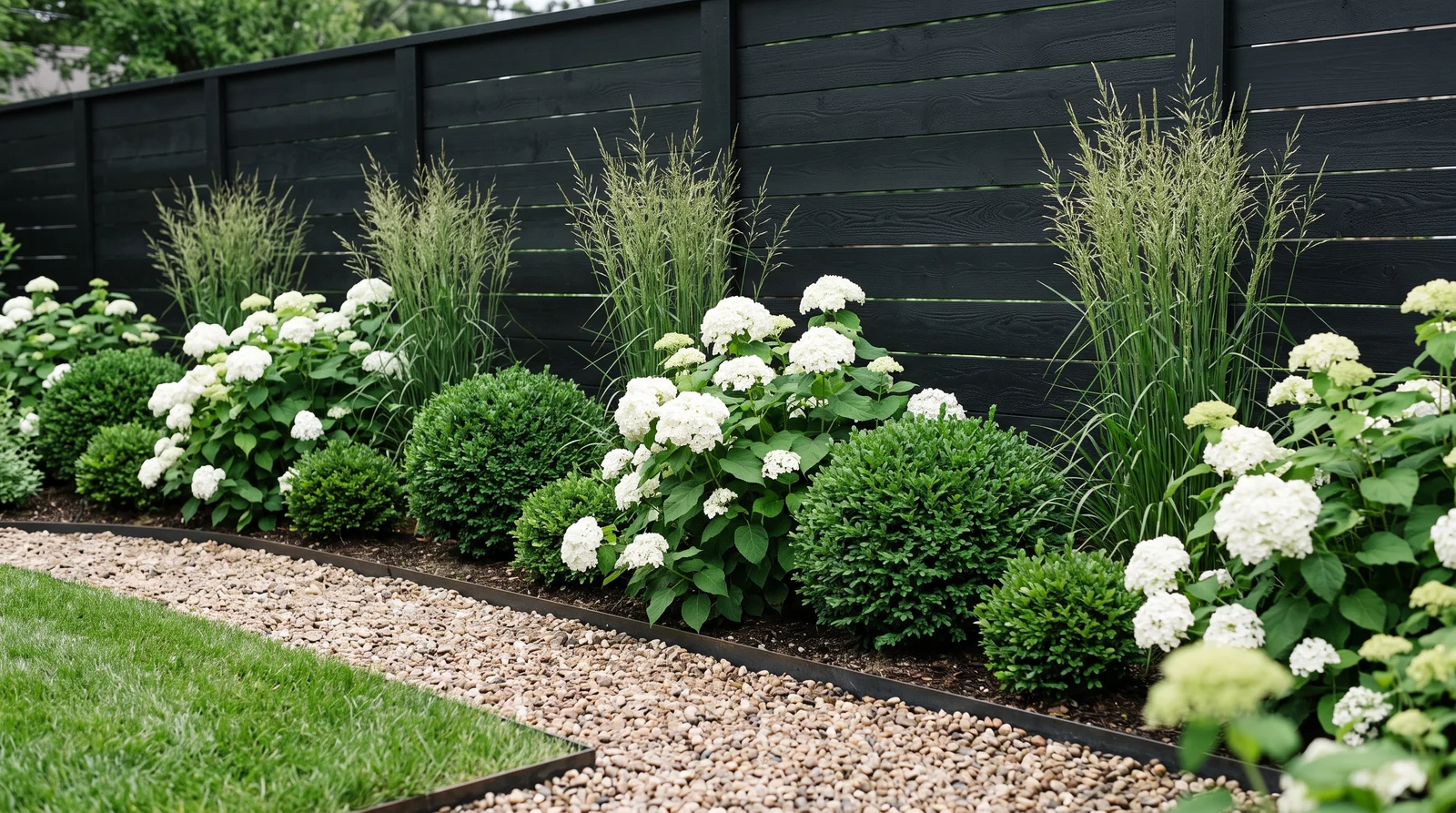
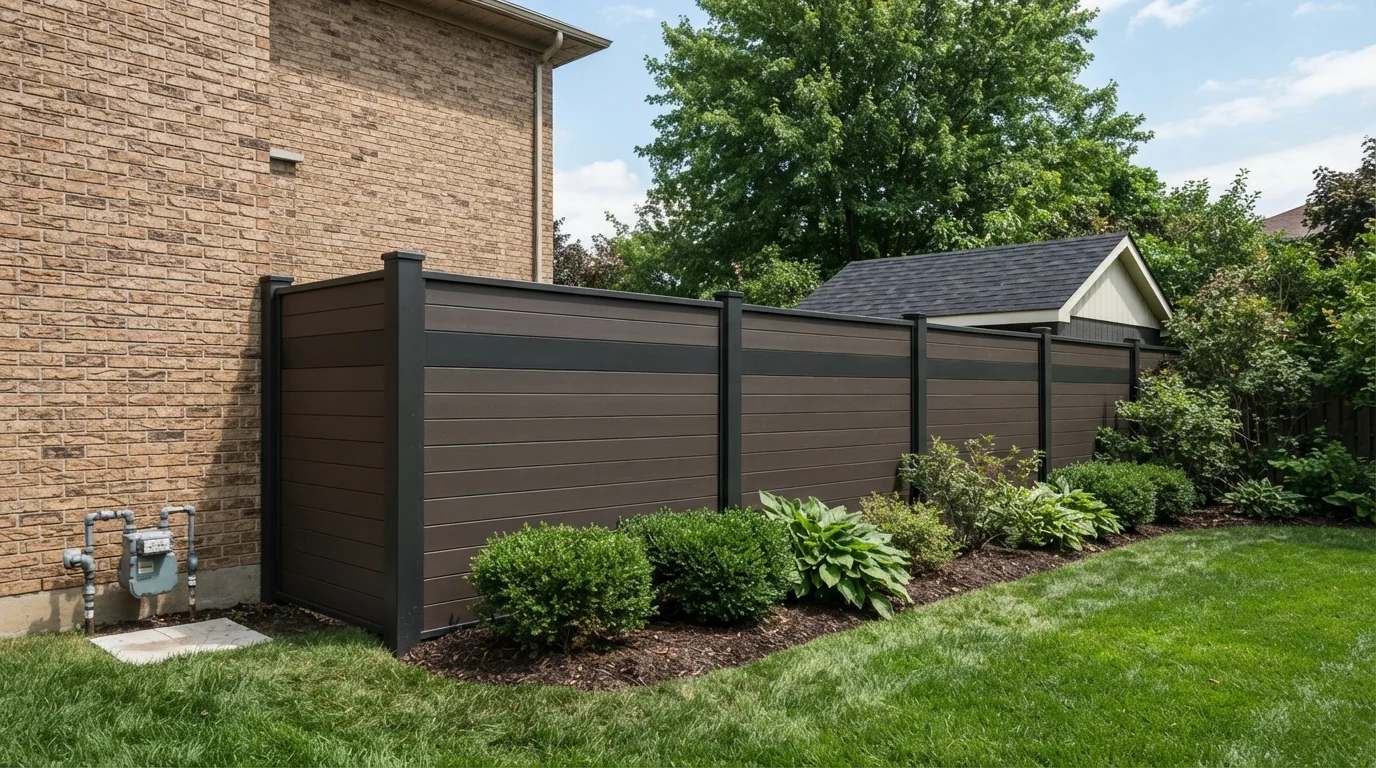
A true matte black that turns every leaf in front of it neon-green, made for gardens that get real sun.
Tricorn Black from Sherwin-Williams is the garden-designer move: at LRV 3 the fence stops being a fence and becomes a dark mat that makes planting look staged. It works best on a horizontal-slat or flat-panel privacy fence backed by generous green — hydrangeas, boxwood, tall grasses — because the color only earns its drama when there is something alive in front of it. Tricorn is a balanced black with no strong undertone, so it stays black in shade where some near-blacks drift purple or green. If your fence is long, bare, and unplanted, this much black can read heavy — step up to Kendall Charcoal instead.
SEE TRICORN BLACK ON YOUR WALLS →
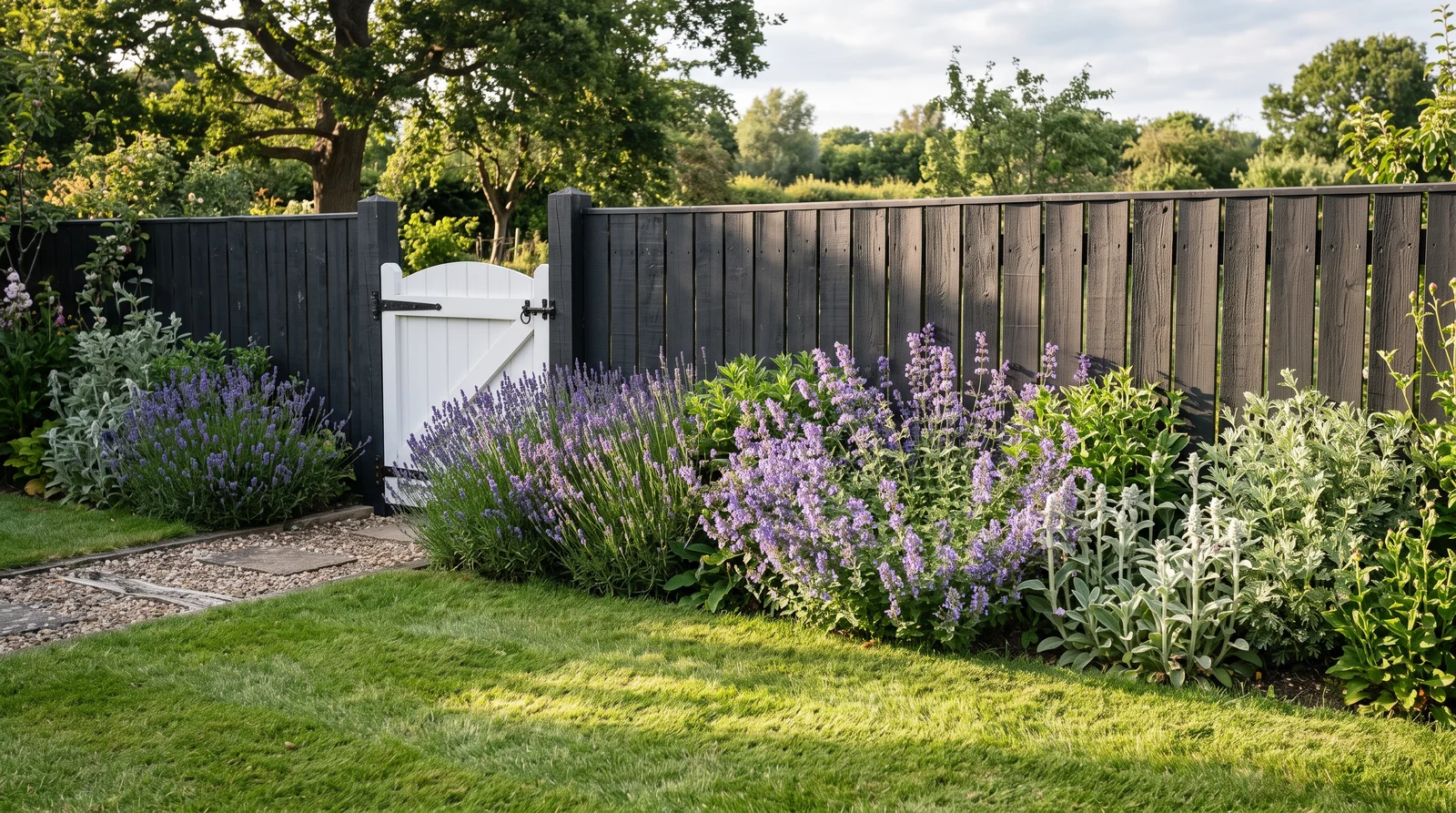
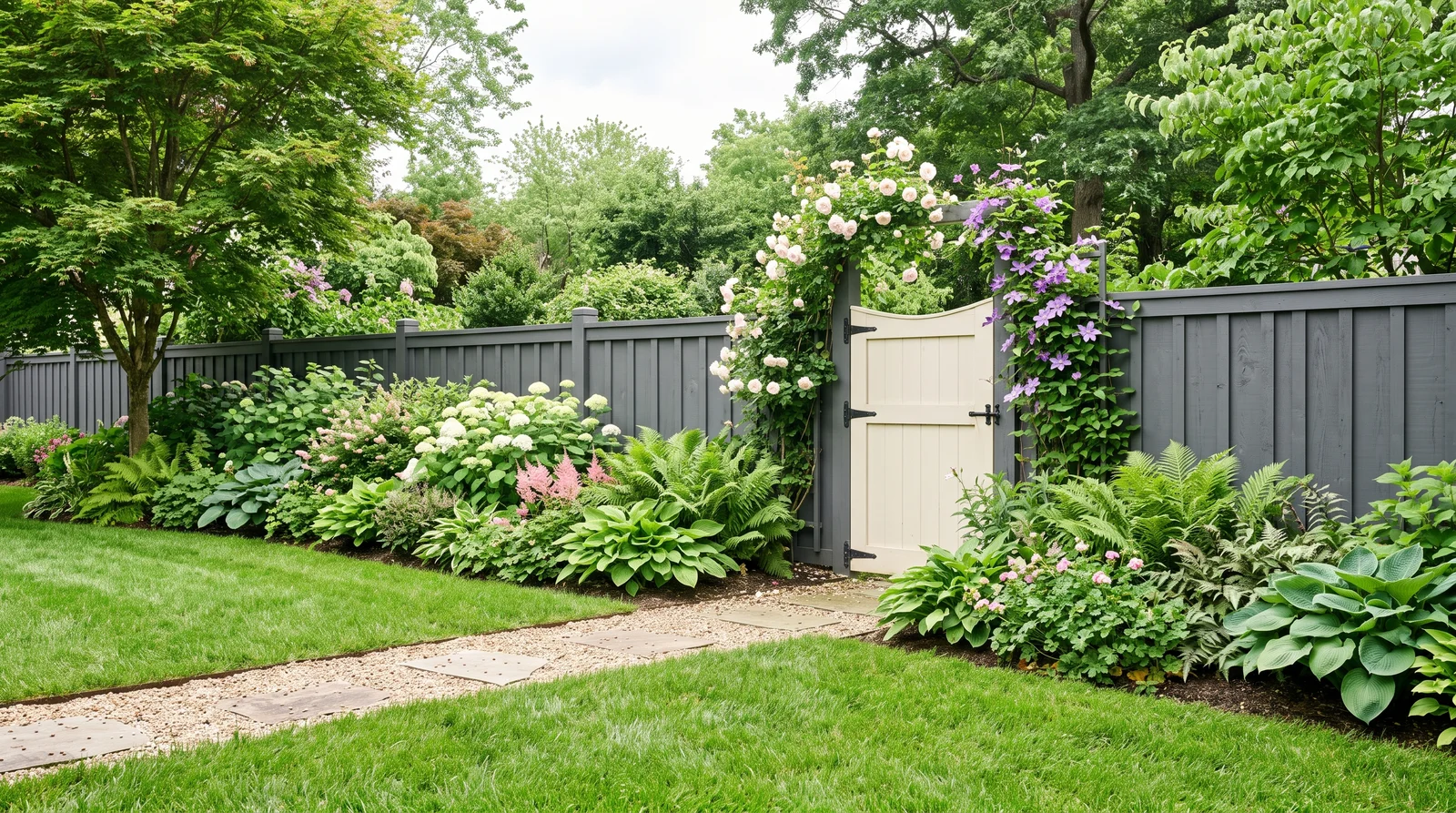
A charcoal that reads black from ten feet but keeps a little gray softness up close — the forgiving version of the black fence.
Iron Ore from Sherwin-Williams is what to buy when you want the black-fence effect without the commitment: at LRV 6 it is a deep charcoal that shows wood grain and weathering more gently than a true black, so an older fence looks intentional instead of freshly flawed. It sits beautifully behind silvery and blue-green planting — lavender, catmint, olive tones — where jet black can feel harsh. Painted trim or a gate picked out in Pure White gives the boundary a tailored edge. If your fence bakes in full afternoon sun and you want maximum leaf contrast, go the extra step darker to Tricorn Black.
SEE IRON ORE ON YOUR WALLS →
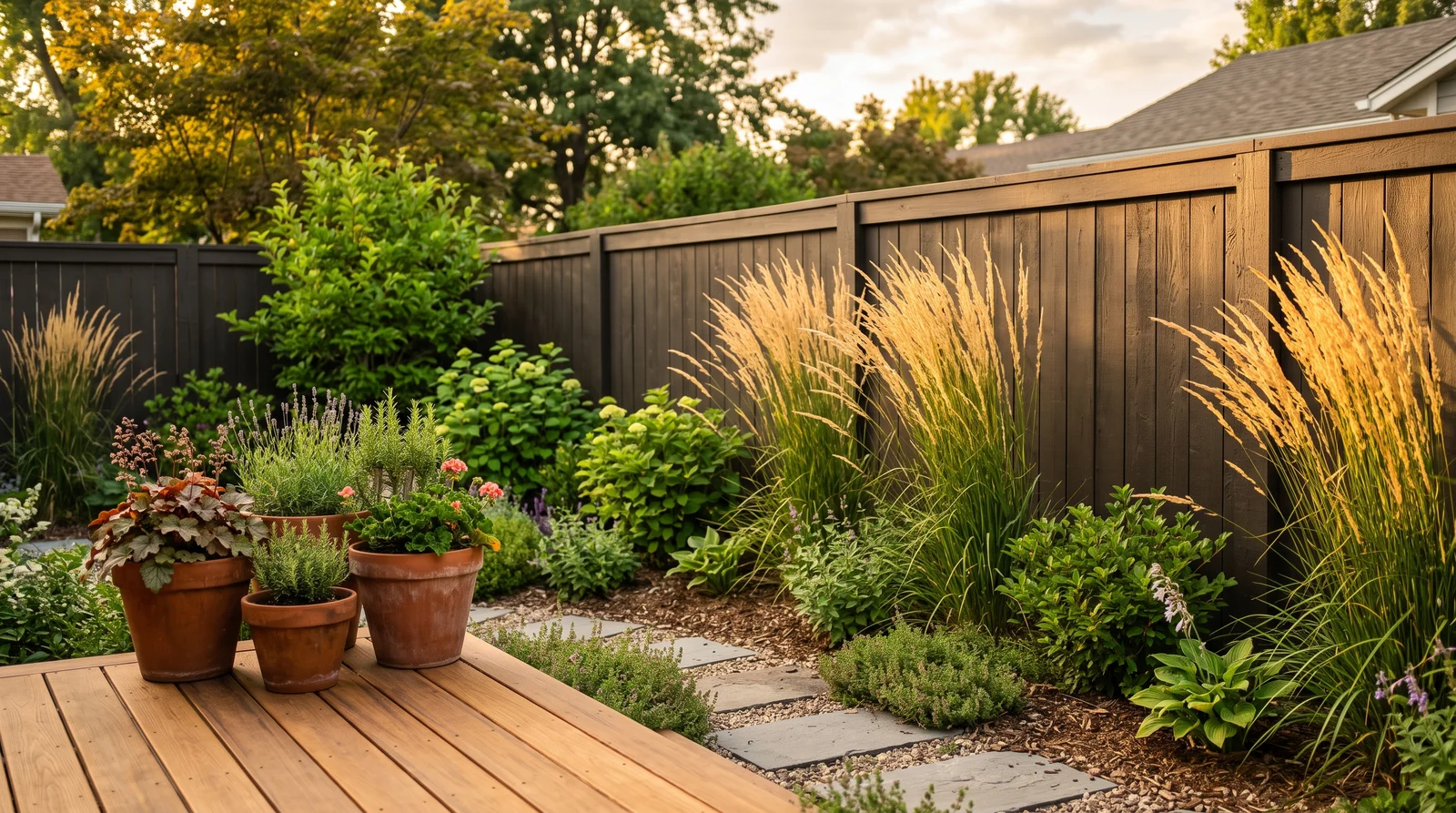
A brown-black with warmth in it, so the fence flatters cedar, terracotta, and golden grasses instead of fighting them.
Urbane Bronze from Sherwin-Williams is the near-black for warm yards: at LRV 8 it holds the same receding, garden-flattering depth as charcoal, but its brown base ties into cedar decking, terracotta pots, and tan gravel the way a cool black never will. It is the pick when the fence shares the frame with warm hardscape — a wood pergola, buff pavers, a brick house beyond. Amber and gold planting like feather reed grass looks lit from within against it. If everything else in your yard is cool gray and white, skip it for Iron Ore; bronze next to cool gray reads muddy.
SEE URBANE BRONZE ON YOUR WALLS →
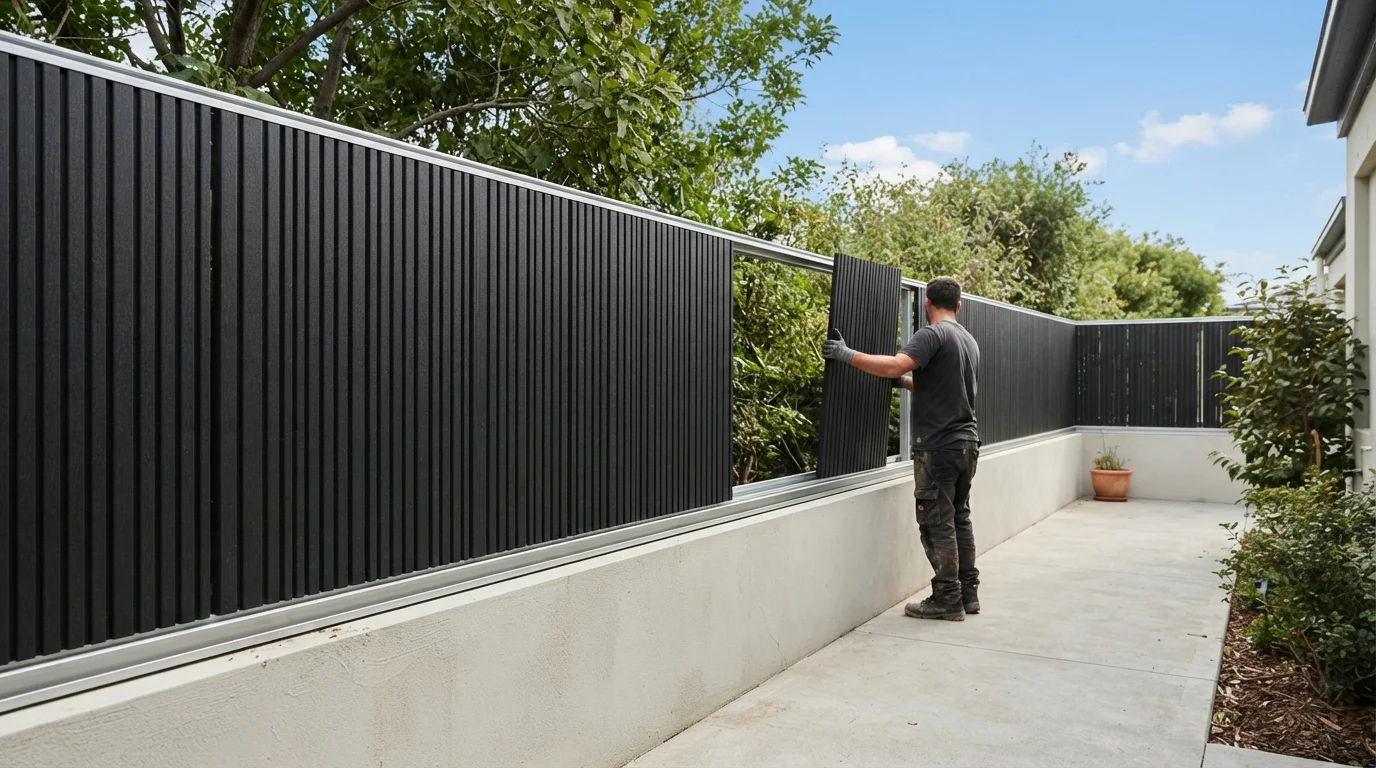
A softened charcoal that makes the boundary fall back and the yard feel bigger — dark-fence payoff without going black.
Kendall Charcoal from Benjamin Moore is the entry point to the dark-fence idea: at LRV 15 it is roughly four times lighter than Tricorn Black, so it recedes behind planting and blurs the property line without the stark, inked look that worries some HOAs and neighbors. Greens still pop against it, but in strong sun it reads as a deep gray rather than black, which suits traditional houses and mixed-material yards better than full black does. Pair it with a White Dove gate or post caps to keep it crisp. If you saw a black fence online and loved it, this is the safer test — and you can always go darker on the next repaint.
SEE IT ON YOUR WALLS →
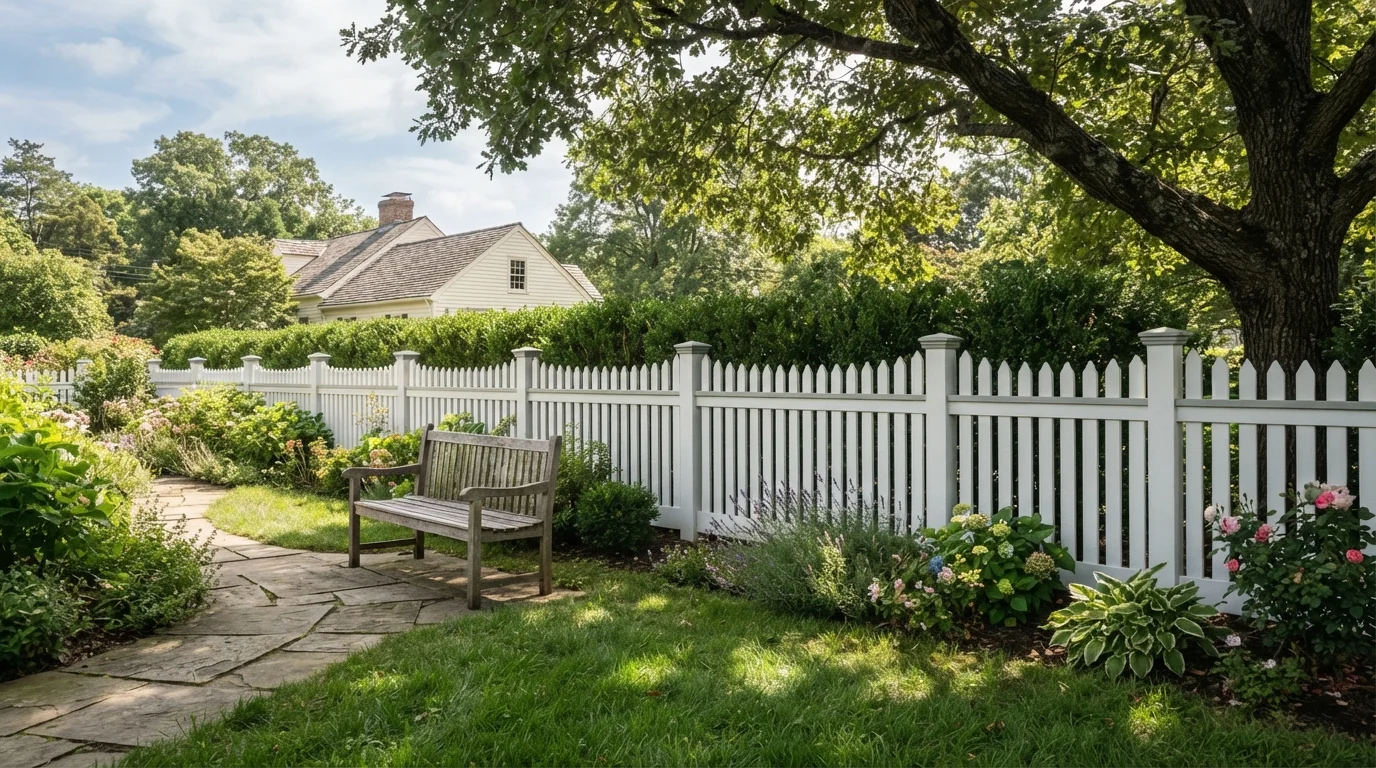
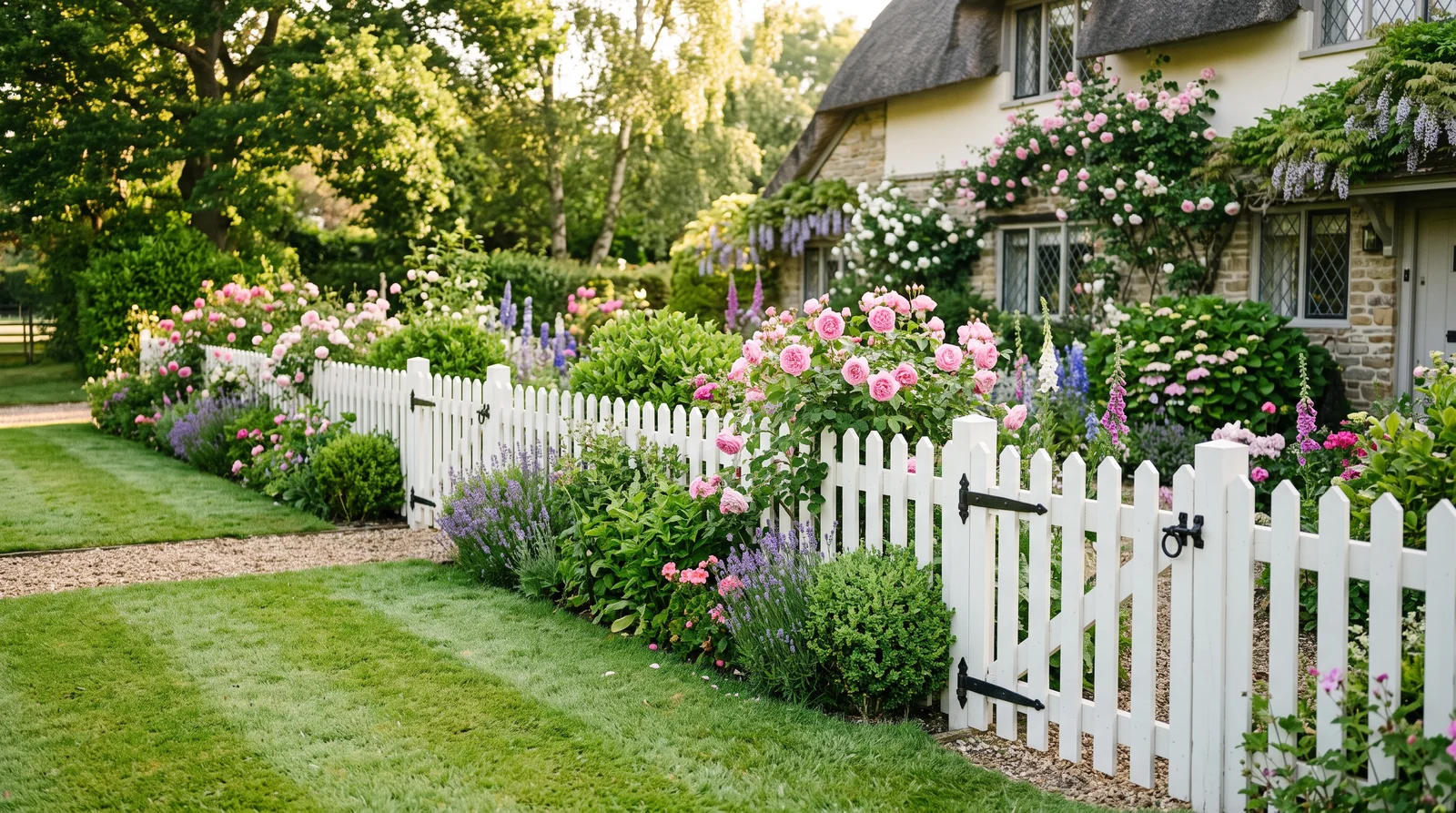
The warm white picket everyone means when they say white picket fence — soft, sunny, and kind to every flower color.
White Dove from Benjamin Moore is the picket-fence white worth naming: at LRV 83 it is bright without the blue glare of a stark white, so it flatters pink roses, red geraniums, and green lawn alike instead of turning clinical beside them. On a low picket or garden-border fence it frames planting the way a white mat frames a print — this is the light look for cottage, farmhouse, and traditional homes. Black hardware keeps it from going sweet. Know the honest cost: white shows dirt, soil splash, and mildew first, so plan to rinse it once a season; if that maintenance is a dealbreaker, the dark looks above hide wear far longer.
SEE WHITE DOVE ON YOUR WALLS →Fence Wall Color Combinations
A wall color never works alone. These are the full schemes from the rooms above — the lead color first, then the supporting colors that make the photo work.
A true matte black that turns every leaf in front of it neon-green, made for gardens that get real sun.
TRY THIS PALETTE →A charcoal that reads black from ten feet but keeps a little gray softness up close — the forgiving version of the black fence.
TRY THIS PALETTE →A brown-black with warmth in it, so the fence flatters cedar, terracotta, and golden grasses instead of fighting them.
TRY THIS PALETTE →A softened charcoal that makes the boundary fall back and the yard feel bigger — dark-fence payoff without going black.
TRY THIS PALETTE →Your fence should talk to your house, not fight it. A simple rule that almost always works is to match the fence to the home's trim or its main siding color, or to go one clear shade darker. A white house with black trim looks tidy with a black fence, and a brown or gray house calms down with a fence in the same family.
Don't forget the things around the fence. Match or echo gate hardware, deck stain, and any outdoor furniture so the yard feels like one plan. Greens like Hunter Green love living plants next to them, dark colors make pavers and gravel look intentional, and a warm brown like Walnut ties into wood decks and mulch beds.
Fence Color Ideas by Color
Set on a color family already? Each page has its own real rooms and picks.
Light or Dark Fence Colors?
Go Light (LRV 60+) If…
The room is small, faces north, or has to work at every hour. Light warm colors make it feel bigger and stay calm in evening light — the light you actually live in.
Go Dark (LRV Under 20) If…
You want the cocoon effect and the room has real daylight. Dark works best on one feature wall — or fully color-drenched in a large room with good windows.
A fence in full sun all day will look lighter and a bit washed out, so a mid-tone or dark color often holds its character better than a pale one. A fence in shade or under trees gets less light, so a dark green or brown can start to look like a flat wall of nothing. In those spots a lighter gray or even white keeps the yard from feeling closed in.
Think about morning versus evening too. East-facing fences glow in the morning and go quiet by afternoon, while west-facing fences take the harsh late sun that fades color fastest. Look at any sample on the actual fence at a few times of day before you commit, because a color that looks great at noon can feel cold at dusk.
LRV is just how much light a color bounces back, from near 0 for black to near 100 for white. A high-LRV fence like Snow makes a small yard feel bigger and brighter and reflects light onto nearby plants and patios. That brightness is great for a tight space but can feel stark against a colorful garden.
A low-LRV fence like Tricorn Black or Hunter Green soaks up light and quietly frames everything in front of it. This makes flowers, furniture, and greenery stand out, and it makes a large yard feel more grounded and private. Mid-LRV grays and browns like Gauntlet Gray, Saddle Brown, and Walnut sit in between and are the safest bet if you are not sure.
See It. Love It.
Paint It.
Upload one photo of your fence and try every color on this page on your own walls — in your own light, before you buy a drop of paint.

AlabasterBeforeThe Best Color Directions for a Fence
White makes a fence look clean and classic. A bright white like Snow brightens a yard and pairs with almost any house, but it shows dirt and mildew fastest, so plan to wash it. Black, like Tricorn Black, does the opposite. It recedes, makes plants and flowers pop in front of it, and hides grime well, which is why a dark fence often looks sharp for years with little fuss.
Brown and green keep a fence feeling natural and low-key. A warm brown like Saddle Brown or a deeper Walnut reads like stained wood and blends into trees and mulch. A true green like Hunter Green almost disappears into a garden, which is exactly what many people want from a back fence. Gray, like Gauntlet Gray, is the easy middle. It is modern, neutral, and forgiving of dust and pollen between cleanings.
The Right Finish for Outdoor Wood
For a fence, a flat or low-sheen exterior finish is usually the smart pick. Flat hides the small dents, knots, and uneven grain of fence boards, and it does not throw glare back at you in bright sun the way a glossy finish would. The trade-off is that flat is a little harder to scrub, so it suits fences you can hose down rather than ones that get hand-marks.
If your fence sits where it gets splashed, touched, or grimy often, step up to a satin or low-luster exterior paint. It cleans more easily and sheds water a touch better. Whatever the sheen, use a paint made for exterior wood or an exterior fence and siding stain, since interior paint will not survive the weather.
Common Fence Painting Mistakes to Avoid
The biggest mistake is skipping prep. Paint on a dirty, damp, or peeling fence will flake within a season, so clean it, let it dry fully, and prime bare or weathered wood first. The second mistake is using interior or all-purpose paint instead of an exterior product built for sun and rain.
People also pick a color off a tiny chip indoors, then hate it once it is on a huge sunlit fence, where it always reads lighter and brighter. Test a real sample outside first. Finally, going too glossy is a common regret, since high sheen shows every imperfection in rough fence wood and glares in the sun.
About Fence Paint Colors
A fence is one of the most visible things you paint, and it sits outside in full weather all year. So the color has to do two jobs at once. It has to look right next to your house and yard, and it has to hold up to sun, rain, and dirt without looking tired after one season.
The good news is that fences forgive bold choices better than walls do. A fence is a long, simple shape with lots of repeating boards, so a strong color reads as confident rather than busy. The five directions that almost always work are white, black, brown, green, and gray. Each one sends a different message, from crisp and tidy to quiet and natural.
This page walks through how to pick among them, how your light and surroundings should steer the call, and which finish actually survives outdoors. Every color shown here, like Snow, Tricorn Black, Saddle Brown, Hunter Green, Gauntlet Gray, or Walnut, is mixed to order at the store, so you are never locked into one brand to get the shade you want.
The Questions Everyone Asks
What color should I paint my fence?
If you want one answer, start with the safe picks above — Alabaster, Tricorn Black, Cocoa, Old Soul. They read well in any light and survive furniture changes. Then check the light: strong afternoon sun wants a step cooler, a north-facing room wants a step warmer.
What is the most popular color to paint a fence?
Black, white, and natural browns are the most common, with gray close behind. Black, like Tricorn Black, hides dirt and makes plants pop, white like Snow looks crisp and classic, and browns like Saddle Brown or Walnut keep the wood feeling natural. Any of these is a safe, timeless choice.
Should a fence be lighter or darker than the house?
Most fences look best matching the house's trim or main color, or going one shade darker. A darker fence recedes and makes the yard feel calm and private, while a lighter fence stands out more and brightens a small space. Pick based on whether you want the fence to disappear or to be a feature.
What sheen should I use on a fence?
A flat or low-sheen exterior finish is usually best. Flat hides the rough grain and dents of fence boards and avoids glare in the sun. If your fence gets touched or dirty often and you want to scrub it, step up to a satin or low-luster exterior paint instead.
Does a dark fence make my yard look smaller?
It can make a small yard feel a bit more enclosed, but it also makes plants, furniture, and pavers stand out and feel intentional. In a large yard, a dark color like Hunter Green or Tricorn Black looks grounded and private. In a tight space, a lighter gray or white keeps things feeling open.
Can I get the same fence color from any paint brand?
Yes. The colors shown here are mixed to order at the store, and a shade like Gauntlet Gray or Saddle Brown can be cross-matched between brands. So you can choose the color you love first, then pick whichever exterior paint or fence stain you prefer.
How do I keep a white fence from looking dirty?
A high-LRV white like Snow shows dust, mildew, and splashes faster than darker colors. Plan to rinse or wash it a couple of times a year, and choose a satin or low-luster finish so it cleans more easily. If low upkeep matters most, a gray or brown will hide grime far better.
Why does my fence color look different than the paint chip?
Outdoor light is much stronger than indoor light, so any color reads lighter and brighter on a big sunlit fence than it does on a small chip indoors. Always test a real sample on the actual fence and look at it in morning, midday, and evening light before you commit.
What two-color combination works best in a fence?
The reliable pattern is a quiet main color plus one deep accent on a single wall. Keep trim and ceiling in one warm white so the two colors are the only event in the room — the combination cards above show complete schemes from real rooms.
What colors make a fence look bigger?
High-LRV, slightly warm colors — LRV 60–75 is the sweet spot. Paint the walls and trim close to the same light color so the corners blur, and keep the ceiling white. Stark cool white actually works against you; it creates hard shadows that show the room's edges.

Ask a Question