Room Colors · Brown Fence
8 Best Brown Fence Paint Colors for 2026
ideas, combinations, and real rooms
8 curated picks from real brown fences — with the exact colors, honest reasons why, and the combinations that hold the room together.

Former interior stylist who can spot a green undertone from across a room. Jessica writes the color and mood pieces — what to choose, what pairs, and why your "white" looks pink.
The Fast Answer
Don't want to read 8 picks? These four are the safe answers.

Top Picks for the Brown Fence
Tap a shade to see the brown fence in it, then try it on your own room.
Brown Fence Color Trends 2026 — What's In, What's Out


- Orange-Leaning Honey Stain — The lighter, orange-leaning honey brown common on 2000s cedar fences now looks dated next to 2026's deeper, more saturated brown tones.
- Uniform Flat Brown With No Depth — A single flat brown across every board and post is losing ground to fences that use tonal variation or a darker cap rail for more dimension.
- Reddish Redwood Stain — The reddish, artificial-looking redwood stain popular decades ago now clashes with 2026's warmer, more natural cedar and espresso brown tones.
The 8 Best Brown Fence Paint Colors
Every pick below is a real rendered brown fence, not a chip. The lead color first; the swatches are the full scheme in the photo — walls, furniture, textiles, accent.

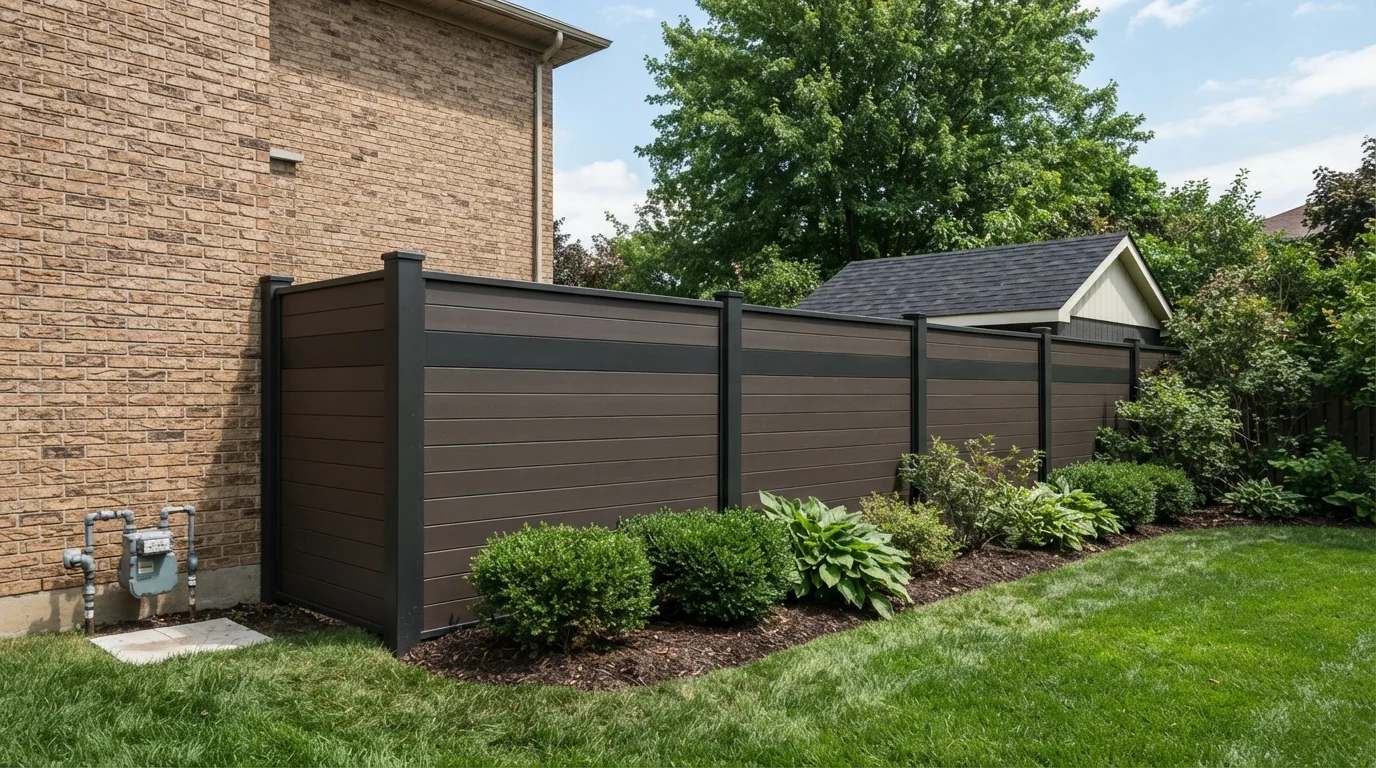
Rich espresso brown panels paired with crisp charcoal framing create a polished, peaceful backdrop for lush backyard greenery.
Espresso is a deep, grounding brown with earthy warmth. In this space, rich brown fence boards are set against dark charcoal support posts and accent rails, sitting neatly beside classic brick and green shrubs. The yard feels calm, tidy, and very private. The look works because deep earth tones naturally make green garden leaves stand out bright and crisp. It is great for anyone wanting modern outdoor privacy with clean, timeless style.
SEE OTTER ON YOUR WALLS →
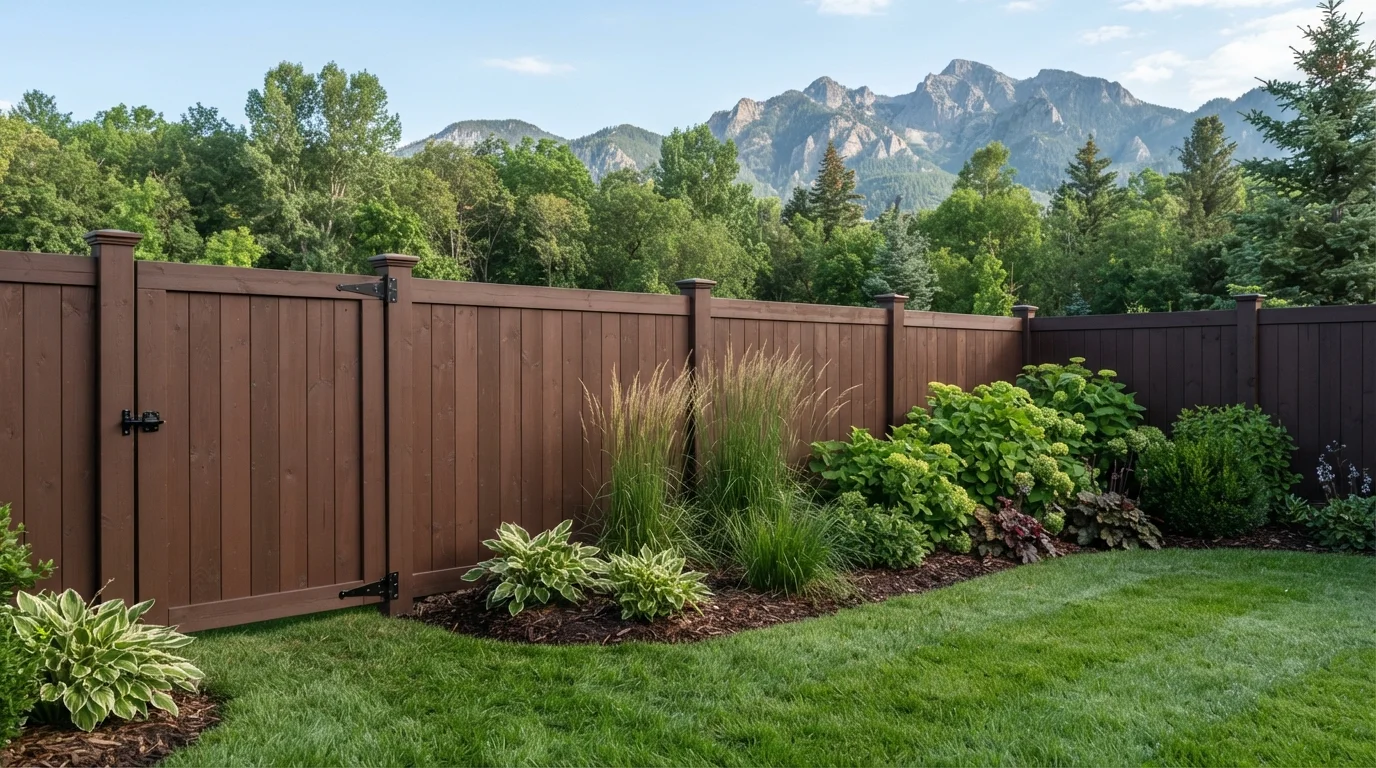
A rich chocolate brown fence frames stunning mountain views and lush greenery with grounded, natural elegance.
Deep chocolate brown is a rich, earthy dark tone. In this yard, deep brown finishes the tall privacy fence, creating a crisp backdrop for the lush green hostas, ornamental grasses, and expansive lawn. The space feels grounded and serene against the dramatic mountain scenery. The deep brown works because dark earthy tones naturally recede, letting vibrant botanical greens and open skies pop. It is perfect for homeowners who want a tidy, polished boundary that blends seamlessly with the natural landscape.
SEE ROJO MARRÓN ON YOUR WALLS →
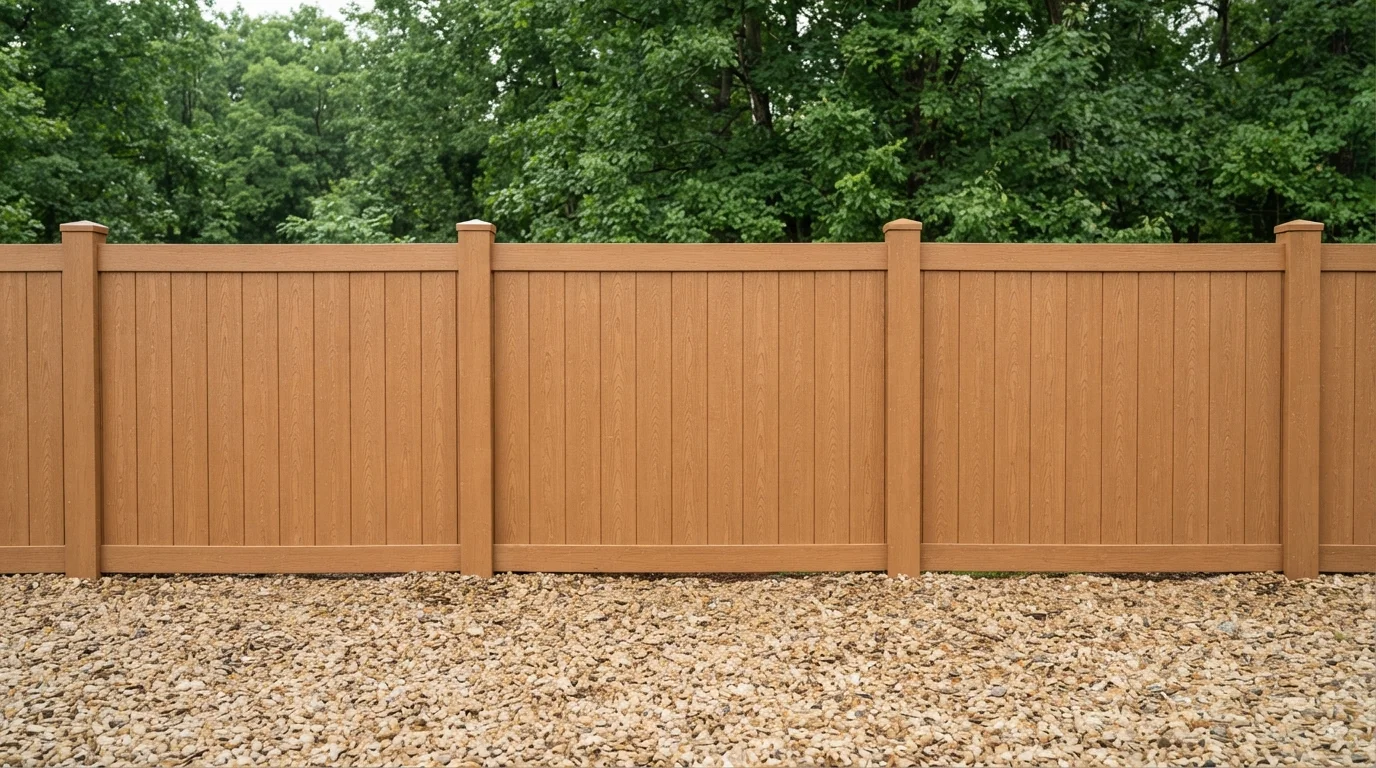
Rich honey-brown fencing brings a grounded, natural warmth that stands out beautifully against lush green backyard foliage.
Warm cedar is a golden, honey-toned brown. In this outdoor space, a tall vertical privacy fence wears this rich tone, neatly bordered by matching posts and light gravel underneath. The setting feels calm, secure, and welcoming in the fresh outdoor air. This look works because earthy browns and leafy greens are effortless natural partners. It is a fantastic choice for homeowners who want clean privacy without losing organic outdoor charm.
SEE SEMOLINA ON YOUR WALLS →
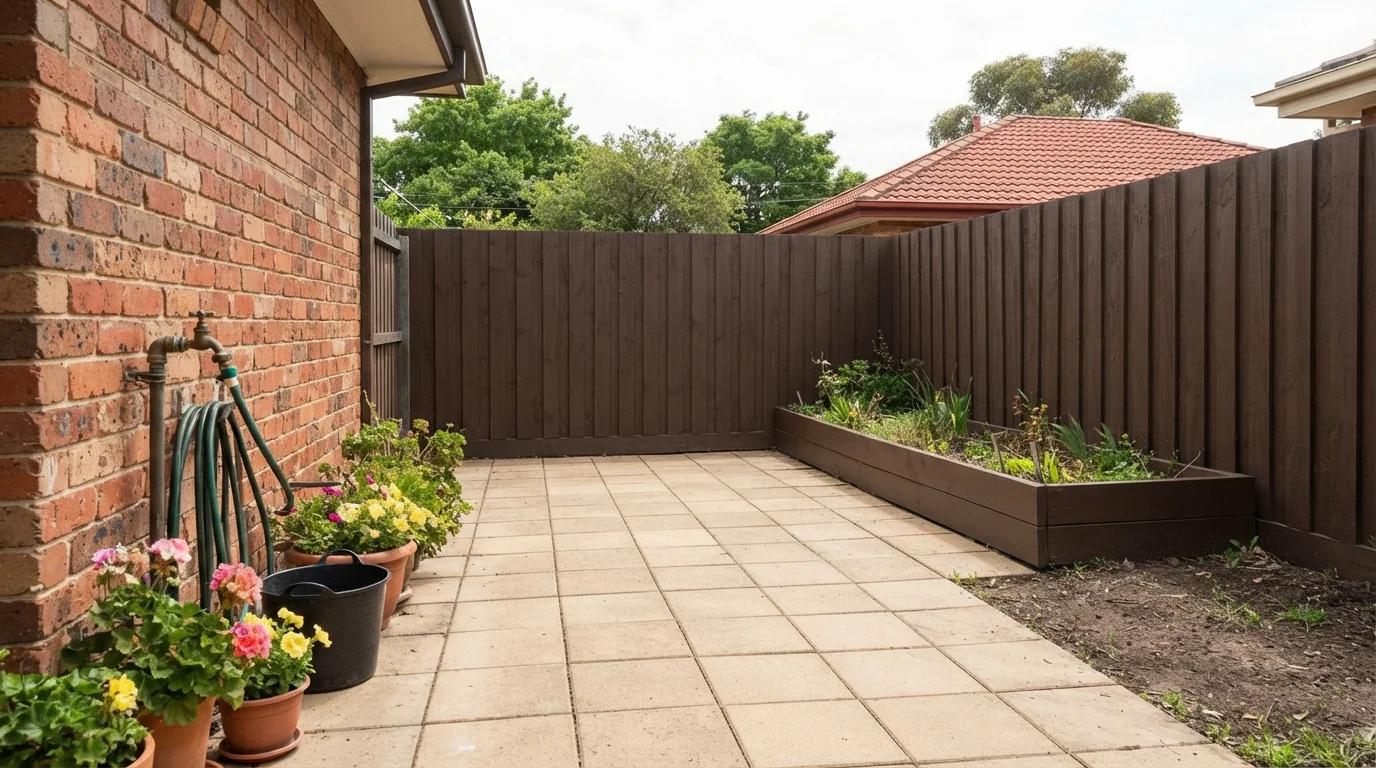
Deep chocolate brown timber wraps around a light sandstone patio to create a clean, grounded garden nook.
Dark chocolate brown is a rich, grounding wood shade. In this patio, the tall privacy fence and raised planter box are finished in deep brown stain, standing tall beside light sandy paving stones and warm brick. The space feels calm, private, and tidy. The combination works because the deep timber color creates high contrast against the pale stone pavers, making the patio area feel crisp and defined. It is perfect for anyone wanting a simple, neat backyard setup that feels naturally connected to garden greenery.
SEE ROASTED COFFEE ON YOUR WALLS →
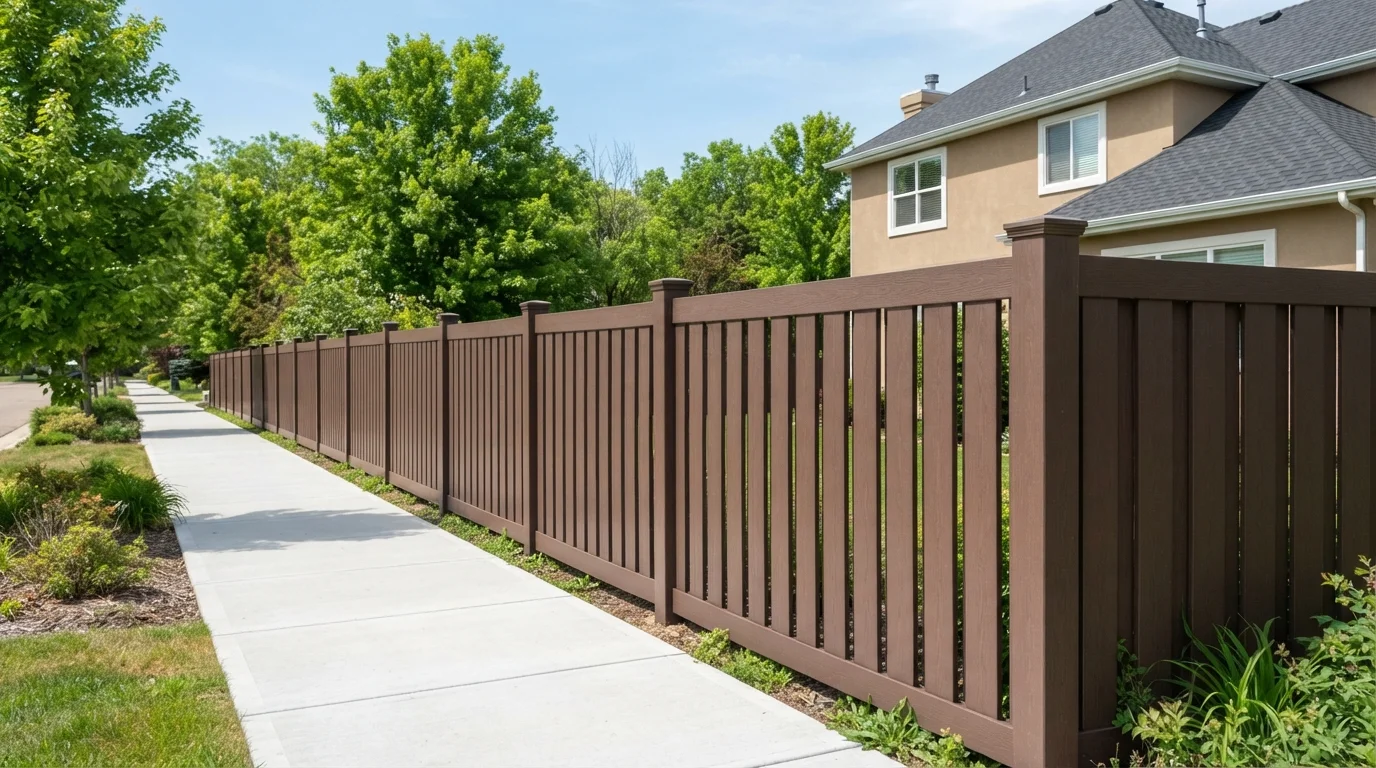
A solid chocolate brown fence brings tailored structure, rich contrast, and earthy warmth to bright outdoor greenery.
Chocolate brown is a deep, earthy brown with rich coffee tones. In this outdoor setup, a sturdy vertical-slat fence is coated in deep mocha next to a pale concrete path and bright green trees. It feels grounded, tidy, and reassuringly private under the bright sun. The combination works because natural earth tones pair effortlessly with surrounding foliage while giving crisp definition to the property line. It is a fantastic choice for homeowners who want a clean, modern boundary that enhances their outdoor landscape.
SEE IT ON YOUR WALLS →
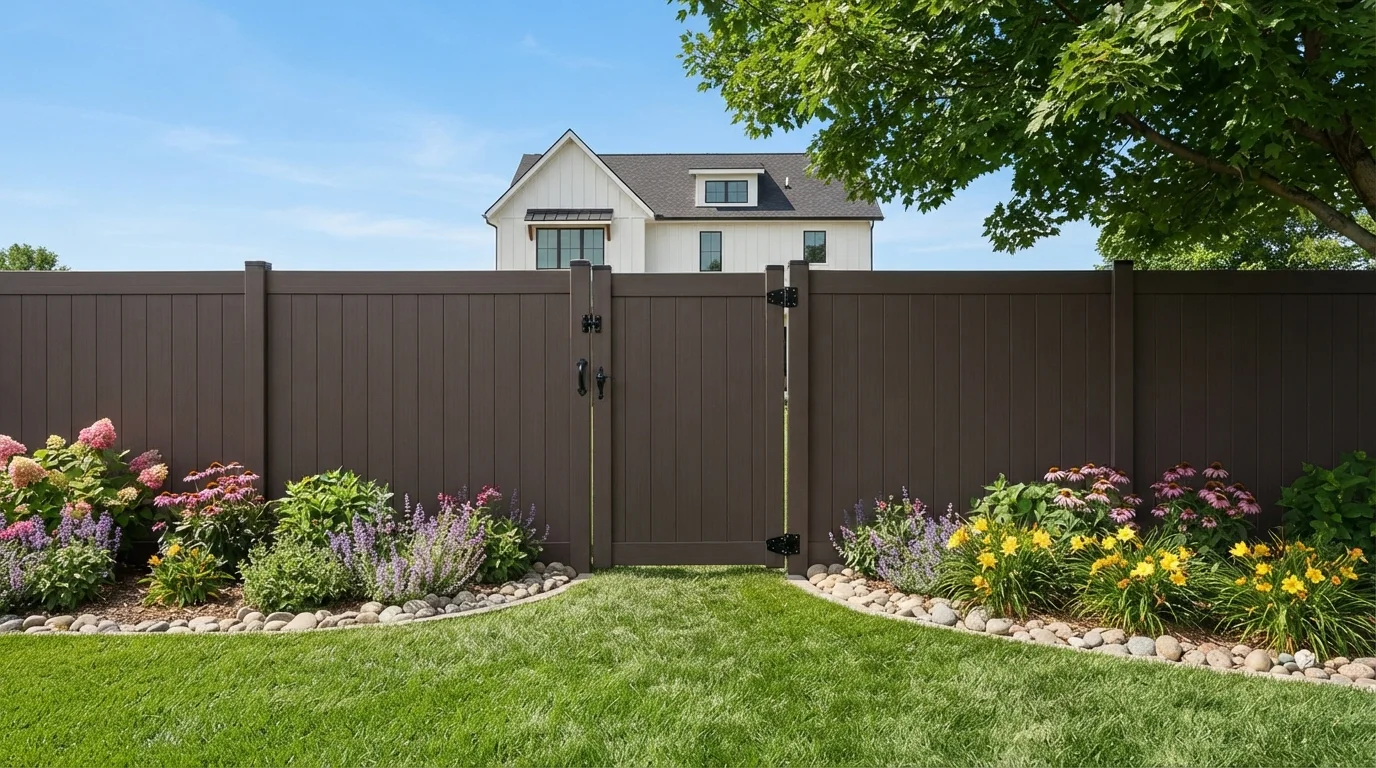
Deep chocolate brown fencing frames vibrant garden blooms and lush green grass for a private, grounded backyard oasis.
Deep chocolate brown is a rich, earthy dark tone. In this backyard, the color blankets the tall privacy fence and gate, creating a handsome backdrop for colorful flower beds, pebble borders, and lush green grass. The space feels serene, grounded, and comfortably private. Deep earthy tones make bright floral colors and vibrant greens instantly pop with clean contrast. It is perfect for anyone looking to turn their outdoor garden into a classic, cozy retreat.
SEE BROWN VELVET ON YOUR WALLS →
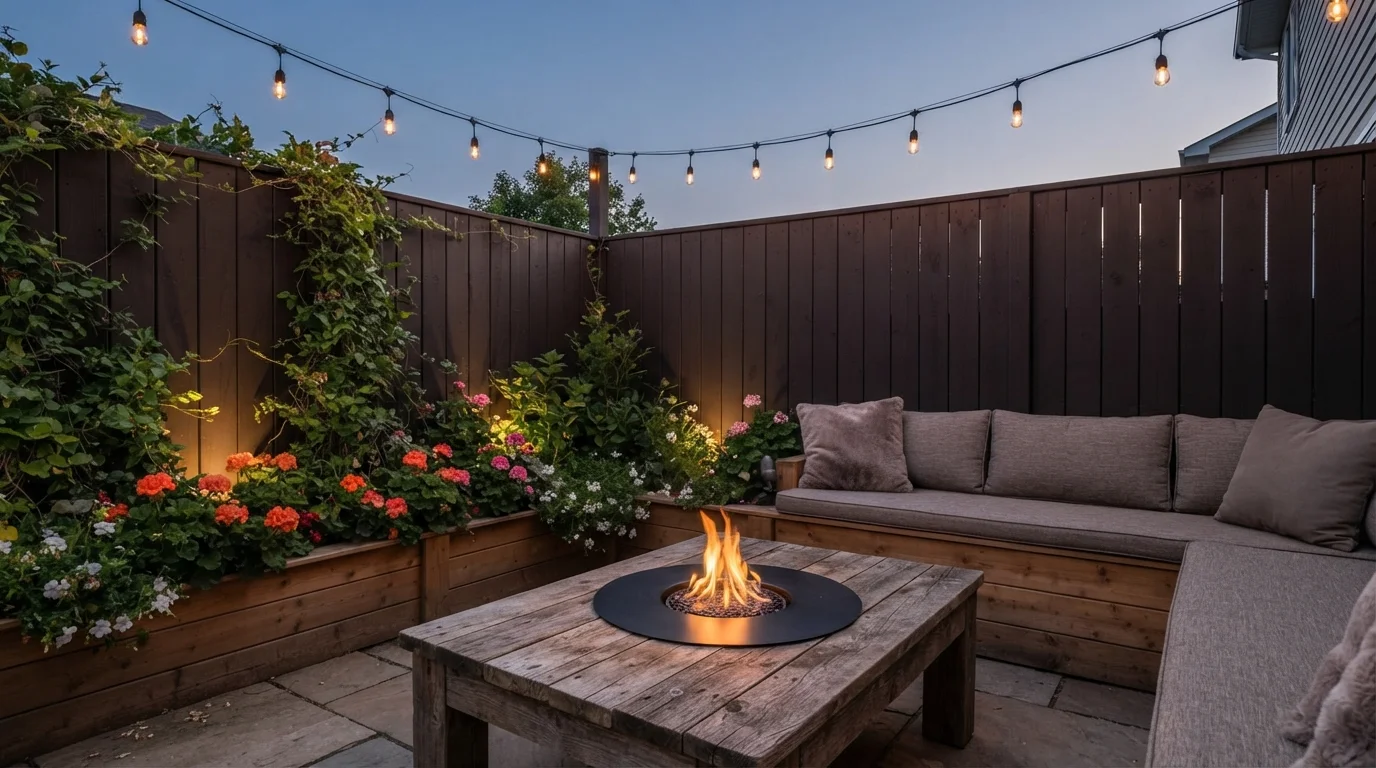
Glowing bistro lights and a tabletop fire bring serene warmth against a dark wood fence at dusk.
Dark espresso brown is a deep, rich wood tone that brings instant coziness. In this patio, the tall privacy fence wears a deep dark brown stain, framing a weathered natural timber table, a cushioned wooden bench, and lush floral planters. The entire corner feels snug, intimate, and effortlessly welcoming. This combo works because the deep background makes the bright floral colors and warm flickering firelight pop. It is perfect for anyone who loves relaxed evening gatherings in the backyard.
SEE WENGE ON YOUR WALLS →
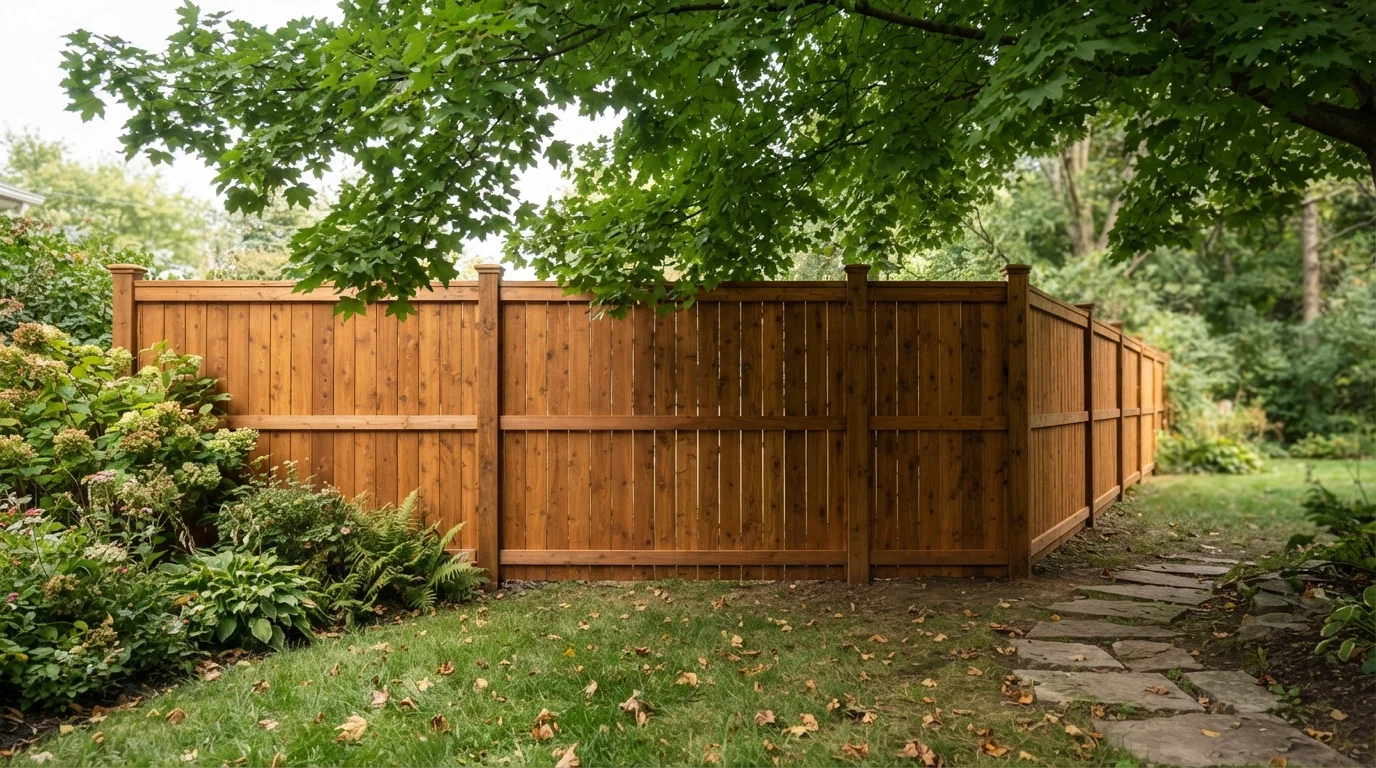
A rich amber-stained wooden fence creates a grounded, private boundary embraced by lush garden greenery.
Rich cedar is a warm, golden amber-brown that brings out the beauty of natural wood grain. In this backyard, the stain covers every board and horizontal rail across the tall privacy fence. The space feels grounded, cozy, and private. The pairing works seamlessly because warm earthy browns naturally complement fresh green lawn grass and leafy garden trees. This setup is ideal for anyone who wants an inviting, timeless border that blends right into nature.
SEE IT ON YOUR WALLS →Brown Fence Wall Color Combinations
A wall color never works alone. These are the full schemes from the rooms above — the lead color first, then the supporting colors that make the photo work.
Rich espresso brown panels paired with crisp charcoal framing create a polished, peaceful backdrop for lush backyard greenery.
TRY THIS PALETTE →A rich chocolate brown fence frames stunning mountain views and lush greenery with grounded, natural elegance.
TRY THIS PALETTE →Rich honey-brown fencing brings a grounded, natural warmth that stands out beautifully against lush green backyard foliage.
TRY THIS PALETTE →Deep chocolate brown timber wraps around a light sandstone patio to create a clean, grounded garden nook.
TRY THIS PALETTE →Because a fence is usually painted on its own, not matched to a house facade, the real combination decision is fence color against gate hardware, post caps, and the greenery around it. Rookwood Brown and Burnt Tile both read as earthy backdrops, so they pair well with black or oil-rubbed-bronze gate hinges and latches — the dark metal barely registers against a dark brown panel, which keeps the whole fence line looking unified rather than accessorized. Mahogany is the pick to reach for if the fence borders a more formal patio or entry: pair it with black wrought-iron style hardware and it reads upscale rather than rustic.
Saddle Soap and Pine Cone Brown both lean warmer and lighter, and they're the better match for natural wood accents — a cedar arbor, untreated post caps, or a wood gate left unpainted — because the warmth in both colors echoes real wood tones instead of fighting them. Cocoa, being the most traditional of the group, pairs naturally with white porch or trim colors on a farmhouse-style property, giving the classic white-house-brown-fence look without the fence looking like an afterthought.
More Fence Color Ideas
Set on a color family already? Each page has its own real rooms and picks.
Light or Dark Brown Fence Colors?
Go Light (LRV 60+) If…
The room is small, faces north, or has to work at every hour. Light warm colors make it feel bigger and stay calm in evening light — the light you actually live in.
Go Dark (LRV Under 20) If…
You want the cocoon effect and the room has real daylight. Dark works best on one feature wall — or fully color-drenched in a large room with good windows.
Fence browns run low on the LRV scale even at the lighter end — Saddle Soap sits at LRV 18, Rookwood Brown at LRV 14, and neither reads as "light" the way a wall color would. What changes between them is how much sun the fence gets. A fence in full sun all day fades faster and shows dust and pollen more on a darker finish, so the lighter, warmer Saddle Soap holds its look longer there and doesn't get uncomfortably hot to the touch on a July afternoon. A fence that's shaded most of the day, or backs onto trees and heavy planting, can go as dark as Rookwood Brown, Burnt Tile, or Cocoa without looking flat — shade actually makes a dark brown fence look richer instead of murky.
Darker picks like Mahogany and Cocoa also do a better job hiding the two things that make an older wood fence look tired: mildew staining and grain that's started to weather unevenly. If the fence is new or freshly resurfaced, that cover-up job matters less, and a mid-tone like Rookwood Brown lets the wood grain still read through a solid stain.
See It. Love It.
Paint It.
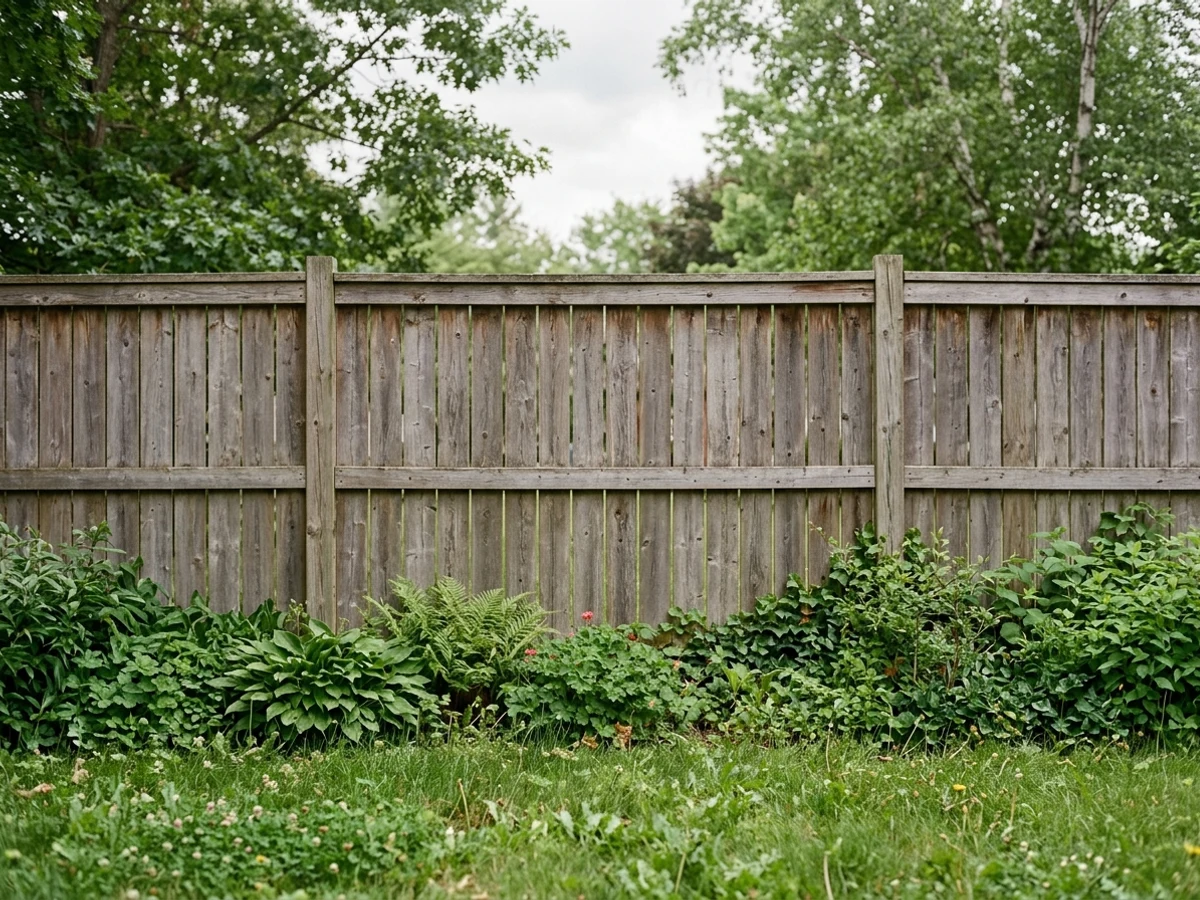
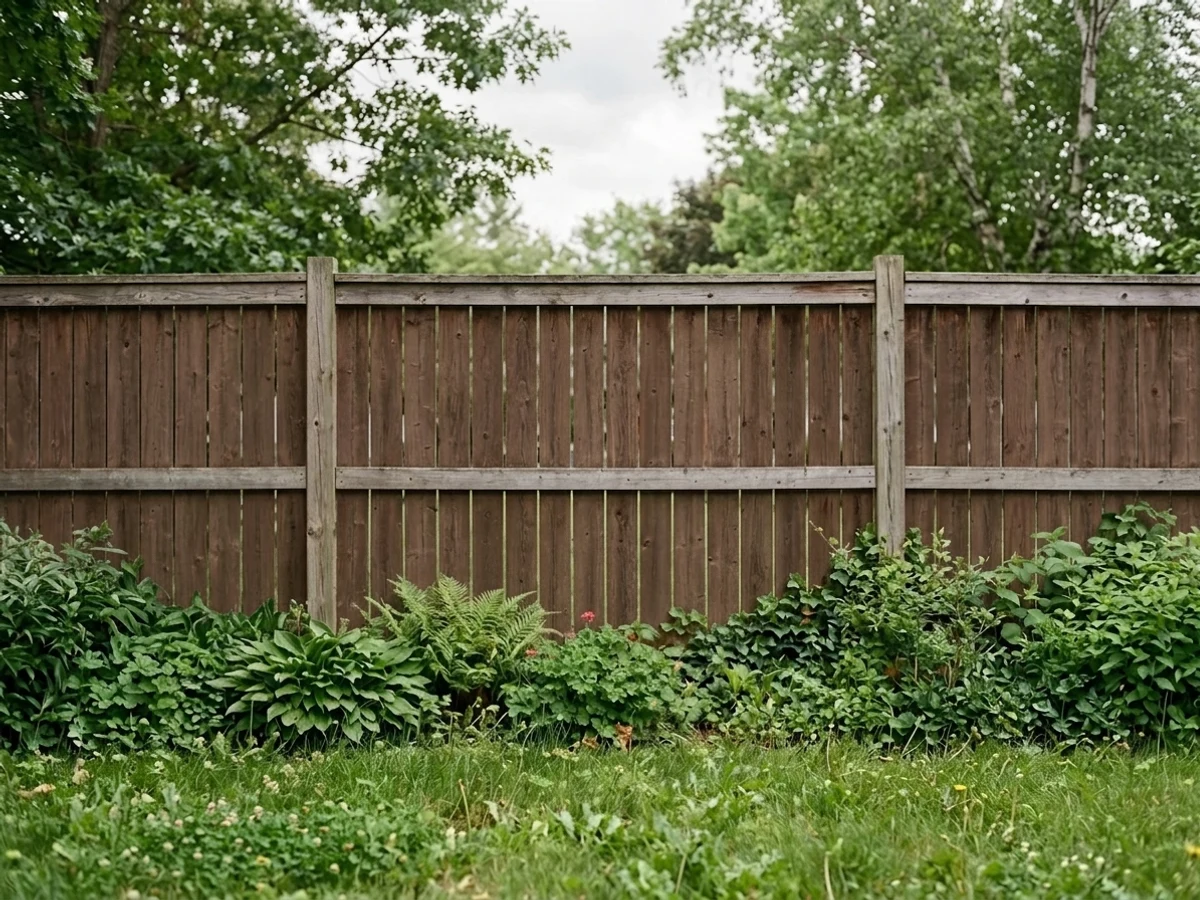
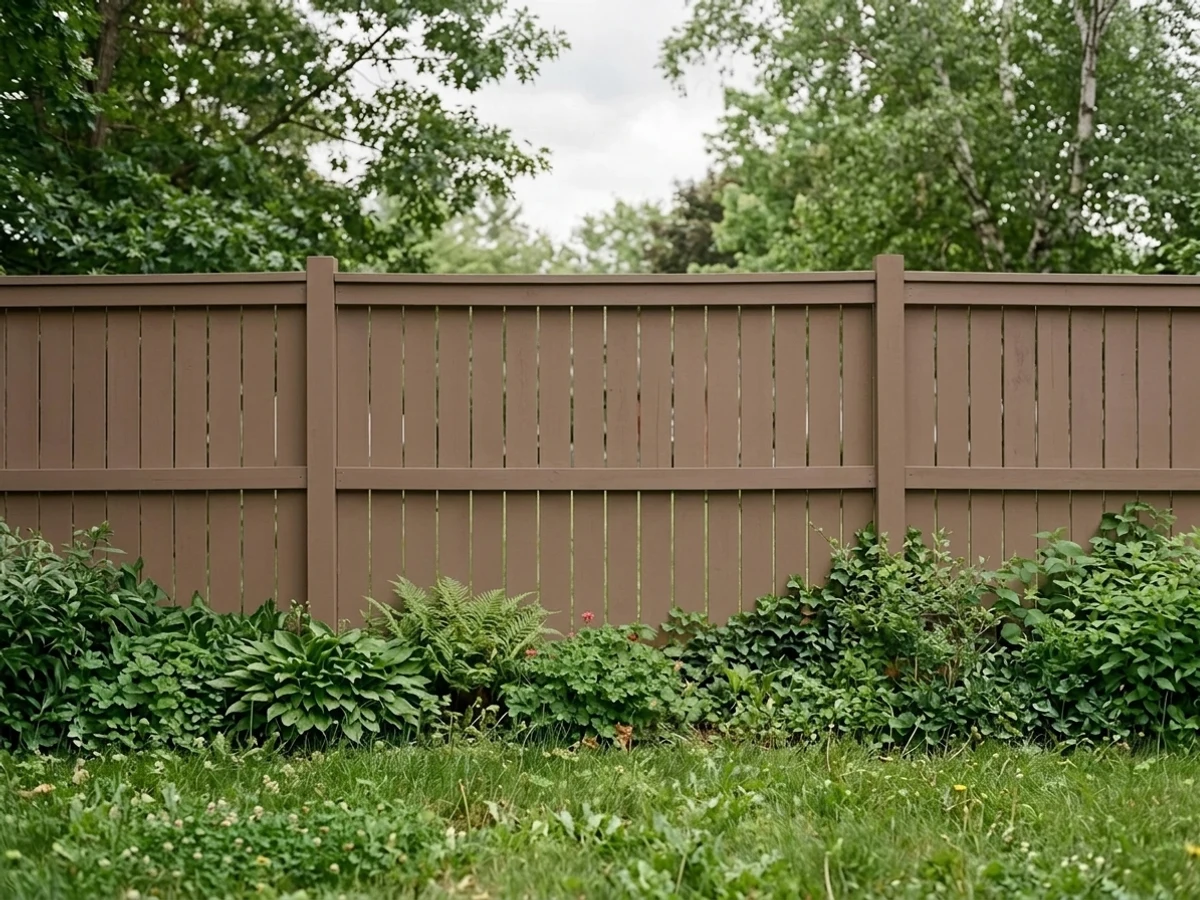
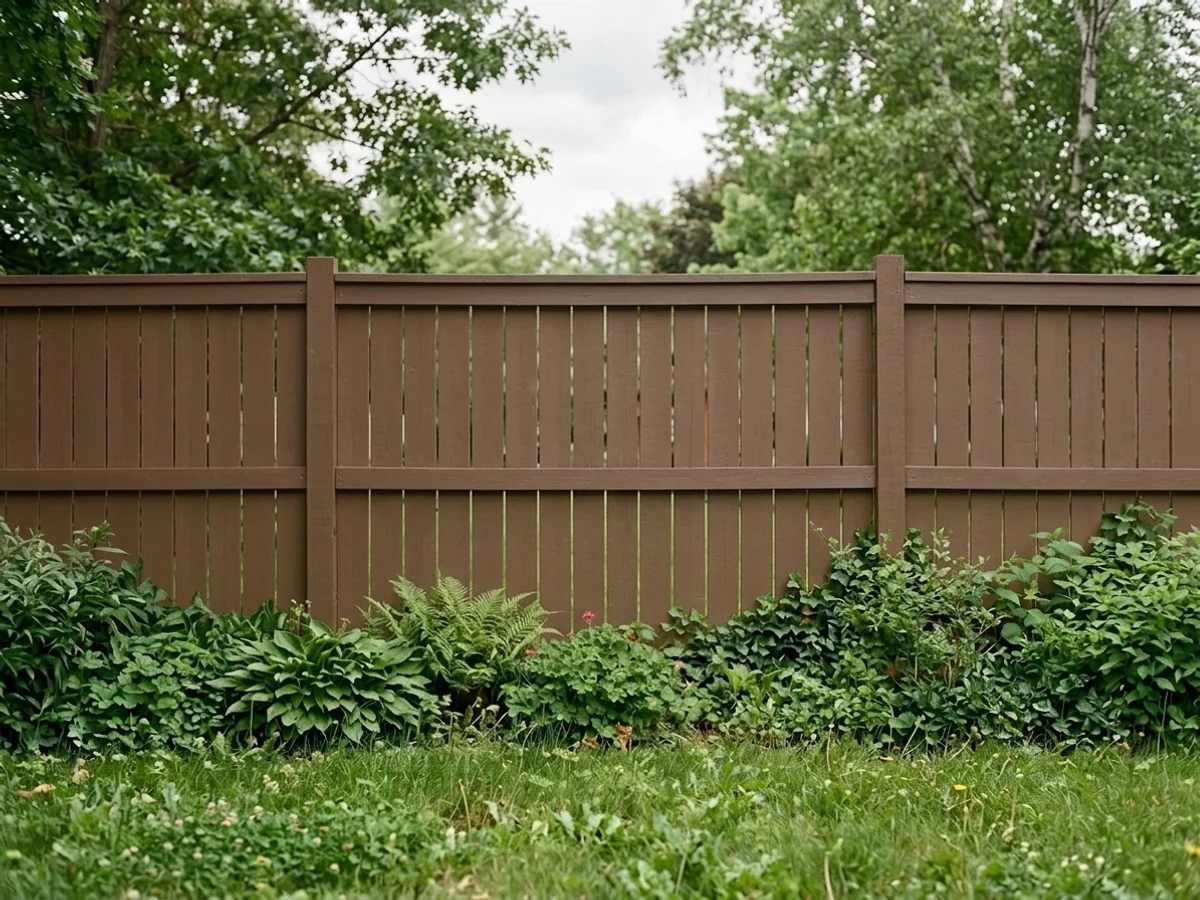
Upload one photo of your brown fence and try every color on this page on your own walls — in your own light, before you buy a drop of paint.

CocoaBeforePaint Or Solid Stain For A Wood Fence
Traditional paint sits on top of the wood, which means it can crack, blister, or peel once moisture gets underneath it — a real risk on a fence that takes weather from both sides. Solid color exterior stain soaks into the wood grain instead of coating over it, so it wears down evenly and fades gradually rather than peeling in sheets. Any of these picks can typically be mixed as a solid stain as well as a paint, and for a wood fence that's the safer long-term choice: stain needs recoating roughly every three to eight years, while paint needs full recoating every five to ten years but with more scraping and prep when it finally fails.
The one exception is vinyl or composite fencing, which doesn't absorb stain at all — those need a paint formulated for the material, not a wood stain, regardless of which brown you pick.
Sheen And Weather Timing
Solid stain only comes in a flat finish, and that's usually right for a fence — a flat or matte sheen hides the small dents, tool marks, and grain irregularities that a fence collects over the years, where a higher-sheen paint would highlight every one of them. If you're using an actual paint rather than a solid stain, stick to flat or a low-sheen exterior formula for the same reason.
Timing the application matters more on a fence than almost anywhere else in the yard. Latex paints and stains are temperature sensitive: applying below 50 degrees Fahrenheit, or in direct hot sun, causes the coating to dry too fast and can leave lap marks or poor adhesion. Painting or staining a brown fence on a mild, overcast day gives colors like Rookwood Brown and Mahogany time to cure evenly instead of flashing lighter in patches.
Mistakes That Show Up Fast On A Brown Fence
The most common failure isn't the color choice, it's skipping prep. Painting or staining directly over mildew, algae, or weathered gray wood traps the problem underneath the new coat, and it telegraphs through within a season — a dark color like Cocoa or Burnt Tile will actually show that unevenness faster than a lighter one because the contrast is higher. Pressure washing and letting the fence dry fully before any color goes on is what makes the difference.
The second mistake is mismatching the gate to the fence line. A fence painted in Pine Cone Brown with a gate stained in a different brown reads as two projects instead of one, even though both are technically "brown." Buy enough of a single color to do fence and gate in the same batch, since brown tones can shift noticeably can-to-can if you buy them weeks apart.
About Brown Fence Paint Colors
Brown is the color a wood fence wants to be. Paint a fence white or gray and it reads as a paint job; paint it brown and it reads like an extension of the yard — the panels sit back into the landscaping instead of competing with it. That's why warm, soft browns like Saddle Soap (Benjamin Moore 2110-30, LRV 18) show up so often on fence projects: it's close enough to a natural cedar or redwood tone that neighbors assume you stained it, not painted it, and it hides everyday dirt and water spotting far better than a light color would.
The brown family runs wide on a fence, and the picks here cover most of that range. Rookwood Brown (Sherwin-Williams SW 2806, LRV 14) and Burnt Tile (Valspar) sit on the darker, earthier end — both are the kind of deep brown that disappears into mulch beds and hedges rather than standing out against them. Cocoa and Mahogany go deeper still, into near-black brown territory that reads as a deliberate design choice rather than a default.
Pick by the feeling you want at the property line. Saddle Soap gives a cozy, welcoming yard entrance. Rookwood Brown and Burnt Tile give a timeless, earthy backdrop that lets plantings do the visual work. Mahogany gives the fence an upscale, polished edge, Cocoa suits a traditional rural property, and Pine Cone Brown leans rustic and woodland — a good match if the fence borders trees or a garden you want to feel wilder, not tidier.
The Questions Everyone Asks
What color should I paint my brown fence?
If you want one answer, start with the safe picks above — Wenge, Otter, Rojo Marrón, Semolina. They read well in any light and survive furniture changes. Then check the light: strong afternoon sun wants a step cooler, a north-facing room wants a step warmer.
what color should i paint a wood fence
Brown is the safest, most popular choice because it reads as part of the landscape instead of a paint job. A warm, mid-tone brown like Saddle Soap (Benjamin Moore 2110-30) works on most properties and hides dirt well. If the fence backs onto heavy planting, a darker earthy brown like Rookwood Brown (Sherwin-Williams SW 2806) blends in even more and hides mildew staining better over time.
should i paint or stain a brown fence
Solid stain is generally the better long-term choice for wood fencing. It soaks into the grain instead of sitting on top, so it fades evenly and doesn't crack or peel the way paint can once moisture gets underneath. Paint needs full stripping and recoating every five to ten years; solid stain typically just needs a fresh coat every three to eight years, with far less scraping involved.
what sheen should i use on a fence
Flat or matte. Solid color exterior stain only comes in flat, and for a reason — a flat finish hides the small dents, tool marks, and grain unevenness a fence picks up over the years. If you're using true paint rather than stain, stay with a flat or low-sheen exterior formula rather than satin or gloss, which would highlight every imperfection in the wood.
does a dark brown fence fade in the sun
Yes, more visibly than a lighter one, especially on a fence that gets full sun all day. A fence in constant direct sun holds its color longer in a lighter, warmer brown like Saddle Soap (LRV 18) than in a deep tone like Cocoa or Mahogany. If the fence is mostly shaded by trees or the house, darker picks like Rookwood Brown (LRV 14) or Burnt Tile fade much more slowly and can go as dark as you want.
what color goes with a brown fence
Black or dark bronze hardware — hinges, latches, post caps — disappears against darker browns like Rookwood Brown or Mahogany and keeps the fence line looking unified. Green landscaping and hedging is the other natural pairing every brown here works with, since brown reads as a neutral backdrop for plants. For a classic look, white porch or trim paired with a traditional brown like Cocoa gives the farmhouse fence-and-house combination.
What two-color combination works best in a brown fence?
The reliable pattern is a quiet main color plus one deep accent on a single wall. Keep trim and ceiling in one warm white so the two colors are the only event in the room — the combination cards above show complete schemes from real rooms.
What colors make a brown fence look bigger?
High-LRV, slightly warm colors — LRV 60–75 is the sweet spot. Paint the walls and trim close to the same light color so the corners blur, and keep the ceiling white. Stark cool white actually works against you; it creates hard shadows that show the room's edges.

Ask a Question