Rookwood Brown
The Historic Collection brown behind a thousand Craftsman porches and fences, reviewed honestly: where the red-gold glows, where it turns to dirt, and what to pick instead.

Jessica has spec'd whites and neutrals for more than 300 rooms and keeps a sample wall of painted drawdowns in her studio. Every color review is checked against real reader rooms in the comments and re-tested when a formula changes. About the testing process →
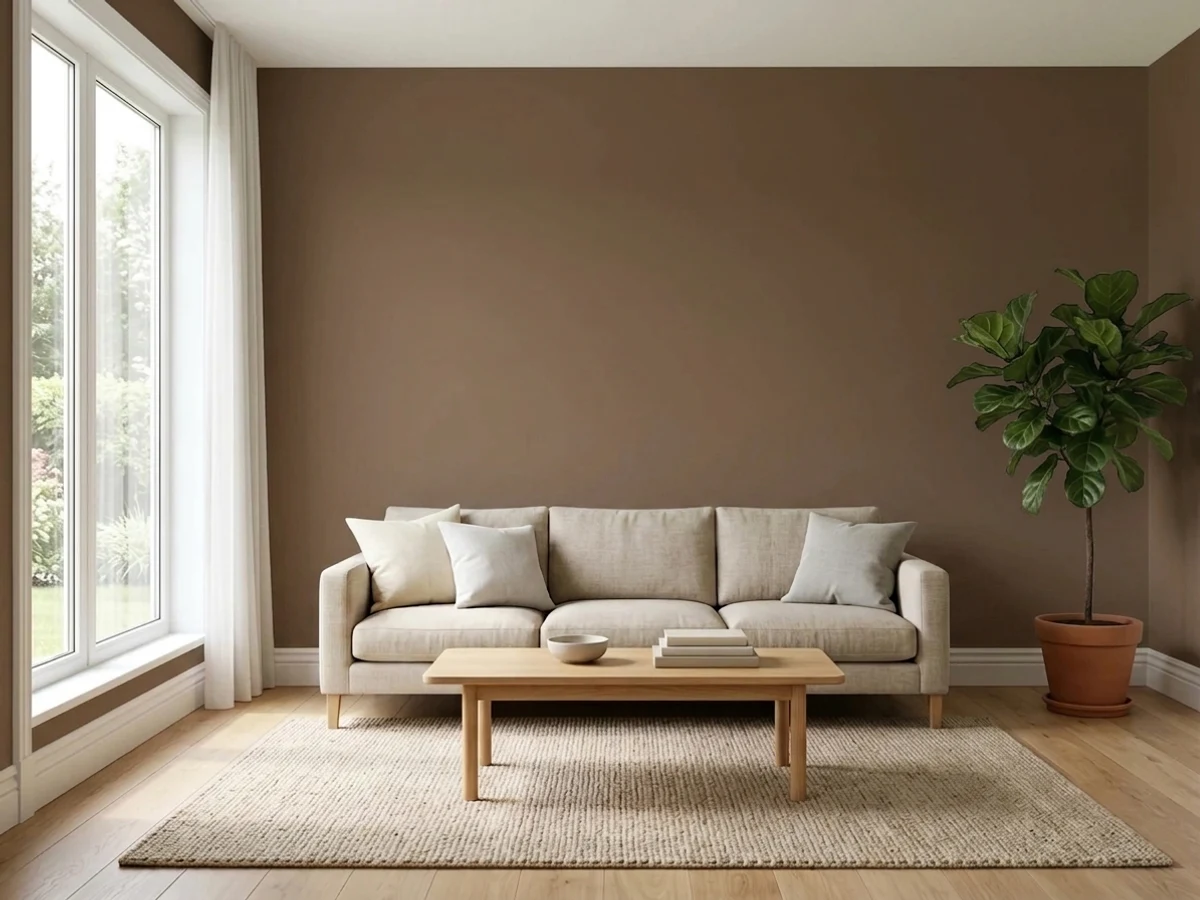
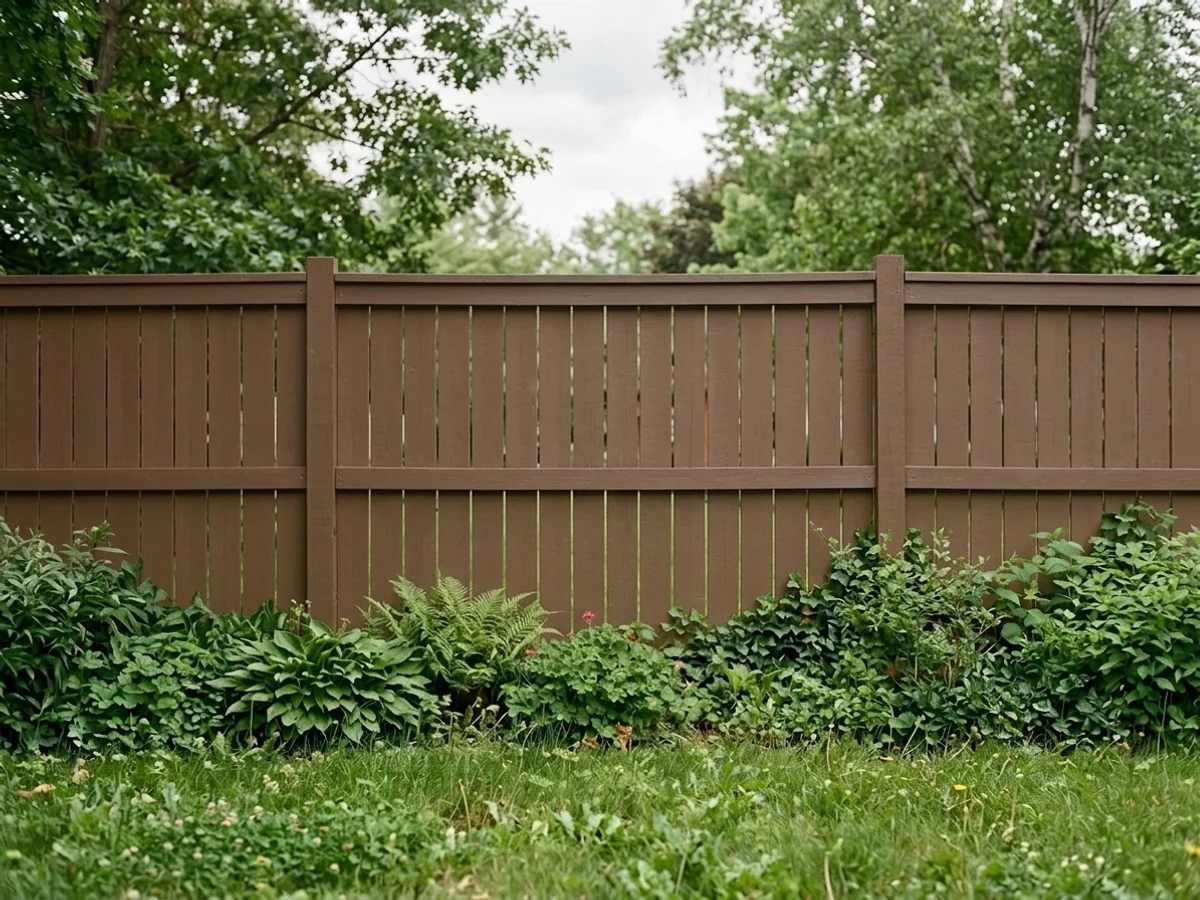
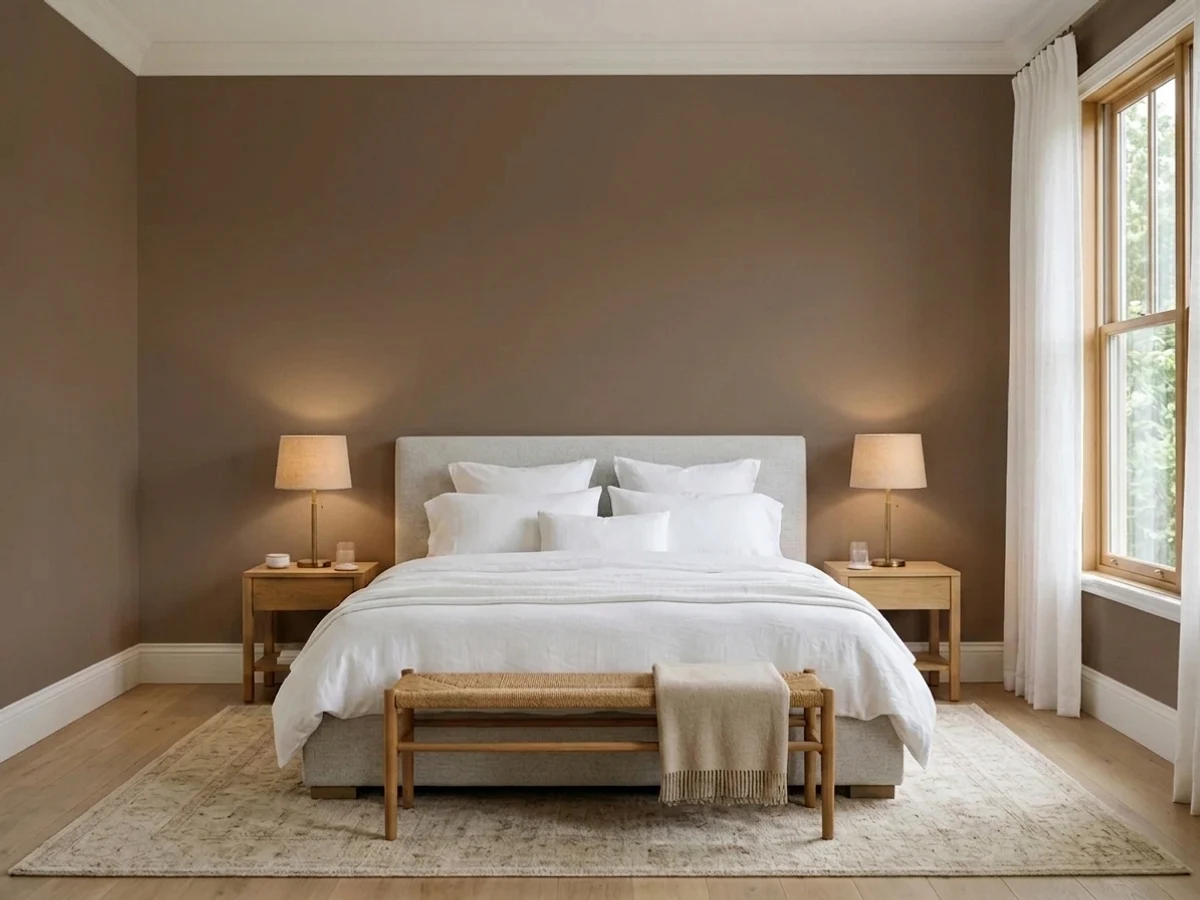
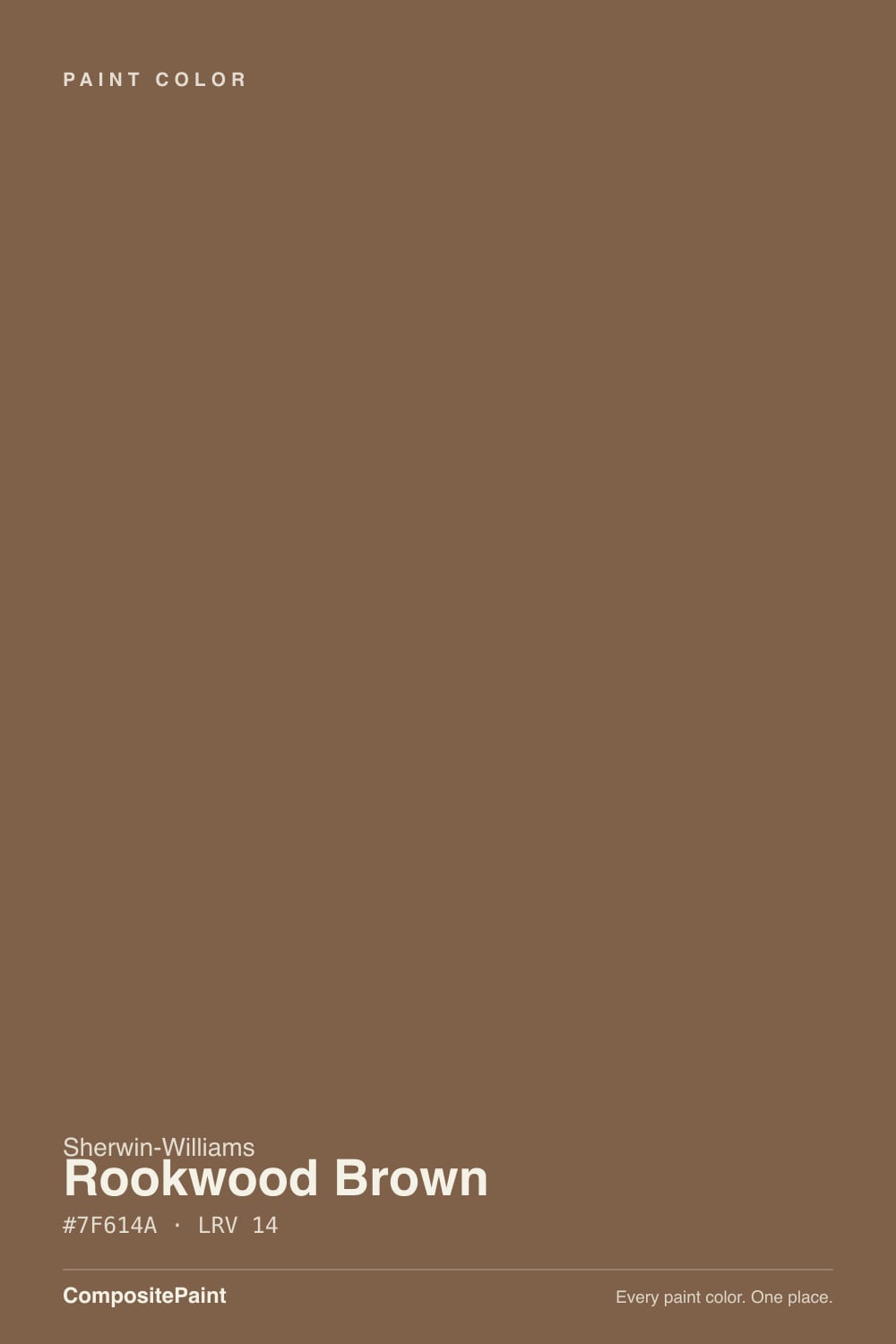
- 1Mahogany0
- 2Turkish Coffee5
- 3Rookwood Brown14
- 4Cavern Clay20
- 5Redend Point30
The Fast Verdict
Rookwood Brown is old saddle leather in a can: a deep brown with real red-gold in it, pulled from Sherwin-Williams' own historic archive and built for bungalows. Outdoors, in full sun, it is one of the best fence and Craftsman-body browns anybody makes. Indoors it needs lamps and a plan — at LRV 14 it either wraps a bedroom in warmth or sinks into a muddy dark, and the light decides which.
Craftsman and bungalow exteriors · fences, gates and garden structures · a headboard wall that should feel like a cocoon · dining rooms and dens that live under lamps · front doors and shutters on brick or stone houses
The room is dim, north-facing and lamp-free · your floors and trim are orange honey oak · you want a cool, gray-leaning brown · your house already has red brick or a cool gray roof doing the talking
- One of the best fence, gate and outbuilding browns in the deck
- Real historic credentials — drawn for Craftsman and bungalow houses
- Turns leathery and expensive under 2700K lamplight
- Deep enough (LRV 14) to hide dirt, scuffs and weathering outdoors
- Quiet front-door and shutter color that suits brick, stone and cream siding
- Blends into honey oak, cedar and stained trim until nothing reads as painted
- Goes flat and muddy in a dim north room with no lamps
- Reads orange next to cool gray floors, stone or roofing
- Dark enough that four interior walls need real windows to work
What Color Is Rookwood Brown, Really?
A deep, warm brown with red-gold underneath — closer to old saddle leather than to chocolate. It comes out of Sherwin-Williams' Historic Collection, the palette the company assembled from its own archives, and the Rookwood name is borrowed from Rookwood Pottery, the Cincinnati art-pottery works founded in 1880 whose glazes helped define American Arts and Crafts color. That is not trivia — it tells you the company this paint keeps. Rookwood Brown was drawn for bungalows, shingled porches and stained-wood interiors, and it still looks most at home there. One quirk worth knowing before you order a sample: Sherwin-Williams files SW 2806 in its orange family, not its brown one. The chip looks brown. The filing tells you which direction it drifts.
At LRV 14 this is genuinely dark paint, and it does not behave like the chip. A small chip sits on white card and looks rich and lively; a wall sits next to itself and goes deeper. Expect the finished wall to read a step darker and less red than the sample, and expect a big gap between the sunlit wall and the shadowed corner of the same room — a full step, not a nuance. That same depth is an asset outdoors, where full sun lifts it right back to the color you fell for and gives fences and siding a stained-timber look that a lighter brown never achieves.
Undertone in one line: red-orange over a brown base, with just enough gray to stop it short of rust. If your sample glows russet, that is west sun or 2700K bulbs doing it; if it looks like wet dirt, your light is cold and there is not enough of it. Both versions are the same paint being honest about the room.
Where It Shines
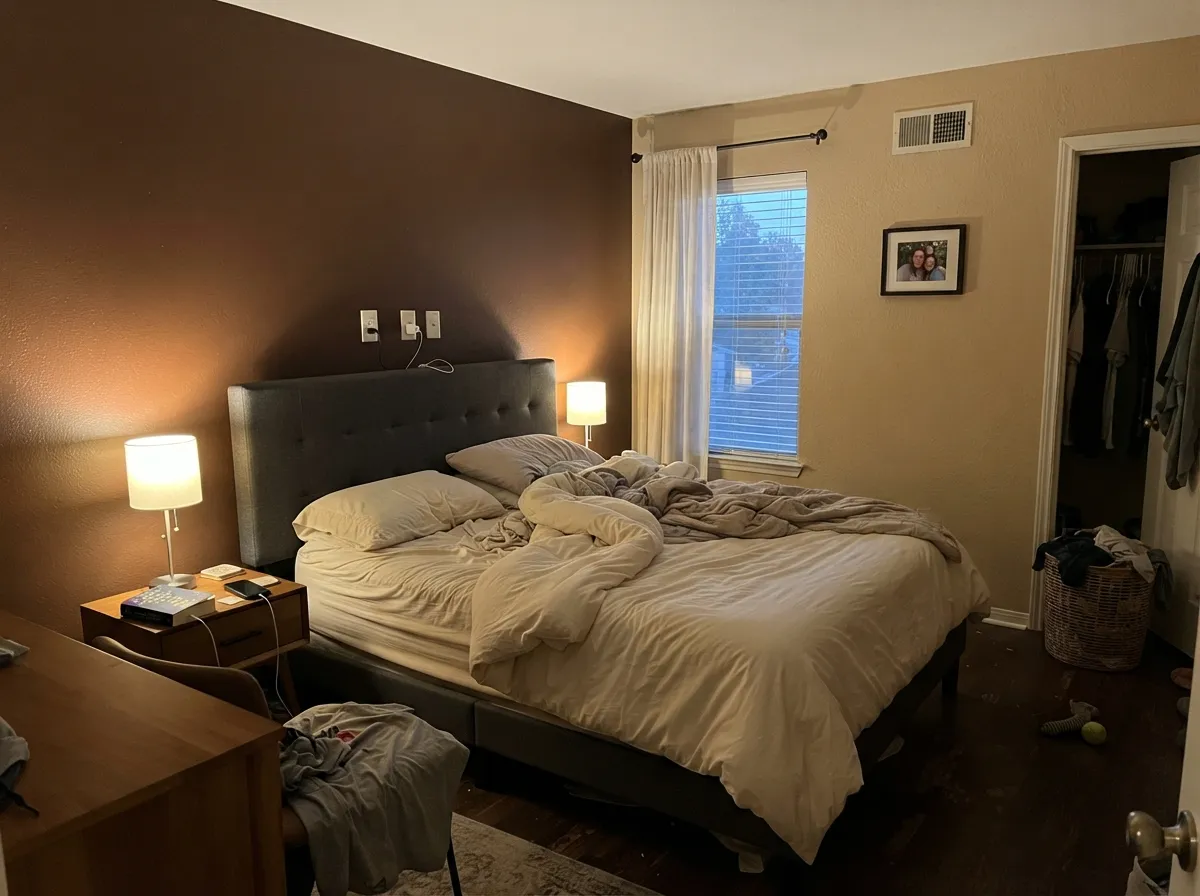
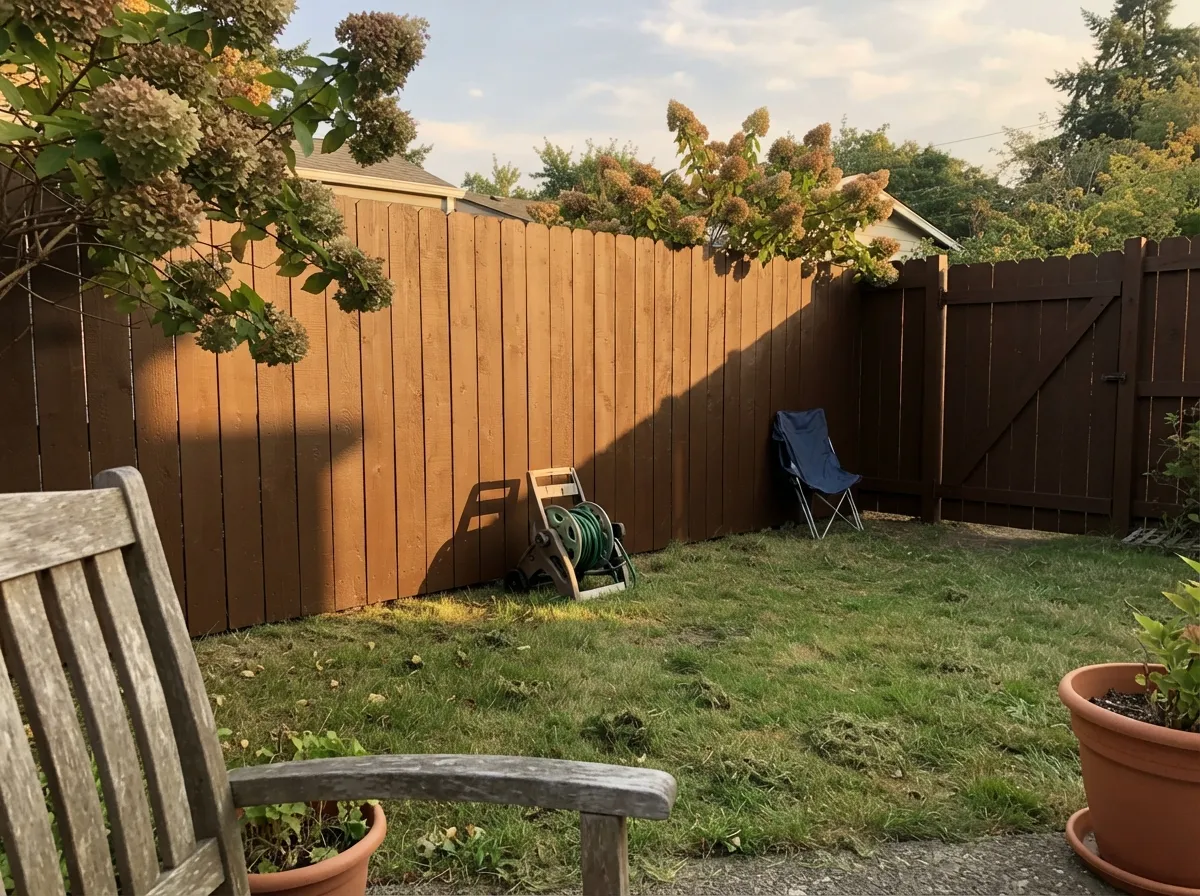
Its best work happens outside. On siding, shingles, a board fence or a garden shed, direct sun keeps the red-gold awake and the color reads like a rich penetrating stain rather than paint — which is exactly why Sherwin-Williams puts it in the Craftsman exterior lineup. Indoors it has one clear specialty: the wall behind the bed. A single headboard wall at LRV 14 does the cocooning that four walls of the same color would overdo, and under warm lamps it turns leathery and expensive. Give it cream, aged brass, walnut and real light, and it looks like it has been on the house for a hundred years.

Where It Fails
The regret stories about Rookwood Brown are unusually predictable, and all three are visible before the first coat goes on. None of them are the paint's fault — but if your room or your house matches one, this is not your brown, and a bigger sample will only confirm it faster.
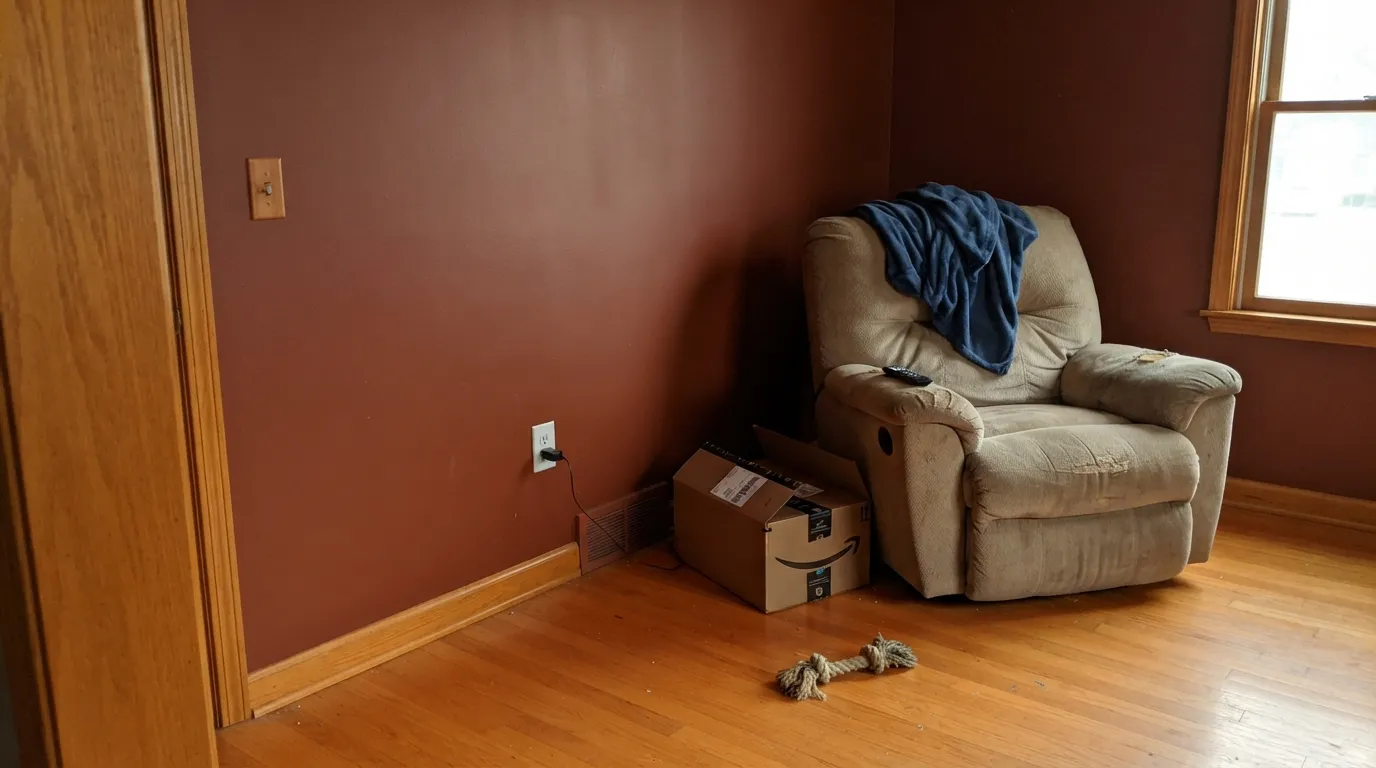
This is the number one complaint, and it is a compliment aimed the wrong way: the color reads like stained wood. Put it on a wall above honey-oak floors, next to orange-stained oak trim, or on a fence beside a cedar deck, and the whole scene collapses into one orange-brown blur. Nothing looks wrong — it just looks like nobody painted. Give it contrast: white or cream trim, a pale rug, a lighter neighbor wall. Or pick a gray-brown like SW Urbane Bronze if the wood is staying.
At LRV 14 it gives back almost nothing, so it depends entirely on what the room offers. In a north-facing bedroom on an overcast day with no lamps on, the red-gold drains out and what is left is a flat, muddy dark that owners describe as dirt or mud. The fix is not more coats — it is lamps at 2700K and an accent wall instead of four. If neither is happening, go lighter.
This brown is firmly warm, so anything cool standing next to it exaggerates the orange. Gray LVP floors, blue-gray marble, a cool gray roof, silver-gray stone on a facade — each one pushes the brown toward rust and makes the pairing look accidental. It wants cream, tan, bronze-green and warm stone, not a cool palette with one brown in it.
Room by Room
Full sun is what this color was drawn for. On a Craftsman or bungalow body, on shingles, and especially on a board fence or gate, it reads like a deep stain and hides dirt, pollen and splash-back better than any light color. Exterior satin on a fence, flat or low-lustre on siding. Details and product notes in the fence section below.
One wall behind the bed, matte, with warm bedside lamps: this is the interior use it earns. The depth pulls the bed forward and makes the room feel enclosed rather than dark. Four walls only if the bedroom has real windows and you actually want a cave. Cream bedding, not gray.
Dining rooms are used after sunset, which is precisely when this brown is at its best. Under a warm fixture it goes leathery and the room feels older and more finished than it is. Keep the ceiling and trim in a cream white so the walls do not close in, and skip it if the room doubles as a bright daytime workspace.
Low-light rooms that run on lamps suit it, and leather, brass and walnut bookshelves are its natural company. Eggshell so chair backs and desk edges wipe clean. In a home office with a video camera pointed at the wall, remember what LRV 14 does to your face lighting and add a lamp.
On a cream, tan or red-brick house it is a classic, quiet door color that does not shout the way a red or teal door does. Shutters in the same brown on a light body is straight out of the bungalow playbook. Exterior satin, and pull the porch ceiling and sash into a warm white.
An island, a hutch or a bath vanity in Rookwood Brown is genuinely handsome under cream walls with brass pulls. A whole kitchen of it is a bet, and a losing one next to honey-oak floors, where painted brown cabinets and stained oak read as one confused finish. Satin cabinet enamel either way.
Your Light Is the Risk
Strong daylight wakes the red-gold and the brown reads warm and alive. This is the light exteriors and fences get all day — and the reason it works outside better than in.
Cool, weak daylight strips the red out and leaves a flat mud-brown with no glow. The most common bad review, and the most avoidable.
Vivid and coppery in east morning sun, quiet and browner by midday, then deep and distinctly red again at golden hour. Sample the wall you will look at most, at the hour you look at it.
2700K warm bulbs push it toward russet and cinnamon — cozy, and the version most owners fell for. Cool 4000K LEDs cancel the red and leave a dull gray-brown. Swap bulbs before you swap paint.
Most complaints about Rookwood Brown are a light mismatch. Upload a photo of your actual room and see it on your walls — then ask for the same wall in north light or evening lamps before you buy a single sample.
Need It From Another Brand?
Any paint counter can custom-tint Sherwin-Williams SW 2806 directly. If you would rather stay in one brand's own deck, these are the closest stock matches, measured as ΔE2000. Under 2 is a difference you will not see on the wall.
| Brand | Closest color | ΔE | LRV | |
|---|---|---|---|---|
| Behr | Sassafras TeaHDC-CL-13 · Behr | 0.9 | 13 | Color page → |
| Benjamin Moore | Hidden Valley1134 · Benjamin Moore | 2.2 | 13 | Color page → |
| Valspar | Nom NomV088-5 · Valspar | 2.3 | 13.1 | Color page → |
| PPG / Glidden | Fig BranchesPPG1085-7 · PPG / Glidden | 2.9 | 14 | Color page → |
| Glidden | Fig BranchesPPG1085-7 · Glidden | 2.9 | 14 | Color page → |
| Dutch Boy | Distressed Leather413-6DB · Dutch Boy | 1.9 | 13 | Color page → |
Similar Sherwin-Williams Colors
The nearest shades to Rookwood Brown within Sherwin-Williams's own range, ranked by perceptual color distance — useful when you want the same look a touch lighter, darker, or warmer.
WCAG 2.1: AA is 4.5 : 1 for normal text, 3 : 1 for large text, AAA is 7 : 1.
Rookwood Brown vs the Colors You're Also Considering
Every Rookwood Brown sample board has the same rivals on it. The numbers show the real lightness gap — then it comes down to which risk you would rather live with.
Pick this when the surface still needs to read as a color rather than as a dark: at LRV 14 Rookwood Brown keeps its red-gold where Sable at LRV 8 gives most of it up.
Sherwin-Williams SW 6083 · LRV 8SablePick this for the same warmth two steps deeper — a near-black brown for cabinets and doors that Sherwin-Williams also quietly files under orange.
Pick this for the deeper, more saturated version with more red in it; on siding and fences the extra depth is what keeps the color from looking washed out by summer.
Benjamin Moore 2110-30 · LRV 18Saddle SoapPick this for a lighter, gentler brown that asks less of the room — the safer bet for four walls in a bedroom that does not get much sun.
Pick this to keep the same earthy warmth without ending up with a wall anyone would call orange.
Sherwin-Williams SW 7701 · LRV 24Cavern ClayPick this if you actually want the orange to show — it is terracotta first and brown second, and it needs good light to glow.
Pick this for the warmer, more historic option; Urbane Bronze can read near-black in poor light, while Rookwood Brown still reads brown.
Sherwin-Williams SW 7048 · LRV 8Urbane BronzePick this when you want depth with the red taken out — a gray-brown that sits calmly beside cool stone, gray floors and modern black windows.
Rookwood Brown Coordinating Colors
The rule for coordinating with Rookwood Brown is to stay on the warm, earthy side and give it something lighter to push against. Creams and warm beiges keep it from reading heavy, muted greens are its historic partner, and one near-black anchors a scheme without cooling it down. What it does not want is a cool gray palette with a single brown dropped into it — that is the pairing that makes it look orange.
Wood is the other half of the decision. Walnut, espresso and pale unstained white oak all sit well against it because they either go deeper or go paler. Orange-stained oak and fresh cedar are the ones to watch: they share the same red-orange base and the color stops reading as a choice. These are the partners that keep showing up in rooms and facades that work:
Where the Rookwood Name Comes From
Rookwood Pottery was founded in Cincinnati in 1880 and spent its best decades — roughly 1890 to the 1929 crash — turning out the glazed art pottery that helped set the color language of the American Arts and Crafts movement. Deep browns, ambers, terracottas and bronze-greens: the palette of a kiln, not a fashion house. When Sherwin-Williams built its Historic Collection out of its own archives, it borrowed the name for a whole run of those earth tones, and SW 2806 is the middle of that run.
It has neighbors, and they matter when you are sampling. Rookwood Medium Brown SW 2807 and Rookwood Dark Brown SW 2808 step down the same family, and Rookwood Shutter Green SW 2809 is the green the collection intends you to put on the shutters. If SW 2806 samples one shade too red or too light on your siding, the fix is usually a neighbor rather than a different brand — the family was drawn to work together, which is more than can be said for most palettes assembled from three different decks.
The practical value of a historic color is not authenticity points. It is that a 1910 palette has already survived a century of taste cycles, so a brown from it carries much less repaint risk than a brown that arrived with a trend.
Rookwood Brown on Fences, Gates and Outbuildings
This is the use most people arrive here for, and it is the one the color is best at. A dark warm brown does three things a fence needs: it hides mud splash and pollen between washes, it makes the plants in front of it read as the subject instead of the backdrop, and at LRV 14 it weathers into a slightly softer version of itself rather than showing every chalked patch. Next to a cream house and green lawn it looks like an expensive stained-timber fence, which is exactly the impression most yards are going for.
Product matters more than color here. Use an exterior acrylic — not a wall paint pressed into service — in a satin or low-lustre sheen so the surface sheds water and cleans with a hose. Bare cedar or pine needs a stain-blocking exterior primer first, and a previously stained fence needs a bonding primer or the topcoat will lift in the first wet season. Deep bases carry more colorant and less hiding pigment, so plan on two full coats and buy the extra gallon before you start rather than risking a second tint batch mid-fence.
Two honest cautions. Dark colors on a fence in full southern sun run hot and fade faster than mid-tones, so the south-facing run will drift first — sample it there, not on the shady side. And on horizontal surfaces like a deck floor or a gate cap, wall-grade paint will not survive foot traffic and standing water; keep this brown on the vertical boards and use a proper deck coating underfoot.
Three Ready Palettes Built on Rookwood Brown
A color is never alone on the wall. These are complete combinations in the 60-30-10 pattern, with the reason each one holds together. Every one opens in the visualizer.
This is the original Arts and Crafts formula, not an invention: an earth-brown body, a bronze-green trim, and a creamy sash white to draw the windows. Both darks come out of the same historic archive, so they sit together without either one looking modern. Dover White at LRV 73 is warm enough to belong; a bright white sash would snap the whole facade into the wrong century.
Try this palette in your roomThe accent-wall version of this color is the one that works, and the other three walls decide whether it feels warm or heavy. Natural Linen is a warm beige from the same side of the wheel, so the room stays one family instead of splitting into dark-and-light. Alabaster trim keeps the edges soft — a crisp bright white would make the brown wall look like a hole in the room.
Try this palette in your roomFull-depth walls need a real cream overhead or the room feels lidded, and Creamy at LRV 81 is warm enough to keep the ceiling from looking blue by contrast. Black Fox gives the scheme one near-black note that stays on the brown side of dark instead of dragging it cool — brass hardware and a warm wood table finish it.
Try this palette in your roomRookwood Brown FAQ
Is Rookwood Brown too dark for a bedroom?
For one wall, no. For four, it depends on your windows. At LRV 14 it reflects very little, so a bedroom with a single north window will feel closed in by lunchtime. The version that works for most people is the headboard wall in matte with the other three walls in a warm beige, plus 2700K bedside lamps. If the room has two good windows and you want the cave, the full-drench version is genuinely lovely at night.
Does Rookwood Brown look red or orange on the wall?
Brown first, with a red-orange lean that shows up whenever the light is warm. Sherwin-Williams itself files SW 2806 in the orange family rather than brown, which is the clearest signal you will get. In west sun and under warm bulbs expect a distinctly russet, coppery cast; in cool or weak light the red hides and it reads closer to a plain dark brown. Neither is a defect — but if any orange is a dealbreaker, this is the wrong brown.
What trim white goes with Rookwood Brown?
A warm one. SW Alabaster at LRV 82 is the safe default, SW Creamy at LRV 81 if you want the older, more historic cream, and SW Dover White at LRV 73 outside on sash and porch ceilings. Avoid a crisp bright white against it — the contrast is already enormous at LRV 14, and a cold white makes the brown look muddy while the trim looks bluish. Satin or semi-gloss on the trim, matte on the walls.
Is Rookwood Brown a good fence color?
It is one of the better ones. Dark warm browns hide dirt, mower splash and weathering, they let plants read as the interesting part of the yard, and this particular brown looks like a rich stain rather than a painted surface. Use an exterior acrylic in satin, prime bare or previously stained wood, and expect a south-facing run to look noticeably lighter and warmer than the shaded side of the same fence.
Does it work with honey oak floors and trim?
This is its one real clash, and it is a strange one: the problem is not that they fight, it is that they agree too much. Orange-stained oak and this brown share the same red-orange base, so the wall stops reading as a paint choice and the whole room turns into one warm blur. Walnut, espresso, painted trim and pale white oak are all excellent. With honey oak, either put a cream wall and a pale rug between them or choose a gray-brown instead.
Can I use it on a whole house exterior?
Yes, and it is one of the few browns with the history to justify it. It sits in the Sherwin-Williams Historic Collection and shows up in the company's Craftsman exterior lineup, where dark earth-brown bodies were the norm. Two cautions: pair it warm — cream sash, bronze-green trim, warm stone — because a cool gray roof or silver-gray stone will make the whole facade look orange; and paint a large sample board and walk it around the house, since the shaded north elevation will read a full step darker and flatter than the sunny side.
Have you painted with Rookwood Brown?
Rate it — one tap helps the next reader decide.
Ask a Question