Room Colors · Basement
14 Best Basement Paint Colors for 2026
ideas, combinations, and real rooms
14 curated picks from real basements — with the exact colors, honest reasons why, and the combinations that hold the room together.

Former interior stylist who can spot a green undertone from across a room. Jessica writes the color and mood pieces — what to choose, what pairs, and why your "white" looks pink.
The Fast Answer
Don't want to read 14 picks? These four are the safe answers.

Top Picks for the Basement
Pick a color family, tap a shade to see the basement in it, then try it on your own room.
Basement Color Trends 2026 — What's In, What's Out


- Cool gray-on-gray — The 2013–2020 builder-basement finish — under artificial light it reads cold and unfinished.
- Stark bright white — Without real daylight it turns flat and dingy; creamy warm whites took its place.
- 2000s builder beige — The yellow-tan default of older finished basements is exactly what greige replaced.
- Team-color man caves — Sports-bar reds and jersey-color accent walls gave way to lounge-grade deep neutrals.
The 14 Best Basement Paint Colors
Every pick below is a real rendered basement, not a chip. The lead color first; the swatches are the full scheme in the photo — walls, furniture, textiles, accent.

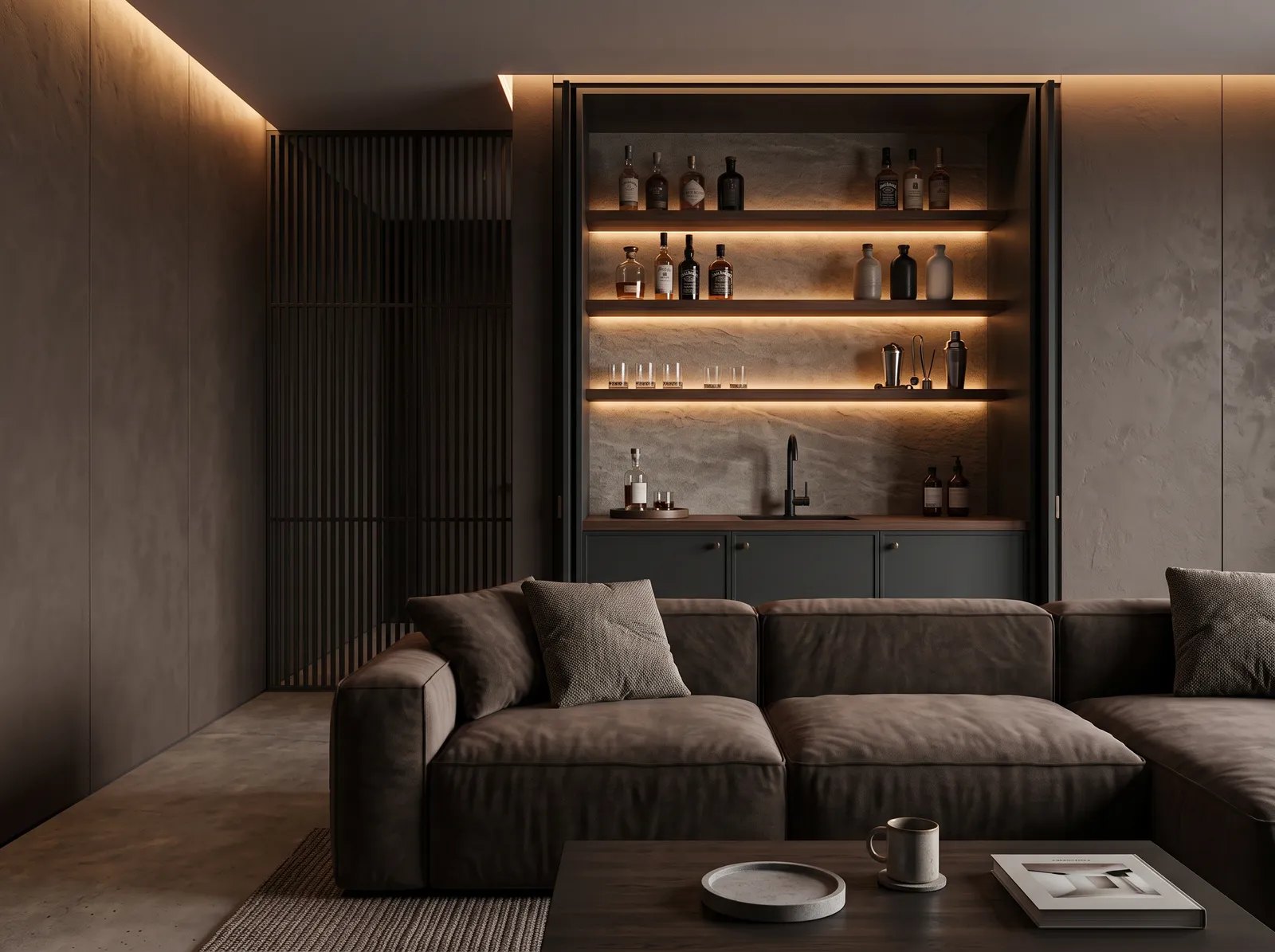
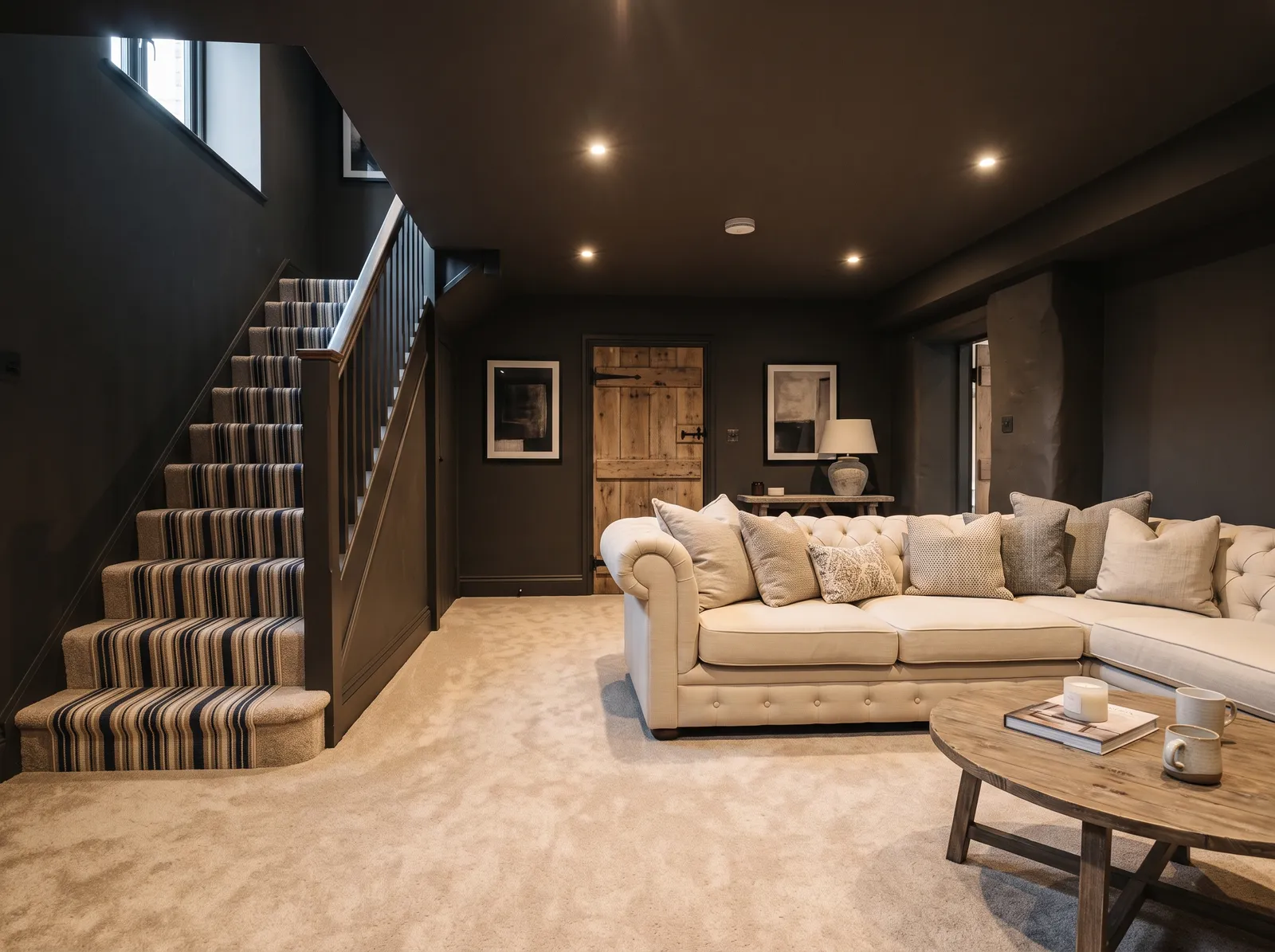
Chocolate-brown Fired Earth walls and a soft Evermore gray-brown ceiling wrap the room in warmth, so a dark basement feels like a cozy hideaway instead of a cold box.
Charcoal is a deep, dramatic gray that instantly wraps a room in shadow and style. In this cozy basement den, the dark charcoal walls and ceiling create a cocoon-like backdrop for a plush cream sectional sofa, a soft beige carpet, and a rustic wooden coffee table. The space feels incredibly snug, intimate, and perfect for movie nights. This combination works beautifully because the bright cream upholstery pops against the dark walls, keeping the room from feeling too gloomy. It is a fantastic look for anyone wanting to turn a windowless basement into a luxurious retreat.
SEE BLACK BEAUTY ON YOUR WALLS →
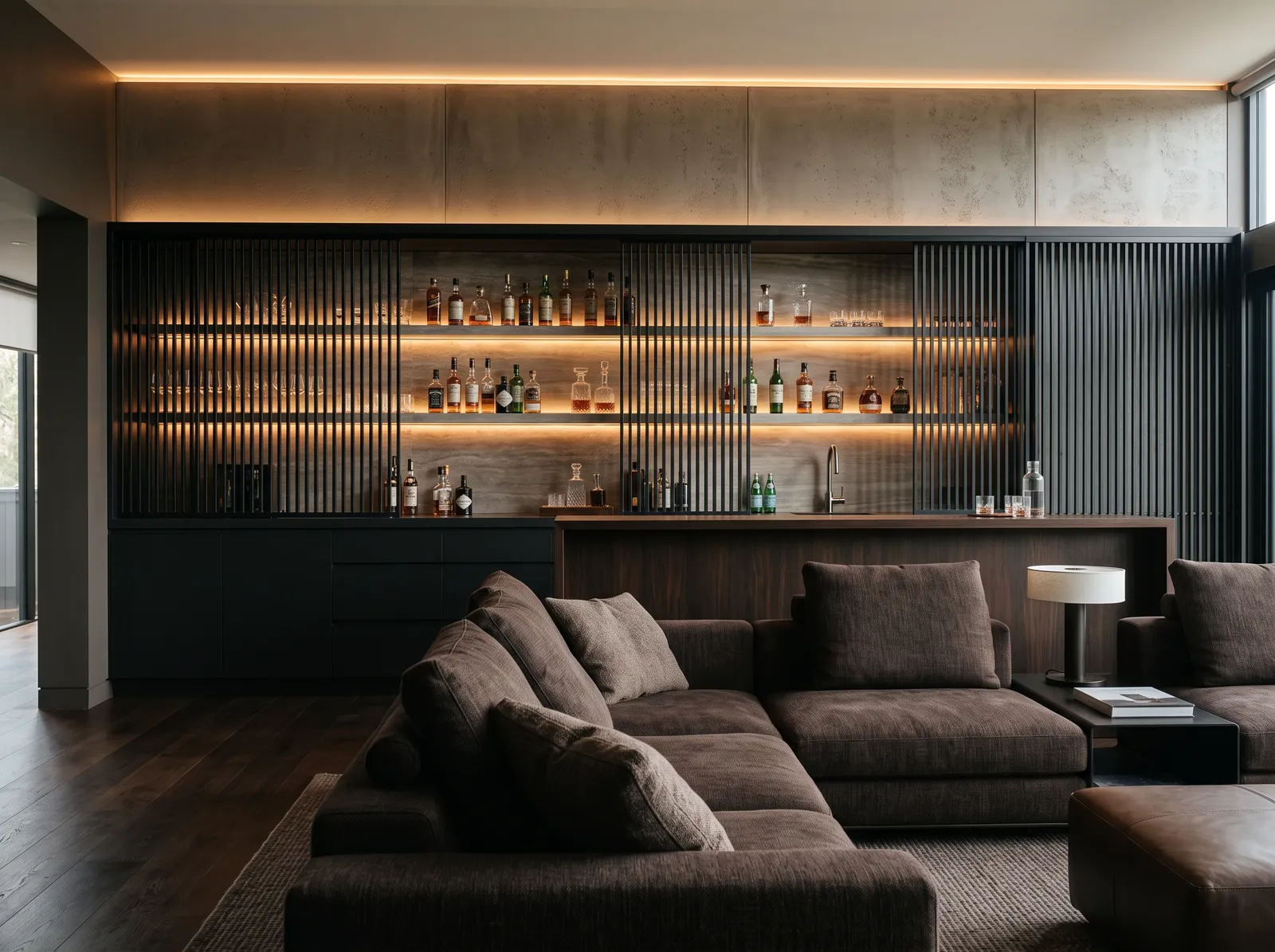
Near-black Dark Kettle Black cabinets paired with warm taupe-gray Aromatic Cloves walls give a basement bar that quiet, grown-up club feel after dark.
Concrete gray is a textured, stony neutral that brings raw architectural style to a space. In this moody lounge, that cool concrete gray covers the upper walls, while charcoal black defines the slatted bar cabinets. A deep espresso brown wraps the plush sectional sofa, accented by warm taupe cushions that match the textured area rug below. The space feels incredibly cozy, intimate, and dramatic. This combination works beautifully because the rich, dark wood tones and soft fabrics soften the industrial edge of the concrete. It is perfect for anyone who loves high-end, late-night entertaining vibes.
SEE COUNTRYSIDE ON YOUR WALLS →
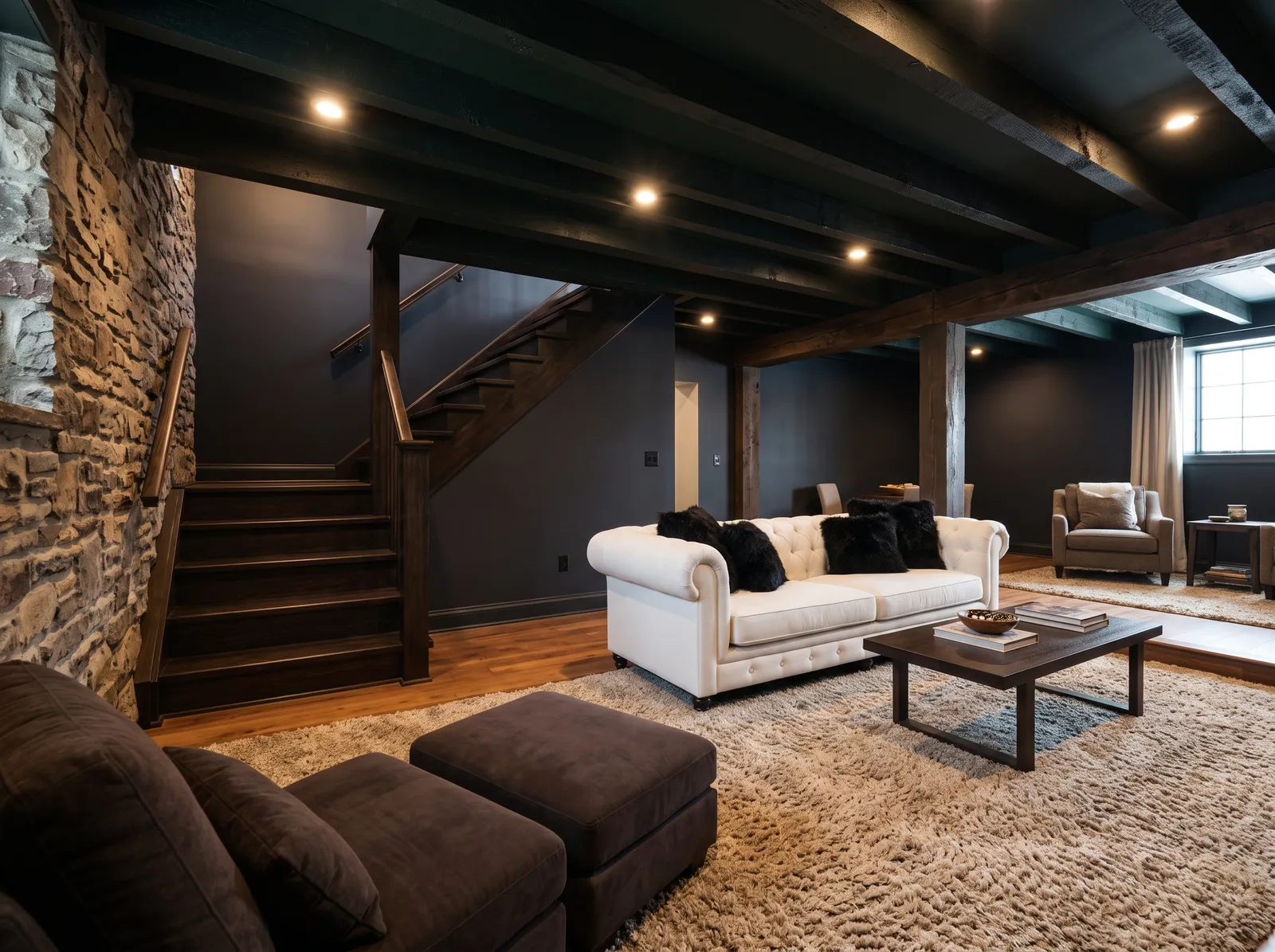
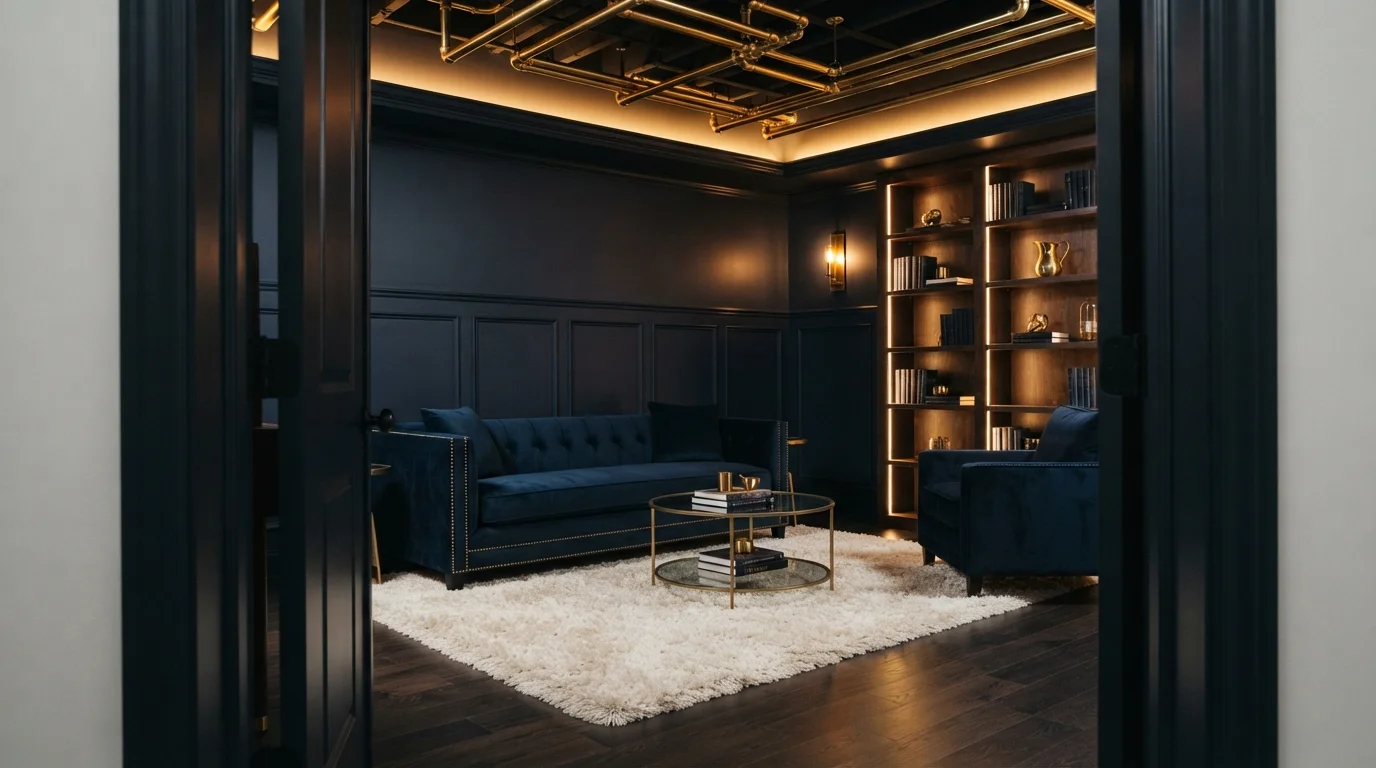
Inky Hocus Pocus walls under a deep Black Emerald ceiling pull the whole room close, turning a low-light basement into a moody movie-night cocoon.
Charcoal gray is a deep, dramatic shade that instantly wraps a room in comfort. In this basement, the rich charcoal walls and ceiling beams are contrasted by a plush cream sofa and a thick, shaggy beige rug. Dark brown velvet chairs and a low coffee table ground the seating area. The space feels incredibly snug, cozy, and private. This combination works because the bright cream sofa pops against the dark walls, keeping the room from feeling too cave-like. It is perfect for anyone wanting a stylish media room to escape to.
SEE BLACKBOARD ON YOUR WALLS →
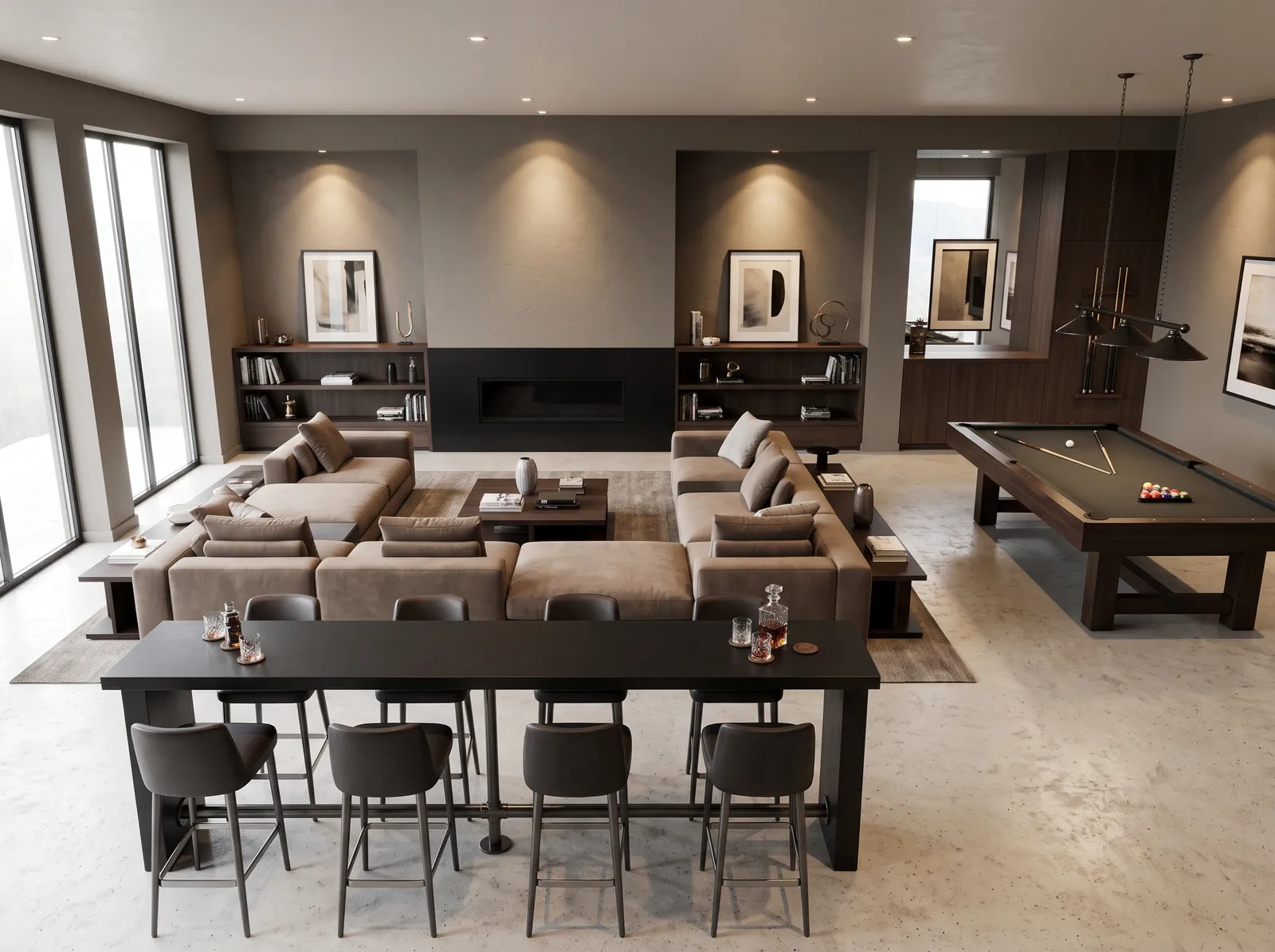
Mid-tone Settlement taupe walls under a soft Toasty Gray ceiling keep a big game-and-bar basement warm and calm without feeling heavy.
Taupe is a sophisticated, earthy gray-brown that brings instant warmth to large spaces. Here, the walls wear this rich taupe, complemented by dark wood cabinets and a black bar table. The plush sectional sofa is a lighter, sandy taupe, while the sleek bar stools introduce deep charcoal accents. A soft, textured gray rug anchors the central seating. The entire space feels cozy, moody, and upscale. This combination works because layering the same earthy tone in various shades creates a seamless, luxurious flow. It is perfect for anyone wanting a high-end, lounge-like retreat.
SEE EXQUISITE ON YOUR WALLS →
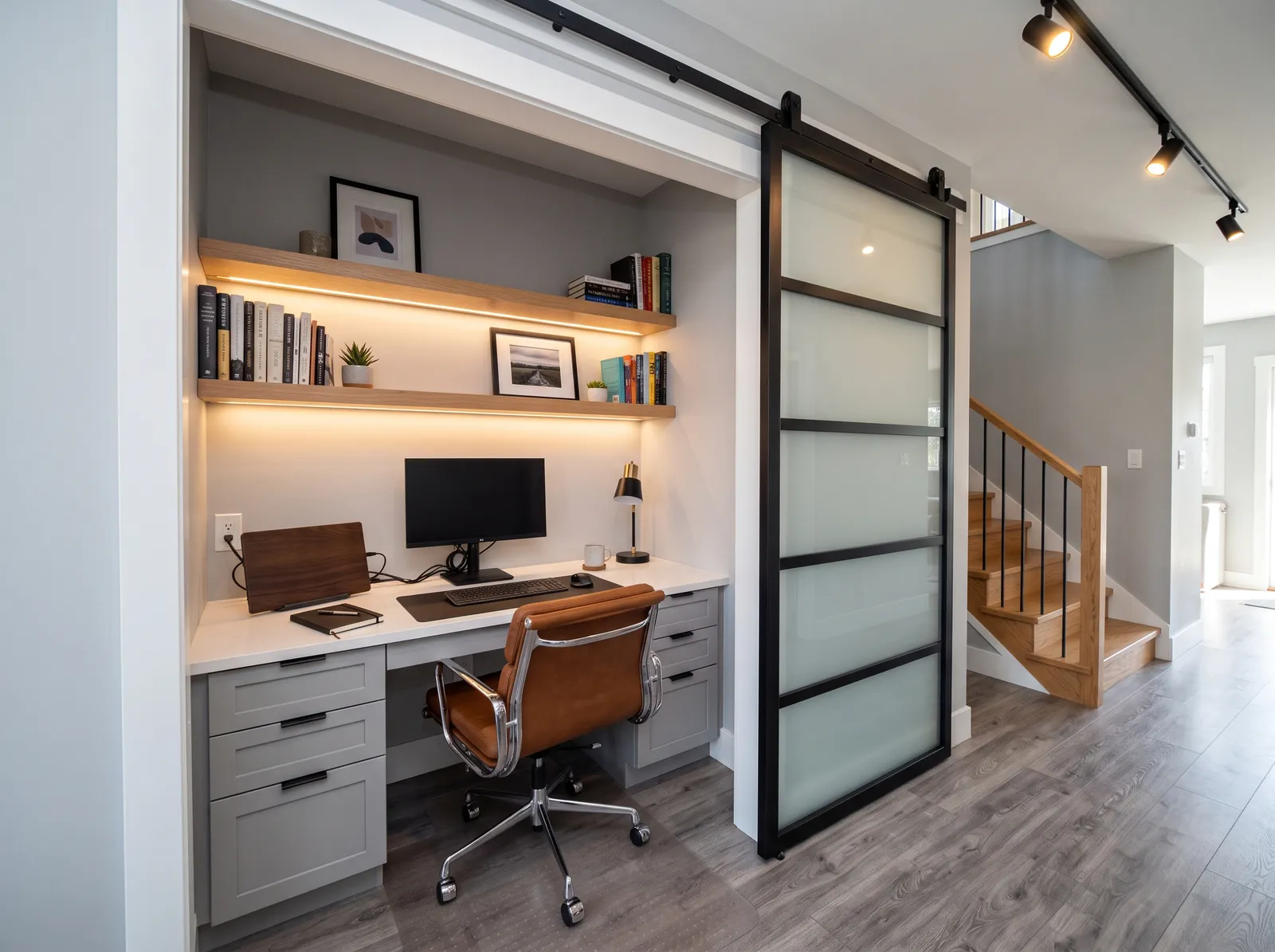
Soft Sidewalk Gray walls with crisp Lighthouse white trim make a small basement desk nook feel clean, bright, and easy to focus in.
Cool gray is a crisp, modern neutral that instantly clears the mind. Here, it wraps the walls of this clever closet office, paired with soft gray cabinets and warm oak shelves. A rich cognac leather chair adds a splash of earthy color, while the black sliding door frame anchors the setup. The space feels incredibly organized, calm, and highly productive. This combination works beautifully because the warm wood and leather break up the cool grays, keeping the workspace from feeling sterile. It is perfect for anyone carving out a stylish home office.
SEE SACRED SPRING ON YOUR WALLS →
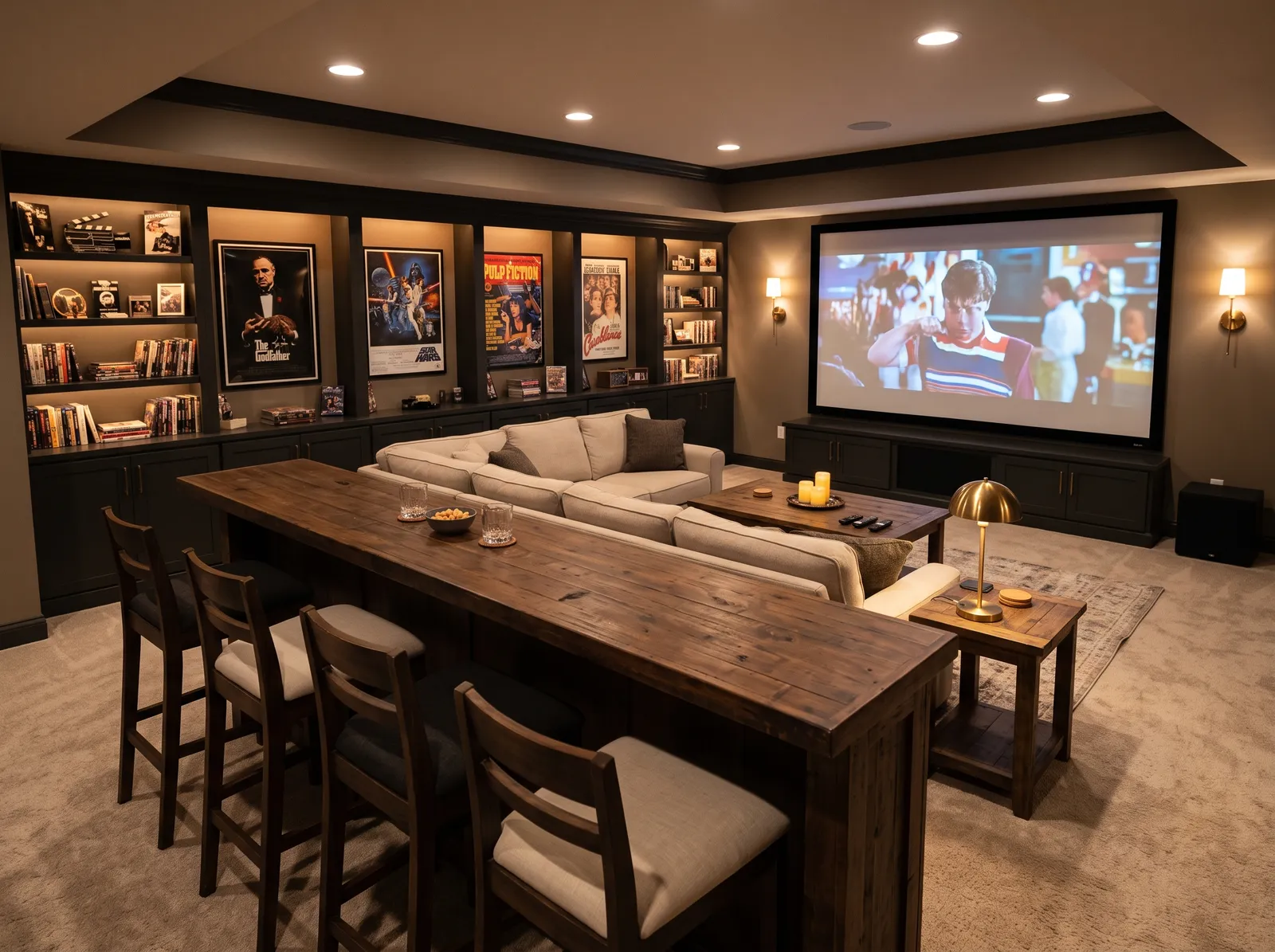
Warm Mocha Accent walls with dark Ebony Sky cabinets dim the room down gently, which is just right for popcorn and the big screen.
Taupe is a rich, earthy gray-brown that brings instant comfort. In this home theater, cozy taupe wraps the walls, while deep charcoal cabinets frame the screen. A plush beige sectional offers comfortable seating, paired with dark espresso bar stools and a rustic wooden bar table. A soft, light gray patterned rug anchors the floor. The entire room feels incredibly snug and inviting, like a private luxury cinema. This combination works because the dark cabinets ground the space, while the light sofa keeps it bright. It is perfect for movie lovers who want a cozy retreat.
SEE CLAM SHELL ON YOUR WALLS →
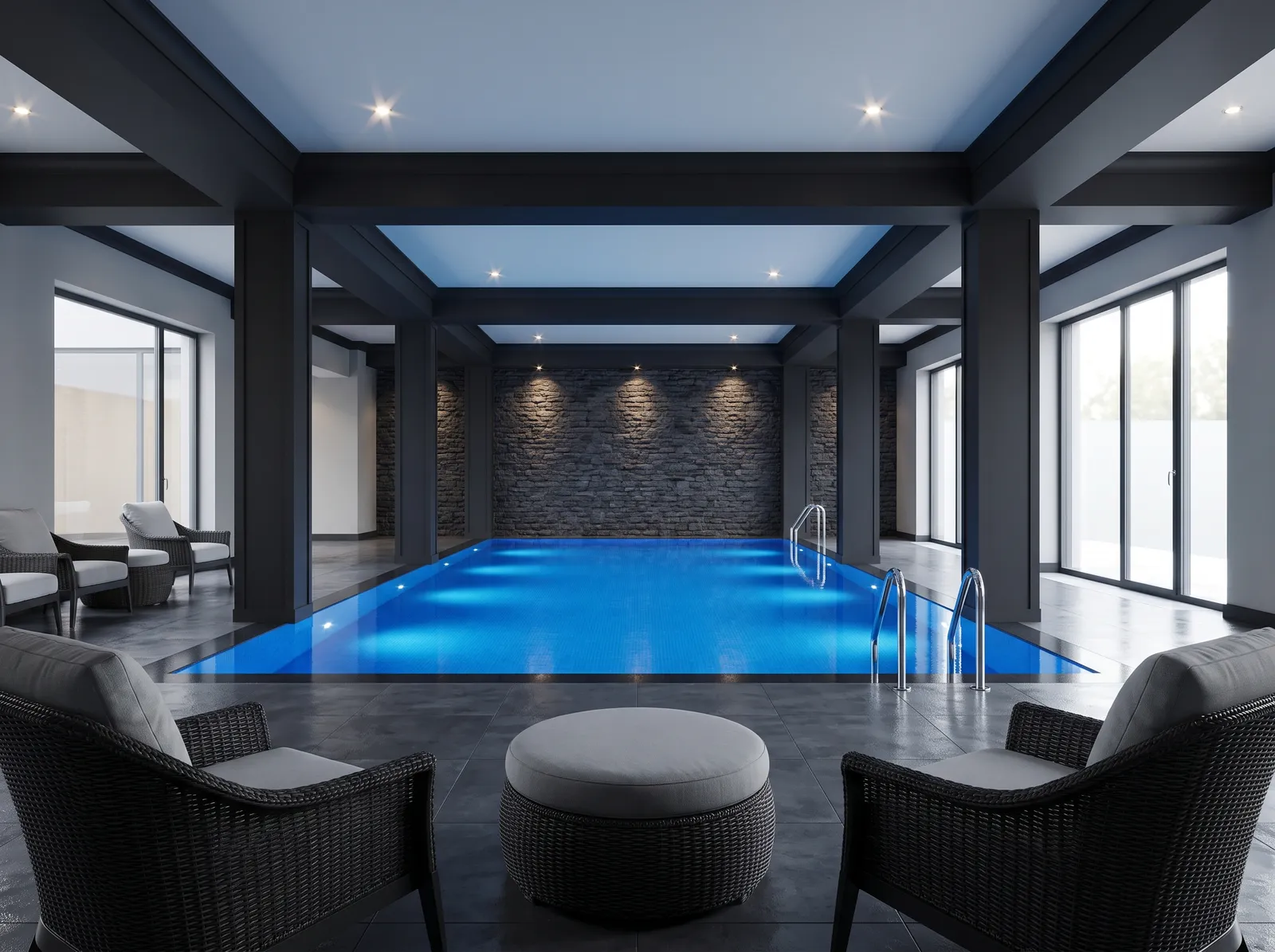
Calm Metropolis Mood gray on the walls with near-black Hocus Pocus trim gives a basement pool or spa space a serene, modern hush.
Charcoal gray is a deep, dramatic neutral that brings instant sophistication. In this luxurious indoor pool room, charcoal gray coats the heavy pillars and stone accent wall, while a soft sky blue colors the ceiling. Dark wicker lounge chairs with light gray cushions frame the foreground, matching the central round ottoman. The space feels incredibly serene, moody, and high-end. The combination works because the brilliant blue pool water acts as a stunning focal point against the dark, quiet surroundings. It is perfect for anyone wanting a private, spa-like sanctuary at home.
SEE BLACKBOARD ON YOUR WALLS →
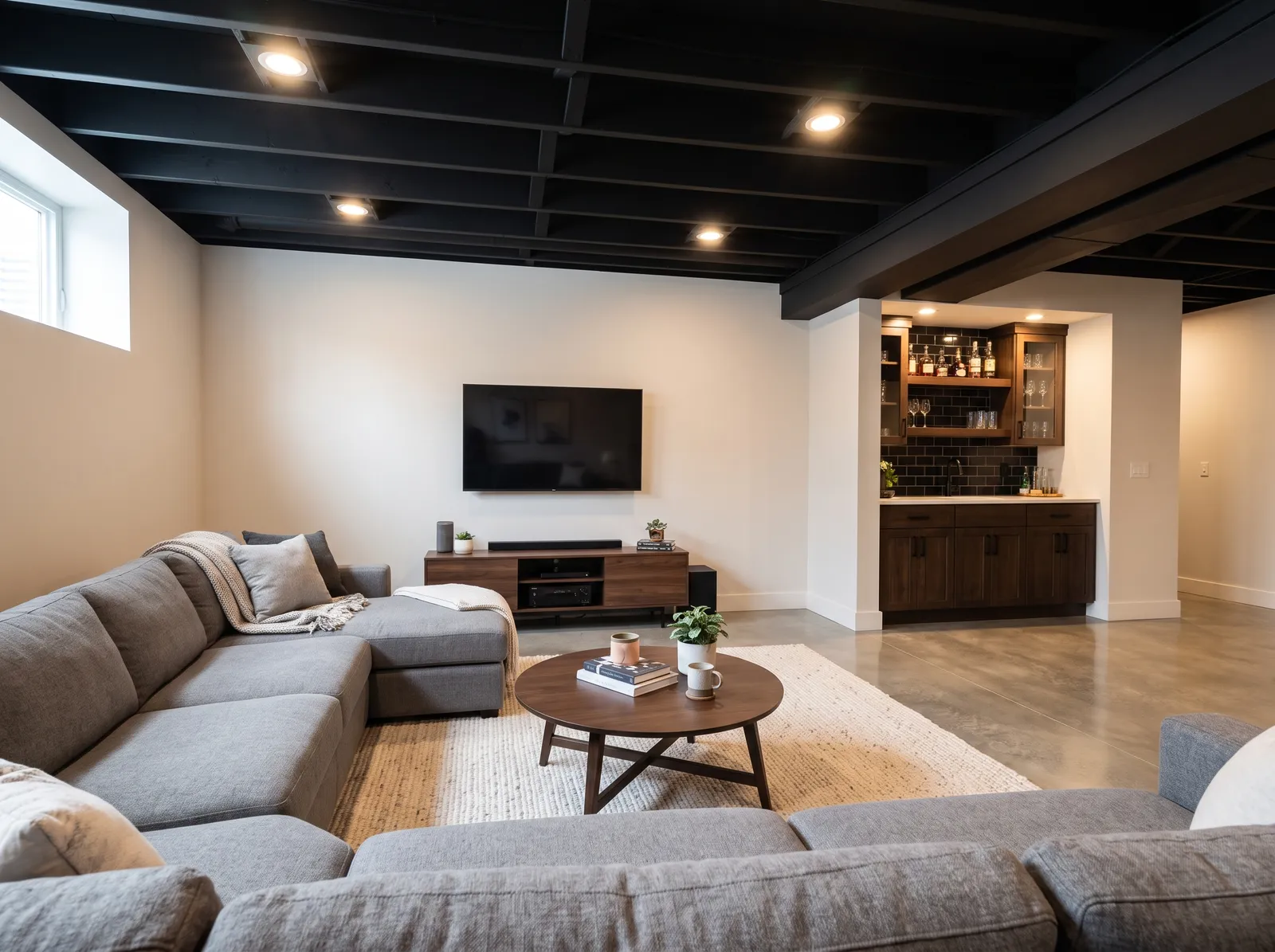
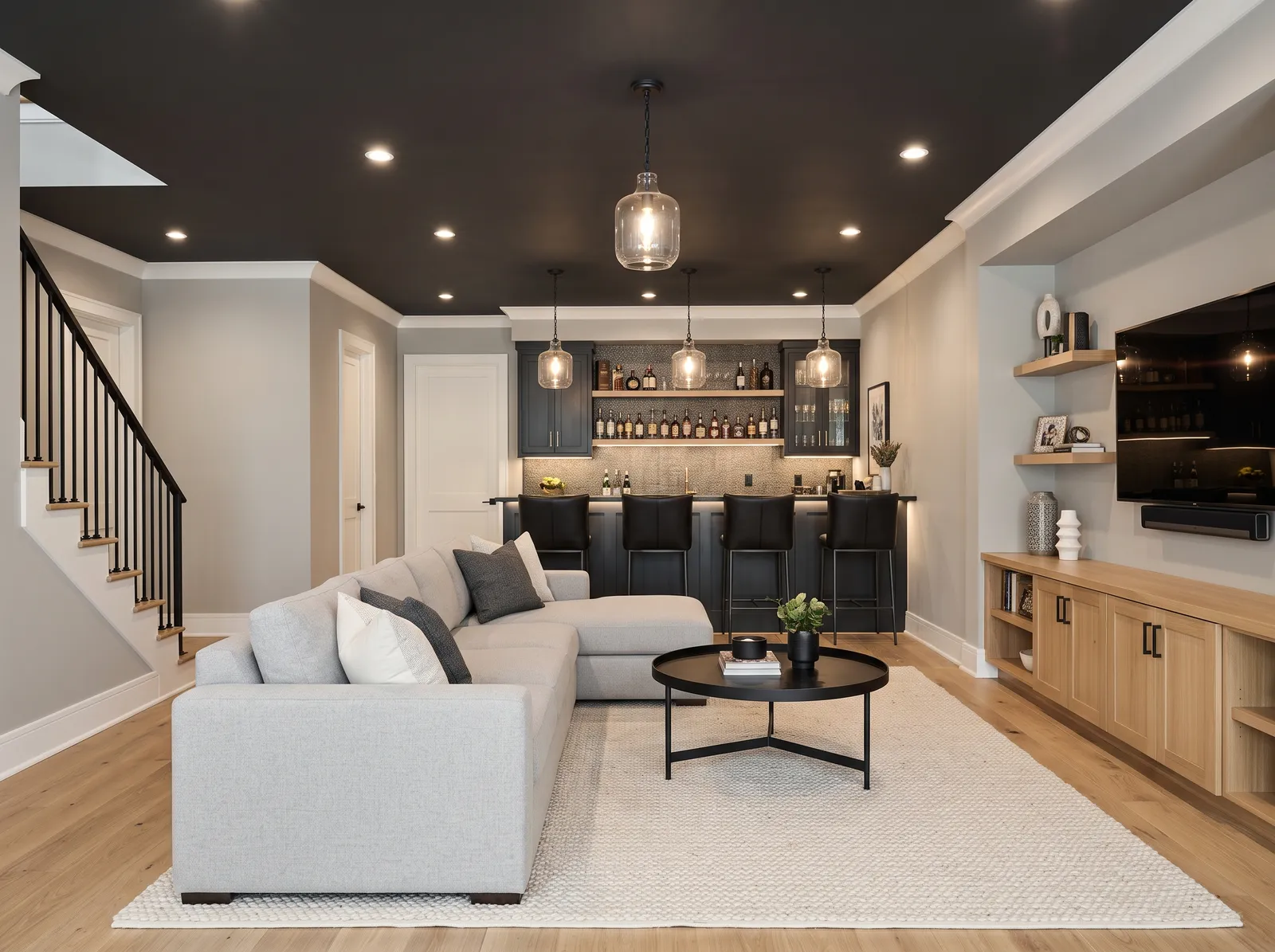
Warm La Paloma Gray walls, a dramatic Noir ceiling, and soft Incredible White trim balance cozy and upscale in one easy entertaining space.
Light gray is a clean, modern neutral that keeps spaces feeling open and airy. In this chic basement, that soft gray coats the walls, while a dramatic charcoal black defines the ceiling and bar stools. A pale gray sectional sits on a textured cream rug, anchored by a light oak media console and a black coffee table. The space feels incredibly sophisticated and cozy, like a high-end lounge. The high contrast between the dark ceiling and light walls creates instant drama without feeling cramped. It is perfect for anyone wanting a stylish entertainment hub.
SEE SILVER BAND ON YOUR WALLS →
Toasted White walls bounce around the little light you have, while bold Dark Kettle Black accents add an easy industrial edge.
Soft cream is a clean, welcoming neutral that keeps spaces feeling open and bright. Here, that gentle cream coats the walls, contrasting beautifully with the matte black ceiling. A large gray sectional anchors the seating area around a warm brown coffee table, all resting on a textured cream rug, while dark espresso cabinets define the wet bar. The space feels incredibly cozy, snug, and sophisticated. This combination works because the light walls balance out the heavy black ceiling, keeping the room bright. It is perfect for families wanting a stylish, comfortable hangout spot.
SEE HACIENDA WHITE ON YOUR WALLS →
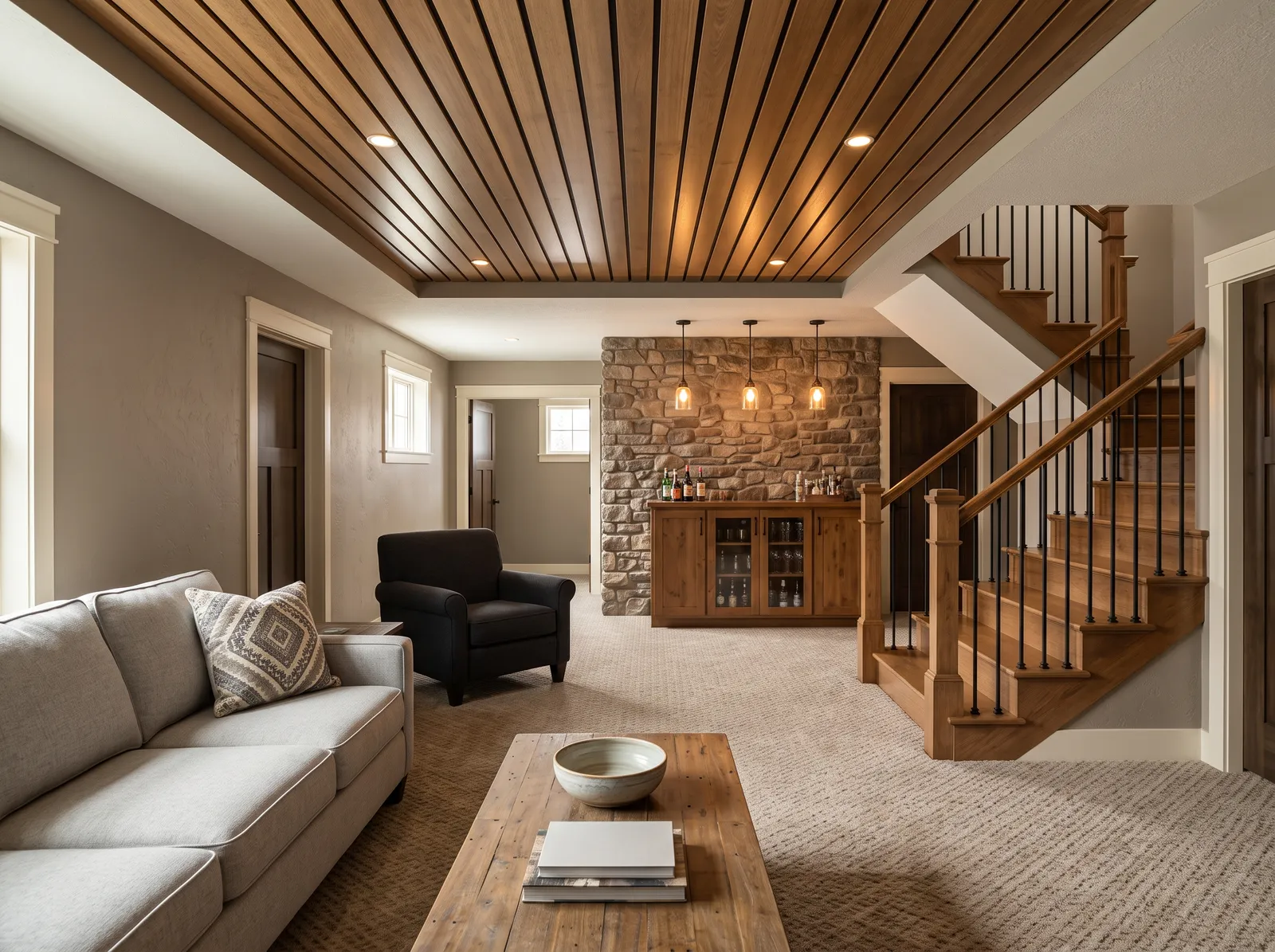
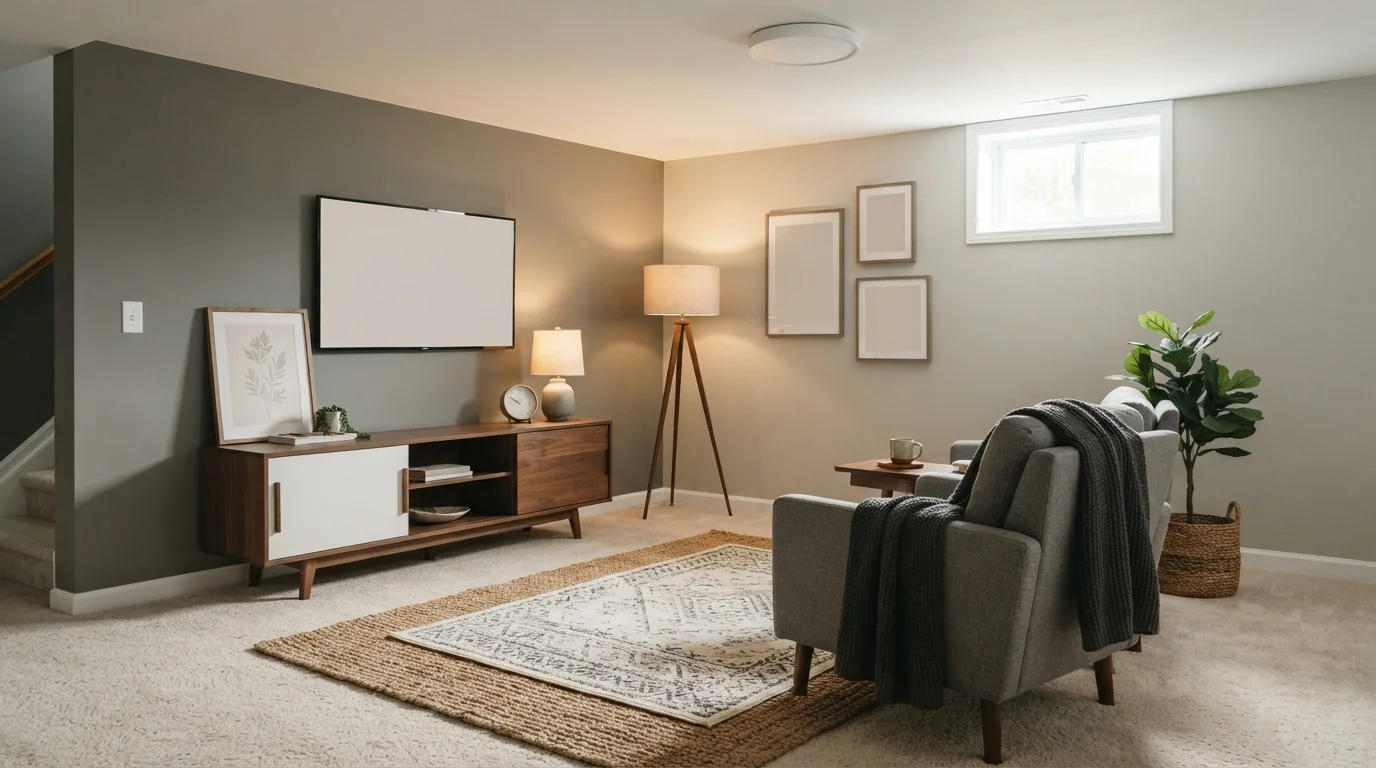
Earthy Stonehenge Greige walls and creamy French Cream trim sit beautifully next to wood and stone for a soft, layered, lived-in feel.
Taupe is a comforting, earthy gray-brown that grounds a space. Here, that rich taupe covers the walls, framing the light gray sofa and rustic wooden coffee table. A dark charcoal armchair adds contrast, while the textured beige carpet keeps the floor soft. The stunning wood-slat ceiling and matching staircase bring in gorgeous honey-oak tones. The entire room feels incredibly snug and inviting. This combination works because the natural wood tones perfectly balance the cooler gray elements. It is ideal for anyone wanting to turn a basement into the ultimate cozy hangout.
SEE ART DISTRICT ON YOUR WALLS →
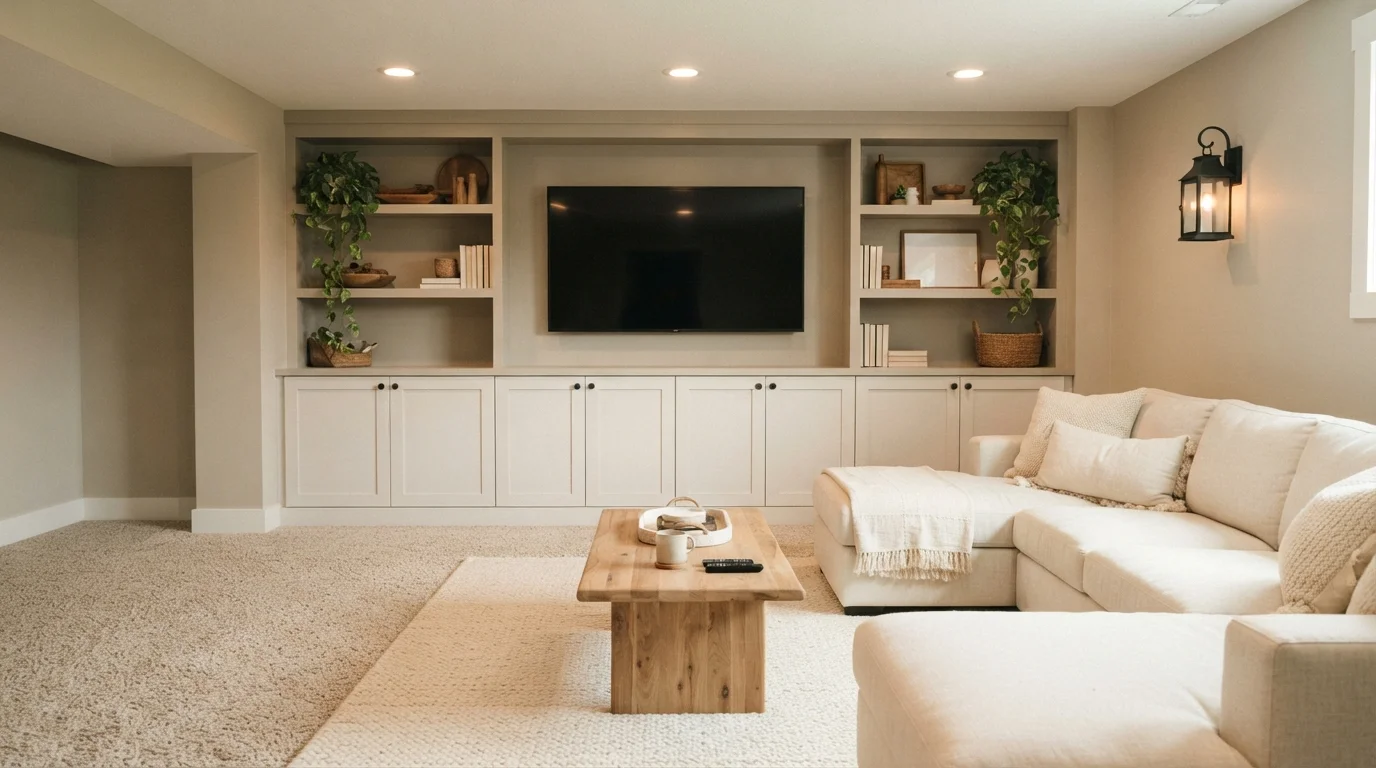
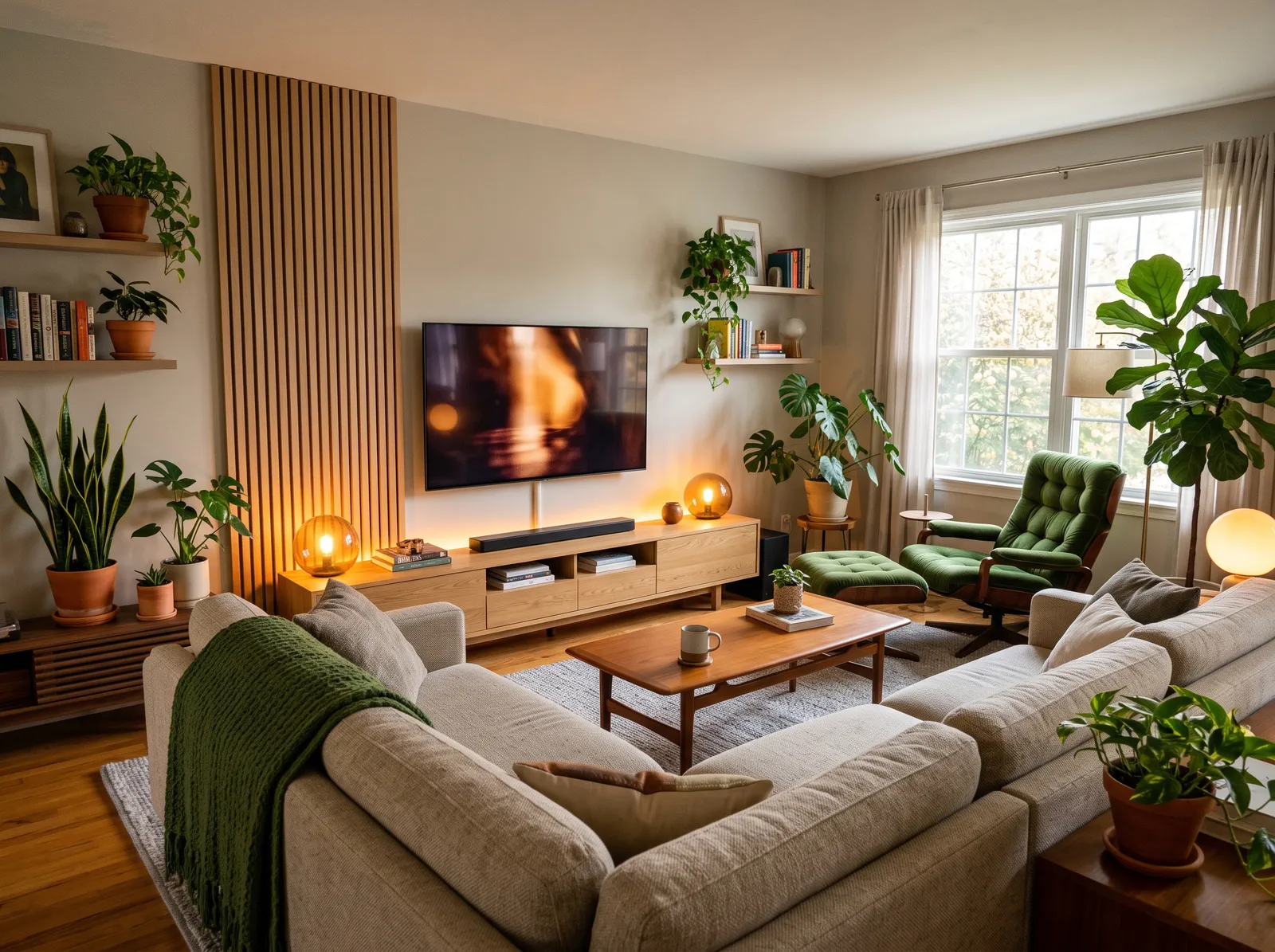
One soft, do-it-all coat of Agreeable Gray warms the whole room and plays nicely with wood, plants, and almost any sofa color.
Greige is a wonderfully versatile neutral that blends the warmth of beige with gray. Here, this soothing shade wraps the walls, setting a calm backdrop for the oatmeal sectional and light oak cabinet. A rich forest green accent chair and matching throw blanket inject organic color, while a teak coffee table adds deeper wood tones. The entire space feels incredibly cozy, snug, and grounded. This combination works beautifully because the natural wood grains and leafy houseplants instantly bring the neutral base to life. It is perfect for anyone wanting a peaceful, nature-inspired sanctuary.
SEE PLYMOUTH ROCK ON YOUR WALLS →
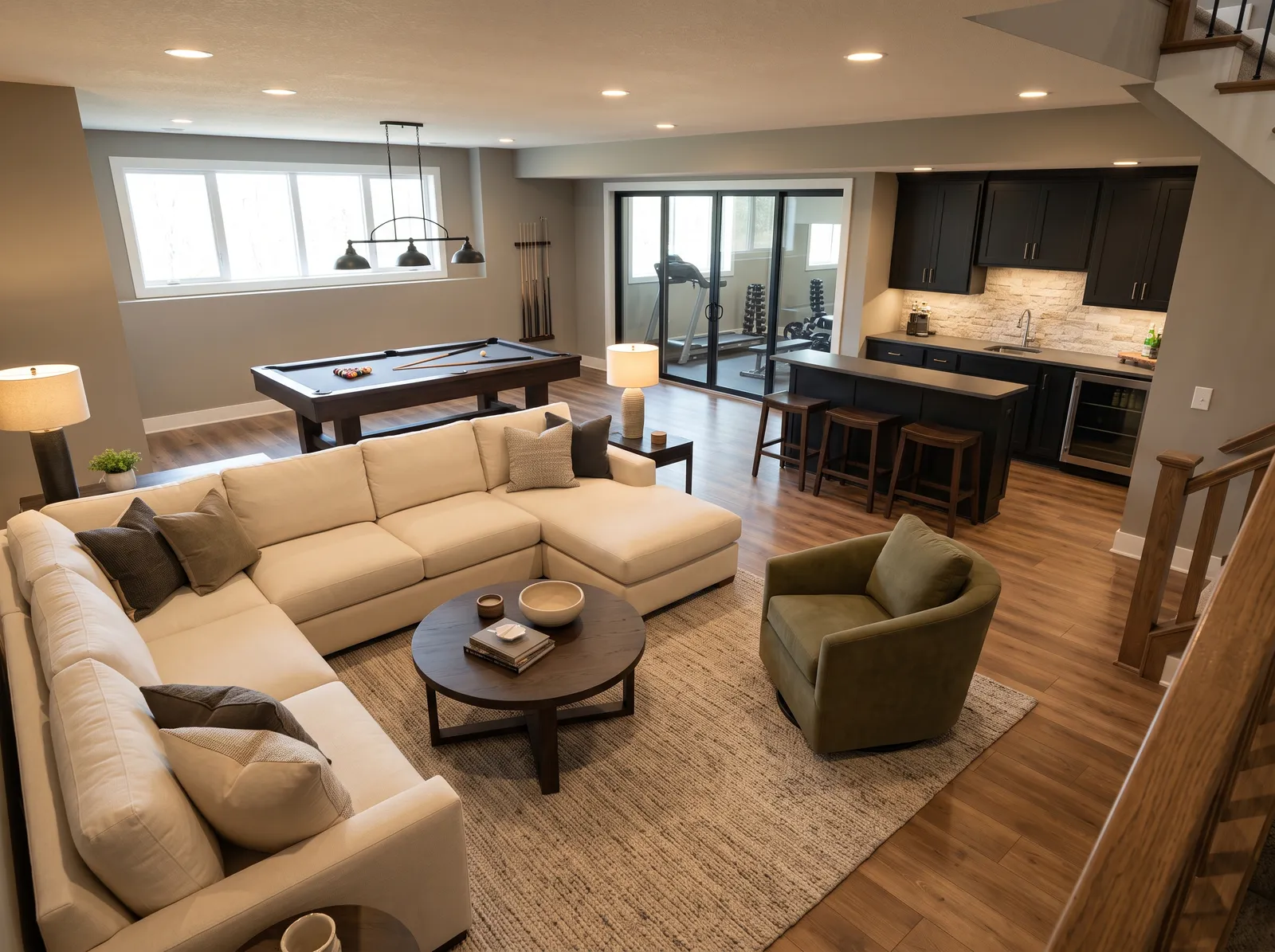
Greywood taupe walls with crisp Black of Night cabinets tie a lounge, bar, and play zone together so the big space still feels connected.
Taupe is a cozy, earthy gray that brings instant comfort. Here, that warm taupe covers the walls, framing a massive cream sectional and a textured beige rug. Dark charcoal cabinets anchor the kitchenette, while a deep brown coffee table sits in the center. A single olive green armchair adds a subtle splash of natural color. The entire space feels incredibly snug and inviting. This combination works because the dark cabinets and light sofa create a striking contrast without feeling cold. It is a fantastic look for anyone wanting a cozy basement retreat.
SEE GOTHIC ARCH ON YOUR WALLS →
Near-black Silent Sea cabinets and deep, warm Black Russian walls soak up the light for a rich, intimate evening hideaway.
Taupe is a rich, earthy gray-brown that brings instant depth to a space. In this moody lounge, that deep taupe wraps the walls, while a plush chocolate brown sofa anchors the seating area. A dark slate gray cabinet hides the bar, and a low espresso wood coffee table sits on a textured, sandy-brown rug. The entire room feels incredibly snug, intimate, and quietly luxurious. This combination works beautifully because layering different shades of brown and gray creates a seamless, cocoon-like effect. It is perfect for anyone wanting a sophisticated, late-night retreat.
SEE SHADOW WOOD ON YOUR WALLS →
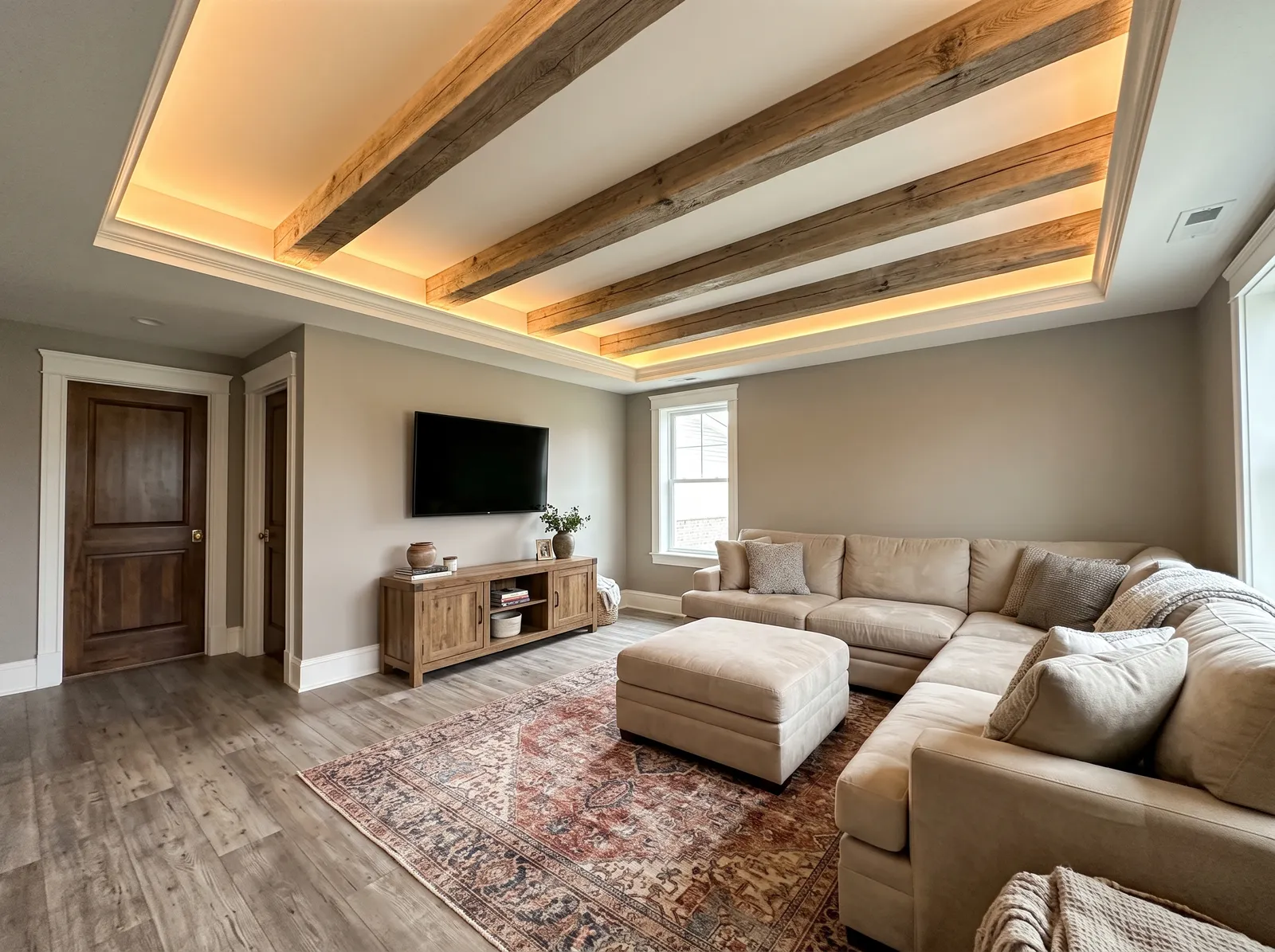
Soft Coastal Villa greige walls with gentle Villa White trim let rustic wood beams glow, making the basement feel snug and finished.
Taupe is a soothing, earthy gray-brown that brings instant comfort to a room. Here, this gentle shade wraps the walls, pairing beautifully with a plush beige sectional sofa and a rustic wooden media console. Overhead, rich timber ceiling beams echo the warm wood tones, while a patterned rust-and-cream rug anchors the entire seating area. The space feels incredibly cozy, calm, and grounded. This combination works because the natural wood textures and soft fabrics keep the neutral walls from looking flat. It is perfect for families who want a relaxed, inviting gathering spot.
SEE PACKED SAND ON YOUR WALLS →Basement Wall Color Combinations
A wall color never works alone. These are the full schemes from the rooms above — the lead color first, then the supporting colors that make the photo work.
Chocolate-brown Fired Earth walls and a soft Evermore gray-brown ceiling wrap the room in warmth, so a dark basement feels like a cozy hideaway instead of a cold box.
TRY THIS PALETTE →Near-black Dark Kettle Black cabinets paired with warm taupe-gray Aromatic Cloves walls give a basement bar that quiet, grown-up club feel after dark.
TRY THIS PALETTE →Inky Hocus Pocus walls under a deep Black Emerald ceiling pull the whole room close, turning a low-light basement into a moody movie-night cocoon.
TRY THIS PALETTE →Mid-tone Settlement taupe walls under a soft Toasty Gray ceiling keep a big game-and-bar basement warm and calm without feeling heavy.
TRY THIS PALETTE →Basement ceilings are often the problem area: exposed pipes, ductwork, or a low drop ceiling. Painting the ceiling the same color as the walls, or one shade lighter, blurs those lines and makes the whole room feel taller and calmer. A crisp white ceiling over colored walls also works and feels clean.
For trim, a soft white like White Dove or Snow pairs with nearly everything and frames the room. Most basement floors are concrete, vinyl plank, or low-pile carpet in grays and tans, so cool grays like Repose Gray and Ice Blue sit naturally over them. If you have warm wood-look flooring, a creamy neutral like Cashmere ties it together better than a cool gray would.
Basement Color Ideas by Color
Set on a color family already? Each page has its own real rooms and picks.
Light or Dark Basement Colors?
Go Light (LRV 60+) If…
The room is small, faces north, or has to work at every hour. Light warm colors make it feel bigger and stay calm in evening light — the light you actually live in.
Go Dark (LRV Under 20) If…
You want the cocoon effect and the room has real daylight. Dark works best on one feature wall — or fully color-drenched in a large room with good windows.
Basement light is mostly artificial, and that changes everything. Whatever bulbs you have will shift the color far more than they would upstairs, so test your sample under the exact lights you actually use at night, not by a window.
Warm white bulbs (around 2700K) make whites and neutrals look creamy and can push grays toward beige. Cooler bulbs (4000K and up) make the room feel crisper but can leave warm colors looking flat. A safe move in low light is to pick a color one step warmer and one step lighter than you think you want, because basements drink up both warmth and brightness.
LRV (light reflectance value) tells you how much light a color bounces back, from 0 (black) to 100 (pure white). In a basement, this number matters more than almost anywhere else because you have so little light to work with.
For a bright, open feel, aim high: whites like Snow, Alabaster, and White Dove sit in the 80s and reflect light around the room. For a cozy, grounded space, a mid-range color like Repose Gray or Cashmere in the 50s to 60s still holds enough light to avoid feeling like a cave. Going below the 40s in a windowless basement usually reads as dark and closed-in, so save the deep tones for a single accent wall.
See It. Love It.
Paint It.
Upload one photo of your basement and try every color on this page on your own walls — in your own light, before you buy a drop of paint.

AlabasterBeforeThe Right Finish for a Basement
Moisture is the deciding factor down here. Basements hold humidity even when they feel dry, so skip flat paint, which soaks up moisture and stains. An eggshell or satin finish on the walls is the sweet spot: it wipes clean, resists the occasional damp spot, and doesn't throw harsh glare under overhead lights.
For trim, doors, and any built-ins, step up to satin or semi-gloss so they take scuffs and cleaning without showing wear. If your basement has any history of dampness, start with a quality primer or a moisture-resistant primer before color, no matter how good the paint is.
Common Basement Paint Mistakes
The biggest mistake is choosing color in the store or online instead of on the actual wall. Basement light is so different that the swatch you loved upstairs can look completely wrong below. Always brush a real sample on two walls and check it morning and night under your own lights.
The other common misses: painting everything bright white and ending up with a cold, clinical room; using flat paint that traps moisture and won't wipe clean; and going too dark in a windowless space, which turns cozy into gloomy. When in doubt, pick a warm, light color and let it carry the room.
Wall area, gallons, and a real price range for the basement — walls, trim, and ceiling.
About Basement Paint Colors
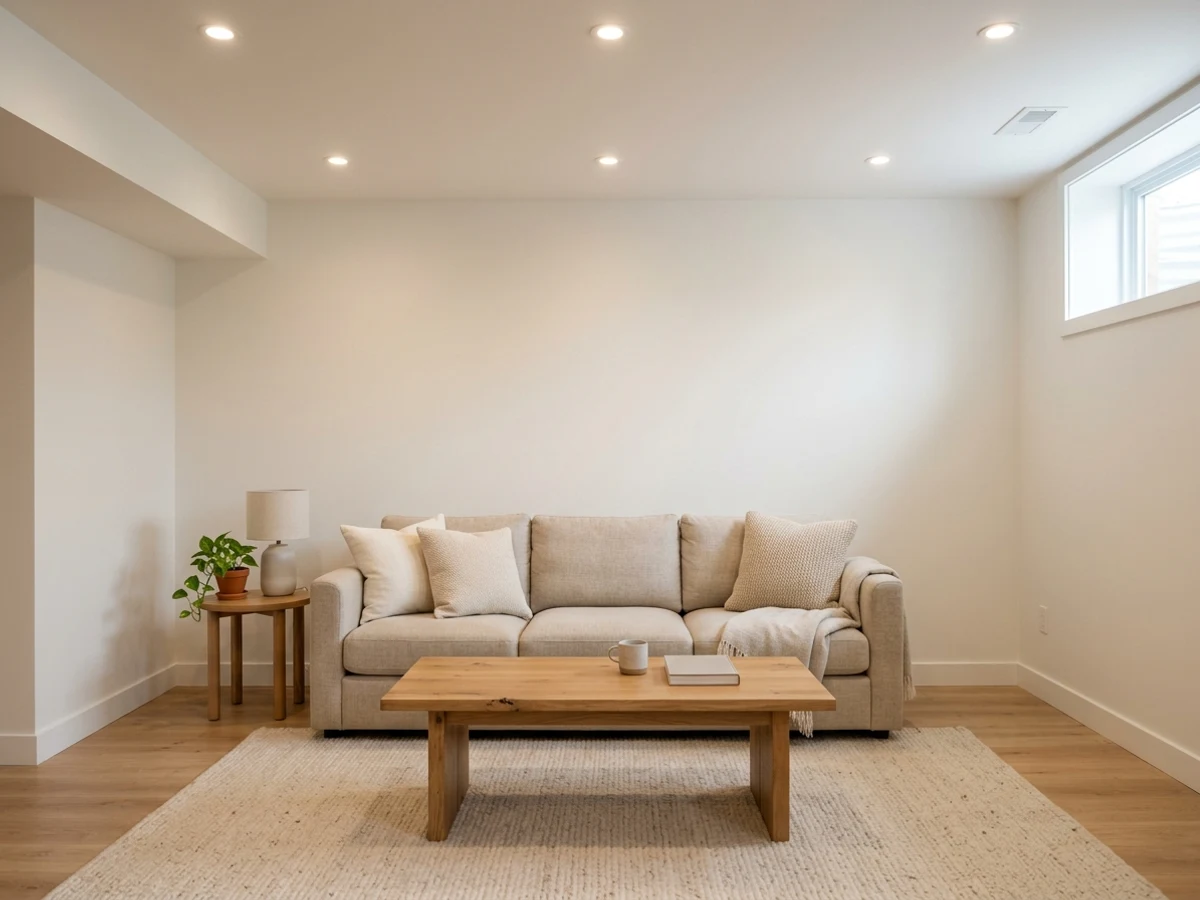
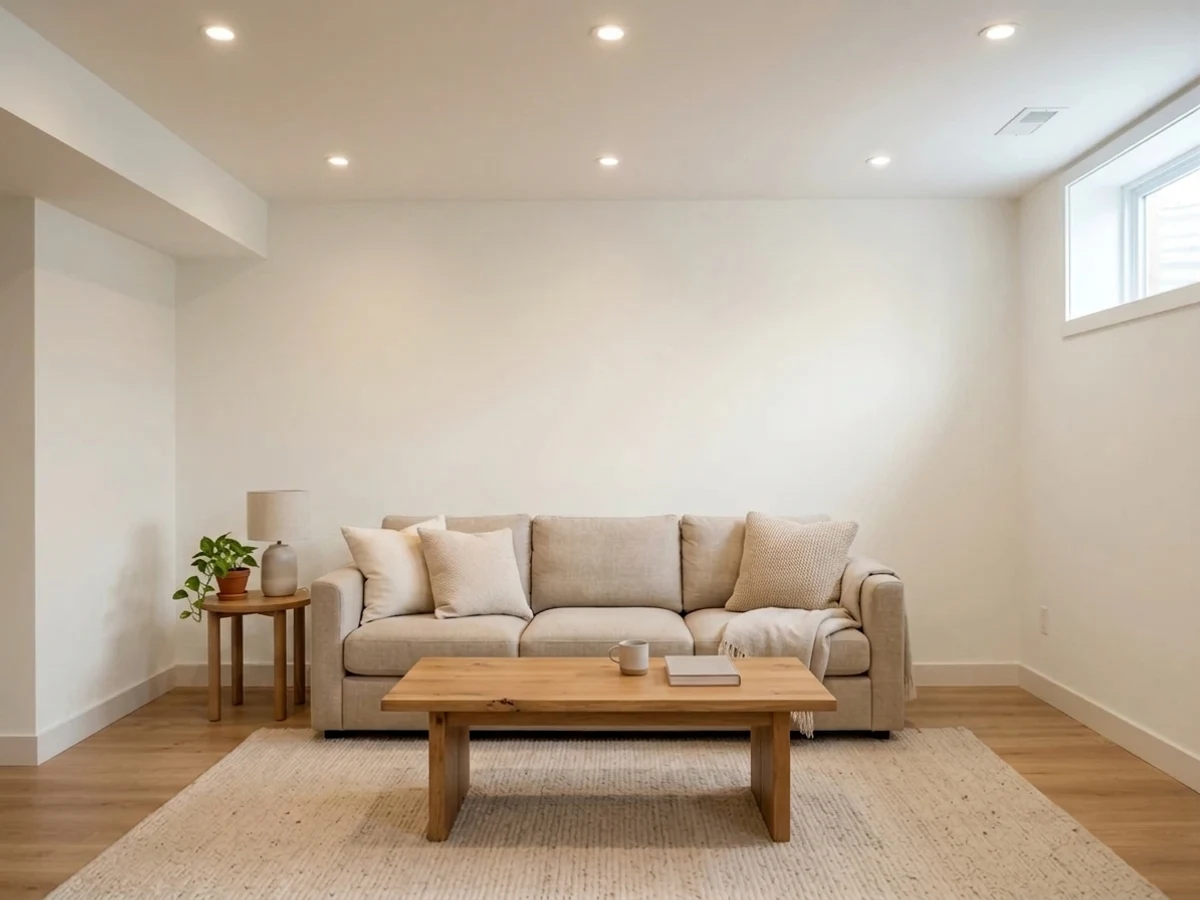
A basement is the trickiest room in the house to paint, and the reason is almost always light. Most basements get little or no direct sun, so a color that looks soft and warm in a bright living room can turn flat, gray, or even slightly green down here. The good news is that a well-chosen color does the heavy lifting a window can't, making the space feel finished instead of forgotten.
For basements, the colors that work best fall into four families: clean whites, soft grays, gentle blues, and warm neutrals. Each one solves a different problem. Whites and pale neutrals push back against the cave feeling, grays keep things calm and modern, and a soft blue can make a low-light room feel intentional rather than dim.
Every color on this page is mixed to order at a paint counter, so you are never locked into one brand. If you fall for White Dove but your store stocks a different line, the same shade can be cross-matched and tinted for you. Pick the color you love first, then sort out where to buy it.
The Questions Everyone Asks
What color should I paint my basement?
If you want one answer, start with the safe picks above — White Dove, Alabaster, Repose Gray, Swiss Coffee. They read well in any light and survive furniture changes. Then check the light: strong afternoon sun wants a step cooler, a north-facing room wants a step warmer.
What is the best paint color for a basement with no windows?
Go for a warm, light color that reflects what artificial light you have. Off-whites like Alabaster, White Dove, or Snow keep a windowless basement from feeling like a cave, while a creamy neutral like Cashmere adds warmth without darkening the room. Avoid deep or cool colors on every wall when there are no windows to balance them.
Should a basement be painted light or dark?
For most basements, light wins because the room already lacks natural light. Light colors with a high LRV bounce your bulbs around and open the space up. Dark colors can look great in a basement that has good lighting or a specific moody purpose, like a media room, but in a typical low-light basement they read as closed-in.
What sheen should I use on basement walls?
Use eggshell or satin. Basements hold humidity, and flat paint absorbs moisture, stains easily, and is hard to clean. Eggshell and satin wipe down without showing much glare under overhead lights, which makes them the practical choice for walls. Save semi-gloss for trim, doors, and built-ins.
Why does my basement paint look gray or dull?
It is almost always the light. Basements get little daylight, and cool or flat colors can go gray or muddy under dim artificial bulbs. Pick a color slightly warmer and lighter than you think you need, and test it under your actual lights at night. Switching to warmer bulbs can also bring a flat color back to life.
Can I use a blue color in a basement?
Yes, a soft blue like Ice Blue works well in a basement and can make a low-light room feel intentional and calm rather than just dim. The key is to choose a gentle, slightly grayed blue rather than a bright or icy one, and to pair it with warm white trim so the room doesn't feel cold.
Do I need to prime basement walls before painting?
In most basements, yes. Concrete, block, and previously damp walls all benefit from a quality primer, and a moisture-resistant primer is smart if you have any history of dampness. Priming gives you a clean, even base so the color looks true and the finish holds up against basement humidity.
Are these basement colors tied to one paint brand?
No. Every color shown, from White Dove to Repose Gray to Ice Blue, is mixed to order at the paint counter. If your store carries a different brand than the one a color is known for, the shade can be cross-matched and tinted in the line you prefer. Choose the color you love first, then pick where to buy it.
What two-color combination works best in a basement?
The reliable pattern is a quiet main color plus one deep accent on a single wall. Keep trim and ceiling in one warm white so the two colors are the only event in the room — the combination cards above show complete schemes from real rooms.
What colors make a basement look bigger?
High-LRV, slightly warm colors — LRV 60–75 is the sweet spot. Paint the walls and trim close to the same light color so the corners blur, and keep the ceiling white. Stark cool white actually works against you; it creates hard shadows that show the room's edges.

Ask a Question