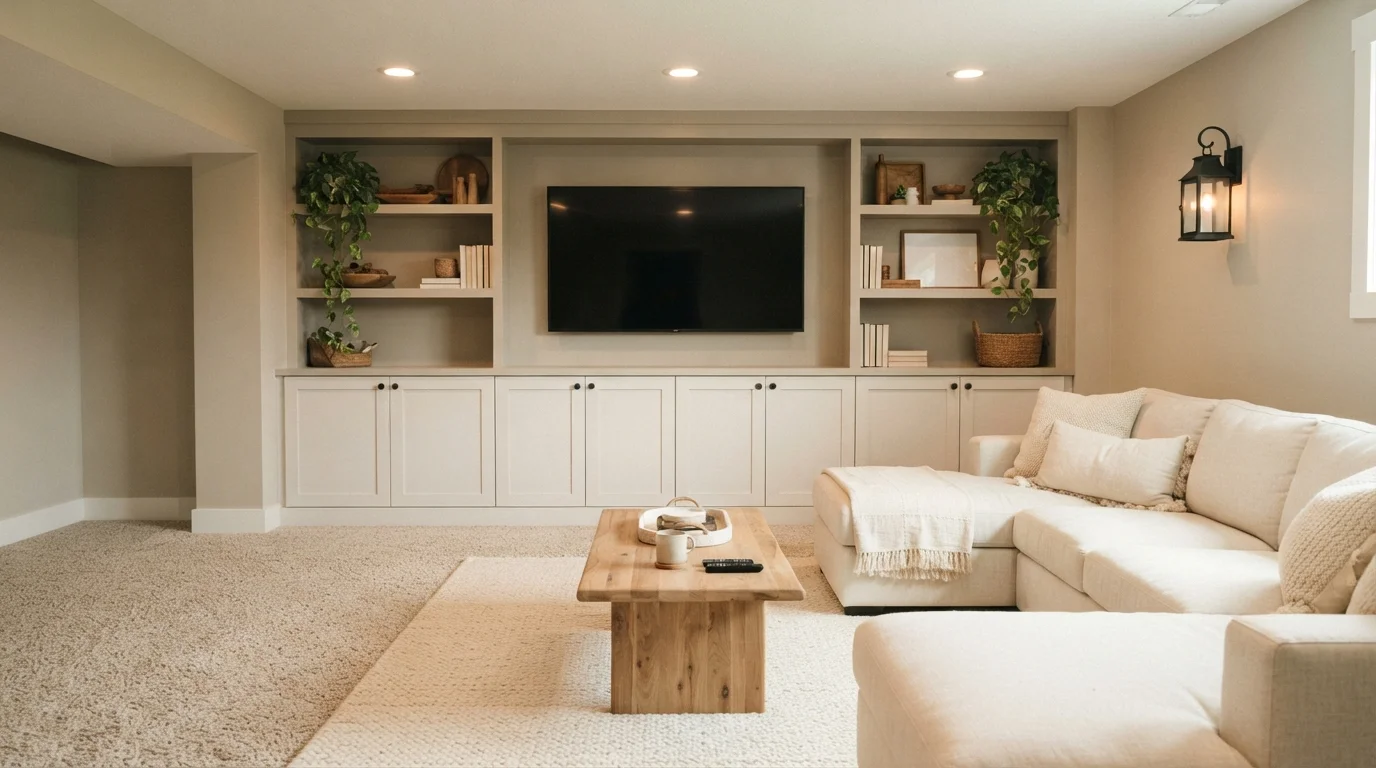
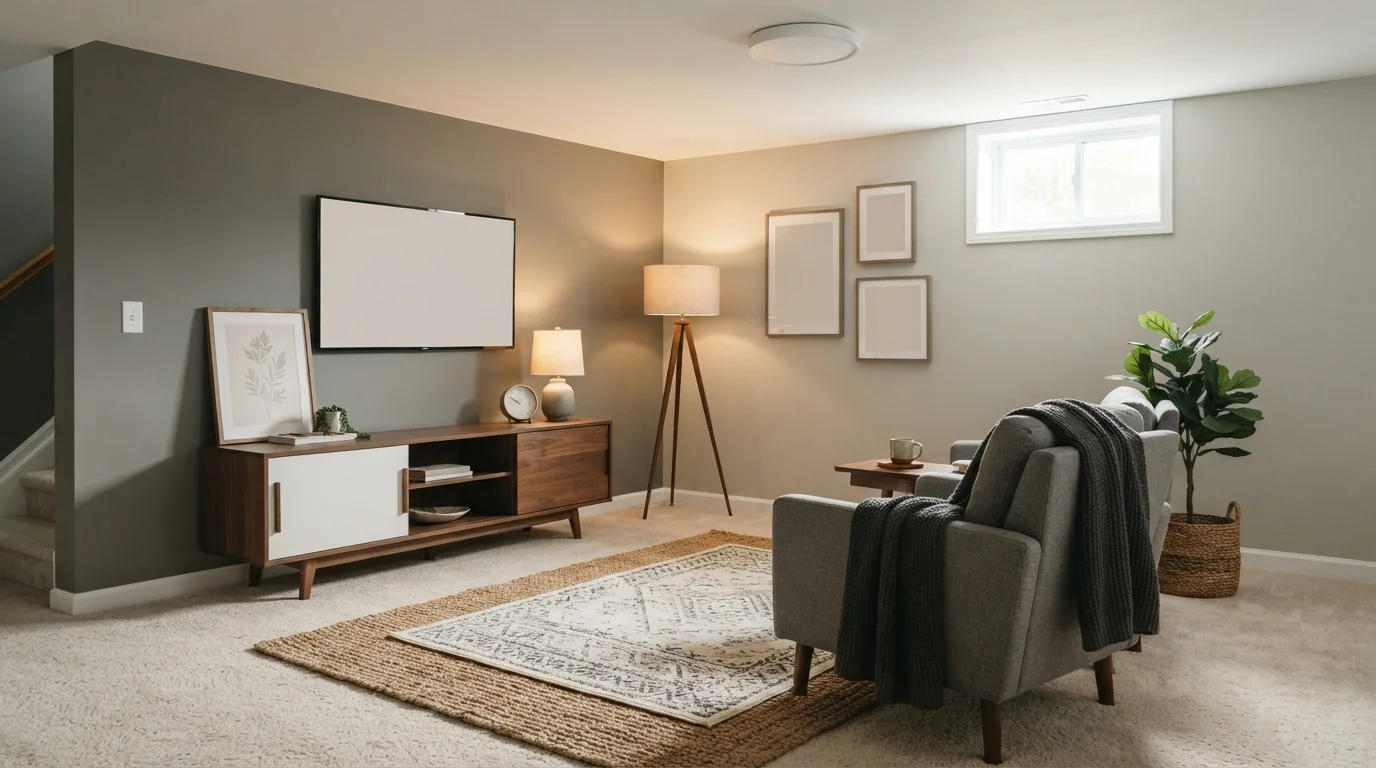
Room Colors · Blue Basement
8 Best Blue Basement Paint Colors for 2026
ideas, combinations, and real rooms
8 curated picks from real blue basements — with the exact colors, honest reasons why, and the combinations that hold the room together.

Former interior stylist who can spot a green undertone from across a room. Jessica writes the color and mood pieces — what to choose, what pairs, and why your "white" looks pink.
The Fast Answer
Don't want to read 8 picks? These four are the safe answers.

Top Picks for the Blue Basement
Tap a shade to see the blue basement in it, then try it on your own room.
Blue Basement Color Trends 2026 — What's In, What's Out
- Cold Sterile Gray Basements — An unfinished-feeling flat gray basement is losing ground to owners treating the space as real living square footage worth a real color.
- Bare Fluorescent-Lit White — Harsh white walls under bare basement fluorescent lighting now read like an unfinished storage room instead of a livable space.
- Blue Paired With Warm Wood Flooring — Deep or denim blue basement walls set against warm-toned LVP or wood-look flooring is a 2026 pairing that keeps the below-grade room feeling grounded.
The 8 Best Blue Basement Paint Colors
Every pick below is a real rendered blue basement, not a chip. The lead color first; the swatches are the full scheme in the photo — walls, furniture, textiles, accent.

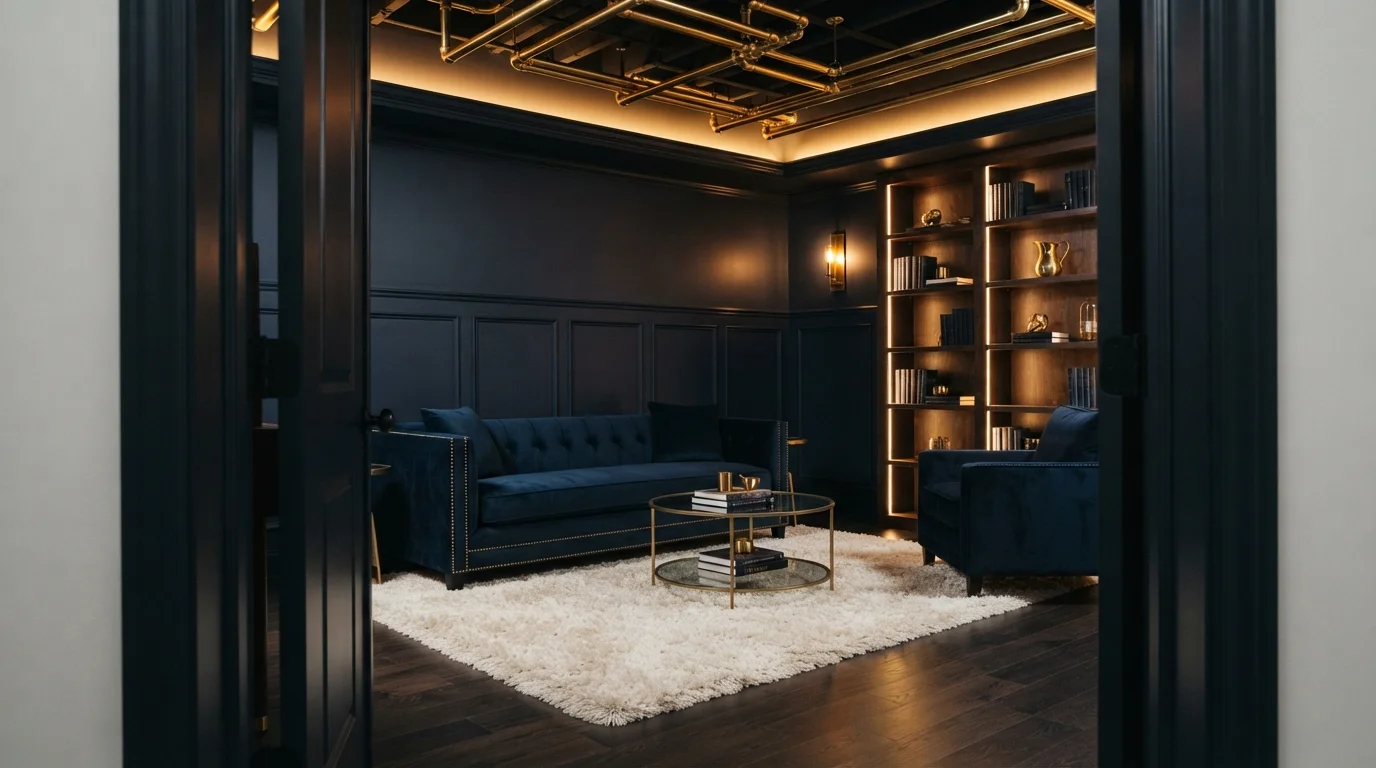
Rich midnight blue wraps the room in a velvety cocoon, illuminated by the glowing warmth of polished brass accents.
Midnight blue is a deep, velvety dark blue with rich oceanic depth. Here, full-wall paneling and matching built-in bookcases are drenched in dark navy, layered with a plush blue velvet sofa, a soft cream shag rug, and gleaming brass details. The space feels intimate, snug, and effortlessly luxurious like an upscale private club. The combination works because the warm perimeter lights and polished gold fixtures pop cleanly against the shadowy blue background. It is perfect for anyone who loves dramatic, cozy spaces built for evening relaxation.
SEE NIGHTLIFE ON YOUR WALLS →
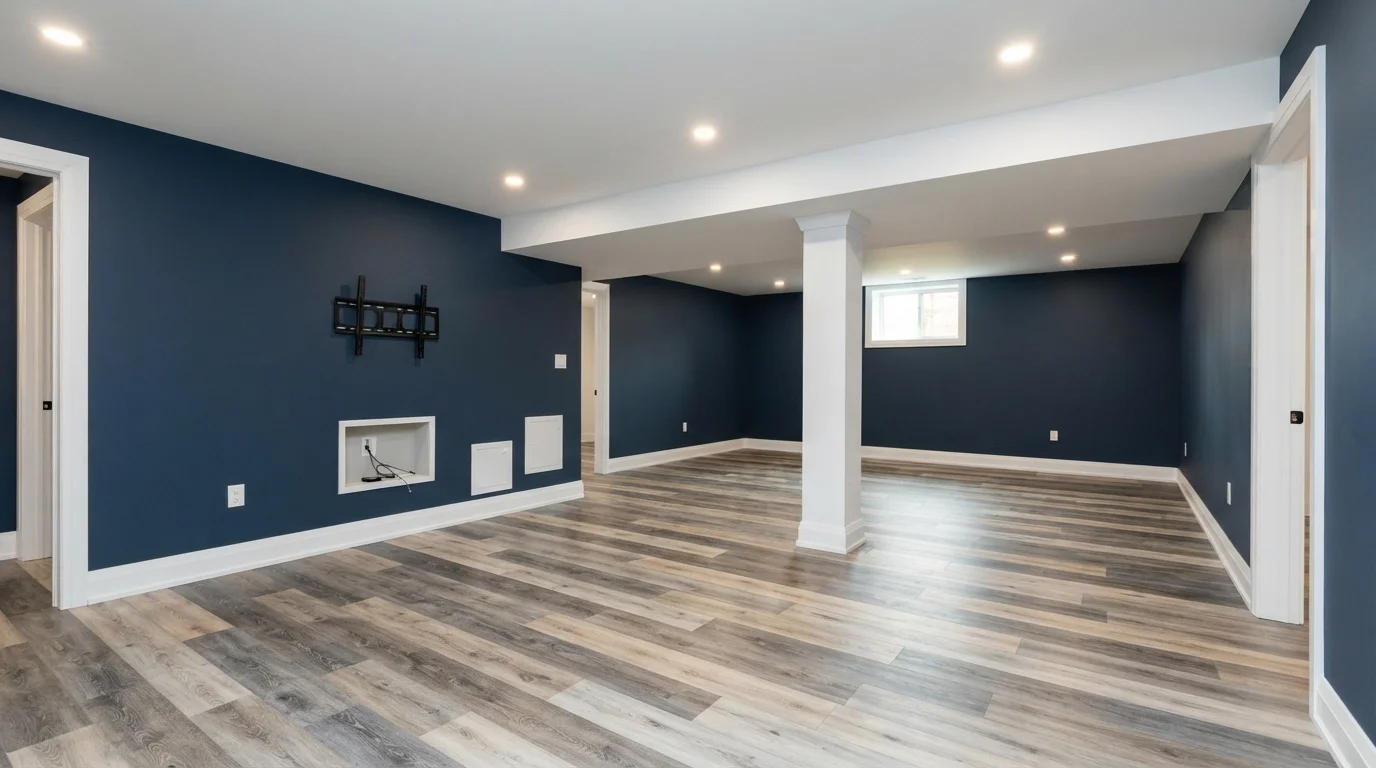
Deep navy walls contrast with bright white moldings and weathered oak floors for a sleek, grounding lower-level retreat.
Navy blue is a rich, midnight-toned shade of blue. In this space, deep navy blankets the expansive walls, framed sharply by crisp white on the ceiling, pillars, and baseboards. The room feels snug, clean, and distinctly tailored. This combination works because the high-contrast white trim and light wood-look floor keep the dark walls from feeling dim in a windowless room. It is a great match for anyone looking to turn a finished basement into a stylish home theater, game room, or modern lounge.
SEE MIDNIGHT DREAM ON YOUR WALLS →
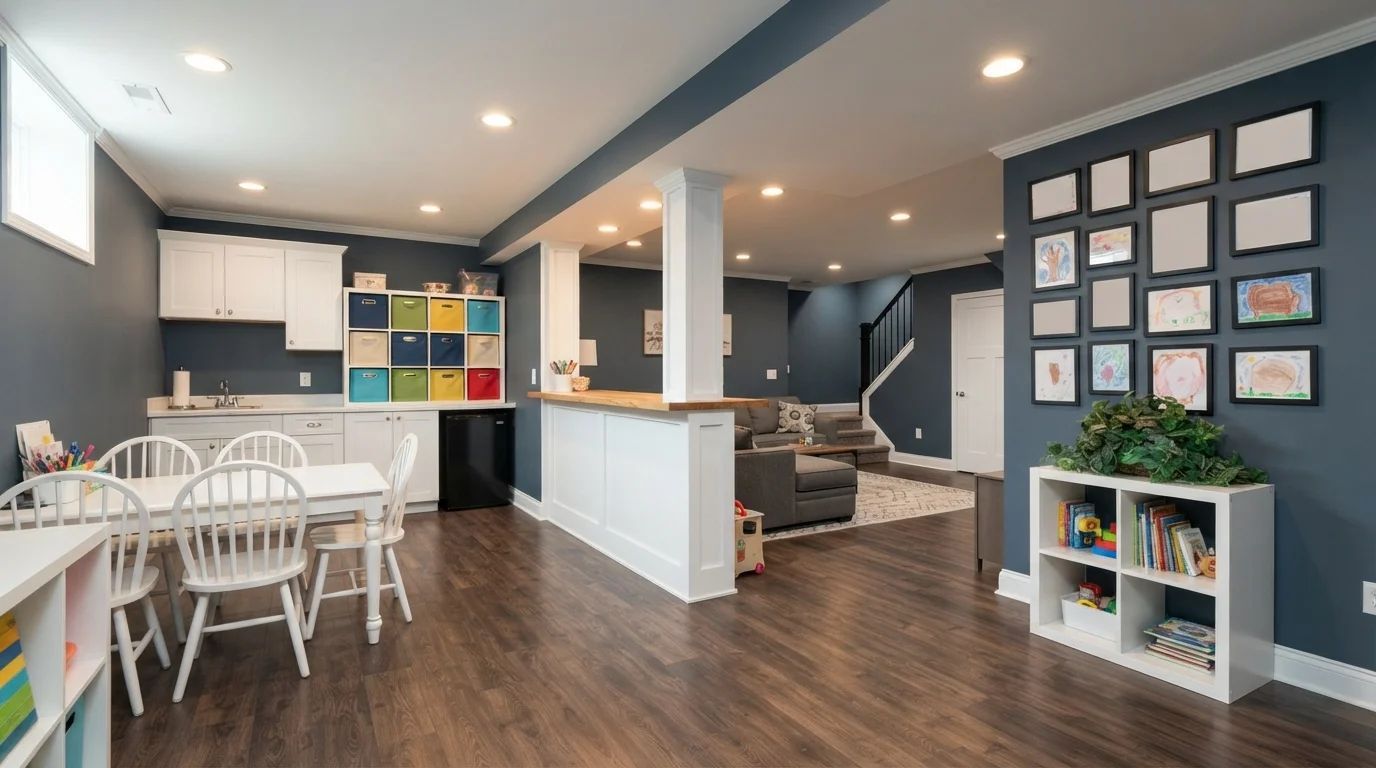
Deep slate blue envelops the walls, balanced by crisp white accents and warm dark wood under soft recessed lights.
Slate blue is a rich, moody grayish blue that adds instant depth. In this room, deep slate blue covers the walls, beautifully framing bright white storage cubbies, white trim, and a small craft table. The space feels cozy, snug, and effortlessly modern. The bright white furniture pops cleanly against the dark wall color, keeping the lower level bright and welcoming. It is a great choice for anyone designing a sophisticated family lounge or kid-friendly recreation room.
SEE MIDNIGHT HAZE ON YOUR WALLS →
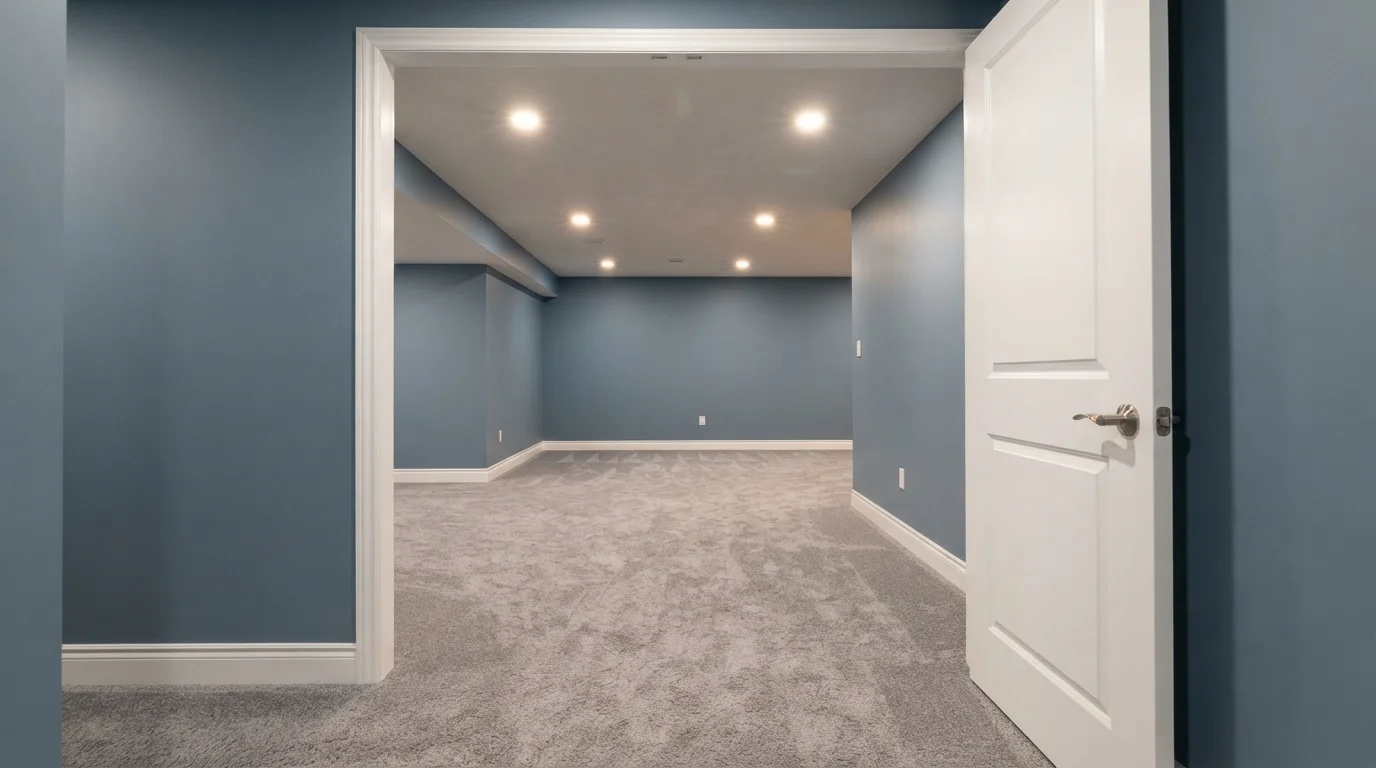
Cool slate blue walls and crisp white trim create a clean, peaceful sanctuary with plush gray carpeting.
Slate blue is a cool, balanced blue with gentle gray tones. In this photo, the blue covers all the open walls, framed neatly by bright white door frames, baseboards, and a white ceiling. Soft gray wall-to-wall carpet stretches across the floor. The space feels calm, quiet, and grounded. The combo works because the sharp white trim keeps the rich blue color feeling open and airy. It is a fantastic choice for anyone finishing a lower-level lounge or media room.
SEE VERANDA BLUE ON YOUR WALLS →
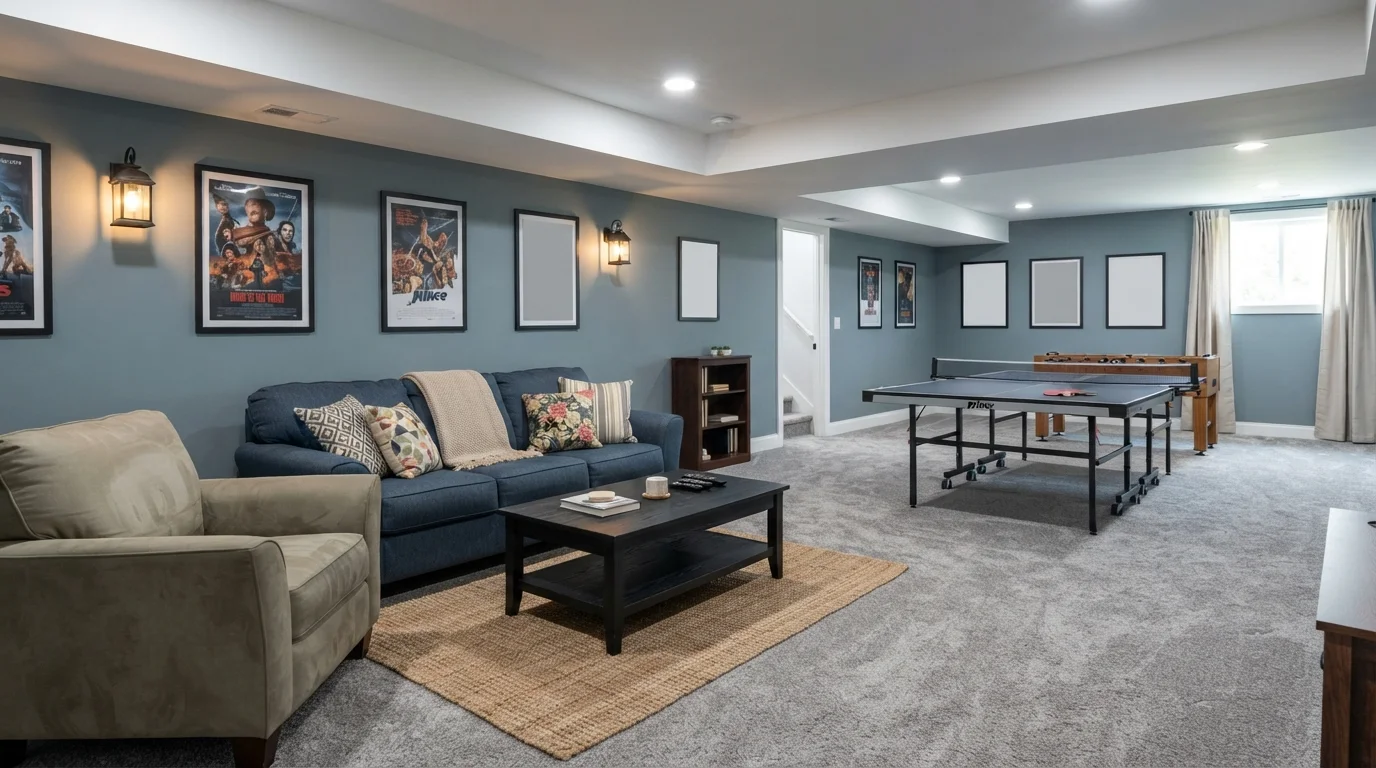
Smoky slate blue walls combine with plush gray carpet and soft sconce lighting for a chilled-out basement hangout.
Slate blue is a cool, smoky blue-gray with a calm, relaxed vibe. Here, slate blue wraps the basement walls, balanced by crisp white baseboards, a dark navy sofa, a plush taupe armchair, and a black coffee table over soft gray carpeting. The room feels comfortable, spacious, and effortlessly snug. The muted cool tone works because it adds color depth without making a large lower-level space feel dark or enclosed. It is a fantastic choice for anyone designing a low-stress entertainment area or game room.
SEE ALFRESCO ON YOUR WALLS →
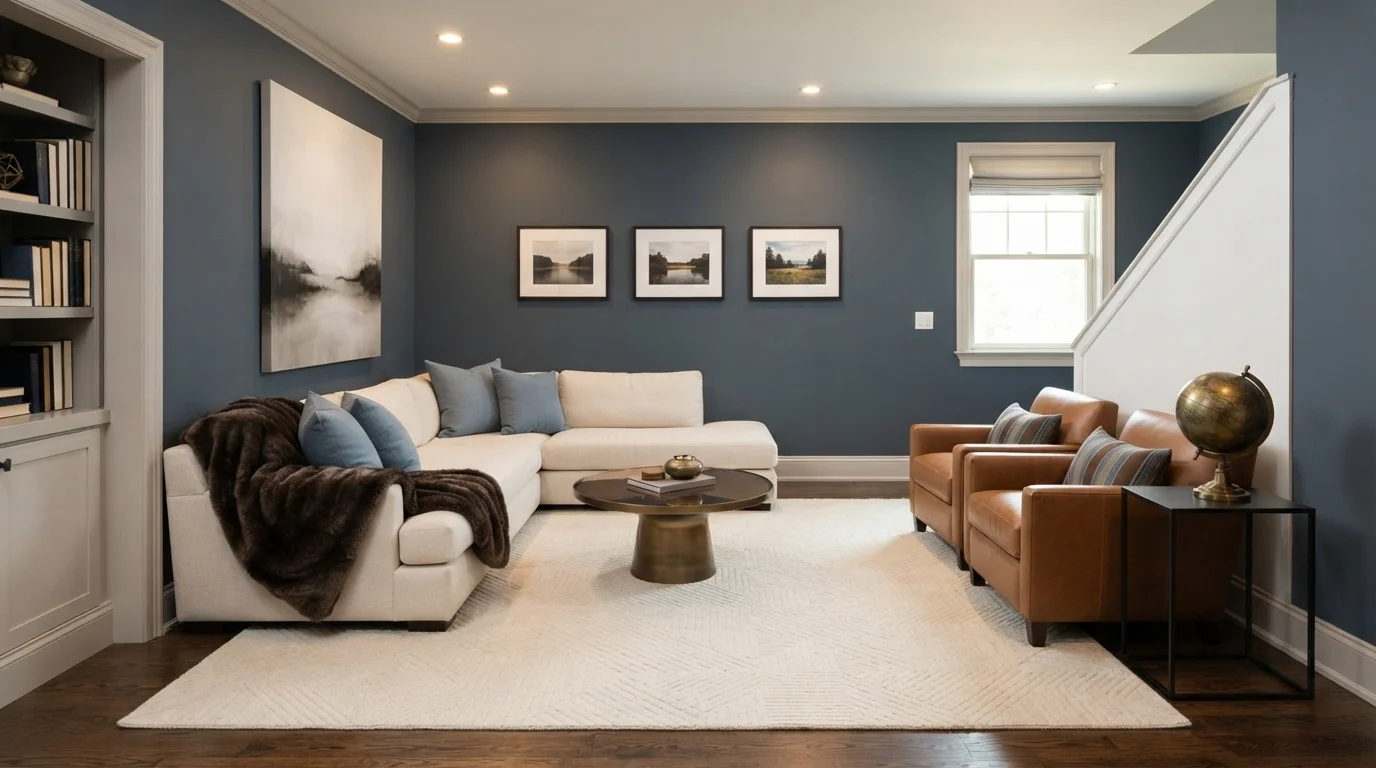
Sink into rich caramel leather and plush cream seating wrapped in deep, comforting slate-blue walls.
Slate blue is a deep, smoky blue with a quiet grey cast. In this living room, rich slate blue covers the walls, setting off an off-white sectional, two warm caramel leather armchairs, and a pale patterned rug. The room feels grounded, cozy, and perfectly relaxing. The warm cognac leather and bright cream fabric pop against the moody backdrop to keep the space from feeling too dark. It is a fantastic choice for anyone designing a stylish, cinema-ready basement or lounge.
SEE MAJOR TOM ON YOUR WALLS →
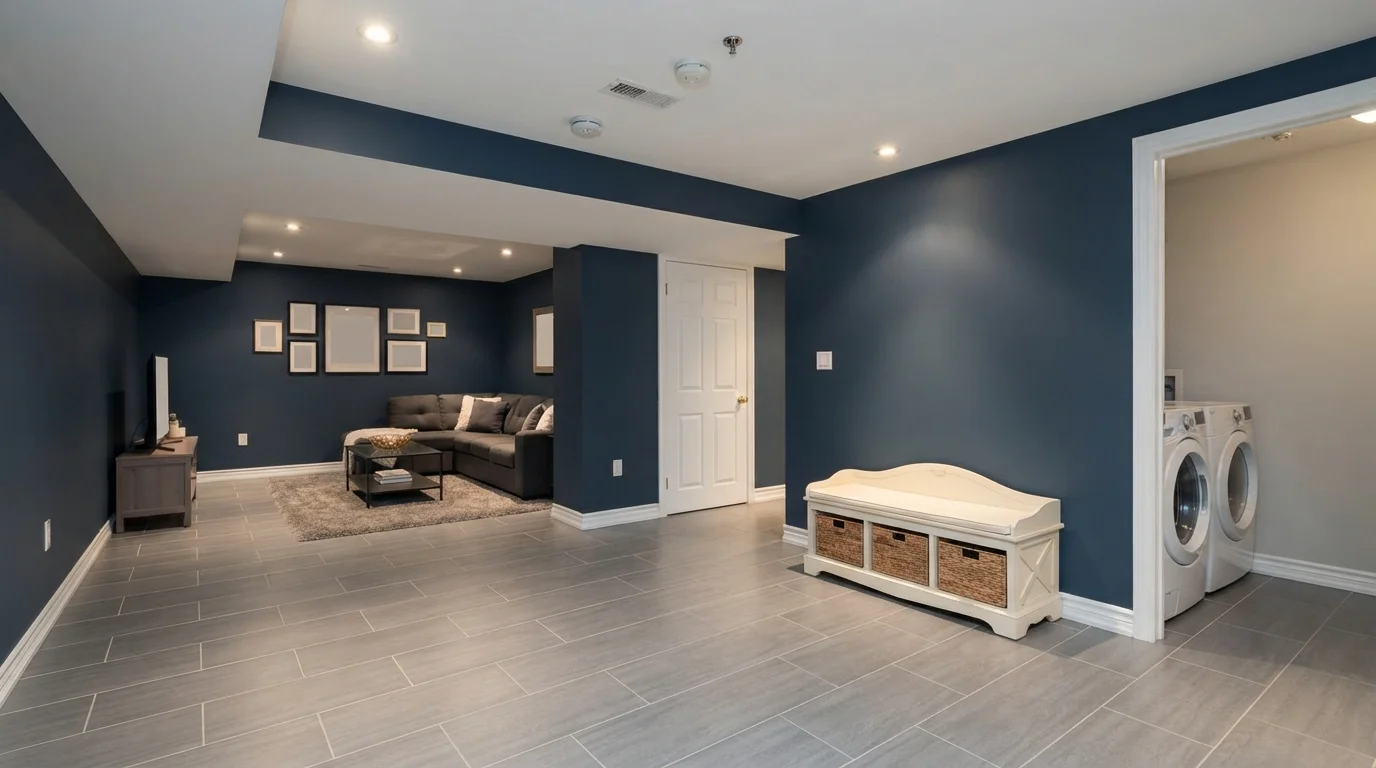
Deep navy blue walls meet clean white trim and cool grey tiles for a snug, modern downstairs retreat.
Navy blue is a deep, rich shade that instantly adds quiet drama. In this finished basement, the moody navy coats the walls and ceiling drop, framed by crisp white doors, matching baseboards, and durable gray rectangular floor tiles. The room feels grounded, calm, and cozy. This pairing works because the dark blue adds depth while the bright white trim and warm ceiling lights keep the lower ceilings feeling open and fresh. It is ideal for anyone transforming a basement into a stylish entertainment space.
SEE NEW NAVY BLUE ON YOUR WALLS →
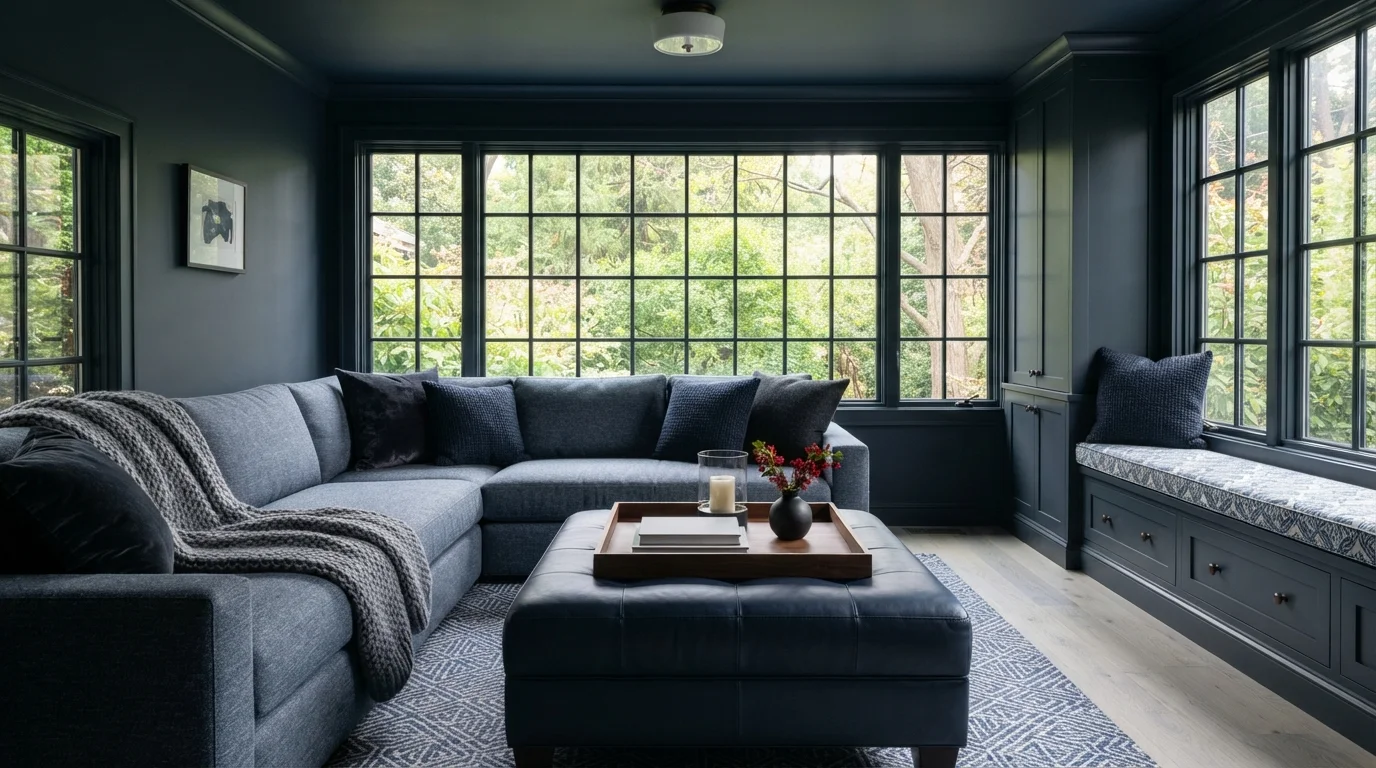
Rich midnight blue wraps the walls and ceiling, turning this living space into a calming, cocoon-like haven filled with soft texture.
Deep navy is an inky, dramatic dark blue. In this room, that deep blue covers the walls, trim, ceiling, and built-in window bench, paired with a heathered blue-grey sectional and a patterned woven rug. The space feels deeply restful, intimate, and snug. Painting every surface the same dark tone makes the boundaries blur, allowing the rich textures and lush greenery outside to stand out. It is ideal for anyone who wants a cozy, theater-like space built for relaxed evenings.
SEE IN THE NAVY ON YOUR WALLS →Blue Basement Wall Color Combinations
A wall color never works alone. These are the full schemes from the rooms above — the lead color first, then the supporting colors that make the photo work.
Rich midnight blue wraps the room in a velvety cocoon, illuminated by the glowing warmth of polished brass accents.
TRY THIS PALETTE →Wrap yourself in deep, velvety navy tones balanced by soft oatmeal upholstery and warm natural daylight.
TRY THIS PALETTE →Deep navy walls contrast with bright white moldings and weathered oak floors for a sleek, grounding lower-level retreat.
TRY THIS PALETTE →Deep slate blue envelops the walls, balanced by crisp white accents and warm dark wood under soft recessed lights.
TRY THIS PALETTE →Basement trim is often stuck as-is: painted white decades ago, or original wood paneling nobody's gotten around to removing. Against white trim and baseboards, Nightlife or Time's Current reads as a confident, cocoon-like navy without the room going flat — the white keeps ceiling lines and doorways legible even when the walls go dark, and it's the lowest-effort pairing if the basement's trim is already white.
If your basement still has real wood paneling or trim, Dragonfly's softer, cooler-leaning blue plays well against the warmth of unpainted wood, letting the paneling read as an intentional accent instead of something to hide. Encore pairs with warm wood tones too, but push it further with black or dark bronze hardware and a light wood or LVP floor so the bolder blue has something crisp to bounce off, rather than getting lost in an all-brown box.
More Basement Color Ideas
Set on a color family already? Each page has its own real rooms and picks.
Light or Dark Blue Basement Colors?
Go Light (LRV 60+) If…
The room is small, faces north, or has to work at every hour. Light warm colors make it feel bigger and stay calm in evening light — the light you actually live in.
Go Dark (LRV Under 20) If…
You want the cocoon effect and the room has real daylight. Dark works best on one feature wall — or fully color-drenched in a large room with good windows.
The instinct with a windowless basement is to go pale to "add light," but pale, cool blues tend to go gray and slightly dingy under recessed can lights with no daylight to warm them up. A basement with little or no natural light generally does better going a shade darker and more saturated than you'd choose upstairs — Nightlife or Time's Current reads as intentional and cozy under artificial light, where a washed-out pale blue in the same spot just looks underlit.
If your basement does get real daylight — a walkout, egress windows, a daylight basement layout — you have more room to go lighter. Dragonfly is the pick that still works once there's actual light to bounce around the room, and Encore's higher saturation reads as a real color rather than a washed-out tint when it isn't relying on lamps alone.
See It. Love It.
Paint It.
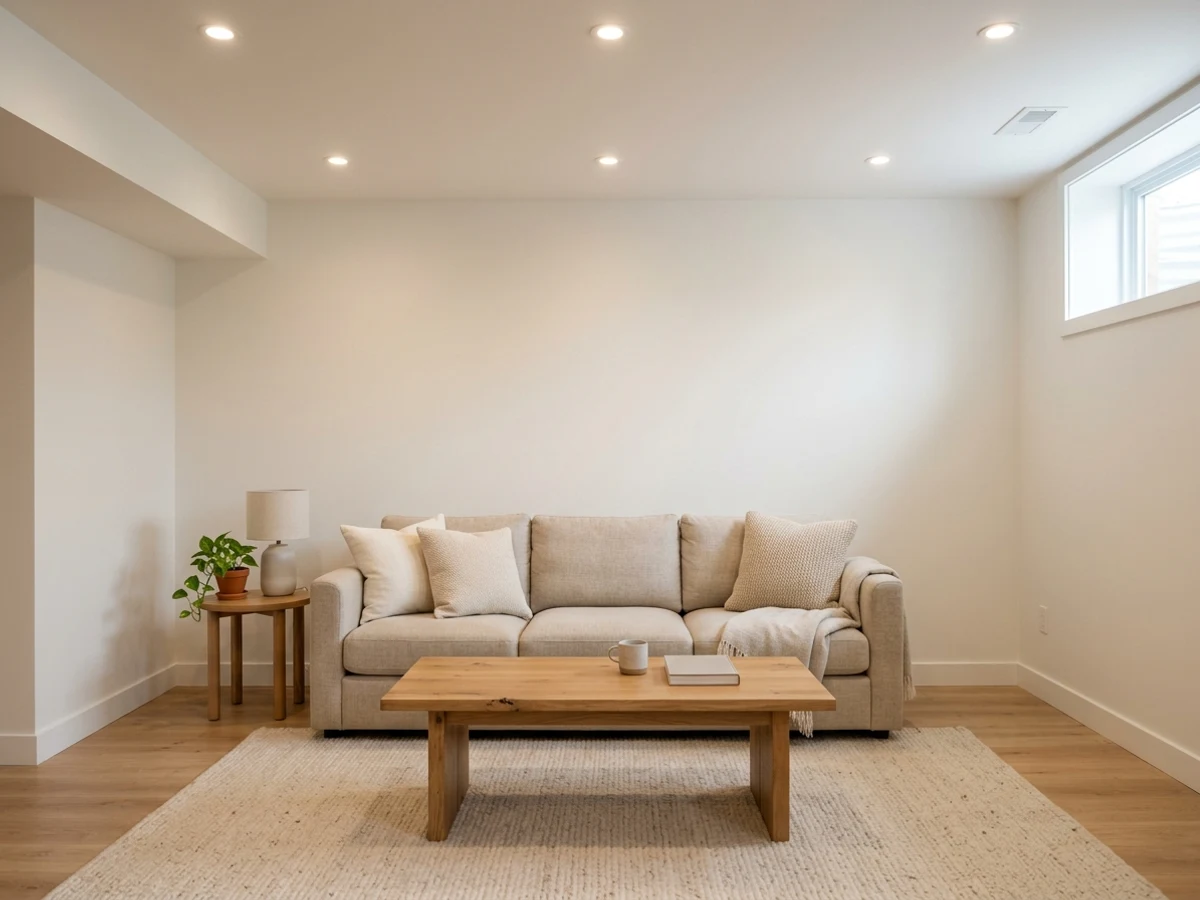
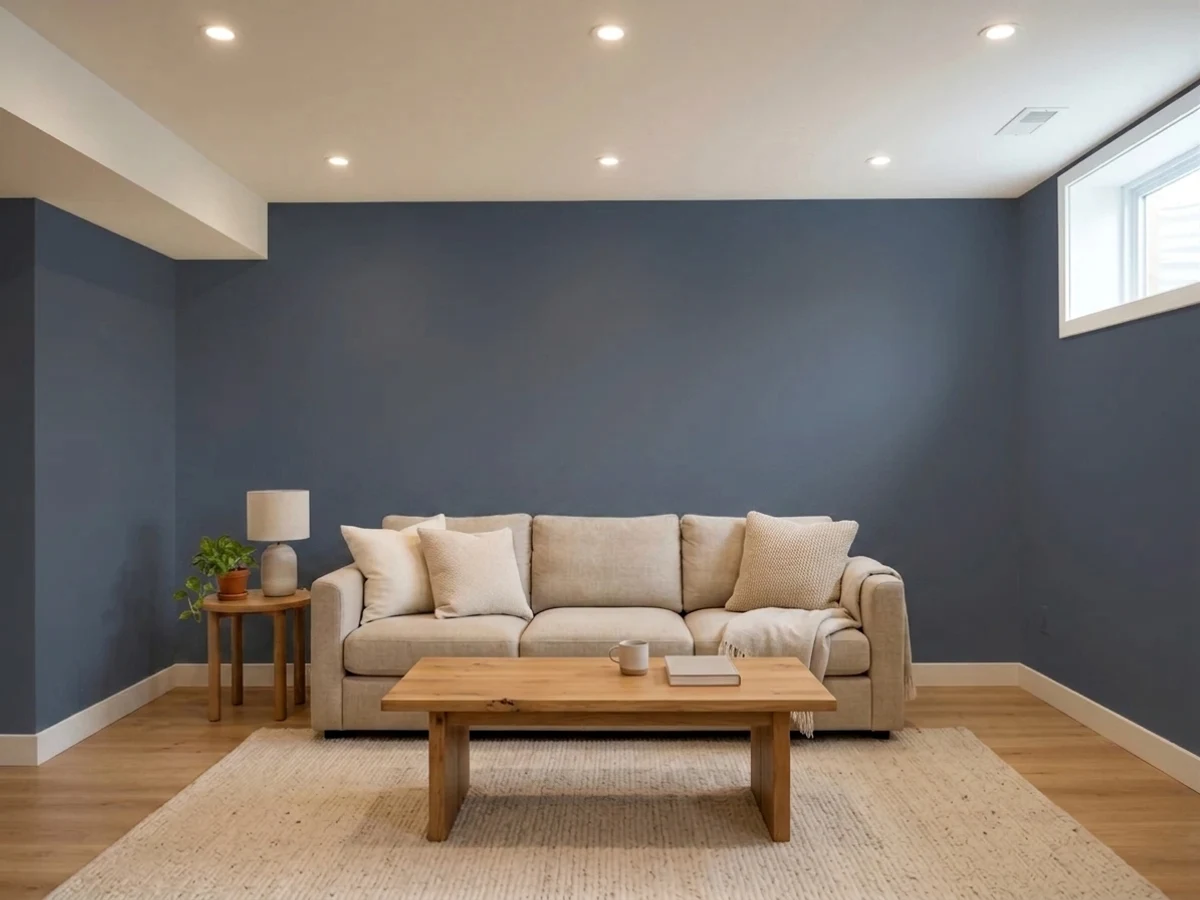
Upload one photo of your blue basement and try every color on this page on your own walls — in your own light, before you buy a drop of paint.

Hale NavyBeforeSheen and Finish for Basement Walls
Basement walls deal with more moisture than almost any other room in the house, especially below-grade block or poured concrete that was never fully finished off. A satin or eggshell finish is the safer call over flat for any of these blues — it resists the higher humidity basements tend to hold, and it wipes down easily if the space doubles as a playroom or media room. Flat can deepen a color like Nightlife or Time's Current, but only pick it if the basement is genuinely dry and finished, not over bare concrete block or a wall that's ever seen dampness.
On concrete or cinder block itself, confirm the paint is rated for masonry before it goes anywhere near the blue you picked. A standard interior paint over unsealed block will eventually blister or peel regardless of the color underneath it, which wastes the work of getting the shade right in the first place.
Common Mistakes With A Blue Basement
The biggest mistake is choosing a pale, cool blue to "brighten" a windowless basement. Under artificial light with no daylight to warm it, a pale blue tends to go gray and slightly dingy instead of airy — the opposite of the goal. If your basement has no real natural light, lean toward the more saturated, more deliberate blues like Nightlife or Time's Current rather than fighting the dimness with a washed-out tint.
The second mistake is ignoring what the ceiling and floor are already doing. Basements often keep a dropped acoustic-tile ceiling or a concrete floor that reads cold no matter what; painting the walls a bold Encore blue without keeping the ceiling white or very light makes the room feel like it's closing in. The same goes for leftover wood paneling — decide before you paint whether you're covering it or leaning into it as an accent, because a bold blue looks unfinished sitting next to paneling that's half-painted and half not.
Matching The Blue To What The Basement Is Used For
A basement rarely functions as one room — it's a media corner, a play area, maybe a home gym or guest space, all sharing one open floor. Nightlife and Time's Current suit the media or movie-night zone, where the room gets used mostly at night with the lights down, and a darker wall disappears behind the screen instead of competing with it. Encore's brighter energy fits a home gym or play corner used with the lights on, where a flat, moody blue would drag energy out of the space instead of adding it. Dragonfly sits in between — the natural choice for a reading nook, home office corner, or guest area where the goal is calm without going as dark as a true media room needs.
About Blue Basement Paint Colors
Basements are naturally light-starved and boxed in by low ceilings, concrete floors, and whatever trim or paneling was left over from a decades-old build. A blue that reads calm in a bright living room can go flat and lifeless in a basement, so the safe moves here work with the dimness instead of fighting it. Nightlife from Portola Paints and Time's Current from Valspar both lean into the darkness on purpose, turning what a bright room would call gloomy into a deliberate, cozy movie-night mood.
Not every basement needs to go that dark. If yours doubles as a playroom, home gym, or gets real daylight through an egress window or walkout door, Encore from Valspar carries enough saturation to read as a genuine color choice without swallowing the room — it's the pick for a basement that wants personality rather than a cave. Dragonfly from PPG/Glidden sits at the calmer end of the group, a softer blue suited to a lounge corner or reading nook where the goal is relaxed rather than dramatic.
What ties these four together is that a basement already stands apart from the rest of the house — it isn't competing with an open floor plan or matching the hallway paint. That gives you room to commit to a color the upstairs rooms couldn't carry, whether that's the confident cocoon of Nightlife or the brighter, more social Encore.
The Questions Everyone Asks
What color should I paint my blue basement?
If you want one answer, start with the safe picks above — In the Navy, Nightlife, Midnight Dream, Midnight Haze. They read well in any light and survive furniture changes. Then check the light: strong afternoon sun wants a step cooler, a north-facing room wants a step warmer.
is blue a good color for a basement?
Yes — basements are naturally darker and set apart from the rest of the house, which is exactly the condition blue handles well. A deep, saturated shade like Nightlife from Portola Paints or Time's Current from Valspar reads as deliberate and cozy under a basement's usual mix of recessed lighting and no daylight, rather than gloomy. Just skip pale, cool blues in a windowless basement — they tend to look gray and flat instead of bright.
what color should I paint a basement with no windows?
Go a shade darker and more saturated than you'd pick upstairs, not lighter. A windowless basement under artificial light makes pale blues look dingy rather than airy, while a color like Time's Current or Nightlife reads as intentional and holds up under lamp and can light. Save a brighter blue like Encore for a basement that gets at least some daylight through an egress window or walkout door.
should basement walls be a different color than the rest of the house?
Usually yes, and that's an advantage, not a risk. A basement already stands apart from the main floor plan, so it isn't fighting a hallway color or an open sightline into other rooms. That lets it carry a color the rest of the house couldn't — Nightlife's confident navy or Encore's bold, lively blue both work specifically because the basement doesn't have to match anything upstairs.
what color trim goes with a blue basement?
White trim is the safest match for any of these picks — it keeps doorways and ceiling lines legible even when the walls go as dark as Nightlife or Time's Current. If the basement still has real wood paneling or trim, Dragonfly's softer, cooler-leaning blue lets the wood read as an intentional warm accent instead of clashing with it.
what sheen should I use for basement walls?
Satin or eggshell, not flat, in most basements. Basements tend to hold more humidity than the rest of the house, especially near concrete or block walls, and a satin finish resists that moisture better while staying easy to wipe down if the space is used as a playroom or media room. Flat can deepen a color like Nightlife, but only use it if the basement is fully finished and dry.
What two-color combination works best in a blue basement?
The reliable pattern is a quiet main color plus one deep accent on a single wall. Keep trim and ceiling in one warm white so the two colors are the only event in the room — the combination cards above show complete schemes from real rooms.
What colors make a blue basement look bigger?
High-LRV, slightly warm colors — LRV 60–75 is the sweet spot. Paint the walls and trim close to the same light color so the corners blur, and keep the ceiling white. Stark cool white actually works against you; it creates hard shadows that show the room's edges.

Ask a Question