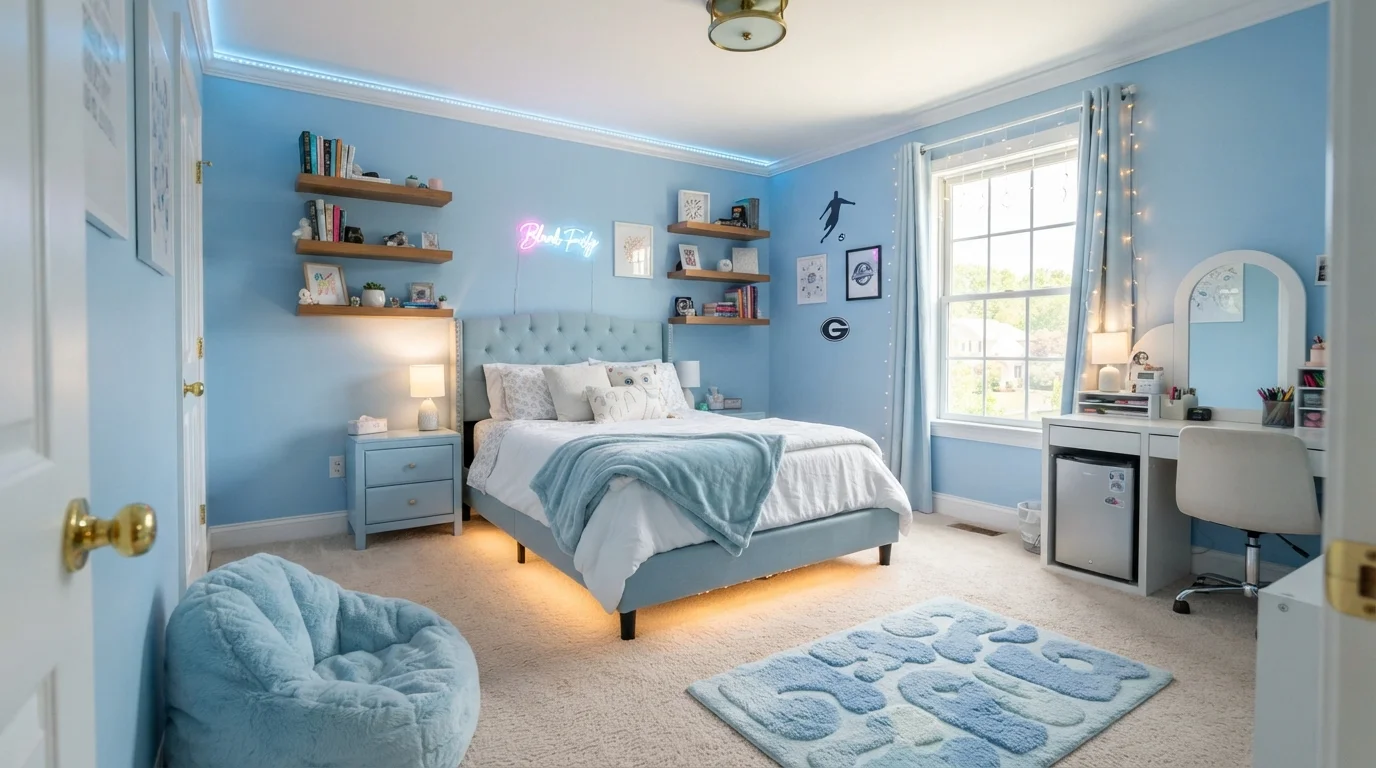
A teen room repaint is usually a declaration of independence — out with the sky blue from the kids' years, in with something darker, moodier, and unmistakably theirs. The trick is landing on colors bold enough that the teenager actually signs off on them while keeping the room sleepable and the eventual repaint one coat away.
The honest picks split into three lanes. A serious dark for the accent or gamer wall — Hale Navy, Peppercorn, or Iron Ore — does the heavy lifting on personality. A set of grown-up calms — Evergreen Fog, a coastal Beach Glass, or a blush First Light that reads more dorm than nursery — softens the room without feeling babyish. And a neutral base like Pale Oak holds up behind posters, string lights, and however many phases a teenager cycles through. Every one of these mixes to order at any paint counter, so the exact shade travels with them if a dorm room or first apartment is next.
Below we walk through the color lanes, how the room's light should steer the pick, the finish that survives tape and traffic, using LRV to balance mood with actual sleep, and the mistakes that turn a teen-approved color into a redo six months later.
The Best Color Directions For A Teen Room
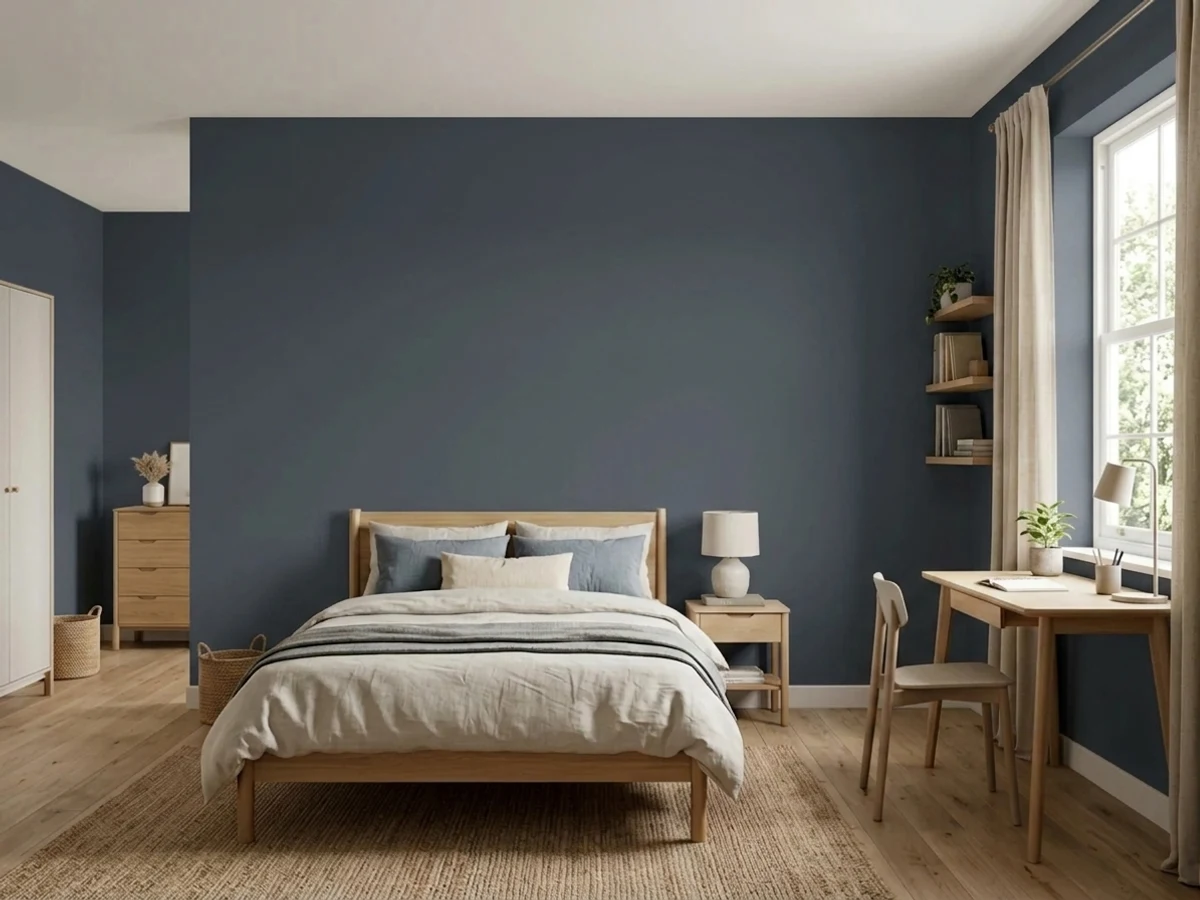
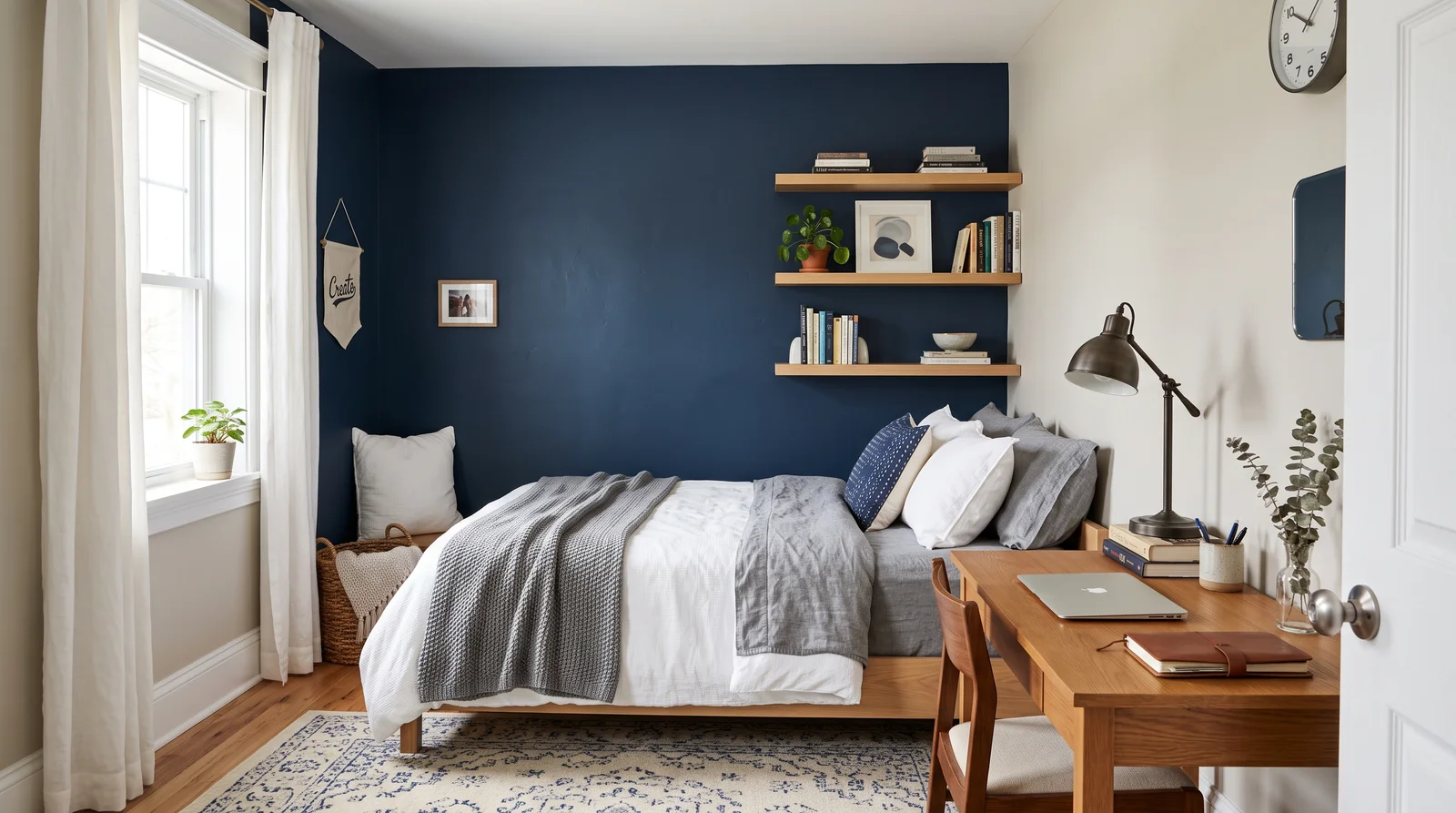
Let the teen anchor the room in one serious dark rather than fighting them on the whole palette. Hale Navy is the accent-wall default for a reason — dark, cool, and nearly impossible to get wrong behind a bed or a desk setup. Peppercorn gives the same drama as a black wall without the flatness of true black, and Iron Ore is the soft-black pick that makes LED strips and monitor glow actually pop, which matters more than parents expect in a gamer-leaning room.
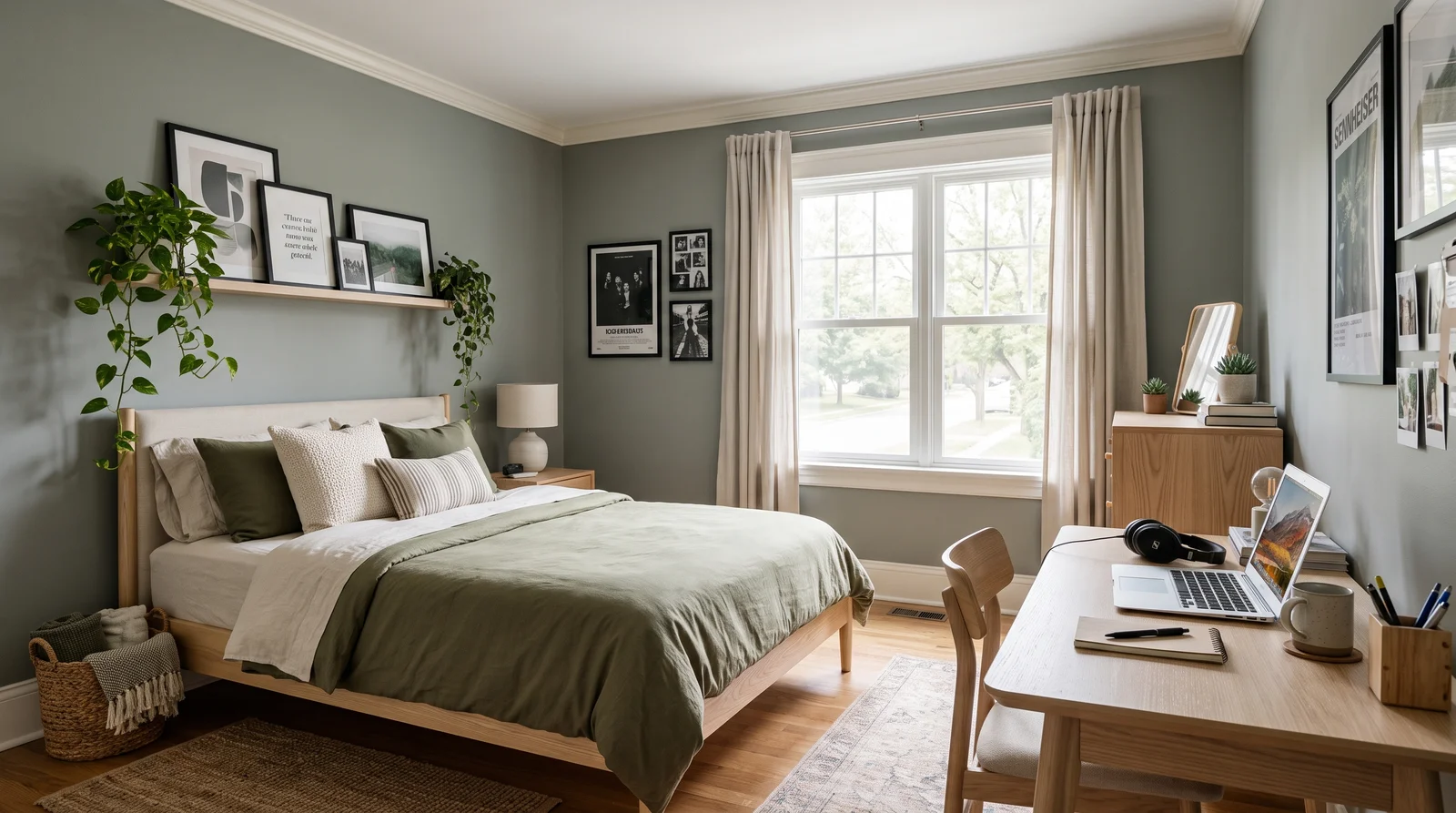
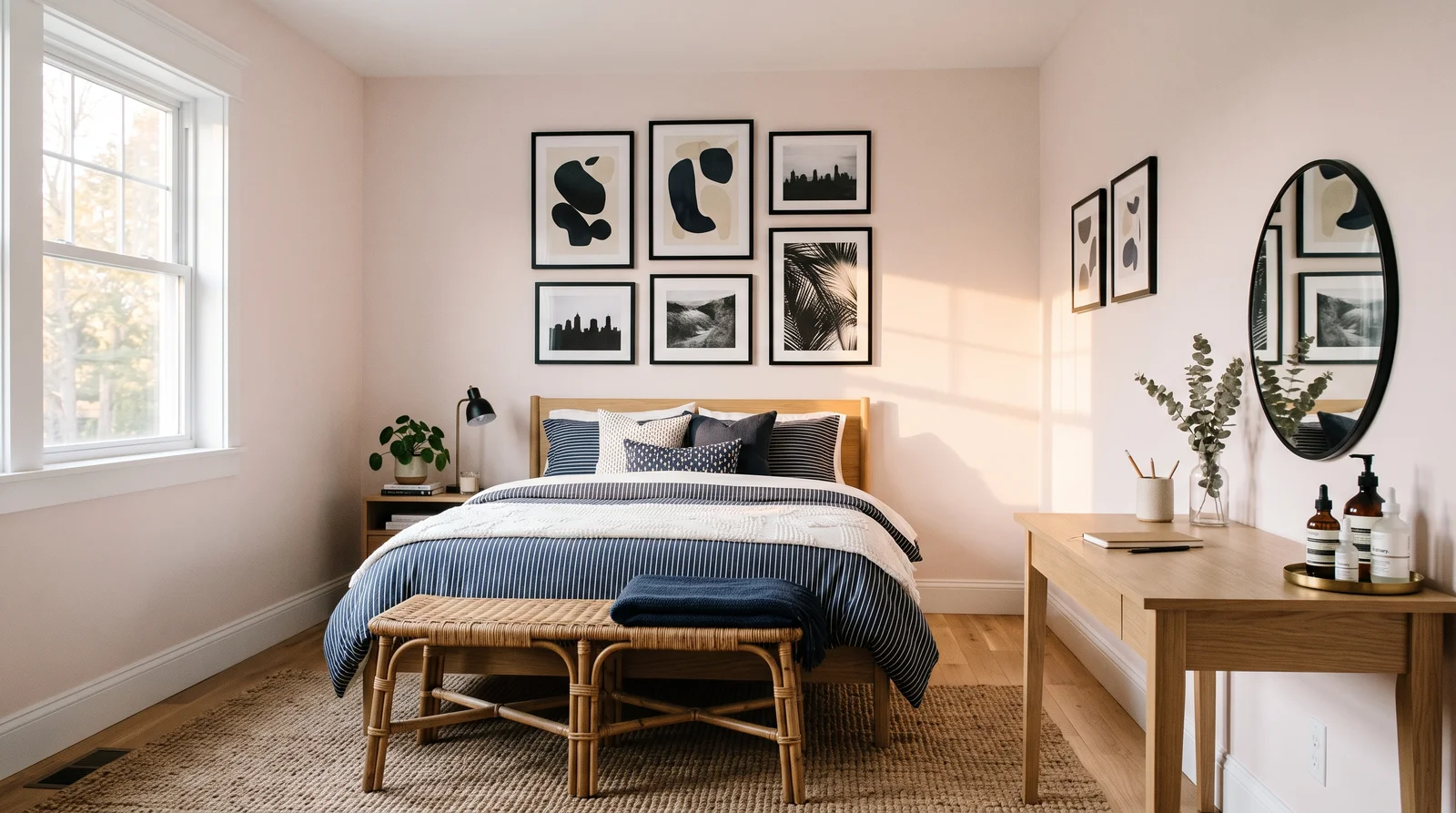
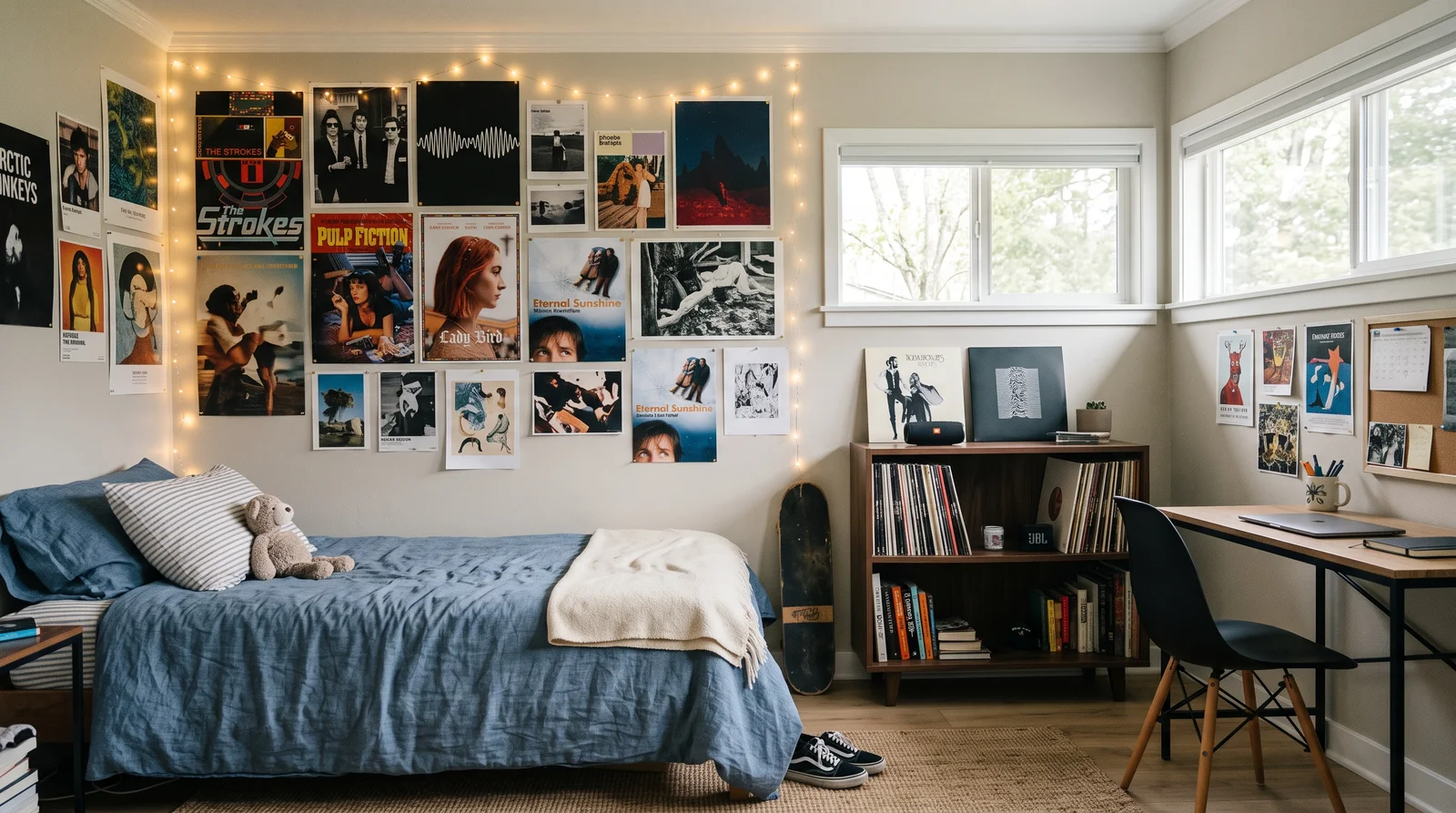
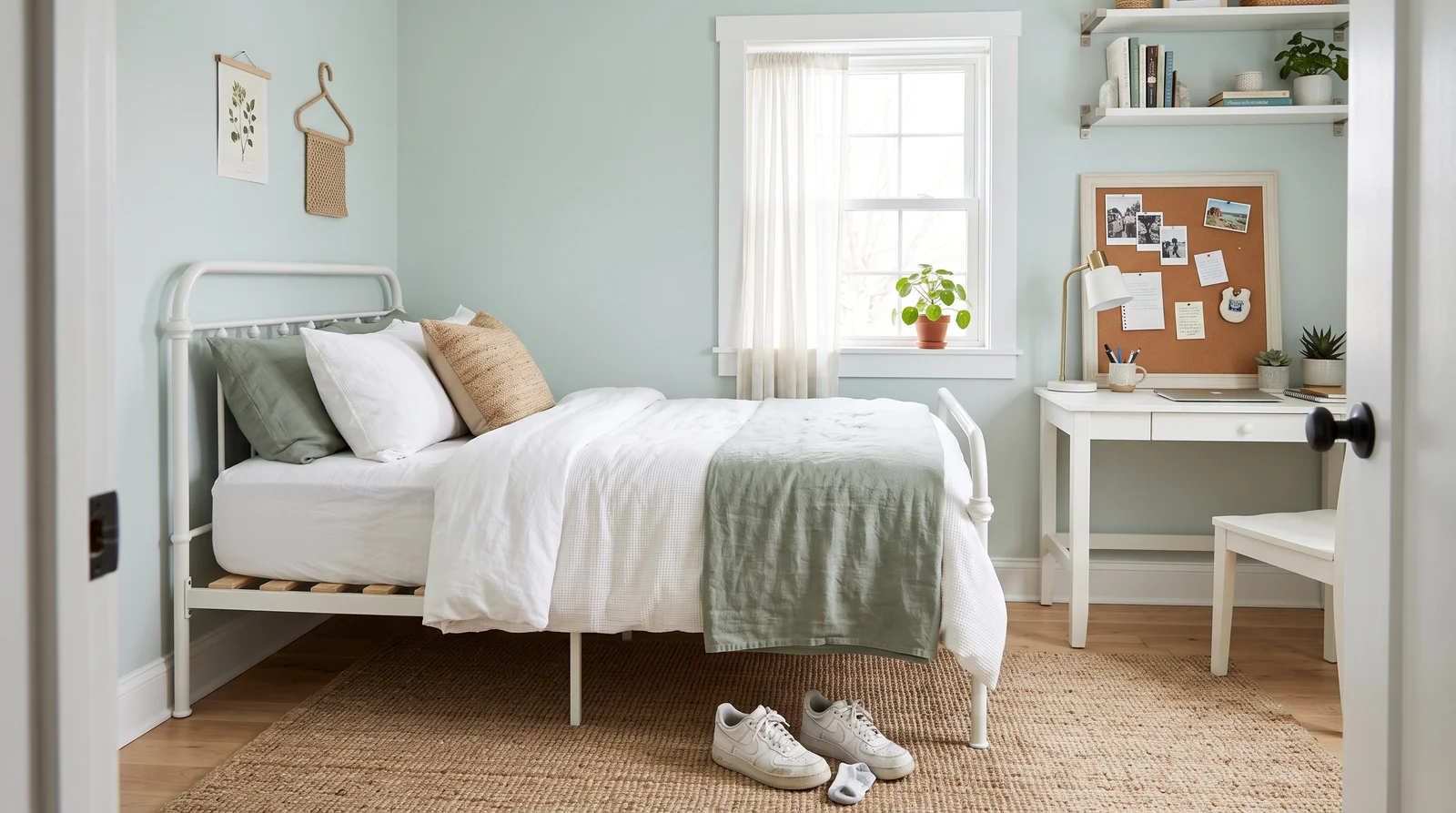
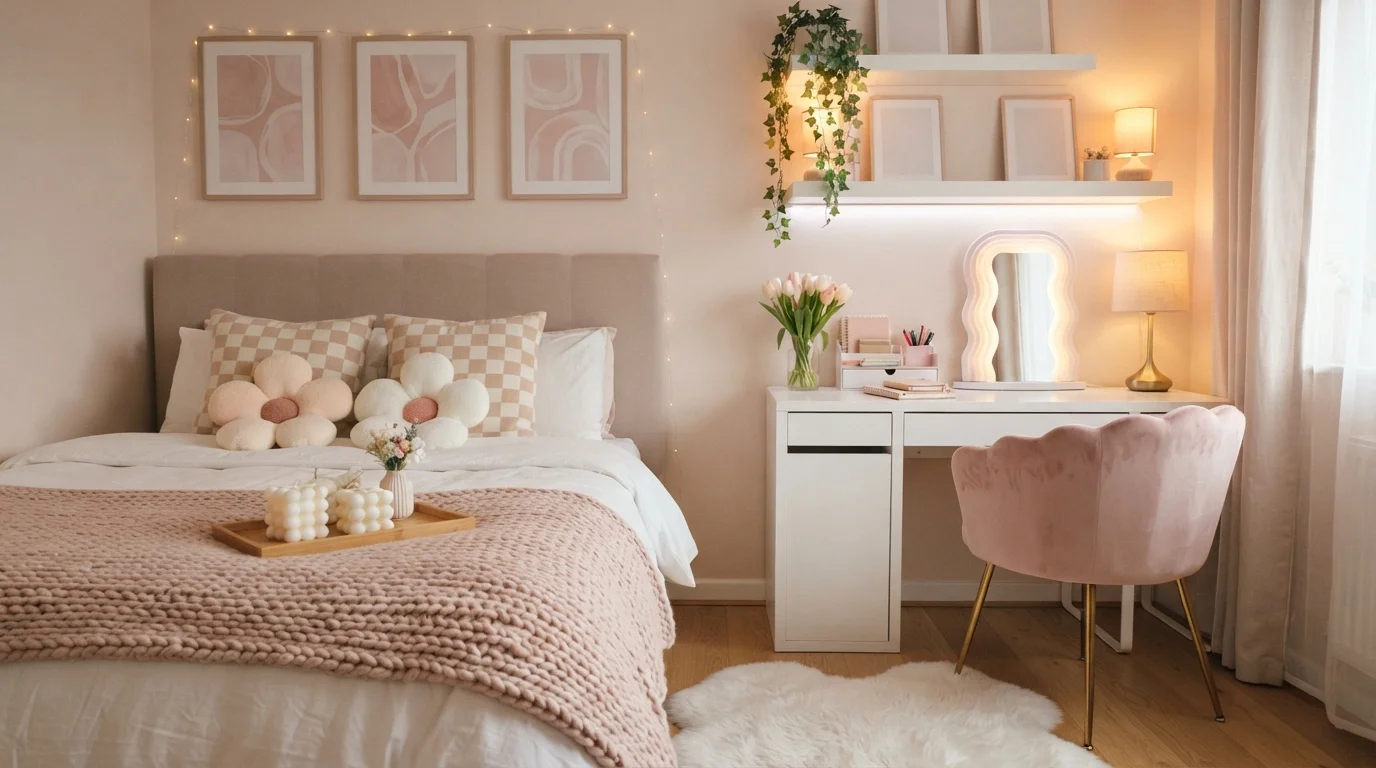
For the rest of the walls, Evergreen Fog and Beach Glass do the grown-up-calm job — moody enough that a teenager does not read them as a leftover kid color, calm enough that the room still functions as a bedroom. First Light is the blush that avoids little-kid pink entirely; it is the closest thing to a neutral in warm-pink clothing. Pale Oak rounds it out as the safest full-room base for a teen who does not want an accent wall at all, just a clean backdrop for posters and prints.
Let The Room's Light Pick The Color
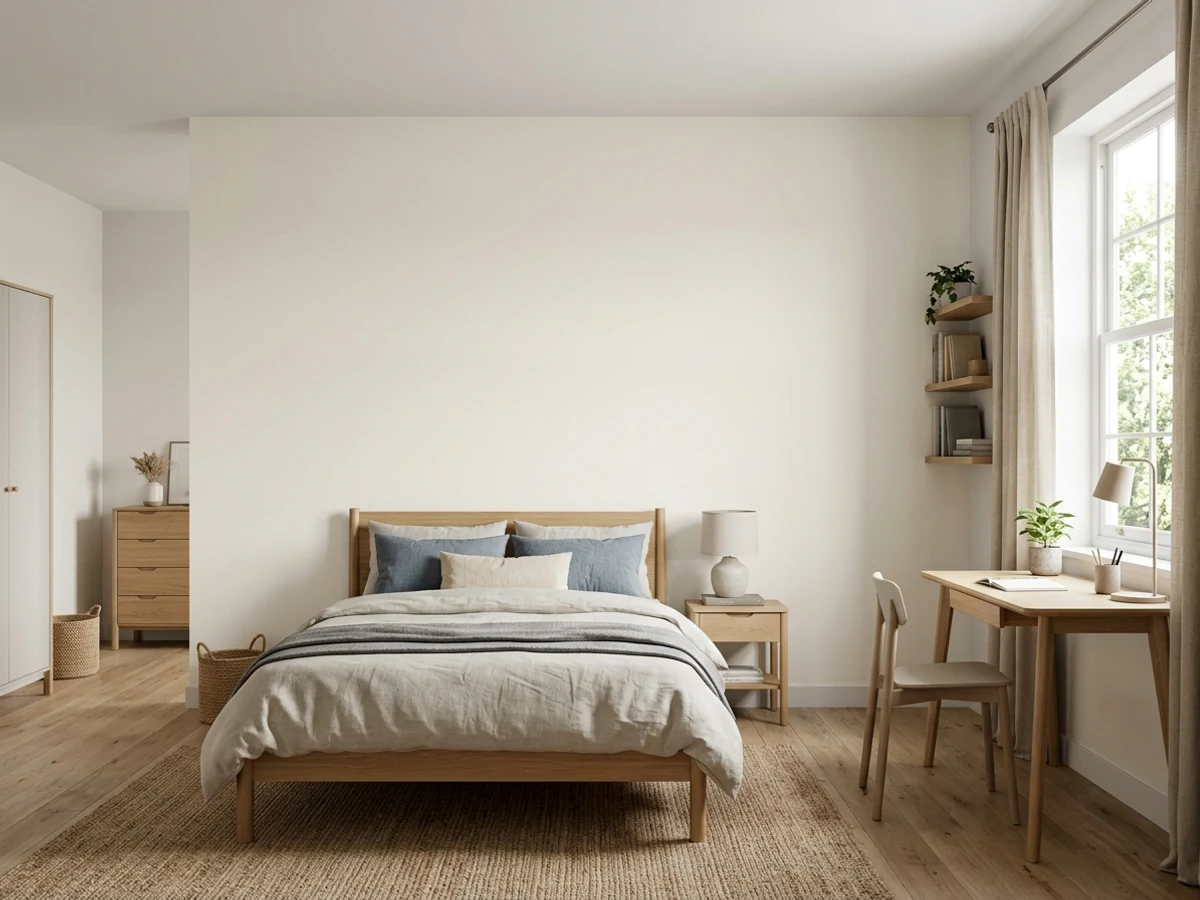
A dark accent wall like Hale Navy or Peppercorn needs real daylight or good supplemental lighting to avoid going flat and cave-like — that matters more here than in a typical bedroom because teens keep their doors closed and blinds drawn more than younger kids do. In a north-facing room with limited light, keep the dark to one wall and let the rest of the room stay in Pale Oak or First Light to carry the brightness.
South- or west-facing rooms with strong afternoon light can handle a full-room dark far better, and Evergreen Fog in particular holds its green-gray character instead of washing out. Since teens are often awake and in their rooms well after sunset under lamp and screen light, test any pick under those actual evening conditions — LED strip lighting especially can shift how a near-black like Iron Ore reads.
The Right Finish For Walls That Take Real Abuse
Teen rooms collect tape marks from posters, scuffs from furniture rearranging (which happens often), and the occasional wall-mounted controller or shoe throw. Flat paint cannot survive that. A scrubbable eggshell — something like BM Regal Select, SW Duration Home, or Behr Ultra — is the baseline for every wall in the room, accent or not.
The washable factor matters especially on a light base like Pale Oak or First Light, where marks show more visibly than they would on a dark Hale Navy or Peppercorn wall. If the room has a desk area that sees constant elbow and equipment contact, consider satin in that zone specifically. Save any higher gloss for door and window trim only — full-wall satin or semi-gloss will throw glare off a monitor or gaming setup.
Using LRV To Balance Mood And Sleep
LRV, or Light Reflectance Value, measures how much light a color bounces back on a 0-to-100 scale, and it is the fastest way to predict whether a teen's chosen dark will feel dramatic-in-a-good-way or genuinely oppressive. Hale Navy sits at LRV 8, Iron Ore at 6, and Peppercorn at 10 — all low enough to read serious, none so low they read as a true black box.
Evergreen Fog at LRV 30 and Beach Glass at LRV 50 land in a middle zone that still feels grown-up without eating all the light in the room. First Light (LRV 76) and Pale Oak (LRV 69) sit high, which is exactly what you want for the wall opposite a dark accent — it keeps the room functional for actual sleep and homework instead of just looking dramatic in photos.
Pairing Trim, Furniture, And Lighting
White or off-white trim keeps any of these colors from feeling heavy, and it is the fastest way to make a Hale Navy or Peppercorn accent wall look intentional rather than accidental. Against a full Pale Oak or First Light room, a slightly warmer white trim keeps the room from reading clinical.
Teen rooms increasingly build around LED strip lighting, string lights, and monitor glow rather than a single overhead fixture, and dark walls make all of that pop far more than a light wall does — this is a real reason Iron Ore and Peppercorn have become popular gamer-wall picks. Wood furniture and desks read well against Evergreen Fog and Beach Glass; black or metal frame furniture pairs cleanly with the Hale Navy and Peppercorn lane.
Common Teen Room Painting Mistakes
The biggest mistake is a parent picking the color alone and presenting it as a done deal — teen rooms are one of the few spaces in the house where buy-in from the person sleeping there actually changes how long the paint job lasts before someone wants to redo it. Offer a short list, like the picks above, rather than the whole deck or a single mandate.
The second mistake is going full-room dark in a room with genuinely poor light, which can tip from moody into gloomy fast. People also underestimate how much tape and poster removal a teen wall sees and use a flat finish that tears when the poster comes down. Pick a scrubbable eggshell, confine the darkest color to one wall unless light is strong, and let the teen have real input on the final call.

 1
1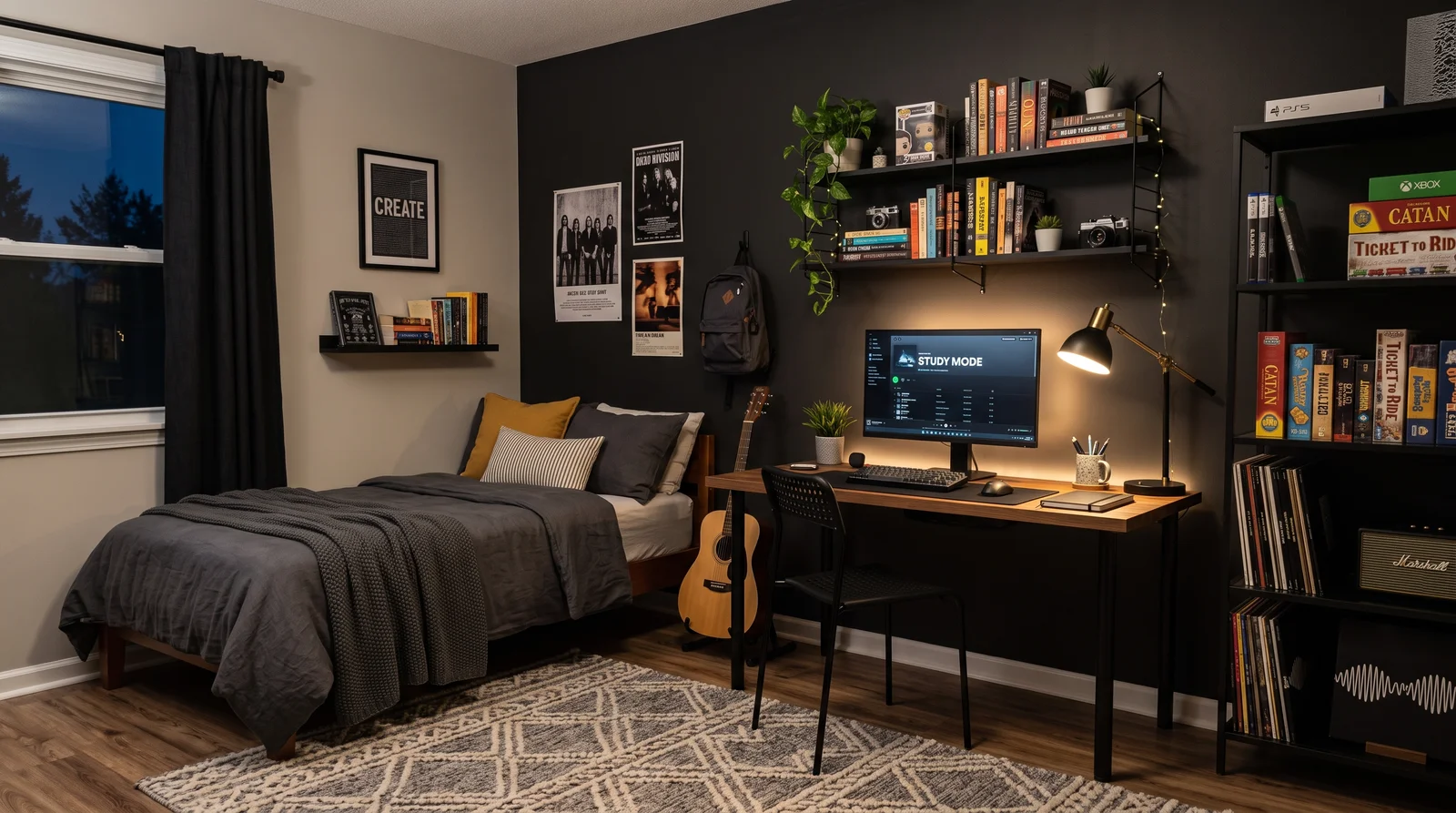
Ask a Question