Room Colors · Hallway
12 Best Hallway Paint Colors for 2026
ideas, combinations, and real rooms
12 curated picks from real hallways — with the exact colors, honest reasons why, and the combinations that hold the room together.

Former interior stylist who can spot a green undertone from across a room. Jessica writes the color and mood pieces — what to choose, what pairs, and why your "white" looks pink.

Top Picks for the Hallway
Pick a color family, tap a shade to see the hallway in it, then try it on your own room.
Hallway Color Trends 2026 — What's In, What's Out


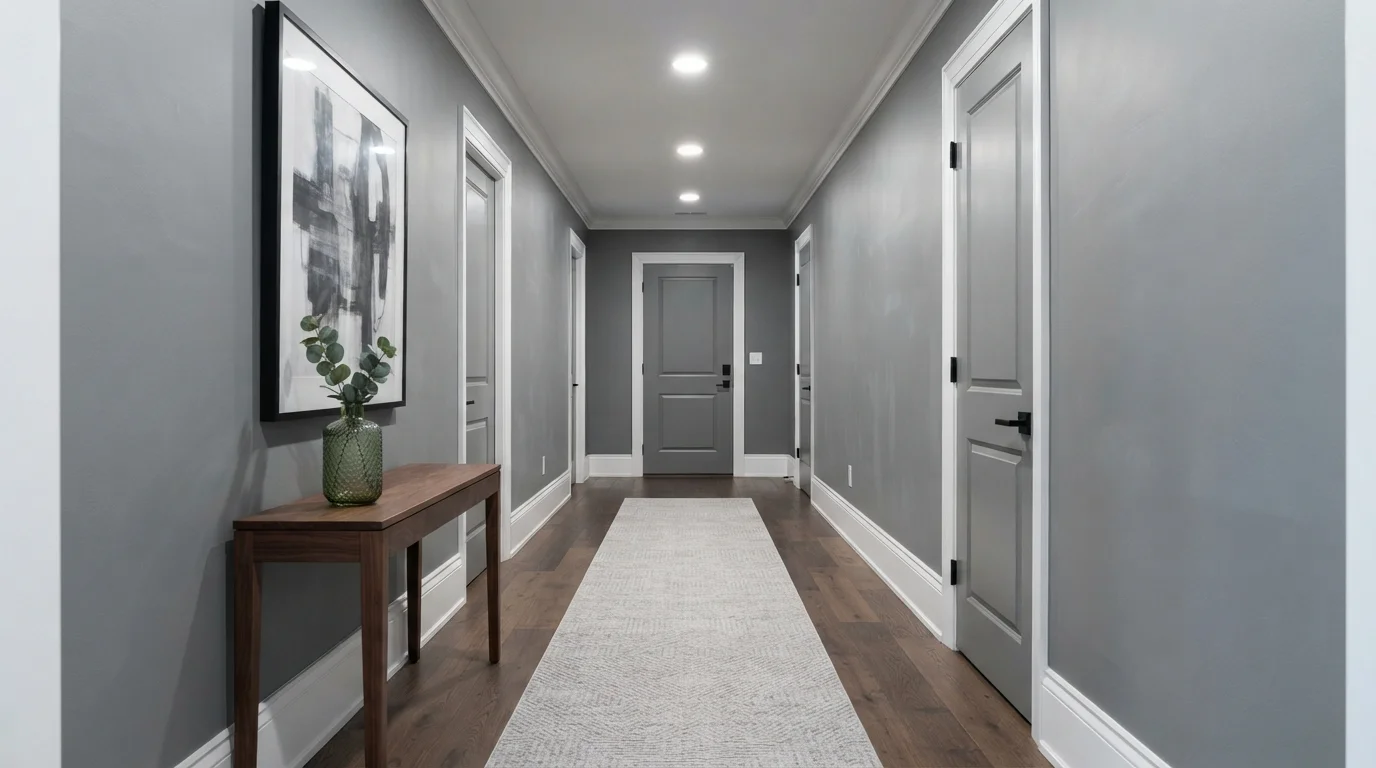
- Cool gray-on-gray — Millennial gray reads flat and sterile in a hallway that gets little natural light — designers call it the first thing to repaint.
- Stark bright white — Pure white turns dingy-gray in a windowless hall; warm creams took its place.
- The lone accent wall — One random bold wall at the end of a plain hall looks unfinished now — 2026 drenches the whole space or does a proper two-tone.
- Yellowed builder beige — The 2000s tan is not what warm neutrals means — today's versions lean mushroom and putty, not yellow.
The 12 Best Hallway Paint Colors
Every pick below is a real rendered hallway, not a chip. The lead color first; the swatches are the full scheme in the photo — walls, furniture, textiles, accent.

Vanilla Milkshake gives the walls a soft cream glow, and Birched White trim keeps it clean, so a narrow hall feels warm instead of plain.
Cream is a wonderfully soft, welcoming neutral that instantly makes a narrow space feel open. In this bright hallway, cream walls and crisp trim set a clean backdrop for a rich walnut floating shelf, framed artwork, and a vibrant rust-toned runner rug. A leafy green fiddle-leaf fig stands at the end, catching the natural light. The space feels incredibly cozy, calm, and curated. Light walls keep the hallway bright, while the deep wood tones ground the look so it doesn't feel sterile. It is perfect for anyone wanting to turn a simple pass-through into a stylish gallery.
SEE LINEN RUFFLE ON YOUR WALLS →
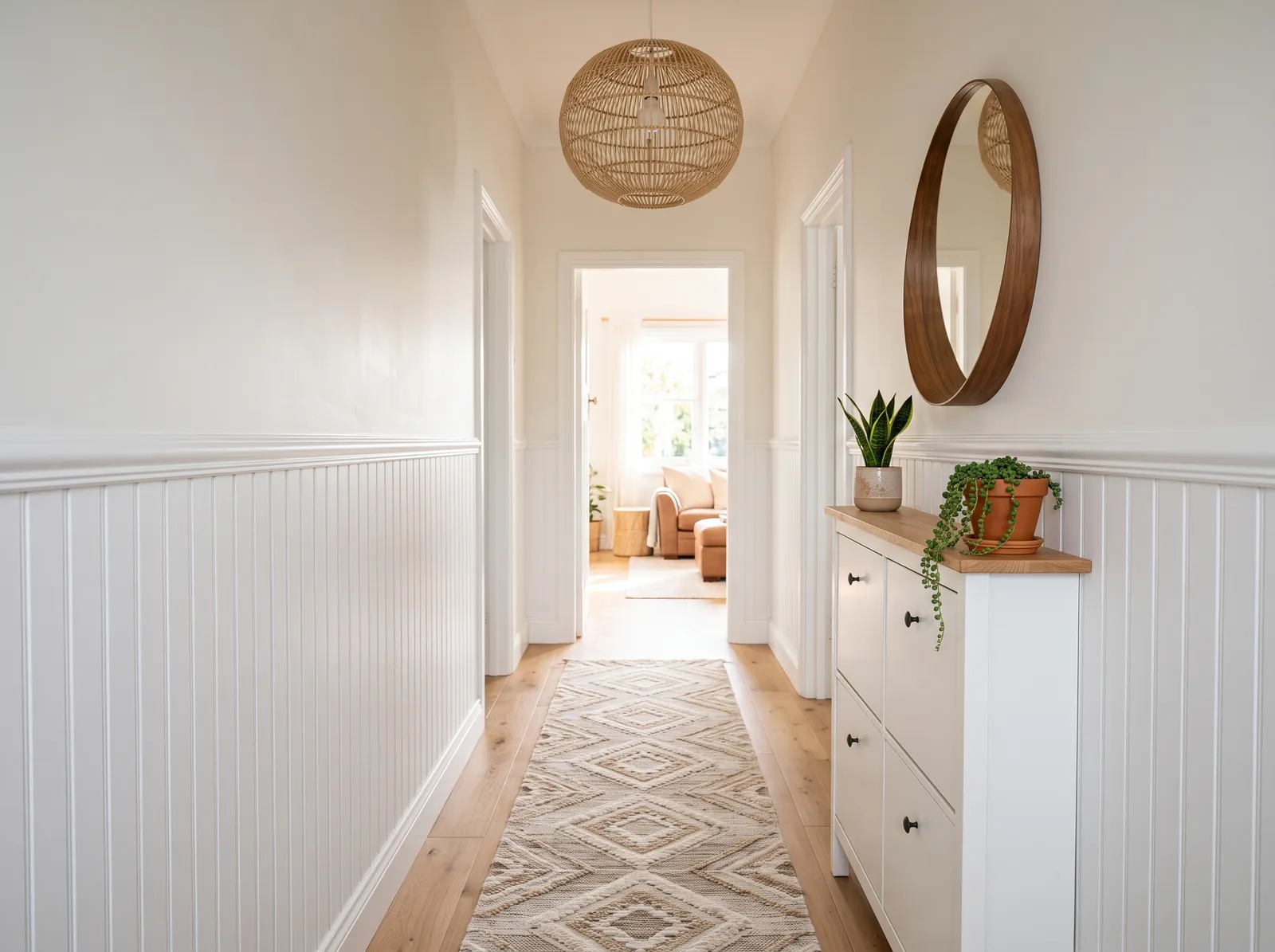
Opulence is a gentle, barely-warm white that bounces light, and crisp Snow Day trim makes a tight hallway feel open and easy to live with.
Cream is a wonderfully soft, welcoming neutral that instantly makes a narrow space feel much larger. In this bright hallway, cream walls pair beautifully with crisp white beadboard trim, a matching white shoe cabinet, and a patterned beige runner rug. The entire entry feels incredibly calm, airy, and organized. Keeping the walls light while adding natural wood accents like the round mirror and woven pendant light keeps the space from looking washed out. It is the perfect setup for anyone wanting a breezy, coastal-inspired welcome home.
SEE IT ON YOUR WALLS →
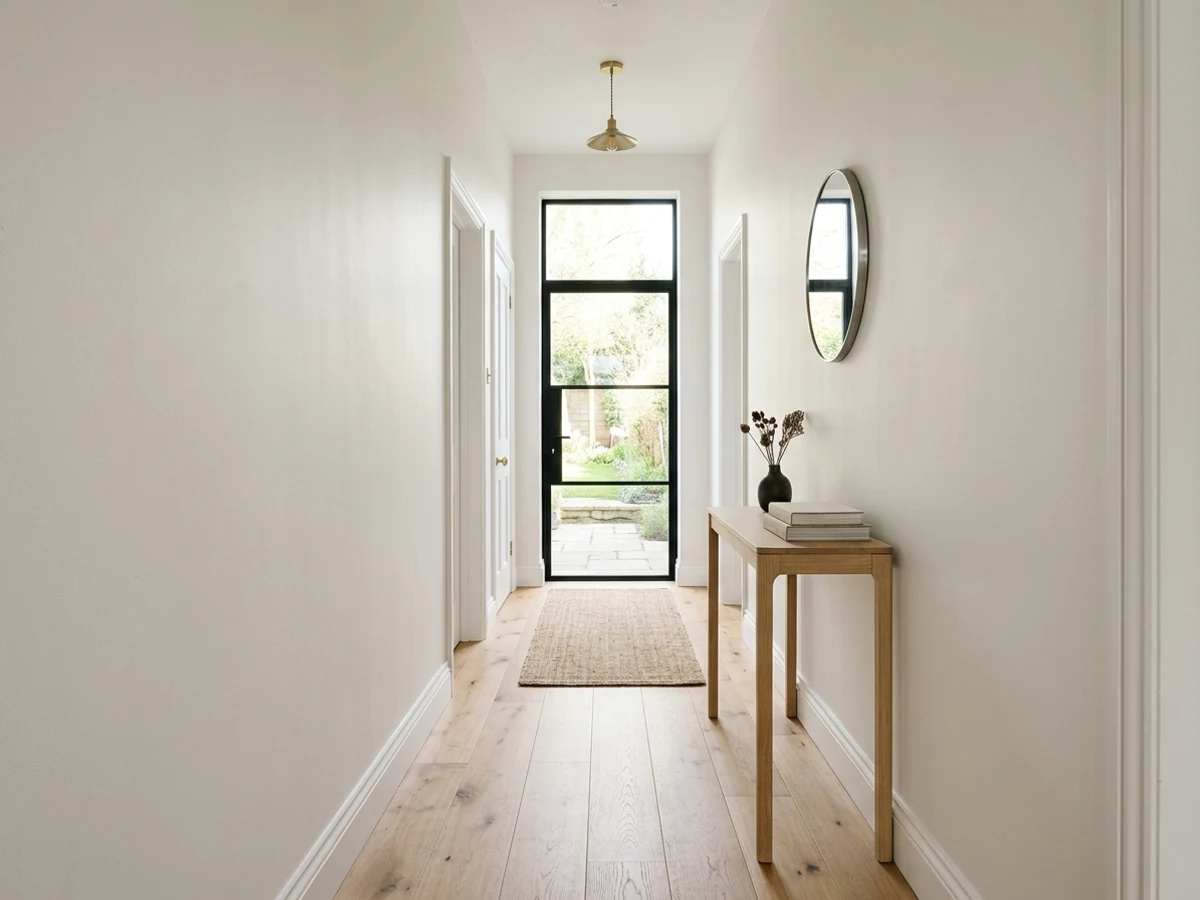
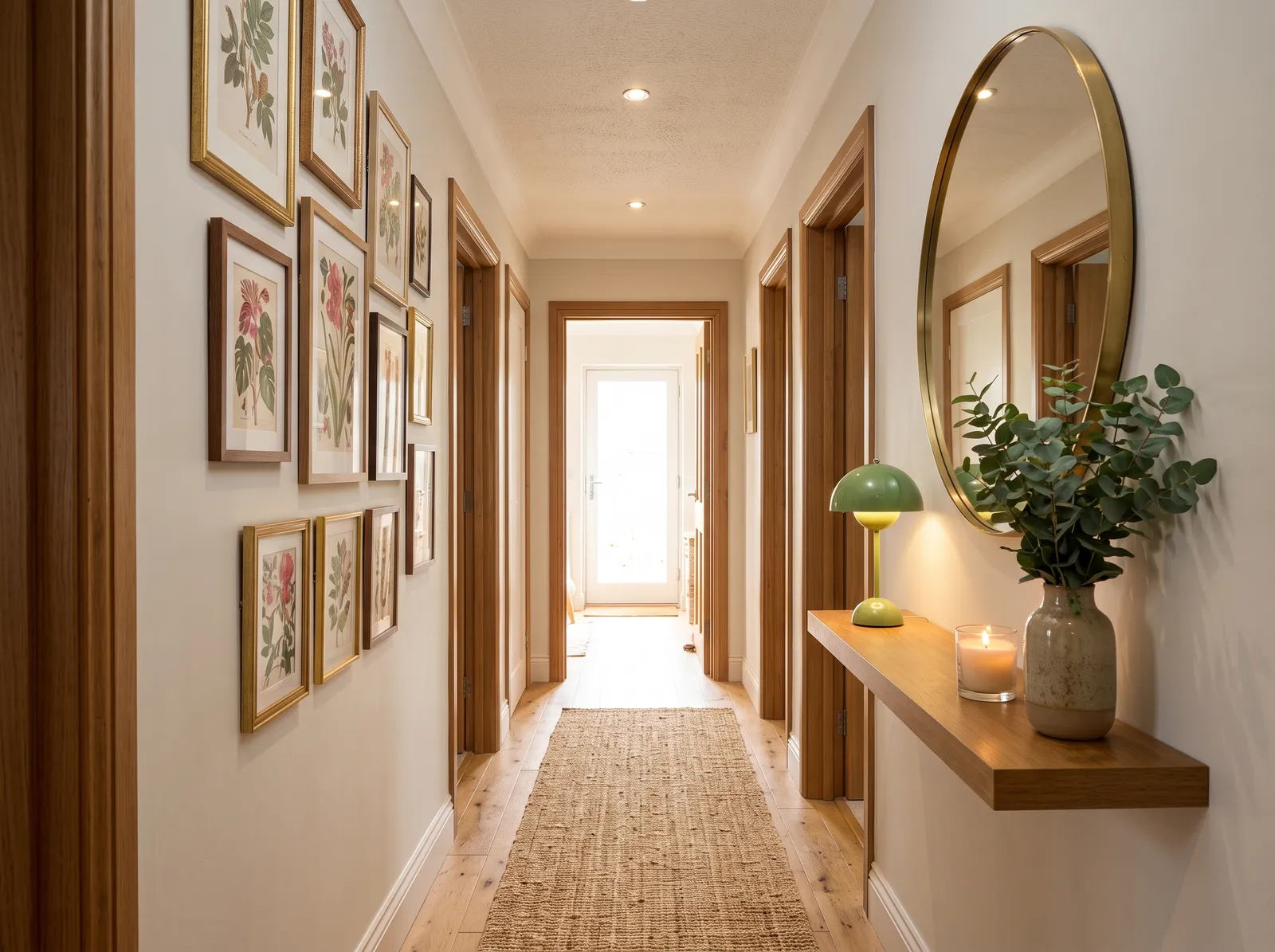
Windfresh White is a warm, sandy greige that feels cozy without going dark, softened further by Origami, a creamy off-white trim.
Cream is a wonderfully soft, clean backdrop that instantly opens up narrow spaces. In this hallway, that gentle cream covers the walls, beautifully framing the rich oak wood doors and floating console shelf. A textured jute runner stretches down the floor, while a pop of sage green from the mushroom lamp adds a fresh touch of nature. The space feels incredibly welcoming, bright, and calm. This combination works because the organic wood tones ground the airy walls, keeping the long corridor from feeling cold. It's perfect for anyone wanting a bright, inviting entryway.
SEE ELK SKIN ON YOUR WALLS →
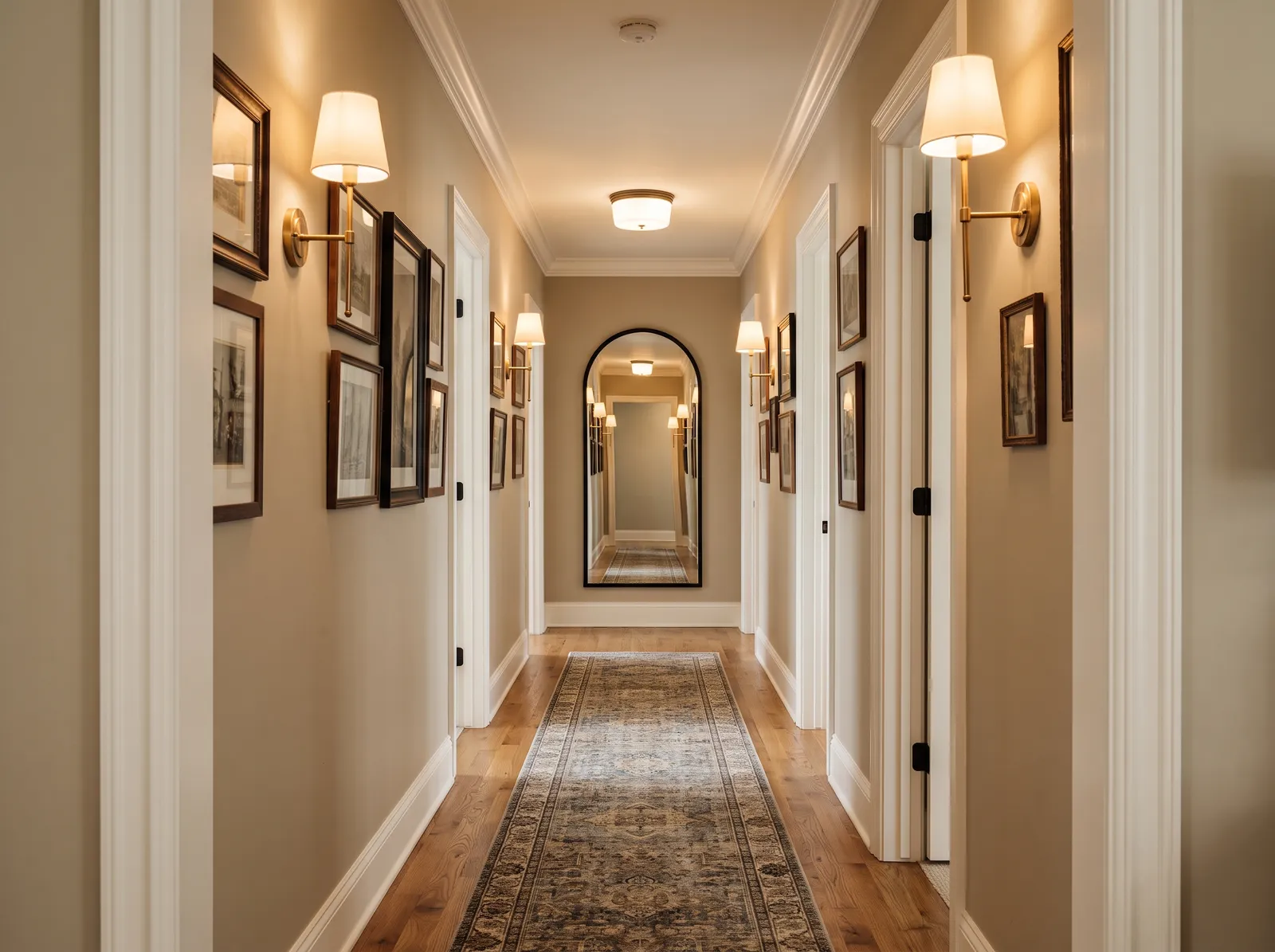
Southern Grown wraps the walls in a warm, sandy greige that catches lamplight beautifully, while White Flour trim keeps everything fresh and bright.
Taupe is a sophisticated, sandy gray-brown that brings instant elegance to transitional spaces. In this long hallway, that warm taupe coats the walls, paired with crisp white trim and a soft cream ceiling. A vintage-style runner rug in muted charcoal and olive stretches down the wooden floor, while brass wall sconces and dark wood frames add classic structure. The space feels incredibly snug, calm, and welcoming. This combination works because the light trim keeps the narrow passage feeling bright. It is perfect for anyone wanting to turn a simple hallway into a comforting gallery.
SEE GINGER ON YOUR WALLS →
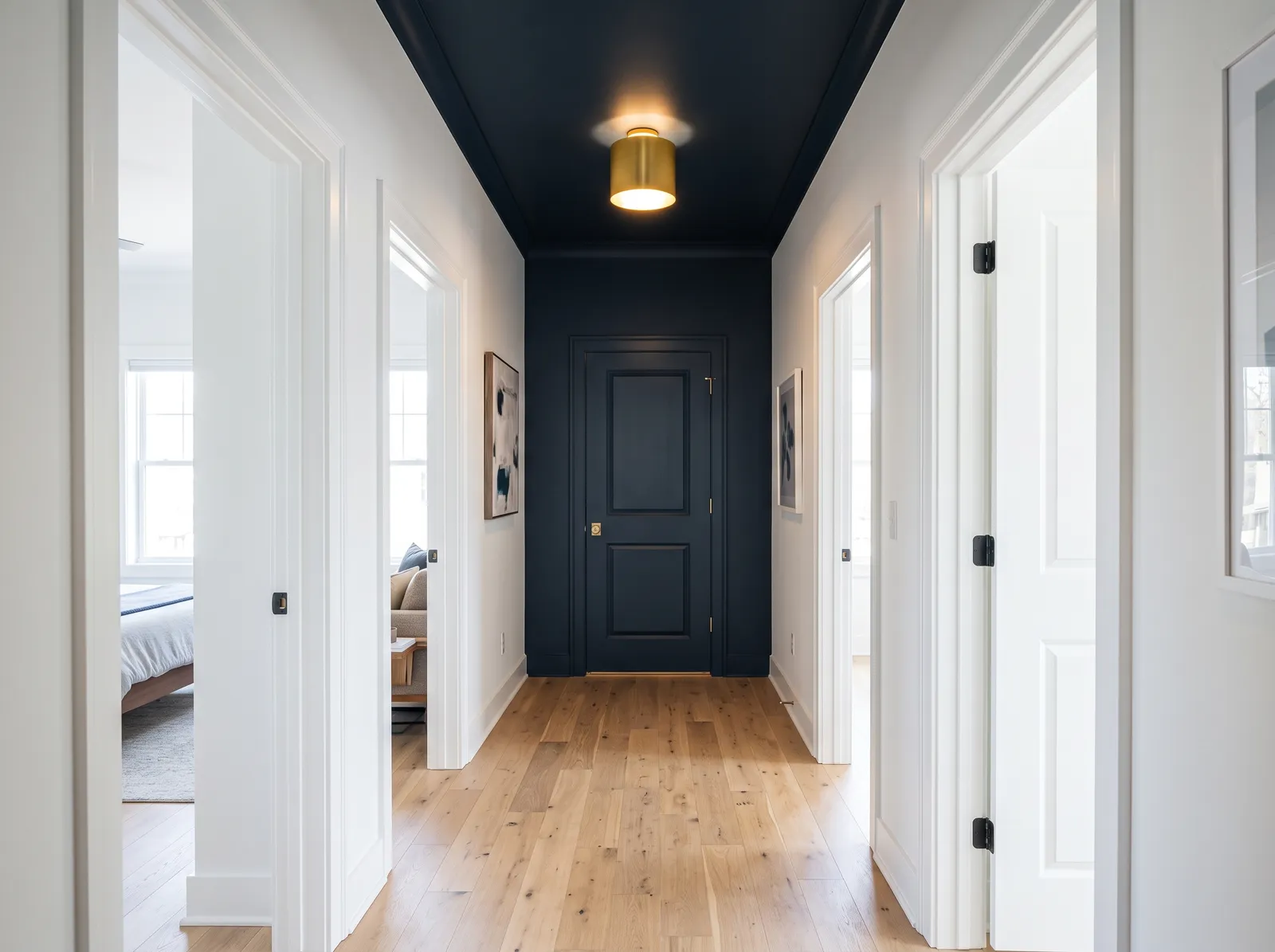
Clean White Glove walls keep the hall light, while Deep Space Echo on the ceiling and far door adds depth and a bold, modern wow.
Crisp white is a clean, bright neutral that makes any space feel instantly larger. In this hallway, pristine white walls frame a stunning deep navy ceiling and matching end wall, while light oak floors run underfoot. A gleaming gold light fixture adds a touch of metallic warmth overhead. The space feels incredibly dramatic yet perfectly balanced. This combination works because the dark ceiling draws your eyes forward, creating a cozy tunnel effect without making the hallway feel cramped. It is a brilliant choice for anyone wanting to make a bold statement.
SEE IT ON YOUR WALLS →
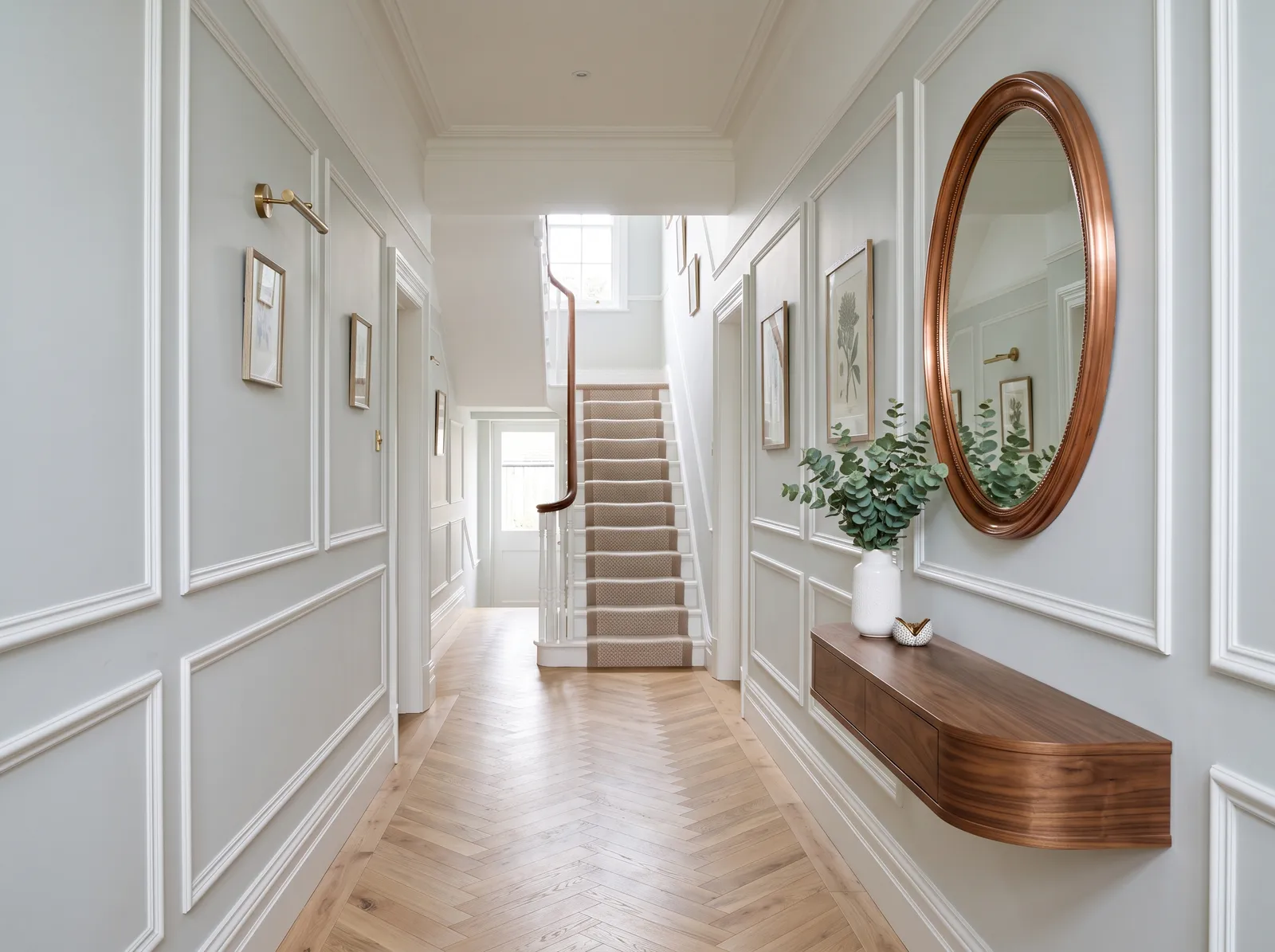
Radisson is a very pale, cool gray that feels calm and airy, and Architectural White trim adds a crisp, simple finish for a stairway hall.
Pale mist gray is a wonderfully serene, cool neutral that instantly opens up tight spaces. In this elegant hallway, that soft gray-blue coats the paneled walls, framed by crisp white trim. A floating walnut console table and a copper-toned oval mirror bring rich warmth to the right, while a patterned oatmeal beige runner guides your eyes up the stairs. The entire space feels incredibly airy and sophisticated. This combination works because the cool walls keep the narrow corridor bright, while the warm wood accents ground the look. It is perfect for a welcoming first impression.
SEE WINTER CHILL ON YOUR WALLS →
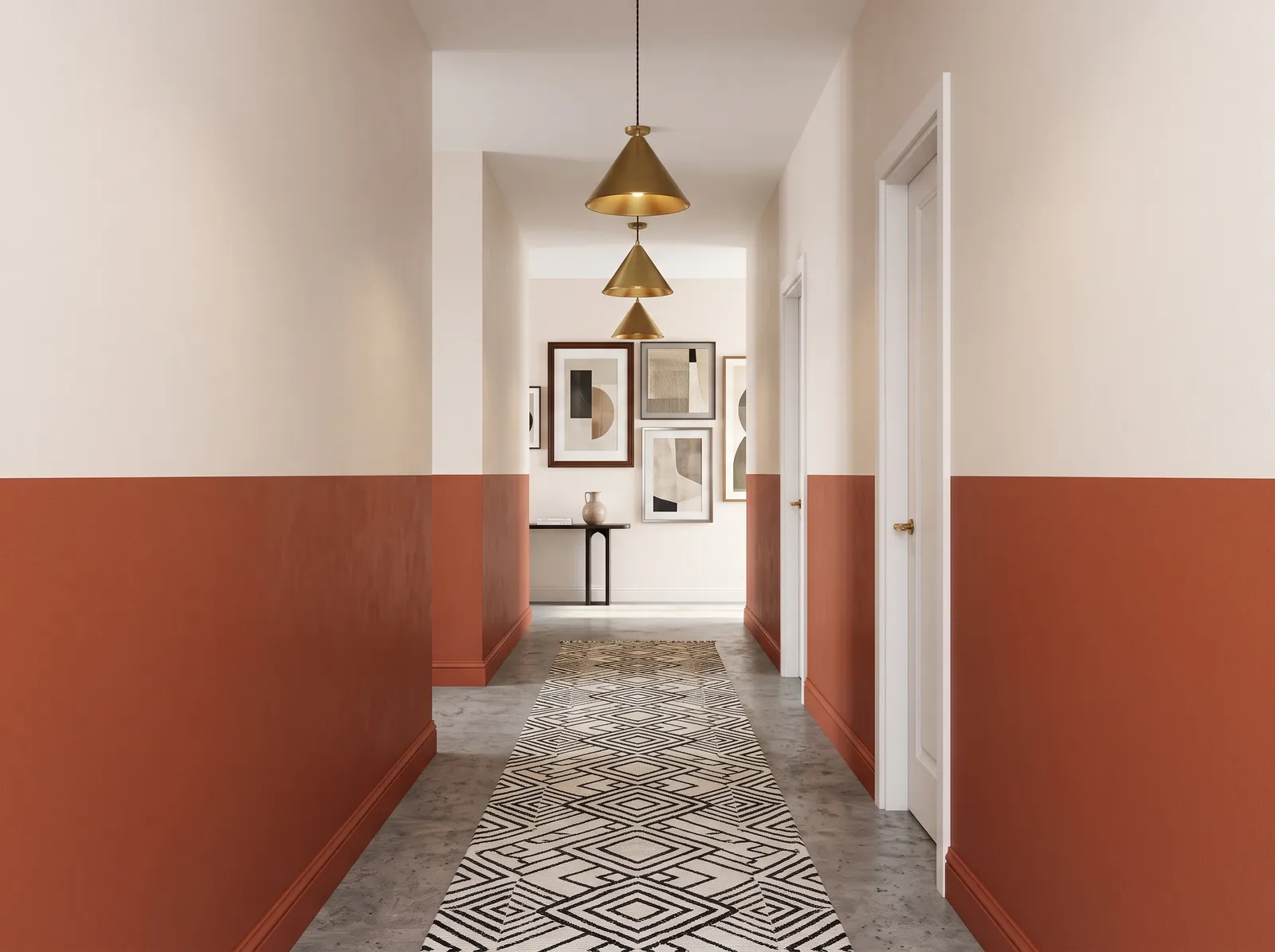
Earthy Jalapeño on the lower wall with soft Linen White on top gives a long hallway a warm, grounded look that still feels light up high.
Terracotta is a rich, earthy clay-orange that instantly grounds a space. Here, a bold terracotta wraps the lower half of the walls, while a soft cream coats the upper portion. A geometric runner leads your eye down the corridor, complemented by brass pendant lights and minimalist artwork. The space feels incredibly cozy, snug, and full of personality. This two-tone approach works beautifully because the deep orange adds warmth at eye level while the light upper walls keep the narrow passage bright. It is perfect for anyone wanting to turn a boring hallway into a stylish journey.
SEE SUN'S RAGE ON YOUR WALLS →
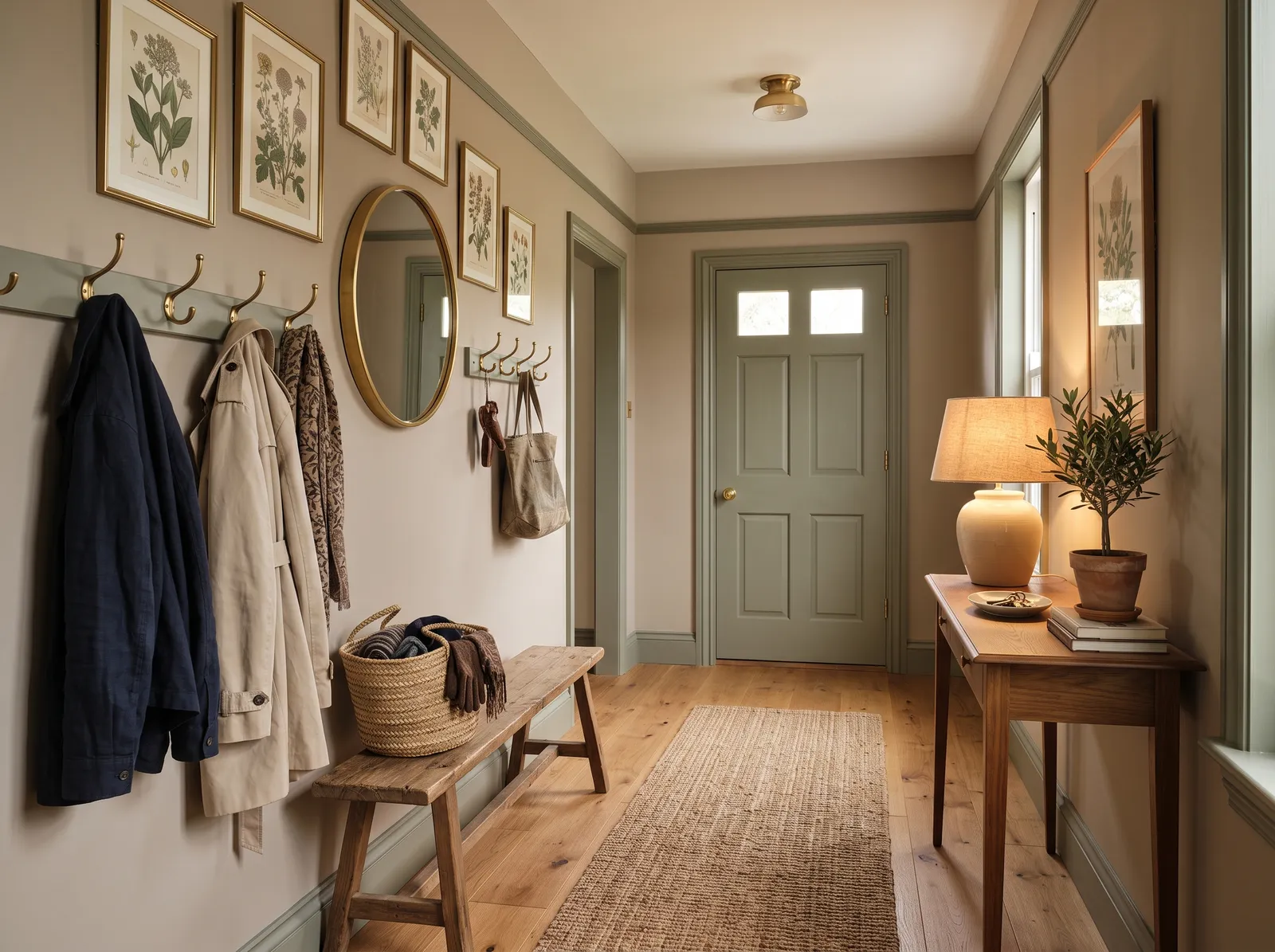
Tony Taupe brings earthy warmth to the walls, and a Wild Basil sage door adds a soft hit of green for a cozy, grounded welcome.
Taupe is a wonderfully grounded, earthy greige that brings instant comfort to an entryway. Here, this soothing shade wraps the walls, while a soft sage green defines the trim and doors. A rustic wooden bench and matching console table anchor the space, complemented by a textured jute rug. The entire hallway feels incredibly snug and welcoming the moment you step inside. This combination works so well because the organic green and wood tones naturally enhance the earthy walls. It is perfect for anyone wanting to create a calm, nature-inspired first impression.
SEE CASTLE ROCK ON YOUR WALLS →
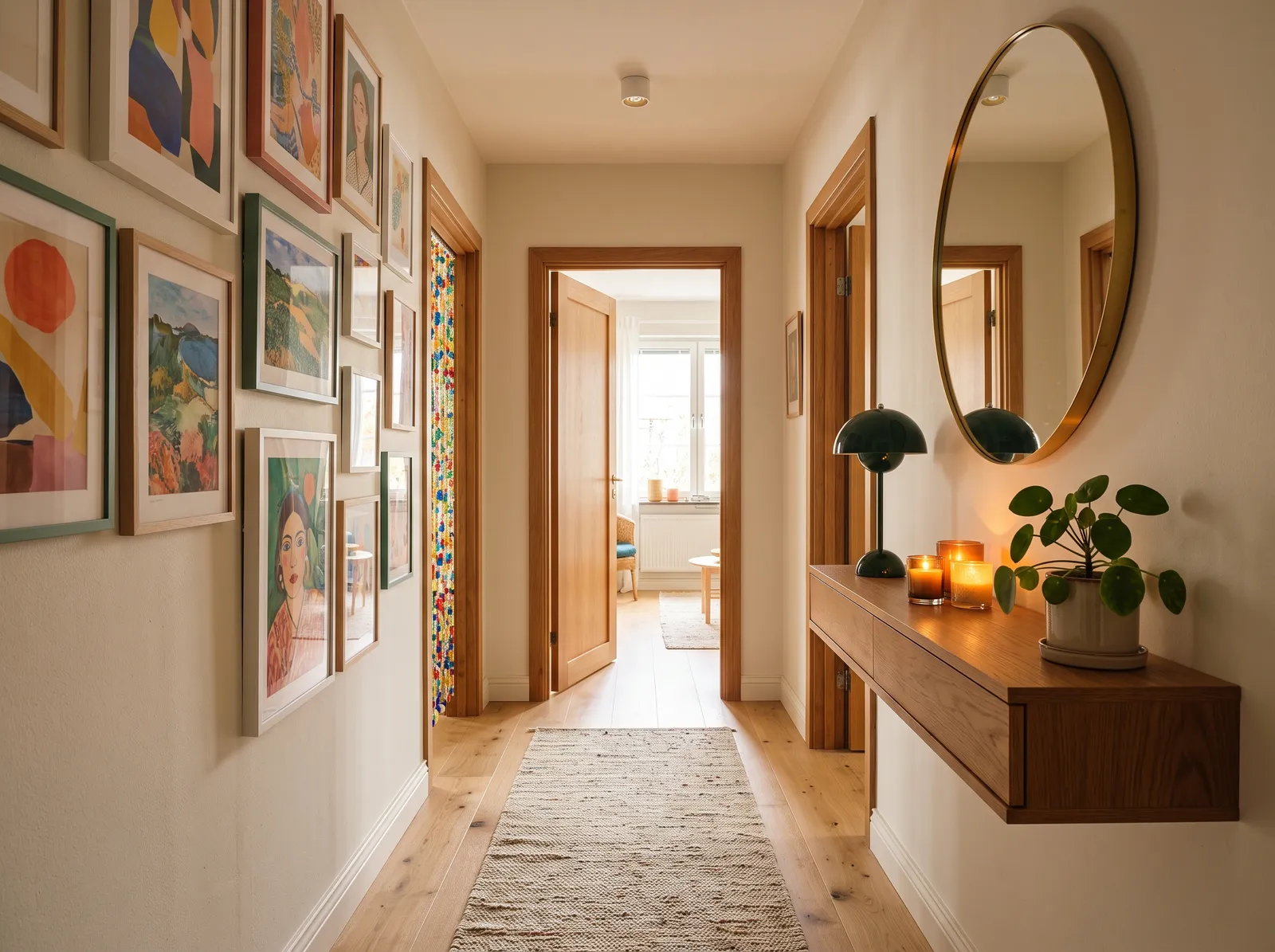
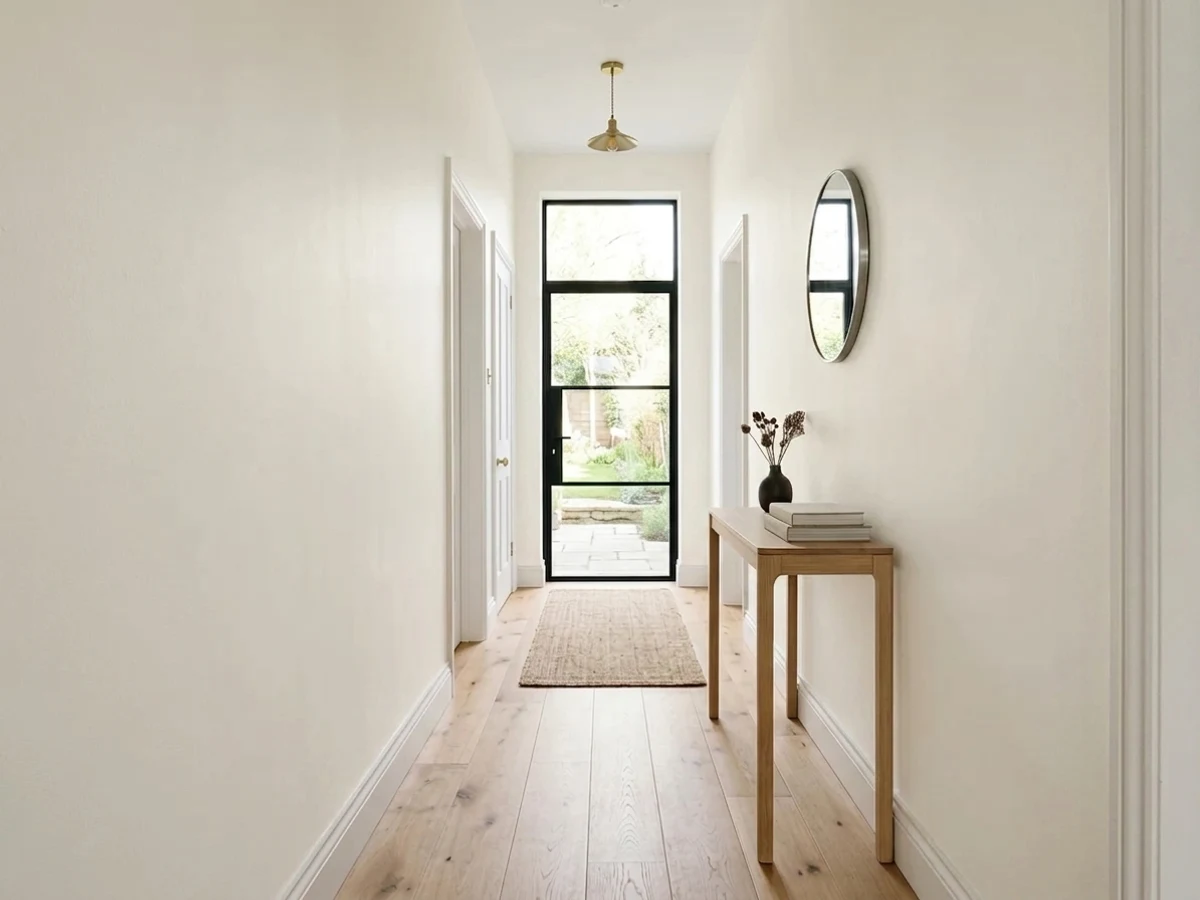
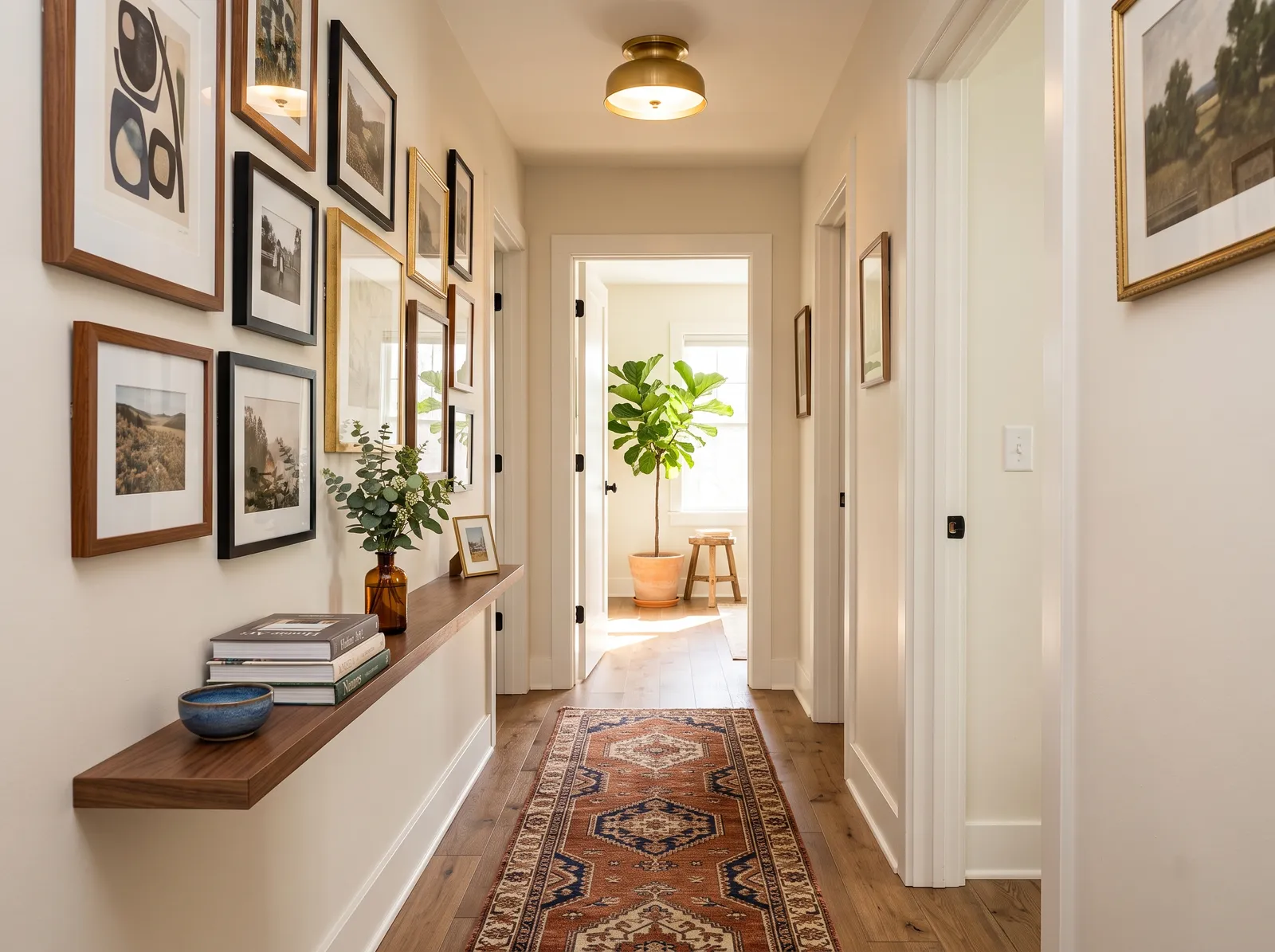
Linen Ruffle is an easy warm cream that does it all on its own, letting art and wood tones stand out in a small, busy hallway.
Cream is a wonderfully soft, welcoming neutral that instantly makes a narrow space feel larger. In this hallway, that gentle cream covers the walls, providing a quiet backdrop for the floating oak console, a textured beige runner rug, and a gallery wall of colorful art. The space feels incredibly cozy, bright, and full of personality. This combination works beautifully because the natural wood tones and glowing candlelight bring out the inherent warmth of the cream walls. It's perfect for anyone wanting to turn a simple pass-through hallway into a charming, artistic destination.
SEE CHINA WHITE ON YOUR WALLS →
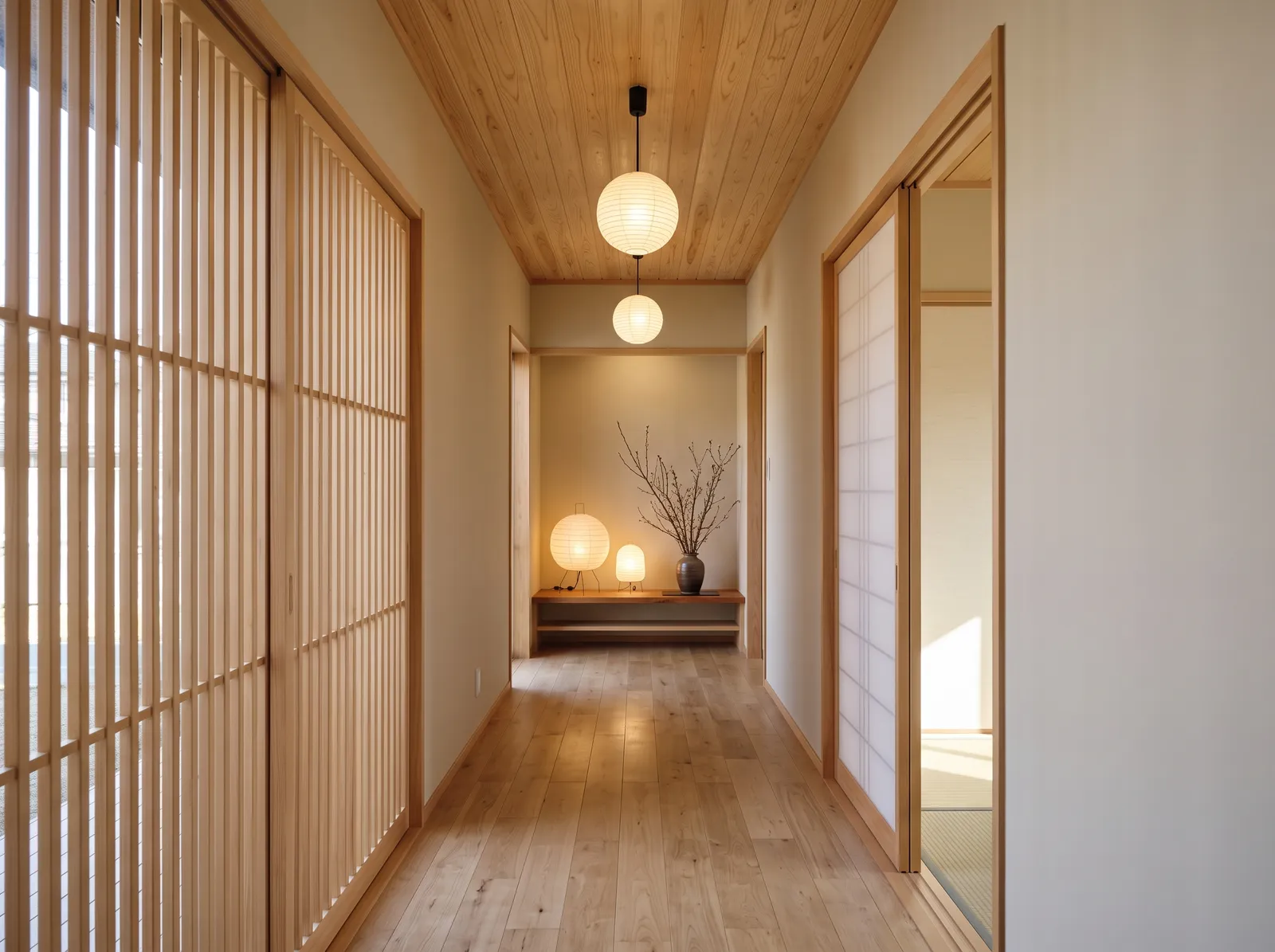
Soft Linen is a quiet, warm cream that turns a narrow hall into a calm, peaceful path that pairs naturally with light wood and soft light.
Cream is a wonderfully gentle, quiet backdrop that lets natural materials shine. In this serene hallway, a soft cream coats the walls, perfectly framing the light-toned wood ceiling, matching oak floors, and delicate sliding shoji screens. The entire space feels incredibly calm, airy, and deeply peaceful. This combination works beautifully because the organic wood grains and glowing paper lanterns naturally harmonize with the warm, clean walls. It is a dream look for anyone craving a minimalist, Zen-inspired sanctuary to come home to.
SEE FEATHER STONE ON YOUR WALLS →
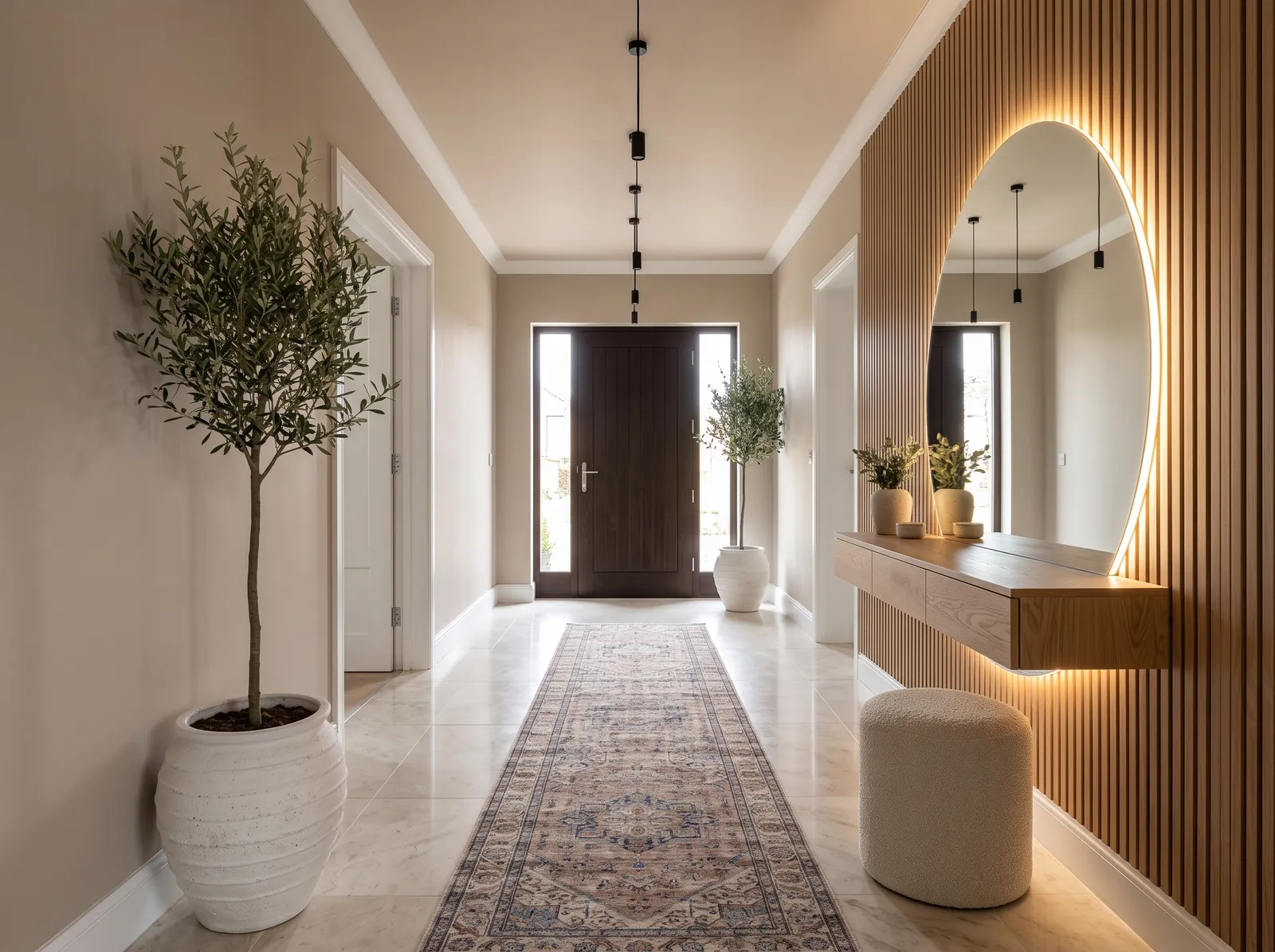
Hearth is a soft, warm greige on the walls, and a Sandstone Tint ceiling keeps the glow going overhead for a serene, modern entry.
Greige is a beautifully balanced mix of gray and beige that brings instant sophistication. In this entryway, greige coats the smooth walls, while a rich oak floating cabinet and a matching wood slat accent wall bring organic texture. A cozy cream boucle stool sits nearby, and a patterned runner rug anchors the hallway with soft, muted tones. The space feels incredibly calm and welcoming. This combination works because the natural wood elements keep the neutral walls from feeling cold. It is perfect for anyone wanting to make a serene first impression.
SEE CHELSEA MAUVE ON YOUR WALLS →
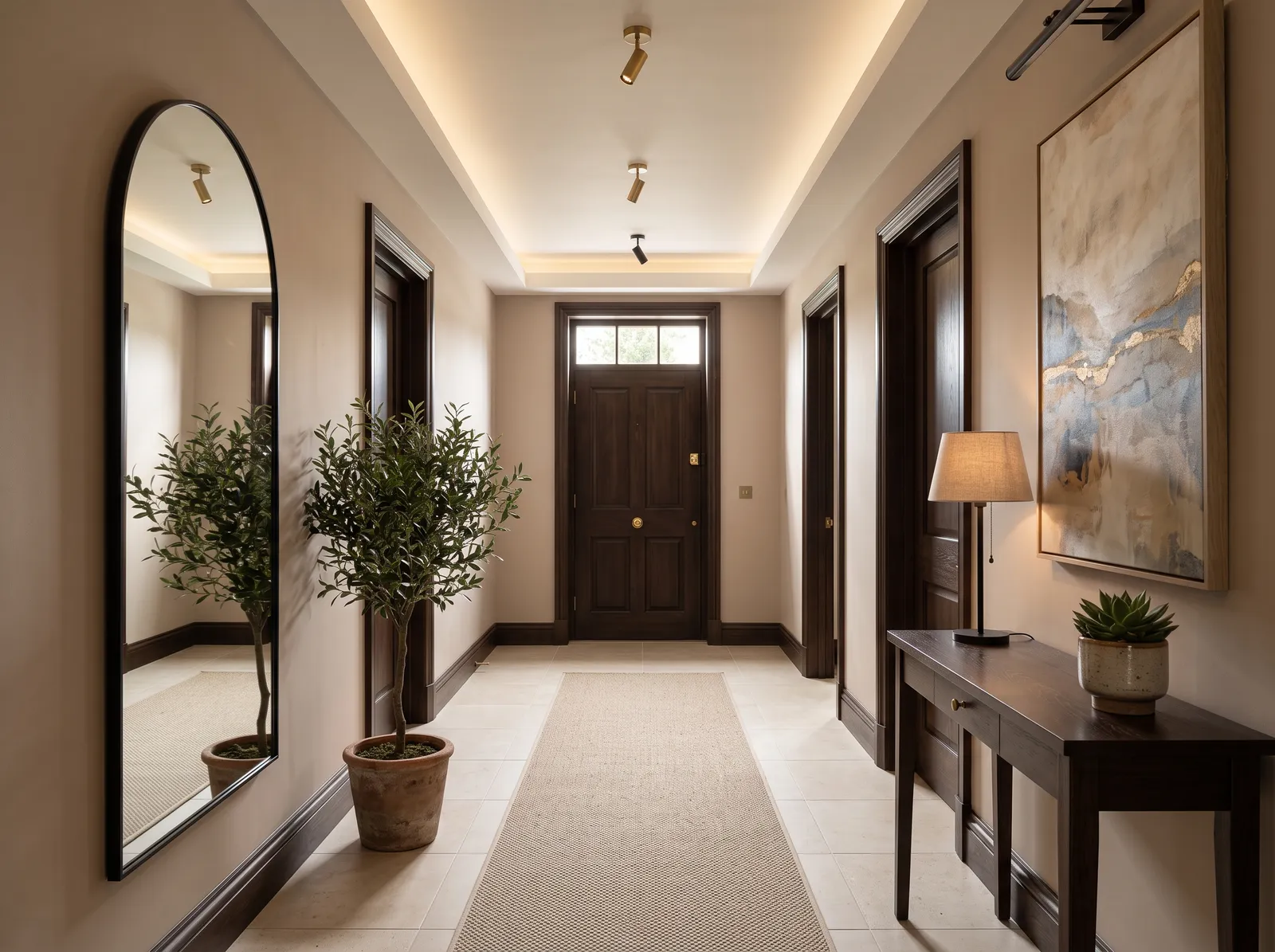
Indulgent Mocha gives the walls a soft, sandy plaster feel, and a Soft Linen ceiling adds a warm wash above for a calm, polished hallway.
Taupe is a sophisticated, sandy gray-brown that feels instantly grounding. In this elegant hallway, that warm taupe covers the walls, framing the dark espresso doors and trim. A matching dark chocolate console table sits opposite a large arched mirror, while a long oatmeal-colored runner stretches down the tiled floor. A potted olive tree adds a splash of natural green. The space feels incredibly calm and welcoming. The high contrast between the pale walls and deep wood trim creates a crisp, tailored look. It is perfect for anyone wanting a classic, high-end entryway.
SEE PAVILION BEIGE ON YOUR WALLS →Hallway Wall Color Combinations
A wall color never works alone. These are the full schemes from the rooms above — the lead color first, then the supporting colors that make the photo work.
Vanilla Milkshake gives the walls a soft cream glow, and Birched White trim keeps it clean, so a narrow hall feels warm instead of plain.
TRY THIS PALETTE →Opulence is a gentle, barely-warm white that bounces light, and crisp Snow Day trim makes a tight hallway feel open and easy to live with.
TRY THIS PALETTE →Windfresh White is a warm, sandy greige that feels cozy without going dark, softened further by Origami, a creamy off-white trim.
TRY THIS PALETTE →Southern Grown wraps the walls in a warm, sandy greige that catches lamplight beautifully, while White Flour trim keeps everything fresh and bright.
TRY THIS PALETTE →The simplest trim move is a clean white that is a step crisper than the walls. A soft white wall like White Dove with a brighter white trim and a white ceiling keeps the whole hall feeling fresh and seamless. With a gray such as Repose Gray or Dove Gray, the same white trim adds a clean edge that frames doorways and baseboards.
Floors set the temperature. Warm wood floors pair beautifully with warm whites and greige-leaning grays, while cooler tile or gray-toned flooring sits comfortably under Ice Blue or a cooler gray. Carry the wall color or a close match onto closet and passage doors for a calm, unbroken look, or paint the doors crisp white to make them pop against a gray wall.
Hallway Color Ideas by Color
Set on a color family already? Each page has its own real rooms and picks.
Light or Dark Hallway Colors?
Go Light (LRV 60+) If…
The room is small, faces north, or has to work at every hour. Light warm colors make it feel bigger and stay calm in evening light — the light you actually live in.
Go Dark (LRV Under 20) If…
You want the cocoon effect and the room has real daylight. Dark works best on one feature wall — or fully color-drenched in a large room with good windows.
Most hallways have little or no natural light of their own. They borrow it from the rooms and doorways around them, and they lean hard on overhead and wall fixtures, especially at night. That makes a hallway one of the trickiest spaces to judge from a chip.
Warm bulbs pull color toward yellow and can turn a cool gray slightly murky. Cool or daylight bulbs keep whites and grays crisp. Tape a large sample to the wall and look at it under your actual fixtures after dark, not just in the daytime, because nighttime is when you will see the hall most. Soft whites and warm-leaning neutrals tend to stay friendly under artificial light, while very cool grays can drift gray-blue once the sun is gone.
LRV, or light reflectance value, runs from 0 (black) to 100 (pure white) and tells you how much light a color bounces back. In a hallway with little daylight, a higher LRV is usually your friend because it stretches what little light there is. Bright soft whites like Alabaster, White Dove, and Porcelain sit high on that scale and keep a tight space from feeling like a tunnel.
Mid-range neutrals like Repose Gray and Dove Gray reflect less, which adds a cozier, more enclosed feel. That can be lovely in a wider hall or one with a window, but in a dark, narrow run it can close the space in. Ice Blue lands soft and light enough to stay airy while adding a touch of color.
See It. Love It.
Paint It.
Upload one photo of your hallway and try every color on this page on your own walls — in your own light, before you buy a drop of paint.

AlabasterBeforeChoosing The Right Finish
A hallway takes more contact than people expect. Hands on the walls, bags and furniture squeezing past, kids and pets brushing the lower third. You want a finish you can wipe clean, so reach for eggshell or satin rather than flat. They hold up to scrubbing and the occasional scuff far better.
Save high gloss for trim and doors, where you actually want that crisp, hard-wearing shine. On the broad wall stretches of a narrow hall, a glossier sheen catches every light fixture and shows wall imperfections, so eggshell or satin gives you washability without turning the walls into a mirror.
Common Hallway Painting Mistakes
The biggest one is judging color only in daylight. Hallways live at night under artificial light, so a shade that looked perfect at noon can go dingy by evening. Always check your sample after dark under the fixtures you actually use.
The second is going too dark in a narrow, windowless hall, which can make it feel like a closed corridor. The third is using flat paint on a high-traffic surface, then watching scuffs and handprints refuse to wipe away. And finally, picking a wall color that fights the rooms it opens into, instead of choosing something that flows. Test the color against your trim, your floor, and the adjoining rooms before you commit.
Wall area, gallons, and a real price range for the hallway — walls, trim, and ceiling.
About Hallway Paint Colors
A hallway is the connective tissue of a house. It rarely has its own windows, it gets touched and bumped more than almost any other room, and it sets the tone for every space it leads into. That combination makes color choice here a little different from picking a shade for a bedroom or living room.
The good news is that hallways forgive a wide range of directions, from bright clean whites to soft grays to a quiet wash of blue. What matters most is borrowed light, how the color flows into adjoining rooms, and a finish that can take a beating. Below we walk through the color families that work, how light should steer you, the right sheen, and the pairings and mistakes worth knowing.
Every color shown here, whether it is Alabaster, White Dove, Repose Gray, Ice Blue, Dove Gray, or Porcelain, is mixed to order at the paint counter. That also means you are not locked to one brand. A shade you like can usually be cross-matched to another maker's formula, so pick the color first and sort out the brand second.
The Questions Everyone Asks
What color should I paint my hallway?
If you want one answer, start with the safe picks above — White Dove, Alabaster, Pure White, Chantilly Lace. They read well in any light and survive furniture changes. Then check the light: strong afternoon sun wants a step cooler, a north-facing room wants a step warmer.
What is the best paint color for a dark hallway with no windows?
Go bright and reflective. A soft white like Alabaster, White Dove, or Porcelain has a high light reflectance value, so it bounces the borrowed light from nearby rooms and keeps a windowless hall from feeling like a tunnel. Pair it with crisp white trim and good lighting for the best result.
Should a hallway be lighter or darker than the rooms around it?
There is no rule, but lighter usually wins in a narrow or dim hall because it keeps the space open and lets it flow into the rooms it connects. A wider hall or one with a window can carry a cozier mid-tone like Repose Gray or Dove Gray. The key is that the hall should feel connected to the adjoining rooms, not jarring against them.
What sheen should I use on hallway walls?
Eggshell or satin. Hallways get a lot of hands, bags, and scuffs, and these finishes wipe clean far better than flat paint. Save flat for low-traffic ceilings and high gloss for trim and doors, where the extra durability and shine make sense.
Is gray or blue better for a hallway?
Both work; it comes down to mood. A gray like Repose Gray or Dove Gray feels grounded and neutral and pairs with almost anything. A soft blue like Ice Blue feels calm and airy and is especially nice in halls leading to bedrooms or bathrooms. Test both as large samples under your own lighting before deciding.
How do I keep a narrow hallway from feeling cramped?
Lean on light, high-reflectance colors like Alabaster, White Dove, or Porcelain, keep the ceiling and trim bright and clean, and avoid going dark. Strong overhead and wall lighting also helps a lot, since the color can only do so much in a space with little natural light.
Can I match a hallway color across different paint brands?
Yes. Every color here is mixed to order at the paint counter, and a shade you like can usually be cross-matched to another brand's formula. Pick the color you love first, then choose whichever brand or finish you prefer.
What two-color combination works best in a hallway?
The reliable pattern is a quiet main color plus one deep accent on a single wall. Keep trim and ceiling in one warm white so the two colors are the only event in the room — the combination cards above show complete schemes from real rooms.
What colors make a hallway look bigger?
High-LRV, slightly warm colors — LRV 60–75 is the sweet spot. Paint the walls and trim close to the same light color so the corners blur, and keep the ceiling white. Stark cool white actually works against you; it creates hard shadows that show the room's edges.


Ask a Question