Farrow & Ball
Farrow & Ball makes the deepest color on any wall in the room and asks $120 to $155 a gallon for it, with no sale weekend and no big-box shelf. Here is the whole finish range, what the price actually buys, and the coverage problem professional decorators keep raising.

Jessica spent eight years styling residential interiors in Chicago and Charleston before moving into editorial work. She has watched the same Farrow & Ball colors go cool at breakfast and warm at six o'clock in real rooms, which is the only way to judge a paint sold on depth. About the testing process →
The Fast Verdict
Farrow & Ball is genuinely good paint at a price only some rooms can justify. On the deep archive colors — Hague Blue, Stiffkey Blue, India Yellow, Studio Green — the pigment load shows under raking afternoon light in a way a color-match does not. On soft pales it barely shows at all. Coverage is the real weakness: professional decorators report three coats on bold colors. Buy it where the color is the point of the room, and let a Benjamin Moore match carry the rest.
- The deep archive colors hold their drape under raking light — Hague Blue and Stiffkey Blue still read like themselves where a thinner pigment package goes quietly flat
- Estate Emulsion sits at about 2 percent sheen, so the wall absorbs light instead of bouncing it back, and it hides roller texture and old-plaster waviness
- Dead Flat now carries a Class 1 scrub rating after the 2022 reformulation, which means ultra-matt depth on walls, woodwork and metal in one finish
- Flat Eggshell fixed the complaint people actually had: cure dropped from nearly four weeks to about two, and it is rated for kitchen and bathroom cabinets
- Modern Emulsion is a washable 7 percent matte with mold protection, so the F&B color survives a kitchen, a bathroom and a hallway
- The tinted Primer & Undercoat comes in light, mid and dark tones, and matching the undercoat to the topcoat is what turns a three-coat job into two
- The deck is small on purpose — about 300 colors with numbers attached, no annual color-of-the-year reshuffle, against roughly 1,700 at Sherwin-Williams
- Opacity is the recurring professional complaint: bold colors take three and sometimes four coats over previously painted walls
- Estate Emulsion is not washable — a scrub burnishes a shiny patch into the matte and it cannot be blended out
- Decorators report flashing, visible roller marks and picture-framing on emulsion, and orange peel on the old eggshell
- No sale calendar, no big-box shelf, and no authorized Amazon route, so the sticker is the price and you order and wait
- Limewash will not bond to gypsum plaster, which is the facing on nearly every US drywall wall
- The exterior lines are formulated for a damp Northern European climate and stocked thinly in the US
Which Farrow & Ball Paint to Buy
Farrow & Ball sells nine finishes, not nine quality tiers — you are choosing sheen and toughness, and the color costs the same either way. Prices are per US gallon or gallon equivalent in 2026. The sale column is honest: there isn't one.
 Premium flat wall
Best for Bedrooms and formal rooms
The 2 percent chalky flat that gives the deepest color and the least toughness. Beautiful in a calm room, wrong anywhere a hand lands.
Full review →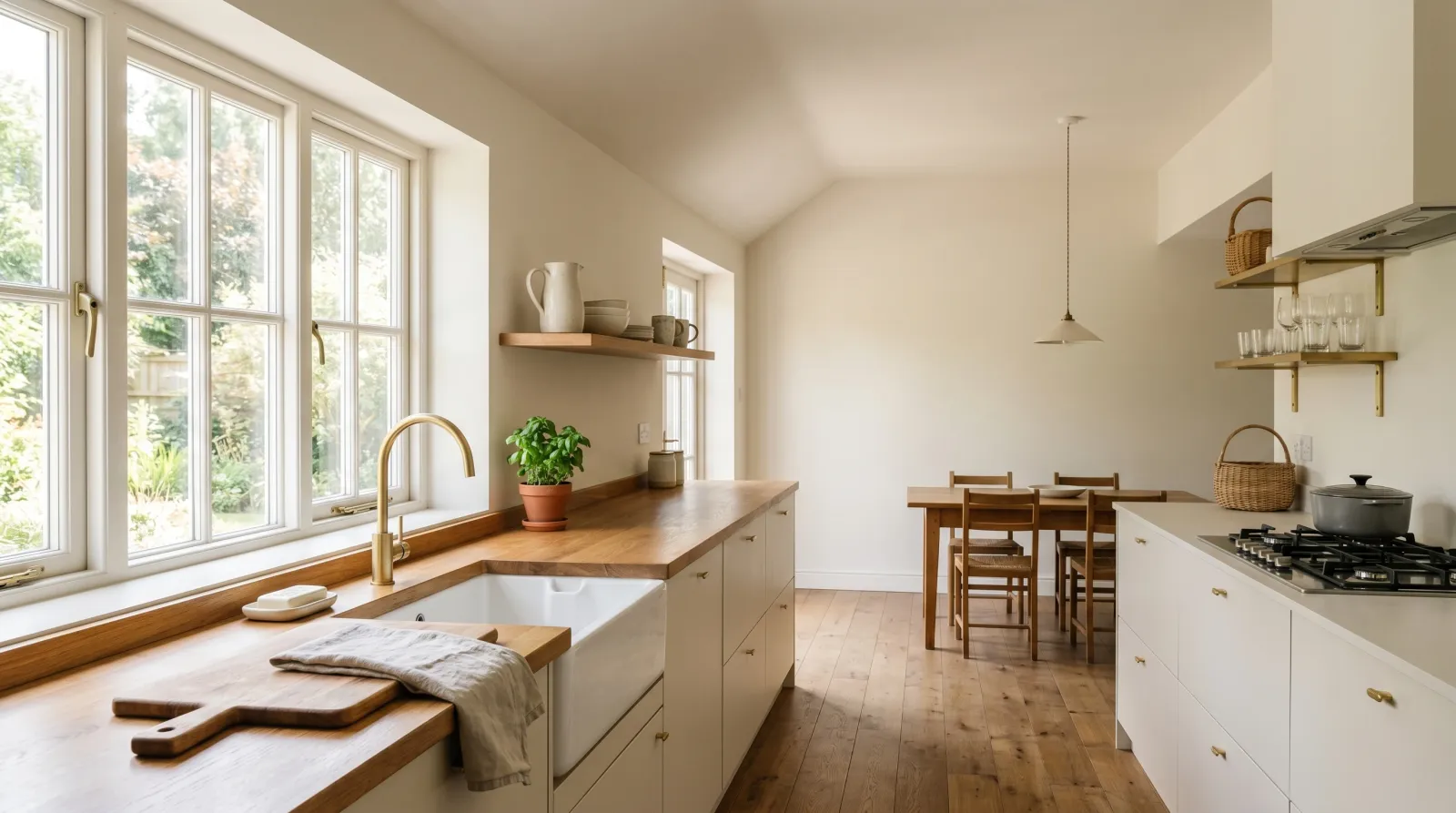 Washable matte wall
Best for Kitchens, baths, hallways
The only F&B wall paint you can actually wipe. The 7 percent sheen costs you a little of the depth you came for.
Full review →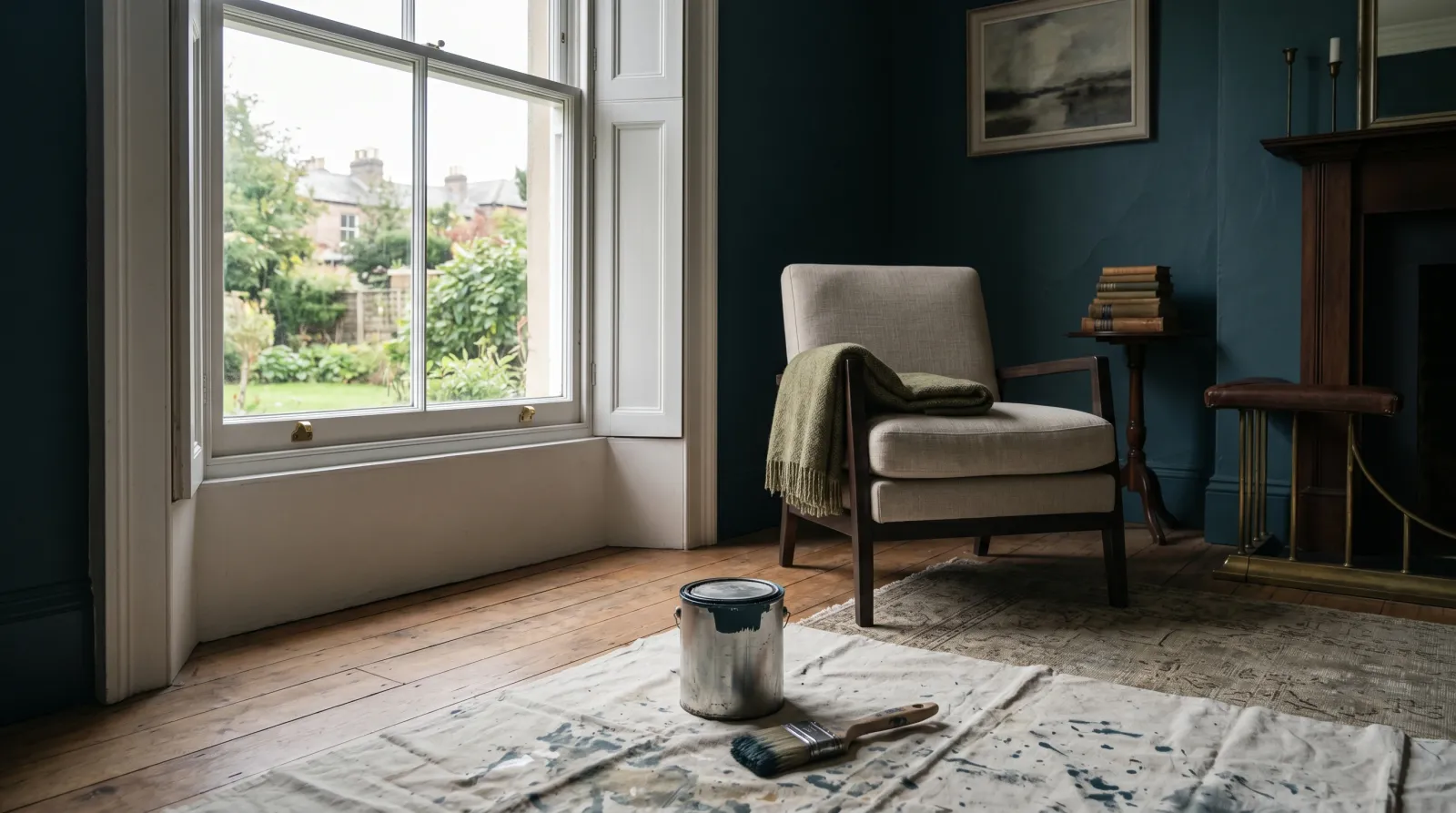 Ultra-matt multi-surface
Best for Walls, woodwork and metal together
Estate-level flatness with a Class 1 scrub film since the reformulation. If you want one finish for the wall, the baseboard and the radiator, this is it.
Full review →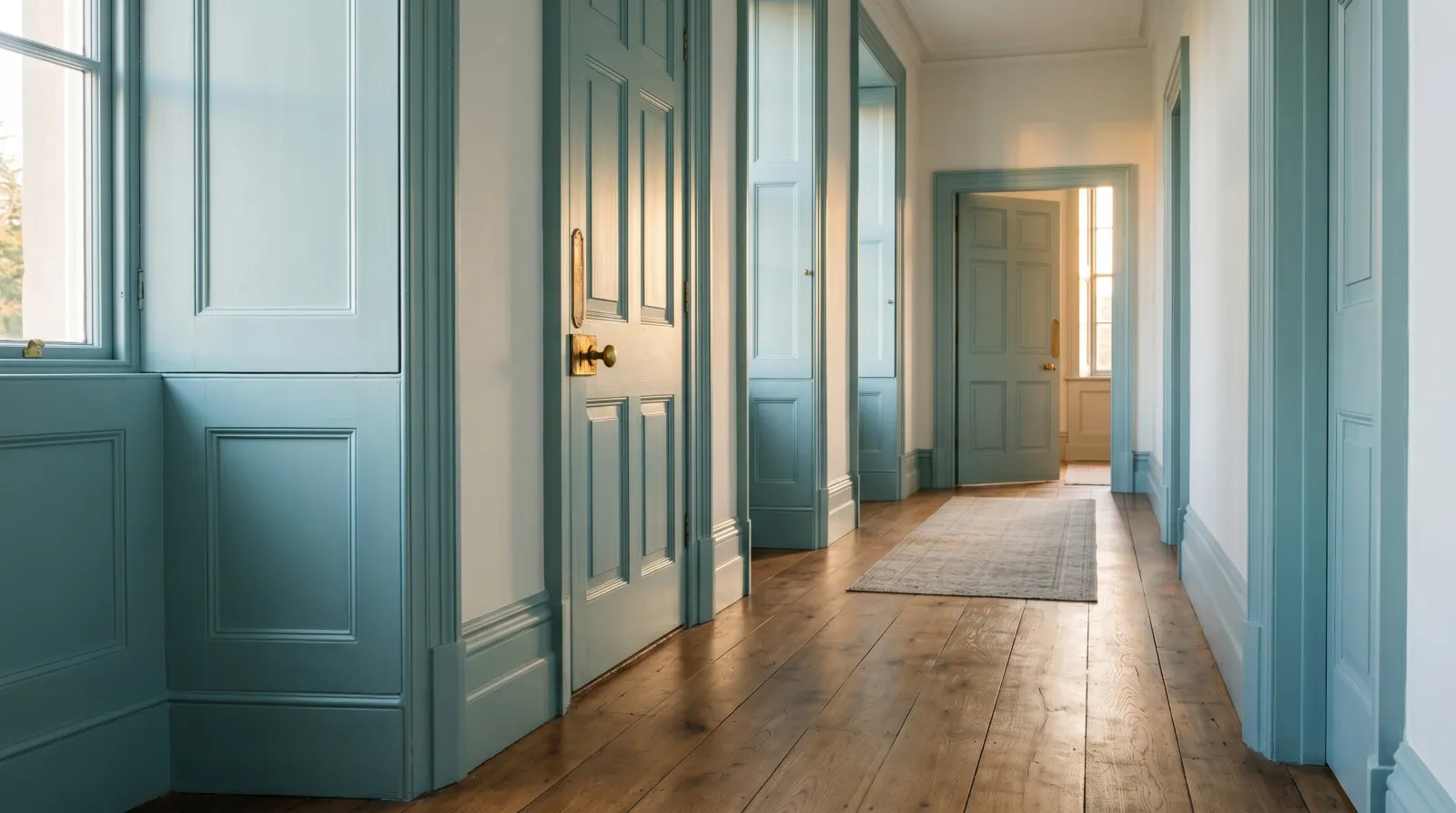 Low-sheen wood finish
Best for Trim, doors, cabinets
Same 20 percent soft satin as the old Estate Eggshell, now scrubbable and cured in about two weeks instead of four. The rename is the fix.
Full review →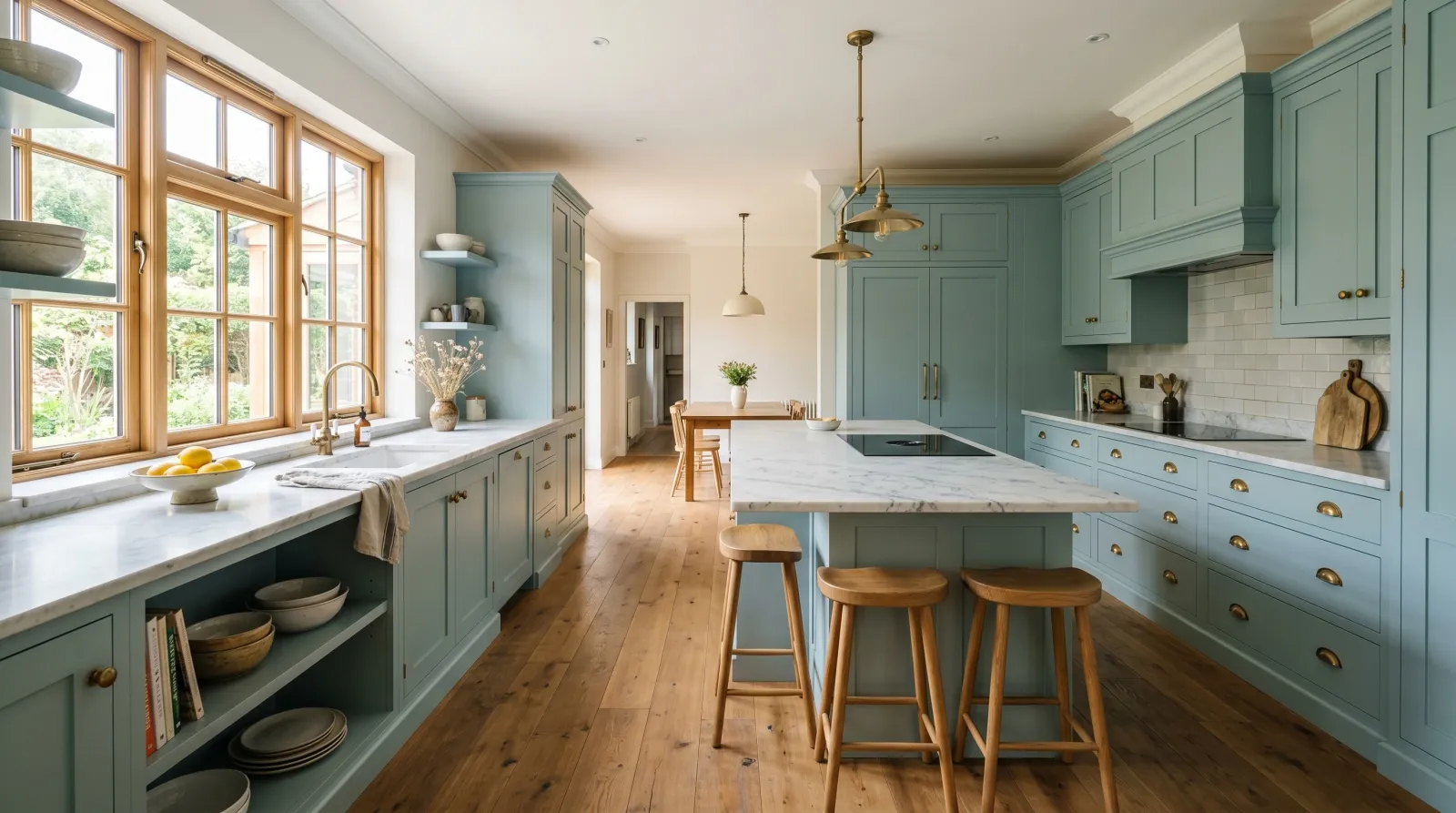 Durable satin
Best for Floors, radiators, hard-knock trim
About 40 percent sheen, the toughest film in the interior range. Pick it when you want maximum durability over softness.
Full review →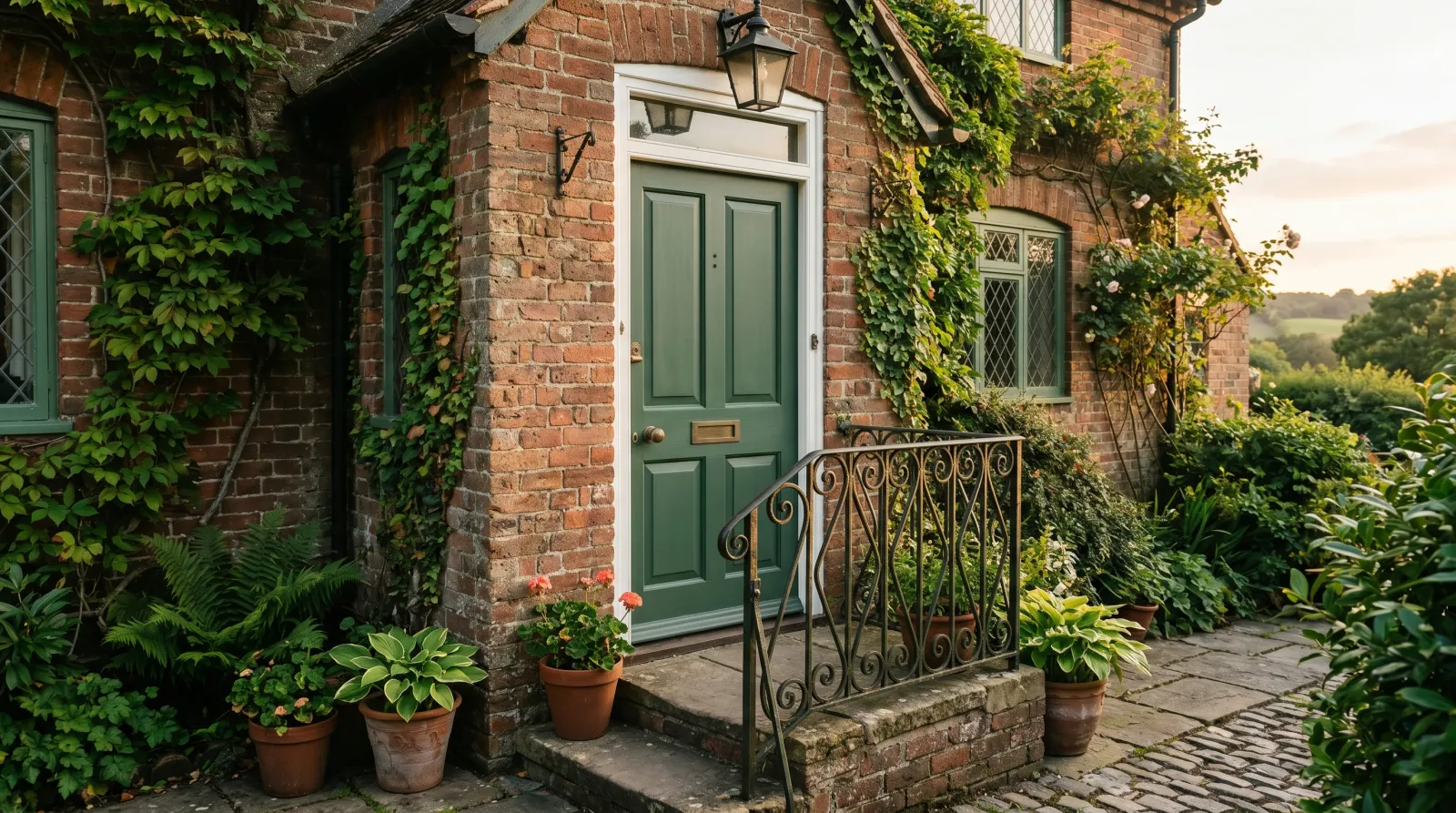
Best for Bare plaster and big color jumps
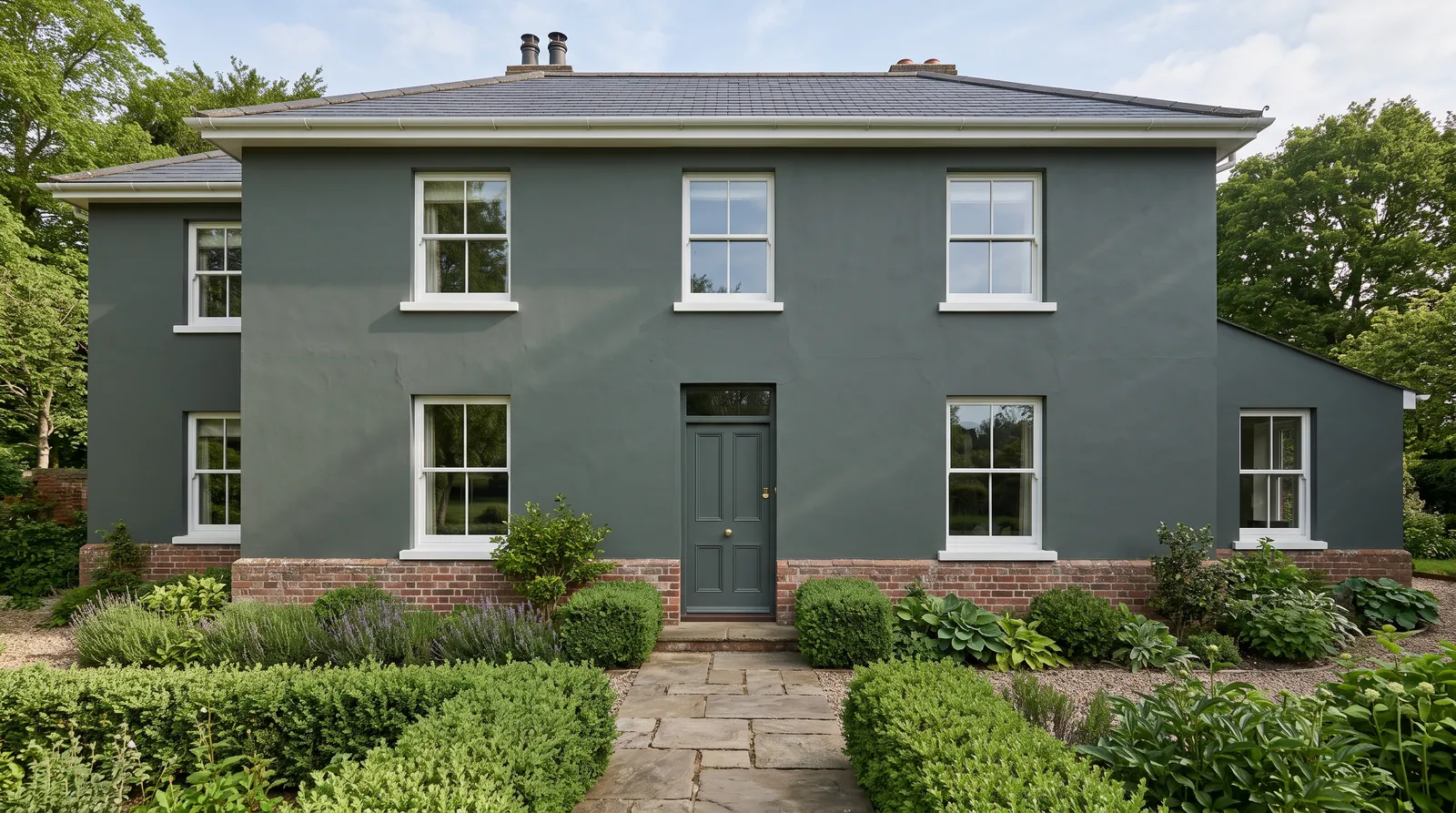
Sold in light, mid and dark tones. Matching the tone to your topcoat is the single cheapest way to avoid a third finish coat.
Best for Bare and knotty woodwork
Also in light, mid and dark. Pair it with the knot-and-resin blocker on softwood or the resin ghosts through the finish.
 High-gloss wood and metal
Best for Front doors and period joinery
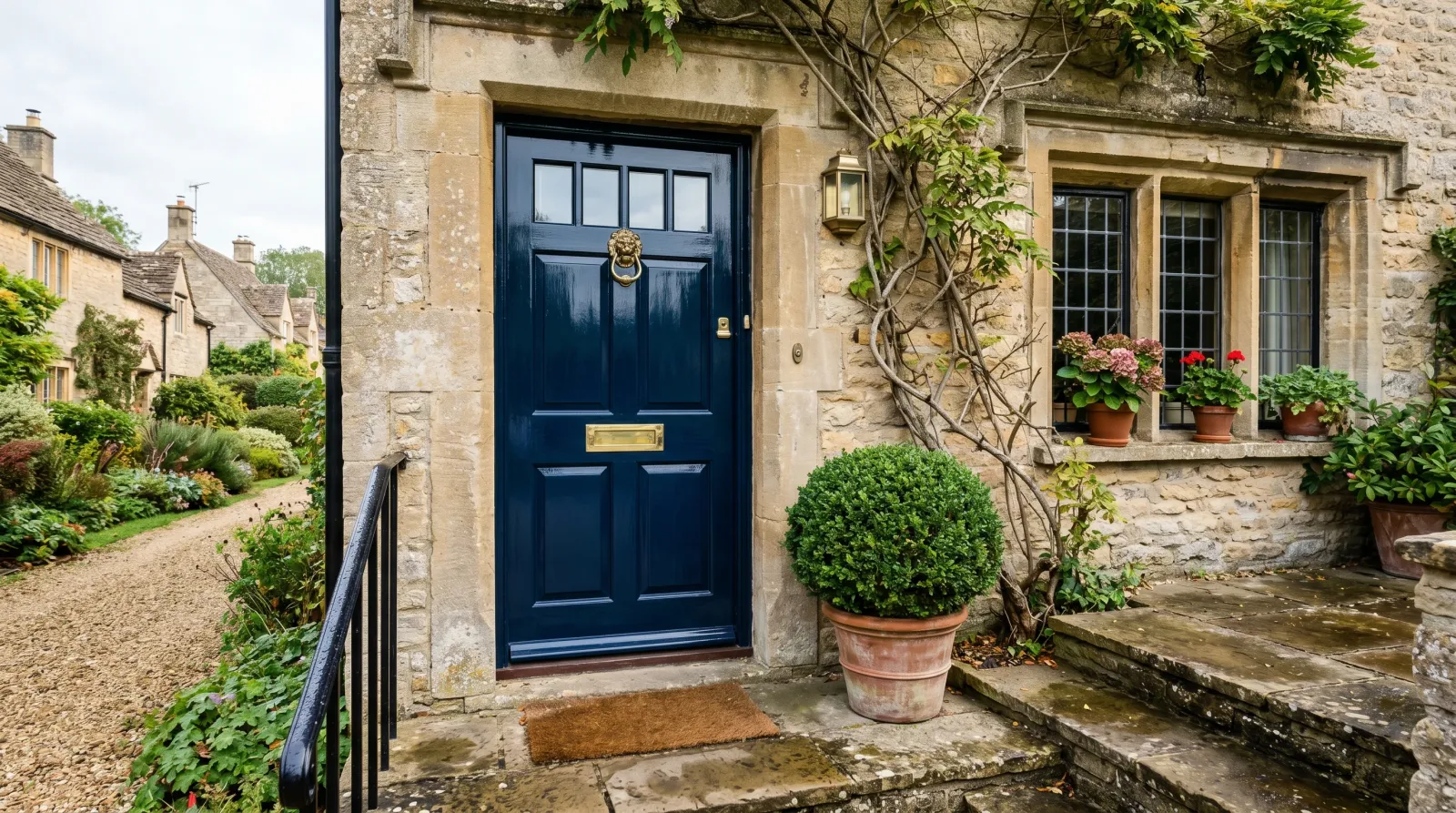
The cheapest way into the brand and the least forgiving finish it makes. Gloss shows every ridge you leave in the substrate.
Full review →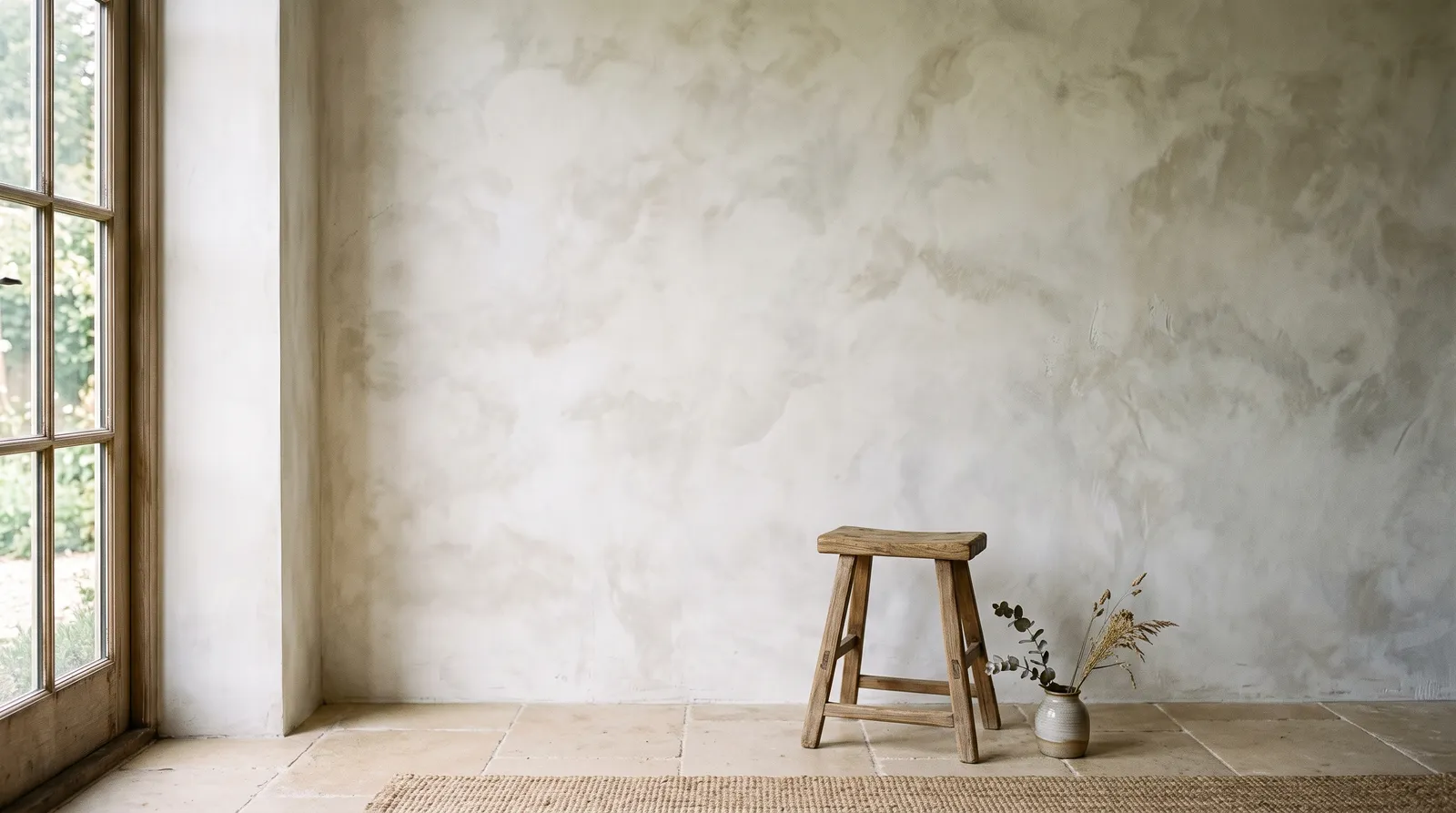 Mineral specialty
Best for Lime render and period masonry
Gorgeous, breathable, and useless on standard drywall — it will not bond to gypsum. Check your substrate before you fall for the look.
Full review →There Is No Sale — Here Is What to Do Instead
Farrow & Ball does not run a discount calendar. There is no 30-percent weekend to wait for the way there is at Sherwin-Williams, no Home Depot shelf to price against, and no authorized Amazon listing. The third-party Amazon sellers you will find are resale or older stock, not a cheaper route to the same tin. You buy at a US showroom, at an independent stockist, or direct from farrow-ball.com, and the sticker is the price. Occasional site-wide promotions turn up around Black Friday, and the email list gets first notice, but nothing you can plan a project around.
So the lever is not price, it is quantity. Order sample pots and paint them large, two coats, on the actual wall, and look at them at the hours you live in the room. A color that sings at noon can go quietly grey at six. Pigeon is the classic example — the green inside it comes forward in afternoon light and hides in north light, and a chip in your hand shows you one slice of a color that moves all day. Two or three sample pots cost far less than repainting a room you got wrong.
The other lever is where you spend it. Buy Farrow & Ball for the wall you look at — the paneled library, the dining room in a deep tone, the bedroom you want to feel quiet. Take a chip of the soft neutrals to a Benjamin Moore or Sherwin-Williams counter and have them matched free; on Cornforth White, Skimming Stone, Pavilion Gray and Pointing the match comes back convincingly, and most people cannot tell on a finished wall. Budget the F&B premium for the colors built on saturation, where the match genuinely falls short.
The Farrow & Ball Color Deck
About 300 colors, each with a number attached, and no annual reshuffle — a deliberately small deck against roughly 1,700 at Sherwin-Williams. These eight are the ones designers cite by number the way they would cite a Pantone.
The Whole Farrow & Ball Fan Deck, One Shelf
Every Farrow & Ball color sorted into the families painters actually use. Pick a chip to browse light to dark.
Upload a photo of the room. We paint it in the Farrow & Ball color you pick, with your light and your floor, before you buy a sample.
The Cons Only Forums Talk About
It Takes Three Coats, Not Two
This is the complaint professional decorators raise most often, and it is not about the finish — it is about hiding. Working painters report that F&B emulsion does not cover in two coats over previously painted walls the way other emulsions do, and that bold colors run to three or four. Consumer Reports once ranked it the worst of 67 interior paints at hiding old paint. Price the third coat in: at $130 a gallon it is not a small line item. Matching the tinted undercoat tone to your topcoat is the one reliable fix.
Estate Emulsion Scuffs If You Look at It Wrong
That phrasing comes from a decorator, not from us, and it is fair. Estate Emulsion carries very little binder by design, which is exactly what gives the chalky drape and exactly why it cannot take a cloth. A damp wipe lifts a light smudge. Anything firmer polishes a shiny patch into the matte that you cannot blend out, and the only real repair is recoating wall to wall. Keep it in bedrooms, formal rooms and ceilings. For hallways, kitchens and children's rooms, Modern Emulsion or the reformulated Dead Flat are the right tins.
Flashing, Roller Marks and Picture-Framing
Pros repeatedly report that F&B emulsion both flashes and shows roller marks, and that it picture-frames badly — the cut-in band around the edges reads as a different tone from the rolled field. An ultra-matt film is unforgiving that way: it hides plaster texture beautifully and reveals application technique mercilessly. Keep a wet edge, cut and roll the same wall in one session, and lay off in one direction. Do not stop halfway up a wall and come back after lunch, because the join will show in raking light.
The Lines Changed Names and Nobody Told You
Estate Eggshell no longer exists — it was replaced outright by Flat Eggshell, same 20 percent sheen and same look, but cured in about two weeks instead of nearly four and now the highest scrub rating available. Dead Flat was reformulated in 2022 from a delicate specialist matte into a washable, scuff-resistant multi-surface finish. Both changes make older reviews actively misleading. If you are reading advice that calls Dead Flat too fragile for a hallway or warns about Estate Eggshell's month-long soft cure, it is describing paint you can no longer buy.
You Cannot Just Go and Get Some
There is no Home Depot, Lowe's, Ace or Sherwin-Williams route to a tin. Farrow & Ball runs a small number of US showrooms in major design cities, sells through a handful of independent stockists, and ships direct from farrow-ball.com. Third-party Amazon listings exist and are usually marked-up resale or older stock rather than an authorized channel. That matters mid-project: if you run short on a Saturday you are not topping up that afternoon. Buy all your gallons for a room at once, and buy one more than the coverage math says.
The Questions Between Two Cans
Sheen and toughness, nothing else — the color is identical. Estate is a 2 percent chalky flat that gives the deepest drape and cannot be washed. Modern is a 7 percent washable matte with mold protection built in. Estate for the bedroom and the formal living room, Modern for anywhere hands, steam or splashes reach.
All comparisons →Both sit near 2 percent sheen, so they look almost the same on a wall. Dead Flat is built far harder, carries a Class 1 scrub rating since the reformulation, and goes on woodwork and metal as well as walls. Estate Emulsion is wall-only and delicate. If you want one finish for the wall, the trim and the radiator, Dead Flat is the answer, and it is the better buy in any room that gets used.
All comparisons →Flat Eggshell sits at 20 percent sheen — a soft low satin that lets color settle into woodwork instead of glinting off it, and it is now rated for kitchen and bathroom cabinets. Modern Eggshell sits near 40 percent, brighter and harder, and it is the one for floors, radiators and trim that takes real knocks. Choose Flat when you want the wood to read soft, Modern when you want the film to survive.
All comparisons →Both Benjamin Moore and Sherwin-Williams will match an F&B color into their own bases free — bring a chip or the name. The match is genuinely close on soft neutrals like Cornforth White, Pavilion Gray, Skimming Stone and Pointing, and most people cannot pick the difference on a finished wall. It is lossy on the saturated archive colors, where a different pigment system and binder cannot copy the drape. Buy the original for Hague Blue; take the match for the pales.
All comparisons →Different products aimed at different problems. Emerald is built around scrub durability and sells at $85 to $100 list, routinely $55 to $70 on a sale weekend. Farrow & Ball is built around color depth at $120 to $155 with no sale at all. Emerald hides better in two coats and takes a scrubbing; F&B looks better in low light and in a deep tone. Neither replaces the other, and the honest split is F&B in one room, Emerald in the rest of the house.
All comparisons →Farrow & Ball Questions, Answered
Is Farrow & Ball paint good?
Yes, and it is also more paint than most rooms need. The pigment load is real and it shows on the deep archive colors — Hague Blue, Stiffkey Blue, India Yellow, Studio Green — which hold their depth under raking light in a way a color-match does not. Where it loses is hiding, durability on the chalky finishes, and price. Buy it for the room where the color is the point, and let a Benjamin Moore match carry the soft pales.
Is Farrow & Ball really worth $150 a gallon?
On saturated colors, in a room you actually look at, yes — the depth and drape are visibly different from a match in another brand under afternoon light. On a soft pale like Pointing, Wimborne White or School House White the difference is small, and a Benjamin Moore Aura match comes very close for a fraction. Spend the premium where it shows, not across a whole house.
How many coats does Farrow & Ball need?
Plan on three for bold colors, not two. Professional decorators consistently report that F&B emulsion does not cover in two coats over previously painted walls the way other emulsions do, and deep tones can run to four. The fix that actually works is F&B's own tinted Primer & Undercoat in the matching light, mid or dark tone, which usually brings you back to two finish coats.
What is the difference between Estate Emulsion and Modern Emulsion?
Sheen and toughness. Estate Emulsion is the traditional 2 percent chalky matte that swallows light and shows the deepest color, and it is not washable — a scrub burnishes a shiny patch into it. Modern Emulsion is a 7 percent washable matte with mold protection for kitchens, bathrooms and family-traffic walls. The trade-off is a slightly cleaner, less drape-y finish.
Is Farrow & Ball Estate Emulsion washable?
No. It is gently wipeable, not washable. A damp cloth lifts a light smudge, but anything firmer polishes the matte and leaves a shiny patch you cannot blend out. For any wall that gets touched, wiped or splashed, buy Modern Emulsion, or the reformulated Dead Flat, which now carries a Class 1 scrub rating at almost the same flatness.
What happened to Estate Eggshell?
Farrow & Ball replaced it with Flat Eggshell. Same 20 percent sheen and the same soft low-satin look on woodwork, but reformulated after customer complaints: full cure in about two weeks instead of nearly four, and a much tougher, top-rated scrubbable film. F&B say the applied result is virtually indistinguishable. If you liked the Estate look you get it here without the long soft phase.
Will Sherwin-Williams or Benjamin Moore color-match Farrow & Ball?
Yes, free, at any SW or BM dealer — bring a chip or the F&B name. The match is good on neutrals and pales, and Skimming Stone, Cornforth White and Pavilion Gray come back convincingly in BM Aura. It is lossy on the deep saturated colors, where F&B's pigment load and chalkier binder give a drape the match cannot fully copy. For Hague Blue on a feature wall, buy the original.
Why do colors like Pigeon look different in different rooms?
Pigeon (No. 25) is built with a green pigment sitting inside a soft grey-blue. North-facing light pushes the cool side forward and Pigeon reads almost a quiet teal. South-facing afternoon light brings the green out and softens it toward warm grey-green. The same paint, the same wall, two different colors at noon and at four. This is why you test on the wall, not on the chip.
Does Farrow & Ball ever go on sale?
Not on a schedule you can plan around. There is no 30-percent weekend the way Sherwin-Williams runs one, and no big-box shelf to price against. Occasional site-wide promotions appear around Black Friday and the email list hears first. The real saving is buying sample pots before you commit, and reserving F&B for the rooms where the color earns the price.
Where can I actually buy Farrow & Ball in the US?
Farrow & Ball runs a small number of US showrooms in major design cities, sells through independent stockists, and ships direct from farrow-ball.com. It is not at Home Depot, Lowe's, Sherwin-Williams stores, or on Amazon as an authorized seller. Third-party Amazon listings exist but are usually marked-up resale or older stock. Order direct, and order enough to finish the room.
Can I use Farrow & Ball Limewash on drywall?
No. Limewash is a high-pH mineral finish made to bond with lime-rendered and mineral surfaces, and Farrow & Ball state plainly that it is not suitable for gypsum plaster — the facing on standard US drywall. It will not key in or read right. If you want the chalky F&B matte on drywall, Estate Emulsion is the finish you actually want.
Is Farrow & Ball exterior paint worth it in the US?
Be careful here. Exterior Eggshell and Exterior Masonry are formulated for a damp Northern European climate, and US stocking and warranty coverage are narrower than the interior range. On a sheltered front door or a breathable render wall they are fine. On a fully exposed elevation in an extreme climate, a US-formulated exterior from a brand with local support is the safer spec.
Ask a Question