Magnolia Home
Magnolia Home is Joanna Gaines's color deck sold in a KILZ can, and the honest question is whether the colors are worth the premium over the same chemistry with a Behr label. Here is every line with real shelf prices, what the matte does after a season of hands on it, and the complaints that keep repeating.

Emily painted her first room at 24, hated every minute of it, and got better. She writes the guides she wishes she'd had, and she has rolled Magnolia's matte on real walls and waxed its chalk paint on a thrifted side table that still has no chips. About the testing process →
The Fast Verdict
Magnolia Home is Joanna Gaines's curated palette in a KILZ can, and that is not an insult — KILZ sits under Masco, the same parent as Behr. The paint is competent mid-tier acrylic at $45 to $55 a gallon, roughly $15 more than the Behr equivalent. So the test is simple. If a specific Magnolia color is the reason you're painting, it's worth it, because nobody else can mix that exact tint. If the color is generic, you're paying a name tax.
- About 160 colors edited by one eye, so any three of them coordinate — the thing Behr's 4,000 chips cannot do for you
- The Premium Interior matte swallows patched drywall and old plaster, and reads even in soft light
- Chalk Style grips varnished wood after one wipe with a damp rag, with no sanding and no primer
- Trim, Door & Cabinet fully cures in 7 days against Benjamin Moore Advance's 30, and recoats in 2 hours instead of 16
- The exterior's stain-blocking primer really does lock cedar and redwood tannin bleed instead of letting it ghost through by August
- Ace Hardware has roughly 5,500 US stores, which in a small town is closer than the nearest Benjamin Moore dealer
- 8-oz samples exist for the interior line, so you can brush the real color on the real wall before you commit to gallons
- The matte burnishes — a faint polished patch shows up next to a light switch within a season of hands touching it
- Paint and primer in one is not a free coat of hide, and two coats is the real answer on any color change
- Owners report the semi-gloss trim paint streaking and swallowing extra coats to look even
- The tints are proprietary, so you cannot move a Magnolia color into a tougher base without losing the exact match
- Roughly $10 to $15 a gallon more than Behr Premium Plus for chemistry from the same parent company
- Three interior lines share the name, only one of them makes a matte, and nothing on the shelf explains that
Which Magnolia Home Paint to Buy
Okay, so this is the part most people came for: which Magnolia can to actually put in the cart. Prices are 2026 shelf prices, mostly at Ace Hardware, and they move very little across the year. Every row gets one blunt verdict.
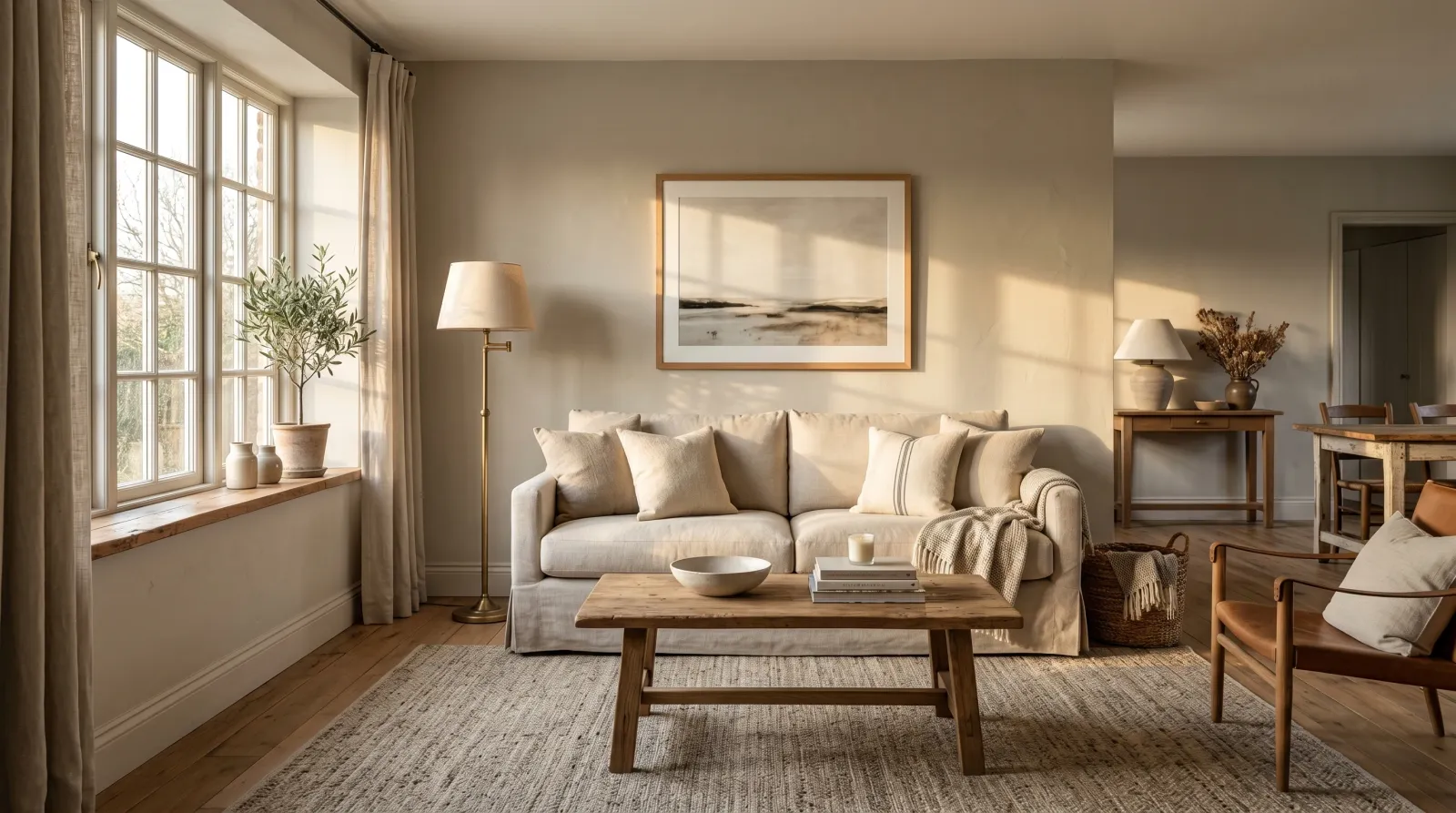 Flagship interior
Best for Bedrooms and quiet living rooms
The only line that makes the soft Magnolia matte, and the reason most people are here. Plan two coats, and keep the matte out of hallways.
Full review →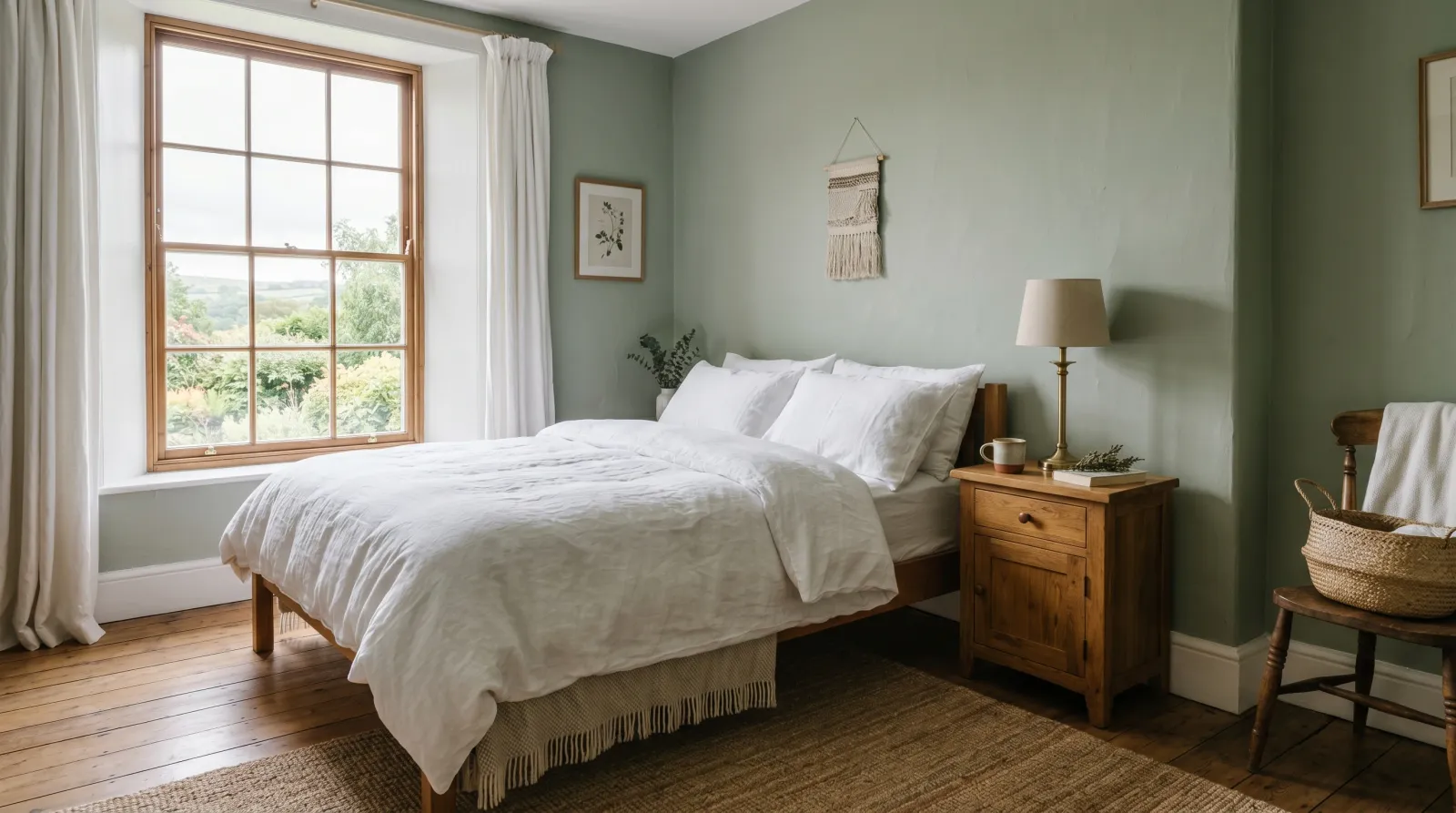 Ships-tinted interior
Best for Ordering without a store trip
Same money as Premium with 45 colors instead of 160 and no matte at all. Buy it for the delivery, not for the paint.
Full review →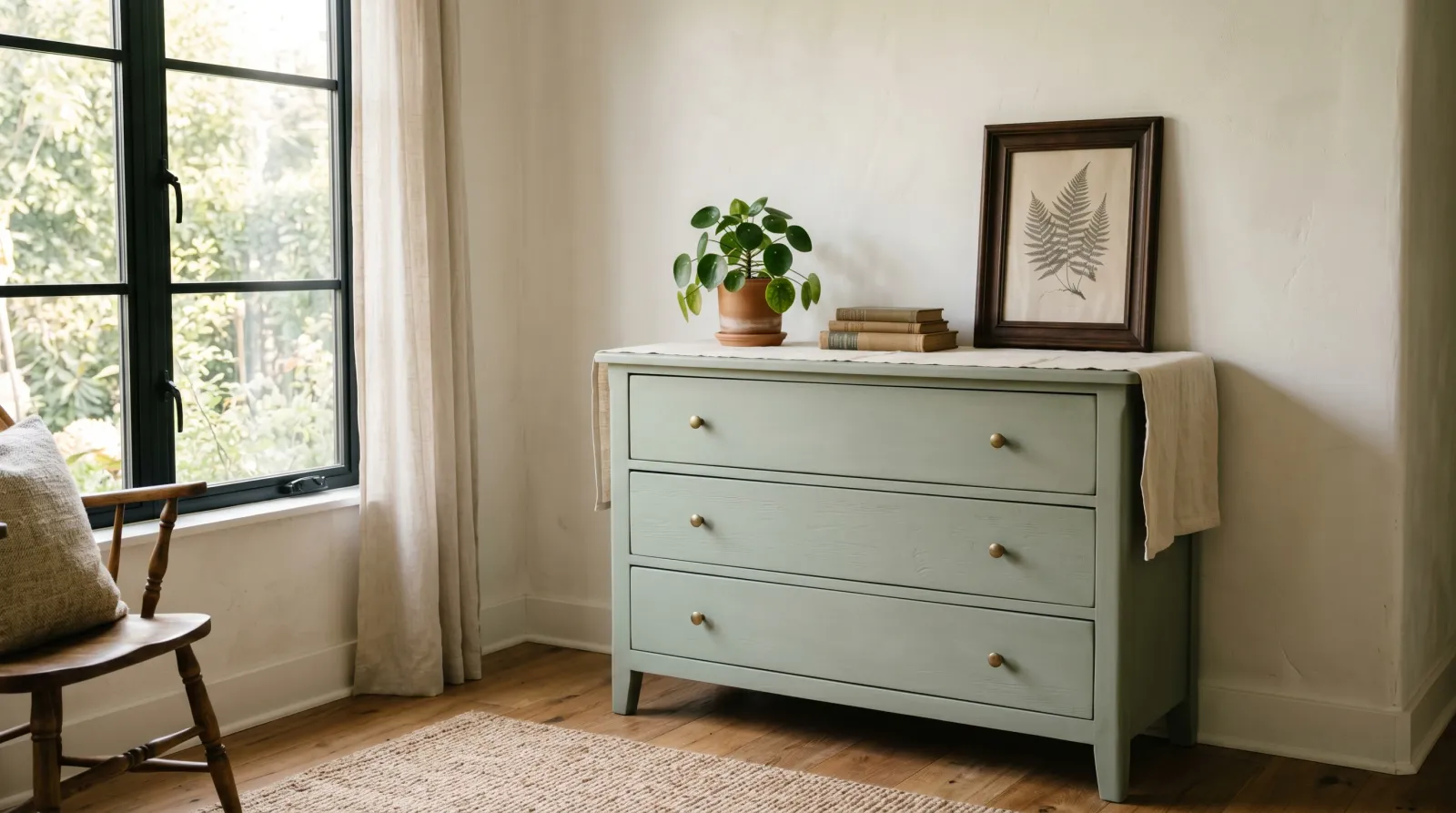 Furniture chalk paint
Best for Thrifted dressers and side tables
Thick as pudding and it grips varnished wood with no sanding. Budget for the sealing wax too, because bare chalk paint water-spots.
Full review →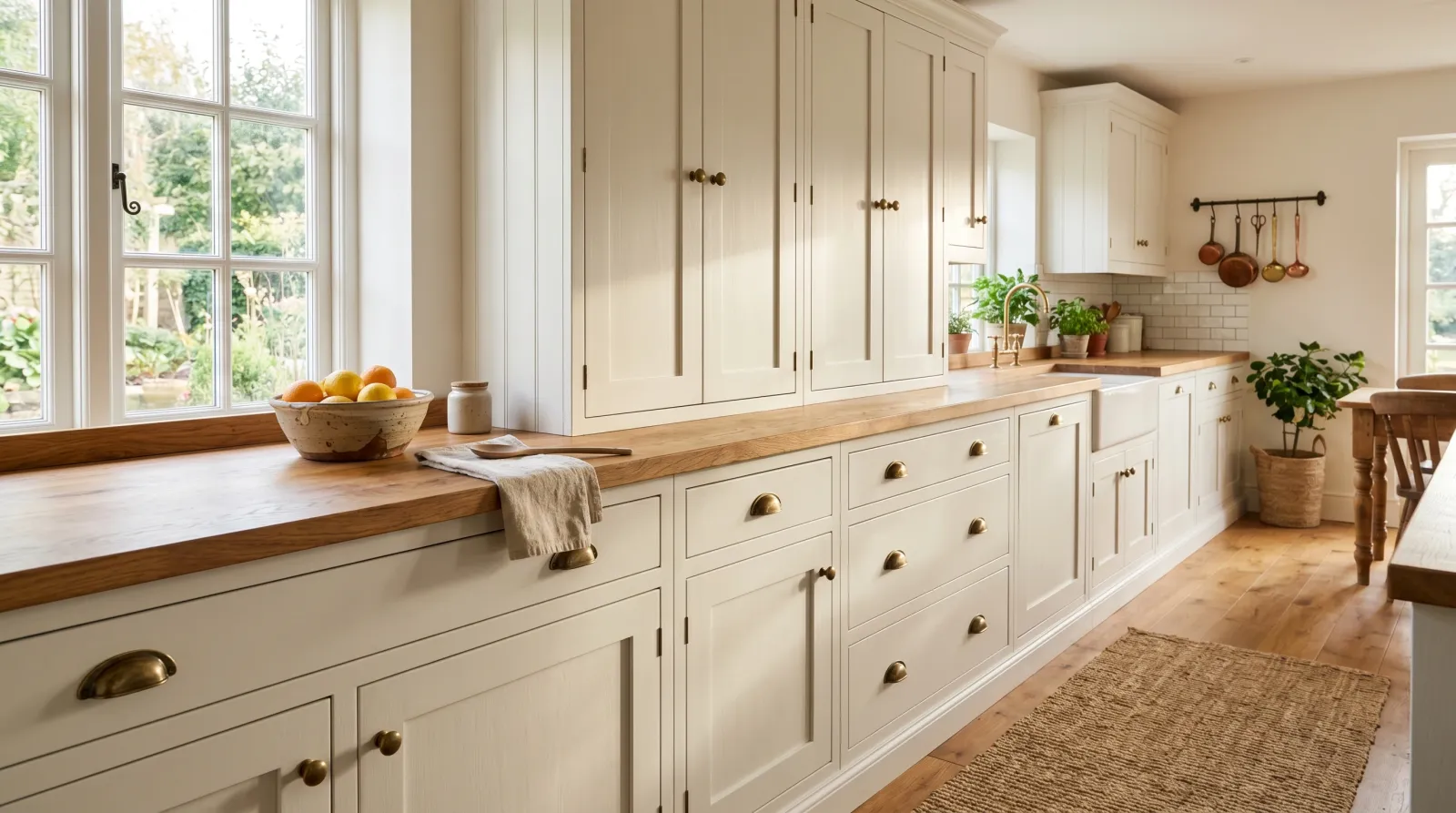
Best for Frames, spindles, small decor
The right can for chair spindles and picture frames, where a brush fights you. Wrong tool for anything with a big flat top.
Best for Sealing chalk-painted furniture
Not optional on anything you touch. The dark wax dries out in the tin and needs softening before it will spread at all.
There Is No Sale Calendar — Here Is What a Fair Price Looks Like
Here's the thing about waiting for a Magnolia sale: it isn't coming. There is no 30-to-40-percent weekend the way Sherwin-Williams runs one every month or so. The line lives at Ace Hardware, and every Ace is independently owned, which means the store sets its own price. The same gallon can be $48 at the Ace by your house and $54 at the one ten miles up the road.
So the lever here is the color, not the timing. Fair 2026 prices are $45 to $55 a gallon for Premium Interior, $50 to $58 for Trim, Door & Cabinet, $40 to $50 for Premium Exterior, and $28 to $34 a quart for Chalk Style. Much over $58 for a gallon of the interior and you are paying for that store's rent, so call a second Ace before you drive. And if you would be happy with a color that just looks like a Magnolia color, Behr Premium Plus at $28 to $35 is the same corporate family for about $15 less a gallon. That is the only real discount on this brand, and you get it by giving up the exact tint.
Two channel notes that save money. Classic Interior is the Amazon line, it ships already tinted, and it starts at $44.99 a gallon, which is the closest thing Magnolia has to a fixed floor price. And skip the third-party Amazon listings for Premium Interior, where the base and sheen are not always clear and old stock turns up. Before you drive anywhere, phone the Ace and ask whether they stock the exterior and cabinet lines specifically, because plenty of stores carry only the interior and the chalk.
The Magnolia Home Color Deck
About 160 colors, all coded JG-NN, split between the Premium Interior deck and the smaller Chalk Style deck. It skews hard toward warm whites, soft greiges, and muted clay and sage tones — the colors that sit against oak and linen without shouting. These eight are the ones people actually come looking for.
The Whole Magnolia Home Fan Deck, One Shelf
Every Magnolia Home color sorted into the families painters actually use. Pick a chip to browse light to dark.
Upload a photo of the room. We paint it in the Magnolia Home color you pick, with your light and your floor, before you buy a sample.
The Cons Only Forums Talk About
The Matte Burnishes Where Hands Land
This is the complaint that shows up most from people living with the paint, and it is the reason the matte is both the prettiest and the most fragile choice in the line. Burnishing means the flat finish gets rubbed shiny in one spot. Run your hand along the wall by a light switch a few times a day and you will see a faint polished patch within a season. There is no fixing it with a better technique. The fix is a smarter sheen: matte for ceilings and quiet bedrooms, eggshell for living rooms, satin anywhere chairs and shoulders land.
The Wax Step Is Where Chalk Projects Go Wrong
Chalk paint is porous, so bare it marks and water-spots, which means the sealing wax is a separate purchase and a separate skill. You wipe it on thin, then wipe the excess off and buff it. Beginners either under-wax and then complain the finish scratches, or over-wax and then complain it stays tacky a day later. The dark wax has its own problem: it dries out in the tin and needs softening before it spreads at all, and it smells while you work. If that sounds like more fiddling than you signed up for, a water-based polyurethane like satin Polycrylic dries harder and skips the whole step.
The Semi-Gloss Trim Paint Streaks for Some People
Reader reports on blog reviews of this line keep landing in the same place: the semi-gloss trim paint streaking and needing more coats than expected to look even. Our own testing found the same gap in kinder terms — the enamel levels well for its class, but under raking light on a slick door you catch faint brush texture where Benjamin Moore Advance reads dead-smooth. Lay it on in thin coats with a good synthetic brush, stop touching it once it starts to set, and expect two coats on any of the deeper colors.
Paint and Primer in One Is Not One Coat
The label implies one coat and the buyers who report the worst experiences are almost always the ones who believed it. Bloggers painting a dark room in Shiplap needed two coats; so did we, on a normal color change. The primer in the can helps adhesion and seals light stains, which is real, but it does not replace a coat of hide. Buy the gallons for two passes from the start. Running out halfway up the second wall is worse than an extra can sitting in the garage.
The Tints Are Proprietary and the Channel Is Thin
The Magnolia colors exist only in the Magnolia base. Another brand can scan a chip and get close, but the exact licensed tint does not travel, which is the one thing you are actually paying for. That matters because the line sells almost entirely through Ace, and plenty of Ace stores stock the interior and chalk but not the exterior or cabinet cans. So there is no Sunday-morning big-box rescue when you run short mid-project, and if your nearest Ace is a long drive, the convenience you thought you were buying evaporates.
The Questions Between Two Cans
They cost about the same and they are not the same product. Premium gets the full 160-color deck and the soft matte that Magnolia rooms are known for. Classic gets 45 colors, no matte at all — eggshell is the floor — and it ships to your door pre-tinted from Amazon starting at $44.99. Buy Classic for the convenience if your color is in those 45. Buy Premium if the flat, light-swallowing wall is the look you pictured.
All comparisons →Same corporate parent, different shelf and different price. Behr Premium Plus runs $28 to $35 at any Home Depot against $45 to $55 for Premium Interior, and the resin science comes from the same house. Behr also stays open late and stocks 4,000 colors. Buy Magnolia only when a specific Magnolia color is the reason you are painting, because that exact tint is the one thing Behr cannot mix for you.
All comparisons →Advance flows out glassier, and on a cabinet door six inches from your eyes you can see it. What Magnolia buys you is time: 7 days to full cure against Advance's 30, and a 2-hour recoat against 16, which is the difference between one careful week and a month of nobody touching the doors. Advance costs $80 to $95 against $50 to $58. Pick Magnolia for the cure window or the color, Advance for the finish.
All comparisons →Rust-Oleum Chalked at $18 to $22 a quart does the same basic job for less, with a smaller and less curated color range. Annie Sloan at $40-plus is still the flippers' favorite for deep color and distressing, and it often wants thinning with water. Magnolia sits in the middle at $28 to $34, goes on thick enough that beginners get a smooth coat on the first try, and wins on the palette. All three need a wax or poly topcoat.
All comparisons →This is the single decision that decides whether you like this paint in two years. Matte hides every patch and roller lap and gives you the Fixer Upper look, and it polishes up shiny where hands touch it. Eggshell has just enough sheen to wipe clean and just enough to catch raking light on an imperfect wall. Matte in bedrooms and on ceilings, eggshell everywhere people walk.
Full comparison →Magnolia Home Questions, Answered
Is Magnolia Home paint good?
Good for the color, average for the coating. Underneath the label it's a competent mid-tier KILZ acrylic, roughly Behr Premium Plus territory, at $45 to $55 a gallon. What you're really buying is the curated deck of about 160 colors, which is the most cohesive palette in US mass retail. Right for a bedroom or a quiet living room in a Magnolia color. Wrong for a busy kitchen wall.
Who actually makes Magnolia Home paint?
KILZ makes it, under license from Magnolia. Joanna Gaines's team curates the colors and the brand; KILZ formulates and manufactures the paint. KILZ sits under Masco, the same parent company as Behr, so the resin science comes from a real lab with forty years behind it. There is no secret proprietary chemistry here. The color curation is the product.
Can Sherwin-Williams or Behr match a Joanna Gaines paint color?
Yes, free, scanned at any decent paint counter, and the match is good on the muted neutrals that make up most of the deck. Two things to know. Sherwin-Williams does not make Joanna Gaines colors — the line is KILZ, sold at Ace. And a scanned match gets close but not identical, especially on the deeper shades and on anything chalk-style, where the chalky texture is part of the color.
Where can I buy Magnolia Home paint?
Ace Hardware is the main channel, in store and at acehardware.com, and that's where the colors get tinted at the counter. Classic Interior is the Amazon line and ships pre-mixed from $44.99. Some Walmart stores carry the sprayable chalk cans. Call ahead: plenty of Ace stores stock only the interior and chalk lines, not the exterior or cabinet cans.
What's the difference between Premium Interior, Classic Interior, and Chalk Style?
Premium Interior is the wall paint with the full deck and the soft matte, $45 to $55 a gallon at Ace. Classic Interior is the Amazon line: 45 colors, no matte, ships tinted, about the same price. Chalk Style is furniture paint, $28 to $34 a quart, thick and no-sand, for dressers and side tables. They are not interchangeable, and only Premium makes a matte.
How much is a gallon of Magnolia Home paint?
Premium Interior runs $45 to $55 a gallon, Trim, Door & Cabinet $50 to $58, and Premium Exterior $40 to $50. Chalk Style is $28 to $34 a quart and the sprayable cans are $15 to $20 for 12 ounces. Ace stores are independently owned, so the same gallon can differ by several dollars between two stores in the same town.
Does Magnolia Home paint cover in one coat?
Rarely, despite the paint-and-primer-in-one label. Plan on two coats for even color, and definitely two if you're going over white or making a real color change. The primer in the can helps the paint stick and seals light stains, which is worth something. It does not save you a coat of hide. Buy the gallons for two passes from the start.
Does Magnolia Home paint ever go on sale?
Not on a schedule. There is no brand-wide discount weekend like the ones Sherwin-Williams runs. Ace stores are independently owned and set their own prices, so the variation you see is store-to-store, not a promotion. If price is the problem, the real saving is buying Behr Premium Plus for about $15 less a gallon.
Do I need the wax with Magnolia chalk paint?
On anything you'll touch, yes. Bare chalk paint is porous, so it marks and water-spots. The Magnolia clear sealing wax is the usual answer, and it's a real skill — thin coat on, excess wiped off, then buffed. A decorative shelf can skip it. A dresser top or a kitchen chair cannot. If waxing sounds fussy, a satin water-based polyurethane dries harder and protects better.
Is Magnolia Home worth it compared to Behr?
Only if the color is the reason you're painting. Behr Premium Plus is $28 to $35 a gallon at any Home Depot, comes from the same parent company, and covers about as well. Magnolia costs $10 to $15 more a gallon. The exact Magnolia tint is proprietary, so nobody else can mix it — and that's the entire premium you're paying, honestly stated.
How does the matte hold up in a kitchen or hallway?
It doesn't, and you should plan around that. The matte is beautiful on an imperfect wall because it swallows patches and roller laps, but it burnishes — it rubs shiny — where hands and chair backs hit. In a hallway or a kitchen you wipe weekly, step up to eggshell or satin. Even those are mid-tier washability, not scrub-cycle champions.
Ask a Question