Room Colors · Garage Door
5 Best Garage Door Paint Colors for 2026
ideas, combinations, and real rooms
5 curated picks from real garage doors — with the exact colors, honest reasons why, and the combinations that hold the room together.

Former interior stylist who can spot a green undertone from across a room. Jessica writes the color and mood pieces — what to choose, what pairs, and why your "white" looks pink.
The Fast Answer
Don't want to read 5 picks? These four are the safe answers.

Top Picks for the Garage Door
Pick a color family, tap a shade to see the garage door in it, then try it on your own room.
Garage Door Color Trends 2026 — What's In, What's Out


- Builder's Almond — The default beige factory finish dates a house instantly and matches nothing on a modern exterior palette.
- A Third Accent Color — Bold reds, teals, and one-off accent colors turn the largest panel on the house into the loudest thing on the street — designers keep the door to the siding or trim color.
- Stark Bright White — Cool stark whites are giving way to warm off-whites; a blue-white door next to warm trim looks like a mismatch, not a choice.
- High-Gloss Sheens — Glossy finishes telegraph every panel dent and roller mark on a big flat door — the trend has moved firmly to matte and low-sheen.
The 5 Best Garage Door Paint Colors
Every pick below is a real rendered garage door, not a chip. The lead color first; the swatches are the full scheme in the photo — walls, furniture, textiles, accent.

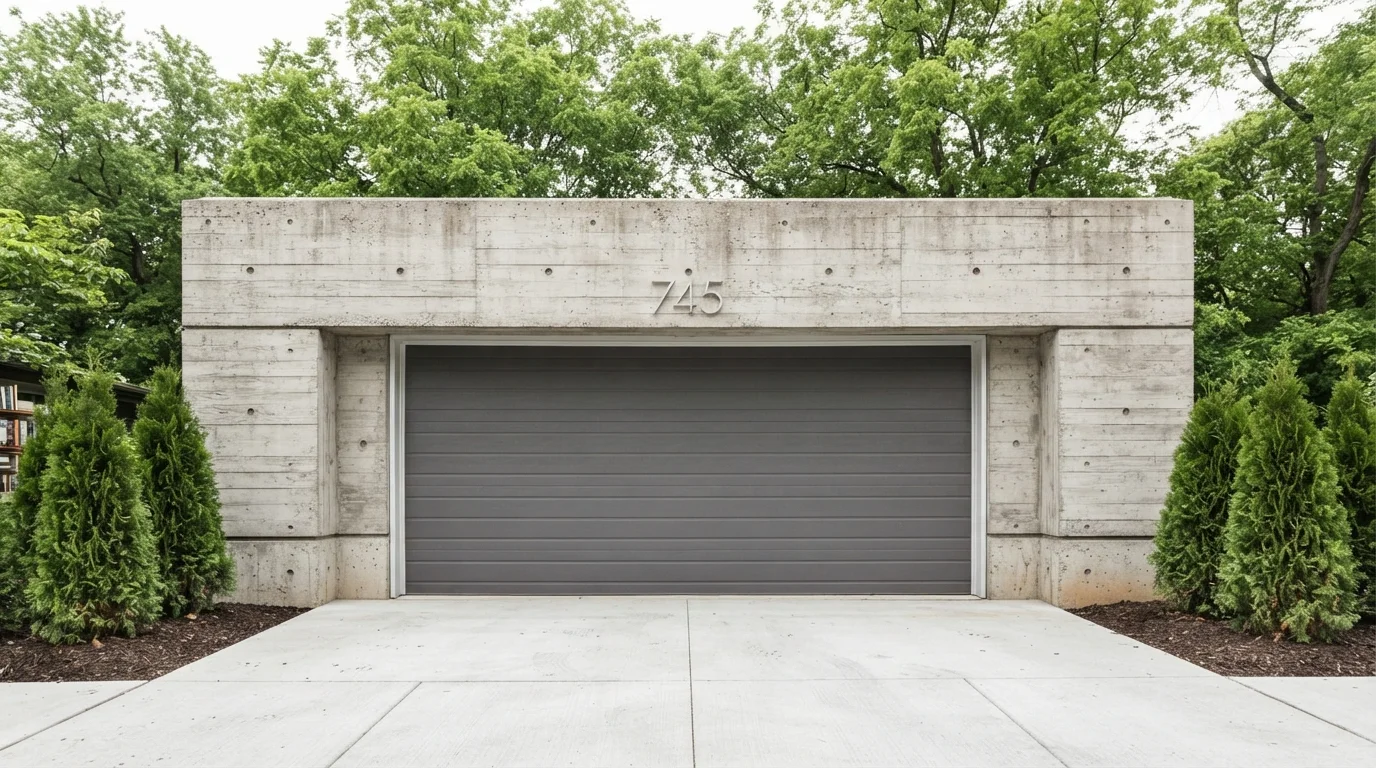
Door and siding in one deep charcoal, so the garage stops being a garage and the whole facade reads as a single calm block that looks best in full daylight.
Painting the garage door the exact same Iron Ore as the siding is the move on contemporary and modern-farmhouse builds — the biggest panel on the house disappears instead of competing with the front door. At LRV 6 it holds its depth even in strong afternoon sun, though a south- or west-facing steel door will get hot, so plan on a quality exterior acrylic rated for dark colors. Crisp White Dove trim keeps the dark mass from feeling heavy. If your street is dusty or unshaded all day, Kendall Charcoal is the same idea with less heat gain.
SEE IRON ORE ON YOUR WALLS →
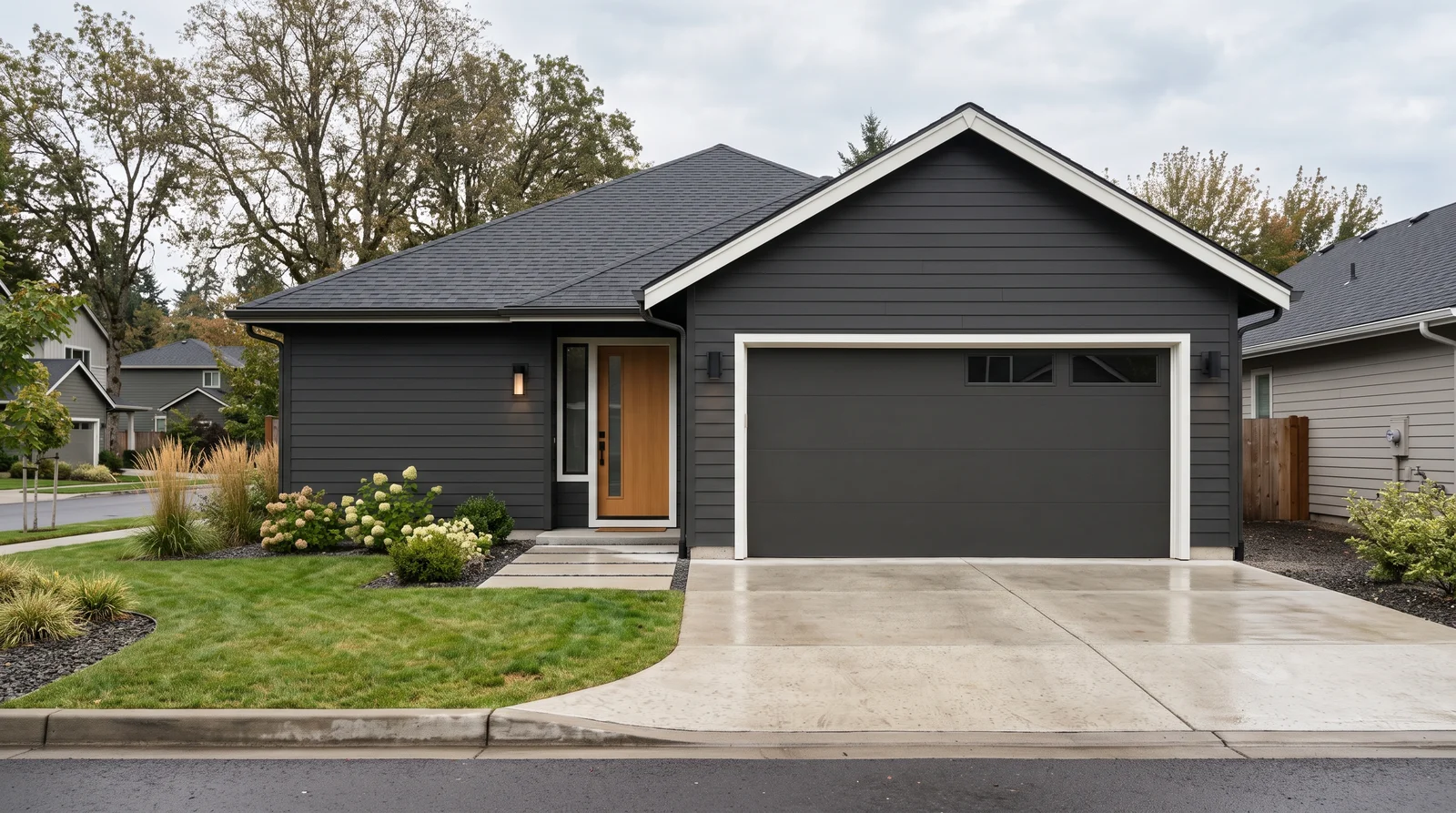
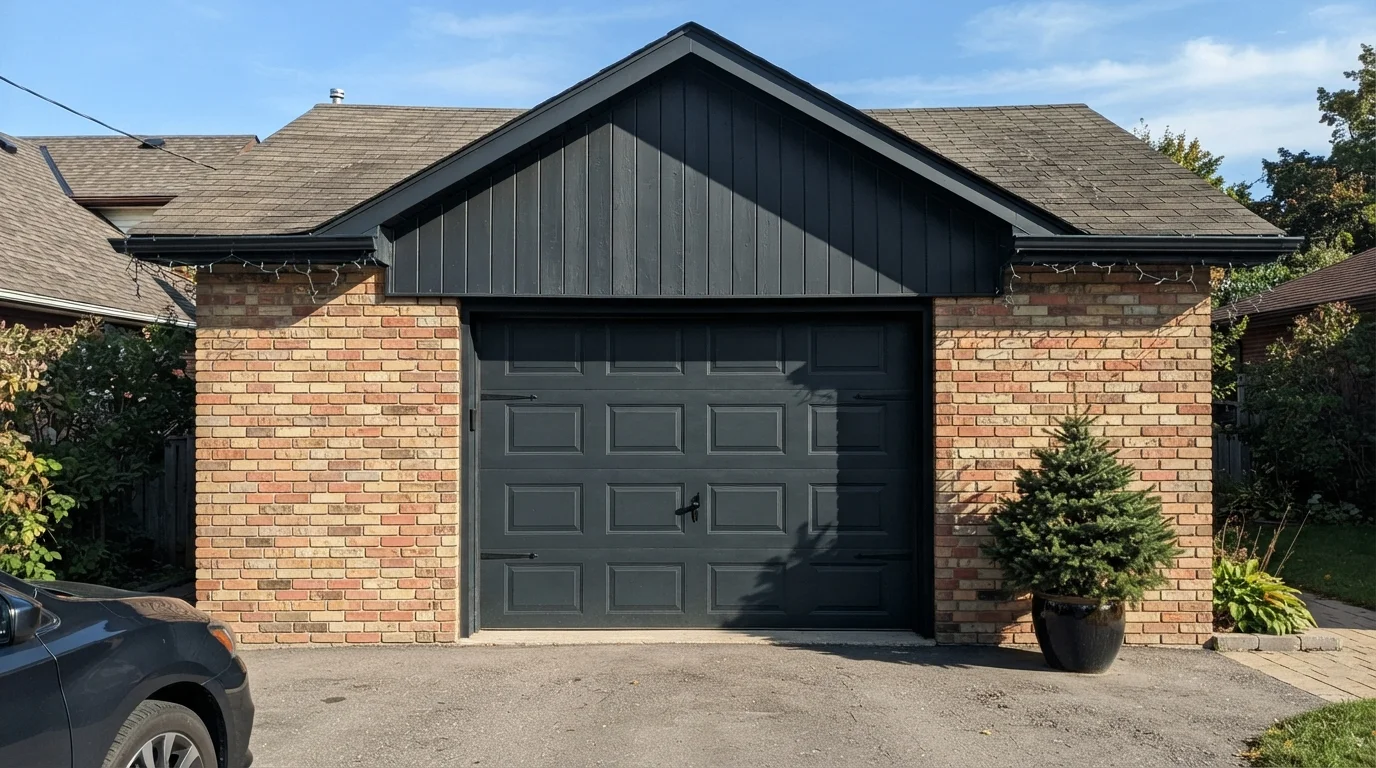
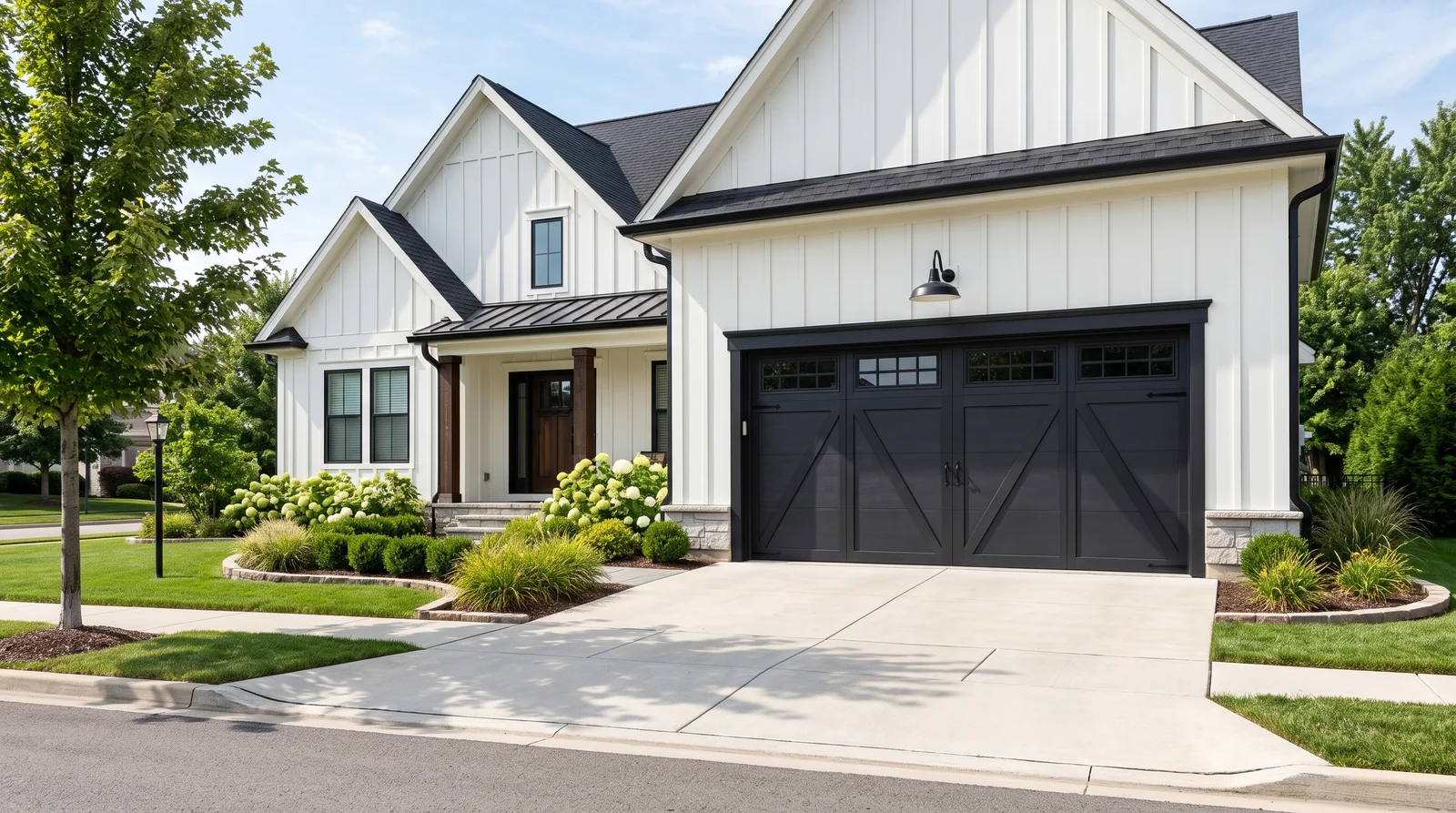
A sharp Tricorn Black door on a bright white house — high contrast that feels tailored, made for facades that get real sun.
This is the classic contrast play: Tricorn Black on the garage door, echoed in the black gutters and door hardware so the door matches the trim story instead of introducing a new color. Against Alabaster siding the contrast does the work — no accent color needed. Be honest with yourself about maintenance: at LRV 3, jet black shows dust, pollen, and water spotting faster than anything else on the house, so it suits paved, open lots better than gravel drives under trees. If that upkeep sounds tiring, Kendall Charcoal gives you eighty percent of the contrast with far less show-through.
SEE TRICORN BLACK ON YOUR WALLS →
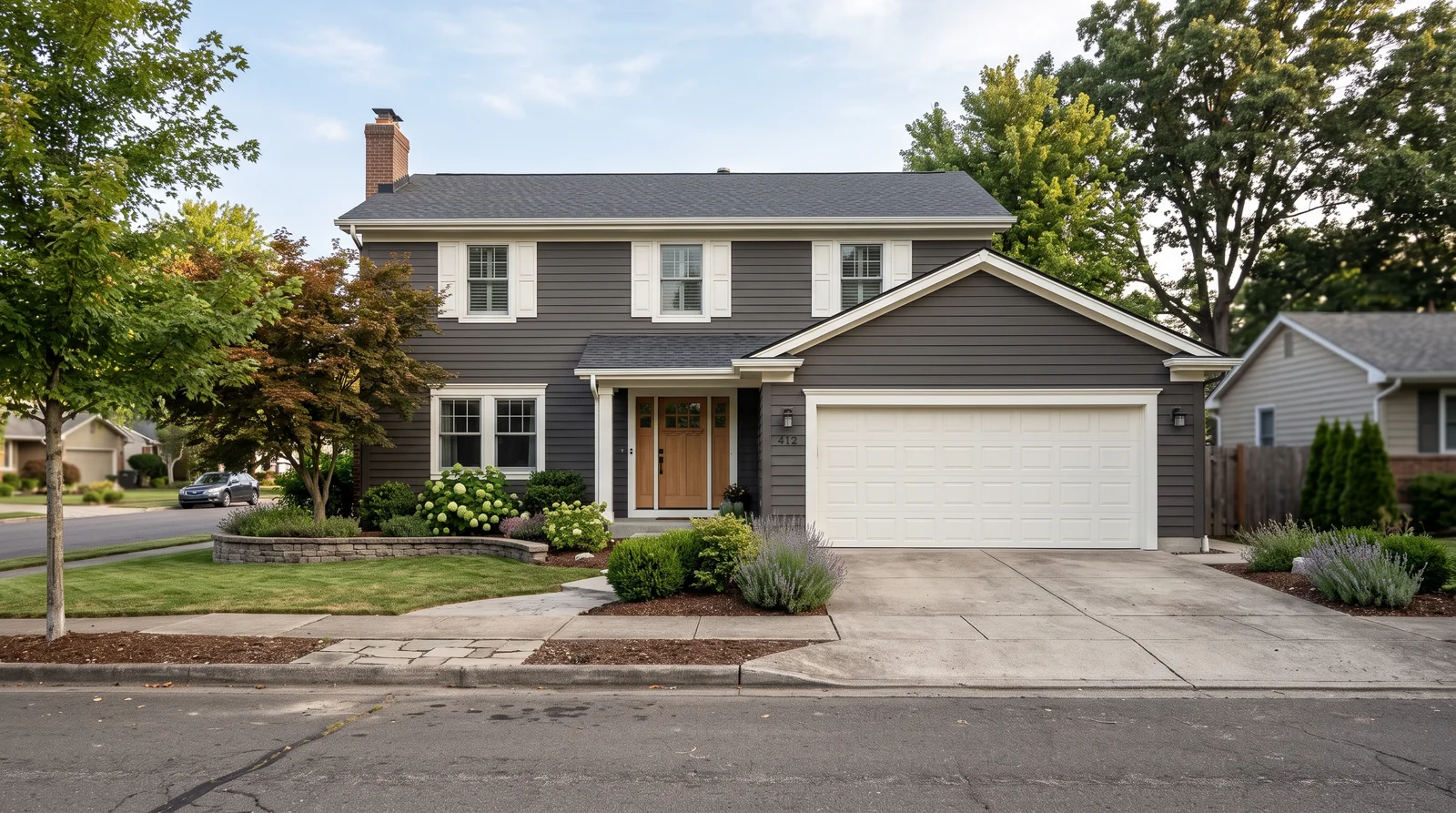
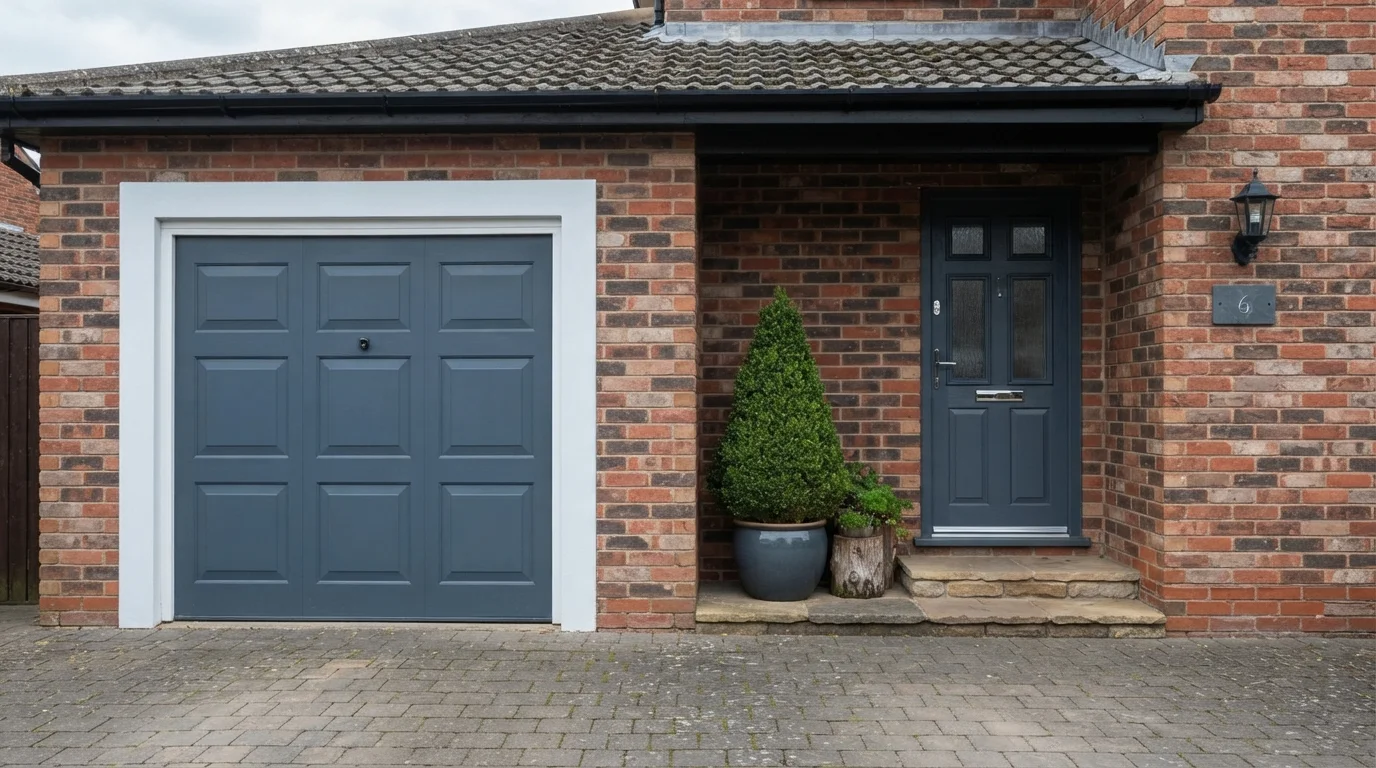
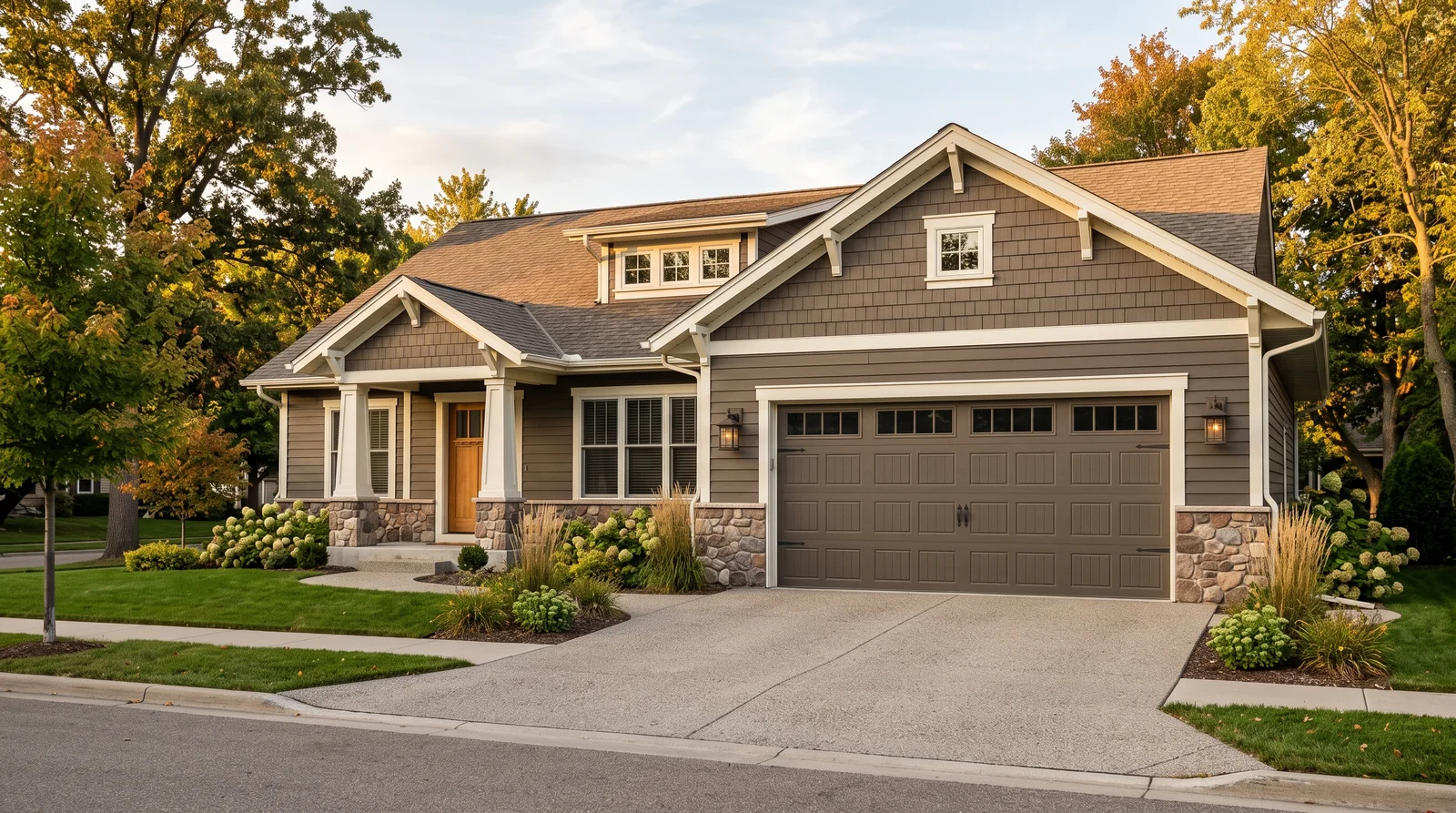
A warm brown-gray door that reads expensive instead of stark — the earthy alternative to black that glows in late-day light.
Urbane Bronze is the warm dark: brown undertones instead of black's coldness, which is exactly where 2026 exterior trends are heading. Match the door to Urbane Bronze siding for the seamless look, or run it on the door of a cream house where the bronze already lives on the trim. It flatters brick, stone, cedar posts, and bronze light fixtures — the materials most driveways already have. At LRV 8 it hides dirt better than true black while staying unmistakably dark; pick Iron Ore instead if you want the cooler, more modern version of the same depth.
SEE URBANE BRONZE ON YOUR WALLS →
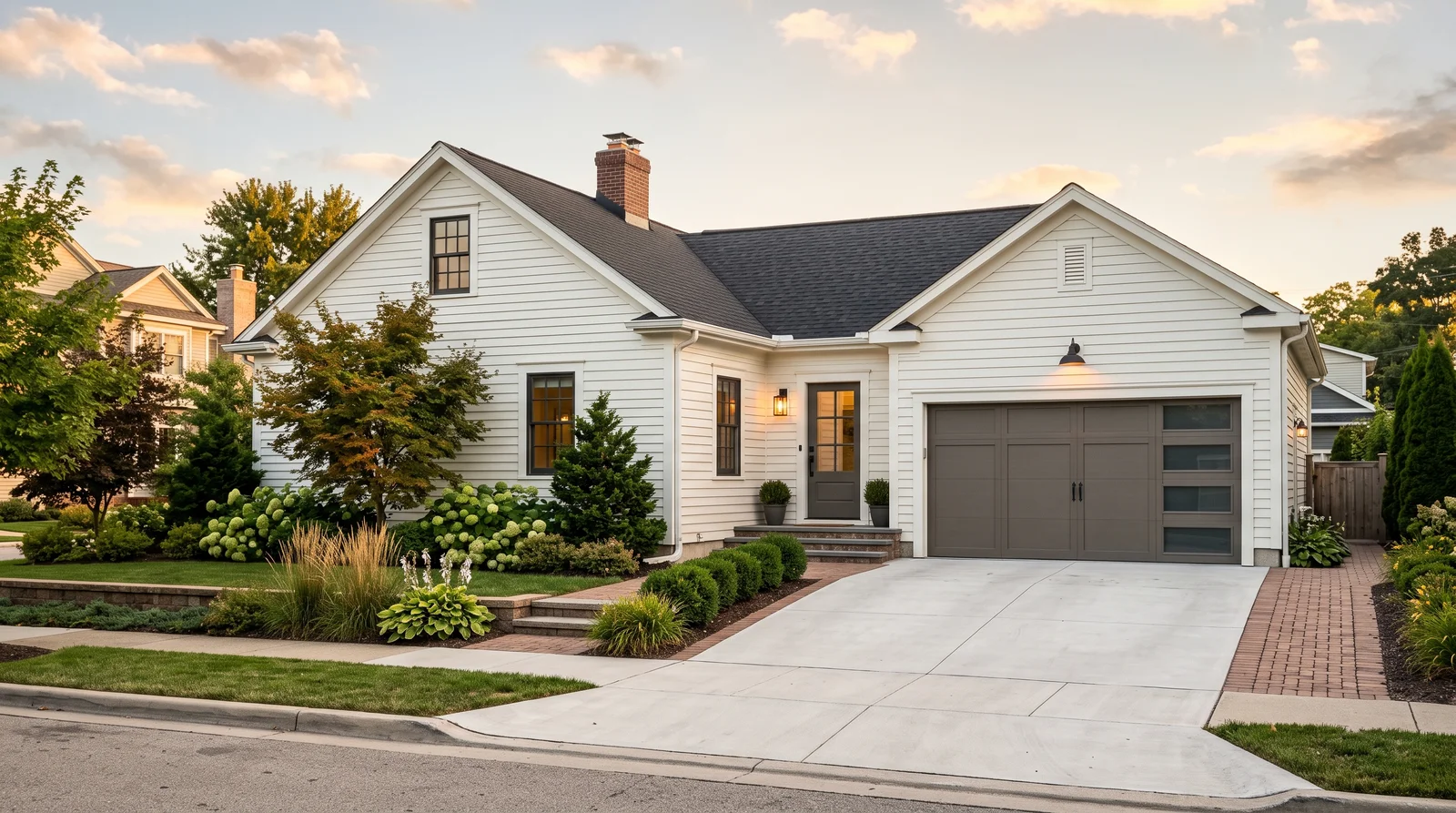
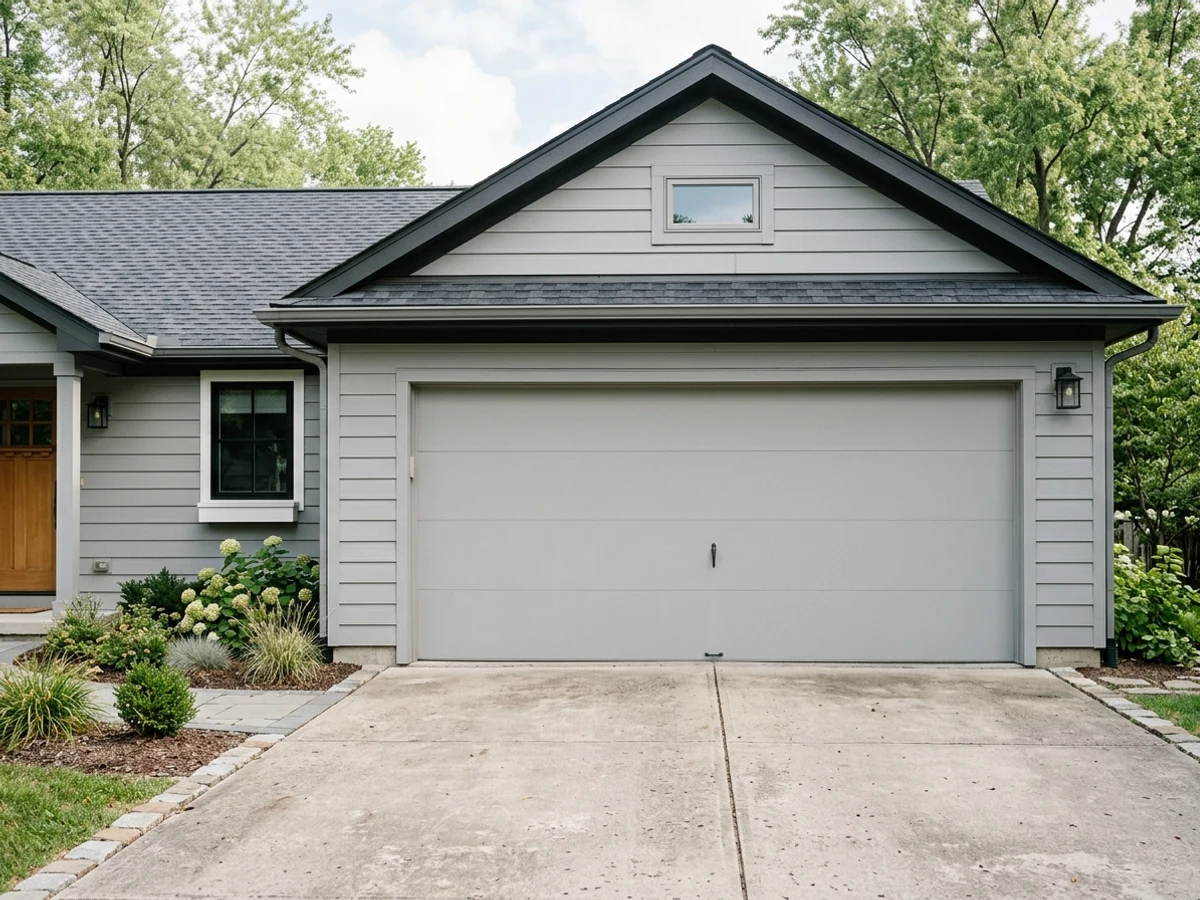
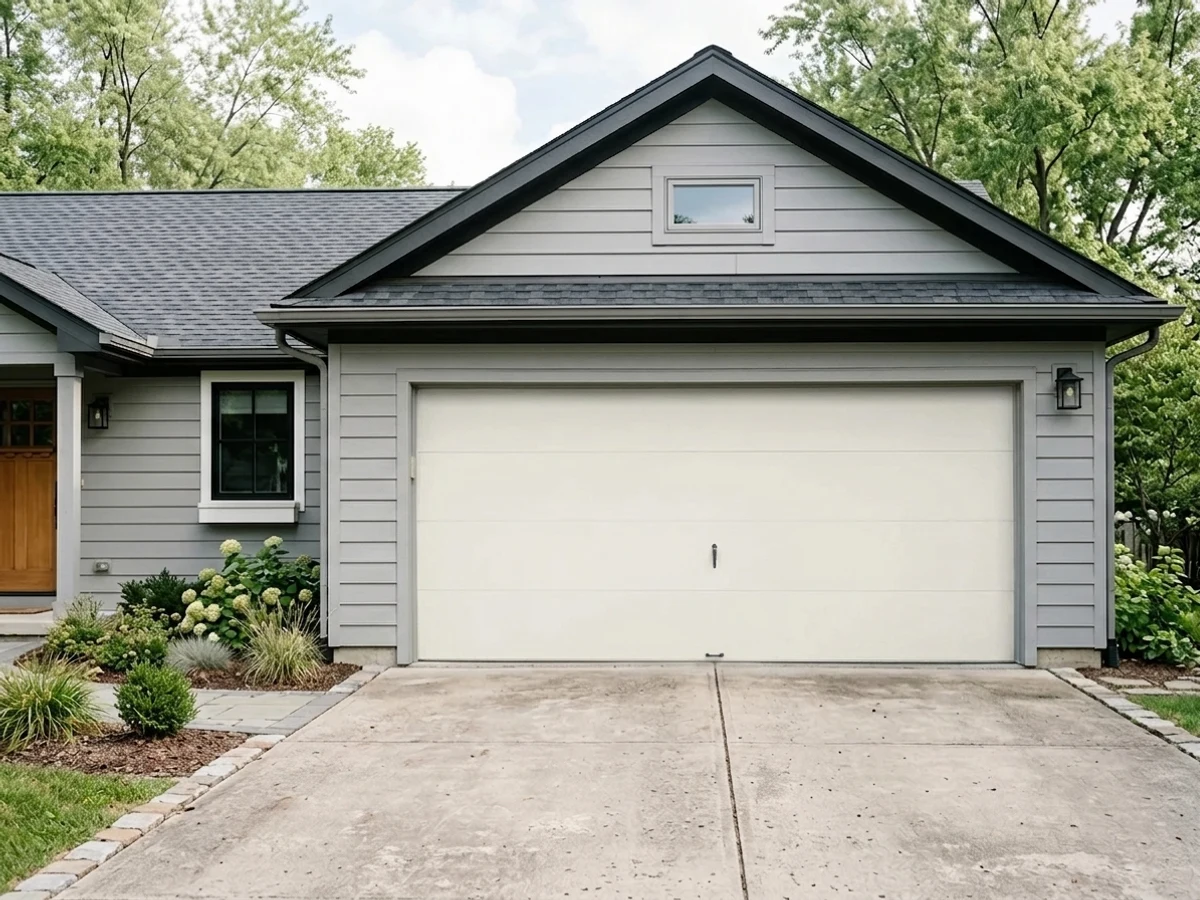
A soft warm-white door that melts into the trim and lets the dark house be the star — calm, timeless, and forgiving in any light.
When the siding is dark, the smartest garage door color is usually the trim color — and White Dove is the trim white that never goes stark or blue. On a Kendall Charcoal house the door visually joins the trim band, so the eye slides to the front door instead of the sixteen-foot panel beside it. At LRV 83 it bounces light back into a shaded, north-facing driveway and hides chalking far longer than a dark door would. If your existing trim leans cooler, color-match the door to the trim you have rather than introducing a second white — two near-whites side by side always looks like a mistake.
SEE WHITE DOVE ON YOUR WALLS →
A gray-brown charcoal door with contrast that stays gentle — dark enough to feel current, soft enough to forgive dust and hard sun.
Kendall Charcoal is the answer when black feels too severe for your house or your patience. On Alabaster siding it delivers the dark-door look, but at LRV 15 the sun can't wash it flat and road dust doesn't announce itself the way it does on Tricorn Black. Its slight brown warmth sits comfortably next to brick, tan roofs, and warm gray driveways where a cold black would clash. Repeat it on shutters or the front door so the garage door reads as part of the trim scheme, not a lone dark rectangle — and if the facade faces due south, this is the dark to pick over Iron Ore.
SEE IT ON YOUR WALLS →Garage Door Wall Color Combinations
A wall color never works alone. These are the full schemes from the rooms above — the lead color first, then the supporting colors that make the photo work.
Door and siding in one deep charcoal, so the garage stops being a garage and the whole facade reads as a single calm block that looks best in full daylight.
TRY THIS PALETTE →A sharp Tricorn Black door on a bright white house — high contrast that feels tailored, made for facades that get real sun.
TRY THIS PALETTE →A warm brown-gray door that reads expensive instead of stark — the earthy alternative to black that glows in late-day light.
TRY THIS PALETTE →A soft warm-white door that melts into the trim and lets the dark house be the star — calm, timeless, and forgiving in any light.
TRY THIS PALETTE →A garage door never stands alone, so pick its color next to everything around it. The cleanest looks usually tie the door to one element on the house: match it to the front door, to the trim, or to the window sashes. For example, Hale Navy on both the front door and garage door pulls a white house together; a Charcoal garage door echoes a dark roof or black window frames.
Watch the warm-cool match too. A warm gray like Repose Gray fights cool blue-gray siding, while Dove Gray sits more neutral. If you add decorative hardware or carriage-style handles, a deeper door color like black or navy makes black hardware look crisp, where it can disappear on a dark gray.
Garage Door Color Ideas by Color
Set on a color family already? Each page has its own real rooms and picks.
Light or Dark Garage Door Colors?
Go Light (LRV 60+) If…
The room is small, faces north, or has to work at every hour. Light warm colors make it feel bigger and stay calm in evening light — the light you actually live in.
Go Dark (LRV Under 20) If…
You want the cocoon effect and the room has real daylight. Dark works best on one feature wall — or fully color-drenched in a large room with good windows.
A garage door faces one direction all day, and that direction decides what the color really looks like. A north-facing door gets cool, even light, so warm grays and off-whites like Repose Gray or Alabaster stay balanced instead of going icy. A south- or west-facing door takes harsh afternoon sun, which washes light colors out and can make a black door look almost gray by late day.
Always test a real sample on the actual door and look at it morning, midday, and dusk. A navy like Hale Navy can look almost black in shade and clearly blue in direct sun, and you want to like both. Headlights and porch lights at night also matter, since deep colors like Charcoal can read flat and very dark after sunset.
LRV, or light reflectance value, tells you how light or dark a color reads, from 0 for black to 100 for pure white. On a garage door this matters twice over: it sets the mood and it affects heat. A high-LRV white like Alabaster keeps the front of the house bright and open, while a low-LRV color like Tricorn Black or Charcoal grounds the elevation and makes it feel solid and modern.
There is a practical side too. Very dark, low-LRV doors absorb more heat in full sun, which can stress some door materials, so confirm a deep color is fine for your door type. Mid-range grays like Dove Gray and Repose Gray sit in a forgiving zone that hides dirt, takes the sun well, and reads neither stark nor heavy.
See It. Love It.
Paint It.
Upload one photo of your garage door and try every color on this page on your own walls — in your own light, before you buy a drop of paint.

AlabasterBeforeThe Best Color Directions For A Garage Door
Most garage doors look best in one of four directions: a clean white, a versatile gray, a deep navy, or a true black. White, like Alabaster, keeps the door quiet and lets it blend with white trim so the house reads as one calm shape. Gray, like Repose Gray or the softer Dove Gray, is the safe middle ground that pairs with almost any siding color without drawing the eye.
If you want the door to feel intentional and a little richer, go deep. Hale Navy gives a classic, dressed-up look against white or light gray siding, while Charcoal and Tricorn Black read modern and architectural. The rule of thumb: match the door to the trim to make it disappear, or match it to nothing and let it become a deliberate accent.
Picking The Right Finish And Sheen
A garage door lives in sun, rain, and road grime, so finish is about durability as much as looks. A satin or low-lustre exterior finish is the sweet spot for most doors. It sheds dirt, wipes clean, and resists fading without throwing a hard shine that shows every dent and seam.
Skip flat on a garage door, since it holds dust and is hard to scrub. Skip high gloss too, because the large flat panels will catch sun and glare, and gloss exaggerates any waviness or hardware shadow. Whatever the color, choose a paint rated for exterior use so it can flex with heat and stand up to UV.
Common Mistakes To Avoid
The biggest mistake is matching the garage door to the siding exactly when the undertones are slightly off, which makes the door look like a smudge instead of a clean panel. Another is going too dark without checking your door material and climate, since a black door in full afternoon sun runs hot and can fade faster. People also forget that big flat panels show texture, so a glossy or very light color can highlight every dent.
Finally, do not choose the color from a tiny chip in the store. Garage doors are large, and color intensifies across a big surface, so a gray can read darker and a navy can read almost black once it is up. Buy a sample, paint a real section, and remember any of these colors can be mixed to order and cross-matched between brands if you want a specific shade in a different paint line.
About Garage Door Paint Colors
Your garage door is often the single biggest thing people see when they look at your house. That makes its color a real decision, not an afterthought. The right shade can make a plain front elevation look finished, while the wrong one can fight your siding, your trim, and even your roof.
This page walks through the color directions that actually work on a garage door, and what each one does to the look of the home. We lean on a few proven examples along the way, including soft whites like Alabaster and Dove Gray, warm-cool grays like Repose Gray, and deep anchors like Charcoal, Hale Navy, and Tricorn Black. None of these are tied to one store. Any color here is mixed to order, and a good paint counter can cross-match it from one brand to another.
Because a garage door sits outside in full sun and weather, color and finish have to work together. We will cover how your light steers the choice, how to read LRV so the door reads the way you want, and the small mistakes that quietly make a fresh paint job look off.
The Questions Everyone Asks
What color should I paint my garage door?
If you want one answer, start with the safe picks above — Alabaster, Tricorn Black, Repose Gray, Hale Navy. They read well in any light and survive furniture changes. Then check the light: strong afternoon sun wants a step cooler, a north-facing room wants a step warmer.
What is the best color for a garage door?
There is no single best color, but the safest, most flexible choices are a white like Alabaster, a neutral gray like Repose Gray or Dove Gray, or a deep anchor like Hale Navy, Charcoal, or Tricorn Black. White and gray keep the door quiet, while navy and black make it a deliberate, dressed-up accent. The right pick depends on your siding, trim, and how much you want the door to stand out.
Should the garage door match the front door or the trim?
Either works, but pick one on purpose. Matching the garage door to the trim or siding makes it recede so the house reads as one shape, while matching it to the front door, like both in Hale Navy, ties the front of the home together. What usually looks unfinished is a garage door color that matches nothing else on the house.
What sheen should I use on a garage door?
Use a satin or low-lustre exterior finish. It wipes clean, sheds road grime, and resists fading without the hard glare of gloss. Avoid flat, which holds dirt and is hard to scrub, and avoid high gloss, which shows every dent and shines harshly on the big flat panels.
Is it a bad idea to paint a garage door black?
Not at all, and a black like Tricorn Black or a deep Charcoal looks modern and crisp, especially with black hardware or dark window frames. The one caution is heat: very dark colors absorb more sun, so on a door in full afternoon light, confirm your door material is rated for a dark color before committing.
How does LRV help me choose a garage door color?
LRV tells you how light or dark a color reads, from 0 for black to 100 for white. A high-LRV white like Alabaster keeps the front of the house bright, while a low-LRV color like Charcoal or Tricorn Black grounds it and looks solid. Mid-range grays like Dove Gray and Repose Gray are forgiving, hiding dirt and handling sun well without looking stark or heavy.
Can I get these colors in any paint brand?
Yes. Every color shown here is mixed to order at the paint counter, and a good store can cross-match a shade from one brand into another paint line. So if you like a color like Hale Navy or Repose Gray but prefer a different brand's exterior paint, you can usually get a close match in the line you want.
Why does my garage door color look different than the sample chip?
Color intensifies across a large surface, so a gray can read darker and a navy almost black once it covers a whole door. Light direction also shifts it through the day. Always paint a real sample section on the door itself and look at it in morning, midday, and evening light before buying all your paint.
What two-color combination works best in a garage door?
The reliable pattern is a quiet main color plus one deep accent on a single wall. Keep trim and ceiling in one warm white so the two colors are the only event in the room — the combination cards above show complete schemes from real rooms.
What colors make a garage door look bigger?
High-LRV, slightly warm colors — LRV 60–75 is the sweet spot. Paint the walls and trim close to the same light color so the corners blur, and keep the ceiling white. Stark cool white actually works against you; it creates hard shadows that show the room's edges.

Ask a Question