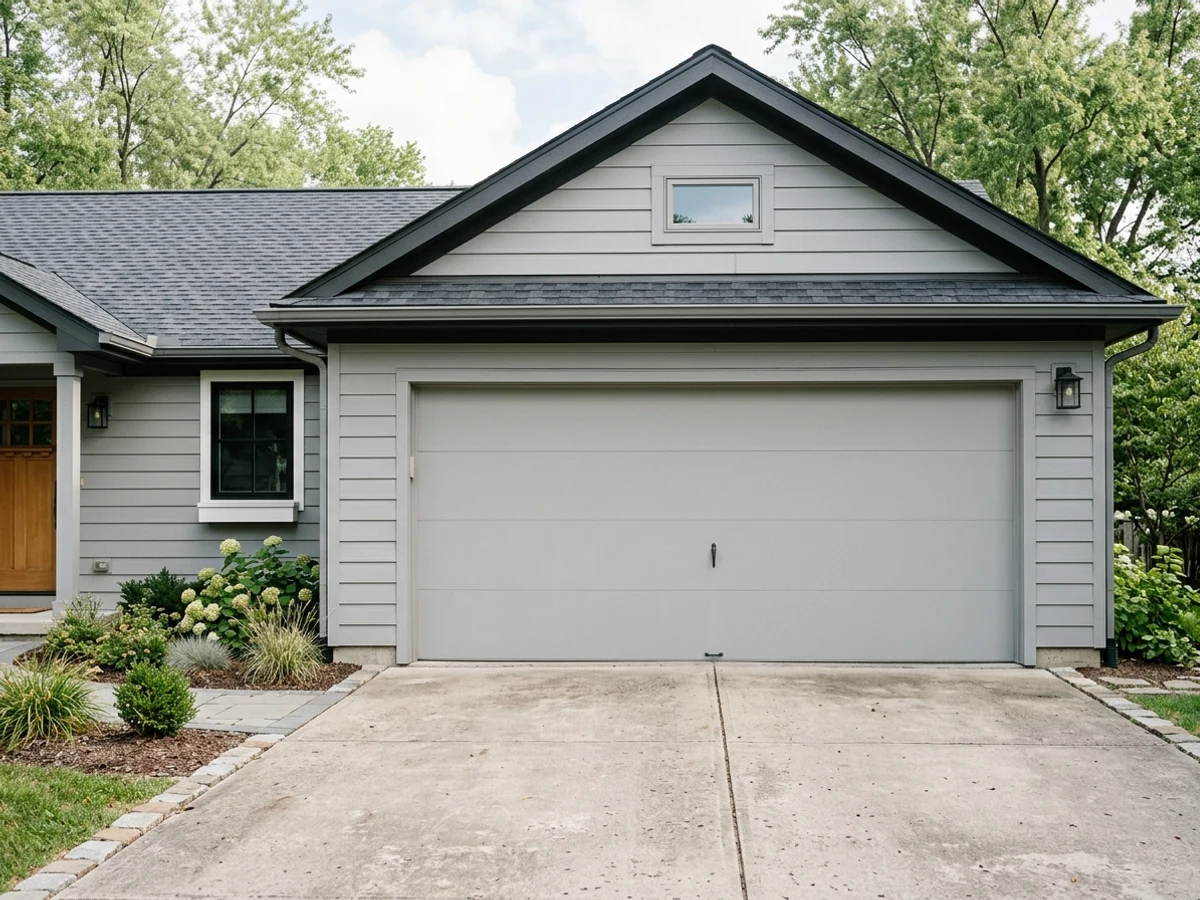
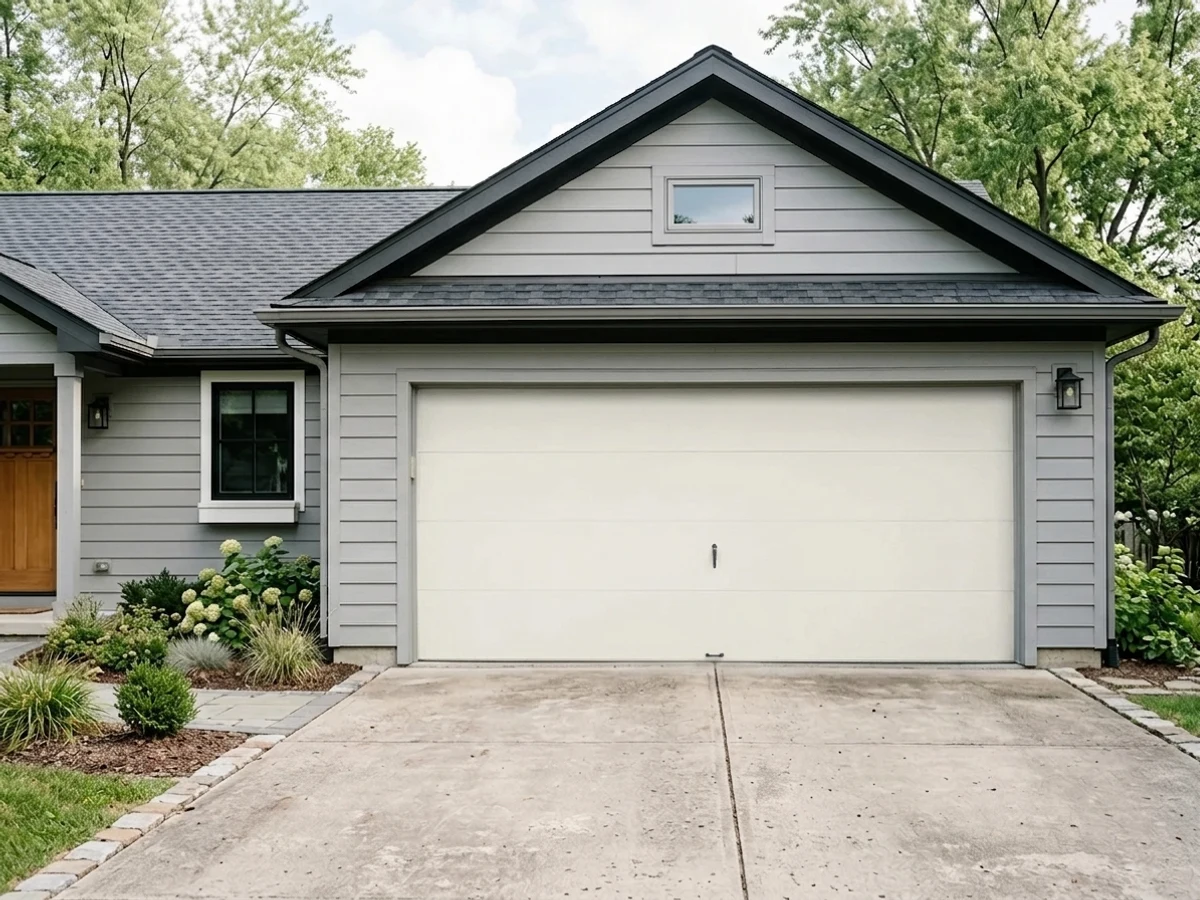
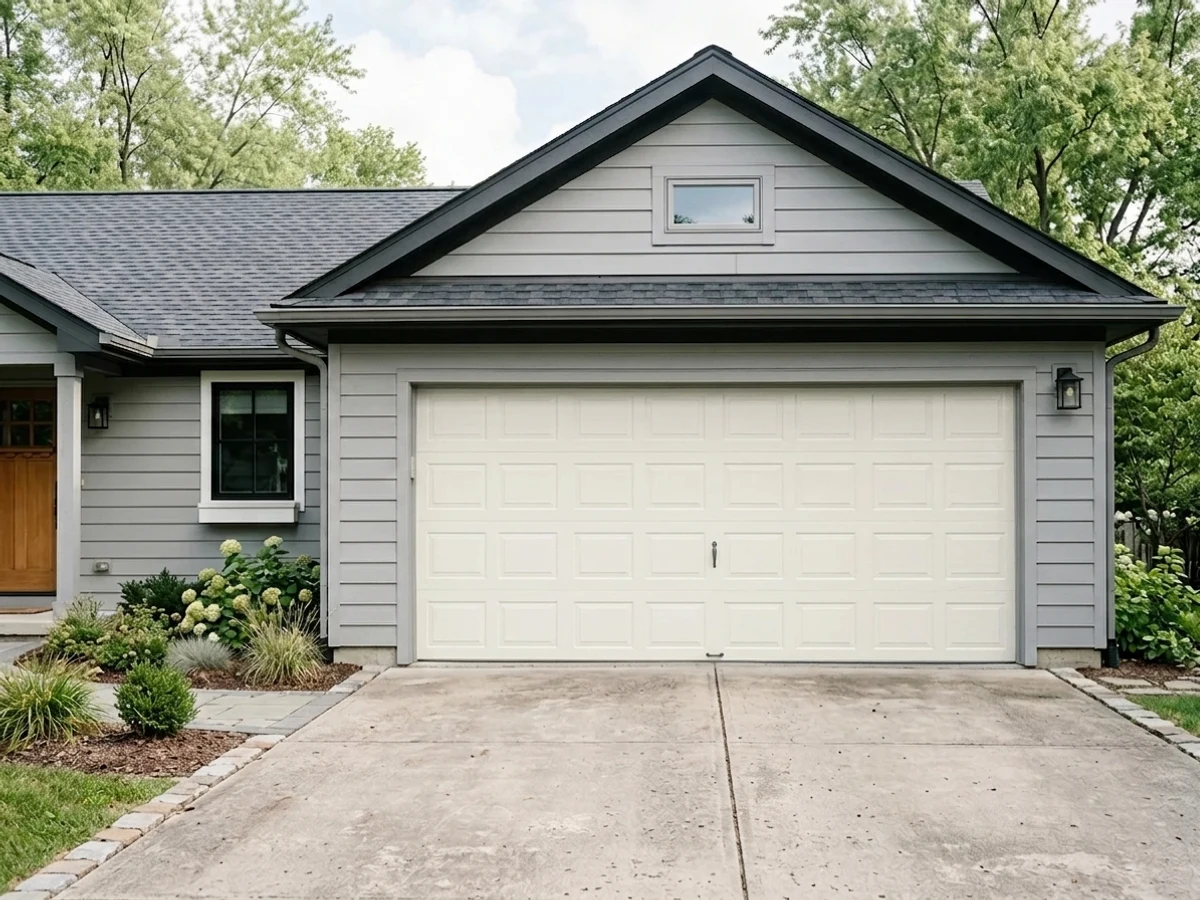
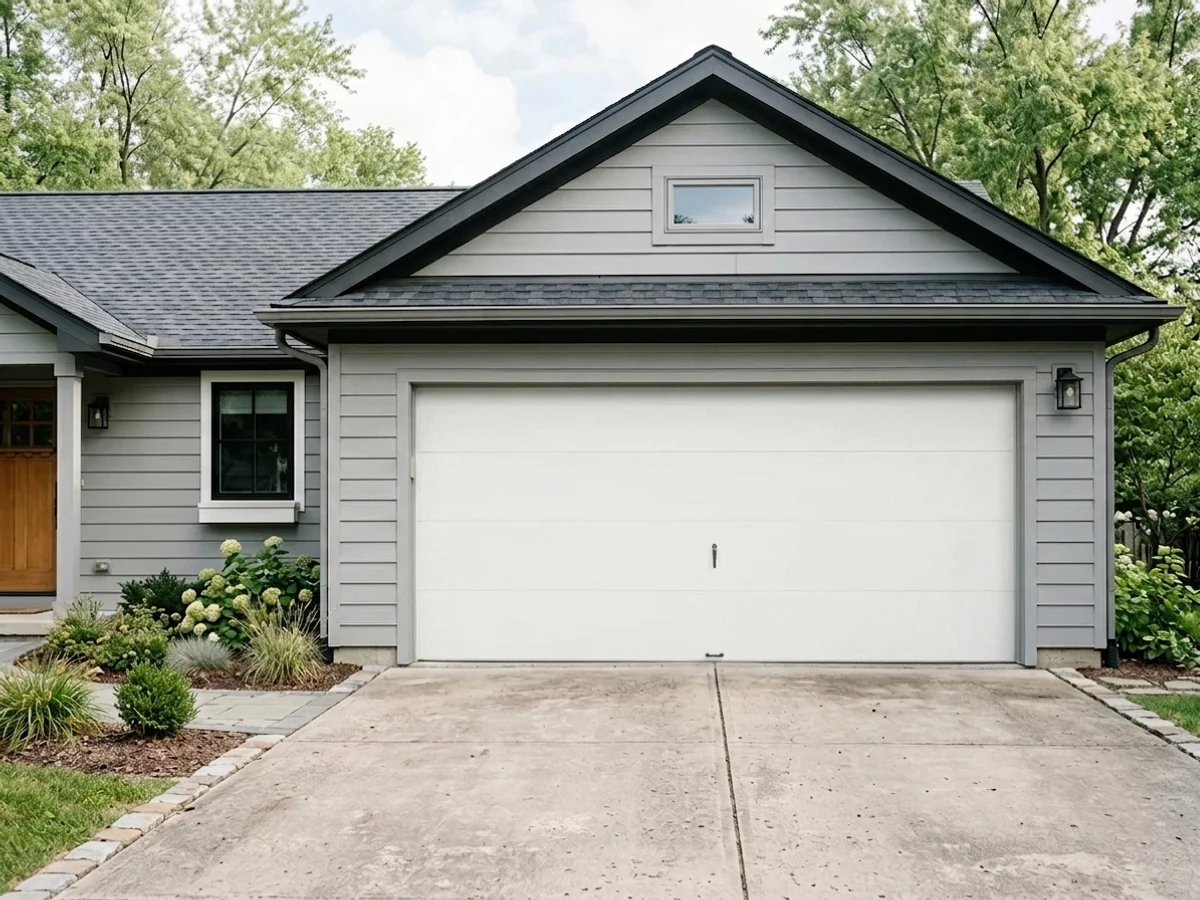
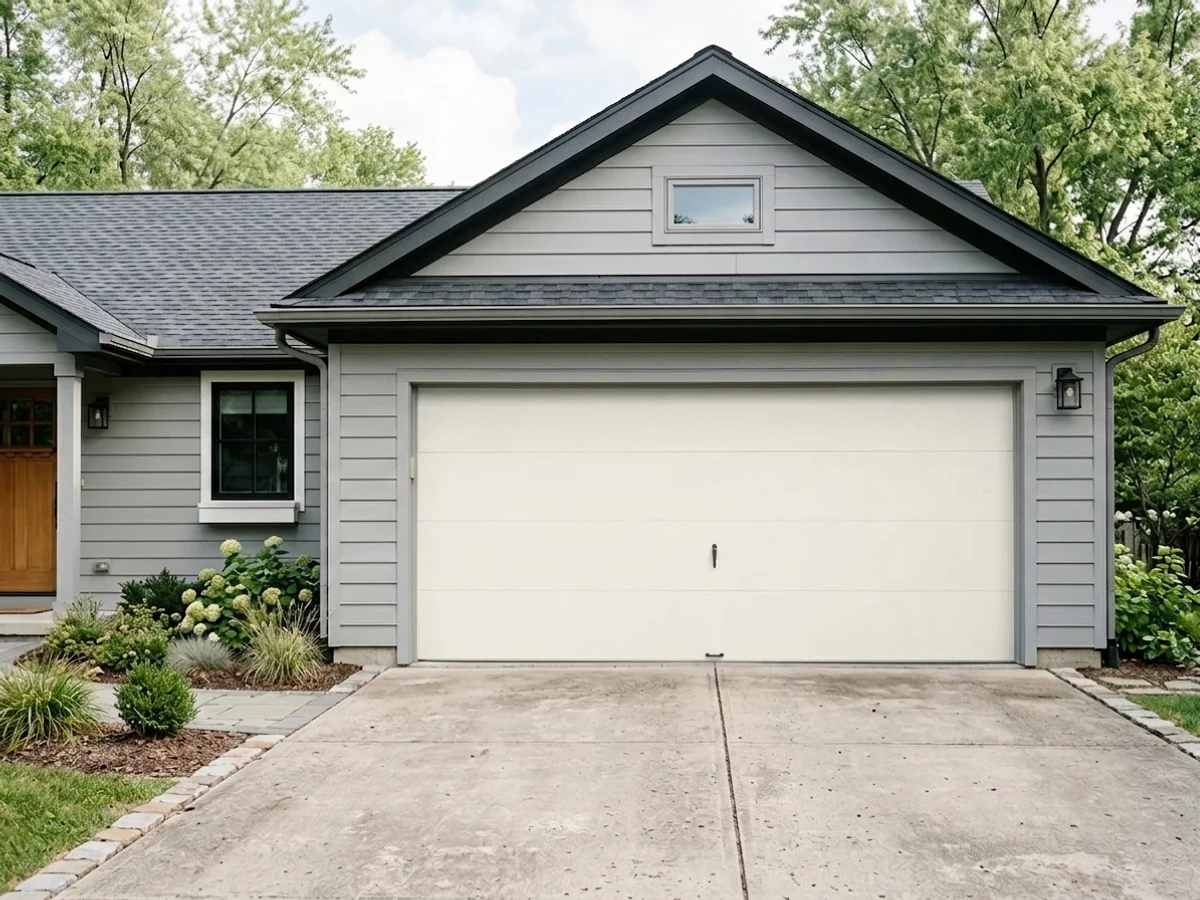
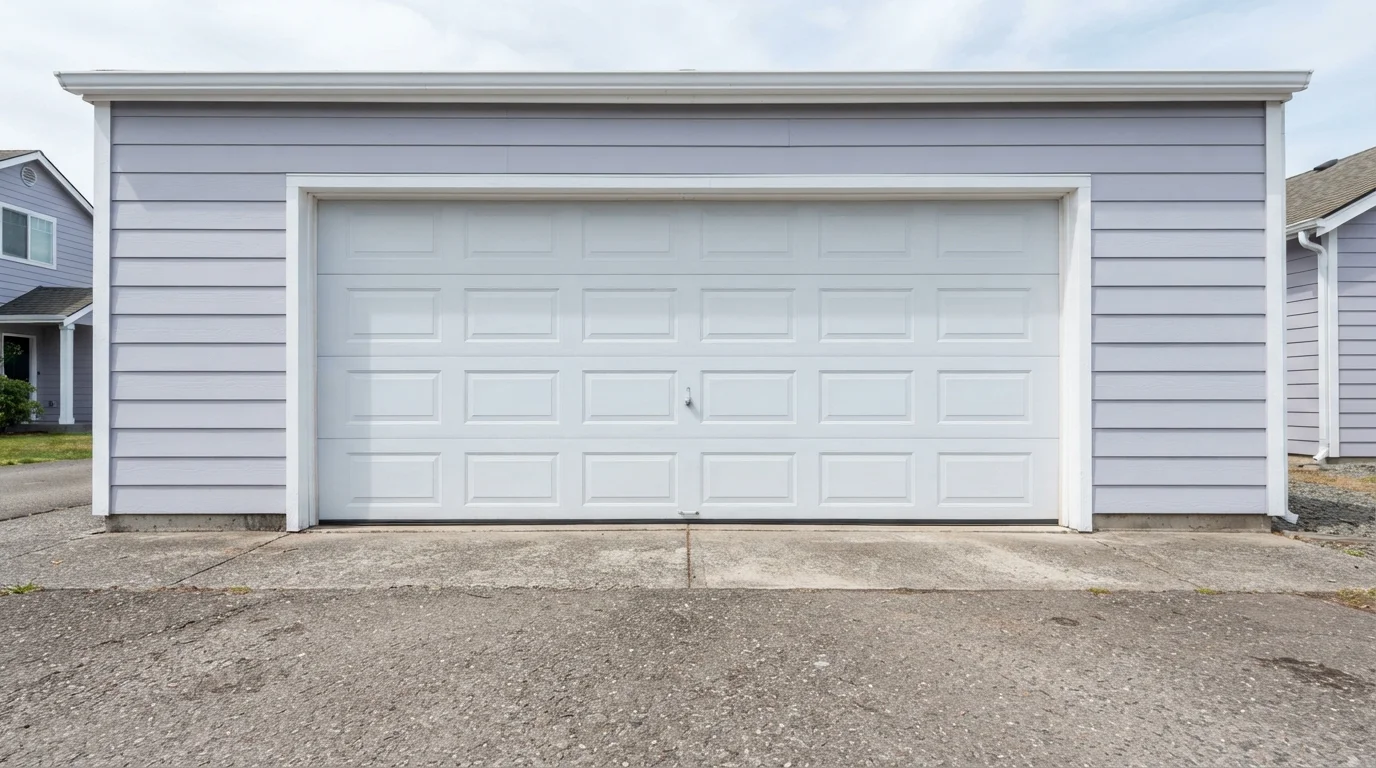
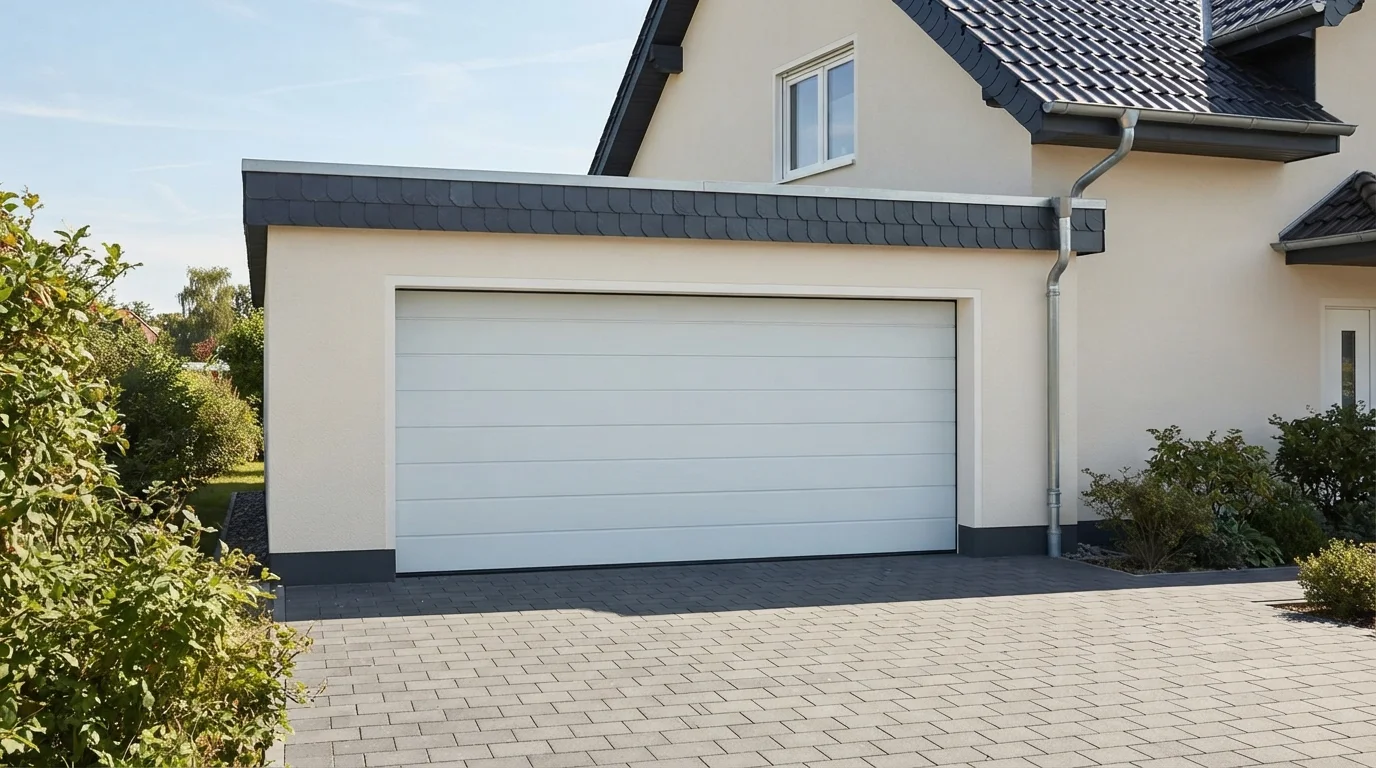
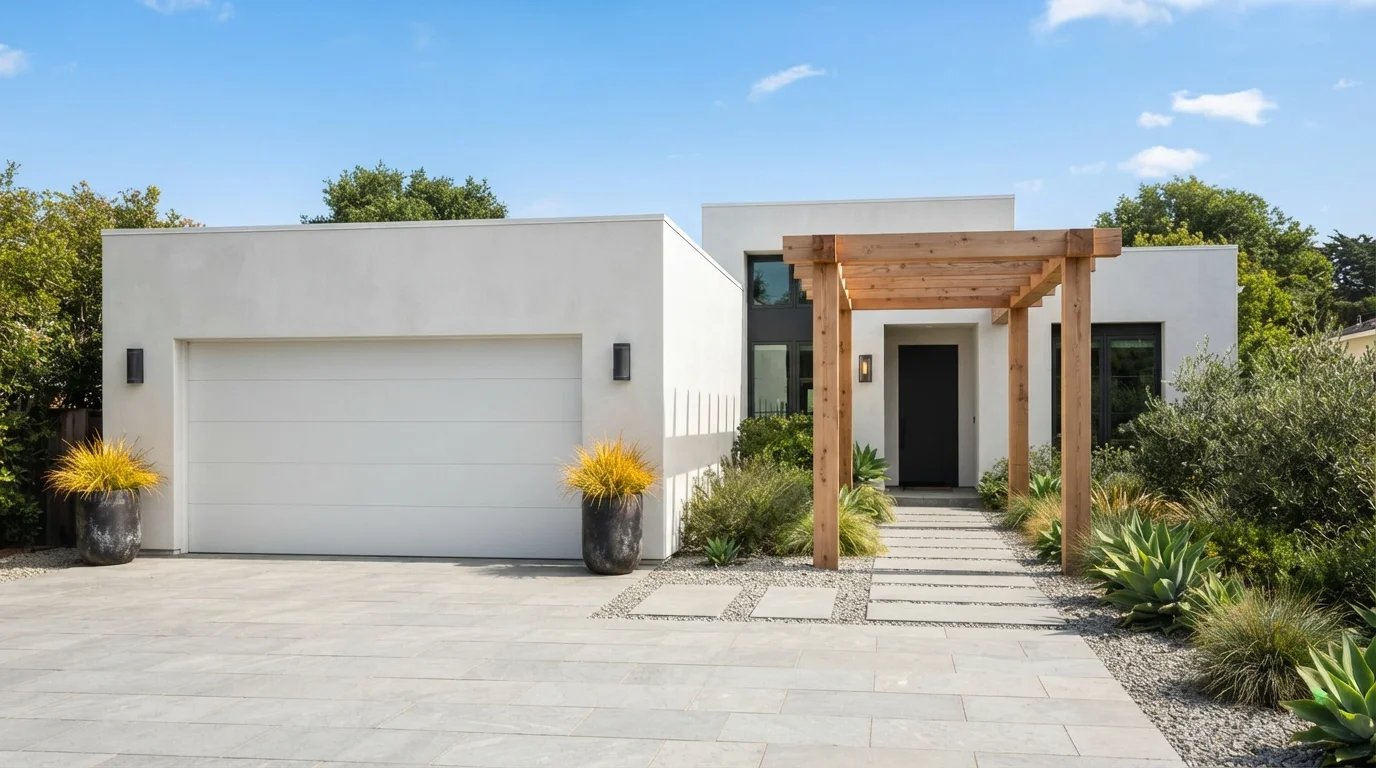
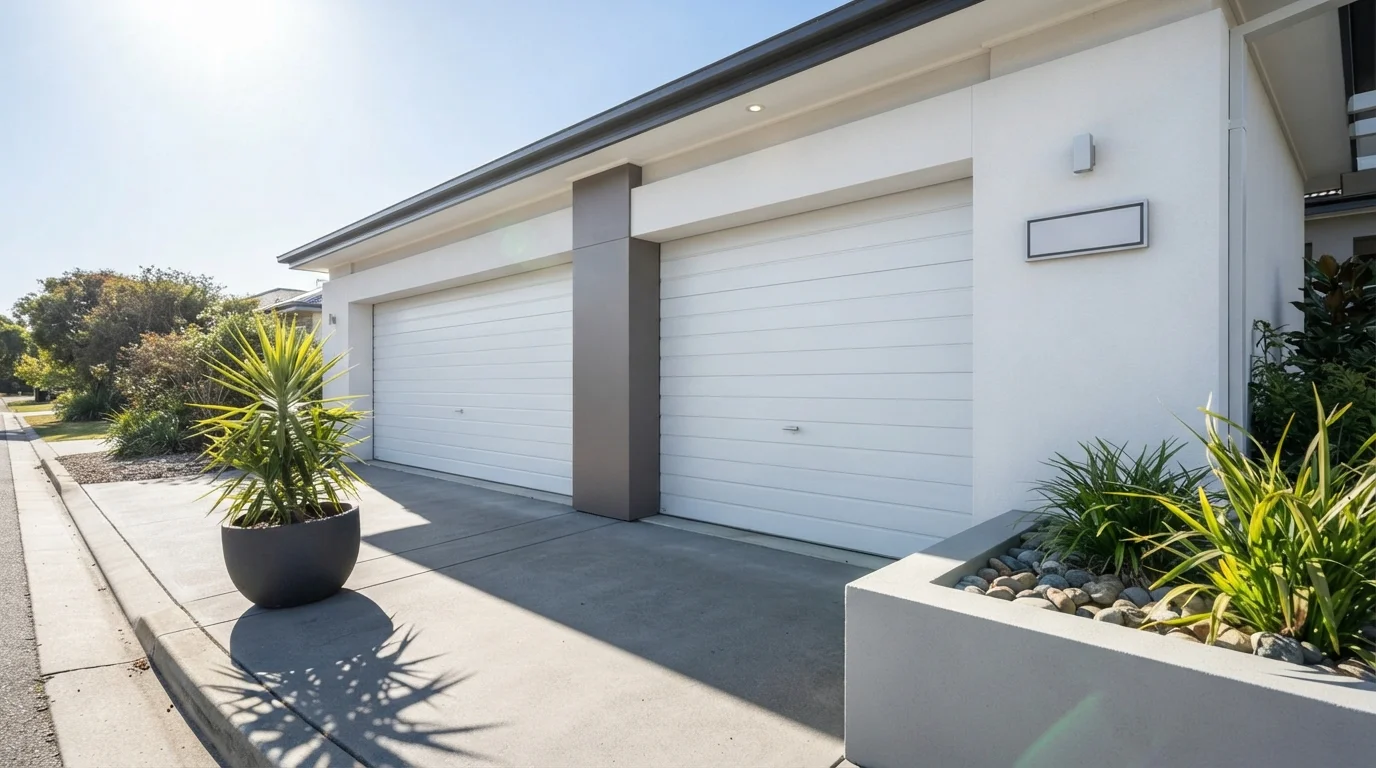
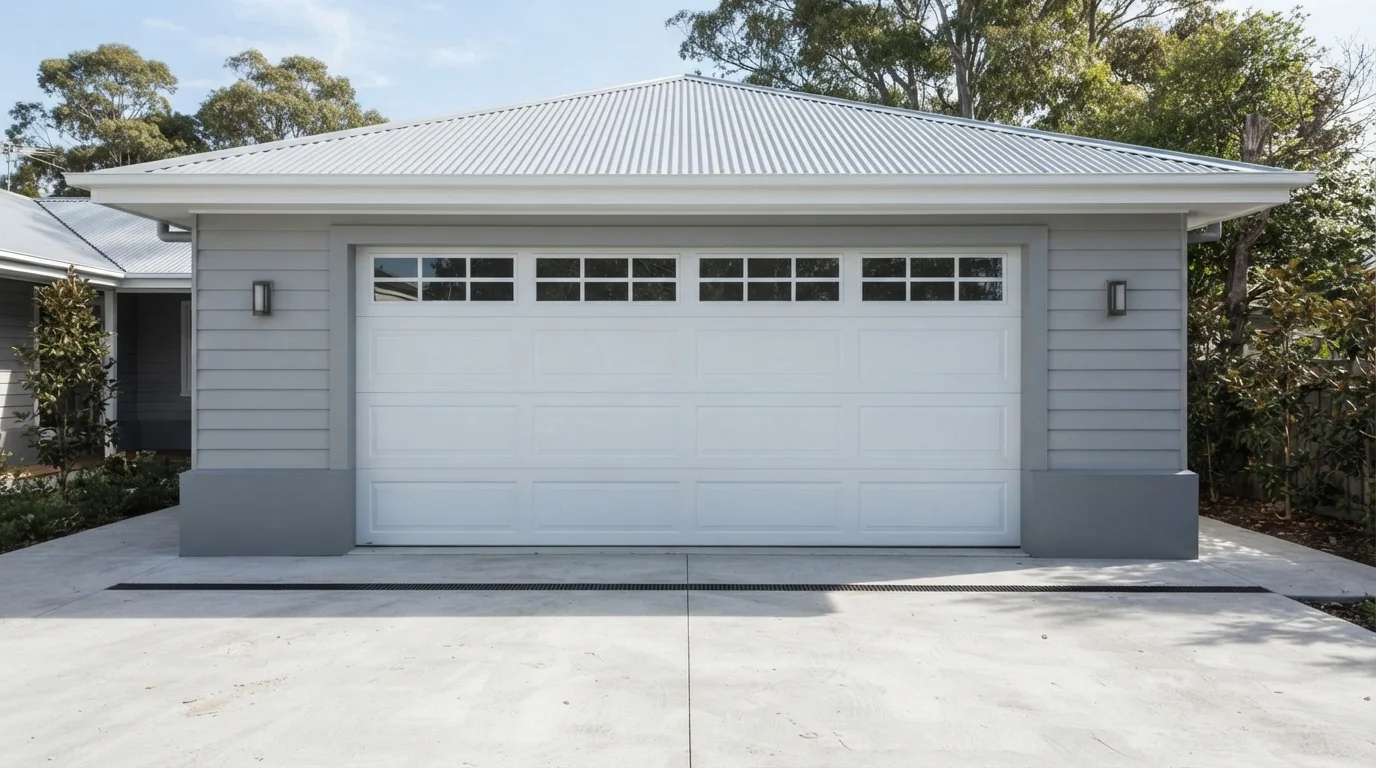
White is the default garage door color for a reason: it works with almost any siding, and a fresh coat is the fastest curb-appeal upgrade you can make in a weekend. Ultra White by Valspar (7006-24, LRV 92) is about as bright and stark as white gets — pick it when you want the door to read as a clean, near-reflective focal point against darker or mid-tone siding. Decorator's White by Benjamin Moore (OC-149, LRV 84) sits a shade softer, so it doesn't glow quite as hard in direct sun, which is why it's a common choice on doors that face south or west.
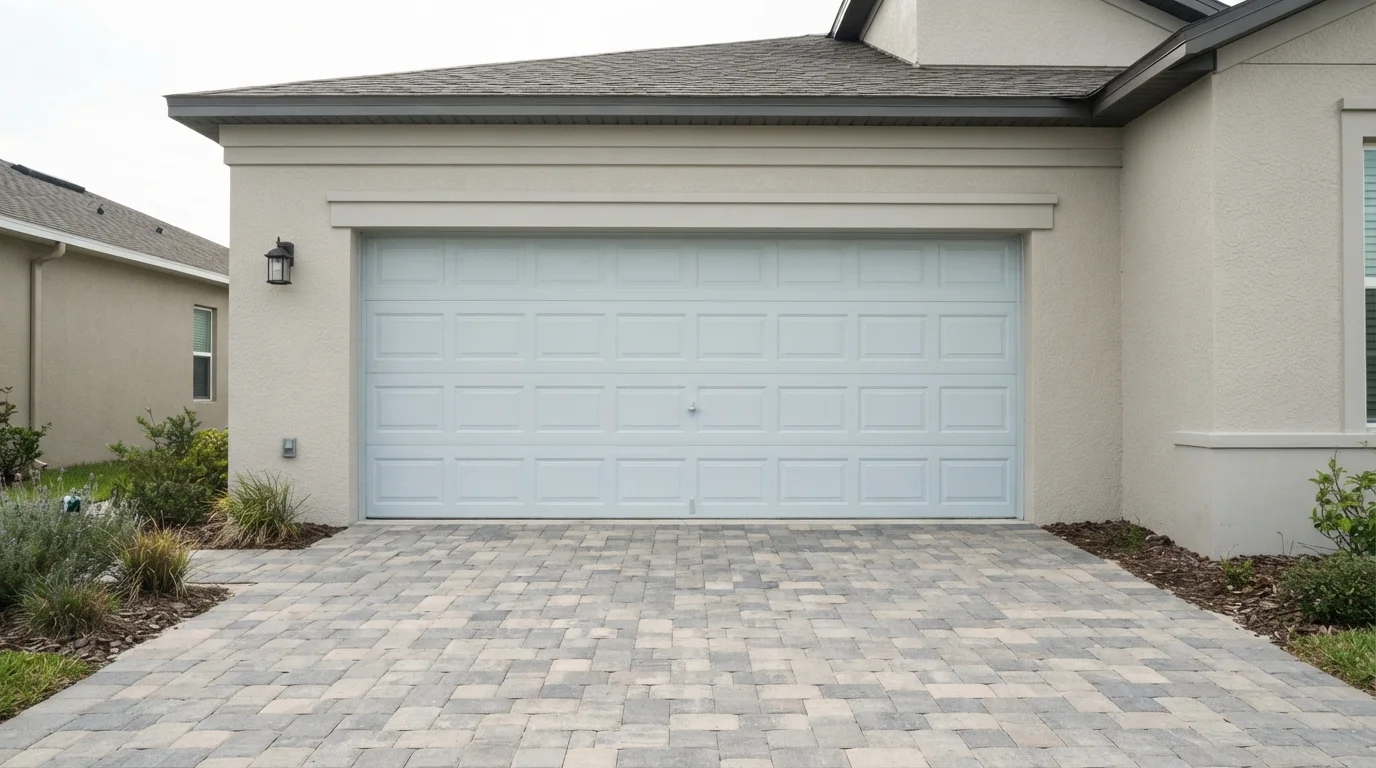
Undertone is the part people miss. PPG Delicate White (PPG1001-1, LRV 88) is genuinely neutral — neither warm nor cool — so it blends into siding that's already a mix of tones (tan brick, gray-beige vinyl, painted trim that's aged slightly yellow). Alabaster, the most-spec'd warm white for garage doors, leans the other way on purpose: it's built to sit next to beige, cream, and warm-gray exteriors without looking chalky or mismatched.
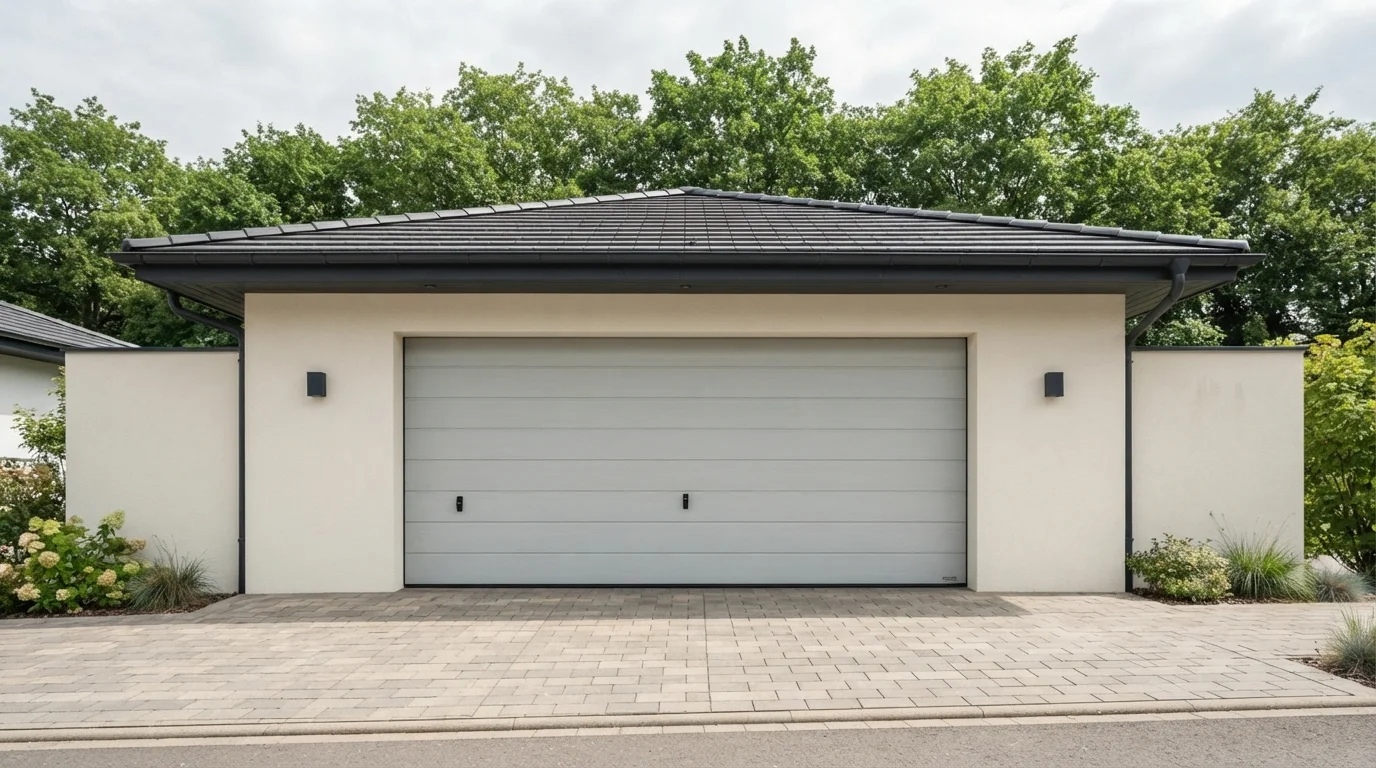
The Sherwin-Williams pair on this page split the same decision. Superwhite is the crisp, modern option — closer to Ultra White in feel, good on contemporary homes with black or dark-gray trim. Hush White is the warmer sibling, made for houses with wood accents, warm siding, or a front door you want the garage to feel related to, not identical to. Iceberg from Benjamin Moore lands in between: crisp enough to brighten a dated exterior but not so stark it fights with a slightly warm roofline or driveway concrete.

 1
1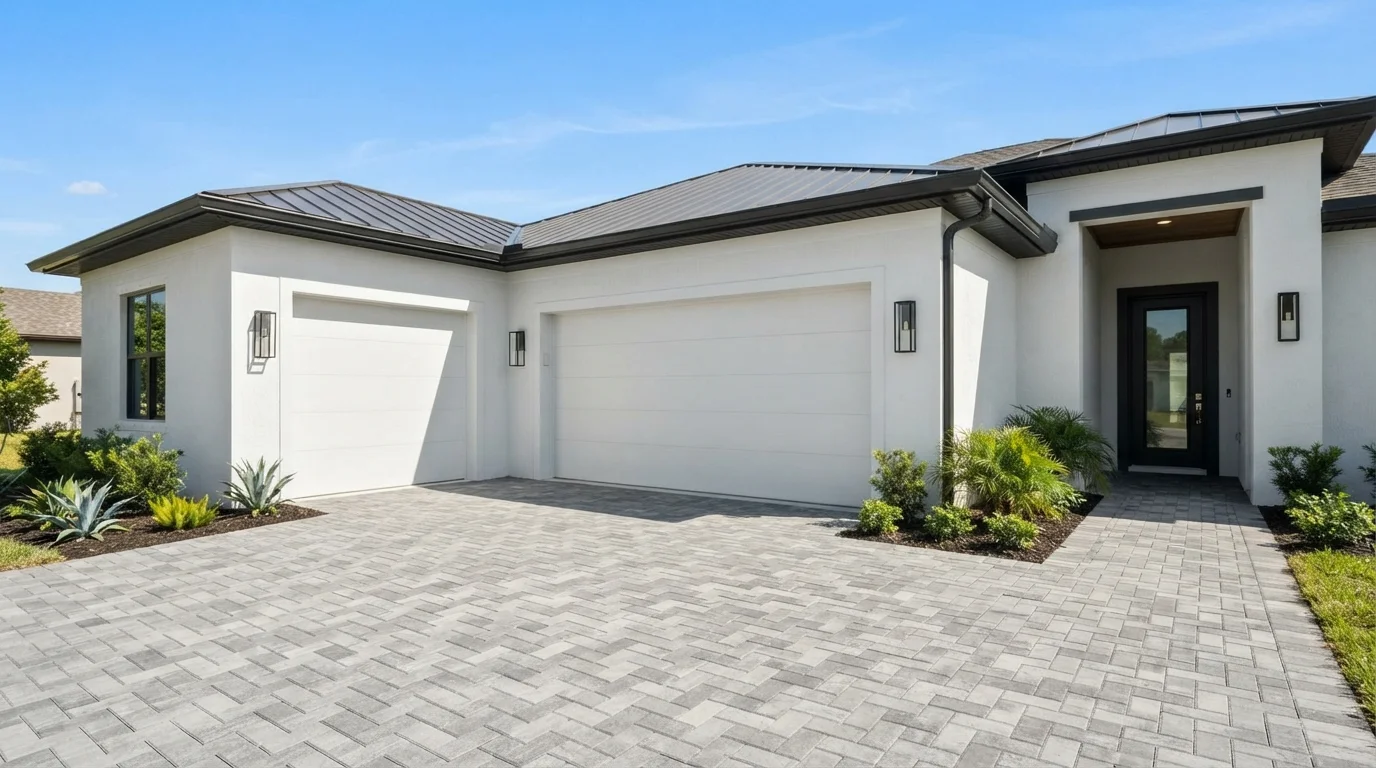
Ask a Question