Ultra White
Valspar's best-selling white, reviewed honestly: the jobs it wins outright, the rooms where it turns clinical, and what the name really means on a Lowe's shelf.

Jessica has spec'd whites and neutrals for more than 300 rooms and keeps a sample wall of painted drawdowns in her studio. Every color review is checked against real reader rooms in the comments and re-tested when a formula changes. About the testing process →
- 1Classic Gray74
- 2Alabaster82
- 3Ultra White93.6
- 4White100
The Fast Verdict
Ultra White is a bright, near-neutral white with almost nothing added to it — no cream to go yellow, no gray to go dingy. That emptiness is the point: on trim, on ceilings, on a fence or a garage door it just reads white, year after year, in any light. Put it on four living-room walls and the same emptiness turns clinical. Buy it for the jobs where white is a job, not a mood.
Trim, doors and casings · ceilings · fences, gates and porch ceilings · garage doors · laundry, mudroom and utility rooms that need every lumen
You want a soft, creamy white · the room is dim and you plan to relax in it · your existing trim or cabinets are a warmer white · you are covering a saturated wall color on a budget
- Bright enough (LRV 93.6) to genuinely brighten a dark room or ceiling
- No undertone to fight your wall colors, floors or stone
- Excellent trim and door white under cool and warm wall colors alike
- One of the strongest fence, gate and garage-door whites you can buy locally
- Stocked and tintable at any Lowe's, in every sheen and exterior line
- Reads cold and clinical on four plain drywall walls
- Makes every warmer white in the house look yellowed
- Covers poorly — tinted primer plus two coats over anything colored
- Shows glare and roller marks in strong direct sun
What Color Is Ultra White, Really?
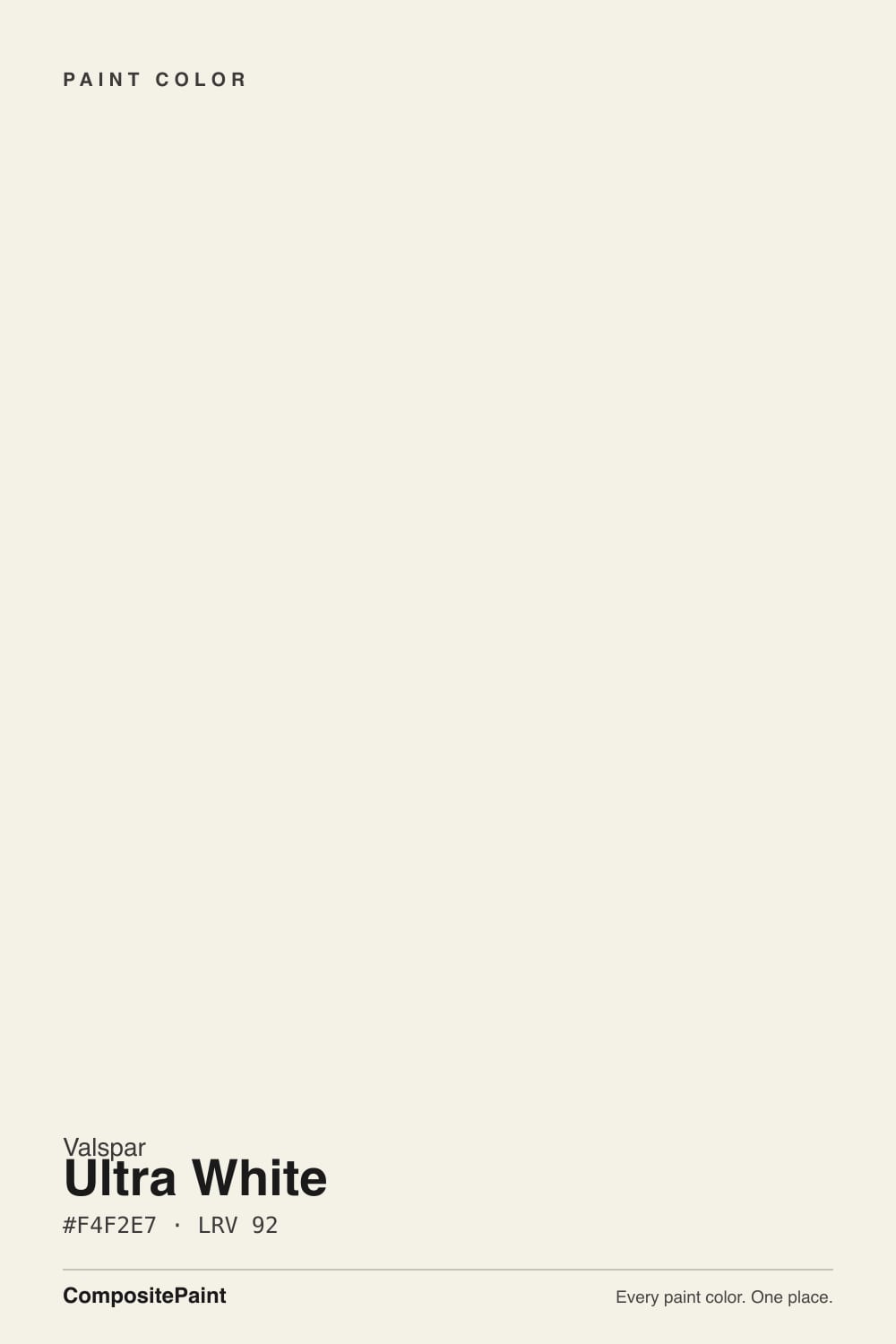
A bright white with the color almost entirely taken out. At LRV 93.6 it sits at the top of Valspar's deck, and the tiny amount of pigment left in it is a whisper of cream — not enough to call it a warm white, not enough to call it cold. On a chip next to a true bright white you will see a faint softness; on a wall, in a real room, most people simply see white. That is exactly why it sells: it is the white you pick when you do not want the white to have an opinion.
The undertone arguments online are worth understanding before you sample. Valspar files it in the cool-white group; several color blogs call it faintly warm; a couple call it near-neutral with a hair of blue. They are all describing the same paint in different rooms, because a white this bright has almost no undertone of its own to defend itself with — it borrows whatever the room hands it. Cool north light makes it read clean and slightly blue-white. Late afternoon sun makes it read faintly cream. Neither is a defect; it is what LRV 93.6 does.
Undertone in one line: essentially neutral, with the faintest cream in reserve. If your sample looks yellow, that is your bulbs or your floor bouncing into it; if it looks blue-gray, that is overcast north light. Both are the same paint being honest about where you put it.
Where It Shines
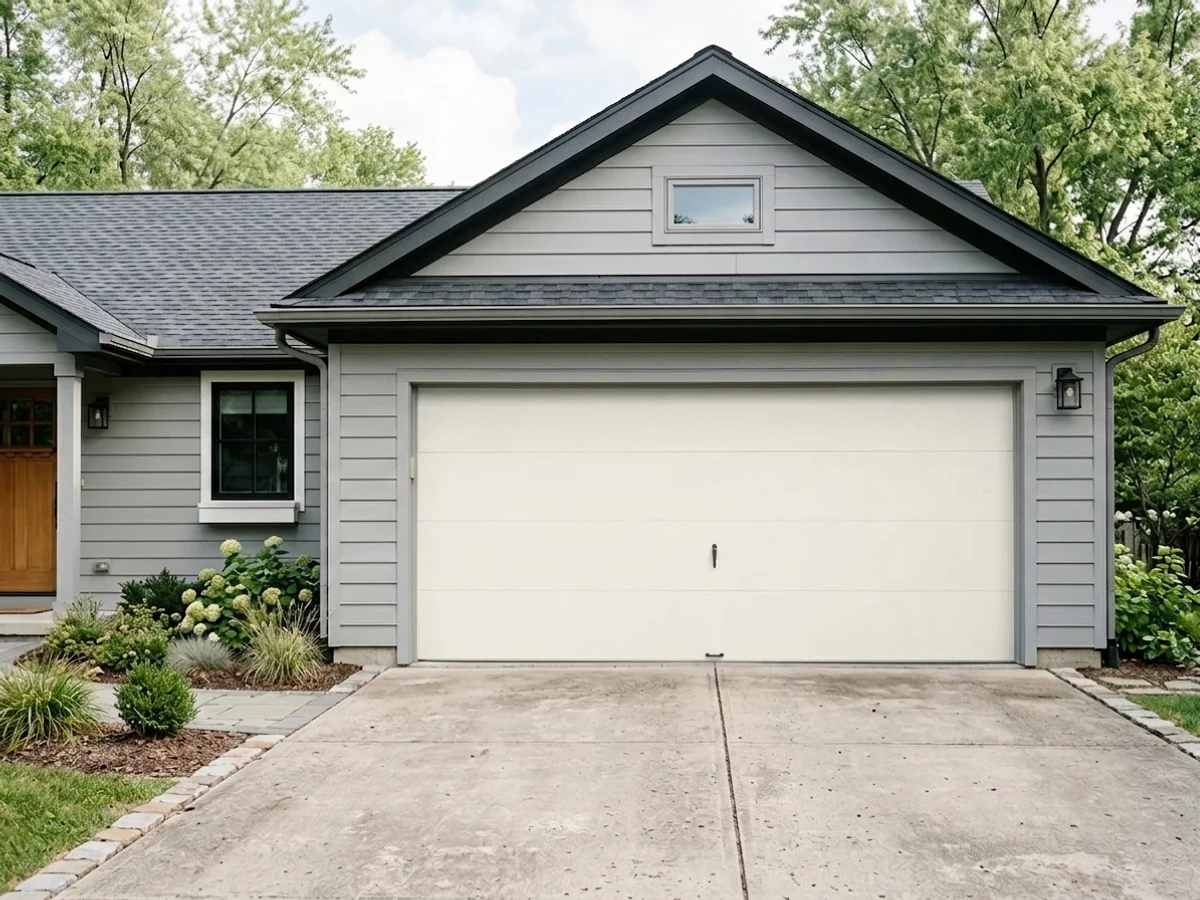
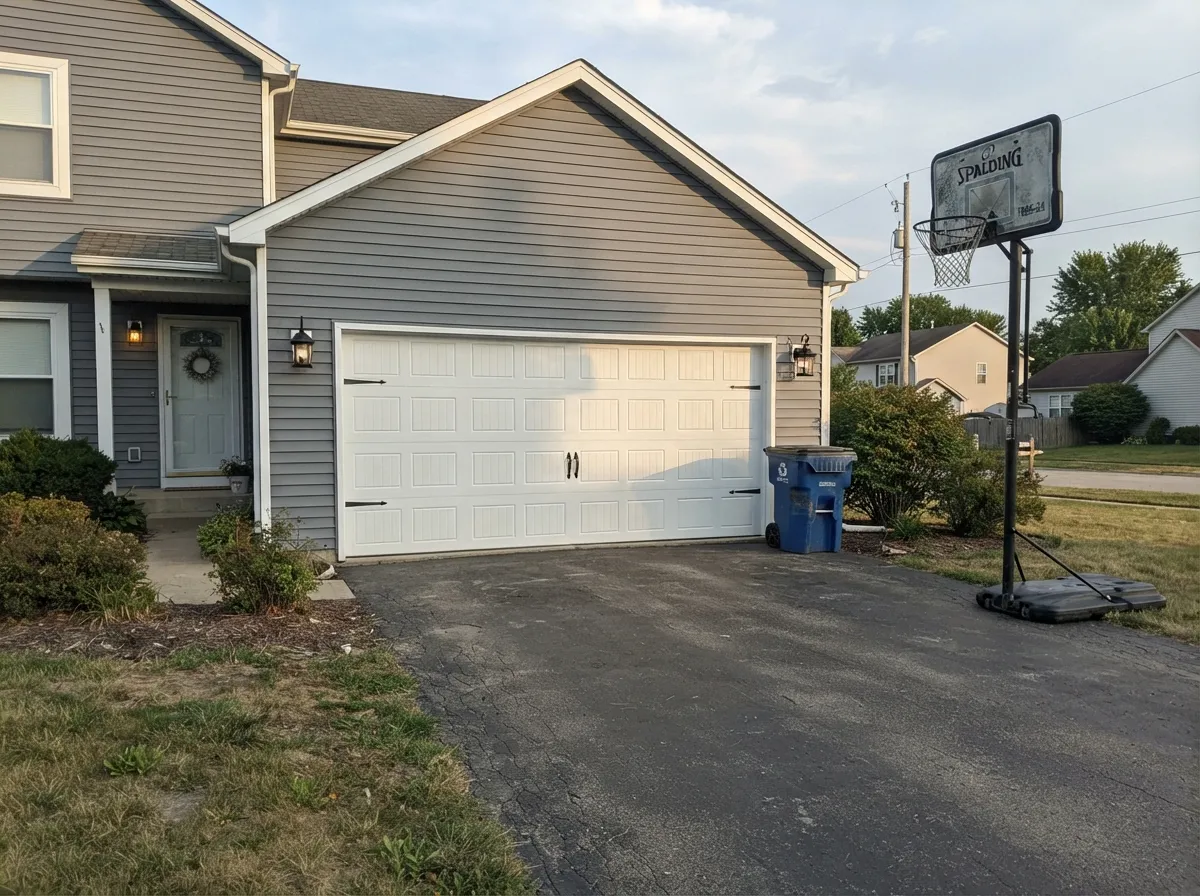
This color is at its best doing work rather than setting a mood. On trim and doors it gives the crisp painted edge that mid-tone wall colors need, and because it has no cream in it, it will not turn the walls beside it muddy. Outside it is even stronger: on a fence, a gate, a porch ceiling or a garage door, brightness is the whole job, and a white with no undertone has nothing to shift or yellow as the seasons change. Valspar's own tint data keeps it near the top of its best-seller list for exactly these reasons — it is a hardware-store white doing hardware-store work, and doing it well.
Where It Fails
The complaints about Ultra White are remarkably consistent, and every one of them is predictable before you open the can. None of them are the paint failing; they are people buying a utility white for a job that needed a soft one.
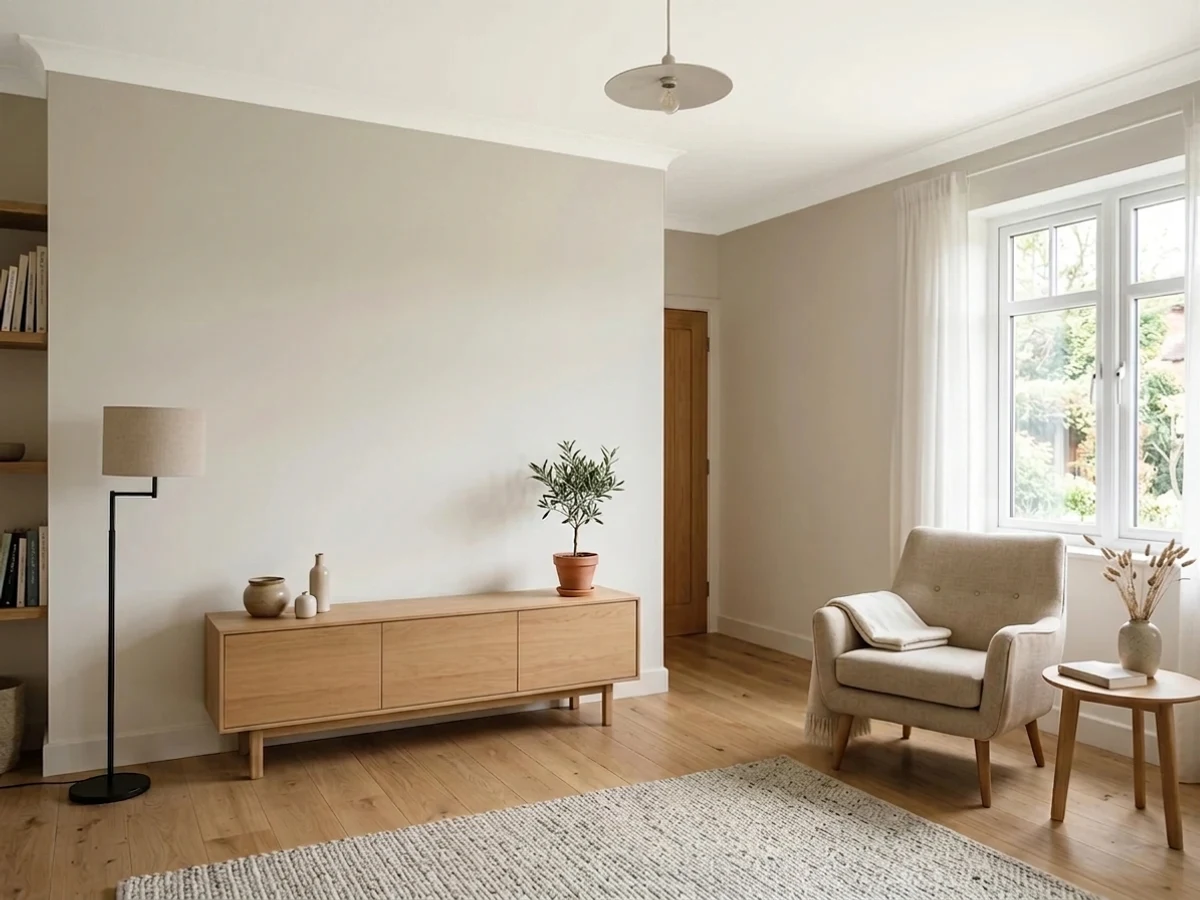
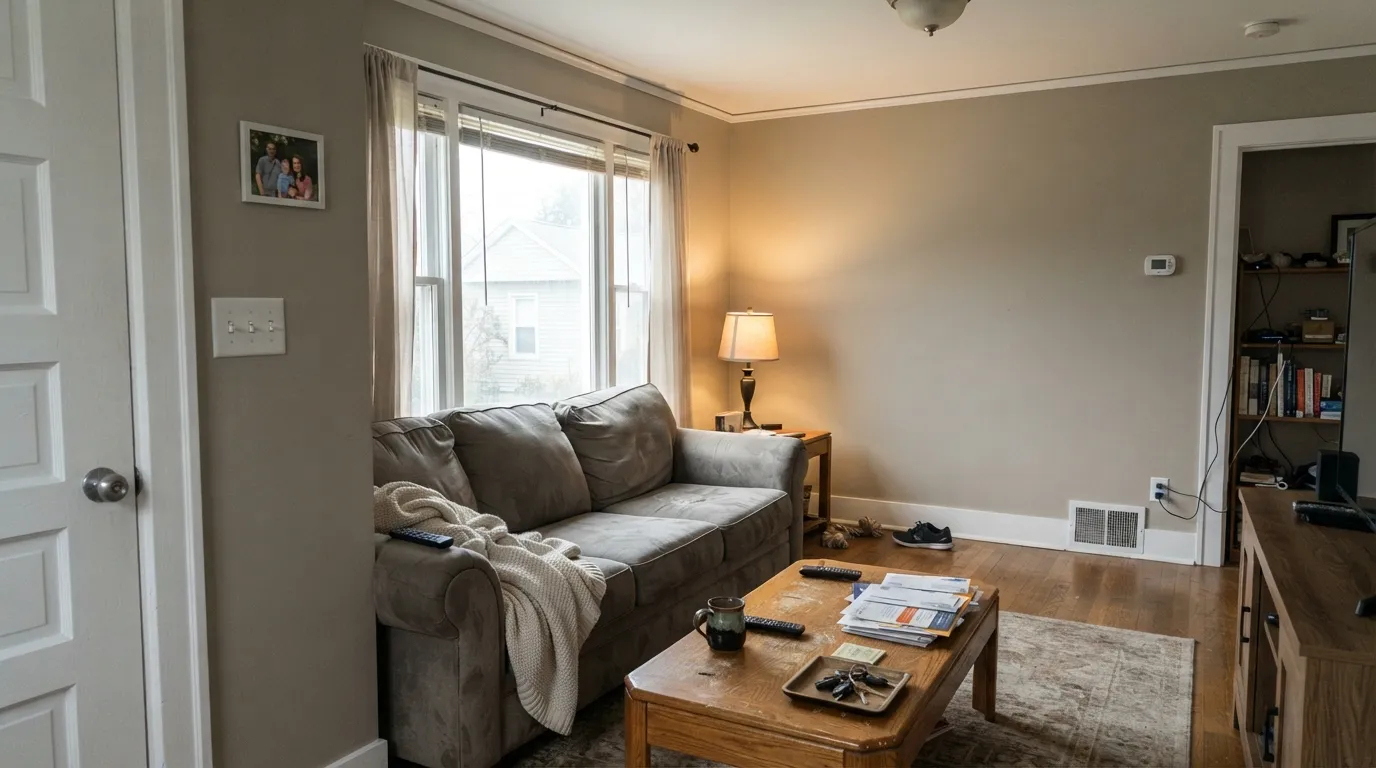
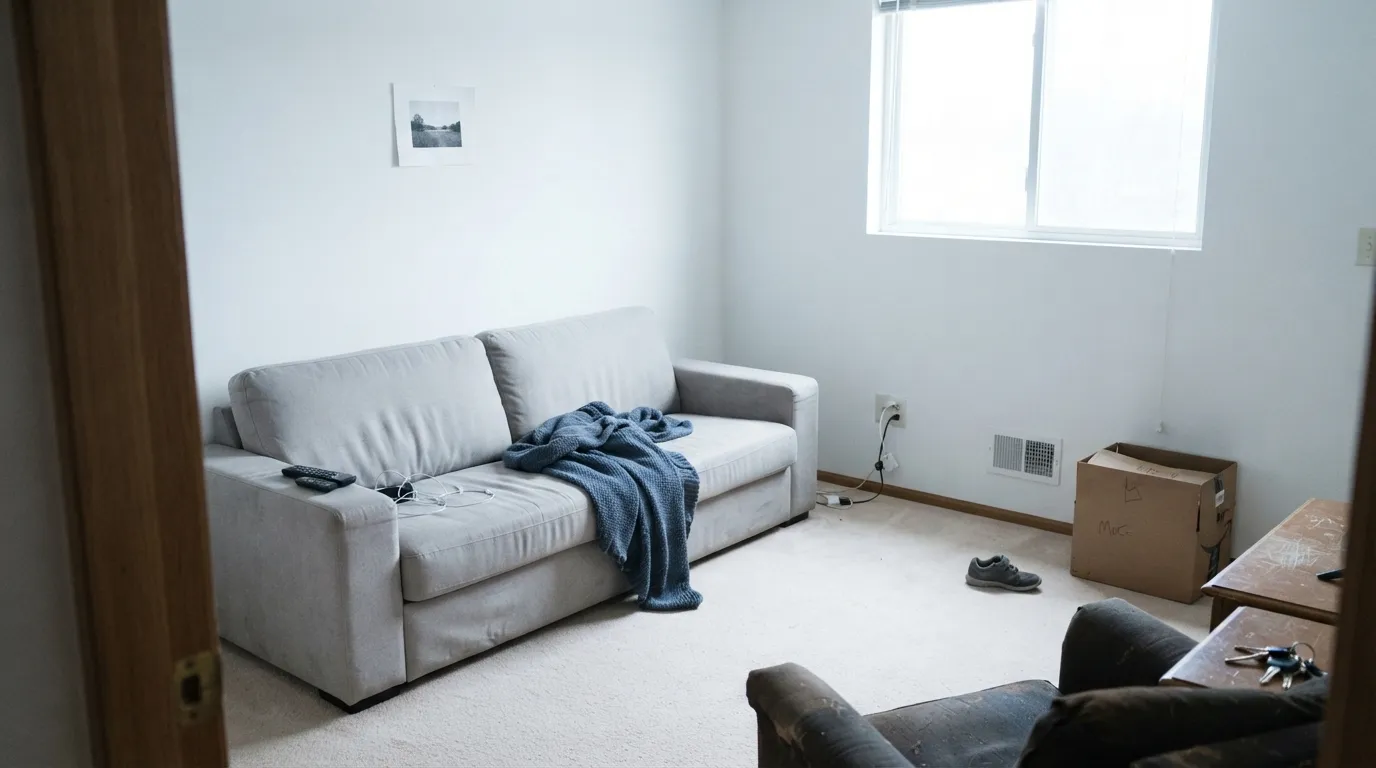
At LRV 93.6 the walls stop being a surface and become a light source. In a sunny room you get glare and hot spots; in a dim one you get a flat, blank plane that readers describe as clinical, hospital-ish, unfinished. Bright whites need architecture — molding, beams, art, texture — to read as a decision. On plain drywall they read like the painters have not come back yet.
This is the most common real-world regret. Fresh Ultra White trim next to builder-cream ceilings, an older off-white door, or warm-white cabinets makes the neighbors look yellowed and dirty overnight — the brighter white always wins that argument. Either commit and repaint the neighboring whites, or drop down to a softer white like Benjamin Moore Swiss Coffee (LRV 84) and keep the house on one temperature.
Bright whites carry the least pigment of any color, so they hide the least. Going over beige, a strong color or patched drywall, plan on a tinted primer plus two full coats — Valspar's cheaper interior lines already draw streaking and thin-coverage complaints, and a near-white is the hardest possible test of them. Buy the better line and roll it slowly rather than paying for a fourth coat.
Room by Room
Semi-gloss Ultra White under greige, sage or navy walls gives the crisp painted edge those colors are designed against. Because there is no cream in it, it stays white against cool wall colors that would expose a warm trim white.
A high-LRV white bouncing light off the fifth wall is what ceilings are for. Flat sheen hides roller lap and drywall waves; the lack of undertone means the ceiling never argues with whatever the walls become later.
Rooms with one small window and a job to do want every lumen back. Here the clinical brightness that ruins a living room is an asset: you can see the stain you are treating. Satin or semi-gloss so it wipes.
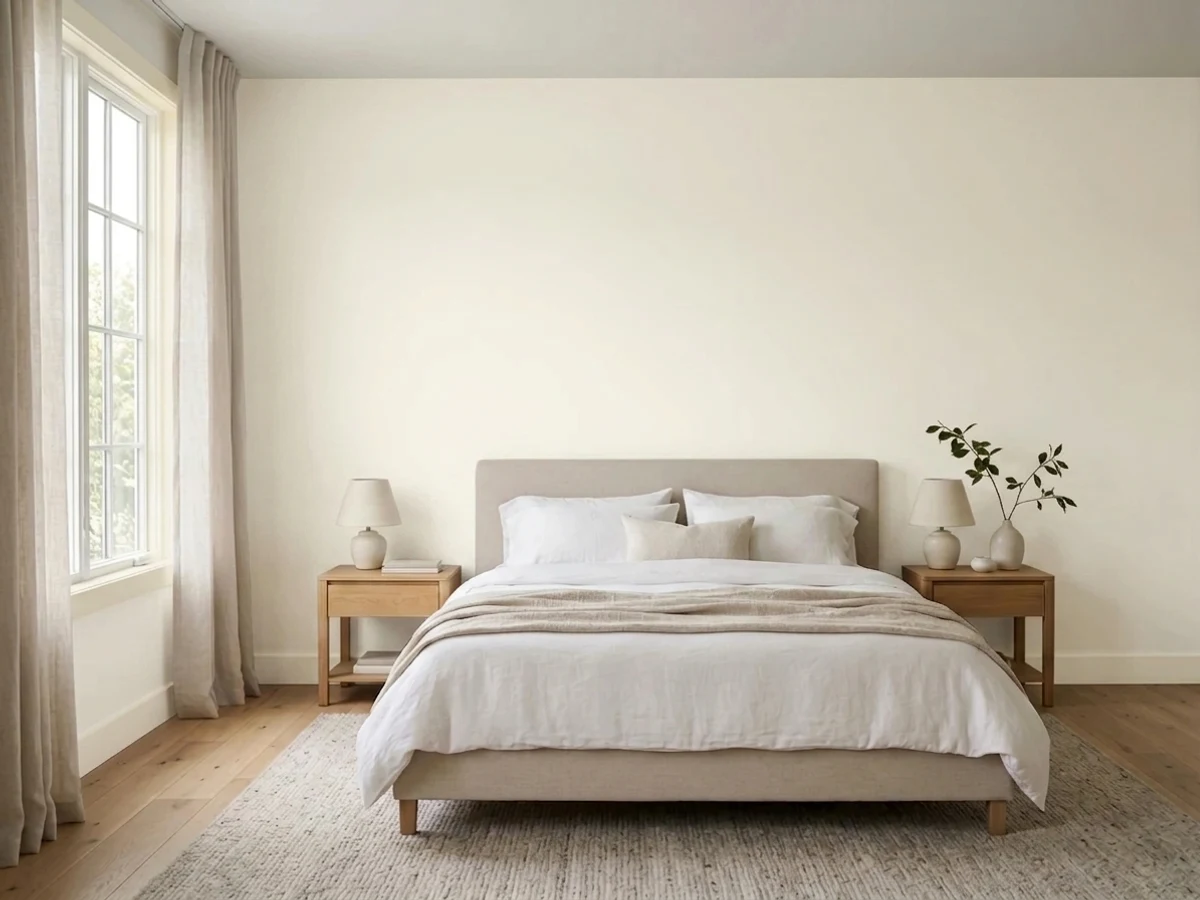
This is where the one-star reviews come from. Unless you have real molding, beams or a wall of art to catch shadows, four walls of LRV 93.6 read cold and unfinished. Warm your white or warm the room, but do not do this by default.
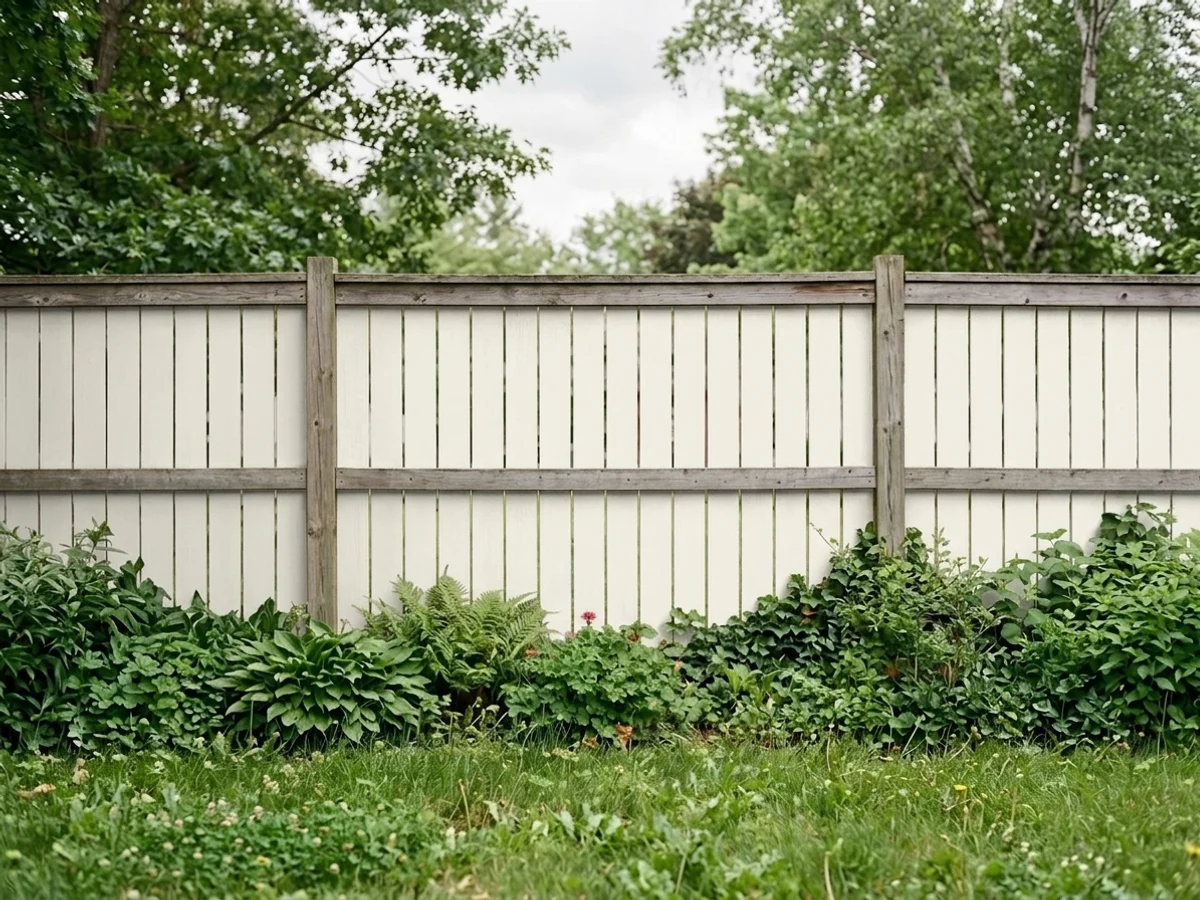
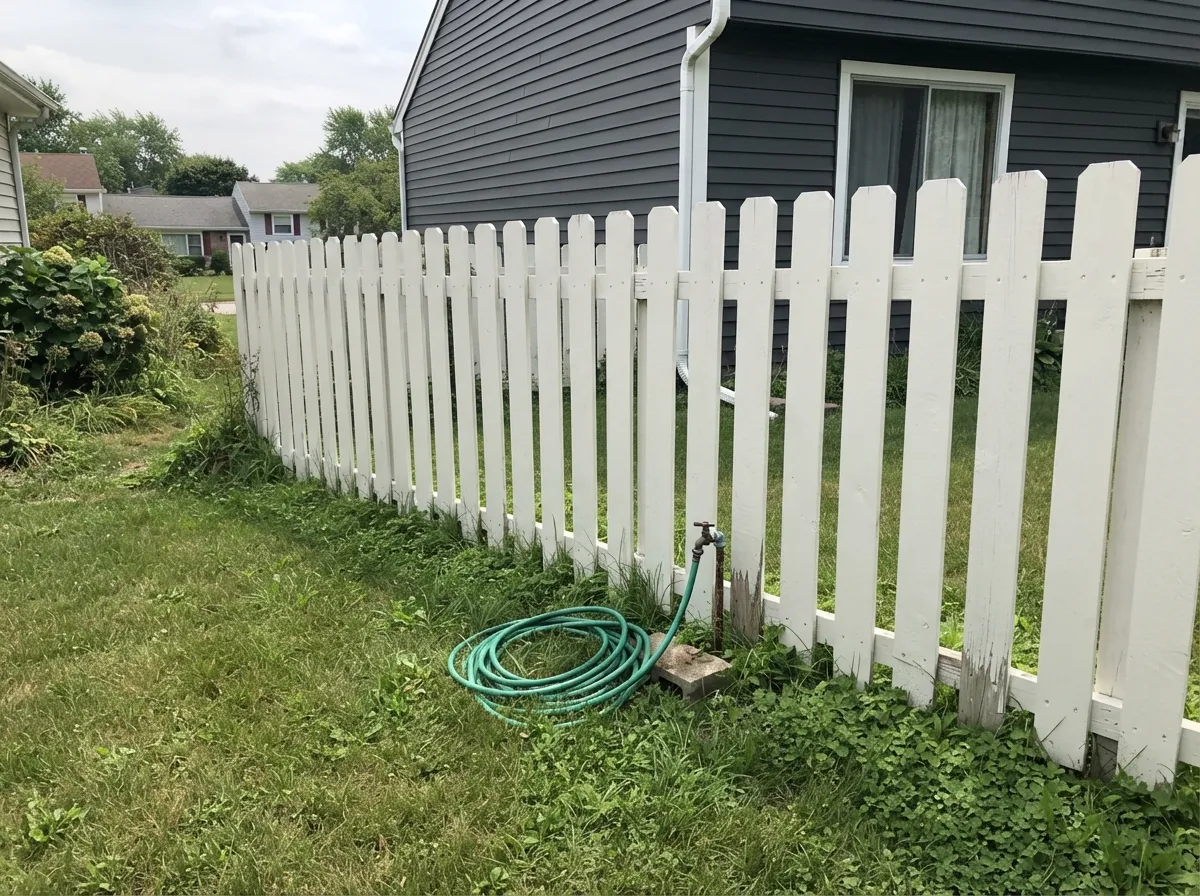
The classic painted-fence white, and one of the few colors where maximum brightness is straightforwardly correct. Use an exterior satin with mildewcide on a fence, expect to wash it annually, and keep the wood off the dirt line. Details in the exterior section below.
A big white door reads as trim rather than as a wall, which is why it works on almost any siding color. Use a door-and-trim grade exterior enamel so the panels stay hard and washable, and paint the surrounding trim the same white so the door disappears into the frame instead of floating.
Your Light Is the Risk
The one white family that thrives here: with no warmth to strip out, it stays clean and even. Softer whites go dingy in this light; this one does not.
Full south or west sun turns it into glare. Hot spots blow out, roller texture shows, and the wall stops reading as a color at all.
Cleanly white at midday, a shade creamier for the hour around golden hour, then back. The swing is small — the smallest of any white this bright.
2700K lamps warm it to a soft cream and make it livable at night. Cool 4000K LEDs push it blue-white and clinical — the pairing behind most "it looks like an office" complaints.
Most complaints about Ultra White are a light mismatch. Upload a photo of your actual room and see it on your walls — then ask for the same wall in north light or evening lamps before you buy a single sample.
Need It From Another Brand?
Any paint counter can custom-tint Valspar 7006-24 directly. If you would rather stay in one brand's own deck, these are the closest stock matches, measured as ΔE2000. Under 2 is a difference you will not see on the wall.
| Brand | Closest color | ΔE | LRV | |
|---|---|---|---|---|
| Sherwin-Williams | High Reflective WhiteSW 7757 · Sherwin-Williams | 0.5 | 93 | Color page → |
| Behr | Blanca PeakHDC-NT-04G · Behr | 0.5 | 94 | Color page → |
| Benjamin Moore | Snowfall White2144-70 · Benjamin Moore | 2.0 | 90 | Color page → |
| PPG / Glidden | Delicate WhitePPG1001-1 · PPG / Glidden | 1.6 | 88 | Color page → |
| Glidden | Delicate WhitePPG1001-1 · Glidden | 1.4 | 88 | Color page → |
| Dutch Boy | Super White001W · Dutch Boy | 0.6 | 92 | Color page → |
Similar Valspar Colors
The nearest shades to Ultra White within Valspar's own range, ranked by perceptual color distance — useful when you want the same look a touch lighter, darker, or warmer.
WCAG 2.1: AA is 4.5 : 1 for normal text, 3 : 1 for large text, AAA is 7 : 1.
Ultra White vs the Colors You're Also Considering
Every Ultra White sample board has the same rivals on it. The numbers show the real lightness gap — then it comes down to which risk you would rather live with.
Pick this if your store is Lowe's; there is no meaningful color reason to drive across town for either one.
Behr 1850 · LRV 92Ultra Pure WhitePick this if you shop Home Depot — it is the same idea at the same LRV 93.6, Behr's default bright white.
Pick this when you want the same job done in a paint you can grab with the groceries.
Sherwin-Williams SW 7757 · LRV 93High Reflective WhitePick this for the brightest ceiling white a paint store will sell you — LRV 93, and it shows on a dark ceiling.
Ultra White sits at LRV 92, the brightest of Valspar's close warm whites, so most alternatives read a touch softer or deeper beside it.
Cravat (8007-5C, LRV 88) is the nearest neighbor: same cream family, but slightly lower reflectance, so it feels a shade calmer and less bouncy on a big wall. Choose Cravat when Ultra White glares in strong sun and you want the warmth without quite as much brightness.
Abel (8007-8C, LRV 90) leans a little warmer and more obviously creamy, better when you want the yellow-cream character to show rather than stay in the background. Creme de la Creme (T660, LRV 87.8) is warmer still and reads clearly as an off-white cream. In short, Ultra White is the brightest and most versatile of the group; step down to Cravat or Abel when you want a softer, warmer feel with less light bounce.
Ultra White Coordinating Colors
Coordinating with a white this empty is easier than with a creamy one: it has no temperature to match, so it sits beside cool grays and warm darks equally well. The only real rule is contrast — Ultra White needs something clearly darker next to it or it stops reading as a deliberate color. These are the partners that keep working, inside and out:
Ultra White Outside: Fences, Gates and Garage Doors
Outside is where this color stops being a compromise. Sunlight flattens undertone in every paint, which is why creamy whites so often read yellow on siding and blue-whites read cold — Ultra White has almost nothing to flatten, so what you see on the chip is close to what the street sees. Valspar sells it through its exterior and door-and-trim lines at Lowe's, including the Duramax exterior line that tests well for long-term appearance, so getting the right product for the surface is a same-trip decision.
For a fence: this is the picket-fence white, and the failure mode is maintenance, not color. Use a 100 percent acrylic exterior paint with a mildewcide, prime bare or weathered boards, and keep the bottom rail clear of soil and sprinkler spray — the dirt line and the mildew line are what make a white fence look tired, long before the film gives up. A wash each spring buys years.
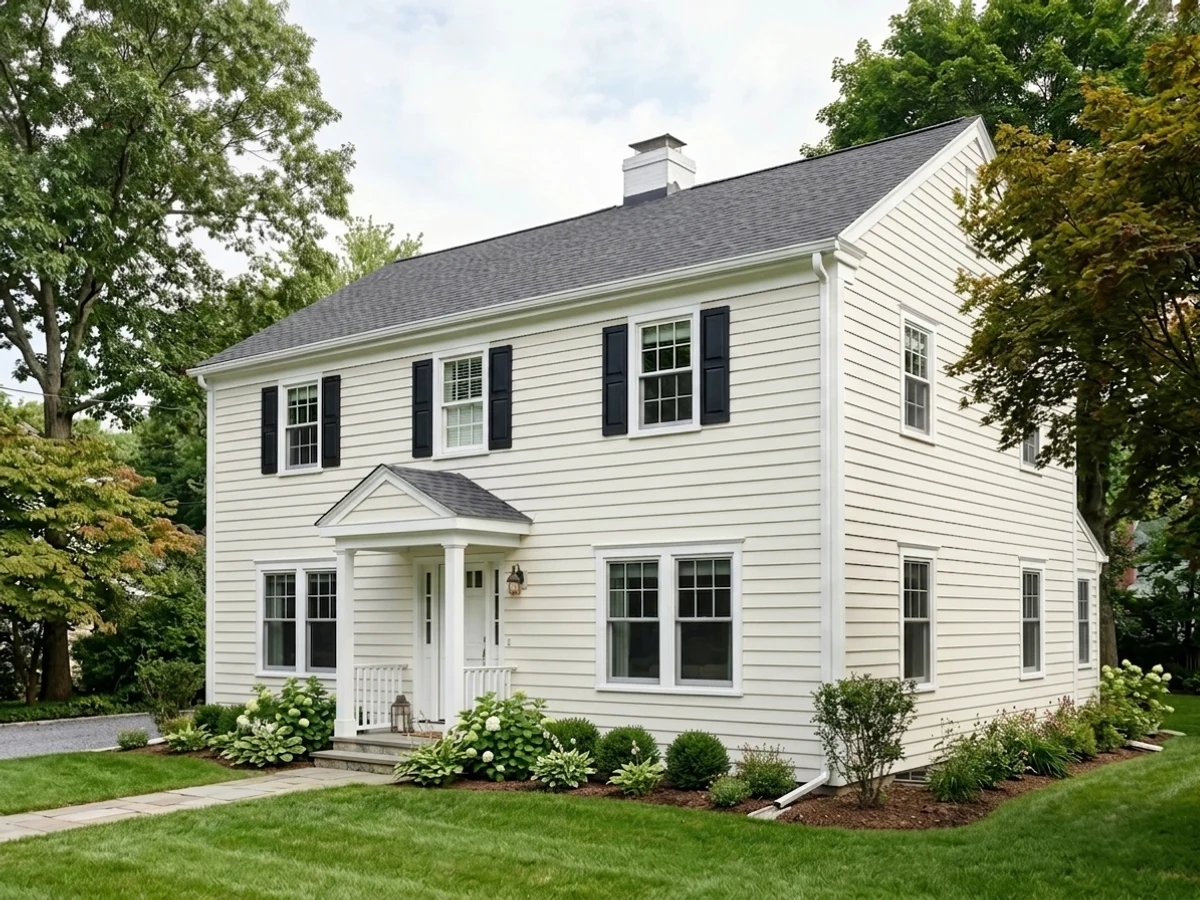
For a garage door: paint the door and the surrounding trim the same white so the biggest flat panel on the house reads as part of the frame rather than a floating white rectangle. It works over nearly any siding color, but it needs the siding to be clearly darker — white doors on pale siding look like a mismatch rather than a choice. Use a door-and-trim grade enamel; a wall paint on a steel door stays soft and marks up the first time a bike leans on it.
Why This Plain White Keeps Outselling Prettier Ones
Valspar publishes a popular-colors report built from its own tint data — what people actually had mixed, not what a trend committee predicted — and in the 2026 edition released this spring, Ultra White is still named among the colors that dominate, alongside Swiss Coffee and Dark Kettle Black. That is the whole story of this color: it is not the one anybody photographs, but it is the one that leaves the store.
The reason is that most white paint is bought for a chore. A ceiling that needs to disappear. Trim after a wall color changed. A fence, a garage door, a rental turnover, a room going on the market. In every one of those situations, an undertone is a liability — it dates the room, it fights the next owner's colors, it makes the neighboring whites look wrong. A white with no opinion is the safest possible answer, and Ultra White is Valspar's version of it.
The mistake is carrying that logic into a room you actually live in. The same neutrality that makes it a perfect ceiling makes it a cold living room, and no sheen or bulb fixes that. Use it for the chores, and give the rooms you sit in a white with a little something in it.
Three Ready Palettes Built on Ultra White
A color is never alone on the wall. These are complete combinations in the 60-30-10 pattern, with the reason each one holds together. Every one opens in the visualizer.
A white fence only looks intentional when the house behind it is dark — against pale siding it reads as a second, dirtier white. Iron Ore gives the fence something to cut against, and the navy door keeps the whole front from going black-and-white.
Try this palette in your roomMid-tone gray siding at LRV 40 sits far enough below the door that the white reads deliberate rather than mismatched. Painting the door and the trim the same white ties the biggest panel on the house into the frame; the black hardware and shutters stop the front from looking washed out.
Try this palette in your roomThis is the scheme Ultra White was built for: a cool-leaning greige on the walls, a bright white edge around it, and one deep note on the doors. A creamier trim white would drag Repose Gray toward beige; this one leaves it alone.
Try this palette in your roomUltra White FAQ
Is Valspar Ultra White warm or cool?
Effectively neutral, with the faintest cream in it. Valspar groups it with its cool whites and some color blogs call it slightly warm — both readings are real, because at LRV 93.6 there is barely any pigment left to lean either way. It takes its temperature from your light: clean and slightly blue-white under north daylight, a shade creamier under 2700K bulbs.
Is Ultra White the same thing as the untinted white base at Lowe's?
Not automatically, and this trips people up. In Valspar's lineup Ultra White is both a named chip color, 7006-24, and the name of the untinted white base several product lines ship in — so a can labeled Ultra White is not always the same batch of white as the chip on the wall. If you are matching existing paint or ordering a second gallon later, ask the desk to tint 7006-24 by name rather than assuming the base can matches.
Is it the same as Sherwin-Williams Extra White SW 7006?
No — the shared 7006 is a coincidence between two brands' numbering systems. Extra White is a different, slightly less bright white at LRV 86 from a different deck. If a contractor writes down 7006, confirm which brand they mean before anyone starts tinting.
Is Ultra White a good fence color?
Yes — it is one of the best jobs for it. On a fence the only thing white has to do is stay bright, and a color with no undertone has nothing to shift or yellow. Use a 100 percent acrylic exterior paint with a mildewcide, prime bare or weathered wood, keep the bottom rail out of the soil, and plan on a wash every spring; white fences look neglected long before they look worn.
How many coats will I need?
Two over an existing white or a light neutral. Over beige, a saturated color, or fresh patches, prime first with a gray-tinted primer and still plan on two finish coats. Bright whites carry the least pigment of any color, so they hide the least — this is the color that exposes a thin, cheap paint line faster than any other.
What is the closest match if I shop at Home Depot?
Behr Ultra Pure White, at the same LRV 93.6 — Behr's default bright white and the same tool for the same jobs. On a paint-store deck the equivalents are Sherwin-Williams High Reflective White at LRV 93 and Benjamin Moore Chantilly Lace at LRV 93.6. Any of the four will do a ceiling or a fence; do not pay for a cross-town trip to swap between them.
Have you painted with Ultra White?
Rate it — one tap helps the next reader decide.
Ask a Question