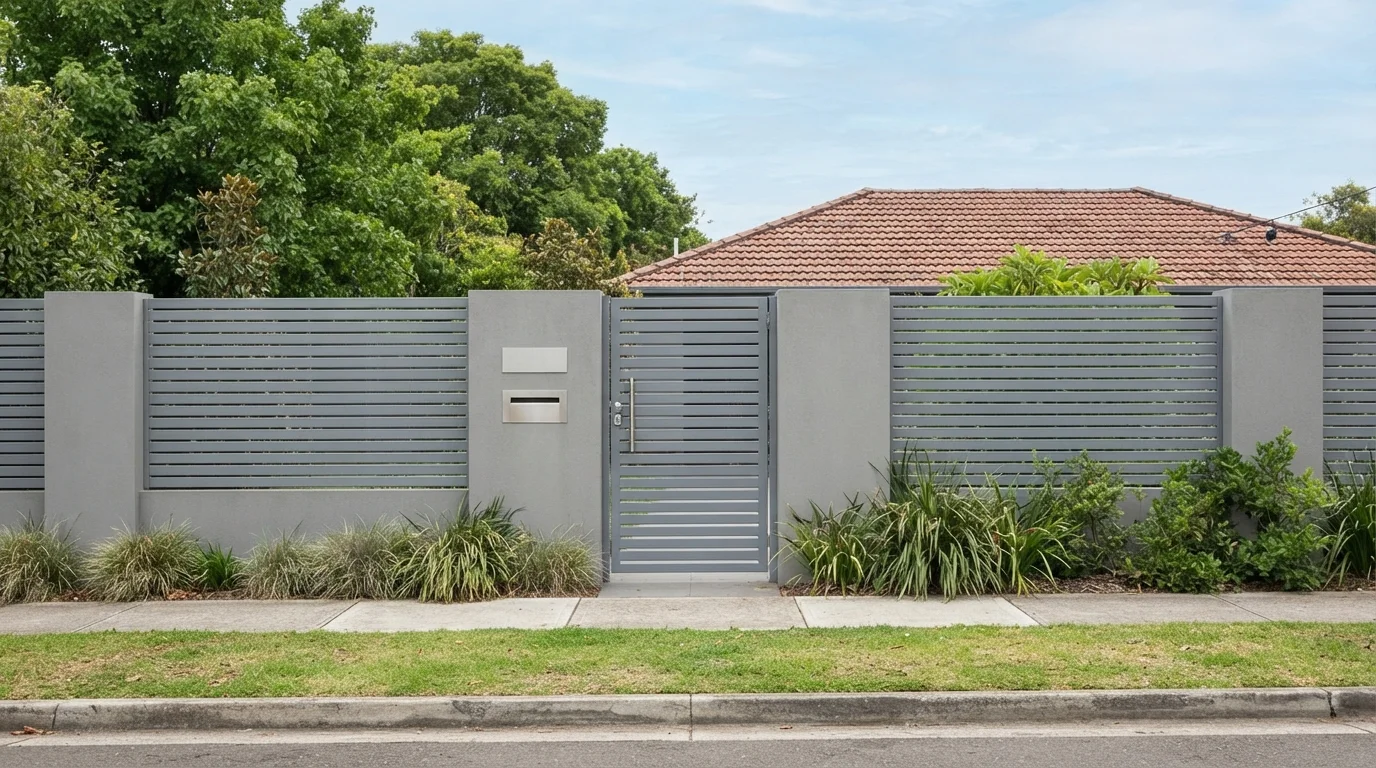
Room Colors · Black Fence
8 Best Black Fence Paint Colors for 2026
ideas, combinations, and real rooms
8 curated picks from real black fences — with the exact colors, honest reasons why, and the combinations that hold the room together.

Former interior stylist who can spot a green undertone from across a room. Jessica writes the color and mood pieces — what to choose, what pairs, and why your "white" looks pink.
The Fast Answer
Don't want to read 8 picks? These four are the safe answers.

Top Picks for the Black Fence
Tap a shade to see the black fence in it, then try it on your own room.
Black Fence Color Trends 2026 — What's In, What's Out


- Faux Wrought-Iron Gloss Black — The shiny, decorative wrought-iron-style gloss black once common on fences now looks fussy next to 2026's flat, minimal black finishes.
- Black Fence With No Landscaping Softening — A stark black fence set against bare mulch or gravel is falling out of favor as designers pair black fencing with lush planting to soften the contrast.
- Flat Charcoal Instead Of True Black — A washed-out charcoal that reads more dark gray than black is losing favor as buyers commit to a deeper, truer black for more visual punch.
The 8 Best Black Fence Paint Colors
Every pick below is a real rendered black fence, not a chip. The lead color first; the swatches are the full scheme in the photo — walls, furniture, textiles, accent.

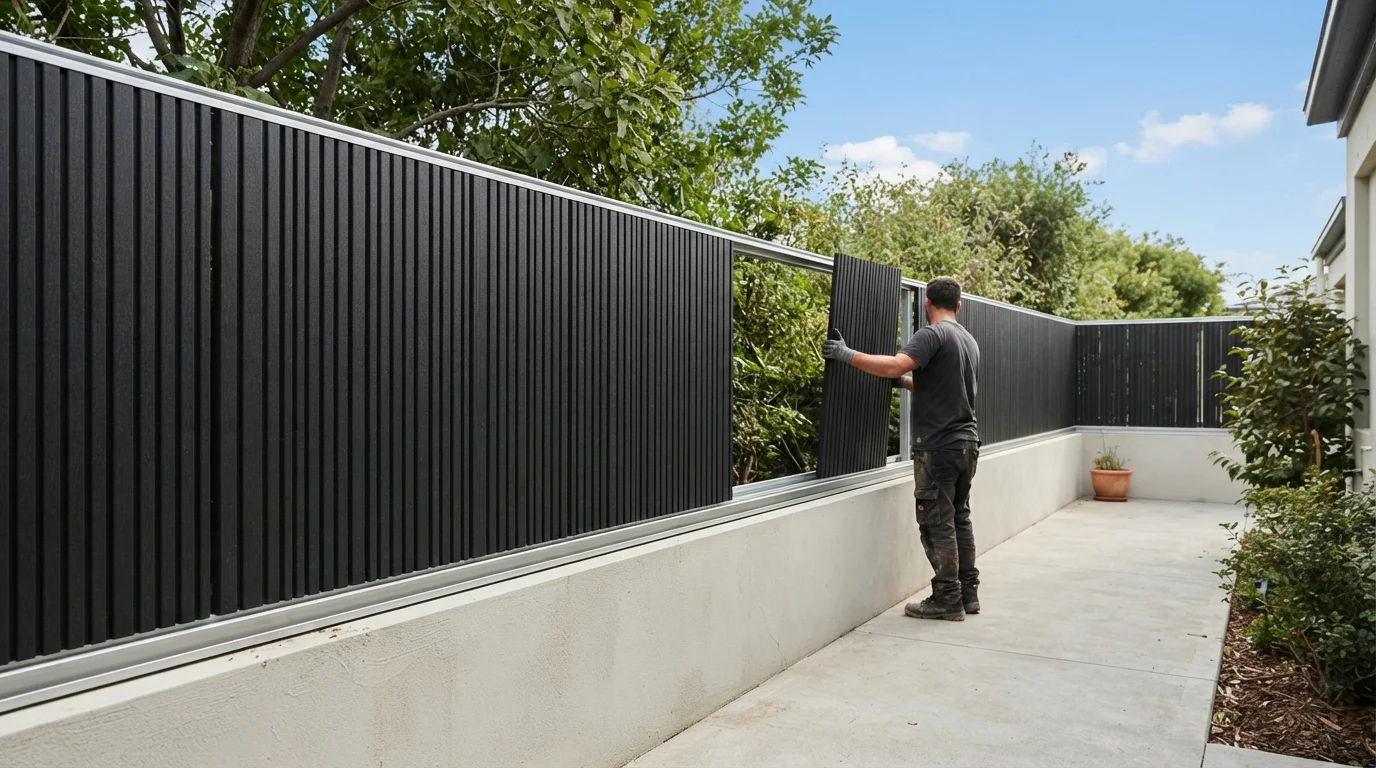
Deep charcoal fluted fencing creates a crisp, architectural boundary against clean off-white garden masonry.
Charcoal black is a deep, architectural neutral that brings instant polish outdoors. In this space, the vertical grooved slats carry the dark charcoal hue, resting on a low perimeter wall finished in smooth warm off-white. The look feels sleek, tidy, and refreshingly modern. This contrast works because deep black creates strong definition while the light stone base keeps the boundary feeling open and bright. It is the perfect choice for anyone wanting a durable, contemporary privacy upgrade for their yard.
SEE BLACK ON YOUR WALLS →
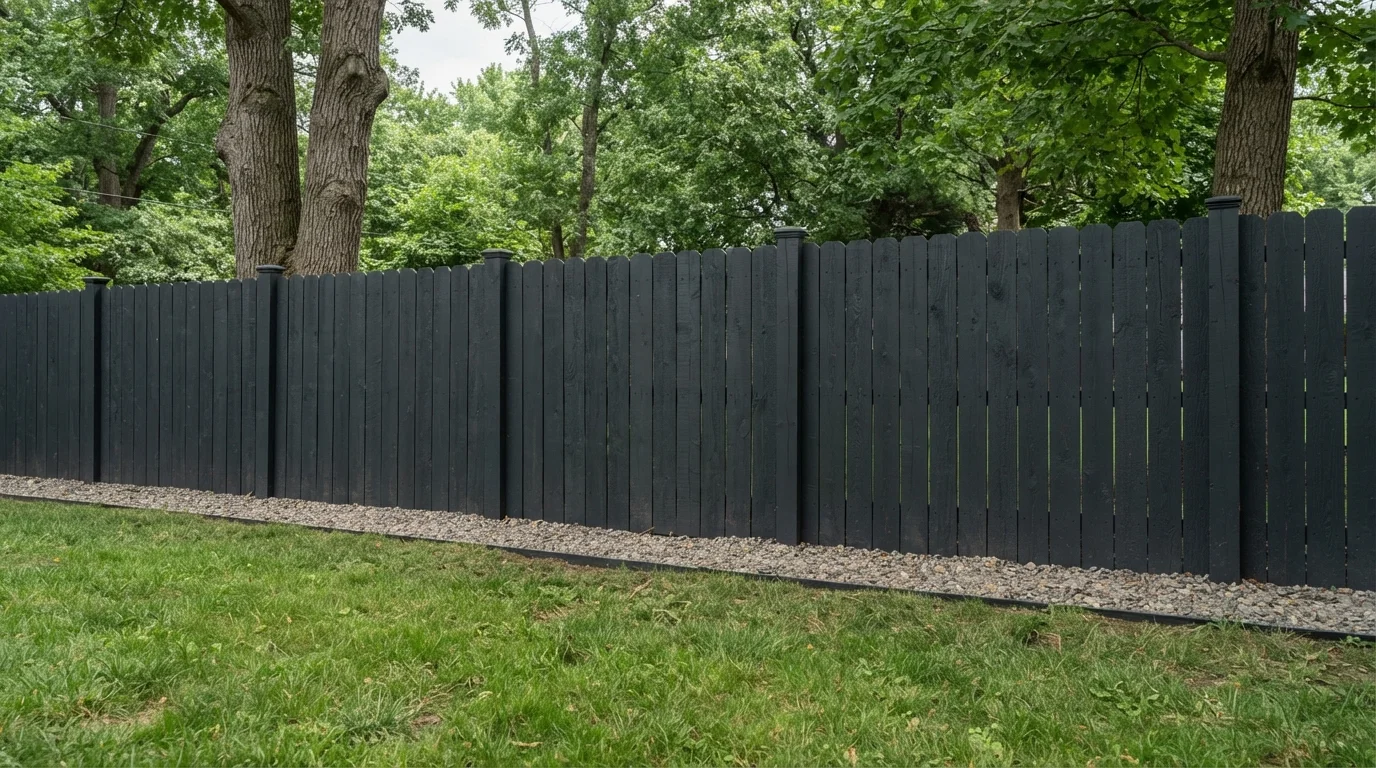
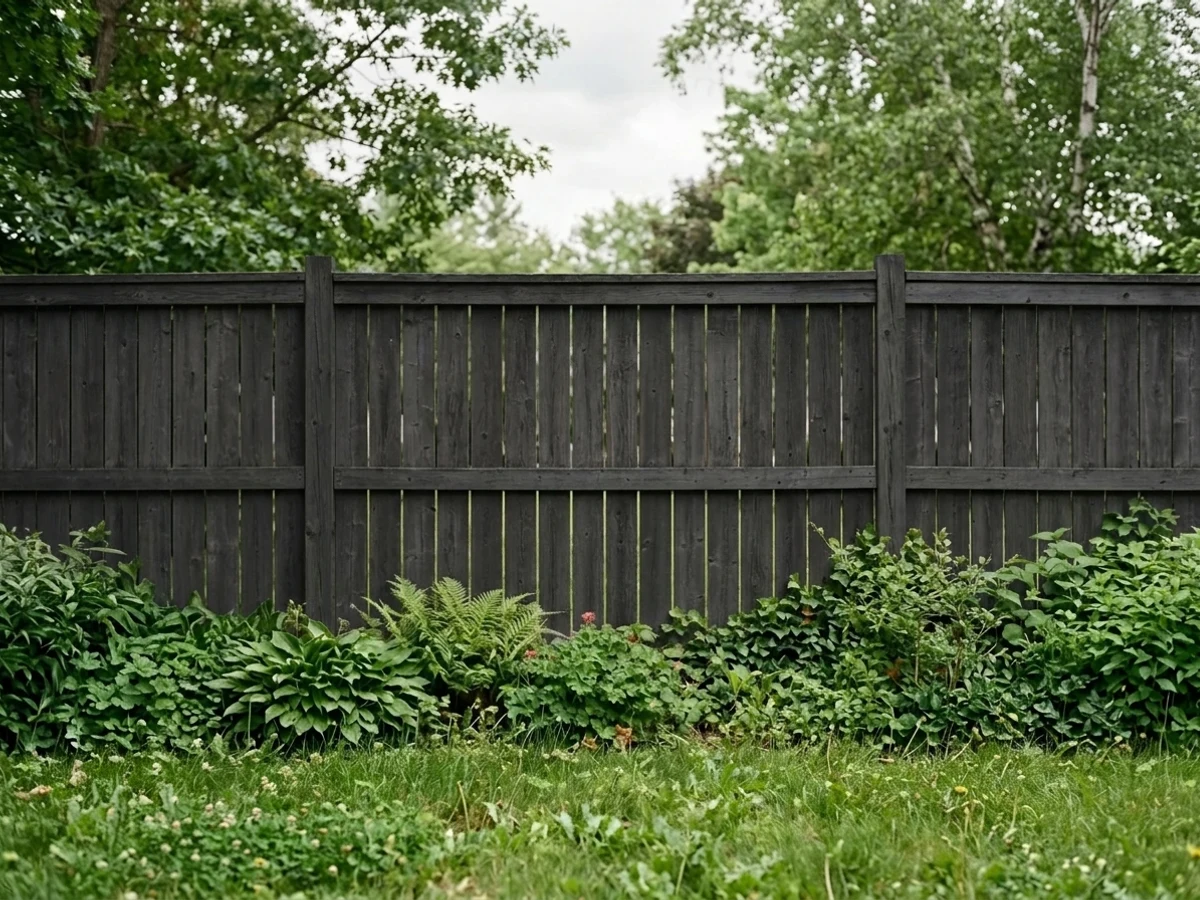
Rich inky black wood stain creates a dramatic backdrop that makes natural green backyard foliage stand out vibrantly.
Charcoal is a deep, near-black shade with a soft matte look. In this backyard, the entire vertical-slat wooden privacy fence is coated in this dark inky stain, framing the green grass lawn and gravel edge. It feels modern, grounded, and striking. The deep dark fence makes the bright green tree leaves and garden grass pop with rich contrast. If you want a sleek, modern outdoor backdrop that turns ordinary yard greenery into a showstopper, this deep look is for you.
SEE IT ON YOUR WALLS →
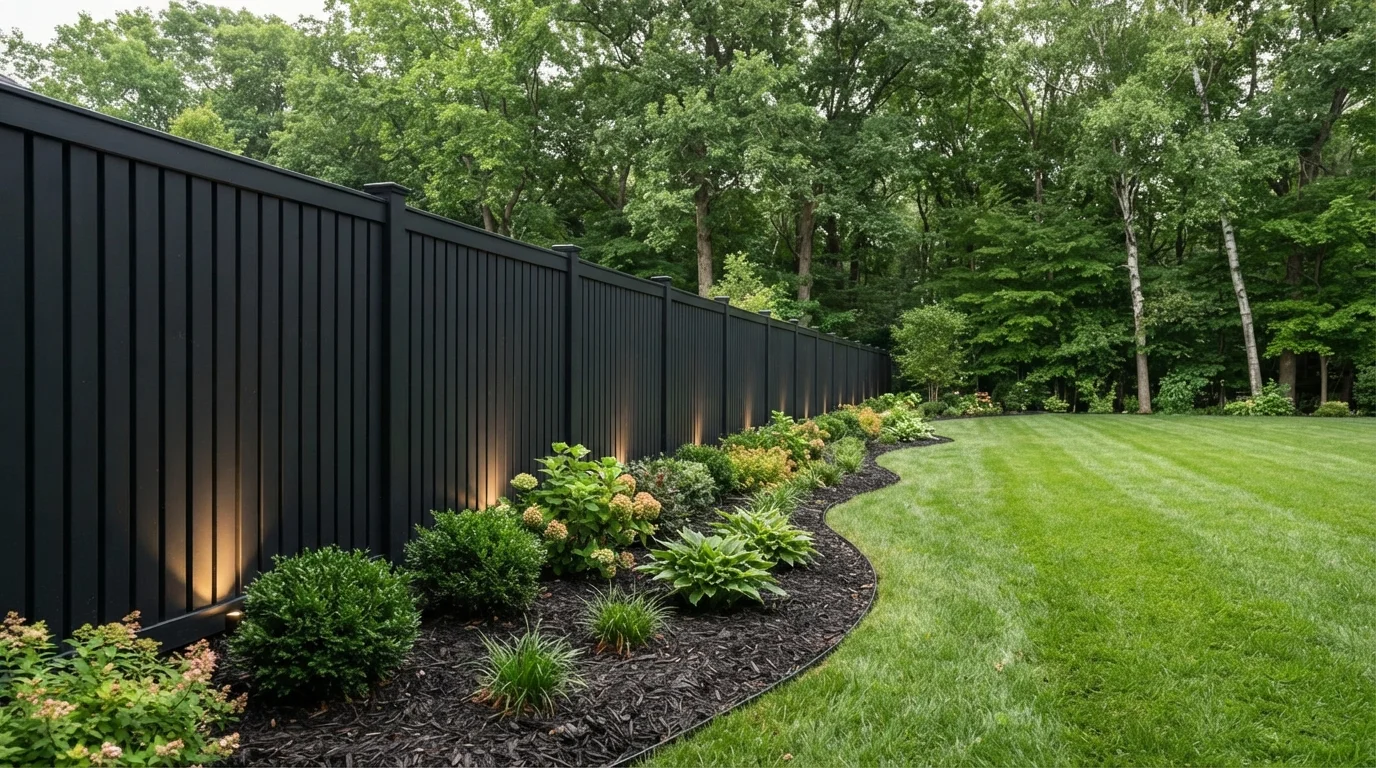
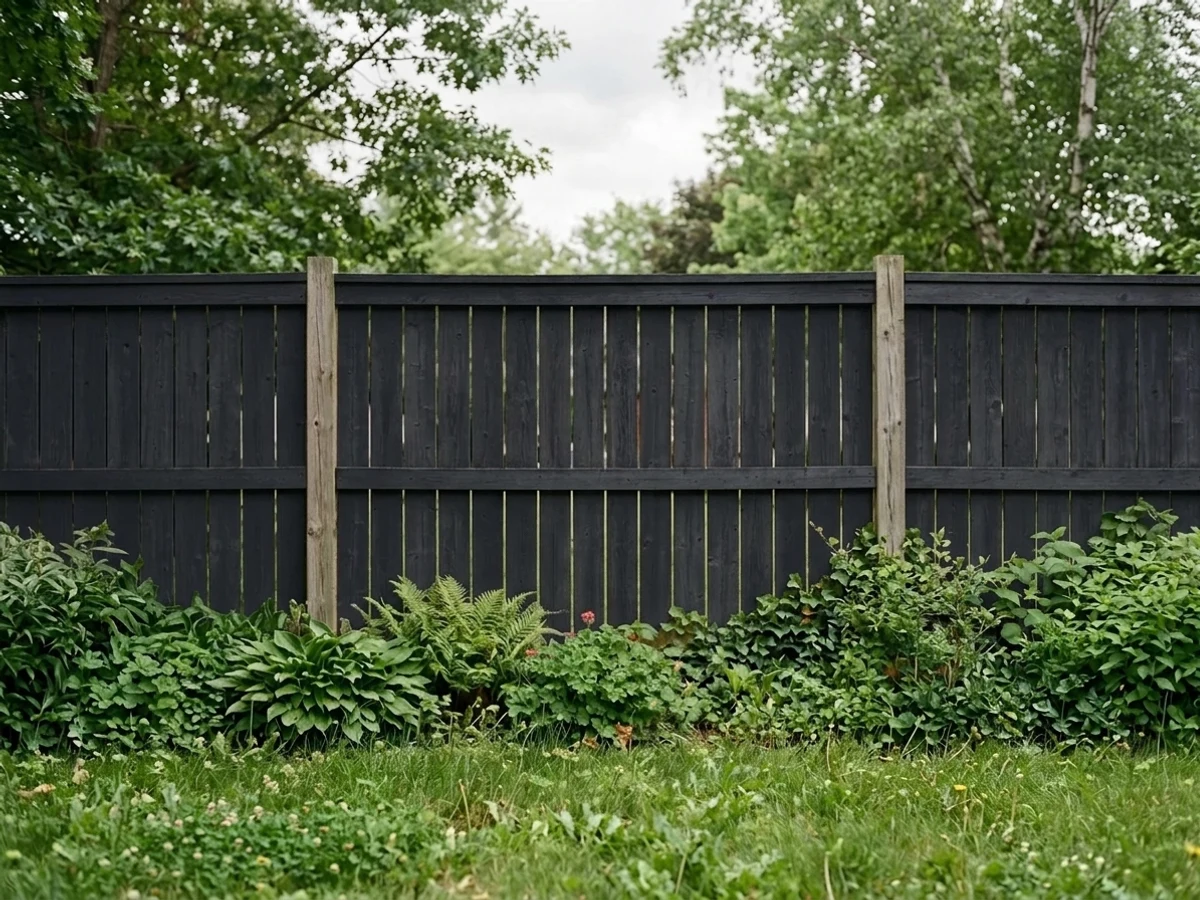
Sleek matte black fencing provides a striking architectural boundary accented by warm ground lights and rich green lawn.
Matte black is a rich, deep ink-dark shade. In this outdoor space, matte black covers the tall vertical privacy fence and matching post caps from end to end. The yard feels intensely sleek, private, and dramatic. The setup works because the dark background creates maximum contrast, making the bright green grass and warm golden uplights look instantly brighter. This look is perfect for homeowners who want a clean, modern boundary that turns standard yard fencing into an upscale design feature.
SEE HOCUS POCUS ON YOUR WALLS →
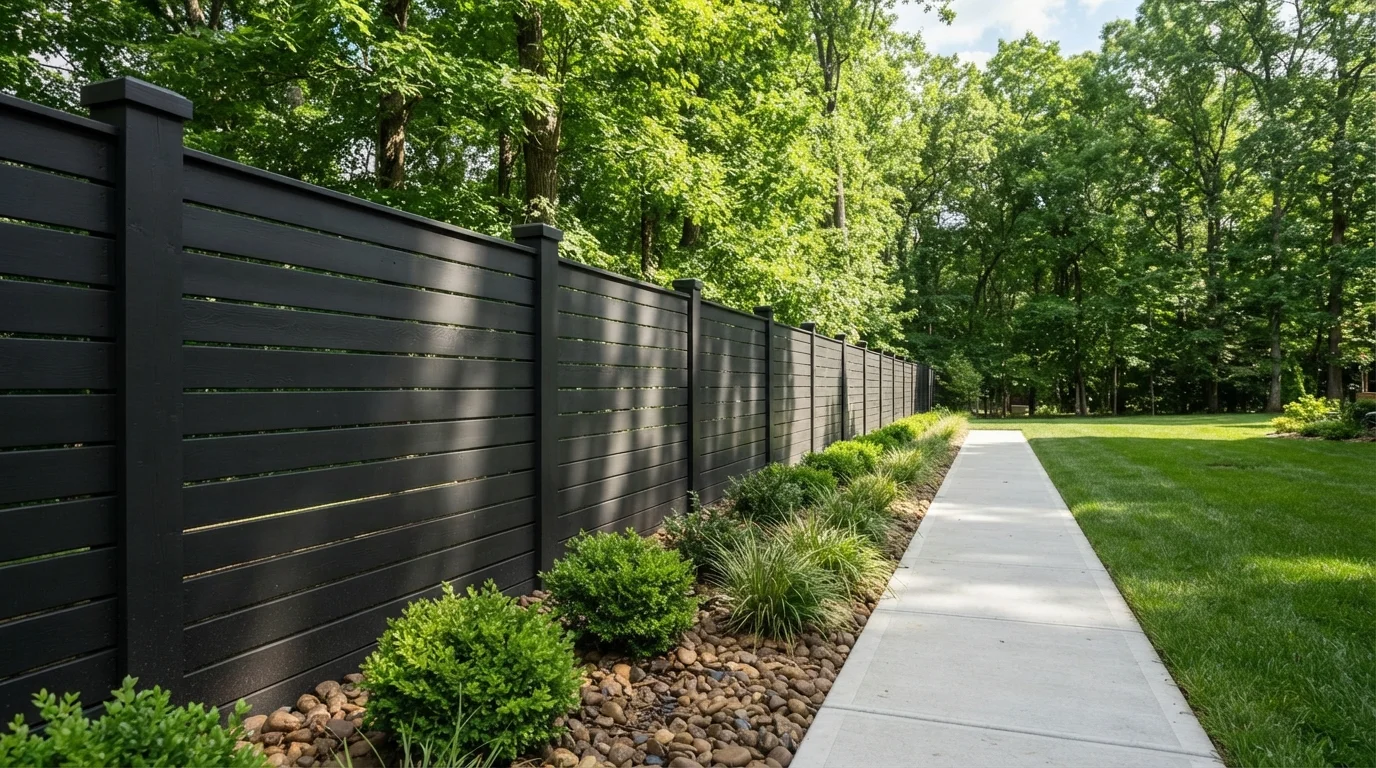
Rich charcoal slats form a crisp, architectural boundary that makes surrounding garden greens stand out with vibrant clarity.
Charcoal black is a deep, bold neutral that brings instant structure to any outdoor setting. Here, the entire horizontal slat fence and matching posts are finished in solid matte black, framing a tidy row of vibrant leafy bushes set in dark river stone. The space feels calm, modern, and intentionally designed. The combination works because the deep, dark backdrop provides high contrast that makes lively green leaves look richer and brighter. It is a fantastic choice for anyone looking to give their backyard a sleek, contemporary upgrade.
SEE FACTORY BLACK ON YOUR WALLS →
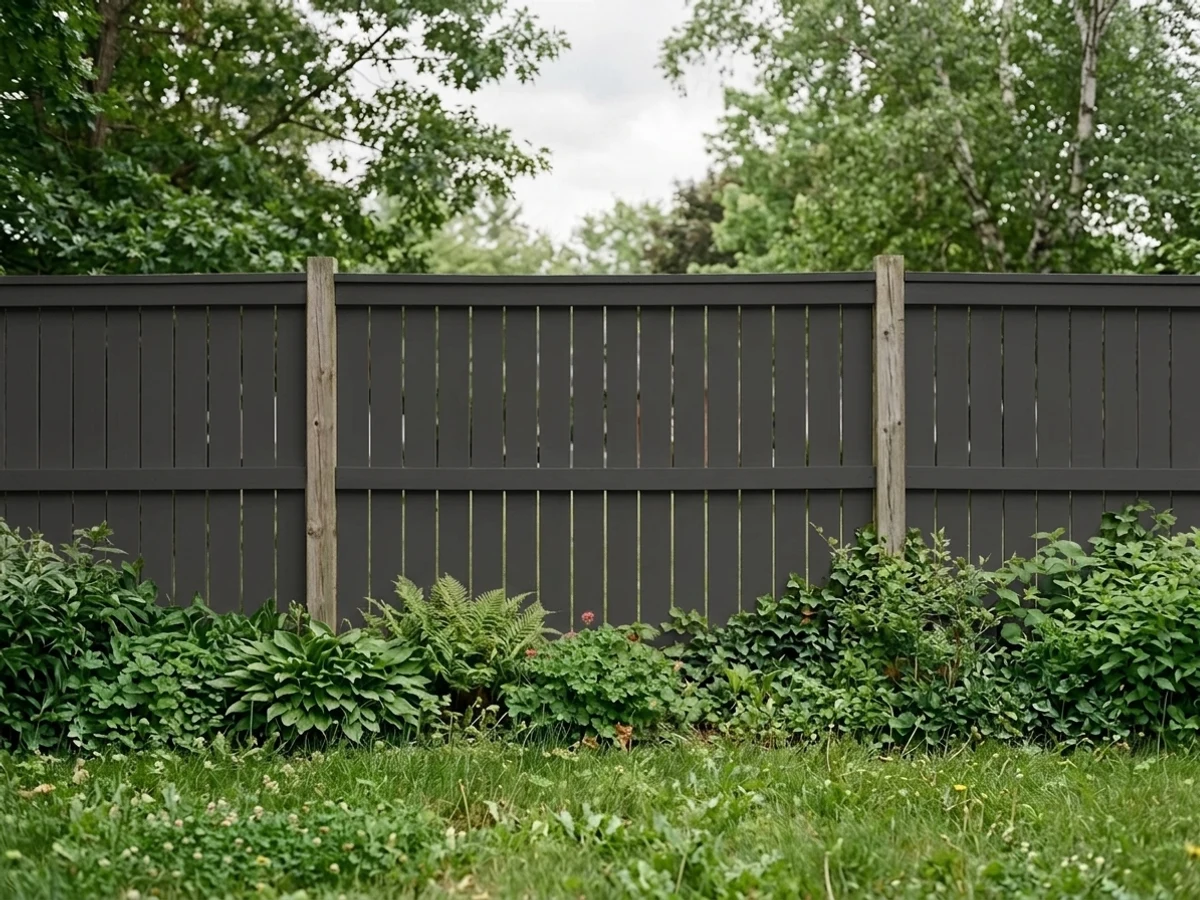
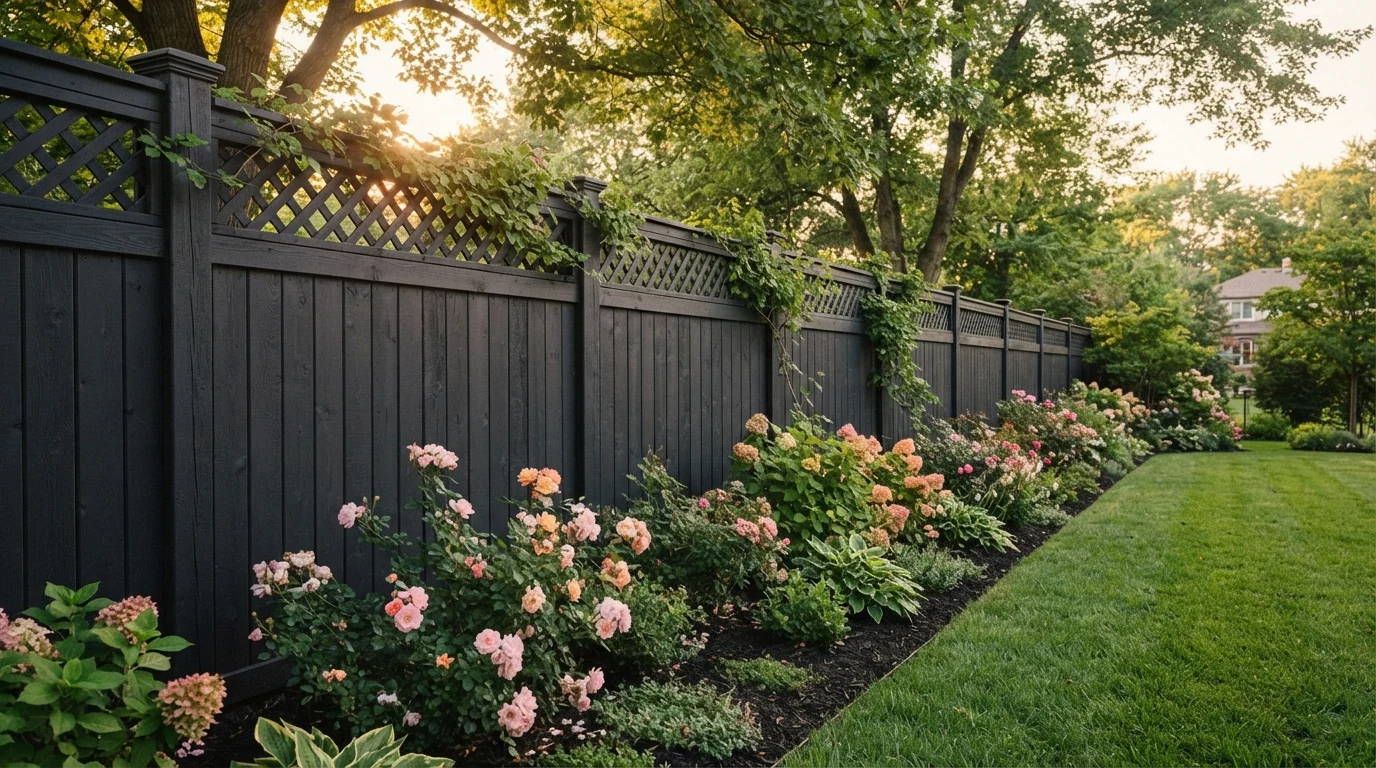
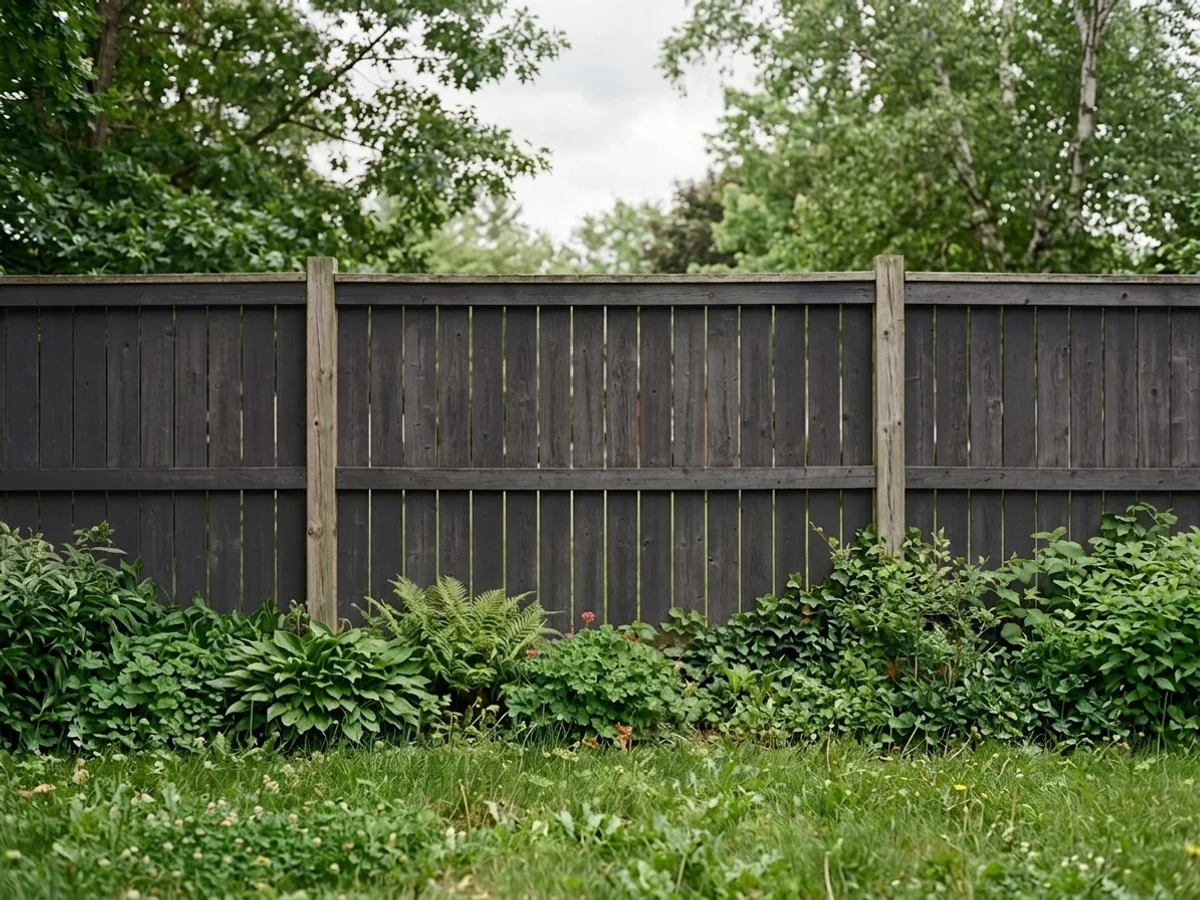
A rich, deep charcoal fence creates a dramatic backdrop that makes lush green leaves and soft garden flowers truly pop.
Charcoal is a deep, velvety near-black with a modern edge. In this backyard, the entire privacy fence and lattice top are coated in this deep charcoal hue. The outdoor space feels polished, grounded, and striking. This pairing works because dark surfaces provide a strong backdrop that makes bright green leaves and delicate pink blooms stand out with crisp contrast. It is the perfect choice for anyone wanting a modern, designer look that transforms a simple garden into a stunning retreat.
SEE TUXEDO ON YOUR WALLS →
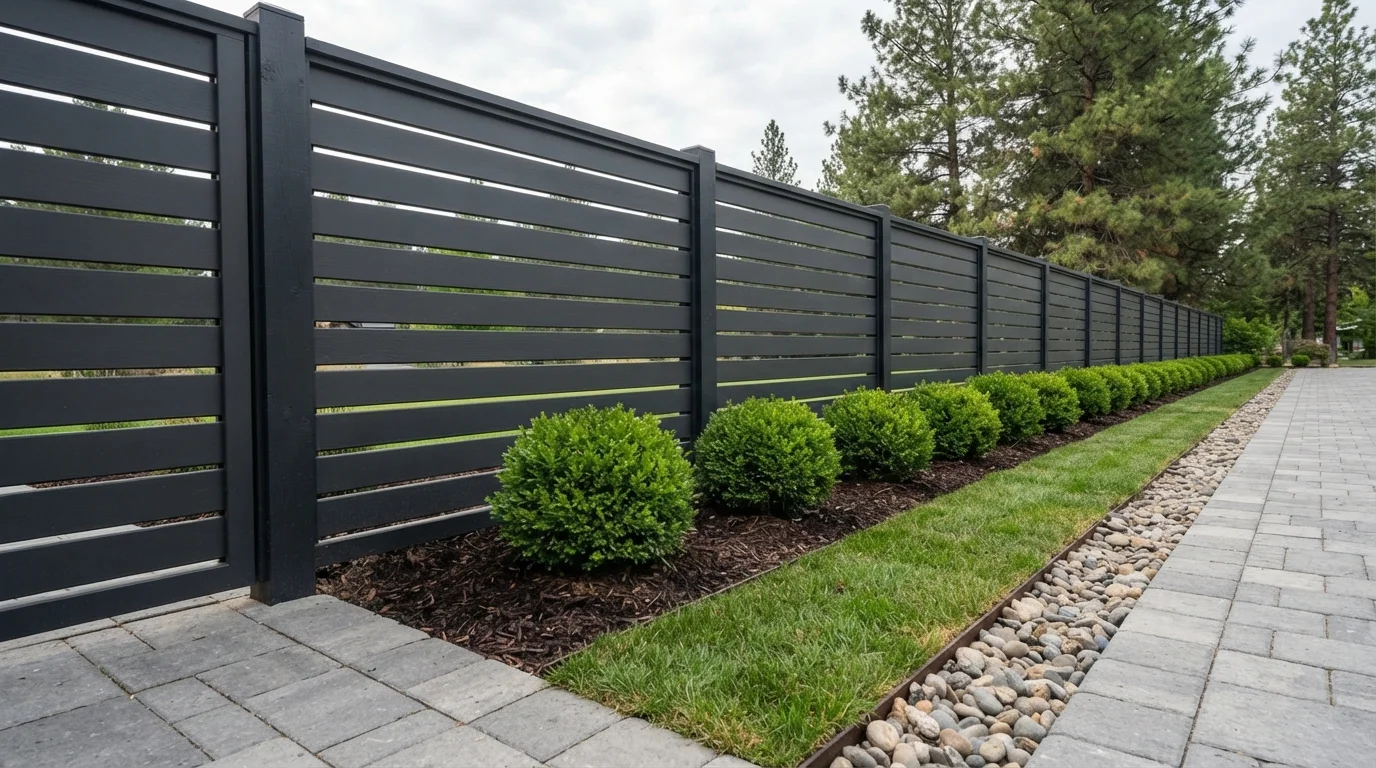
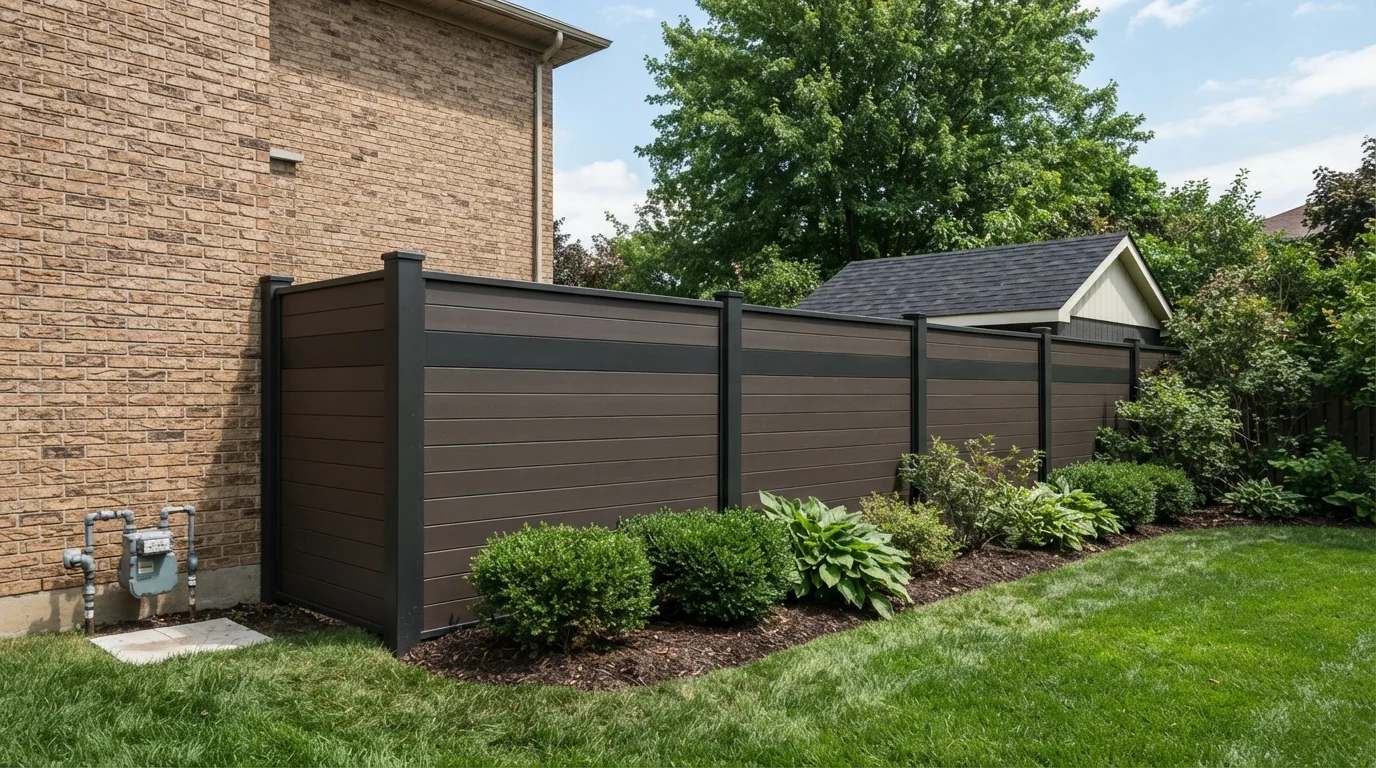
Deep charcoal horizontal panels create a clean, contemporary border that makes vibrant green landscaping stand out.
Charcoal is a deep, velvety dark gray that feels bold and grounded. In this outdoor space, the matte dark finish spans across the horizontal privacy fence boards and matching posts. The entire boundary feels ultra-modern, crisp, and structured. The combination works because deep dark surfaces provide a sharp backdrop that makes vibrant green shrubs and foliage pop. It is perfect for homeowners who want clean architectural lines and an upscale, contemporary border for their yard.
SEE BLACKBOARD ON YOUR WALLS →
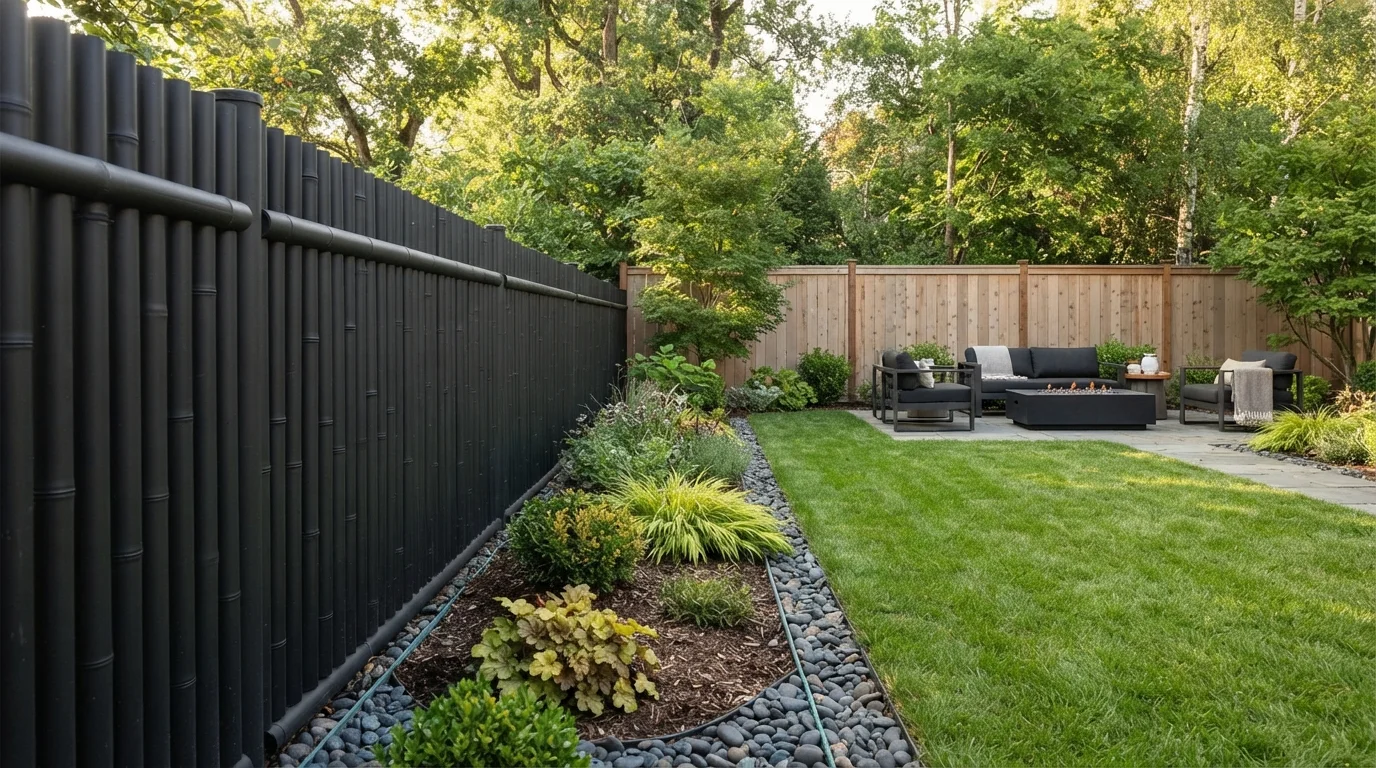
Deep matte black fencing creates a sleek, grounded boundary against lush green grass and glowing firelight.
Matte black is a deep, dramatic charcoal that feels sleek and grounded. In this yard, bold black coats the sculptural round-post fence, echoed closely by the modern fire table and lounge seating. The whole backyard feels peaceful, stylish, and remarkably tidy. This combination works because intense dark fencing makes the bright green lawn and colorful flowering shrubs stand out instantly. It is ideal for anyone looking to bring clean, contemporary architecture to an open-air garden space.
SEE IT ON YOUR WALLS →
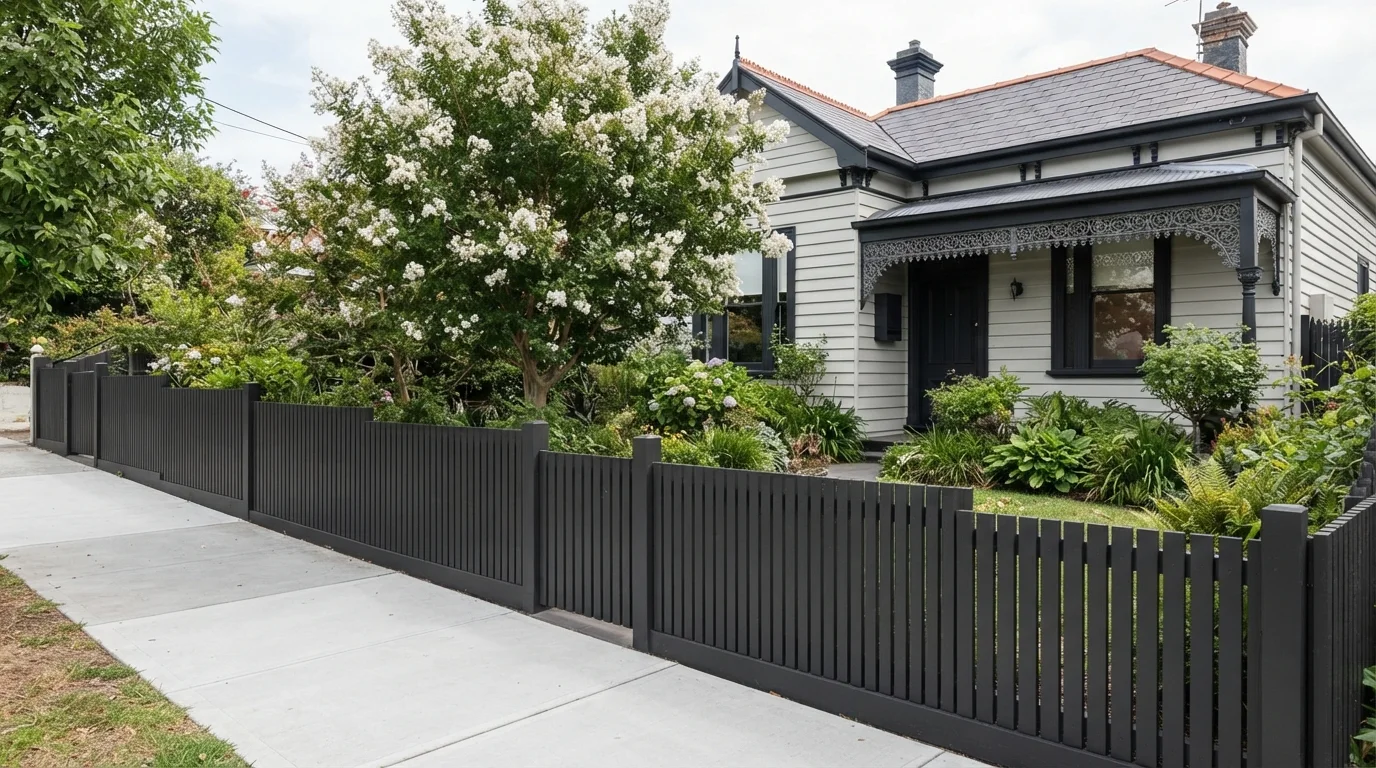
Crisp charcoal timber slats frame lush garden foliage for a dramatic, contemporary streetscape with timeless curb appeal.
Charcoal black is a deep, inky shade of dark gray. In this photo, vertical timber fence slats are coated in solid dark charcoal, standing crisply along a pale concrete sidewalk while soft cream siding accents the vintage home behind. The whole entrance feels bold, tailored, and calm. This color pairing works because the dark fencing makes the green garden leaves pop while modernizing traditional architecture. It is ideal for anyone who wants stylish privacy and a clean, high-contrast look from the street.
SEE BLACK ON YOUR WALLS →Black Fence Wall Color Combinations
A wall color never works alone. These are the full schemes from the rooms above — the lead color first, then the supporting colors that make the photo work.
Deep charcoal fluted fencing creates a crisp, architectural boundary against clean off-white garden masonry.
TRY THIS PALETTE →Rich inky black wood stain creates a dramatic backdrop that makes natural green backyard foliage stand out vibrantly.
TRY THIS PALETTE →Sleek matte black fencing provides a striking architectural boundary accented by warm ground lights and rich green lawn.
TRY THIS PALETTE →Rich charcoal slats form a crisp, architectural boundary that makes surrounding garden greens stand out with vibrant clarity.
TRY THIS PALETTE →Pair a near-black fence with the materials already in the yard rather than with the house paint. Onyx or Domino against natural or stained cedar gate posts keeps a run from reading as one flat black wall — the wood grain breaks it up. If the house trim is white or a warm white, Sherwin-Williams Black Magic's slightly softer black keeps the fence from fighting with bright trim in full sun, where a true flat black can look like a cutout silhouette by midday.
For a warmer scheme, Cordovan Brown pairs naturally with brick, terracotta, and cedar — it's a brown-black, not a true black, so it sits closer to a stained-wood look than a painted one. Valspar Tempest's Teapot, a deep slate-black, is the middle ground: pair it with gray or blue-gray siding and it reads as an extension of the house rather than a separate dark object at the property line.
More Fence Color Ideas
Set on a color family already? Each page has its own real rooms and picks.
Light or Dark Black Fence Colors?
Go Light (LRV 60+) If…
The room is small, faces north, or has to work at every hour. Light warm colors make it feel bigger and stay calm in evening light — the light you actually live in.
Go Dark (LRV Under 20) If…
You want the cocoon effect and the room has real daylight. Dark works best on one feature wall — or fully color-drenched in a large room with good windows.
For a fence, light vs. dark comes down to sun exposure and material more than mood. A panel that sits in full sun most of the day heats up faster the closer its LRV gets to zero — true blacks like Onyx and Domino (LRV 3) absorb more heat than Carbon and Jet Black (LRV 5), and on vinyl or composite fencing that extra heat gain can soften or warp the material over a hot summer, not just fade the finish. If your fence gets six-plus hours of direct sun, the LRV-5 shades are the safer physical choice, not just the subtler-looking one.
On wood fences in partial shade — under trees, along a north-facing line — that heat difference matters less, and a true black like Domino or Tricorn Black holds its depth better over the season because there's less UV pushing it toward gray. Shady, low-sun runs are also where a warm alternative like Benjamin Moore Cordovan Brown reads well, since there's less harsh light to wash out its undertone.
See It. Love It.
Paint It.
Upload one photo of your black fence and try every color on this page on your own walls — in your own light, before you buy a drop of paint.

Tricorn BlackBeforeSheen and Finish for a Black Fence
Most fence paint is sold and applied in flat or matte finish, and that's the right call on black specifically — flat hides brush marks, board-to-board grain differences, and small surface flaws that a satin or semi-gloss sheen would catch the light on and highlight instead of hiding. This is true whether you're rolling on Behr Carbon or Sherwin-Williams Tricorn Black; skip anything glossier than satin on wood fencing.
Solid color stain is worth considering as an alternative to paint in any of these shades. It soaks into the wood fibers instead of forming a film on top, so it doesn't peel the way black paint does when it starts to fail — it fades gradually and evenly instead, which is a real advantage on black, where peeling shows up as bright bare wood against a dark background.
The Heat And Fade Mistake
The most common regret with a black fence isn't the color, it's skipping the heat math. Full-sun sections — especially vinyl or composite — absorb noticeably more heat at true-black LRVs like Onyx's or Domino's than at the lighter LRV-5 end (Carbon, Jet Black), and on vinyl that heat gain is a durability problem, not a cosmetic one.
On painted wood, expect to repaint every two to three years rather than the five-plus years a lighter color can go, since black shows UV fade and peeling first and fastest wherever the sun hits hardest. If one section of your fence gets far more afternoon sun than the rest, plan on that section needing attention sooner, regardless of which pick you choose.
Where Black Works Best on a Fence
Black earns its keep on fences meant to be a backdrop, not a feature — the perimeter behind planting beds, a privacy fence framing a patio, or a run along a house with a lot of glass and modern trim. Domino or Onyx in that role make the landscaping the actual focal point.
It works worst as a full loop around a small yard with little planting in front of it. Instead of framing the greenery, an unbroken black perimeter can wall the space in and make the whole lot feel smaller and darker. Breaking it up with one lighter boundary, or a warmer option like Cordovan Brown along a shaded side, keeps that from happening.
About Black Fence Paint Colors
A black fence works because it disappears as a color and reappears as a frame. Paired with Behr Carbon (N520-7, LRV 5) or Behr Jet Black (ECC-10-2, LRV 5), the fence recedes at the edge of the yard and lets whatever is planted in front of it — hostas, boxwood, climbing roses — read as the actual color in the space. That's the real reason the all-black fence trend has stuck: it isn't really about black, it's about making green and every flower color look more saturated by contrast.
Not every black on this list is a true black. Benjamin Moore Onyx (2133-10, LRV 3) and Sherwin-Williams Domino (SW 6989, LRV 3) sit at the deep end and read as ink-black even in bright sun, which suits a modern build or a fence meant to blend into dark mulch and stone. Sherwin-Williams Tricorn Black is the pick people reach for when they want zero warmth or gray cast — one of the flattest, truest blacks sold for exterior use. Behr's Carbon and Jet Black sit a step lighter (LRV 5 vs. 3), which softens the look along a sunny fence line and shows less dust and pollen between cleanings.
None of these are exotic colors. Every one mixes on demand at the brand's own paint counter or a local store, so picking one is really about matching your yard's sun exposure and your house's trim, not availability.
The Questions Everyone Asks
What color should I paint my black fence?
If you want one answer, start with the safe picks above — Black, Black, Dark Kettle Black, Hocus Pocus. They read well in any light and survive furniture changes. Then check the light: strong afternoon sun wants a step cooler, a north-facing room wants a step warmer.
does a black fence make plants look better?
Yes — that's the main reason for the trend. Black recedes visually and absorbs light rather than reflecting it, so foliage and flowers read as more saturated against colors like Behr Jet Black or Benjamin Moore Onyx than they do against a white or natural wood fence. Landscape designers use the same trick with black-painted plant stands and pergolas to make greenery the focal point.
does black fence paint fade in the sun?
Yes, faster than lighter colors, especially on the side that gets the most direct sun. True blacks like Onyx and Domino (LRV 3) show UV fade and heat stress sooner than the softer LRV-5 charcoals, Carbon and Jet Black. Expect a wood fence painted black to need a fresh coat every two to three years instead of the five-plus a lighter color can go.
what's the best black paint for a wood fence?
Look for paint rated for fence, siding, or trim use in a flat or satin finish. Sherwin-Williams Domino, Benjamin Moore Onyx, and Sherwin-Williams Tricorn Black are all standard exterior-rated blacks that hold up on wood. A solid stain in the same shade is a lower-maintenance alternative, since it soaks into the wood instead of forming a film that can peel.
is a black fence high maintenance?
More than a lighter fence, but not dramatically so. Black shows dust, pollen, and water spots more than a mid-tone gray, and full-sun panels fade and need repainting sooner. A softer charcoal like Behr Carbon splits the difference — it still reads as black from normal viewing distance but shows wear less than a true black like Domino.
does a black fence make a small yard look smaller?
It can, if it wraps the whole perimeter with no planting in front of it — the dark line reads as a wall rather than a frame. Used along one side, or behind garden beds, the same black frames the space instead of closing it in. Gentler options like Cordovan Brown or Tempest's Teapot soften that effect further on a small lot.
What two-color combination works best in a black fence?
The reliable pattern is a quiet main color plus one deep accent on a single wall. Keep trim and ceiling in one warm white so the two colors are the only event in the room — the combination cards above show complete schemes from real rooms.
What colors make a black fence look bigger?
High-LRV, slightly warm colors — LRV 60–75 is the sweet spot. Paint the walls and trim close to the same light color so the corners blur, and keep the ceiling white. Stark cool white actually works against you; it creates hard shadows that show the room's edges.

Ask a Question