Carbon
Behr's no-opinion near-black, reviewed honestly: the fence-and-garage-door black with no undertone to argue with — plus the heat, fade and warranty rules nobody mentions at the paint desk.

Jessica has spec'd whites and neutrals for more than 300 rooms and keeps a sample wall of painted drawdowns in her studio. Every color review is checked against real reader rooms in the comments and re-tested when a formula changes. About the testing process →
- 1Cordovan Brown0
- 2Carbon5
The Fast Verdict
Carbon is the black you buy when you do not want the black to have an opinion. Behr's famous black, Cracked Pepper, throws a violet cast in strong sun; plenty of other near-blacks go brown or green in the shade. Carbon just sits there being black — flat, even, nothing to argue with your brick or your roof. That is exactly what you want on a fence, a garage door or a long run of railings, and Behr sells this one code in nearly every can it makes, so the fence, the gate, the door and the garage floor can all match.
Wood and metal fences, gates and railings · garage doors, front doors and shutters · exterior trim on a light-bodied house · interior cabinets, built-ins and one dark accent wall
You want a black with visible character and undertone shifts · your garage door is thin insulated steel in a hot, high-UV climate · you want an exterior you can ignore for fifteen years · the interior room has one small north window and no lamps
- A genuinely neutral black — no violet, brown or green surprise in strong sun
- Available across Behr's exterior, metal, floor and cabinet lines, so a whole property can match
- Deep enough at LRV 5 to still read black from the street, not dark gray
- The safest choice against mixed exterior materials: brick, stone, brown roofs
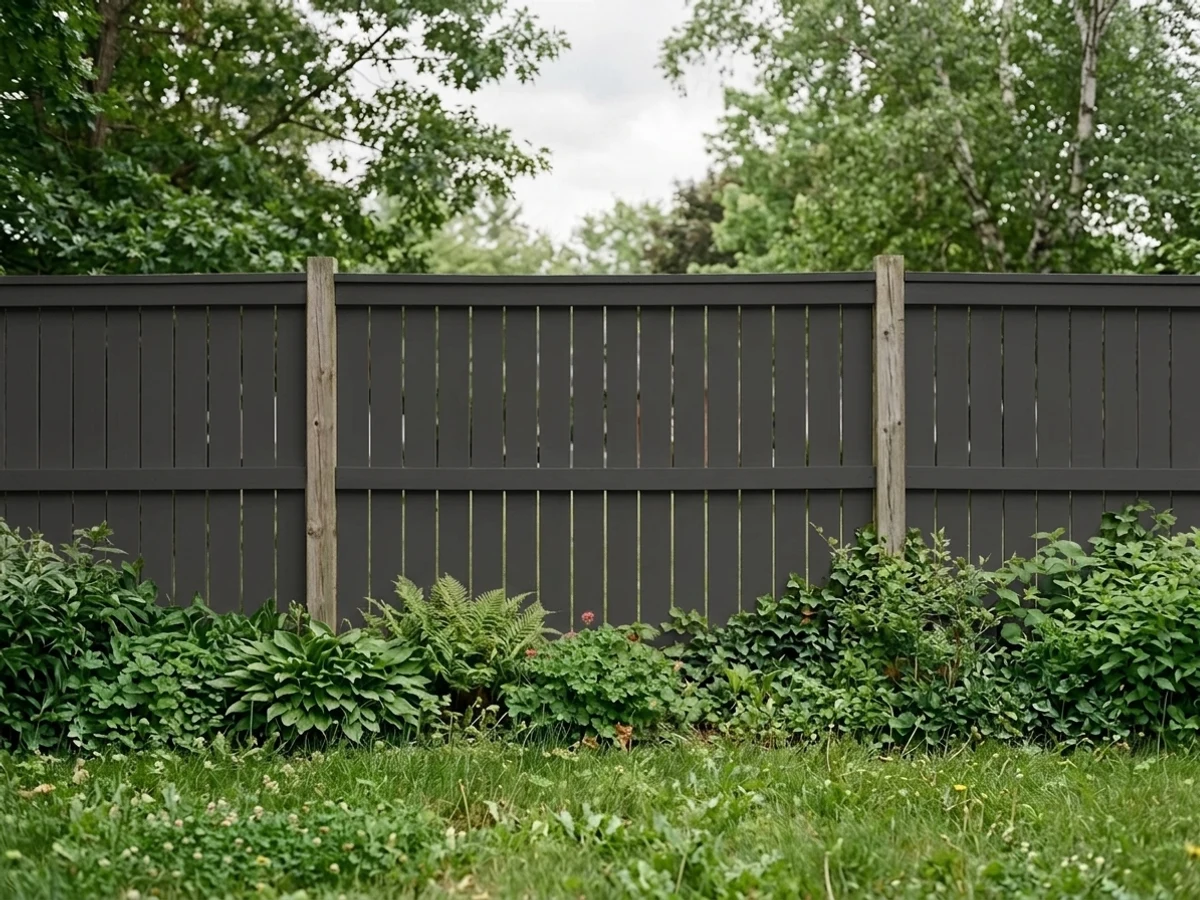
- Black fencing and railings recede behind planting instead of drawing the eye
- Fades and chalks on sun-facing exposures faster than any light color
- Dark field-painted garage doors risk thermal bowing and voided finish warranties
- No character of its own — if you want a black with a story, this is not it
- Indoors at LRV 5 it flattens dim rooms and makes touch-ups flash
What Color Is Carbon, Really?
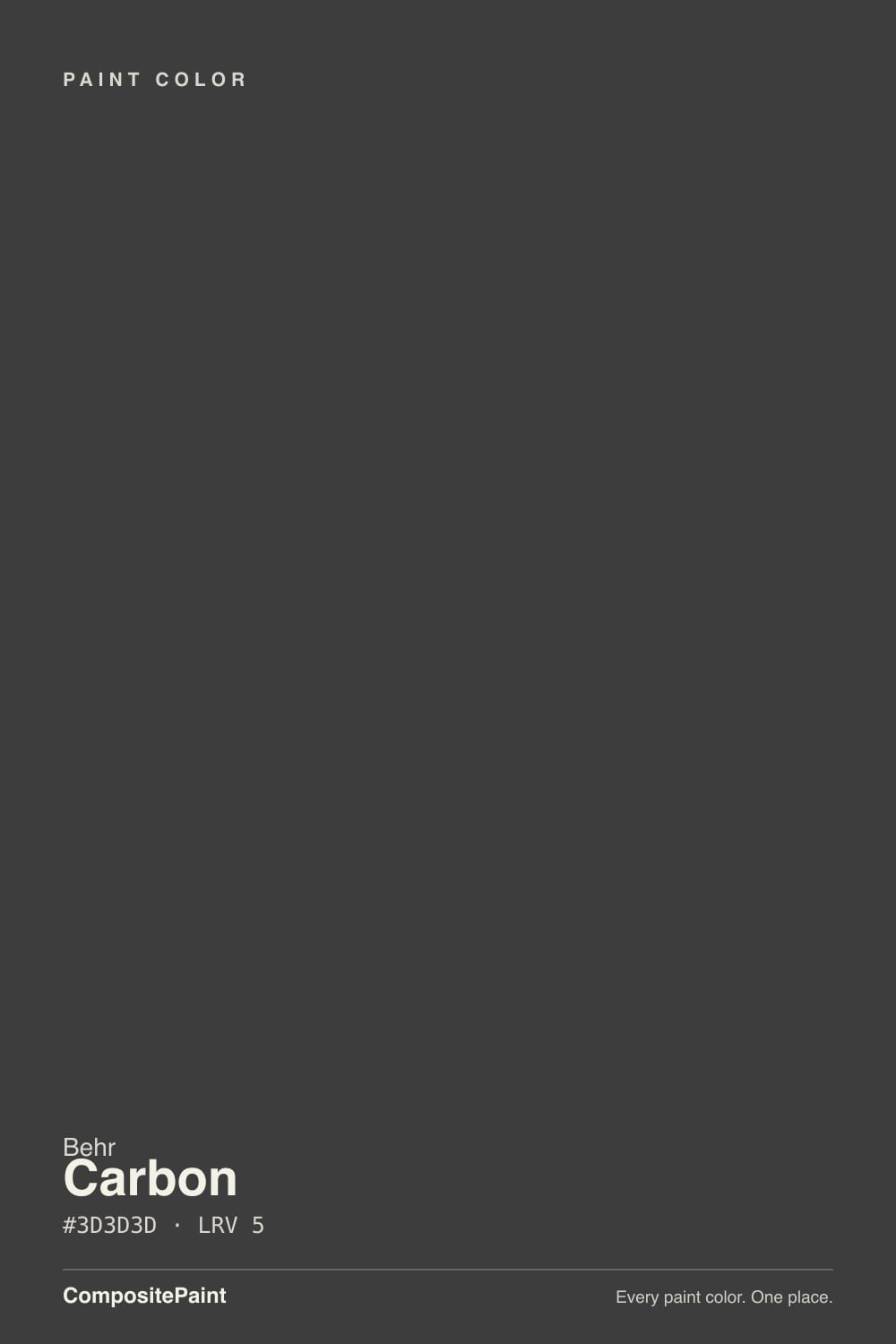
A neutral near-black — about as close to a straight gray-black as a paint deck gets. Our deck reads it as an even balance of red, green and blue with nothing tipping the scale, and Behr's own published value puts a single point of blue over the other two channels. In practice that means there is no undertone story to tell: no warm brown like Behr Black Mocha, no violet flash like Behr Cracked Pepper, no green creeping in under the eaves. Behr files it in the black family and it earns the label — most deck blacks are really very dark charcoals with a lean, and this is the one that isn't.
At LRV 5 it reflects almost nothing, and outdoors that depth is the entire point. A lighter charcoal washes out in full sun and starts reading as dark gray siding from the sidewalk; Carbon stays black from the street. Indoors the same number is a warning label — LRV 5 gives a room nothing back, so it belongs on cabinets, doors and one wall rather than four. For scale: Tricorn Black sits at LRV 5, a genuine true black, and Iron Ore at 6. Carbon lands between them and behaves exactly like that middle position — deeper than a charcoal, one small step softer than a pure black.
Undertone in one line: none you can name. The only light that pulls a lean out of it is cool north daylight or a flat overcast sky, where it drifts very slightly blue-gray. Set it beside a warm white and it can read a hair cooler than the chip suggested; set it beside Tricorn Black and it reads a touch softer and grayer. That neutrality is the reason to buy it and the reason it will never be anybody's favorite color.
Where It Shines
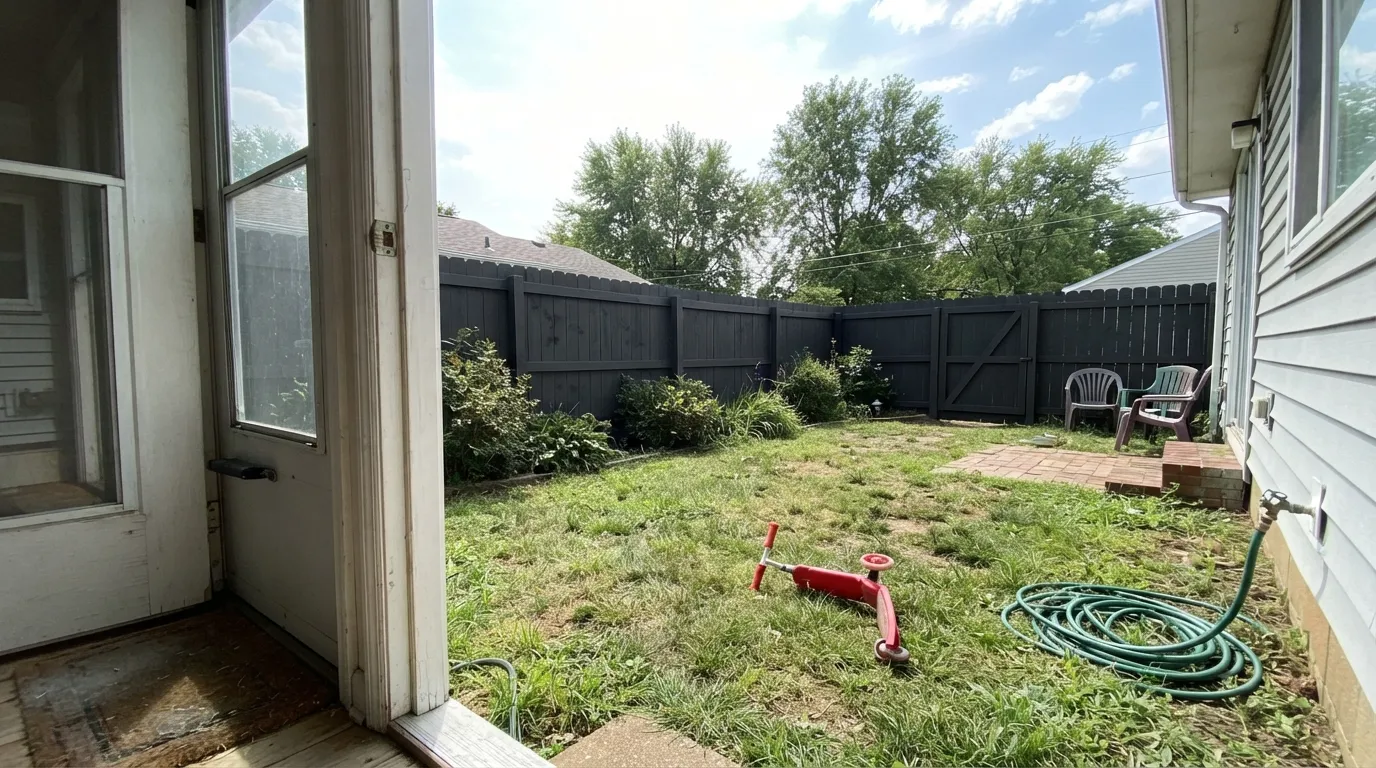
Its home is outside, on the things people paint black on purpose: fences, gates, railings, garage doors, window frames, shutters. Full sun is the one light that flatters it, because the sun is what makes lesser blacks show their brown or violet card — Carbon has none to show, so it reads as a clean graphic line against a light house. The second reason it earns its keep is boring and practical: the code is available in Behr's direct-to-metal enamel, in the solid-color house and fence stain, in exterior wall paint, in the garage floor epoxy and in the interior cabinet enamel. One color decision can cover a whole property. Indoors it does the same quiet job on cabinets, a fireplace surround or built-in shelving, where black is meant to be structure, not mood.
Where It Fails
The bad stories about a black like this are almost never about the color being wrong. They are about what full sun does to a very dark exterior surface over time, and about painting a black onto something the manufacturer never intended to be black. All three of these are predictable before you open the can.
Deep, dark exterior colors absorb the most UV and lose color fastest — that is physics, not a Behr flaw. On a fence, the south and west faces chalk and gray out while the shaded sides stay black, so after several summers you have a two-tone fence. Behr's Marquee line carries a heavier UV package than Premium Plus and buys a couple of extra years, but nothing makes a black exterior permanent. Budget a refresh coat instead of being surprised by one.
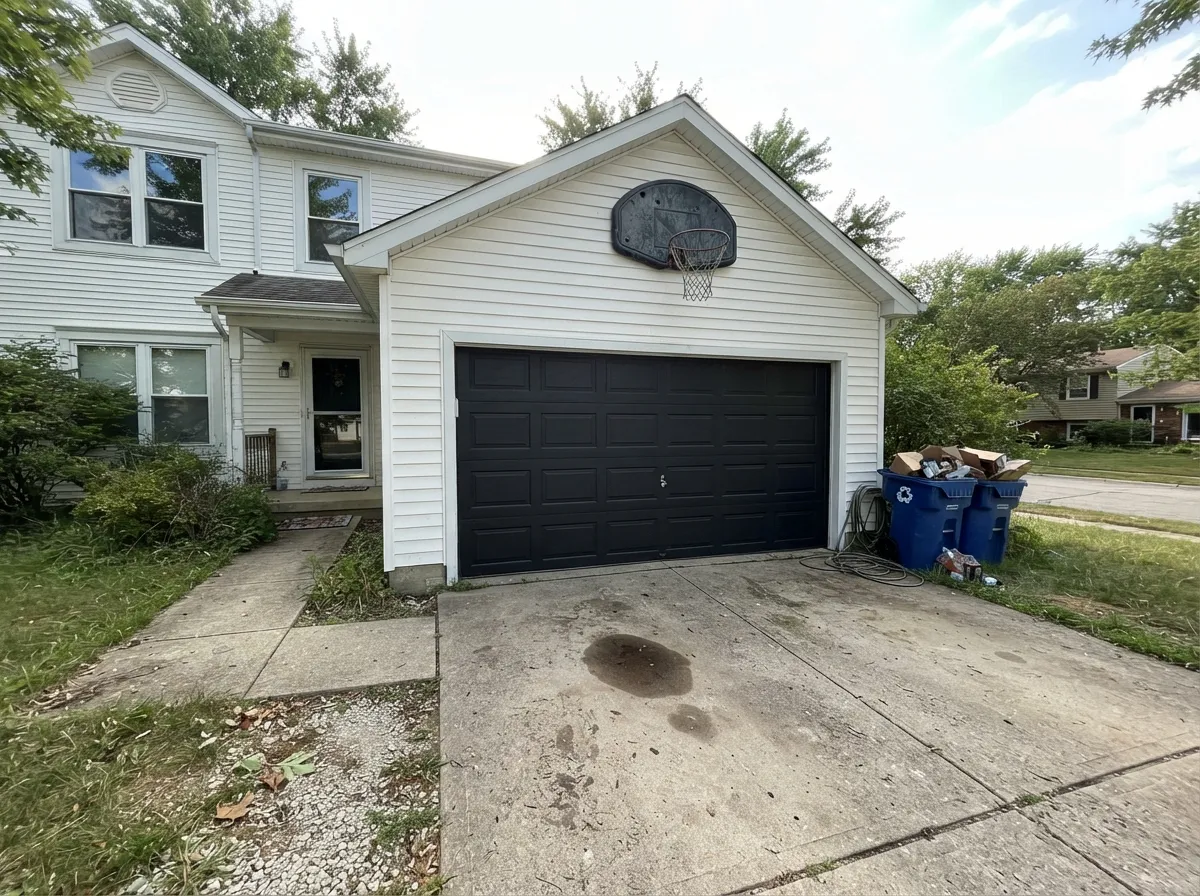
This is the one people find out too late. Painting an insulated steel door a dark color can cause thermal bowing — the outer skin gets far hotter than the inner one and the panel flexes — plus blistering and peeling in high heat. Clopay and Wayne-Dalton both warn about it, and field-painting a factory-finished door normally voids the finish warranty. Check the door's own documentation before you commit; a factory black door and a painted white door are not the same product.
In a small north-facing room with one window it stops being dramatic and becomes a cave — the wall reflects nothing, the corners disappear, and everything else in the room looks dingy against it. Dark matte also broadcasts every roller lap, drywall patch and nail pop, and spot touch-ups flash rather than blend. If you want a black room, you need real light and a full second coat cut in wet, not a touch-up kit.
Room by Room
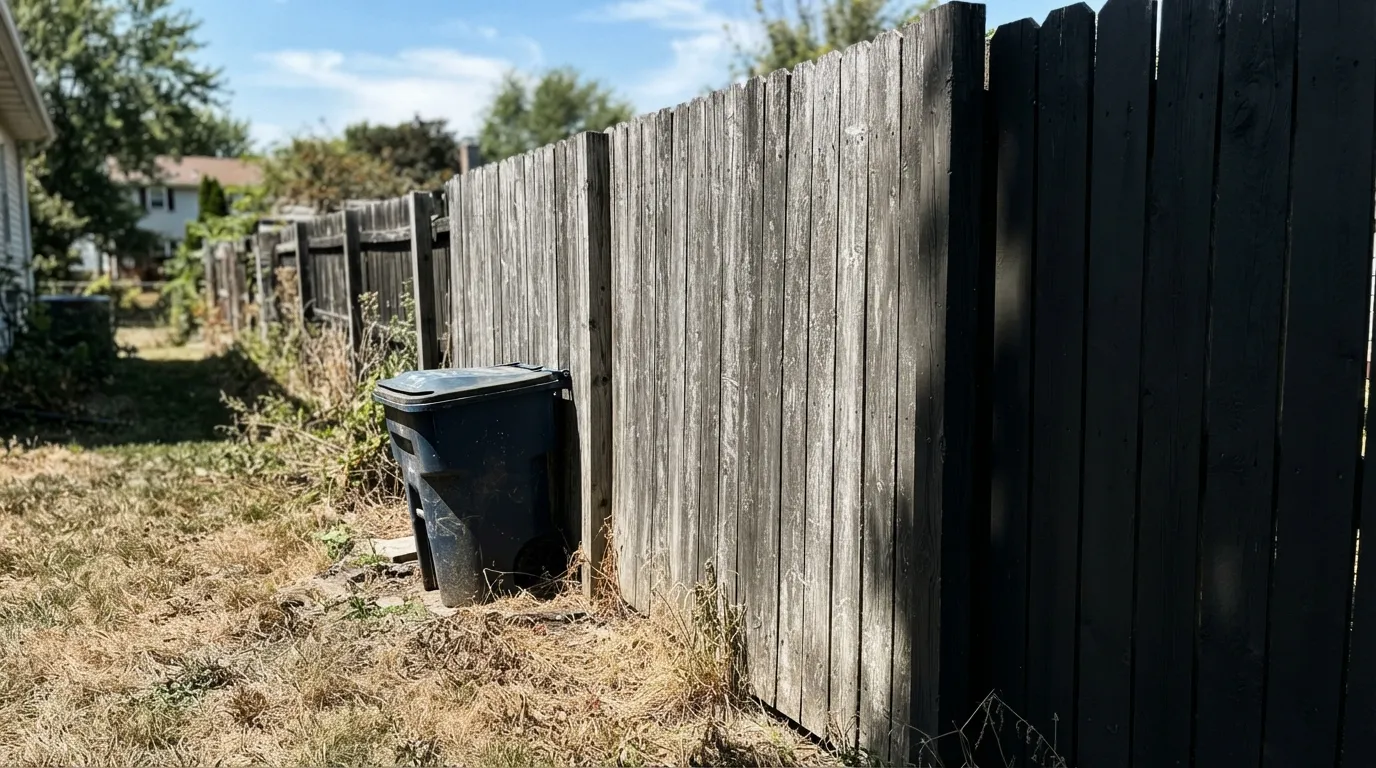
On wood, the solid-color house and fence stain in Carbon gives you black with the grain still showing; on aluminum or wrought-iron panels, the direct-to-metal semi-gloss goes straight over prepped metal. Black fencing visually disappears behind planting, which is why landscape designers keep specifying it. Flat or low satin on wood so surface roughness does not glare; expect the sunny run to fade first.
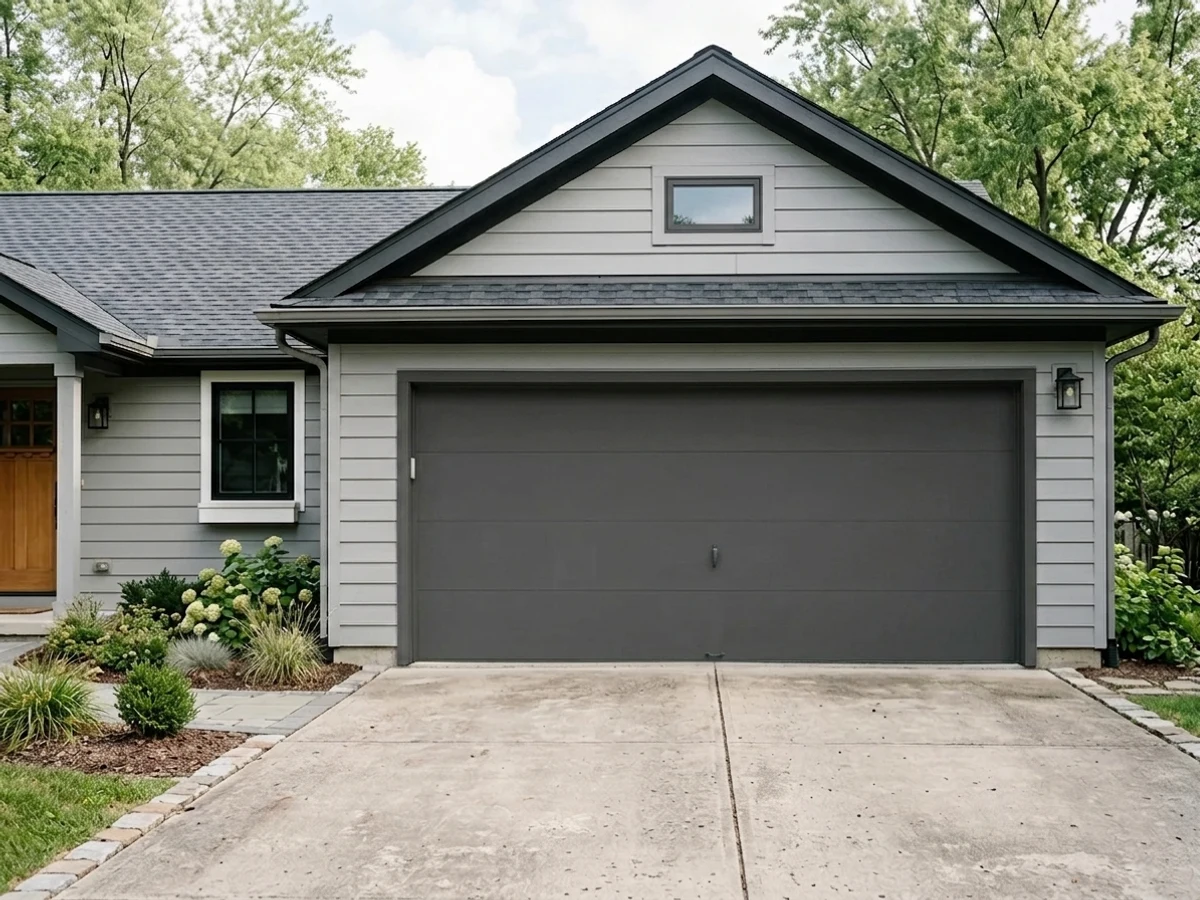
A black garage door under white or pale siding is the cheapest curb-appeal upgrade there is, and Carbon's neutrality means it will not fight brick or a brown roof. Do the homework first: confirm your door's manufacturer allows dark field-painted colors, use the direct-to-metal semi-gloss, and think twice on a thin insulated steel door in a hot, high-UV climate. Wood and fiberglass doors are far less fussy.
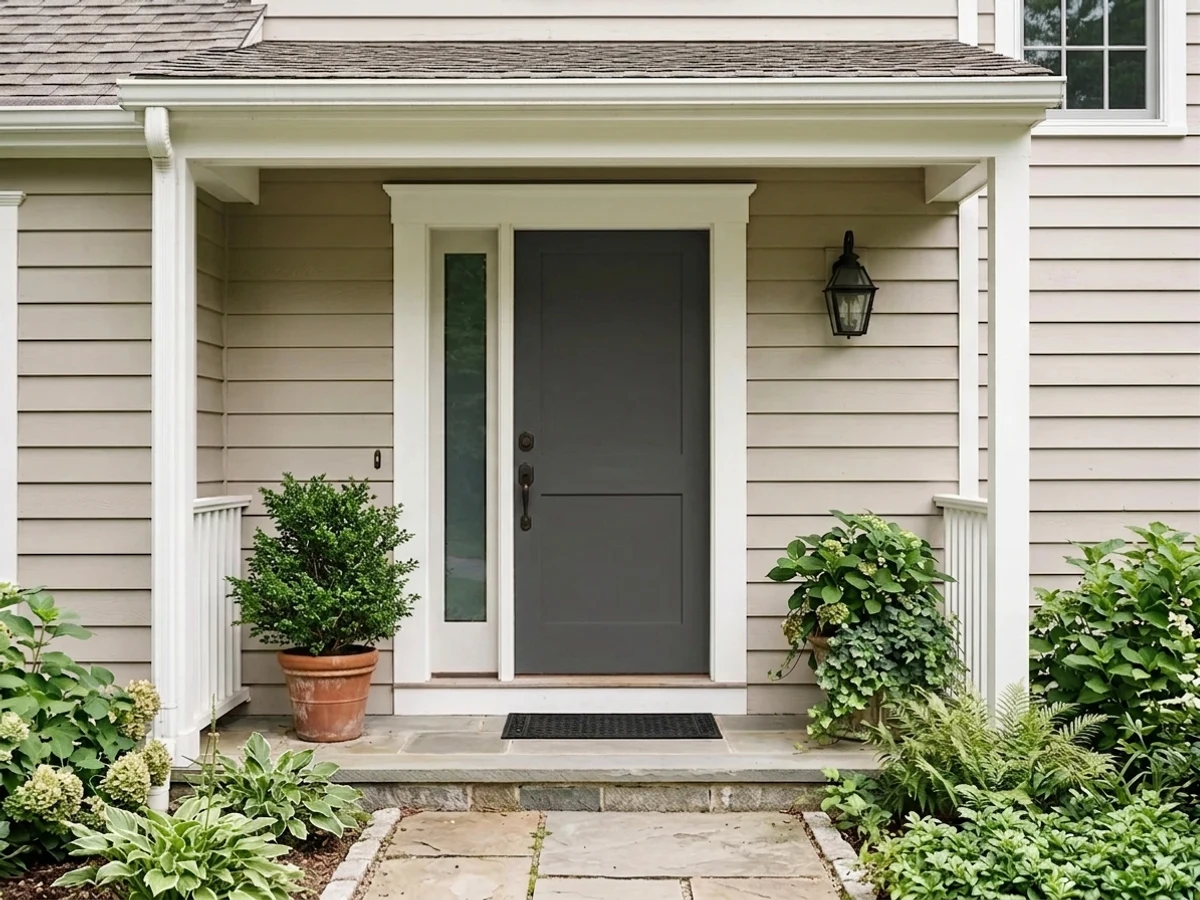
Black doors and shutters are the safest exterior accent in the country, and a neutral black is the version that never argues with your stone or your roof shingles. Semi-gloss so it wipes clean and reads as trim rather than as a wall. Painted door slabs in sun get hot enough to matter on some fiberglass and vinyl-clad units — check the slab, not the paint.
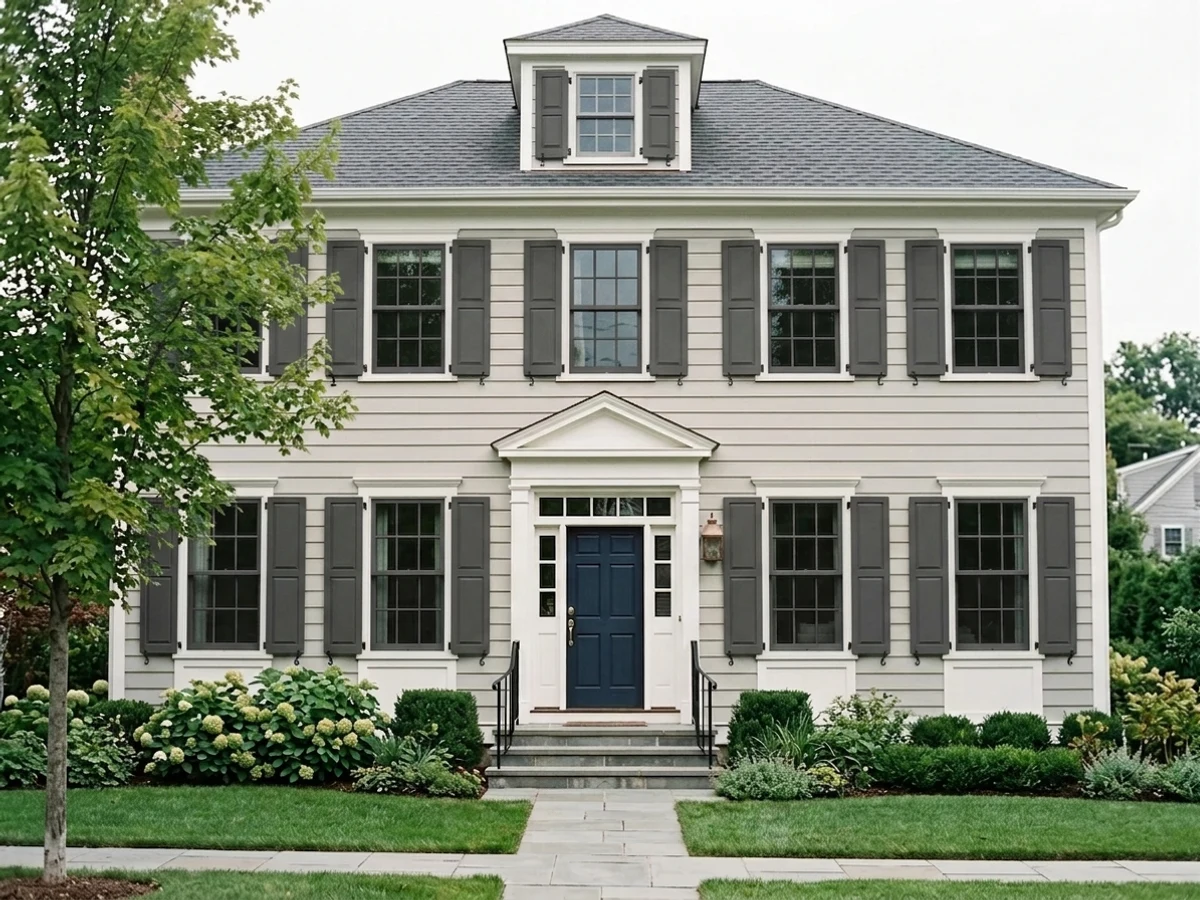
Carbon around windows and along fascia is what turns a plain white or gray house into a modern-farmhouse-adjacent one. It works best when the body color is genuinely light — Behr Polar Bear or Ultra Pure White — because the whole effect is contrast. On a mid-gray house it still reads, but the punch drops. Full body-and-trim black is a different, much higher-maintenance decision.
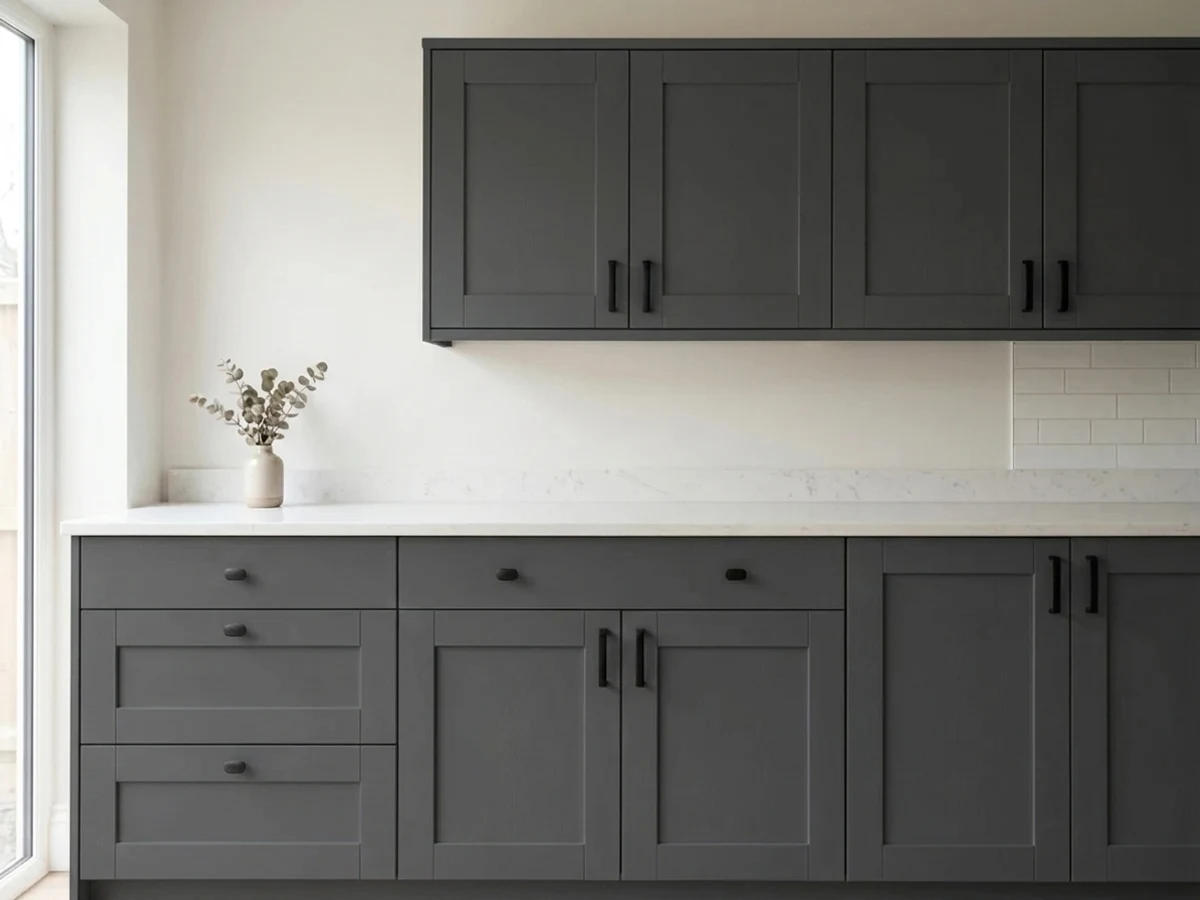
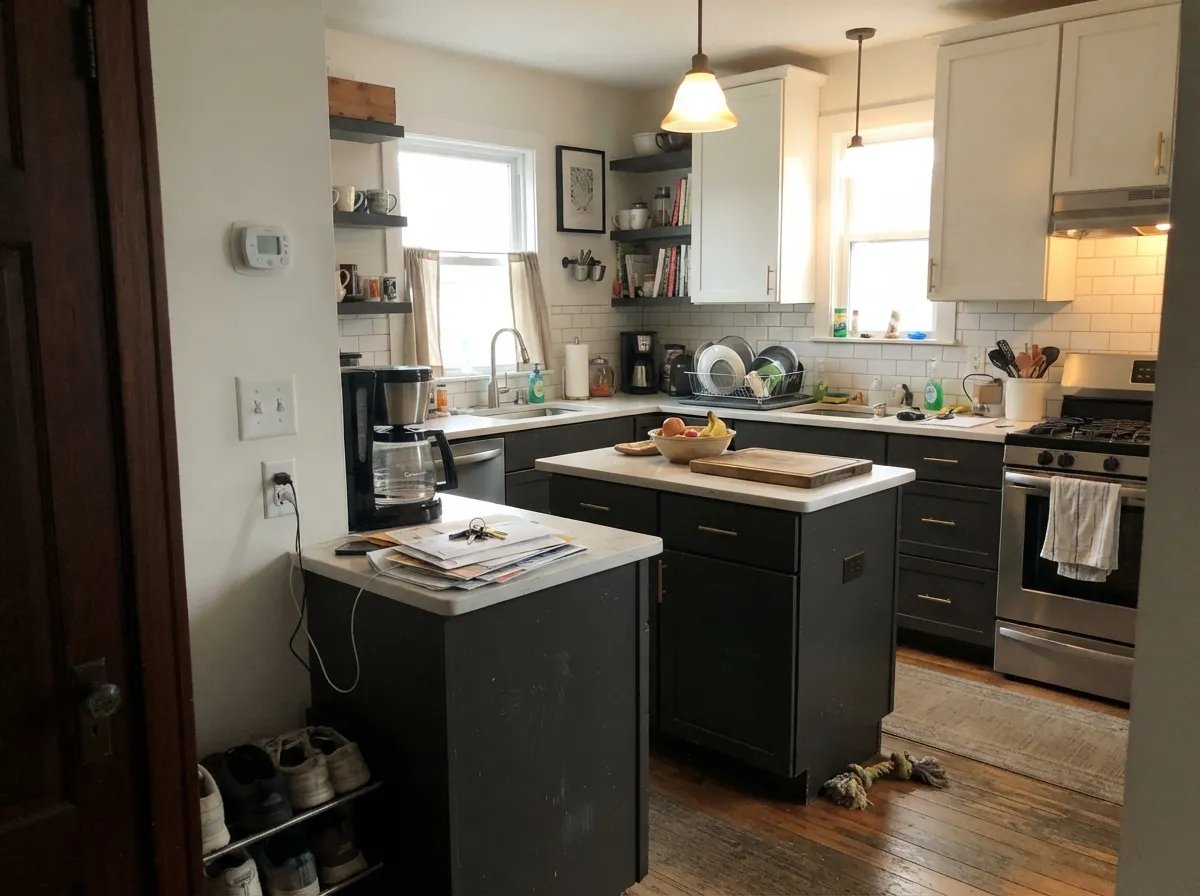
Lower cabinets, an island, a fireplace surround, a run of shelving. Behr sells the code in a satin cabinet, door and trim enamel, which is the finish you want — flat black cabinet doors show every fingerprint. Brass or aged-bronze hardware reads deliberate against it; polished chrome goes cold. Keep the uppers a warm white and the kitchen stays a kitchen instead of a bunker.
A single accent wall behind a bed or a TV works, especially with a matte sheen and a warm lamp on it. Four walls at LRV 5 needs a room with genuine daylight and a plan for lighting, and even then it is a mood, not a neutral. Ceilings in Carbon are for media rooms and nothing else. Deck boards and porch floors get an honest no — a black floor in the sun is too hot to stand on and shows every speck of pollen.
Your Light Is the Risk
Direct sun is where lesser blacks reveal their brown or violet card. Carbon has none, so it stays a clean, even black all day. This is the light it was built for.
One small window and no lamps turns LRV 5 into a hole in the wall. The color gives nothing back and the corners vanish — the single most common indoor regret.
Cool morning light is the only time you can catch its faint blue-gray lean. Midday flattens it to plain black; low evening sun mostly shows sheen and texture, not color.
Warm 2700K lamps soften it toward a black-brown and make cabinets look inviting. Cool 4000K LEDs push the cool side forward for a harder graphite look — and spotlight every brush mark on a door.
Most complaints about Carbon are a light mismatch. Upload a photo of your actual room and see it on your walls — then ask for the same wall in north light or evening lamps before you buy a single sample.
Need It From Another Brand?
Any paint counter can custom-tint Behr N520-7 directly. If you would rather stay in one brand's own deck, these are the closest stock matches, measured as ΔE2000. Under 2 is a difference you will not see on the wall.
| Brand | Closest color | ΔE | LRV | |
|---|---|---|---|---|
| Sherwin-Williams | ArmorySW 9600 · Sherwin-Williams | 3.1 | 5 | Color page → |
| Benjamin Moore | Black Jack2133-20 · Benjamin Moore | 1.1 | 5 | Color page → |
| Valspar | Caviar8006-4G · Valspar | 1.6 | 5 | Color page → |
| PPG / Glidden | Starless SkyPPG0995-7 · PPG / Glidden | 0.3 | 5 | Color page → |
| Glidden | Starless SkyPPG0995-7 · Glidden | 0.3 | 5 | Color page → |
| Dutch Boy | Cauldron437-7DB · Dutch Boy | 1.8 | 5 | Color page → |
Similar Behr Colors
The nearest shades to Carbon within Behr's own range, ranked by perceptual color distance — useful when you want the same look a touch lighter, darker, or warmer.
WCAG 2.1: AA is 4.5 : 1 for normal text, 3 : 1 for large text, AAA is 7 : 1.
Carbon vs the Colors You're Also Considering
Every Carbon sample board has the same rivals on it. The numbers show the real lightness gap — then it comes down to which risk you would rather live with.
Pick this outdoors, when you want the black to be a plain black in every light and against every material.
Behr PPU18-01 · LRV 5Cracked PepperPick this if you want Behr's famous black with actual personality — it is warmer, and it shows a violet cast in strong sun.
Pick this when you want a step back from pure black, and when you are buying at Home Depot rather than Sherwin-Williams.
Sherwin-Williams SW 6258 · LRV 3Tricorn BlackPick this for a true black with no softening at all — LRV 5, the reference point other blacks get measured against.
Behr's deck has several near-blacks that measure almost the same as Carbon, so the honest answer is that some of these differences are smaller than what lighting alone will do.
Raven Black (PPF-59) shares Carbon's exact hex value, #3D3D3D, and the same LRV of 5. On a wall they are the same color; Raven Black simply lives on a different chip, so pick whichever card you already have. Madison Avenue (QE-64) measures #3C3D3D at LRV 5, a fraction cooler on paper, though you will not see it in a finished room.
Limousine Leather is the one to watch: the MQ5-5 version measures LRV 5, while the MQ5-05 version is a touch deeper at LRV 4, sitting slightly closer to true black. Choose Limousine Leather when you want the darkest possible read, and Carbon when you want a near-black that keeps a whisper of gray softness, especially in well-lit rooms where that difference actually shows.
Carbon Coordinating Colors
A neutral black is easy to coordinate precisely because it takes no side. The rule is contrast, not harmony: give it something clearly light to sit against, and let one mid-tone handle the surfaces that get dirty. These are the partners that keep showing up in projects that work:
One Color Code, Almost Every Can
The practical reason to know this color exists is that Behr will mix it into nearly every product family it sells. The direct-to-metal semi-gloss handles metal fencing, railings, gates and garage doors. The solid-color house and fence stain covers wood fencing and rough siding while letting the grain show. There is exterior wall paint, an interior cabinet, door and trim enamel, and even a one-part epoxy garage floor coating in the same code. For anyone doing a whole property in stages, that is genuinely useful: the gate you paint this spring and the door you paint next year come from the same tint formula.
One honest caveat that catches people out. The same color code in different products will not look identical side by side. Sheen changes the read more than the pigment does — a flat solid stain on rough cedar looks noticeably softer and grayer than a semi-gloss enamel on a smooth metal gate two feet away, and a satin floor coating splits the difference again. Substrate matters too: rough wood scatters light, smooth metal reflects it. If two surfaces will be seen together at close range, match the sheen, not just the code.
Black Outside: Heat, Fade and What to Check First
Everything hard about a black exterior comes down to one fact — dark surfaces absorb solar energy that light ones bounce away. That produces two separate problems. The first is fade: UV degrades the deep tint load fastest, so a black fence, door or trim run loses color years before a beige body coat would, and it does it unevenly, sun-side first. Behr's Marquee line carries a heavier UV absorber package than Premium Plus, which meaningfully extends the interval, but no exterior black is permanent. Plan the refresh into the project instead of treating it as a failure.
The second is heat, and it is the one that costs real money. Insulated steel garage doors can thermal-bow when the outer skin runs far hotter than the inner one, and the finish can blister and peel with it — Clopay and Wayne-Dalton both publish warnings about dark colors on field-painted doors, and painting a factory finish generally ends the finish warranty. The same logic applies to vinyl-clad windows, vinyl fencing and some fiberglass door slabs, all of which have color-darkness limits set by the manufacturer, not the paint company. Before a black exterior project, the first thing to read is the substrate's documentation, and the second is which Behr product line is rated for that substrate.
The rest is straightforward. Prep decides how long it lasts more than the product does: clean, degloss, spot-prime bare metal and rust, and never spray a black finish coat in direct midday sun on a hot surface, where it flashes before it levels. South and west exposures will always be the first to need attention.
Three Ready Palettes Built on Carbon
A color is never alone on the wall. These are complete combinations in the 60-30-10 pattern, with the reason each one holds together. Every one opens in the visualizer.
The whole effect depends on the body being genuinely light, so the black openings read as deliberate graphics instead of shadows. Polar Bear at LRV 86 gives that contrast without the glare of a stark white. A mid gray on the porch floor and steps keeps the dirt-heavy horizontal surfaces out of the black-and-white argument.
Try this palette in your roomThree clear steps of depth — LRV 92, 44 and 5 — so nothing blurs together from the curb. Carbon's neutrality is what makes this work over a warm-leaning gray body: a black with a brown or violet lean would start negotiating with the siding, and this one does not.
Try this palette in your roomBlack on the bottom, warm white on top is the two-tone layout that has outlasted a decade of kitchen trends, and a neutral black is what keeps it from looking dated. Swiss Coffee walls sit between the two whites and the black so the room reads warm rather than stark. Brass or aged-bronze pulls; skip polished chrome.
Try this palette in your roomCarbon FAQ
Is Behr Carbon black or gray?
Black, with almost no gray softening. It is a near-black rather than a true black — LRV 5 against Tricorn Black's LRV 5 — so in direct sun on a large flat surface you can see it is a hair short of pure. On a fence, a door or a cabinet run, nobody will call it anything but black.
Behr Carbon or Cracked Pepper for a fence?
Carbon, if you want it to stay a plain black. Cracked Pepper is Behr's better-known black and it is genuinely nice, but it shows a violet cast in strong sun — outdoors on a big surface that shift is more visible, not less. Both sit at LRV 5, so the difference is character, not depth.
What sheen should I use on a metal fence or railing?
Semi-gloss, in a direct-to-metal formula — Behr sells this color that way. Direct-to-metal goes over prepped, sound metal without a separate primer coat, and semi-gloss sheds rain and hoses off. On wood fencing go the other way: flat or low satin, because a shiny wood fence highlights every rough grain and mill mark.
Will a black garage door warp in the sun?
It can, on an insulated steel door. Dark surfaces get hot enough that the outer skin expands more than the inner one and the panel bows, which can also blister and peel the finish. Door manufacturers including Clopay and Wayne-Dalton warn about this, and painting a factory-finished door in the field usually voids the finish warranty. Read your door's documentation before you buy paint; wood and fiberglass doors are much more forgiving.
Does Behr Carbon fade outside?
Yes, like every deep exterior color. Dark colors absorb the most UV and lose color first, and it happens unevenly — the south and west faces of a fence go chalky while the shaded sides stay black. Behr Marquee carries a heavier UV absorber package than Premium Plus and buys extra years, but plan on refreshing sun-exposed runs rather than expecting a permanent finish.
Can I use Carbon on kitchen cabinets?
Yes, and Behr sells the code in a satin cabinet, door and trim enamel made for it. Use it in doses — lowers, an island, a hutch — with warm white uppers, and use satin rather than flat, because a flat black door records every fingerprint. Degloss and prime the existing finish properly; black over an old varnish is where cabinet projects go wrong.
Have you painted with Carbon?
Rate it — one tap helps the next reader decide.
Ask a Question