Black
Behr's plainest black, reviewed honestly: the doors and islands where its zero undertone wins, the small dark rooms where it becomes a cave, and what to pick instead.

Jessica has spec'd whites and neutrals for more than 300 rooms and keeps a sample wall of painted drawdowns in her studio. Every color review is checked against real reader rooms in the comments and re-tested when a formula changes. About the testing process →
- 1Cordovan Brown0
- 2Black5
The Fast Verdict
This is Behr's plain black: at LRV 5 it sits close to true-black depth, but the actual pigment is a soft, near-neutral charcoal — not an inky void. There is almost no undertone to manage, just a whisper of brown that only shows up under a warm lamp. It doesn't have Cracked Pepper's fame or its violet flash; it just reads black on a door, an island, or one wall, in whatever light you give it. Buy it for a dependable dark, not for a personality.
Front doors and exterior trim · a kitchen island or lower cabinets · a powder room or one accent wall · anyone who wants black with zero undertone drama
You want a whole room's four walls in black and the room gets little daylight · you're specifically chasing Cracked Pepper's violet flash · you need the single darkest black in the deck · you're rolling it on with a slow hand and no plan for lap marks
- Genuinely near-zero undertone — no violet flash, no blue or green tint to manage
- Reads as the same plain black across warm and cool light sources
- Small, deep-color rooms (powder rooms, built-ins) take it beautifully
- Doesn't fight brick, stone, brass, or warm wood tones
- Easy to pair with any Behr trim or exterior line since it carries no story of its own
- Not the single darkest black available — SW Tricorn Black goes two LRV points deeper
- Whole room in a dim space reads like a closed box, not a moody flex
- No famous story — buyers chasing Cracked Pepper's viral fame get something plainer
- Behr's fast-setting cabinet/door enamel punishes a slow roller with lap marks
What Color Is Black, Really?
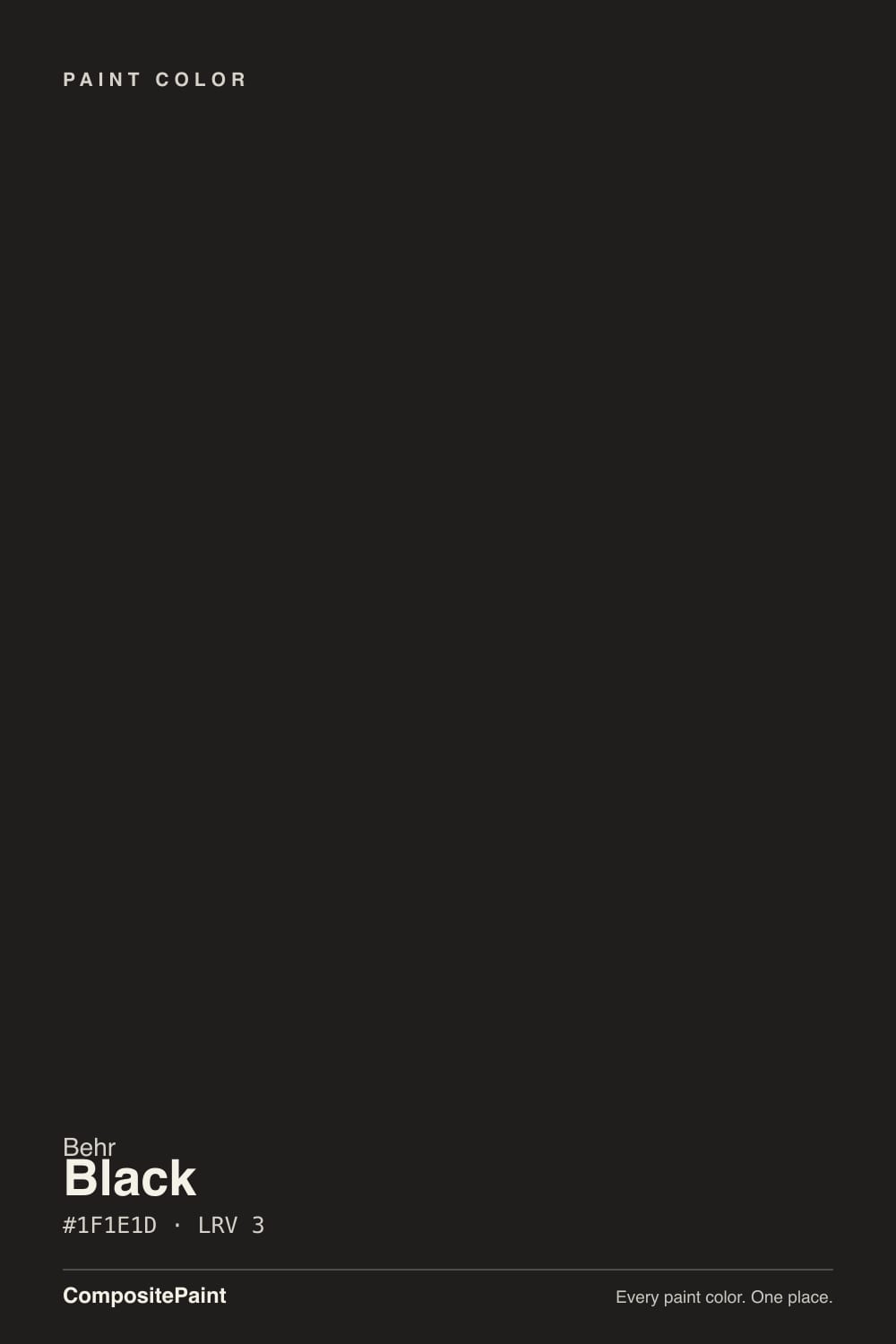
A near-neutral charcoal-black with almost nothing going on undertone-wise. The RGB sits around 61, 61, 62 — barely a point of separation between the channels — which is why Behr's own listing and independent color reviewers agree it reads as close to a true black as a paint can without carrying a colored bias. That neutrality is the whole personality: it doesn't lean blue like a navy-black, green like some "black" exteriors, or brown like Behr's own Sable-adjacent darks. It just sits there being black.
At LRV 5 it is genuinely dark — darker than Behr's famous Cracked Pepper (LRV 8), darker than SW Iron Ore (LRV 6) and BM Wrought Iron (LRV 8) — but it is not the single darkest option out there. SW's reference true black, Tricorn Black, goes two LRV points deeper with zero warmth at all. Treat Behr Black as "a real, dark black" rather than "the blackest black": on four sunlit walls it reads unmistakably black, but it is a soft, matte-feeling charcoal-black rather than a glossy void, especially in flat and matte sheens.
Undertone in one line: essentially none — at most a barely-there warm brown under 2700K lamplight, never violet, never blue, never green. If a photo of your sample looks purple or blue, that's bounce light off your ceiling paint or the sky outside, not the can. This is also the trait that separates it from Cracked Pepper, which does carry a real violet flash in strong sun — see the coordinating section below.
Where It Shines
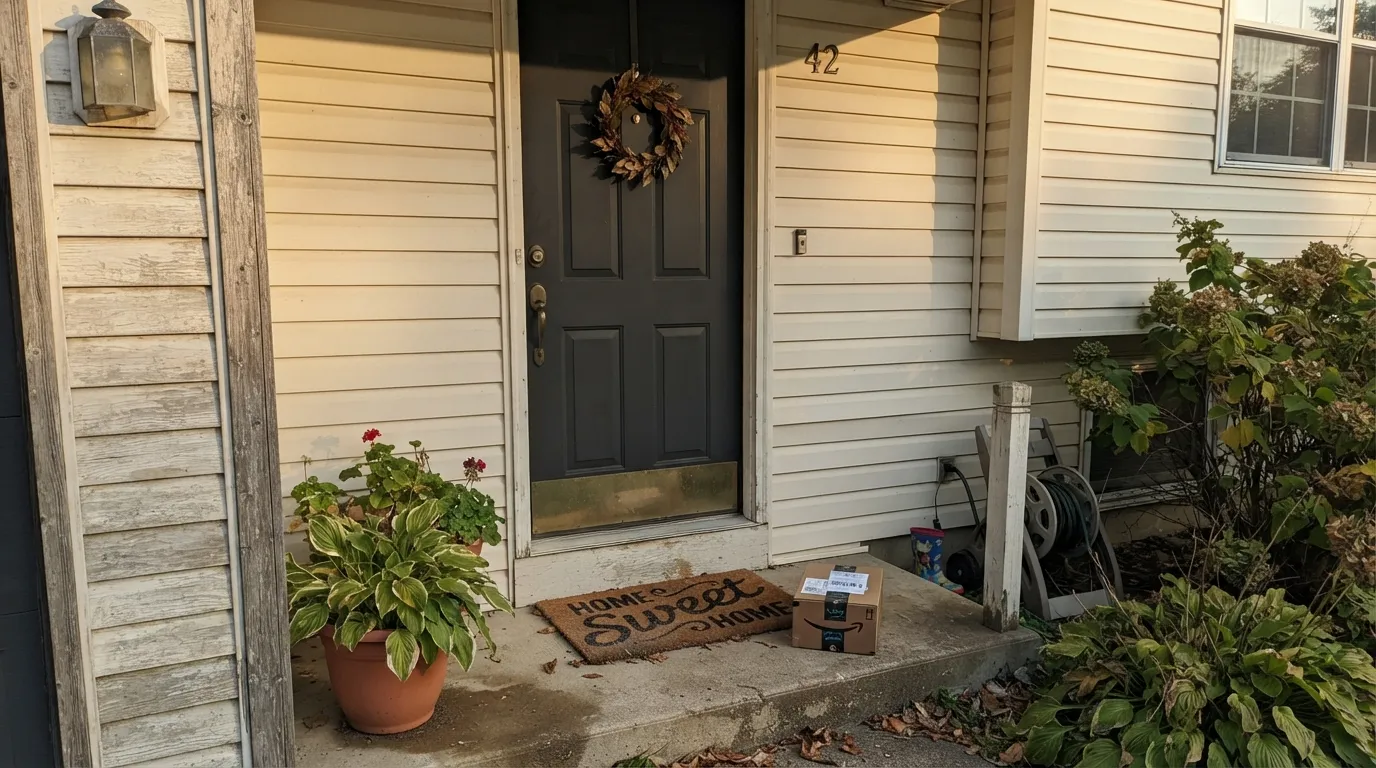
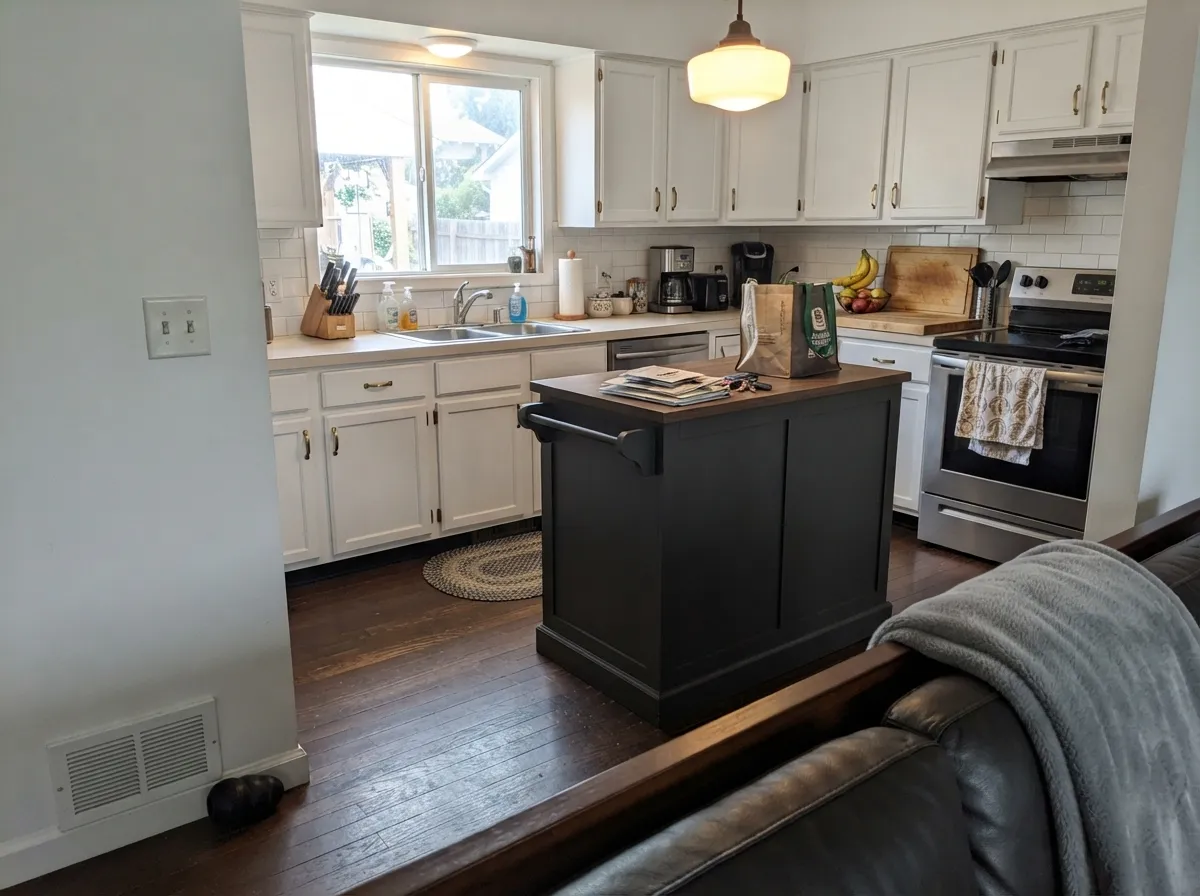
Give it a door, a window frame, an island, or one wall with real daylight and it does exactly what a plain black should: reads deep and settled with nothing shifting underneath it. Because there's no undertone to manage, it doesn't argue with brick, stone, brass, or warm wood the way a blue-black or green-black can — it just sits there being black, which is the entire point of buying a color with this plain a name.
Where It Fails
Almost every disappointing story with this color comes down to one of three predictable situations. None of them are the paint failing — they're the paint being exactly what it says on the can, in a spot that wanted something else.
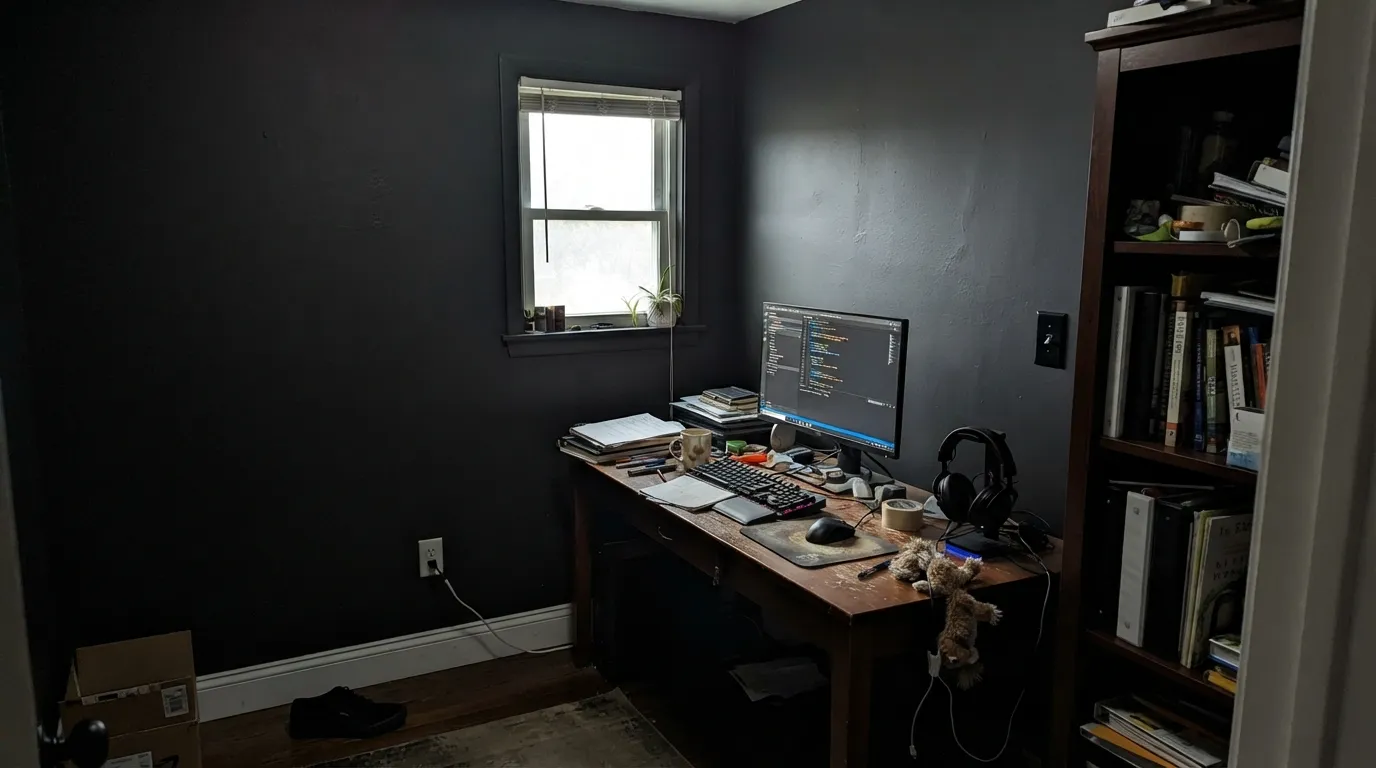
Black eats light instead of giving it back, and in a small, dim room that reads as cramped and cave-like rather than moody. This is the single most common regret with any true-black wall paint, and Behr Black is no exception. If the room doesn't get real daylight, keep the black to one accent wall, a built-in, or trim — and let the other three walls stay light.
Cracked Pepper is Behr's viral, 2024 Color-of-the-Year black — softer at LRV 8, with a real violet cast in strong sun that people specifically chase. "Black" is the plainer sibling: darker, flatter, and completely undramatic. Buyers who grab this can thinking it's simpler version of the famous one are often surprised there's no personality to find — because there isn't supposed to be one.
Behr's cabinet/door/trim enamel — the line most people reach for with this color — sets up fast, and owners report lap marks and picture-framing when it isn't worked quickly with a wet edge. It also needs full coverage in two coats; a single thin coat over a light substrate will show ghosting where the old color bleeds through. Plan for two coats and keep the roller moving.
Room by Room
Full outdoor light keeps it reading crisp and settled against any siding color, warm or cool, because there's no undertone to clash with. Semi-gloss shows off the depth and wipes clean.
On an island under bright perimeter cabinets it's a classic, dependable move that flatters brass and butcher block without a green or blue tint to fight. Keep the walls and upper cabinets light so the room doesn't lose its daylight. Satin cabinet enamel for durability.
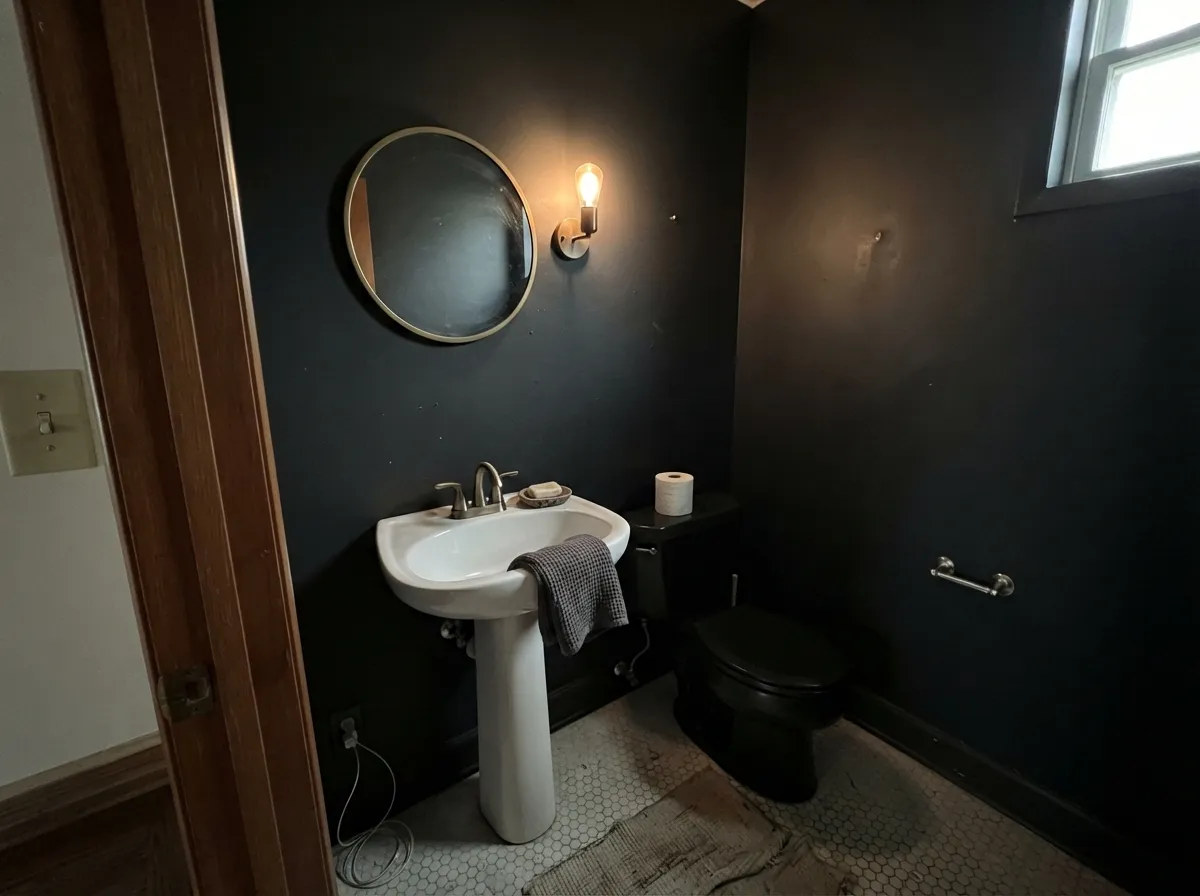
Small rooms take deep, plain color well, and a powder room is rarely lived in long enough for the darkness to feel oppressive. Four walls in this black, warm brass fixtures, and a mirror is a reliable, expensive-looking combination.
One wall with good south or west light reads deliberate and grounding behind a sofa or media console. Four walls in a room that only gets filtered north light is the setup for the small-dark-room complaint above.
Under warm 2700K bedside lamps the faint brown whisper comes forward and it turns genuinely cozy at night. As the only color on all four walls in a dim room it tips from cozy to closed-in fast.
A bookcase, a lower wainscoting run, or a single built-in wall of shelving reads intentional and doesn't fight whatever wood or metal is already in the room. Good for a space you're not trying to make feel bigger.
Your Light Is the Risk
Full sun keeps it reading as a true, settled black with a barely-there warm edge. This is where it looks most deliberate, not accidental.
The black absorbs what little light there is; edges and corners disappear and the room feels smaller, not moodier. Test on one wall first.
Counterintuitively, it turns a touch warmer in bright south rooms and stays cooler and more neutral in darker, north-facing ones — the opposite of how most colors behave, and part of why it stays so plain.
2700K bulbs coax out the faint warm-brown whisper and make it feel cozy rather than stark. Cool white LEDs keep it flat and neutral — pick the bulb on purpose.
Most complaints about Black are a light mismatch. Upload a photo of your actual room and see it on your walls — then ask for the same wall in north light or evening lamps before you buy a single sample.
Need It From Another Brand?
Any paint counter can custom-tint Behr BLACK directly. If you would rather stay in one brand's own deck, these are the closest stock matches, measured as ΔE2000. Under 2 is a difference you will not see on the wall.
| Brand | Closest color | ΔE | LRV | |
|---|---|---|---|---|
| Sherwin-Williams | ArmorySW 9600 · Sherwin-Williams | 2.5 | 5 | Color page → |
| Benjamin Moore | Black Jack2133-20 · Benjamin Moore | 0.0 | 5 | Color page → |
| Valspar | Caviar8006-4G · Valspar | 2.7 | 5 | Color page → |
| PPG / Glidden | Starless SkyPPG0995-7 · PPG / Glidden | 1.1 | 5 | Color page → |
| Glidden | Starless SkyPPG0995-7 · Glidden | 1.1 | 5 | Color page → |
| Dutch Boy | Ebony Sky438-6DB · Dutch Boy | 3.5 | 5 | Color page → |
Similar Behr Colors
The nearest shades to Black within Behr's own range, ranked by perceptual color distance — useful when you want the same look a touch lighter, darker, or warmer.
WCAG 2.1: AA is 4.5 : 1 for normal text, 3 : 1 for large text, AAA is 7 : 1.
Black vs the Colors You're Also Considering
Every Black sample board has the same rivals on it. The numbers show the real lightness gap — then it comes down to which risk you would rather live with.
Pick this for that same near-black depth from Behr's own line, with a whisper of warmth instead of Tricorn's completely flat neutral.
Sherwin-Williams SW 6258 · LRV 3Tricorn BlackPick this if you want the actual truest black in the deck — Tricorn Black goes two LRV points darker with zero warmth, even under a lamp.
Pick this for the plain, undramatic version with none of Cracked Pepper's undertone story — just black.
Behr PPU18-1 · LRV 8Cracked PepperPick this for Behr's famous black — Cracked Pepper is three LRV points softer and shows a real violet flash in strong sun, the color everyone's actually chasing.
Pick this when you're only committing one door or one wall, not a whole house, and want the darker, plainer option.
Sherwin-Williams SW 7069 · LRV 6Iron OrePick this for a whole-house black with a hair more daylight forgiveness — Iron Ore sits one LRV point lighter and is built for exactly that job.
Pick this for the flatter, more neutral read — Wrought Iron leans warmer than this Behr black in every light.
Benjamin Moore 2124-10 · LRV 8Wrought IronPick this for a softer near-black that stays gentler in a dim room — Wrought Iron is Benjamin Moore's warmest, most forgiving dark.
Beluga (770F-7) shares the same LRV of 3, but its formula carries a blue-green cast. In a dim room the two look interchangeable; in daylight, especially outdoors, Beluga drifts toward a deep sea-charcoal while Behr Black stays neutral. Choose Beluga when you want a black that feels slightly softer and cooler, and Behr Black when you need the door to match black window frames or fixtures exactly.
Carbon (N520-7), also LRV 3, is the in-between option: a charcoal-leaning near-black with a whisper of blue. On cabinets it reads as very dark gray rather than true black, which some people prefer because it shows less dust and fewer fingerprints.
Black Suede (S-H-790), again LRV 3, leans faintly green. It is a good pick for exteriors surrounded by landscaping, where the green cast ties into the setting. If you are matching black metal roofing, gutters, or railings, the truly neutral Behr Black is the safer call of the four.
Behr Black Coordinating Colors
The rule for coordinating with this black is simple: because it carries almost no undertone, it gets along with nearly everything, warm or cool. It looks best next to genuinely warm or genuinely bright whites — a muddy or slightly cool white makes the pairing feel accidental rather than intentional — and it layers cleanly with other near-blacks when you're trimming multiple doors or rooms in one house. These are the partners that keep showing up in rooms that work:
Behr Black vs. Cracked Pepper: Which Behr Black Do You Actually Want?
Behr sells two very different blacks under names that confuse people constantly. Cracked Pepper (PPU18-1) is the one with the reputation: named a Color of the Year, LRV 8, warm and soft, with a documented violet cast that shows up in strong sun — the black designers name-drop. "Black" is the other one: literally named after the color it is, LRV 5, near-zero undertone, no viral moment and no plans to have one.
The mix-up happens in both directions. Someone who wants a dependable, no-drama black for a door or an island sometimes ends up with Cracked Pepper and is surprised by the violet flash in the afternoon. Someone chasing the famous Color-of-the-Year black sometimes grabs plain "Black" off the shelf and wonders why their wall looks flatter than the photos they saved. Neither paint is wrong — they're just answering different questions. If the goal is personality and a story, it's Cracked Pepper. If the goal is a black that behaves exactly the same in every room of the house, it's this one.
Behr Black With Wood Tones and Floors
Because it carries almost no undertone, this black is one of the easier darks to place next to wood. Honey oak, walnut, white oak, cedar — none of them fight it the way they'd fight a blue-black or green-black, since there's no competing color for the wood's warmth to clash with. It reads as a neutral, grounding dark against nearly any floor tone.
The one real caution is about depth, not undertone: a dark floor plus black walls in a room with limited daylight compounds the small-dark-room problem covered above — the whole space can lose its sense of edges. If the floor is already dark, keep this black to trim, a door, or one wall rather than every surface, and let a lighter floor or a bright rug do some of the light-bouncing work.
Three Ready Palettes Built on Black
A color is never alone on the wall. These are complete combinations in the 60-30-10 pattern, with the reason each one holds together. Every one opens in the visualizer.
Warm siding, a crisp trim white, and a true black door is the classic Behr exterior combo — and because this black carries no undertone, it won't fight the siding's warmth the way a blue-black door would.
Try this palette in your roomBright perimeter cabinets keep the kitchen from losing daylight, the warm beige wall keeps things from turning cold, and the island gets the full drama without a violet or green undertone to fight the brass hardware.
Try this palette in your roomWhite Dove's warmth keeps the room from going cold while the single black wall carries the whole statement; crisp Behr White trim frames the accent instead of blurring into it.
Try this palette in your roomBlack FAQ
Is Behr Black a true black or a dark gray?
Officially a true black at LRV 5, but the actual pigment reads as a soft, near-neutral charcoal rather than an inky void — the RGB channels sit within a point of each other. It is not the single darkest black in our reviewed lineup; SW Tricorn Black (LRV 3) goes deeper with zero warmth.
What's the difference between Behr Black and Cracked Pepper?
Cracked Pepper is Behr's famous 2024 Color-of-the-Year black — LRV 8, noticeably softer, with a real violet flash in strong sun. "Black" (LRV 5) is the plain sibling: darker, flatter, and undramatic. If you're chasing the color everyone talks about, that's Cracked Pepper, not this one.
Can I paint an entire room in Behr Black?
Only if the room gets real daylight. In a small space with little natural light, four black walls read cramped and cave-like rather than moody — the most common regret with any true black. With good south or west light, it works; otherwise keep it to one wall or a built-in.
Does Behr Black work on a front door?
Yes — this is its best job. Because it carries almost no undertone, it won't clash with warm or cool siding the way a blue-black or green-black can. Use semi-gloss for durability and shine.
How many coats does Behr Black need?
Two, minimum, over any lighter existing color — a single coat will show ghosting where the old color bleeds through. If you're using Behr's cabinet/door/trim enamel, work in a wet edge; owners report the formula sets up fast enough to leave lap marks if you paint slowly.
Does Behr Black show dust and fingerprints?
On cabinets and doors, satin or semi-gloss hides most everyday marks and wipes clean. On a flat or matte accent wall, dust and light scuffs show more visibly than they would on a lighter color — plan for a durable eggshell if the wall gets touched often.
Have you painted with Black?
Rate it — one tap helps the next reader decide.
Ask a Question