Domino
The Sherwin-Williams near-black with a violet secret, reviewed honestly: where the purple shows up, why it works better outside than on four walls, and what to pick instead.

Jessica has spec'd whites and neutrals for more than 300 rooms and keeps a sample wall of painted drawdowns in her studio. Every color review is checked against real reader rooms in the comments and re-tested when a formula changes. About the testing process →
- 1Domino3
- 2Graphite8
The Fast Verdict
Domino is Sherwin-Williams' gentlest near-black. It carries the same LRV 3 as Tricorn Black and Caviar, but it is visibly less severe on the chip, and the reason is a faint violet-gray cast where the others sit neutral or cool. That cast is the whole story. In flat light and after dark nobody will ever call it purple — it simply reads as a rich, softened black. Put it in direct sun beside a true black and it goes quietly plum-gray. That makes it a very good exterior black over gray or purple-toned stone and brick, a very good cabinet and door color, and a mediocre pick for four walls of a dim room, where the softness vanishes and you are left with an ordinary black.
Garage doors, front doors, shutters and window sash · fences and gates on modern or black-and-white houses · kitchen islands, range hoods and vanity cabinets · powder rooms and small rooms you want drenched · houses with gray, blue or purple-toned stone
You want a hard, flat, true black · the room is dim and gets no lamp light · your walls are wavy and you want more sheen than matte · your insulated steel garage door is still under warranty · you repaint rarely and hate watching a dark exterior color fade
- Softer than a true black without giving up the LRV 3 drama
- The violet-gray lean settles cleanly on gray stone, bluestone and cool brick
- Reads black to almost everyone, almost all the time
- Excellent on cabinets, doors, shutters and fences — the surfaces near-blacks are for
- Sits in the standard SW fan deck, so any store can tint it in any product line
- Goes soft gray-plum in direct sun and mismatches true-black hardware
- LRV 3 means a dim room becomes a cave, no matter how nice the paint is
- Every wall flaw, lap mark and touch-up shows in anything above matte
- Outdoors it absorbs heat, shows dust, and fades faster than a mid-tone
What Color Is Domino, Really?
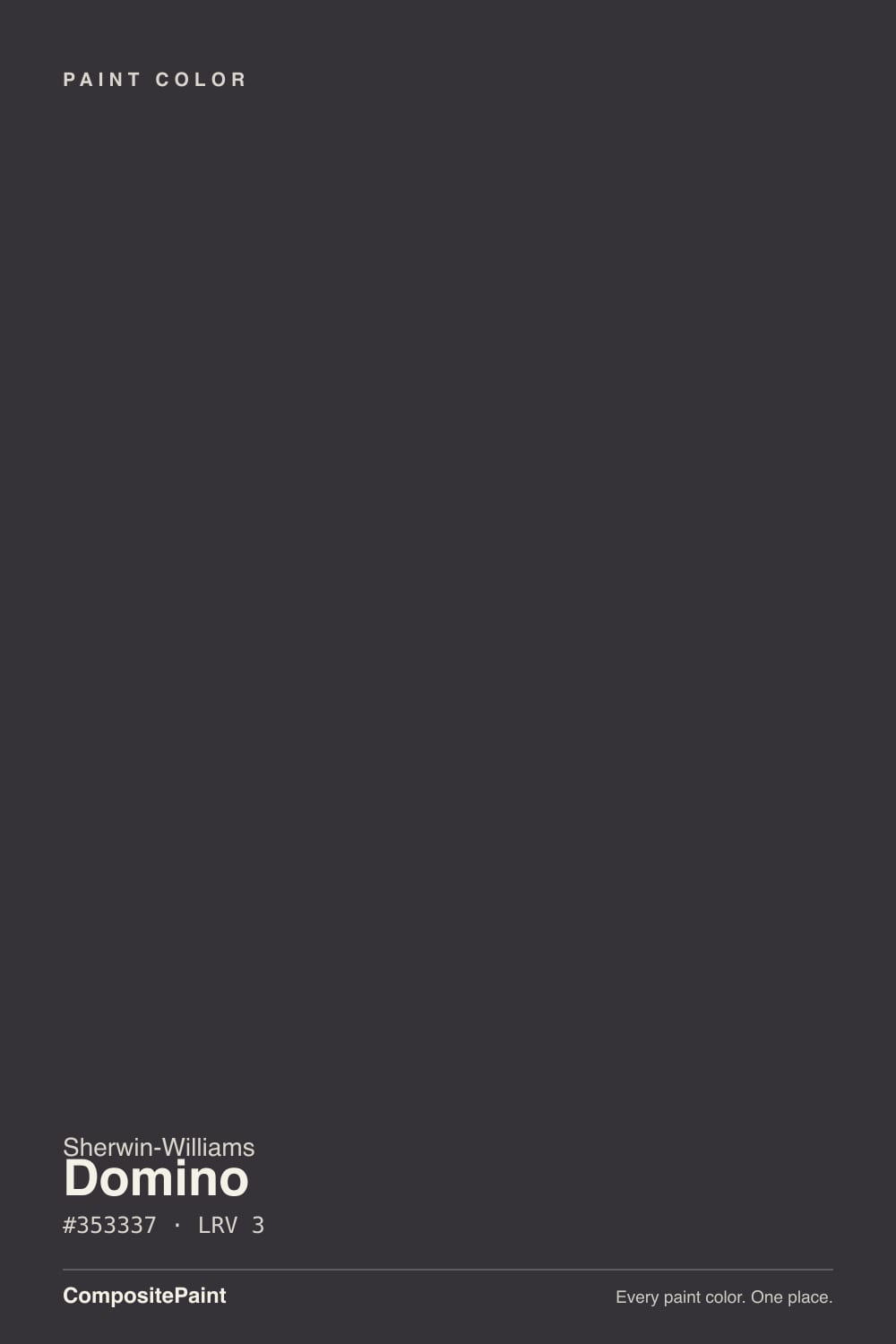
A charcoal-black with a whisper of violet in it. The numbers say it plainly: Domino sits at RGB 53 / 51 / 55, and green is the lowest of the three, which is the arithmetic behind a purple lean. The chroma is tiny — under four percent — so this is not a purple paint by any honest measure. It is a black that is very slightly off-neutral in the plum direction, which is exactly why designers who write about blacks keep filing it under the purple-undertone group rather than the warm-brown or green-black groups.
It opens the Sherwin-Williams black run: 6989 Domino, then Caviar at 6990, Black Magic at 6991, Inkwell at 6992 and Greenblack at 6994. Domino is the lightest and softest of the set. All of them share LRV 3, so on a spec sheet they look identical, but hold the chips side by side and Domino is the one that reads a shade less absolute — Caviar and Inkwell go graphite and inky, Domino stays a deep charcoal that happens to look black.
Undertone in one line: violet-gray, very quietly — never brown, never green. Some color write-ups call it blue, and in cool overcast light it can pass for that; a few call it chocolate, and that one is simply wrong for this hex. If your sample looks flat black, your light is dim or your sun is low. If it looks faintly plum, that is midday sun doing what it always does to a near-black — showing you the pigment you actually bought.
Where It Shines
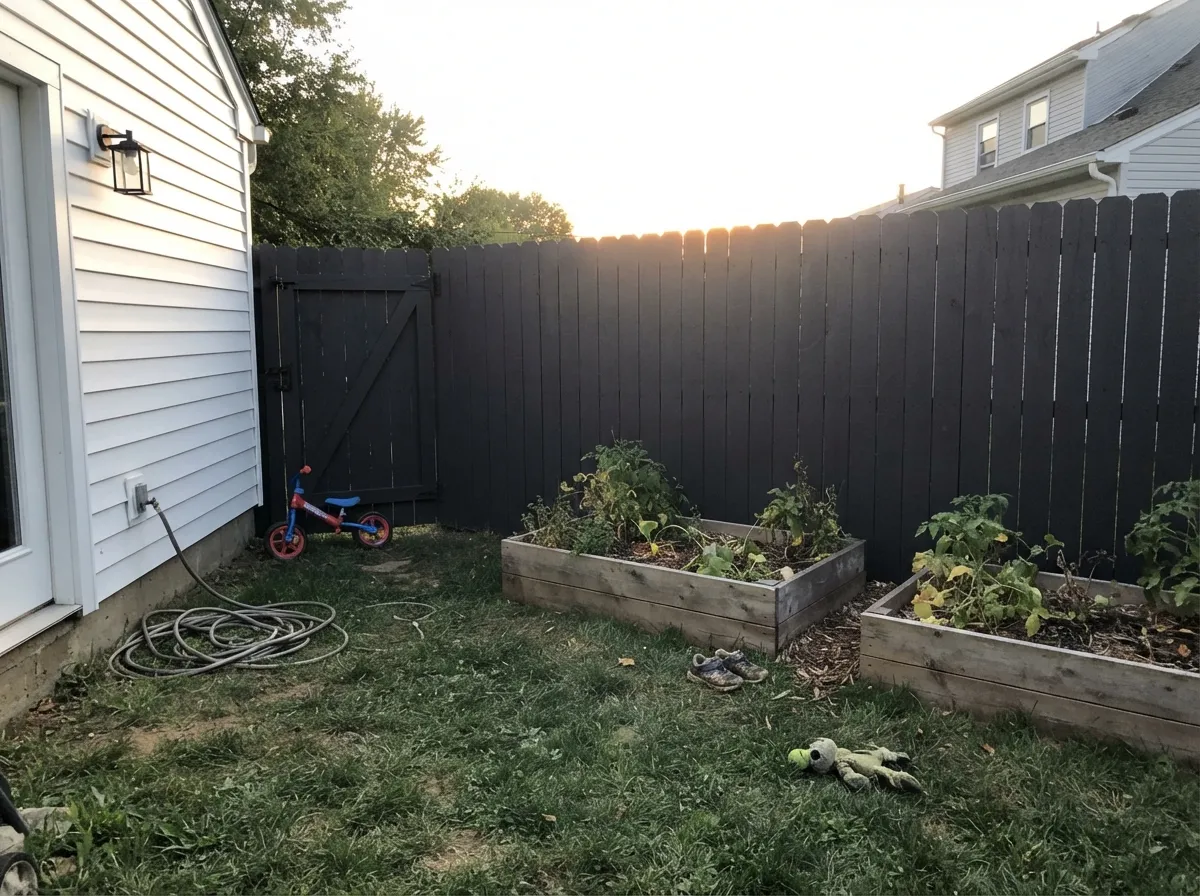
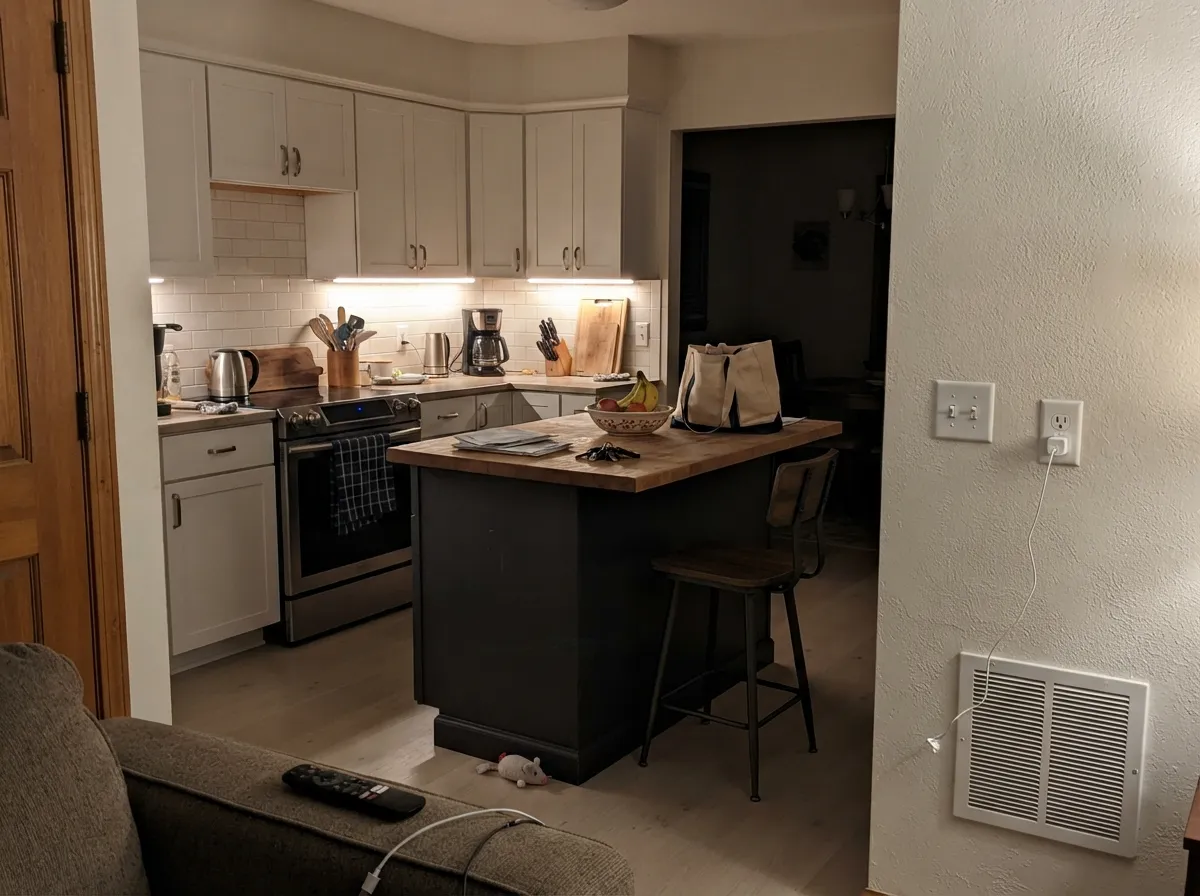
Domino is at its best on a surface you look at rather than sit inside. Garage doors, front doors, shutters, window sash, a fence line, a kitchen island, a range hood, a vanity: places where the color's job is to be a confident dark shape against something lighter. Outdoors it earns real money — the violet lean is the reason it settles so easily on gray fieldstone, bluestone and the cooler purple-gray bricks that make a warm black look muddy. Indoors it gives you the drenched-small-room look without the hardness of a true black, which is why it behaves so well in a powder room and on cabinet fronts under warm light.
Where It Fails
Almost every complaint about Domino comes down to one of three things, and all three are predictable before you open the can. None of them is a defect in the paint — but if your project matches one, you either change the color or change the plan.
In shade and at night Domino is black. In direct midday sun it lightens into a soft gray with a faint plum cast, and if it is sitting next to something genuinely black — factory-black window frames, a black car in the driveway, black gutters — the mismatch is obvious from the street. That softness is the reason to buy it or the reason to skip it. If you want a black that stays black in full sun, Tricorn Black or Caviar are the honest answers.
Three percent of the light comes back off the wall, so a small dim room painted Domino goes cave-dark and stays there. That is fine if cave-dark is the plan and you have lamps; it is a disaster in a windowless hallway with one ceiling fixture. Depth also multiplies drywall sin: every wavy seam, roller lap and touch-up flashes on a near-black wall. Matte on walls is not a style choice here, it is damage control.
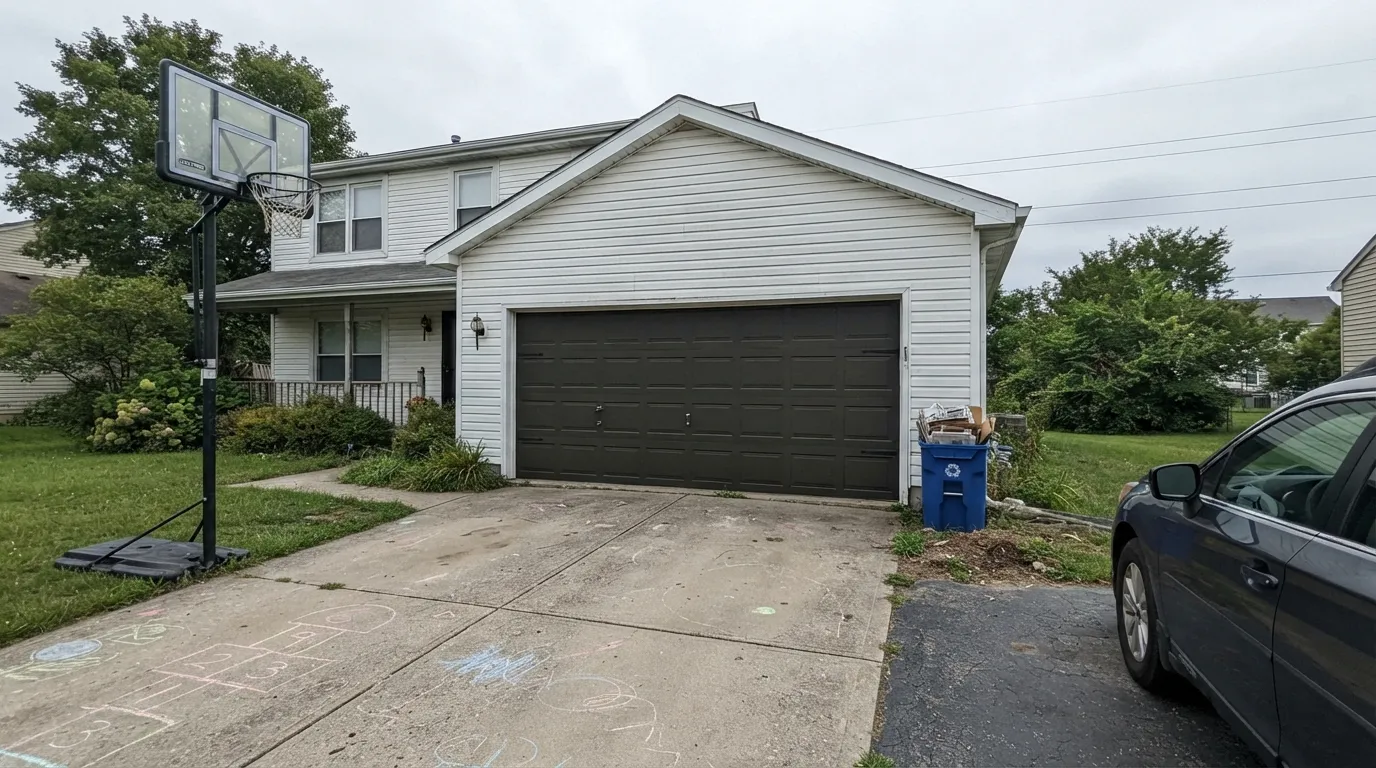
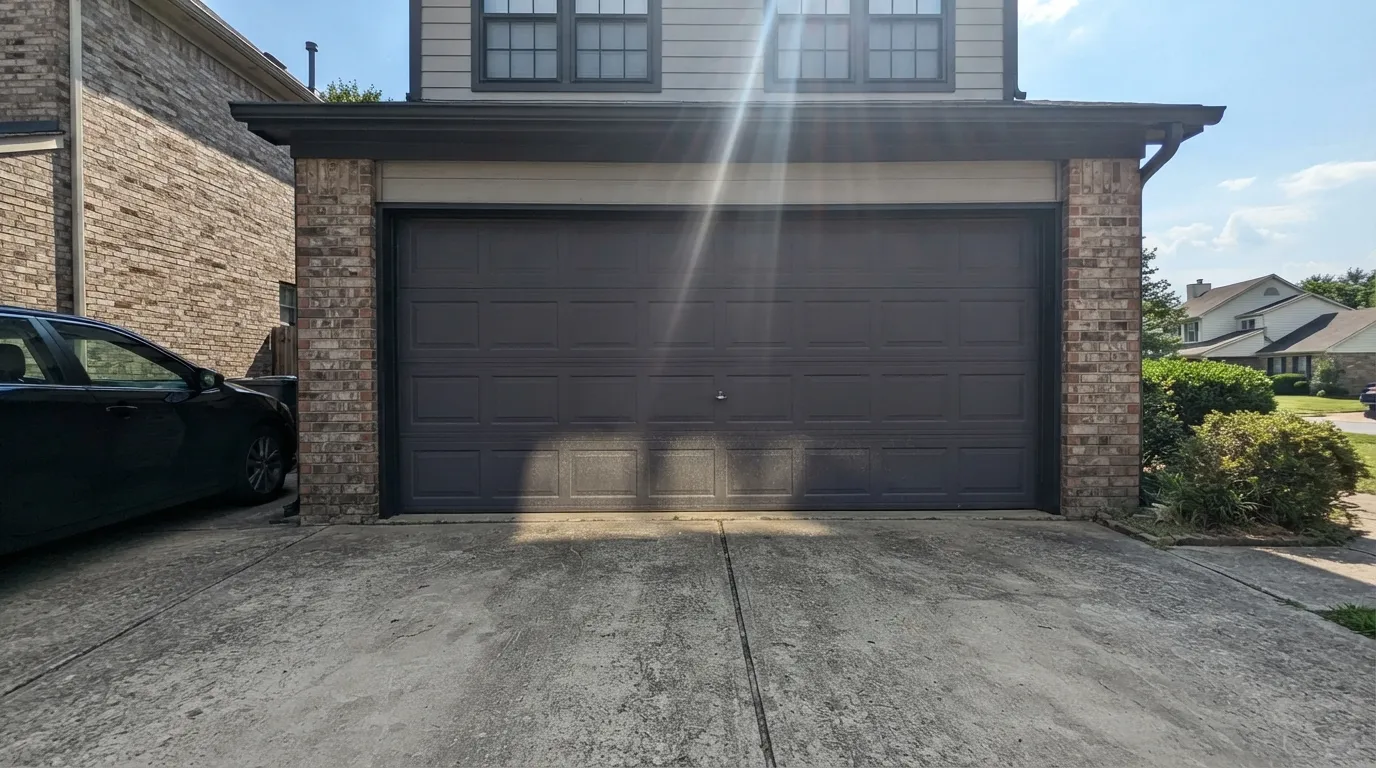
A near-black absorbs almost everything the sun sends it. On an insulated steel garage door that means thermal bowing — the outer skin cooks, the inner skin does not, and the panels visibly cup on a hot afternoon. Several door makers, Clopay, Amarr and Wayne Dalton among them, either warn against dark repaints or exclude bowing on dark finishes from their coverage, and a non-factory repaint usually voids the finish warranty on its own. On a south-facing wood fence, expect heat, expect pollen and dust film to show constantly, and expect visible fading long before a mid-tone would.
Room by Room
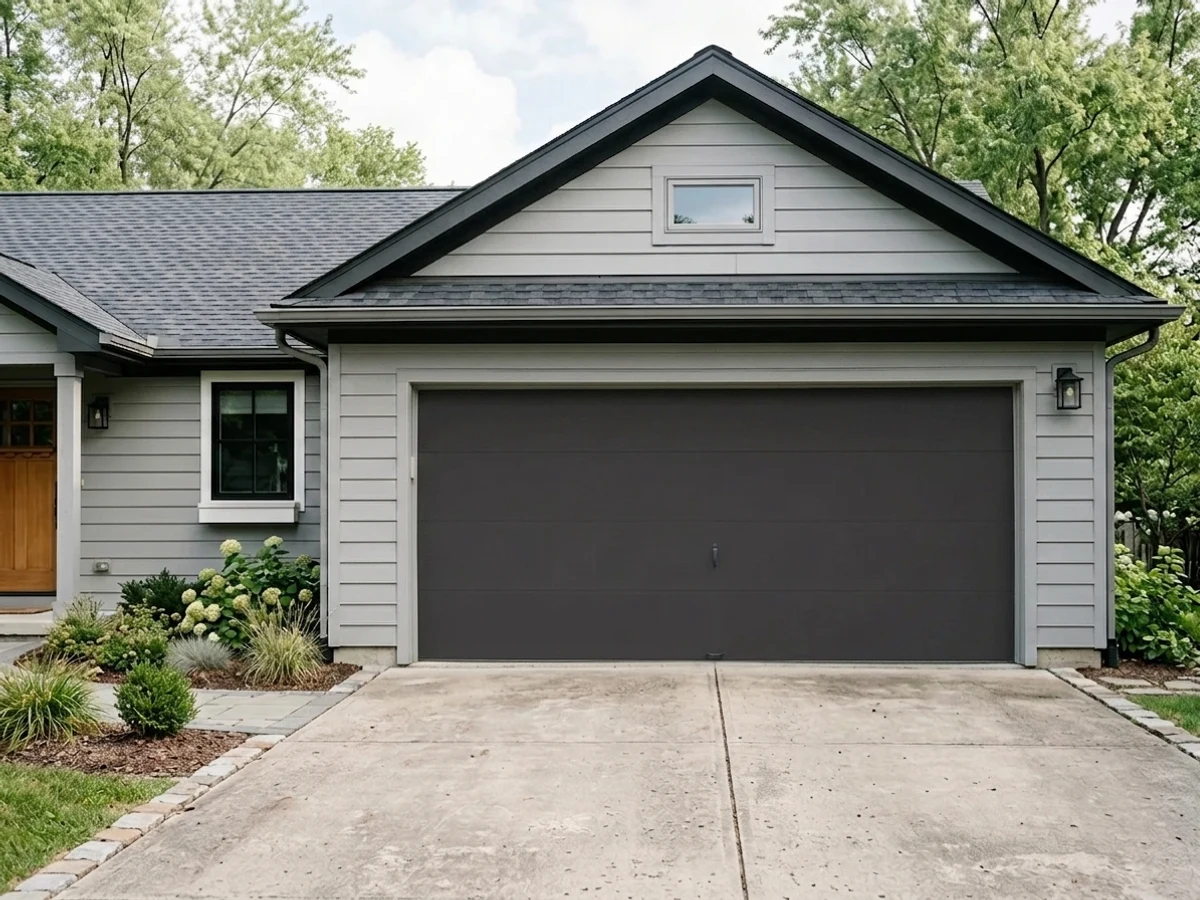
This is where Domino pays for itself. On a white or light-gray house it gives you the black-trim look with the edges taken off, and the violet lean keeps it from clashing with gray stone or purple-toned brick the way a warm black does. Satin holds up and cleans; flat hides panel dents but streaks when you wash it. Read the exterior section below before you paint an insulated steel door.
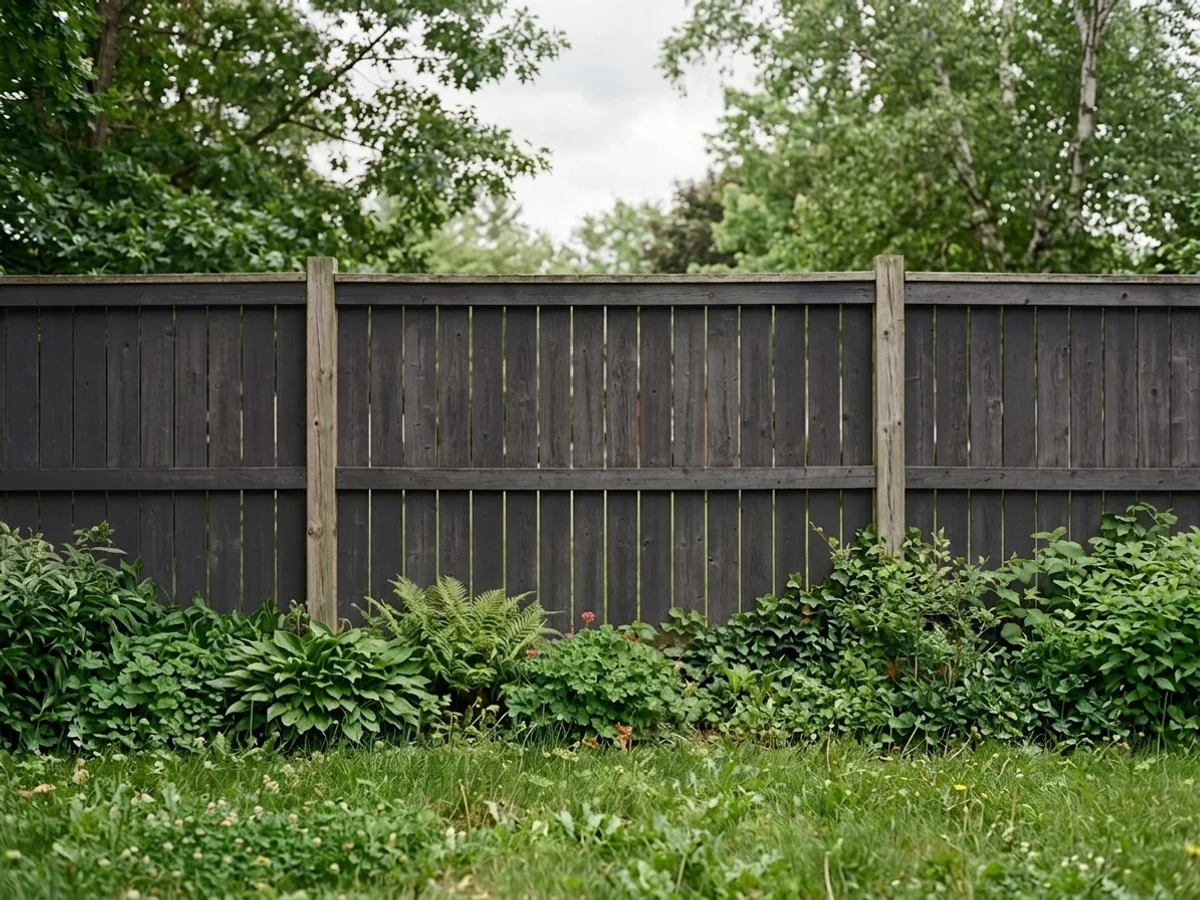
A black fence is the cheapest trick in landscaping: the boards recede, the yard reads deeper, and every plant in front of it looks greener. Domino does that job well and looks slightly less severe than a true black on a long run of boards. The warning is maintenance — a south-facing fence in this color runs hot, shows every dusty rain streak, and will need a refresh sooner than a mid-tone stain would.
Near-blacks look expensive on cabinet doors and this one looks softer than most, which suits shaker fronts and older houses better than a hard black does. Island in Domino, perimeter in a soft white, satin urethane-fortified cabinet enamel, and the kitchen looks designed rather than repainted. Same logic on a bathroom vanity under a light stone top.
Small windowless rooms are the one place four near-black walls genuinely work, because nobody spends an hour in there. Walls, ceiling and trim all in Domino, matte, one good warm bulb and a mirror, and it reads like a jewel box. Skip this if the powder room is your only guest-facing room and you want it to feel bigger.
It can be beautiful in a room with big windows or a room you only use at night with lamps on. In an average dim room it stops being interesting: the violet disappears, the softness disappears, and you have painted a plain black box. If you want a dark room that still shows some character in ordinary light, a color a few steps up in LRV like Iron Ore is the safer bet.
Black interior doors against light walls is a cheap, high-impact change, and Domino's softness makes it read less stark than a true black in a house with warm floors. Satin, and prime properly — a near-black over a white door needs a tinted primer or you will be rolling coats forever.
Your Light Is the Risk
Open shade and bright overcast are where it looks best — dark and rich, with just enough softness to read as a considered charcoal-black rather than a hole in the wall.
In a room with one small window and no lamps, everything that makes Domino worth choosing disappears. It flattens into generic black and the corners of the room stop existing.
Full midday sun lifts it to a soft gray and pushes the plum cast forward — the moment people notice it is not a true black. Golden hour warms that plum toward brown-black, then it goes solid black again at dusk.
Warm 2700K lamps mute the violet and the color goes soft and enveloping, which is the look you want on cabinets. Cool 4000K LEDs do the opposite and bring the plum-gray forward, most visibly on satin cabinet doors that bounce the light.
Most complaints about Domino are a light mismatch. Upload a photo of your actual room and see it on your walls — then ask for the same wall in north light or evening lamps before you buy a single sample.
Need It From Another Brand?
Any paint counter can custom-tint Sherwin-Williams SW 6989 directly. If you would rather stay in one brand's own deck, these are the closest stock matches, measured as ΔE2000. Under 2 is a difference you will not see on the wall.
| Brand | Closest color | ΔE | LRV | |
|---|---|---|---|---|
| Behr | Bitter Chocolate790B-7 · Behr | 4.0 | 4 | Color page → |
| Benjamin Moore | Universal Black2118-10 · Benjamin Moore | 2.2 | 5 | Color page → |
| Valspar | Nevermore8004-48G · Valspar | 2.8 | 3 | Color page → |
| PPG / Glidden | Starless SkyPPG0995-7 · PPG / Glidden | 4.7 | 5 | Color page → |
| Glidden | Onyx Black00NN 05/000 · Glidden | 3.3 | 5 | Color page → |
| Dutch Boy | Deep Cosmos444-7DB · Dutch Boy | 2.1 | 4 | Color page → |
Similar Sherwin-Williams Colors
The nearest shades to Domino within Sherwin-Williams's own range, ranked by perceptual color distance — useful when you want the same look a touch lighter, darker, or warmer.
WCAG 2.1: AA is 4.5 : 1 for normal text, 3 : 1 for large text, AAA is 7 : 1.
Domino vs the Colors You're Also Considering
Every Domino sample board has the same rivals on it. The numbers show the real lightness gap — then it comes down to which risk you would rather live with.
Pick this when a true black feels hard and you want the same depth with the edges softened.
Sherwin-Williams SW 6258 · LRV 3Tricorn BlackPick this if you want the reference true black — no lean in any direction, and it stays black in full sun.
Pick this when you want the surface to read as true black rather than as a very dark charcoal.
Sherwin-Williams SW 7069 · LRV 6Iron OrePick this for the soft-black end of the range — at LRV 6 it survives whole rooms and dim light in a way Domino cannot.
Pick this when Caviar looks too inky and you want the softer, slightly plum-leaning black.
Sherwin-Williams SW 6990 · LRV 3CaviarPick this for the deeper, graphite version of the same idea — the next number up in the deck and noticeably more absolute.
Pick this over gray stone, bluestone and cool brick, where Urbane Bronze reads muddy and Domino reads clean.
Sherwin-Williams SW 7048 · LRV 8Urbane BronzePick this if your house leans warm — tan stucco, honey brick, cedar — where a warm dark blends and a violet-leaning black fights.
Domino Coordinating Colors
The rule for coordinating with Domino: keep the partners clean or cool rather than creamy, and give the eye at least one mid-tone between the white and the black. Because the black leans faintly violet, warm yellow-based whites and golden beiges look a step more yellow beside it than they do alone — not a clash, but a shift you should see before you buy. These are the partners that keep working:
Domino Outdoors: Fences, Garage Doors, and the Heat Problem
Outdoors is where this color is worth the trip to the store, and also where the practical rules bite. Start with the good part: the violet-gray lean is why designers group Domino with the blacks that coordinate well with stonework. Gray fieldstone, bluestone, slate roofs and the cooler purple-gray bricks common on 1970s and 1980s houses all sit comfortably next to it, while a warm brown-black beside the same stone tends to look muddy. On a white or light-gray house it delivers the black-trim, black-sash, black-garage-door look without the hardness of a true black.
Now the heat. A near-black absorbs nearly all the solar energy that hits it, and on an insulated steel garage door that becomes a structural issue, not a cosmetic one: the painted outer skin gets far hotter than the inner skin, both are bonded to a foam core, and the panels cup outward on hot afternoons. Clopay publishes a warning against repainting a white door black, Amarr treats non-factory paint as the end of the finish warranty, and Wayne Dalton does not warrant black finishes against warping or thermal bowing. Factory-finished black doors get a thermal-reflective coating that a can of wall paint cannot replicate. If your door is insulated steel, faces strong sun, and is still under warranty, price a factory-black door before you price paint. A wood, fiberglass, or shaded door is a much easier decision.
Fences follow the same physics with lower stakes. Use a real exterior acrylic rated for fade resistance, prime bare wood, and accept two things: black shows dust, pollen and rain-streak film more than any other fence color, and dark pigments visibly lose depth in strong sun long before a mid-tone would. Plan a refresh cycle rather than expecting a fence-and-forget finish. What you get in exchange is genuine — a black fence visually disappears, which makes a small yard read deeper and makes every green thing in front of it look better.
Domino With Wood, Stone, and Metals
Wood is the easy part. White oak, ash and pale rift-sawn floors are excellent under a Domino island or against Domino doors — the contrast is the point, and the cool lean keeps the pairing from going heavy. Walnut and espresso work too, though the room gets dark fast when both the cabinets and the floor are deep. The one combination to look at hard before committing is orange-toned honey oak: yellow-orange sits opposite violet on the wheel, so the floor pushes the black a touch more plum and the black pushes the floor a touch more orange. At this chroma the effect is mild, not the disaster it would be with a real purple, but it is the reason a Domino island can look slightly off in a 1990s oak kitchen.
Stone is where the color quietly wins. Gray and blue-gray granite, soapstone, honed slate and cool marbles with gray veining all sit naturally with it. Warm tan travertine and gold-flecked granite are the harder pairing — there Urbane Bronze or a brown-black usually looks more settled.
Metals: matte black hardware disappears into it, which can be good or dull depending on whether you wanted the pulls to read. Brushed nickel, chrome and pewter all look clean against the cool lean. Unlacquered brass works beautifully as deliberate contrast, but it is a stronger statement here than it is against a warm black, because the warm metal and the cool paint are pulling in opposite directions rather than agreeing.
Three Ready Palettes Built on Domino
A color is never alone on the wall. These are complete combinations in the 60-30-10 pattern, with the reason each one holds together. Every one opens in the visualizer.
Extra White is crisp rather than creamy, which matters here — a warm white next to a violet-leaning black looks slightly yellow from the curb, and the sharpness that makes Extra White a risk on interior walls is exactly what you want under open sky. Repose Gray on the foundation and any accent siding gives the eye a middle step so the jump from LRV 86 to LRV 3 is not naked, and the faint violet it flashes in cool light runs the same direction Domino does instead of against it.
Try this palette in your roomA near-black fence stops being a wall and starts being a backdrop — the boards recede, the yard reads deeper, and planting in front of it looks twice as green. A plain white house keeps the lot from feeling closed in, and Pewter Green on the shed or gate adds one living mid-tone so the whole yard is not just black and white.
Try this palette in your roomSnowbound is the rare soft white that leans the same faintly violet-gray direction Domino does, so the two never look like they came from different houses. Drift of Mist keeps the walls quiet between them. A creamier white would work too, but it makes the island read colder — test both boards side by side before you commit the cabinet order.
Try this palette in your roomDomino FAQ
Is Sherwin-Williams Domino actually purple?
Only technically. The mix leans violet-gray rather than neutral, and the hex confirms it, but the amount of color in there is tiny. In shade, indoors, or after dark it reads as a plain rich black. The one place you will see it is full direct sun, especially beside something that is genuinely black — then it lifts to a soft gray with a plum cast.
Domino or Tricorn Black?
Tricorn Black if you want the black to stay hard and absolute in every light — it is the reference true black in the Sherwin-Williams deck. Domino if you want the same depth with softer edges, or if your stone, brick or roof runs cool and gray, where the violet lean blends and a neutral black can look like a cut-out. Sample both on the actual surface; on a chip they look nearly the same.
What white goes with Domino?
A clean or slightly cool-leaning white. Extra White outdoors for maximum crispness, Snowbound indoors because its faint violet-gray base runs the same direction. Very creamy whites are not wrong, but next to Domino they read a step more yellow than they do on their own, so look at them together before you buy trim paint.
Is Domino a good garage door color?
It is a good-looking one, and there is a real caution attached. Dark paint on an insulated steel door makes the outer skin far hotter than the inner skin, which can bow the panels on a hot afternoon; several manufacturers warn against dark repaints or exclude bowing on dark finishes, and a non-factory repaint typically ends the finish warranty anyway. On a shaded or north-facing door, or a wood or fiberglass door, it is a much easier yes.
Can I paint a wood fence Domino?
Yes — use a quality exterior acrylic rated for fade resistance, and go in with your eyes open. A black fence absorbs heat, which is hard on boards in strong sun, and it shows dust, pollen and rain streaks more than any other color. What you get in return is the best backdrop in the yard: the fence recedes and the planting in front of it reads much greener.
Is Domino too dark for interior walls?
For most rooms, yes. LRV 3 means almost nothing comes back off the wall, so an average room with average windows just goes dark and stays dark. The exceptions are rooms you want dark on purpose — a powder room, a den you only use at night, a media room — and rooms with enough glass that they can afford it. Everywhere else, a soft charcoal like Iron Ore gives you the mood at a survivable LRV.
Have you painted with Domino?
Rate it — one tap helps the next reader decide.
Ask a Question