Graphite
Benjamin Moore's blue-gray charcoal, reviewed honestly: where it reads sophisticated instead of stark, the small rooms it swallows whole, and what to pick instead.

Jessica has spec'd whites and neutrals for more than 300 rooms and keeps a sample wall of painted drawdowns in her studio. Every color review is checked against real reader rooms in the comments and re-tested when a formula changes. About the testing process →
- 1Tricorn Black3
- 2Graphite8
The Fast Verdict
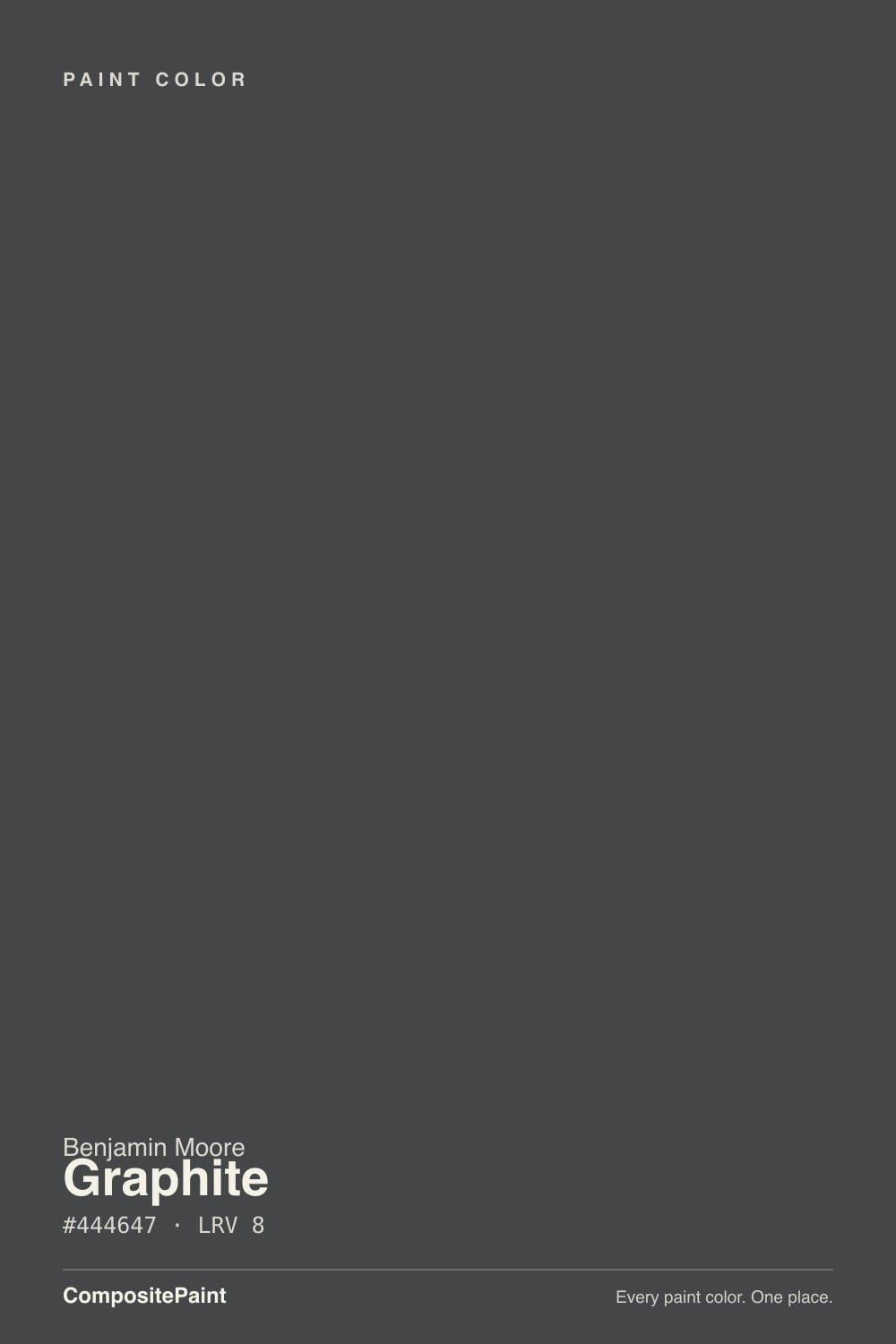
Graphite is Benjamin Moore's answer to "I want black, but not that black." At LRV 8 it is genuinely dark — dark enough to read as a near-black from across a room — but a whisper of blue keeps it from going flat or coal-dead the way a true black can. On a front door or a kitchen island it looks expensive and considered; on four walls in a small, dim room it can swallow the space whole. It has real search demand by name because it splits the difference between Wrought Iron's soft near-black and Sherwin-Williams Iron Ore's true black — reliably, in almost any light.
Front doors and exterior trim · kitchen islands and cabinetry · a den or home office with real daylight · anyone who wants black without the flat, light-swallowing feel of true black
Your room is small and gets one window's worth of light · you want warmth, not cool · you're painting a nursery or a room that needs to feel airy · your floors and trim are already dark
- Neutral cool-gray near-black — no warm brown or green undertone to fight
- Reads sophisticated and modern on a front door or exterior trim
- Excellent on kitchen islands with brass and marble or wood
- Softer and more forgiving in photos than a true jet black
- Deep enough (LRV 8) to hold its color in bright, sunny rooms
- Swallows small or single-window rooms — needs real square footage and light
- Blue undertone reads cold against warm wood in overcast, north-facing light
- Needs a gray-tinted primer and two full coats or coverage goes streaky
- Not the color to reach for if you actually want warm charcoal
What Color Is Graphite, Really?
Graphite is a deep charcoal built on a neutral gray base with a quiet blue undertone underneath — not a color-forward blue-black like Naval or Van Deusen Blue, just enough cool cast to keep it from reading brown or warm. Most of Benjamin Moore's near-blacks pick a lane: Kendall Charcoal leans green and warm, Wrought Iron leans soft with a touch of brown. Graphite stays the most neutral of the group, which is exactly why it gets specified when someone wants "black" without a strong personality attached to the undertone.
At LRV 8 it sits in true near-black territory — barely lighter than Wrought Iron (LRV 6) and Sherwin-Williams Iron Ore (LRV 6), and only a shade brighter than an actual black like Tricorn Black (LRV 3). That means it behaves like black in every practical way: it absorbs light rather than bouncing it, it hides scuffs and shows dust and lint, and it needs a primer built for dark colors or the finish goes patchy over two coats. The "softer than black" reputation comes from how it photographs and reads in daylight, not from the LRV — set it next to true black and Graphite is unmistakably lighter and cooler.
Undertone in one line: neutral gray with a whisper of blue — never warm, never green. Homeowners comparing it to Sherwin-Williams Iron Ore for exteriors describe it as reading "blue-grey" rather than black, especially against warm siding or brick; that cool cast is subtle indoors but becomes the whole story outdoors in full sun.
Where It Shines
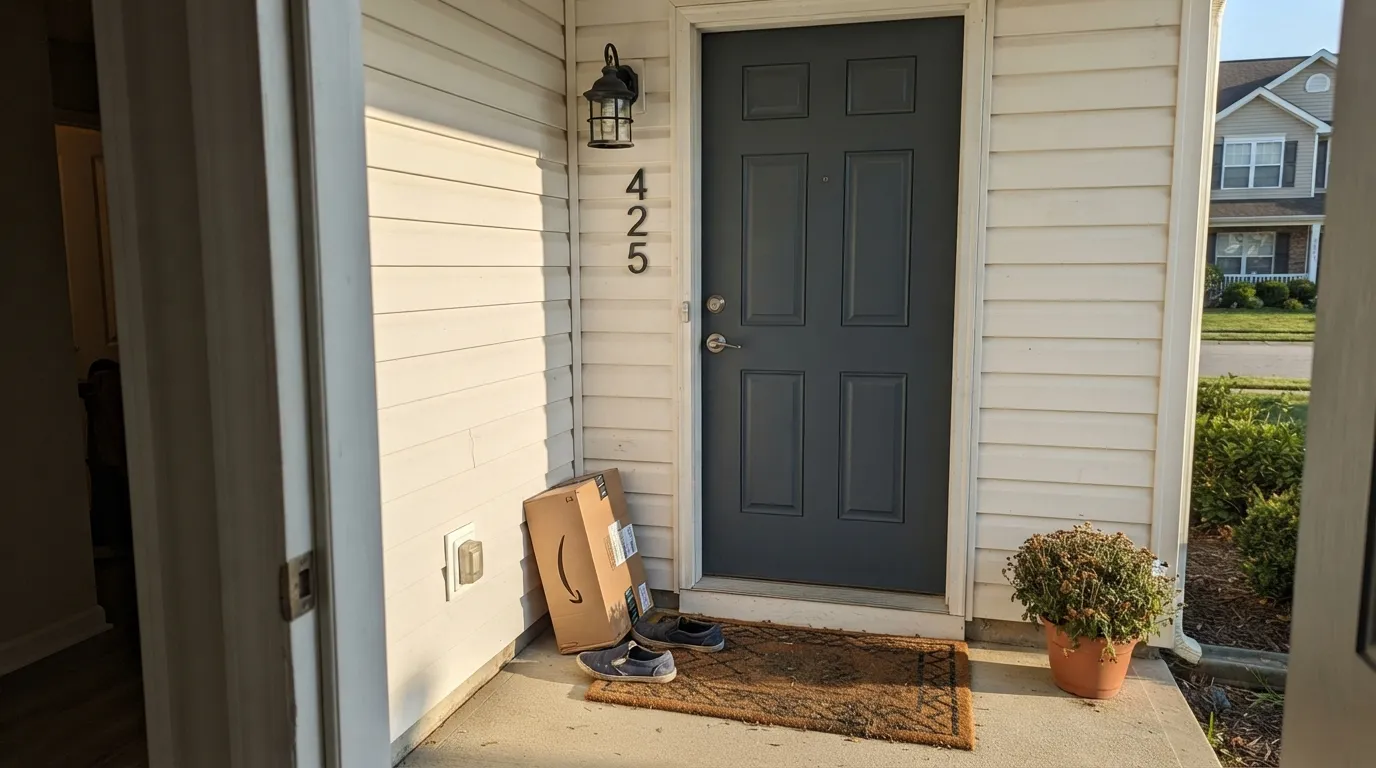
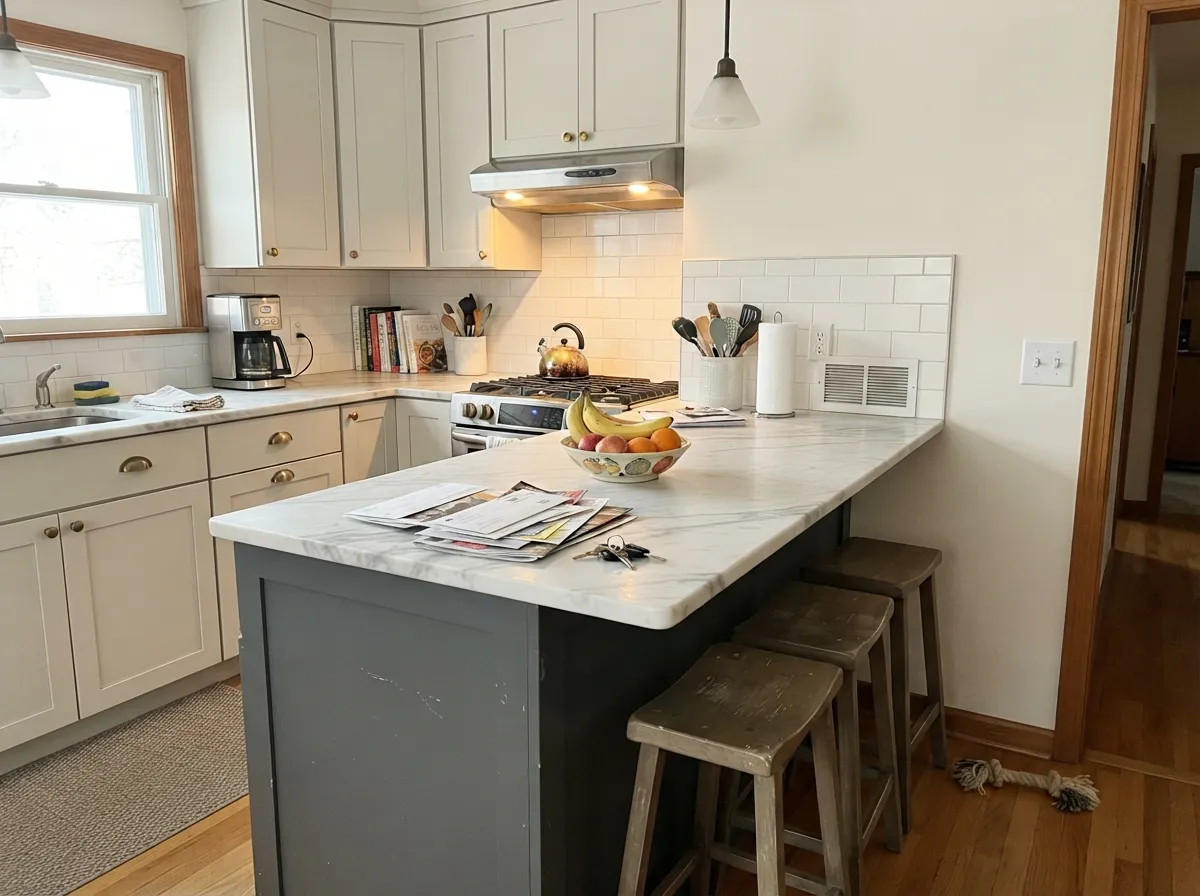
Give it a single, considered surface and real light, and it looks custom, not just dark. Front doors are its signature job — Graphite next to white or warm-toned siding reads like a paint-store upgrade of true black, softer and more photogenic than a flat jet-black door. Kitchen islands are its second home: with brass hardware and a marble or butcher-block top it carries the "expensive matte black" look homeowners chase with black appliances, without the stark, cold edge a true black can bring to a room full of warm wood.
Where It Fails
Almost every regret story about Graphite comes from one of three situations, and all three are predictable before the first coat. None of them are the paint's fault — they're the math of painting a room LRV 8 without planning for it.
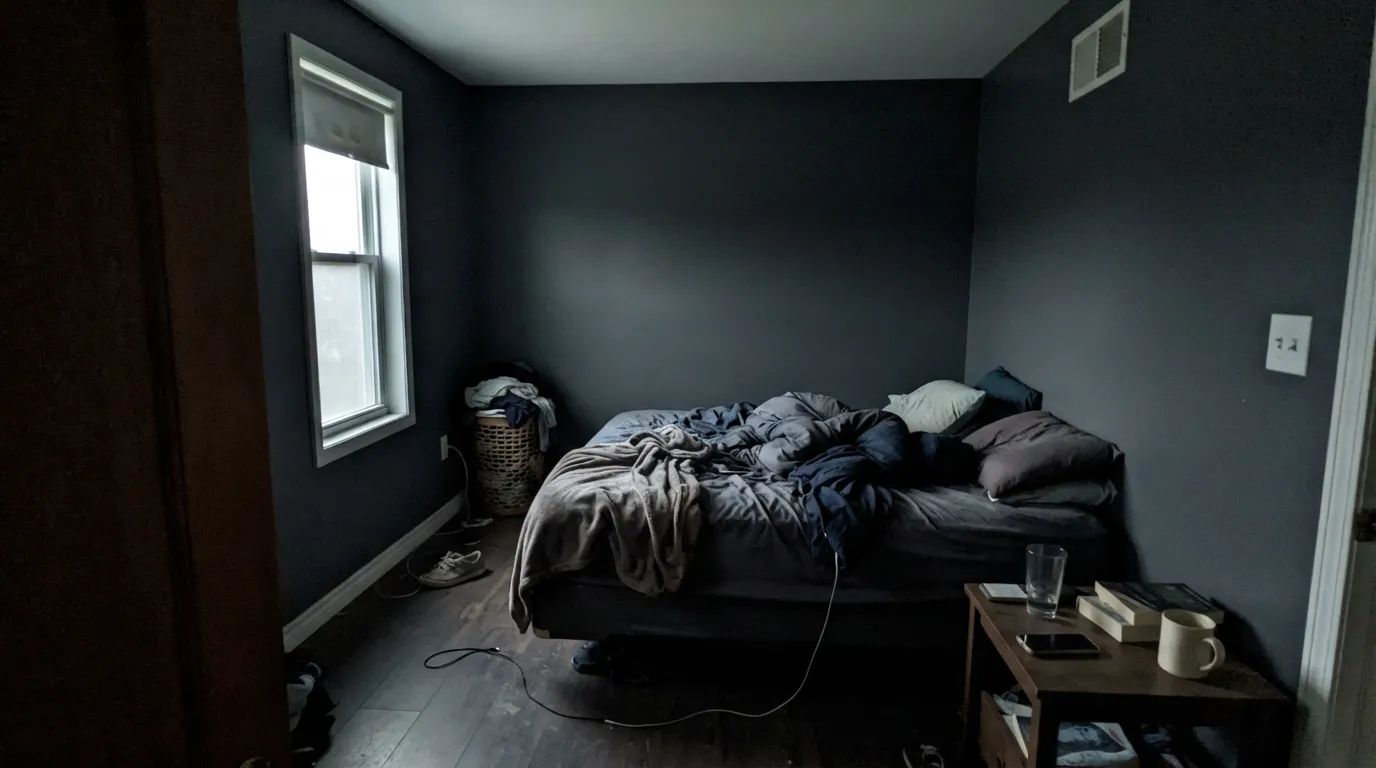
At LRV 8 the walls absorb almost all the light that hits them. In a small bedroom or a windowless powder room this reads as a dark box rather than a moody statement — the difference is square footage and light sources, and Graphite needs both. Try it on one wall or a closet, not all four, if the room is genuinely small.
That blue whisper is subtle on the chip and obvious on an overcast day: readers who wanted a cozy, brown-black cabinet color report Graphite looking cold and steely against honey oak or warm brass in flat daylight. If warmth matters more than neutrality, Kendall Charcoal is the better pick.
Dark colors need a gray-tinted primer and two full topcoats, or coverage goes streaky and the sheen looks uneven where the old wall color shows through. This is the single most common complaint about any near-black, not something specific to Graphite — but it catches first-time DIY painters every time.
Room by Room
Full daylight reads it crisp and modern rather than flat; the blue undertone keeps it from looking like a dirty, weathered black over time. Semi-gloss shows off the color's depth and cleans easily.
One island or a run of lower cabinets under lighter perimeter cabinets is Graphite's most-photographed use. Brass or unlacquered hardware and a marble or butcher-block top complete the look; satin cabinet-grade enamel is non-negotiable for durability.
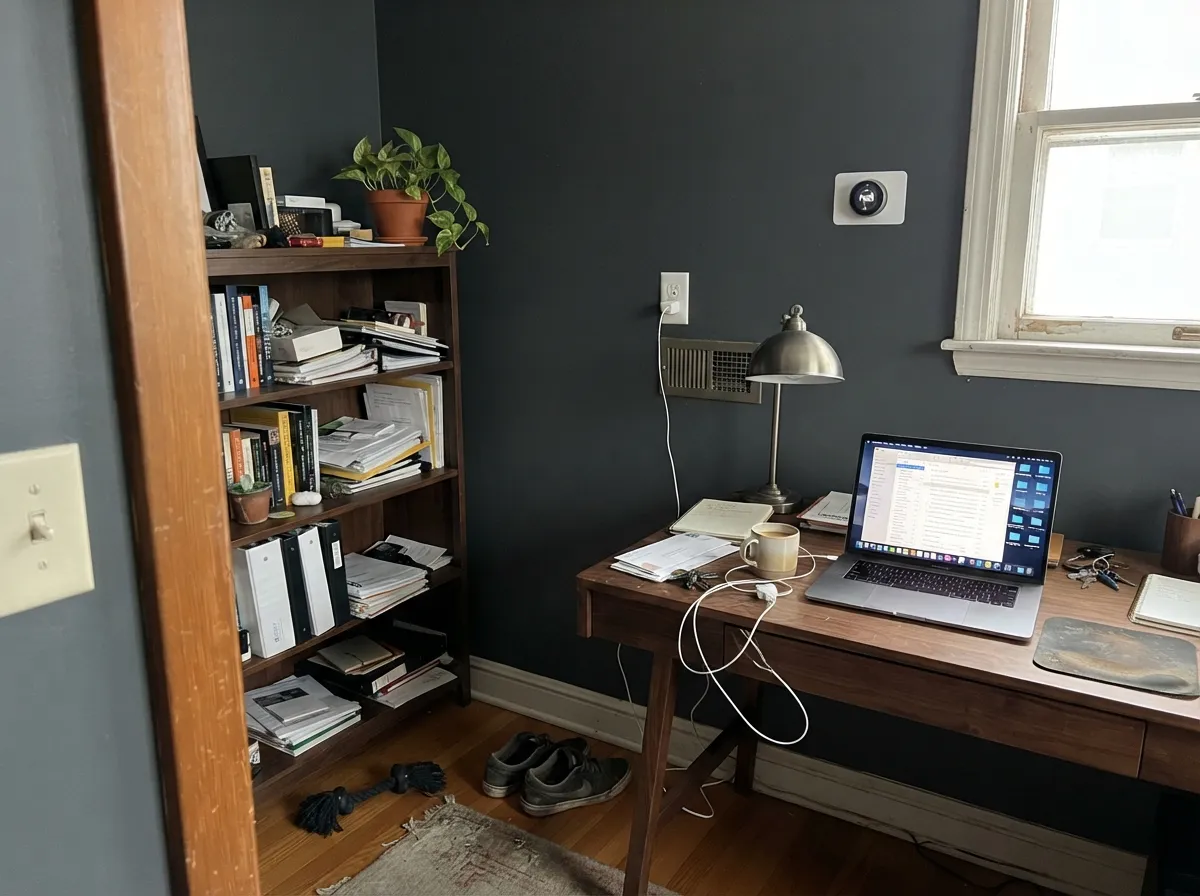
In a room with a real window it feels grounded and focused rather than cramped — a classic library-black move. Pair with walnut shelving and warm task lighting so the room doesn't go cold after sunset.
It can be a genuinely restful, cocoon-like bedroom color, but only in a room with enough daylight to keep it from reading as a cave at 3pm. A dim north-facing bedroom is the wrong room for this test.
One wall behind a sofa or a media console does the work a whole room can't: contrast and depth without losing the room's light. Keep the ceiling and remaining walls in a bright white to protect the room's overall brightness.
Unless the room has a skylight or a large window, LRV 8 in a small enclosed bathroom reads dark and cave-like rather than dramatic. A deep charcoal-greige like Chelsea Gray gets closer to the same mood at a livable LRV.
Your Light Is the Risk
Strong daylight keeps it looking crisp and neutral rather than flat — the color at its most photogenic, indoors or on a front door.
Without enough window light, LRV 8 reads as a dark box rather than a moody statement. This is the number-one regret, not a lighting quirk to fix with bulbs.
Flat gray daylight pulls the blue forward and the color reads cooler and steelier than it does in full sun. Sample on a cloudy day if warmth matters to you.
2700K warm bulbs soften the blue and let the room feel grounded, not cold. Cool white LEDs amplify the steel-gray cast — swap bulbs before repainting.
Most complaints about Graphite are a light mismatch. Upload a photo of your actual room and see it on your walls — then ask for the same wall in north light or evening lamps before you buy a single sample.
Need It From Another Brand?
Any paint counter can custom-tint Benjamin Moore 1603 directly. If you would rather stay in one brand's own deck, these are the closest stock matches, measured as ΔE2000. Under 2 is a difference you will not see on the wall.
| Brand | Closest color | ΔE | LRV | |
|---|---|---|---|---|
| Sherwin-Williams | Big DipperSW 9645 · Sherwin-Williams | 3.2 | 6 | Color page → |
| Behr | Black BoudoirPPU26-23 · Behr | 0.8 | 6 | Color page → |
| Valspar | Muskeg Grey4005-2C · Valspar | 1.0 | 6.5 | Color page → |
| PPG / Glidden | OnyxPPG1011-7 · PPG / Glidden | 1.8 | 6 | Color page → |
| Glidden | OnyxPPG1011-7 · Glidden | 2.0 | 6 | Color page → |
| Dutch Boy | Anchored Blue434-7DB · Dutch Boy | 2.5 | 6 | Color page → |
Similar Benjamin Moore Colors
The nearest shades to Graphite within Benjamin Moore's own range, ranked by perceptual color distance — useful when you want the same look a touch lighter, darker, or warmer.
WCAG 2.1: AA is 4.5 : 1 for normal text, 3 : 1 for large text, AAA is 7 : 1.
Graphite vs the Colors You're Also Considering
Every Graphite sample board has the same rivals on it. The numbers show the real lightness gap — then it comes down to which risk you would rather live with.
Pick this for the cooler, more neutral version with a hint more polish on trim and doors.
Benjamin Moore 2124-10 · LRV 6Wrought IronPick this if you want the softest possible near-black — a touch of brown keeps it gentle where Graphite stays crisp.
Pick this when you want a true cool near-black instead of a warm dark gray.
Benjamin Moore HC-166 · LRV 13Kendall CharcoalPick this if warmth matters more than neutrality — the green undertone plays nicer with honey oak and brass in dim rooms.
Graphite Coordinating Colors
The rule for coordinating with Graphite is simple: keep everything else bright, warm-neutral, or metallic, and let Graphite carry all the depth in the room. It flatters warm whites, greiges, and brass — and it looks best as a single strong accent rather than diluted across several dark colors:
Graphite On Exteriors
Outside is where Graphite gets most of its search traffic, and Houzz threads comparing it to Sherwin-Williams Iron Ore for a full exterior repaint are common for a reason — both are cool, nearly identical near-blacks. Full sun reads it crisp and modern rather than flat, and against warm siding or brick the blue undertone shows up as a deliberate, contemporary cool note rather than a mistake.
As a full-body exterior color it suits clean, modern architecture best; on a traditional or farmhouse-style home it works harder as a door and shutter accent against a lighter body like White Dove. Benjamin Moore also sells Graphite as a Woodluxe exterior deck and siding stain, which tells you how often it gets specified for wood exteriors, decks, and fences beyond the standard paint line.
Graphite With Wood Tones and Metals
Warm wood is where Graphite earns its "expensive, not cold" reputation: walnut, butcher block, and honey-toned oak all soften the blue undertone and let the color read as a considered dark neutral rather than a flat black. Brass and unlacquered metals are its best hardware match — the warmth of the metal balances the coolness of the paint the same way it does with any charcoal or true black.
The one combination worth testing first is cool gray flooring or stone. Two cool, neutral surfaces next to each other can read austere rather than dramatic, especially in a room without much natural light — bring in a warm rug or wood accent to keep the room from going flat.
Three Ready Palettes Built on Graphite
A color is never alone on the wall. These are complete combinations in the 60-30-10 pattern, with the reason each one holds together. Every one opens in the visualizer.
White Dove keeps the body of the house warm and soft so the door can carry all the contrast. Wrought Iron shutters echo the door's darkness without competing with it — the classic modern-farmhouse formula, with a cooler edge than an all-brown near-black scheme.
Try this palette in your roomWhite Dove perimeter cabinets keep the kitchen bright while Graphite carries all the drama on one island. Revere Pewter on the walls bridges the two without going cold, so the room reads layered instead of two-toned.
Try this palette in your roomWhite Dove trim keeps the dark walls from feeling like a sealed box, and Pale Oak next door lets the office read as an intentional, contained mood rather than a color mistake bleeding into the hallway.
Try this palette in your roomGraphite FAQ
Is Graphite actually black, or is it gray?
Neither purely — it's a deep charcoal at LRV 8, dark enough to function as black in a room but visibly lighter and cooler than a true black like Tricorn Black (LRV 3) when the two are side by side. Most people who search for it by name are looking for exactly this: black's drama with slightly more give.
What's the real difference between Graphite and Wrought Iron?
Both are cool, neutral near-blacks at nearly the same LRV. Wrought Iron carries a touch more brown warmth and reads a little softer; Graphite stays more neutral with its blue whisper, which makes it the crisper, more modern-feeling of the two on trim and doors.
Is Graphite warm or cool?
Cool. It has a subtle blue undertone under a mostly neutral gray base — never warm, never green. That coolness is easy to miss on the paint chip and obvious on an overcast day or against warm honey-toned wood.
Can I use Graphite on my whole house exterior, or just the door?
Both are done, but they read very differently. As a full exterior body color it's a bold, modern statement best suited to homes with clean architectural lines; as a door or shutter accent against a lighter body it's the safer, more universally flattering choice — and the one most homeowners land on.
Does Graphite need special primer?
Yes. Any near-black at this LRV needs a gray-tinted primer and two full topcoats to avoid patchy coverage and a streaky sheen where the old color shows through — this is true of every deep charcoal, not unique to Graphite.
Is it good for kitchen cabinets?
Very good, especially on an island rather than the whole kitchen. Pair it with brass or unlacquered hardware and a warm wood or marble counter, and use a satin urethane-fortified cabinet enamel — it wipes clean and hides fingerprints far better than a flat wall paint would.
Have you painted with Graphite?
Rate it — one tap helps the next reader decide.
Ask a Question