Greek Villa
Sherwin-Williams' brightest warm white, reviewed honestly: the rooms where it glows, the one pairing that makes it look yellow, and what to buy instead.

Jessica has spec'd whites and neutrals for more than 300 rooms and keeps a sample wall of painted drawdowns in her studio. Every color review is checked against real reader rooms in the comments and re-tested when a formula changes. About the testing process →
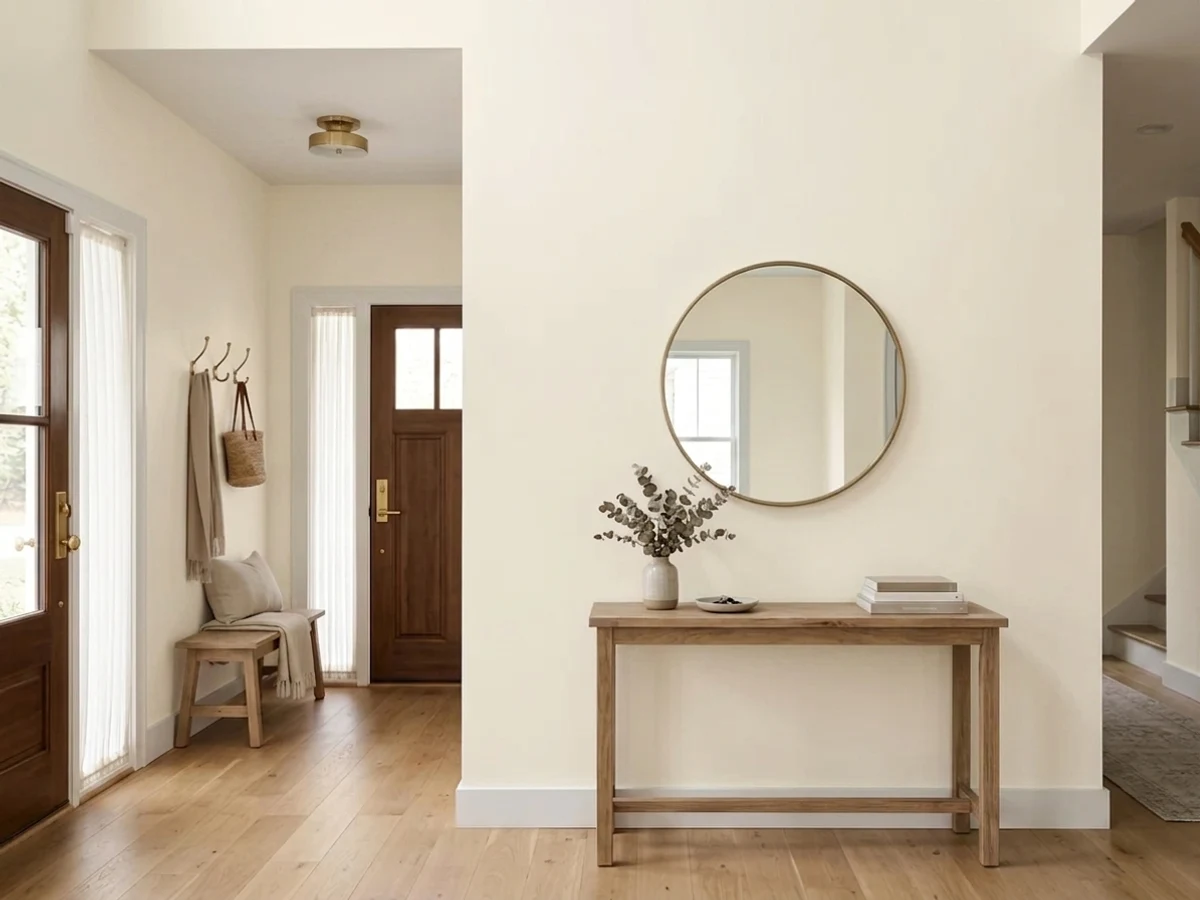
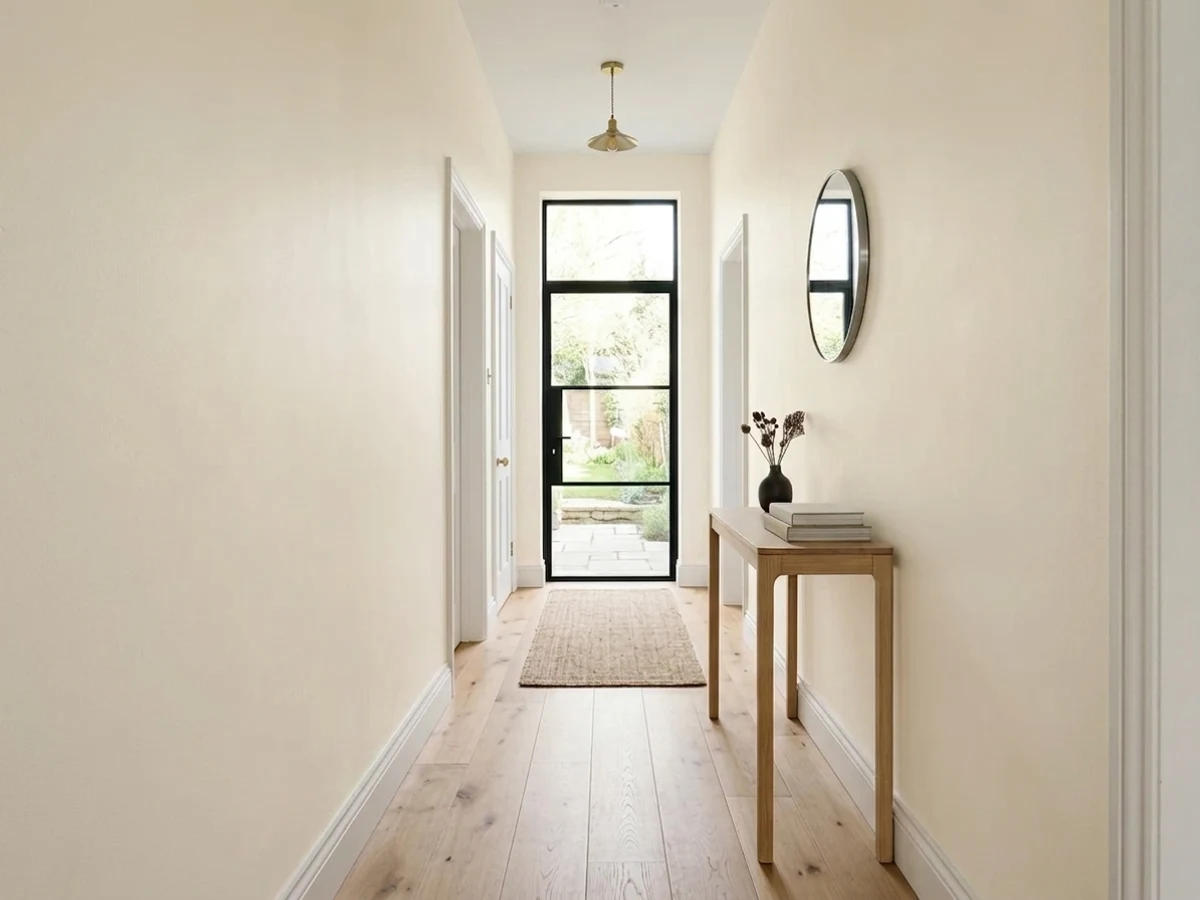
- 1First Star69
- 2Classic Gray74
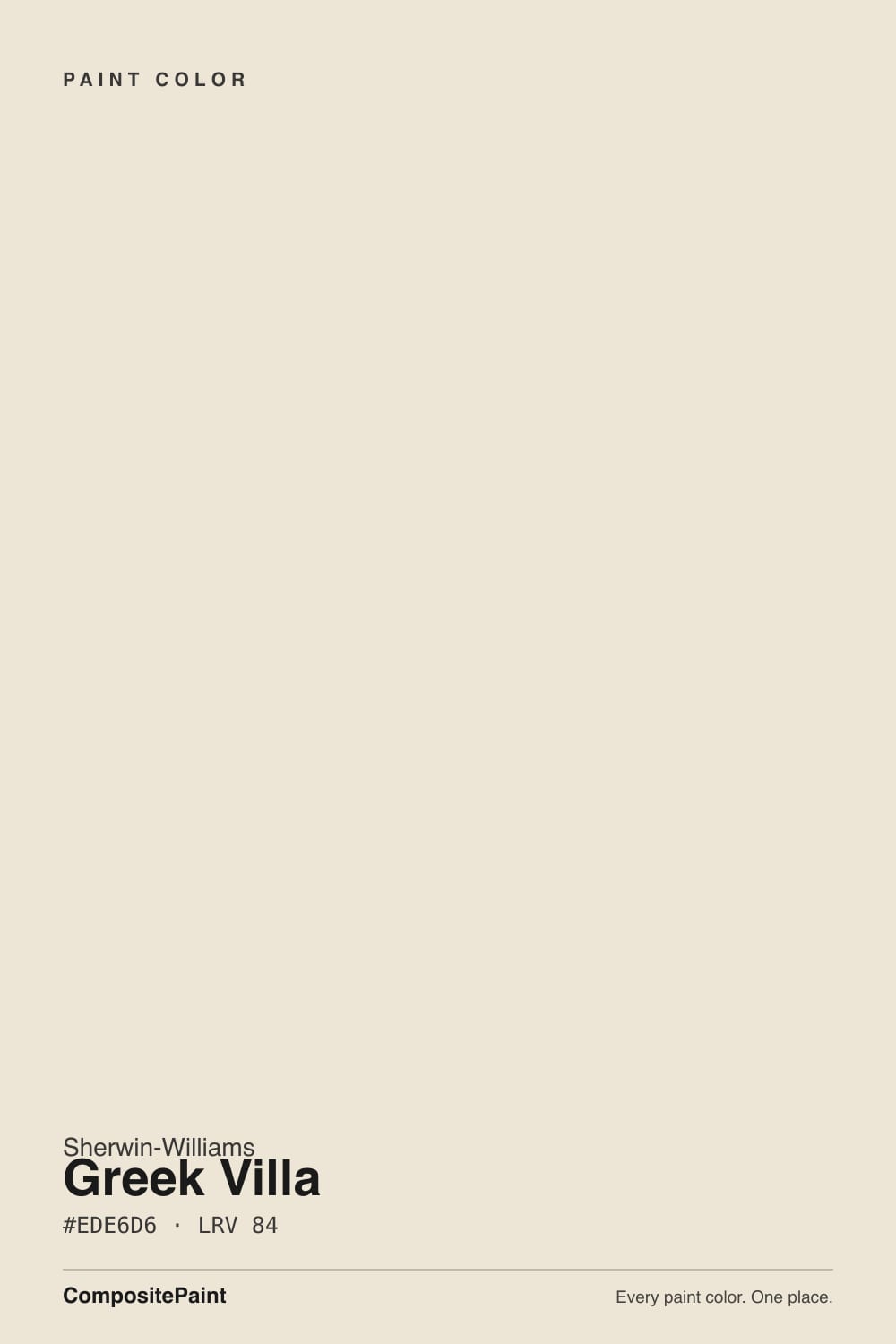
- 3Greek Villa84
- 4Chantilly Lace91
- 5Ultra Pure White97
The Fast Verdict
Greek Villa is the warm white you pick when Alabaster feels too quiet and Creamy feels too buttery. At LRV 84 it is genuinely bright, so it lifts dark rooms instead of muffling them, and the soft cream in it flatters oak, brass and stone.
The catch is that its warmth only reads as "warm" when nothing brighter is standing next to it. Put it under a builder-white ceiling or beside bright white baseboards and the same paint suddenly looks yellow.
Whole-house walls and trim in one warm white · kitchens with wood floors and brass · cabinets over honey oak or white oak · exteriors that need warmth without going beige
You are keeping brighter builder-white trim · a west room takes hard afternoon sun · the room is a dim north box or a basement · your floors and counters are cool gray
- Bright at LRV 84 but still visibly warm — an unusual combination
- Whole-house walls, trim, doors and ceilings in one color works beautifully
- Flatters honey oak, white oak, walnut, brass and aged bronze
- Lifts dark hallways and interior rooms where softer creams go dull
- One of the safest exterior whites for siding and painted brick
- Reads plainly yellow next to any brighter white trim or ceiling
- Goes butter-yellow in hard west afternoon sun
- Falls flat and slightly muddy in dim north rooms and basements
- Argues with cool gray marble, gray LVP and blue-gray tile
What Color Is Greek Villa, Really?
A warm white built on a soft red-orange base, which at this lightness lands as cream rather than yellow or beige. The hue sits at 42 degrees — squarely warm — and it carries real saturation, not the trace amount a chameleon neutral carries. That matters, because it means Greek Villa does not shift around trying to match whatever is near it. It stays warm. Whether that warmth reads as "creamy and inviting" or "why is my wall yellow" is decided entirely by what you put beside it, which is the single most useful thing to know about this color.
At LRV 84 it reflects almost as much light as the deck allows, so it behaves like a bright white on the wall, not a soft one. Set it next to Pure White (SW 7005), which has the identical LRV 84, and the difference is not brightness at all — Pure White reads clean and Greek Villa reads creamy. Against Alabaster (SW 7008, LRV 82) it is the brighter and slightly more colorful of the two. That combination of high reflectance and visible warmth is unusual, and it is why Greek Villa works in dim hallways where softer creams go dull.
Undertone in one line: warm cream with a red-orange base — never gray, never green, and never pink. If it looks yellow on your wall, look at your trim and your ceiling before you blame the paint.
Where It Shines
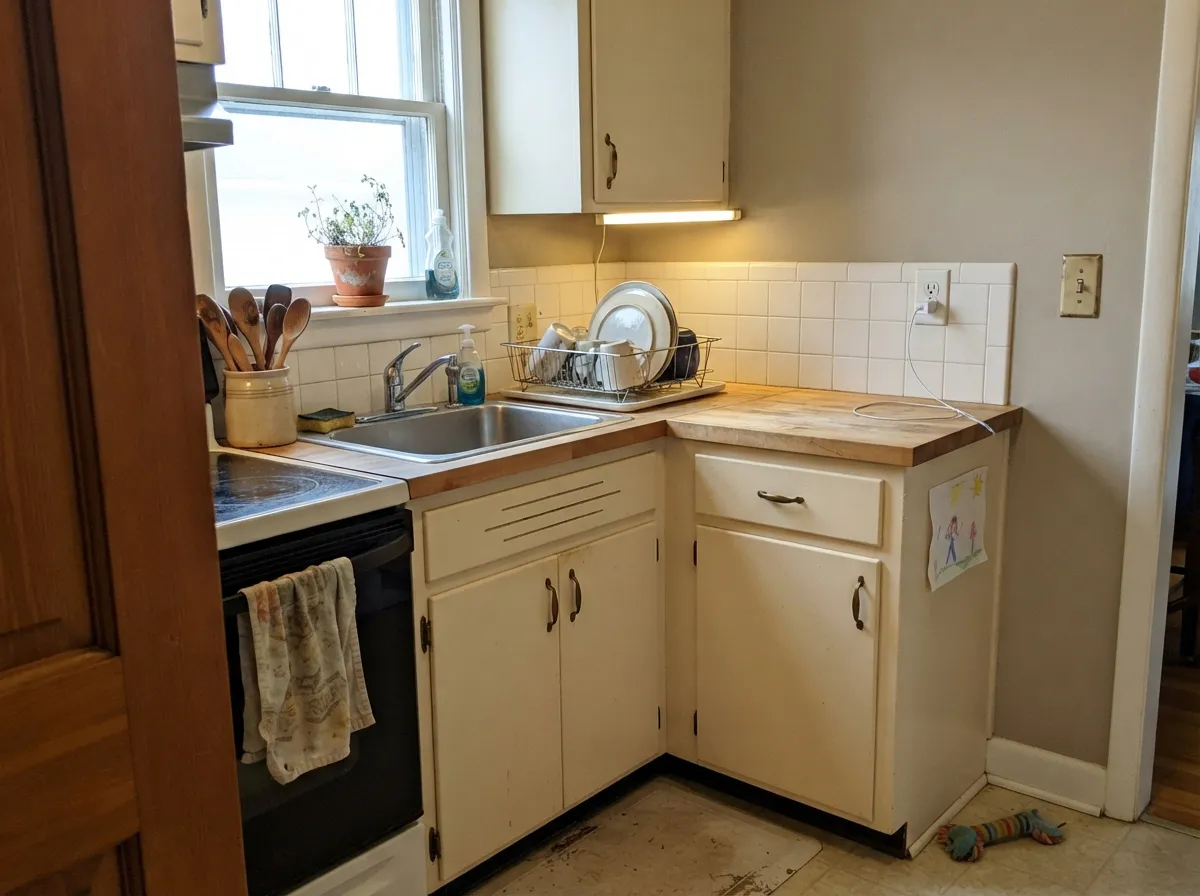
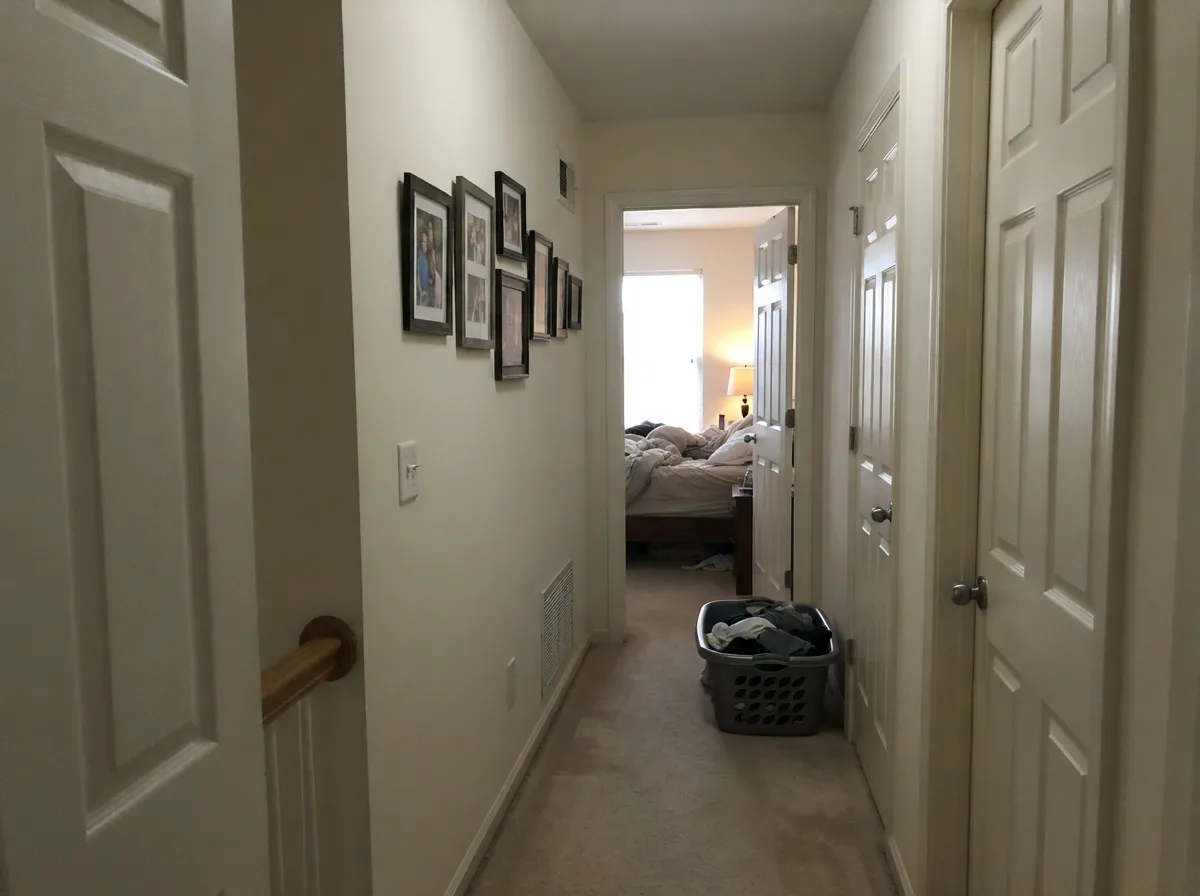
Give it a whole floor and let it run — walls, trim, doors, ceiling, all Greek Villa, separated only by sheen. That is where this color stops being a paint choice and starts being a look. Kitchens are its other home: on cabinets it sits comfortably against honey oak floors, butcher block and brass, and at LRV 84 it still reads bright enough to keep a small kitchen from closing in.
Where It Fails
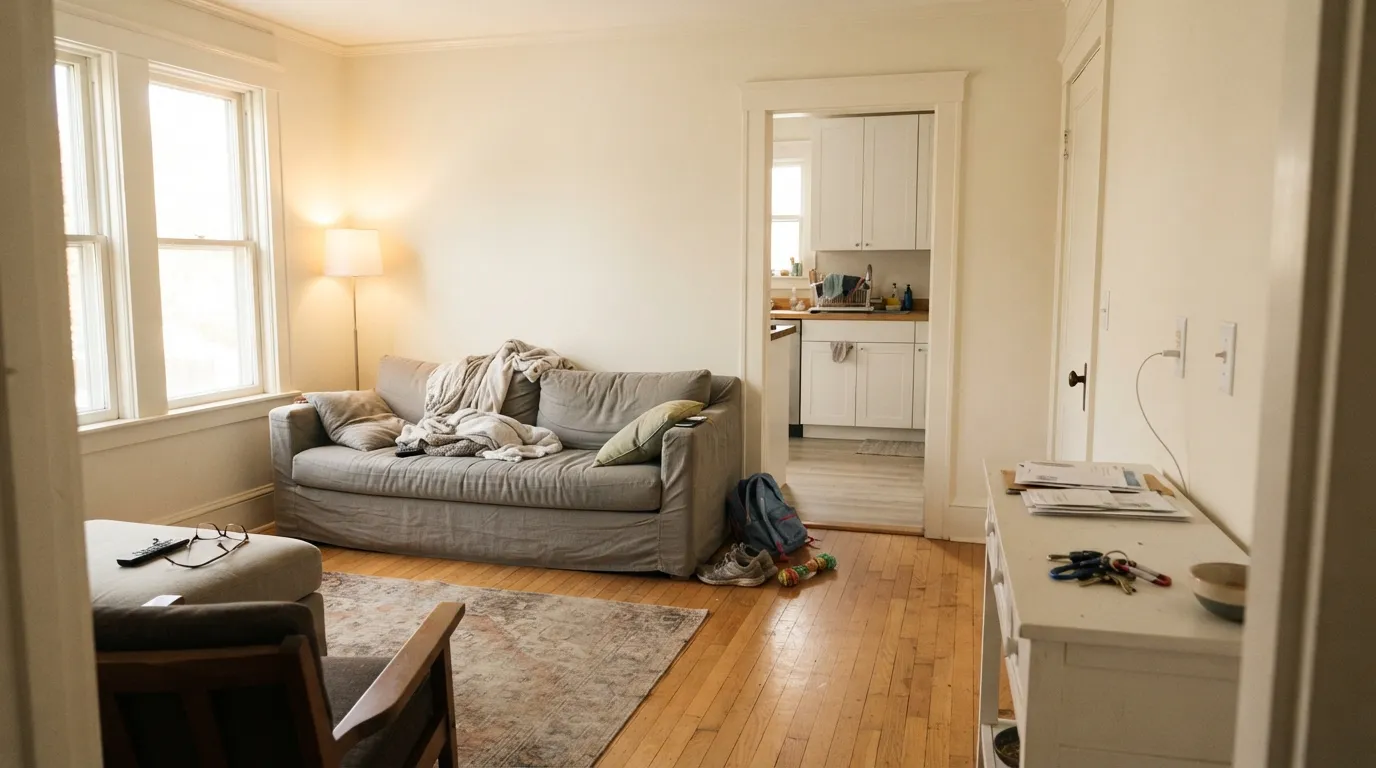
The bad Greek Villa stories are remarkably consistent, and almost none of them are about the paint being a bad color. Two are pairing mistakes and one is a light problem. If your room matches any of the three, buy a different white rather than hoping a third coat fixes it.
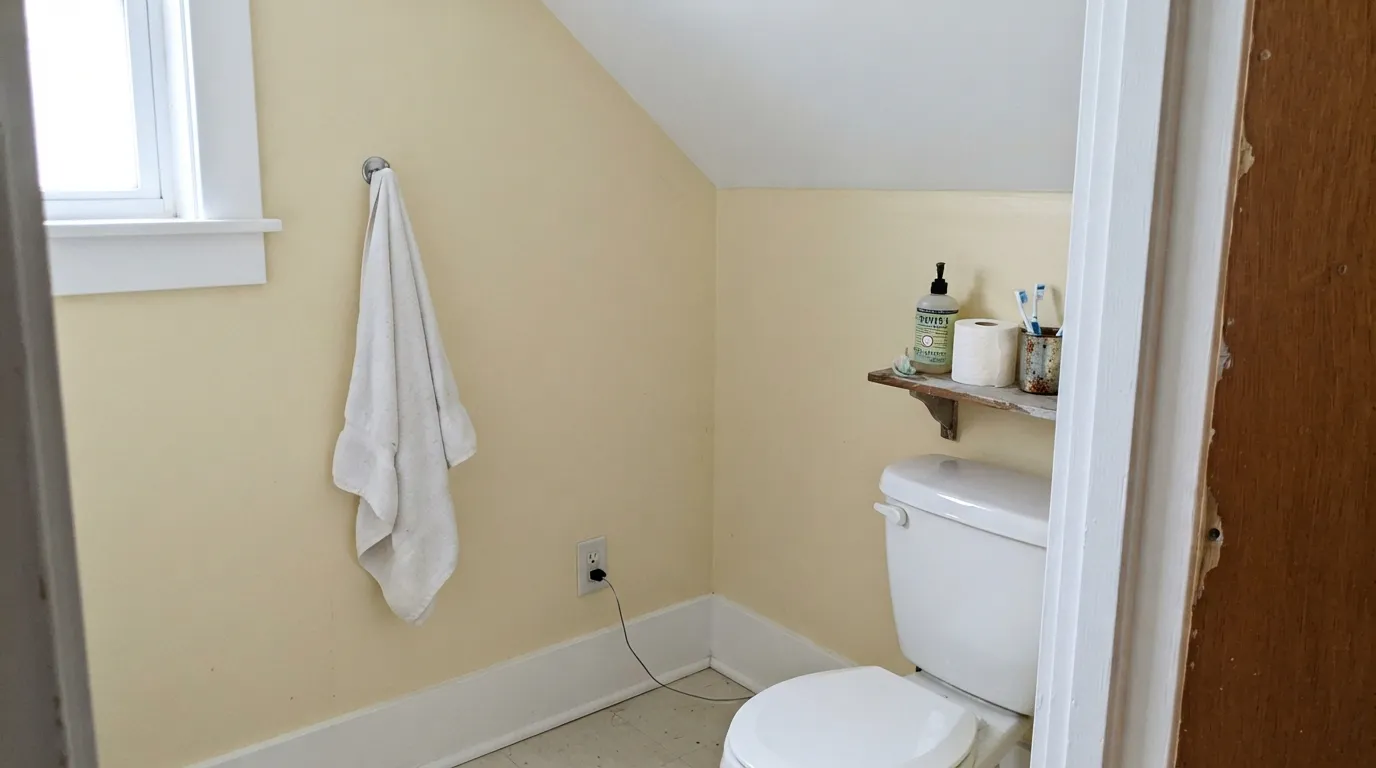
This is the number-one complaint, by a wide margin: Greek Villa walls, factory-white baseboards and doors left as they are. The brighter white wins the comparison and the walls read plainly yellow. Repaint the trim in Greek Villa semi-gloss, or if the trim has to stay bright, put Alabaster (SW 7008) on the walls instead — it survives the contrast far better.
Hard low sun through a west window pushes the cream past creamy and into butter for two or three hours a day. People describe walking in at 5pm and not recognizing the color. If that window is a big one, use Pure White (SW 7005) — same LRV 84, none of the warm base to amplify.
With no warm light to activate it, the cream flattens out and reads slightly muddy instead of cozy. Cool 4000K fixtures make it worse. Swap to 3000K bulbs first; if the room still falls flat, go to Alabaster (SW 7008), which holds its softness in cool light better than Greek Villa holds its warmth.
Room by Room
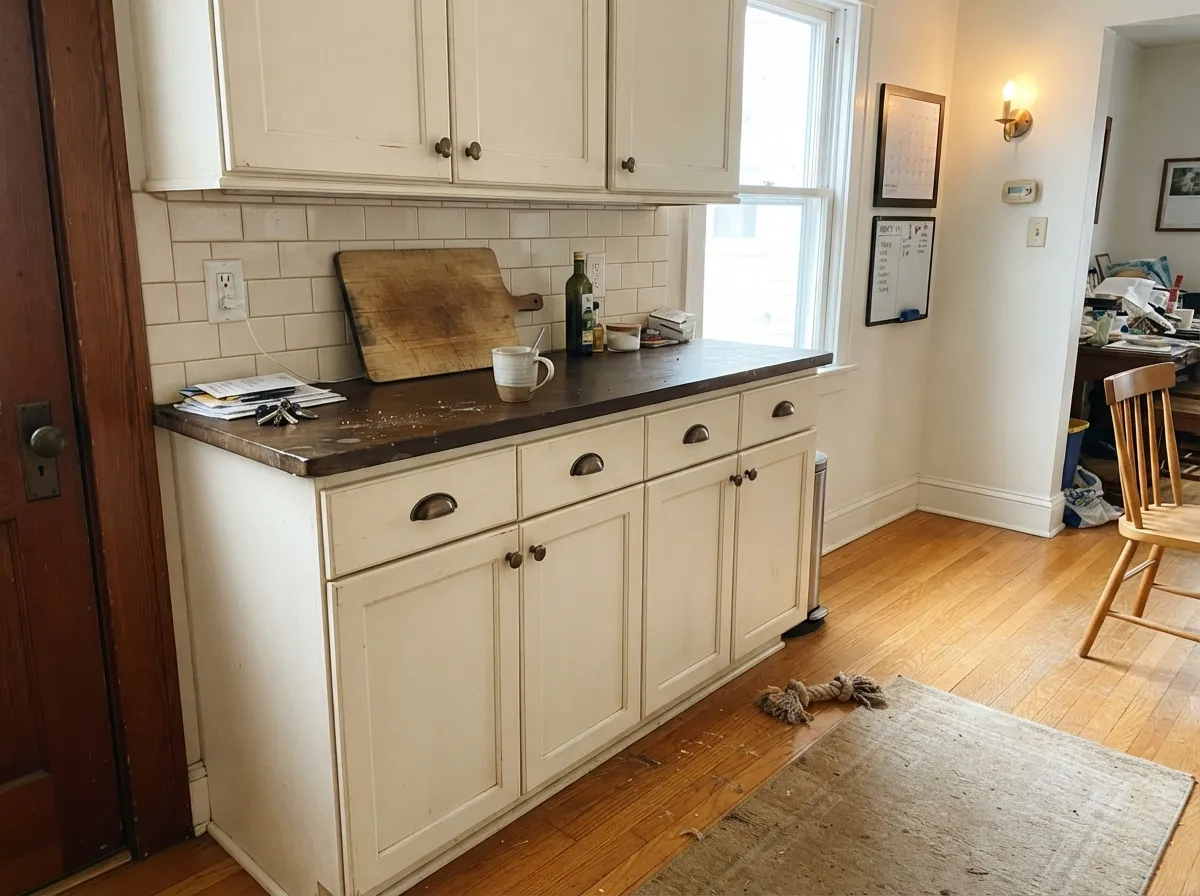
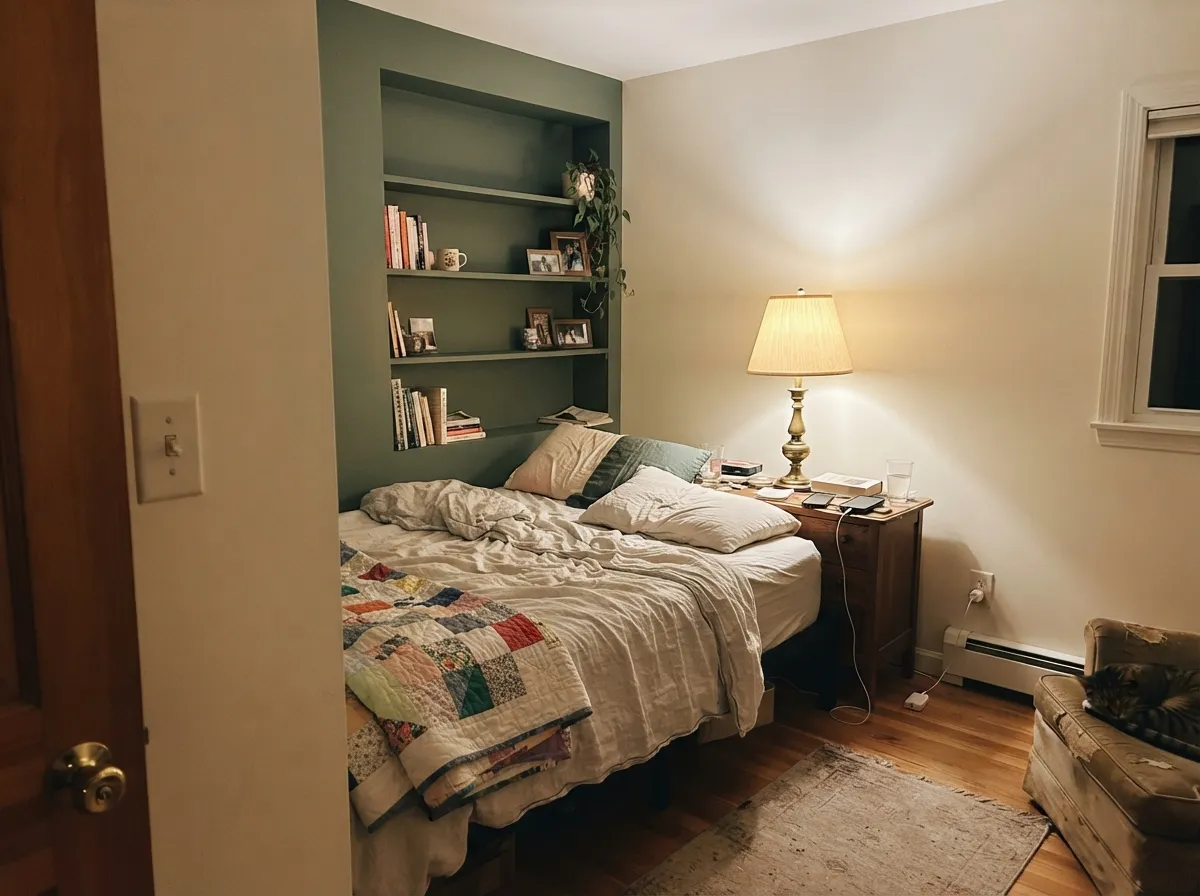
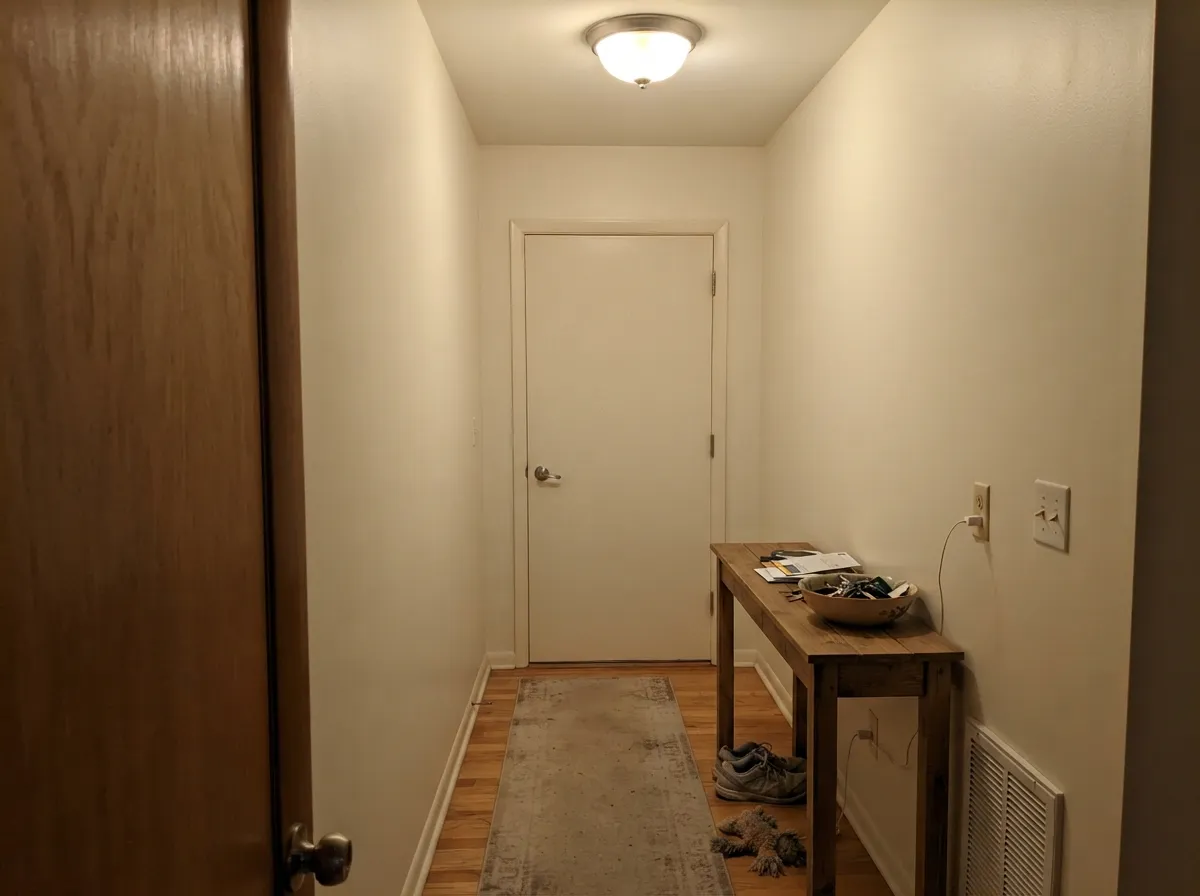
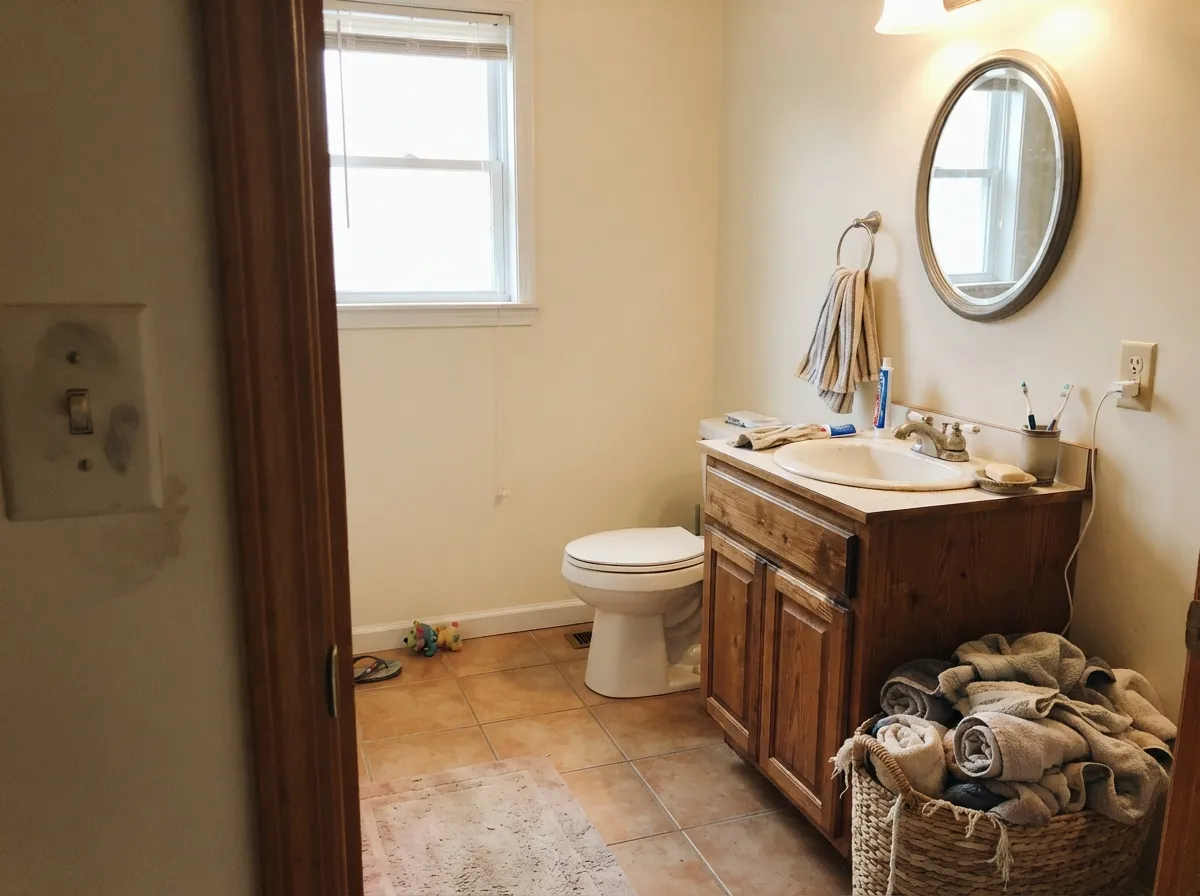
Your Light Is the Risk
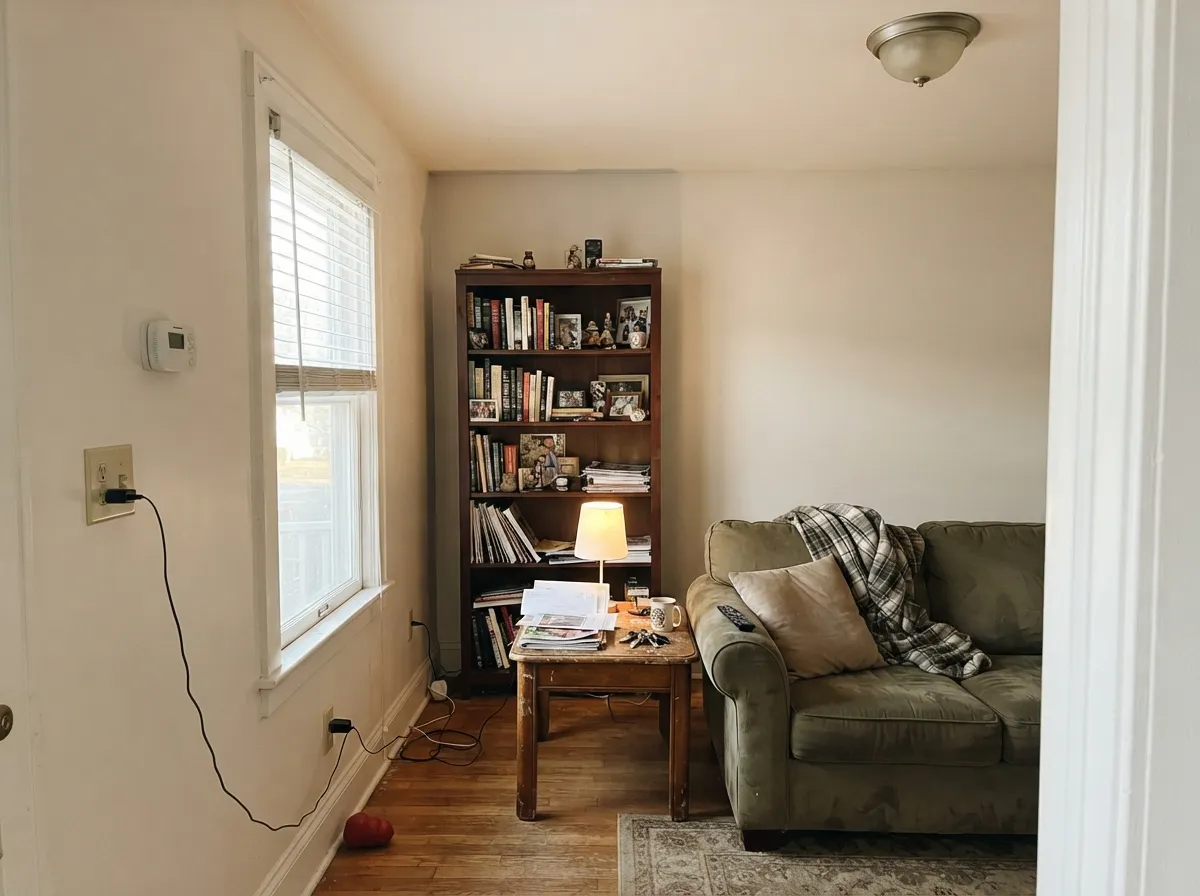
Bright and creamy all day without tipping sour. This is the exposure it was made for.
Cool indirect light subtracts the warmth and it reads slightly dull. Warm bulbs help; test first.
Low direct sun pushes it to butter for a few hours. Big west windows are the deal-breaker.
2700K lamps make it cozy cream. 4000K LEDs drain it — change bulbs, not paint.
Most complaints about Greek Villa are a light mismatch. Upload a photo of your actual room and see it on your walls — then ask for the same wall in north light or evening lamps before you buy a single sample.
Need It From Another Brand?
Any paint counter can custom-tint Sherwin-Williams SW 7551 directly. If you would rather stay in one brand's own deck, these are the closest stock matches, measured as ΔE2000. Under 2 is a difference you will not see on the wall.
| Brand | Closest color | ΔE | LRV | |
|---|---|---|---|---|
| Behr | Jet WhiteQE-01 · Behr | 1.2 | 84 | Color page → |
| Benjamin Moore | Swiss CoffeeOC-45 · Benjamin Moore | 1.2 | 82 | Color page → |
| Valspar | Soft WoolV155 · Valspar | 0.6 | 84.7 | Color page → |
| PPG / Glidden | Vanilla MilkshakePPG1015-1 · PPG / Glidden | 0.5 | 83 | Color page → |
| Glidden | Winter MoodPPG14-16 · Glidden | 0.5 | 84 | Color page → |
| Dutch Boy | Pristine Pearl021W · Dutch Boy | 0.6 | 84 | Color page → |
Similar Sherwin-Williams Colors
The nearest shades to Greek Villa within Sherwin-Williams's own range, ranked by perceptual color distance — useful when you want the same look a touch lighter, darker, or warmer.
WCAG 2.1: AA is 4.5 : 1 for normal text, 3 : 1 for large text, AAA is 7 : 1.
Greek Villa vs the Colors You're Also Considering
Every Greek Villa sample board has the same rivals on it. The numbers show the real lightness gap — then it comes down to which risk you would rather live with.
Pick this when you want the brighter, more openly creamy half of the pair.
Sherwin-Williams SW 7008 · LRV 82AlabasterPick this when the warmth must stay quiet and never announce itself.
Side-by-side comparison →Pick this when the room needs warmth, not a clean modern white.
Sherwin-Williams SW 7005 · LRV 84Pure WhitePick this for crisp trim, cool marble, or a hard west exposure.
Greek Villa is most often measured against Alabaster (SW 7008, LRV 82). Alabaster is slightly cooler and more balanced, reading as a clean soft white, while Greek Villa is a step warmer and creamier. Choose Alabaster when you want the safer near-neutral; choose Greek Villa when you specifically want visible warmth.
Creamy (SW 7012, LRV 81) goes further in the same direction. It is a true creamy white with a more obvious yellow presence, so if Greek Villa looks too plain to you, Creamy is warmer; if Creamy looks too yellow, Greek Villa is the more restrained pick.
White Duck (SW 7010, LRV 74) is noticeably deeper and greiger. Its lower LRV means it reads more like a soft warm neutral than a white, which suits rooms where you want a bit more color and less brightness than Greek Villa delivers.
Greek Villa Coordinating Colors
The rule with Greek Villa is that its partners have to be warm or dark, never brighter and never cool. Warm greiges and beiges flow with it, deep bronzes and navies frame it, muted greens sit beside it happily. What breaks it is anything cooler and lighter than it is — icy grays, blue-gray tile, and gray-washed floors all turn its cream into yellow. These are the partners that actually hold up:
Greek Villa on Exteriors
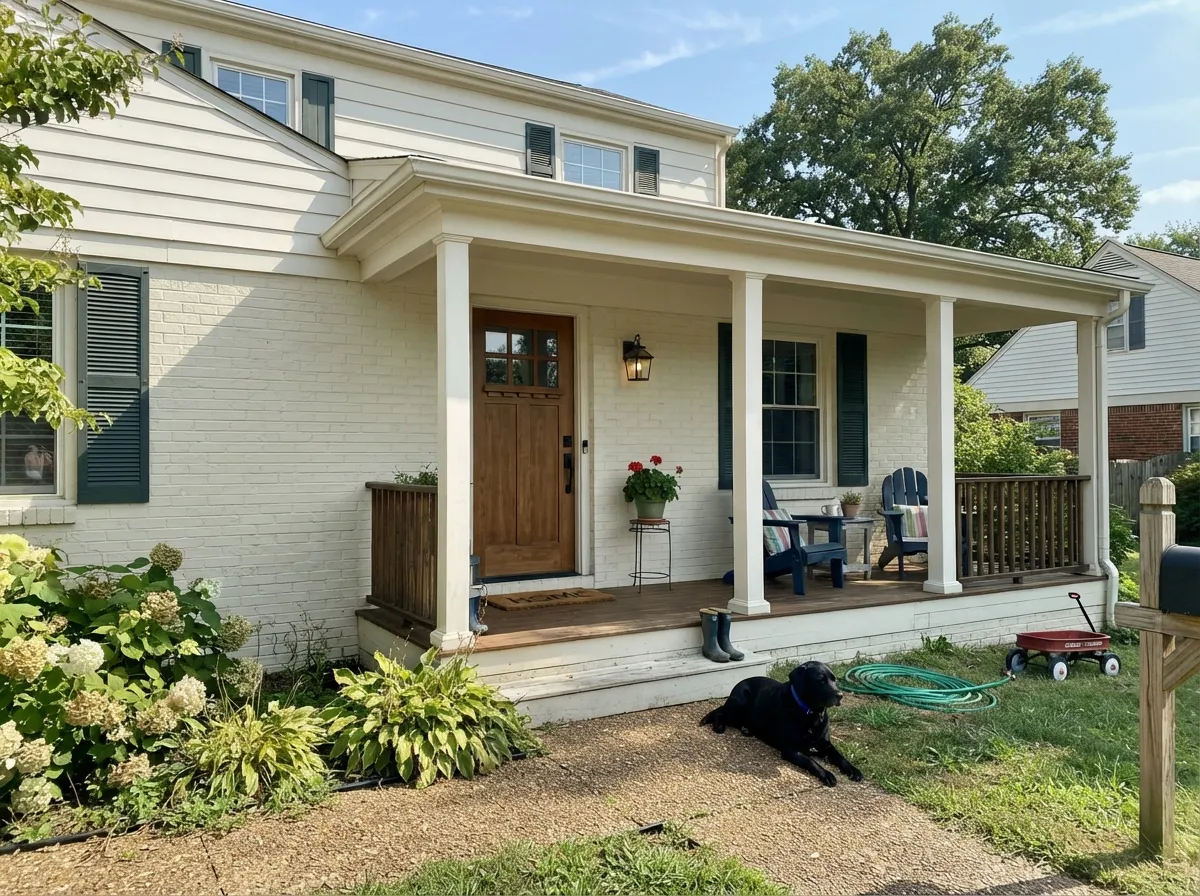
Outside is where Greek Villa is at its least fussy. Full sun flattens most whites into glare, and the cheap bright ones go faintly blue in it; Greek Villa keeps enough body to still look like a painted house from the street. It is a standard choice for painted brick and for board-and-batten siding for exactly that reason.
The trim decides everything. Iron Ore (SW 7069) or Tricorn Black (SW 6258) on windows and shutters gives you the dark frame that makes the siding read crisp, and Urbane Bronze (SW 7048) is the softer version of the same idea. Two honest warnings: on a south or west elevation in hard summer sun it will read a full step creamier than it does on the shaded side of the same house, and next to a cool gray roof or gray stone skirting the warmth turns obvious. Walk a large sample board around all four sides before you commit.
Greek Villa With Wood Tones and Floors
This is the pairing that decides whether people love the color or quietly repaint. Warm wood is the easy yes: honey oak, red oak, white oak, walnut, hickory and butcher block all meet Greek Villa halfway, and it is one of the few whites that calms orange-toned builder oak rather than shouting about it. If your floors are the 1990s golden oak everybody complains about, this is a genuinely good white to put above them.
Cool gray floors are the problem. Gray LVP, gray-washed engineered wood and pale gray tile sit at the opposite temperature, and against them Greek Villa stops reading as a white and starts reading as yellow — the same mechanism as the bright-trim mistake, just underfoot. Warm rugs and brass fix mild cases. For a whole floor of cool gray, use Alabaster (SW 7008) or Pure White (SW 7005) instead and save yourself the second weekend.
Three Ready Palettes Built on Greek Villa
A color is never alone on the wall. These are complete combinations in the 60-30-10 pattern, with the reason each one holds together. Every one opens in the visualizer.
Greek Villa takes the 60 percent as one uninterrupted envelope, so there is no brighter white anywhere to expose its warmth. Accessible Beige steps down into the same warm family for the 30 percent, and the bronze door is the single dark note that keeps the scheme from floating.
Try this palette in your roomAgreeable Gray is warm enough underneath that the wall-to-cabinet handoff never turns into a temperature argument, and it keeps the cabinets reading as the bright surface. The muted green island gives the room its 10 percent and loves the brass hardware Greek Villa already flatters.
Try this palette in your roomA dark frame is what makes Greek Villa read crisp outdoors instead of creamy, and Iron Ore is soft enough not to look like a black outline. Naval takes the 10 percent on the door, which is the one place a saturated color earns its keep on a warm-white house.
Try this palette in your roomGreek Villa FAQ
Is Greek Villa too yellow?
On its own, no — it reads as a soft cream. It turns yellow when something whiter is next to it, which usually means builder-white trim, a bright white ceiling, or white porcelain in a bathroom. Fix the neighbor and the yellow disappears; the exception is a big west window in late afternoon, where it really does go butter for a couple of hours.
What trim white goes with Greek Villa walls?
Greek Villa itself, in semi-gloss. That is the answer that prevents the most common complaint about this color. If you want visible contrast, go darker instead of brighter — Urbane Bronze (SW 7048) or Iron Ore (SW 7069) on doors reads deliberate, while Pure White (SW 7005) trim will make the walls look creamier than you expect.
Greek Villa or Alabaster?
Greek Villa is brighter (LRV 84 vs 82) and more openly creamy; Alabaster is softer and keeps its warmth quieter. Pick Greek Villa for dark hallways, whole-house one-color schemes and exteriors. Pick Alabaster when you are keeping existing white trim, or when the room gets hard afternoon sun.
Is it good for kitchen cabinets?
Yes, and it is one of the better warm whites for the job. It sits well against honey oak and white oak floors, warm quartz, butcher block and brass or bronze pulls, and it is bright enough to keep a small kitchen open. Use a satin urethane cabinet enamel. With cool gray-veined marble, use Alabaster (SW 7008) instead.
What ceiling color goes with Greek Villa walls?
Greek Villa in flat. A standard bright ceiling white overhead is the second-most-common reason people say their walls turned yellow. If you want the ceiling lighter, Pure White (SW 7005) is the mildest step up, but understand you are choosing to make the walls read creamier.
Does it work in a north-facing room?
It can, but it is not the strong choice. Cool north light subtracts the warmth and the color settles into a flat, slightly muddy white rather than a cozy one. Put 3000K bulbs in the room and test a large board on two walls. If it still looks dull, Creamy (SW 7012) holds its glow better in that light.
How many coats does it take?
Two over any existing light color. Over a dark or saturated wall, prime first — high-LRV whites like this are the worst coverage in the deck, and three finish coats of Greek Villa over navy is an expensive way to learn that. On raw drywall, prime plus two.
Have you painted with Greek Villa?
Rate it — one tap helps the next reader decide.
Ask a Question