Clary Sage
America's easiest sage green, reviewed honestly: where it glows, the lighting that drains the green right out of it, and what to pick instead.

Jessica has spec'd whites and neutrals for more than 300 rooms and keeps a sample wall of painted drawdowns in her studio. Every color review is checked against real reader rooms in the comments and re-tested when a formula changes. About the testing process →
- 1Sage Green22
- 2Evergreen Fog30
- 3Clary Sage41
- 4October Mist47
- 5Soft Fern57
The Fast Verdict
Clary Sage is the green people pick when they do not want to be brave. It is a mid-tone sage held back by so much gray that it behaves like a warm neutral, which is why it works on bedroom walls, kitchen cabinets and whole houses without ever taking over.
The catch is that a color this muted has no reserves: dim north light or cool bulbs pull the green out and leave a plain drab gray. Get the light right and it is close to a perfect quiet green.
Bedrooms and offices with real daylight · kitchen cabinets with brass and warm wood · a green calm enough to run a whole house · exteriors meant to settle into trees
Your room is dim, north-facing and already gray · your bulbs are 4000K or fluorescent · you want a green that clearly reads green · your fixed finishes are cool blue-gray
- A green that behaves like a neutral — safe on four walls
- Mid-tone at LRV 41: real color without darkening the room
- Flatters white oak, walnut, honey oak, brass and aged bronze
- One of the easiest cabinet greens for a first-time color risk
- Runs a whole house or a whole exterior without fighting anything
- Loses its green and reads plain gray in dim north rooms
- Cool or fluorescent bulbs turn it drab and slightly olive
- Goes gray next to any true green — tile, garden view, old paint
- Too muted for anyone who actually wants a green room
What Color Is Clary Sage, Really?
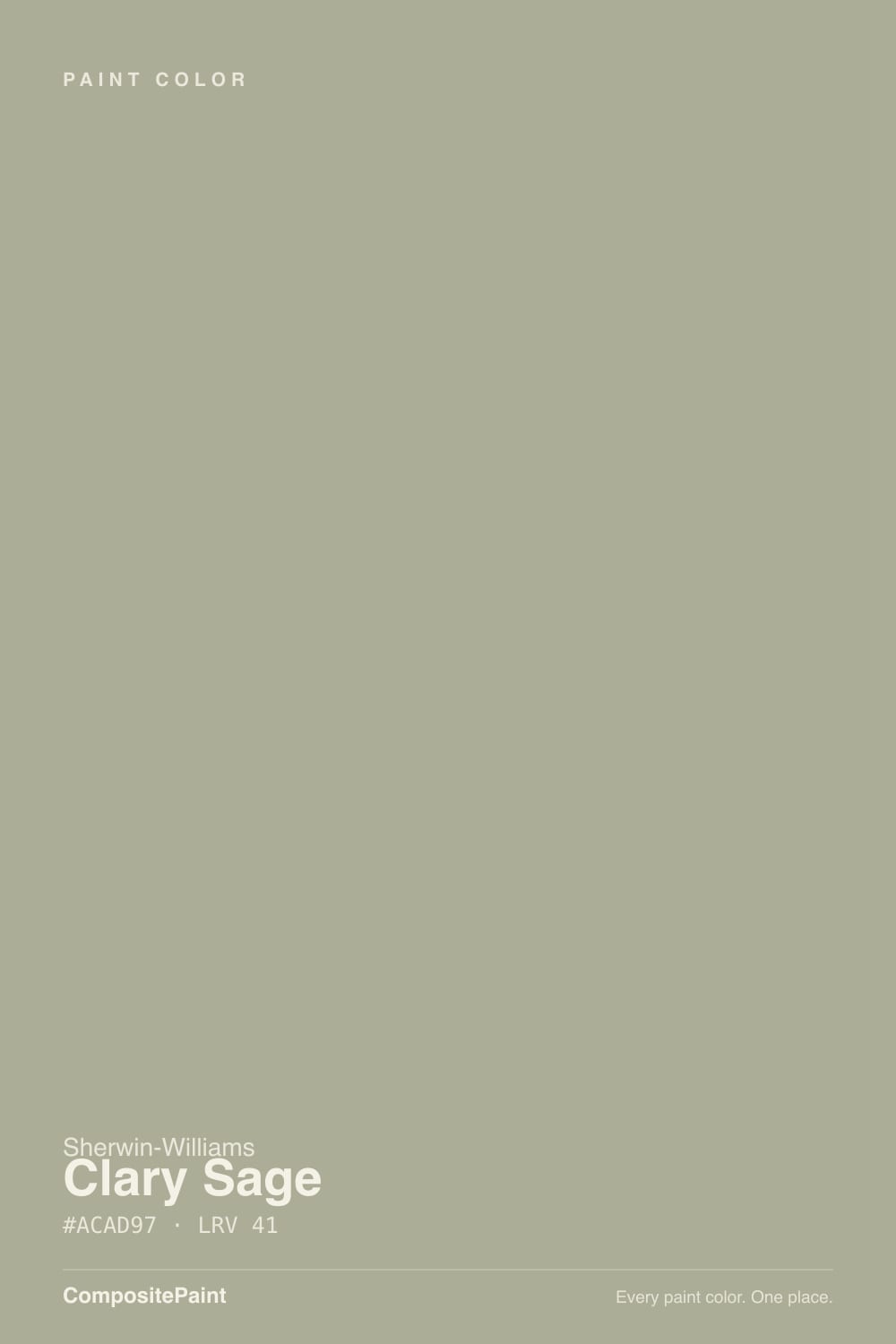
A sage green with the volume turned almost all the way down. The color underneath is yellow-green, the same family as a fresh sage leaf, but only about a tenth of it is actual color — the rest is gray. That gray is the reason designers hand this one to nervous clients. It gives you the feeling of a green room without a green room's commitment, and it never goes minty, spa-blue, or lime.
At LRV 41 it sits right in the middle of the scale, and the useful comparison is Evergreen Fog (SW 9130) at LRV 30. Evergreen Fog is the moody one — it darkens a room and announces itself. Clary Sage is a full step lighter and reads as a soft mid-tone you can put on four walls of an average bedroom without the room closing in. Next to a pale sage like Sea Salt (SW 6204) at LRV 63 it goes the other way and looks like a real color rather than a hint.
Undertone in one line: warm yellow-green, heavily grayed — never blue, never mint. If your wall looks like plain gray, the room is short on light, not the paint.
Where It Shines
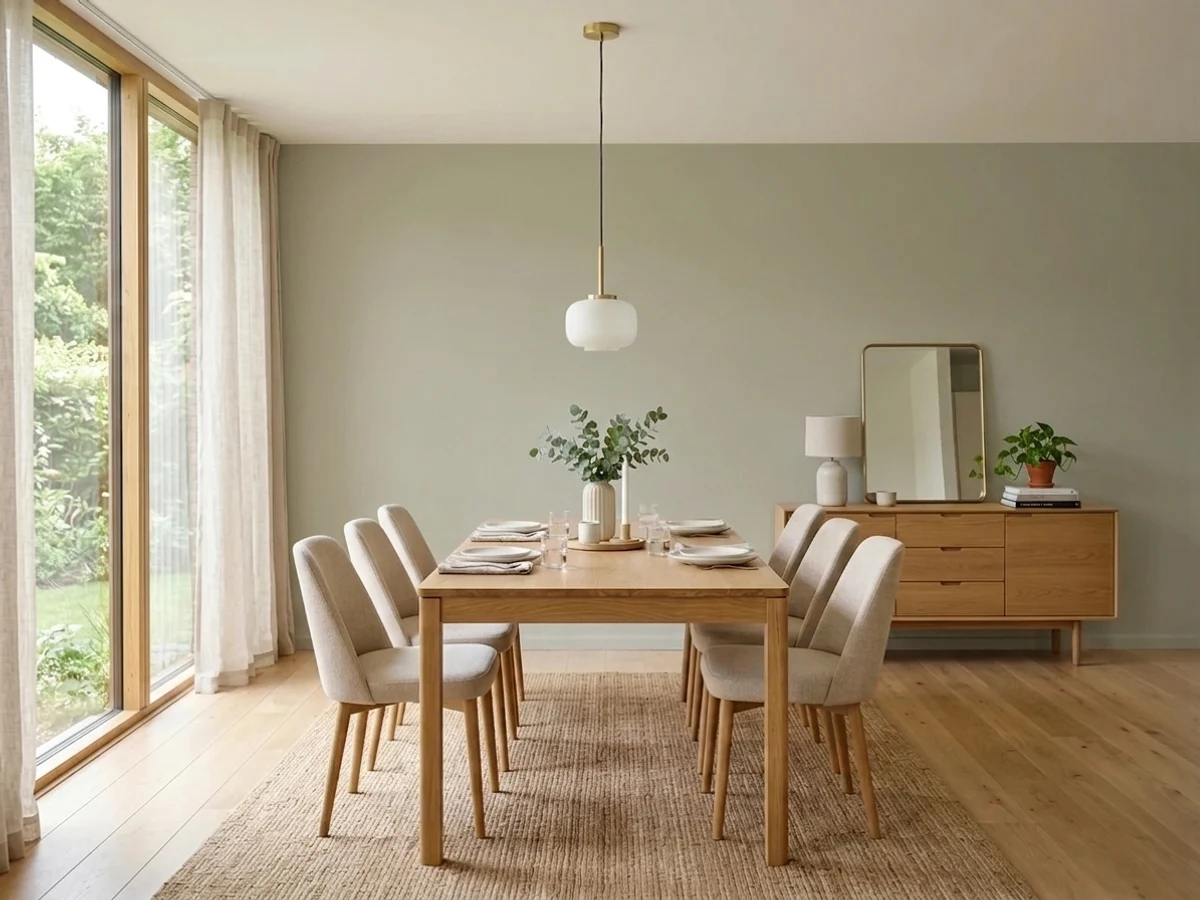
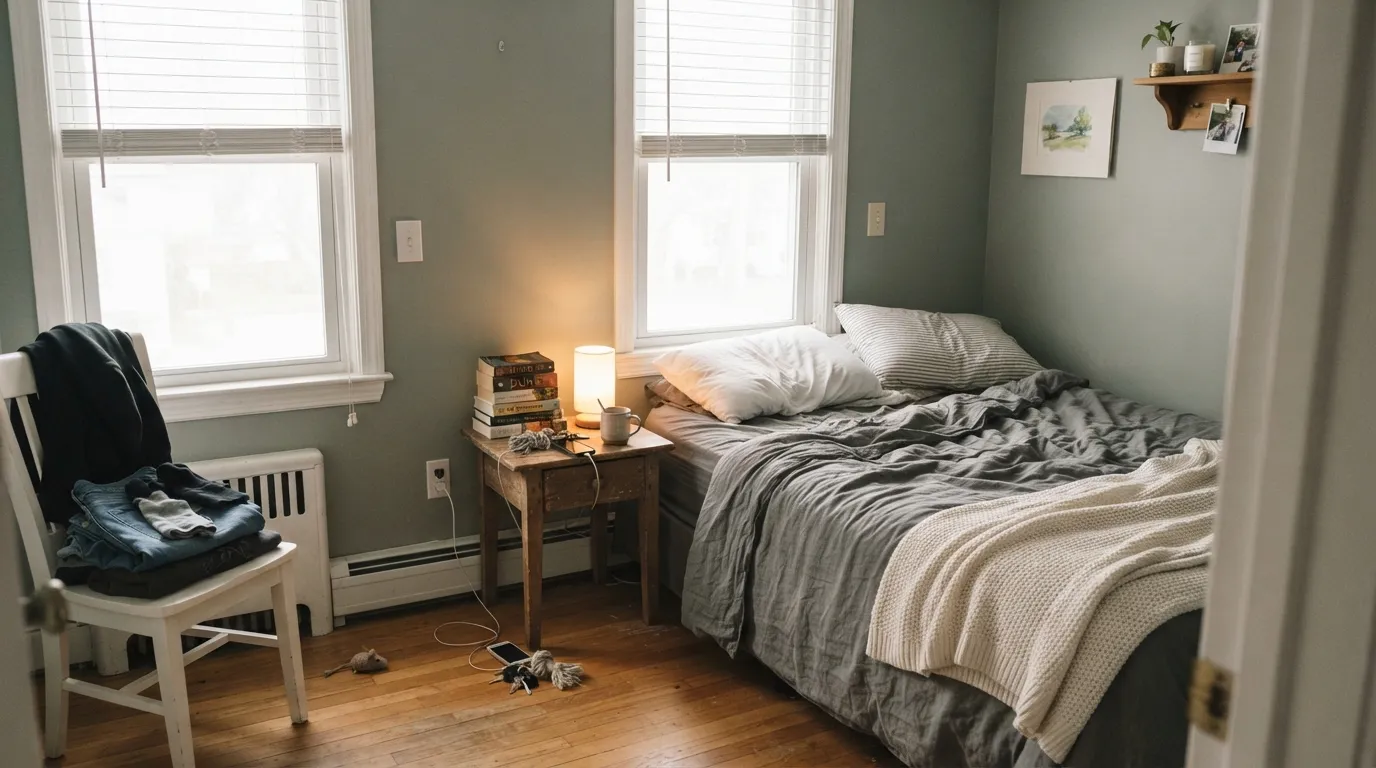
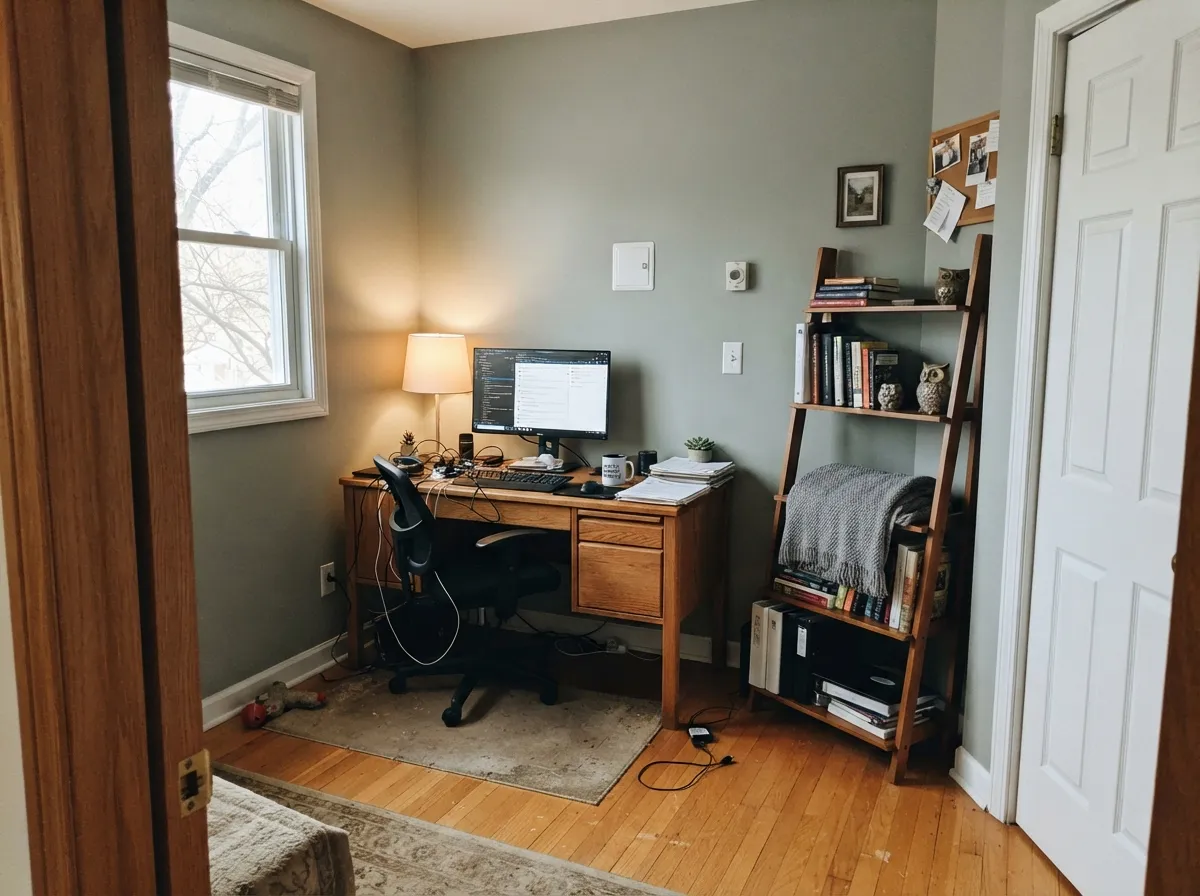
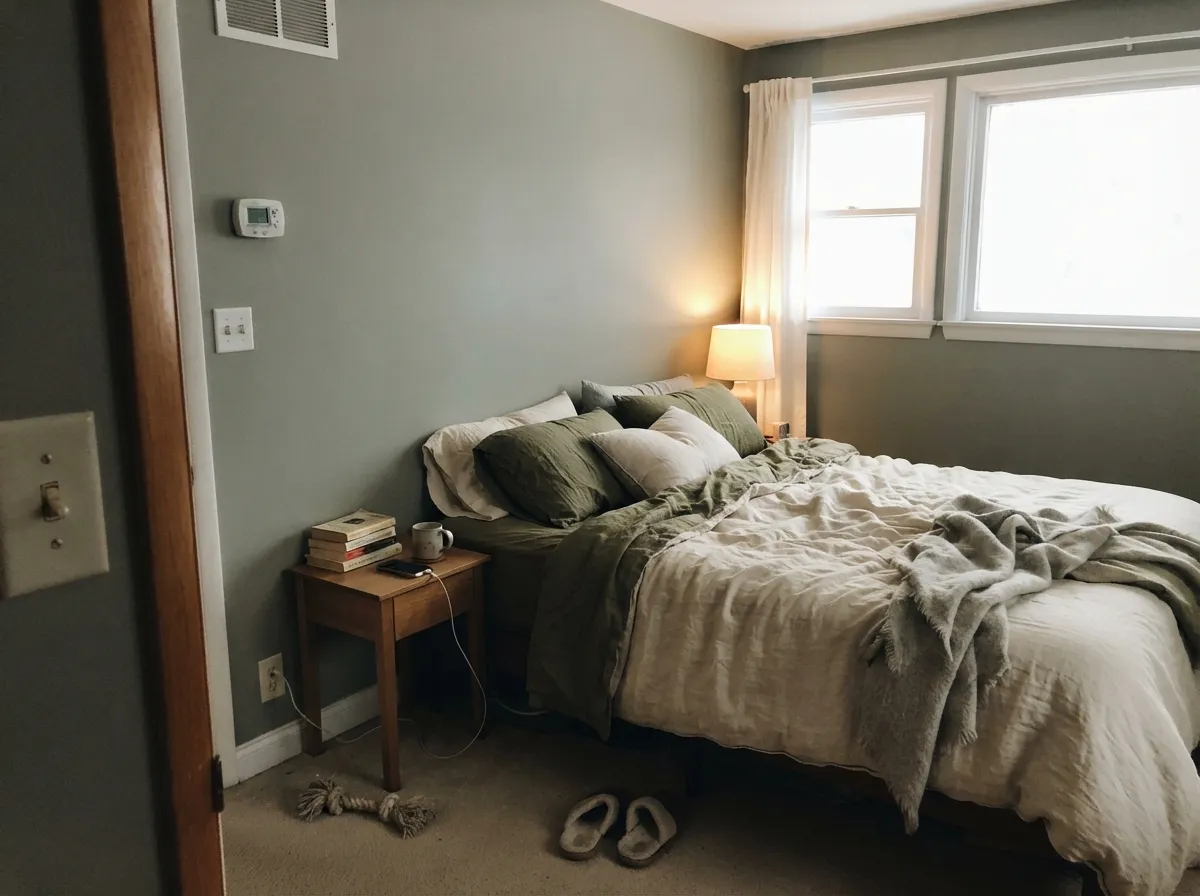
Give it daylight, warm bulbs and wood, and it does exactly what people hope for: a room that feels calm and a little bit outdoorsy without anyone naming the color. Bedrooms and kitchen cabinets are where readers report the fewest regrets, and it holds up in hallways and open plans because it never fights the room next door.
Where It Fails
Almost every bad Clary Sage story traces back to light, not to the paint. The color has so little saturation that it has nothing in reserve — when the light is wrong, there is no green left to see. Here are the three situations that produce the complaints.
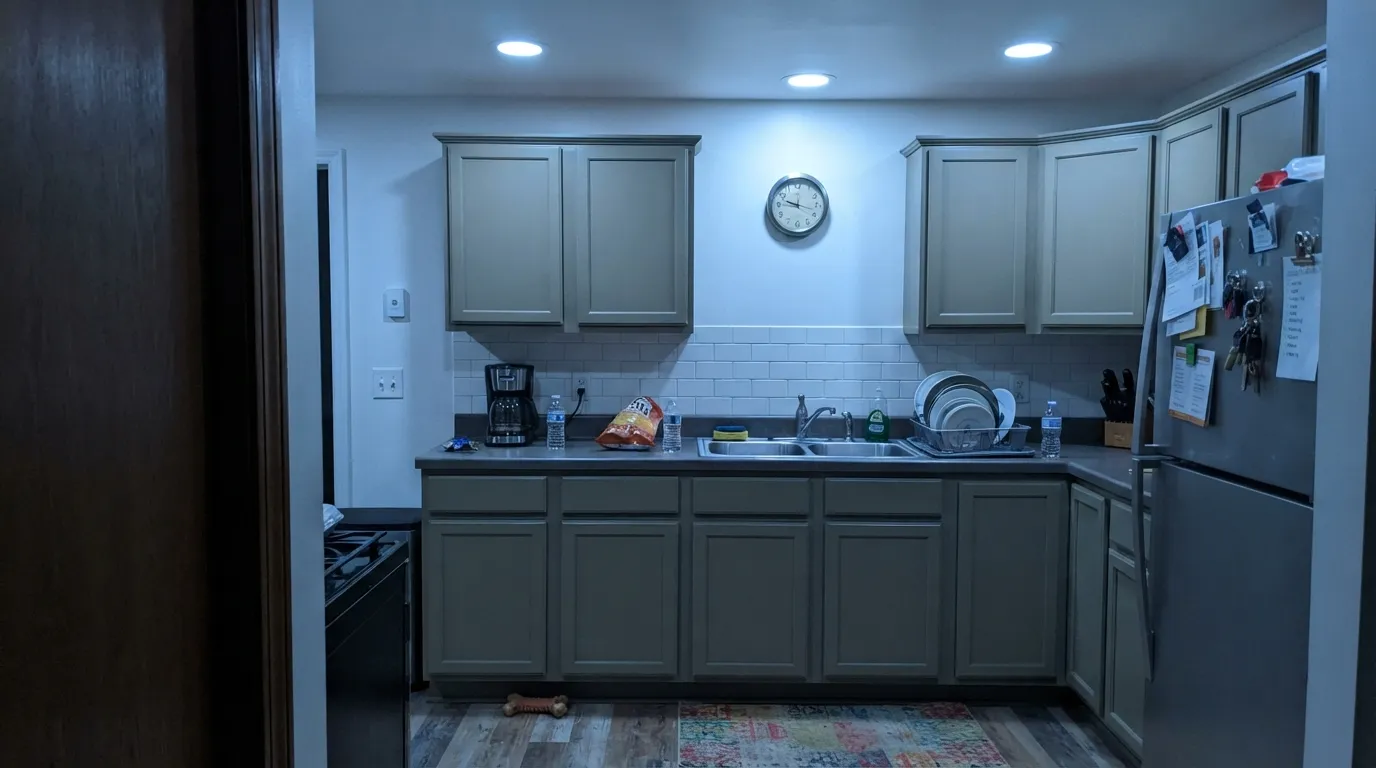
This is the number one regret story: cabinets go up, and under 4000K or old fluorescent tubes they read drab, olive, and dirty. Homeowners who swapped every bulb to 2700K–3000K say the color came back and they kept it. If you cannot change the bulbs, use a green with more pigment to lose — Evergreen Fog (SW 9130) survives cold light far better.
People repainting a gray room to "get away from gray" are the ones who end up disappointed. In flat north light the yellow warmth drops out and at LRV 41 the wall settles into muted gray-green stone. If the point is to actually see green, go deeper and greener with Dried Thyme (SW 6186), or lighten the whole room with Softened Green (SW 6177).
Green tile, a leafy garden view through a big window, or the old green wall you are painting over will drain it — one reader watched the background green "suck all the green out" of the sample. Against true green, Clary Sage reads gray every time. If the room has a strong green already, pick a warm neutral like Accessible Beige (SW 7036) and let the green thing be the green thing.
Room by Room
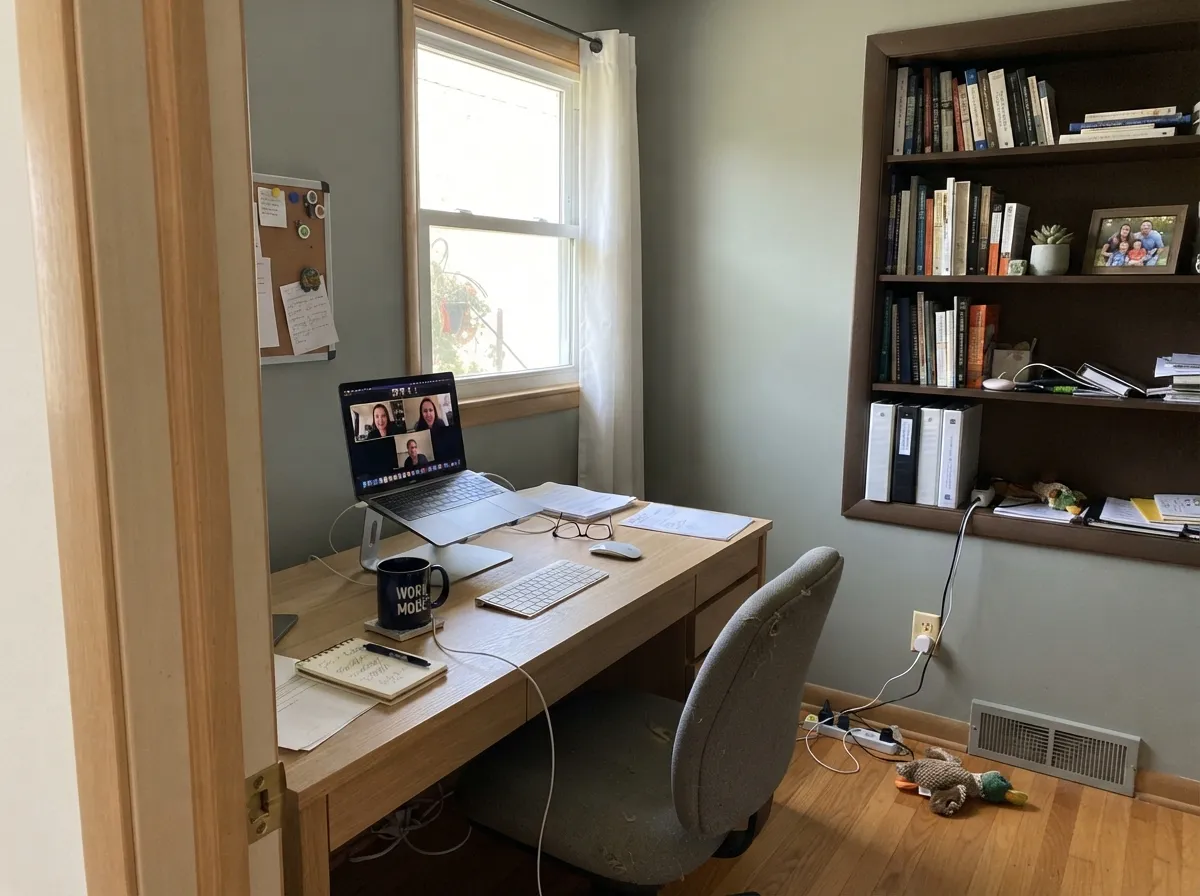
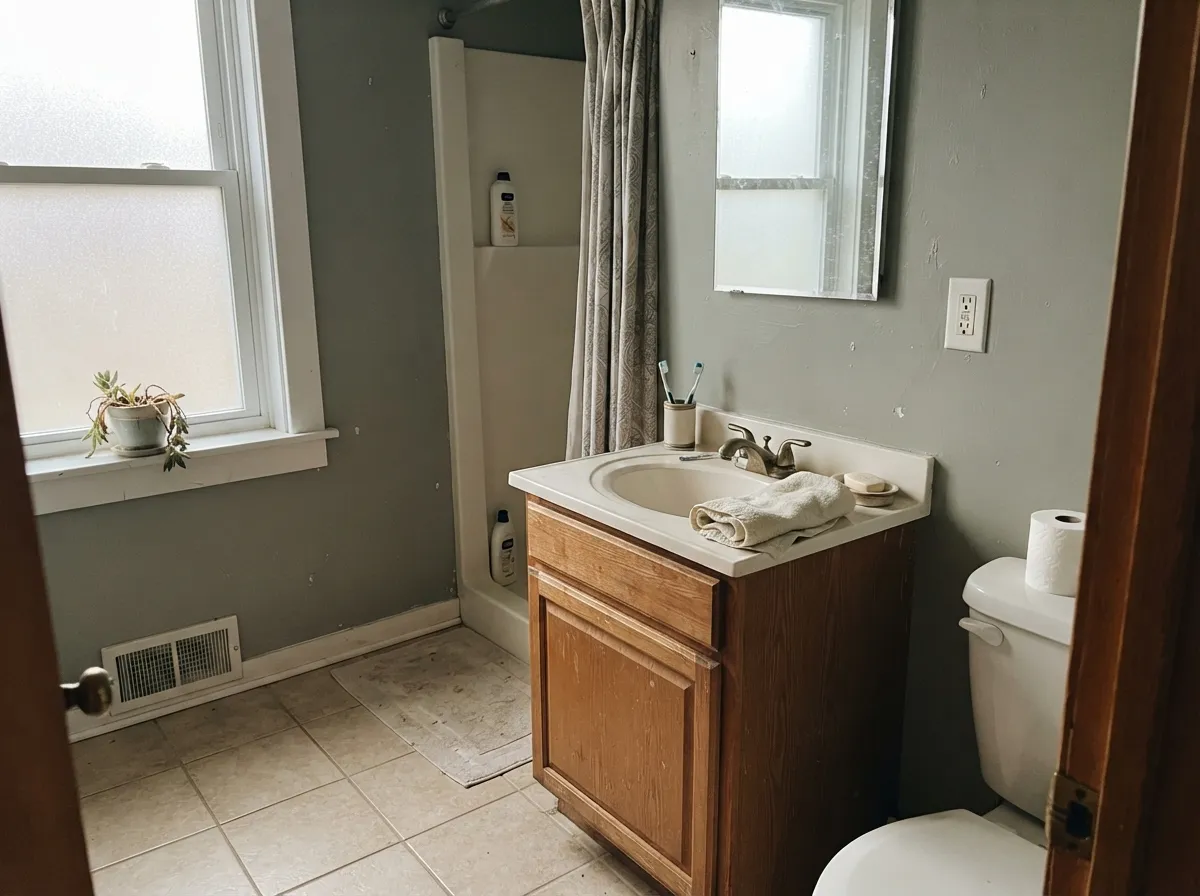
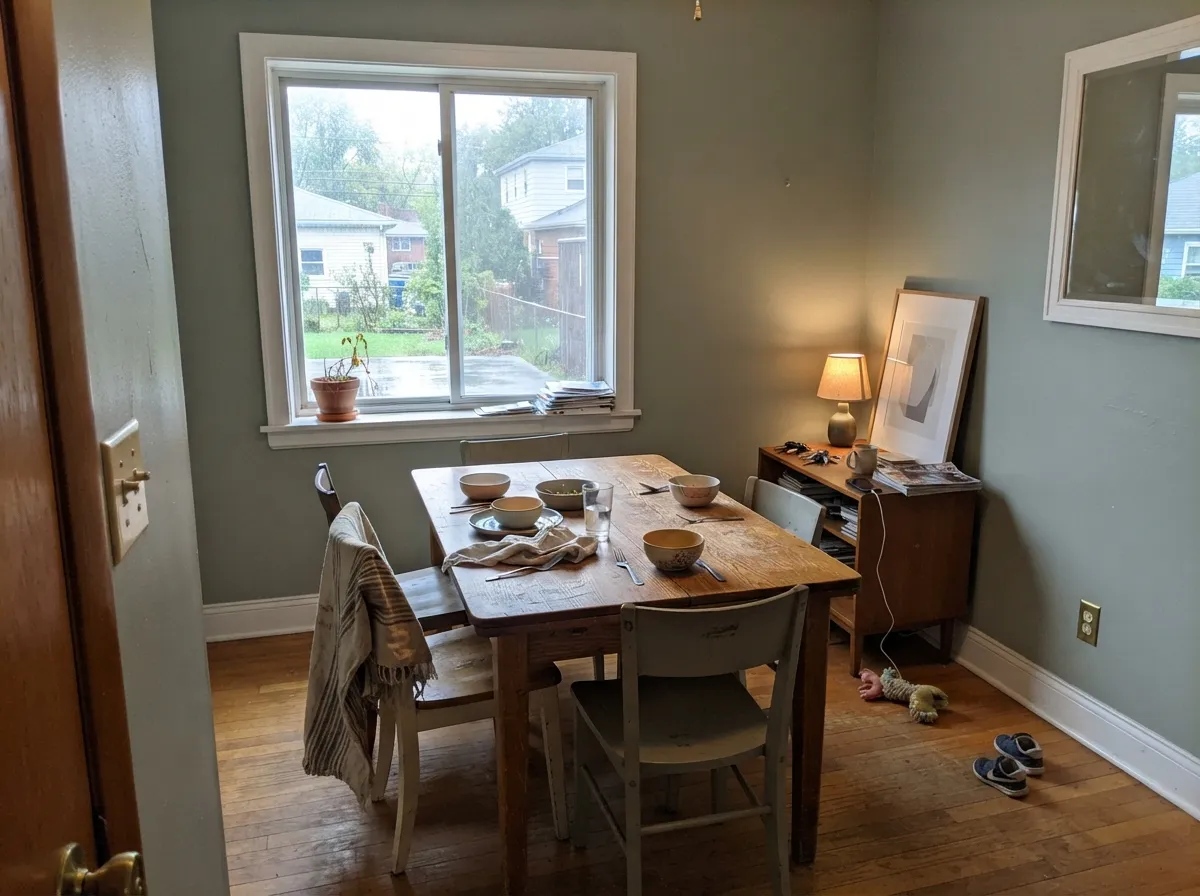
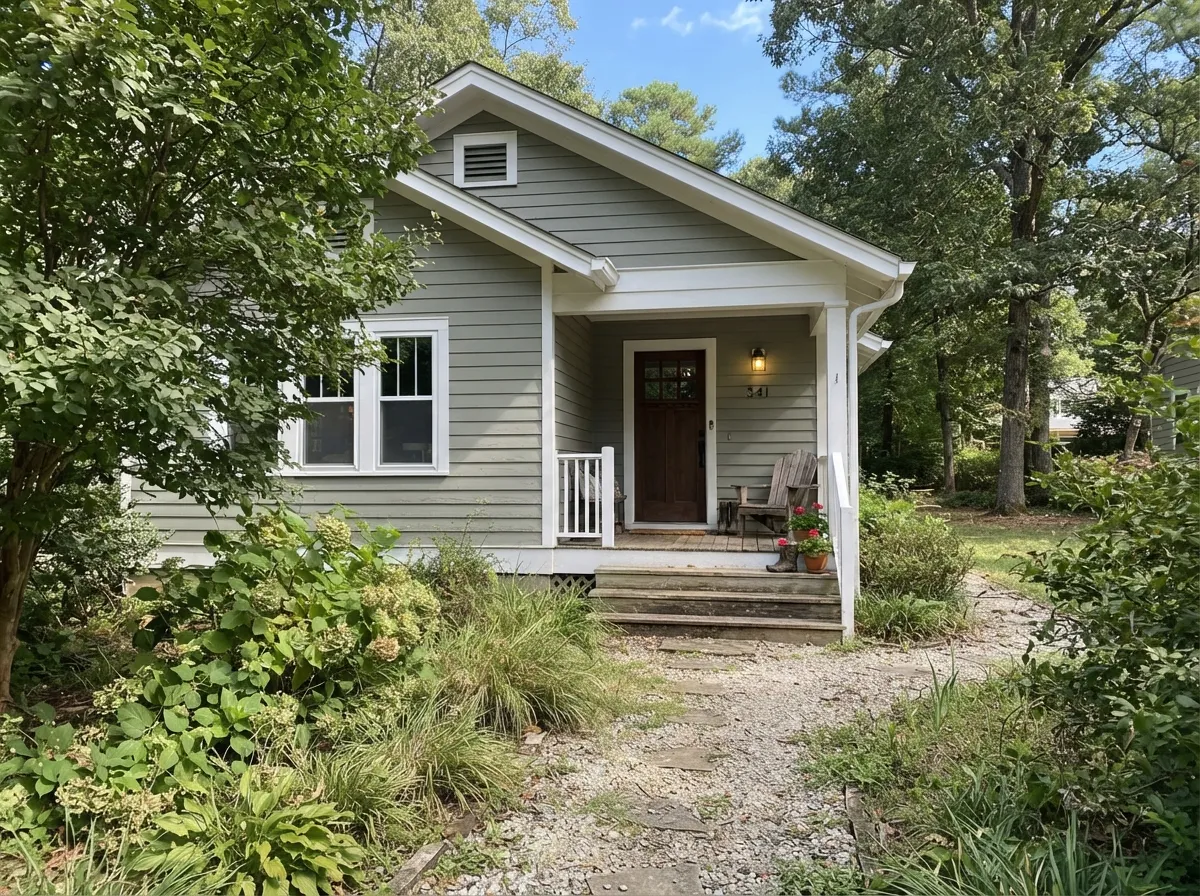
Your Light Is the Risk
Warm sun lifts the yellow and the sage becomes obvious and soft. This is the room it was made for.
Cool daylight strips the warmth and leaves gray-green stone. Sample both a bright and a dark wall first.
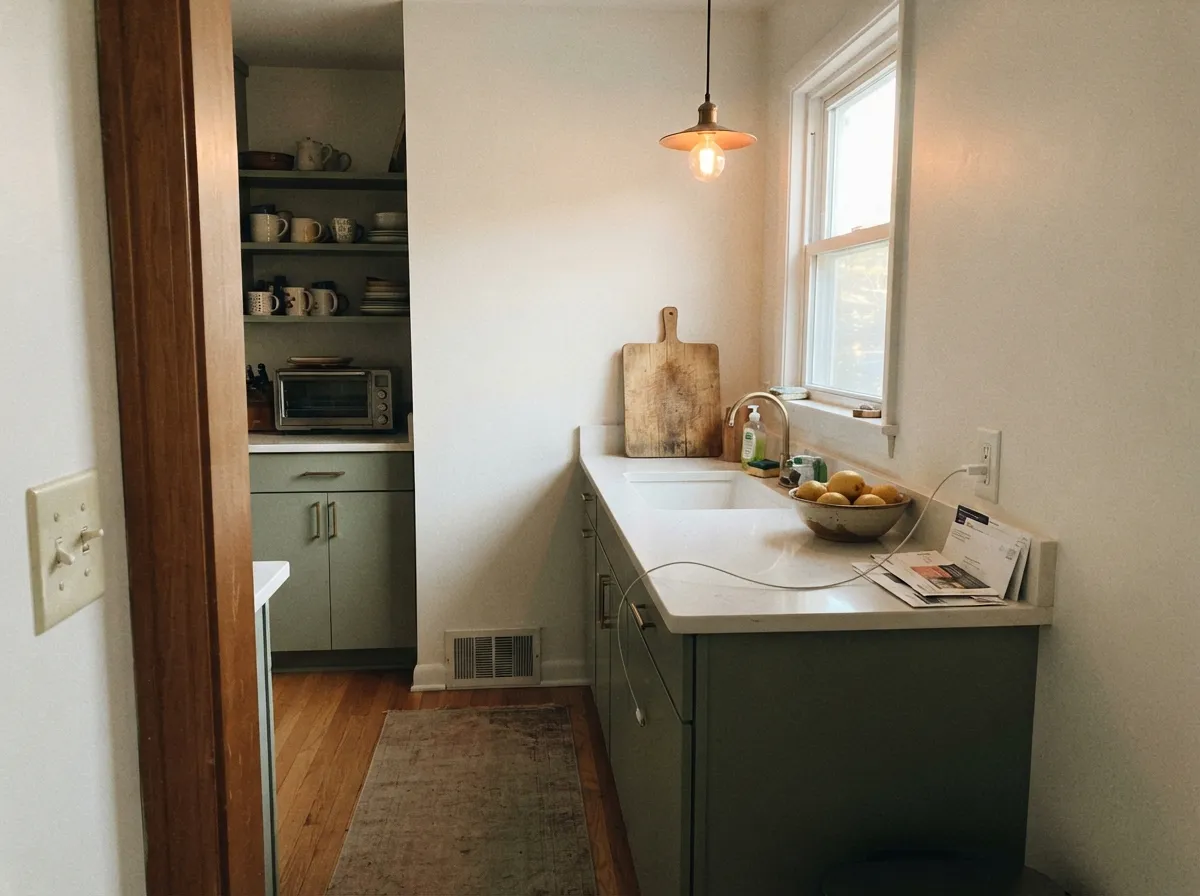
2700K lamps bring the sage back. 4000K or fluorescent makes it drab olive — the top complaint, and a bulb fix.
Strong low sun pushes the yellow forward and it can look olive for an hour. It settles back after dark.
Most complaints about Clary Sage are a light mismatch. Upload a photo of your actual room and see it on your walls — then ask for the same wall in north light or evening lamps before you buy a single sample.
Need It From Another Brand?
Any paint counter can custom-tint Sherwin-Williams SW 6178 directly. If you would rather stay in one brand's own deck, these are the closest stock matches, measured as ΔE2000. Under 2 is a difference you will not see on the wall.
| Brand | Closest color | ΔE | LRV | |
|---|---|---|---|---|
| Behr | Bay WaterS380-4 · Behr | 1.5 | 41 | Color page → |
| Benjamin Moore | Cheyenne Green1502 · Benjamin Moore | 2.4 | 40 | Color page → |
| Valspar | Ara GlenM311 · Valspar | 1.6 | 39.9 | Color page → |
| PPG / Glidden | Photo GrayPPG1029-4 · PPG / Glidden | 0.5 | 41 | Color page → |
| Glidden | Photo GrayPPG1029-4 · Glidden | 0.9 | 41 | Color page → |
| Dutch Boy | Promenade Gray422-4DB · Dutch Boy | 4.4 | 41 | Color page → |
Similar Sherwin-Williams Colors
The nearest shades to Clary Sage within Sherwin-Williams's own range, ranked by perceptual color distance — useful when you want the same look a touch lighter, darker, or warmer.
WCAG 2.1: AA is 4.5 : 1 for normal text, 3 : 1 for large text, AAA is 7 : 1.
Clary Sage vs the Colors You're Also Considering
Every Clary Sage sample board has the same rivals on it. The numbers show the real lightness gap — then it comes down to which risk you would rather live with.
Pick this for a lighter sage that will not darken a room
Sherwin-Williams SW 9130 · LRV 30Evergreen FogPick this for real depth, drama, and green that survives cool light
Pick this when you want the green lean to actually show
Sherwin-Williams SW 6164 · LRV 41Svelte SagePick this when you want the same depth, warmer and more tan
Inside the same deck the differences are small but real. Willow Tree (SW 7741), also LRV 41, has hex #AAAD9C against Clary Sage's #ACAD97, so it carries slightly more gray and less yellow and reads a shade cooler. Svelte Sage (SW 6164) at LRV 41 goes the other way with #B2AC96, a touch warmer and more tan. Chatroom (SW 6171) and Escape Gray (SW 6185), both LRV 41, trade green for gray.
Across brands, HGTV Home by Sherwin-Williams sells the same color as Clary Sage (HGSW 3245) at deltaE 0. PPG and Glidden Photo Gray (PPG1029-4), LRV 41, is 0.54 away, the same color for practical purposes. Farrow and Ball French Gray (No. 18), LRV 42, at 1.48 and Valspar Ara Glen (M311), LRV 39.9, at 1.57 are visually identical in normal room light. Behr Garden Wall (730D-4) at 2.32 and Benjamin Moore Cheyenne Green (1502) at 2.36 are very close but worth sampling first. C2 Burlap (C2-892) at 4.68 is close but visibly different side by side.
Clary Sage Coordinating Colors
The rule with Clary Sage is to keep everything around it warm. It has just enough yellow in it that warm whites, warm beiges and warm woods make the green come forward, while cool blue-whites and cool grays flatten it into something dingy. These are the partners that come up again and again in real rooms:
Clary Sage on Kitchen Cabinets
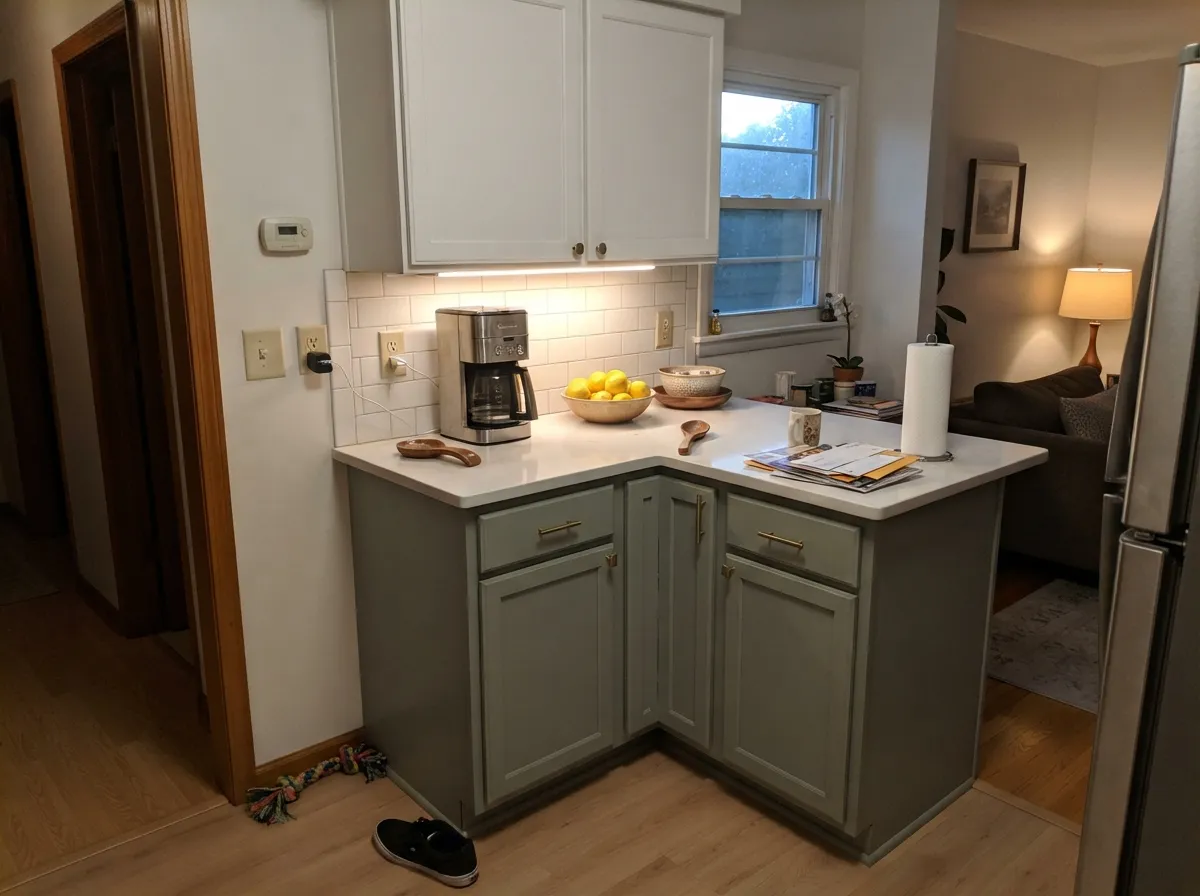
Cabinets are the use readers ask about most, and the honest summary is: it is one of the easiest greens to live with, and the one most likely to be blamed for a lighting problem. Painted boxes sit under recessed cans and under-cabinet strips all day, so the bulbs decide the color far more than they do on a wall. At 2700K–3000K the sage looks soft and expensive next to warm white quartz and brass. At 4000K it goes gray-olive and people call it dirty.
Two-tone is where it is strongest. Clary Sage on the lower boxes with Alabaster (SW 7008) uppers keeps the kitchen light while giving the room a color, and a dark island in Iron Ore (SW 7069) supplies the contrast a mid-tone green cannot make by itself. Use a urethane-fortified cabinet enamel in satin — a mid-tone color shows brush texture and knuckle marks more than white does, and satin wipes clean around the handles.
Clary Sage on Exteriors
Outside, expect it to read a step more olive-gray than the sage you saw indoors. Full sun bleaches muted colors, and there is not much color here to spare, so a Clary Sage house looks earthy and settled rather than green. If that is the goal — a house that disappears into mature trees — it is one of the best body colors in the deck. If you wanted a visibly green house from the street, go deeper with Pewter Green (SW 6208).
The pairings decide whether it looks intentional. A bright warm white trim like Greek Villa (SW 7551) gives the facade the crispness the body color lacks, and Iron Ore (SW 7069) on windows, shutters or the garage frames it. Where exteriors go wrong is too many accent colors at once — a sage body, a colored window trim, a different door and a different fascia all fight, and the sage is the one that ends up looking muddy. Keep it to body, one trim, and one door. Also check it against your roof: with a cool blue-gray roof the green reads gray, and that is worth a big sample board on the sunny and shaded sides before you commit.
Three Ready Palettes Built on Clary Sage
A color is never alone on the wall. These are complete combinations in the 60-30-10 pattern, with the reason each one holds together. Every one opens in the visualizer.
Alabaster is warm enough to keep the sage from going cold, and sits 41 LRV points above the wall so the trim still reads crisp. Urbane Bronze is the single dark note that stops the whole room from looking washed out at night.
Try this palette in your roomCreamy walls give the cabinets a warm surround, which keeps the sage looking green instead of gray under kitchen downlights. Iron Ore on the island supplies the contrast that a mid-tone cabinet color cannot create on its own.
Try this palette in your roomFull sun flattens Clary Sage, so the exterior needs a warm white with real brightness behind it — Greek Villa does that without going stark. The navy door is the one loud element, and it keeps the facade from reading like camouflage.
Try this palette in your roomClary Sage FAQ
Why does my Clary Sage look gray and muddy?
Two causes, and both are light. Either the room faces north and gets flat cool daylight, or the bulbs are 4000K and up. Swap to 2700K–3000K bulbs first and look again at night — that alone fixes most of the complaints. If the wall still reads gray in daylight, the room needs a greener color, not a repaint of the same one.
Clary Sage or Evergreen Fog for kitchen cabinets?
Clary Sage if the kitchen is small, dark on one side, or you want the cabinets to stay quiet. Evergreen Fog at LRV 30 is a full step deeper and holds its green under bad lighting, so it is the safer pick in a kitchen full of recessed cans. Both love brass; Evergreen Fog also works with matte black.
Does Clary Sage go with honey oak floors and trim?
Yes, and this is one of its best jobs. The yellow in the sage meets the orange-yellow of honey oak halfway instead of arguing with it, which is why people use it to make builder oak look deliberate. Keep the trim white and warm — Alabaster (SW 7008) — so the oak and the sage are not the only two things in the room.
Will Clary Sage make a small bathroom feel dark?
Not usually. At LRV 41 it holds a moderate amount of light back, but a small bathroom is mostly fixtures, mirror and tile, so the painted area is small. Use eggshell, keep the vanity and ceiling light, and put a 2700K bulb over the mirror instead of the blue-white one most builders install.
Clary Sage or Svelte Sage?
They share the same LRV of 41, so they are equally deep — the difference is direction. Clary Sage leans greener; Svelte Sage (SW 6164) is warmer and closer to tan. If the room has a lot of beige already, Clary Sage gives you separation. If everything is cream and wood, Svelte Sage blends in more.
What front door color goes with a Clary Sage house?
Naval (SW 6244) is the safe strong answer and never looks dated against sage. For something warmer, Roycroft Copper Red (SW 2839) picks up the earthiness without going bright. Skip pinks and corals — against a grayed green they read washed out from the street, not cheerful.
How many coats does Clary Sage need?
Two over a light or mid-tone existing wall, and that is genuinely enough — grayed colors cover well. Over a dark or saturated green, prime first with a gray-tinted primer, because the old green also skews how the new one looks while it dries. Judge the color only after the second coat has cured a full day.
Have you painted with Clary Sage?
Rate it — one tap helps the next reader decide.
Ask a Question