Soft Sage
The sage that mostly isn't, reviewed honestly: the rooms where the green finally shows up, the light that kills it, and what to buy if you actually want sage.

Jessica has spec'd whites and neutrals for more than 300 rooms and keeps a sample wall of painted drawdowns in her studio. Every color review is checked against real reader rooms in the comments and re-tested when a formula changes. About the testing process →
- 1Dorian Gray39
- 2Pashmina44
- 3Soft Sage50
- 4Agreeable Gray60
- 5Pale Oak69
The Fast Verdict
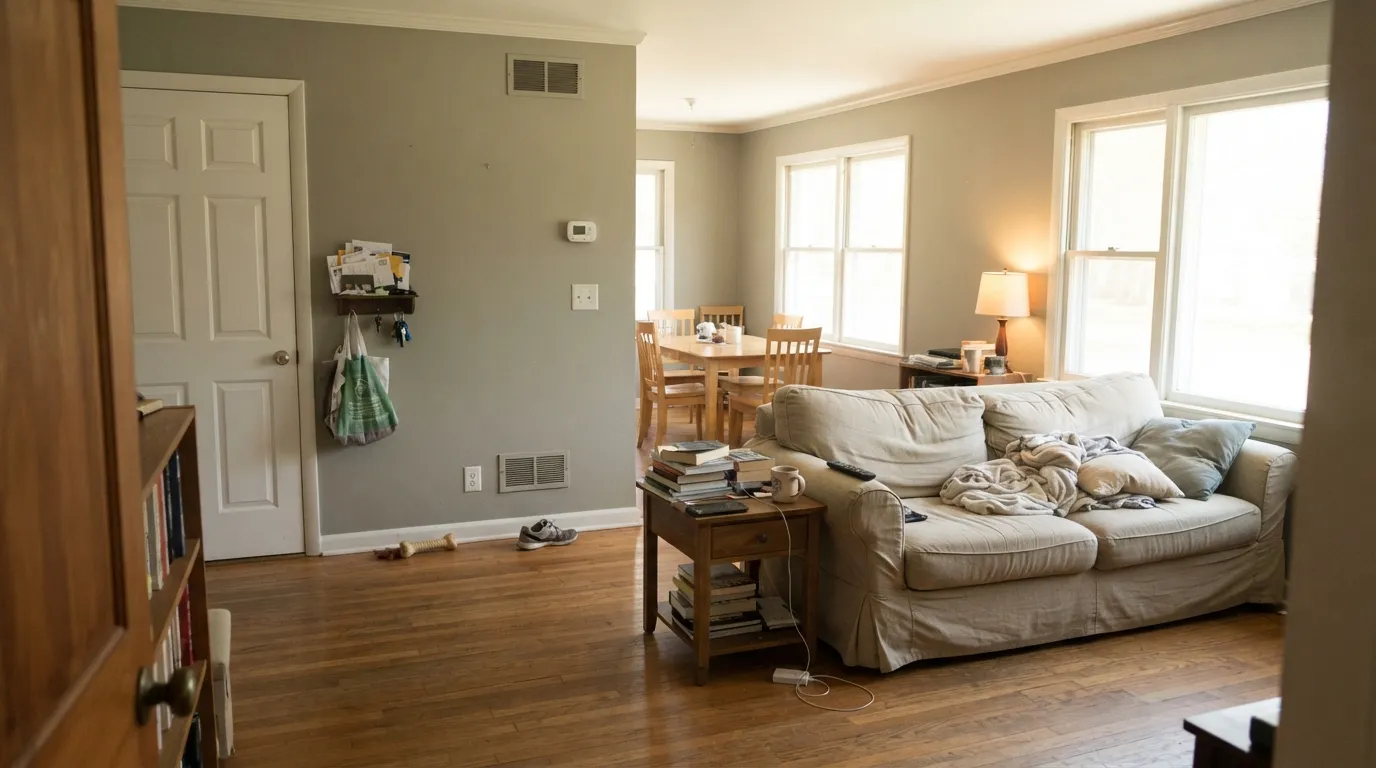
Soft Sage is a very good mid-tone neutral that happens to be named after a color it barely is. The measurements say yellow, not green: hue 60 degrees, saturation about 9 percent, LRV 50. On a big wall in decent daylight you get a soft warm gray-green that makes oak and brass look intentional. Buy it as a warm greige with a green whisper and you will love it; buy it expecting sage and you will be standing in your living room asking why the walls look like putty.
Open main floors that need warmth without beige · rooms with oak floors and brass · kitchen cabinets you want quiet, not loud · anyone who thinks gray got too cold
You want visible, obvious sage green · your room is dim and north-facing · every bulb in the house is 2700K · your floors are orange-toned builder oak
- Warm without ever tipping into beige or yellow-tan
- LRV 50 makes it a true whole-house color, halls included
- Flatters oak, walnut, rattan, brass and natural stone
- One of the calmest greens available for kitchen cabinets
- Cross-brand matches are unusually close, so any store can mix it
- Named sage, reads greige — the most common complaint by far
- Goes flat and directionless in cool north light
- Warm 2700K bulbs push it to olive-putty after dark
- Disappears against warm beige tile and orange-toned oak
What Color Is Soft Sage, Really?
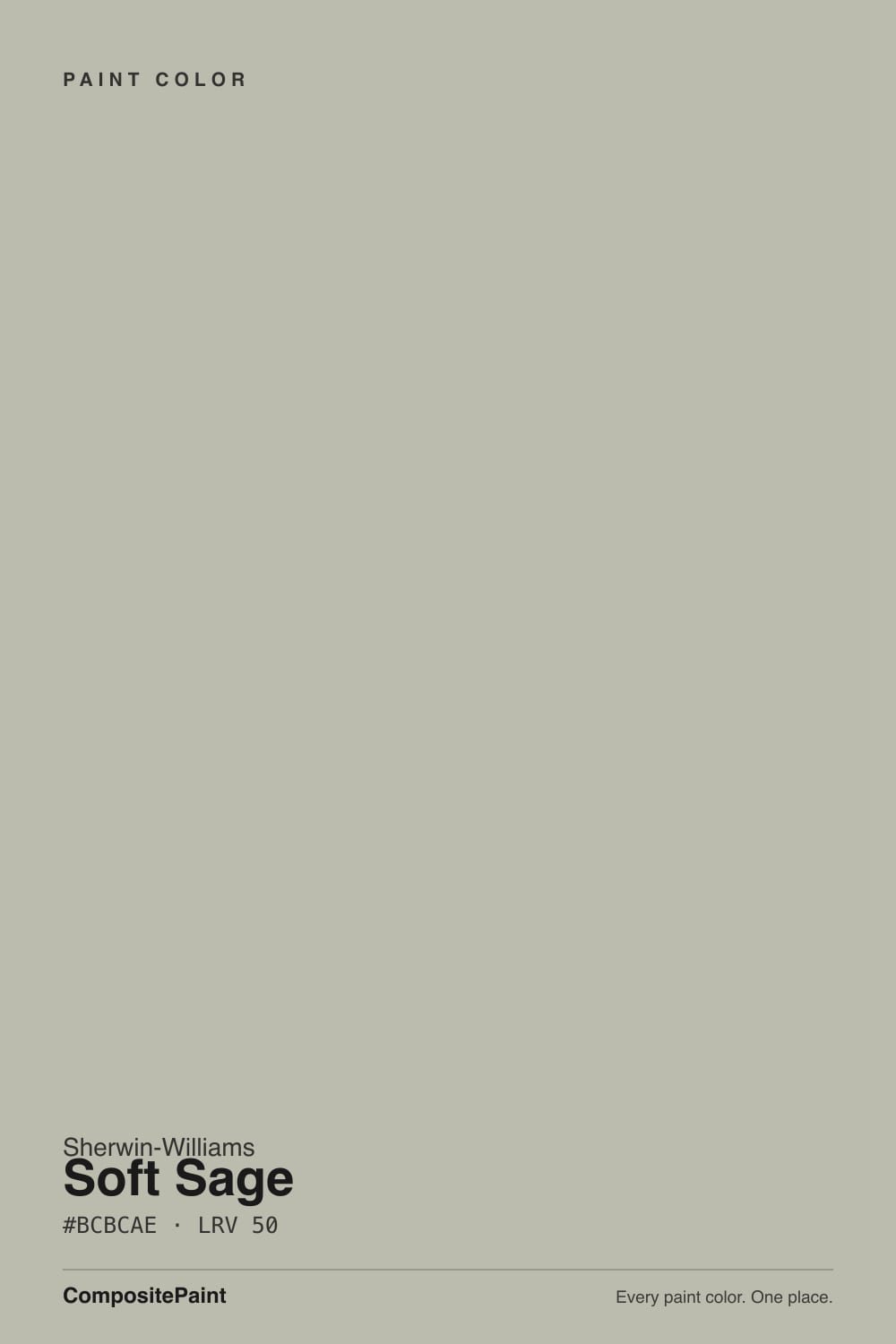
The honest answer to "what color is this" is: a warm neutral with a green suggestion, not a green. Its hex is #BCBCAE, and the pattern matters more than the name — red and green sit level and blue drops off, which the eye reads as a soft yellow-green haze rather than a hue. The measured hue lands at 60 degrees, which is yellow, and saturation is only around 9 percent. That is greige territory with a lean, not sage territory. Every complaint about this color traces back to that one gap between the name and the numbers.
At LRV 50 it sits exactly at the middle of the light scale, and that middle is the whole reason it works as a whole-house color. Put it next to Sea Salt SW 6204 at LRV 63 and Soft Sage suddenly shows real body and weight; put it next to Evergreen Fog SW 9130 at LRV 30 and it looks like the pale, polite cousin. It has enough depth to read as a chosen color instead of builder white, and enough lightness that a hallway with one window does not close in on you.
Undertone in one line: warm grayed yellow with a faint green tilt — never blue, never aqua, never spa. If your sample looks like a real sage on the chip and like a warm putty on the wall, nothing went wrong. That is the color.
Where It Shines
Give it daylight, wood, and warm metal and it stops apologizing. Open main floors are where it earns its money — it carries from living room to kitchen to hall without ever picking a fight, and at LRV 50 it holds shape in the dim corners a lighter neutral would wash out. On cabinets it is one of the calmest greens you can buy.
Where It Fails
The bad reviews for Soft Sage are unusually consistent, and none of them are about coverage, durability, or the paint itself. All three are about expectation and light. If your situation matches one of these, no second coat is going to fix it.
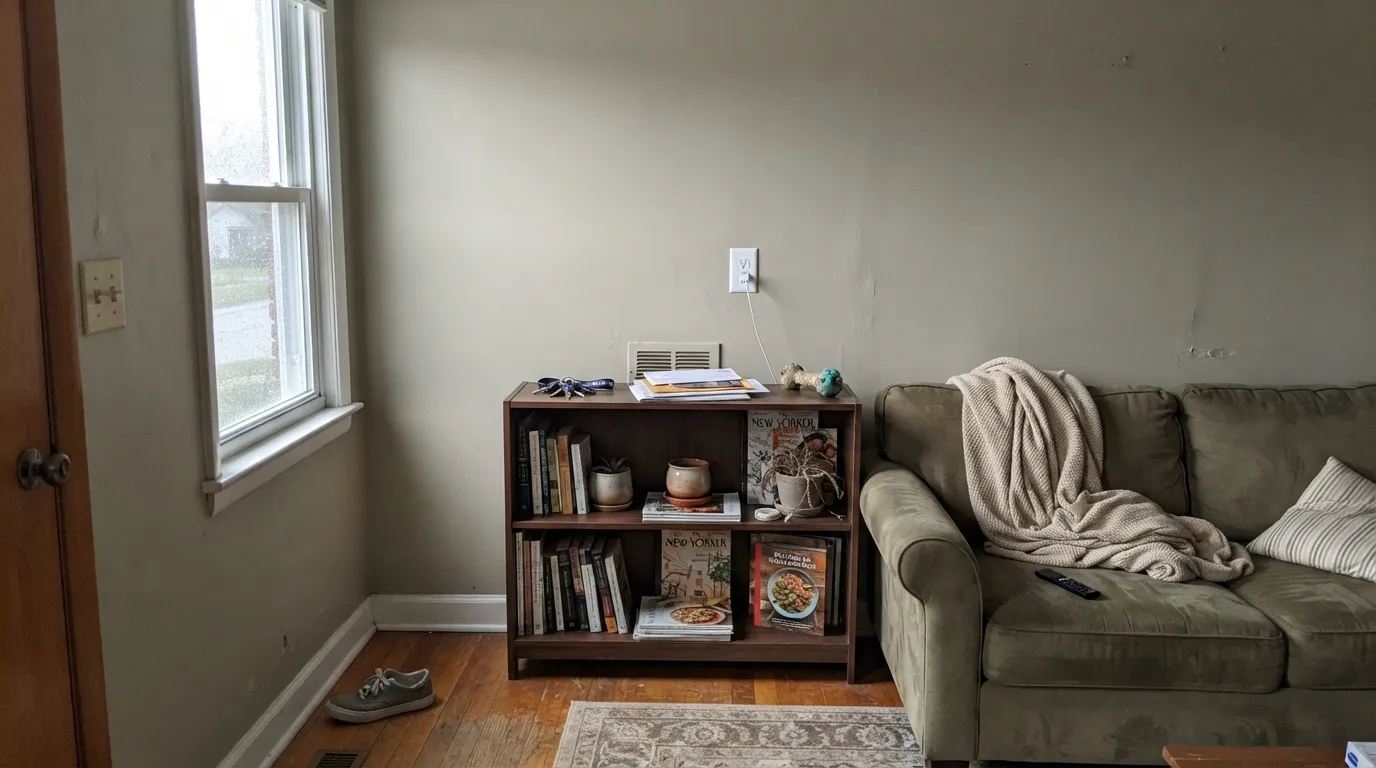
This is the number one disappointment, and it is baked into the formula: 9 percent saturation on a yellow hue is a neutral, not a green. On the chip you see sage because the chip is small and surrounded by white. On four walls the green flattens out and people describe putty, greige, or "nice, but where is the color." If you want the green to be obvious from the doorway, buy Clary Sage SW 6178 at LRV 41 or Softened Green SW 6177 — both read as green first.
Cool north daylight strips out the yellow that makes this color warm, and what is left is a flat gray-tan with no direction. Readers call it dull, muddy, or "the color of an old office." LRV 50 keeps it from going dark, but it does go lifeless. In a north room that needs green, Clary Sage SW 6178 holds its identity in weak light far better; if you want to stay light and warm, Accessible Beige SW 7036 is the honest choice.
Two warm sources stacked on a yellow-based color is too much yellow. After dark, over honey or orange-leaning builder oak, Soft Sage stops being gray-green and becomes a soft olive-putty — several people describe it as looking dingy at night in an otherwise nice room. Neutral 3500K bulbs pull it back. If you cannot change the bulbs, Austere Gray SW 6184 at LRV 51 leans a hair greener and takes warm light better.
Room by Room
This is its best interior use. Eggshell walls, Alabaster SW 7008 trim in semi-gloss, and the color does the quiet backdrop job that gray used to do before gray got cold. In a room with one small window, sample first — it goes flat fast.
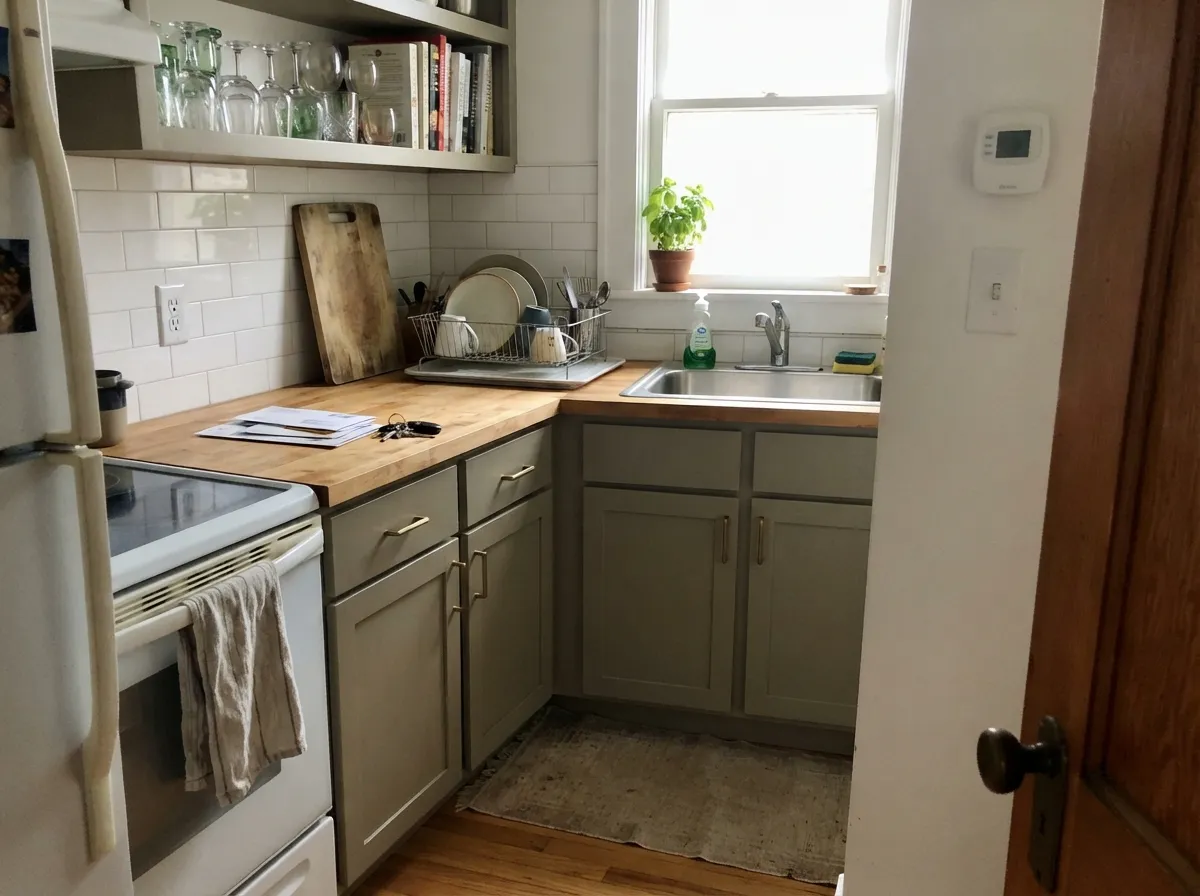
At LRV 50 it keeps a kitchen open while still reading as a color, and it is genuinely flattering to butcher block, white oak, and unlacquered brass. Use a satin urethane-fortified cabinet enamel. Pair with Pure White SW 7005 upper walls so the cabinets stay the story.
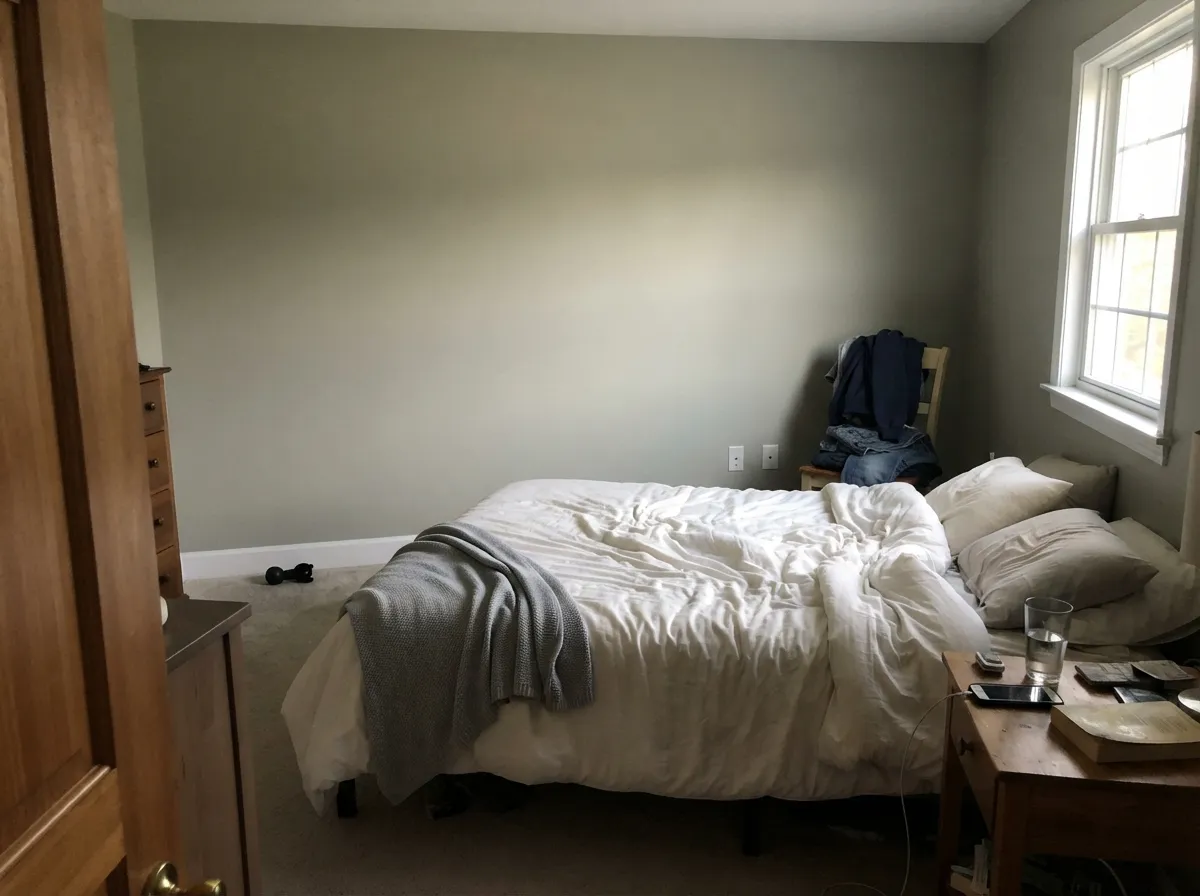
Calm without being cold, and it does not read as "a color" at 6 a.m., which is the point. Swap to 3500K bulbs in the lamps or the walls turn beige after dark. Trim in Shoji White SW 7042 keeps the whole room soft.
Small rooms with a lot of white fixture around them are where the green finally shows, because porcelain gives it something cool to push against. Satin or a scrubbable eggshell. Skip it if the tile is a warm builder beige — the two blur together.
Mid-LRV walls are easier on the eyes than white on video calls, and this one is neutral enough that it never tints your face green. Pair with Urbane Bronze SW 7048 on a built-in or a bookcase back for contrast.
Outdoors, full sun brightens it and the green reads more clearly than it ever does inside. It works as a body color that settles into landscaping, with cream or white trim and a dark door. It is not an accent — let Iron Ore SW 7069 carry that.
Your Light Is the Risk
Warm midday sun brings the yellow and the green forward together. This is the sage everyone was promised.
Cool daylight drains the warmth and leaves a gray-tan with no direction. Sample big before committing.
2700K bulbs erase the green entirely. Move to 3500K and the balance comes back — change bulbs, not paint.
Green and fresh at the cool hours, warm putty at the sun hours. It moves all day, and most people like that.
Most complaints about Soft Sage are a light mismatch. Upload a photo of your actual room and see it on your walls — then ask for the same wall in north light or evening lamps before you buy a single sample.
Need It From Another Brand?
Any paint counter can custom-tint Sherwin-Williams SW 9647 directly. If you would rather stay in one brand's own deck, these are the closest stock matches, measured as ΔE2000. Under 2 is a difference you will not see on the wall.
| Brand | Closest color | ΔE | LRV | |
|---|---|---|---|---|
| Behr | Sierra MadreECC-46-1 · Behr | 3.0 | 50 | Color page → |
| Benjamin Moore | Gray Horse2140-50 · Benjamin Moore | 1.8 | 49 | Color page → |
| Valspar | Wharf Wind8004-27B · Valspar | 0.0 | 50 | Color page → |
| PPG / Glidden | Hurricane HazePPG1032-2 · PPG / Glidden | 0.5 | 49 | Color page → |
| Glidden | Hurricane HazePPG1032-2 · Glidden | 1.0 | 49 | Color page → |
| Dutch Boy | Cliff Face422-3DB · Dutch Boy | 1.1 | 49 | Color page → |
Similar Sherwin-Williams Colors
The nearest shades to Soft Sage within Sherwin-Williams's own range, ranked by perceptual color distance — useful when you want the same look a touch lighter, darker, or warmer.
WCAG 2.1: AA is 4.5 : 1 for normal text, 3 : 1 for large text, AAA is 7 : 1.
Soft Sage vs the Colors You're Also Considering
Every Soft Sage sample board has the same rivals on it. The numbers show the real lightness gap — then it comes down to which risk you would rather live with.
Pick this if you want the green to stay a whisper, not a statement.
Sherwin-Williams SW 6177 · LRV 49Softened GreenPick this if you want people to see green from the doorway.
Pick this for a lighter room that still reads mostly neutral.
Sherwin-Williams SW 6178 · LRV 41Clary SagePick this for dim or north rooms — it keeps its green when light is weak.
Within the line, Austere Gray SW 6184 (#BEBFB2, LRV 51) is the closest sibling and reads a hair greener and lighter. Hazel Gaze SW 9652 (#B8BFB1, LRV 51) has the widest green gap of the neighbors, so it looks more like a real sage. Viaduct SW 9567 (#C1BBB0, LRV 50) and Jogging Path SW 7638 (#C0B9A9, LRV 49) both shift toward taupe and will feel warmer on a wall.
Across brands the matches are unusually tight. Valspar Wharf Wind 8004-27B (LRV 50) has a deltaE of 0, and C2 Paint Fava C2-943 (LRV 50, deltaE 0.41), PPG Hurricane Haze PPG1032-2 (LRV 49, deltaE 0.53), and Behr Smokestack N220-3 (LRV 49, deltaE 0.73) are all effectively the same color. Benjamin Moore Gray Horse 2140-50 (LRV 49, deltaE 1.84) is visually identical in normal room light. Farrow and Ball Purbeck Stone No. 275 (LRV 50, deltaE 3.4) is close but visibly different side by side.
Soft Sage Coordinating Colors
The rule with Soft Sage is to respect the yellow base. It pairs beautifully with warm whites, warm greiges, deep greens, and near-blacks, and it fights with cool blue-grays and icy whites — put it beside a blue-gray and the wall immediately looks dirty instead of soft. These are the partners that keep showing up in real schemes:
Soft Sage on Kitchen Cabinets
Cabinets are where this color quietly outperforms its reputation. Vertical door fronts catch light differently than a flat wall, and the shadow lines around shaker rails give the green somewhere to gather — so the sage that goes missing on a wall usually shows up on a cabinet run. It is also forgiving: at LRV 50 it hides the hand smudges around pulls that a white cabinet broadcasts every single day.
The pairings decide whether it looks designed or muddy. Warm counters — butcher block, honed soapstone, a quartz with a warm vein — and unlacquered brass or matte black hardware are the safe road. What to avoid is a cool gray quartz with blue movement, which drags the cabinets toward olive by contrast. Two-tone works well too: Soft Sage on the perimeter with a Pewter Green SW 6208 island reads intentional because both live in the same warm green family.
The Soft Sage Ladder, Lighter and Darker
If you sampled Soft Sage and the answer was "close, but," the fix is almost always a step along the ladder rather than a different color family. Going greener at the same lightness: Austere Gray SW 6184 at LRV 51 tips a shade further toward green, and Softened Green SW 6177 goes further still while staying in the same light band. Both keep the whole-house flexibility you liked.
Going deeper for a room that needs to feel held: Clary Sage SW 6178 at LRV 41 is the warm herbal version and the most reliable in weak light, and Evergreen Fog SW 9130 at LRV 30 is the full commitment. Going lighter is harder, because much above LRV 60 this family stops reading as a color at all — if you need lighter, most people are better served by a warm white like Shoji White SW 7042 with Soft Sage moved onto the cabinets or an accent wall.
Three Ready Palettes Built on Soft Sage
A color is never alone on the wall. These are complete combinations in the 60-30-10 pattern, with the reason each one holds together. Every one opens in the visualizer.
Alabaster at LRV 82 is warm enough that Soft Sage's yellow base looks deliberate instead of accidental, and the 30-point gap keeps trim clearly separate. Iron Ore supplies the single near-black note the scheme needs so the whole house does not read soft.
Try this palette in your roomPure White is clean and faintly warm, which pushes the cabinets' green forward instead of letting them blur into the wall. Pewter Green at LRV 12 is the same family several steps down, so the island grounds the kitchen without introducing a second color story.
Try this palette in your roomShoji White shares the same warm gray base, so trim reads soft rather than cut, which suits a room you see mostly in lamplight. Clary Sage behind the bed adds the green the walls only hint at, and the two never argue because they sit in the same warm family.
Try this palette in your roomSoft Sage FAQ
Is Soft Sage actually green?
Barely. The hue measures 60 degrees, which is yellow, at about 9 percent saturation — that is a warm neutral with a green tilt. On a full wall in south light you will read a soft gray-green. Next to a real sage like Clary Sage SW 6178 it will look like greige.
Is Soft Sage warm or cool?
Warm. The yellow base is what separates it from the cool grays people got tired of, and it is why it sits well with oak and brass. It only reads cool when north light or an overcast day strips the warmth out, and then it goes flat rather than icy.
What white trim goes with Soft Sage?
Alabaster SW 7008 for a soft, warm, lived-in finish, or Pure White SW 7005 when you want a crisp line and want the green to look intentional. Both work because LRV 50 leaves a big gap to either. Avoid a cold blue-white — it makes the walls look muddy.
Is Soft Sage good for kitchen cabinets?
Yes, and it is arguably its best use. It is light enough to keep a kitchen open, quiet enough to live with for ten years, and genuinely flattering to butcher block, white oak, and brass. Use a satin urethane-fortified cabinet enamel, and put a cleaner white on the walls so the cabinets stay the focus.
Soft Sage or Evergreen Fog?
They are not close. Evergreen Fog SW 9130 sits at LRV 30 and wraps a room in real color; Soft Sage sits at LRV 50 and stays a backdrop. Pick Evergreen Fog for a moody den or a statement kitchen, Soft Sage when you want the walls to hold the room together quietly.
Will Soft Sage look dirty in my room?
It can, in two situations: dim north-facing rooms, where it flattens into a gray-tan, and warm 2700K bulbs over orange-toned oak floors, where the yellow stacks up and reads olive. Neutral 3500K bulbs fix the second one completely. Sample a large board against the actual floor before you buy the gallons.
Can I use Soft Sage through a whole house?
Yes — LRV 50 is the sweet spot for it. It has enough body for hallways and stairwells to look chosen instead of blank, and enough lightness that it never closes a space in. Keep one trim white through the whole house and change only sheen from room to room.
Have you painted with Soft Sage?
Rate it — one tap helps the next reader decide.
Ask a Question