Vale Mist
The Classics-collection sage-gray that sits one SKU number below a Color of the Year and never got the same spotlight, reviewed honestly: where it earns its keep, the light that flattens it, and what to pick instead.

Jessica has spec'd whites and neutrals for more than 300 rooms and keeps a sample wall of painted drawdowns in her studio. Every color review is checked against real reader rooms in the comments and re-tested when a formula changes. About the testing process →
- 1Evergreen Fog30
- 2Clary Sage41
- 3Vale Mist56
- 4Hancock Green66
- 5Alabaster82
The Fast Verdict
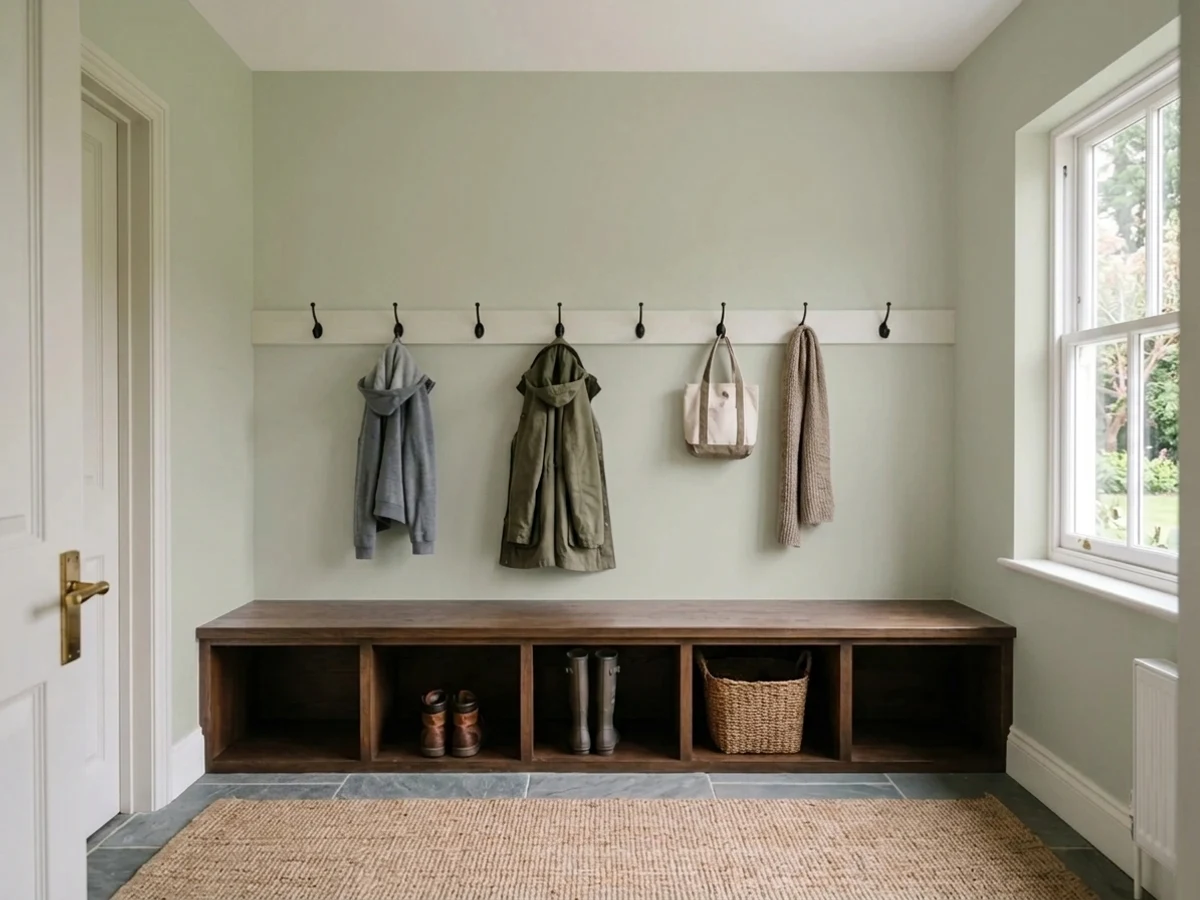
Vale Mist is a soft, silvered sage-gray that Benjamin Moore files right next to October Mist — its 2022 Color of the Year — in the Classics collection, and it shows: same cool green-gray family, just paler and quieter. It never got its sibling's press tour, which makes it one of the deck's better-behaved sleepers. Give it real daylight and it reads as a genuine, gently green gray; take the daylight away and it can slide into a color nobody can name.
Laundry rooms, pantries and powder rooms that want a little color without commitment · exteriors, siding and shutters · bedrooms and dens with real morning or south light · anyone who likes October Mist but wants it a step lighter and quieter
Your room is north-facing and dim · you are chasing a true, unmistakable gray · your wood tones lean cherry or red-toned · you want a color guests will immediately name
- A genuine sage-gray that reads sophisticated, not themed
- Small rooms (laundry, pantry, powder) get a real color decision with low risk
- Sold in a matching exterior finish — a real, tested outdoor color, not a guess
- Pairs cleanly with crisp white trim and near-black accents
- Quiet enough to outlast most trend cycles, unlike a saturated green
- Fades toward plain, characterless gray in dim or north-facing rooms
- Fights cherry, mahogany and other red-toned wood
- Easy to mistake for a true gray on the chip, then be surprised by the green
- Less depth than October Mist — needs more daylight to hold its color
What Color Is Vale Mist, Really?
Benjamin Moore's own copy calls Vale Mist 'a soft silvered sage that evokes tranquility,' and files it in the Classics collection two slots from 1495 — October Mist, the brand's 2022 Color of the Year. That numbering is not a coincidence of the eye: both colors share the same cool, grayed-green family, built on the same idea of sage pulled so far toward neutral it can pass for plain gray in the wrong light. Vale Mist is the lighter, quieter half of that pair — it never had a marketing campaign, which is exactly why it has stayed a working color rather than a trend chased by everyone at once.
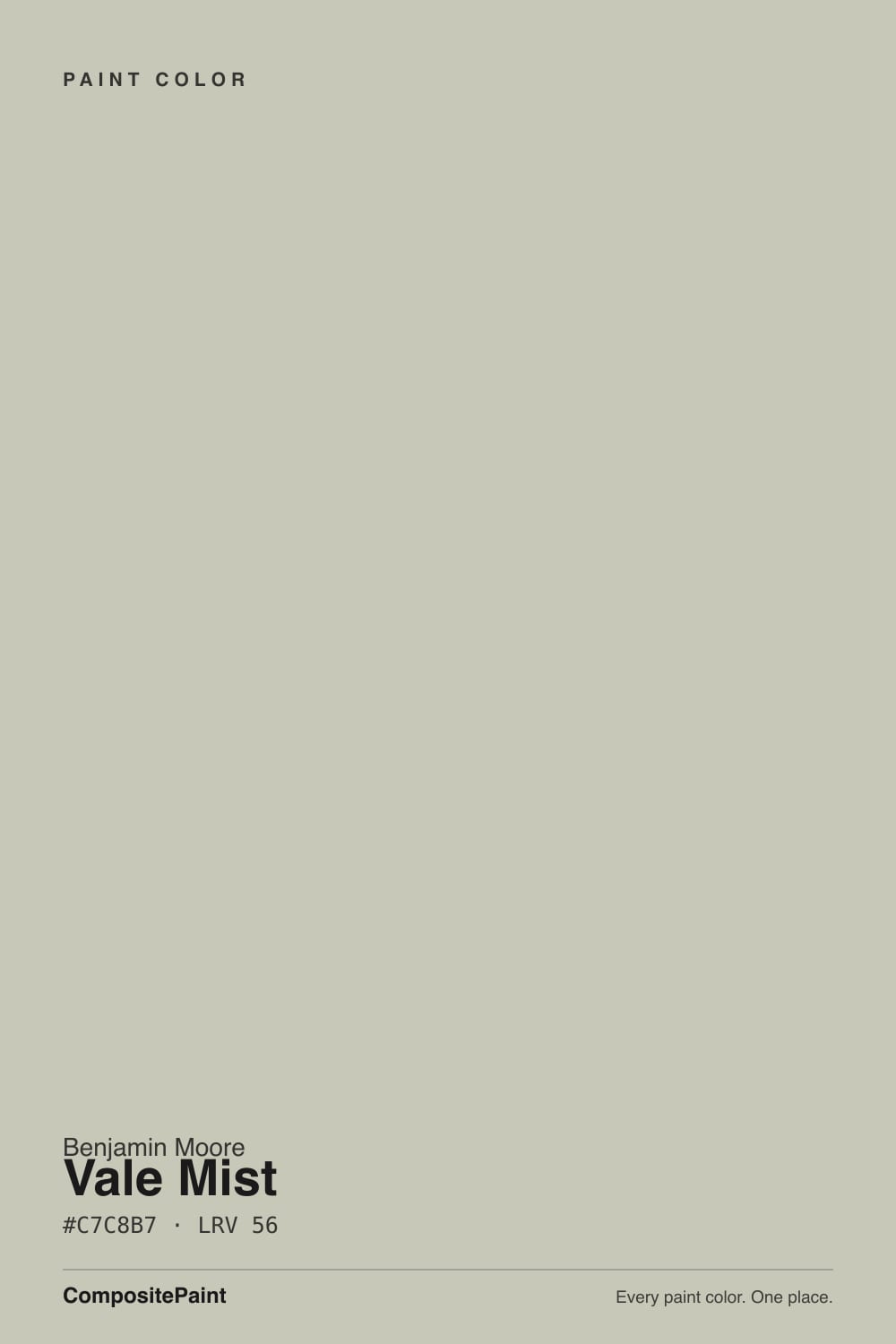
At LRV 56 it sits in true mid-tone territory, noticeably lighter and more washed-out than October Mist's LRV 39. That gap matters: October Mist holds its sage color even in mediocre light, while Vale Mist's paler formula needs real daylight to keep its green visible at all. In a bright room it reads as a genuine silvered sage-gray; in a dim one the green retreats and what's left can look like an unremarkable warm gray, which is the single biggest source of confused reviews online.
Undertone in one line: green first, gray second, never yellow. The RGB behind the hex (199, 200, 183) shows it plainly — green sits just above red and noticeably above blue, which is a cooler mix than a typical warm greige like Revere Pewter. If your sample looks flat and colorless, that is cool or dim light pulling the green out, not a defect in the paint.
Where It Shines
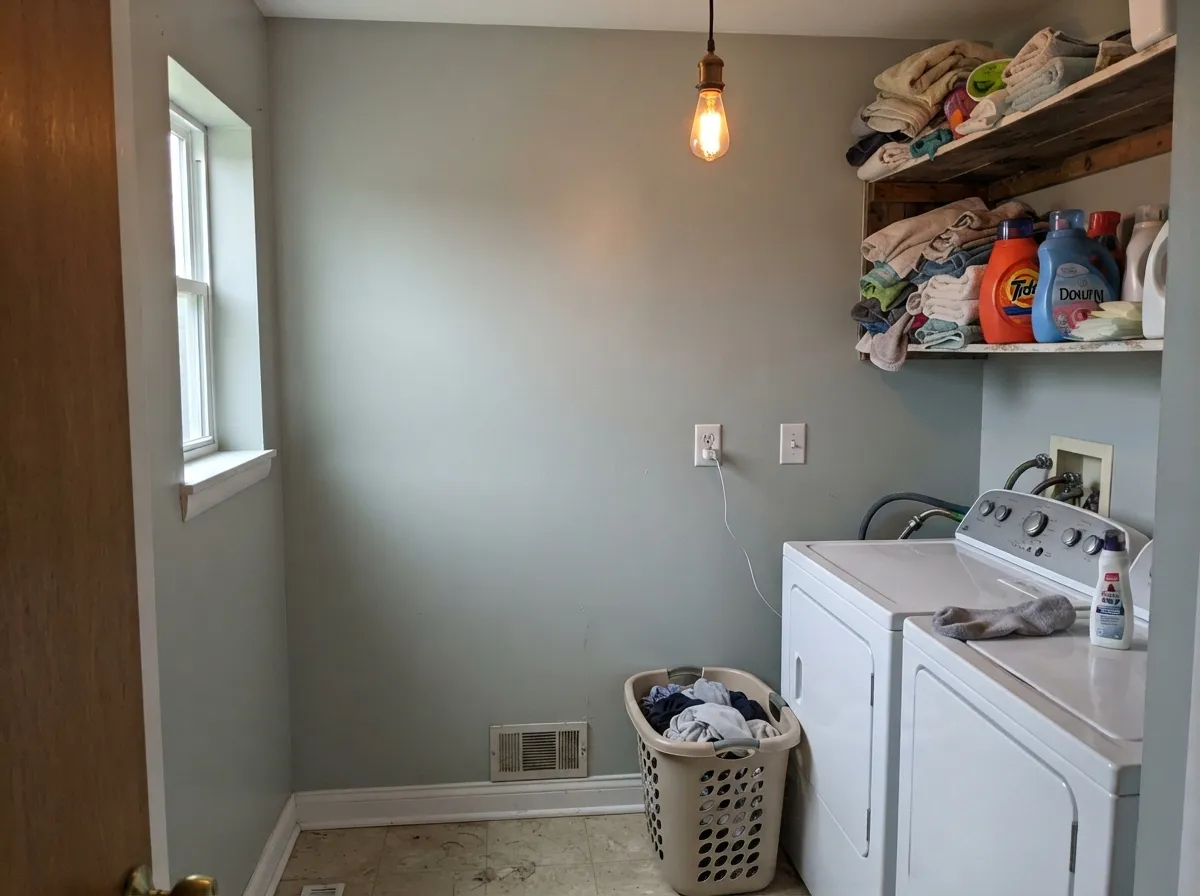
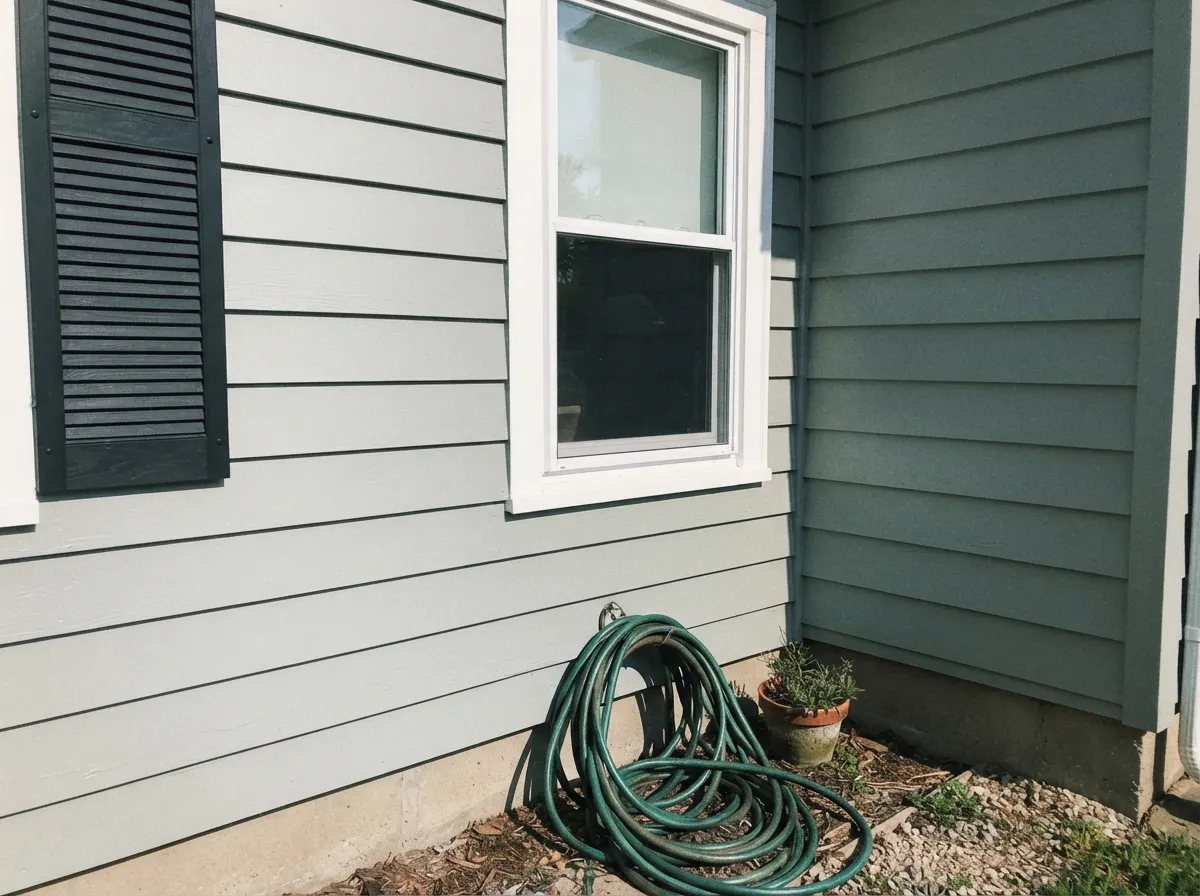
This is a small-room and small-dose color before it is a whole-house color. Benjamin Moore sells it in Ben interior matte and in Element Guard exterior soft-gloss, and both uses play to its strengths: a laundry room, pantry or powder room gets a quiet, sophisticated color decision without the risk of committing four big walls to it, and on siding or shutters in real outdoor light the silvered sage reads as an understated, expensive-looking neutral rather than a loud green. Paired with a crisp warm white trim and a near-black accent — the pairing Benjamin Moore's own tool suggests — it looks deliberate instead of accidental.
Where It Fails
The regret stories about Vale Mist all trace back to one of three mismatches, and each one is predictable before the first coat goes on. The paint is not misbehaving in any of them — it is doing exactly what a pale, cool sage-gray does; the room just wasn't the right fit.
In a photo or on the chip it can pass for a plain warm gray. On four walls in daylight the green becomes obvious, and buyers who wanted "just gray" end up disappointed. If gray with zero green is the goal, look at a true neutral like BM Gray Owl or SW Repose Gray instead.
Green's complement on the color wheel is red, and reddish wood tones fight Vale Mist instead of flattering it — both sides look slightly muddy next to each other. It sits far better beside white oak, walnut, or a neutral gray-brown floor than beside cherry cabinetry or a red-toned dining table.
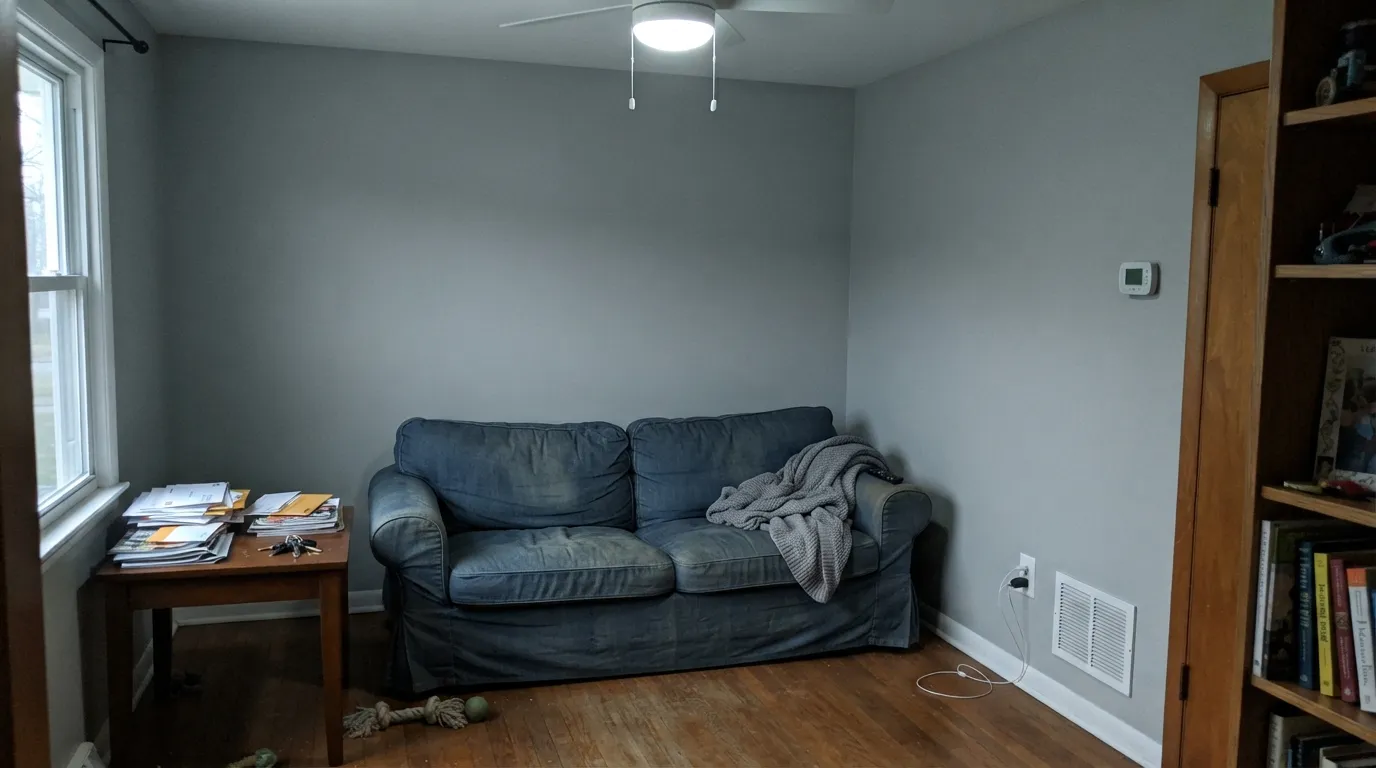
This is the pairing most likely to produce a one-star review. Cool light plus low daylight strips out the green almost entirely, leaving a flat, slightly dull gray that doesn't look like the sample. Warm 2700K bulbs and any amount of direct daylight bring the sage back; without either, pick a color that doesn't rely on warmth to show its color.
Room by Room
This is the room type Vale Mist was built for: enough color to feel considered, quiet enough to live with daily. Eggshell wipes clean and the sage reads calm rather than clinical white.
Small rooms take a mid-depth color well, and Vale Mist against a crisp white trim and brass or matte-black hardware reads custom without being loud. Satin on the vanity if it doubles as one.
Benjamin Moore sells Element Guard specifically in this color, which tells you it holds up as an exterior choice. Full outdoor daylight reads it as a soft, silvered sage rather than a flat gray; pair with white trim and a charcoal or black door for contrast.
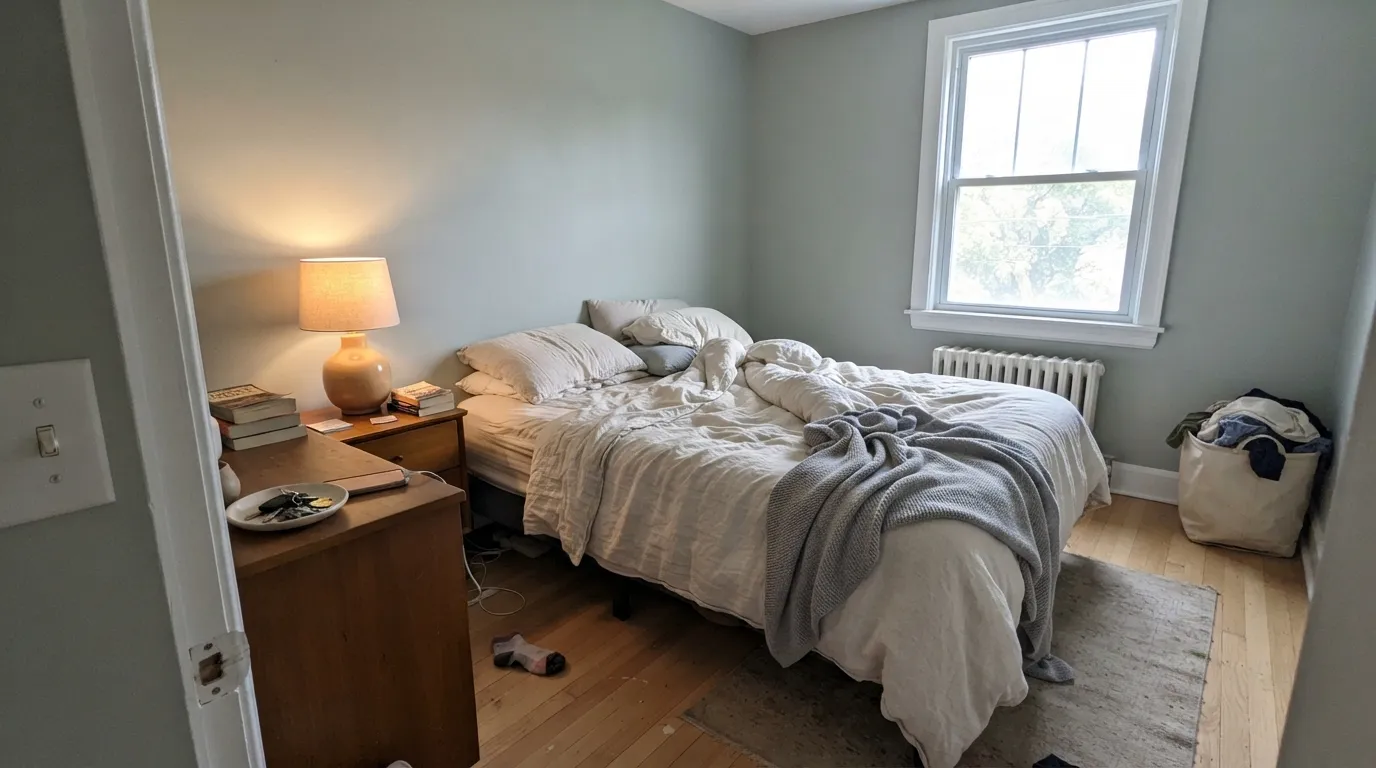
South or east light keeps the green quietly present and calming rather than sleepy-dull. A north-facing bedroom with limited light will read closer to plain gray — still fine if that's what you want, but not the color you sampled.
Works as a whole-wall color in a bright, wood-floored room, but it is a bigger bet than the small-room uses above: open-plan spaces mean it has to negotiate with kitchen wood tones and adjacent rooms all day.
On an island or a run of lower cabinets under a white-oak counter it is genuinely handsome. A full kitchen of Vale Mist cabinets against honey-oak floors is a riskier combination — the warm floor and cool sage argue rather than agree.
Your Light Is the Risk
The silvered sage shows clearly and stays cool without going flat. This is the light to sample it in before deciding.
The green almost disappears, leaving a dull, forgettable gray. The most common reason readers say it "looked nothing like the sample."
Cooler and greener at midday, softer and slightly warmer as the light lowers toward evening. The shift is gentle, not dramatic.
Warm 2700K lamps bring a little life back into the green after dark; cool white LEDs push it toward flat and gray. Bulb choice matters more than usual with this color.
Most complaints about Vale Mist are a light mismatch. Upload a photo of your actual room and see it on your walls — then ask for the same wall in north light or evening lamps before you buy a single sample.
Need It From Another Brand?
Any paint counter can custom-tint Benjamin Moore 1494 directly. If you would rather stay in one brand's own deck, these are the closest stock matches, measured as ΔE2000. Under 2 is a difference you will not see on the wall.
| Brand | Closest color | ΔE | LRV | |
|---|---|---|---|---|
| Sherwin-Williams | Simple StoneSW 9521 · Sherwin-Williams | 3.5 | 57 | Color page → |
| Behr | Wabi-SabiT18-10 · Behr | 0.8 | 57 | Color page → |
| Valspar | GrassclothT669 · Valspar | 1.9 | 55.5 | Color page → |
| PPG / Glidden | French Gray LinenPPG1029-3 · PPG / Glidden | 0.9 | 57 | Color page → |
| Glidden | French Gray LinenPPG1029-3 · Glidden | 1.4 | 57 | Color page → |
| Dutch Boy | Colonial Gray422-2DB · Dutch Boy | 1.6 | 54 | Color page → |
Similar Benjamin Moore Colors
The nearest shades to Vale Mist within Benjamin Moore's own range, ranked by perceptual color distance — useful when you want the same look a touch lighter, darker, or warmer.
WCAG 2.1: AA is 4.5 : 1 for normal text, 3 : 1 for large text, AAA is 7 : 1.
Vale Mist vs the Colors You're Also Considering
Every Vale Mist sample board has the same rivals on it. The numbers show the real lightness gap — then it comes down to which risk you would rather live with.
Pick this when you want the same family but lighter, quieter, and less committed.
Benjamin Moore 1495 · LRV 39October MistPick this for the deeper, more confident version of the same sage — it holds its color even without much daylight.
Pick this for the cooler, more silvered, gray-leaning version at the same LRV.
Benjamin Moore HC-114 · LRV 56Saybrook SagePick this for a warmer, greener sage at the exact same depth — it wants wood and brass, not gray.
Within the brand, Sagebrush CSP-770 at LRV 56 and hex #C2C8B8 is the greener sibling at the same lightness, while Doily CSP-130 at LRV 57 and hex #CAC7B4 pulls warmer and more yellow. Revere Pewter HC-172 at LRV 55 and hex #CBC6B8 is the better-known neutral and sits a step warmer and slightly darker.
Cross-brand the matches are tight at the top. Behr Wabi-Sabi T18-10 at a deltaE of 0.83 and PPG and Glidden French Gray Linen PPG1029-3 at 0.95 are genuine matches. Dunn-Edwards Silver Mining DESS45 at 1.42, Dutch Boy Colonial Gray 422-2DB at 1.59, Diamond Vogel Plume Grass 0414 at 1.87, and Valspar Grasscloth T669 at 1.94 are all visually identical in normal room light.
Further out, Clare All The Sage at 2.11 and Farrow and Ball Shadow Gray No. 9904 at 2.84 are very close but worth a sample. Sherwin-Williams Simple Stone SW 9521 at 3.53 is close but visibly different side by side, reading warmer and less green.
Vale Mist Coordinating Colors
The rule for coordinating with Vale Mist: stay cool-to-neutral and let the green be the only saturated note in the room. It pairs cleanly with warm whites, sits comfortably next to a true warm greige without clashing, and takes a near-black accent well. These are the partners that keep showing up in rooms and exteriors that work:
The Sibling of a Color of the Year
Vale Mist's story is really October Mist's story, told one shade lighter. When Benjamin Moore named October Mist its Color of the Year for 2022, the pick pulled sage-gray colors into the spotlight across the whole industry — and Vale Mist, sitting one SKU number over in the same Classics collection, quietly benefited without ever being named or marketed itself. It has no viral moment, no COTY press release, no celebrity room. What it has is the same cool, grayed-green DNA as its famous sibling, dialed down to a paler, easier-to-place depth.
That honest obscurity is arguably the point. A color that never got hyped also never got the backlash that hyped colors eventually collect. If you liked October Mist's moment but always thought it looked a little heavy for your space, Vale Mist is the quieter, lighter answer nobody had to tell you about.
Vale Mist With Wood Tones and Floors
White oak, in any of its current pale or gray-washed finishes, is Vale Mist's easiest partner — both read cool and quiet, so neither fights for attention. Walnut and other deep brown woods work too, adding weight without introducing a clashing undertone.
Honey oak is a middle case: it is not a hard no the way it is for some warmer paints, but the yellow-orange in the floor and the green-gray on the wall don't reinforce each other either, so sample a large board before committing a whole room. The one genuine clash is red-toned wood — cherry, mahogany, red oak stained dark — where green's complementary opposite on the color wheel makes both surfaces look slightly muddy next to each other.
Three Ready Palettes Built on Vale Mist
A color is never alone on the wall. These are complete combinations in the 60-30-10 pattern, with the reason each one holds together. Every one opens in the visualizer.
White trim keeps the sage from reading dull against the sky, and the near-black shutters supply the one dark note the scheme needs — the classic modern-cottage read without any color feeling loud.
Try this palette in your roomA small room takes a mid-depth color easily. White Dove keeps the trim soft rather than stark, and the charcoal vanity gives the palette its one grounding dark, so the sage reads intentional instead of accidental.
Try this palette in your roomTwo depths of the same sage family read as a considered whole-house palette rather than a color change — the paler Vale Mist carries the main rooms while October Mist adds weight to a den or accent wall, with White Dove trim tying every room back together.
Try this palette in your roomVale Mist FAQ
Is Vale Mist gray or green?
Green first, gray second. Benjamin Moore's own description calls it a silvered sage, and its RGB mix confirms it — green sits just above the red and clearly above the blue. In dim or cool light it can pass for plain gray; in real daylight the green is unmistakable.
How is Vale Mist different from October Mist?
Same Classics-collection sage family, different depth. October Mist (BM's 2022 Color of the Year) sits at LRV 39 and holds its green color even in modest light. Vale Mist is paler, at LRV 56, and needs more daylight to keep its color from fading toward plain gray.
Does Vale Mist work on kitchen cabinets?
Yes in doses — an island or a run of lower cabinets under white oak or a light stone counter looks handsome. A full kitchen of Vale Mist cabinets over honey-oak floors is a riskier bet; the warm floor and cool sage don't naturally agree.
Can I use it on an exterior?
Yes — Benjamin Moore sells it in its Element Guard exterior line, a real signal it's meant for siding and trim, not just interior walls. Outdoor daylight brings out the silvered sage clearly; pair it with white trim and a dark door or shutters for contrast.
What trim white goes with Vale Mist?
A soft, warm white like White Dove keeps the pairing gentle; a stark bright white will make the sage look slightly dull by comparison. Semi-gloss trim over eggshell or matte walls is the standard split.
Does it work with wood floors?
White oak, walnut and neutral gray-brown floors are all safe partners. The one real clash is red-toned wood — cherry or mahogany — since red sits opposite green on the color wheel and the two undertones fight rather than complement each other.
Have you painted with Vale Mist?
Rate it — one tap helps the next reader decide.
Ask a Question