Benjamin Moore October MistvsSherwin-Williams Evergreen Fog
Why this comparison: The 2022 Colors of the Year from Benjamin Moore and Sherwin-Williams, head to head. October Mist and Evergreen Fog are close but distinct (ΔE 9.9). Visible difference on the wall, especially in flat daylight.

Built from our full reviews of both colors — same measured data, same real-room photos. About the testing process →
The Numbers
October Mist is meaningfully lighter (LRV 47 vs 30). On a wall, October Mist reads mid-tone; Evergreen Fog reads mid-tone.
What Each Color Really Is
A green that has been muted almost to the edge of neutral. The hue sits in the yellow-green range, so the base is warm and a little earthy, more dried herb than mint — but the saturation is so low that the color spends half its day acting like a warm gray. That double life is the whole story of October Mist. It is why Benjamin Moore could name it Color of the Year in 2022 and why it ended up on so many walls: it delivers the idea of a green room without the risk of one.
At LRV 47 it is a true mid-tone, and it reads deeper on a wall than the little chip suggests. Put it beside Evergreen Fog SW 9130 (LRV 30) and October Mist is clearly the lighter, calmer one — Evergreen Fog is the moody cabinet color, October Mist is the everyday wall color. Put it beside Vale Mist 1494 (LRV 56), the lighter step on its own strip, and October Mist suddenly looks like a real color rather than a tint. That middle position is exactly why it works on full walls and on cabinets, and exactly why it can go heavy in a room with one small window.
A gray-green whose green has to be earned. On the chip it looks like a slightly dirty gray; on a full wall or a run of cabinet doors the sage finally shows up, because color builds as you add square footage. That gap between chip and wall is the single most common surprise with this color — people buy it expecting gray and get green, or buy it expecting green and get gray, depending entirely on how much of it they end up looking at.
At LRV 30 it is a genuine mid-tone with weight. Put it next to Sea Salt (SW 6204, LRV 63) and Evergreen Fog is more than twice as dark — Sea Salt is a tint you barely notice, Evergreen Fog is a color you commit to. Go the other way to Dried Thyme (SW 6186, LRV 21) and Evergreen Fog suddenly looks soft and half-neutral. It sits in the useful middle: dark enough that cabinets read as painted furniture, light enough that a whole room in it does not close in.
Specs Side by Side
| Spec | October Mist | Evergreen Fog |
|---|---|---|
| Brand | Benjamin Moore | Sherwin-Williams |
| SKU | 1495 | SW 9130 |
| Hex | #B6B8A5 | #95978A |
| RGB | 182, 184, 165 | 149, 151, 138 |
| LRV | 47 | 30 |
| Undertone | yellow / warm | yellow / warm |
| Family | Green | Green |
How Light Changes Them
Warm daylight lifts the yellow base and the sage looks alive all day. This is the exposure it was made for.
Cool light mutes the warmth and the green thins out to gray-sage. Livable in a bright north room, drab in a dim one.
Fresh and clearly green in morning east light; noticeably warmer and softer in late-afternoon west sun.
2700K bulbs make it cozy and slightly olive; 3500K–4000K sharpen the green. Fix the bulbs before you repaint.
Warm, generous light pulls the yellow-green forward. The sage looks alive and soft all day.
Cool light drains the warmth and leaves muddy gray. Test a big sample before committing.
2700K bulbs make it richer and cozier at night. Cool 4000K LEDs flatten it to gray.
At exterior scale the blue takes over and the green fades. Sample on the actual siding.
Both Colors in Real Rooms
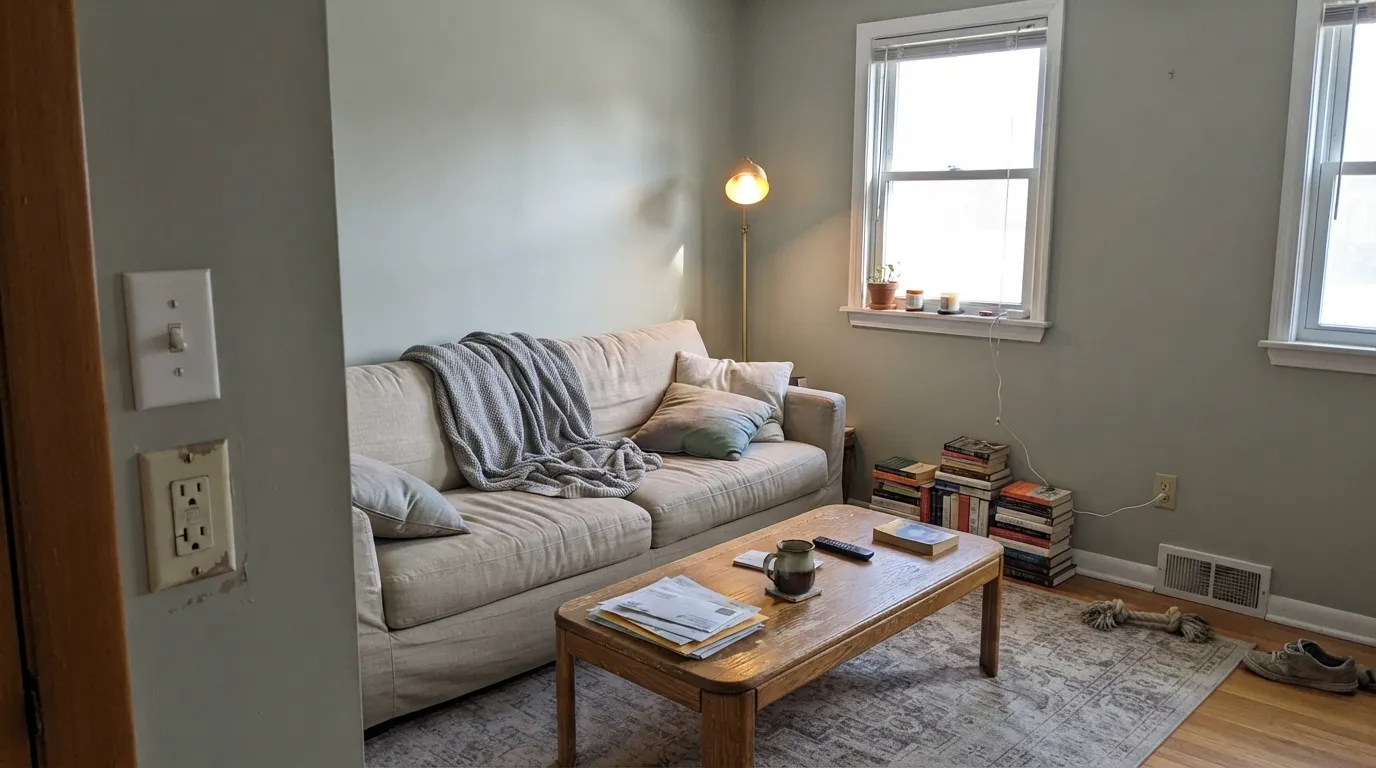
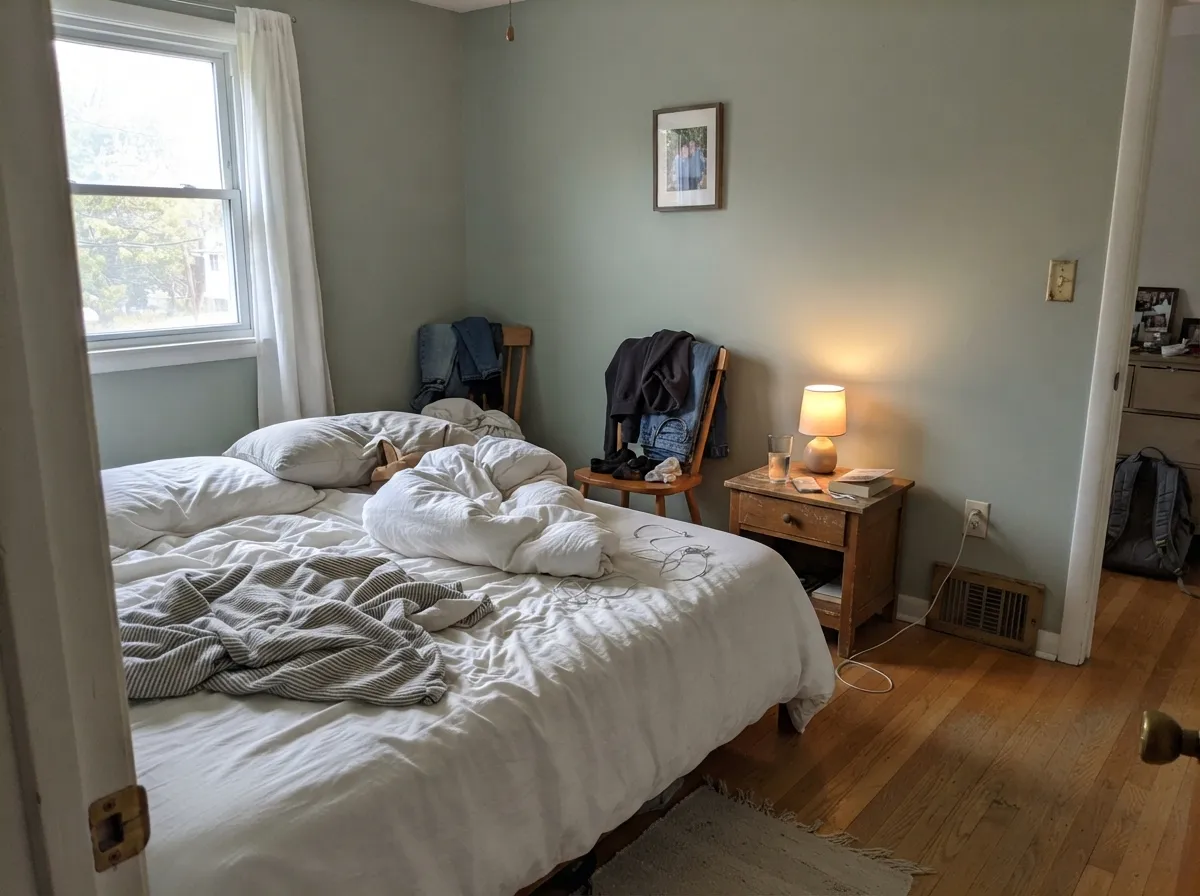
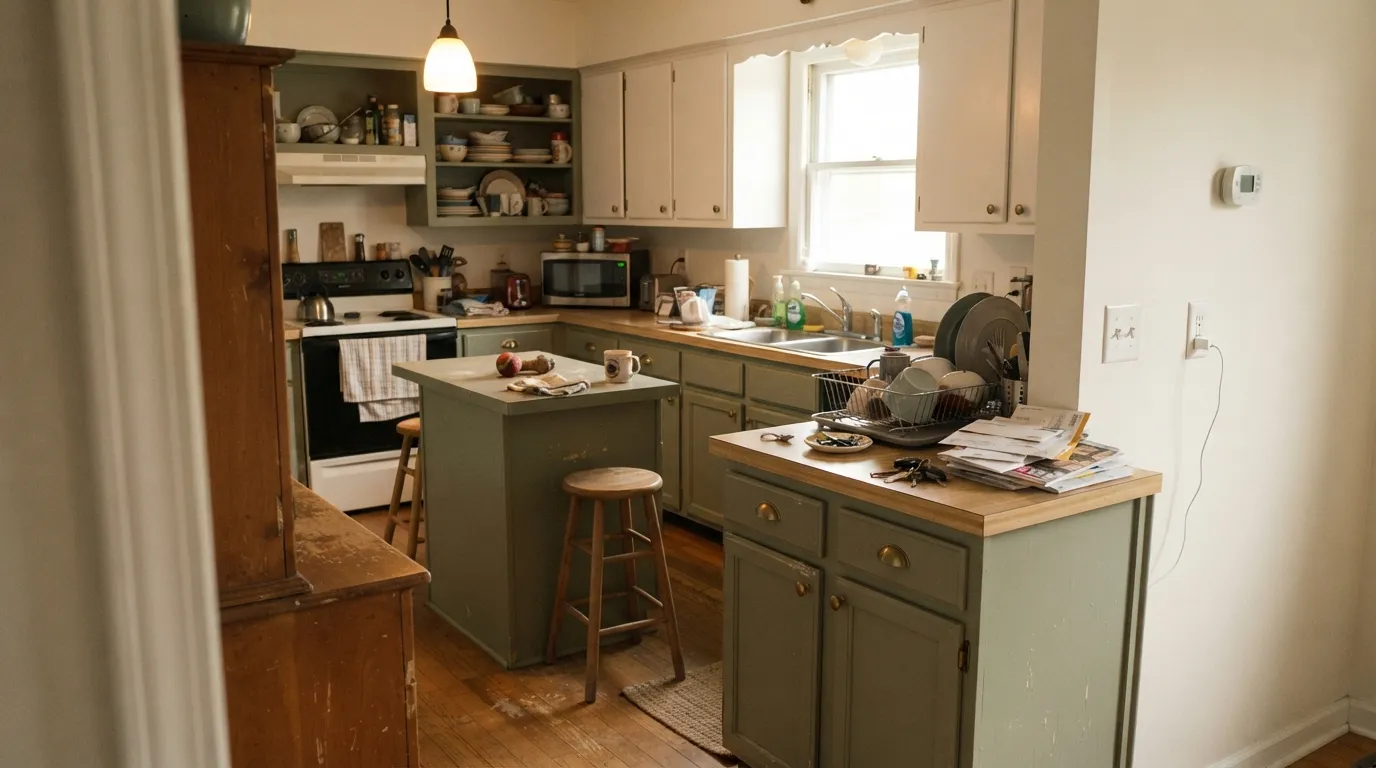
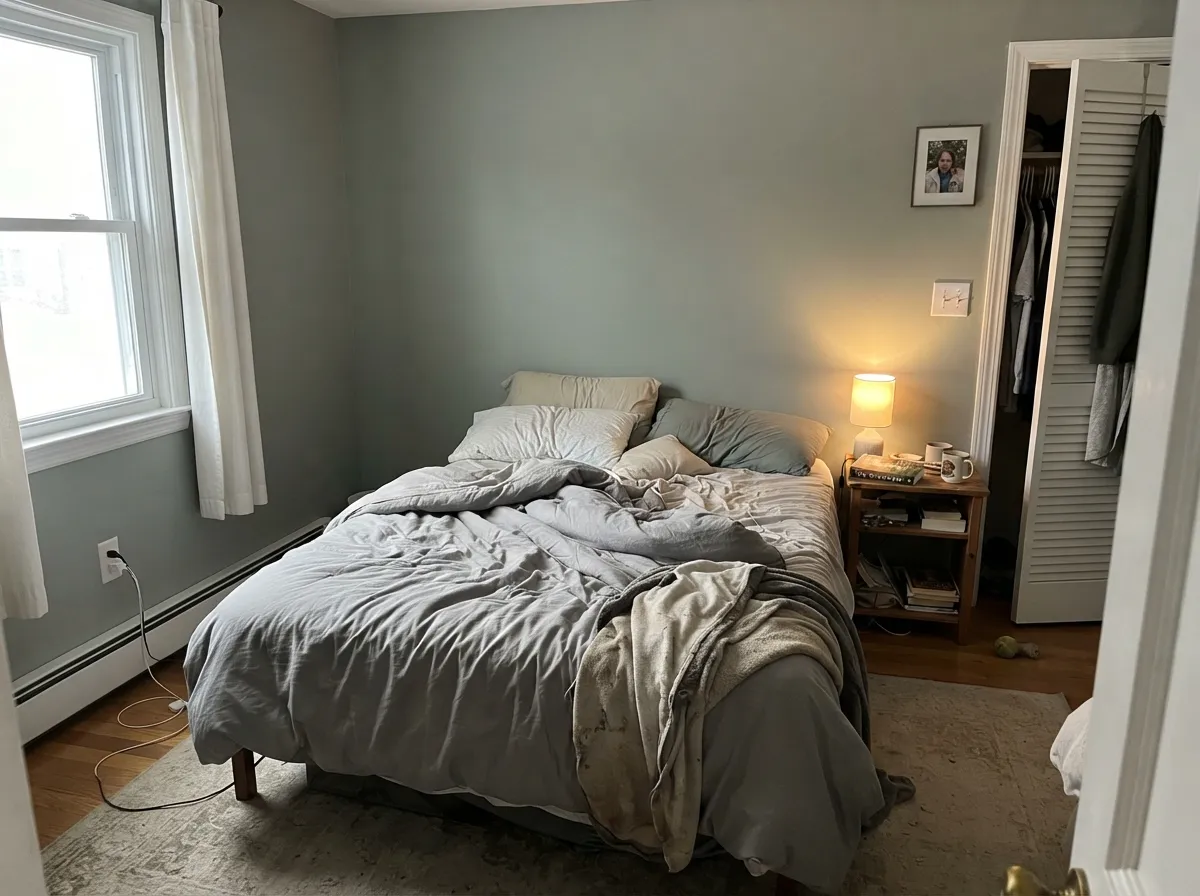
Photos from our full reviews — the same rooms and captions, so you can judge each color where it actually lives, not on a chip.
When to Pick Which
Bedrooms and offices with a real window · kitchen islands and lower cabinets · rooms with warm white trim and brass · anyone who wants color without commitment
The room is north-facing and dim · your floors are orange-toned oak or cherry · you have green-flecked granite or green tile · you want a clear, obvious green
Kitchen and bathroom cabinets · rooms with real daylight and warm wood · brass, bronze and aged-nickel hardware · anyone who wants color that still behaves like a neutral
Your room faces north and stays dim · your trim or cabinets are cream · you want obvious, unmistakable green · your woodwork is red-toned cherry
No comparison page can see your light. Upload one photo of your room and try both colors on the same walls, seconds apart.
October Mist vs Evergreen Fog FAQ
Which is lighter, October Mist or Evergreen Fog?
October Mist is lighter: LRV 47 vs 30. October Mist is meaningfully lighter (LRV 47 vs 30). On a wall, October Mist reads mid-tone; Evergreen Fog reads mid-tone.
Which is warmer, October Mist or Evergreen Fog?
They share the same undertone family — both read yellow / warm. The difference between them is lightness and depth, not temperature.
How similar are October Mist and Evergreen Fog?
October Mist and Evergreen Fog are close but distinct (ΔE 9.9). Visible difference on the wall, especially in flat daylight. The only reliable test is seeing both in your own room and light — a side-by-side on a screen or chip flattens the difference.
Can I use October Mist and Evergreen Fog together in one house?
Yes, in separate rooms. They are close enough to feel related but different enough to notice, so give each its own room and connect them with a shared trim white. Avoid putting them on adjoining walls.
Ask a Question