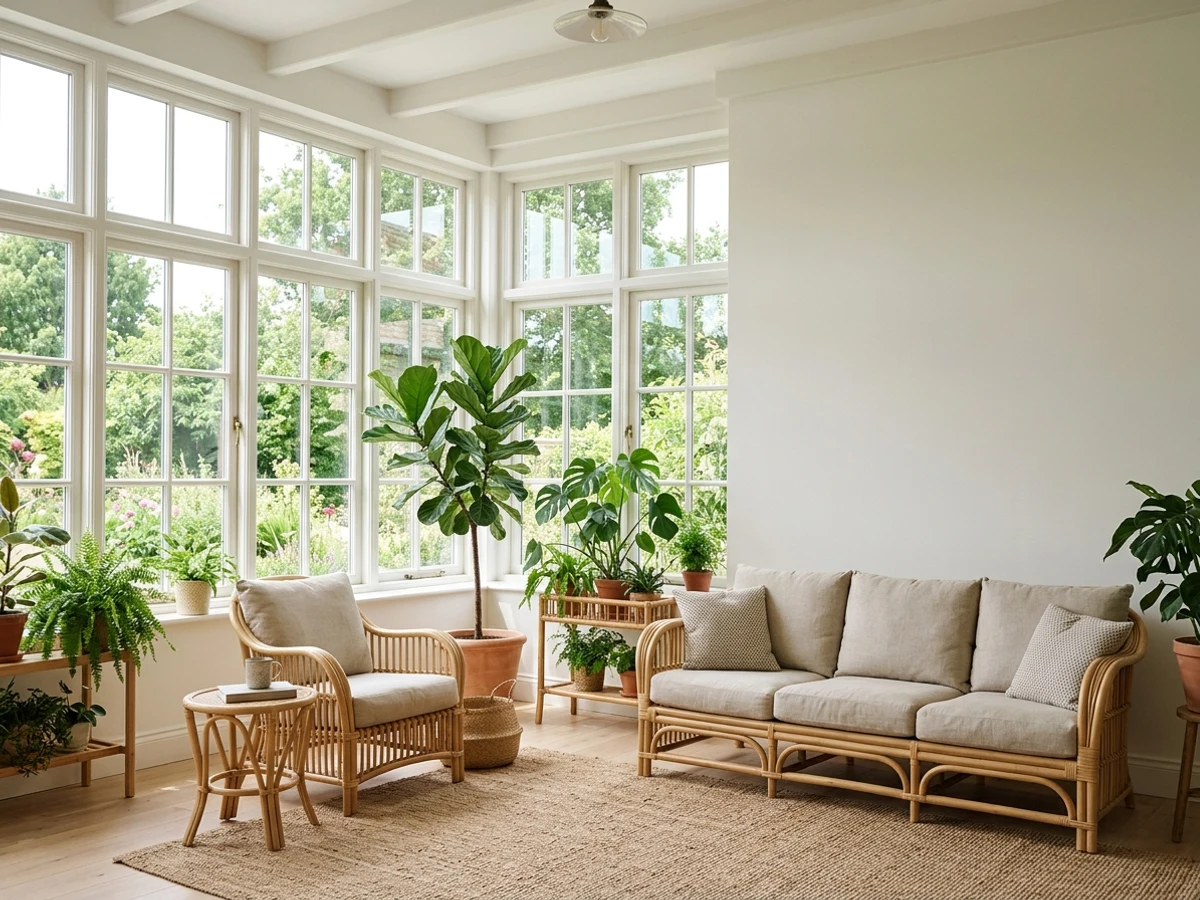
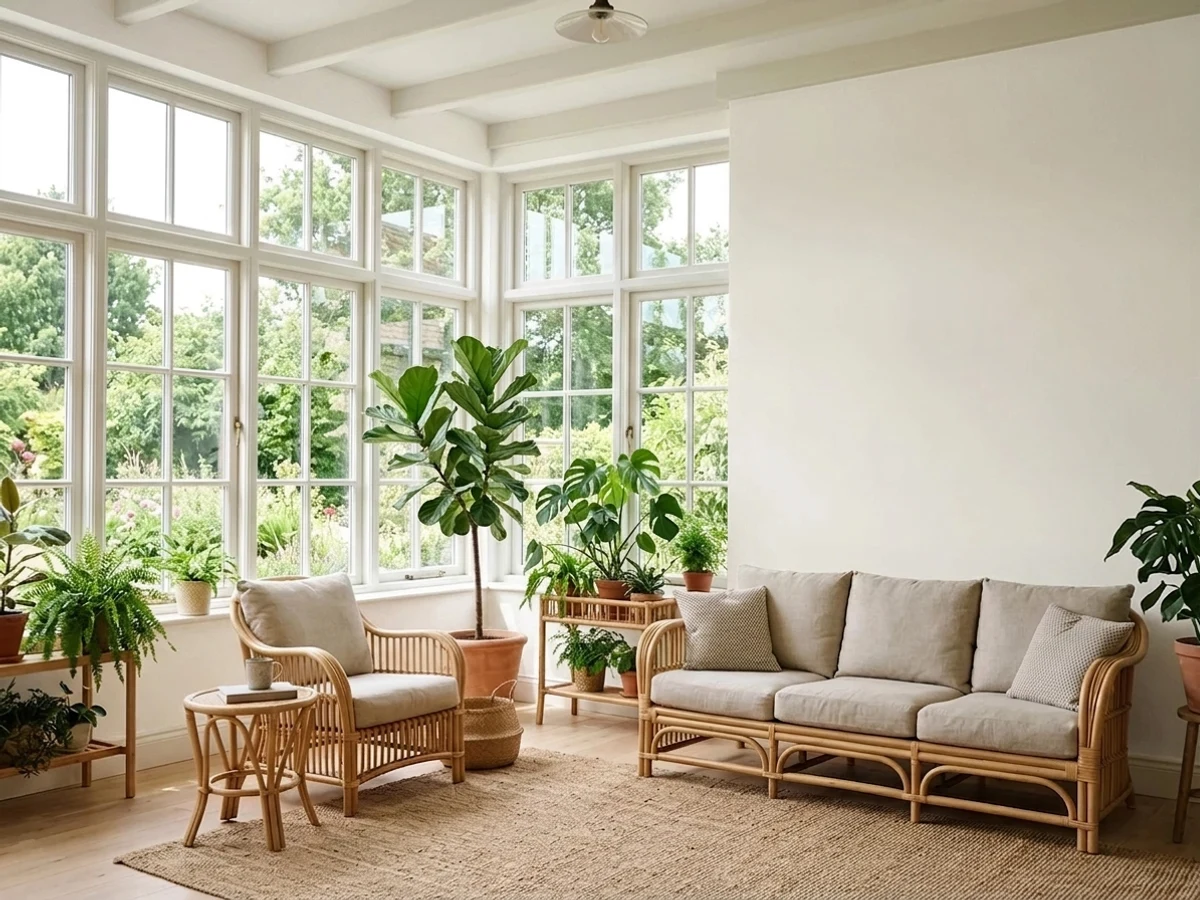
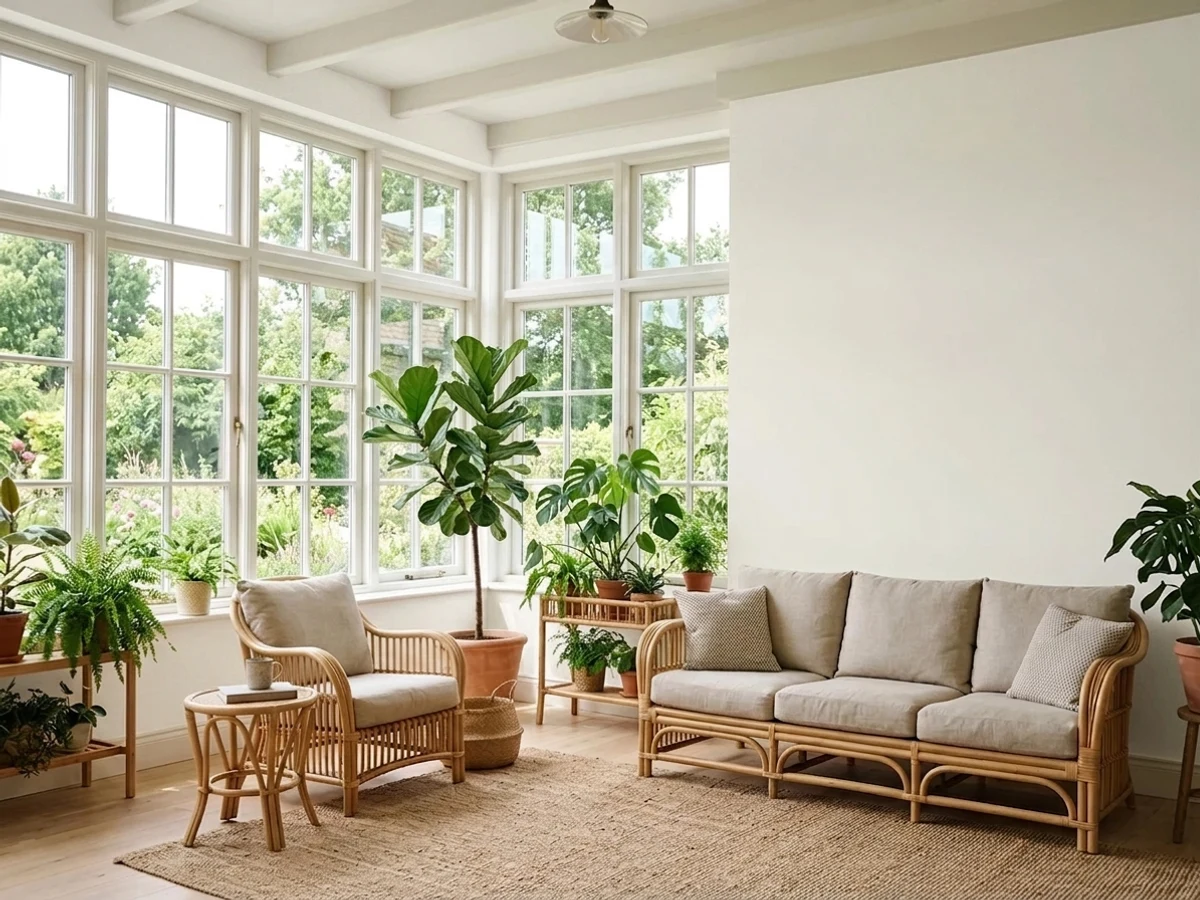
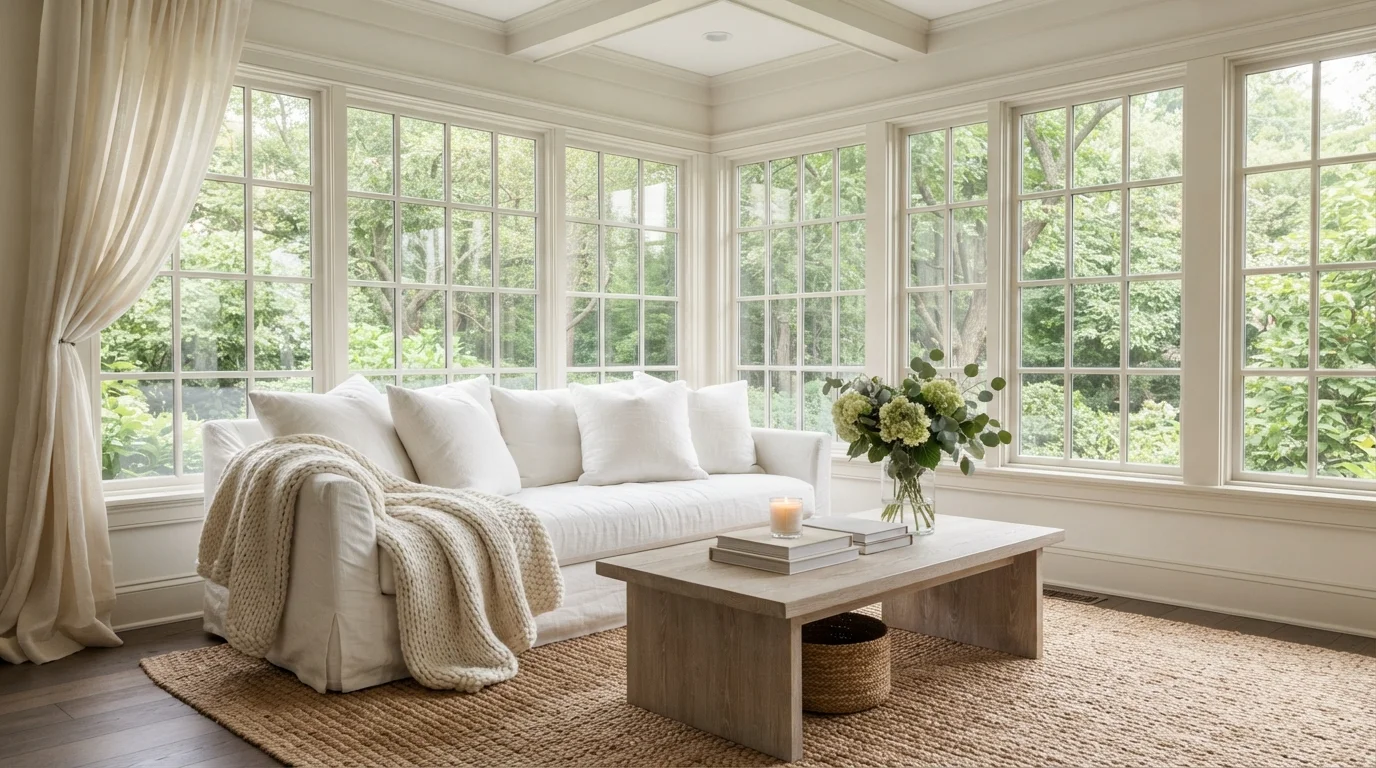
A sunroom gets more raw daylight than any other room in the house, which is exactly why white is the color people reach for and exactly why it's easy to get wrong. Pick something too bright or too cool and the walls go stark and flat by noon; pick something too warm and the room can feel washed-out and hazy instead of crisp. The picks on this page split into two honest camps: near-white reflectors like Frost (Behr 57, LRV 93) and Spare White (Sherwin-Williams SW 6203, LRV 77) that bounce the sun back out of the room, and warmer workhorse whites like Alabaster and Decorator's White (Benjamin Moore OC-149, LRV 84) that soften the glare instead of amplifying it.
Decorator's White earns its spot because it sits in the middle — bright enough to read as a true white in a room already full of light, but with just enough warmth in the base that it doesn't turn glassy or cold under afternoon sun. Frost is the opposite move: at LRV 93 it's one of the highest-reflectance whites you can buy, which works when the sunroom doesn't get full, unbroken exposure all day and needs help feeling bright rather than help calming down. Spare White lands between them, gentle enough to keep a west-facing sunroom from feeling like a lightbox.
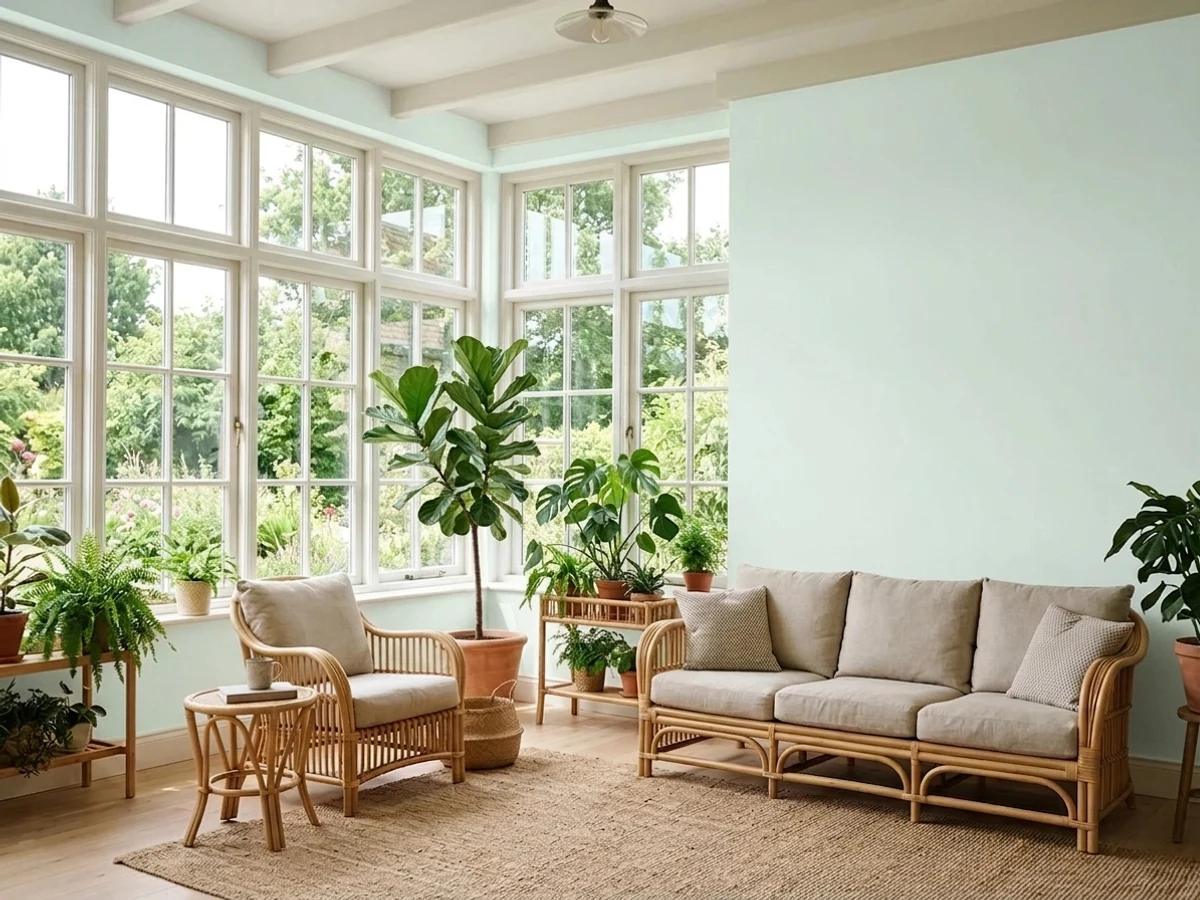
Alabaster, Superwhite, Hush White, and Iceberg round out the range for different exposures and different existing tones in the house. Alabaster is the one to reach for when the rest of your home leans warm — it handles full daylight without turning yellow the way a lot of builder-grade whites do. Superwhite and Hush White are both Sherwin-Williams options built for the same problem from opposite directions: Superwhite reflects hard for rooms that need every bit of brightness, Hush White pulls back just enough warmth to keep a very sunny room from feeling clinical. Iceberg, from Benjamin Moore, is the pick when the goal is a breezy, slightly cool feel that takes the edge off intense afternoon heat and light rather than adding to it.

 1
1
Ask a Question