Spare White
The quiet off-white sitting at the top of the Sea Salt strip, reviewed honestly: where its green-gray reads crisp and clean, where it goes flat and institutional, and what to pick instead.

Jessica has spec'd whites and neutrals for more than 300 rooms and keeps a sample wall of painted drawdowns in her studio. Every color review is checked against real reader rooms in the comments and re-tested when a formula changes. About the testing process →
- 1Heirloom Shade63
- 2First Star69
- 3Spare White77
- 4Alabaster82
- 5Chantilly Lace91
The Fast Verdict
Spare White is an off-white with the color almost entirely drained out of it — what little is left is a green-gray, inherited from the Sea Salt family it sits on top of. In a bright, glass-heavy room it reads clean, cool and modern without the blue glare of a true cool white. In a dim room it has nothing to fall back on and goes flat institutional gray. This is a light-dependent white, not a safe one.
Sunrooms and glass-heavy rooms · bathrooms and laundry rooms with cool tile · kitchens with gray or white quartz · trim and ceilings in a cool-toned house
Your room is dim and north-facing · your floors are honey oak · you want an obviously bright white · your fixed finishes are cream, travertine and warm brass
- Cool and clean without the blue glare of a true cool white
- One of the few whites that survives a full day of sunroom light
- Reads modern against gray quartz, porcelain tile and matte black
- LRV 77 hides handprints and scuffs better than a bright white
- Excellent trim and ceiling white for cool-toned green and blue-gray walls
- Goes flat institutional gray in dim or north-facing rooms
- Not bright — looks dingy next to any brighter white on the same wall
- Fights honey oak, travertine and warm brass
- Too little pigment to carry a room on its own without good light
What Color Is Spare White, Really?
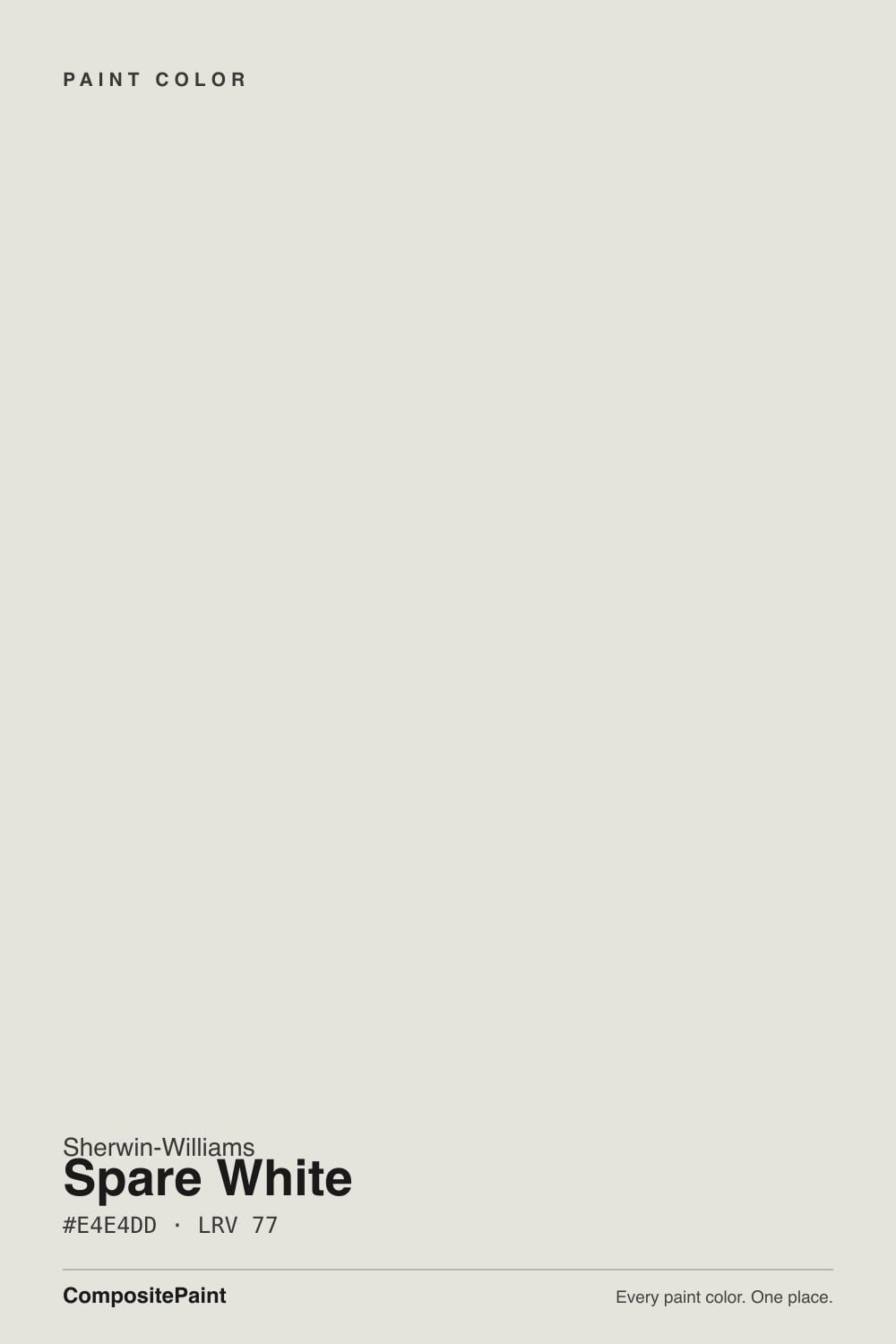
An off-white with barely any color in it, and the little that is there is green-gray. The numbers say it faster than any swatch: red and green land on exactly the same value with blue a few points under them, which is a whisper of yellow-green and nothing else. Sherwin-Williams files it in the white family, but it sits at the light end of the strip that runs Sea Salt, Comfort Gray, Oyster Bay, Retreat, Pewter Green, Ripe Olive. Spare White is that green-gray family with the volume turned nearly to zero.
At LRV 77 it is an off-white, not a bright white, and that gap matters more here than with most whites. Put it beside Extra White (LRV 86) or High Reflective White (LRV 93) and Spare White stops reading as white at all — it becomes a pale gray-green wall next to a white one. Put the same wall beside Alabaster (LRV 82) and it suddenly reads clean, cool and deliberate. It carries so little pigment of its own that the nearest white in the room decides what it looks like.
Undertone in one line: green-gray at the lowest volume the deck sells — not blue, not violet, and only pretending to be beige. Half the internet calls it a greige and half calls it a cool gray, and both halves are describing the same paint reacting to two different rooms.
Where It Shines
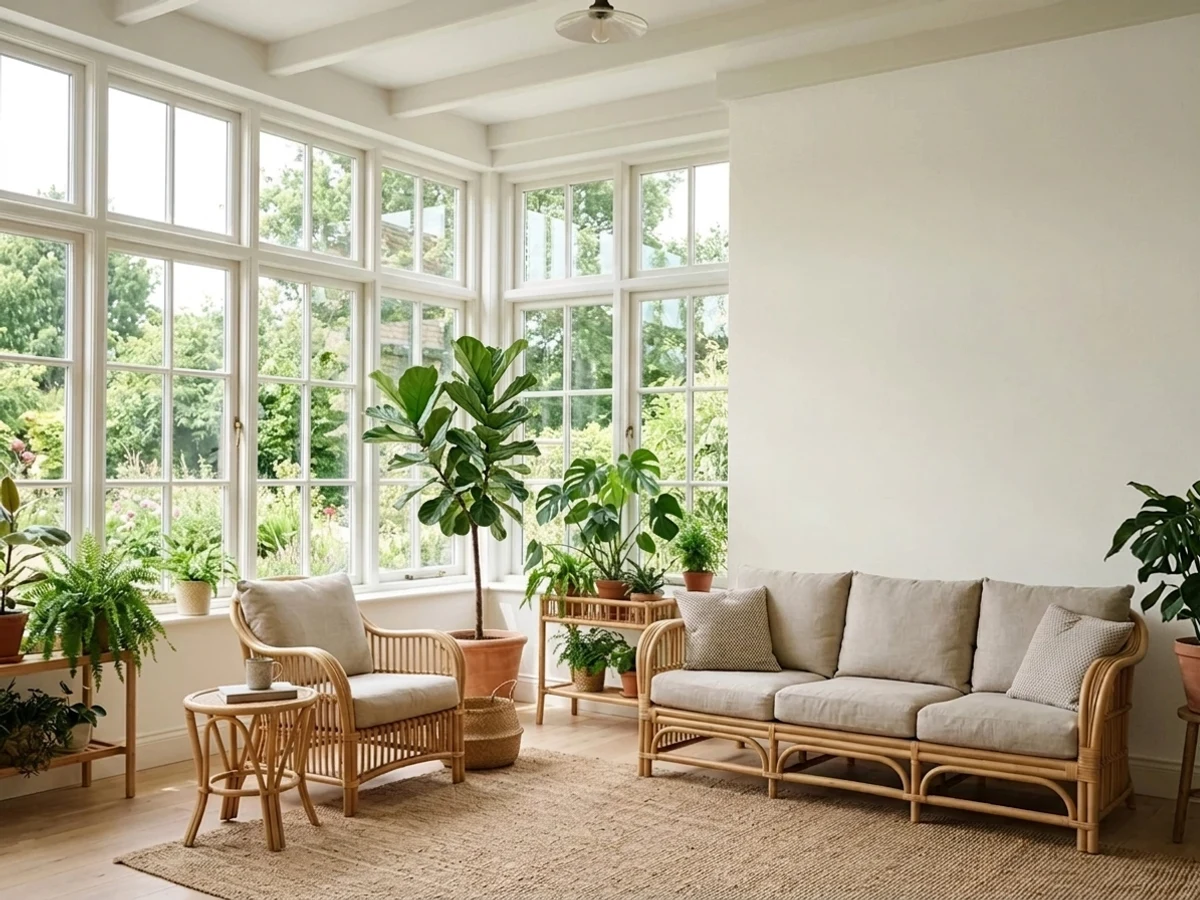
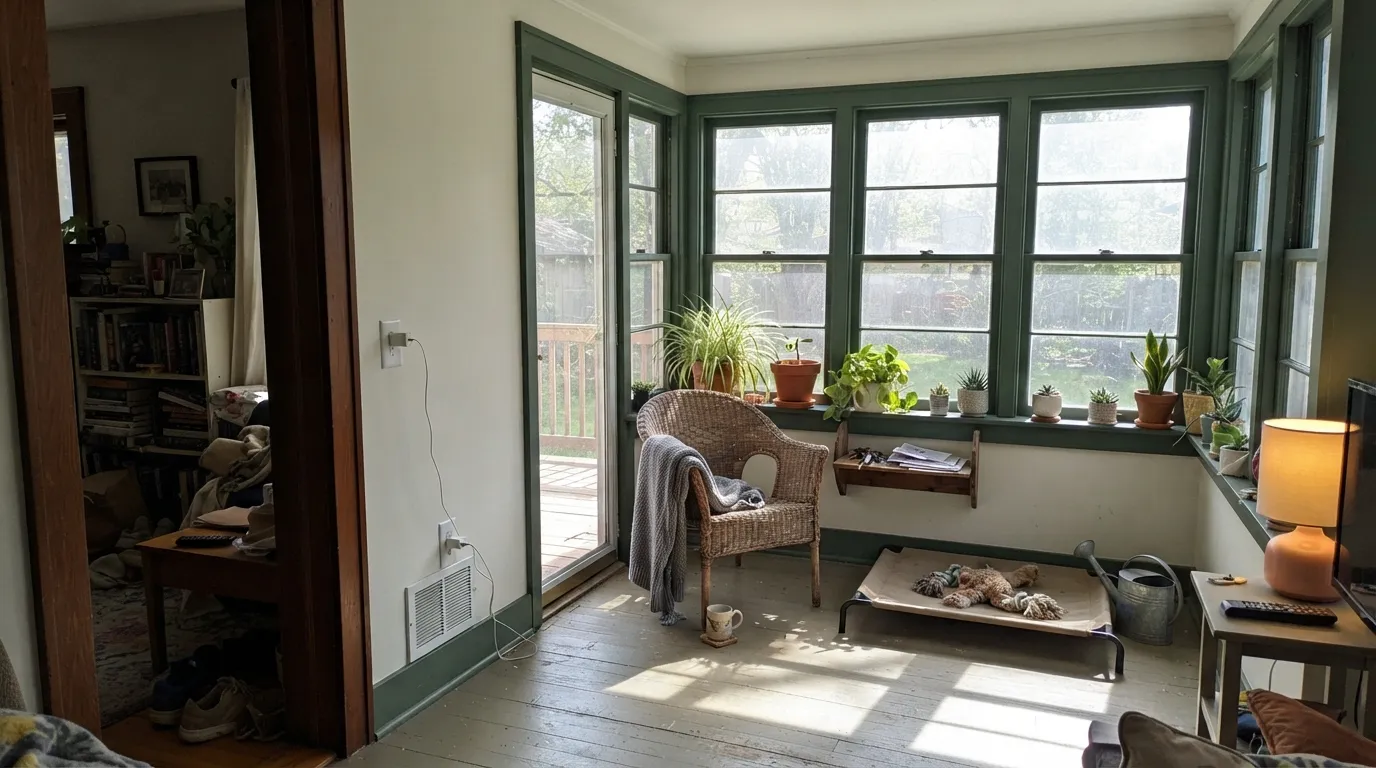
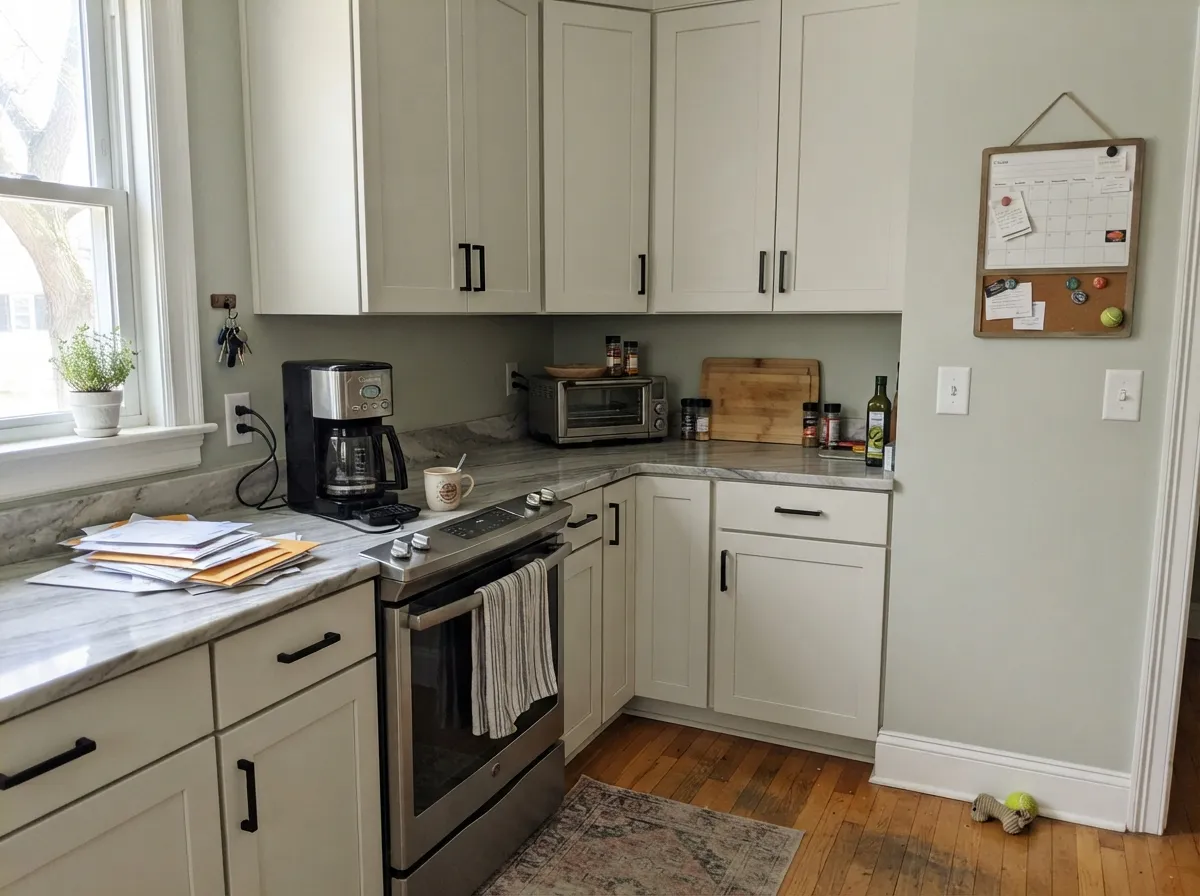
Give it a wall of glass and it is genuinely hard to beat. In a sunroom the light is brutal and unfiltered, and most whites answer it badly — warm whites turn butter-yellow under all that sun, and bright cool whites throw glare. Spare White has just enough green-gray body to absorb the glare and stay a color, which is exactly why it shows up on the short list of cool sunroom whites. Its second home is anywhere the fixed finishes are already cool: white quartz, gray porcelain tile, chrome and matte black, pale oak. There it stops reading as a compromise and starts reading as the plan.
Where It Fails
Almost every regret story about this color follows one of three scripts, and every one of them is visible before the first coat. None of them are the paint's fault — but if your room matches one, no number of coats will change the answer.
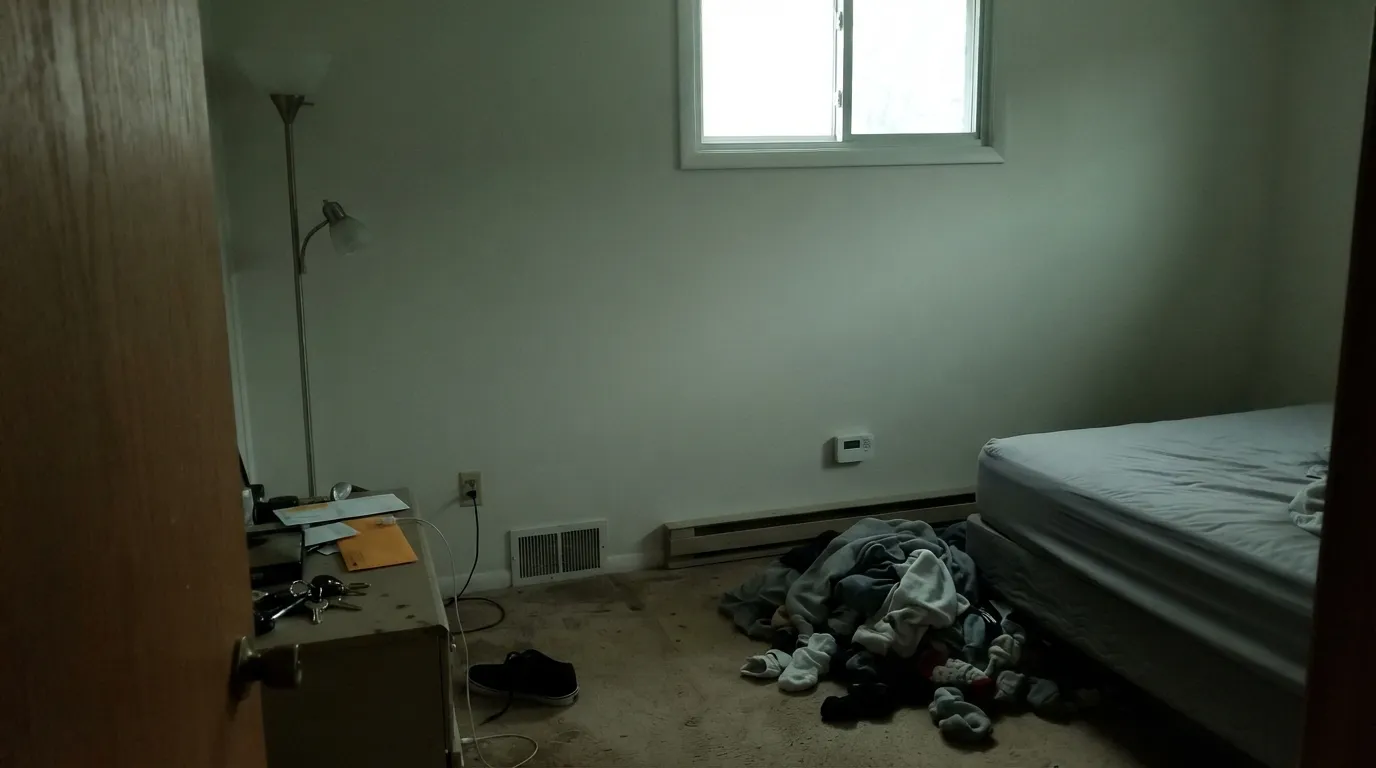
A color this low in chroma survives on borrowed light. Take the light away — north exposure, an overcast week, a room with one small window — and there is no warmth underneath to fall back on. What is left is a flat gray-green that readers describe as school hallway or waiting room. If the room is dim, go warmer: Alabaster or Pure White both keep something in reserve.
The name says spare and clean, and people read that as crisp. At LRV 77 it is a full step down from the whites most buyers picture. Roll it next to an unpainted Extra White ceiling and the wall looks dingy by comparison. This is the single most common surprise with the color, and the fix is a decision, not a product: either commit to it on every surface, or buy an actual bright white.
Warm orange finishes and a cool green-gray white push each other apart. The oak goes more orange, the wall goes grayer and greener, and the room reads like two unfinished projects. It happens fastest with builder honey oak trim, golden-beige travertine and polished brass together. Spare White wants white oak, walnut, gray-toned stone, chrome or matte black.
Room by Room
Full-day sun would push a warm white yellow and make a bright white glare; Spare White absorbs both problems and stays a calm, clean color from morning to dusk. It also flatters plants, which is most of what a sunroom is. Walls and ceiling in the same color, eggshell on the walls, flat overhead.
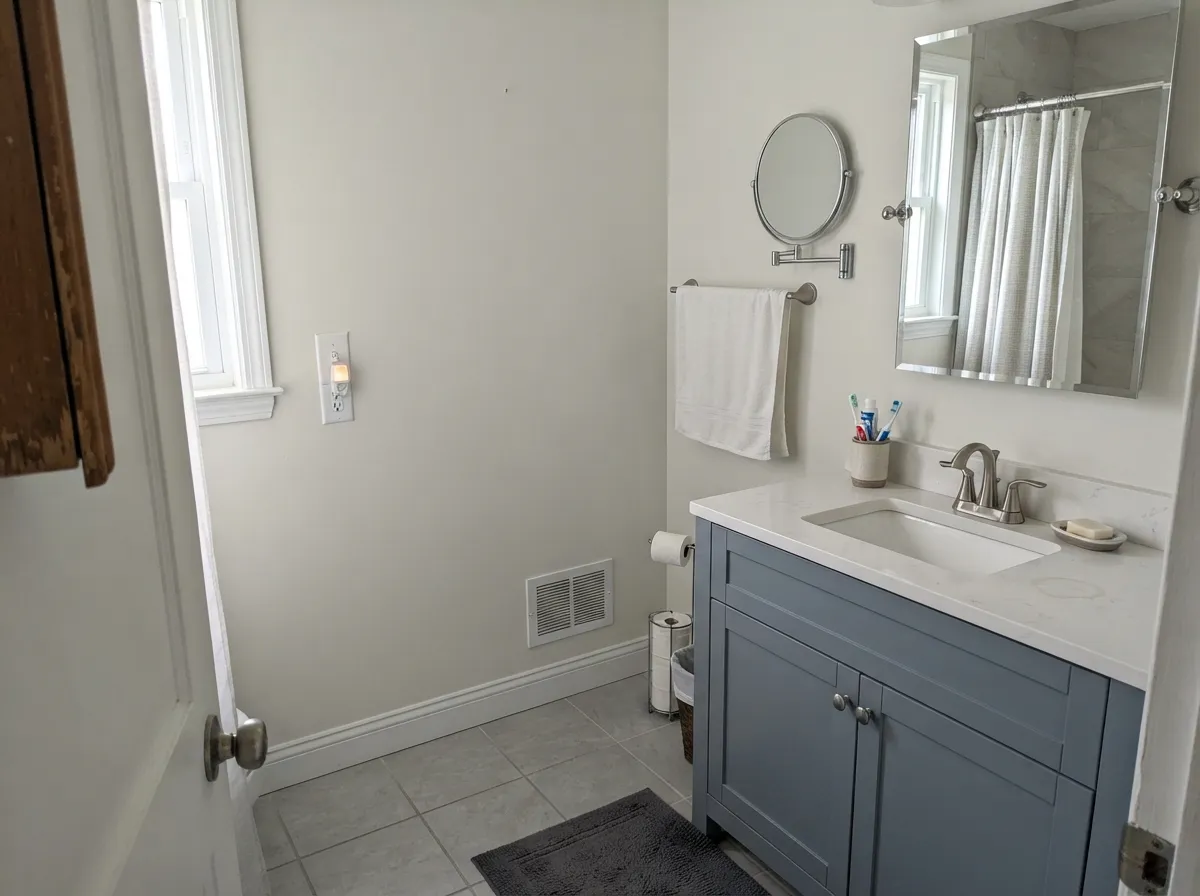
The rooms where cool actually helps. Against white quartz, gray porcelain and chrome it reads clean rather than clinical, and it hides the faint gray-green cast that ceramic tile throws back at a wall. Satin on vanities, semi-gloss on the door.
On cabinets at LRV 77 it hides fingerprints better than a bright white and never argues with gray-veined quartz. Warm butcher block, cream backsplash tile and unlacquered brass are where it starts to struggle. Satin urethane-fortified cabinet enamel either way.
This is the job it does best after sunrooms. As trim under a green-gray or blue-gray wall it reads as painted woodwork instead of a bright interruption, and on a ceiling it softens the plane without the yellow a warm white leaves overhead. Semi-gloss on trim, flat above.
In a south or east room with lamps it is a restful, modern backdrop. In a north-facing bedroom it is the color people repaint after two months, and the complaint is always the same word: flat. Test this room before you buy the five-gallon.
It behaves outdoors, but full southern sun washes what little green-gray it has straight out and leaves a plain institutional white on the siding. It does better on a shaded or tree-covered lot, and it needs a dark trim — charcoal or near-black — to give the facade an edge. There are whites that hold up better in open sun.
Your Light Is the Risk
Heavy, direct daylight is where it earns its money — the green-gray absorbs glare and the wall stays clean instead of blazing.
Cool gray daylight plus a color with almost no chroma equals nothing at all. The wall reads flat, slightly green and vaguely institutional.
Cool and crisp in morning light, then late golden sun warms it toward a soft cream for about an hour before it settles back.
2700K lamps push it close to a warm white and make the room cozy. Cool 4000K LEDs strip it back to gray-green — choose your bulbs on purpose.
Most complaints about Spare White are a light mismatch. Upload a photo of your actual room and see it on your walls — then ask for the same wall in north light or evening lamps before you buy a single sample.
Need It From Another Brand?
Any paint counter can custom-tint Sherwin-Williams SW 6203 directly. If you would rather stay in one brand's own deck, these are the closest stock matches, measured as ΔE2000. Under 2 is a difference you will not see on the wall.
| Brand | Closest color | ΔE | LRV | |
|---|---|---|---|---|
| Behr | Canyon WindBL-W12 · Behr | 1.0 | 78 | Color page → |
| Benjamin Moore | Calm2111-70 · Benjamin Moore | 1.6 | 76 | Color page → |
| Valspar | Ghost Story8004-29A · Valspar | 0.9 | 77 | Color page → |
| PPG / Glidden | Silvery MoonPPG1029-1 · PPG / Glidden | 0.9 | 77 | Color page → |
| Glidden | Silvery MoonPPG1029-1 · Glidden | 1.0 | 78 | Color page → |
| Dutch Boy | Moon Pie406-1DB · Dutch Boy | 2.0 | 75 | Color page → |
Similar Sherwin-Williams Colors
The nearest shades to Spare White within Sherwin-Williams's own range, ranked by perceptual color distance — useful when you want the same look a touch lighter, darker, or warmer.
WCAG 2.1: AA is 4.5 : 1 for normal text, 3 : 1 for large text, AAA is 7 : 1.
Spare White vs the Colors You're Also Considering
Every Spare White sample board has the same rivals on it. The numbers show the real lightness gap — then it comes down to which risk you would rather live with.
Pick this when the room already has plenty of light and you want the wall to sit back instead of shine.
Sherwin-Williams SW 7005 · LRV 84Pure WhitePick this if you want a brighter, more neutral white that works in far more rooms — it is the SW default for a reason.
Pick this when your tile, quartz and metals are cool and Alabaster would read yellow against them.
Sherwin-Williams SW 7008 · LRV 82AlabasterPick this for dim rooms and warm houses — the extra warmth keeps working where Spare White quits.
Spare White Coordinating Colors
The easiest way to coordinate with Spare White is to stop guessing and walk down its own strip. Everything below it shares the same green-gray base, which means the transitions are seamless and no undertone can surprise you. Outside the family, stay cool or go dark — this white gets along with blue-grays and near-blacks, and starts arguing the moment cream and gold show up.
Why Nobody Agrees On Spare White's Undertone
Read five write-ups of this color and you will get five answers: cool gray, subtle greige, blue and green, creamy beige. That is not sloppiness on their part — it is the honest consequence of how little pigment is in the can. Red and green sit at the same value with blue a few points below, which is roughly a rounding error away from a true neutral. A color that faint does not impose an undertone on a room; it reports the room back to you.
The practical version: in a warm room with oak floors and 2700K bulbs, it will look like a soft greige. In a cool room with gray tile and daylight LEDs, it will look like a gray-green. Against a warm white it looks cool; against a real cool white it looks warm. This is why the sample board matters more with Spare White than with almost any other color in the deck — and why it should be a large board, taped to the actual wall, looked at morning and night.
The one thing that stays constant across every room is the direction of the pigment. When it does show, it shows green-gray. It never goes pink, and it never goes violet — those are the two failures people fear most in a near-neutral white, and this one is genuinely free of both.
Spare White With Wood Tones and Floors
White oak is the natural match — pale, slightly gray-brown, cool enough to sit beside this white without either one shifting. Walnut and dark-stained floors work just as well by contrast: the depth gives the eye somewhere to land, so the wall is allowed to be quiet. Gray LVP and gray-washed wood are safe, and cool concrete or porcelain tile is where the color looks most deliberate.
Honey oak is the honest no. Orange-gold floors and trim pull the last of the warmth out of a wall that had almost none to begin with — the floor reads louder and more orange, and the wall reads grayer and greener than it did on the chip. A large rug helps in a bedroom; it does not help with wall-to-wall oak trim and cabinets. If the golden wood is staying, Alabaster or Pure White will treat it far better.
Metals: chrome, polished nickel and matte black all work cleanly. Unlacquered brass and antique gold are the risk — not unusable, but they push the wall visibly cooler, so bring one fixture into the room before you commit the whole kitchen to it.
Three Ready Palettes Built on Spare White
A color is never alone on the wall. These are complete combinations in the 60-30-10 pattern, with the reason each one holds together. Every one opens in the visualizer.
Three depths off one strip, so no undertone can argue with another — and the dark window frames are what make a glass room read intentional instead of like a leftover porch. Pewter Green outside the glass also keeps the greenery reading as part of the scheme.
Try this palette in your roomComfort Gray and Spare White come off the same strip, so the wall-to-cabinet handoff has no seam in it — the cabinets just read as the light version of the wall. Iron Ore supplies the one dark note the scheme needs and keeps the whole thing from going soft.
Try this palette in your roomMisty carries the cool without going icy, and painting only the vanity keeps a small room from feeling colored in. Urbane Bronze is the useful trick here: a warm dark against two cool light tones stops the bathroom from reading like a clinic.
Try this palette in your roomSpare White FAQ
Is Spare White warm or cool?
Cool, but only just. It has a green-gray cast at very low strength, which reads cool next to warm whites like Alabaster and Dover White, and reads almost warm next to a genuinely cool white like Ice Cube. Its temperature is decided by whatever it is standing beside, which is why reviews of it contradict each other so often.
Does Spare White really have green undertones?
Yes, faintly. It sits at the light end of the Sherwin-Williams strip that continues down through Sea Salt, Comfort Gray, Oyster Bay and Pewter Green, and it carries the same green-gray base with almost all the pigment removed. In a bright room you will read it as a plain off-white. In a dim room or against warm oak, the green becomes visible.
What trim white goes with Spare White walls?
Spare White itself in semi-gloss is the safest answer — the sheen change is enough separation, and a brighter trim white makes the walls look dingy. If you want crisp contrast, Extra White (LRV 86) is the same cool temperature and works, but understand you are choosing to make the walls read a full step grayer.
Is Spare White a good sunroom color?
It is one of the better ones. A sunroom hands a wall more light than any other room in the house, which turns warm whites yellow and makes bright whites glare. Spare White has just enough green-gray body to take that light and stay calm, and its cool cast flatters plants and outdoor greenery through the glass. Paint the ceiling the same color in flat.
Spare White or Pure White — which should I pick?
Pure White (LRV 84) for most houses: it is brighter, more neutral and far more forgiving about light and pairings. Spare White for rooms that already have too much light, or where cool tile, gray quartz and chrome would make Pure White look slightly warm. In a dim room Pure White wins outright.
Will Spare White work in a north-facing room?
Usually not. North light is already cool and gray, and this color has no warmth in reserve to balance it — the wall goes flat and faintly green, which is the single most common complaint. If the room is north-facing but genuinely bright, sample a large board first. If it is north-facing and dim, pick a warmer white.
Have you painted with Spare White?
Rate it — one tap helps the next reader decide.
Ask a Question