Warm White
Dunn-Edwards' brightest white, reviewed honestly: why the name is a trap, the trim and cabinets where it earns its keep, and the rooms where it goes hospital-cold.

Jessica has spec'd whites and neutrals for more than 300 rooms and keeps a sample wall of painted drawdowns in her studio. Every color review is checked against real reader rooms in the comments and re-tested when a formula changes. About the testing process →
- 1Classic Gray74
- 2Alabaster82
- 3Warm White93
- 4White100
The Fast Verdict
Warm White is Dunn-Edwards' brightest white, not a cream. At LRV 93 it is essentially paper-white with a vanishing green-yellow lean you will only catch next to a cooler neighbor. West Coast designers treat it as a trim, ceiling, and cabinet workhorse — Amber Lewis calls it the best white for millwork, and it is a store-counter bestseller for casings and ceilings — because in California daylight it reads clean without going icy. Put it on four walls of a dim room, or buy it hoping for White Dove softness, and the name will feel like a joke.
Trim, ceilings, and cabinets in bright Western light · sun-drenched kitchens and living rooms that want a true white · anyone who actually wants white, not cream
You wanted a creamy warm white · the room faces north and stays dim · you need a wall white that hides dirt and patches · your existing trim is already a cream like Swiss Coffee
- A true bright white — almost no undertone to fight the rest of the house
- Regional workhorse for trim, ceilings, and millwork
- Cabinet white that reads silk-crisp, not yellow or blue
- Built for hard Western daylight — stays clean instead of icy
- Snaps cleanly against Whisper, sage, and mid-tone walls
- The name is a trap — not a creamy warm white
- Goes hospital-empty in dim or north rooms
- LRV 93 broadcasts every scuff, seam, and roller lap on walls
- Makes any cream already in the house look dingy if you put this on the walls
What Color Is Warm White, Really?
The name is the first problem. Warm White sounds like a cousin of Swiss Coffee or White Dove — a soft, creamy wall color. It is not. Dunn-Edwards files DEW380 as its brightest white, a near-zero-chroma formula (Munsell 4.03GY at chroma 0.1) that sits on the chip as a true white. Designers in the West often drop the Warm and just call it White, which is more honest: Amber Lewis has called it the best white for trim, Rebecca Collins uses it as her only cabinet white because she sees no yellow or blue in it, and Dunn-Edwards store staff have named it, with Whisper, a bestseller for casings and ceilings. The warmth in the name is a marketing leftover, not a cream you will see on the wall.
At LRV 93 it reflects almost everything that hits it — a full step brighter than Whisper (LRV 87) and a full ten points above Dunn-Edwards Swiss Coffee (LRV 83). That gap is the useful part. On millwork it snaps cleanly against a softer wall white the way Super White and Extra White do in other decks; on cabinets it reads silk-bright rather than factory-plastic; on a ceiling it lifts a room. On four walls the same number is a liability. There is almost no pigment body to hide roller laps, nail pops, or the scuffs a family actually makes, and in a room without real daylight the wall stops looking finished and starts looking empty.
Undertone in one line: essentially none — a vanishing green-yellow that only shows when you park it next to a cooler white. It is not yellow, not pink, not blue. If your sample looks creamy, you are seeing bounce from oak floors, a terracotta roof overhang, or late-day sun, not the paint. If it looks icy, the room is dim or the bulbs are cool. Both reads are the same can being honest about the light.
Where It Shines
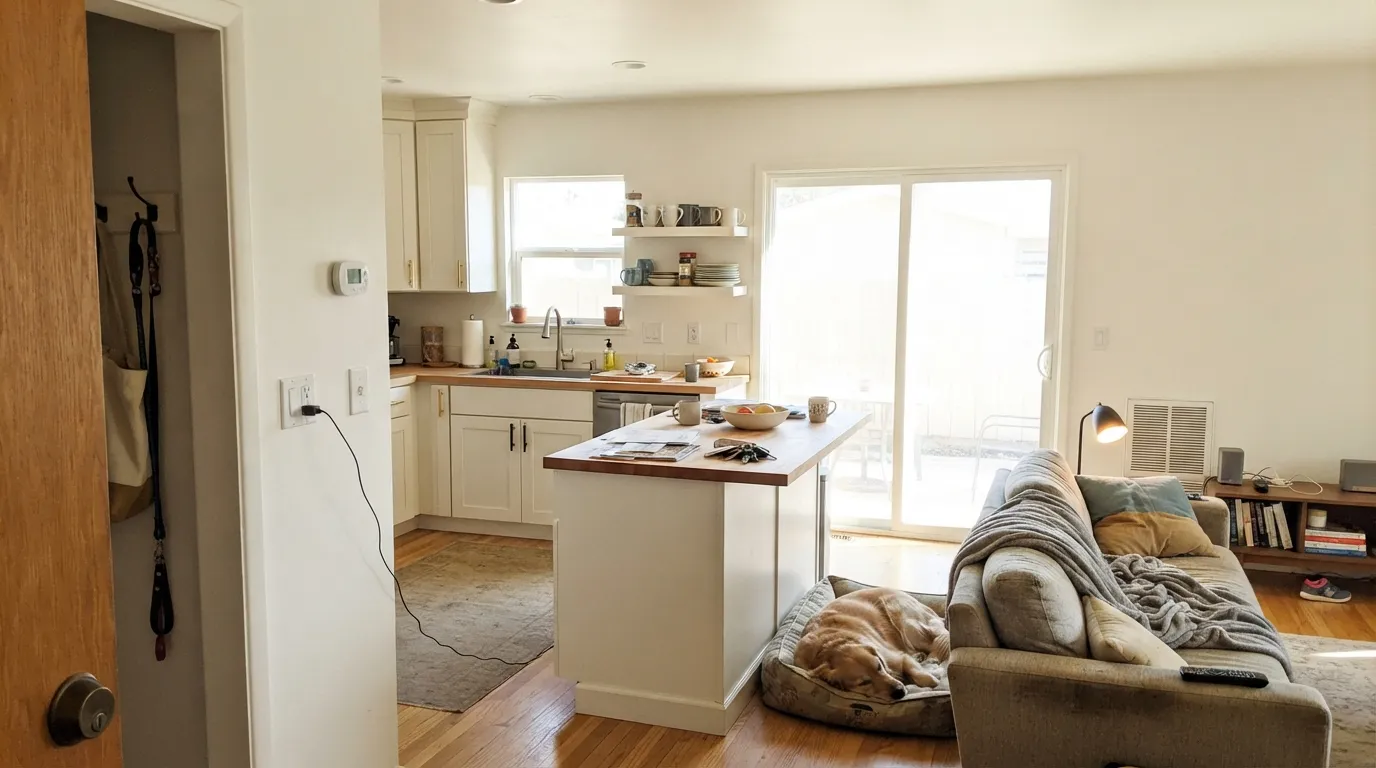
Give it hard Western daylight and a job with an edge — trim, doors, ceilings, cabinet boxes — and it behaves like the regional Super White. Semi-gloss millwork against Whisper or a mid-tone sage is the combination Dunn-Edwards painters actually sell; satin cabinets in a bright kitchen are where designers keep coming back to it. Chris Barrett has run it across sun-drenched Pacific Palisades interiors, and a Joshua Tree cabin used it as the trim snap over softer Milk Glass walls. The color is built for that light: bright, clean, and just warm enough not to go blue on a stucco elevation.
Where It Fails
Almost every regret story about Warm White comes from buying the name instead of the paint, or from putting a 93-LRV white where it has nothing to bounce. None of these are a bad batch. If your room matches one, sample something creamier and walk away.
The name Warm White is a trap. Shoppers who wanted White Dove softness, Alabaster cabinets, or Dunn-Edwards Swiss Coffee end up with a true white that reads stark on four walls. Next to any real cream it looks paper-white, not warm. If cream is the goal, Whisper (LRV 87) is the Dunn-Edwards answer; Swiss Coffee (LRV 83) is the actual yellow-cream. This can is not either of those.
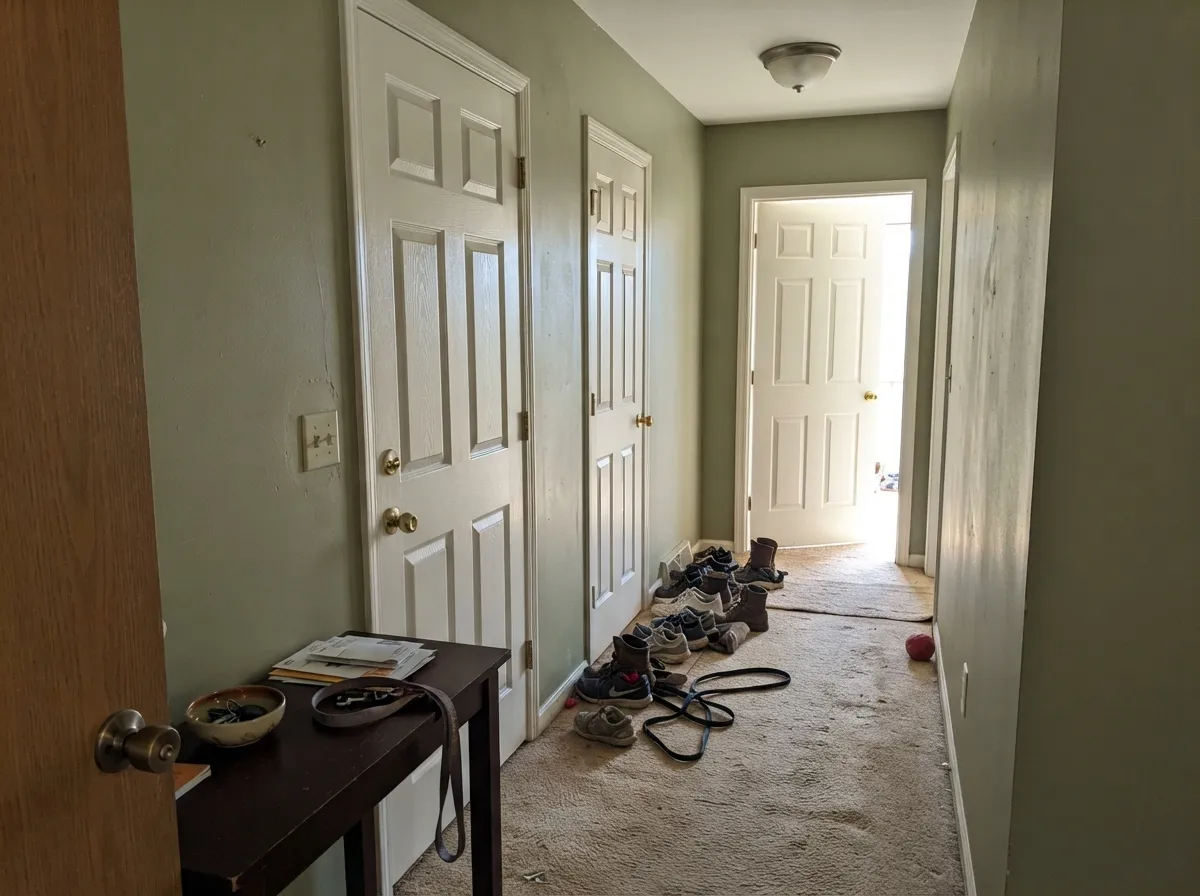
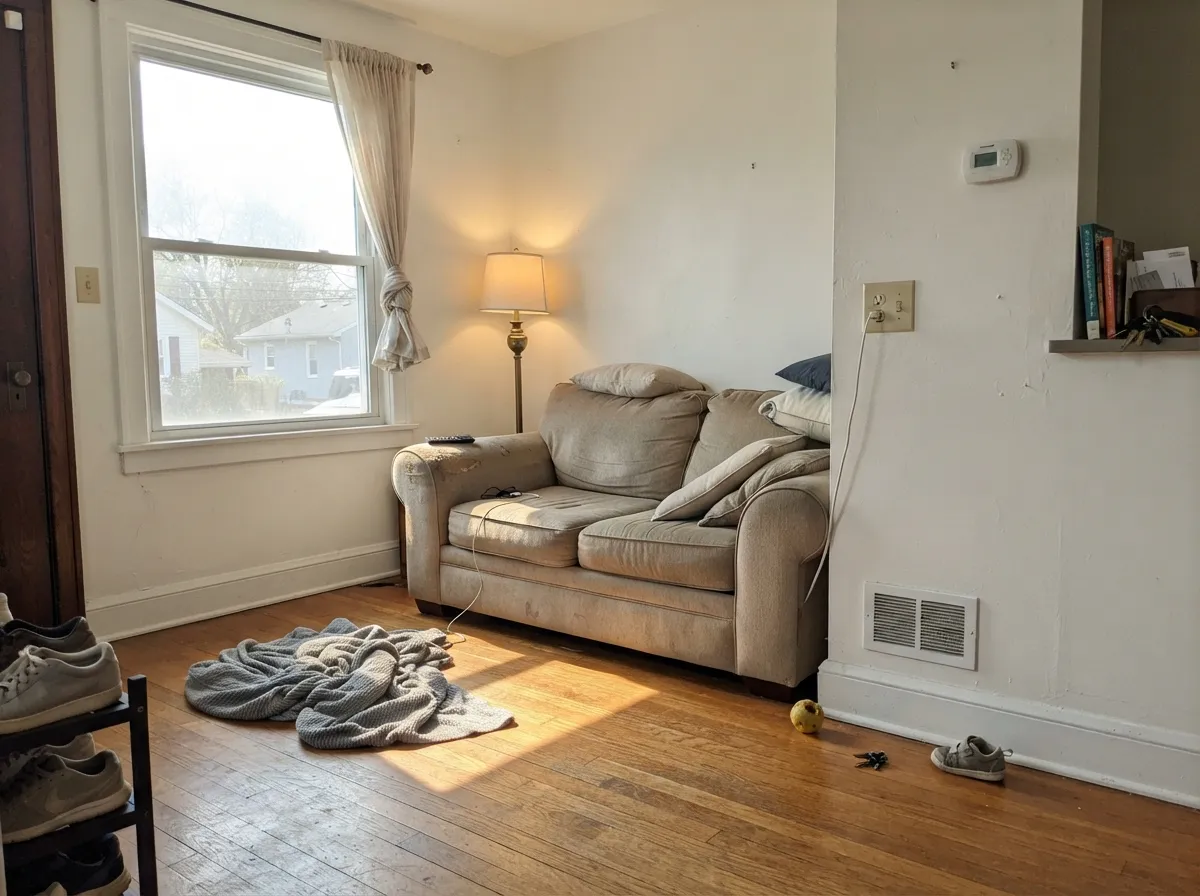
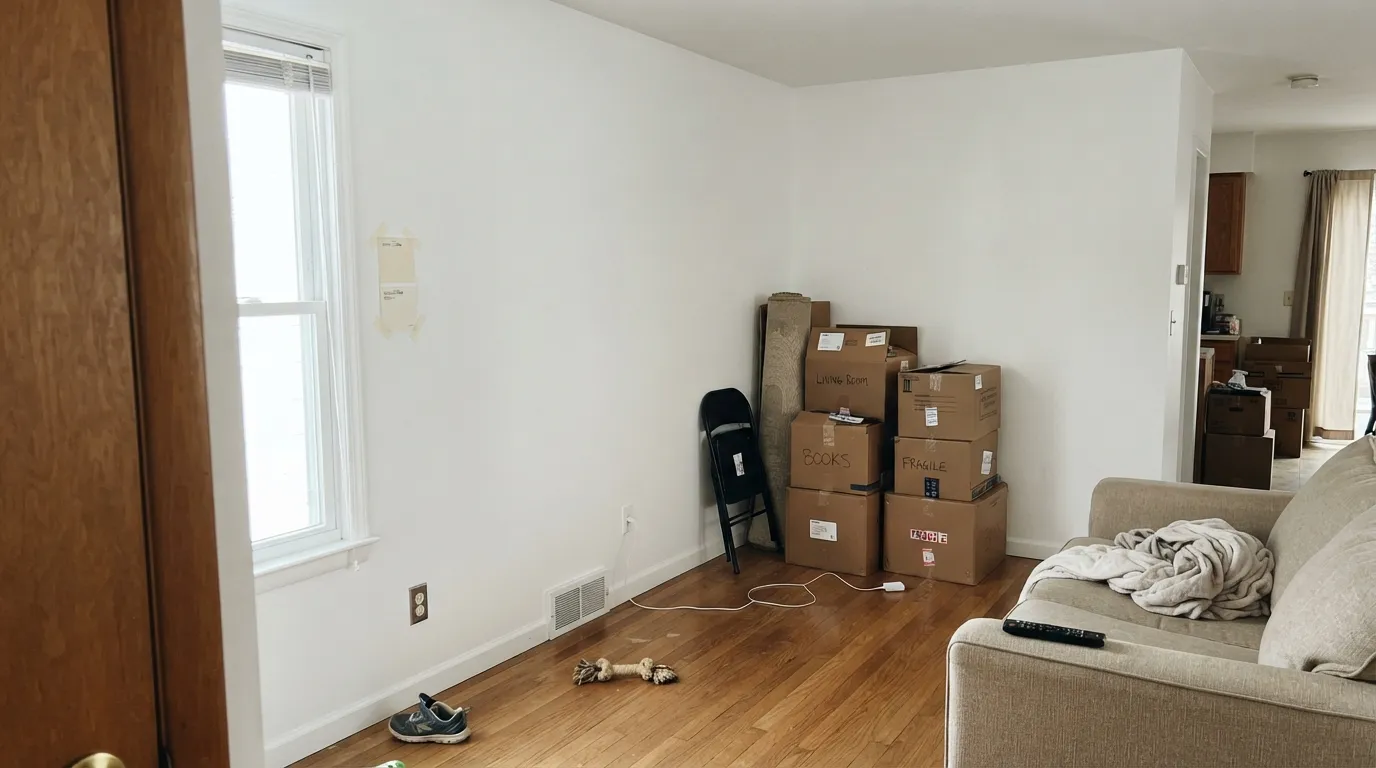
North light is cool and grey, and Warm White has almost no chroma to push back with. The wall goes hospital-empty — the complaint people phrase as sterile, clinical, or unfinished. Warm lamps help after dark and do nothing at 2 p.m. Use Whisper or Swiss Coffee instead, or keep this color on the trim and put something with body on the walls.
At LRV 93 there is nowhere to hide. Sanding halos, tape seams, roller laps, and every scuff around light switches catch a highlight. Level-five drywall and a dead-flat sheen make it possible; a family hallway with ordinary Level 4 and kids does not. If the walls are the job, pick Whisper and let this one stay on the woodwork.
Room by Room
This is the color Dunn-Edwards staff actually sell as a workhorse. Semi-gloss on casings, doors, and baseboards against a softer wall white — Whisper, Milk Glass, a mid-tone sage — gives a clean painted-wood line without the blue edge Extra White can flash. Flat on the ceiling it lifts the room. Keep the walls a step creamier or this becomes a one-color glare box.
Satin Warm White on boxes is the reason Western designers keep a can on the truck. It reads crisp and silk-smooth, hides less dirt than a cream, and makes brass, walnut, and stainless all look deliberate. Pair it with Whisper or Swiss Coffee on the walls so the cabinets snap; cool grey quartz is fine because this white has no yellow to argue with.
In a south- or west-facing room with big glass it is an honest white backdrop — the Pacific Palisades read. Eggshell, same color on trim only if you want a gallery plane; otherwise trim it in the same white at semi-gloss and let sheen do the work. A closed, dim living room is the wrong place.
A sunlit bedroom can take it; a north cave cannot. Under 2700K lamps it stays civil, not cozy — there is not enough cream to go velvety. If you want a bedroom that feels soft at night, Whisper is the Dunn-Edwards can, not this one.
Small baths with one window love the reflectance. Cool marble and white tile sit comfortably because Warm White is not a cream; honey-oak vanities will make it look colder by contrast. Satin on vanities, eggshell on walls, a fan that actually runs — bright whites show mildew faster than you think.
On window frames, fascia, and a front door surround under desert or SoCal sun it is excellent — bright without the blue glare cheap contractor whites give a facade. A whole stucco body at LRV 93 can flash like a refrigerator in July afternoon sun; walk the sunny and shaded sides with a sample. Darker trim (Iron Ore, a true black) is what keeps a white house from looking unfinished.
Your Light Is the Risk
Hard Western daylight is the light this white was mixed for. It stays clean and bright without tipping blue or yellow. Whole-room walls are only safe here.
Cool, grey daylight leaves nothing on the wall — no cream, no grey body, just empty white. The hospital read. Do not use it as a four-wall color here.
Morning east light is the coolest, cleanest read. Midday is honest paper-white. Late west sun can flash a faint warm edge for an hour; it is bounce, not a new color.
2700K bulbs keep it civil and faintly warm. Cool 4000K–5000K LEDs push it toward gallery-stark and slightly blue. Swap the bulbs before you repaint.
Most complaints about Warm White are a light mismatch. Upload a photo of your actual room and see it on your walls — then ask for the same wall in north light or evening lamps before you buy a single sample.
Need It From Another Brand?
Any paint counter can custom-tint Dunn-Edwards DEW380 directly. If you would rather stay in one brand's own deck, these are the closest stock matches, measured as ΔE2000. Under 2 is a difference you will not see on the wall.
| Brand | Closest color | ΔE | LRV | |
|---|---|---|---|---|
| Sherwin-Williams | High Reflective WhiteSW 7757 · Sherwin-Williams | 3.5 | 93 | Color page → |
| Behr | Ultra Pure White 18501850 · Behr | 3.7 | 97 | Color page → |
| Benjamin Moore | Snowfall White2144-70 · Benjamin Moore | 4.9 | 90 | Color page → |
| Valspar | Ultra White7006-24 · Valspar | 3.0 | 93.6 | Color page → |
| PPG / Glidden | Delicate WhitePPG1001-1 · PPG / Glidden | 3.7 | 88 | Color page → |
| Glidden | Delicate WhitePPG1001-1 · Glidden | 3.5 | 88 | Color page → |
Similar Dunn-Edwards Colors
The nearest shades to Warm White within Dunn-Edwards's own range, ranked by perceptual color distance — useful when you want the same look a touch lighter, darker, or warmer.
WCAG 2.1: AA is 4.5 : 1 for normal text, 3 : 1 for large text, AAA is 7 : 1.
Warm White vs the Colors You're Also Considering
Every Warm White sample board has the same rivals on it. The numbers show the real lightness gap — then it comes down to which risk you would rather live with.
Pick this when the job is trim, ceilings, or cabinets that need to snap brighter than the walls.
Dunn-Edwards DEW340 · LRV 87WhisperPick this if you actually wanted a soft, livable wall white — it is Dunn-Edwards' White Dove, and the cream this name promised.
Pick this when you want a true white that will not go peach in west sun.
Dunn-Edwards DEW341 · LRV 83Swiss CoffeePick this if cream is the point — this is the warmest Swiss Coffee of the bunch, peachy-yellow, the Southwest stucco default.
Pick this if you are already at a Dunn-Edwards counter and want the brighter Western version of that same idea.
Benjamin Moore OC-152 · LRV 87Super WhitePick this if your painter is already in Benjamin Moore — same job, slightly less bright, the national trim-and-ceiling default.
Warm White Coordinating Colors
The rule is temperature-honest pairing, not more cream. Warm White is the bright edge in a Dunn-Edwards house: it wants a slightly softer white on the field, a real mid-tone for contrast, and one dark note. It sits comfortably next to Whisper, Light Sage, and Stonish Beige, and it argues with any cream you try to use as trim against it. These are the partners that keep showing up in rooms that work:
Why The Name Does Not Match The Can
Dunn-Edwards is a Western manufacturer — California, Arizona, Nevada, Texas, New Mexico — and DEW380 is the white that company mixed for hard regional daylight. Store staff have long grouped it with Whisper as a trim-and-ceiling bestseller. Interior designers in Los Angeles treat it as a millwork and cabinet default: Amber Lewis has called it the best white for trim, Rebecca Collins uses it as her only cabinet white, and Chris Barrett has put it on sun-drenched Pacific Palisades walls. A Joshua Tree cabin used it as the bright trim over Milk Glass walls so the desert view, not the paint, did the talking.
None of that makes it a creamy warm white, and it has never been a Color of the Year. It is an honest regional workhorse with a confusing label. If you arrived from a search for warm white, sample Whisper and Swiss Coffee on the same wall before you buy gallons of this. The chip that still looks white at dusk is DEW380; the chip that looks like a finished room is usually one of the other two.
Warm White With Wood Tones and Floors
Because this white has almost no yellow of its own, wood decides the temperature of the room. Walnut, espresso, and pale white oak all sit comfortably against it — the white stays white, the wood stays the color it is. Brass and unlacquered hardware look clean rather than dated. That is why it works on cabinets in mixed-metal kitchens.
Honey oak and orange builder pine are the test. A cream white will amplify the orange; Warm White will not, but the floor can make the walls look colder by contrast, which is a different kind of fight. A large rug or a stain toward walnut usually fixes it. Cool grey LVP is actually safer here than it is with Whisper or Swiss Coffee, because there is no cream for the grey to pick on. Sample a big board above the actual floor in afternoon light before you commit the whole room.
Three Ready Palettes Built on Warm White
A color is never alone on the wall. These are complete combinations in the 60-30-10 pattern, with the reason each one holds together. Every one opens in the visualizer.
This is the Dunn-Edwards house that actually gets painted: Whisper on the walls so rooms stay soft, Warm White on the woodwork so the edges snap, Iron Ore on the door so the scheme has one dark note. The six-point LRV gap is small on paper and obvious in a hallway.
Try this palette in your roomSatin Warm White boxes are the designer move; Whisper walls keep the room from going gallery-cold; Hale Navy on the island grounds the white and loves brass. Cool quartz is safe here because Warm White has no yellow to fight the stone.
Try this palette in your roomStonish Beige is the Southwest's default stucco beige; Warm White trim is what keeps it looking intentional instead of builder-tan. Cavern Clay on the door only glows in real sun — which is the light this whole combination was built for.
Try this palette in your roomWarm White FAQ
Is Dunn-Edwards Warm White actually warm?
Barely. It is the brand's brightest white, LRV 93, with so little chroma that most people read it as a true white. A vanishing green-yellow lean can show next to a cooler neighbor, and late west sun can flash a hint of warmth. It is not cream, not yellow, and it is not White Dove. If warm is what you typed into the search bar, you probably want Whisper.
Is it good for kitchen cabinets?
Yes — that is one of its real jobs. Western designers keep it as a cabinet white because it looks crisp and silk-smooth, with no yellow or blue to fight brass, walnut, or stainless. Use a satin urethane-fortified enamel. Pair the walls a step creamier (Whisper) so the boxes snap instead of disappearing.
What trim color goes with Warm White walls?
Warm White itself, in semi-gloss. A creamier trim — Swiss Coffee, even Whisper — will look dingy and yellow against this wall. If you want contrast, go darker (navy, charcoal, black), never creamier. The safer whole-house move is the reverse: Whisper walls, Warm White trim.
How many coats does it take?
Two over any light existing color, plus a primer if you are covering something darker. Bright whites are unforgiving of grey or tan bleed-through, so a white-tinted primer is cheaper than a third finish coat. On cabinets, sand, prime, and budget three thin satin coats.
Does it work on exteriors?
On trim, fascia, and window surrounds, yes — especially in desert or Southern California sun, where it stays clean instead of going blue. As a full stucco body it can glare at LRV 93; sample the sunny and shaded elevations before committing, and give the house a dark door or dark window frames so it does not read unfinished.
Should I use Warm White or Whisper on the walls?
Whisper, unless the room is genuinely sun-drenched and you want a gallery-bright plane. Whisper is the livable wall white (LRV 87, a real cream whisper). Warm White is the brighter edge. Most houses that look finished from the street are Whisper on the field and Warm White on the woodwork, not the other way around.
Have you painted with Warm White?
Rate it — one tap helps the next reader decide.
Ask a Question