
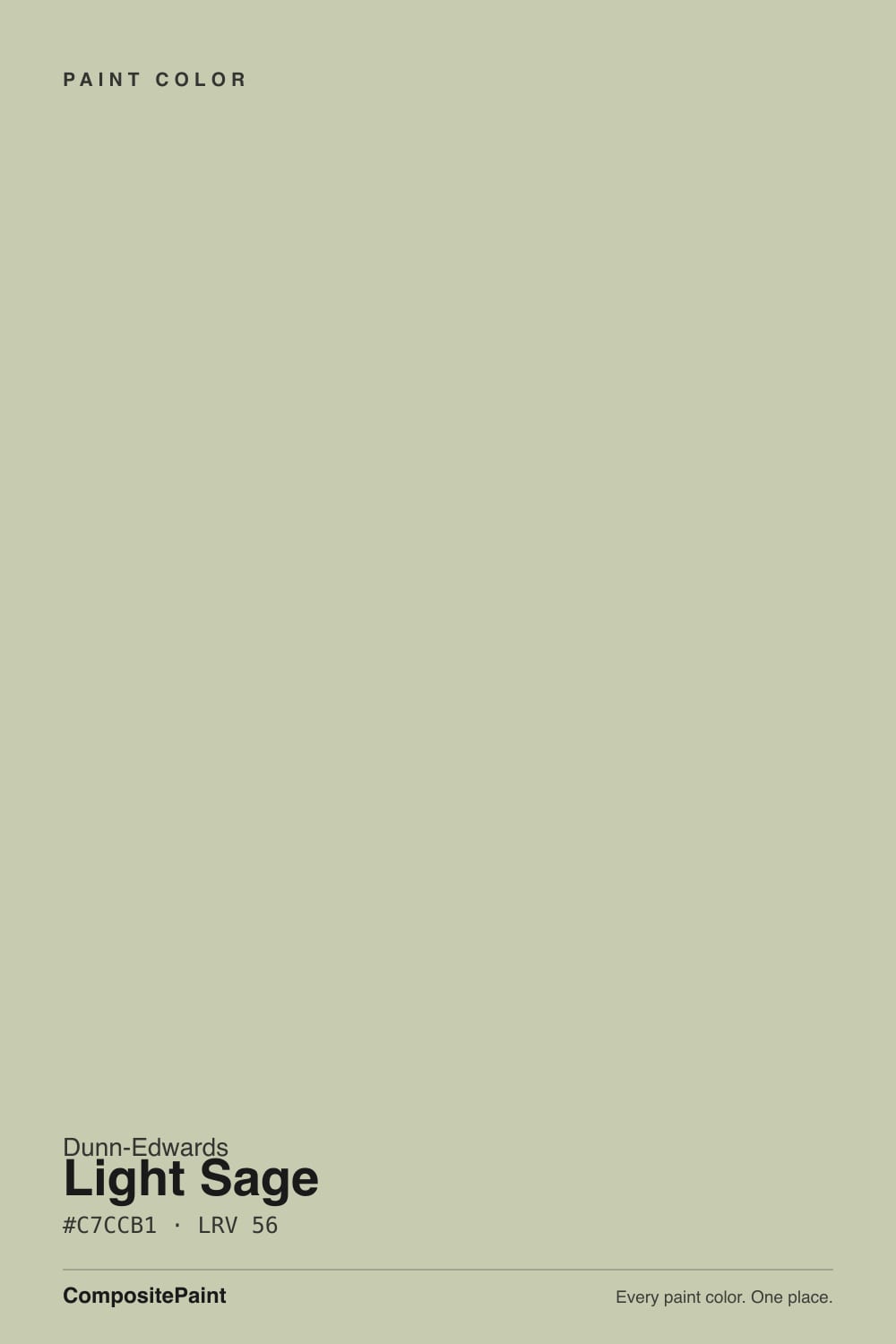
Color spec
| Brand | Dunn-Edwards |
| Name | Light Sage |
| SKU | DEC712 |
| Hex | #C7CCB1 |
| RGB | 199, 204, 177 |
| HSL | 71°, 21%, 75% |
| LRV | 56 |
| Undertone | cool green tone |
| Sheens | stucco/siding satin · trim semi-gloss · cabinets satin |
| Family | Green |
Light Sage is a mid-tone gray-green built for the kind of hard, bright daylight California and Arizona houses get most of the year. At LRV 56 it sits right in the middle of the deck — not a pastel, not a statement color — and that restraint is the whole appeal: on stucco it reads as a soft, settled neutral that happens to be green, not a color announcement. Take it indoors under weaker or cooler light and the green retreats fast, so this is a color that rewards the exact conditions Dunn-Edwards built it for and sulks outside them.
What Color Is Light Sage, Really?
A muted gray-green with the saturation turned most of the way down. The RGB reading (199, 204, 177) tells the real story: green edges out red and blue by only a few points, which is why the color reads as a soft neutral in weak light and only commits to "green" once real daylight or warm wood pushes it there. It sits in Dunn-Edwards' green family of the Perfect Palette deck, the collection the brand leans on hardest for Southwest exterior work — stucco, adobe-style trim, ranch and Spanish Revival facades across California, Arizona and Nevada.
At LRV 56 it is a genuine mid-tone: light enough to avoid looking heavy on a whole elevation, dark enough to hold its color instead of washing out the way pale sages do in strong sun. That balance is what makes it a workhorse rather than a mood color. It also lands in almost exactly the same tonal neighborhood as two other well-known sage-neutrals from other decks — a light, muted, LRV-mid-50s gray-green is a well-worn formula across the industry, and Light Sage is Dunn-Edwards' version of it.
Undertone in one line: green first, gray close behind, no blue and no real yellow. If your sample looks flat and colorless, that is weak or overcast light doing what it does to every muted sage — not a defect in the paint.
Where It Shines
This color was made for hard, direct sun. On a stucco or fiber-cement exterior under real Southwest daylight it holds a clean, settled green-gray all day without chalking out the way pale colors do. Indoors, give it warm wood — oak cabinets, a walnut table, brass hardware — and the same mechanism kicks in: the warmth in the room pulls the green forward instead of leaving it stuck in neutral.
Where It Fails — the Honest Part
Almost every disappointed report about a muted sage like this one comes from one of three predictable setups. None of them are the paint's fault, but if your room or elevation matches one, sample big before you commit a whole exterior or kitchen to it.
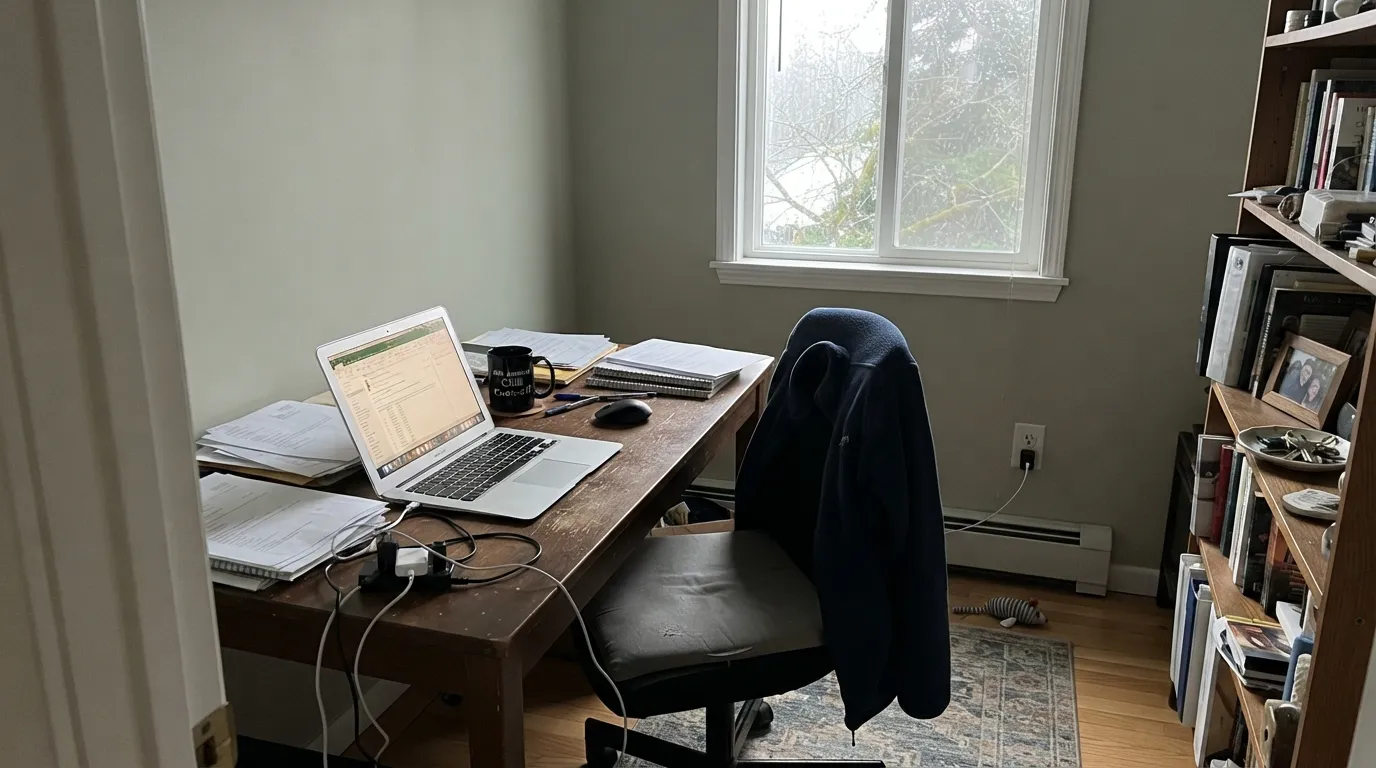
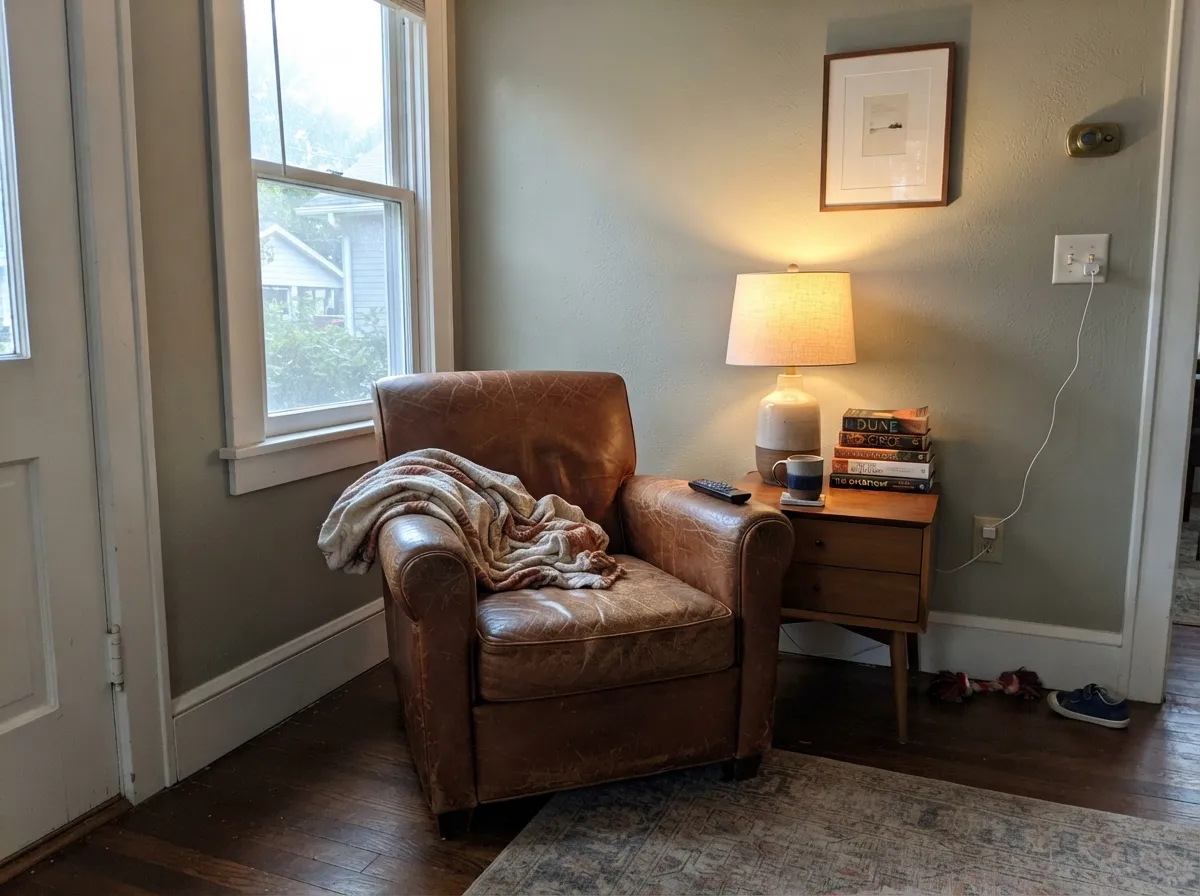
A dim, north-facing or overcast setting. Cool, flat light is the one condition this color can't fight. Indoors it goes dull and slightly muddy gray; outdoors on the shaded side of a house or on an overcast coastal day it loses most of its green and reads as a tired gray-beige. If the wall or elevation rarely sees direct sun, this is not the color for it.
Next to a bright, cool-white trim. A crisp cool white makes any muted sage look dingy by comparison — the same trap every soft neutral falls into. Trim it with a warm off-white instead, or keep the sheen change as the only contrast, and the wall reads finished rather than faded.
Against cool-toned stone or tile. Blue-gray quartz, cool marble and gray-blue tile sit at the opposite temperature and pull Light Sage further toward flat gray, while the stone starts to look slightly green in reflection. Warm quartz, butcher block or a warm-toned tile keeps both sides honest.
Room by Room
Exterior — its best job
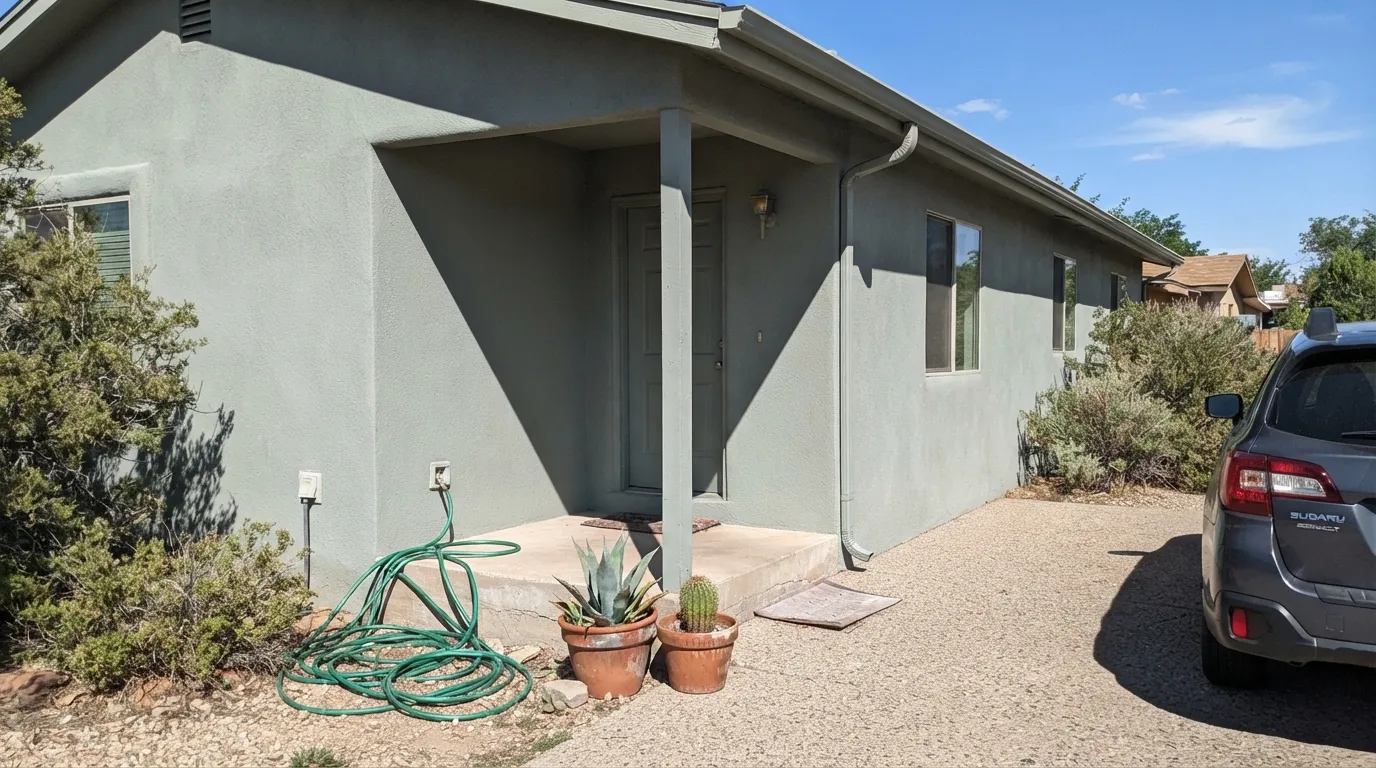
Stucco, siding, fiber cement — this is the setting Dunn-Edwards built the color for. Full Southwest sun keeps it a clean, settled sage-gray without chalking out; a warm trim white and a near-black door or shutters give it the contrast a mid-tone exterior color needs.
Kitchen & cabinets — yes
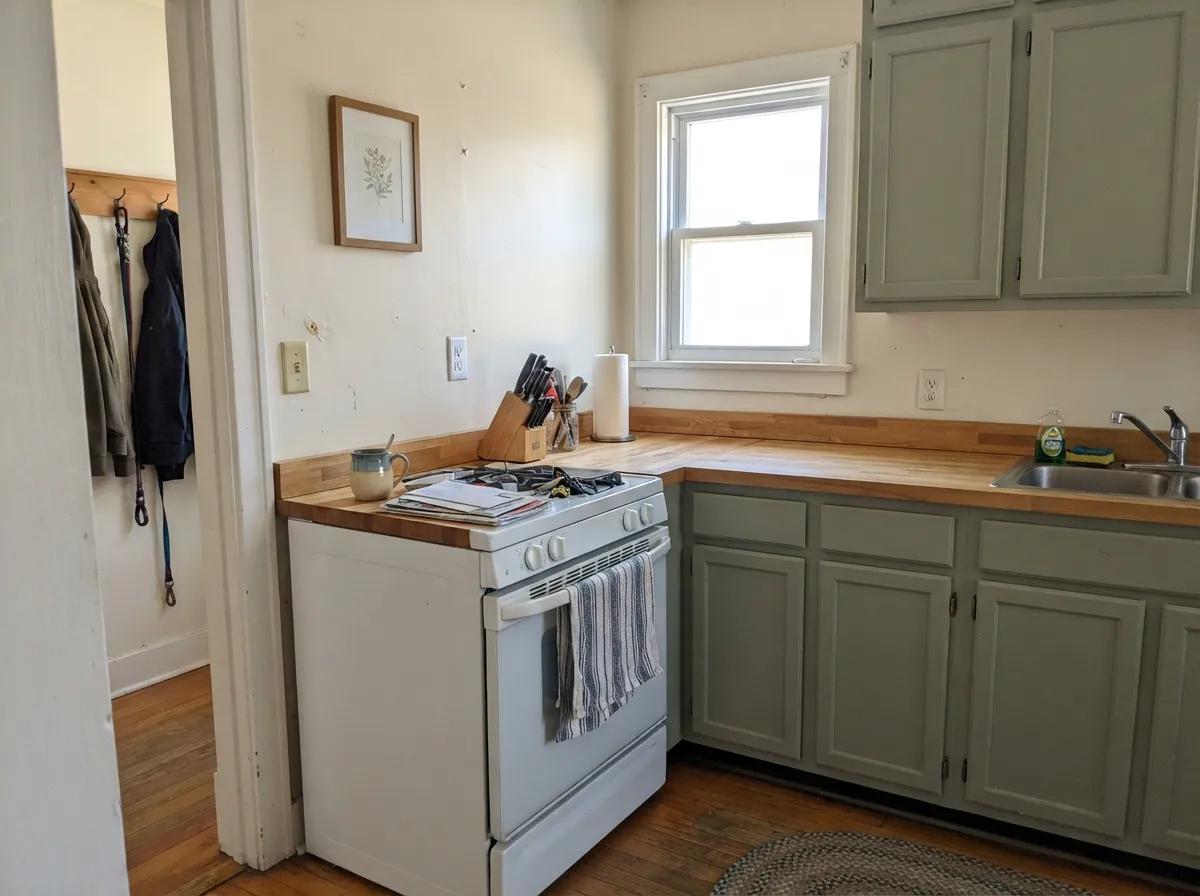
A genuinely easy cabinet green: mid-tone enough to read as color, muted enough to not fight granite, quartz or oak. Satin urethane-fortified cabinet enamel; keep counters and backsplash on the warm side of neutral.
Living room — depends on light
With real daylight and warm wood furniture it settles into a quiet, sophisticated backdrop. In a room that only gets afternoon light or artificial light most of the day, it drifts toward plain gray and loses the reason you picked it.
Bedroom — yes, with warm lamps
Under 2700K bulbs at night it warms up and holds its green better than daylight alone would suggest. A north-facing bedroom that relies on overhead cool light is the one setup to avoid.
Bathroom — depends on the stone
With warm-toned tile, wood vanities or brass fixtures it is calm and current. Cool gray-blue tile or chrome-heavy fixtures push it toward flat gray — sample against your actual tile before committing.
Trim & accents — supporting role, not the star
Too quiet to be the only color in a high-contrast scheme, but it works well as an accent wall, island, or interior door against a warm off-white, letting a bolder color or dark near-black carry the real contrast.
The Scorecard
What it gets right
- +Mid-tone LRV holds its color in strong sun instead of washing out
- +Reads as a calm neutral until warm light or wood brings the green forward
- +Built for exactly the exterior light most Southwest and California houses get
- +Genuinely easy kitchen-cabinet green — muted enough to not fight stone or wood
- +Sits in a well-proven mid-tone sage-gray family, so it plays well with a wide range of trims
Where it struggles
- −Goes flat, dull gray fast in dim, north-facing or overcast light
- −Looks dingy next to a bright, cool-white trim
- −Too quiet for anyone who wants an unmistakably green wall
- −Cool-toned stone, tile or quartz fights it and drains the green further
Light by Light
Most complaints about Light Sage are a light mismatch. Upload a photo of your actual room and see it on your walls — then ask for the same wall in north light or evening lamps before you buy a single sample.
TEST IT IN YOUR LIGHT →Light Sage vs the Colors You're Also Considering
Every Light Sage sample board has the same rivals on it. The numbers show the real lightness gap — then it comes down to which risk you would rather live with.
Need It From Another Brand?
Any paint counter can custom-tint Dunn-Edwards DEC712 directly — but if you would rather stay in one brand's own deck, these are the closest stock matches:
Similar Dunn-Edwards colors
closest in the Dunn-Edwards deckThe nearest shades to Light Sage within Dunn-Edwards's own range, ranked by perceptual color distance — useful when you want the same look a touch lighter, darker, or warmer.
Light Sage Coordinating Colors
The rule for coordinating with Light Sage is the same as for any muted sage-gray: warm whites, warm wood, and one near-black note. It fights cool bright whites and cool stone, and it plays well with deeper members of the same green family when a scheme needs more than one depth of green.
Light Sage on Stucco and Southwest Exteriors
Dunn-Edwards built its reputation on exterior color for exactly the kind of houses this color suits: stucco, adobe-style trim, ranch and Spanish Revival facades across California, Arizona, and Nevada, where the light is hard and direct most of the year. A mid-tone LRV like 56 is the sweet spot for that light — pale colors chalk out and lose all texture definition under strong sun, while Light Sage's added depth lets stucco's shadow and texture stay visible.
The one real variable is which side of the house you're looking at. A south- or west-facing elevation in full sun will read as a clean, confident sage-gray; a shaded north wall or an overcast coastal morning will show noticeably more gray and less green. Walk the full exterior with a large sample panel — not a paint chip — before ordering, and expect the shaded side to look like a slightly different color than the sunny side. That is normal for a mid-tone muted green, not a sign of a bad batch.
Light Sage With Wood Tones and Floors
Warm wood is the ingredient that makes this color work. Oak, walnut, and butcher block all sit close enough in temperature to Light Sage's warm-leaning green that the pairing looks intentional rather than accidental — the wood keeps the sage from drifting into flat gray the way weak light does on its own.
Cool, gray-washed wood and gray LVP flooring are the pairing to test first. They pull the same direction as overcast light, and the combination can read as two different grays fighting rather than a green-and-neutral pairing. A warm rug or warm-toned trim usually rescues the room, but sample a large chip above the actual floor before committing to a whole space.
Three Ready Palettes Built on Light Sage
A color is never alone on the wall — these are complete combinations in the 60-30-10 pattern, with the reason each one holds together.
Dunn-Edwards' own warm Swiss Coffee keeps the sage from going cold under strong sun, and one near-black door supplies the single dark note a mid-tone exterior scheme needs to read as deliberate instead of accidental.
TRY THIS PALETTE →Foggy Day's warmth keeps the cabinet green from tipping toward plain gray, while Wrought Iron grounds the room the way a near-black island does in a hundred farmhouse kitchens — one warm neutral, one green, one dark note.
TRY THIS PALETTE →Same green family, different depth: Bitter Sage supplies the confident, unmistakable green that Light Sage only hints at, so a single accent wall reads as a deliberate design move rather than an accident of light.
TRY THIS PALETTE →Accessibility (WCAG contrast)
WCAG 2.1: AA = 4.5:1 normal text · AA Large = 3:1 large text · AAA = 7:1 normal text.
The Questions Everyone Asks
Is Light Sage more green or more gray?
Both, depending on the light. The undertone is green first with gray close behind and no blue or yellow pulling it off course. In strong direct sun it reads clearly as a soft sage green; in weak, overcast, or north light it settles back toward plain gray. Sample it in the actual light of the wall or elevation before you decide.
Does it work on a stucco exterior?
Yes — this is the setting it was built for. Dunn-Edwards leans on this green family hardest for Southwest exterior work, and the mid-tone LRV of 56 holds its color in hard sun without chalking out the way paler sages can. Shaded, north-facing elevations will read noticeably grayer than sunny ones — walk the house with a sample before committing.
What trim white pairs with it?
A warm off-white, not a cool bright one. Dunn-Edwards' own Swiss Coffee is the straightforward match; a stark cool white will make the sage look dingy by comparison, the same trap every muted green falls into.
Is it a good kitchen cabinet color?
Yes, and an easy one — mid-tone enough to register as color, muted enough to avoid fighting most stone and wood. Use a satin urethane-fortified cabinet enamel and keep the counters and backsplash on the warm side of neutral; cool blue-gray stone is the one real clash.
Does it work with oak or other wood floors?
Warm wood is its best friend — oak, walnut, and butcher block all pull the green forward instead of leaving it neutral. Cool gray-washed or gray LVP flooring drains the color the same way overcast light does; sample a large chip above the actual floor first.
Is Dunn-Edwards Light Sage the same as other well-known sage colors?
Not officially the same formula, but it lands in the same tonal neighborhood as other well-known mid-tone sage-grays around LRV 55–57. If you're cross-shopping between brands, expect a similar soft, light-dependent green-gray rather than an identical color — always sample the actual chip rather than assuming a cross-brand match.
Will It Work in YOUR Room?
No page can promise how Light Sage behaves in your light. Upload a photo and see it on your own walls in seconds — before you spend a cent on samples.
TRY LIGHT SAGE ON YOUR ROOM →
Ask a Question