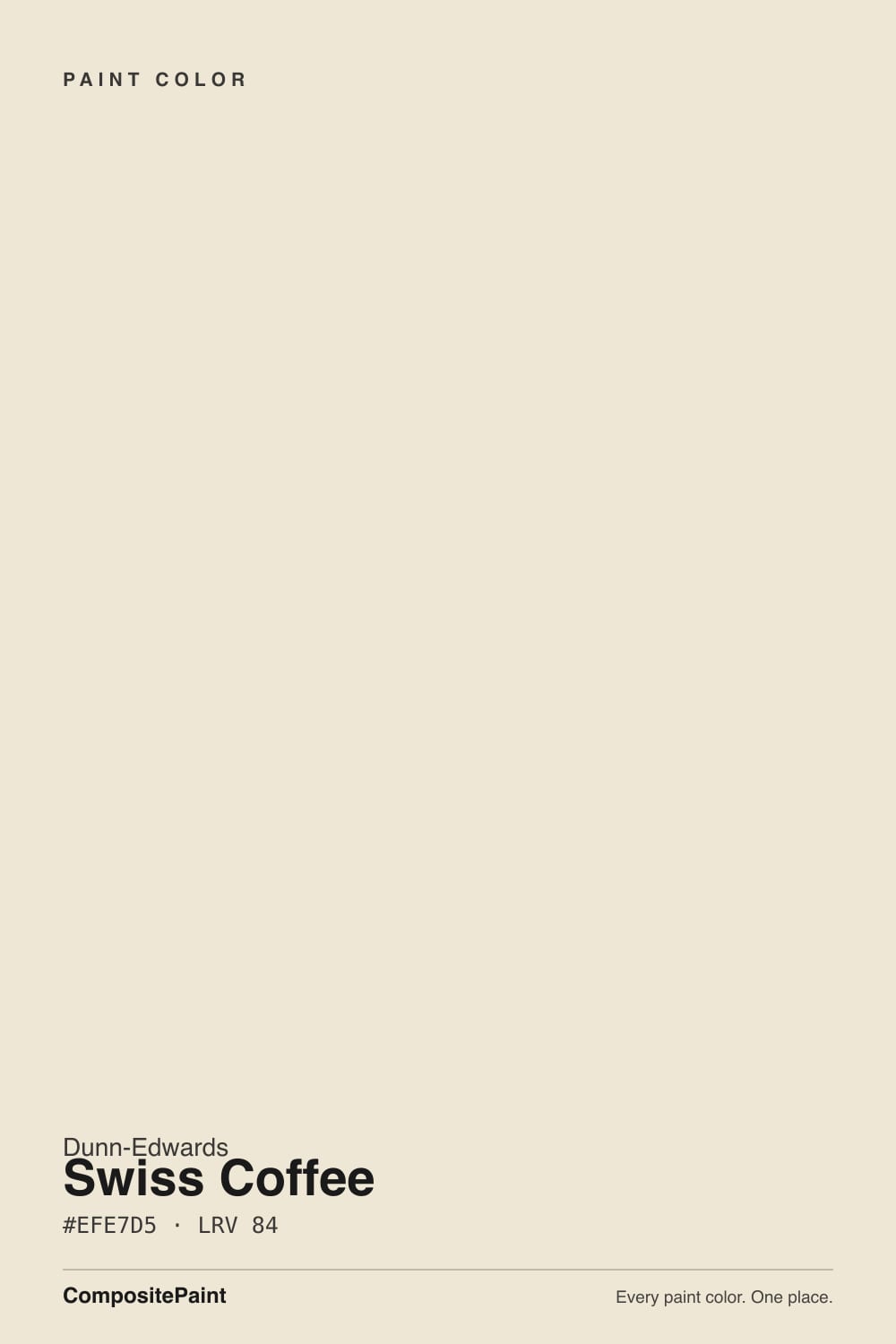
Swiss Coffee
Dunn-Edwards' version of America's most duplicated white name, reviewed honestly: what makes it warmer than Benjamin Moore's and Behr's, the Southwest stucco it was built for, and the light that turns it too yellow.

Jessica has spec'd whites and neutrals for more than 300 rooms and keeps a sample wall of painted drawdowns in her studio. Every color review is checked against real reader rooms in the comments and re-tested when a formula changes. About the testing process →
- 1First Star69
- 2Classic Gray74
- 3Swiss Coffee83
- 4Chantilly Lace91
- 5Ultra Pure White97
The Fast Verdict
Dunn-Edwards Swiss Coffee is not the same paint as Benjamin Moore's or Behr's version of the same name — it is the warmest, most saturated one of the three, with a peachy-yellow undertone that side-by-side comparisons consistently rank ahead of BM's grayer take and Behr's cooler cousin. It earns its popularity honestly: Dunn-Edwards has been the dominant paint brand across California, Arizona, Nevada, Texas and New Mexico since 1925, and Swiss Coffee is the stucco white a huge share of that region has painted a house with at some point. Give it real desert sun and warm wood and it looks expensive and deliberate. Push it into low, warm western light and it tips distinctly yellow — the single most repeated complaint about this color.
Southwest stucco and Spanish/Mediterranean exteriors · whole-house warm neutral in sunny climates · interiors with warm wood, terracotta, and desert earth tones · buyers inside Dunn-Edwards' dealer footprint who want the regional standard
You actually want the grayer Benjamin Moore version or a truly neutral white · your room runs cool LEDs or sits in deep north shade · you live outside DE's CA/AZ/NV/TX/NM territory and need an exact factory match · your stone or tile is cool blue-grey
- Warmest, most saturated Swiss Coffee across the major brands — genuinely creamy, never chalky
- The Southwest's default stucco white for a reason: a century of DE dominance means paint stores, HOAs and painters already know it
- Loves warm wood, terracotta tile and desert earth tones — a true monochromatic palette color
- Numerically as bright as Benjamin Moore's version (LRV 83 in both) but reads warmer and more full-bodied on the wall
- Dependable trim and door white under mid-tone greige or earth-tone walls
- The warmest Swiss Coffee on the market — buyers hoping for something closer to a neutral, gray-leaning white will be disappointed
- Late-day west sun and large stucco expanses push it distinctly yellow — the single most common complaint
- Regional-only brand: outside DE's CA/AZ/NV/TX/NM footprint, matching it exactly takes a custom order
- Fights cool blue-grey stone and tile the same way every warm white does
What Color Is Swiss Coffee, Really?
Swiss Coffee is one of the most duplicated paint names in America — Benjamin Moore, Behr, Valspar and Dunn-Edwards all sell a color by that name, and they are not the same formula. Dunn-Edwards' version is proprietary to its own deck (it shares its color number with sister brand California Paints, not with any of the others), and side-by-side comparisons consistently place it as the warmest and most saturated of the group: less gray than Benjamin Moore's OC-45, close in temperature to Behr's peachy take, and noticeably warmer than Valspar's cooler, more neutral version. If you have painted with "Swiss Coffee" from another brand and expect this one to match, don't — sample it first.
At LRV 83 it is numerically as bright as Benjamin Moore's Swiss Coffee, which is also 84 in our deck — a useful fact, because the reflectivity is nearly identical while the color you actually see is not. Dunn-Edwards leans harder into the yellow-peach base instead of graying it down, so on a sunlit stucco wall that reading translates into a warm, full-bodied cream rather than a pale, quiet one. That is exactly why it has become the default exterior white across Dunn-Edwards' Southwest territory since the company took the regional lead there in 1925. Indoors, the same brightness makes it a workable whole-house neutral — just a warmer one than most of the other whites reviewed on this site.
Undertone in one line: warm yellow-cream with a peachy edge, and almost no gray to soften it. If your sample looks distinctly orange near a window, that is the paint being consistent with itself in strong sun — it is not misapplied or old stock.
Where It Shines
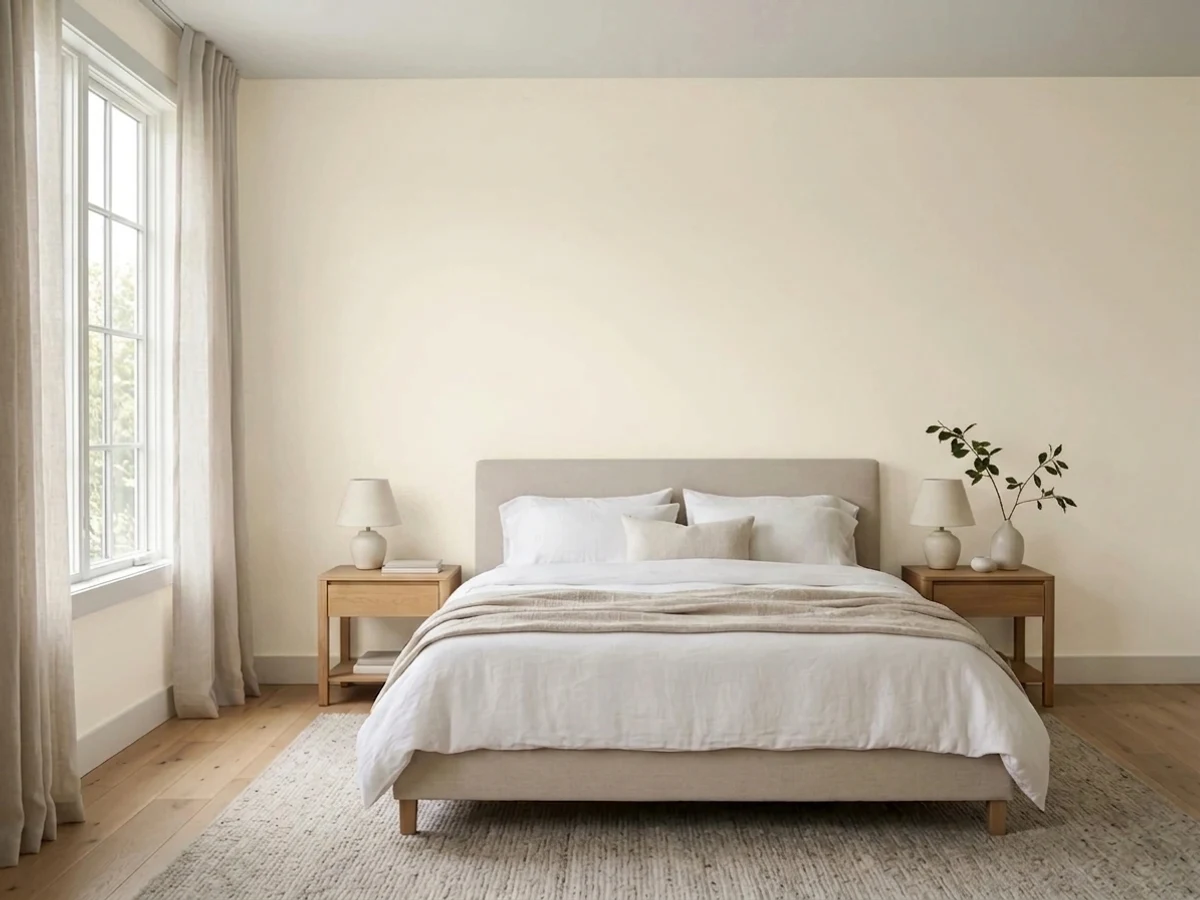
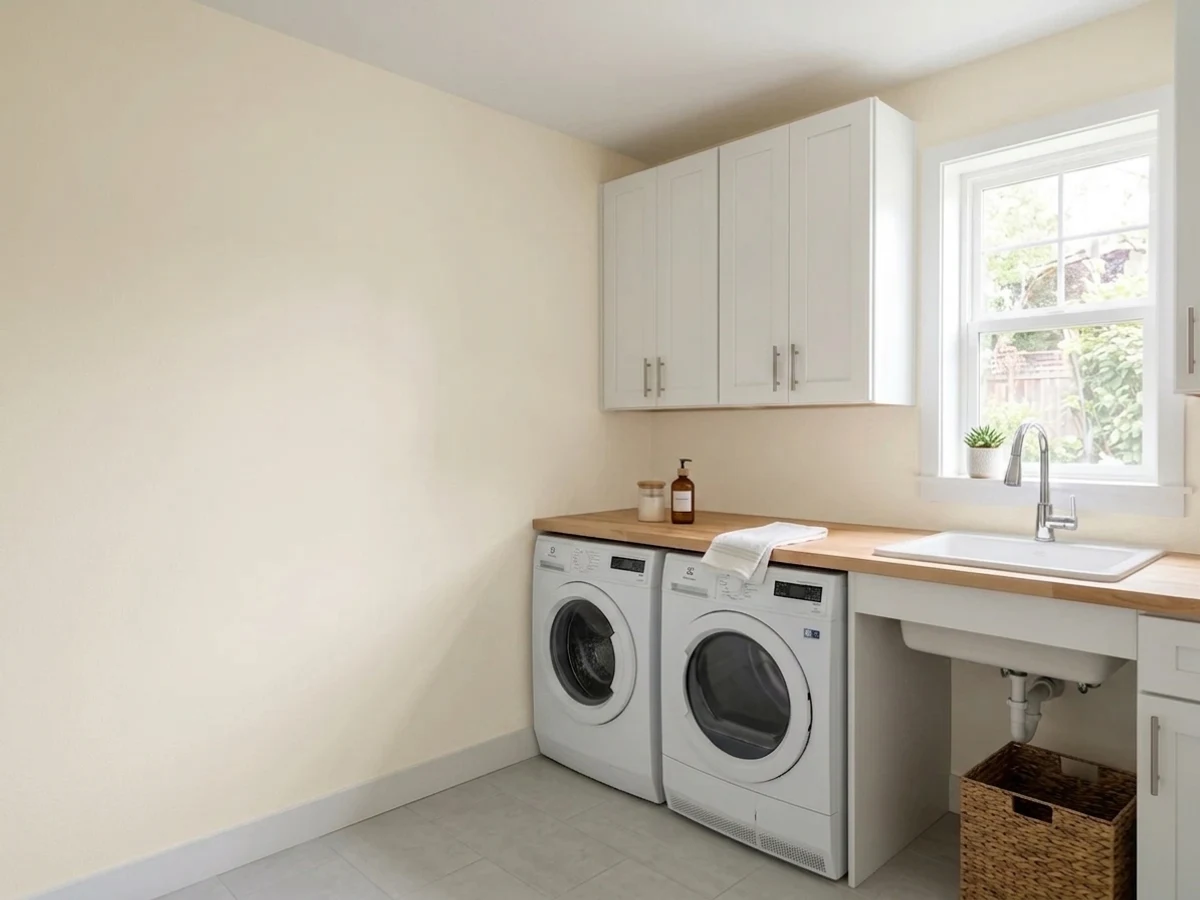
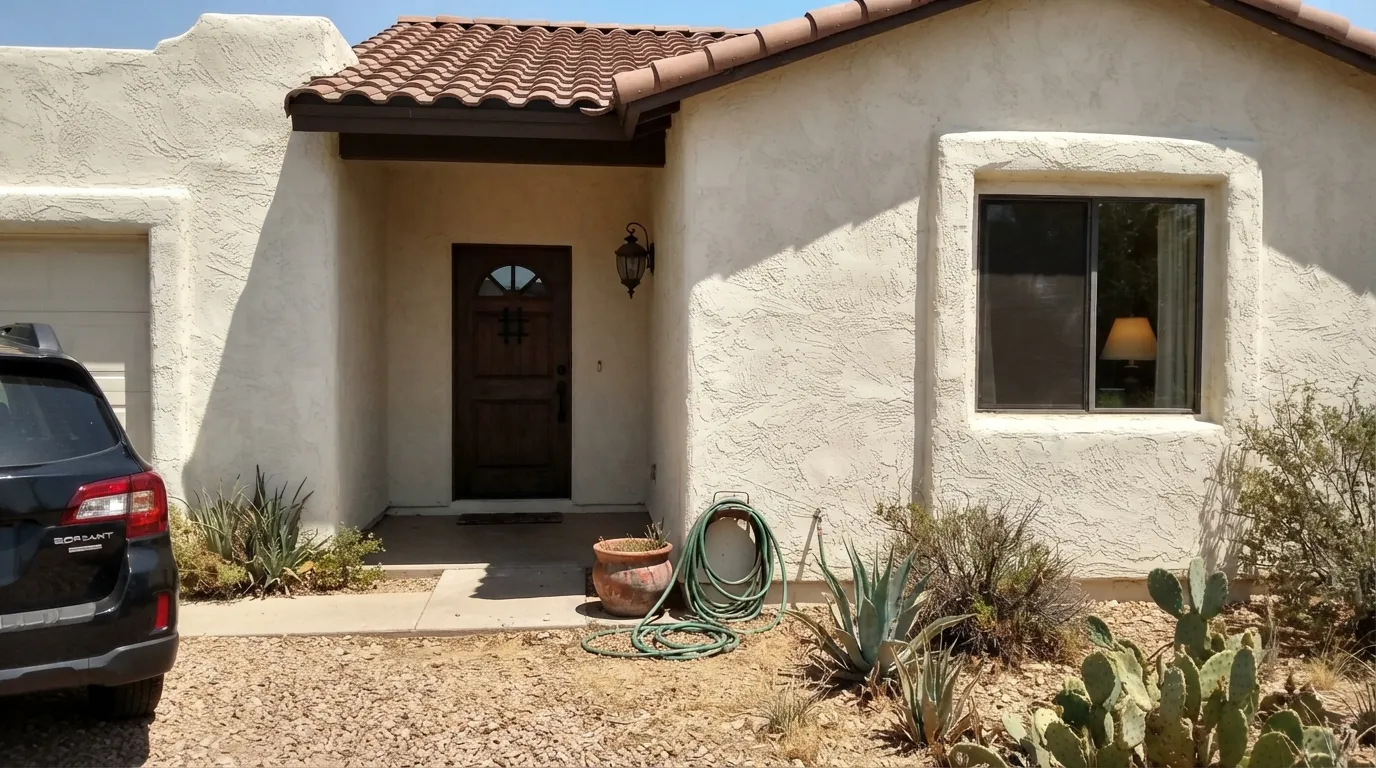
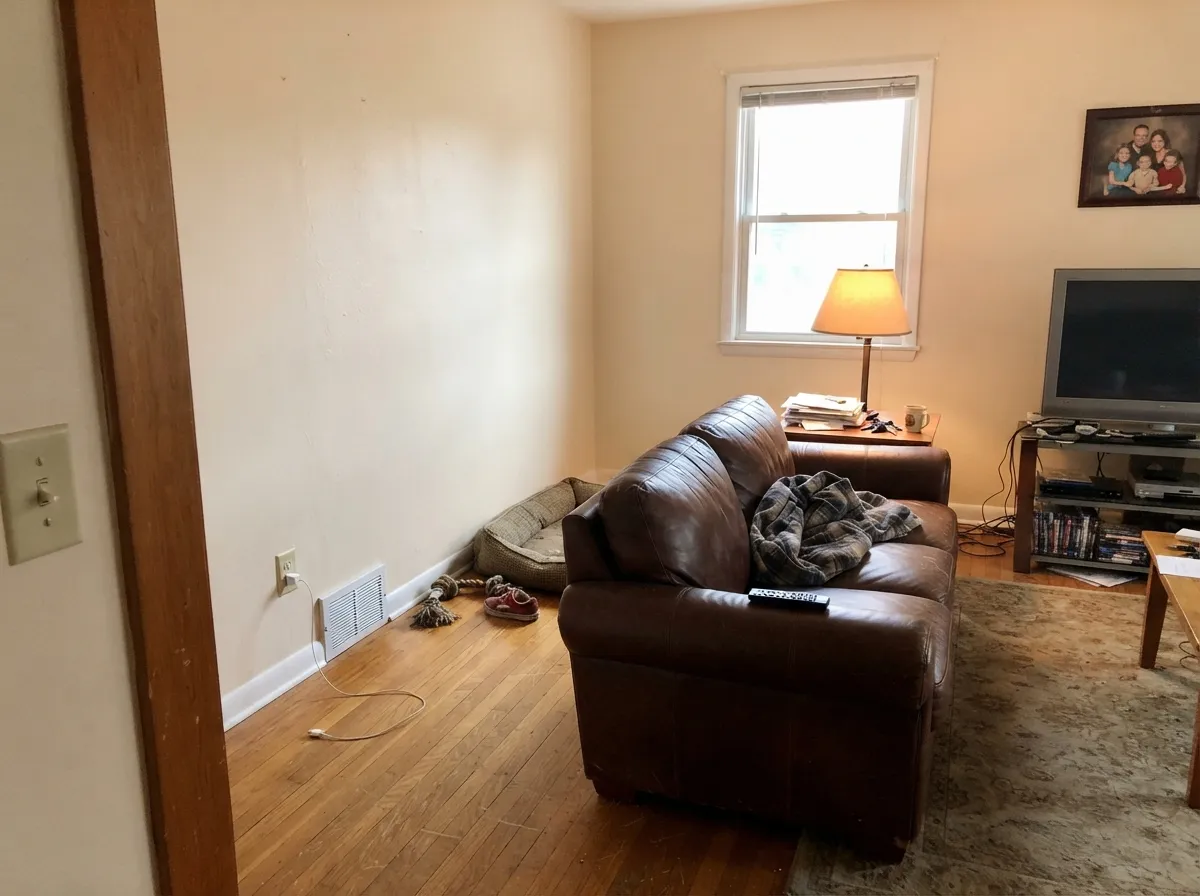
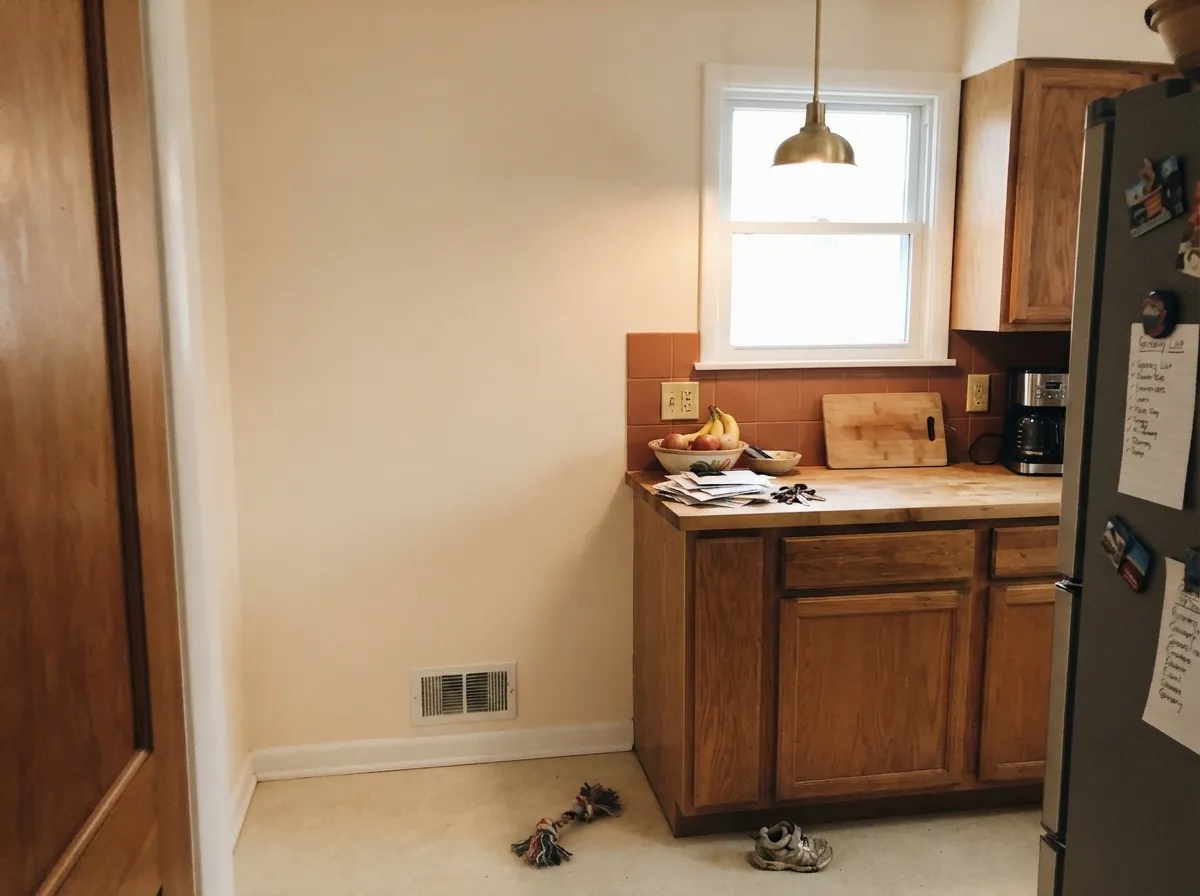
This is a color built for strong, direct sun and warm materials, which is exactly the climate and architecture it grew up in. On Spanish- and Mediterranean-style stucco under a Southwest sky, it reads warm and finished rather than washed out, and it holds up next to clay roof tile, wrought iron and desert landscaping without looking bleached. Indoors it does the same job with oak, walnut and butcher block that the other creamy whites on this site do — just with more presence, because there is more yellow in the mix to begin with.
Where It Fails
Almost every complaint about this color traces back to one of three predictable situations. None of them are a bad batch of paint — they are the same warm, saturated undertone showing up somewhere it doesn't flatter.
Low, warm western light pushes the yellow hard, especially across a large stucco wall. "Does Swiss Coffee look too yellow" is one of the most repeated questions homeowners ask about this exact paint, and the honest answer is: at 5pm on the west side, yes, noticeably.
Painted beside Benjamin Moore's version, or trimmed out in a cooler white, Dunn-Edwards Swiss Coffee reads visibly warmer and can look dingy by comparison. Keep the whole exterior or room in one Swiss Coffee, not a mix of brands.
Dunn-Edwards is a regional manufacturer — strong across California, Arizona, Nevada, Texas and New Mexico, but not sold everywhere. Buyers outside that footprint who fall for a photo of this exact color usually end up with a custom color-match instead of the real formula, and matches can drift a shade cooler or grayer than the original.
Room by Room
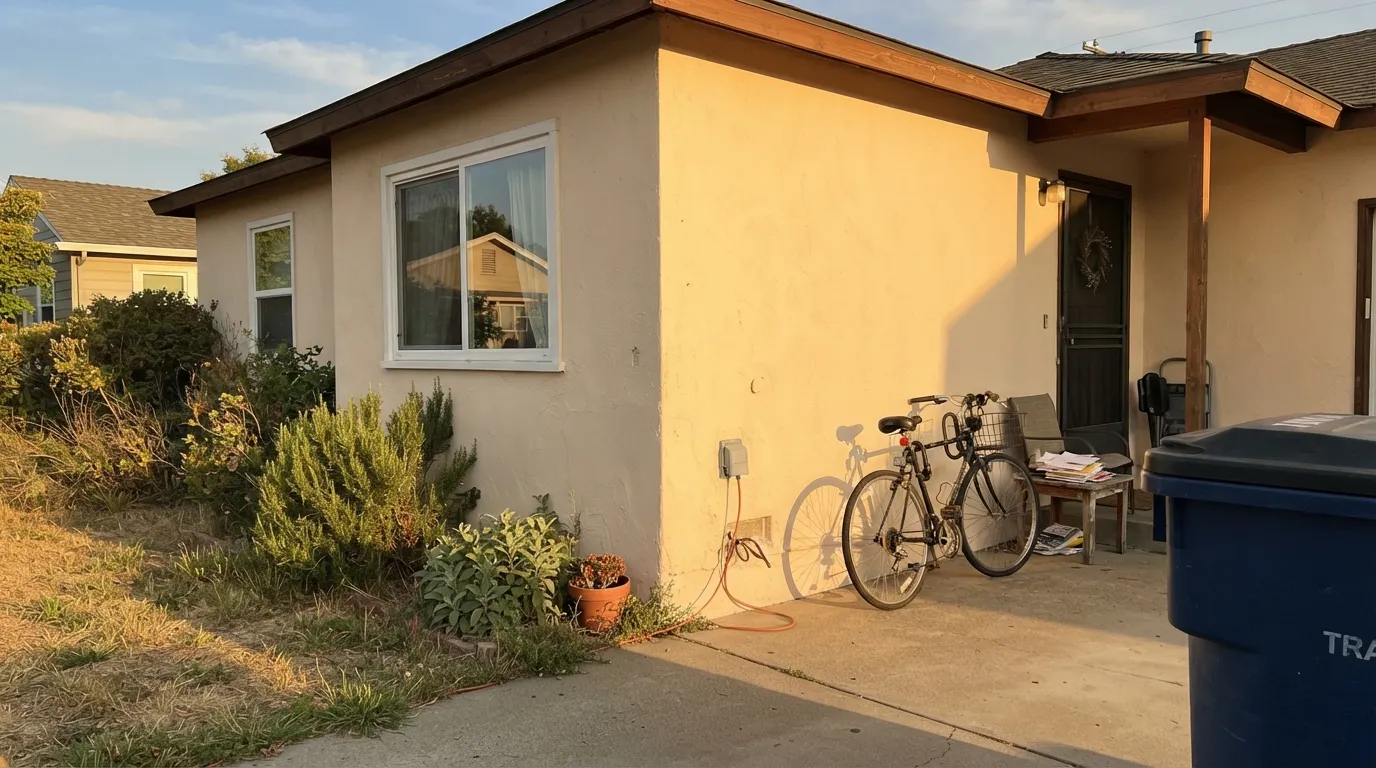
This is the color Dunn-Edwards built its Southwest reputation on. Full sun reads it warm and clean against clay tile, wrought iron and desert plantings; the shaded side of the house will look a full step cooler, so walk the whole exterior with a sample before ordering gallons.
With oak or walnut floors and real daylight it is calm and inviting. In a north-facing room with no lamps it can go flat; step up the bulb wattage or pick a warmer accent to compensate.
It flatters butcher block, brass and terracotta tile. Cool white quartz or blue-grey marble will make the walls look more yellow by contrast — sample against your actual counter before committing.
2700K bulbs deepen the cream at night into something cozy. If the room faces north and stays dim during the day, expect it to look pale and slightly flat until the lamps come on.
With warm stone or wood vanities it's a natural fit. Cool gray or white subway tile will argue with it the same way any warm white does.
Semi-gloss Swiss Coffee trim under mid-tone greige or earth-tone walls softens the contrast the way a stark white would cut. It is a common trim choice on Dunn-Edwards Southwest exteriors, paired with the same color for the walls.
Your Light Is the Risk
Full Southwest sun is this color's home turf — the warmth reads intentional against stucco and tile, not muddy.
Late-afternoon western sun pushes the yellow hard, especially on large stucco walls. This is the exact hour behind most "is it too yellow" complaints.
On the shaded side of the house it cools and calms, losing some warmth without going flat — friendlier here than most creamy whites.
2700K bulbs push it further into cream; cool LEDs flatten the peach but don't erase it — this color never reads truly cool.
Most complaints about Swiss Coffee are a light mismatch. Upload a photo of your actual room and see it on your walls — then ask for the same wall in north light or evening lamps before you buy a single sample.
Need It From Another Brand?
Any paint counter can custom-tint Dunn-Edwards DEW341 directly. If you would rather stay in one brand's own deck, these are the closest stock matches, measured as ΔE2000. Under 2 is a difference you will not see on the wall.
| Brand | Closest color | ΔE | LRV | |
|---|---|---|---|---|
| Sherwin-Williams | CheviotSW 9503 · Sherwin-Williams | 1.3 | 89 | Color page → |
| Behr | Calla LilyPWN-11 · Behr | 1.0 | 91 | Color page → |
| Benjamin Moore | Mountain Peak White2148-70 · Benjamin Moore | 0.9 | 91 | Color page → |
| Valspar | Gauzy WhiteV152 · Valspar | 0.9 | 91 | Color page → |
| PPG / Glidden | White ChipPPG15-06 · PPG / Glidden | 1.6 | 87 | Color page → |
| Glidden | Linwood Beach White71YY 87/078 · Glidden | 1.7 | 87 | Color page → |
Similar Dunn-Edwards Colors
The nearest shades to Swiss Coffee within Dunn-Edwards's own range, ranked by perceptual color distance — useful when you want the same look a touch lighter, darker, or warmer.
WCAG 2.1: AA is 4.5 : 1 for normal text, 3 : 1 for large text, AAA is 7 : 1.
Swiss Coffee vs the Colors You're Also Considering
Every Swiss Coffee sample board has the same rivals on it. The numbers show the real lightness gap — then it comes down to which risk you would rather live with.
Pick this if you're in DE territory and want the warmer, more full-bodied cream longtime Southwest painters actually spec.
Benjamin Moore OC-45 · LRV 84Swiss CoffeePick this if you want the same name with more gray softening the yellow — BM's version is muted where Dunn-Edwards' is saturated.
Pick this for a touch more brightness at nearly the same warmth — Dunn-Edwards sits a few LRV points higher.
Behr 12 · LRV 80Swiss CoffeePick this if Dunn-Edwards isn't sold near you — Behr's Swiss Coffee is the closest warmth and peach undertone at a big-box store.
Swiss Coffee (DEW342, LRV 84) is lighter and cleaner than several of its Dunn-Edwards neighbors. Antique White (DEW351) at LRV 73 is noticeably deeper and reads more clearly as a warm cream, which suits rooms where you want obvious warmth rather than a near-white. If you want walls to stay bright and airy, Swiss Coffee wins; if you want more color on the wall, Antique White does.
Historic White (DET653) at LRV 79 sits between the two, slightly softer and more muted than Swiss Coffee. Finest Silk (DE6127) at LRV 74 is another warm off-white but a step darker and richer.
The practical rule: Swiss Coffee for the highest, freshest light with a hint of warmth, and the lower-LRV options when you want the cream to actually show and the walls to feel enclosed.
Swiss Coffee Across Brands: Why the Same Name Isn't the Same Paint
Swiss Coffee might be the most duplicated color name in American paint. Benjamin Moore, Behr, Valspar and Dunn-Edwards all sell something called Swiss Coffee, and none of the four formulas match. Side-by-side comparisons consistently rank Dunn-Edwards as the warmest and most saturated of the group — more yellow and less gray than Benjamin Moore's OC-45, close in temperature to Behr's version, and noticeably warmer than Valspar's cooler, more neutral take (not yet reviewed on this site).
The practical takeaway: never assume a can labeled "Swiss Coffee" from a different brand will match a Dunn-Edwards wall, even in the same room. Bring the actual DE fan deck chip or a real sample to compare, and if you're touching up or extending a Dunn-Edwards job, buy Dunn-Edwards paint — not a rival brand's color-match.
Swiss Coffee on Southwest Stucco Exteriors
Dunn-Edwards has been the leading paint manufacturer across the Southwest — California, Arizona, Nevada, Texas and New Mexico — since 1925, and Swiss Coffee is one of the reasons stucco houses across that footprint look the way they do. It's a standard choice for Spanish- and Mediterranean-style homes, where a warm, creamy white sits naturally against clay roof tile, wrought iron fixtures and desert landscaping instead of reading stark or clinical the way a brighter white can in relentless sun.
The regional palette built around it tends to stay monochromatic and earthy: soft creamy whites like this one, paired with charcoal or near-black trim for contrast, or with terracotta and burnt-orange accents for a warmer, more traditional Southwest look. Full sun reads it brighter and more saturated than any interior sample will show — walk the actual house at different times of day, since the shaded north or east wall can look a full step cooler than the sun-baked side.
Swiss Coffee With Wood Tones and Kitchen Islands
Warm wood is this color's best company: golden oak, walnut, butcher block and cedar all sit comfortably against it, because the paint's own warmth meets theirs instead of fighting it — one of the few whites that actually flatters orange-leaning builder oak rather than exaggerating it.
For a kitchen, walls in Swiss Coffee with a charcoal-greige island like Benjamin Moore's Chelsea Gray is a dependable pairing: the island carries the contrast, brass or matte-black hardware ties it together, and the cream walls stay warm without competing with cool countertops. Test the wall color against your actual counter first — cool white quartz or blue-grey stone is the one material combination that consistently disappoints.
Three Ready Palettes Built on Swiss Coffee
A color is never alone on the wall. These are complete combinations in the 60-30-10 pattern, with the reason each one holds together. Every one opens in the visualizer.
The classic Southwest handoff: a warm stucco white, a near-black frame for the windows and shutters, and one terracotta note at the door that echoes clay roof tile. Full sun keeps all three grounded instead of glaring.
Try this palette in your roomOne paint at two sheens keeps a small house feeling continuous; Anonymous adds a single quiet earthy note without introducing a second white to argue with the first.
Try this palette in your roomChelsea Gray carries the contrast on the island while the cream walls stay warm and out of the way of brass hardware and butcher block. Test both against your actual counter — cool stone is the one material this pairing doesn't love.
Try this palette in your roomSwiss Coffee FAQ
is dunn-edwards swiss coffee the same color as benjamin moore swiss coffee?
No. They share a name, not a formula. Side by side, Dunn-Edwards' version is the warmer, more saturated one — Benjamin Moore's OC-45 has more gray mixed in, which mutes the yellow. Both sit at LRV 83 in our deck, so the brightness is nearly identical; the color is not.
will it look too yellow on my stucco house?
In strong, direct sun — especially on the west side in late afternoon — it reads distinctly warm and can tip toward yellow. That's the paint being honest about its undertone, not a bad application. On the shaded side of the house, or under overcast winter light, it reads calmer.
what trim color goes with swiss coffee walls?
Swiss Coffee itself in semi-gloss is the classic Dunn-Edwards move — same color, two sheens. If you want contrast instead, a charcoal or near-black like Sherwin-Williams Iron Ore reads crisp against it without fighting the warmth.
is it good for a whole-house southwest exterior?
It's one of the most common choices in Dunn-Edwards' own territory for exactly that reason — it holds its warmth in strong sun, pairs naturally with clay roof tile and desert landscaping, and doesn't need a second color to look finished.
does it work with grey or blue-grey stone and tile?
Not well. Cool blue-grey stone pushes this color's yellow forward by contrast, the same problem every warm white has next to cool stone. If your stone is cool-toned, pick a grayer white, like Benjamin Moore's Swiss Coffee, instead.
how does it compare to behr's swiss coffee?
Close cousins — both lean warmer and more peachy than Benjamin Moore's version. Behr's sits a little lower in LRV (80 versus Dunn-Edwards' 84 in our deck), so Dunn-Edwards reads a touch brighter, but the two are the most similar pairing among the major Swiss Coffees.
Have you painted with Swiss Coffee?
Rate it — one tap helps the next reader decide.
Ask a Question