White Picket Fence
Dunn-Edwards' crisp workhorse white, reviewed honestly: where the faint yellow stays quiet, the pairings that make it look dirty, and what to pick instead.

Jessica has spec'd whites and neutrals for more than 300 rooms and keeps a sample wall of painted drawdowns in her studio. Every color review is checked against real reader rooms in the comments and re-tested when a formula changes. About the testing process →
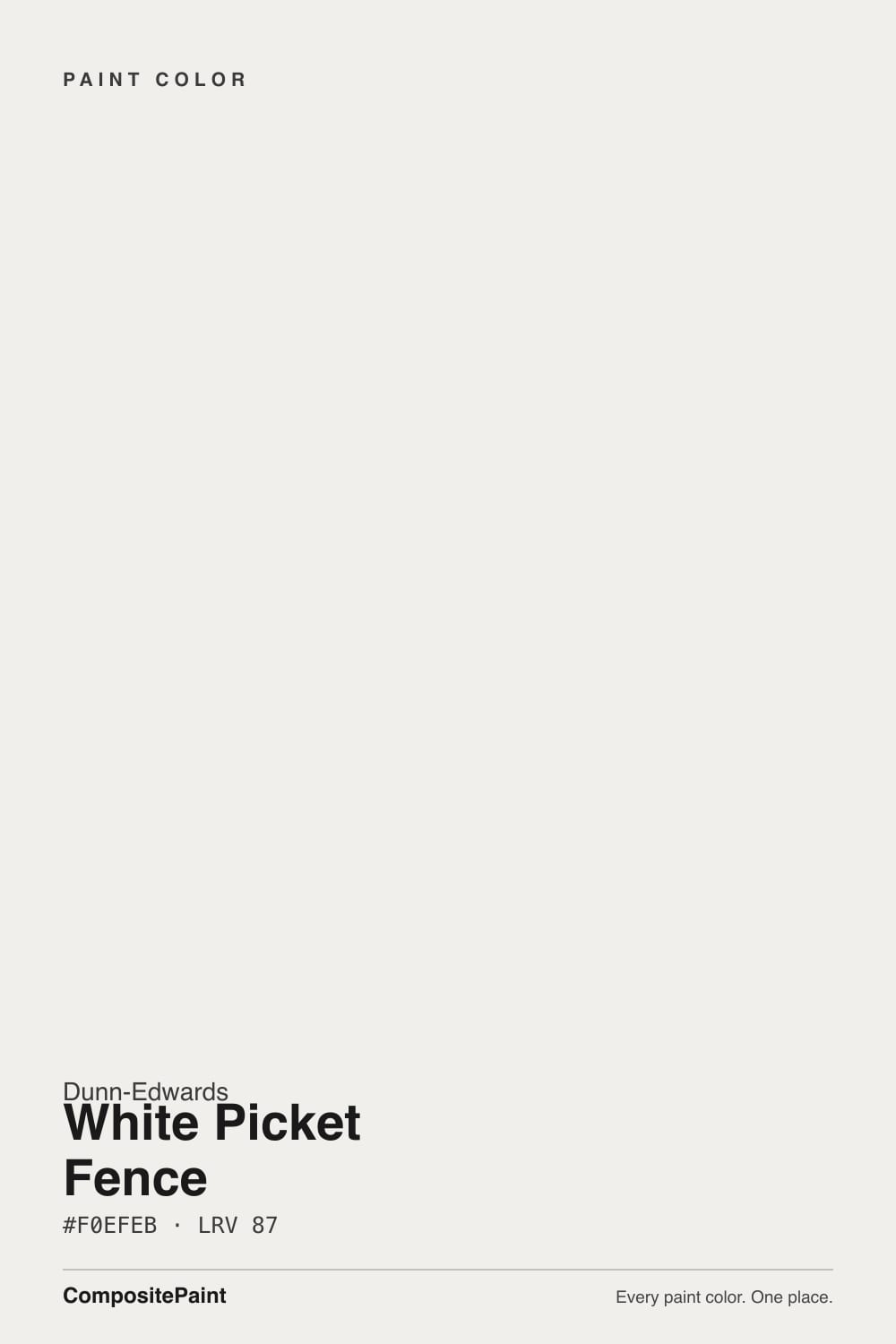
- 1Classic Gray74
- 2Alabaster82
- 3White Picket Fence87
- 4Sleek White92
- 5Ultra Pure White97
The Fast Verdict
White Picket Fence is the white you buy at a Dunn-Edwards counter when you want the room to look clean, not creamy and not hospital. At LRV 87 it is a near-neutral with a yellow hue and almost no chroma — guests still call it white, walnut still looks expensive. Chris Barrett, Colega Architects, and a string of California exteriors have used it as a default, not a statement. It is a workhorse. Put a brighter true white on the trim and it suddenly looks unwashed.
Whole-house walls + trim in decent daylight · kitchen cabinets · California exteriors with dark or gray trim · anyone who wants a clean white with a pulse
Your trim stays a brighter true white · you wanted cream · the room is a dim north cave · the main stone is cool grey marble
- Crisp enough to still be called white, warm enough to live with
- Whole-house, cabinets, and exterior from one can
- Flatters walnut, oak, and brass without going cream
- Same brightness as Whisper, cleaner and less Dove-soft
- Low chroma — stays a white instead of turning into a color
- Looks unwashed next to Warm White, Extra White, or Chantilly Lace
- Dim north light strips the crisp and leaves a slightly dingy wall
- Late west sun can flash a faint yellow for an hour
- Too quiet if you wanted cream, too warm if you wanted gallery-cool
What Color Is White Picket Fence, Really?
A crisp white sitting on a yellow hue with the chroma turned almost all the way down. Dunn-Edwards lists DET648 in the Then, Now & Forever collection as a Trending Today white, and the Munsell (5.4Y at chroma 0.3) is the honest version of that chip: yellow family, barely any pigment body. Official copy calls the warmth faint; Los Angeles designer Chris Barrett called the same can cooler when she needed a white that was not Swiss Coffee or Warm White. Both reads are true. Next to a cream it looks clean. Next to Extra White or Warm White it looks like it has a tint. It is not a Color of the Year, not a national default, and not a viral paint — it is the Western workhorse designers reach for when the job is simply white.
At LRV 87 it shares a number with Whisper, sits two points above White Dove (LRV 85), six under Warm White (LRV 93), and four above Dunn-Edwards Swiss Coffee (LRV 83). That gap is the useful part. There is enough bounce for whole-house walls, cabinets, and a stucco body without the empty glare of a 93-LRV true white. On millwork it reads as painted wood rather than plastic. On cabinets it is luminous without going factory-bright. Park Warm White on the casings and the six-point jump names the yellow that was hiding. The number is high enough that roller laps still show, just not as loudly as they do on Warm White.
Undertone in one line: the faintest warm yellow — never pink, never green, never blue. In south light it reads as a finished white. In late west sun the 5.4Y can flash a soft cream for an hour. In dim north light it loses the crisp and goes slightly dingy. If your sample looks buttery, that is a cooler neighbor or hot afternoon sun, not a bad batch. If it looks gray, look at the bulbs and the sky before you blame the gallon.
Where It Shines
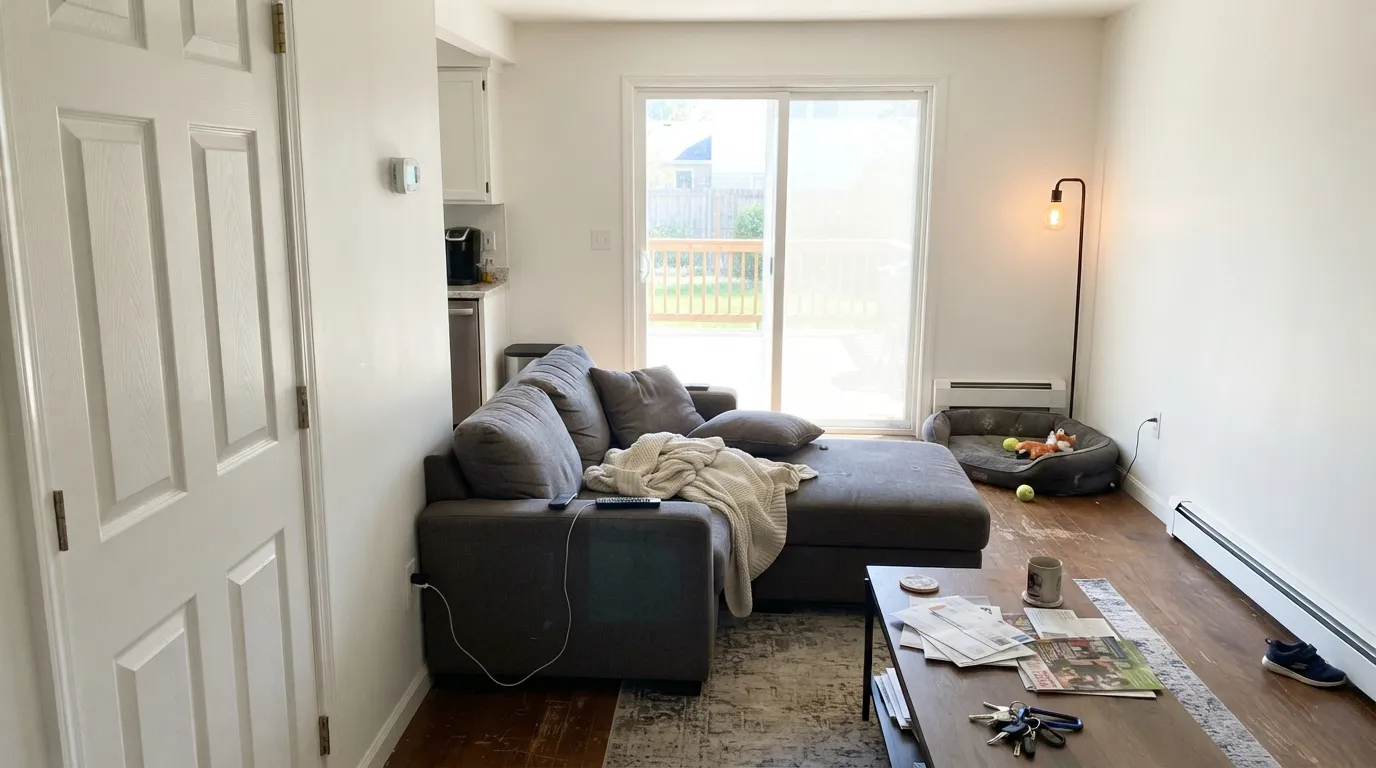
Give it real daylight, warm wood, and no brighter white nearby, and it does the rare thing a clean white is supposed to do: stay white without going cold. Whole-house walls are the actual job — one color at two sheens, eggshell on the field, semi-gloss on the woodwork. Kitchen cabinets are the listing Dunn-Edwards keeps repeating: satin boxes that still read as white against brass and walnut. Outside, a mid-century California house ran it as the body with gray accents and a colored door, which is the pairing the color was mixed for.
Where It Fails
Almost every unhappy White Picket Fence story is a pairing or a light story, not a bad mix. The yellow is real, it is tiny, and three situations make it loud. None of them are the paint's fault — but if your room matches one, this is not your white, and another coat will not hide it.
The most common bad review is a pairing mistake: White Picket Fence walls, Warm White, Extra White, or Chantilly Lace on the trim. The brighter white wins, and this one looks unwashed — faintly creamy, even dingy, by comparison. The fix is the one-color rule: walls, trim, and ceiling all DET648, sheen change only. If you insist on a snap, go darker (a greige, a navy door), never brighter.
North light is cool and grey, and a chroma-0.3 white has almost nothing to push back with. The wall loses its crisp and reads slightly dingy — not cozy cream, not clean white. Warm lamps help after dark and do nothing at 2 p.m. Use Dunn-Edwards Swiss Coffee if you want cream that still glows in a cave, or keep this color for rooms with real sun.
Carrara-look stone and grey plank sit at the opposite temperature and shove the faint yellow into the open. Cabinets that looked white on the chip read cream next to grey-veined quartz; walls above grey LVP pick up a soft nicotine cast. With cool floors and counters, use Warm White or Lighthouse on the boxes and save White Picket Fence for a warmer room.
Room by Room
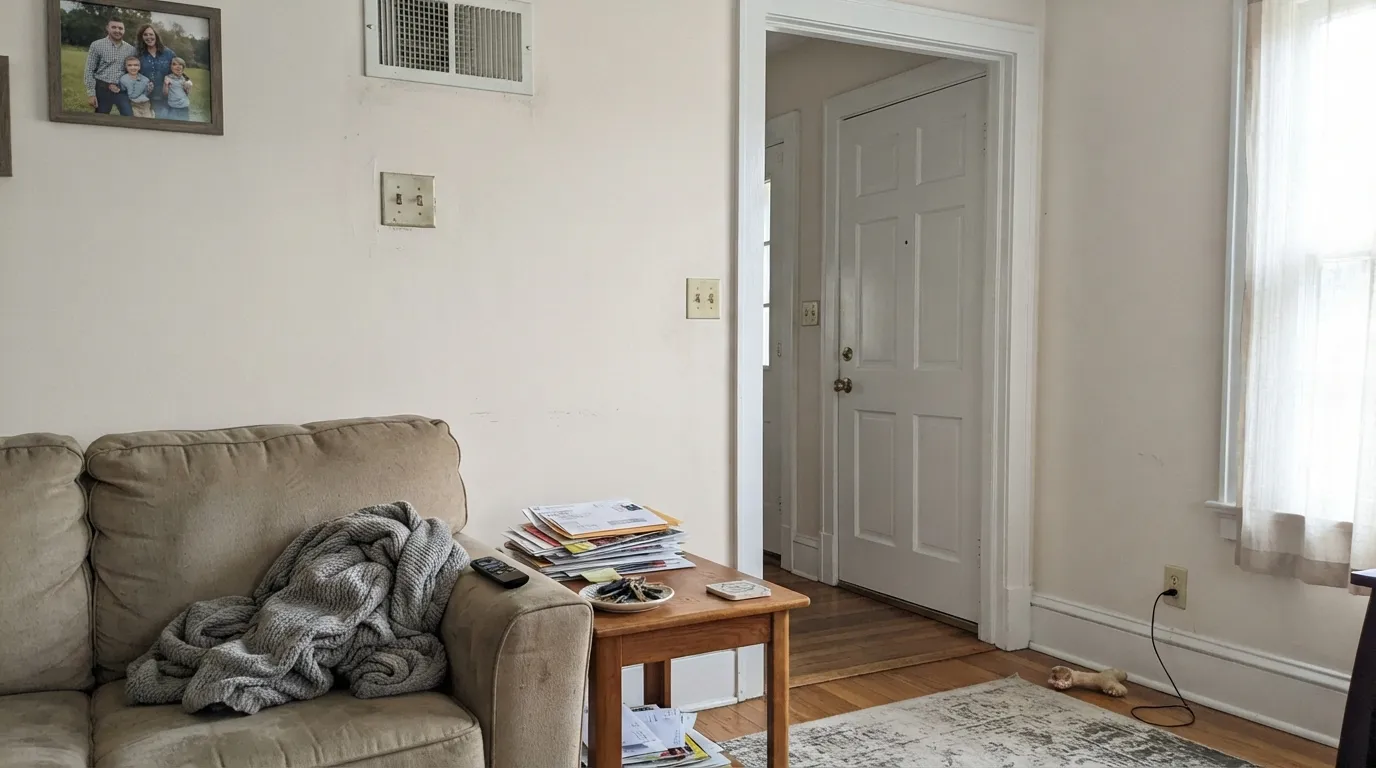
South- and west-facing living rooms are the light this white was mixed for: crisp without going empty, warm enough that walnut and oak look deliberate. Colega Architects ran it in a library-living room with walnut cabinetry, velvet on the walls, and a sheen change overhead. Eggshell, same color on trim in semi-gloss. A closed, dim living room is the skip.
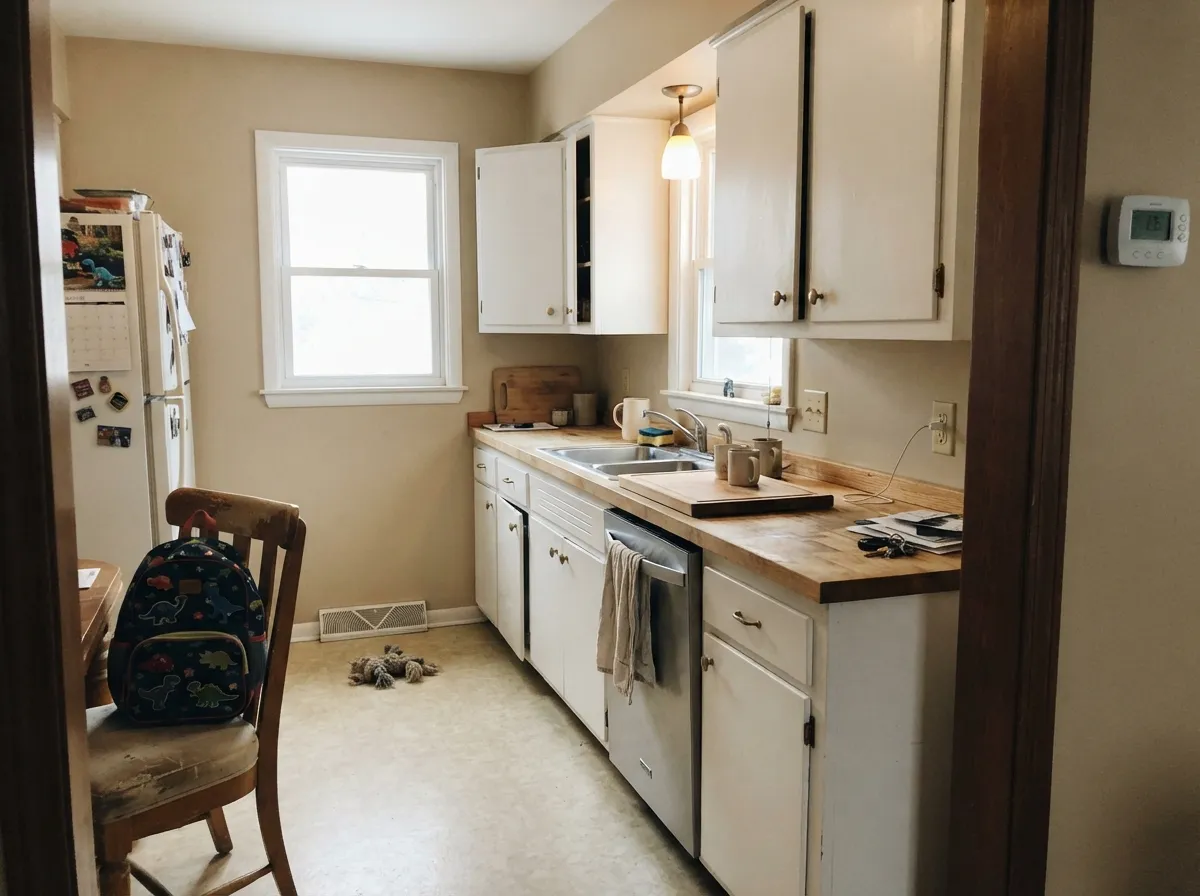
Dunn-Edwards keeps putting DET648 on its kitchen-cabinet page as a main box color and as the light half of a two-tone kitchen. Satin White Picket Fence uppers against a mid-tone lower, or a full run of boxes under brass and walnut, is the move. Cool grey quartz is the sample-first surface. Use a urethane-fortified cabinet enamel.
Chris Barrett used it through a La Jolla primary and a children's bedroom when she wanted cooler than her usual Warm White. A sunlit bedroom stays restful; under 2700K bulbs it turns a half-step creamier at night. A north cave will go dingy. If you want gallery-crisp, this is the wrong can — Warm White is the bright one, Whisper is the Dove-soft one.
Warm stone, wood vanities, brass: it looks settled, and eggshell or a bath-rated satin wipes down. Grey porcelain, blue-grey subway, chrome-and-Carrara: it argues, and the wall goes faintly yellow. Colega used eggshell in baths for durability; that is still the right sheen.
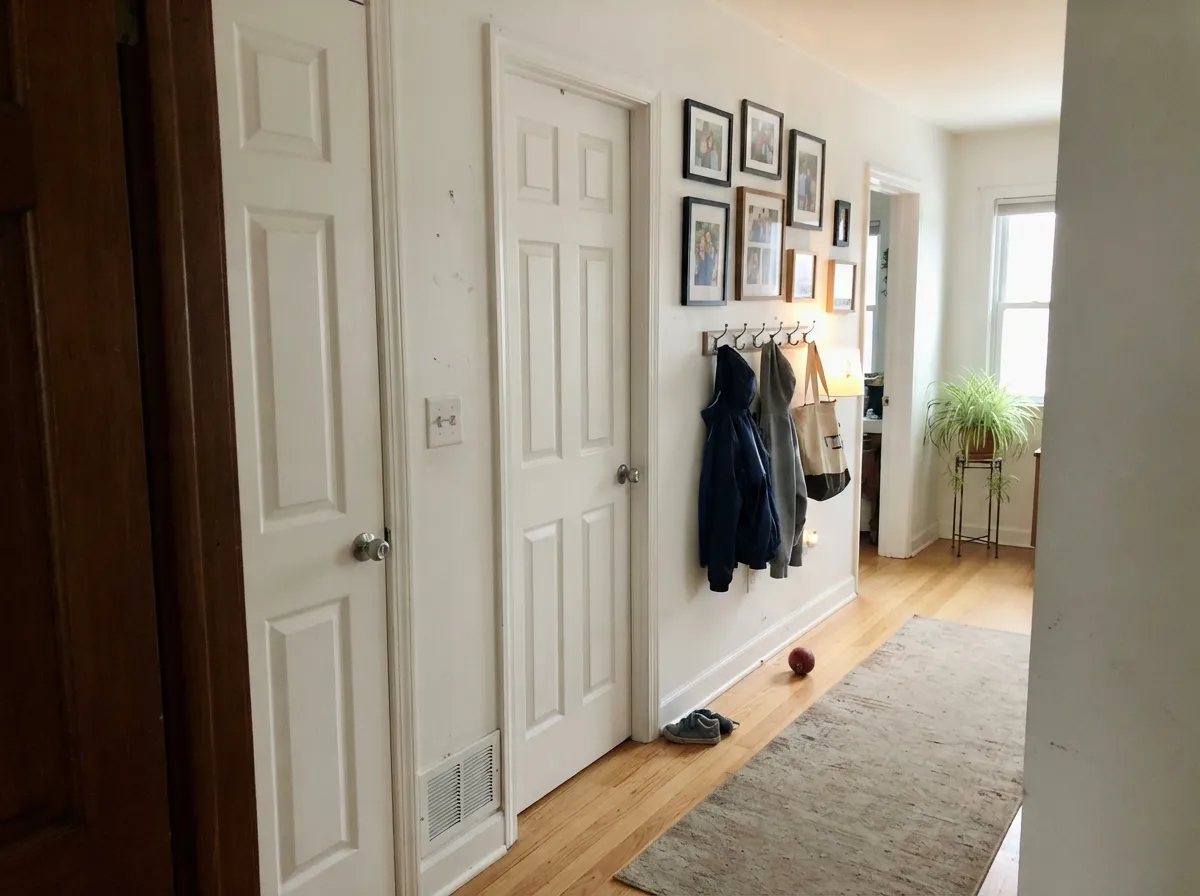
One-color houses work: eggshell walls, semi-gloss casings and doors, flat on the ceiling. As a trim white under sage or greige it is softer than Extra White and cleaner than Whisper. Do not use it as the wall color against Warm White woodwork — the walls will look dirty. Do not use it as trim against Warm White walls either; the trim will look creamy.
On stucco and siding in Western sun it reads as a clean house white rather than a refrigerator. Rebecca and Jared Raskind used it as the body of a mid-century California renovation with gray accents and a colored door — that is the pairing that keeps LRV 87 from looking unfinished. Walk the shady north elevation with a sample; it will read a step creamier than the sunny south.
Your Light Is the Risk
Hard, even daylight is the light this white was mixed for. The faint yellow stays quiet and the wall reads crisp, not cream. Whole-house walls are safest here.
Cool grey daylight has nothing for a chroma-0.3 white to work with. The wall loses its snap and reads slightly dingy. Do not use it as a four-wall color here.
East light is the cleanest, coolest read. Midday south is honest crisp-white. Late west sun can flash a softer yellow for an hour; it is the same paint, louder, not a new color.
2700K bulbs keep it civil and faintly creamy — the bedroom read. Cool 4000K–5000K LEDs flatten it toward a tired gray-white. Swap the bulbs before you repaint.
Most complaints about White Picket Fence are a light mismatch. Upload a photo of your actual room and see it on your walls — then ask for the same wall in north light or evening lamps before you buy a single sample.
Need It From Another Brand?
Any paint counter can custom-tint Dunn-Edwards DET648 directly. If you would rather stay in one brand's own deck, these are the closest stock matches, measured as ΔE2000. Under 2 is a difference you will not see on the wall.
| Brand | Closest color | ΔE | LRV | |
|---|---|---|---|---|
| Sherwin-Williams | Extra WhiteSW 7006 · Sherwin-Williams | 1.2 | 86 | Color page → |
| Behr | Frost57 · Behr | 1.0 | 87 | Color page → |
| Benjamin Moore | Wedding Veil2125-70 · Benjamin Moore | 1.6 | 87 | Color page → |
| Valspar | Du Jour7002-6 · Valspar | 1.0 | 86 | Color page → |
| PPG / Glidden | Magical MoonlightPPG1045-1 · PPG / Glidden | 1.3 | 85 | Color page → |
| Glidden | Magical MoonlightPPG1045-1 · Glidden | 0.8 | 86 | Color page → |
Similar Dunn-Edwards Colors
The nearest shades to White Picket Fence within Dunn-Edwards's own range, ranked by perceptual color distance — useful when you want the same look a touch lighter, darker, or warmer.
WCAG 2.1: AA is 4.5 : 1 for normal text, 3 : 1 for large text, AAA is 7 : 1.
White Picket Fence vs the Colors You're Also Considering
Every White Picket Fence sample board has the same rivals on it. The numbers show the real lightness gap — then it comes down to which risk you would rather live with.
Pick this when you want the cleaner, more white-looking version at the same LRV, a touch less Dove-soft.
Dunn-Edwards DEW340 · LRV 87WhisperPick this if you wanted Dunn-Edwards' White Dove — a slightly creamier, grayed wall white that is the safer whole-house default.
Pick this if you are already at a Dunn-Edwards counter and want a cleaner, slightly brighter white instead of Dove's greyed cream.
Benjamin Moore PM-19 · LRV 85White DovePick this if you want the national default — grayed warmth, the safest warm white in that deck.
Pick this for the walls. White Picket Fence is the livable field color; Warm White on the same plane makes this one look dirty.
Dunn-Edwards DEW380 · LRV 93Warm WhitePick this when the job is trim, ceilings, or cabinets that need to snap brighter than the walls — it is a true white wearing a warm name.
Pick this for a whole-house white that still has a faint warm pulse Extra White will not give you.
Sherwin-Williams SW 7006 · LRV 86Extra WhitePick this if you want the sharpest trim white and you already live in Sherwin-Williams — it is crisper, and riskier on four walls.
White Picket Fence Coordinating Colors
The rule is: do not put a brighter white next to it. White Picket Fence wants itself on the trim, a real mid-tone for contrast, and one dark note. It sits comfortably next to Stonish Beige, Light Sage, Hale Navy, and Iron Ore. Whisper is the creamier sibling at the same LRV; Warm White is the trim snap only if you sample a board first — many rooms make DET648 look dingy against it. These are the partners that keep showing up in rooms that work:
A Workhorse, Not a Launch
White Picket Fence has no Color of the Year plaque and no national catchphrase. Dunn-Edwards filed DET648 in Then, Now & Forever under Trending Today, which is a merchandising slot, not a fame claim. What it does have is a short list of designers who treat it as a default. Chris Barrett used it through a La Jolla house when she wanted cooler than Warm White and Swiss Coffee. Bogdan Tomalevski of Colega Architects picked it for a library-living room with walnut cabinetry, then changed sheens — velvet on the walls, flat on the ceiling, eggshell in the baths — so the white itself did the quiet work. Rebecca and Jared Raskind put it on a mid-century California exterior with gray accents.
That is the honest story: a regional workhorse that behaves, specified by people who already live in Dunn-Edwards. If you wanted the paint everyone on the internet already argued about, that is White Dove. If you wanted the can your Western painter actually has on the truck, this is closer.
White Picket Fence With Wood Tones and Floors
Walnut is the pairing Colega Architects actually built a room around, and it is the color's best friend — the faint yellow in DET648 meets the red-brown in walnut halfway, so both sides look deliberate. White oak, butcher block, and most honey oak sit comfortably for the same reason. If your floors are orange-leaning builder oak, this white is quiet enough that it usually softens the orange instead of amplifying it, but sample a board above the actual floor.
The one flooring that needs a large sample first is cool grey LVP or grey-washed wood. Grey floors pull the yellow into relief, and the wall can read slightly creamy against them. Warm rugs and brass often fix it; a whole-house grey plank often does not. Metals are easy: unlacquered brass, antique bronze, and matte black all work. Polished chrome is the one that leans cold against the faint warmth.
Three Ready Palettes Built on White Picket Fence
A color is never alone on the wall. These are complete combinations in the 60-30-10 pattern, with the reason each one holds together. Every one opens in the visualizer.
One color at two sheens is how this white avoids looking dirty. The sheen change separates walls from woodwork; Iron Ore on the door is the single dark note an LRV-87 house needs so it does not read unfinished.
Try this palette in your roomThis is the cabinet job Dunn-Edwards actually lists: crisp white boxes against the Southwest's default stucco beige. Hale Navy on the island grounds the scheme so brass hardware looks deliberate. Warm quartz and walnut belong here; grey stone does not.
Try this palette in your roomThe Raskind mid-century read: a crisp white body, gray framing, one darker door. Iron Mountain keeps the white from flashing unfinished at noon; Hale Navy is the accent the street actually sees. Sample the shaded elevation — it will look a step creamier than the sunny side.
Try this palette in your roomWhite Picket Fence FAQ
Is White Picket Fence warm or cool?
Barely warm. It is a yellow-family white with almost no chroma, so in good daylight most people read it as a clean white rather than a cream. Chris Barrett called it cooler than Dunn-Edwards Swiss Coffee and Warm White, which is the right comparison: it is not icy, and it is not cream. In dim north light it drifts toward dingy. In late west sun it can flash yellow for an hour.
What trim color goes with White Picket Fence walls?
White Picket Fence itself, in semi-gloss. A brighter trim white — Warm White, Extra White, Chantilly Lace — makes the walls look dirty. That is the most common mistake with this color. If you want contrast, go darker (a greige, navy, or near-black), never brighter.
Is it good for kitchen cabinets?
Yes — that is one of the jobs Dunn-Edwards actually lists it for. Satin boxes look crisp against a beige or greige wall, and they flatter brass, walnut, and butcher block. Sample against cool grey quartz before you commit the whole kitchen. Use a urethane-fortified cabinet enamel.
How does it compare to Whisper?
They share LRV 87. Whisper is Dunn-Edwards' White Dove — grayed, slightly creamier, the safer default. White Picket Fence is the cleaner, more white-looking version of the same brightness. The difference is temperature, not light bounce. Sample both on the same wall at 4 p.m. and at night under your actual bulbs.
Does it work on exteriors?
Yes. Dunn-Edwards shows it as a siding color, and a mid-century California renovation used it as the body with gray accents. Expect it to read brighter and crisper in full sun than indoors, and a step creamier on the shaded north side. Give it dark or gray trim so the house does not look unfinished.
Will it look yellow in afternoon sun?
It can, for about an hour. The hue is 5.4Y at chroma 0.3, so late west light can pull a soft cream flash. It is the same paint getting louder, not a new color, and it settles back once the sun drops. If any yellow is a dealbreaker, sample the west wall at 6 p.m. before you commit, or look at Warm White — which has almost no hue to flash.
Have you painted with White Picket Fence?
Rate it — one tap helps the next reader decide.
Ask a Question