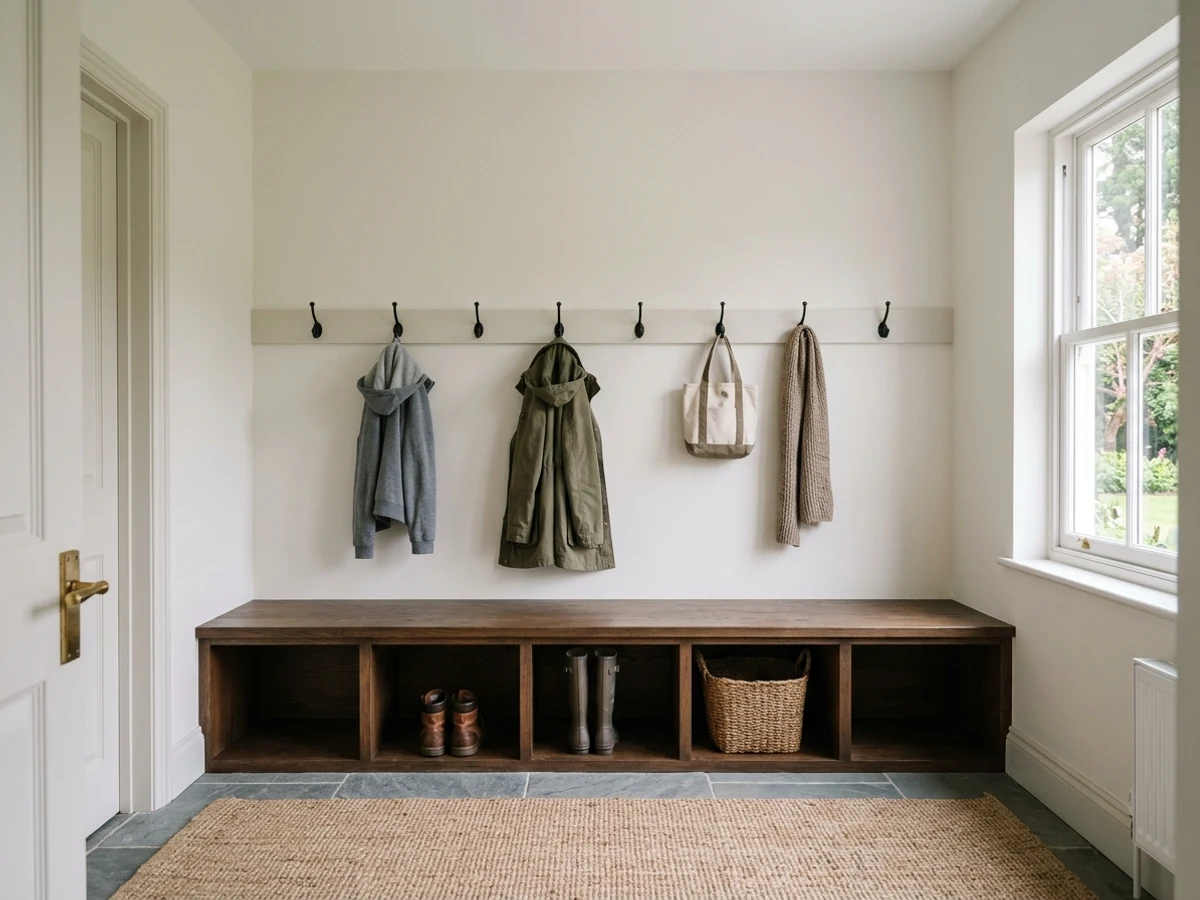
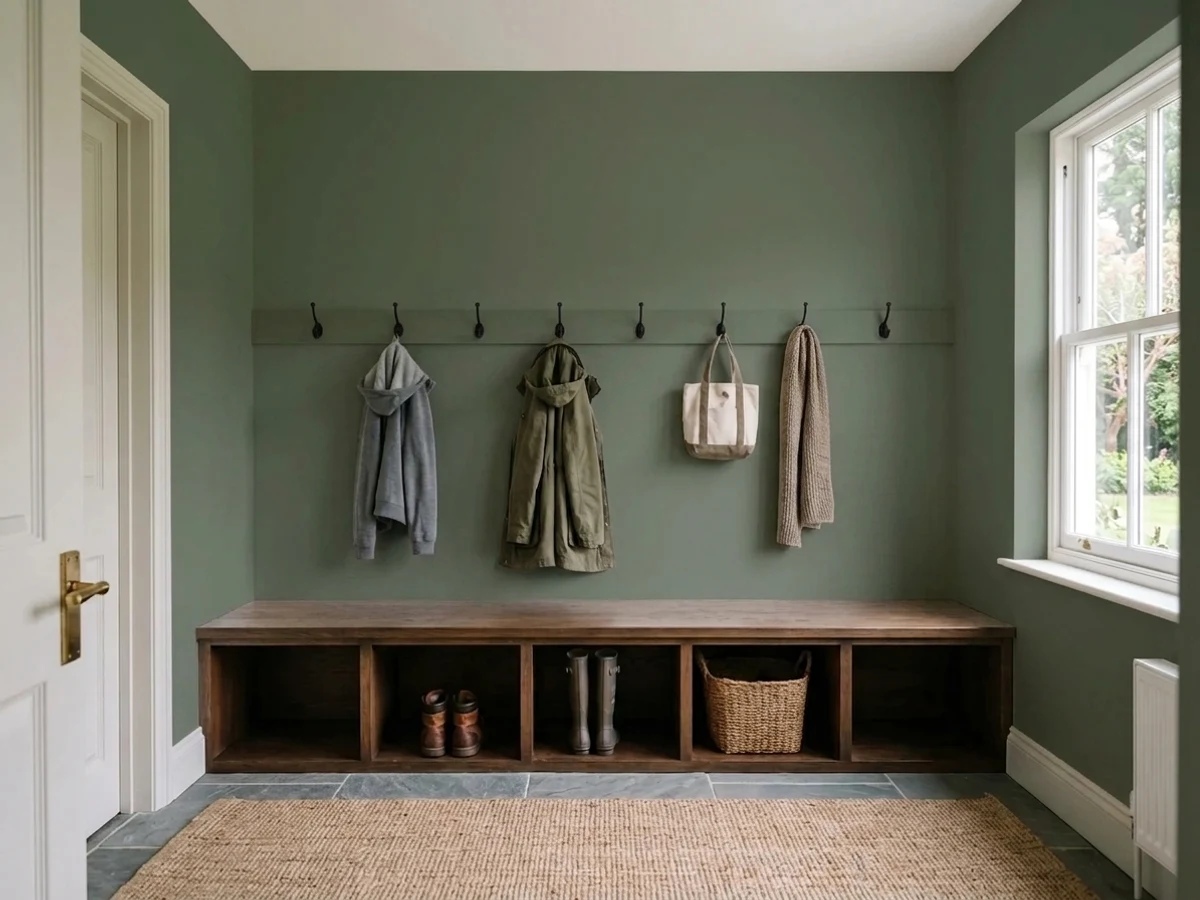
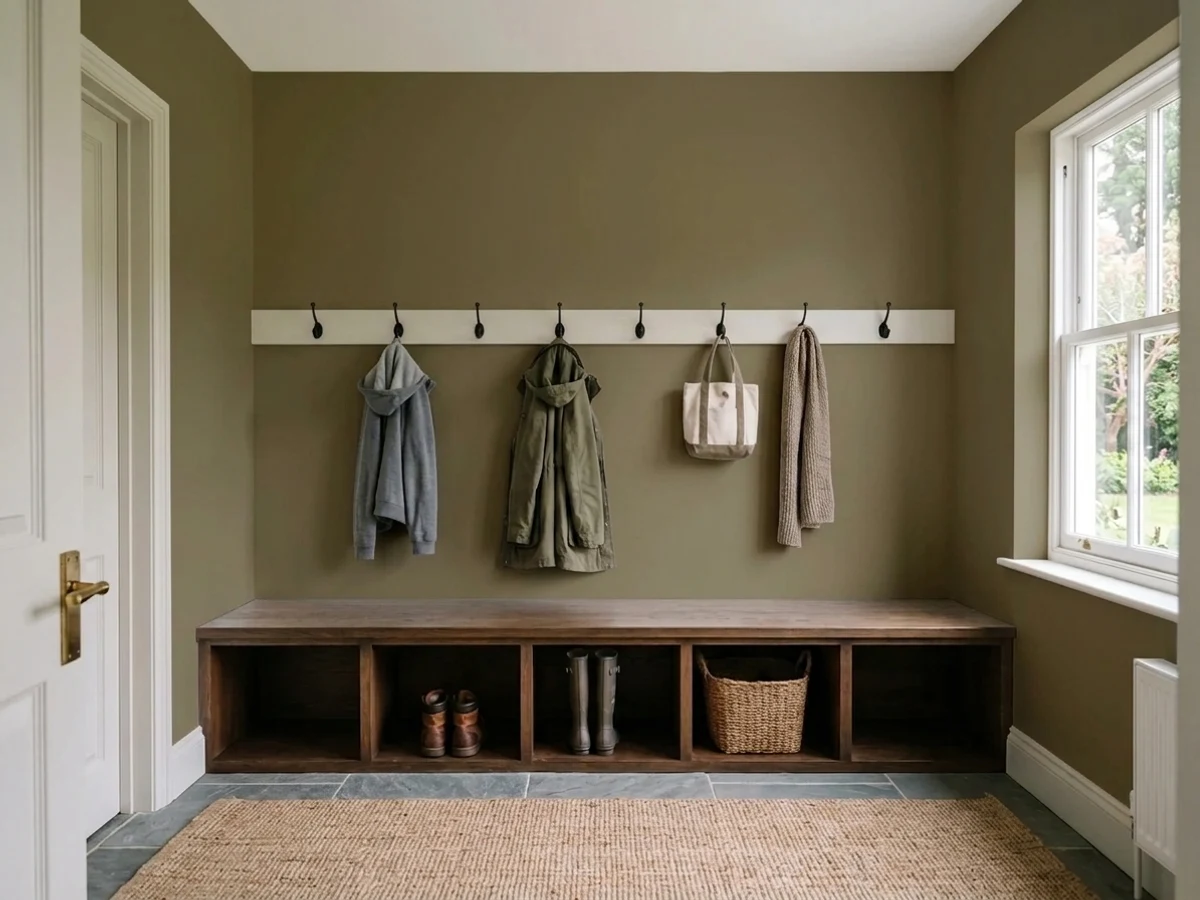
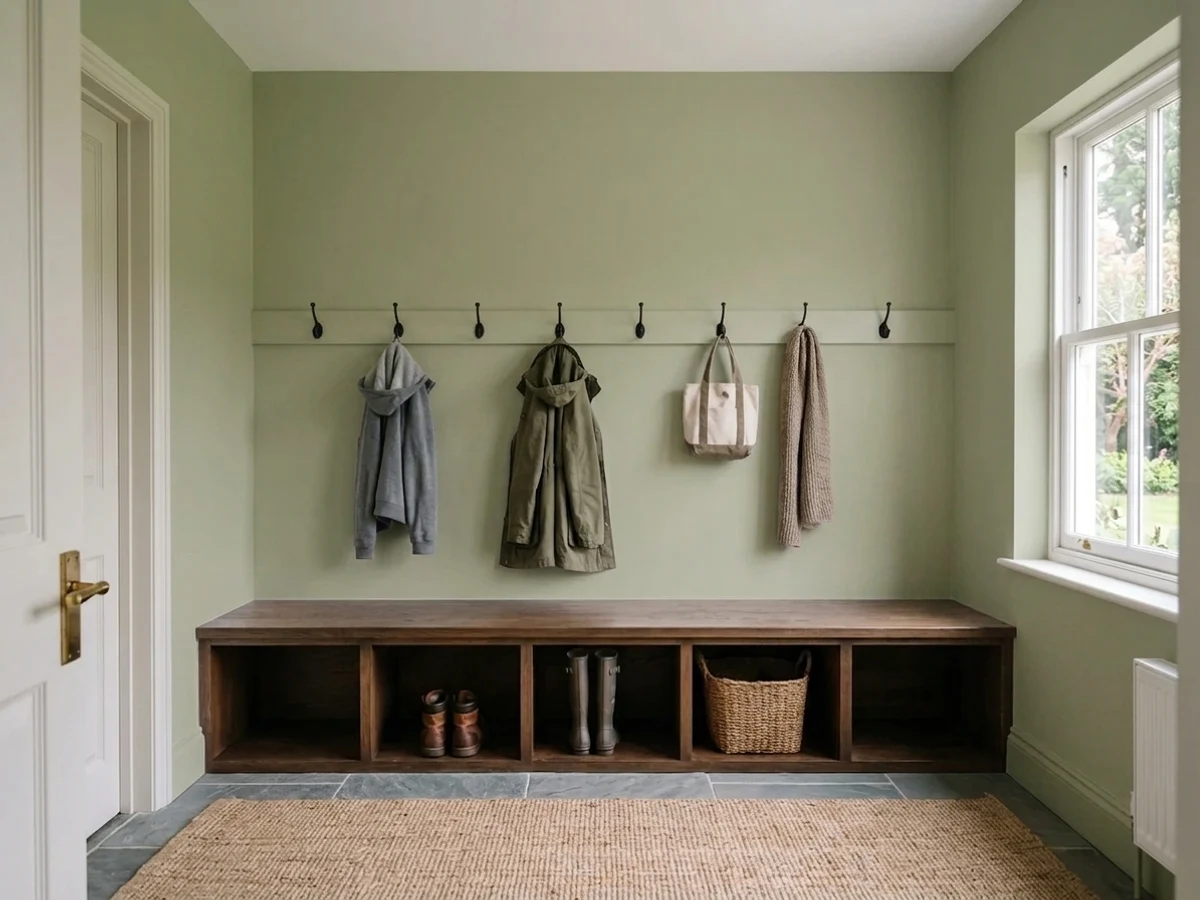
Room Colors · Green Mudroom
8 Best Green Mudroom Paint Colors for 2026
ideas, combinations, and real rooms
8 curated picks from real green mudrooms — with the exact colors, honest reasons why, and the combinations that hold the room together.

Former interior stylist who can spot a green undertone from across a room. Jessica writes the color and mood pieces — what to choose, what pairs, and why your "white" looks pink.
The Fast Answer
Don't want to read 8 picks? These four are the safe answers.

Top Picks for the Green Mudroom
Tap a shade to see the green mudroom in it, then try it on your own room.
Green Mudroom Color Trends 2026 — What's In, What's Out


- Sterile All-White Mudrooms — The all-white, gallery-clean mudroom is losing ground to warmer, grounded green tones that hide daily wear.
- Bright Kelly Green Accents — Punchy, primary-toned green feels less natural than 2026's earthier, deeper green palette.
- Cool Mint Green Trim — Pale, cool-cast mint trim reads dated next to the warmer, more saturated greens taking over entry spaces.
The 8 Best Green Mudroom Paint Colors
Every pick below is a real rendered green mudroom, not a chip. The lead color first; the swatches are the full scheme in the photo — walls, furniture, textiles, accent.

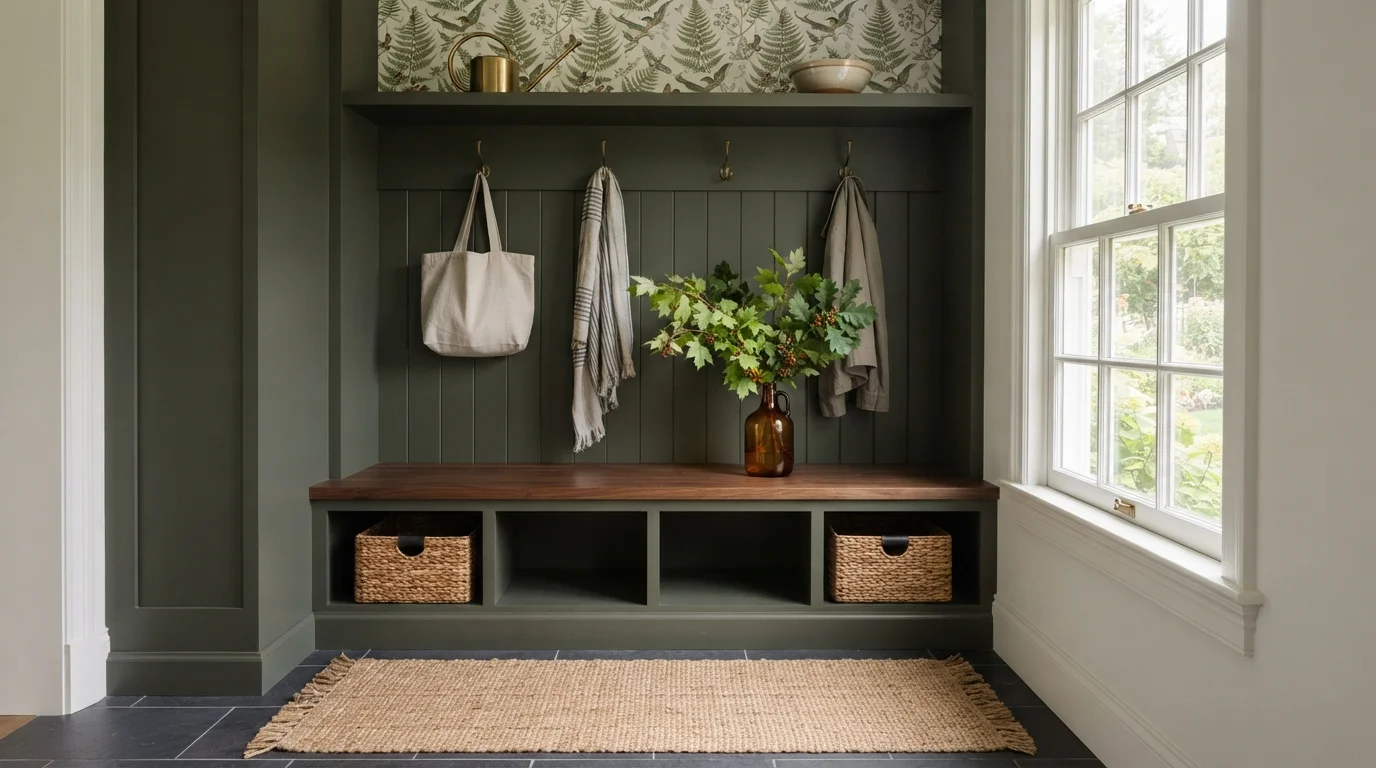
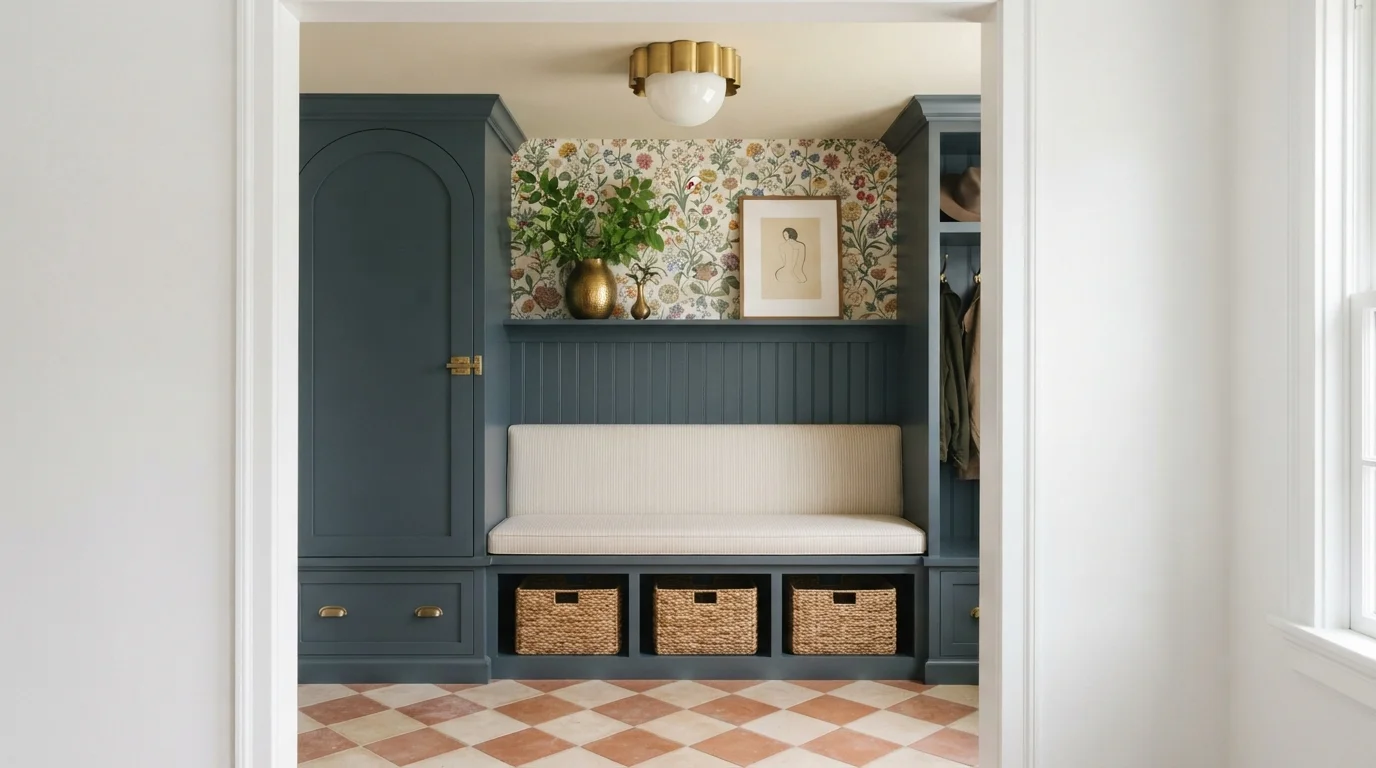
Step into a charming entryway where deep forest green woodwork meets leafy botanical wallpaper and cozy woven textures.
Forest green is a deep, grounding shade pulled straight from nature. In this mudroom, rich green covers the vertical wall paneling and built-in bench, paired with clean white window trim and airy botanical wallpaper. The space feels snug, fresh, and remarkably peaceful. The pairing works seamlessly because deep plant greens always balance beautifully with warm wood surfaces and woven baskets. It is a fantastic look for anyone looking to bring relaxed cottage charm into an everyday drop zone.
SEE NORTH END ON YOUR WALLS →
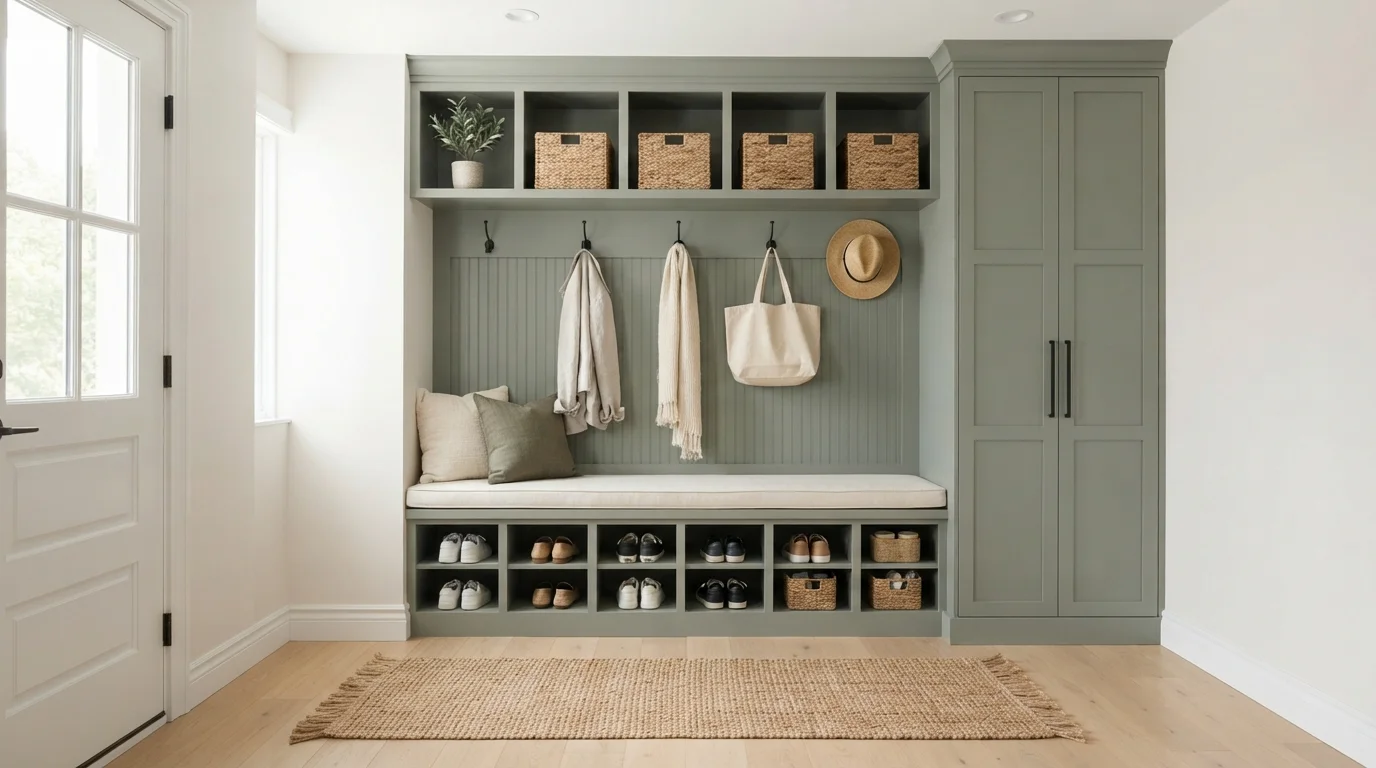
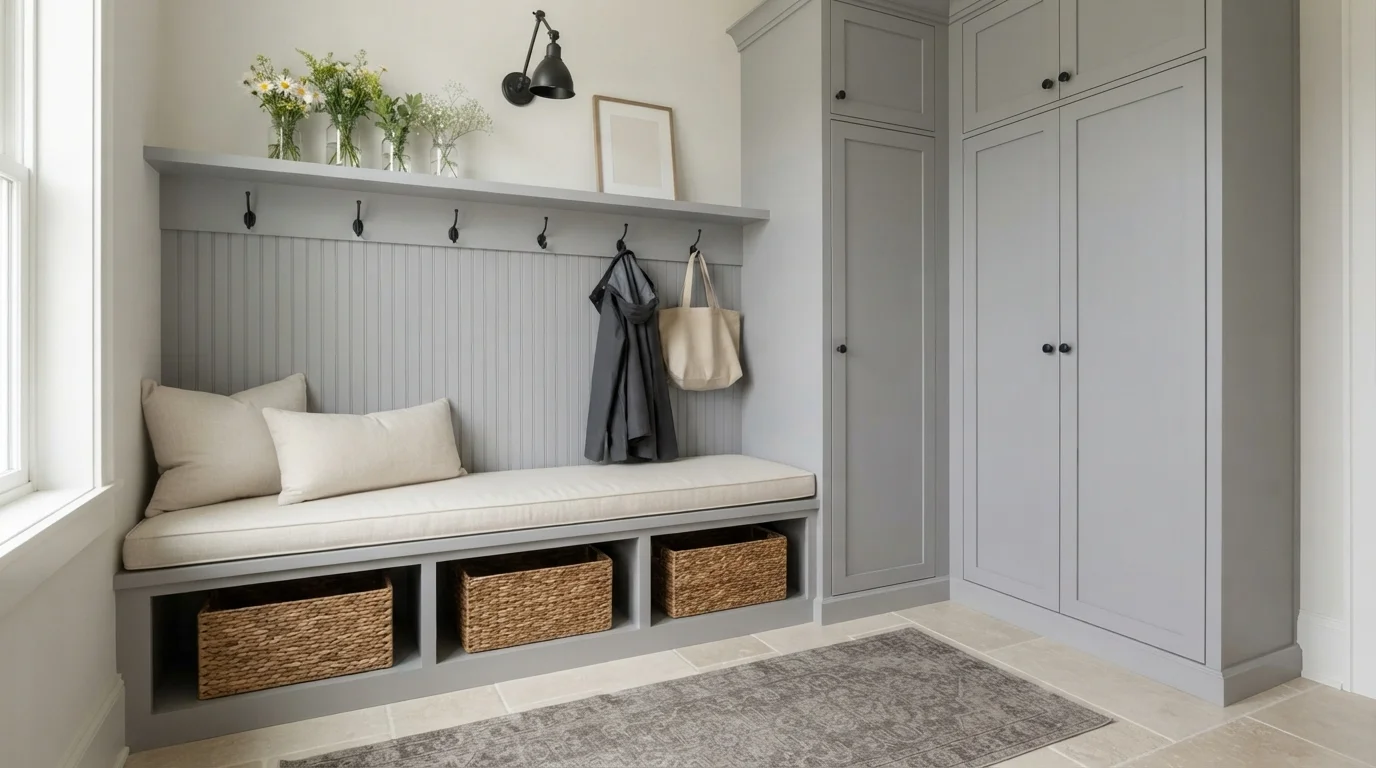
Soft earthy green cabinetry and warm woven textures turn this organized entryway into a calm, welcoming haven.
Sage green is a soft, earthy green with gentle gray notes. In this entryway, the built-in storage bench, beadboard back, and tall side closet are painted in this relaxing green, set neatly against warm cream walls. The space feels tidy, peaceful, and grounded the moment you step inside. Earthy textures like woven baskets, light linen, and a braided jute rug work naturally with the green to make the nook feel fresh. It is the perfect choice for anyone wanting an organized entryway that feels quiet and restful.
SEE HACIENDA WHITE ON YOUR WALLS →
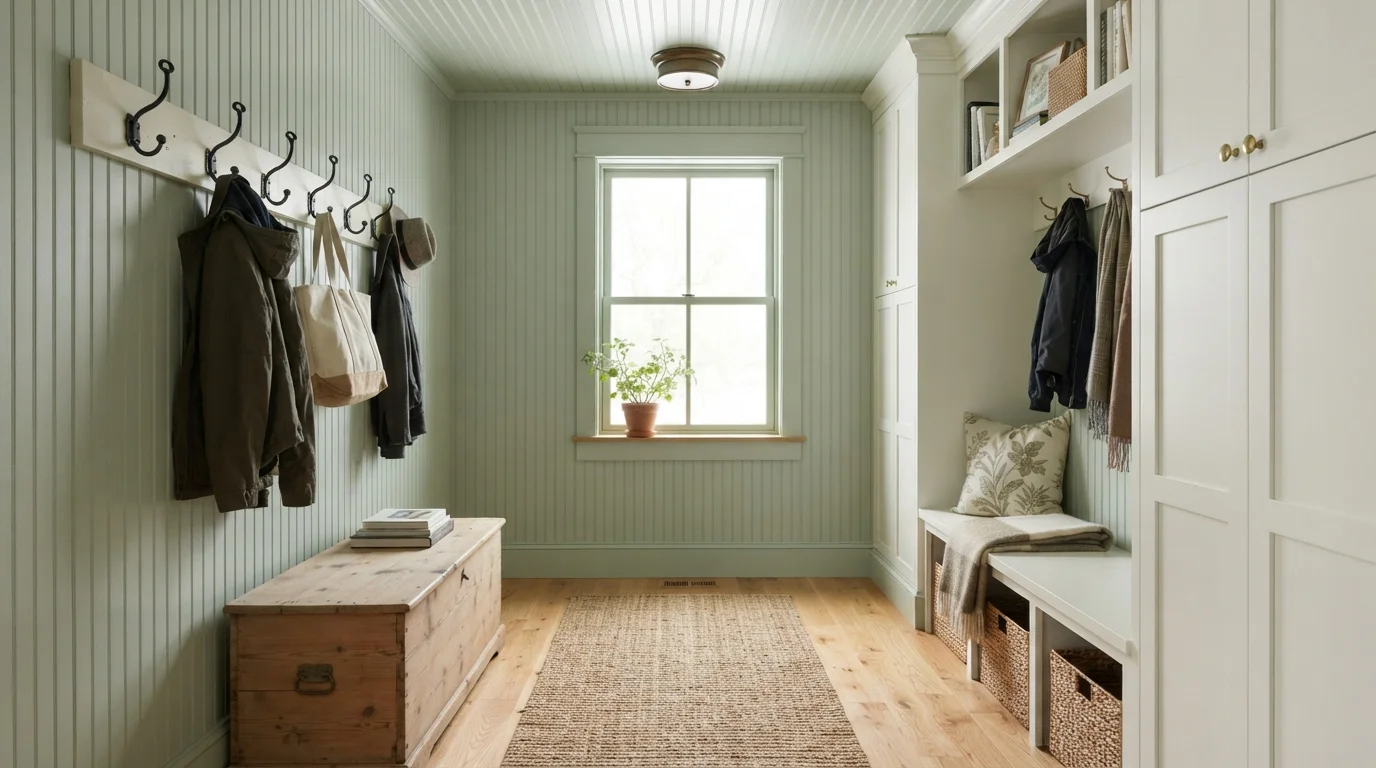
Soft sage beadboard walls and crisp white built-ins create a calm, welcoming entry filled with natural light.
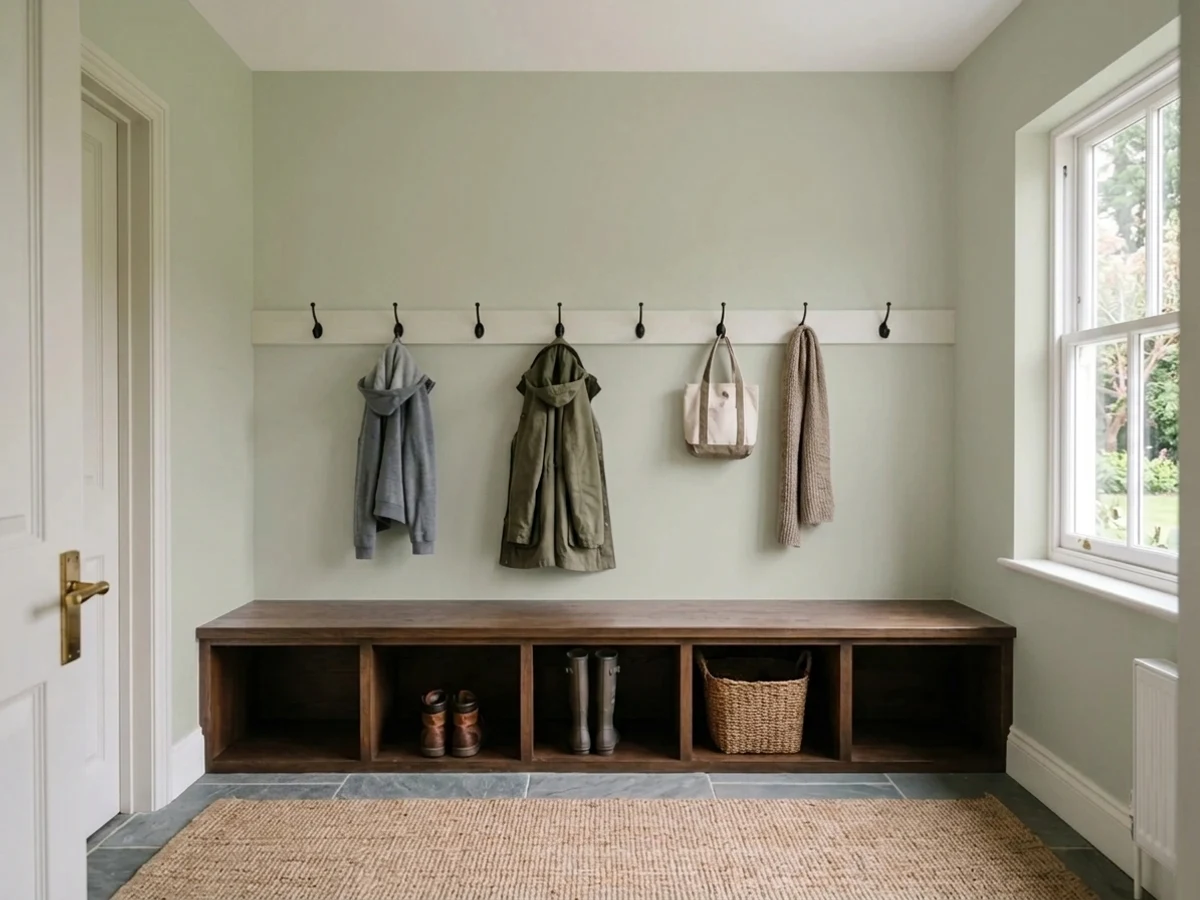
Sage is a gentle, soothing leaf green. In this mudroom, soft green coats the vertical beadboard walls, window trim, and ceiling, balanced by crisp white built-in storage benches and a hook rail. The room feels airy, fresh, and grounded. This combo works because botanical greens naturally harmonize with warm wood tones and bright white trim to bring an outdoor feel inside. It is perfect for anyone wanting an organized entryway packed with timeless cottage character.
SEE DESERT GREEN ON YOUR WALLS →
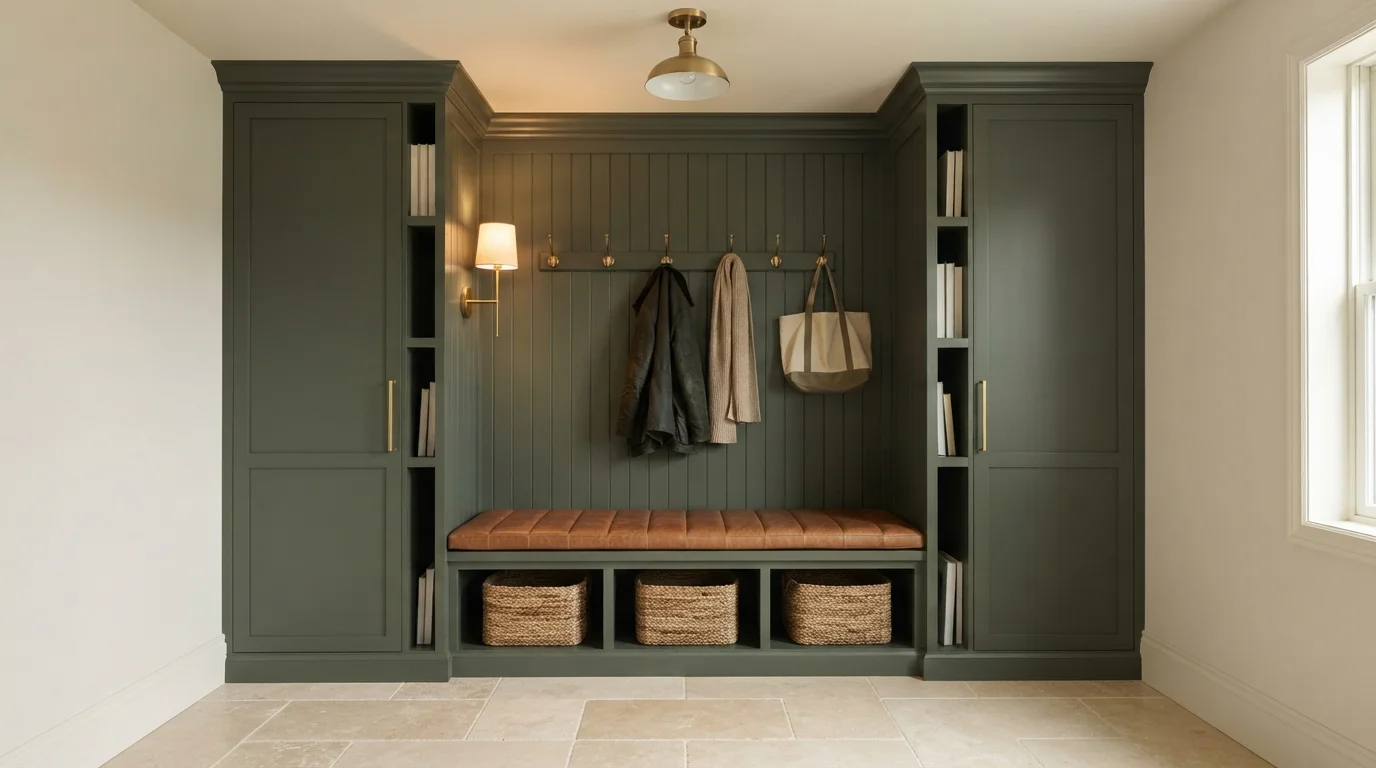
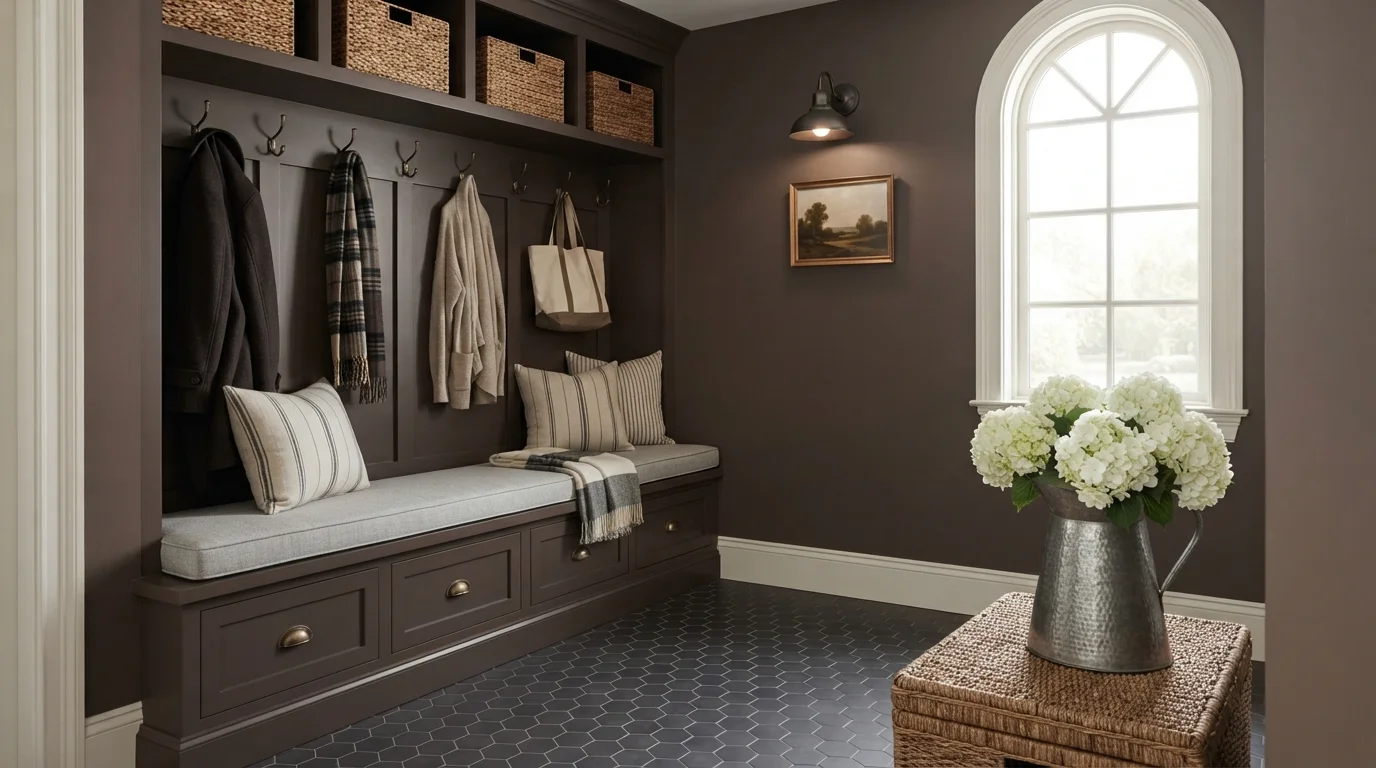
Deep olive woodwork pairs with rich caramel leather and warm brass to create a calm, welcoming entry.
Olive green is a deep, earthy green loaded with cozy warmth. In this entryway, the rich green covers the built-in storage towers, bench base, and beadboard wall paneling, set against a quiet cream ceiling. The space feels snug and tailored the second you walk through the door. The deep green works so well because it naturally complements organic materials like woven seagrass and smooth tan leather. It is a fantastic choice for busy households that want hard-working entry storage to look polished and inviting.
SEE ELUSIVE WHITE ON YOUR WALLS →
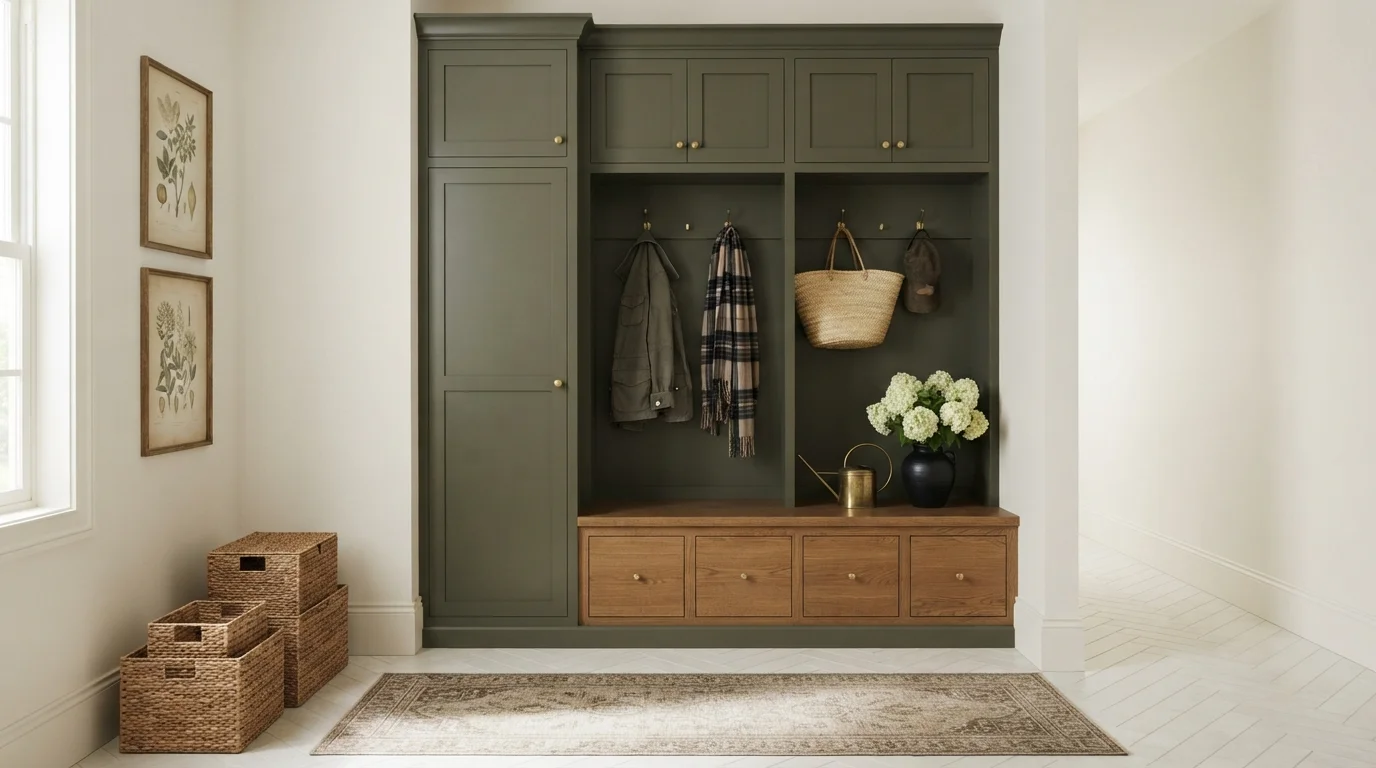
Deep olive green built-ins pair with warm natural oak and woven textures for a grounded, welcoming entry.
Olive green is a rich, muted moss tone that brings natural warmth to a room. In this entryway, that deep green blankets the upper cabinets and locker wall, sitting right above warm honey-oak base drawers with small brass pulls. Soft off-white walls on the side keep the entryway open, while a neutral patterned rug warms the tile floor. The space feels practical, calm, and cozy. Earthy green and golden wood naturally complement each other like trees in a forest. It is a wonderful look for busy entryways craving classic cottage charm.
SEE NANO WHITE ON YOUR WALLS →
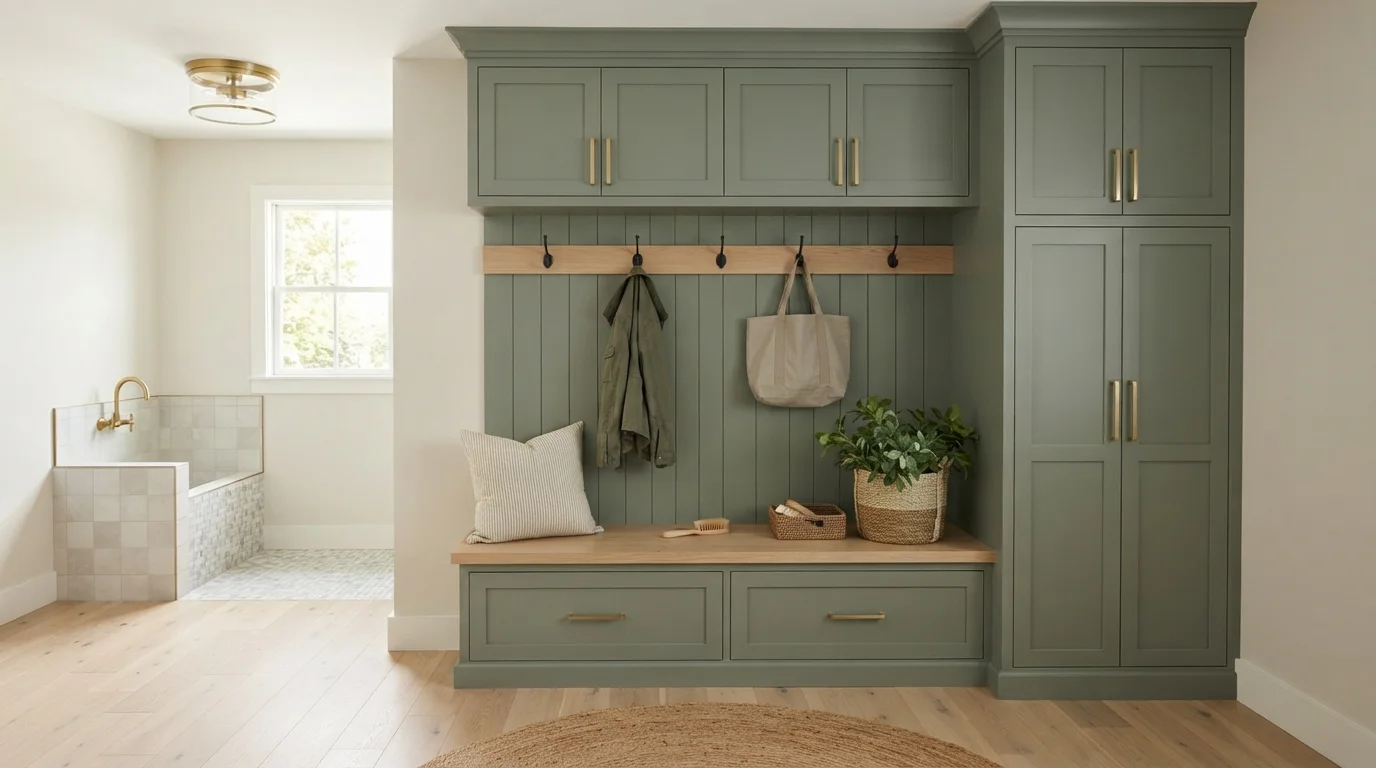
Soft sage green cabinetry paired with warm oak finishes creates a soothing, naturally grounded entryway that feels calm and welcoming.
Sage green is an earthy, muted leafy gray-green. In this entryway, custom cabinetry, beadboard backing, and deep storage drawers are finished in soft green, balanced by a warm oak bench and creamy off-white walls. The space feels instantly calm, grounded, and clean. This combo works effortlessly because botanical greens and natural timber always balance each other out for an organic feel. It is a fantastic choice for busy family homes looking for hard-working organization that still looks relaxed and stylish.
SEE AUGUST MOON ON YOUR WALLS →
Rich olive cabinetry wraps around a cozy built-in bench, offering a grounded and warmly inviting welcome home.
Olive green is a deep, earthy shade with rich botanical roots. In this entryway, full-height storage cabinets, beadboard paneling, and a cozy bench seat are all wrapped in this muted forest shade. The space feels grounded, functional, and snug every time you walk through the door. The rich green works because warm brass hardware and natural woven textures effortlessly soften the dark paint. It is ideal for anyone who loves an organized, classic country aesthetic with plenty of character.
SEE SLIPSTREAM ON YOUR WALLS →
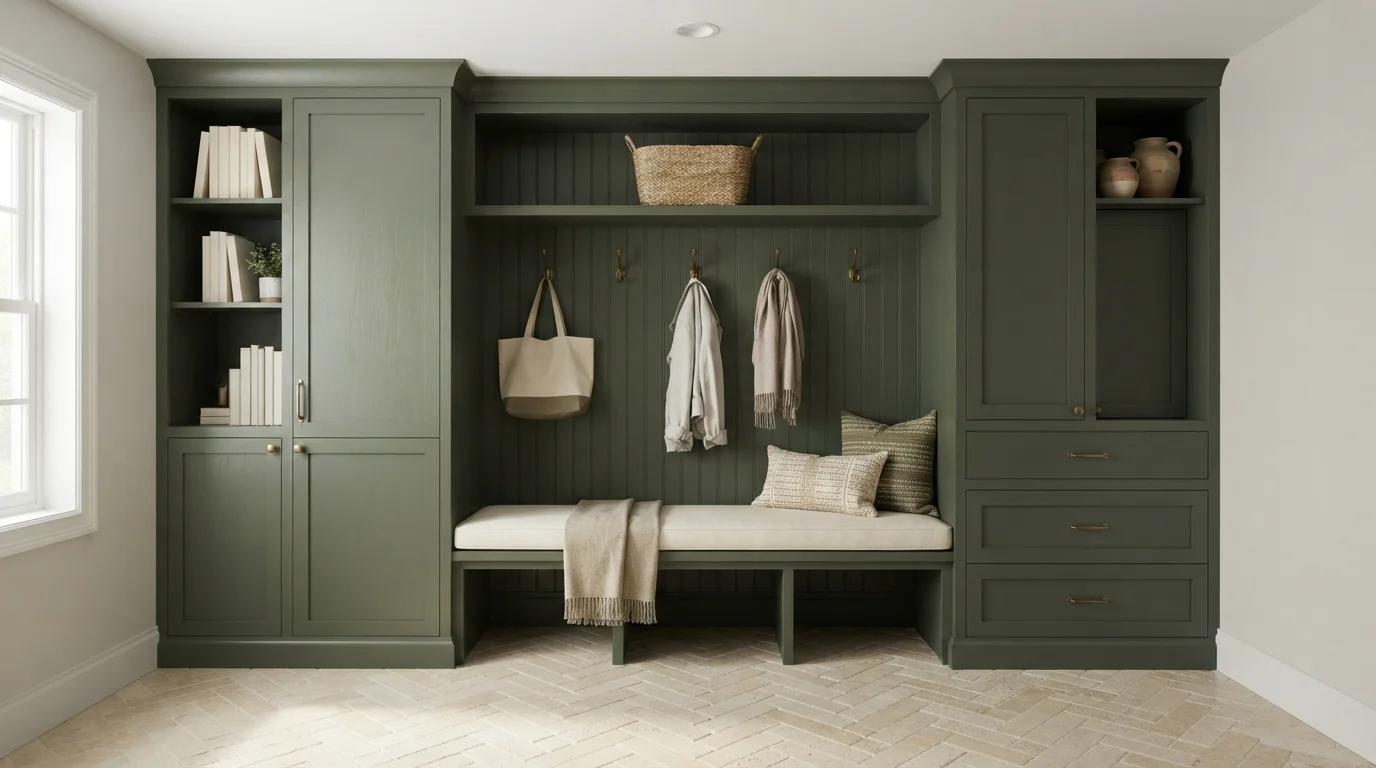
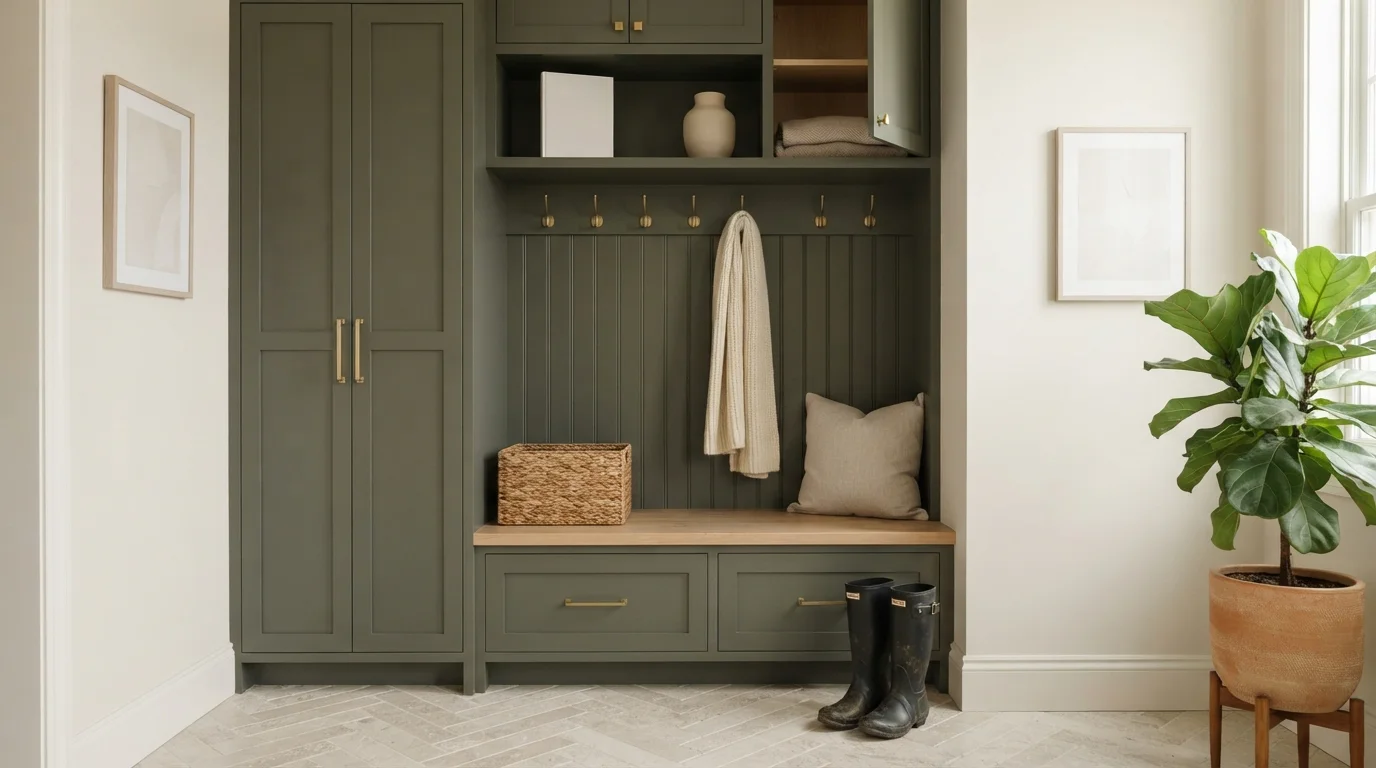
Deep earthy green built-ins and warm brass accents bring effortless organization and natural calm to your entryway.
Olive green is a rich, grounding earth tone that feels both timeless and relaxed. In this entryway, deep mossy green covers the entire built-in cabinet system, vertical wall paneling, and storage bench, set against light neutral walls and herringbone stone floors. The space feels instantly calm, tidy, and welcoming the moment you step inside. This pairing works because deep nature-inspired greens naturally complement warm woven textures and brushed brass hardware. It is perfect for anyone wanting a hardworking drop zone that feels elevated and serene.
SEE IT ON YOUR WALLS →Green Mudroom Wall Color Combinations
A wall color never works alone. These are the full schemes from the rooms above — the lead color first, then the supporting colors that make the photo work.
Step into a charming entryway where deep forest green woodwork meets leafy botanical wallpaper and cozy woven textures.
TRY THIS PALETTE →Soft earthy green cabinetry and warm woven textures turn this organized entryway into a calm, welcoming haven.
TRY THIS PALETTE →Soft sage beadboard walls and crisp white built-ins create a calm, welcoming entry filled with natural light.
TRY THIS PALETTE →Deep olive woodwork pairs with rich caramel leather and warm brass to create a calm, welcoming entry.
TRY THIS PALETTE →Because most mudrooms are built around wood — a bench, hooks on a board, open shelving, a plank floor — pairing green walls with warm wood tones is close to foolproof. Backwoods or Rainy Afternoon against natural or stained oak reads like a working farmhouse entry, and a true white door and baseboards (not an off-white) keep either dark green from swallowing the room. Hancock Green or Vale Mist pair the opposite way — they're light enough to sit next to white beadboard and still read as color, letting a wood bench or wicker baskets do the warming-up work instead of the wall.
For the punchier picks, keep the rest of the room quiet. Fresh Apple or Julep next to bright white trim and black hooks or hardware gives the room a clean, graphic look without competing with the green; save those two for mudrooms where the walls are the main event, not a busy wall of cubbies and cabinet doors. Eucalyptus Wreath works well as a two-tone pairing — a deeper green like Backwoods on wainscoting or the lower half, Eucalyptus Wreath above it — since both sit in the same soft, botanical family and won't clash the way two unrelated greens can.
More Mudroom Color Ideas
Set on a color family already? Each page has its own real rooms and picks.
Light or Dark Green Mudroom Colors?
Go Light (LRV 60+) If…
The room is small, faces north, or has to work at every hour. Light warm colors make it feel bigger and stay calm in evening light — the light you actually live in.
Go Dark (LRV Under 20) If…
You want the cocoon effect and the room has real daylight. Dark works best on one feature wall — or fully color-drenched in a large room with good windows.
Mudrooms are usually small, often without much natural light, and get walked through rather than lived in — that combination changes the light-vs-dark math compared to a bedroom or living room. A north-facing mudroom or one lit only by an interior doorway will make Rainy Afternoon (LRV 15) or Backwoods (LRV 35) feel noticeably darker than the paint chip suggests, so save those for mudrooms with a window, a glazed door, or strong overhead lighting — otherwise the space reads gloomy before you even get your boots off. If your mudroom is genuinely dim, Hancock Green (LRV 66) or Vale Mist (LRV 56) will hold their color and keep the room from feeling like a closet.
The tradeoff is durability. Dark, muted greens like Rainy Afternoon and Backwoods hide the daily reality of a mudroom — muddy paw prints, wet coat drips, scuffed baseboards — far better than anything above 50 LRV. If you love a lighter green like Fresh Apple or Julep but the room gets heavy dog-and-kid traffic, plan on a washable satin paint and more frequent wipe-downs, or reserve the pale shade for the upper wall and run a darker green or beadboard along the lower third where boots and bags actually hit.
See It. Love It.
Paint It.
Upload one photo of your green mudroom and try every color on this page on your own walls — in your own light, before you buy a drop of paint.

Polished PineBeforeChoosing A Durable Sheen
Skip flat and low-sheen paint in a mudroom no matter which green you pick — flat paint chalks and stains under the temperature swings near an exterior door, and it won't survive a Magic Eraser once salt or mud sets in. Satin is the standard choice for mudroom walls in any of these eight colors: it wipes clean, resists scuffs from backpacks and boot toes, and still has enough sheen to make a dark color like Rainy Afternoon or Backwoods look intentional rather than flat and dull.
Push up to semi-gloss on trim, doors, and any wainscoting or beadboard, since that's where boots, bags, and hands actually make contact. If you're using a two-tone approach — say Backwoods below a chair rail and Vale Mist above it — the sheen jump between satin walls and semi-gloss lower half also reinforces the color break instead of fighting it.
Mistakes To Avoid In A Green Mudroom
The most common misstep is picking a dark, moody green like Rainy Afternoon for a mudroom with no window and no strong overhead light — on the chip it reads cozy, on a north wall with a single ceiling fixture it reads like a closet. Test the actual color on the actual wall at the time of day you use the room most, usually early morning and early evening, before committing to anything under 20 LRV.
The second mistake is matching trim too closely to the wall color. A cream or greige trim next to any of these greens softens the contrast and makes scuffs on the woodwork itself harder to spot when it's time to touch up; a true white trim gives you a clean edge and makes it obvious when the trim needs a wipe-down or a fresh coat.
Where Each Green Works Best
Save the darkest, most forgiving greens — Rainy Afternoon and Backwoods — for the wall behind the bench, lockers, or cubbies, exactly where boots, backpacks, and dog leashes rub against the paint every day. That's the wall that needs to hide wear, not the wall you photograph.
Use the lighter greens, Hancock Green and Vale Mist, on walls with less direct contact — above a chair rail, on a ceiling, or on the wall opposite the entry door — where their job is to open up the room rather than survive abuse. Fresh Apple, Julep, and Eucalyptus Wreath work well on a single accent wall or a painted door, giving the room a shot of color without covering every surface a muddy boot can reach.
About Green Mudroom Paint Colors
Mudrooms take the daily hit — muddy boots, wet umbrellas, dog paws, backpacks dropped at the door — so green earns its place here for a reason beyond looks: it reads as an extension of the yard, and the right shade actually camouflages the mess that a pure white or pale gray shows off. Backwoods (Benjamin Moore, 469, LRV 35) and Rainy Afternoon (Benjamin Moore, 1575, LRV 15) are built for that job — both are deep, muted greens that a smear of mud or a scuffed boot toe just disappears into, and Rainy Afternoon in particular is dark enough to shrug off daily traffic without looking dirty.
If the mudroom doubles as the family's first and last stop of the day, a brighter green changes the mood instead of hiding wear. Fresh Apple (Behr, P360-6, LRV 42) and Julep (Sherwin-Williams, SW 6746, LRV 32) both bring a zesty, wake-you-up energy that works well in a small space you pass through fast — they read as color rather than statement, since you're never staring at them for long. Back to Nature (Behr, S340-4, LRV 38) sits between the two moods: cheerful without being loud, and light enough to keep a windowless mudroom from feeling like a cave.
For mudrooms that get real daylight — a window by the door, a glazed storm door, a skylight — Hancock Green (Benjamin Moore, HC-117, LRV 66) and Vale Mist (Benjamin Moore, 1494, LRV 56) are the two to reach for. Both sit close to 60 LRV, so they behave almost like a soft neutral: calm, airy, and forgiving in a room that's usually small and boxed in by cabinetry. Eucalyptus Wreath (Behr, N390-5, LRV 32) lands in between, botanical and soothing rather than saturated, and works as the quiet choice when the room is functioning as a transition space rather than a design statement.

The Questions Everyone Asks
What color should I paint my green mudroom?
If you want one answer, start with the safe picks above — Nano White, North End, Hacienda White, Desert Green. They read well in any light and survive furniture changes. Then check the light: strong afternoon sun wants a step cooler, a north-facing room wants a step warmer.
what is the best green paint color for a mudroom?
It depends on how much light the room gets and how much traffic it takes. For a high-traffic mudroom that needs to hide mud and scuffs, Backwoods (Benjamin Moore, 469) or Rainy Afternoon (Benjamin Moore, 1575) are the best fits — both are dark and muted enough to camouflage everyday mess. For a brighter, more open feel, Hancock Green (Benjamin Moore, HC-117, LRV 66) is the safest light green.
should a mudroom be painted a dark color?
Dark green works well in a mudroom if the room has real daylight or strong overhead lighting to offset it — otherwise it can feel like a closet. Rainy Afternoon (LRV 15) and Backwoods (LRV 35) hide mud, scuffs, and drips far better than lighter shades, which is exactly the job a mudroom needs done. Reserve them for rooms with a window or glazed door, not a dim, windowless entry.
what trim color goes with green mudroom walls?
A true white trim, not an off-white or cream, gives the cleanest contrast against any of these greens and makes it easy to spot when the woodwork needs a wipe-down. White trim next to a dark green like Backwoods or Rainy Afternoon keeps the room from feeling closed in, while it lets a lighter green like Vale Mist or Hancock Green feel bright and fresh rather than washed out.
does green paint make a small mudroom feel smaller?
Only if you pick a low-LRV shade. Hancock Green (LRV 66) and Vale Mist (LRV 56) behave almost like soft neutrals and won't shrink a small, boxed-in mudroom the way a deep color can. Backwoods (LRV 35) or Rainy Afternoon (LRV 15) will read cozy rather than cramped if the room has good light, but in a truly small, dim mudroom, stick with the two lighter greens.
what paint finish should I use in a mudroom?
Satin for the walls and semi-gloss for trim, doors, and any beadboard or wainscoting. Satin wipes clean and resists scuffs from boots and backpacks without looking too shiny on a wall of Fresh Apple or Julep, while semi-gloss on trim stands up to the direct contact those surfaces take. Avoid flat paint entirely — it chalks and stains near an exterior door and won't survive regular cleaning.
What two-color combination works best in a green mudroom?
The reliable pattern is a quiet main color plus one deep accent on a single wall. Keep trim and ceiling in one warm white so the two colors are the only event in the room — the combination cards above show complete schemes from real rooms.
What colors make a green mudroom look bigger?
High-LRV, slightly warm colors — LRV 60–75 is the sweet spot. Paint the walls and trim close to the same light color so the corners blur, and keep the ceiling white. Stark cool white actually works against you; it creates hard shadows that show the room's edges.


Ask a Question