Room Colors · Gray Mudroom
8 Best Gray Mudroom Paint Colors for 2026
ideas, combinations, and real rooms
8 curated picks from real gray mudrooms — with the exact colors, honest reasons why, and the combinations that hold the room together.

Former interior stylist who can spot a green undertone from across a room. Jessica writes the color and mood pieces — what to choose, what pairs, and why your "white" looks pink.
The Fast Answer
Don't want to read 8 picks? These four are the safe answers.

Top Picks for the Gray Mudroom
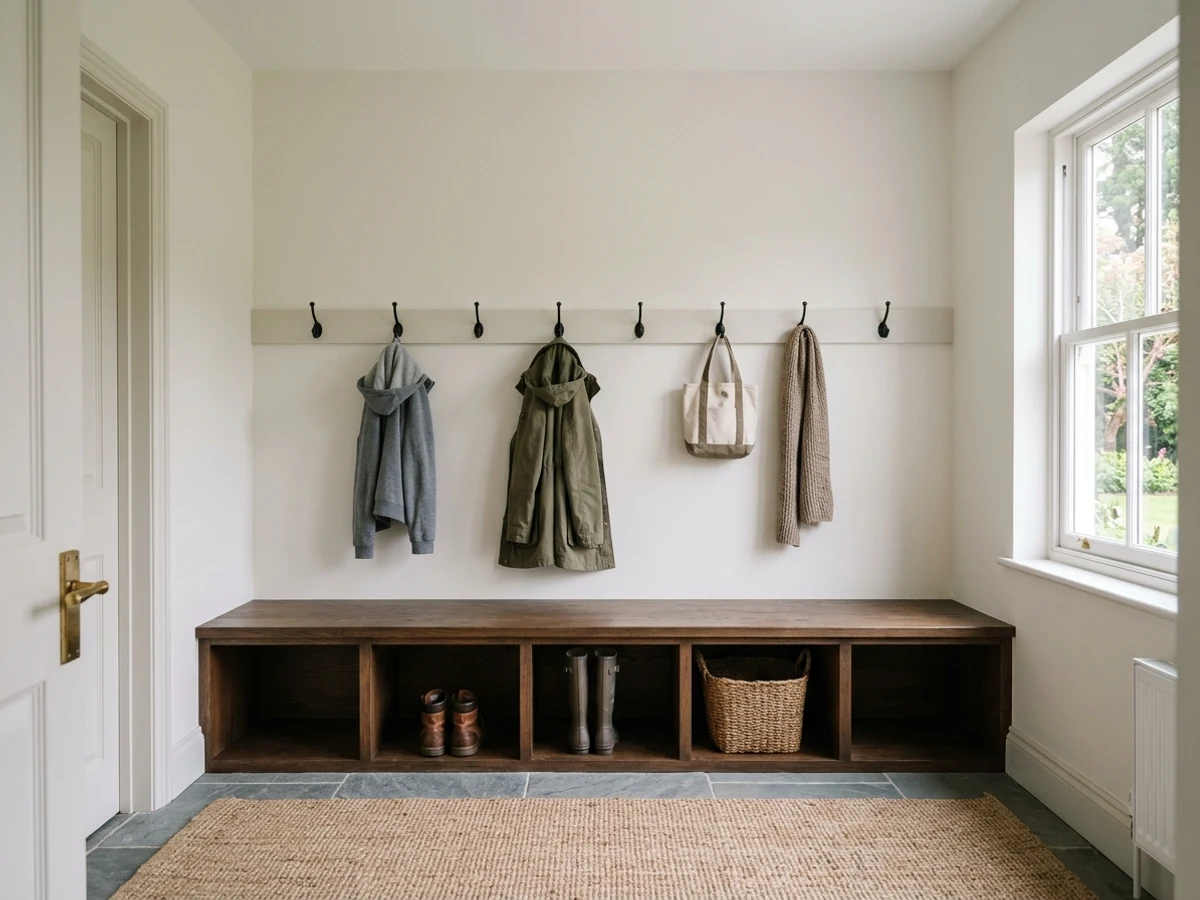
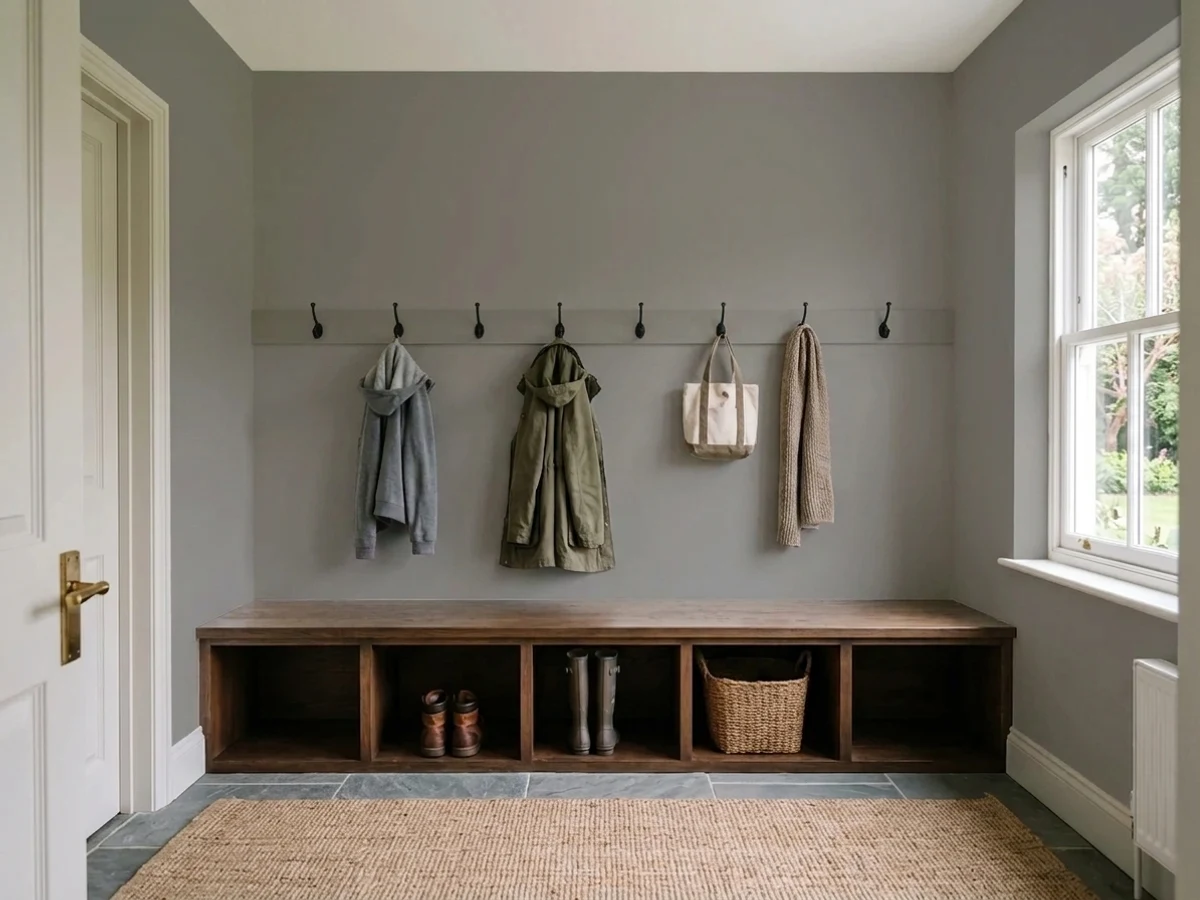
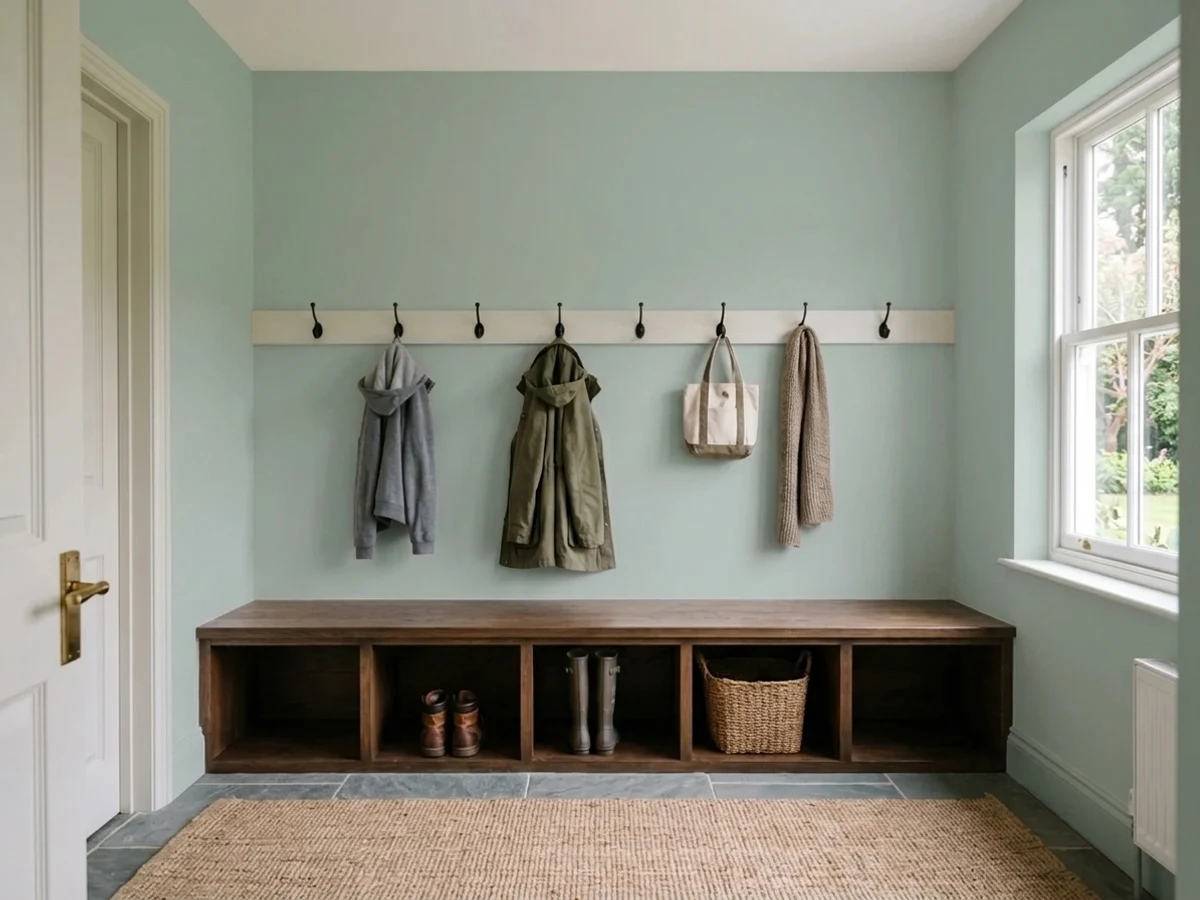
Tap a shade to see the gray mudroom in it, then try it on your own room.
Deep neutral gray for mudrooms going for a sophisticated rather than utilitarian look.
Gray Mudroom Color Trends 2026 — What's In, What's Out


- Cool Blue-Gray Everything — Stark, cool-toned gray on every surface feels dated next to 2026's warmer, greige-leaning palette.
- Sterile All-Gray Mudrooms — Matching every surface to the same flat gray is giving way to gray paired with warm wood and brass.
- Icy Pale Gray Trim — Pale, chilly gray trim reads dated next to the deeper, warmer gray tones taking over entry spaces.
The 8 Best Gray Mudroom Paint Colors
Every pick below is a real rendered gray mudroom, not a chip. The lead color first; the swatches are the full scheme in the photo — walls, furniture, textiles, accent.

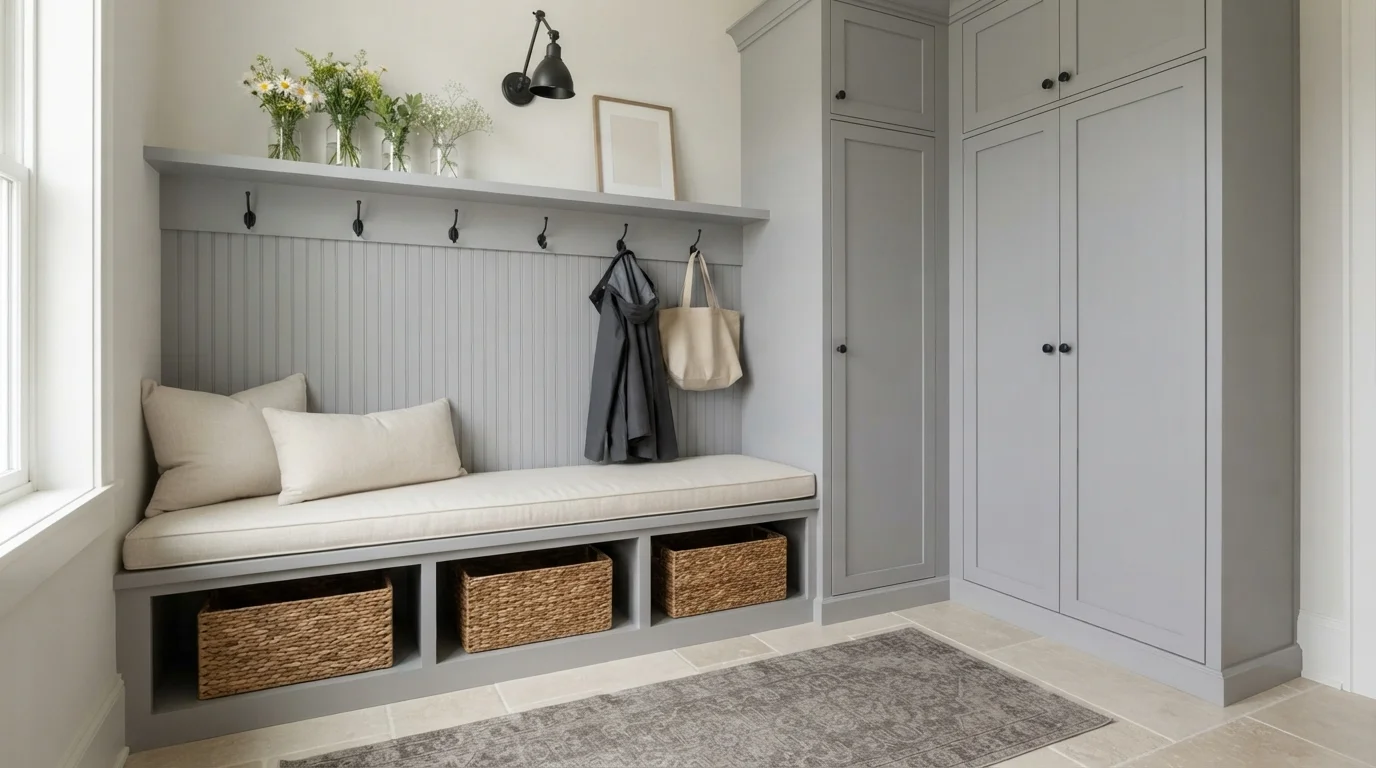
Soft greige cabinetry meets natural wicker baskets and limestone floors for an organized, welcoming entryway.
Greige is a soft blend of cool gray and warm beige. In this entryway, gentle greige coats the tall shaker cabinets, vertical beadboard, and built-in storage bench, set against light off-white upper walls. Natural wicker storage baskets and an upholstered seat cushion add texture, while a vintage-style runner softens the pale stone tile floor. The room feels tidy, relaxed, and welcoming. This combo works because soft painted neutrals pair effortlessly with earthy woven materials. It is ideal for busy families wanting an organized, timeless entryway.
SEE SCROLL ON YOUR WALLS →
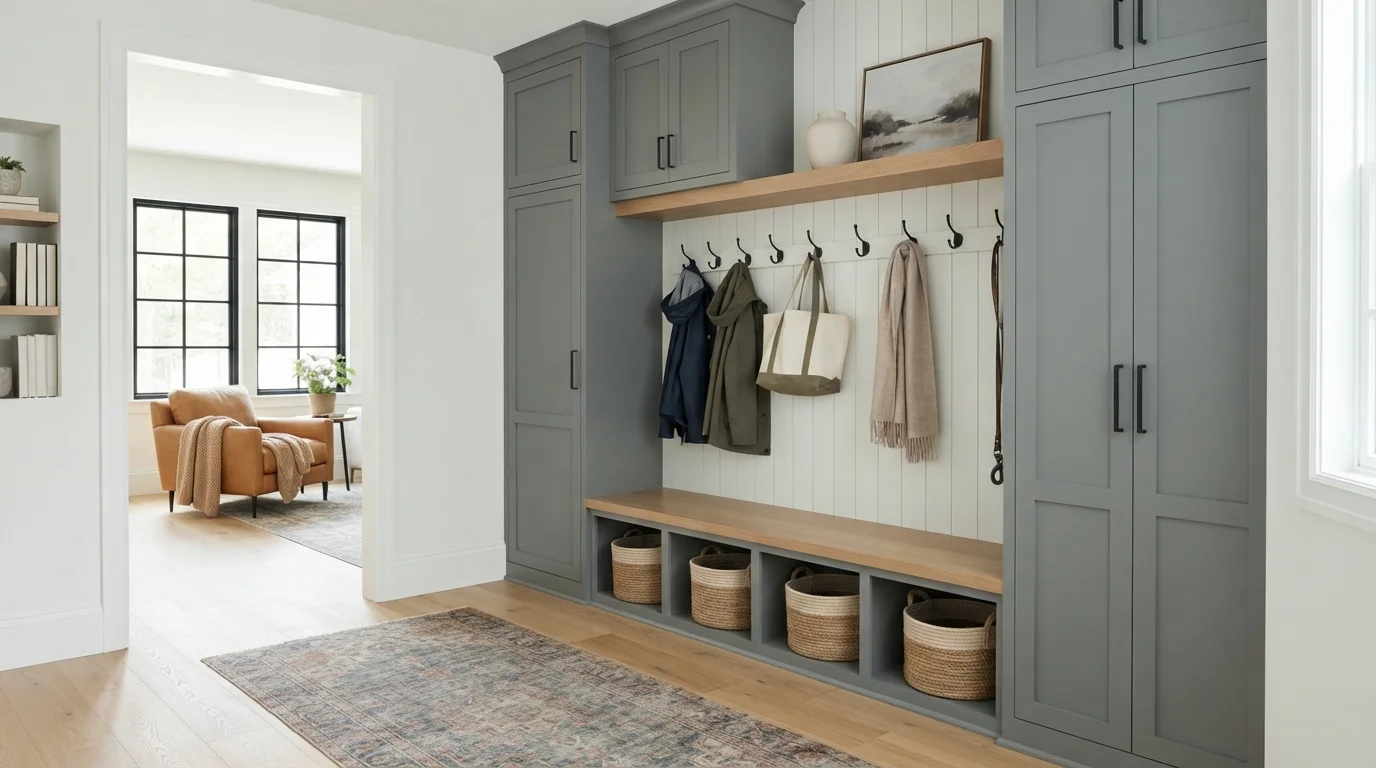
Soft slate cabinetry and warm oak accents create a beautifully organized entryway that feels fresh, calm, and grounded.
Slate gray is a cool, grounded neutral with a soft, dusky cast. In this mudroom, muted slate coats the custom built-in lockers, vertical wall paneling, and storage cubbies against clean white walls. The space feels quiet, tidy, and completely practical. Natural blonde oak bench seating and woven white baskets soften the cool paint, balancing structure with cozy warmth. It is a fantastic choice for busy entryways that need durable organization without sacrificing style.
SEE SUPER WHITE ON YOUR WALLS →
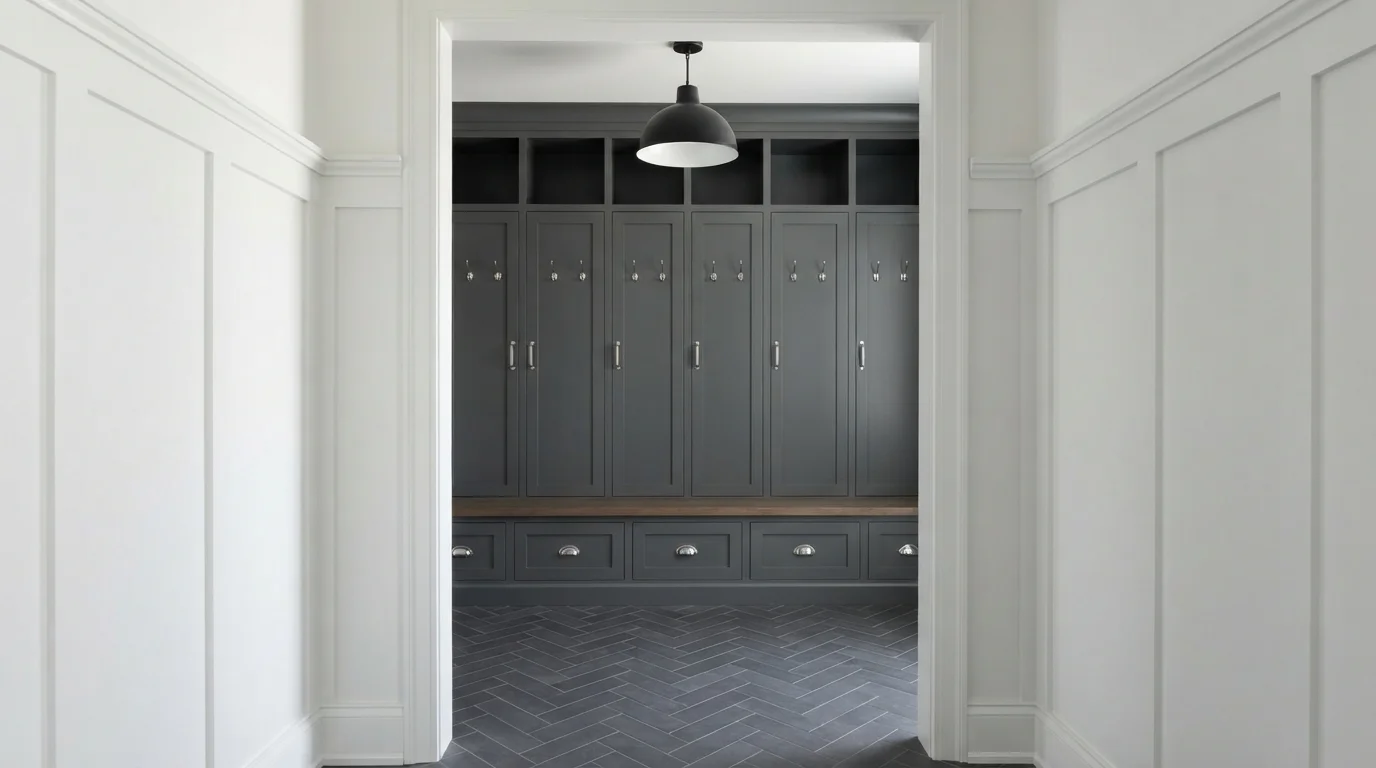
Rich charcoal gray cabinetry pairs with bright white wall paneling to bring structured, crisp elegance into a hardworking entry space.
Charcoal gray is a deep, grounding neutral with a crisp and tailored edge. In this entryway, full-height built-in lockers and lower bench drawers wear deep slate gray, framed neatly by bright white vertical wall paneling. The space feels orderly, calm, and timelessly smart. This pairing works because the bold contrast between deep gray storage and crisp white walls creates instant architectural drama while keeping the hallway light. It is perfect for homeowners who want functional family storage that feels sleek and refined.
SEE GLACIAL ICE ON YOUR WALLS →
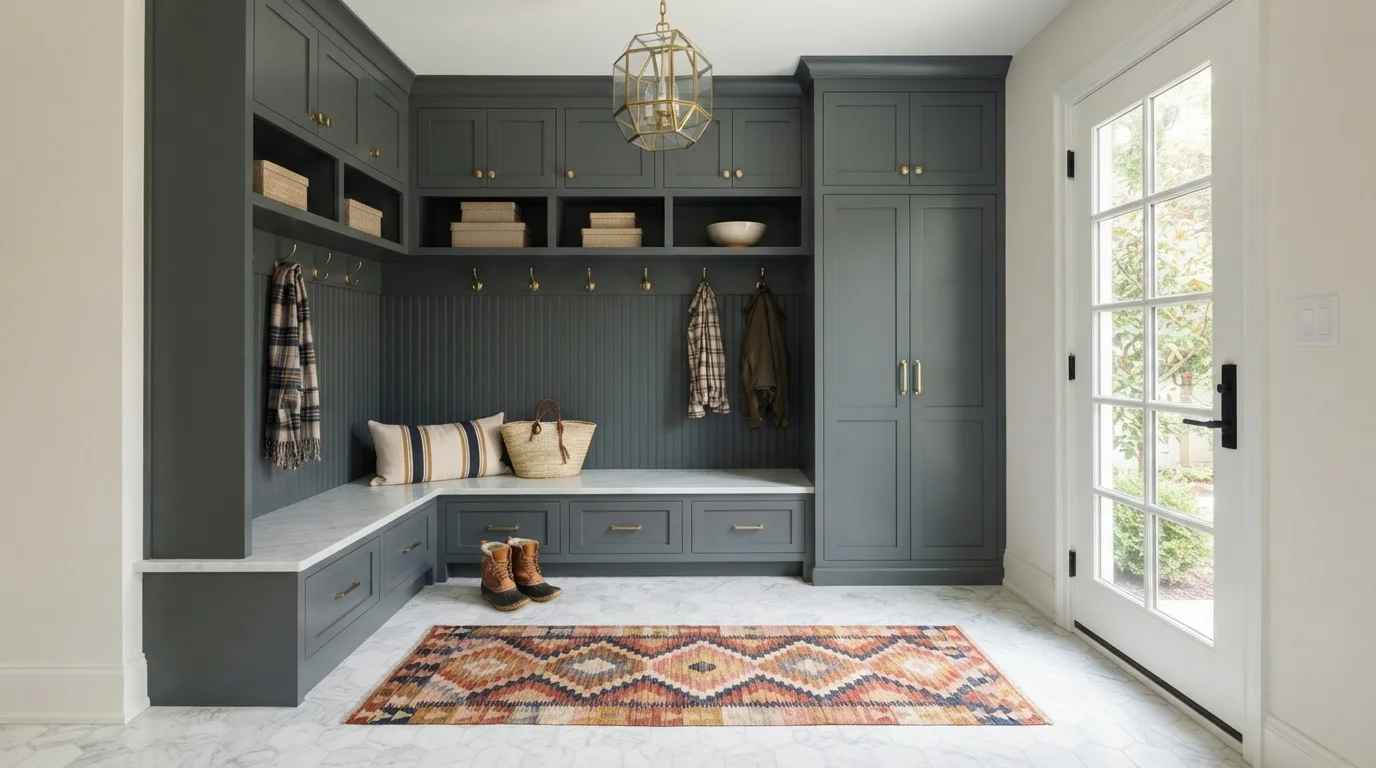
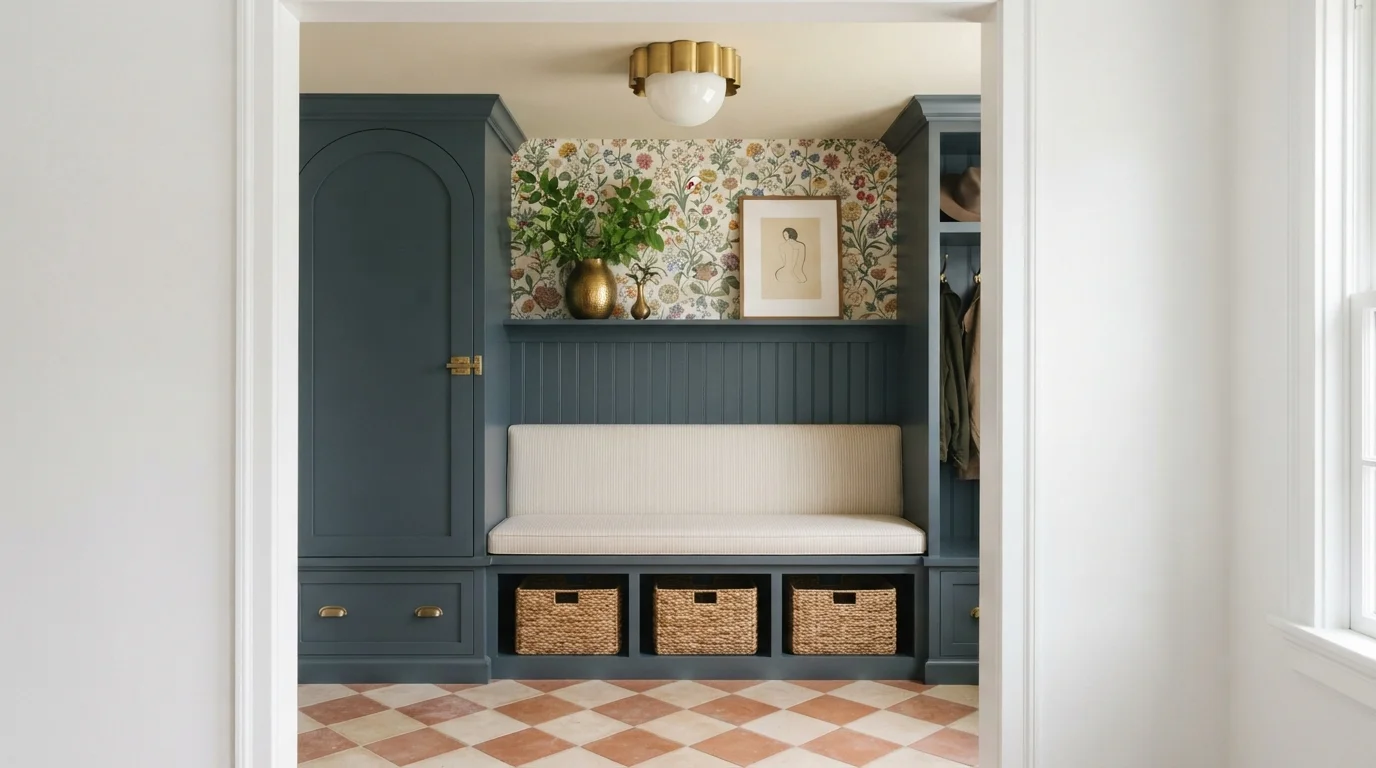
Deep slate built-ins pair with warm brass accents and a vibrant geometric runner for a functional, welcoming entryway.
Deep slate is a rich, grounding charcoal grey with subtle cool depths. Here, it covers the custom floor-to-ceiling cabinetry, bench drawers, and beadboard paneling, set against soft off-white walls and crisp white marble. The room feels incredibly cozy, organized, and quietly sophisticated. The pairing works effortlessly because the dark painted cabinetry contrasts cleanly with bright white marble while soaking in warmth from the brass hardware and colorful geometric rug. It is a timeless choice for anyone wanting a hard-working entryway that feels polished.
SEE OYSTER WHITE ON YOUR WALLS →
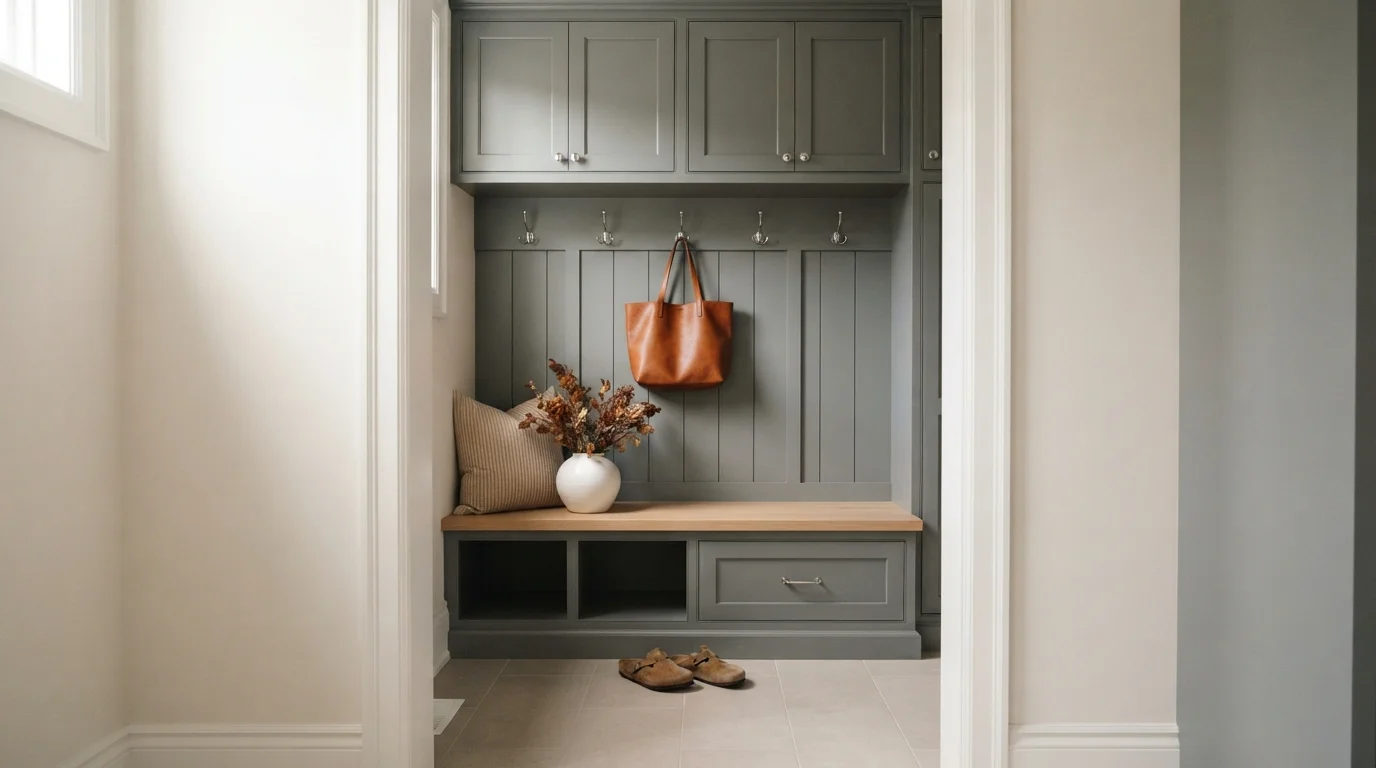
Cool slate-gray built-ins pair with a warm oak bench and chrome accents for a perfectly tidy, peaceful entryway.
Slate gray is a soothing, muted blend of deep gray and subtle blue. In this compact mudroom nook, the dusky color covers the upper cabinets, paneled wall, and lower storage unit, all surrounded by soft creamy white walls. The space feels neat, calm, and grounded. This pairing works because the light oak bench and warm brown accessories balance the cool cabinet finish with natural warmth. It is a great choice for busy homeowners who want a tidy, stylish drop zone that stays timeless.
SEE COCONUT ON YOUR WALLS →
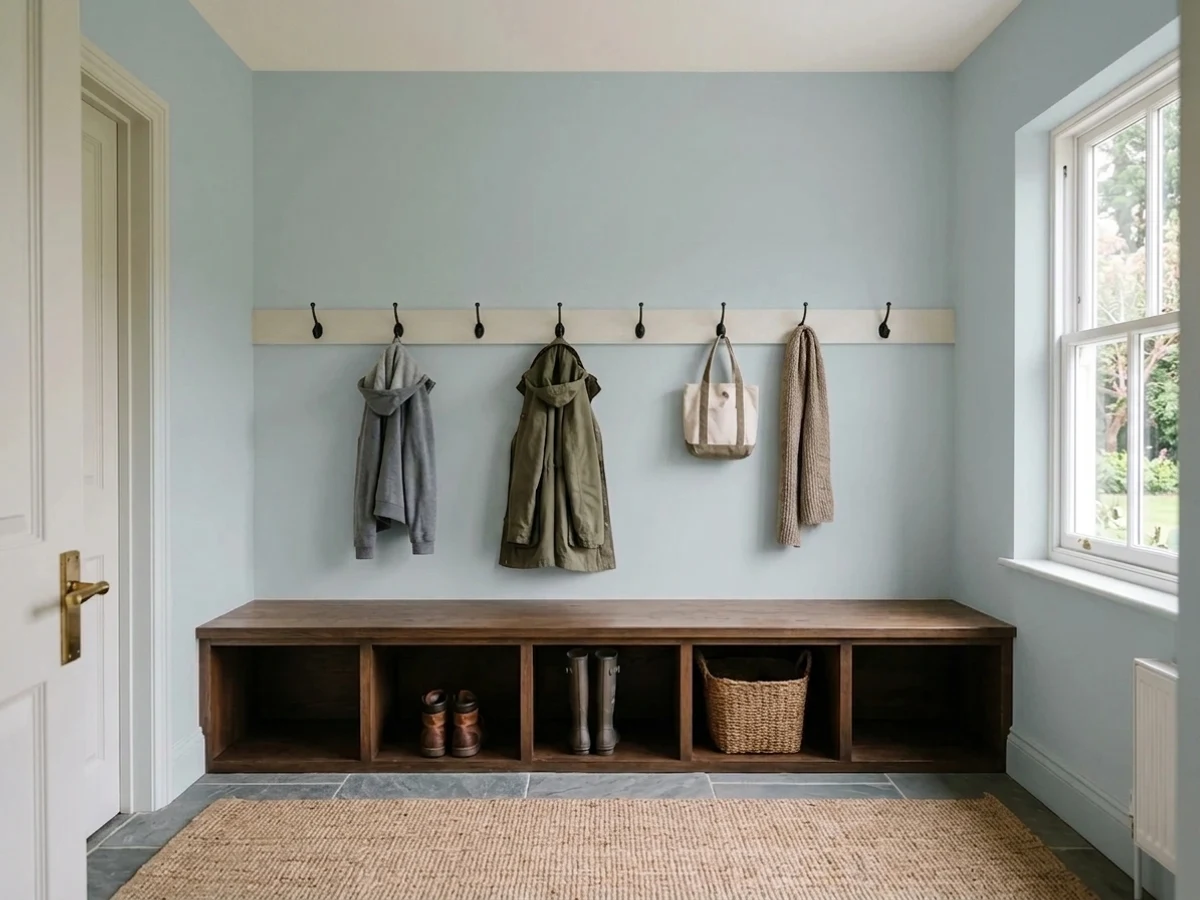
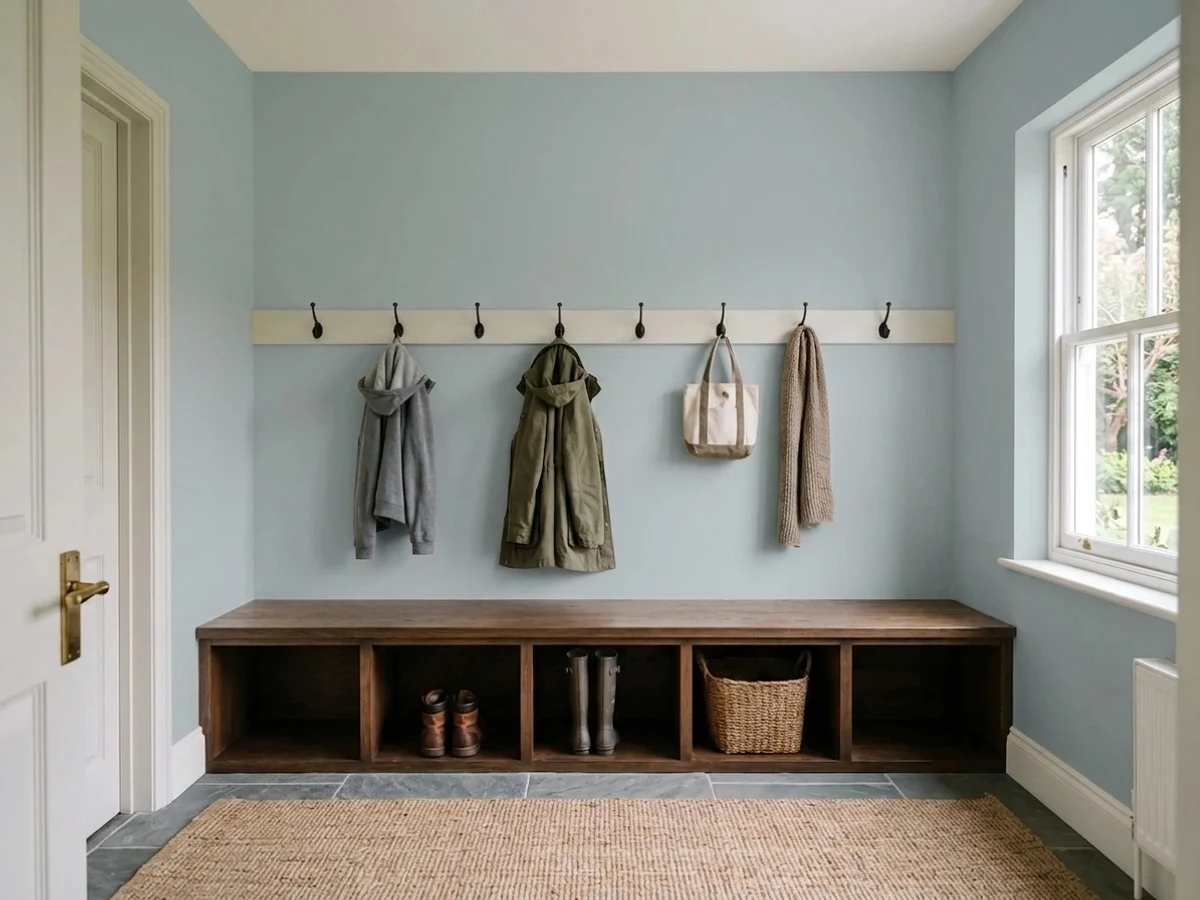
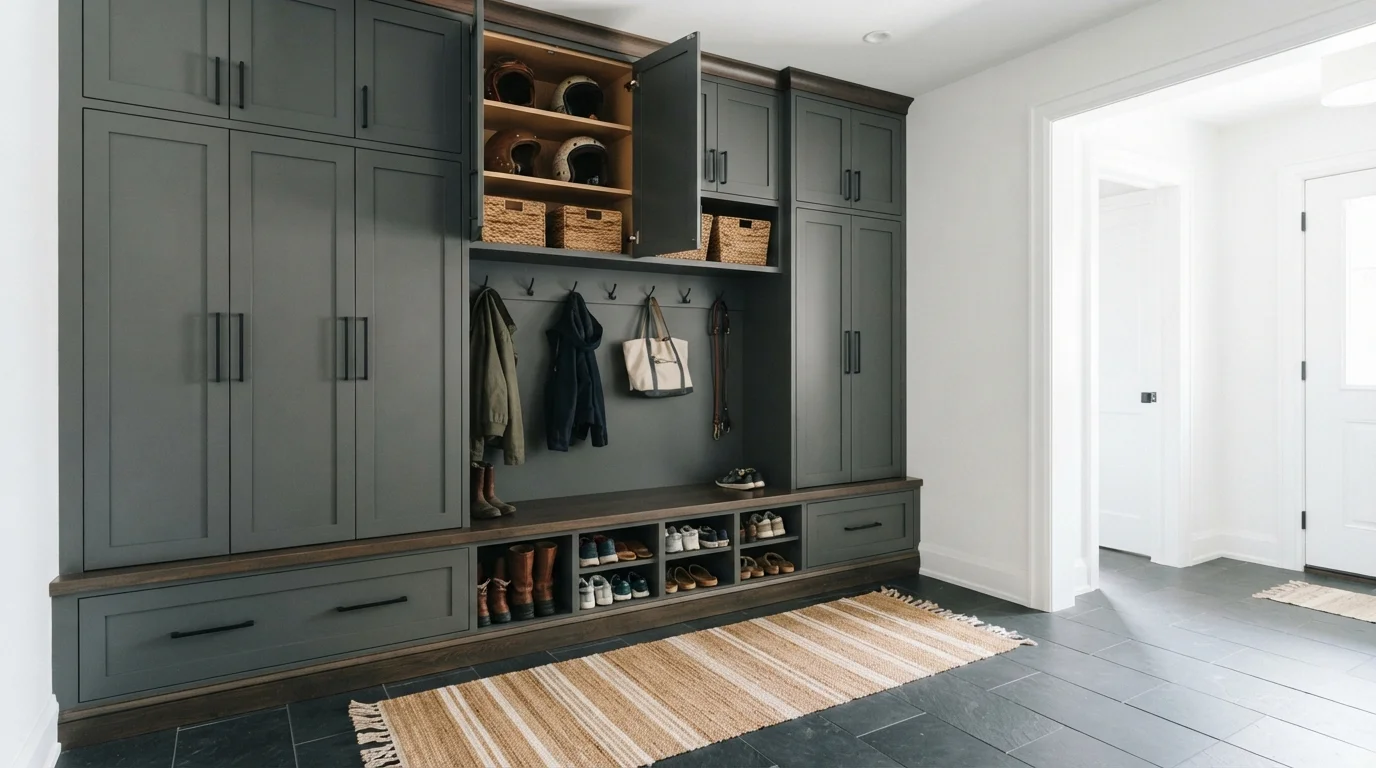
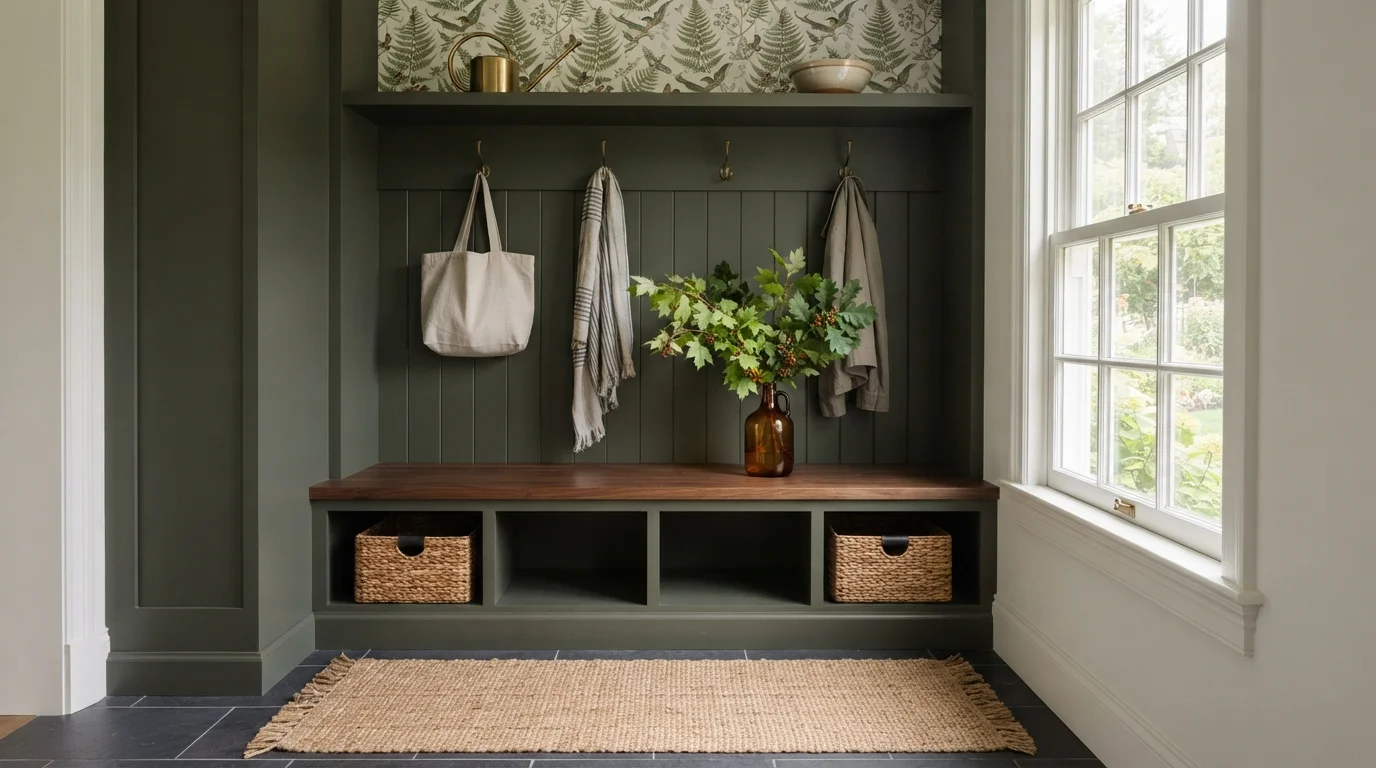
Cool slate cabinetry pairs with natural jute and dark stone floors for an effortlessly organized, welcoming entryway.
Slate gray is a deep, balanced neutral with a quiet earthiness. In this mudroom, the large built-in locker cabinets are painted in soft slate gray, framed by clean white walls, dark floor tiles, and a natural woven runner rug. The room feels calm, tidy, and grounded. This pairing works because the dark cabinetry adds weight and purpose, while the light walls and woven textures keep the space from feeling heavy. It is a fantastic choice for anyone looking to make a practical drop zone feel intentional and sleek.
SEE LIGHTHOUSE ON YOUR WALLS →
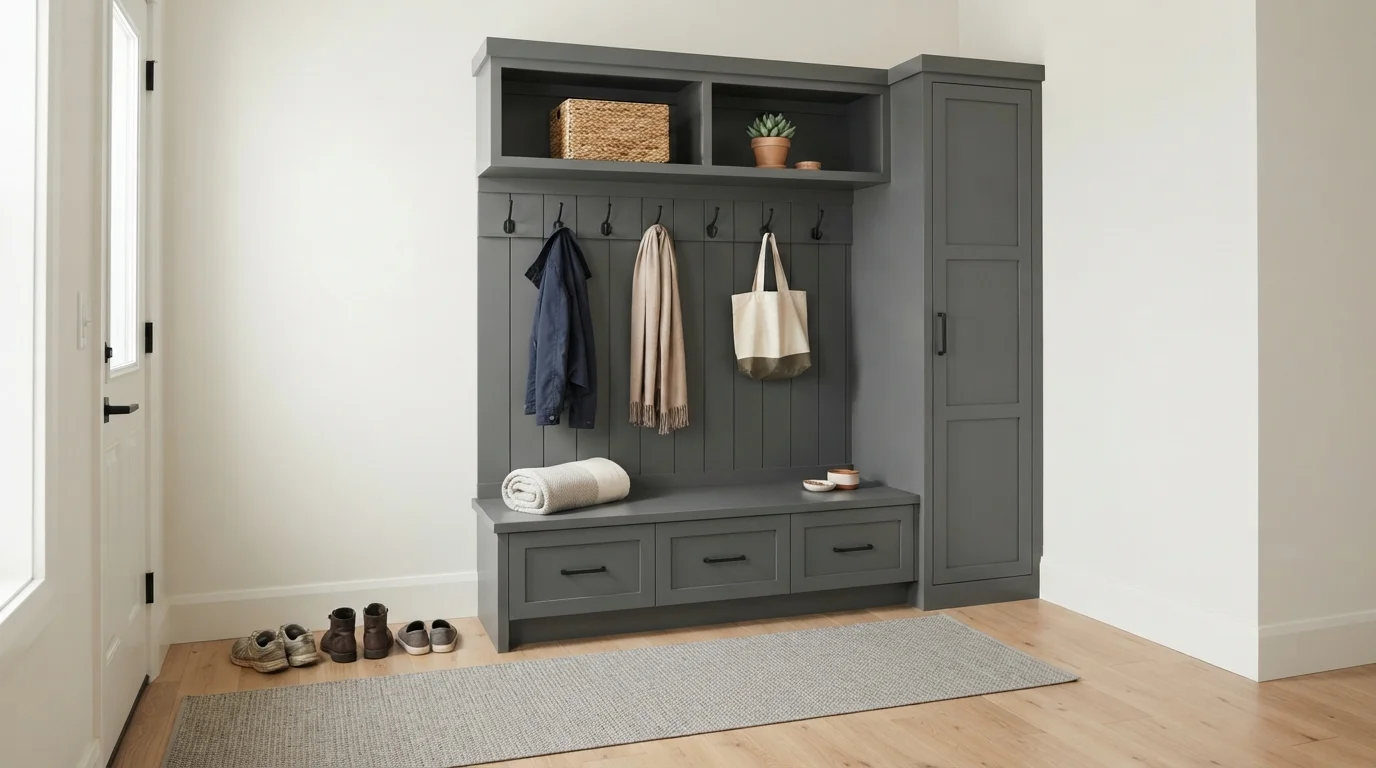
A deep slate gray built-in brings tailored calm, functional storage, and modern balance to a bright entryway.
Slate gray is a deep, stony charcoal with a clean, classic feel. In this entry, the custom bench, upper cubby, vertical board backing, and tall storage locker are painted in this grounding gray, framed neatly by soft white walls and light oak flooring. The space feels orderly, calm, and effortlessly modern. Pairing rich charcoal with airy white walls keeps the narrow hallway open while giving the built-in a bold, custom look. It is a fantastic choice for anyone craving stylish, hard-working storage.
SEE WHITE MINK ON YOUR WALLS →
Brighten up cluttered storage cubbies with this gentle, clean-feeling gray.
SEE SMOKE ON YOUR WALLS →Gray Mudroom Wall Color Combinations
A wall color never works alone. These are the full schemes from the rooms above — the lead color first, then the supporting colors that make the photo work.
Soft greige cabinetry meets natural wicker baskets and limestone floors for an organized, welcoming entryway.
TRY THIS PALETTE →Soft slate cabinetry and warm oak accents create a beautifully organized entryway that feels fresh, calm, and grounded.
TRY THIS PALETTE →Rich charcoal gray cabinetry pairs with bright white wall paneling to bring structured, crisp elegance into a hardworking entry space.
TRY THIS PALETTE →Deep slate built-ins pair with warm brass accents and a vibrant geometric runner for a functional, welcoming entryway.
TRY THIS PALETTE →White trim is the easiest partner for any of these grays, and it's the combination that shows up again and again in real mudrooms: painted beadboard or shiplap in a clean white below a chair rail, with Beach Glass, Smoke, or Gray Screen carried up the wall above it. Add black hooks and hardware and the white/gray split does double duty — it hides scuffs at boot height while still looking crisp at eye level.
For a mudroom with wood built-ins — a bench, cubbies, open shelving in oak or maple — French Toile's warmer greige undertone bridges the gap better than a cooler gray would; pair it with white trim and let the wood stay the only saturated element in the room. If the floor is a cool-toned tile or stone look, Niebla Azul's blue-gray cast keeps the whole palette cohesive instead of fighting the floor. Whichever wall color you land on, keep trim, hooks, and hardware finishes consistent room to room if the mudroom is visible from the kitchen or entry hall — that's usually what makes the color choice feel resolved instead of like an afterthought.
More Mudroom Color Ideas
Set on a color family already? Each page has its own real rooms and picks.
Light or Dark Gray Mudroom Colors?
Go Light (LRV 60+) If…
The room is small, faces north, or has to work at every hour. Light warm colors make it feel bigger and stay calm in evening light — the light you actually live in.
Go Dark (LRV Under 20) If…
You want the cocoon effect and the room has real daylight. Dark works best on one feature wall — or fully color-drenched in a large room with good windows.
Because most mudrooms get borrowed light at best — a transom over the door, an open sightline to a brighter room, sometimes nothing but the ceiling fixture — lighter grays generally work harder here than they would in a bedroom or living room. Tidewater at LRV 65 and Gray Screen at LRV 59 are the two to reach for in a windowless mudroom or one that's basically a wide hallway between the garage and the kitchen; both keep the space from feeling like a dark catch-all closet.
If your mudroom already gets decent daylight, or it opens directly into a sunlit kitchen, a lighter gray can wash out and look flat by early afternoon. That's when Krypton (SW 6247), Gull Wing Gray, or Beach Glass — all in the low 40s for LRV — do more for the room. They read as an intentional, tailored color rather than an off-white that happened to end up gray, and they're more forgiving of the exact kind of daily mess a mudroom sees.
See It. Love It.
Paint It.
Upload one photo of your gray mudroom and try every color on this page on your own walls — in your own light, before you buy a drop of paint.

Gauntlet GrayBeforePicking A Sheen That Survives A Mudroom
Mudroom walls get bumped by boots, backpacks, and bikes, so flat and matte finishes are a bad match even though they're the easiest to touch up in a bedroom. Satin or eggshell is the usual floor for mudroom walls, and scuff-resistant lines — Benjamin Moore's Scuff-X or Sherwin-Williams' equivalents — are worth the upcharge in a heavy-traffic entry, since they're formulated specifically to resist the kind of scraping and denting a mudroom takes daily.
Semi-gloss makes sense on trim, beadboard, and any lower wainscot section that takes direct contact from bags and boots, since it wipes clean with a damp cloth in a way flat paint never fully does. The gap between Benjamin Moore's and Sherwin-Williams' sheen names is real — BM matte is close to flat, while SW's matte sits closer to an eggshell — so match the actual sheen level, not just the label, if you're combining a BM wall color with SW trim or the reverse.
Where The Scuffs Actually Happen
Most of the wear in a mudroom lands in a narrow band — roughly boot height to hip height, right where bags get set down and shoes get kicked off. That's the argument for the darker end of this group, Krypton, Gull Wing Gray, and Beach Glass, on the lower half of the wall or a painted wainscot, even if you keep a lighter gray like Tidewater or Gray Screen up top for brightness. It's the same logic as a dark rug in a mudroom: put the resilient color where the mess actually happens.
If the room is small enough that splitting the wall feels fussy, one full-height color is fine — just weight the decision toward the lower-LRV picks if the mudroom sees kids, dogs, or muddy job-site boots daily, and toward Tidewater or Gray Screen if it's a lighter-duty side entry.
Mistakes That Show Up Fast In A Gray Mudroom
The most common one is picking a light gray for a mudroom that gets almost no daylight — it ends up looking like a dingy off-white instead of a deliberate color, especially under a single overhead LED. If your mudroom is genuinely dim, skip Tidewater and Gray Screen and go with something in the 40s LRV range instead; a color that's meant to read as gray in low light will hold up better than one that needed brighter conditions to look intentional.
The other frequent miss is choosing a flat or matte finish because it's what's already on the walls elsewhere in the house. A mudroom in flat paint shows every scuff permanently within a season. Test your shortlisted color as a large sample directly on the mudroom wall, at the sheen you're planning to use, and look at it at the time of day the room actually gets used — early morning boot-scramble light is different from what you'll see testing it midday.
About Gray Mudroom Paint Colors
A mudroom takes more daily abuse than almost any other room in the house — wet boots, dropped backpacks, dog paws, dragged-in gravel — so the color on the wall has a job to do beyond looking good. Gray earns its place here because it doesn't show every scuff the way white does, and it doesn't read as heavy or unwelcoming the way a true dark color can in a room people pass through fast. Benjamin Moore's Beach Glass and Sherwin-Williams' Gray Screen (SW 7071) both sit in that sweet spot: soft enough to feel calm at the entry, deep enough that a boot smudge or a dog's muddy shoulder brush doesn't jump out until you're looking for it.
The eight picks here also cover very different light situations, which matters because mudrooms are rarely bright. Many have one small window or none at all, just a door with a slab of glass and whatever spills in from the attached garage or hallway. Sherwin-Williams' Tidewater (SW 6477) is the lightest of the group at LRV 65, built for exactly that dim, boxed-in mudroom that needs to feel less like a closet. On the other end, Gull Wing Gray and Krypton sit in the low 40s — grounded enough to anchor a mudroom that already gets good light from an open doorway into the kitchen or hall.
Undertone is the other variable worth paying attention to. Niebla Azul (SW 9137) leans cool and slightly blue, which reads fresh next to white beadboard or a stone-look tile floor. French Toile (BM CSP-595) leans warmer and greige, which sits better against oak, maple, or other honey-toned wood built-ins. None of these are the same gray wearing a different label — picking the right one comes down to what's already on your floor and cabinetry, not just what looks best on a swatch.
The Questions Everyone Asks
What color should I paint my gray mudroom?
If you want one answer, start with the safe picks above — Smoke, Super White, Lighthouse, Scroll. They read well in any light and survive furniture changes. Then check the light: strong afternoon sun wants a step cooler, a north-facing room wants a step warmer.
what color should i paint a mudroom?
A mid-tone gray is the safest starting point because it hides scuffs, dirt, and boot marks better than white without going as dark or moody as navy or charcoal. Beach Glass or Gray Screen (SW 7071) both work as an all-purpose choice — light enough not to feel closed-in, dark enough that daily wear doesn't show immediately.
what's a good two-color combination for a gray mudroom?
Gray walls with white trim is the most common pairing and the easiest to get right — white beadboard or shiplap on the lower wall, a gray like Smoke or Beach Glass above it, and black hardware to tie it together. For a warmer room with wood built-ins, pair French Toile's greige undertone with white trim instead of a cooler gray.
will gray make a small mudroom look bigger or smaller?
It depends on the LRV, not just the color family. A lighter gray like Tidewater (LRV 65) opens up a small, dim mudroom the way a pale color usually does. A darker gray in the low 40s, like Krypton or Gull Wing Gray, can make a tiny windowless mudroom feel tighter, so save those for mudrooms with more borrowed light.
what paint finish is best for mudroom walls?
Satin or eggshell for the main wall color, semi-gloss on trim and any wainscot that gets direct contact from boots and bags. Flat and matte finishes mark up fast in a mudroom and are hard to wipe clean, which is the opposite of what a high-traffic entry needs.
should the mudroom be a different color than the rest of the house?
It can be, especially since a mudroom is usually a distinct, closed-off space rather than an open sightline into the main living area. Many of these picks — Niebla Azul, Krypton, Gull Wing Gray — read as slightly deeper or cooler than a typical whole-house neutral, which suits a room built for function over show. If the mudroom is visible from the kitchen or hallway, keep the undertone in the same family so the transition doesn't feel abrupt.
What two-color combination works best in a gray mudroom?
The reliable pattern is a quiet main color plus one deep accent on a single wall. Keep trim and ceiling in one warm white so the two colors are the only event in the room — the combination cards above show complete schemes from real rooms.
What colors make a gray mudroom look bigger?
High-LRV, slightly warm colors — LRV 60–75 is the sweet spot. Paint the walls and trim close to the same light color so the corners blur, and keep the ceiling white. Stark cool white actually works against you; it creates hard shadows that show the room's edges.

Ask a Question