Paint Troubleshooting: A Step-by-Step Diagnostic
Paint troubleshooting starts with one question: is it lifting, streaking, staining, or wet? This diagnostic routes your symptom to the exact fix that holds.

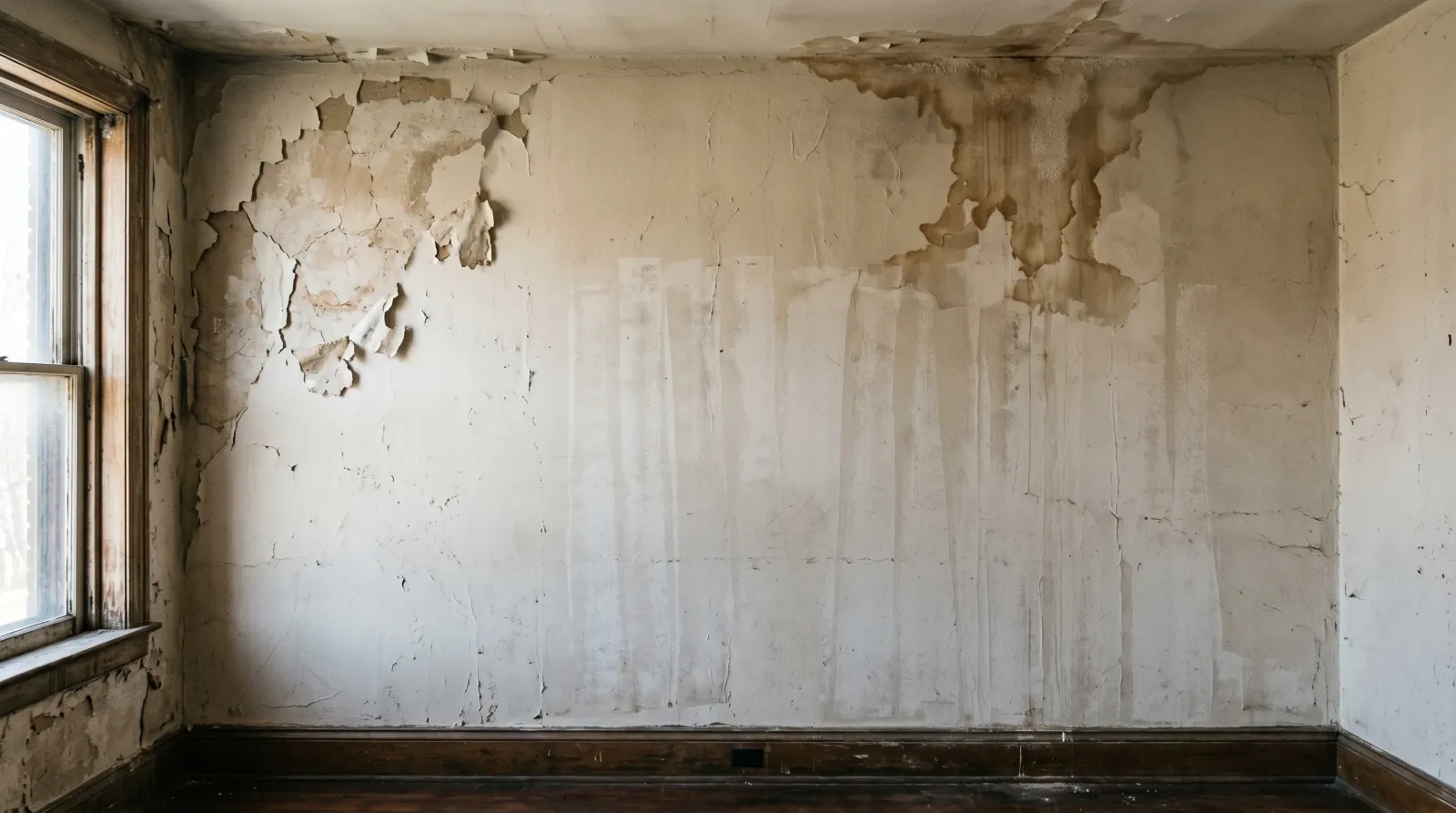
Before you fix anything, answer one question: is the paint lifting off the surface? If it is, you have an adhesion problem, and the cause is almost always prep, not paint. If the paint is bonded but looks wrong, you’re dealing with texture, a stain, moisture, or color. This page sorts every common paint problem into those five buckets and sends you to the exact fix that holds. Start at the top and follow the questions down.
Start Here: The Five-Question Decision Tree
Most paint problems fall into one of five families. Work through these in order. The first “yes” is your category.
1. Is the paint lifting, bubbling, flaking, or coming off in sheets? That’s an adhesion failure. Prep failed or moisture is pushing from behind. Jump to the adhesion section.
2. Is the film bonded and flat, but you see bands, streaks, stipple, or an “orange peel” pattern? That’s a texture problem. Technique or the wrong tool. Jump to texture.
3. Is something coming THROUGH the paint, brown, yellow, rusty, or white powder? That’s a stain or discoloration. Something underneath is bleeding up. Jump to discoloration.
4. Is this a bathroom, basement, or an outside wall, with mold, drips, or sticky streaks? That’s moisture. The room is wetter than the paint can handle. Jump to moisture.
5. Is the film fine, but the COLOR is wrong, too dark, doesn’t match the chip, looks different than expected? That’s a color problem. Jump to color.
If two answers feel true, take the earliest one. Adhesion and moisture beat everything below them, because a wall that’s lifting or wet won’t hold any fix you put over the cosmetic problem.
Adhesion: Peeling, Blistering, Flaking
Paint doesn’t peel because the paint was bad. It peels because something underneath let go. The pattern tells you the cause.
- Long curling strips or sheets -> the bond broke, usually moisture from behind or new paint over a glossy/chalky surface -> see how to fix peeling paint.
- Peeling in a bathroom specifically -> condensation, almost always a dead or undersized exhaust fan -> see peeling paint in a bathroom.
- Bubbles or blisters that pop -> trapped moisture or solvent, painted in sun or over a damp substrate -> see paint blistering.
- Paint flaking off trim, no curl -> intercoat failure, latex over un-sanded oil with no bonding primer -> see adhesion failure on trim.
- Paint peeling off a laminate or melamine surface -> wrong primer on a slick face -> see paint peeling off laminate.
The diagnostic for all of these is the same. Press painter’s tape against the film and rip it off. If paint comes with the tape, the bond is failing and you cannot just recoat. The fix is scrape, feather the edge, prime the bare spots with the right primer, then two coats.
Which primer depends on the surface. Bare wood and chalky old paint need different products than a glossy door. The full breakdown lives in our what is primer guide, and slick surfaces like laminate need a bonding primer specifically. For the deep stuff that’s bled or burned, shellac primer is the heavy hitter.
One warning before any sanding or scraping: if the house was built before 1978, the paint underneath is probably lead. Test it. See our pre-1978 lead test guide and the RRP rule explained before sandpaper touches a wall. A box of lead test kits runs about ten bucks at any home center.
Texture: Lap Marks, Roller Marks, Brush Marks, Orange Peel
Texture problems are cosmetic. The film is bonded and sealed and doing its job. The trouble is you can see how it went on. These show up under raking light, the low-angle sun that lands sideways on a wall.
- Faint vertical bands every 3 to 4 feet -> lap marks, the wet edge dried before the next pass overlapped it -> see how to fix lap marks.
- Stipple or a tracked roller pattern across the field -> wrong nap or a starved roller -> see roller marks.
- Fine parallel streaks from a foam roller -> foam can’t lay a uniform film on walls -> see foam roller streaks.
- Visible brush lines in trim or doors -> paint set before it leveled, or the wrong brush -> see how to fix brush strokes.
- A dimpled “orange peel” surface, usually from a sprayer -> spray pressure or thinning off -> see orange peel from spraying.
The fix for all texture problems is the same shape: sand the raised seams or stipple flat with 220 grit until your fingertip can’t feel them, then recoat the WHOLE wall or panel in one session. Never spot-coat a lap mark. You’ll make one mark into two.
Most of these come from rushing or from the room fighting you. Heat, dry air, and big walls shorten your open time. A latex conditioner like Floetrol buys back the working window. The roller marks fix covers nap selection in detail, and our paint scrapers guide covers the gear for knocking seams flat before a recoat.
Discoloration: Yellowing, Staining, Efflorescence, Tannin Bleed
Discoloration means something is coming up through the paint from underneath, or the paint itself has changed in place. The color and the location tell you which.
- Brown or tan stains bleeding through fresh white over wood (knots, cedar, oak) -> tannins, natural wood dye lifting through water-based paint -> see how to block tannin bleed.
- Rusty brown stains over nail heads or metal -> rust bleeding through -> see blocking rust stains.
- White, fuzzy, crystalline powder on brick or block -> efflorescence, mineral salts pushed out by moisture, not paint failure -> see efflorescence on brick.
- Trim or doors that have gone yellow over time -> oxidation of an oil/alkyd film, or sun starvation in closets -> see yellowing trim.
- White-painted cabinets turning amber -> same yellowing mechanism, plus kitchen grease and heat -> see cabinets yellowing.
The diagnostic question for bleed-through stains: did the stain appear AFTER you painted, and is it sharp-edged and brown? Then it bled up, and the only durable answer is a stain-blocking primer. Latex primer won’t hold it. You need a shellac-based blocker like Zinsser BIN, which our shellac primer guide walks through. The reason tannins and rust ghost back through water-based primer is chemistry. Our undertone explainer and primer guide cover why a water carrier just reactivates a water-soluble stain.
Efflorescence is the odd one out. It’s not a paint problem at all, it’s masonry telling you water is moving through it. Brush off the salts dry, find the water, and read the efflorescence on brick fix before you seal anything in.
Moisture: Mold, Condensation, Surfactant Leaching
Moisture problems all trace back to the same thing: the room is wetter than the coating can handle. Bathrooms, basements, laundry rooms, and north-facing exterior walls are the usual suspects.
- Black or pink spotting on a bathroom ceiling -> mildew/mold feeding on humidity -> see bathroom ceiling mold.
- Black streaks low on bathroom walls or behind fixtures -> wall mold, often a ventilation problem -> see mold on bathroom walls.
- Beads of water or a clammy film on cold walls -> condensation, warm wet air hitting a cold surface -> see condensation on walls.
- Brown or amber sticky streaks or drips on a freshly painted wall -> surfactant leaching, the soaps in latex weeping out before cure in a humid room -> see surfactant leaching.
- Water stains spreading on a ceiling -> active or past roof/plumbing leak -> see water stains on a ceiling.
The trap with every moisture problem is treating the paint and ignoring the water. Kill mold, repaint, and it comes back in a season if the bathroom fan still can’t pull a square of toilet paper against the grate. Surfactant streaks wipe off, but they return on the next humid night until the room dries out. Our surfactant leaching explainer covers why a brand-new coat weeps brown in a steamy bathroom.
A safety rule that applies to every mold job: never mix bleach with vinegar, ammonia, or hydrogen peroxide. It produces toxic chlorine gas. Use one cleaner, ventilate, wear a respirator. For the long-term answer, a mold-resistant coating buys time once the room is dry, and our best mold-resistant paint round-up covers what actually holds in a wet room.
Color: Doesn’t Match the Sample, or Looks Different
Sometimes the film is perfect and the color is the problem. This bucket splits three ways.
- Dried color doesn’t match the paint chip or store sample -> chips lie under store light, and paint dries darker -> see color not matching the sample.
- Color came out too dark once it dried -> normal darkening on cure, or a tinting error -> see paint too dark after drying.
- The can looks like the wrong color before you even open it -> separation or a mis-tint at the counter -> see color shift in the can.
Most color complaints aren’t mistakes, they’re physics. Paint dries roughly 10 to 30 percent darker than the wet swatch, and the chip you held in the store was lit by cool fluorescents that flatter cool colors and gray out warm ones. The same gray reads blue on a north wall and beige under warm LEDs. Our undertone guide explains why a color shifts room to room, and the matching fix above tells you whether to live with it, glaze it, or repaint.
A real mis-tint is rare but it happens. If the can color looks nothing like the lid sticker, take it back. The counter can re-shake or correct the formula. Don’t roll a whole room hoping it’ll dry into the right color. It won’t.
Prevention: How to Not End Up Back Here
Most of these problems are repeat offenders. The same wall, the same bathroom, the same north-facing siding, year after year, because the cause never got addressed. A few habits kill most of them.
- Diagnose moisture before you paint anything wet-prone. Run the exhaust fan during a shower and 20 minutes after. Target 1 CFM per square foot of bathroom. If the fan can’t hold a sheet of toilet paper to the grate, it’s dead. Replace it before you repaint, or peeling and mold come right back.
- Prep is the job. Sand glossy surfaces dull, deglosser where you can’t sand, prime bare spots, and never put latex over un-scuffed oil without a bonding primer. Most adhesion failures are skipped prep, not bad paint.
- Match the primer to the problem. Bare wood, chalky old paint, slick laminate, and a bleeding stain all need different primers. Guessing wastes a weekend. The primer guide sorts it.
- Block bleed-through with shellac, not latex. Tannins, rust, smoke, and water rings ghost back through water-based primer. Shellac stops them cold.
- Respect the conditions. Don’t paint in direct sun, above 85°F, or below 50°F. Cold-weather jobs need their own rules, covered in painting in cold weather. The label says it for a reason.
- Two coats. Always two coats. One-coat coverage is a marketing claim that assumes perfect conditions. Your room isn’t perfect conditions.
When to Call a Pro
Some problems aren’t DIY no matter how good your decision tree is.
- Pre-1978 home with widespread peeling. Lead test first. If positive and the area is large, hire a certified RRP contractor. Don’t dry-sand lead paint.
- Mold over about 10 square feet. That’s past the EPA threshold for DIY remediation.
- Soft, dark, or sagging drywall or wood. Water is in the substrate. Paint won’t save it; the material gets replaced.
- Anything above 12 feet on a two-story exterior. Ladder-and-fall risk outweighs the savings.
- The same failure for the third time. If two proper repairs didn’t hold, the cause is hidden and worth a pro set of eyes.
The honest read on this whole page: paint is the visible layer of a system. When the system underneath leaks, rots, or was built wrong, no coating fixes it. Find the cause, and the right fix is usually obvious. Skip the cause, and you’ll be reading this page again next spring with a different colored failure.
Ask a Question