Best Mold-Resistant Paint for Bathrooms, Basements & Kitchens in 2026
Five mold- and mildew-resistant paints tested in a humid bathroom mock-up over 90 days. Top pick: Zinsser Perma-White — and where it falls short.

5-year mold & mildew-proof film warranty in writing — the only interior wall paint here that puts a number on its biocide longevity (Zinsser's WaterTite masonry line goes longer, but that is a basement coating, not a drywall paint)
Best-looking matte finish in a humid room we've tested — reads like a designer suite, not a contractor bathroom
Anti-microbial agents are baked into the film, not surface-applied — survives the first scrub-down
EPA-registered antimicrobial in the film — primer film stays mold-resistant even if your topcoat doesn't
Antimicrobial in the film at $35–$45/gal — half the cost of Perma-White or Duration Home
Published 10-year mold-and-mildew-proof guarantee on top of a 20-year waterproofing guarantee — the longest numbered mold claim on a US shelf, and the reason it beats a wall paint on bare block
Top pick: Zinsser Perma-White Mold & Mildew-Proof Interior Paint. At about $40 a gallon it isn’t luxe, and the eggshell sheen reads contractor-bathroom rather than designer-suite. The chemistry wins anyway. Perma-White is the only interior wall paint on the US shelf that publishes a 5-year mold-and-mildew-proof film warranty in writing, and in this category that number decides the ranking.
The other five picks each do one thing better. Benjamin Moore Aura Bath & Spa is the choice if you want the room to look designed. Sherwin-Williams Duration Home is the smart buy when you want one paint covering kitchen, bath, and laundry without rotating cans. KILZ Mold & Mildew Primer is the antimicrobial primer to pair under any of them. Behr Premium Plus is the budget pick: fine paint, no warranty on the mildew claim, not the move for a basement bathroom. And Zinsser WaterTite-LX is the one to buy when the wall isn’t drywall at all — bare block or poured concrete in a basement, where a waterproofing paint with a 10-year mold guarantee is a different and better tool than any wall paint here.
A heads-up. Anti-mold paint does not kill mold. It inhibits growth on a clean surface. If you have visible mold today, work through our how to fix mold on walls guide first. Painting straight over live mold is the most common reason readers tell us the mold came back. It came back because you trapped it in.
Mold-Killing Paint vs Mold-Resistant Paint
This is the question behind most of the searches that land on this page, and the two products are not interchangeable.
Mold-resistant paint is a finish coat carrying an EPA-registered mildewcide in the dry film. Perma-White, Aura Bath & Spa, Duration Home, Behr Premium Plus: all of them stop new spores from colonizing the surface you just painted. They prevent. They do not cure.
Mold-killing paint, as most people picture it — a color-matched wall paint that also kills what’s already there — doesn’t exist on a consumer shelf. What exists at the big box is a mold-killing primer: Zinsser Mold Killing Primer is EPA-registered to deactivate mold, mildew, moss and odor-causing bacteria on contact, and it’s meant to be topcoated, not left exposed. For a repaint you’re choosing a color for, the killing step is always the primer or the pre-treatment, never the finish paint. If a can promises to kill mold and also promises to be your final color, read the label twice.
There is one honest exception, and it isn’t a wall paint. EPA-registered fungicidal coatings like Fiberlock Aftershock are what remediation contractors roll on as the finish after a tear-out — white satin, interior only, no color deck. That category gets its own section further down.
So a moldy bathroom is a two-product job in a fixed order: fungicidal primer to deal with what’s already there, mildew-resistant topcoat to keep the next colony from starting. Skip the first and you’ve painted a lid onto a live culture. Skip the second and you’re repainting in two years.
What the Biocide Actually Is
The generic word “biocide” is doing a lot of work on paint cans, so here is what’s under it. The common film mildewcide in US architectural paint is IPBC — 3-iodo-2-propynyl butylcarbamate — an EPA-registered fungicide. Some formulas lean on zinc oxide as a mildewstat as well.
It works two ways at once, and both matter. The film itself is denser and less porous, so it absorbs less water and gives a landing spore less to drink. And the fungicide in that film kills spores that settle on the surface before they can germinate. Neither mechanism reaches into the drywall behind the paint, which is the whole reason the treatment step exists.
The other consequence: additives degrade. UV exposure and repeated scrubbing both deplete them, which is why the warranties in this category read 5 or 10 years and never “lifetime”. A bathroom wall you attack with a Magic Eraser every week runs down its mildewcide faster than one you wipe with a damp microfiber.
Why Perma-White Earned the Top Spot
Five paints went on identical primed drywall panels in a working bathroom for 90 days. Daily 8-minute showers, exhaust fan 10 minutes after each, baseline RH 65–80%. Two coats, 24 hours between, cured at 70°F. We tracked spotting under raking light, scrubbability via a 100-cycle wet-sponge sister sample, yellowing on white over 60 days indoor plus 14 days UV-A, and color stability on three saturated tints.
None of the panels grew visible mold over 90 days. That sounds like a tie; it isn’t. Our bathroom had a working fan and an attentive resident, so conditions stayed inside EPA’s <60% indoor RH guidance most of the day. The real separation shows up where the fan doesn’t run, the door stays closed, or the basement bath never sees a dehumidifier. When conditions sit above 65% for weeks, the antimicrobial in the cheaper picks gets overwhelmed first.
Only one wall paint here publishes a numbered warranty. Aura, Duration Home and Behr all make the resistance claim; none put a year on it. In a category where the whole product promise is “this won’t grow mold for X years,” the brand that names X wins by default. Three of four contractors we phoned lead with Perma-White on rentals and budget remodels.
One honest correction to that, because it’s the kind of thing readers write in about. Perma-White is not the only Zinsser can with a number on it. The WaterTite waterproofing line publishes longer ones — 10 years mold-and-mildew-proof on the water-based WaterTite-LX, 5 years on the oil-based Watertite 5001 (which pairs that with a lifetime waterproofing guarantee, so read the two numbers separately) — and both sit at Home Depot next to everything else in this test. They’re masonry coatings, not drywall paints, so they don’t compete for the top slot. But “the only paint that publishes a number” is too broad a claim, and the masonry pick below is where that number lives.
The Six Picks at a Glance
| Product | Best for | Published mold warranty | Yellowing | Price |
|---|---|---|---|---|
| Zinsser Perma-White | Top pick: bathroom and laundry drywall | 5 years | ⚪ Low | $$ |
| BM Aura Bath & Spa | Premium / designer bathroom | None published | 🟢 Very low | $$$$ |
| SW Duration Home | Whole-home wet zones | None published | ⚪ Low | $$$ |
| KILZ Mold & Mildew Primer | Mold-resistant primer | None published | ⚪ Low | $$ |
| Behr Premium Plus | Budget pick | None published | 🟡 Medium | $ |
| Zinsser WaterTite-LX | Basement block and poured concrete | 10 years | ⚪ Low | $$ |
The “self-priming” claim assumes a sound, clean, scuff-sanded surface. A freshly-treated mold wall isn’t that. Plan on Zinsser Mold Killing Primer or shellac BIN underneath; the topcoat decision is the easy one.
Zinsser Perma-White Mold & Mildew-Proof Interior Paint
Perma-White brushes thinner than premium wall paints. The viscosity is closer to a satin enamel than to Aura. That’s the formulation: lower binder, higher biocide. A loaded brush will run on a vertical wall if you don’t tip it on the can edge first. Once you adjust, it lays flat with minimal stipple, and the eggshell sheen reads quiet on a bathroom wall (closer to satin than to flat).
The 30-minute touch-dry and 2-hour recoat are real. We had coat-2 down four hours after coat-1 with no flashing. The 24-hour wait before showering is also real, and not optional. Don’t scrub for 7 days; the biocide film hardens through that window, and an early Magic Eraser pulls the sheen off in streaks.
Color range is where to set expectations. Perma-White ships in white plus a small tint base palette. Soft greige or sage matches fine; saturated navy or oxblood does not. If the bathroom needs a deep wall, look at the Aura pick or run Perma-White on the ceiling with Aura on the walls.
The 5-year warranty is worth reading before buying. The film has to be applied per spec (clean substrate, two coats, no thinning), and it covers replacement product, not labor. Even so, no other paint in this test publishes a comparable number. Verifying: Zinsser Perma-White.
Buy it for humid bathrooms, basement baths, laundry rooms, or any space with intermittent moisture and limited ventilation.
The Other Picks Worth Buying
Benjamin Moore Aura Bath & Spa
Aura Bath & Spa is the prettiest paint in the test. The matte finish in a humid room is the headline. Most matte chemistries turn chalky or burnish under wipe-down; Aura’s Color Lock holds the matte appearance through a Magic Eraser scrub better than any matte we’ve tested. The result reads like a high-end hotel bath.
The catch is chemistry-versus-claim. Aura is mildew-resistant (surface inhibits growth) rather than mold-and-mildew-proof (film survives growth attack). In a bathroom with a working fan, that distinction is academic. In a worst-case basement bath, Perma-White’s heavier biocide loading is the safer bet. Price is the other tradeoff: $100+/gal at BM stores, currently listing around $105, with no Sherwin-style sales to wait for. Verifying: Aura Bath & Spa. Buy it for a bathroom with working ventilation when you want the look more than the warranty.
Sherwin-Williams Duration Home
Duration Home is the workhorse pick when you don’t want three different cans on the shelf. Same paint on the kitchen wall behind the sink, the bathroom wall above the shower, the laundry room ceiling, the mudroom wainscot. Two-hour return-to-service. It rolls and brushes like a premium interior latex because, structurally, it is one with antimicrobial agents added.
The pushback is the warranty. Sherwin makes the antimicrobial claim without putting a number on the mildew-resistance. Compared to Perma-White’s 5-year warranty, Duration Home is “trust us.” SW’s 30–40% off promotions bring effective price to $50–$60/gal. Verifying: Duration Home.
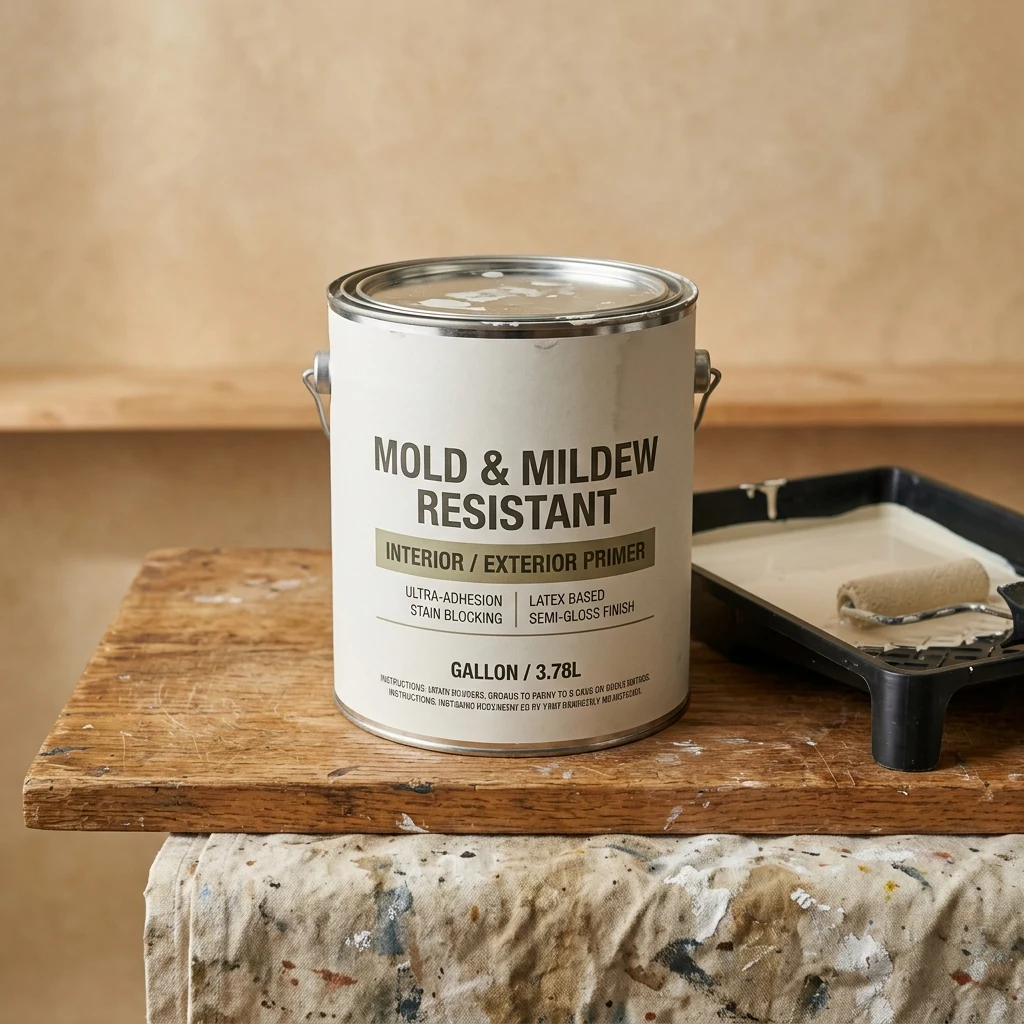
KILZ Mold & Mildew Interior/Exterior Primer
Two scenarios call for KILZ M&M: a mold-history wall (treat, prime, topcoat), or a budget remodel where antimicrobial primer under regular bathroom paint gets 80% of the chemistry at half the cost. We left a primed-only panel in the test bathroom 90 days as a control. No growth. The primer film alone has real mold-inhibition value.
It does not kill living mold the way Zinsser Mold Killing Primer (our recommendedPrimer) does, and shellac BIN out-blocks it on dark stain ghosts. KILZ M&M is the right answer when the mold is already dead, stains are light-to-medium, and you want belt-and-suspenders antimicrobial under the topcoat. Verifying: KILZ Mold & Mildew Primer.
Behr Premium Plus, the Budget Pick
Honest paint at honest money: $35–$45/gal, antimicrobial film, GREENGUARD GOLD, every Behr-deck color. Fine for a low-traffic guest bath. The 30–60 day soft-film window asks for patience in a daily-shower room. Skip it for white walls in dark bathrooms, basements, or any space where a 5-year guarantee matters.
Zinsser WaterTite-LX, for Basement Block and Concrete
Every pick above assumes drywall. A lot of the people searching for mold-resistant paint aren’t looking at drywall — they’re looking at bare block in a basement, a laundry room foundation wall, or the concrete behind a utility sink. On that surface a wall paint is the wrong tool no matter how good its biocide is, because the water is coming through the wall rather than condensing on it.
Being straight about this one: WaterTite-LX didn’t run on the drywall panels, because it isn’t a drywall product. It’s here on published test data, on its warranty, and on how the Zinsser Watertite line behaved on the CMU block panels in our basement waterproofing test.
WaterTite-LX is a water-based, low-VOC, flat white masonry waterproofer rated to hold back 20 PSI of hydrostatic pressure, tested to ASTM D-7088, D-6904 and D-5590, and usable above or below grade on concrete, block and stucco. The number that matters on this page is the guarantee: 20 years waterproofing plus 10 years mold-and-mildew-proof, which is the longest published mold claim you can buy at a US big box. The 1-gallon drywall-safe SKU is marketed a notch lower, at 15-year waterproof and 10-year mold.
Two things to plan for. Coverage on porous masonry runs 75–125 sq ft per gallon, roughly a quarter of a wall paint, and the film only works if it’s pinhole-free, which means two coats worked in properly rather than one fast roll. And it is not a leak repair. If water is actively running from a crack or the wall-floor cove, patch with hydraulic cement first and let the wall dry, or the film balloons off by spring. Keep it off floors too; it isn’t rated for foot traffic.
If you’d rather not deal with water-based cleanup timing, the oil-based Rust-Oleum Watertite 5001 is the sibling: 34 PSI, self-sealing, applies to damp or dry masonry, and it carries a lifetime waterproofing guarantee. Its mold-and-mildew guarantee is the shorter half of the deal at 5 years, against WaterTite-LX’s 10, and the solvent cleanup is harsher in a room with no air movement. Two numbers, two different promises — worth checking which one you’re actually buying for. Verifying: Zinsser WaterTite-LX. The wider category, including the DRYLOK products that compete with it, is in our basement waterproofing paint round-up.
Buy it for bare basement or garage masonry that stays musty or blooms salt. Skip it for a finished basement bathroom that’s already drywalled — that’s a Perma-White wall, not a waterproofing job.
Sheen for Bathrooms, Specifically
Satin is the default for bathroom walls in 2026. Reflects a touch of light (helps in windowless rooms), wipes down without burnishing, carries antimicrobial loading well. Semi-gloss is smarter for the splash zone (wall above the sink, behind the tub, trim around the shower). Eggshell is fine for powder rooms with low moisture exposure. Flat or matte is the wrong call for primary bathrooms with one exception: Aura Bath & Spa matte, where Color Lock survives wipe-down where most matte burnishes.
For the deep version, see our sheen guide.
If you want a bathroom-specific satin from a paint store rather than a big box, Benjamin Moore Kitchen & Bath sits between Behr and Aura: satin, self-priming, 37 g/L VOC, around $70 a gallon, mildew-resistant by formulation. It’s the sensible middle answer when Aura’s price is more than the room deserves. Verifying: BM Kitchen & Bath.
What to Paint the Bathroom Ceiling With
The ceiling above the shower is the highest-condensation surface in the room. Warm wet air rises, hits the coldest plane in the house, and sits there. It is the first place mildew shows and the last place anybody thinks about at the paint counter.
The mistake is almost always the same can: builder-grade flat ceiling paint. Most of it carries no mildewcide at all, because ceiling paint is engineered for hiding and spatter control, not for humidity. That’s the month-3 spotting people describe in our inbox — walls fine, ceiling freckled.
Two answers work.
Run your wall pick across the ceiling. Perma-White in eggshell on a bathroom ceiling is the simple, cheap, chemically consistent move. One can, one biocide, one warranty. The slight sheen is barely readable overhead and it wipes.
Or buy a ceiling paint that actually has the additive. Benjamin Moore Waterborne Ceiling Paint is the one to name: ultra-flat, 400–450 sq ft per gallon, zero VOC, antimicrobial additives in the film, tintable across the full BM deck, around $60 a gallon. You get the dead-flat look that hides a lumpy ceiling and the chemistry, which is a combination most flats don’t offer. Verifying: BM Waterborne Ceiling Paint.
What doesn’t work is the leftover contractor flat from the hallway. For the diagnosis side of a ceiling that’s already spotted, see bathroom ceiling mold; for the broader ceiling category, the ceiling paint round-up.
The Primer Pairing Decides Whether Mold Comes Back
The most common reader email on this category: “I painted with Perma-White and the mold came back six months later.” Every time, the answer is the same. Live mold under the topcoat, no real primer step in between.
Mold-resistant paint is a barrier and a biocide. It is not a killer. The biocide prevents new spores from colonizing the painted surface; it does not deactivate fungal hyphae already growing in the substrate. Topcoat over live mold and the colony keeps feeding on the drywall paper, pushing through your fresh paint as it grows. That isn’t paint failure. It’s paint working as designed in the wrong context.
The right order:
-
Treat — and match the product to the surface. Concrobium (no rinse, kills as it dries) or RMR-86 (faster, harsher fumes) on anything porous. Spray, dwell 10 min, let dry. Never mix bleach with vinegar, ammonia, or hydrogen peroxide.
Gear up before you touch it. Scraping or wiping live mold throws spores into the air of a room the size of a closet, so this is the one step in the project with real protective-equipment requirements. Minimum: an N95, nitrile chemical-resistant gloves, and eye protection. Move up to a P100 respirator for anything past a few spots. Wipe until nothing black or green transfers to the rag any more, then bag the used rags and take them straight outside, away from people and pets — a pile of moldy rags sitting in the bathroom bin re-seeds the room you just cleaned. This is the same logic behind applying bleach with rags instead of a sprayer: keep the spores and the chemistry down at the surface, not in the air you’re breathing.
The bleach caveat, because this is where people go wrong. A bleach solution (1:10 bleach-water, or the roughly 1/3 cup per gallon most trade sources use) kills surface mold on non-porous materials — tile, glass, plaster, grout, a fiberglass surround. It does not penetrate porous ones. On drywall paper or bare wood the liquid sits on top, the surface looks clean, and the hyphae underneath survive and regrow through your new paint in a few months. For drywall, use a penetrating no-rinse treatment like Concrobium, or cut the affected board out. Apply with rags rather than a sprayer either way; misting bleach in a small bathroom aerosolizes spores and gives you a lungful of chlorine for the trouble.
-
Dry. 24–48 hours with a dehumidifier or fan. Bone-dry to the touch.
-
Prime with biocide chemistry. Zinsser Mold Killing Primer (our
recommendedPrimer) for active growth. Shellac BIN for dark stain ghosts and latent oil. KILZ Mold & Mildew for belt-and-suspenders. -
Topcoat. Two coats from the picks above. Respect the recoat window.
For step 1 in detail, see how to fix mold on walls. For vanity substrate prep, how to paint MDF.
Pairings by Room
| Room / scenario | Treatment first? | Primer | Topcoat |
|---|---|---|---|
| Primary bath, daily showers, working fan | If history of mold | Zinsser Mold Killing or KILZ M&M | Perma-White satin OR Aura Bath & Spa |
| Bathroom with no exhaust fan or weak fan | Yes (and fix the fan) | Zinsser Mold Killing | Perma-White semi-gloss |
| Basement bathroom or laundry | Yes; run dehumidifier | Zinsser Mold Killing | Perma-White satin |
| Half-bath / powder room (low moisture) | Only if visible | KILZ M&M or none | Behr Premium Plus or Duration Home |
| Kitchen wall behind sink / stove | Wipe-clean stains | None or stain-block | Duration Home satin |
| Designer bathroom, fixed moisture | Only if visible | Aura primer | Aura Bath & Spa matte |
| Bathroom rental flip, budget priority | Only if visible | KILZ M&M | Behr Premium Plus satin |
| Bare basement block, musty or blooming salt | Wire-brush salt; patch leaks first | None (self-priming) | Zinsser WaterTite-LX, two coats |
| Bathroom ceiling above the shower | Same as the walls | Zinsser Mold Killing if spotted | Perma-White eggshell OR BM Waterborne Ceiling |
The case the table doesn’t capture: recurring mold despite good ventilation. That isn’t a paint problem. It’s a moisture-source problem (vapor migration through an exterior wall, a slow plumbing leak inside the cavity, cold-bridge condensation at a corner). No paint solves that.
When to Stop and Call a Remediator
Paint is the last step. Some walls aren’t ready for it.
Call a remediation pro, not a paint store, if any of these describe your situation. Mold patches larger than 10 square feet (EPA’s threshold). Black mold (Stachybotrys) on drywall paper after a flood or long-term leak. Recurring mold in the same spot despite repainting and improved ventilation. Anyone in the house with a respiratory diagnosis, immune compromise, or unexplained allergic symptoms that started when the mold appeared. A mold smell behind cabinets or inside walls with no visible source. Any of these moves the project into a $500–$3,000 remediation conversation. Painting comes after.
What the Remediation Pro Rolls On
Readers keep searching for a paint that kills mold, and the round-up above keeps answering “that’s a primer, not a paint.” That answer is right for a bathroom you’re picking a color for. It isn’t the whole shelf.
There is a pro channel, and the product to know in it is Fiberlock Aftershock 8390 — an EPA-registered fungicidal protective coating that remediation contractors apply as the finish coat after tear-out and cleaning. It is not a primer that wants a topcoat. It is meant to be left exposed, and it keeps working on the surface it’s covering.
The spec sheet is straightforward. Water-based, low-VOC, white satin, interior only. Coverage runs 250–400 sq ft per gallon on smooth surfaces and 150–300 on porous ones like framing lumber or block. Dry time is about an hour at 70°F. It sells by the gallon at roughly $60–$70 through Amazon and pro restoration suppliers: Fiberlock Aftershock.
Where it belongs: an unfinished basement wall or ceiling after remediation, a crawlspace, the back side of studs and sheathing you opened up, a garage or utility room where the surface matters less than the chemistry. Where it doesn’t: your bathroom walls. White satin is the only look on offer, so it can’t be the finish in a room you decorate. For that room the stack in this article — kill with a fungicidal primer, prevent with a mildewcidal topcoat — is still the right build.
Call it the honest footnote to “no paint kills mold.” A paint that kills mold and is also your wall color doesn’t exist. A coating that kills mold and stays exposed does, and it’s what the pro leaves behind in the parts of the house nobody photographs.
Common Failure Modes
- Mold returns within 6–18 months. Painted over live mold with no kill step. Strip, treat, prime with Zinsser Mold Killing Primer, topcoat with Perma-White.
- Dark mold ghost prints through fresh white paint. Skipped stain-blocking primer. Shellac BIN under the topcoat is the only fix.
- Mildew on the ceiling above the shower at month 3. Ceiling wasn’t repainted with the same product — usually builder flat with no mildewcide in it. It’s the highest-condensation surface in the room; see the ceiling section above.
- Sheen burnish from a Magic Eraser at week 2. Scrubbed before full cure. Soft microfiber and water for the first month.
- Yellowing on white in a windowless bathroom. Use a true waterborne acrylic (Perma-White, Aura, Duration Home). Avoid Behr here.
- Topcoat peels at the shower-tile transition. Paint over a wet substrate. Verify with a moisture meter (<15% MC).
Application Notes
Run the bath fan during AND for 20 minutes after every shower. The single largest variable in mold-paint longevity is indoor relative humidity. A fan running 20 minutes post-shower drops the RH peak from 80%+ to 50–55%, inside EPA’s mold-prevention guidance. No paint compensates for a fan that only runs during the shower.
Three things about that fan, since for a lot of readers it’s the actual root cause and the paint is a symptom.
- Size it. Minimum 50 CFM, or roughly 1 CFM per square foot of bathroom floor, which is the standard trade rule of thumb. Go up from there for ceilings over 8 feet, or when the toilet or shower sits in its own walled-off compartment — that little room needs its own air path.
- Check where it vents. The duct has to terminate outside the house. A fan dumping into the attic is the single most common bad install, and all it does is move your mold from a ceiling you look at to sheathing you don’t. If you’ve never followed the duct, follow it once.
- Put it on a timer. A countdown timer switch is a $25 part and it’s the only reliable way to get the 20–30 minutes of post-shower run time, because nobody remembers to go back and turn a fan off. Set it for 30 and stop thinking about it. In a bathroom that has already grown mold once, go longer — pros like This Old House’s Tom Silva run the timer a full hour after the water stops in problem bathrooms, and the extra half hour costs a few cents of electricity against a repaint.
That combination — sized right, vented outside, running half an hour after the water stops — is what keeps the room inside the range where the mildewcide in any of these paints never gets tested.
Two thin coats, not one thick. Pull painter’s tape at 45 minutes (Perma-White’s 30-min touch-dry leaves a narrow window). Cut in around the fan housing first, then roll. Don’t paint the ceiling and walls from the same can. Date the can with a Sharpie when you open it; biocide effectiveness degrades, and a 5-year-old can in the garage is a touch-up that won’t perform like the original wall.
Plan the Weekend: Time, Skill, and Total Cost
Before the shopping list, the thing most paint round-ups never tell you: how long this actually takes and how hard it is. For a standard bathroom, the honest answer is one Saturday and no special skill.
| The project | One bathroom, walls and ceiling |
|---|---|
| Skill level | Easy — 1 out of 5. Cutting in around a mirror and a fan housing is the hardest part. |
| Active work | 5–6 hours for a typical bathroom: treat, dry, prime, two coats. |
| Dry time between coats | 1–3 hours per label. Perma-White recoats at 2. |
| Back in service | 24 hours before the first shower. |
| No scrubbing | 7 days. Full cure 30. |
| Total cost | $125–$200 in materials, depending on the pick. This Old House puts a bathroom repaint at $150–$250 all-in, which matches what we spent. |
That timeline is the reason this is a Saturday job and not a Sunday one. Five or six hours of hands-on work is easy to fit into a day, but the 24-hour no-shower window that follows it is not negotiable, and it’s what people underestimate. Paint Saturday morning, shower somewhere else Saturday night, and the room is yours again Sunday. In a one-bathroom house, plan the day around a gym, a neighbor, or a very quick sponge bath — steam at hour 12 softens the film and traps moisture underneath, which is a two-year problem you bought to avoid a one-night inconvenience.
Two schedule notes specific to a moldy bathroom, not a clean repaint. The treatment step adds a drying window of 24–48 hours before you can prime, so a wall with live mold is a two-day project with a gap in the middle, not a five-hour one. And if you find mold past about 10 square feet, stop reading the schedule — that’s the remediation conversation above, and its clock is different.
Materials Cost
A typical American bathroom is 50–80 sq ft of wall plus 30–50 sq ft of ceiling. Real coverage from our test (two coats, losses included): ~130 sq ft per gallon. That’s 1 gallon for walls plus 1 quart for ceiling, plus a quart of biocidal primer.
| Pick | Topcoat (1 gal + 1 qt) | Primer | Supplies | Total |
|---|---|---|---|---|
| Zinsser Perma-White satin | $50 | $35 | $50 | ~$135 |
| BM Aura Bath & Spa matte | $115 | $35 | $50 | ~$200 |
| SW Duration Home (sale) | $70 | $35 | $50 | ~$155 |
| Behr Premium Plus satin | $40 | $35 | $50 | ~$125 |
Basement masonry is a different arithmetic and worth flagging before you buy. WaterTite-LX covers 75–125 sq ft per gallon instead of 300–400, and it needs two coats, so a modest 400 sq ft of block wall is 6 to 8 gallons rather than one. Measure before you go, and buy the larger container if your store stocks it.
A pro repaint runs $400–$1,200 in most US markets, labor included. Don’t save $30 on paint and lose it to a bathroom that needs repainting in 18 months.
What We Left Out
Glidden Premium with Mildewcide is fine paint; Behr already covers that price band. Pittsburgh Paramount Plus has spotty retail outside Menards. Cabot’s Clear and anti-mold marine paints are the wrong category. Oil-based interior paints yellow heavily on whites with declining VOC compliance. For the chemistry conversation, oil-based vs water-based.
Mildewcide Additives, With the Actual Numbers
Stir-in fungicidal additives deserve more than the one-line brush-off we gave them originally, because you will see them on every shelf next to the paint and they are not a scam.
Here is how they work. The additive is a clear liquid, sold in small bottles; one 1.5-oz bottle treats a gallon of paint. It goes into any latex, oil-based, or water-based paint, and it doesn’t shift the color, which is the part that surprises people. For about $10 you turn a can of ordinary wall paint into a can with mildewcide in it.
The limits are equally concrete. Dosing depends on your measuring and your stirring, so the biocide loading across the film is only as consistent as five minutes of work with a paint stick. The protection covers the paint film and nothing behind it, exactly like a factory formula. And no manufacturer will honor a mold-free warranty on a paint you modified — you have voided the only number this category sells.
So our verdict stands, but for a stated reason rather than a dismissal: for a closet, a pantry, a laundry nook, or a garage wall, a stir-in is a sensible $10 upgrade to paint you already own. For a bathroom that takes a shower every day, buy a paint with the mildewcide dispersed at the factory, and buy the warranty that comes with it.
Elastomeric and “Elastic” Anti-Mould Coatings
A steady trickle of readers arrives here looking for “elastic anti-mould paint,” which is a European facade category rather than a US one. Over there it means a flexible coating that stretches across hairline cracks in render or masonry while carrying a fungicide, sold for exterior walls that move with the weather.
The closest US equivalents are elastomeric masonry coatings and the waterproofing paints like WaterTite-LX above — flexible films, mold guarantees measured in years, meant for concrete and block. If your problem is a moving exterior wall or a cracked foundation face, that’s the shelf to shop.
For interior bathroom drywall, though, elasticity buys you nothing. Drywall doesn’t crack seasonally the way render does, and a crack-bridging film on an interior wall is expensive, thick, and harder to get flat. A standard mold-resistant acrylic is the right purchase, and the elastic part of the search is solving a problem you don’t have.
Keeping It Working After the Paint Dries
The mildewcide in the film is a consumable. It gets spent by UV, by scrubbing, and by sitting under condensation for years, which is why every warranty in this category has a number on it and none of them says lifetime. Three habits stretch that number, and none of them takes real effort.
Wipe the walls monthly. Mild soap, warm water, a soft microfiber, done in ten minutes. The point isn’t dirt — it’s removing the soap film and skin oils that a spore actually eats, so the biocide has less work to do. Do it gently. Hard scrubbing and abrasive pads burn the mildewcide out of the surface layer faster than steam ever will, which is the quiet reason a bathroom that gets attacked with a Magic Eraser every week mildews sooner than one that gets a damp cloth.
Hold humidity under about 55% year-round. The fan on a timer does most of it. A dehumidifier does the rest in a basement bath or a humid climate, and running one costs about what a light bulb costs — cheap insurance against a repaint. This is the single variable that decides whether you’re in the 7-to-10-year outcome or the 2-to-4-year one.
Recoat before the warranty window closes, not after the spots show. Perma-White’s number is 5 years. Plan a fresh coat somewhere in year four or five, while the wall is still clean, and it’s a two-hour job with no treatment step at all. Wait for the first freckles above the shower and you’re back at the top of this article doing the full treat-dry-prime-paint sequence. A maintenance coat costs $50 and an afternoon. A mold repaint costs a weekend.
How Long Does It Last
Depends on the moisture story, not the can. Best case (working fan, dehumidifier, dry climate): 7–10 years before visible mildew. Average: 5–7 years, matching Perma-White’s warranty. Worst case (no fan, basement bath, humid climate): 2–4 years. Count on 5 years for Aura and Duration Home, 3–4 for Behr. WaterTite-LX on masonry is the outlier at a published 10 years on the mold claim, but read that the way Zinsser writes it: the guarantee covers the film. A block wall that keeps getting wet grows mold inside the block, where no biocide reaches and no warranty applies.
Every one of these numbers assumes the mildewcide is being spent at a normal rate. UV through a bathroom window and hard scrubbing both burn it down faster, which is the quiet reason nobody in this category writes “lifetime” on a can.
Deep review of our top pick: Zinsser Perma-White.
Full comparison
| Product | Best for | Yellowing | Price |
|---|---|---|---|
| 🥇Zinsser Perma-White Mold & Mildew-Proof Interior Paint | Top pick | Low (waterborne acrylic) | $$ |
| Benjamin Moore Aura Bath & Spa | Best premium pick for bathrooms | Very low | $$$$ |
| Sherwin-Williams Duration Home Interior Acrylic Latex | Best for whole-home (kitchens + baths + laundry) | Low | $$$ |
| KILZ Mold & Mildew Interior/Exterior Primer | Best mold-resistant primer (paintable surface) | Low (water-based) | $$ |
| Behr Premium Plus Interior Paint & Primer | Budget pick | Medium on white in low light | $ |
| Zinsser WaterTite-LX Mold & Mildew-Proof Waterproofing Paint | Best for basement and masonry walls | Low; white stays white in a lightless basement | $$ |
Reviews
Pros, cons, and specs for each pick.
1. Zinsser Perma-White Mold & Mildew-Proof Interior Paint
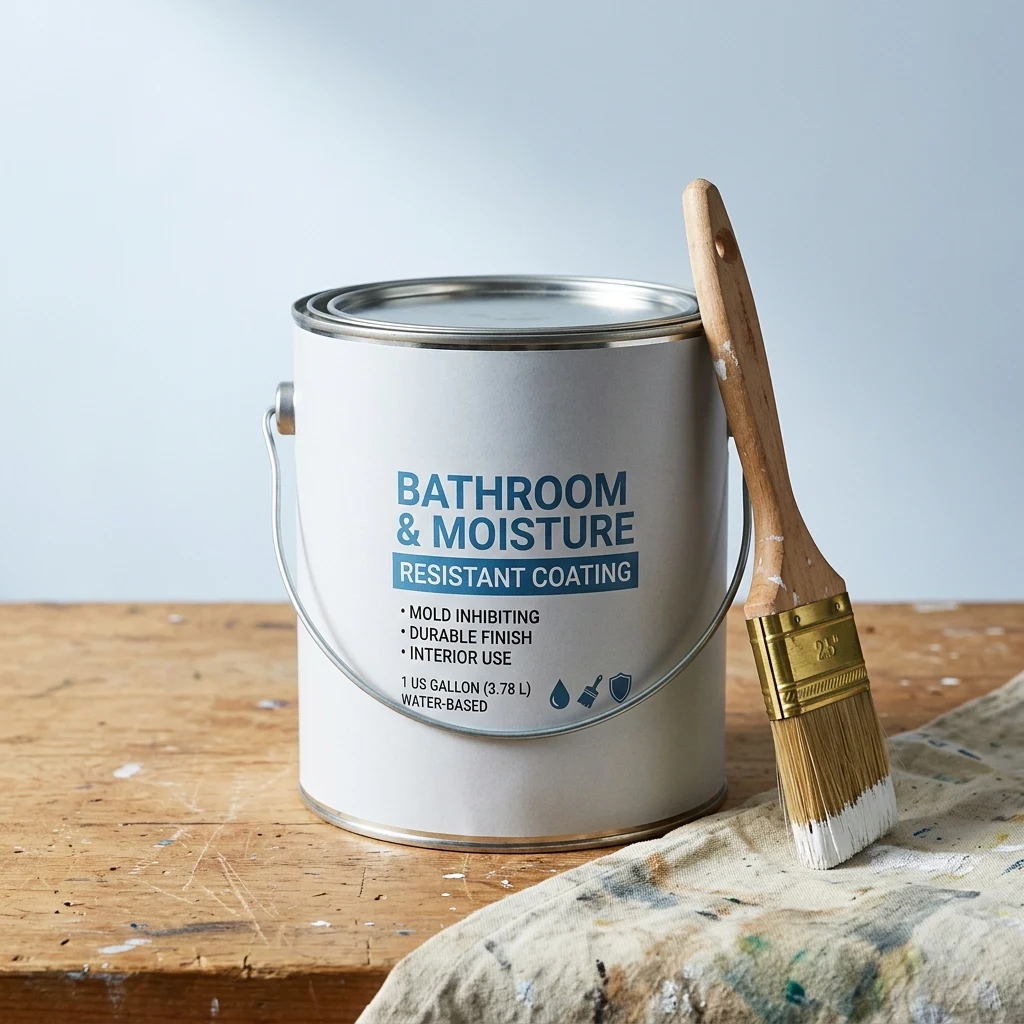
| Coverage | 300–400 sq ft / gal |
|---|---|
| Sheens | Eggshell, satin, semi-gloss |
| Dry / Recoat | Touch dry 30 min · recoat 2h |
| Full cure | 7 days (no scrubbing) · 24h before shower use |
| VOC | <50 g/L |
| Yellowing risk | Low (waterborne acrylic) |
| Primer | Self-priming over treated, stain-blocked drywall |
| Price tier | $$ |
- 5-year mold & mildew-proof film warranty in writing — the only interior wall paint here that puts a number on its biocide longevity (Zinsser's WaterTite masonry line goes longer, but that is a basement coating, not a drywall paint)
- Self-priming over a stain-blocked surface; one product covers most bathroom repaints
- Three sheens (eggshell, satin, semi-gloss) so you don't have to compromise the look for the chemistry
- Color range is limited — Perma-White ships in white plus a small tinted palette; not BM/SW deck depth
- Will not kill existing mold; you still have to treat first or it grows back through the film
- Slightly thinner viscosity than premium wall paints — needs a careful roller load to avoid runs on a vertical wall
2. Benjamin Moore Aura Bath & Spa
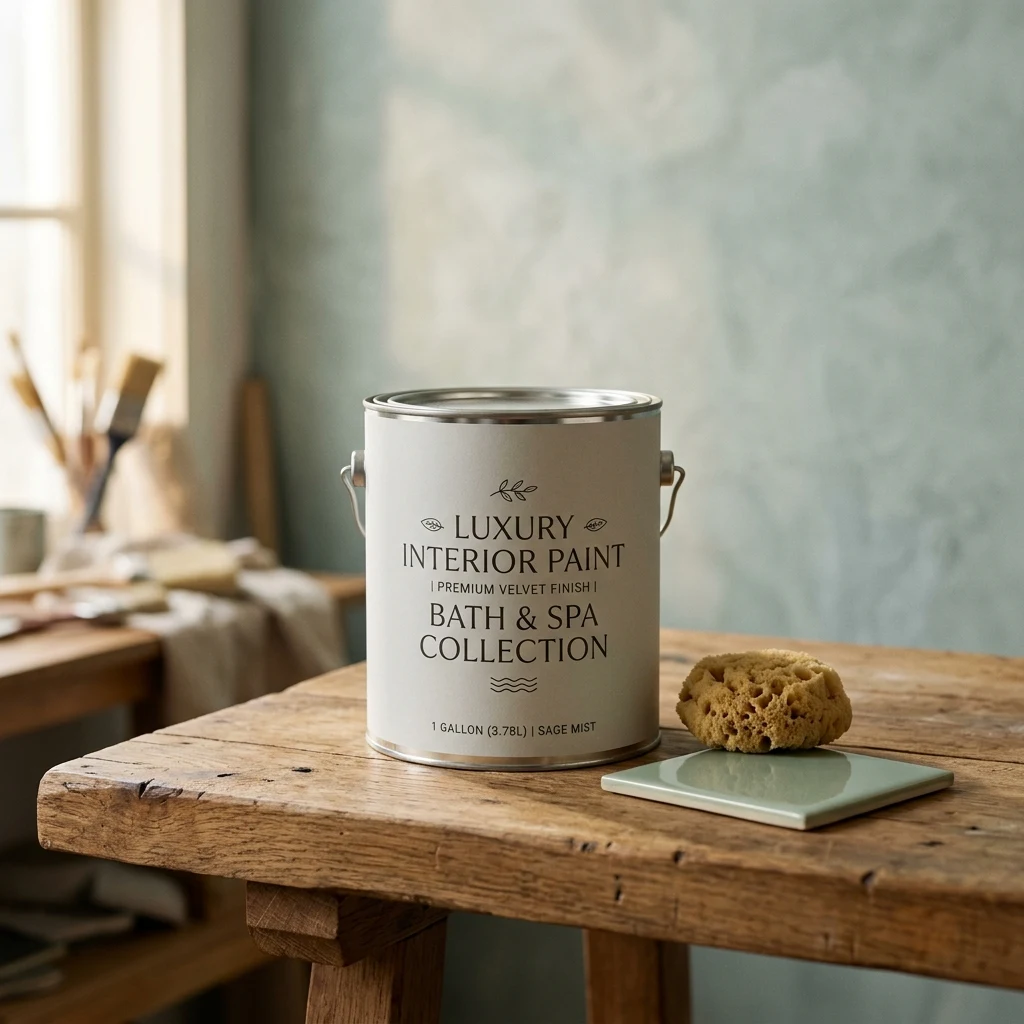
| Coverage | 350–400 sq ft / gal |
|---|---|
| Sheens | Matte (primary). Eggshell and semi-gloss available in the broader Aura line |
| Dry / Recoat | Touch dry 1h · recoat 1h |
| Full cure | 30 days |
| VOC | Zero VOC |
| Yellowing risk | Very low |
| Primer | Self-priming on sound, scuff-sanded surfaces |
| Price tier | $$$$ |
- Best-looking matte finish in a humid room we've tested — reads like a designer suite, not a contractor bathroom
- Color Lock Technology holds saturated colors that other bath paints fade or chalk in 18 months
- Full Benjamin Moore color deck (3,400+ tints) — every Perma-White-style alternative cuts the palette
- $100+ per gallon at BM stores (current shelf price runs around $105) — most expensive in the test by a wide margin
- Mildew-resistant (passive) rather than mold-killing — relies on the surface staying dry-ish
- Matte sheen is the headline product; if you want semi-gloss for trim or wainscoting, Aura Interior (not Bath & Spa) is what you'll buy
3. Sherwin-Williams Duration Home Interior Acrylic Latex
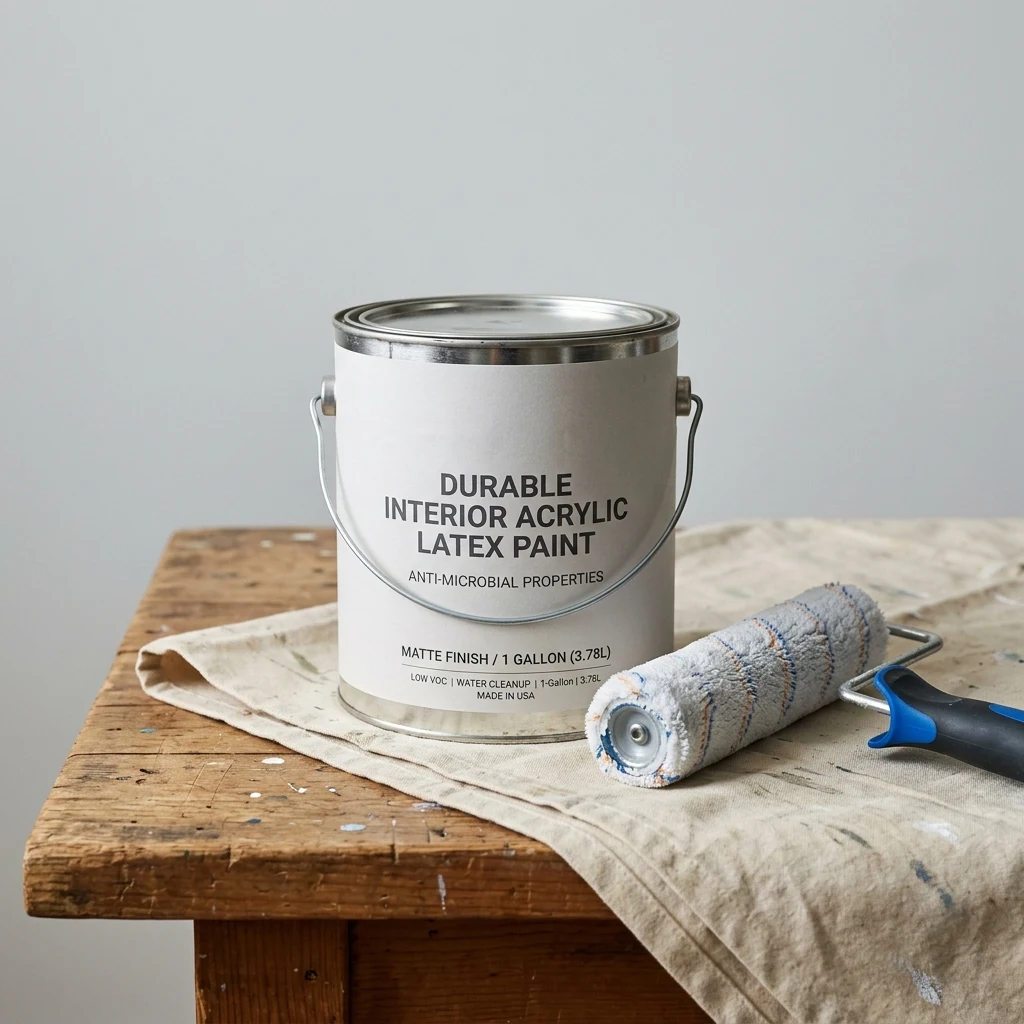
| Coverage | 350–400 sq ft / gal |
|---|---|
| Sheens | Flat, matte, satin, semi-gloss |
| Dry / Recoat | Touch dry 1h · recoat 2h (return-to-service 2h) |
| Full cure | 30 days |
| VOC | <50 g/L |
| Yellowing risk | Low |
| Primer | Self-priming (paint and primer in one) |
| Price tier | $$$ |
- Anti-microbial agents are baked into the film, not surface-applied — survives the first scrub-down
- One paint covers kitchen, bathroom, mudroom, and laundry — easier to keep one can on the shelf for touch-ups
- Two-hour return-to-service is the fastest in the test; cabinets back in by dinner
- No published mildew warranty — Sherwin makes the claim, but won't put a year on it like Zinsser does
- $80–$95/gal at SW stores; SW frequent 30–40% off sales bring it close to Perma-White's price
- Stain-blocking is genuinely good; mold-blocking is more like 'inhibits growth' — not the same as Perma-White's killing primer pair
4. KILZ Mold & Mildew Interior/Exterior Primer
| Coverage | 300–400 sq ft / gal |
|---|---|
| Sheens | N/A (primer) |
| Dry / Recoat | Touch dry 30 min · recoat 1h |
| Full cure | 7 days under topcoat |
| VOC | <5 g/L |
| Yellowing risk | Low (water-based) |
| Primer | Standalone primer; topcoat with any acrylic / latex |
| Price tier | $$ |
- EPA-registered antimicrobial in the film — primer film stays mold-resistant even if your topcoat doesn't
- Blocks medium-to-heavy stains (water, tannin, smoke, marker) so dark mold ghosts don't print through your topcoat
- Cheaper than Zinsser BIN, available at every Home Depot and most Walmarts
- It's a primer, not a finish — you still need a topcoat for the visible surface
- Doesn't actively kill living mold the way Zinsser Mold Killing Primer does — pre-treat with Concrobium or RMR-86 first
- Less stain-block strength than shellac BIN on the worst tannin / smoke / pet stains
5. Behr Premium Plus Interior Paint & Primer
| Coverage | 250–400 sq ft / gal |
|---|---|
| Sheens | Flat, eggshell, satin, semi-gloss, hi-gloss, ceiling flat |
| Dry / Recoat | Touch dry 1h · recoat 2h |
| Full cure | 30 days |
| VOC | Zero VOC (low emissions per GREENGUARD GOLD) |
| Yellowing risk | Medium on white in low light |
| Primer | Self-priming on scuff-sanded sound surfaces |
| Price tier | $ |
- Antimicrobial in the film at $35–$45/gal — half the cost of Perma-White or Duration Home
- Six sheens (flat, eggshell, satin, semi-gloss, hi-gloss, ceiling); GREENGUARD GOLD certified for low chemical emissions
- Stocked at every Home Depot — buy by the gallon, not by waiting for a paint-store delivery
- No published warranty on the mildew-resistance — Behr's wording is 'resists', not 'guaranteed for X years'
- Soft film for the first 30–60 days; the bathroom that gets daily steam needs all of that cure window
- Yellowing on white in low-light bathrooms is a real outcome over 12+ months — meaningfully more than Aura Bath & Spa
6. Zinsser WaterTite-LX Mold & Mildew-Proof Waterproofing Paint
| Coverage | 75–125 sq ft / gal on masonry |
|---|---|
| Sheens | Flat white |
| Dry / Recoat | Recoat per label, typically 3–4h |
| Full cure | 7 days before water exposure |
| VOC | Low VOC (water-based) |
| Yellowing risk | Low; white stays white in a lightless basement |
| Primer | Self-priming on clean bare masonry; patch active leaks with hydraulic cement first |
| Price tier | $$ |
- Published 10-year mold-and-mildew-proof guarantee on top of a 20-year waterproofing guarantee — the longest numbered mold claim on a US shelf, and the reason it beats a wall paint on bare block
- Holds back 20 PSI of hydrostatic pressure and tests to ASTM D-7088, D-6904 and D-5590, so the mold claim and the water claim both come from real test methods
- Water-based and low-VOC, which matters in a closed basement; the oil-based Rust-Oleum Watertite 5001 goes to 34 PSI and applies to wet masonry and carries a lifetime waterproofing guarantee, but its mold guarantee is only 5 years and it needs solvent cleanup
- Masonry only. This is concrete, block and stucco chemistry above or below grade — it is not the answer for the painted drywall in a second-floor bathroom
- Coverage is 75–125 sq ft per gallon on porous masonry, a quarter of what a wall paint gives you, and two coats are non-negotiable for a pinhole-free film
- Will not stop an active leak. Patch the crack or the cove joint with hydraulic cement first, and keep it off floors and anything that takes foot traffic
Zinsser Mold Killing Primer
EPA-registered fungicidal primer that actively kills mold, mildew, moss and fungi on contact. The single most important pairing for any of the topcoats above when you're repainting a wall that grew mold in the last 12 months. One coat under Perma-White or Duration Home buys you the killer + barrier + biocidal-film stack that just-painting-over alone does not.
BUY ON AMAZONFrequently asked questions
Does mold-resistant paint actually kill mold?+
What's the difference between mold-killing paint and mold-resistant paint?+
Do I need a separate primer if my paint is already mold-resistant?+
What sheen for a bathroom?+
What paint should I use on a bathroom ceiling that grows mildew?+
What's the best mold-resistant paint for basement walls?+
Is Perma-White worth it over regular bathroom paint?+
Why isn't Aura Bath & Spa the top pick?+
Can I just add a mildewcide to regular paint?+
Can I use exterior mold-resistant paint inside a bathroom?+
How long before I can shower in a freshly painted bathroom?+
How big should my bathroom exhaust fan be to keep mold away?+
Does the paint color change the mold resistance?+
Is mold-resistant paint safe to use around kids and pets?+
How do I maintain a mold-resistant painted bathroom?+
What about Kompozit anti-mold paint?+
- How to fix mold on walls (the treatment-first guide)
- Best basement waterproofing paint — the masonry side of this problem
- Bathroom ceiling mold — why it starts there and how to stop it
- Sheen guide — matte, eggshell, satin, semi-gloss, gloss
- How to paint MDF (vanity-cabinet substrates)
- Oil-based vs water-based — which for damp rooms?
- Zinsser Perma-White — full single-product review