Surfactant Leaching Explained: Those Brown Streaks
Surfactant leaching is the brown or amber streaking on fresh latex paint. Why it happens below 50°F, what the soapy residue is, and how to wipe it off safely.

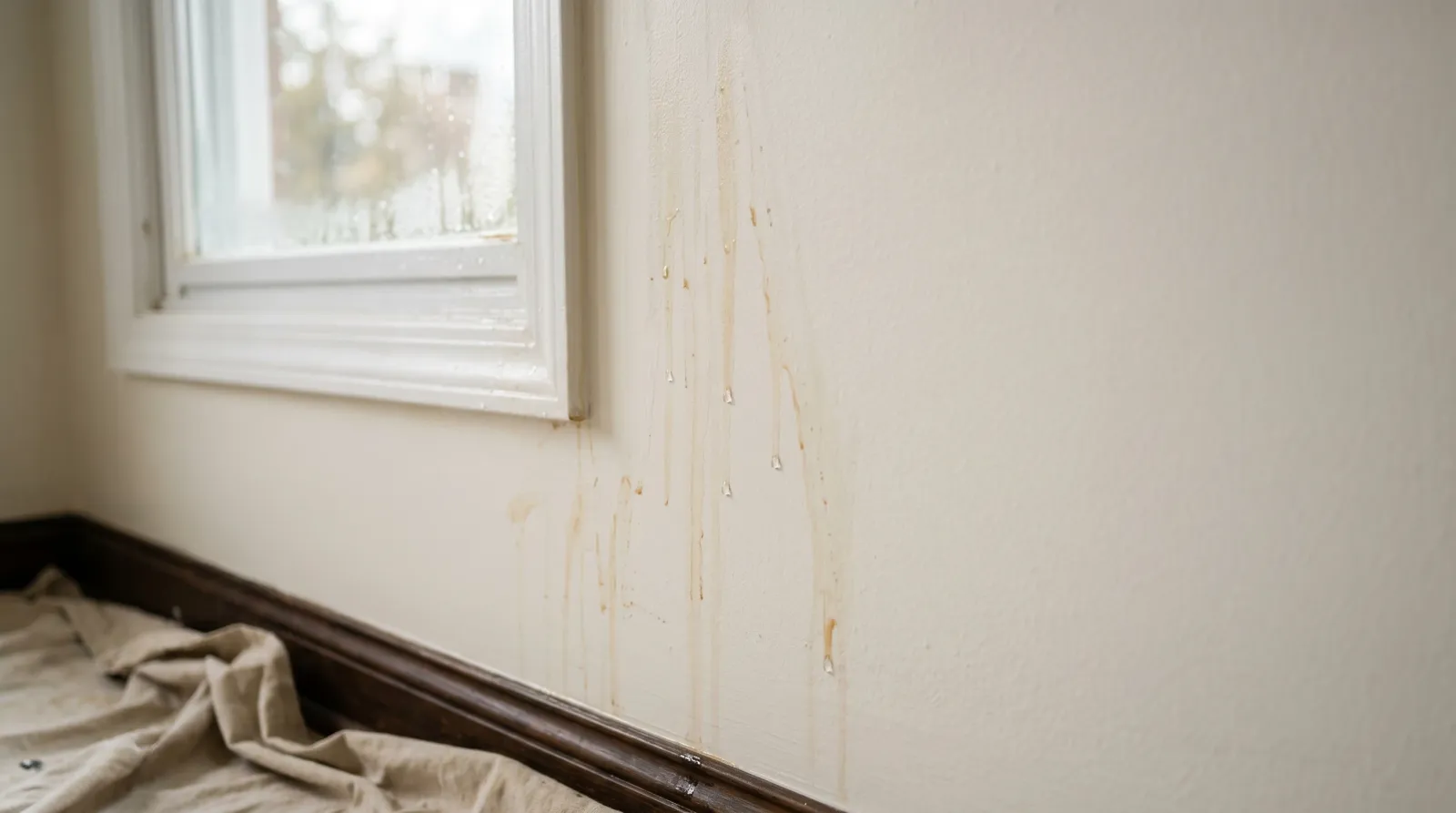
You finish a wall in cool fall weather, come back the next morning, and tan or amber streaks are weeping down the fresh paint — usually under windows, on a ceiling, or near the bottom of a coat. That’s surfactant leaching: the water-soluble additives in latex paint migrating to the surface and concentrating into a sticky, soapy film before the paint can cure. It happens when latex dries slowly, typically below 50°F or above 70% relative humidity, often within the first 24 hours. The film underneath is fine. The streaks wipe off with a damp cloth, and they don’t change the color or sheen once cleaned.
Here’s the chemistry. Every waterborne paint carries surfactants — surface-active agents that keep the binder particles and pigment dispersed in water instead of clumping in the can. They’re soaps, structurally. While the paint is wet, they sit throughout the film doing their job. As the water evaporates and the binder starts to coalesce into a continuous film (the process explained in how a paint film forms), those surfactants are supposed to get locked into place or wash away in trace amounts you’d never notice.
When the film dries too slowly, that timing breaks. The surfactants stay water-soluble far longer than they should. If moisture lands on the surface — dew, condensation, a light rain, even high humidity pulling water back toward the film — it dissolves the surfactants and carries them to the surface, where they pool and run. The water evaporates and leaves the concentrated soap behind as a brown, tan, or amber glaze. That’s the streak.
The color throws people off. The leached material is usually darker than the paint, and on a white or pastel wall it can look like a stain bleeding through or a contamination problem. It isn’t. The amber tint comes from the surfactants and the small amount of glycol coalescing aids riding along with them, concentrated into a thin film.
When You’ll See Surfactant Leaching
It’s a weather-and-timing problem, so it shows up under predictable conditions:
- Cool, damp days. Below 50°F surface or air temperature, or above 70% relative humidity. The film stays open long enough for moisture to reach the surfactants.
- Late-day exterior coats in fall. Paint applied in the afternoon, then hit by night dew before it can cure. This is the classic case on siding and trim.
- Bathrooms and kitchens. A freshly painted bathroom that gets a hot shower the next morning. The steam condenses on the new film and drags surfactants down the wall.
- Dark and deep colors. Deep bases carry more colorant and often more surfactant, and the leached glaze shows hard against the saturated background.
- Below windows and on ceilings. Anywhere condensation collects. The water has to come from somewhere, and these are where it lands.
When It’s Not Surfactant Leaching
Don’t pin every streak on surfactants. Some look-alikes are real failures:
- Tannin or stain bleed-through. On bare cedar, redwood, or knotty pine, brown bleed is tannin coming through from the wood, not surfactant from the paint. It won’t wipe off with water. That needs a stain-blocking primer, not a damp cloth.
- Efflorescence. White, crystalline, powdery deposits on masonry are salt, not soap. They brush off dry and come from moisture in the substrate. See fixing efflorescence on brick.
- Chalking. A dusty, fading surface on old exterior paint is degraded binder, not fresh leaching. That’s covered in fixing chalking on exterior paint.
- Mildew. Black or dark-green spotting that smears rather than wipes clean is biological growth, and it needs a bleach solution, not plain water.
The tell for surfactant leaching: it’s on fresh paint, it’s brown to amber rather than white or black, and it dissolves in plain water. If a damp cloth lifts it, it’s surfactant.
How It Compares to Other Fresh-Paint Streaking
| Surfactant leaching | Tannin bleed | Efflorescence | Lap marks | |
|---|---|---|---|---|
| Color | Brown / tan / amber | Brown / yellow | White / crystalline | Sheen difference, no color |
| Cause | Slow cure + moisture | Wood extractives | Substrate salts | Application overlap |
| Wipes off with water | Yes | No | Brushes off dry | No |
| Surface | Any latex, fresh | Bare wood | Masonry | Any, application error |
| Fix | Wipe, let cure | Stain-blocking primer | Source the moisture | Recoat properly |
For the application-error cousin, see the deeper breakdown of lap marks.
Common Mistakes
- Scrubbing it with detergent right away. Soap on soap. Detergent pulls more surfactant to the surface and can leave the streak worse than before. Use clean water only for the first week.
- Painting late in the day in fall. The most common cause of exterior leaching. You give the film a few hours, then night dew lands before it’s cured. Stop coating early enough that the surface dries well above dew point.
- Repainting over it immediately. Leaching is a curing-condition problem, so a second coat applied in the same cool, damp weather just leaches again. Fix the conditions first.
- Mistaking it for a failed product and returning the paint. The paint is fine. The chemistry is doing exactly what it does when it dries too slowly. The film cures hard underneath once the weather cooperates.
- Cleaning the new film too soon. Even unrelated cleaning in the first 30 days can pull surfactant. Waterborne paint needs 14 to 30 days for the binder to finish coalescing, the same window covered in dry time vs cure time. Hold off on real cleaning until then.
What It Looks Like
Picture a freshly painted off-white wall with thin amber rivulets running down from the top of the coat or out from under a window, glossier and darker than the surrounding paint, sometimes still tacky to the touch. On a ceiling it reads as faint brown drips or a blotchy tide line. On exterior trim it tends to collect at the bottom edge of boards where water runs and pools. The streaks have a slight sheen the flat paint around them doesn’t, because the leached surfactant film is denser than the cured paint.
Where to Buy / What to Look For
You don’t buy a product to fix surfactant leaching — you wipe it off. But you can buy paint that’s less prone to it. Premium waterborne lines use lower-surfactant formulas and better-coalescing binders, which gives a shorter open window and less material to leach. The binder is most of what separates them, the conversation in the binder explainer. For exterior masonry where slow drying and trapped moisture make leaching common, choose a breathable formula from the best masonry paint round-up and follow the prep in the guide to painting masonry. The bigger lever is timing: coat when the surface and air will hold above 50°F and below 70% humidity for a day or two, and you mostly avoid the problem entirely.
Ask a Question