How to Fix Chalking Exterior Paint
Diagnose exterior chalk with the white t-shirt rub test, then pressure-wash, scrub, bind with Peel Stop or Cover Stain, and top-coat with 100%-acrylic. A 22-year contractor's playbook.

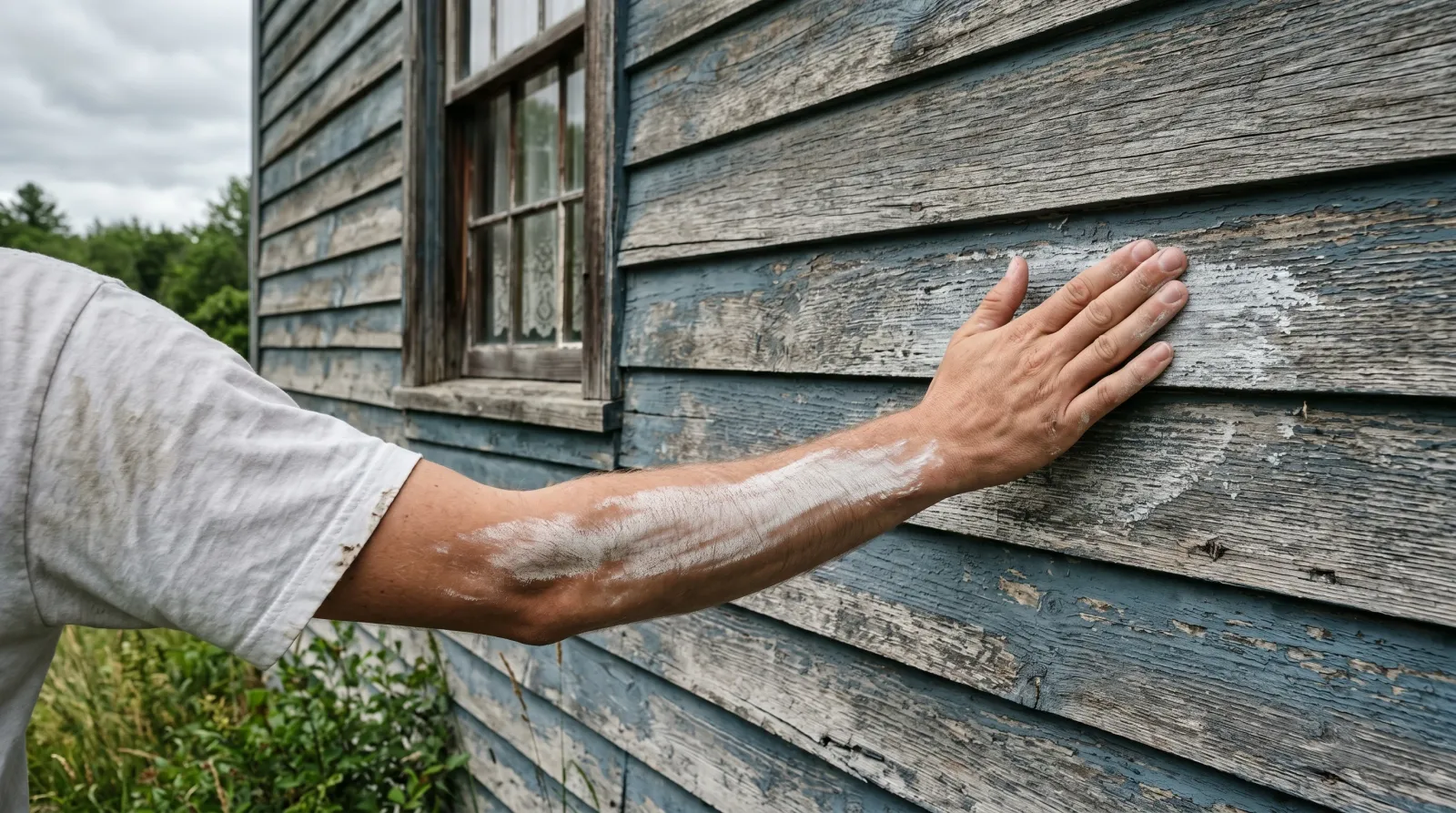
Chalking siding looks dusty and feels dirty but it’s neither. It’s the resin in the old paint film that gave up under UV, releasing pigment as fine powder. Paint over it and the new coat bonds to the powder. The powder lets go in the first freeze-thaw and your work peels off with it. Diagnose, bind, then top-coat. Diagnosis takes a white t-shirt.
Does This Match What You’re Seeing?
Rub a clean white t-shirt across dry siding with light pressure. What comes off tells you what stage the film is in.
- Heavy chalk streak, fingertip leaves a print: binder is gone. Full prep. Wash, scrub, bind with Peel Stop, two-coat acrylic. This article.
- Faint dusting, barely visible on the rag: mild oxidation. Normal at 5 to 7 years on a south wall. A wash and a 100% acrylic top-coat usually holds without a bonding primer.
- Faded color, no transfer to the rag: UV fade without chalk. Different problem. See the exterior fade fix.
- Powdery white on masonry only: could be efflorescence, not chalk. Salt concentrates around joints; chalk dusts evenly across whole panels.
- Chalk plus curling at edges: you have both failures. Treat as a peel job; see the exterior peel fix.
North walls often dust lightly while the south wall is releasing pigment by the handful. Treat each elevation by what its rub test shows.
How Serious Is This?
Chalking by itself is a Saturday on a one-story ranch, a long weekend on a two-story. The film is failing but still attached. Three things push it to high severity:
- Pre-1978 home. Dust is lead-bearing until tested. EPA RRP rules apply.
- Streaks running down siding onto foundation or shrubs. Resin is fully gone, rain is washing pigment out. Contain wash water.
- Same wall chalked again within four years of a repaint. Wrong product class for the exposure. Step up to 100% acrylic.
Why This Is Happening (root Cause)
Exterior paint holds two ways. The binder forms a continuous film. Pigment gives color and opacity. UV photons break the binder chemistry over time — long resin chains cut into short ones, the film loses its hold on the pigment, and released pigment sits on the surface as fine powder. That’s chalk.
Every exterior paint chalks eventually. Premium 100% acrylic chalks slowly: 10 to 12 years on a north wall, 7 to 10 on a south wall. Builder-grade chalks inside half that. The difference is binder volume. Cheap formulas use less resin per gallon and pad with extender pigments (clay, calcium carbonate, talc) that add opacity but no UV resistance. Once the resin oxidizes, the extenders dust off freely.
South and west walls in zones 5 through 7 chalk first and hardest. North walls in the same house can read clean on the rub test while the south wall is leaving a streak across your forearm. Chalk also attracts mildew because the powdered surface holds moisture longer than a tight film, and chalk telegraphs through any topcoat applied over it without a binder.
The Fix
Step 1. Rub Test, Every Elevation
Clean white t-shirt, light pressure, drag two feet across the siding at chest height. Repeat on each elevation and at any panel below a gutter. Photograph the rag if you’re sending a homeowner a quote; it sells the diagnosis better than words.
Mark heavy-chalk panels with low-tack tape. Those get the full sequence. Light-dusting panels get washed and top-coated without the bonding primer.
Step 2. Pressure-Wash
A 1500 to 2000 PSI cold-water washer, 25-degree fan tip, 12 inches from the siding, top to bottom in overlapping passes. Higher pressure drives water behind the lap siding and you’ll be looking at peel next spring. Don’t aim up under laps or at gable vents.
For mildew alongside chalk, mist a 1-to-3 bleach-to-water solution from a pump sprayer, let it sit ten minutes, rinse with the washer. Or use Concrobium Mold Control if you have shrubs. Never mix bleach with vinegar, ammonia, or hydrogen peroxide. Toxic chlorine gas. Pick one cleaner.
Eye protection and N95 minimum. Blowback off chalking siding carries pigment into your face.
Step 3. Scrub What the Washer Left
The washer takes the loose chalk. What stays is oxidized pigment bonded into the pores. Mix TSP per label, scrub each chalked panel with a soft-bristle deck brush on an extension pole, rinse top-down. Repeat until a fresh rub test reads faint dusting at worst. Don’t move to primer until the rag reads light.
Dry 48 hours minimum. Moisture meter in a shaded board should read under 15% before primer.
Step 4. Feather Any Failing Edges
The wash will surface panels that are actually peeling. Scrape loose film with a 2-inch carbide scraper, sand the edge with 80 grit, step to 120, finish at 220 until the transition feels flush under your fingertip. Spot-prime bare wood with Cover Stain.
For pre-1978 homes, wet-scrape only, 6-mil plastic, P100 respirator, HEPA vacuum. No dry sanding, no heat guns. Heat volatilizes lead.
Step 5. Bind the Chalk
This step is what makes the repaint hold. Pick by what’s underneath:
| Surface condition | Primer | Why |
|---|---|---|
| Chalky old paint, still bonded after wash | Zinsser Peel Stop | Penetrates the chalk layer and locks loose pigment to the film below |
| Chalk plus bare wood spots | Zinsser Cover Stain (oil) | Bonds chalk, seals end grain, locks tannin; one product across the wall |
| Severe chalk on vinyl or aluminum | INSL-X STIX | Bites into slick, oxidized siding without sanding to dull |
| Fiber-cement with surface chalk | 100% acrylic exterior primer | Cement is alkaline; oil saponifies on alkaline substrates |
| Stucco with light chalk | Loxon masonry conditioner | Penetrates porous masonry and binds chalky surface in one product |
For most exterior wood chalk, Peel Stop is the answer. One full coat, brushed into cut-ins, rolled or sprayed-and-back-rolled in the field. Dry to recoat: 2 hours at 70°F. Don’t mix Peel Stop and Cover Stain on the same elevation. The sheen telegraphs through.
Step 6. Fill, Caulk, Spot-Prime
Gouges and nail holes get exterior wood filler. Sand flush at 220. Spot-prime filler with the same primer you used on the wall. Re-caulk trim-to-siding joints with a 50-year urethane. Painter’s acrylic caulk fails in two years on a south wall and you’ll be looking at a chalk-stain streak coming down from the joint.
Step 7. Two Coats of 100% Acrylic
Two coats. Always two coats. One-coat coverage on the can means one coat over perfect prep and perfect weather, and an exterior repaint isn’t perfect anything.
- South and west walls, high-UV zones: Benjamin Moore Aura Exterior or Sherwin-Williams Duration. 100% acrylic, fade-resistant resin, hold gloss 10-plus years. The reason to use them is to not have this conversation again in five.
- North and east walls: Aura, Duration, or a step down to SW Resilience or BM Regal Select Exterior.
- Cedar shake and shingle: flat or low-luster solid stain over Cover Stain holds better than full paint. Less film to chalk.
Cut in with a 2.5-inch sash brush, roll or spray-and-back-roll the field while the cut-in is still wet. Don’t stop in the middle of a wall. Stopping mid-wall is how you get lap marks and lap marks show up the second the morning sun hits the siding in October.
Surface temperature between 50°F and 85°F, not air. Infrared thermometer on a dark south wall in August reads 130°F at 2 p.m. Paint flashes before it bonds. Work the shaded side and rotate.
Recommended Product
Zinsser Peel Stop Triple Thick Binding Primer. Clear-binding sealer that penetrates a chalking film and locks the loose pigment to the substrate. One coat, brushable or rollable, dries to recoat in 2 hours. The product I cut in on a paying exterior repaint when the rub test streaks. Cheaper than Cover Stain by the gallon, and on a chalked-but-still-attached wall it does the bonding job without the oil cleanup.
Peel Stop on Amazon · Manufacturer page
Prevention
- Buy 100% acrylic from the start. Builder-grade vinyl-acrylic blends save $25 a gallon and cost you a repaint at year five. Aura Exterior, Duration, or Behr Marquee on south and west walls is the spend that pays back.
- Two coats on every repaint. Half the binder chalks in half the time.
- Wash annually. Garden-hose rinse in spring removes pollen and pollution film before they bake in. Five minutes per elevation.
- Plan the repaint cycle. 10 to 12 years on premium acrylic, 7 to 10 on a south wall in zone 7. Don’t wait for heavy chalk to start the rub test.
Lead-Paint Warning (pre-1978 Homes)
Chalk dust from a pre-1978 exterior is lead-bearing until tested. Test with 3M LeadCheck swabs, around $10 at any home center. Cut a notch through every paint layer, swab each one separately.
Positive result: wash water needs to be contained, not run into soil or storm drains. 6-mil plastic out 10 feet, P100 respirator for everyone working the wall, HEPA vacuum at cleanup. A pump-sprayer mist instead of pressure washing reduces airborne dust dramatically. If the area is more than a few panels, hire a certified RRP contractor.
When to Call a Pro
- Pre-1978 home with widespread chalk
- Two-story gable ends or anything over 12 feet without scaffolding
- Stucco chalking across whole elevations; masonry prep is a different sequence
- Chalk plus active mildew larger than 10 sq ft (EPA mold threshold)
- Same wall chalking inside four years of a previous repaint; the spec was wrong
- Aluminum siding chalking heavily; needs INSL-X STIX and a sprayer, not a brush job
What’ll Bite You in Two Years
Skip the bind coat and the chalk eats your repaint from underneath. Two coats of Aura Exterior over loose chalk look perfect in October and start ghosting in February. By the second summer the streaks come back through. The new binder is bonded to powder, not the wall. Bind the chalk or accept you’re painting this wall again before the can warranty runs out.